Actient Pharmaceuticals Llc

Manufacturer Details

There are currently no manufacturer details available.

Share This Page

Actient Pharmaceuticals Llc Drugs

  • Semprex D (Acrivastine And Pseudoephedrine Hydrochloride) Capsule [Actient Pharmaceuticals, Llc]

    Semprex D

    Semprex D (Acrivastine And Pseudoephedrine Hydrochloride) Capsule [Actient Pharmaceuticals, Llc]

    The recommended dosage for adults and adolescents 12 years and older is one capsule administered orally, every 4 to 6 hours four times a day.

  • Dilatrate Sr (Isosorbide Dinitrate) Capsule, Extended Release [Actient Pharmaceuticals, Llc]

    Dilatrate Sr

    Dilatrate Sr (Isosorbide Dinitrate) Capsule, Extended Release [Actient Pharmaceuticals, Llc]

    As noted above (CLINICAL PHARMACOLOGY), multiple studies with ISDN and other nitrates have shown that maintenance of continuous 24-hour plasma levels results in refractory tolerance. Every dosing regimen for organic nitrates including dilatrate®-SR must provide a daily nitrate-free interval to avoid the development of tolerance. To achieve the necessary nitrate-free interval with immediate-release oral ISDN, it appears that at least one of the daily interdose intervals must be at least 14 hours long. The necessary interdose interval for dilatrate®-SR has not been clearly identified, but it must be greater than 18 hours.

    As noted under Clinical Pharmacology, only one trial has ever studied the use of extended-release isosorbide dinitrate for more than one dose. In that trial, 40 mg of dilatrate®-SR was administered twice daily in doses given 6 hours apart. After 4 weeks, dilatrate®-SR could not be distinguished from placebo.

    Large controlled studies with other nitrates suggest that no dosing regimen with dilatrate®-SR should be expected to provide more than about 12 hours of continuous antianginal efficacy per day.

    In clinical trials, immediate-release oral isosorbide dinitrate has been administered in a variety of regimens, with total daily doses ranging from 30 to 480 mg.

    Do not exceed 160 mg (4 capsules) per day.

  • Robaxin (Methocarbamol) Tablet, Film Coated [Actient Pharmaceuticals, Llc]

    Robaxin

    Robaxin (Methocarbamol) Tablet, Film Coated [Actient Pharmaceuticals, Llc]

    robaxin® (methocarbamol), 500 mg – Adults:Initial dosage: 3 tablets q.i.d.Maintenance dosage: 2 tablets q.i.d.robaxin®-750 (methocarbamol): 750 mg – Adults:Initial dosage: 2 tablets q.i.d.Maintenance dosage: 1 tablet q.4h. or 2 tablets t.i.d.

    Six grams a day are recommended for the first 48 to 72 hours of treatment. (For severe conditions 8 grams a day may be administered). Thereafter, the dosage can usually be reduced to approximately 4 grams a day.

  • Cd Dior Prestige White Collection Satin Brigtnening Compact Uvb Protection Sunscreeen Blemish Balm Spf 30 (Octinoxate) Cream [Parfums Christian Dior]

    Cd Dior Prestige White Collection Satin Brigtnening Compact Uvb Protection Sunscreeen Blemish Balm Spf 30

    Cd Dior Prestige White Collection Satin Brigtnening Compact Uvb Protection Sunscreeen Blemish Balm Spf 30 (Octinoxate) Cream [Parfums Christian Dior]

    edex® in the Treatment of Erectile Dysfunction

    The dosage range of edex® for the treatment of erectile dysfunction is 1 to 40 mcg. The intracavernous injection should be given over a 5 to 10 second interval. In a study with a dose range of 1 to 20 mcg of edex®, the mean dose was 10.7 mcg at the end of the dose titration period. In two studies with a dose range of 1 to 40 mcg of edex®, the mean dose was 21.9 mcg at the end of the dose titration period. Doses greater than 40 mcg have not been studied. A ½ inch, 27 to 30 gauge needle is generally recommended for the intracavernous injection. The patient is advised not to exceed the optimum edex® dose which was determined in the doctor's office. The lowest possible effective dose should always be used.

    Initial Titration in Physician's Office

    Erectile Dysfunction of Vasculogenic, Psychogenic, or Mixed Etiology

    Dosage titration should be initiated at 2.5 micrograms of alprostadil. If there is a partial response, the dose may be increased by 2.5 micrograms to a dose of 5 micrograms and then in increments of 5 to 10 micrograms, depending upon erectile response, until the dose that produces an erection suitable for intercourse and not exceeding a duration of 1 hour is reached. If there is no response to the initial 2.5-microgram dose, the second dose may be increased to 7.5 micrograms, followed by increments of 5 to 10 micrograms. The patient must stay in the physician's office until complete detumescence occurs. It there is no response, then the next higher dose may be given within 1 hour. If there is a response, then there should be at least a 1-day interval before the next dose is given.

    Erectile Dysfunction of Pure Neurogenic Etiology (Spinal Cord Injury)

    Dosage titration should be initiated at 1.25 micrograms of alprostadil. The dose may be increased by 1.25 micrograms to a dose of 2.5 micrograms, followed by an increment of 2.5 micrograms to a dose of 5 micrograms, and then in 5-microgram increments until the dose that produces an erection suitable for intercourse and not exceeding a duration of 1 hour is reached. The patient must stay in the physician's office until complete detumescence occurs. If there is no response, then the next higher dose may be given within 1 hour. If there is a response, then there should be at least a 1-day interval before the next dose is given.

    At-Home (Maintenance Therapy) Dosing Instructions

    The first injections of edex® must be done at the physician's office by medically trained personnel. Self-injection therapy by the patient can be started only after the patient is properly instructed and well trained in the self-injection technique. The physician should instruct the patient to discard any needles which become bent during the self-injection procedure as these needles may break. The physician should make a careful assessment of the patient's skills and competence with the self-injection procedure. The intracavernous injection must be done under sterile conditions. The site of injection is usually along the lateral aspect of the proximal third of the penis. Visible veins should be avoided. The side of the penis that is injected and the site of injection must be alternated. The injection site must be cleansed with an alcohol swab before injection.

    The dose of edex® that is selected for self-injection treatment should provide the patient with an erection that is satisfactory for sexual intercourse and that is maintained for no longer than 1 hour. If the duration of erection is longer than 1 hour, the dose of edex® should be reduced. The lowest effective dose should be used at home. Self-injection therapy for use at home should be initiated at the dose that was determined in the physician's office. Dose adjustment may be required and should be made only after consultation with the physician.

    Careful and continuous follow-up of the patient while in the self-injection program must be exercised. This is especially true for the initial self-injections, since adjustments in the dose of edex® may be needed. The recommended frequency of injection is no more than 3 times weekly, with at least 24 hours between each dose. The reconstituted edex® cartridge and needle are intended for single use only and should be discarded after use. The user should be instructed in the proper disposal of the needles and cartridges.

    While on self-injection treatment, it is recommended that the patient visit the prescribing physician's office every 3 months. At that time, the efficacy and safety of the therapy should be assessed, and the dose of edex® should be adjusted, if needed.

    The patient is instructed to follow the enclosed patient information pamphlet.

    Preparation of Solution

    The edex® injection device is used to reconstitute the single-dose, dual-chamber cartridge. The plunger is used to force the sterile 0.9% sodium chloride (1.075 mL) in one chamber into the chamber containing alprostadil. After reconstitution, the edex® injection device is used to administer the intracavernous injection of alprostadil. The reusable edex® injection device is for use only with the cartridges and needles included in the edex® Cartridge Packs.

    Prepare the edex® solution immediately before use. Do not administer unless solution is clear. Do not add any drugs or solutions to the edex® solution. Discard any unused solution remaining in the cartridge. The reconstituted solution should not be stored.

    The edex® cartridge contains a solid layer or lyophilized cake of dry white powder approximately 3/8" in thickness. A normal cake may appear cracked or crumbled. If the cartridge is damaged, the cake may shrink in size. Do not use the cartridge if it appears damaged or the cake is substantially reduced in size.

    Parenteral drug products should be inspected visually for particulate matter and discoloration prior to administration. The reconstituted solution may initially appear cloudy due to small air bubbles. Do not use the solution if it remains cloudy, contains precipitates, or is discolored.

    CAUTION: Do not reuse any solution remaining in the cartridge due to the possibility of bacterial contamination.

    Administration

    edex® is given as an intracavernous injection over a 5 to 10 second interval. See patient information for edex®.

    Stability

    The single-dose, dual-chamber cartridge should be reconstituted only when it is certain that the patient is ready to administer the drug. The reconstituted drug solution should be used immediately after reconstitution. Any solution remaining in the cartridge should be discarded.

  • Nite Time Cold Multi-symptom (Acetaminophen, Chlorpheniramine Maleate, Dextromethorphan Hbr, Phenylephrine Hcl) Capsule [Dolgencorp, Llc]

    Nite Time Cold Multi-symptom

    Nite Time Cold Multi-symptom (Acetaminophen, Chlorpheniramine Maleate, Dextromethorphan Hbr, Phenylephrine Hcl) Capsule [Dolgencorp, Llc]

    General Considerations:

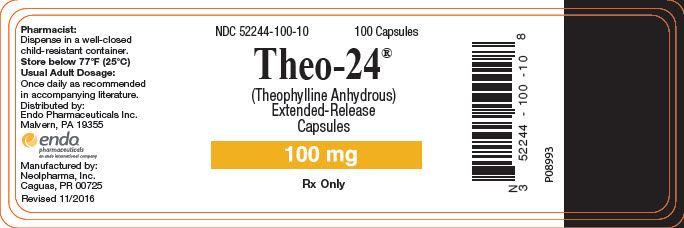
    Theo-24, like other extended-release theophylline products, is intended for patients with relatively continuous or recurring symptoms who have a need to maintain therapeutic serum levels of theophylline. It is not intended for patients experiencing an acute episode of bronchospasm (associated with asthma, chronic bronchitis, or emphysema). Such patients require rapid relief of symptoms and should be treated with an immediate-release or intravenous theophylline preparation (or other bronchodilators) and not with extended-release products.

    Patients who metabolize theophylline at a normal or slow rate are reasonable candidates for once-daily dosing with Theo-24. Patients who metabolize theophylline rapidly (e.g., the young, smokers, and some nonsmoking adults) and who have symptoms repeatedly at the end of a dosing interval, will require either increased doses given once a day or preferably, are likely to be better controlled by a schedule of twice-daily dosing. Those patients who require increased daily doses are more likely to experience relatively wide peak-trough differences and may be candidates for twice-a-day dosing with Theo-24.

    Patients should be instructed to take this medication each morning at approximately the same time and not to exceed the prescribed dose.

    Recent studies suggest that dosing of extended-release theophylline products at night (after the evening meal) results in serum concentrations of theophylline which are not identical to those recorded during waking hours and may be characterized by early trough and delayed peak levels. This appears to occur whether the drug is given as an immediate-release, extended-release, or intravenous product. To avoid this phenomenon when two doses per day are prescribed, it is recommended that the second dose be given 10 to 12 hours after the morning dose and before the evening meal.

    Food and posture, along with changes associated with circadian rhythm, may influence the rate of absorption and/or clearance rates of theophylline from extended-release dosage forms administered at night. The exact relationship of these and other factors to nighttime serum concentrations and the clinical significance of such findings require additional study. Therefore, it is not recommended that Theo-24 (when used as a once-a-day product) be administered at night.

    Patients who require a relatively high dose of theophylline (i.e., a dose equal to or greater than 900 mg or 13 mg/kg, whichever is less) should not take Theo-24 less than 1 hour before a high-fat-content meal since this may result in a significant increase in peak serum level and in the extent of absorption of theophylline as compared to administration in the fasted state (see PRECAUTIONS, Drug/Food Interactions).

    The steady-state peak serum theophylline concentration is a function of the dose, the dosing interval, and the rate of theophylline absorption and clearance in the individual patient. Because of marked individual differences in the rate of theophylline clearance, the dose required to achieve a peak serum theophylline concentration in the 10 - 20 mcg/mL range varies fourfold among otherwise similar patients in the absence of factors known to alter theophylline clearance (e.g., 400 - 1600 mg/day in adults <60 years old and 10 - 36 mg/kg/day in children 1 - 9 years old). For a given population there is no single theophylline dose that will provide both safe and effective serum concentrations for all patients. Administration of the median theophylline dose required to achieve a therapeutic serum theophylline concentration in a given population may result in either sub-therapeutic or potentially toxic serum theophylline concentrations in individual patients. For example, at a dose of 900 mg/day in adults <60 years or 22 mg/kg/day in children 1-9 years, the steady-state peak serum theophylline concentration will be <10 mcg/mL in about 30% of patients, 10 - 20 mcg/mL in about 50% and 20 - 30 mcg/mL in about 20% of patients. The dose of theophylline must be individualized on the basis of peak serum theophylline concentration measurements in order to achieve a dose that will provide maximum potential benefit with minimal risk of adverse effects.

    Transient caffeine-like adverse effects and excessive serum concentrations in slow metabolizers can be avoided in most patients by starting with a sufficiently low dose and slowly increasing the dose, if judged to be clinically indicated, in small increments (See Table V). Dose increases should only be made if the previous dosage is well tolerated and at intervals of no less than 3 days to allow serum theophylline concentrations to reach the new steady state. Dosage adjustment should be guided by serum theophylline concentration measurement (see PRECAUTIONS, Laboratory Tests and DOSAGE AND ADMINISTRATION, Table VI). Health care providers should instruct patients and care givers to discontinue any dosage that causes adverse effects, to withhold the medication until these symptoms are gone and to then resume therapy at a lower, previously tolerated dosage (see WARNINGS).

    If the patient's symptoms are well controlled, there are no apparent adverse effects, and no intervening factors that might alter dosage requirements (see WARNINGS and PRECAUTIONS), serum theophylline concentrations should be monitored at 6 month intervals for rapidly growing children and at yearly intervals for all others. In acutely ill patients, serum theophylline concentrations should be monitored at frequent intervals, e.g., every 24 hours.

    Theophylline distributes poorly into body fat, therefore, mg/kg dose should be calculated on the basis of ideal body weight.

    Table V contains theophylline dosing titration schema recommended for patients in various age groups and clinical circumstances. Table VI contains recommendations for theophylline dosage adjustment based upon serum theophylline concentrations. Application of these general dosing recommendations to individual patients must take into account the unique clinical characteristics of each patient. In general, these recommendations should serve as the upper limit for dosage adjustments in order to decrease the risk of potentially serious adverse events associated with unexpected large increases in serum theophylline concentration.

    Table V. Dosing initiation and titration (as anhydrous theophylline).*       *  Patients with more rapid metabolism, clinically identified by higher than average dose          requirements, should receive a smaller dose more frequently to prevent breakthrough          symptoms resulting from low trough concentrations before the next dose. A reliably          absorbed slow-release formulation will decrease fluctuations and permit longer dosing          intervals.  A.  Children (12-15 years) and adults (16-60 years) without risk factors for impaired clearance.  Titration Step  Children <45 kg  Children >45 kg and adults  1.  Starting Dosage  12 - 14 mg/kg/day up to a maximum of 300 mg/day divided Q 24 hrs*  300 - 400 mg/day1 divided Q 24 hrs*  2.  After 3 days, if tolerated, increase dose to:  16 mg/kg/day up to a maximum of 400 mg/day divided Q 24 hrs*  400 - 600 mg/day1 divided Q 24 hrs*  3.  After 3 more days, if tolerated and if needed, increase dose to:  20 mg/kg/day up to a maximum of 600 mg/day divided Q 24 hrs*  As with all theophylline products, doses greater than 600 mg should be titrated according to blood level (see Table VI)  1  If caffeine-like adverse effects occur, then consideration should be given to a lower dose and titrating the dose more slowly (see ADVERSE REACTIONS).  B.  Patients with risk factors for impaired clearance, the elderly (>60 Years), and those in whom it is not feasible to monitor serum theophylline concentrations: In children 12-15 years of age, the final theophylline dose should not exceed 16 mg/kg/day up to a maximum of 400 mg/day in the presence of risk factors for reduced theophylline clearance (see WARNINGS) or if it is not feasible to monitor serum theophylline concentrations. In adolescents ≥16 years and adults, including the elderly, the final theophylline dose should not exceed 400 mg/day in the presence of risk factors for reduced theophylline clearance (see WARNINGS) or if it is not feasible to monitor serum theophylline concentrations. Table VI. Dosage adjustment guided by serum theophylline concentration. Peak Serum Concentration Dosage Adjustment  *    Dose reduction and/or serum theophylline concentration measurement is indicated whenever adverse effects are present,       physiologic abnormalities that can reduce theophylline clearance occur (e.g., sustained fever), or a drug that interacts with       theophylline is added or discontinued (see WARNINGS).  <9.9 mcg/mL  If symptoms are not controlled and current dosage is tolerated, increase dose about 25%. Recheck serum concentration after three days for further dosage adjustment.  10 - 14.9 mcg/mL  If symptoms are controlled and current dosage is tolerated, maintain dose and recheck serum concentration at 6-12 month intervals.* If symptoms are not controlled and current dosage is tolerated consider adding additional medication(s) to treatment regimen.  15 - 19.9 mcg/mL  Consider 10% decrease in dose to provide greater margin of safety even if current dosage is tolerated. *  20 - 24.9 mcg/mL  Decrease dose by 25% even if no adverse effects are present. Recheck serum concentration after 3 days to guide further dosage adjustment.  25 - 30 mcg/mL  Skip next dose and decrease subsequent doses at least 25% even if no adverse effects are present. Recheck serum concentration after 3 days to guide further dosage adjustment. If symptomatic, consider whether overdosage treatment is indicated (see recommendations for chronic overdosage).  >30 mcg/mL  Treat overdose as indicated (see recommendations for chronic overdosage). If theophylline is subsequently resumed, decrease dose by at least 50% and recheck serum concentration after 3 days to guide further dosage adjustment.

  • Amoxicillin And Clavulanate Potassium Powder, For Suspension [Hikma Pharmaceutical]

    Amoxicillin And Clavulanate Potassium

    Amoxicillin And Clavulanate Potassium Powder, For Suspension [Hikma Pharmaceutical]

    Prior to initiating, Striant confirm the diagnosis of hypogonadism by ensuring that serum testosterone concentrations have been measured in the morning on at least two separate days and that these serum testosterone concentrations are below the normal range.

    2.1 Dosage Information

    The recommended dosage for Striant is the application of one buccal system (30 mg) to the gum region twice daily; morning and evening (about 12 hours apart).

    To ensure proper dosing, serum testosterone concentrations should be measured. Morning, pre-dose serum testosterone concentrations should be measured at 4 to 12 weeks after initiation of therapy to ensure proper serum testosterone concentrations are achieved. Striant therapy should be discontinued if serum testosterone concentrations are consistently outside of the normal range (300 to 1050 ng/dL) despite the use of one buccal system applied twice daily.

    2.2 Administration Instructions

    Striant should be placed in a comfortable position just above the incisor tooth (on either side of the mouth). With each application, Striant should be rotated to alternate sides of the mouth.

    Upon opening the packet, the rounded side surface of the buccal system should be placed against the gum and held firmly in place with a finger over the lip and against the product for 30 seconds to ensure adhesion. Striant is designed to stay in position until removed. If the buccal system fails to properly adhere to the gum or should fall off during the 12-hour dosing interval, the old buccal system should be removed and a new one applied.

    If the buccal system falls out of position within the first 8 hours of dosing, replace with a new system and continue for a total of 12 hours from the placement of the first system. If the system falls out of position after 8 hours of dosing, a new buccal system should be applied and it may remain in place for 12 hours then continue with the next regularly scheduled dosing.

    Patients should take care to avoid dislodging the buccal system. Patients should check to see if Striant is in place following consumption of food or alcoholic/non-alcoholic beverages. Striant should not be chewed or swallowed. To remove Striant, gently slide it downwards from the gum toward the tooth to avoid scratching the gum. The Striant buccal system should be removed before routine morning and evening oral care is performed, followed by application of a new buccal system.

    2.1 Dosage Information

    The recommended dosage for Striant is the application of one buccal system (30 mg) to the gum region twice daily; morning and evening (about 12 hours apart).

    To ensure proper dosing, serum testosterone concentrations should be measured. Morning, pre-dose serum testosterone concentrations should be measured at 4 to 12 weeks after initiation of therapy to ensure proper serum testosterone concentrations are achieved. Striant therapy should be discontinued if serum testosterone concentrations are consistently outside of the normal range (300 to 1050 ng/dL) despite the use of one buccal system applied twice daily.

    2.2 Administration Instructions

    Striant should be placed in a comfortable position just above the incisor tooth (on either side of the mouth). With each application, Striant should be rotated to alternate sides of the mouth.

    Upon opening the packet, the rounded side surface of the buccal system should be placed against the gum and held firmly in place with a finger over the lip and against the product for 30 seconds to ensure adhesion. Striant is designed to stay in position until removed. If the buccal system fails to properly adhere to the gum or should fall off during the 12-hour dosing interval, the old buccal system should be removed and a new one applied.

    If the buccal system falls out of position within the first 8 hours of dosing, replace with a new system and continue for a total of 12 hours from the placement of the first system. If the system falls out of position after 8 hours of dosing, a new buccal system should be applied and it may remain in place for 12 hours then continue with the next regularly scheduled dosing.

    Patients should take care to avoid dislodging the buccal system. Patients should check to see if Striant is in place following consumption of food or alcoholic/non-alcoholic beverages. Striant should not be chewed or swallowed. To remove Striant, gently slide it downwards from the gum toward the tooth to avoid scratching the gum. The Striant buccal system should be removed before routine morning and evening oral care is performed, followed by application of a new buccal system.