Arbor Pharmaceuticals, Inc.

Manufacturer Details

There are currently no manufacturer details available.

Share This Page

Arbor Pharmaceuticals, Inc. Drugs

  • Evekeo (Amphetamine Sulfate) Tablet [Arbor Pharmaceuticals, Inc.]

    Evekeo

    Evekeo (Amphetamine Sulfate) Tablet [Arbor Pharmaceuticals, Inc.]

    Regardless of indication, amphetamine should be administered at the lowest effective dosage and dosage should be individually adjusted. Late evening doses should be avoided because of resulting insomnia.

    Narcolepsy

    Usual dose is 5 to 60 milligrams per day in divided doses depending on the individual patient response.

    Narcolepsy seldom occurs in children under 12 years of age; however, when it does Evekeo may be used. The suggested initial dose for patients aged 6 to 12 is 5 mg daily; daily dose may be raised in increments of 5 mg at weekly intervals until optimal response obtained. In patients 12 years of age and older, start with 10 mg daily; daily dosage may be raised in increments of 10 mg at weekly intervals until optimal response is obtained. If bothersome adverse reactions appear (e.g., insomnia or anorexia) dosage should be reduced. Give the first dose on awakening; additional doses (5 or 10 mg) at intervals of 4 to 6 hours.

    Attention Deficit Disorder with Hyperactivity

    Not recommended for children under 3 years of age.

    In children from 3 to 5 years of age, start with 2.5 mg daily; daily dosage may be raised in increments of 2.5 mg at weekly intervals until optimal response is obtained.

    In children 6 years of age or older, start with 5 mg once or twice daily; daily dosage may be raised in increments of 5 mg at weekly intervals until optimal response is obtained. Only in rare cases will it be necessary to exceed a total of 40 milligrams per day.

    With tablets give first dose on awakening; additional doses (1 to 2) at intervals of 4 to 6 hours.

    Where possible, drug administration should be interrupted occasionally to determine if there is a recurrence of behavioral symptoms sufficient to require continued therapy.

    Exogenous Obesity

    Usual dosage is up to 30 mg daily, taken in divided doses of 5 to 10 mg, 30 to 60 minutes before meals. Not recommended for this use in children under 12 years of age.

  • Fluor-a-day
    Fluor-a-day (Sodium Fluoride And Xylitol) Tablet, Chewable Fluor-a-day (Sodium Fluoride) Solution/ Drops [Arbor Pharmaceuticals, Inc.]

    Fluor-a-day

    Fluor-a-day (Sodium Fluoride And Xylitol) Tablet, Chewable Fluor-a-day (Sodium Fluoride) Solution/ Drops [Arbor Pharmaceuticals, Inc.]

    Dissolve in the mouth or chew before swallowing, preferably at bedtime after brushing teeth. Drops should be administered in juice or water. See schedule below to determine dosage.

    Fluoride Ion Level In Drinking Water (ppm)* Age Less than 0.3ppm 0.3-0.6 ppm Greater than 0.6 ppm * 0.1 part per million (ppm) = 1 milligram/liter (mg/L) † 2.2 mg sodium fluoride contains 1 mg fluoride ion Birth-6 months None None None 6 months-3 years 0.25 mg/day† None None 3-6 years 0.50 mg/day† 0.25 mg/day None 6-16 years 1.0 mg/day 0.50 mg/day None

    Dosing schedule approved by the American Dental Association, American Academy of Pediatrics, American Academy of Pediatric Dentistry

  • Pediaderm Ta (Triamcinolone Acetonide) Cream [Arbor Pharmaceuticals, Inc.]

    Pediaderm Ta

    Pediaderm Ta (Triamcinolone Acetonide) Cream [Arbor Pharmaceuticals, Inc.]

    Apply to affected area two or three times daily. Rub in gently.

    Occlusive Dressing Technique

    Occlusive dressings may be used for the management of psoriasis or other recalcitrant conditions. Gently rub a small amount of cream into the lesion until it disappears. Reapply the preparation leaving a thin coating on the lesion, cover with a pliable nonporous film, and seal the edges. If needed, additional moisture may be provided by covering the lesion with a dampened clean cotton cloth before the nonporous film is applied or by briefly wetting the affected area with water immediately prior to applying the medication. The frequency of changing dressings is best determined on an individual basis. It may be convenient to apply triamcinolone acetonide cream under an occlusive dressing in the evening and to remove the dressing in the morning (i.e., 12-hour occlusion). When utilizing the 12-hour occlusion regimen, additional cream should be applied, without occlusion, during the day. Reapplication is essential at each dressing change. If an infection develops, the use of occlusive dressings should be discontinued and appropriate antimicrobial therapy instituted.

  • Cold Multi-symptom (Acetaminophen, Dextromethorphan Hbr, Phenylephrine Hcl And Guaifenesin) Tablet, Film Coated [Stephen L. Lafrance Pharmacy, Inc.]

    Cold Multi-symptom

    Cold Multi-symptom (Acetaminophen, Dextromethorphan Hbr, Phenylephrine Hcl And Guaifenesin) Tablet, Film Coated [Stephen L. Lafrance Pharmacy, Inc.]

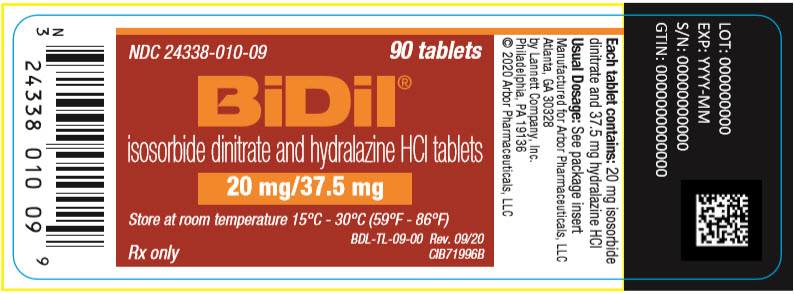
    BiDil should be initiated at a dose of one BiDil Tablet, three times a day. Titrate to a maximum of two tablets three times daily, if tolerated.

    Although titration of BiDil can be rapid (3-5 days), some patients may experience side effects and may take longer to reach their maximum tolerated dose. The dosage may be decreased to as little as one-half BiDil Tablet three times a day if intolerable side effects occur. Efforts should be made to titrate up as soon as side effects subside.

  • Triamcinolone Acetonide Cream [Arbor Pharmaceuticals Inc.]

    Triamcinolone Acetonide

    Triamcinolone Acetonide Cream [Arbor Pharmaceuticals Inc.]

    Apply to affected area two or three times daily. Rub in gently.

    Occlusive Dressing Technique

    Occlusive dressings may be used for the management of psoriasis or other recalcitrant conditions. Gently rub a small amount of cream into the lesion until it disappears. Reapply the preparation leaving a thin coating on the lesion, cover with a pliable nonporous film, and seal the edges. If needed, additional moisture may be provided by covering the lesion with a dampened clean cotton cloth before the nonporous film is applied or by briefly wetting the affected area with water immediately prior to applying the medication. The frequency of changing dressings is best determined on an individual basis. It may be convenient to apply triamcinolone acetonide cream under an occlusive dressing in the evening and to remove the dressing in the morning (i.e., 12-hour occlusion). When utilizing the 12-hour occlusion regimen, additional cream should be applied, without occlusion, during the day. Reapplication is essential at each dressing change. If an infection develops, the use of occlusive dressings should be discontinued and appropriate antimicrobial therapy instituted.

  • Nystatin Cream [Arbor Pharmaceuticals Inc.]

    Nystatin

    Nystatin Cream [Arbor Pharmaceuticals Inc.]

    Adults and Pediatric Patients (Neonates and Older)

    Apply liberally to affected areas twice daily or as indicated until healing is complete.

  • Nitrolingual Pumpspray
    Nitrolingual Pumpspray (Nitroglycerin) Spray, Metered [Arbor Pharmaceuticals, Inc.]

    Nitrolingual Pumpspray

    Nitrolingual Pumpspray (Nitroglycerin) Spray, Metered [Arbor Pharmaceuticals, Inc.]

    2.1 Recommended dosage

    Instruct the patient to administer one or two metered sprays (400 mcg of nitroglycerin per spray) at the onset of an attack onto or under the tongue. A spray may be repeated approximately every five minutes as needed. No more than three metered sprays are recommended within a 15-minute period. If the chest pain persists after a total of three sprays, advise prompt medical attention. Nitrolingual Pumpspray may be used prophylactically 5 to 10 minutes prior to engaging in activities that might precipitate an acute attack.

    2.2 Priming

    The pump must be primed prior to the first use. Each metered spray of Nitrolingual Pumpspray delivers 48 mg of solution containing 400 mcg of nitroglycerin after an initial priming of five sprays. It will remain adequately primed for 6 weeks. If the product is not used within 6 weeks it can be adequately re-primed with one spray. If the product is not used within 3 months it can be adequately re-primed with up to five sprays. There are 60 or 200 metered sprays per bottle. The total number of available doses is dependent, however, on the number of sprays per use (1 or 2 sprays), and the frequency of priming.

    2.3 Administration

    Instruct patients that during administration, the patient should rest, ideally in the sitting position. Hold the container vertically with the valve head uppermost and the spray orifice as close to the mouth as possible. Spray the dose preferably onto or under the tongue by pressing the grooved-button firmly and the mouth closed immediately after each dose. THE SPRAY SHOULD NOT BE INHALED. The medication should not be expectorated or the mouth rinsed for 5 to 10 minutes following administration. Instruct patients to familiarize themselves with the position of the spray orifice, which can be identified by the finger rest on top of the valve, in order to facilitate orientation for administration at night [see Patient Information (17)].

    The amount of liquid remaining in the container should be checked periodically. The transparent container can be used for continuous monitoring of the consumption. With the container upright and level, check to be sure the end of the center tube extends below the level of the liquid. Once fluid falls below the level of the center tube, remaining sprays will not deliver intended dose.

  • Ery-ped (Erythromycin Ethylsuccinate) Suspension [Arbor Pharmaceuticals, Inc.]

    Ery-ped

    Ery-ped (Erythromycin Ethylsuccinate) Suspension [Arbor Pharmaceuticals, Inc.]

    Ery-Ped (erythromycin ethylsuccinate) oral suspensions may be administered without regard to meals.

    Children

    Age, weight, and severity of the infection are important factors in determining the proper dosage. In mild to moderate infections, the usual dosage of erythromycin ethylsuccinate for children is 30 to 50 mg/kg/day in equally divided doses every 6 hours. For more severe infections this dosage may be doubled. If twice-a-day dosage is desired, one-half of the total daily dose may be given every 12 hours. Doses may also be given three times daily by administering one-third of the total daily dose every 8 hours.

    The following dosage schedule is suggested for mild to moderate infections:

    Body Weight Total Daily Dose Under 10 lbs 30-50 mg/kg/day15-25 mg/lb/day 10 to 15 lbs 200 mg 16 to 25 lbs 400 mg 26 to 50 lbs 800 mg 51 to 100 lbs 1200 mg over 100 lbs 1600 mg

    Adults

    400 mg erythromycin ethylsuccinate every 6 hours is the usual dose. Dosage may be increased up to 4 g per day according to the severity of the infection. If twice-a-day dosage is desired, one-half of the total daily dose may be given every 12 hours. Doses may also be given three times daily by administering one-third of the total daily dose every 8 hours.

    For adult dosage calculation, use a ratio of 400 mg of erythromycin activity as the ethylsuccinate to 250 mg of erythromycin activity as the stearate, base or estolate.

    In the treatment of streptococcal infections, a therapeutic dosage of erythromycin ethylsuccinate should be administered for at least 10 days. In continuous prophylaxis against recurrences of streptococcal infections in persons with a history of rheumatic heart disease, the usual dosage is 400 mg twice a day.

    For treatment of urethritis due to C. trachomatis or U. urealyticum

    800 mg three times a day for 7 days.

    For treatment of primary syphilis

    Adults

    48 to 64 g given in divided doses over a period of 10 to 15 days

    For intestinal amebiasis

    Adults

    400 mg four times daily for 10 to 14 days.

    Children

    30 to 50 mg/kg/day in divided doses for 10 to 14 days.

    For use in pertussis

    Although optimal dosage and duration have not been established, doses of erythromycin utilized in reported clinical studies were 40 to 50 mg/kg/day, given in divided doses for 5 to 14 days.

    For treatment of Legionnaires' Disease

    Although optimal doses have not been established, doses utilized in reported clinical data were 1.6 to 4 g daily in divided doses.

  • Clonazepam Tablet [Golden State Medical Supply, Inc]

    Clonazepam

    Clonazepam Tablet [Golden State Medical Supply, Inc]

    Amphetamines should be administered at the lowest effective dosage and dosage should be individually adjusted. Late evening doses should be avoided because of the resulting insomnia.

    Narcolepsy

    Usual dose is 5 to 60 mg per day in divided doses, depending on the individual patient response.

    Narcolepsy seldom occurs in children under 12 years of age; however, when it does, dextroamphetamine sulfate may be used. The suggested initial dose for patients aged 6 to 12 is 5 mg daily; daily dose may be raised in increments of 5 mg at weekly intervals until optimal response is obtained. In patients 12 years of age and older, start with 10 mg daily; daily dosage may be raised in increments of 10 mg at weekly intervals until an optimal response is obtained. If bothersome adverse reactions appear (e.g., insomnia or anorexia), dosage should be reduced. Give first dose on awakening; additional doses (1 or 2) at intervals of 4 to 6 hours.

    Attention Deficit Disorder with Hyperactivity

    Not recommended for pediatric patients under 3 years of age.

    In pediatric patients from 3 to 5 years of age, start with 2.5 mg daily; daily dosage may be raised in increments of 2.5 mg at weekly intervals until optimal response is obtained.

    In pediatric patients 6 years of age and older, start with 5 mg once or twice daily; daily dosage may be raised in increments of 5 mg at weekly intervals until optimal response is obtained. Only in rare cases will it be necessary to exceed a total of 40 mg per day.

    Give first dose on awakening; additional doses (1 or 2) at intervals of 4 to 6 hours.

    Where possible, drug administration should be interrupted occasionally to determine if there is a recurrence of behavioral symptoms sufficient to require continued therapy.

  • Pediaderm Hc
    Pediaderm Hc (Hydrocortisone) Kit [Arbor Pharmaceuticals, Inc.]

    Pediaderm Hc

    Pediaderm Hc (Hydrocortisone) Kit [Arbor Pharmaceuticals, Inc.]

    Topical corticosteroids are generally applied to the affected area as a thin film from two to four times daily depending on the severity of the condition.

    Occlusive dressings may be used for the management of psoriasis or recalcitrant conditions.

    If an infection develops, the use of occlusive dressings should be discontinued and appropriate antimicrobial therapy instituted.

  • Equate Nicotine (Nicotine Polacrilex) Gum, Chewing [Wal-mart Stores Inc]

    Equate Nicotine

    Equate Nicotine (Nicotine Polacrilex) Gum, Chewing [Wal-mart Stores Inc]

    2.1 General Rules and Safety Measures of Oral Sotalol Therapy

    To minimize the risk of induced arrhythmia, patients initiated or re-initiated on sotalol should be hospitalized for at least 3 days or until steady-state drug levels are achieved, in a facility that can provide cardiac resuscitation and continuous electrocardiographic monitoring. Initiate oral sotalol therapy in the presence of personnel trained in the management of serious ventricular arrhythmias. Perform a baseline ECG to determine the QT interval and measure and normalize serum potassium and magnesium levels before initiating therapy with sotalol. Measure serum creatinine and calculate an estimated creatinine clearance in order to establish the appropriate dosing interval for sotalol.

    Start sotalol therapy only if the baseline QTc interval is <450 msec. During initiation and titration, monitor the QT interval after each dose. If the QTc interval prolongs to 500 msec or greater, reduce the dose, increase the interval between doses, or discontinue the drug.

    Administer sotalol twice daily in patients with a creatinine clearance >60 mL/min or once daily in patients with creatinine clearance between 40 and 60 mL/min. Sotalol is not recommended in patients with a creatinine clearance <40 mL/min. The recommended initial oral dose of sotalol is 80 mg (once or twice daily) and is initiated and titrated as described below.

    Patients to be discharged on SOTYLIZE therapy from an in-patient setting should have an adequate supply of SOTYLIZE, to allow uninterrupted therapy until the patient can fill a SOTYLIZE prescription.

    Advise patients who miss a dose to take just the next dose at the usual time.

    For patients discharged and taking compounded sotalol oral solution filled by the pharmacy, consider switching to SOTYLIZE while in an out-patient setting.

    Table 1 shows the appropriate volume of SOTYLIZE solution for typical doses.

    Table 1: SOTYLIZE Dose Volume Dose Volume of SOTYLIZE5 mg/mL solution 80 mg 16 mL 120 mg 24 mL 160 mg 32 mL 240 mg 48 mL 320 mg 64 mL

    2.2 Ventricular Arrhythmia

    The recommended initial dose of oral sotalol for the treatment of ventricular arrhythmia is 80 mg, once or twice daily based on creatinine clearance [see Dosage and Administration (2.1)]. The dose may be increased in increments of 80 mg per day every 3 days as needed, provided QTc < 500 msec. The usual therapeutic effect is observed with oral doses of 80 to 160 mg once or twice a day. Oral doses as high as 240-320 mg once or twice a day have been utilized in patients with refractory life-threatening arrhythmias.

    Pediatrics

    As in adults, initiate in the hospital after appropriate clinical assessment, gradually increase dose as required, and monitor QTc and heart rate.

    For children aged 2 years and greater, with normal renal function, doses normalized for body surface area are appropriate for both initial and incremental dosing.

    For initiation of treatment, 30 mg/m2 three times a day (90 mg/m2 total daily dose) is approximately equivalent to the initial 160 mg total daily dose for adults. Subsequent titration to a maximum of 60 mg/m2 (approximately equivalent to the 360 mg total daily dose for adults) can then occur. Allow at least 36 hours between dose increments to attain steady-state plasma concentrations of sotalol in patients with normal renal function.

    For children aged 2 years or younger, reduce the dose as shown in Figure 1.

    Figure 1: Factor For Dose Adjustment by Age

    For a child with normal renal function aged 1 month, the initial starting dose would be (30 × 0.7) = 21 mg/m2, administered three times daily. For a child aged about 1 week, the initial starting dose should be multiplied by 0.3; the starting dose would be (30 × 0.3) = 9 mg/m2. Use similar calculations for dose titration.

    Since the half-life of sotalol increases below about 2 years, time to steady-state will also increase. Thus, in neonates the time to steady-state may be a week or longer.

    2.3 Symptomatic AFIB/AFL

    The recommended initial dose of oral sotalol for the treatment of symptomatic AFIB/AFL is 80 mg, once or twice daily based on creatinine clearance [see Dosage and Administration (2.1)]. If that dose level at steady-state does not acceptably reduce the time to recurrence of arrhythmia and is tolerated with QTc <520 msec, increase the dose to 160 mg orally once or twice a day every three days. In the U.S. multicenter dose-response study, 120 mg orally once or twice a day was found to be the most effective dose in prolonging the time to ECG-documented symptomatic recurrence of AFIB/AFL.

    2.4 Considerations in Renal Impairment

    Sotalol elimination is predominantly via the kidney in the unchanged form. Use of sotalol in any age group with decreased renal function should be at lower doses or at increased intervals between doses. Monitoring of heart rate and QTc is most important and it will take much longer to reach steady-state with any dose and/or frequency of administration.

  • Pediaderm Ta (Triamcinolone Acetonide) Kit [Arbor Pharmaceuticals, Inc.]

    Pediaderm Ta

    Pediaderm Ta (Triamcinolone Acetonide) Kit [Arbor Pharmaceuticals, Inc.]

    Apply to affected area two or three times daily. Rub in gently.

    Occlusive Dressing Technique

    Occlusive dressings may be used for the management of psoriasis or other recalcitrant conditions. Gently rub a small amount of cream into the lesion until it disappears. Reapply the preparation leaving a thin coating on the lesion, cover with a pliable nonporous film, and seal the edges. If needed, additional moisture may be provided by covering the lesion with a dampened clean cotton cloth before the nonporous film is applied or by briefly wetting the affected area with water immediately prior to applying the medication. The frequency of changing dressings is best determined on an individual basis. It may be convenient to apply triamcinolone acetonide cream under an occlusive dressing in the evening and to remove the dressing in the morning (i.e., 12-hour occlusion). When utilizing the 12-hour occlusion regimen, additional cream should be applied, without occlusion, during the day. Reapplication is essential at each dressing change. If an infection develops, the use of occlusive dressings should be discontinued and appropriate antimicrobial therapy instituted.

  • Pediaderm Af
    Pediaderm Af (Nystatin) Kit [Arbor Pharmaceuticals, Inc.]

    Pediaderm Af

    Pediaderm Af (Nystatin) Kit [Arbor Pharmaceuticals, Inc.]

    Adults and Pediatric Patients (Neonates and Older)

    Apply liberally to affected areas twice daily or as indicated until healing is complete.

  • E.e.s 400 (Erythromycin Ethylsuccinate) Tablet E.e.s (Erythromycin Ethylsuccinate) Granule, For Suspension [Arbor Pharmaceuticals, Inc.]

    E.e.s 400

    E.e.s 400 (Erythromycin Ethylsuccinate) Tablet E.e.s (Erythromycin Ethylsuccinate) Granule, For Suspension [Arbor Pharmaceuticals, Inc.]

    Erythromycin ethylsuccinate suspensions and film-coated tablets may be administered without regard to meals.

    Children

    Age, weight, and severity of the infection are important factors in determining the proper dosage. In mild to moderate infections the usual dosage of erythromycin ethylsuccinate for children is 30 to 50 mg/kg/day in equally divided doses every 6 hours. For more severe infections this dosage may be doubled. If twice-a-day dosage is desired, one-half of the total daily dose may be given every 12 hours. Doses may also be given three times daily by administering one-third of the total daily dose every 8 hours.

    The following dosage schedule is suggested for mild to moderate infections:

    Body Weight Total Daily Dose Under 10 lbs 30 to 50 mg/kg/day15 to 25 mg/lb/day 10 to 15 lbs 200 mg 16 to 25 lbs 400 mg 26 to 50 lbs 800 mg 51 to 100 lbs 1200 mg over 100 lbs 1600 mg

    Adults

    400 mg erythromycin ethylsuccinate every 6 hours is the usual dose. Dosage may be increased up to 4 g per day according to the severity of the infection. If twice-a-day dosage is desired, one-half of the total daily dose may be given every 12 hours. Doses may also be given three times daily by administering one-third of the total daily dose every 8 hours.

    For adult dosage calculation, use a ratio of 400 mg of erythromycin activity as the ethylsuccinate to 250 mg of erythromycin activity as the stearate, base or estolate.

    In the treatment of streptococcal infections, a therapeutic dosage of erythromycin ethylsuccinate should be administered for at least 10 days. In continuous prophylaxis against recurrences of streptococcal infections in persons with a history of rheumatic heart disease, the usual dosage is 400 mg twice a day.

    For Treatment of Urethritis Due to C. trachomatis or U. urealyticum

    800 mg three times a day for 7 days.

    For Treatment of Primary Syphilis

    Adults

    48 to 64 g given in divided doses over a period of 10 to 15 days.

    For Intestinal Amebiasis

    Adults

    400 mg four times daily for 10 to 14 days.

    Children

    30 to 50 mg/kg/day in divided doses for 10 to 14 days.

    For Use in Pertussis

    Although optimal dosage and duration have not been established, doses of erythromycin utilized in reported clinical studies were 40 to 50 mg/kg/day, given in divided doses for 5 to 14 days.

    For Treatment of Legionnaires' Disease

    Although optimal doses have not been established, doses utilized in reported clinical data were those recommended above (1.6 to 4 g daily in divided doses.)

    Directions for Mixing E.E.S. Granules

    100 mL

    Add 77 mL water and shake vigorously. This makes 100 mL of suspension.

    200 mL

    Add 154 mL water and shake vigorously. This makes 200 mL of suspension.

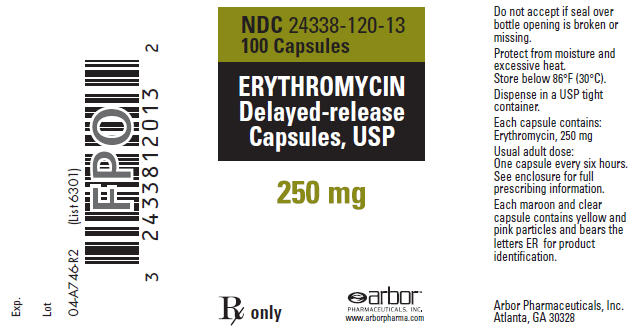
  • Erythromycin Capsule, Delayed Release [Arbor Pharmaceuticals, Inc.]

    Erythromycin

    Erythromycin Capsule, Delayed Release [Arbor Pharmaceuticals, Inc.]

    Erythromycin is well absorbed and may be given without regard to meals. Optimum blood levels are obtained in a fasting state (administration at least one half hour and preferably two hours before or after a meal); however, blood levels obtained upon administration of enteric-coated erythromycin products in the presence of food are still above minimal inhibitory concentrations (MICs) of most organisms for which erythromycin is indicated.

    ADULTS

    The usual dose is 250 mg every 6 hours taken one hour before meals. If twice-a-day dosage is desired, the recommended dose is 500 mg every 12 hours. Dosage may be increased up to 4 grams per day, according to the severity of the infection. Twice-a-day dosing is not recommended when doses larger than 1 gram daily are administered.

    CHILDREN

    Age, weight, and severity of the infection are important factors in determining the proper dosage. The usual dosage is 30 to 50 mg/kg/day, in divided doses. For the treatment of more severe infections, this dose may be doubled.

    Streptococcal infections

    A therapeutic dosage of oral erythromycin should be administered for at least 10 days. For continuous prophylaxis against recurrences of streptococcal infections in persons with a history of rheumatic heart disease, the dose is 250 mg twice a day.

    Primary syphilis

    30 to 40 grams given in divided doses over a period of 10 to 15 days.

    Intestinal amebiasis

    250 mg four times daily for 10 to 14 days for adults; 30 to 50 mg/kg/day in divided doses for 10 to 14 days for children.

    Legionnaires' disease

    Although optimal doses have not been established, doses utilized in reported clinical data were those recommended above (1 to 4 grams daily in divided doses).

    Urogenital infections during pregnancy due to Chlamydia trachomatis

    Although the optimal dose and duration of therapy have not been established, the suggested treatment is erythromycin 500 mg, by mouth, 4 times a day on an empty stomach for at least 7 days. For women who cannot tolerate this regimen, a decreased dose of 250 mg, by mouth, 4 times a day should be used for at least 14 days.

    For adults with uncomplicated urethral, endocervical, or rectal infections caused by Chlamydia trachomatis in whom tetracyclines are contraindicated or not tolerated: 500 mg, by mouth, 4 times a day for at least 7 days.

    Pertussis

    Although optimum dosage and duration of therapy have not been established, doses of erythromycin utilized in reported clinical studies were 40 to 50 mg/kg/day, given in divided doses for 5 to 14 days.

    Nongonococcal urethritis due to Ureaplasma urealyticum

    When tetracycline is contraindicated or not tolerated: 500 mg of erythromycin, orally, four times daily for at least 7 days.

    Acute pelvic inflammatory disease due to N. gonorrhoeae

    500 mg IV of erythromycin lactobionate for injection, USP every 6 hours for 3 days followed by 250 mg of erythromycin, orally every 6 hours for 7 days.

  • Erythrocin Stearate (Erythromycin Stearate) Tablet, Film Coated [Arbor Pharmaceuticals, Inc.]

    Erythrocin Stearate

    Erythrocin Stearate (Erythromycin Stearate) Tablet, Film Coated [Arbor Pharmaceuticals, Inc.]

    In most patients, ERYTHROCIN® STEARATE Film-coated tablets are well absorbed and may be dosed orally without regard to meals. However, optimal blood levels are obtained when ERYTHROCIN® STEARATE tablets are given in the fasting state (at least 1/2 hour and preferably 2 hours before meals).

    Adults

    The usual dosage is 250 mg every 6 hours; or 500 mg every 12 hours. Dosage may be increased up to 4 g per day according to the severity of the infection. However, twice-a-day dosing is not recommended when doses larger than 1 g daily are administered.

    Children

    Age, weight, and severity of the infection are important factors in determining the proper dosage. The usual dosage is 30 to 50 mg/kg/day, in equally divided doses. For more severe infections this dosage may be doubled but should not exceed 4 g per day.

    In the treatment of streptococcal infections of the upper respiratory tract (e.g., tonsillitis or pharyngitis), the therapeutic dosage of erythromycin should be administered for at least ten days.

    The American Heart Association suggests a dosage of 250 mg of erythromycin orally, twice a day in long-term prophylaxis of streptococcal upper respiratory tract infections for the prevention of recurring attacks of rheumatic fever in patients allergic to penicillin and sulfonamides.4

    Conjunctivitis of the Newborn Caused by Chlamydia trachomatis

    Oral erythromycin suspension 50 mg/kg/day in 4 divided doses for at least 2 weeks.4

    Pneumonia of Infancy Caused by Chlamydia trachomatis

    Although the optimal duration of therapy has not been established, the recommended therapy is oral erythromycin suspension 50 mg/kg/day in 4 divided doses for at least 3 weeks.

    Urogenital Infections During Pregnancy Due to Chlamydia trachomatis

    Although the optimal dose and duration of therapy have not been established, the suggested treatment is 500 mg of erythromycin by mouth four times a day or two erythromycin 333 mg tablets orally every 8 hours on an empty stomach for at least 7 days. For women who cannot tolerate this regimen, a decreased dose of one erythromycin 500 mg tablet orally every 12 hours, one 333 mg tablet orally every 8 hours or 250 mg by mouth four times a day should be used for at least 14 days.6

    For adults with uncomplicated urethral, endocervical, or rectal infections caused by Chlamydia trachomatis when tetracycline is contraindicated or not tolerated

    500 mg of erythromycin by mouth four times a day or two 333 mg tablets orally every 8 hours for at least 7 days.6

    For patients with nongonococcal urethritis caused by Ureaplasma urealyticum when tetracycline is contraindicated or not tolerated

    500 mg of erythromycin by mouth four times a day or two 333 mg tablets orally every 8 hours for at least seven days.6

    Primary Syphilis

    30 to 40 g given in divided doses over a period of 10 to 15 days.

    Acute Pelvic Inflammatory Disease Caused by N. gonorrhoeae

    500 mg Erythrocin Lactobionate-I.V. (erythromycin lactobionate for injection, USP) every 6 hours for 3 days, followed by 500 mg of erythromycin base orally every 12 hours, or 333 mg of erythromycin base orally every 8 hours for 7 days.

    Intestinal Amebiasis

    Adults

    500 mg every 12 hours, 333 mg every 8 hours or 250 mg every 6 hours for 10 to 14 days.

    Children

    30 to 50 mg/kg/day in divided doses for 10 to 14 days.

    Pertussis

    Although optimal dosage and duration have not been established, doses of erythromycin utilized in reported clinical studies were 40 to 50 mg/kg/day, given in divided doses for 5 to 14 days.

    Legionnaires' Disease

    Although optimal dosage has not been established, doses utilized in reported clinical data were 1 to 4 g daily in divided doses.

  • Pce
    Pce (Erythromycin Ethylsuccinate) Tablet [Arbor Pharmaceuticals, Inc.]

    Pce

    Pce (Erythromycin Ethylsuccinate) Tablet [Arbor Pharmaceuticals, Inc.]

    In most patients, PCE tablets are well absorbed and may be dosed orally without regard to meals. However, optimal blood levels are obtained when either PCE 333 mg or PCE 500 mg tablets are given in the fasting state (at least 1/2 hour and preferably 2 hours before meals).

    Adults

    The usual dosage of PCE tablets are one 333 mg tablet every 8 hours or one 500 mg tablet every 12 hours. Dosage may be increased up to 4 g per day according to the severity of the infection. However, twice-a-day dosing is not recommended when doses larger than 1 g daily are administered.

    Children

    Age, weight, and severity of the infection are important factors in determining the proper dosage. The usual dosage is 30 to 50 mg/kg/day, in equally divided doses. For more severe infections this dosage may be doubled but should not exceed 4 g per day.

    In the treatment of streptococcal infections of the upper respiratory tract (e.g., tonsillitis or pharyngitis), the therapeutic dosage of erythromycin should be administered for at least ten days.

    The American Heart Association suggests a dosage of 250 mg of erythromycin orally, twice a day in long-term prophylaxis of streptococcal upper respiratory tract infections for the prevention of recurring attacks of rheumatic fever in patients allergic to penicillin and sulfonamides.4

    Conjunctivitis of the Newborn Caused by Chlamydia trachomatis

    Oral erythromycin suspension 50 mg/kg/day in 4 divided doses for at least 2 weeks.4

    Pneumonia of Infancy Caused by Chlamydia trachomatis

    Although the optimal duration of therapy has not been established, the recommended therapy is oral erythromycin suspension 50 mg/kg/day in 4 divided doses for at least 3 weeks.

    Urogenital Infections During Pregnancy Due to Chlamydia trachomatis

    Although the optimal dose and duration of therapy have not been established, the suggested treatment is 500 mg of erythromycin by mouth four times a day or two erythromycin 333 mg tablets orally every 8 hours on an empty stomach for at least 7 days. For women who cannot tolerate this regimen, a decreased dose of one erythromycin 500 mg tablet orally every 12 hours, one 333 mg tablet orally every 8 hours or 250 mg by mouth four times a day should be used for at least 14 days.6

    For adults with uncomplicated urethral, endocervical, or rectal infections caused by Chlamydia trachomatis, when tetracycline is contraindicated or not tolerated

    500 mg of erythromycin by mouth four times a day or two 333 mg tablets orally every 8 hours for at least 7 days.6

    For patients with nongonococcal urethritis caused by Ureaplasma urealyticum when tetracycline is contraindicated or not tolerated

    500 mg of erythromycin by mouth four times a day or two 333 mg tablets orally every 8 hours for at least seven days.6

    Primary Syphilis

    30 to 40 g given in divided doses over a period of 10 to 15 days.

    Acute Pelvic Inflammatory Disease Caused by N. gonorrhoeae

    500 mg Erythrocin Lactobionate-I.V. (erythromycin lactobionate for injection, USP) every 6 hours for 3 days, followed by 500 mg of erythromycin base orally every 12 hours, or 333 mg of erythromycin base orally every 8 hours for 7 days.

    Intestinal Amebiasis

    Adults

    500 mg every 12 hours, 333 mg every 8 hours or 250 mg every 6 hours for 10 to 14 days.

    Children

    30 to 50 mg/kg/day in divided doses for 10 to 14 days.

    Pertussis

    Although optimal dosage and duration have not been established, doses of erythromycin utilized in reported clinical studies were 40 to 50 mg/kg/day, given in divided doses for 5 to 14 days.

    Legionnaires' Disease

    Although optimal dosage has not been established, doses utilized in reported clinical data were 1 to 4 g daily in divided doses.

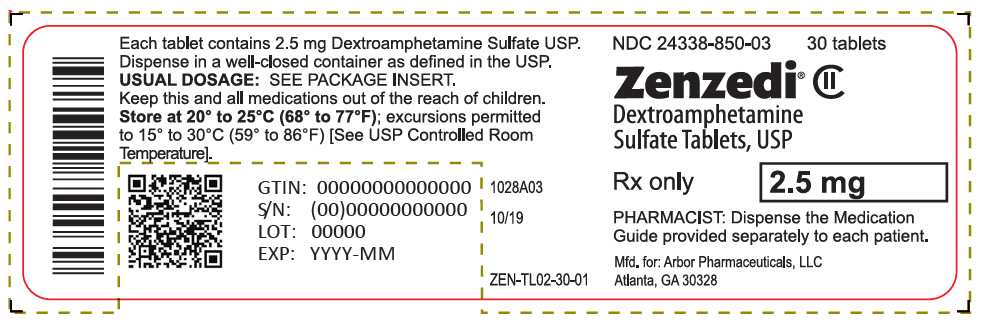
  • Zenzedi (Dextroamphetamine Sulfate) Tablet [Arbor Pharmaceuticals, Inc.]

    Zenzedi

    Zenzedi (Dextroamphetamine Sulfate) Tablet [Arbor Pharmaceuticals, Inc.]

    Amphetamines should be administered at the lowest effective dosage and dosage should be individually adjusted. Late evening doses should be avoided because of the resulting insomnia.

    Narcolepsy

    Usual dose is 5 to 60 mg per day in divided doses, depending on the individual patient response.

    Narcolepsy seldom occurs in pediatric patients under 12 years of age; however, when it does, dextroamphetamine sulfate may be used. The suggested initial dose for patients aged 6 to 12 is 5 mg daily; daily dose may be raised in increments of 5 mg at weekly intervals until optimal response is obtained. In patients 12 years of age and older, start with 10 mg daily; daily dosage may be raised in increments of 10 mg at weekly intervals until an optimal response is obtained. If bothersome adverse reactions appear (e.g., insomnia or anorexia), dosage should be reduced. Give first dose on awakening; additional doses (1 or 2) at intervals of 4 to 6 hours.

    Attention Deficit Disorder with Hyperactivity

    Not recommended for pediatric patients under 3 years of age.

    In pediatric patients 3 to 5 years of age, start with 2.5 mg daily, by tablet; daily dosage may be raised in increments of 2.5 mg at weekly intervals until optimal response is obtained.

    In pediatric patients 6 years of age and older, start with 5 mg once or twice daily; daily dosage may be raised in increments of 5 mg at weekly intervals until optimal response is obtained. Only in rare cases will it be necessary to exceed a total of 40 mg per day.

    Give first dose on awakening; additional doses (1 or 2) at intervals of 4 to 6 hours.

    Where possible, drug administration should be interrupted occasionally to determine if there is a recurrence of behavioral symptoms sufficient to require continued therapy.

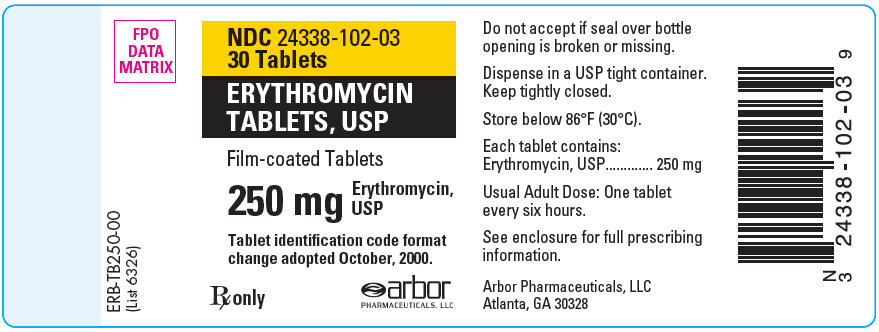
  • Erythromycin Ethylsuccinate Tablet [Arbor Pharmaceuticals, Inc.]

    Erythromycin Ethylsuccinate

    Erythromycin Ethylsuccinate Tablet [Arbor Pharmaceuticals, Inc.]

    Erythromycin ethylsuccinate tablets may be administered without regard to meals. To avoid unpleasant taste, the 400 mg tablets should not be chewed.

    Children

    Age, weight, and severity of the infection are important factors in determining the proper dosage. In mild to moderate infections the usual dosage of erythromycin ethylsuccinate for children is 30 to 50 mg/kg/day in equally divided doses every 6 hours. For more severe infections this dosage may be doubled. If twice-a-day dosage is desired, one-half of the total daily dose may be given every 12 hours. Doses may also be given three times daily by administering one-third of the total daily dose every 8 hours.

    The following dosage schedule is suggested for mild to moderate infections:

    Body Weight Total Daily Dose Under 10 lbs 30-50 mg/kg/day 15-25 mg/lb/day 10 to 15 lbs 200 mg 16 to 25 lbs 400 mg 26 to 50 lbs 800 mg 51 to 100 lbs 1200 mg over 100 lbs 1600 mg

    Adults

    400 mg erythromycin ethylsuccinate every 6 hours is the usual dose. Dosage may be increased up to 4 g per day according to the severity of the infection. If twice-a-day dosage is desired, one-half of the total daily dose may be given every 12 hours. Doses may also be given three times daily by administering one-third of the total daily dose every 8 hours.

    For adult dosage calculation, use a ratio of 400 mg of erythromycin activity as the ethylsuccinate to 250 mg of erythromycin activity as the stearate, base or estolate.

    In the treatment of streptococcal infections, a therapeutic dosage of erythromycin ethylsuccinate should be administered for at least 10 days. In continuous prophylaxis against recurrences of streptococcal infections in persons with a history of rheumatic heart disease, the usual dosage is 400 mg twice a day.

    For Treatment of Urethritis Due to C. trachomatis or U. urealyticum

    800 mg three times a day for 7 days.

    For Treatment of Primary Syphilis

    Adults

    48 to 64 g given in divided doses over a period of 10 to 15 days.

    For Intestinal Amebiasis

    Adults

    400 mg four times daily for 10 to 14 days. Children: 30 to 50 mg/kg/day in divided doses for 10 to 14 days.

    For Use in Pertussis

    Although optimal dosage and duration have not been established, doses of erythromycin utilized in reported clinical studies were 40 to 50 mg/kg/day, given in divided doses for 5 to 14 days.

    For Treatment of Legionnaires' Disease

    Although optimal doses have not been established, doses utilized in reported clinical data were those recommended above (1.6 to 4 g daily in divided doses.)

  • Ery-tab (Erythromycin) Tablet, Delayed Release [Arbor Pharmaceuticals, Inc.]

    Ery-tab

    Ery-tab (Erythromycin) Tablet, Delayed Release [Arbor Pharmaceuticals, Inc.]

    In most patients, ERY-TAB® (erythromycin delayed-release tablets) are well absorbed and may be dosed orally without regard to meals. However, optimal blood levels are obtained when ERY-TAB® 250 mg, ERY-TAB® 333 mg or ERY-TAB® 500 mg tablets are given in the fasting state (at least 1/2 hour and preferably 2 hours before meals).

    Adults

    The usual dose is 250 mg four times daily in equally spaced doses. The 333 mg tablet is recommended if dosage is desired every 8 hours. If twice-a-day dosage is desired, the recommended dose is 500 mg every 12 hours. Dosage may be increased up to 4 g per day according to the severity of the infection. However, twice-a-day dosing is not recommended when doses larger than 1 g daily are administered.

    Children

    Age, weight, and severity of the infection are important factors in determining the proper dosage. The usual dosage is 30 to 50 mg/kg/day, in equally divided doses. For more severe infections, this dose may be doubled but should not exceed 4 g per day.

    In the treatment of streptococcal infections of the upper respiratory tract (e.g., tonsillitis or pharyngitis), the therapeutic dosage of erythromycin should be administered for at least ten days.

    The American Heart Association suggests a dosage of 250 mg of erythromycin orally, twice a day in long-term prophylaxis of streptococcal upper respiratory tract infections for the prevention of recurring attacks of rheumatic fever in patients allergic to penicillin and sulfonamides.4

    Conjunctivitis of the Newborn Caused by Chlamydia trachomatis

    Oral erythromycin suspension 50 mg/kg/day in 4 divided doses for at least 2 weeks.4

    Pneumonia of Infancy Caused by Chlamydia trachomatis

    Although the optimal duration of therapy has not been established, the recommended therapy is oral erythromycin suspension 50 mg/kg/day in 4 divided doses for at least 3 weeks.

    Urogenital Infections During Pregnancy Due to Chlamydia trachomatis

    Although the optimal dose and duration of therapy have not been established, the suggested treatment is 500 mg of erythromycin by mouth four times a day or two erythromycin 333 mg tablets orally every 8 hours on an empty stomach for at least 7 days. For women who cannot tolerate this regimen, a decreased dose of one erythromycin 500 mg tablet orally every 12 hours, one 333 mg tablet orally every 8 hours or 250 mg by mouth four times a day should be used for at least 14 days.6

    For adults with uncomplicated urethral, endocervical, or rectal infections caused by Chlamydia trachomatis, when tetracycline is contraindicated or not tolerated

    500 mg of erythromycin by mouth four times a day or two 333 mg tablets orally every 8 hours for at least 7 days.6

    For patients with nongonococcal urethritis caused by Ureaplasma urealyticum when tetracycline is contraindicated or not tolerated

    500 mg of erythromycin by mouth four times a day or two 333 mg tablets orally every 8 hours for at least seven days.6

    Primary Syphilis

    30 to 40 g given in divided doses over a period of 10 to 15 days.

    Acute pelvic inflammatory disease caused by N. gonorrhoeae

    500 mg Erythrocin Lactobionate-I.V. (erythromycin lactobionate for injection, USP) every 6 hours for 3 days, followed by 500 mg of erythromycin base orally every 12 hours, or 333 mg of erythromycin base orally every 8 hours for 7 days.

    Intestinal Amebiasis

    Adults

    500 mg every 12 hours, 333 mg every 8 hours or 250 mg every 6 hours for 10 to 14 days.

    Children

    30 to 50 mg/kg/day in divided doses for 10 to 14 days.

    Pertussis

    Although optimal dosage and duration have not been established, doses of erythromycin utilized in reported clinical studies were 40 to 50 mg/kg/day, given in divided doses for 5 to 14 days.

    Legionnaires' Disease

    Although optimal dosage has not been established, doses utilized in reported clinical data were 1 to 4 g daily in divided doses.

    Preoperative Prophylaxis for Elective Colorectal Surgery

    Listed below is an example of a recommended bowel preparation regimen.

    A proposed surgery time of 8:00 a.m. has been used.

    Pre-op Day 3

    Minimum residue or clear liquid diet. Bisacodyl, 1 tablet orally at 6:00 p.m.

    Pre-op Day 2

    Minimum residue or clear liquid diet. Magnesium sulfate, 30 mL, 50% solution (15 g) orally at 10:00 a.m., 2:00 p.m. and 6:00 p.m. Enema at 7:00 p.m. and 8:00 p.m.

    Pre-op Day 1

    Clear liquid diet. Supplemental (IV) fluids as needed. Magnesium sulfate, 30 mL, 50% solution (15 g) orally at 10:00 a.m. and 2:00 p.m. Neomycin sulfate (1.0 g) and erythromycin base (two 500 mg tablets, three 333 mg tablets or four 250 mg tablets) orally at 1:00 p.m., 2:00 p.m. and 11:00 p.m. No enema.

    Day of Operation

    Patient evacuates rectum at 6:30 a.m. for scheduled operation at 8:00 a.m.

  • Erythromycin Tablet, Film Coated [Arbor Pharmaceuticals, Inc.]

    Erythromycin

    Erythromycin Tablet, Film Coated [Arbor Pharmaceuticals, Inc.]

    In most patients, Erythromycin Tablets are well absorbed and may be dosed orally without regard to meals. However, optimal blood levels are obtained when Erythromycin Tablets are given in the fasting state (at least 1/2 hour and preferably 2 hours before meals).

    Adults

    The usual dosage of Erythromycin Tablets is one 250 mg tablet four times daily in equally spaced doses or one 500 mg tablet every 12 hours. Dosage may be increased up to 4 g per day according to the severity of the infection. However, twice-a-day dosing is not recommended when doses larger than 1 g daily are administered.

    Children

    Age, weight, and severity of the infection are important factors in determining the proper dosage. The usual dosage is 30 to 50 mg/kg/day, in equally divided doses. For more severe infections this dosage may be doubled but should not exceed 4 g per day.

    In the treatment of streptococcal infections of the upper respiratory tract (e.g., tonsillitis or pharyngitis), the therapeutic dosage of erythromycin should be administered for at least ten days.

    The American Heart Association suggests a dosage of 250 mg of erythromycin orally, twice a day in long-term prophylaxis of streptococcal upper respiratory tract infections for the prevention of recurring attacks of rheumatic fever in patients allergic to penicillin and sulfonamides.4

    Conjunctivitis of the Newborn Caused by Chlamydia trachomatis

    Oral erythromycin suspension 50 mg/kg/day in 4 divided doses for at least 2 weeks.4

    Pneumonia of Infancy Caused by Chlamydia trachomatis

    Although the optimal duration of therapy has not been established, the recommended therapy is oral erythromycin suspension 50 mg/kg/day in 4 divided doses for at least 3 weeks.

    Urogenital Infections During Pregnancy Due to Chlamydia trachomatis

    Although the optimal dose and duration of therapy have not been established, the suggested treatment is 500 mg of erythromycin by mouth four times a day on an empty stomach for at least 7 days. For women who cannot tolerate this regimen, a decreased dose of one erythromycin 500 mg tablet orally every 12 hours or 250 mg by mouth four times a day should be used for at least 14 days.6

    For adults with uncomplicated urethral, endocervical, or rectal infections caused by Chlamydia trachomatis, when tetracycline is contraindicated or not tolerated

    500 mg of erythromycin by mouth four times a day for at least 7 days.6

    For patients with nongonococcal urethritis caused by Ureaplasma urealyticum when tetracycline is contraindicated or not tolerated

    500 mg of erythromycin by mouth four times a day for at least seven days.6

    Primary syphilis

    30 to 40 g given in divided doses over a period of 10 to 15 days.

    Acute Pelvic Inflammatory Disease Caused by N. gonorrhoeae

    500 mg Erythrocin® Lactobionate-I.V. (erythromycin lactobionate for injection, USP) every 6 hours for 3 days, followed by 500 mg of erythromycin base orally every 12 hours for 7 days.

    Intestinal Amebiasis

    Adults

    500 mg every 12 hours or 250 mg every 6 hours for 10 to 14 days.

    Children

    30 to 50 mg/kg/day in divided doses for 10 to 14 days.

    Pertussis

    Although optimal dosage and duration have not been established, doses of erythromycin utilized in reported clinical studies were 40 to 50 mg/kg/day, given in divided doses for 5 to 14 days.

    Legionnaires' Disease

    Although optimal dosage has not been established, doses utilized in reported clinical data were 1 to 4 g daily in divided doses.