Solco Healthcare Us, Llc

Manufacturer Details

There are currently no manufacturer details available.

Share This Page

Solco Healthcare Us, Llc Drugs

  • Hyoscyamus Niger 6c (Hyoscyamus Niger) Pellet [Paramesh Banerji Life Sciences Llc]

    Hyoscyamus Niger 6c

    Hyoscyamus Niger 6c (Hyoscyamus Niger) Pellet [Paramesh Banerji Life Sciences Llc]

    2.1 General Considerations

    The side effects of irbesartan are generally rare and apparently independent of dose; those of hydrochlorothiazide are a mixture of dose-dependent (primarily hypokalemia) and dose-independent phenomena (e.g., pancreatitis), the former much more common than the latter. [See Adverse Reactions (6).]

    Maximum antihypertensive effects are attained within 2 to 4 weeks after a change in dose.

    Irbesartan and Hydrochlorothiazide Tablets may be administered with or without food.

    Irbesartan and Hydrochlorothiazide Tablets may be administered with other antihypertensive agents.

    Renal impairment. The usual regimens of therapy with Irbesartan and Hydrochlorothiazide Tablets may be followed as long as the patient’s creatinine clearance is >30 mL/min. In patients with more severe renal impairment, loop diuretics are preferred to thiazides, so Irbesartan and Hydrochlorothiazide Tablets are not recommended.

    Hepatic impairment. No dosage adjustment is necessary in patients with hepatic impairment.

    2.2 Add-On Therapy

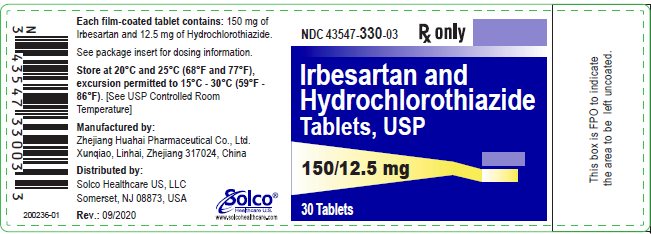
    In patients not controlled on monotherapy with irbesartan or hydrochlorothiazide, the recommended doses of Irbesartan and Hydrochlorothiazide Tablets, in order of increasing mean effect, are (irbesartan-hydrochlorothiazide) 150/12.5 mg, 300/12.5 mg, and 300/25 mg. The largest incremental effect will likely be in the transition from monotherapy to 150/12.5 mg. [See Clinical Studies (14.2).]

    2.3 Replacement Therapy

    Irbesartan and Hydrochlorothiazide Tablets may be substituted for the titrated components.

    2.4 Initial Therapy

    The usual starting dose is Irbesartan and Hydrochlorothiazide Tablets 150/12.5 mg once daily. The dosage can be increased after 1 to 2 weeks of therapy to a maximum of 300/25 mg once daily as needed to control blood pressure [see Clinical Studies (14.2)]. Irbesartan and Hydrochlorothiazide Tablets are not recommended as initial therapy in patients with intravascular volume depletion [see Warnings and Precautions (5.2)].

  • Topiramate Tablet [Direct Rx]

    Topiramate

    Topiramate Tablet [Direct Rx]

    2.1 Recommended Dosing

    Levetiracetam Extended-release is administered once daily.

    Initiate treatment with a dose of 1000 mg once daily. The once daily dosage may be adjusted in increments of 1000 mg every 2 weeks to a maximum recommended daily dose of 3000 mg/day.

    2.2 Dosage Adjustment in Adult Patients with Renal Impairment

    Levetiracetam Extended-release dosing must be individualized according to the patient's renal function status. Recommended dosage adjustments for adults are shown in Table 1. In order to calculate the dose recommended for patients with renal impairment, creatine clearance adjusted for body surface area must be calculated. To do this, an estimate of the patient's creatinine clearance (CLcr) in mL/min must first be calculated using the following formula:

    Table 1: Dosage Adjustment Regimen For Adult Patients With Impaired Renal Function Group CreatinineClearance(mL/min/1.73m2) Dosage (mg) Frequency Normal > 80 1000 to 3000 Every 24 hours Mild 50 – 80 1000 to 2000 Every 24 hours Moderate 30 – 50 500 to 1500 Every 24 hours Severe < 30 500 to 1000 Every 24 hours
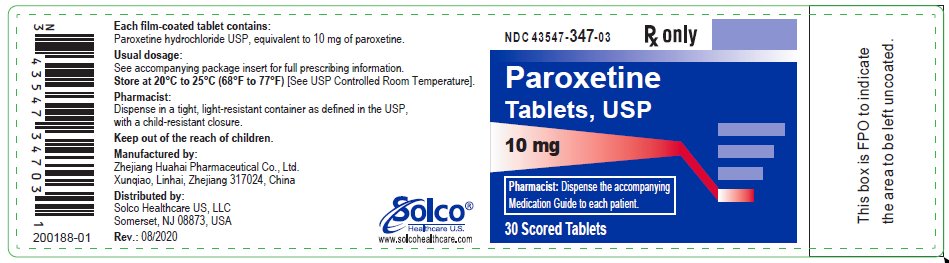
  • Paroxetine (Paroxetine Hydrochloride Hemihydrate) Tablet, Film Coated [Solco Healthcare Us, Llc]

    Paroxetine

    Paroxetine (Paroxetine Hydrochloride Hemihydrate) Tablet, Film Coated [Solco Healthcare Us, Llc]

    Major Depressive Disorder: Usual Initial Dosage: Paroxetine Tablets should be administered as a single daily dose with or without food, usually in the morning. The recommended initial dose is 20 mg/day. Patients were dosed in a range of 20 mg/day to 50 mg/day in the clinical trials demonstrating the effectiveness of Paroxetine Tablets in the treatment of major depressive disorder. As with all drugs effective in the treatment of major depressive disorder, the full effect may be delayed. Some patients not responding to a 20-mg dose may benefit from dose increases, in 10-mg/day increments, up to a maximum of 50 mg/day. Dose changes should occur at intervals of at least 1 week.

    Maintenance Therapy: There is no body of evidence available to answer the question of how long the patient treated with Paroxetine Tablets should remain on it. It is generally agreed that acute episodes of major depressive disorder require several months or longer of sustained pharmacologic therapy. Whether the dose needed to induce remission is identical to the dose needed to maintain and/or sustain euthymia is unknown.

    Systematic evaluation of the efficacy of Paroxetine Tablets has shown that efficacy is maintained for periods of up to 1 year with doses that averaged about 30 mg.

    Obsessive Compulsive Disorder: Usual Initial Dosage: Paroxetine Tablets should be administered as a single daily dose with or without food, usually in the morning. The recommended dose of Paroxetine Tablets in the treatment of OCD is 40 mg daily. Patients should be started on 20 mg/day and the dose can be increased in 10-mg/day increments. Dose changes should occur at intervals of at least 1 week. Patients were dosed in a range of 20 mg/day to 60 mg/day in the clinical trials demonstrating the effectiveness of Paroxetine Tablets in the treatment of OCD. The maximum dosage should not exceed 60 mg/day.

    Maintenance Therapy: Long-term maintenance of efficacy was demonstrated in a 6-month relapse prevention trial. In this trial, patients with OCD assigned to paroxetine demonstrated a lower relapse rate compared to patients on placebo (see CLINICAL PHARMACOLOGY: Clinical Trials). OCD is a chronic condition, and it is reasonable to consider continuation for a responding patient. Dosage adjustments should be made to maintain the patient on the lowest effective dosage, and patients should be periodically reassessed to determine the need for continued treatment.

    Panic Disorder: Usual Initial Dosage: Paroxetine Tablets should be administered as a single daily dose with or without food, usually in the morning. The target dose of Paroxetine Tablets in the treatment of panic disorder is 40 mg/day. Patients should be started on 10 mg/day. Dose changes should occur in 10-mg/day increments and at intervals of at least 1 week. Patients were dosed in a range of 10 mg/day to 60 mg/day in the clinical trials demonstrating the effectiveness of Paroxetine Tablets. The maximum dosage should not exceed 60 mg/day.

    Maintenance Therapy: Long-term maintenance of efficacy was demonstrated in a 3-month relapse prevention trial. In this trial, patients with panic disorder assigned to paroxetine demonstrated a lower relapse rate compared to patients on placebo (see CLINICAL PHARMACOLOGY: Clinical Trials). Panic disorder is a chronic condition, and it is reasonable to consider continuation for a responding patient. Dosage adjustments should be made to maintain the patient on the lowest effective dosage, and patients should be periodically reassessed to determine the need for continued treatment.

    Social Anxiety Disorder: Usual Initial Dosage: Paroxetine Tablets should be administered as a single daily dose with or without food, usually in the morning. The recommended and initial dosage is 20 mg/day. In clinical trials the effectiveness of Paroxetine Tablets was demonstrated in patients dosed in a range of 20 mg/day to 60 mg/day. While the safety of Paroxetine Tablets has been evaluated in patients with social anxiety disorder at doses up to 60 mg/day, available information does not suggest any additional benefit for doses above 20 mg/day (see CLINICAL PHARMACOLOGY: Clinical Trials).

    Maintenance Therapy: There is no body of evidence available to answer the question of how long the patient treated with Paroxetine Tablets should remain on it. Although the efficacy of Paroxetine Tablets beyond 12 weeks of dosing has not been demonstrated in controlled clinical trials, social anxiety disorder is recognized as a chronic condition, and it is reasonable to consider continuation of treatment for a responding patient. Dosage adjustments should be made to maintain the patient on the lowest effective dosage, and patients should be periodically reassessed to determine the need for continued treatment.

    Generalized Anxiety Disorder: Usual Initial Dosage: Paroxetine Tablets should be administered as a single daily dose with or without food, usually in the morning. In clinical trials the effectiveness of Paroxetine Tablets was demonstrated in patients dosed in a range of 20 mg/day to 50 mg/day. The recommended starting dosage and the established effective dosage is 20 mg/day. There is not sufficient evidence to suggest a greater benefit to doses higher than 20 mg/day. Dose changes should occur in 10 mg/day increments and at intervals of at least 1 week.

    Maintenance Therapy: Systematic evaluation of continuing Paroxetine Tablets for periods of up to 24 weeks in patients with Generalized Anxiety Disorder who had responded while taking Paroxetine Tablets during an 8-week acute treatment phase has demonstrated a benefit of such maintenance (see CLINICAL PHARMACOLOGY: Clinical Trials). Nevertheless, patients should be periodically reassessed to determine the need for maintenance treatment.

    Special Populations: Treatment of Pregnant Women During the Third Trimester: Neonates exposed to Paroxetine Tablets and other SSRIs or SNRIs, late in the third trimester have developed complications requiring prolonged hospitalization, respiratory support, and tube feeding (see WARNINGS: Usage in Pregnancy). When treating pregnant women with paroxetine during the third trimester, the physician should carefully consider the potential risks and benefits of treatment.

    Dosage for Elderly or Debilitated Patients, and Patients With Severe Renal or Hepatic Impairment: The recommended initial dose is 10 mg/day for elderly patients, debilitated patients, and/or patients with severe renal or hepatic impairment. Increases may be made if indicated. Dosage should not exceed 40 mg/day.

    Switching a Patient to or From a Monoamine Oxidase Inhibitor (MAOI) Intended to Treat Psychiatric Disorders: At least 14 days should elapse between discontinuation of an MAOI intended to treat psychiatric disorders and initiation of therapy with Paroxetine Tablets. Conversely, at least 14 days should be allowed after stopping Paroxetine Tablets before starting an MAOI intended to treat psychiatric disorders (see CONTRAINDICATIONS).

    Use of Paroxetine Tablets With Other MAOIs Such as Linezolid or Methylene Blue: Do not start Paroxetine Tablets in a patient who is being treated with linezolid or intravenous methylene blue because there is increased risk of serotonin syndrome. In a patient who requires more urgent treatment of a psychiatric condition, other interventions, including hospitalization, should be considered (see CONTRAINDICATIONS).

    In some cases, a patient already receiving therapy with Paroxetine Tablets may require urgent treatment with linezolid or intravenous methylene blue. If acceptable alternatives to linezolid or intravenous methylene blue treatment are not available and the potential benefits of linezolid or intravenous methylene blue treatment are judged to outweigh the risks of serotonin syndrome in a particular patient, Paroxetine Tablets should be stopped promptly, and linezolid or intravenous methylene blue can be administered. The patient should be monitored for symptoms of serotonin syndrome for 2 weeks or until 24 hours after the last dose of linezolid or intravenous methylene blue, whichever comes first. Therapy with Paroxetine Tablets may be resumed 24 hours after the last dose of linezolid or intravenous methylene blue (see WARNINGS).

    The risk of administering methylene blue by non-intravenous routes (such as oral tablets or by local injection) or in intravenous doses much lower than 1 mg/kg with Paroxetine Tablets is unclear. The clinician should, nevertheless, be aware of the possibility of emergent symptoms of serotonin syndrome with such use (see WARNINGS).

    Discontinuation of Treatment With Paroxetine Tablets: Symptoms associated with discontinuation of Paroxetine Tablets have been reported (see PRECAUTIONS: Discontinuation of Treatment With Paroxetine Tablets). Patients should be monitored for these symptoms when discontinuing treatment, regardless of the indication for which Paroxetine Tablets are being prescribed. A gradual reduction in the dose rather than abrupt cessation is recommended whenever possible. If intolerable symptoms occur following a decrease in the dose or upon discontinuation of treatment, then resuming the previously prescribed dose may be considered. Subsequently, the physician may continue decreasing the dose but at a more gradual rate.

  • Ameriderm Vitamin A D (White Petrolatum) Ointment [Shield Line Llc ]

    Ameriderm Vitamin A D

    Ameriderm Vitamin A D (White Petrolatum) Ointment [Shield Line Llc ]

    Donepezil hydrochloride should be taken in the evening, just prior to retiring.

    Donepezil hydrochloride can be taken with or without food.

    2.1. Mild to Moderate Alzheimer's Disease

    The dosages of donepezil hydrochloride shown to be effective in controlled clinical trials are 5 mg and 10 mg administered once per day.

    The higher dose of 10 mg did not provide a statistically significantly greater clinical benefit than 5 mg. There is a suggestion, however, based upon order of group mean scores and dose trend analyses of data from these clinical trials, that a daily dose of 10 mg of donepezil hydrochloride might provide additional benefit for some patients. Accordingly, whether or not to employ a dose of 10 mg is a matter of prescriber and patient preference.

    2.2. Moderate to Severe Alzheimer’s Disease

    Donepezil hydrochloride has been shown to be effective in controlled clinical trials at doses of 10 mg administered once daily.

    2.3. Titration

    The recommended starting dose of donepezil hydrochloride is 5 mg once daily. Evidence from the controlled trials in mild to moderate Alzheimer's disease indicates that the 10 mg dose, with a one week titration, is likely to be associated with a higher incidence of cholinergic adverse events compared to the 5 mg dose. In open-label trials using a 6 week titration, the type and frequency of these same adverse events were similar between the 5 mg and 10 mg dose groups. Therefore, because donepezil hydrochloride steady state is achieved about 15 days after it is started and because the incidence of untoward effects may be influenced by the rate of dose escalation, a dose of 10 mg should not be administered until patients have been on a daily dose of 5 mg for 4 to 6 weeks.

  • Fluorouracil Solution [Solco Healthcare Us Llc]

    Fluorouracil Solution

    Fluorouracil Solution [Solco Healthcare Us Llc]

    When Fluorouracil is applied to a lesion, a response occurs with the following sequence: erythema, usually followed by vesiculation, desquamation, erosion and reepithelialization.

    Fluorouracil should be applied preferably with a nonmetal applicator or suitable glove. If Fluorouracil is applied with the fingers, the hands should be washed immediately afterward.

    Actinic or Solar Keratosis: Apply solution twice daily in an amount sufficient to cover the lesions. Medication should be continued until the inflammatory response reaches the erosion stage, at which time use of the drug should be terminated. The usual duration of therapy is from 2 to 4 weeks. Complete healing of the lesions may not be evident for 1 to 2 months following cessation of Fluorouracil therapy.

    Superficial Basal Cell Carcinomas: Only the 5% strength is recommended. Apply solution twice daily in an amount sufficient to cover the lesions. Treatment should be continued for at least 3 to 6 weeks. Therapy may be required for as long as 10 to 12 weeks before the lesions are obliterated. As in any neoplastic condition, the patient should be followed for a reasonable period of time to determine if a cure has been obtained.

  • Bzk Towelette (Benzalkonium Chloride) Swab [Dukal Corporation]

    Bzk Towelette

    Bzk Towelette (Benzalkonium Chloride) Swab [Dukal Corporation]

    Adult Hypertensive Patients

    Losartan potassium may be administered with other antihypertensive agents, and with or without food.

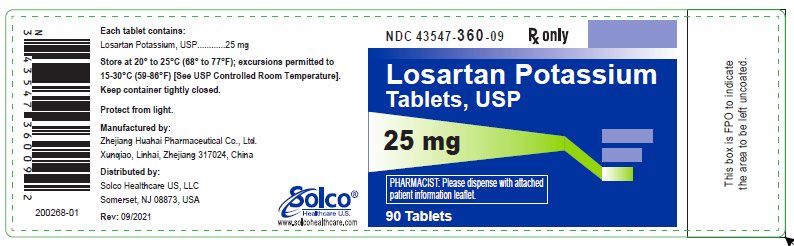
    Dosing must be individualized. The usual starting dose of Losartan potassium is 50 mg once daily, with 25 mg used in patients with possible depletion of intravascular volume (e.g., patients treated with diuretics) (see WARNINGS, Hypotension — Volume-Depleted Patients) and patients with a history of hepatic impairment (see PRECAUTIONS, General). Losartan potassium can be administered once or twice daily with total daily doses ranging from 25 mg to 100 mg.

    If the antihypertensive effect measured at trough using once-a-day dosing is inadequate, a twice-a-day regimen at the same total daily dose or an increase in dose may give a more satisfactory response. The effect of losartan is substantially present within one week but in some studies the maximal effect occurred in 3-6 weeks (see CLINICAL PHARMACOLOGY, Pharmacodynamics and Clinical Effects, Hypertension).

    If blood pressure is not controlled by Losartan potassium alone, a low dose of a diuretic may be added. Hydrochlorothiazide has been shown to have an additive effect (see CLINICAL PHARMACOLOGY, Pharmacodynamics and Clinical Effects, Hypertension).

    No initial dosage adjustment is necessary for elderly patients or for patients with renal impairment, including patients on dialysis.

    Pediatric Hypertensive Patients greater than or equal to 6 years of age

    The usual recommended starting dose is 0.7 mg/kg once daily (up to 50 mg total) administered as a tablet or a suspension (see Preparation of Suspension). Dosage should be adjusted according to blood pressure response. Doses above 1.4 mg/kg (or in excess of 100 mg) daily have not been studied in pediatric patients. (See CLINICAL PHARMACOLOGY, Pharmacokinetics, Special Populations and Pharmacodynamics and Clinical Effects, and WARNINGS, Hypotension — Volume-Depleted Patients.)

    Losartan potassium is not recommended in pediatric patients less than 6 years of age or in pediatric patients with glomerular filtration rate less than 30 mL/min/1.73 m2 (see CLINICAL PHARMACOLOGY, Pharmacokinetics, Special Populations, Pharmacodynamics and Clinical Effects, and PRECAUTIONS).

    Preparation of Suspension (for 200 mL of a 2.5 mg/mL suspension)

    Add 10 mL of Purified Water USP to an 8 ounce (240 mL) amber polyethylene terephthalate (PET) bottle containing ten 50 mg Losartan potassium tablets. Immediately shake for at least 2 minutes. Let the concentrate stand for 1 hour and then shake for 1 minute to disperse the tablet contents. Separately prepare a 50/50 volumetric mixture of Ora-Plus™ and Ora-Sweet SF™. Add 190 mL of the 50/50 Ora-Plus™/Ora-Sweet SF™ mixture to the tablet and water slurry in the PET bottle and shake for 1 minute to disperse the ingredients. The suspension should be refrigerated at 2-8°C (36-46°F) and can be stored for up to 4 weeks. Shake the suspension prior to each use and return promptly to the refrigerator.

    Hypertensive Patients with Left Ventricular Hypertrophy

    The usual starting dose is 50 mg of Losartan potassium once daily. Hydrochlorothiazide 12.5 mg daily should be added and/or the dose of Losartan potassium should be increased to 100 mg once daily followed by an increase in hydrochlorothiazide to 25 mg once daily based on blood pressure response (see CLINICAL PHARMACOLOGY, Pharmacodynamics and Clinical Effects, Reduction in the Risk of Stroke).

    Nephropathy in Type 2 Diabetic Patients

    The usual starting dose is 50 mg once daily. The dose should be increased to 100 mg once daily based on blood pressure response (see CLINICAL PHARMACOLOGY, Pharmacodynamics and Clinical Effects, Nephropathy in Type 2 Diabetic Patients). Losartan potassium may be administered with insulin and other commonly used hypoglycemic agents (e.g., sulfonylureas, glitazones and glucosidase inhibitors).

  • Benzphetamine Hydrochloride Tablet [Solco Healthcare Us Llc]

    Benzphetamine Hydrochloride

    Benzphetamine Hydrochloride Tablet [Solco Healthcare Us Llc]

    Dosage should be individualized according to the response of the patient. The suggested dosage ranges from 25 to 50 mg one to three times daily. Treatment should begin with 25 to 50 mg once daily with subsequent increase in individual dose or frequency according to response. A single daily dose is preferably given in mid-morning or mid-afternoon, according to the patient's eating habits. In an occasional patient it may be desirable to avoid late afternoon administration. Use of benzphetamine hydrochloride is not recommended in individuals under 12 years of age.

  • Phendimetrazine Tartrate Tablet [Solco Healthcare Us Llc ]

    Phendimetrazine Tartrate

    Phendimetrazine Tartrate Tablet [Solco Healthcare Us Llc ]

    Usual Adult Dose: 1 tablet (35 mg) b.i.d. or t.i.d., one hour before meals.

    Dosage should be individualized to obtain an adequate response with the lowest effective dosage. In some cases, 1/2 tablet (17.5 mg) per dose may be adequate. Dosage should not exceed 2 tablets t.i.d.

  • Viceton (Chloramphenicol) Tablet, Coated [Osborn ]

    Viceton

    Viceton (Chloramphenicol) Tablet, Coated [Osborn ]

    Carvedilol Tablet should be taken with food to slow the rate of absorption and reduce the incidence of orthostatic effects.

    2.2 Left Ventricular Dysfunction Following Myocardial Infarction

    DOSAGE MUST BE INDIVIDUALIZED AND MONITORED DURING UP-TITRATION. Treatment with Carvedilol Tablet may be started as an inpatient or outpatient and should be started after the patient is hemodynamically stable and fluid retention has been minimized. It is recommended that Carvedilol Tablets be started at 6.25 mg twice daily and increased after 3 to 10 days, based on tolerability, to 12.5 mg twice daily, then again to the target dose of 25 mg twice daily. A lower starting dose may be used (3.125 mg twice daily) and/or the rate of up-titration may be slowed if clinically indicated (e.g., due to low blood pressure or heart rate, or fluid retention). Patients should be maintained on lower doses if higher doses are not tolerated. The recommended dosing regimen need not be altered in patients who received treatment with an IV or oral β-blocker during the acute phase of the myocardial infarction.

    2.3 Hypertension

    DOSAGE MUST BE INDIVIDUALIZED. The recommended starting dose of Carvedilol Tablet is 6.25 mg twice daily. If this dose is tolerated, using standing systolic pressure measured about 1 hour after dosing as a guide, the dose should be maintained for 7 to 14 days, and then increased to 12.5 mg twice daily if needed, based on trough blood pressure, again using standing systolic pressure one hour after dosing as a guide for tolerance. This dose should also be maintained for 7 to 14 days and can then be adjusted upward to 25 mg twice daily if tolerated and needed. The full antihypertensive effect of Carvedilol Tablets is seen within 7 to 14 days. Total daily dose should not exceed 50 mg.

    Concomitant administration with a diuretic can be expected to produce additive effects and exaggerate the orthostatic component of Carvedilol Tablet action.

    2.4 Hepatic Impairment

    Carvedilol Tablets should not be given to patients with severe hepatic impairment [see Contraindications (4)].

  • Levetiracetam Tablet, Film Coated [Solco Healthcare Us Llc]

    Levetiracetam

    Levetiracetam Tablet, Film Coated [Solco Healthcare Us Llc]

    2.1 Important Administration Instructions

    Levetiracetam is given orally with or without food. The Levetiracetam dosing regimen depends on the indication, age group, dosage form (tablets or oral solution), and renal function.

    Prescribe the oral solution for pediatric patients with body weight ≤ 20 kg. Prescribe the oral solution or tablets for pediatric patients with body weight above 20 kg.

    When using the oral solution in pediatric patients, dosing is weight-based (mg per kg) using a calibrated measuring device (not a household teaspoon or tablespoon).

    2.2 Dosing for Partial Onset Seizures

    Adults 16 Years and Older

    Initiate treatment with a daily dose of 1000 mg/day, given as twice-daily dosing (500 mg twice daily). Additional dosing increments may be given (1000 mg/day additional every 2 weeks) to a maximum recommended daily dose of 3000 mg. There is no evidence that doses greater than 3000 mg/day confer additional benefit.

    Pediatric Patients

    1 Month to < 6 Months:Initiate treatment with a daily dose of 14 mg/kg in 2 divided doses (7 mg/kg twice daily). Increase the daily dose every 2 weeks by increments of 14 mg/kg to the recommended daily dose of 42 mg/kg (21 mg/kg twice daily). In the clinical trial, the mean daily dose was 35 mg/kg in this age group. The effectiveness of lower doses has not been studied.

    6 Months to <4 Years:Initiate treatment with a daily dose of 20 mg/kg in 2 divided doses (10 mg/kg twice daily). Increase the daily dose in 2 weeks by an increment of 20 mg/kg to the recommended daily dose of 50 mg/kg (25 mg/kg twice daily). If a patient cannot tolerate a daily dose of 50 mg/kg, the daily dose may be reduced. In the clinical trial, the mean daily dose was 47 mg/kg in this age group.

    4 Years to < 16 Years:Initiate treatment with a daily dose of 20 mg/kg in 2 divided doses (10 mg/kg twice daily). Increase the daily dose every 2 weeks by increments of 20 mg/kg to the recommended daily dose of 60 mg/kg (30 mg/kg twice daily). If a patient cannot tolerate a daily dose of 60 mg/kg, the daily dose may be reduced. In the clinical trial, the mean daily dose was 44 mg/kg. The maximum daily dose was 3000 mg/day.

    For Levetiracetam tablet dosing in pediatric patients weighing 20 to 40 kg, initiate treatment with a daily dose of 500 mg given as twice daily dosing (250 mg twice daily). Increase the daily dose every 2 weeks by increments of 500 mg to a maximum recommended daily dose of 1500 mg (750 mg twice daily).

    For Levetiracetam tablet dosing in pediatric patients weighing more than 40 kg, initiate treatment with a daily dose of 1000 mg/day given as twice daily dosing (500 mg twice daily). Increase the daily dose every 2 weeks by increments of 1000 mg/day to a maximum recommended daily dose of 3000 mg (1500 mg twice daily).

    2.3 Dosing for Myoclonic Seizures in Patients 12 Years of Age and Older with Juvenile Myoclonic Epilepsy

    Initiate treatment with a dose of 1000 mg/day, given as twice-daily dosing (500 mg twice daily). Increase the dosage by 1000 mg/day every 2 weeks to the recommended daily dose of 3000 mg. The effectiveness of doses lower than 3000 mg/day has not been studied.

    2.4 Dosing for Primary Generalized Tonic-Clonic Seizures

    Adults 16 Years and Older

    Initiate treatment with a dose of 1000 mg/day, given as twice-daily dosing (500 mg twice daily). Increase dosage by 1000 mg/day every 2 weeks to the recommended daily dose of 3000 mg. The effectiveness of doses lower than 3000 mg/day has not been adequately studied.

    Pediatric Patients Ages 6 to <16 Years

    Initiate treatment with a daily dose of 20 mg/kg in 2 divided doses (10 mg/kg twice daily). Increase the daily dose every 2 weeks by increments of 20 mg/kg to the recommended daily dose of 60 mg/kg (30 mg/kg twice daily). The effectiveness of doses lower than 60 mg/kg/day has not been adequately studied. Patients with body weight ≤20 kg should be dosed with oral solution. Patients with body weight above 20 kg can be dosed with either tablets or oral solution [see Dosage and Administration (2.1)]. Only whole tablets should be administered.

    2.5 Dosage Adjustments in Adult Patients with Renal Impairment

    Levetiracetam tablets dosing must be individualized according to the patient’s renal function status. Recommended dosage adjustments for adults are shown in Table 1. In order to calculate the dose recommended for patients with renal impairment, creatinine clearance adjusted for body surface area must be calculated. To do this an estimate of the patient’s creatinine clearance (CLcr) in mL/min must first be calculated using the following formula:

    Then CLcr is adjusted for body surface area (BSA) as follows:

    Table 1: Dosing Adjustment Regimen for Adult Patients with Renal Impairment * Following dialysis, a 250 to 500 mg supplemental dose is recommended. Group Creatinine Clearance(mL/min/1.73m2) Dosage (mg) Frequency Normal > 80 500 to 1,500 Every 12 hours Mild 50 – 80 500 to 1,000 Every 12 hours Moderate 30 – 50 250 to 750 Every 12 hours Severe < 30 250 to 500 Every 12 hours ESRD patients using dialysis ------- 500 to 1,000* Every 24 hours*
  • Methocarbamol Tablet [Solco Healthcare Us Llc]

    Methocarbamol

    Methocarbamol Tablet [Solco Healthcare Us Llc]

    Methocarbamol tablets, USP, 500 mg – Adults:

    Initial dosage: 3 tablets q.i.d.

    Maintenance dosage: 2 tablets q.i.d.

    Methocarbamol tablets, USP: 750 mg – Adults:

    Initial dosage: 2 tablets q.i.d.

    Maintenance dosage: 1 tablet q.4h. or 2 tablets t.i.d.

    Six grams a day are recommended for the first 48 to 72 hours of treatment. (For severe conditions 8 grams a day may be administered). Thereafter, the dosage can usually be reduced to approximately 4 grams a day.

  • Chlordiazepoxide Hydrochloride Capsule, Gelatin Coated [Solco Healthcare Us Llc]

    Chlordiazepoxide Hydrochloride

    Chlordiazepoxide Hydrochloride Capsule, Gelatin Coated [Solco Healthcare Us Llc]

    Because of the wide range of clinical indications for Chlordiazepoxide Hydrochloride Capsule the optimum dosage varies with the diagnosis and response of the individual patient. The dosage, therefore, should be individualized for maximum beneficial effects.

    ADULTS USUAL DAILY DOSE Relief of Mild and Moderate Anxiety Disorders and Symptoms of Anxiety 5 mg or 10 mg, 3 or 4 times daily Relief of Severe Anxiety Disorders and Symptoms of Anxiety 20 mg or 25 mg, 3 or 4 times daily Geriatric Patients, or in the presence of debilitating disease. 5 mg, 2 to 4 times daily

    Preoperative Apprehension and Anxiety: On days preceding surgery, 5 to 10 mg orally, 3 or 4 times daily. If used as preoperative medication, 50 to 100 mg IM* 1 hour prior to surgery.

    PEDIATRIC PATIENTS USUAL DAILY DOSE Because of the varied response of pediatric patients to CNS-acting drugs, therapy should be initiated with the lowest dose and increased as required. Since clinical experience in pediatric patients under 6 years of age is limited, the use of the drug in this age group is not recommended. 5 mg, 2 to 4 times daily (may be increased in some pediatric patients to 10 mg, 2 to 3 times daily)

    For the relief of withdrawal symptoms of acute alcoholism, the parenteral form * is usually used initially. If the drug is administered orally, the suggested initial dose is 50 to 100 mg, to be followed by repeated doses as needed until agitation is controlled - up to 300 mg per day. Dosage should then be reduced to maintenance levels.

    *See package insert for Injectable. Chlordiazepoxide Hydrochloride.