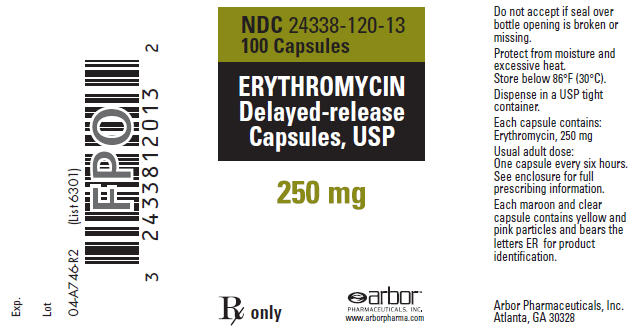
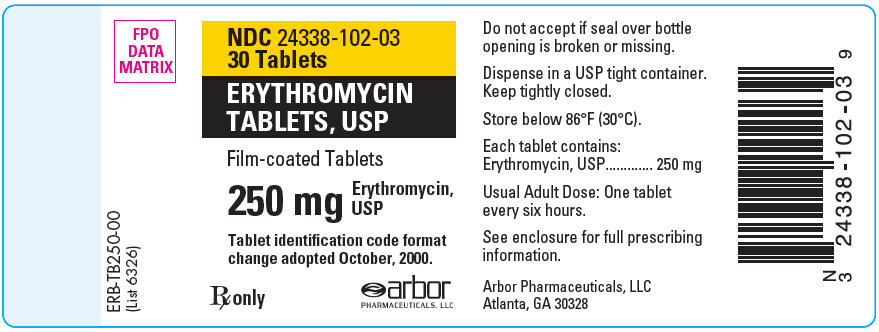
Erythromycin label

Erythromycin

Erythromycin Recall

Get an alert when a recall is issued.

Side Effects & Adverse Reactions

Pseudomembranous colitis has been reported with nearly all antibacterial agents, including erythromycin, and may range in severity from mild to life-threatening. Therefore, it is important to consider this diagnosis in patients who present with diarrhea subsequent to the administration of antibacterial agents.

Treatment with antibacterial agents alters the normal flora of the colon and may permit overgrowth of clostridia. Studies indicate that a toxin produced by Clostridium difficile is one primary cause of “antibiotic-associated colitis′′.

After the diagnosis of pseudomembranous colitis has been established, therapeutic measures should be initiated. Mild cases of pseudomembranous colitis usually respond to drug discontinuation alone.

In moderate to severe cases, consideration should be given to management with fluids and electrolytes, protein supplementation and treatment with an antibacterial drug clinically effective against C. difficile colitis.

FDA Safety Alerts

There are currently no FDA safety alerts available for this drug.

Manufacturer Warnings

There is currently no manufacturer warning information available for this drug.

FDA Labeling Changes

There are currently no FDA labeling changes available for this drug.

Uses

Erythromycin pledgets, USP are indicated for the topical treatment of acne vulgaris.

History

There is currently no drug history available for this drug.

Other Information

Erythromycin Pledgets, USP contains erythromycin ((3R*,4S*,5S*,6R*,7R*,9R*,11R*,12R*,13S*,14R*)-4-[(2,6-Dideoxy-3-C-methyl-3-O-methyl-α–⌊-ribo-hexopyranosyl)-oxy]-14-ethyl-7,12,13-trihydroxy 3,5,7,9,11,13-hexamethyl-6-[[3,4,6-trideoxy-3-(dimethylamino)-β-d-xylo-hexopyranosyl]oxy]oxacyclotetradecane-2,10-dione), for topical dermatologic use. Erythromycin is a macrolide antibiotic produced from a strain of Saccharopolyspora erythraea (formerly Streptomyces erythreus).

It is a base and readily forms salts with acids. Chemically, erythromycin is C37H67NO13. It has the following structural formula:

Image from Drug Label Content

Erythromycin has the molecular weight of 733.94

It is a white powder, is freely soluble in alcohols, acetone, chloroform, acetonitrile, ethyl acetate, and moderately soluble in ether, ethylene dichloride and amyl acetate. Erythromycin pledgets, USP are absorbent pads impregnated with Erythromycin Topical Solution 2%. Each pledget contains 1 mL of Erythromycin Topical Solution 2% and each 1 mL of Erythromycin Topical Solution 2% contains 20 mg of erythromycin base in a vehicle consisting of alcohol (71.5% v/v) and propylene glycol. May contain anhydrous citric acid and/or alcohol to adjust pH.

Erythromycin Manufacturers

  • Erythromycin | E. Fougera & Co.
    No Recall

    Erythromycin | E. Fougera & Co.

    Erythromycin | E. Fougera & Co.

    Erythromycin pledgets, USP should be rubbed over the affected area twice a day after the skin is thoroughly washed with warm water and soap and patted dry. Acne lesions on the face, neck, shoulder, chest, and back may be treated in this manner. Additional pledgets may be used, if needed. Each pledget should be used once and discarded.

  • Stat Rx Usa
    Erythromycin | Stat Rx Usa
    No Recall

    Erythromycin | Stat Rx Usa

    Erythromycin | Stat Rx Usa

    Erythromycin is well absorbed and may be given without regard to meals. Optimum blood levels are obtained in a fasting state (administration at least one half hour and preferably two hours before or after a meal); however, blood levels obtained upon administration of enteric-coated erythromycin products in the presence of food are still above minimal inhibitory concentrations (MICs) of most organisms for which erythromycin is indicated.


    Adults

    The usual dose is 250 mg every 6 hours taken one hour before meals. If twice-a-day dosage is desired, the recommended dose is 500 mg every 12 hours. Dosage may be increased up to 4 grams per day, according to the severity of infection. Twice-a-day dosing is not recommended when doses larger than 1 gram daily are administered.


    Children

    Age, weight, and severity of the infection are important factors in determining the proper dosage. The usual dosage is 30 to 50 mg/kg/day, in divided doses. For the treatment of more severe infections, this dose may be doubled.


    Streptococcal Infections

    A therapeutic dosage of oral erythromycin should be administered for at least 10 days. For continuous prophylaxis against recurrences of streptococcal infections in persons with a history of rheumatic heart disease, the dose is 250 mg twice a day.


    Primary Syphilis

    30 to 40 grams given in divided doses over a period of 10 - 15 days.


    Intestinal Amebiasis

    250 mg four times daily for 10 to 14 days for adults; 30 to 50 mg/kg/day in divided doses for 10 to 14 days for children.


    Legionnaires' Disease

    Although optimal doses have not been established, doses utilized in reported clinical data were those recommended above (1 to 4 grams daily in divided doses).


    Urogenital Infections During Pregnancy Due to Chlamydia trachomatis

    Although the optimal dose and duration of therapy have not been established, the suggested treatment is erythromycin 500 mg, by mouth, 4 times a day on an empty stomach for at least 7 days. For women who cannot tolerate this regimen, a decreased dose of 250 mg, by mouth, 4 times a day should be used for at least 14 days.


    For adults with uncomplicated urethral, endocervical, or rectal infections caused by Chlamydia trachomatis in whom tetracyclines are contraindicated or not tolerated

    500 mg, by mouth, 4 times a day for at least 7 days.


    Pertussis

    Although optimum dosage and duration of therapy have not been established, doses of erythromycin utilized in reported clinical studies were 40 - 50 mg/kg/day, given in divided doses for 5 to 14 days.


    Nongonococcal Urethritis Due to Ureaplasma urealyticum

    When tetracycline is contraindicated or not tolerated: 500 mg of erythromycin, orally, four times daily for at least 7 days.


    Acute Pelvic Inflammatory Disease Due to N. gonorrhoeae

    500 mg IV of erythromycin lactobionate for injection, USP every 6 hours for 3 days followed by 250 mg of erythromycin, orally every 6 hours for 7 days.

  • Stat Rx Usa Llc
    Erythromycin | Stat Rx Usa Llc
    No Recall

    Erythromycin | Stat Rx Usa Llc

    Erythromycin | Stat Rx Usa Llc

    Optimal blood levels are obtained when Erythromycin Base Filmtab tablets are given in the fasting state (at least ½ hour and preferably 2 hours before meals).


    Adults

    The usual dosage of Erythromycin Base Filmtab is one 250 mg tablet four times daily in equally spaced doses or one 500 mg tablet every 12 hours. Dosage may be increased up to 4 g per day according to the severity of the infection. However, twice-a-day dosing is not recommended when doses larger than 1 g daily are administered.


    Children

    Age, weight, and severity of the infection are important factors in determining the proper dosage. The usual dosage is 30 to 50 mg/kg/day, in equally divided doses. For more severe infections this dosage may be doubled but should not exceed 4 g per day.

    In the treatment of streptococcal infections of the upper respiratory tract (e.g., tonsillitis or pharyngitis), the therapeutic dosage of erythromycin should be administered for at least ten days.

    The American Heart Association suggests a dosage of 250 mg of erythromycin orally, twice a day in long-term prophylaxis of streptococcal upper respiratory tract infections for the prevention of recurring attacks of rheumatic fever in patients allergic to penicillin and sulfonamides.3


    Conjunctivitis of the Newborn Caused by Chlamydia trachomatis

    Oral erythromycin suspension 50 mg/kg/day in 4 divided doses for at least 2 weeks.3


    Pneumonia of Infancy Caused by Chlamydia trachomatis

    Although the optimal duration of therapy has not been established, the recommended therapy is oral erythromycin suspension 50 mg/kg/day in 4 divided doses for at least 3 weeks.


    Urogenital Infections During Pregnancy Due to Chlamydia trachomatis

    Although the optimal dose and duration of therapy have not been established, the suggested treatment is 500 mg of erythromycin by mouth four times a day on an empty stomach for at least 7 days. For women who cannot tolerate this regimen, a decreased dose of one erythromycin 500 mg tablet orally every 12 hours or 250 mg by mouth four times a day should be used for at least 14 days.5


    For adults with uncomplicated urethral, endocervical, or rectal infections caused by Chlamydia trachomatis, when tetracycline is contraindicated or not tolerated

    500 mg of erythromycin by mouth four times a day for at least 7 days.5


    For patients with nongonococcal urethritis caused by Ureaplasma urealyticum when tetracycline is contraindicated or not tolerated

    500 mg of erythromycin by mouth four times a day for at least seven days.5


    Primary Syphilis

    30 to 40 g given in divided doses over a period of 10 to 15 days.


    Acute Pelvic Inflammatory Disease Caused by N. gonorrhoeae

    500 mg Erythrocin® Lactobionate-I.V. (erythromycin lactobionate for injection, USP) every 6 hours for 3 days, followed by 500 mg of erythromycin base orally every 12 hours for 7 days.


    Intestinal AmebiasisAdults

    500 mg every 12 hours or 250 mg every 6 hours for 10 to 14 days.

    Children

    30 to 50 mg/kg/day in divided doses for 10 to 14 days.


    Pertussis

    Although optimal dosage and duration have not been established, doses of erythromycin utilized in reported clinical studies were 40 to 50 mg/kg/day, given in divided doses for 5 to 14 days.


    Legionnaires' Disease

    Although optimal dosage has not been established, doses utilized in reported clinical data were 1 to 4 g daily in divided doses.


  • Erythromycin | Kaiser Foundation Hospitals
    No Recall

    Erythromycin | Kaiser Foundation Hospitals

    Erythromycin | Kaiser Foundation Hospitals

    Erythromycin is well absorbed and may be given without regard to meals. Optimum blood levels are obtained in a fasting state (administration at least one half hour and preferably two hours before or after a meal); however, blood levels obtained upon administration of enteric-coated erythromycin products in the presence of food are still above minimal inhibitory concentrations (MICs) of most organisms for which erythromycin is indicated.

    Adults

    The usual dose is 250 mg every 6 hours taken one hour before meals. If twice-a-day dosage is desired, the recommended dose is 500 mg every 12 hours. Dosage may be increased up to 4 grams per day, according to the severity of infection. Twice-a-day dosing is not recommended when doses larger than 1 gram daily are administered.

    Children

    Age, weight, and severity of the infection are important factors in determining the proper dosage. The usual dosage is 30 to 50 mg/kg/day, in divided doses. For the treatment of more severe infections, this dose may be doubled.

    Streptococcal Infections

    A therapeutic dosage of oral erythromycin should be administered for at least 10 days. For continuous prophylaxis against recurrences of streptococcal infections in persons with a history of rheumatic heart disease, the dose is 250 mg twice a day.

    Primary Syphilis

    30 to 40 grams given in divided doses over a period of 10 - 15 days.

    Intestinal Amebiasis

    250 mg four times daily for 10 to 14 days for adults; 30 to 50 mg/kg/day in divided doses for 10 to 14 days for children.

    Legionnaires' Disease

    Although optimal doses have not been established, doses utilized in reported clinical data were those recommended above (1 to 4 grams daily in divided doses).

    Urogenital Infections During Pregnancy Due to Chlamydia trachomatis

    Although the optimal dose and duration of therapy have not been established, the suggested treatment is erythromycin 500 mg, by mouth, 4 times a day on an empty stomach for at least 7 days. For women who cannot tolerate this regimen, a decreased dose of 250 mg, by mouth, 4 times a day should be used for at least 14 days.

    For adults with uncomplicated urethral, endocervical, or rectal infections caused by Chlamydia trachomatis in whom tetracyclines are contraindicated or not tolerated: 500 mg, by mouth, 4 times a day for at least 7 days.

    Pertussis

    Although optimum dosage and duration of therapy have not been established, doses of erythromycin utilized in reported clinical studies were 40 - 50 mg/kg/day, given in divided doses for 5 to 14 days.

    Nongonococcal Urethritis Due to Ureaplasma urealyticum

    When tetracycline is contraindicated or not tolerated: 500 mg of erythromycin, orally, four times daily for at least 7 days.

    Acute Pelvic Inflammatory Disease Due to N. gonorrhoeae

    500 mg IV of erythromycin lactobionate for injection, USP every 6 hours for 3 days followed by 250 mg of erythromycin, orally every 6 hours for 7 days.

  • Midlothian Laboratories
    Erythromycin | Midlothian Laboratories
    No Recall

    Erythromycin | Midlothian Laboratories

    Erythromycin | Midlothian Laboratories

    Erythromycin is well absorbed and may be given without regard to meals. Optimum blood levels are obtained in a fasting state (administration at least one half hour and preferably two hours before or after a meal); however, blood levels obtained upon administration of enteric-coated erythromycin products in the presence of food are still above minimal inhibitory concentrations (MICs) of most organisms for which erythromycin is indicated.

      ADULTS: The usual dose is 250 mg every 6 hours taken one hour before meals. If twice-a-day dosage is desired, the recommended dose is 500 mg every 12 hours. Dosage may be increased up to 4 grams per day, according to the severity of the infection. Twice-a-day dosing is not recommended when doses larger than 1 gram daily are administered.   CHILDREN: Age, weight, and severity of the infection are important factors in determining the proper dosage. The usual dosage is 30 to 50 mg/kg/day in divided doses. For the treatment of more severe infections, this dose may be doubled. Streptococcal infections

    A therapeutic dosage of oral erythromycin should be administered for at least 10 days. For continuous prophylaxis against recurrences of streptococcal infections in persons with a history of rheumatic heart disease, the dose is 250 mg twice a day.

    Primary syphilis

    30 to 40 grams given in divided doses over a period of 10 to 15 days.

    Intestinal amebiasis

    250 mg four times daily for 10 to 14 days for adults; 30 to 50 mg/kg/day in divided doses for 10 to 14 days for children.

    Legionnaires' disease

    Although optimal doses have not been established, doses utilized in reported clinical data were those recommended above (1 to 4 grams daily in divided doses).

    Urogenital infections during pregnancy due to Chlamydia trachomatis

    Although the optimal dose and duration of therapy have not been established, the suggested treatment is erythromycin 500 mg, by mouth, 4 times a day on an empty stomach for at least 7 days. For women who cannot tolerate this regimen, a decreased dose of 250 mg, by mouth, 4 times a day should be used for at least 14 days.

    For adults with uncomplicated urethral, endocervical, or rectal infections caused by Chlamydia trachomatis in whom tetracyclines are contraindicated or not tolerated: 500 mg, by mouth, 4 times a day for at least 7 days.

    Pertussis

    Although optimum dosage and duration of therapy have not been established, doses of erythromycin utilized in reported clinical studies were 40 to 50 mg/kg/day, given in divided doses for 5 to 14 days.

    Nongonococcal urethritis due to Ureaplasma urealyticum

    When tetracycline is contraindicated or not tolerated: 500 mg of erythromycin, orally, four times daily for at least 7 days.

    Acute pelvic inflammatory disease due to N gonorrhoeae

    500 mg IV of erythromycin lactobionate for injection, USP every 6 hours for 3 days followed by 250 mg of erythromycin, orally every six hours for 7 days.

  • Erythromycin | A-s Medication Solutions Llc
    No Recall

    Erythromycin | A-s Medication Solutions Llc

    Erythromycin | A-s Medication Solutions Llc

    Erythromycin is well absorbed and may be given without regard to meals. Optimum blood levels are obtained in a fasting state (administration at least one half hour and preferably two hours before or after a meal); however, blood levels obtained upon administration of enteric-coated erythromycin products in the presence of food are still above minimal inhibitory concentrations (MICs) of most organisms for which erythromycin is indicated.

    Adults

    The usual dose is 250 mg every 6 hours taken one hour before meals. If twice-a-day dosage is desired, the recommended dose is 500 mg every 12 hours. Dosage may be increased up to 4 grams per day, according to the severity of infection. Twice-a-day dosing is not recommended when doses larger than 1 gram daily are administered.

    Children

    Age, weight, and severity of the infection are important factors in determining the proper dosage. The usual dosage is 30 to 50 mg/kg/day, in divided doses. For the treatment of more severe infections, this dose may be doubled.

    Streptococcal Infections

    A therapeutic dosage of oral erythromycin should be administered for at least 10 days. For continuous prophylaxis against recurrences of streptococcal infections in persons with a history of rheumatic heart disease, the dose is 250 mg twice a day.

    Primary Syphilis

    30 to 40 grams given in divided doses over a period of 10 - 15 days.

    Intestinal Amebiasis

    250 mg four times daily for 10 to 14 days for adults; 30 to 50 mg/kg/day in divided doses for 10 to 14 days for children.

    Legionnaires' Disease

    Although optimal doses have not been established, doses utilized in reported clinical data were those recommended above (1 to 4 grams daily in divided doses).

    Urogenital Infections During Pregnancy Due to Chlamydia trachomatis

    Although the optimal dose and duration of therapy have not been established, the suggested treatment is erythromycin 500 mg, by mouth, 4 times a day on an empty stomach for at least 7 days. For women who cannot tolerate this regimen, a decreased dose of 250 mg, by mouth, 4 times a day should be used for at least 14 days.

    For adults with uncomplicated urethral, endocervical, or rectal infections caused by Chlamydia trachomatis in whom tetracyclines are contraindicated or not tolerated: 500 mg, by mouth, 4 times a day for at least 7 days.

    Pertussis

    Although optimum dosage and duration of therapy have not been established, doses of erythromycin utilized in reported clinical studies were 40 - 50 mg/kg/day, given in divided doses for 5 to 14 days.

    Nongonococcal Urethritis Due to Ureaplasma urealyticum

    When tetracycline is contraindicated or not tolerated: 500 mg of erythromycin, orally, four times daily for at least 7 days.

    Acute Pelvic Inflammatory Disease Due to N. gonorrhoeae

    500 mg IV of erythromycin lactobionate for injection, USP every 6 hours for 3 days followed by 250 mg of erythromycin, orally every 6 hours for 7 days.

  • Erythromycin | Arbor Pharmaceuticals, Inc.
    No Recall

    Erythromycin | Arbor Pharmaceuticals, Inc.

    Erythromycin | Arbor Pharmaceuticals, Inc.

    Erythromycin is well absorbed and may be given without regard to meals. Optimum blood levels are obtained in a fasting state (administration at least one half hour and preferably two hours before or after a meal); however, blood levels obtained upon administration of enteric-coated erythromycin products in the presence of food are still above minimal inhibitory concentrations (MICs) of most organisms for which erythromycin is indicated.

    ADULTS

    The usual dose is 250 mg every 6 hours taken one hour before meals. If twice-a-day dosage is desired, the recommended dose is 500 mg every 12 hours. Dosage may be increased up to 4 grams per day, according to the severity of the infection. Twice-a-day dosing is not recommended when doses larger than 1 gram daily are administered.

    CHILDREN

    Age, weight, and severity of the infection are important factors in determining the proper dosage. The usual dosage is 30 to 50 mg/kg/day, in divided doses. For the treatment of more severe infections, this dose may be doubled.

    Streptococcal infections

    A therapeutic dosage of oral erythromycin should be administered for at least 10 days. For continuous prophylaxis against recurrences of streptococcal infections in persons with a history of rheumatic heart disease, the dose is 250 mg twice a day.

    Primary syphilis

    30 to 40 grams given in divided doses over a period of 10 to 15 days.

    Intestinal amebiasis

    250 mg four times daily for 10 to 14 days for adults; 30 to 50 mg/kg/day in divided doses for 10 to 14 days for children.

    Legionnaires' disease

    Although optimal doses have not been established, doses utilized in reported clinical data were those recommended above (1 to 4 grams daily in divided doses).

    Urogenital infections during pregnancy due to Chlamydia trachomatis

    Although the optimal dose and duration of therapy have not been established, the suggested treatment is erythromycin 500 mg, by mouth, 4 times a day on an empty stomach for at least 7 days. For women who cannot tolerate this regimen, a decreased dose of 250 mg, by mouth, 4 times a day should be used for at least 14 days.

    For adults with uncomplicated urethral, endocervical, or rectal infections caused by Chlamydia trachomatis in whom tetracyclines are contraindicated or not tolerated: 500 mg, by mouth, 4 times a day for at least 7 days.

    Pertussis

    Although optimum dosage and duration of therapy have not been established, doses of erythromycin utilized in reported clinical studies were 40 to 50 mg/kg/day, given in divided doses for 5 to 14 days.

    Nongonococcal urethritis due to Ureaplasma urealyticum

    When tetracycline is contraindicated or not tolerated: 500 mg of erythromycin, orally, four times daily for at least 7 days.

    Acute pelvic inflammatory disease due to N. gonorrhoeae

    500 mg IV of erythromycin lactobionate for injection, USP every 6 hours for 3 days followed by 250 mg of erythromycin, orally every 6 hours for 7 days.

  • Erythromycin | Arbor Pharmaceuticals, Inc.
    No Recall

    Erythromycin | Arbor Pharmaceuticals, Inc.

    Erythromycin | Arbor Pharmaceuticals, Inc.

    In most patients, Erythromycin Tablets are well absorbed and may be dosed orally without regard to meals. However, optimal blood levels are obtained when Erythromycin Tablets are given in the fasting state (at least 1/2 hour and preferably 2 hours before meals).

    Adults

    The usual dosage of Erythromycin Tablets is one 250 mg tablet four times daily in equally spaced doses or one 500 mg tablet every 12 hours. Dosage may be increased up to 4 g per day according to the severity of the infection. However, twice-a-day dosing is not recommended when doses larger than 1 g daily are administered.

    Children

    Age, weight, and severity of the infection are important factors in determining the proper dosage. The usual dosage is 30 to 50 mg/kg/day, in equally divided doses. For more severe infections this dosage may be doubled but should not exceed 4 g per day.

    In the treatment of streptococcal infections of the upper respiratory tract (e.g., tonsillitis or pharyngitis), the therapeutic dosage of erythromycin should be administered for at least ten days.

    The American Heart Association suggests a dosage of 250 mg of erythromycin orally, twice a day in long-term prophylaxis of streptococcal upper respiratory tract infections for the prevention of recurring attacks of rheumatic fever in patients allergic to penicillin and sulfonamides.4

    Conjunctivitis of the Newborn Caused by Chlamydia trachomatis

    Oral erythromycin suspension 50 mg/kg/day in 4 divided doses for at least 2 weeks.4

    Pneumonia of Infancy Caused by Chlamydia trachomatis

    Although the optimal duration of therapy has not been established, the recommended therapy is oral erythromycin suspension 50 mg/kg/day in 4 divided doses for at least 3 weeks.

    Urogenital Infections During Pregnancy Due to Chlamydia trachomatis

    Although the optimal dose and duration of therapy have not been established, the suggested treatment is 500 mg of erythromycin by mouth four times a day on an empty stomach for at least 7 days. For women who cannot tolerate this regimen, a decreased dose of one erythromycin 500 mg tablet orally every 12 hours or 250 mg by mouth four times a day should be used for at least 14 days.6

    For adults with uncomplicated urethral, endocervical, or rectal infections caused by Chlamydia trachomatis, when tetracycline is contraindicated or not tolerated

    500 mg of erythromycin by mouth four times a day for at least 7 days.6

    For patients with nongonococcal urethritis caused by Ureaplasma urealyticum when tetracycline is contraindicated or not tolerated

    500 mg of erythromycin by mouth four times a day for at least seven days.6

    Primary syphilis

    30 to 40 g given in divided doses over a period of 10 to 15 days.

    Acute Pelvic Inflammatory Disease Caused by N. gonorrhoeae

    500 mg Erythrocin® Lactobionate-I.V. (erythromycin lactobionate for injection, USP) every 6 hours for 3 days, followed by 500 mg of erythromycin base orally every 12 hours for 7 days.

    Intestinal Amebiasis Adults

    500 mg every 12 hours or 250 mg every 6 hours for 10 to 14 days.

    Children

    30 to 50 mg/kg/day in divided doses for 10 to 14 days.

    Pertussis

    Although optimal dosage and duration have not been established, doses of erythromycin utilized in reported clinical studies were 40 to 50 mg/kg/day, given in divided doses for 5 to 14 days.

    Legionnaires' Disease

    Although optimal dosage has not been established, doses utilized in reported clinical data were 1 to 4 g daily in divided doses.