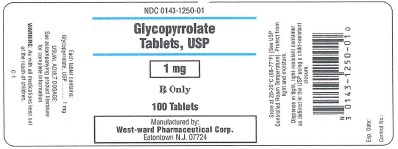
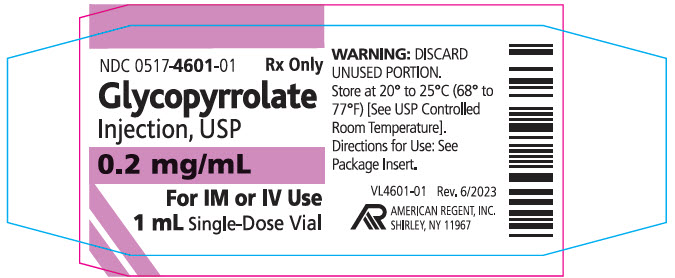
Glycopyrrolate label

Glycopyrrolate

Glycopyrrolate Recall

Get an alert when a recall is issued.

Side Effects & Adverse Reactions

In the presence of a high environmental temperature, heat prostration (fever and heat stroke due to decreased sweating) can occur with use of glycopyrrolate.

Diarrhea may be an early symptom of incomplete intestinal obstruction, especially in patients with ileostomy or colostomy.  In this instance treatment with this drug would be inappropriate and possibly harmful.

Glycopyrrolate may produce drowsiness or blurred vision.  In this event, the patient should be warned not to engage in activities requiring mental alertness such as operating a motor vehicle or other machinery, or performing hazardous work while taking this drug.

Theoretically, with overdosage, a curare-like action may occur, i.e., neuro-muscular blockade leading to muscular weakness and possible paralysis.

Pregnancy:
The safety of this drug during pregnancy has not been established. The use of any drug during pregnancy requires that the potential benefits of the drug be weighed against possible hazards to mother and child. Reproduction studies in rats revealed no teratogenic effects from glycopyrrolate; however, the potent anticholinergic action of this agent resulted in diminished rates of conception and of survival at weaning, in a dose-related manner.
Other studies in dogs suggest that this may be due to diminished seminal secretion which is evident at high doses of glycopyrrolate.  Information on possible adverse effects in the pregnant female is limited to uncontrolled data derived from marketing experience.  Such experience has revealed no reports of teratogenic or other fetus-damaging potential.  No controlled studies to establish the safety of the drug in pregnancy have been performed.

Nursing Mothers
It is not known whether this drug is excreted in human milk.  As a general rule, nursing should not be undertaken while a patient is on a drug since many drugs are excreted in human milk.

Pediatric Use
Since there is no adequate experience in pediatric patients who have received this drug, safety and efficacy in pediatric patients have not been established.

FDA Safety Alerts

There are currently no FDA safety alerts available for this drug.

Manufacturer Warnings

There is currently no manufacturer warning information available for this drug.

FDA Labeling Changes

There are currently no FDA labeling changes available for this drug.

Uses

For use as adjunctive therapy in the treatment of peptic ulcer.

History

There is currently no drug history available for this drug.

Other Information

Glycopyrrolate tablets contain the synthetic anticholinergic, glycopyrrolate.  Glycopyrrolate is a quaternary ammonium compound with the following chemical name:
3-[(cyclopentylhydroxyphenylacetyl)oxy]-1, 1-dimethylpyrrolidinium bromide. Its emprical formula is C19H8BrNO3, its molecular weight is 398.33, and its structural formula is:

structure

Each 1 mg tablet contains: Glycopyrrolate, 1 mg

Each 2 mg tablet contains: Glycopyrrolate, 2 mg

Inactive ingredients:
Dibasic Calcium Phosphate, Lactose Anhydrous, Magnesium Stearate, Povidone, and Sodium Starch Glycolate

Glycopyrrolate Manufacturers

  • Avkare, Inc.
    Glycopyrrolate | Avkare, Inc.
    No Recall

    Glycopyrrolate | Avkare, Inc.

    Glycopyrrolate | Avkare, Inc.

    The dosage of glycopyrrolate should be adjusted to the needs of the individual patient to assure symptomatic control with a minimum of adverse reactions. The presently recommended maximum daily dosage of glycopyrrolate is 8 mg.

    Glycopyrrolate, 1 mg tablets:
    The recommended initial dosage of glycopyrrolate for adults is one tablet three times daily (in the morning, early afternoon, and at bedtime).  Some patients may require two tablets at bedtime to assure overnight control of symptoms.  For maintenance, a dosage of one tablet twice a day is frequently adequate.

    Glycopyrrolate, 2 mg tablets:
    The recommended dosage of glycopyrrolate for adults is one tablet two or three times daily at equally spaced intervals.

    Glycopyrrolate tablets are not recommended for use in pediatric patients under the age of 12 years.

    DRUG INTERACTIONS

    There are no known drug interactions.

  • Glycopyrrolate | Deseret Biologicals, Inc.
    No Recall

    Glycopyrrolate | Deseret Biologicals, Inc.

    Glycopyrrolate | Deseret Biologicals, Inc.

    DIRECTIONS:  1-10 drops under the tongue, 3 times a day or as directed by a health professional.  Consult a physician for use in children under 12 years of age.

  • Bryant Ranch Prepack
    Glycopyrrolate | Bryant Ranch Prepack
    No Recall

    Glycopyrrolate | Bryant Ranch Prepack

    Glycopyrrolate | Bryant Ranch Prepack

    The dosage of glycopyrrolate should be adjusted to the needs of the individual patient to assure symptomatic control with a minimum of adverse reactions. The presently recommended maximum daily dosage of glycopyrrolate is 8 mg.

    Glycopyrrolate Tablets 1 mg. The recommended initial dosage of glycopyrrolate for adults is one tablet three times daily (in the morning, early afternoon, and at bedtime). Some patients may require two tablets at bedtime to assure overnight control of symptoms. For maintenance, a dosage of one tablet twice a day is frequently adequate.

    Glycopyrrolate Tablets 2 mg. The recommended dosage of glycopyrrolate for adults is one tablet two or three times daily at equally spaced intervals.

    Glycopyrrolate tablets are not recommended for use in pediatric patients under the age of 12 years.

  • Dr. Reddy’s Laboratories Limited
    Glycopyrrolate | Dr. Reddy's Laboratories Limited
    No Recall

    Glycopyrrolate | Dr. Reddy's Laboratories Limited

    Glycopyrrolate | Dr. Reddy's Laboratories Limited

    The dosage of Glycopyrrolate tablets 1 and 2 mg  should be adjusted to the needs of the individual patient to assure symptomatic control with a minimum of adverse reactions. The presently recommended maximum daily dosage of Glycopyrrolate is 8 mg.

    Glycopyrrolate, 1 mg Tablets. The recommended initial dosage of Glycopyrrolate for adults is one tablet three times daily (in the morning, early afternoon, and at bedtime). Some patients may require two tablets at bedtime to assure overnight control of symptoms. For maintenance, a dosage of one tablet twice a day is frequently adequate.

    Glycopyrrolate, 2 mg Tablets. The recommended dosage of Glycopyrrolate for adults is one tablet two or three times daily at equally spaced intervals.

    Glycopyrrolate tablets are not recommended for use in pediatric patients under the age of 12 years.

  • Rising Pharmaceuticals Inc
    Glycopyrrolate | Rising Pharmaceuticals Inc
    No Recall

    Glycopyrrolate | Rising Pharmaceuticals Inc

    Glycopyrrolate | Rising Pharmaceuticals Inc

    DOSAGE AND ADMINISTRATION
    The dosage of glycopyrrolate should be adjusted to the needs of the individual patient to assure symptomatic control with a minimum of adverse reactions. The presently recommended maximum daily dosage of glycopyrrolate is 8 mg.

    Glycopyrrolate Tablets USP 1 mg. The recommended initial dosage for adults is one tablet three times daily (in the morning, early afternoon, and at bedtime). Some patients may require two tablets at bedtime to assure overnight control of symptoms. For maintenance, a dosage of one tablet twice a day is frequently adequate.

    Glycopyrrolate Tablets USP 2 mg. The recommended dosage for adults is one tablet two or three times daily at equally spaced intervals.

    Glycopyrrolate tablets USP are not recommended for use in pediatric patients under the age of 12 years.

  • Baxter Healthcare Corporation
    Glycopyrrolate | Baxter Healthcare Corporation
    No Recall

    Glycopyrrolate | Baxter Healthcare Corporation

    Glycopyrrolate | Baxter Healthcare Corporation

    NOTE: CONTAINS BENZYL ALCOHOL (see  PRECAUTIONS)

    Parenteral drug products should be inspected visually for particulate matter and discoloration prior to administration whenever solution and container permit.

    Glycopyrrolate Injection may be administered intramuscularly, or intravenously, without dilution, in the following indications.

    Adults Preanesthetic Medication

    The recommended dose of Glycopyrrolate Injection is 0.004 mg/kg by intramuscular injection, given 30 to 60 minutes prior to the anticipated time of induction of anesthesia or at the time the preanesthetic narcotic and/or sedative are administered.

    Intraoperative Medication

    Glycopyrrolate Injection may be used during surgery to counteract drug-induced or vagal reflexes and their associated arrhythmias (e.g., bradycardia). It should be administered intravenously as single doses of 0.1 mg and repeated, as needed, at intervals of 2 to 3 minutes. The usual attempts should be made to determine the etiology of the arrhythmia, and the surgical or anesthetic manipulations necessary to correct parasympathetic imbalance should be performed.

    Reversal of Neuromuscular Blockade

    The recommended dose of Glycopyrrolate Injection is 0.2 mg for each 1.0 mg of neostigmine or 5.0 mg of pyridostigmine. In order to minimize the appearance of cardiac side effects, the drugs may be administered simultaneously by intravenous injection and may be mixed in the same syringe.

    Peptic Ulcer

    The usual recommended dose of Glycopyrrolate Injection is 0.1 mg administered at 4-hour intervals, 3 or 4 times daily intravenously or intramuscularly. Where more profound effect is required, 0.2 mg may be given. Some patients may need only a single dose, and frequency of administration should be dictated by patient response up to a maximum of four times daily.

    Glycopyrrolate Injection is not recommended for the treatment of peptic ulcer in pediatric patients (see PRECAUTIONS – Pediatric Use).

    Pediatric Patients (see PRECAUTIONS - Pediatric Use) Preanesthetic Medication

    The recommended dose of Glycopyrrolate Injection in pediatric patients is 0.004 mg/kg intramuscularly, given 30 to 60 minutes prior to the anticipated time of induction of anesthesia or at the time the preanesthetic narcotic and/or sedative are administered.

    Infants

    (1 month to 2 years of age) may require up to 0.009 mg/kg.

    Intraoperative Medication

    Because of the long duration of action of Glycopyrrolate Injection if used as preanesthetic medication, additional Glycopyrrolate Injection for anticholinergic effect intraoperatively is rarely needed; in the event it is required the recommended pediatric dose is 0.004 mg/kg intravenously, not to exceed 0.1 mg in a single dose which may be repeated, as needed, at intervals of 2 to 3 minutes. The usual attempts should be made to determine the etiology of the arrhythmia, and the surgical or anesthetic manipulations necessary to correct parasympathetic imbalance should be performed.

    Reversal of Neuromuscular Blockade

    The recommended pediatric dose of Glycopyrrolate Injection is 0.2 mg for each 1.0 mg of neostigmine or 5.0 mg of pyridostigmine. In order to minimize the appearance of cardiac side effects, the drugs may be administered simultaneously by intravenous injection and may be mixed in the same syringe.

    Peptic Ulcer

    Glycopyrrolate Injection is not recommended for the treatment of peptic ulcer in pediatric patients (see PRECAUTIONS – Pediatric Use).

    Diluent Compatibilities

    Dextrose 5% and 10% in water, or saline, dextrose 5% in sodium chloride 0.45%, sodium chloride 0.9%, and Ringer’s Injection.

    Diluent Incompatibilities

    Lactated Ringer’s solution

    Admixture Compatibilities Physical Compatibility

    This list does not constitute an endorsement of the clinical utility or safety of co-administration of glycopyrrolate with these drugs. Glycopyrrolate Injection is compatible for mixing and injection with the following injectable dosage forms: atropine sulfate, USP; Antilirium®  (physostigmine salicylate); Benadryl®  (diphenhydramine HCl); codeine phosphate, USP; Emete-Con®  (benz-quinamide HCl); hydromorphone HCl, USP; Inapsine®  (droperidol); Levo-Dromoran®  (levorphanol tartrate); lidocaine, USP; meperidine HCl, USP; Mestinon® /Regonol®  (pyridostigmine bromide); morphine sulfate, USP; Nubain®  (nalbuphine HCl); Numorphan®  (oxymorphone HCl); procaine HCl, USP; promethazine HCl, USP; Prostigmin®  (neostigmine methylsulfate, USP); scopolamine HBr, USP; Stadol®  (butorphanol tartrate); Sublimaze®  (fentanyl citrate); Tigan®  (trimethobenzamide HCl); and Vistaril®  (hydroxyzine HCl). Glycopyrrolate Injection may be administered via the tubing of a running infusion of normal saline.

    Admixture Incompatibilities Physical Incompatibility

    Since the stability of glycopyrrolate is questionable above a pH of 6.0 do not combine Glycopyrrolate Injection in the same syringe with Brevital® (methohexital Na); Chloromycetin® (chloramphenicol Na succinate); Dramamine® (dimenhydrinate); Nembutal® (pentobarbital Na); Pentothal® (thiopental Na); Seconal® (secobarbital Na); sodium bicarbonate (Abbott); Valium® (diazepam); Decadron® (dexamethasone Na phosphate); or Talwin® (pentazocine lactate). These mixtures will result in a pH higher than 6.0 and may result in gas production or precipitation.


  • General Injectables & Vaccines, Inc
    Glycopyrrolate | General Injectables & Vaccines, Inc
    No Recall

    Glycopyrrolate | General Injectables & Vaccines, Inc

    Glycopyrrolate | General Injectables & Vaccines, Inc

    NOTE: CONTAINS BENZYL ALCOHOL (see PRECAUTIONS)

    Parenteral drug products should be inspected visually for particulate matter and discoloration prior to administration whenever solution and container permit.

    Glycopyrrolate Injection may be administered intramuscularly, or intravenously, without dilution, in the following indications.

    Adults

    PREANESTHETIC MEDICATION

    The recommended dose of Glycopyrrolate Injection is 0.004 mg/kg by intramuscular injection, given 30 to 60 minutes prior to the anticipated time of induction of anesthesia or at the time the preanesthetic narcotic and/or sedative are administered. 

    INTRAOPERATIVE MEDICATION

    Glycopyrrolate Injection may be used during surgery to counteract drug-induced or bagal reflexes and their associated arrhythmias (e.g., bradycardia).  It should be administered intravenously as single doses of 0.1 mg and repeated, as needed, at intervals of 2 to 3 minutes.  The usual attempts should be made to determine the etiology of the arrhythmia, and the surgical or anesthetic manipulation necessary to correct parasympathetic imbalance should be performed.

    REVERSAL OF NEUROMUSCULAR BLOCKADE

    The  recommended dose of Glycopyrrolate Injection is 0.2 mg for each 1.0 mg of neostigmine or 5.0 mg of pyridostigmine.  In order to minimize the appearance of cardiac side effects, the drugs may be administered simultaneously by intravenous injection and may be mixed in the same syringe.

    PEPTIC ULCER

    The usual recommended dose of Glycopyrrolate Injection is 0.1 mg administered at 4-hour intervals, 3 or 4 times daily intravenously or intramuscularly.  Where more profound effect is required, 0.2 mg may be given.  Some patients may need only a single dose, and frequency of administration should be dictated by patient response up to a maximum of four times daily.
    Glycopyrrolate Injection is not recommended for the treatment of peptic ulcer in pediatric patients (see PRECAUTIONS-Pediactric Use).

    Pediatric Patients (see PRECAUTIONS-Pediatric Use)

    PREANESTHETIC MEDICATION

    The recommended dose of Glycopyrrolate Injection in pediatric patients is 0.004 mg/kg intramuscularly, given 30 to 60 minutes prior to the anticipated time of induction of anesthesia or at the time the preanesthetic narcotic and/or sedative are administered.

    INFANTS

    (1 month to 2 years of age) may require up to 0.009 mg/kg.

    INTRAOPERATIVE MEDICATION

    Because of the long duration of action of Glycopyrrolate Injection if used as preanesthetic medication, additional Glycopyrrolate Injection for anticholinergic effect intraoperatively is rarely needed; in the even it is required the recommended pediatric dose is 0.004 mg/kg intravenously, not to exceed 0.1 mg in a single dose which may be repeated as needed, at intervals of 2 to 3 minutes.  The usual attempts should be made to determine the etiology of the arrhythmia, and the surgical or anesthetic manipulations necessary to correct parasympathetic imbalance should be performed.

    REVERSAL OF NEUROMUSCULAR BLOCKADE

    The recommended pediatric dose of Glycopyrrolate Injection is 0.2 mg for each 1.0 mg of neostigmine of 5.0 mg of pyridostigmine.  In order to minimize the appearance of cardiac side effects, the drugs may be administered simultaneously by intravenous injection and may be mixed in the same syringe. 

    PEPTIC ULCER

    Glycopyrrolate Injection is not recommended for the treatment of peptic ulcer in pediatric patients (see PRECAUTIONS-Pediatric Use)

    Diluent Compatibilities
    Dextrose 5% and 10% in water, or saline, dextrose 5% in sodium chloride 0.45%, sodium chloride 0.9%, and Ringer's Injection.
    Diluent Incompatibilities
    Lacted Ringer's solution
    Admixture Compatibilities
    PHYSICAL COMPATIBILITY
    This list does not constitute an endorsement of the clinical utility or safety of co-administration of glycopyrrolate with these drugs.  Glycopyrrolate Injection is compatible for mixing and injection with the following injectable dosage forms: atropine sulfate, USP; Antilirium (physostigmine salicylate); Benadryl (diphenhydramine HCI); codeine phosphate, USP; Emete-Con (benz-quinamide HCI);hydromorphone HCI, USP; Inapsine (droperidol); Levo-Dromoran (levorphanol tartrate); lidocaine, USP; meperidine HCI, USP; Mestinon/Regonol (pyridostigmine bromide); morphine sulfate, USP; Nubaine (nalbuphine HCI); Numorphan (oxymorphone HCI); procaine HCI, Usp; promethazine HCI, USP; Prostigmin (neostigmine methylsulfate, USP); scopolamine HBr, USP; Stadol (butorphanol tartrate); Sublimaze (fentanyl citrate); Tigan (trimethobenzamide HCI); and Vistaril (hydroxyzine HCI).  Glycopyrrolate Injection may be administeered via the tubing of a running infusion of normal saline.
    Admixture Incompatibilities
    PHYSICAL INCOMPATIBILITY
    Since the stability of glycopyrrolate is questionable above a pH of 6.0 do not combine Glycopyrrolate Injection in the same syringe with Brevital (methohexital Na); Chloromycetin (chloramphenicol Na succinate); Dramamine (dimenhydrinate); Nembutal (pentobarbital Na); Pentothal (thiopental Na); Seconal (secobarbital Na); sodium bicarbonate (Abbott); Valium (diazepam); Decadron (dexamethasone Na phosphate); or Talwin (pentazocine lactate).  These mixtures with result in a pH higher than 6.0 and may result in gas production or precipitation. 


  • Physicians Total Care, Inc.
    Glycopyrrolate | Physicians Total Care, Inc.
    No Recall

    Glycopyrrolate | Physicians Total Care, Inc.

    Glycopyrrolate | Physicians Total Care, Inc.

    NOTE: CONTAINS BENZYL ALCOHOL (see  PRECAUTIONS)

    Parenteral drug products should be inspected visually for particulate matter and discoloration prior to administration whenever solution and container permit.

    Glycopyrrolate Injection may be administered intramuscularly, or intravenously, without dilution, in the following indications.

    Adults Preanesthetic Medication

    The recommended dose of Glycopyrrolate Injection is 0.004 mg/kg by intramuscular injection, given 30 to 60 minutes prior to the anticipated time of induction of anesthesia or at the time the preanesthetic narcotic and/or sedative are administered.

    Intraoperative Medication

    Glycopyrrolate Injection may be used during surgery to counteract drug-induced or vagal reflexes and their associated arrhythmias (e.g., bradycardia). It should be administered intravenously as single doses of 0.1 mg and repeated, as needed, at intervals of 2 to 3 minutes. The usual attempts should be made to determine the etiology of the arrhythmia, and the surgical or anesthetic manipulations necessary to correct parasympathetic imbalance should be performed.

    Reversal of Neuromuscular Blockade

    The recommended dose of Glycopyrrolate Injection is 0.2 mg for each 1.0 mg of neostigmine or 5.0 mg of pyridostigmine. In order to minimize the appearance of cardiac side effects, the drugs may be administered simultaneously by intravenous injection and may be mixed in the same syringe.

    Peptic Ulcer

    The usual recommended dose of Glycopyrrolate Injection is 0.1 mg administered at 4-hour intervals, 3 or 4 times daily intravenously or intramuscularly. Where more profound effect is required, 0.2 mg may be given. Some patients may need only a single dose, and frequency of administration should be dictated by patient response up to a maximum of four times daily.

    Glycopyrrolate Injection is not recommended for the treatment of peptic ulcer in pediatric patients (see PRECAUTIONS – Pediatric Use).

    Pediatric Patients (see PRECAUTIONS - Pediatric Use) Preanesthetic Medication

    The recommended dose of Glycopyrrolate Injection in pediatric patients is 0.004 mg/kg intramuscularly, given 30 to 60 minutes prior to the anticipated time of induction of anesthesia or at the time the preanesthetic narcotic and/or sedative are administered.

    Infants

    (1 month to 2 years of age) may require up to 0.009 mg/kg.

    Intraoperative Medication

    Because of the long duration of action of Glycopyrrolate Injection if used as preanesthetic medication, additional Glycopyrrolate Injection for anticholinergic effect intraoperatively is rarely needed; in the event it is required the recommended pediatric dose is 0.004 mg/kg intravenously, not to exceed 0.1 mg in a single dose which may be repeated, as needed, at intervals of 2 to 3 minutes. The usual attempts should be made to determine the etiology of the arrhythmia, and the surgical or anesthetic manipulations necessary to correct parasympathetic imbalance should be performed.

    Reversal of Neuromuscular Blockade

    The recommended pediatric dose of Glycopyrrolate Injection is 0.2 mg for each 1.0 mg of neostigmine or 5.0 mg of pyridostigmine. In order to minimize the appearance of cardiac side effects, the drugs may be administered simultaneously by intravenous injection and may be mixed in the same syringe.

    Peptic Ulcer

    Glycopyrrolate Injection is not recommended for the treatment of peptic ulcer in pediatric patients (see PRECAUTIONS – Pediatric Use).

    Diluent Compatibilities

    Dextrose 5% and 10% in water, or saline, dextrose 5% in sodium chloride 0.45%, sodium chloride 0.9%, and Ringer’s Injection.

    Diluent Incompatibilities

    Lactated Ringer’s solution

    Admixture Compatibilities Physical Compatibility

    This list does not constitute an endorsement of the clinical utility or safety of co-administration of glycopyrrolate with these drugs. Glycopyrrolate Injection is compatible for mixing and injection with the following injectable dosage forms: atropine sulfate, USP; Antilirium®  (physostigmine salicylate); Benadryl®  (diphenhydramine HCl); codeine phosphate, USP; Emete-Con®  (benz-quinamide HCl); hydromorphone HCl, USP; Inapsine®  (droperidol); Levo-Dromoran®  (levorphanol tartrate); lidocaine, USP; meperidine HCl, USP; Mestinon® /Regonol®  (pyridostigmine bromide); morphine sulfate, USP; Nubain®  (nalbuphine HCl); Numorphan®  (oxymorphone HCl); procaine HCl, USP; promethazine HCl, USP; Prostigmin®  (neostigmine methylsulfate, USP); scopolamine HBr, USP; Stadol®  (butorphanol tartrate); Sublimaze®  (fentanyl citrate); Tigan®  (trimethobenzamide HCl); and Vistaril®  (hydroxyzine HCl). Glycopyrrolate Injection may be administered via the tubing of a running infusion of normal saline.

    Admixture Incompatibilities Physical Incompatibility

    Since the stability of glycopyrrolate is questionable above a pH of 6.0 do not combine Glycopyrrolate Injection in the same syringe with Brevital® (methohexital Na); Chloromycetin® (chloramphenicol Na succinate); Dramamine® (dimenhydrinate); Nembutal® (pentobarbital Na); Pentothal® (thiopental Na); Seconal® (secobarbital Na); sodium bicarbonate (Abbott); Valium® (diazepam); Decadron® (dexamethasone Na phosphate); or Talwin® (pentazocine lactate). These mixtures will result in a pH higher than 6.0 and may result in gas production or precipitation.

  • Glycopyrrolate | American Health Packaging
    No Recall

    Glycopyrrolate | American Health Packaging

    Glycopyrrolate | American Health Packaging

    The dosage of glycopyrrolate should be adjusted to the needs of the individual patient to assure symptomatic control with a minimum of adverse reactions. The presently recommended maximum daily dosage of glycopyrrolate is 8 mg.

    Glycopyrrolate Tablets 1 mg. The recommended initial dosage of glycopyrrolate for adults is one tablet three times daily (in the morning, early afternoon, and at bedtime). Some patients may require two tablets at bedtime to assure overnight control of symptoms. For maintenance, a dosage of one tablet twice a day is frequently adequate.

    Glycopyrrolate Tablets 2 mg. The recommended dosage of glycopyrrolate for adults is one tablet two or three times daily at equally spaced intervals.

    Glycopyrrolate tablets are not recommended for use in pediatric patients under the age of 12 years.

  • Par Pharmaceutical Inc.
    Glycopyrrolate | Par Pharmaceutical Inc.
    No Recall

    Glycopyrrolate | Par Pharmaceutical Inc.

    Glycopyrrolate | Par Pharmaceutical Inc.

    The dosage of glycopyrrolate should be adjusted to the needs of the individual patient to assure symptomatic control with a minimum of adverse reactions. The presently recommended maximum daily dosage of glycopyrrolate is 8 mg.

    Glycopyrrolate Tablets 1 mg. The recommended initial dosage of glycopyrrolate for adults is one tablet three times daily (in the morning, early afternoon, and at bedtime). Some patients may require two tablets at bedtime to assure overnight control of symptoms. For maintenance, a dosage of one tablet twice a day is frequently adequate.

    Glycopyrrolate Tablets 2 mg. The recommended dosage of glycopyrrolate for adults is one tablet two or three times daily at equally spaced intervals.

    Glycopyrrolate tablets are not recommended for use in pediatric patients under the age of 12 years.

  • General Injectables & Vaccines, Inc
    Glycopyrrolate | General Injectables & Vaccines, Inc
    No Recall

    Glycopyrrolate | General Injectables & Vaccines, Inc

    Glycopyrrolate | General Injectables & Vaccines, Inc

    NOTE: CONTAINS BENZYL ALCOHOL (See PRECAUTIONS)
    Glycopyrrolate injection may be administered intramuscularly, or intravenously, without dilution, in the following indications:
    Adults:
    Preanesthetic Medication: The recommended dose of glycopyrrolate injection is 0.004 mg/kg by intramuscular injection, given
    30 to 60 minutes prior to the anticipated time of induction of anesthesia or at the time the preanesthetic narcotic and/or sedative are
    administered.
    Intraoperative Medication:
    Glycopyrrolate injection may be used during surgery to counteract drug-induced or vagal reflexes and their associated arrhythmias
    (e.g., bradycardia). It should be administered intravenously as single doses of 0.1 mg and repeated, as needed, at intervals of 2 to 3
    minutes. The usual attempts should be made to determine the etiology of the arrhythmia, and the surgical or anesthetic manipulations
    necessary to correct parasympathetic imbalance should be performed.

    Reversal of Neuromuscular Blockade:
    The recommended dose of glycopyrrolate injection is 0.2 mg for each 1.0 mg of neostigmine or 5.0 mg of pyridostigmine. In order to
    minimize the appearance of cardiac side effects, the drugs may be administered simultaneously by intravenous injection and may be
    mixed in the same syringe.
    Peptic Ulcer:
    The usual recommended dose of glycopyrrolate injection is 0.1 mg administered at 4-hour intervals, 3 or 4 times daily intravenously
    or intramuscularly. Where more profound effect is required, 0.2 mg may be given. Some patients may need only a single dose, and
    frequency of administration should be dictated by patient response up to a maximum of four times daily.
    Glycopyrrolate injection is not recommended for the treatment of peptic ulcers in pediatric patients (see PRECAUTIONS-Pediatric
    Use).
    Pediatric Patients
    (see PRECAUTIONS-Pediatric Use)
    Preanesthetic Medication: The recommended dose of glycopyrrolate injection in pediatric patients is 0.004 mg/kg intramuscularly,
    given 30 to 60 minutes prior to the anticipated time of induction of anesthesia or at the time the preanesthetic narcotic and/or sedative
    are administered.
    Infants:
    (1 month to 2 years of age) may require up to 0.009 mg/kg.
    lntraoperative Medication:
    Because of the long duration of action of glycopyrrolate injection if used as preanesthetic medication, additional glycopyrrolate
    injection for anticholinergic effect intraoperatively is rarely needed; in the event it is required the recommended pediatric dose is 0.004
    mg/kg intravenously, not to exceed 0.1 mg in a single dose which may be repeated, as needed, at intervals of 2 to 3 minutes. The usual
    attempts should be made to determine the etiology of the arrhythmia, and the surgical or anesthetic manipulations necessary to correct
    parasympathetic imbalance should be performed.
    Reversal of Neuromuscular Blockade:
    The recommended pediatric dose of glycopyrrolate injection is 0.2 mg for each 1.0 mg of neostigmine or 5.0 mg of pyridostigmine. In
    order to minimize the appearance of cardiac side effects, the drugs may be administered simultaneously by intravenous injection and
    may be mixed in the same syringe.
    Peptic Ulcer:
    Glycopyrrolate injection is not recommended for the treatment of peptic ulcer in pediatric patients (see PRECAUTIONS-Pediatric
    Use).
    NOTE: Parenteral drug products should be inspected visually for particulate matter and discoloration prior to administration whenever
    solution and container permit.
    DILUENT COMPATIBILITIES
    Dextrose 5% and 10% in water, or saline, dextrose 5% in sodium chloride 0.45%, sodium chloride 0.9%, and Ringer's Injection.
    DILUENT INCOMPATIBILITIES
    Lactated Ringer's solution
    ADMIXTURE COMPATIBILITIES
    Physical Compatibility: This list does not constitute an endorsement of the clinical utility or safety of coadministration of
    glycopyrrolate with these drugs. Glycopyrrolate injection is compatible for mixing and injection with the following injectable
    dosage forms: atropine sulfate, USP; Antilirium® (physostigmine salicylate); Benadryl® (diphenhydramine HCl); codeine
    phosphate, USP; Emete-Con® (benz-quinamide HCl); hydromorphone HCl, USP; Inapsine® (droperidol); Levo-Dromoran®
    (levorphanol tartrate); lidocaine, USP; meperidine HCl, USP; Mestinon®/Regonol® (pyridostigmine bromide); morphine sulfate,
    USP; Nubain® (nalbuphine HCl); Numorphan® (oxymorphone HCl); procaine HCl, USP; promethazine HCl, USP; Prostigmin®
    (neostigmine methylsulfate, USP); scopolamine HBr, USP; Stadol® (butorphanol tartrate); Sublimaze® (fentanyl citrate); Tigan®
    (trimethobenzamide HCl); and Vistaril® (hydroxyzine HCl). Glycopyrrolate injection may be administered via the tubing of a running
    infusion of normal saline.
    ADMIXTURE INCOMPATIBILITIES
    Physical Incompatibility: Since the stability of glycopyrrolate is questionable above a pH of 6.0 do not combine glycopyrrolate
    injection in the same syringe with Brevital® (methohexital Na); Chloromycetin® (chloramphenicol Na succinate); Dramamine®

    (dimenhydrinate); Nembutal® (pentobarbital Na); Pentothal® (thiopental Na); Seconal® (secobarbital Na); sodium bicarbonate
    (Abbott); Valium® (diazepam); Decadron® (dexamethasone Na phosphate); or Talwin® (pentazocine lactate). These mixtures will
    result in a pH higher than 6.0 and may result in gas production or precipitation.


  • Nexgen Pharma, Inc.
    Glycopyrrolate | Nexgen Pharma, Inc.
    No Recall

    Glycopyrrolate | Nexgen Pharma, Inc.

    Glycopyrrolate | Nexgen Pharma, Inc.

    The dosage of Glycopyrrolate Tablets, USP should be adjusted to the needs of the individual patient to assure symptomatic controlwith a minimum of adverse reactions. The presently recommended maximum daily dosage of glycopyrrolate is 8 mg.

    Glycopyrrolate Tablets, USP 1 mg.  The recommended initial dosage of Glycopyrrolate 1 mg tablets for adults is one tablet three times daily (in the morning, early afternoon, and at bedtime). Some patients may require two tablets at bedtime to assure overnight control of symptoms.

    For maintenance, a dosage of one tablet twice a day is frequently adequate.

    Glycopyrrolate Tablets, USP 2 mg.  The recommended dosage of Glycopyrrolate 2 mg tablets for adults is one tablet two or three times daily at equally spaced intervals.

    Glycopyrrolate Tablets, USP 1.5 mg.  The Glycopyrrolate 1.5 mg tablets may be used to provide intermediate titration doses based on response of the patient.  

    Glycopyrrolate Tablets, USP are not recommended for use in pediatric patients under the age of 12 years.

  • West-ward Pharmaceutical Corp
    Glycopyrrolate | West-ward Pharmaceutical Corp
    No Recall

    Glycopyrrolate | West-ward Pharmaceutical Corp

    Glycopyrrolate | West-ward Pharmaceutical Corp

    The dosage of Glycopyrrolate Tablets should be adjusted to the needs of the individual patient to assure symptomatic control with a minimum of adverse reactions. The presently recommended maximum daily dosage of glycopyrrolate is 8 mg.
     
    Glycopyrrolate 1 mg Tablets.  The recommended initial dosage of Glycopyrrolate Tablets 1 mg for adults is one tablet three times daily (in the morning, early afternoon, and at bedtime).  Some patients may require two tablets at bedtime to assure overnight control of symptoms.  For maintenance, a dosage of one tablet twice a day is frequently adequate.
     
    Glycopyrrolate 2 mg Tablets.  The recommended dosage of Glycopyrrolate Tablets 2 mg for adults is one tablet two or three times daily at equally spaced intervals.
     
    Glycopyrrolate Tablets are not recommended for use in pediatric patients under the age of 12 years.

  • Ncs Healthcare Of Ky, Inc Dba Vangard Labs
    Glycopyrrolate | Ncs Healthcare Of Ky, Inc Dba Vangard Labs
    No Recall

    Glycopyrrolate | Ncs Healthcare Of Ky, Inc Dba Vangard Labs

    Glycopyrrolate | Ncs Healthcare Of Ky, Inc Dba Vangard Labs

    The dosage of glycopyrrolate should be adjusted to the needs of the individual patient to assure symptomatic control with a minimum of adverse reactions. The presently recommended maximum daily dosage of glycopyrrolate is 8 mg.

    Glycopyrrolate Tablets USP 1 mg. The recommended initial dosage for adults is one tablet three times daily (in the morning, early afternoon, and at bedtime). Some patients may require two tablets at bedtime to assure overnight control of symptoms. For maintenance, a dosage of one tablet twice a day is frequently adequate.

    Glycopyrrolate Tablets USP 2 mg. The recommended dosage for adults is one tablet two or three times daily at equally spaced intervals.

    Glycopyrrolate tablets USP are not recommended for use in pediatric patients under the age of 12 years.

  • Glycopyrrolate | Cardinal Health
    No Recall

    Glycopyrrolate | Cardinal Health

    Glycopyrrolate | Cardinal Health

    NOTE: CONTAINS BENZYL ALCOHOL (see  PRECAUTIONS)

    Parenteral drug products should be inspected visually for particulate matter and discoloration prior to administration whenever solution and container permit.

    Glycopyrrolate Injection may be administered intramuscularly, or intravenously, without dilution, in the following indications.

    Adults Preanesthetic Medication

    The recommended dose of Glycopyrrolate Injection is 0.004 mg/kg by intramuscular injection, given 30 to 60 minutes prior to the anticipated time of induction of anesthesia or at the time the preanesthetic narcotic and/or sedative are administered.

    Intraoperative Medication

    Glycopyrrolate Injection may be used during surgery to counteract drug-induced or vagal reflexes and their associated arrhythmias (e.g., bradycardia). It should be administered intravenously as single doses of 0.1 mg and repeated, as needed, at intervals of 2 to 3 minutes. The usual attempts should be made to determine the etiology of the arrhythmia, and the surgical or anesthetic manipulations necessary to correct parasympathetic imbalance should be performed.

    Reversal of Neuromuscular Blockade

    The recommended dose of Glycopyrrolate Injection is 0.2 mg for each 1.0 mg of neostigmine or 5.0 mg of pyridostigmine. In order to minimize the appearance of cardiac side effects, the drugs may be administered simultaneously by intravenous injection and may be mixed in the same syringe.

    Peptic Ulcer

    The usual recommended dose of Glycopyrrolate Injection is 0.1 mg administered at 4-hour intervals, 3 or 4 times daily intravenously or intramuscularly. Where more profound effect is required, 0.2 mg may be given. Some patients may need only a single dose, and frequency of administration should be dictated by patient response up to a maximum of four times daily.

    Glycopyrrolate Injection is not recommended for the treatment of peptic ulcer in pediatric patients (see PRECAUTIONS – Pediatric Use).

    Pediatric Patients (see PRECAUTIONS - Pediatric Use) Preanesthetic Medication

    The recommended dose of Glycopyrrolate Injection in pediatric patients is 0.004 mg/kg intramuscularly, given 30 to 60 minutes prior to the anticipated time of induction of anesthesia or at the time the preanesthetic narcotic and/or sedative are administered.

    Infants

    (1 month to 2 years of age) may require up to 0.009 mg/kg.

    Intraoperative Medication

    Because of the long duration of action of Glycopyrrolate Injection if used as preanesthetic medication, additional Glycopyrrolate Injection for anticholinergic effect intraoperatively is rarely needed; in the event it is required the recommended pediatric dose is 0.004 mg/kg intravenously, not to exceed 0.1 mg in a single dose which may be repeated, as needed, at intervals of 2 to 3 minutes. The usual attempts should be made to determine the etiology of the arrhythmia, and the surgical or anesthetic manipulations necessary to correct parasympathetic imbalance should be performed.

    Reversal of Neuromuscular Blockade

    The recommended pediatric dose of Glycopyrrolate Injection is 0.2 mg for each 1.0 mg of neostigmine or 5.0 mg of pyridostigmine. In order to minimize the appearance of cardiac side effects, the drugs may be administered simultaneously by intravenous injection and may be mixed in the same syringe.

    Peptic Ulcer

    Glycopyrrolate Injection is not recommended for the treatment of peptic ulcer in pediatric patients (see PRECAUTIONS – Pediatric Use).

    Diluent Compatibilities

    Dextrose 5% and 10% in water, or saline, dextrose 5% in sodium chloride 0.45%, sodium chloride 0.9%, and Ringer’s Injection.

    Diluent Incompatibilities

    Lactated Ringer’s solution

    Admixture Compatibilities Physical Compatibility

    This list does not constitute an endorsement of the clinical utility or safety of co-administration of glycopyrrolate with these drugs. Glycopyrrolate Injection is compatible for mixing and injection with the following injectable dosage forms: atropine sulfate, USP; Antilirium®  (physostigmine salicylate); Benadryl®  (diphenhydramine HCl); codeine phosphate, USP; Emete-Con®  (benz-quinamide HCl); hydromorphone HCl, USP; Inapsine®  (droperidol); Levo-Dromoran®  (levorphanol tartrate); lidocaine, USP; meperidine HCl, USP; Mestinon® /Regonol®  (pyridostigmine bromide); morphine sulfate, USP; Nubain®  (nalbuphine HCl); Numorphan®  (oxymorphone HCl); procaine HCl, USP; promethazine HCl, USP; Prostigmin®  (neostigmine methylsulfate, USP); scopolamine HBr, USP; Stadol®  (butorphanol tartrate); Sublimaze®  (fentanyl citrate); Tigan®  (trimethobenzamide HCl); and Vistaril®  (hydroxyzine HCl). Glycopyrrolate Injection may be administered via the tubing of a running infusion of normal saline.

    Admixture Incompatibilities Physical Incompatibility

    Since the stability of glycopyrrolate is questionable above a pH of 6.0 do not combine Glycopyrrolate Injection in the same syringe with Brevital® (methohexital Na); Chloromycetin® (chloramphenicol Na succinate); Dramamine® (dimenhydrinate); Nembutal® (pentobarbital Na); Pentothal® (thiopental Na); Seconal® (secobarbital Na); sodium bicarbonate (Abbott); Valium® (diazepam); Decadron® (dexamethasone Na phosphate); or Talwin® (pentazocine lactate). These mixtures will result in a pH higher than 6.0 and may result in gas production or precipitation.

  • West-ward Pharmaceutical Corp.
    Glycopyrrolate | West-ward Pharmaceutical Corp.
    No Recall

    Glycopyrrolate | West-ward Pharmaceutical Corp.

    Glycopyrrolate | West-ward Pharmaceutical Corp.

    NOTE: CONTAINS BENZYL ALCOHOL (see PRECAUTIONS)

    Parenteral drug products should be inspected visually for particulate matter and discoloration prior to administration whenever solution and container permit.

    Glycopyrrolate Injection may be administered intramuscularly, or intravenously, without dilution, in the following indications.

    Adults PREANESTHETIC MEDICATION

    The recommended dose of Glycopyrrolate Injection is 0.004 mg/kg by intramuscular injection, given 30 to 60 minutes prior to the anticipated time of induction of anesthesia or at the time the preanesthetic narcotic and/or sedative are administered.

    INTRAOPERATIVE MEDICATION

    Glycopyrrolate Injection may be used during surgery to counteract drug-induced or vagal reflexes and their associated arrhythmias (e.g., bradycardia). It should be administered intravenously as single doses of 0.1 mg and repeated, as needed, at intervals of 2 to 3 minutes. The usual attempts should be made to determine the etiology of the arrhythmia, and the surgical or anesthetic manipulations necessary to correct parasympathetic imbalance should be performed.

    REVERSAL OF NEUROMUSCULAR BLOCKADE

    The recommended dose of Glycopyrrolate Injection is 0.2 mg for each 1.0 mg of neostigmine or 5.0 mg of pyridostigmine. In order to minimize the appearance of cardiac side effects, the drugs may be administered simultaneously by intravenous injection and may be mixed in the same syringe.

    PEPTIC ULCER

    The usual recommended dose of Glycopyrrolate Injection is 0.1 mg administered at 4-hour intervals, 3 or 4 times daily intravenously or intramuscularly. Where more profound effect is required, 0.2 mg may be given. Some patients may need only a single dose, and frequency of administration should be dictated by patient response up to a maximum of four times daily.

    Glycopyrrolate Injection is not recommended for the treatment of peptic ulcer in pediatric patients (see PRECAUTIONS – Pediatric Use).

    Pediatric Patients

    (see PRECAUTIONS - Pediatric Use)

    PREANESTHETIC MEDICATION

    The recommended dose of Glycopyrrolate Injection in pediatric patients is 0.004 mg/kg intramuscularly, given 30 to 60 minutes prior to the anticipated time of induction of anesthesia or at the time the preanesthetic narcotic and/or sedative are administered.

    INFANTS

    (1 month to 2 years of age) may require up to 0.009 mg/kg.

    INTRAOPERATIVE MEDICATION

    Because of the long duration of action of Glycopyrrolate Injection if used as preanesthetic medication, additional Glycopyrrolate Injection for anticholinergic effect intraoperatively is rarely needed; in the event it is required the recommended pediatric dose is 0.004 mg/kg intravenously, not to exceed 0.1 mg in a single dose which may be repeated, as needed, at intervals of 2 to 3 minutes. The usual attempts should be made to determine the etiology of the arrhythmia, and the surgical or anesthetic manipulations necessary to correct parasympathetic imbalance should be performed.

    REVERSAL OF NEUROMUSCULAR BLOCKADE

    The recommended pediatric dose of Glycopyrrolate Injection is 0.2 mg for each 1.0 mg of neostigmine or 5.0 mg of pyridostigmine. In order to minimize the appearance of cardiac side effects, the drugs may be administered simultaneously by intravenous injection and may be mixed in the same syringe.

    PEPTIC ULCER

    Glycopyrrolate Injection is not recommended for the treatment of peptic ulcer in pediatric patients (see PRECAUTIONS – Pediatric Use).

    Diluent Compatibilities

    Dextrose 5% and 10% in water, or saline, dextrose 5% in sodium chloride 0.45%, sodium chloride 0.9%, and Ringer’s Injection.

    Diluent Incompatibilities

    Lactated Ringer’s solution

    Admixture Compatibilities PHYSICAL COMPATIBILITY

    This list does not constitute an endorsement of the clinical utility or safety of co-administration of glycopyrrolate with these drugs. Glycopyrrolate Injection is compatible for mixing and injection with the following injectable dosage forms: atropine sulfate, USP; Antilirium®  (physostigmine salicylate); Benadryl®  (diphenhydramine HCl); codeine phosphate, USP; Emete-Con®  (benz-quinamide HCl); hydromorphone HCl, USP; Inapsine®  (droperidol); Levo-Dromoran®  (levorphanol tartrate); lidocaine, USP; meperidine HCl, USP; Mestinon® /Regonol®  (pyridostigmine bromide); morphine sulfate, USP; Nubain®  (nalbuphine HCl); Numorphan®  (oxymorphone HCl); procaine HCl, USP; promethazine HCl, USP; Prostigmin®  (neostigmine methylsulfate, USP); scopolamine HBr, USP; Stadol®  (butorphanol tartrate); Sublimaze®  (fentanyl citrate); Tigan®  (trimethobenzamide HCl); and Vistaril®  (hydroxyzine HCl). Glycopyrrolate Injection may be administered via the tubing of a running infusion of normal saline.

    Admixture Incompatibilities PHYSICAL INCOMPATIBILITY

    Since the stability of glycopyrrolate is questionable above a pH of 6.0 do not combine Glycopyrrolate Injection in the same syringe with Brevital® (methohexital Na); Chloromycetin® (chloramphenicol Na succinate); Dramamine® (dimenhydrinate); Nembutal® (pentobarbital Na); Pentothal® (thiopental Na); Seconal® (secobarbital Na); sodium bicarbonate (Abbott); Valium® (diazepam); Decadron® (dexamethasone Na phosphate); or Talwin® (pentazocine lactate). These mixtures will result in a pH higher than 6.0 and may result in gas production or precipitation.

  • United Research Laboratories, Inc.
    Glycopyrrolate | United Research Laboratories, Inc.
    No Recall

    Glycopyrrolate | United Research Laboratories, Inc.

    Glycopyrrolate | United Research Laboratories, Inc.

    The dosage of Glycopyrrolate Tablets, USP 1 mg and 2 mg should be adjusted to the needs of the individual patient to assure symptomatic control with a minimum of adverse reactions. The presently recommended maximum daily dosage of glycopyrrolate is 8 mg.

    Glycopyrrolate Tablets, USP 1 mg. The recommended initial dosage of Glycopyrrolate Tablets, USP 1 mg for adults is one tablet three times daily (in the morning, early afternoon, and at bedtime). Some patients may require two tablets at bedtime to assure overnight control of symptoms. For maintenance, a dosage of one tablet twice a day is frequently adequate.

    Glycopyrrolate Tablets, USP 2 mg. The recommended dosage of Glycopyrrolate Tablets, USP 2 mg for adults is one tablet two or three times daily at equally spaced intervals.

    Glycopyrrolate Tablets, USP are not recommended for use in pediatric patients under the age of 12 years.

  • Excellium Pharmaceutical, Inc.
    Glycopyrrolate | Excellium Pharmaceutical, Inc.
    No Recall

    Glycopyrrolate | Excellium Pharmaceutical, Inc.

    Glycopyrrolate | Excellium Pharmaceutical, Inc.

    The dosage of glycopyrrolate should be adjusted to the needs of the individual patient to assure symptomatic control with a minimum of adverse reactions. The presently recommended maximum daily dosage of glycopyrrolate is 8 mg.

    Glycopyrrolate, 1 mg tablets:
    The recommended initial dosage of glycopyrrolate for adults is one tablet three times daily (in the morning, early afternoon, and at bedtime).  Some patients may require two tablets at bedtime to assure overnight control of symptoms.  For maintenance, a dosage of one tablet twice a day is frequently adequate.

    Glycopyrrolate, 2 mg tablets:
    The recommended dosage of glycopyrrolate for adults is one tablet two or three times daily at equally spaced intervals.

    Glycopyrrolate tablets are not recommended for use in pediatric patients under the age of 12 years.

    DRUG INTERACTIONS

    There are no known drug interactions.

  • Qualitest Pharmaceuticals
    Glycopyrrolate | Qualitest Pharmaceuticals
    No Recall

    Glycopyrrolate | Qualitest Pharmaceuticals

    Glycopyrrolate | Qualitest Pharmaceuticals

    The dosage of glycopyrrolate tablets 1 mg or 2 mg should be adjusted to the needs of the individual patient to assure symptomatic control with a minimum of adverse reactions. The presently recommended maximum daily dosage of glycopyrrolate is 8 mg.

    Glycopyrrolate tablets 1 mg.

    The recommended initial dosage of glycopyrrolate tablets 1 mg for adults is one tablet three times daily (in the morning, early afternoon, and at bedtime). Some patients may require two tablets at bedtime to assure overnight control of symptoms. For maintenance, a dosage of one tablet twice a day is frequently adequate.

    Glycopyrrolate tablets 2 mg.

    The recommended dosage of glycopyrrolate tablets 2 mg for adults is one tablet two or three times daily at equally spaced intervals.

    Glycopyrrolate tablets are not recommended for use in pediatric patients under the age of 12 years.

  • Glycopyrrolate | Ranbaxy Pharmaceuticals Inc.
    No Recall

    Glycopyrrolate | Ranbaxy Pharmaceuticals Inc.

    Glycopyrrolate | Ranbaxy Pharmaceuticals Inc.

    The dosage of glycopyrrolate tablets, USP should be adjusted to the needs of the individual patient to assure symptomatic control with a minimum of adverse reactions. The presently recommended maximum daily dosage of glycopyrrolate is 8 mg.

    Glycopyrrolate 1 mg tablets. The recommended initial dosage of glycopyrrolate tablets, USP for adults is one tablet three times daily (in the morning, early afternoon, and at bedtime). Some patients may require two tablets at bedtime to assure overnight control of symptoms. For maintenance, a dosage of one tablet twice a day is frequently adequate.

    Glycopyrrolate 2 mg tablets. The recommended dosage of glycopyrrolate tablets, USP for adults is one tablet two or three times daily at equally spaced intervals.

    Glycopyrrolate tablets, USP are not recommended for use in pediatric patients under the age of 12 years.

  • West-ward Pharmaceutical Corp
    Glycopyrrolate | West-ward Pharmaceutical Corp
    No Recall

    Glycopyrrolate | West-ward Pharmaceutical Corp

    Glycopyrrolate | West-ward Pharmaceutical Corp

    NOTE: CONTAINS BENZYL ALCOHOL (see PRECAUTIONS).

    Parenteral drug products should be inspected visually for particulate matter and discoloration prior to administration whenever solution and container permit.

    Glycopyrrolate injection may be administered intramuscularly, or intravenously, without dilution, in the following indications.

    Adults Preanesthetic Medication

    The recommended dose of glycopyrrolate injection is 0.004 mg/kg by intramuscular injection, given 30 to 60 minutes prior to the anticipated time of induction of anesthesia or at the time the preanesthetic narcotic and/or sedative are administered.

    Intraoperative Medication

    Glycopyrrolate injection may be used during surgery to counteract drug-induced or vagal reflexes and their associated arrhythmias (e.g., bradycardia). It should be administered intravenously as single doses of 0.1 mg and repeated, as needed, at intervals of 2 to 3 minutes. The usual attempts should be made to determine the etiology of the arrhythmia, and the surgical or anesthetic manipulations necessary to correct parasympathetic imbalance should be performed.

    Reversal of Neuromuscular Blockade

    The recommended dose of glycopyrrolate injection is 0.2 mg for each 1.0 mg of neostigmine or 5.0 mg of pyridostigmine. In order to minimize the appearance of cardiac side effects, the drugs may be administered simultaneously by intravenous injection and may be mixed in the same syringe.

    Peptic Ulcer

    The usual recommended dose of glycopyrrolate injection is 0.1 mg administered at 4-hour intervals, 3 or 4 times daily intravenously or intramuscularly. Where more profound effect is required, 0.2 mg may be given. Some patients may need only a single dose, and frequency of administration should be dictated by patient response up to a maximum of four times daily.

    Glycopyrrolate injection is not recommended for the treatment of peptic ulcer in pediatric patients (see PRECAUTIONS, Pediatric Use).

    Pediatric Patients

    (see PRECAUTIONS, Pediatric Use)

    Preanesthetic Medication

    The recommended dose of glycopyrrolate injection in pediatric patients is 0.004 mg/kg intramuscularly, given 30 to 60 minutes prior to the anticipated time of induction of anesthesia or at the time the preanesthetic narcotic and/or sedative are administered.

    Infants

    (1 month to 2 years of age) may require up to 0.009 mg/kg.

    Intraoperative Medication

    Because of the long duration of action of glycopyrrolate injection if used as preanesthetic medication, additional glycopyrrolate injection for anticholinergic effect intraoperatively is rarely needed; in the event it is required the recommended pediatric dose is 0.004 mg/kg intravenously, not to exceed 0.1 mg in a single dose which may be repeated, as needed, at intervals of 2 to 3 minutes. The usual attempts should be made to determine the etiology of the arrhythmia, and the surgical or anesthetic manipulations necessary to correct parasympathetic imbalance should be performed.

    Reversal of Neuromuscular Blockade

    The recommended pediatric dose of glycopyrrolate injection is 0.2 mg for each 1.0 mg of neostigmine or 5.0 mg of pyridostigmine. In order to minimize the appearance of cardiac side effects, the drugs may be administered simultaneously by intravenous injection and may be mixed in the same syringe.

    Peptic Ulcer

    Glycopyrrolate injection is not recommended for the treatment of peptic ulcer in pediatric patients (see PRECAUTIONS, Pediatric Use).

    Diluent Compatibilities

    Dextrose 5% and 10% in water, or saline, dextrose 5% in sodium chloride 0.45%, sodium chloride 0.9%, and Ringer’s Injection.

    Diluent Incompatibilities

    Lactated Ringer’s solution.

    Admixture Compatibilities Physical Compatibility

    This list does not constitute an endorsement of the clinical utility or safety of co‑administration of glycopyrrolate with these drugs. Glycopyrrolate injection is compatible for mixing and injection with the following injectable dosage forms: atropine sulfate, USP; physostigmine salicylate; diphenhydramine HCl; codeine phosphate, USP; benz-quinamide HCl; hydromorphone HCl, USP; droperidol; levorphanol tartrate; lidocaine, USP; meperidine HCl, USP; pyridostigmine bromide; morphine sulfate, USP; nalbuphine HCl; oxymorphone HCl; procaine HCl, USP; promethazine HCl, USP; neostigmine methylsulfate, USP; scopolamine HBr, USP; butorphanol tartrate; fentanyl citrate; trimethobenzamide HCl; and hydroxyzine HCl. Glycopyrrolate injection may be administered via the tubing of a running infusion of normal saline.

    Admixture Incompatibilities Physical Incompatibility

    Since the stability of glycopyrrolate is questionable above a pH of 6.0 do not combine glycopyrrolate injection in the same syringe with methohexital Na; chloramphenicol Na succinate; dimenhydrinate; pentobarbital Na; thiopental Na; secobarbital Na; sodium bicarbonate; diazepam; dexamethasone Na phosphate; or pentazocine lactate. These mixtures will result in a pH higher than 6.0 and may result in gas production or precipitation.

  • Glycopyrrolate | Cardinal Health
    No Recall

    Glycopyrrolate | Cardinal Health

    Glycopyrrolate | Cardinal Health

    NOTE: CONTAINS BENZYL ALCOHOL (see PRECAUTIONS)

    Parenteral drug products should be inspected visually for particulate matter and discoloration prior to administration whenever solution and container permit.

    Glycopyrrolate Injection may be administered intramuscularly, or intravenously, without dilution, in the following indications.

    Adults PREANESTHETIC MEDICATION

    The recommended dose of Glycopyrrolate Injection is 0.004 mg/kg by intramuscular injection, given 30 to 60 minutes prior to the anticipated time of induction of anesthesia or at the time the preanesthetic narcotic and/or sedative are administered.

    INTRAOPERATIVE MEDICATION

    Glycopyrrolate Injection may be used during surgery to counteract drug-induced or vagal reflexes and their associated arrhythmias (e.g., bradycardia). It should be administered intravenously as single doses of 0.1 mg and repeated, as needed, at intervals of 2 to 3 minutes. The usual attempts should be made to determine the etiology of the arrhythmia, and the surgical or anesthetic manipulations necessary to correct parasympathetic imbalance should be performed.

    REVERSAL OF NEUROMUSCULAR BLOCKADE

    The recommended dose of Glycopyrrolate Injection is 0.2 mg for each 1.0 mg of neostigmine or 5.0 mg of pyridostigmine. In order to minimize the appearance of cardiac side effects, the drugs may be administered simultaneously by intravenous injection and may be mixed in the same syringe.

    PEPTIC ULCER

    The usual recommended dose of Glycopyrrolate Injection is 0.1 mg administered at 4-hour intervals, 3 or 4 times daily intravenously or intramuscularly. Where more profound effect is required, 0.2 mg may be given. Some patients may need only a single dose, and frequency of administration should be dictated by patient response up to a maximum of four times daily.

    Glycopyrrolate Injection is not recommended for the treatment of peptic ulcer in pediatric patients (see PRECAUTIONS – Pediatric Use).

    Pediatric Patients

    (see PRECAUTIONS - Pediatric Use)

    PREANESTHETIC MEDICATION

    The recommended dose of Glycopyrrolate Injection in pediatric patients is 0.004 mg/kg intramuscularly, given 30 to 60 minutes prior to the anticipated time of induction of anesthesia or at the time the preanesthetic narcotic and/or sedative are administered.

    INFANTS

    (1 month to 2 years of age) may require up to 0.009 mg/kg.

    INTRAOPERATIVE MEDICATION

    Because of the long duration of action of Glycopyrrolate Injection if used as preanesthetic medication, additional Glycopyrrolate Injection for anticholinergic effect intraoperatively is rarely needed; in the event it is required the recommended pediatric dose is 0.004 mg/kg intravenously, not to exceed 0.1 mg in a single dose which may be repeated, as needed, at intervals of 2 to 3 minutes. The usual attempts should be made to determine the etiology of the arrhythmia, and the surgical or anesthetic manipulations necessary to correct parasympathetic imbalance should be performed.

    REVERSAL OF NEUROMUSCULAR BLOCKADE

    The recommended pediatric dose of Glycopyrrolate Injection is 0.2 mg for each 1.0 mg of neostigmine or 5.0 mg of pyridostigmine. In order to minimize the appearance of cardiac side effects, the drugs may be administered simultaneously by intravenous injection and may be mixed in the same syringe.

    PEPTIC ULCER

    Glycopyrrolate Injection is not recommended for the treatment of peptic ulcer in pediatric patients (see PRECAUTIONS – Pediatric Use).

    Diluent Compatibilities

    Dextrose 5% and 10% in water, or saline, dextrose 5% in sodium chloride 0.45%, sodium chloride 0.9%, and Ringer’s Injection.

    Diluent Incompatibilities

    Lactated Ringer’s solution

    Admixture Compatibilities PHYSICAL COMPATIBILITY

    This list does not constitute an endorsement of the clinical utility or safety of co-administration of glycopyrrolate with these drugs. Glycopyrrolate Injection is compatible for mixing and injection with the following injectable dosage forms: atropine sulfate, USP; Antilirium®  (physostigmine salicylate); Benadryl®  (diphenhydramine HCl); codeine phosphate, USP; Emete-Con®  (benz-quinamide HCl); hydromorphone HCl, USP; Inapsine®  (droperidol); Levo-Dromoran®  (levorphanol tartrate); lidocaine, USP; meperidine HCl, USP; Mestinon® /Regonol®  (pyridostigmine bromide); morphine sulfate, USP; Nubain®  (nalbuphine HCl); Numorphan®  (oxymorphone HCl); procaine HCl, USP; promethazine HCl, USP; Prostigmin®  (neostigmine methylsulfate, USP); scopolamine HBr, USP; Stadol®  (butorphanol tartrate); Sublimaze®  (fentanyl citrate); Tigan®  (trimethobenzamide HCl); and Vistaril®  (hydroxyzine HCl). Glycopyrrolate Injection may be administered via the tubing of a running infusion of normal saline.

    Admixture Incompatibilities PHYSICAL INCOMPATIBILITY

    Since the stability of glycopyrrolate is questionable above a pH of 6.0 do not combine Glycopyrrolate Injection in the same syringe with Brevital® (methohexital Na); Chloromycetin® (chloramphenicol Na succinate); Dramamine® (dimenhydrinate); Nembutal® (pentobarbital Na); Pentothal® (thiopental Na); Seconal® (secobarbital Na); sodium bicarbonate (Abbott); Valium® (diazepam); Decadron® (dexamethasone Na phosphate); or Talwin® (pentazocine lactate). These mixtures will result in a pH higher than 6.0 and may result in gas production or precipitation.

  • Aurolife Pharma, Llc
    Glycopyrrolate | Aurolife Pharma, Llc
    No Recall

    Glycopyrrolate | Aurolife Pharma, Llc

    Glycopyrrolate | Aurolife Pharma, Llc

    The dosage of glycopyrrolate tablets should be adjusted to the needs of the individual patient to assure symptomatic control with a minimum of adverse reactions. The presently recommended maximum daily dosage of glycopyrrolate is 8 mg.

    Glycopyrrolate tablets 1 mg. The recommended initial dosage of glycopyrrolate tablets for adults is one tablet three times daily (in the morning, early afternoon, and at bedtime). Some patients may require two tablets at bedtime to assure overnight control of symptoms. For maintenance, a dosage of one tablet twice a day is frequently adequate.

    Glycopyrrolate tablets are not recommended for use in pediatric patients under the age of 12 years.

    DRUG INTERACTIONS

    There are no known drug interactions.

  • Remedyrepack Inc.
    Glycopyrrolate | Remedyrepack Inc.
    No Recall

    Glycopyrrolate | Remedyrepack Inc.

    Glycopyrrolate | Remedyrepack Inc.

    The dosage of glycopyrrolate tablets 1 mg or 2 mg should be adjusted to the needs of the individual patient to assure symptomatic control with a minimum of adverse reactions. The presently recommended maximum daily dosage of glycopyrrolate is 8 mg.

    Glycopyrrolate tablets 1 mg.

    The recommended initial dosage of glycopyrrolate tablets 1 mg for adults is one tablet three times daily (in the morning, early afternoon, and at bedtime). Some patients may require two tablets at bedtime to assure overnight control of symptoms. For maintenance, a dosage of one tablet twice a day is frequently adequate.

    Glycopyrrolate tablets 2 mg.

    The recommended dosage of glycopyrrolate tablets 2 mg for adults is one tablet two or three times daily at equally spaced intervals.

    Glycopyrrolate tablets are not recommended for use in pediatric patients under the age of 12 years.


  • Remedyrepack Inc.
    Glycopyrrolate | Remedyrepack Inc.
    No Recall

    Glycopyrrolate | Remedyrepack Inc.

    Glycopyrrolate | Remedyrepack Inc.

    The dosage of glycopyrrolate should be adjusted to the needs of the individual patient to assure symptomatic control with a minimum of adverse reactions. The presently recommended maximum daily dosage of glycopyrrolate is 8 mg.

    Glycopyrrolate Tablets 1 mg. The recommended initial dosage of glycopyrrolate for adults is one tablet three times daily (in the morning, early afternoon, and at bedtime). Some patients may require two tablets at bedtime to assure overnight control of symptoms. For maintenance, a dosage of one tablet twice a day is frequently adequate.

    Glycopyrrolate Tablets 2 mg. The recommended dosage of glycopyrrolate for adults is one tablet two or three times daily at equally spaced intervals.

    Glycopyrrolate tablets are not recommended for use in pediatric patients under the age of 12 years.


  • Glycopyrrolate | Cardinal Health
    No Recall

    Glycopyrrolate | Cardinal Health

    Glycopyrrolate | Cardinal Health

    NOTE: CONTAINS BENZYL ALCOHOL (see PRECAUTIONS).

    Parenteral drug products should be inspected visually for particulate matter and discoloration prior to administration whenever solution and container permit.

    Glycopyrrolate injection may be administered intramuscularly, or intravenously, without dilution, in the following indications.

    Adults Preanesthetic Medication

    The recommended dose of glycopyrrolate injection is 0.004 mg/kg by intramuscular injection, given 30 to 60 minutes prior to the anticipated time of induction of anesthesia or at the time the preanesthetic narcotic and/or sedative are administered.

    Intraoperative Medication

    Glycopyrrolate injection may be used during surgery to counteract drug-induced or vagal reflexes and their associated arrhythmias (e.g., bradycardia). It should be administered intravenously as single doses of 0.1 mg and repeated, as needed, at intervals of 2 to 3 minutes. The usual attempts should be made to determine the etiology of the arrhythmia, and the surgical or anesthetic manipulations necessary to correct parasympathetic imbalance should be performed.

    Reversal of Neuromuscular Blockade

    The recommended dose of glycopyrrolate injection is 0.2 mg for each 1.0 mg of neostigmine or 5.0 mg of pyridostigmine. In order to minimize the appearance of cardiac side effects, the drugs may be administered simultaneously by intravenous injection and may be mixed in the same syringe.

    Peptic Ulcer

    The usual recommended dose of glycopyrrolate injection is 0.1 mg administered at 4-hour intervals, 3 or 4 times daily intravenously or intramuscularly. Where more profound effect is required, 0.2 mg may be given. Some patients may need only a single dose, and frequency of administration should be dictated by patient response up to a maximum of four times daily.

    Glycopyrrolate injection is not recommended for the treatment of peptic ulcer in pediatric patients (see PRECAUTIONS, Pediatric Use).

    Pediatric Patients

    (see PRECAUTIONS, Pediatric Use)

    Preanesthetic Medication

    The recommended dose of glycopyrrolate injection in pediatric patients is 0.004 mg/kg intramuscularly, given 30 to 60 minutes prior to the anticipated time of induction of anesthesia or at the time the preanesthetic narcotic and/or sedative are administered.

    Infants

    (1 month to 2 years of age) may require up to 0.009 mg/kg.

    Intraoperative Medication

    Because of the long duration of action of glycopyrrolate injection if used as preanesthetic medication, additional glycopyrrolate injection for anticholinergic effect intraoperatively is rarely needed; in the event it is required the recommended pediatric dose is 0.004 mg/kg intravenously, not to exceed 0.1 mg in a single dose which may be repeated, as needed, at intervals of 2 to 3 minutes. The usual attempts should be made to determine the etiology of the arrhythmia, and the surgical or anesthetic manipulations necessary to correct parasympathetic imbalance should be performed.

    Reversal of Neuromuscular Blockade

    The recommended pediatric dose of glycopyrrolate injection is 0.2 mg for each 1.0 mg of neostigmine or 5.0 mg of pyridostigmine. In order to minimize the appearance of cardiac side effects, the drugs may be administered simultaneously by intravenous injection and may be mixed in the same syringe.

    Peptic Ulcer

    Glycopyrrolate injection is not recommended for the treatment of peptic ulcer in pediatric patients (see PRECAUTIONS, Pediatric Use).

    Diluent Compatibilities

    Dextrose 5% and 10% in water, or saline, dextrose 5% in sodium chloride 0.45%, sodium chloride 0.9%, and Ringer’s Injection.

    Diluent Incompatibilities

    Lactated Ringer’s solution.

    Admixture Compatibilities Physical Compatibility

    This list does not constitute an endorsement of the clinical utility or safety of co‑administration of glycopyrrolate with these drugs. Glycopyrrolate injection is compatible for mixing and injection with the following injectable dosage forms: atropine sulfate, USP; physostigmine salicylate; diphenhydramine HCl; codeine phosphate, USP; benz-quinamide HCl; hydromorphone HCl, USP; droperidol; levorphanol tartrate; lidocaine, USP; meperidine HCl, USP; pyridostigmine bromide; morphine sulfate, USP; nalbuphine HCl; oxymorphone HCl; procaine HCl, USP; promethazine HCl, USP; neostigmine methylsulfate, USP; scopolamine HBr, USP; butorphanol tartrate; fentanyl citrate; trimethobenzamide HCl; and hydroxyzine HCl. Glycopyrrolate injection may be administered via the tubing of a running infusion of normal saline.

    Admixture Incompatibilities Physical Incompatibility

    Since the stability of glycopyrrolate is questionable above a pH of 6.0 do not combine glycopyrrolate injection in the same syringe with methohexital Na; chloramphenicol Na succinate; dimenhydrinate; pentobarbital Na; thiopental Na; secobarbital Na; sodium bicarbonate; diazepam; dexamethasone Na phosphate; or pentazocine lactate. These mixtures will result in a pH higher than 6.0 and may result in gas production or precipitation.

  • Bryant Ranch Prepack
    Glycopyrrolate | Bryant Ranch Prepack
    No Recall

    Glycopyrrolate | Bryant Ranch Prepack

    Glycopyrrolate | Bryant Ranch Prepack

    The dosage of glycopyrrolate tablets 1 mg or 2 mg should be adjusted to the needs of the individual patient to assure symptomatic control with a minimum of adverse reactions. The presently recommended maximum daily dosage of glycopyrrolate is 8 mg.

    Glycopyrrolate tablets 1 mg.

    The recommended initial dosage of glycopyrrolate tablets 1 mg for adults is one tablet three times daily (in the morning, early afternoon, and at bedtime). Some patients may require two tablets at bedtime to assure overnight control of symptoms. For maintenance, a dosage of one tablet twice a day is frequently adequate.

    Glycopyrrolate tablets 2 mg.

    The recommended dosage of glycopyrrolate tablets 2 mg for adults is one tablet two or three times daily at equally spaced intervals.

    Glycopyrrolate tablets are not recommended for use in pediatric patients under the age of 12 years.

  • Glycopyrrolate | Carilion Materials Management
    No Recall

    Glycopyrrolate | Carilion Materials Management

    Glycopyrrolate | Carilion Materials Management

    The dosage of Glycopyrrolate tablets 1 and 2 mg  should be adjusted to the needs of the individual patient to assure symptomatic control with a minimum of adverse reactions. The presently recommended maximum daily dosage of Glycopyrrolate is 8 mg.

    The recommended initial dosage of Glycopyrrolate for adults is one tablet three times daily (in the morning, early afternoon, and at bedtime). Some patients may require two tablets at bedtime to assure overnight control of symptoms. For maintenance, a dosage of one tablet twice a day is frequently adequate. Glycopyrrolate, 1 mg Tablets.

    . The recommended dosage of Glycopyrrolate for adults is one tablet two or three times daily at equally spaced intervals. Glycopyrrolate, 2 mg Tablets

    Glycopyrrolate tablets are not recommended for use in pediatric patients under the age of 12 years.

  • Glycopyrrolate | Cardinal Health
    No Recall

    Glycopyrrolate | Cardinal Health

    Glycopyrrolate | Cardinal Health

    NOTE: CONTAINS BENZYL ALCOHOL (See PRECAUTIONS)

    Glycopyrrolate injection may be administered intramuscularly, or intravenously, without dilution, in the following indications:

    Adults:

    Preanesthetic Medication: The recommended dose of glycopyrrolate injection is 0.004 mg/kg by intramuscular injection, given 30 to 60 minutes prior to the anticipated time of induction of anesthesia or at the time the preanesthetic narcotic and/or sedative are administered.

    Intraoperative Medication:

    Glycopyrrolate injection may be used during surgery to counteract drug-induced or vagal reflexes and their associated arrhythmias (e.g., bradycardia). It should be administered intravenously as single doses of 0.1 mg and repeated, as needed, at intervals of 2 to 3 minutes. The usual attempts should be made to determine the etiology of the arrhythmia, and the surgical or anesthetic manipulations necessary to correct parasympathetic imbalance should be performed.

    Reversal of Neuromuscular Blockade:

    The recommended dose of glycopyrrolate injection is 0.2 mg for each 1.0 mg of neostigmine or 5.0 mg of pyridostigmine. In order to minimize the appearance of cardiac side effects, the drugs may be administered simultaneously by intravenous injection and may be mixed in the same syringe.

    Peptic Ulcer:

    The usual recommended dose of glycopyrrolate injection is 0.1 mg administered at 4-hour intervals, 3 or 4 times daily intravenously or intramuscularly. Where more profound effect is required, 0.2 mg may be given. Some patients may need only a single dose, and frequency of administration should be dictated by patient response up to a maximum of four times daily.

    Glycopyrrolate injection is not recommended for the treatment of peptic ulcers in pediatric patients (see PRECAUTIONS-Pediatric Use).

    Pediatric Patients

    (see PRECAUTIONS-Pediatric Use)

    Preanesthetic Medication: The recommended dose of glycopyrrolate injection in pediatric patients is 0.004 mg/kg intramuscularly, given 30 to 60 minutes prior to the anticipated time of induction of anesthesia or at the time the preanesthetic narcotic and/or sedative are administered.

    Infants:

    (1 month to 2 years of age) may require up to 0.009 mg/kg.

    lntraoperative Medication:

    Because of the long duration of action of glycopyrrolate injection if used as preanesthetic medication, additional glycopyrrolate injection for anticholinergic effect intraoperatively is rarely needed; in the event it is required the recommended pediatric dose is 0.004 mg/kg intravenously, not to exceed 0.1 mg in a single dose which may be repeated, as needed, at intervals of 2 to 3 minutes. The usual attempts should be made to determine the etiology of the arrhythmia, and the surgical or anesthetic manipulations necessary to correct parasympathetic imbalance should be performed.

    Reversal of Neuromuscular Blockade:

    The recommended pediatric dose of glycopyrrolate injection is 0.2 mg for each 1.0 mg of neostigmine or 5.0 mg of pyridostigmine. In order to minimize the appearance of cardiac side effects, the drugs may be administered simultaneously by intravenous injection and may be mixed in the same syringe.

    Peptic Ulcer:

    Glycopyrrolate injection is not recommended for the treatment of peptic ulcer in pediatric patients (see PRECAUTIONS-Pediatric Use).

    NOTE: Parenteral drug products should be inspected visually for particulate matter and discoloration prior to administration whenever solution and container permit.

    DILUENT COMPATIBILITIES

    Dextrose 5% and 10% in water, or saline, dextrose 5% in sodium chloride 0.45%, sodium chloride 0.9%, and Ringer's Injection.

    DILUENT INCOMPATIBILITIES

    Lactated Ringer's solution

    ADMIXTURE COMPATIBILITIES

    Physical Compatibility: This list does not constitute an endorsement of the clinical utility or safety of coadministration of glycopyrrolate with these drugs. Glycopyrrolate injection is compatible for mixing and injection with the following injectable dosage forms: atropine sulfate, USP; Antilirium® (physostigmine salicylate); Benadryl® (diphenhydramine HCl); codeine phosphate, USP; Emete-Con® (benz-quinamide HCl); hydromorphone HCl, USP; Inapsine® (droperidol); Levo-Dromoran® (levorphanol tartrate); lidocaine, USP; meperidine HCl, USP; Mestinon®/Regonol® (pyridostigmine bromide); morphine sulfate, USP; Nubain® (nalbuphine HCl); Numorphan® (oxymorphone HCl); procaine HCl, USP; promethazine HCl, USP; Prostigmin® (neostigmine methylsulfate, USP); scopolamine HBr, USP; Stadol® (butorphanol tartrate); Sublimaze® (fentanyl citrate); Tigan® (trimethobenzamide HCl); and Vistaril® (hydroxyzine HCl). Glycopyrrolate injection may be administered via the tubing of a running infusion of normal saline.

    ADMIXTURE INCOMPATIBILITIES

    Physical Incompatibility: Since the stability of glycopyrrolate is questionable above a pH of 6.0 do not combine glycopyrrolate injection in the same syringe with Brevital® (methohexital Na); Chloromycetin® (chloramphenicol Na succinate); Dramamine® (dimenhydrinate); Nembutal® (pentobarbital Na); Pentothal® (thiopental Na); Seconal® (secobarbital Na); sodium bicarbonate (Abbott); Valium® (diazepam); Decadron® (dexamethasone Na phosphate); or Talwin® (pentazocine lactate). These mixtures will result in a pH higher than 6.0 and may result in gas production or precipitation.

  • Cantrell Drug Company
    Glycopyrrolate | Cantrell Drug Company
    No Recall

    Glycopyrrolate | Cantrell Drug Company

    Glycopyrrolate | Cantrell Drug Company

    There is currently no dosage information available for this product. We apologize for any inconvenience.

  • Cantrell Drug Company
    Glycopyrrolate | Cantrell Drug Company
    No Recall

    Glycopyrrolate | Cantrell Drug Company

    Glycopyrrolate | Cantrell Drug Company

    There is currently no dosage information available for this product. We apologize for any inconvenience.

  • Cantrell Drug Company
    Glycopyrrolate | Cantrell Drug Company
    No Recall

    Glycopyrrolate | Cantrell Drug Company

    Glycopyrrolate | Cantrell Drug Company

    There is currently no dosage information available for this product. We apologize for any inconvenience.

  • Glycopyrrolate | American Regent, Inc.
    No Recall

    Glycopyrrolate | American Regent, Inc.

    Glycopyrrolate | American Regent, Inc.

    NOTE: CONTAINS BENZYL ALCOHOL (See PRECAUTIONS )

    Glycopyrrolate injection may be administered intramuscularly, or intravenously, without dilution, in the following indications:

    Adults:

    Preanesthetic Medication: The recommended dose of glycopyrrolate injection is 0.004 mg/kg by intramuscular injection, given 30 to 60 minutes prior to the anticipated time of induction of anesthesia or at the time the preanesthetic narcotic and/or sedative are administered.

    Intraoperative Medication:

    Glycopyrrolate injection may be used during surgery to counteract drug-induced or vagal reflexes and their associated arrhythmias (e.g., bradycardia). It should be administered intravenously as single doses of 0.1 mg and repeated, as needed, at intervals of 2 to 3 minutes. The usual attempts should be made to determine the etiology of the arrhythmia, and the surgical or anesthetic manipulations necessary to correct parasympathetic imbalance should be performed.

    Reversal of Neuromuscular Blockade:

    The recommended dose of glycopyrrolate injection is 0.2 mg for each 1.0 mg of neostigmine or 5.0 mg of pyridostigmine. In order to minimize the appearance of cardiac side effects, the drugs may be administered simultaneously by intravenous injection and may be mixed in the same syringe.

    Peptic Ulcer:

    The usual recommended dose of glycopyrrolate injection is 0.1 mg administered at 4-hour intervals, 3 or 4 times daily intravenously or intramuscularly. Where more profound effect is required, 0.2 mg may be given. Some patients may need only a single dose, and frequency of administration should be dictated by patient response up to a maximum of four times daily.

    Glycopyrrolate injection is not recommended for the treatment of peptic ulcers in pediatric patients (see PRECAUTIONS-Pediatric Use).

    Pediatric Patients

    (see PRECAUTIONS-Pediatric Use )

    Preanesthetic Medication: The recommended dose of glycopyrrolate injection in pediatric patients is 0.004 mg/kg intramuscularly, given 30 to 60 minutes prior to the anticipated time of induction of anesthesia or at the time the preanesthetic narcotic and/or sedative are administered.

    Infants:

    (1 month to 2 years of age) may require up to 0.009 mg/kg.

    lntraoperative Medication:

    Because of the long duration of action of glycopyrrolate injection if used as preanesthetic medication, additional glycopyrrolate injection for anticholinergic effect intraoperatively is rarely needed; in the event it is required the recommended pediatric dose is 0.004 mg/kg intravenously, not to exceed 0.1 mg in a single dose which may be repeated, as needed, at intervals of 2 to 3 minutes. The usual attempts should be made to determine the etiology of the arrhythmia, and the surgical or anesthetic manipulations necessary to correct parasympathetic imbalance should be performed.

    Reversal of Neuromuscular Blockade:

    The recommended pediatric dose of glycopyrrolate injection is 0.2 mg for each 1.0 mg of neostigmine or 5.0 mg of pyridostigmine. In order to minimize the appearance of cardiac side effects, the drugs may be administered simultaneously by intravenous injection and may be mixed in the same syringe.

    Peptic Ulcer:

    Glycopyrrolate injection is not recommended for the treatment of peptic ulcer in pediatric patients (see PRECAUTIONS-Pediatric Use).

    NOTE: Parenteral drug products should be inspected visually for particulate matter and discoloration prior to administration whenever solution and container permit.

    DILUENT COMPATIBILITIES

    Dextrose 5% and 10% in water, or saline, dextrose 5% in sodium chloride 0.45%, sodium chloride 0.9%, and Ringer's Injection.

    DILUENT INCOMPATIBILITIES

    Lactated Ringer's solution

    ADMIXTURE COMPATIBILITIES

    Physical Compatibility: This list does not constitute an endorsement of the clinical utility or safety of coadministration of glycopyrrolate with these drugs. Glycopyrrolate injection is compatible for mixing and injection with the following injectable dosage forms: atropine sulfate, USP; Antilirium® (physostigmine salicylate); Benadryl® (diphenhydramine HCl); codeine phosphate, USP; Emete-Con® (benz-quinamide HCl); hydromorphone HCl, USP; Inapsine® (droperidol); Levo-Dromoran® (levorphanol tartrate); lidocaine, USP; meperidine HCl, USP; Mestinon®/Regonol® (pyridostigmine bromide); morphine sulfate, USP; Nubain® (nalbuphine HCl); Numorphan® (oxymorphone HCl); procaine HCl, USP; promethazine HCl, USP; Prostigmin® (neostigmine methylsulfate, USP); scopolamine HBr, USP; Stadol® (butorphanol tartrate); Sublimaze® (fentanyl citrate); Tigan® (trimethobenzamide HCl); and Vistaril® (hydroxyzine HCl). Glycopyrrolate injection may be administered via the tubing of a running infusion of normal saline.

    ADMIXTURE INCOMPATIBILITIES

    Physical Incompatibility: Since the stability of glycopyrrolate is questionable above a pH of 6.0 do not combine glycopyrrolate injection in the same syringe with Brevital® (methohexital Na); Chloromycetin® (chloramphenicol Na succinate); Dramamine® (dimenhydrinate); Nembutal® (pentobarbital Na); Pentothal® (thiopental Na); Seconal® (secobarbital Na); sodium bicarbonate (Abbott); Valium® (diazepam); Decadron® (dexamethasone Na phosphate); or Talwin® (pentazocine lactate). These mixtures will result in a pH higher than 6.0 and may result in gas production or precipitation.

  • Mylan Institutional Inc.
    Glycopyrrolate | Mylan Institutional Inc.
    No Recall

    Glycopyrrolate | Mylan Institutional Inc.

    Glycopyrrolate | Mylan Institutional Inc.

    The dosage of glycopyrrolate tablets 1 mg or 2 mg should be adjusted to the needs of the individual patient to assure symptomatic control with a minimum of adverse reactions. The presently recommended maximum daily dosage of glycopyrrolate is 8 mg.

    Glycopyrrolate tablets 1 mg.

    The recommended initial dosage of glycopyrrolate tablets 1 mg for adults is one tablet three times daily (in the morning, early afternoon, and at bedtime). Some patients may require two tablets at bedtime to assure overnight control of symptoms. For maintenance, a dosage of one tablet twice a day is frequently adequate.

    Glycopyrrolate tablets 2 mg.

    The recommended dosage of glycopyrrolate tablets 2 mg for adults is one tablet two or three times daily at equally spaced intervals.

    Glycopyrrolate tablets are not recommended for use in pediatric patients under the age of 12 years.