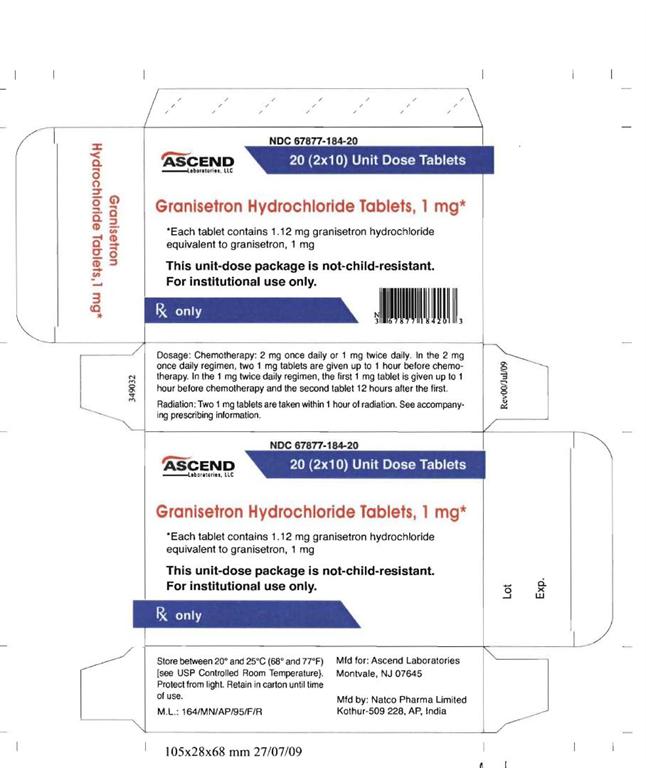
Granisetron Hydrochloride label

Granisetron Hydrochloride

Granisetron Hydrochloride Recall

Get an alert when a recall is issued.

Side Effects & Adverse Reactions

There is currently no warning information available for this product. We apologize for any inconvenience.

FDA Safety Alerts

There are currently no FDA safety alerts available for this drug.

Manufacturer Warnings

There is currently no manufacturer warning information available for this drug.

FDA Labeling Changes

There are currently no FDA labeling changes available for this drug.

Uses

Granisetron HCl is indicated for the prevention of : 

  • Nausea and vomiting associated with initial and repeat courses of emetogenic cancer therapy, including high-dose cisplatin. 
  • Nausea and vomiting associated with radiation, including total body irradiation and fractionated abdominal radiation.

History

There is currently no drug history available for this drug.

Other Information


Granisetron HCL tablets contain granisetron hydrochloride, an antinauseant and antiemetic agent. Chemically it is
endo-N-(9-methyl-9-azabicyclo [3.3.1] non-3-yl)-1-methyl-1H-indazole-3-carboxamide hydrochloride with a molecular weight of 348.9 (312.4 free base). Its empirical formula is C
18H
24N
4O•HCl, while its chemical structure is:

structure


Granisetron hydrochloride is a white to off-white solid that is readily soluble in water and normal saline at 20°C. 

Tablets for Oral Administration

Each white, triangular, biconvex, film-coated Granisetron HCl Tablet contains 1.12 mg granisetron hydrochloride equivalent to granisetron, 1 mg. Inactive ingredients are: hyprmellose, lactose monohydrate, magnesium stearate, microcrystalline cellulose, polyethylene glycol, polysorbate 80, sodium starch glycolate and titanium dioxide.

Granisetron Hydrochloride Manufacturers

  • Ascend Laboratories, Llc
    Granisetron Hydrochloride | Ascend Laboratories, Llc
    No Recall

    Granisetron Hydrochloride | Ascend Laboratories, Llc

    Granisetron Hydrochloride | Ascend Laboratories, Llc

    Emetogenic Chemotherapy 


    The recommended adult dosage of oral Granisetron HCl (granisetron hydrochloride) is 2 mg once daily or 1 mg twice daily. In the 2 mg once-daily regimen, two 1 mg tablets are given up to 1 hour before chemotherapy. In the 1 mg twice-daily regimen, the first 1 mg tablet is given up to 1 hour before chemotherapy, and the second tablet 12 hours after the first. Either regimen is administered only on the day(s) chemotherapy is given. Continued treatment, while not on chemotherapy, has not been found to be useful.

    Use in the Elderly, Pediatric Patients, Renal Failure Patients or Hepatically Impaired Patients

    No dosage adjustment is recommended (see CLINICAL PHARMACOLOGY: Pharmacokinetics).

    Radiation (Either Total Body Irradiation or Fractionated Abdominal Radiation)


    The recommended adult dosage of oral granisetron hydrochloride is 2 mg once daily. Two 1 mg tablets are taken within 1 hour of radiation.

    Pediatric Use

    There is no experience with oral Granisetron HCl in the prevention of radiation-induced nausea and vomiting in pediatric patients.

    Use in the Elderly


    No dosage adjustment is recommended.
  • Akorn Inc.
    Granisetron Hydrochloride | X-gen Pharmaceuticals, Inc.
    No Recall

    Granisetron Hydrochloride | X-gen Pharmaceuticals, Inc.

    Granisetron Hydrochloride | X-gen Pharmaceuticals, Inc.

    Dosage of magnesium sulfate must be carefully adjusted according to individual requirements and response, and administration of the drug should be discontinued as soon as the desired effect is obtained.

    Both IV and IM administration are appropriate. IM administration of the undiluted 50% solution results in therapeutic plasma levels in 60 minutes, whereas IV doses will provide a therapeutic level almost immediately. The rate of IV injection should generally not exceed 150 mg/minute (1.5 mL of a 10% concentration or its equivalent), except in severe eclampsia with seizures (see below). Continuous maternal administration of magnesium sulfate in pregnancy beyond 5 to 7 days can cause fetal abnormalities.

    Solutions for IV infusion must be diluted to a concentration of 20% or less prior to administration. The diluents commonly used are 5% Dextrose Injection, USP and 0.9% Sodium Chloride Injection, USP. Deep IM injection of the undiluted (50%) solution is appropriate for adults, but the solution should be diluted to a 20% or less concentration prior to such injection in children.

    In Magnesium Deficiency

    In the treatment of mild magnesium deficiency, the usual adult dose is 1 g, equivalent to 8.12 mEq of magnesium (2 mL of the 50% solution) injected IM every six hours for four doses (equivalent to a total of 32.5 mEq of magnesium per 24 hours).  For severe hypomagnesemia, as much as 250 mg (approximately 2 mEq) per kg of body weight (0.5 mL of the 50% solution) may be given IM within a period of four hours if necessary.  Alternatively, 5 g (approximately 40 mEq) can be added to one liter of 5% Dextrose Injection, USP or 0.9% Sodium Chloride Injection, USP for slow IV infusion over a three-hour period.  In the treatment of deficiency states, caution must be observed to prevent exceeding the renal excretory capacity.

    In Hyperalimentation

    In TPN, maintenance requirements for magnesium are not precisely known.  The maintenance dose used in adults ranges from 8 to 24 mEq (1 to 3 g) daily; for infants, the range is 2 to 10 mEq (0.25 to 1.25 g) daily.

    In Eclampsia

    In severe pre-eclampsia or eclampsia, the total initial dose is 10 to 14 g of magnesium sulfate. Intravenously, a dose of 4 to 5 g in 250 mL of 5% Dextrose Injection, USP or 0.9% Sodium Chloride Injection, USP may be infused. Simultaneously, IM doses of up to 10 g (5 g or 10 mL of the undiluted 50% solution in each buttock) are given. Alternatively, the initial IV dose of 4 g may be given by diluting the 50% solution to a 10 or 20% concentration; the diluted fluid (40 mL of a 10% solution or 20 mL of a 20% solution) may then be injected IV over a period of three to four minutes. Subsequently, 4 to 5 g (8 to 10 mL of the 50% solution) are injected IM into alternate buttocks every four hours as needed, depending on the continuing presence of the patellar reflex and adequate respiratory function. Alternatively, after the initial IV dose, some clinicians administer 1 to 2 g/hour by constant IV infusion. Therapy should continue until paroxysms cease. A serum magnesium level of 6 mg/100 mL is considered optimal for control of seizures. A total daily (24 hr) dose of 30 to 40 g should not be exceeded. In the presence of severe renal insufficiency, the maximum dosage of magnesium sulfate is 20 grams/48 hours and frequent serum magnesium concentrations must be obtained. Continuous use of magnesium sulfate in pregnancy beyond 5 to 7 days can cause fetal abnormalities.

    Other uses

    In counteracting the muscle-stimulating effects of barium poisoning, the usual dose of magnesium sulfate is 1 to 2 g given IV.

    For controlling seizures associated with epilepsy, glomerulonephritis or hypothyroidism, the usual adult dose is 1 g administered IM or IV.

    In paroxysmal atrial tachycardia, magnesium should be used only if simpler measures have failed and there is no evidence of myocardial damage. The usual dose is 3 to 4 g (30 to 40 mL of a 10% solution) administered IV over 30 seconds with extreme caution. For reduction of cerebral edema, 2.5 g (25 mL of a 10% solution) is given IV.

    Incompatibilities

    Magnesium sulfate in solution may result in a precipitate formation when mixed with solutions containing:


    Alcohol (in high concentrations)


    Heavy metals


    Alkali carbonates and bicarbonates           


    Hydrocortisone sodium succinate          


    Alkali hydroxides


    Phosphates


    Arsenates


    Polymyxin B sulfate


    Barium


    Procaine hydrochloride


    Calcium


    Salicylates


    Clindamycin phosphate


    Strontium


    Tartrates

    The potential incompatibility will often be influenced by the changes in the concentration of reactants and the pH of the solutions.

    It has been reported that magnesium may reduce the antibiotic activity of streptomycin, tetracycline and tobramycin when given together.

    Parenteral drug products should be inspected visually for particulate matter and discoloration prior to administration, whenever solution and container permit.

  • Wockhardt Usa Llc
    Granisetron Hydrochloride | Wockhardt Usa Llc
    No Recall

    Granisetron Hydrochloride | Wockhardt Usa Llc

    Granisetron Hydrochloride | Wockhardt Usa Llc

    2.1 Prevention of Chemotherapy-Induced Nausea and Vomiting Adult Patients
    The recommended dosage for granisetron hydrochloride injection is 10 mcg/kg administered intravenously within 30 minutes before initiation of chemotherapy, and only on the day(s) chemotherapy is given.

    Infusion Preparation
    Granisetron hydrochloride injection may be administered intravenously either undiluted over 30 seconds, or diluted with 0.9% Sodium Chloride or 5% Dextrose and infused over 5 minutes.

    Stability
    Intravenous infusion of granisetron hydrochloride injection should be prepared at the time of administration. However, granisetron hydrochloride injection has been shown to be stable for at least 24 hours when diluted in 0.9% Sodium Chloride or 5% Dextrose and stored at room temperature under normal lighting conditions.

    As a general precaution, granisetron hydrochloride injection should not be mixed in solution with other drugs. Parenteral drug products should be inspected visually for particulate matter and discoloration before administration whenever solution and container permit.

    Pediatric Patients
    The recommended dose in pediatric patients 2 to 16 years of age is 10 mcg/kg [see Clinical Studies (14)]. Pediatric patients under 2 years of age have not been studied.
  • Wockhardt Limited
    Granisetron Hydrochloride | Wockhardt Limited
    No Recall

    Granisetron Hydrochloride | Wockhardt Limited

    Granisetron Hydrochloride | Wockhardt Limited

    2.1 Prevention of Chemotherapy-Induced Nausea and Vomiting Adult Patients
    The recommended dosage for granisetron hydrochloride injection is 10 mcg/kg administered intravenously within 30 minutes before initiation of chemotherapy, and only on the day(s) chemotherapy is given.

    Infusion Preparation
    Granisetron hydrochloride injection may be administered intravenously either undiluted over 30 seconds, or diluted with 0.9% Sodium Chloride or 5% Dextrose and infused over 5 minutes.

    Stability
    Intravenous infusion of granisetron hydrochloride injection should be prepared at the time of administration. However, granisetron hydrochloride injection has been shown to be stable for at least 24 hours when diluted in 0.9% Sodium Chloride or 5% Dextrose and stored at room temperature under normal lighting conditions.

    As a general precaution, granisetron hydrochloride injection should not be mixed in solution with other drugs. Parenteral drug products should be inspected visually for particulate matter and discoloration before administration whenever solution and container permit.

    Pediatric Patients
    The recommended dose in pediatric patients 2 to 16 years of age is 10 mcg/kg [see Clinical Studies (14)]. Pediatric patients under 2 years of age have not been studied.
  • Wockhardt Usa Llc
    Granisetron Hydrochloride | Wockhardt Usa Llc
    No Recall

    Granisetron Hydrochloride | Wockhardt Usa Llc

    Granisetron Hydrochloride | Wockhardt Usa Llc

    2.1 Prevention of Chemotherapy-Induced Nausea and Vomiting Adult Patients
    The recommended dosage for granisetron hydrochloride injection is 10 mcg/kg administered intravenously within 30 minutes before initiation of chemotherapy, and only on the day(s) chemotherapy is given.

    Infusion Preparation
    Granisetron hydrochloride injection may be administered intravenously either undiluted over 30 seconds, or diluted with 0.9% Sodium Chloride or 5% Dextrose and infused over 5 minutes.

    Stability
    Intravenous infusion of granisetron hydrochloride injection should be prepared at the time of administration. However, granisetron hydrochloride injection has been shown to be stable for at least 24 hours when diluted in 0.9% Sodium Chloride or 5% Dextrose and stored at room temperature under normal lighting conditions.

    As a general precaution, granisetron hydrochloride injection should not be mixed in solution with other drugs. Parenteral drug products should be inspected visually for particulate matter and discoloration before administration whenever solution and container permit.

    Pediatric Patients
    The recommended dose in pediatric patients 2 to 16 years of age is 10 mcg/kg [see Clinical Studies (14)]. Pediatric patients under 2 years of age have not been studied.
    2.1 Prevention of Chemotherapy-Induced Nausea and Vomiting Adult Patients
    The recommended dosage for granisetron hydrochloride injection is 10 mcg/kg administered intravenously within 30 minutes before initiation of chemotherapy, and only on the day(s) chemotherapy is given.

    Infusion Preparation
    Granisetron hydrochloride injection may be administered intravenously either undiluted over 30 seconds, or diluted with 0.9% Sodium Chloride or 5% Dextrose and infused over 5 minutes.

    Stability
    Intravenous infusion of granisetron hydrochloride injection should be prepared at the time of administration. However, granisetron hydrochloride injection has been shown to be stable for at least 24 hours when diluted in 0.9% Sodium Chloride or 5% Dextrose and stored at room temperature under normal lighting conditions.

    As a general precaution, granisetron hydrochloride injection should not be mixed in solution with other drugs. Parenteral drug products should be inspected visually for particulate matter and discoloration before administration whenever solution and container permit.

    Pediatric Patients
    The recommended dose in pediatric patients 2 to 16 years of age is 10 mcg/kg [see Clinical Studies (14)]. Pediatric patients under 2 years of age have not been studied.
  • Wockhardt Limited
    Granisetron Hydrochloride | Wockhardt Limited
    No Recall

    Granisetron Hydrochloride | Wockhardt Limited

    Granisetron Hydrochloride | Wockhardt Limited

    2.1 Prevention of Chemotherapy-Induced Nausea and Vomiting Adult Patients
    The recommended dosage for granisetron hydrochloride injection is 10 mcg/kg administered intravenously within 30 minutes before initiation of chemotherapy, and only on the day(s) chemotherapy is given.

    Infusion Preparation
    Granisetron hydrochloride injection may be administered intravenously either undiluted over 30 seconds, or diluted with 0.9% Sodium Chloride or 5% Dextrose and infused over 5 minutes.

    Stability
    Intravenous infusion of granisetron hydrochloride injection should be prepared at the time of administration. However, granisetron hydrochloride injection has been shown to be stable for at least 24 hours when diluted in 0.9% Sodium Chloride or 5% Dextrose and stored at room temperature under normal lighting conditions.

    As a general precaution, granisetron hydrochloride injection should not be mixed in solution with other drugs. Parenteral drug products should be inspected visually for particulate matter and discoloration before administration whenever solution and container permit.

    Pediatric Patients
    The recommended dose in pediatric patients 2 to 16 years of age is 10 mcg/kg [see Clinical Studies (14)]. Pediatric patients under 2 years of age have not been studied.
    2.1 Prevention of Chemotherapy-Induced Nausea and Vomiting Adult Patients
    The recommended dosage for granisetron hydrochloride injection is 10 mcg/kg administered intravenously within 30 minutes before initiation of chemotherapy, and only on the day(s) chemotherapy is given.

    Infusion Preparation
    Granisetron hydrochloride injection may be administered intravenously either undiluted over 30 seconds, or diluted with 0.9% Sodium Chloride or 5% Dextrose and infused over 5 minutes.

    Stability
    Intravenous infusion of granisetron hydrochloride injection should be prepared at the time of administration. However, granisetron hydrochloride injection has been shown to be stable for at least 24 hours when diluted in 0.9% Sodium Chloride or 5% Dextrose and stored at room temperature under normal lighting conditions.

    As a general precaution, granisetron hydrochloride injection should not be mixed in solution with other drugs. Parenteral drug products should be inspected visually for particulate matter and discoloration before administration whenever solution and container permit.

    Pediatric Patients
    The recommended dose in pediatric patients 2 to 16 years of age is 10 mcg/kg [see Clinical Studies (14)]. Pediatric patients under 2 years of age have not been studied.
  • Granisetron Hydrochloride | Breckenridge Pharmaceutical, Inc.
    No Recall

    Granisetron Hydrochloride | Breckenridge Pharmaceutical, Inc.

    Granisetron Hydrochloride | Breckenridge Pharmaceutical, Inc.

    Emetogenic Chemotherapy
     
    The recommended adult dosage of oral granisetron hydrochloride is 2 mg once daily or 1 mg twice daily. In the 2 mg once-daily regimen, two 1 mg tablets are given up to 1 hour before chemotherapy. In the 1 mg twice-daily regimen, the first 1 mg tablet is given up to 1 hour before chemotherapy, and the second tablet 12 hours after the first. Either regimen is administered only on the day(s) chemotherapy is given. Continued treatment, while not on chemotherapy, has not been found to be useful.
     
    Use in the Elderly, Renal Failure Patients or Hepatically Impaired Patients
     
    No dosage adjustment is recommended (see CLINICAL PHARMACOLOGY: Pharmacokinetics).
     
    Pediatric Use
     
    Safety and effectiveness in pediatric patients have not been established.
     
    Radiation (Either Total Body Irradiation or Fractionated Abdominal Radiation)
     
    The recommended adult dosage of oral granisetron hydrochloride is 2 mg once daily. Two 1 mg tablets are taken within 1 hour of radiation.
     
    Pediatric Use
     
    Safety and effectiveness in pediatric patients have not been established.
     
    Use in the Elderly
     
    No dosage adjustment is recommended.
  • Northstar Rx Llc
    Granisetron Hydrochloride | E. Fougera & Co. A Division Of Fougera Pharmaceuticals Inc.
    No Recall

    Granisetron Hydrochloride | E. Fougera & Co. A Division Of Fougera Pharmaceuticals Inc.

    Granisetron Hydrochloride | E. Fougera & Co. A Division Of Fougera Pharmaceuticals Inc.

    Clobetasol propionate topical solution USP, 0.05% should be applied to the affected scalp areas twice daily, once in the morning and once at night.

    Clobetasol propionate topical solution USP, 0.05% is potent; therefore, treatment should be limited to 2 consecutive weeks, and amounts greater than 50 mL/week should not be used.

    Clobetasol propionate topical solution USP, 0.05% is not to be used with occlusive dressings.

    Geriatric Use: In studies where geriatric patients (65 years of age or older, see PRECAUTIONS) have been treated with clobetasol propionate topical solution, safety did not differ from that in younger patients; therefore, no dosage adjustment is recommended.

  • Northstar Rx Llc
    Granisetron Hydrochloride | Northstar Rx Llc
    No Recall

    Granisetron Hydrochloride | Northstar Rx Llc

    Granisetron Hydrochloride | Northstar Rx Llc

    Emetogenic Chemotherapy

    The recommended adult dosage of oral granisetron hydrochloride is 2 mg once daily or 1 mg twice daily. In the 2 mg once-daily regimen, two 1 mg tablets are given up to 1 hour before chemotherapy. In the 1 mg twice-daily regimen, the first 1 mg tablet is given up to 1 hour before chemotherapy, and the second tablet, 12 hours after the first. Either regimen is administered only on the day(s) chemotherapy is given. Continued treatment, while not on chemotherapy, has not been found to be useful.

    Use in the Elderly, Renal Failure Patients or Hepatically Impaired Patients

    No dosage adjustment is recommended (see CLINICAL PHARMACOLOGY: Pharmacokinetics).

    Pediatric Use

    Safety and effectiveness in pediatric patients have not been established.

    Radiation (Either Total Body Irradiation or Fractionated Abdominal Radiation)

    The recommended adult dosage of oral granisetron hydrochloride is 2 mg once daily. Two 1 mg tablets are taken within 1 hour of radiation.

    Pediatric Use

    Safety and effectiveness in pediatric patients have not been established.

    Use in the Elderly

    No dosage adjustment is recommended.

  • Roxane Laboratories, Inc
    Granisetron Hydrochloride | Aurobindo Pharma Limited
    No Recall

    Granisetron Hydrochloride | Aurobindo Pharma Limited

    Granisetron Hydrochloride | Aurobindo Pharma Limited

    Hypertension

    Monotherapy

    The recommended initial dosage of quinapril tablets in patients not on diuretics is 10 or 20 mg once daily. Dosage should be adjusted according to blood pressure response measured at peak (2 to 6 hours after dosing) and trough (predosing). Generally, dosage adjustments should be made at intervals of at least 2 weeks. Most patients have required dosages of 20, 40, or 80 mg/day, given as a single dose or in two equally divided doses. In some patients treated once daily, the antihypertensive effect may diminish toward the end of the dosing interval. In such patients an increase in dosage or twice daily administration may be warranted. In general, doses of 40 to 80 mg and divided doses give a somewhat greater effect at the end of the dosing interval.

    Concomitant Diuretics

    If blood pressure is not adequately controlled with quinapril tablets monotherapy, a diuretic may be added. In patients who are currently being treated with a diuretic, symptomatic hypotension occasionally can occur following the initial dose of quinapril tablets. To reduce the likelihood of hypotension, the diuretic should, if possible, be discontinued 2 to 3 days prior to beginning therapy with quinapril tablets (see WARNINGS). Then, if blood pressure is not controlled with quinapril tablets alone, diuretic therapy should be resumed.

    If the diuretic cannot be discontinued, an initial dose of 5 mg quinapril tablets should be used with careful medical supervision for several hours and until blood pressure has stabilized.

    The dosage should subsequently be titrated (as described above) to the optimal response (see WARNINGS and PRECAUTIONS, Drug Interactions).

    Renal Impairment

    Kinetic data indicate that the apparent elimination half-life of quinaprilat increases as creatinine clearance decreases. Recommended starting doses, based on clinical and pharmacokinetic data from patients with renal impairment, are as follows:


    Creatinine Clearance Maximum Recommended
    Initial Dose >60 mL/min
    10 mg
    30 to 60 mL/min
    5 mg
    10 to 30 mL/min
    2.5 mg
    <10 mL/min
    Insufficient data for dosage recommendation

    Patients should subsequently have their dosage titrated (as described above) to the optimal response.

    Elderly (≥65 years)

    The recommended initial dosage of quinapril tablets in elderly patients is 10 mg given once daily followed by titration (as described above) to the optimal response.

    Heart Failure

    Quinapril tablets are indicated as adjunctive therapy when added to conventional therapy including diuretics and/or digitalis. The recommended starting dose is 5 mg twice daily. This dose may improve symptoms of heart failure, but increases in exercise duration have generally required higher doses. Therefore, if the initial dosage of quinapril tablets is well tolerated, patients should then be titrated at weekly intervals until an effective dose, usually 20 to 40 mg daily given in two equally divided doses, is reached or undesirable hypotension, orthostatis, or azotemia (see WARNINGS) prohibit reaching this dose.

    Following the initial dose of quinapril tablets, the patient should be observed under medical supervision for at least two hours for the presence of hypotension or orthostatis and, if present, until blood pressure stabilizes. The appearance of hypotension, orthostatis, or azotemia early in dose titration should not preclude further careful dose titration. Consideration should be given to reducing the dose of concomitant diuretics.

    DOSE ADJUSTMENTS IN PATIENTS WITH HEART FAILURE AND RENAL IMPAIRMENT OR HYPONATREMIA

    Pharmacokinetic data indicate that quinapril elimination is dependent on level of renal function. In patients with heart failure and renal impairment, the recommended initial dose of quinapril tablets is 5 mg in patients with a creatinine clearance above 30 mL/min and 2.5 mg in patients with a creatinine clearance of 10 to 30 mL/min. There is insufficient data for dosage recommendation in patients with a creatinine clearance less than 10 mL/min (see DOSAGE AND ADMINISTRATION, Heart Failure, WARNINGS, and PRECAUTIONS, Drug Interactions).

    If the initial dose is well tolerated, quinapril tablets may be administered the following day as a twice daily regimen. In the absence of excessive hypotension or significant deterioration of renal function, the dose may be increased at weekly intervals based on clinical and hemodynamic response.

  • Sagent Pharmaceuticals
    Granisetron Hydrochloride | Glaxosmithkline Llc
    No Recall

    Granisetron Hydrochloride | Glaxosmithkline Llc

    Granisetron Hydrochloride | Glaxosmithkline Llc
    2.1 Adults

    The usual recommended dosage for systemic and urinary tract infections for adults is 3.1 grams of TIMENTIN (3 grams ticarcillin and 100 mg clavulanic acid) given every 4 to 6 hours.

    For gynecologic infections, TIMENTIN should be administered as follows (based on ticarcillin content): Moderate infections, 200 mg/kg/day in divided doses every 6 hours; severe infections, 300 mg/kg/day in divided doses every 4 hours.

    For patients weighing less than 60 kg, the recommended dosage is 200 to 300 mg/kg/day given in divided doses every 4 to 6 hours.

    The duration of therapy depends upon the severity of infection. The usual duration is 10 to 14 days; however, in difficult and complicated infections, more prolonged therapy may be required.

    2.2 Pediatric Patients (≥3 Months of Age)

    Patients <60 kg: Mild to moderate infections, 200 mg/kg/day based on ticarcillin content in divided doses every 6 hours; severe infections, 300 mg/kg/day in divided doses every 4 hours.

    Patients ≥60 kg: Mild to moderate infections, 3.1 grams every 6 hours; severe infections, 3.1 grams every 4 hours.

    2.3 Renal Impairment

    For patients with renal insufficiency, an initial loading dose of 3.1 grams should be followed by doses based on creatinine clearance and type of dialysis as indicated in Table 1.

    Table 1. Dosage Adjustments for Renal Impairment

    Creatinine Clearance (mL/minute)a

    Dosageb

    Over 60

    3 grams every 4 hours

    30 to 60

    2 grams every 4 hours

    10 to 30

    2 grams every 8 hours

    Less than 10

    2 grams every 12 hours

    Less than 10 with hepatic dysfunction

    2 grams every 24 hours

    Patients on peritoneal dialysis

    3 grams every 12 hours

    Patients on hemodialysis

    2 grams every 12 hours supplemented with 3 grams after each dialysis

    a To calculate creatinine clearance1 from a serum creatinine value use the following formula:

    Ccr = (140–Age) (weight in kg)/72 x Scr (mg/100 mL)

    This is the calculated creatinine clearance for adult males; for females it is 15% less.

    b Based on ticarcillin content.

    2.4 Administration and Directions for Use

    TIMENTIN should be administered by intravenous infusion over a 30-minute period.

    Directions for Reconstitution and Further Dilution: 3.1‑gram Glass Vials: The 3.1‑gram vial should be reconstituted by adding approximately 13 mL of Sterile Water for Injection, USP, or Sodium Chloride Injection, USP, and shaking well. When dissolved, the concentration of ticarcillin will be approximately 200 mg/mL with a corresponding concentration of 6.7 mg/mL for clavulanic acid. The color of reconstituted solutions of TIMENTIN normally ranges from light to dark yellow, depending on concentration, duration, and temperature of storage.

    The dissolved drug should be further diluted to desired volume using the recommended solution listed under Stability [see Dosage and Administration (2.5)] to a concentration between 10 mg/mL to 100 mg/mL.

    Pharmacy Bulk Package: The container closure may be penetrated only one time utilizing a suitable sterile transfer device or dispensing set that allows measured distribution of the contents. A sterile substance that must be reconstituted prior to use may require a separate closure entry.

    Restrict use of Pharmacy Bulk Packages to an aseptic area such as a laminar flow hood.

    Reconstituted contents of the vial should be withdrawn immediately. However, if this is not possible, aliquoting operations must be completed within 4 hours of reconstitution. Discard the reconstituted stock solution 4 hours after initial entry.

    Add 76 mL of Sterile Water for Injection, USP, or Sodium Chloride Injection, USP, to the 31‑gram Pharmacy Bulk Package and shake well. For ease of reconstitution, the diluent may be added in 2 portions. Each 1 mL of the resulting concentrated stock solution contains approximately 300 mg of ticarcillin and 10 mg of clavulanic acid.

    The desired dosage should be withdrawn from the stock solution and further diluted to desired volume using the recommended solution listed under Stability [see Dosage and Administration (2.5)] to a concentration between 10 mg/mL to 100 mg/mL.

    Directions for Intravenous Infusion: After reconstitution and further dilution and prior to administration, TIMENTIN should be inspected visually for particulate matter. If particulate matter is present, the solution should be discarded.

    The solution of reconstituted drug may be administered over a 30-minute period by direct infusion or through a Y‑type intravenous infusion set. If this method of administration is used, it is advisable to temporarily discontinue the administration of any other solutions during the infusion of TIMENTIN.

    When TIMENTIN is given in combination with another antimicrobial, such as an aminoglycoside, each drug should be given separately in accordance with the recommended dosage and routes of administration for each drug [see Drug Interactions (7.1)].

    GALAXY® Container (PL 2040 Plastic): Prior to administration, TIMENTIN should be inspected visually for particulate matter. If particulate matter is present, the solution should be discarded.

    Caution: Do not use plastic containers in series connections. Such use could result in an embolism due to residual air being drawn from the primary container before administration of the fluid from the secondary container is completed.

    Preparation for Administration: See How Supplied/Storage and Handling (16) for thawing and handling instructions:

    • Suspend the container from eyelet support. • Remove protector from outlet port at bottom of container. • Attach administration set. Refer to complete directions accompanying set. 2.5 Stability

    NOTE: TIMENTIN is incompatible with Sodium Bicarbonate.

    3.1‑gram Glass Vials: The concentrated stock solution at 200 mg/mL is stable for up to 6 hours at room temperature 21° to 24°C (70° to 75°F) or up to 72 hours under refrigeration 4°C (40°F).

    If the concentrated stock solution (200 mg/mL) is held for up to 6 hours at room temperature 21° to 24°C (70° to 75°F) or up to 72 hours under refrigeration 4°C (40°F) and further diluted to a concentration between 10 mg/mL and 100 mg/mL with any of the diluents listed below, then the following stability periods apply.

    STABILITY PERIOD

    (3.1‑gram Vials)

    Intravenous Solution

    (ticarcillin concentrations of

    10 mg/mL to 100 mg/mL)

    Room Temperature

    21° to 24°C (70° to 75°F)

    Refrigerated

    4°C (40°F)

    Dextrose Injection 5%, USP

    24 hours

    3 days

    Sodium Chloride Injection, USP

    24 hours

    7 days

    Lactated Ringer’s Injection, USP

    24 hours

    7 days

    If the concentrated stock solution (200 mg/mL) is stored for up to 6 hours at room temperature and then further diluted to a concentration between 10 mg/mL and 100 mg/mL, solutions of Sodium Chloride Injection, USP, and Lactated Ringer’s Injection, USP, may be stored frozen –18°C (0°F) for up to 30 days. Solutions prepared with Dextrose Injection 5%, USP, may be stored frozen –18°C (0°F) for up to 7 days. All thawed solutions should be used within 8 hours or discarded. Once thawed, solutions should not be refrozen.

    Unused solutions must be discarded after the time periods listed above.

    Pharmacy Bulk Package: Aliquots of the reconstituted stock solution at 300 mg/mL are stable for up to 6 hours between 21° and 24°C (70° and 75°F) or up to 72 hours under refrigeration 4°C (40°F). The reconstituted stock solution should be held under refrigeration 4°C (40°F).

    If the aliquots of the reconstituted stock solution (300 mg/mL) are held up to 6 hours between 21° and 24°C (70° and 75°F) or up to 72 hours under refrigeration 4°C (40°F) and further diluted to a concentration between 10 mg/mL and 100 mg/mL with any of the diluents listed below, then the following stability periods apply.

    STABILITY PERIOD

    (31‑gram Pharmacy Bulk Package)

    Intravenous Solution

    (ticarcillin concentrations of

    10 mg/mL to 100 mg/mL)

    Room Temperature

    21° to 24°C (70° to 75°F)

    Refrigerated

    4°C (40°F)

    Dextrose Injection 5%, USP

    24 hours

    3 days

    Sodium Chloride Injection 0.9%, USP

    24 hours

    4 days

    Lactated Ringer’s Injection, USP

    24 hours

    4 days

    Sterile Water for Injection, USP

    24 hours

    4 days

    If an aliquot of concentrated stock solution (300 mg/mL) is stored for up to 6 hours between 21° and 24°C (70° and 75°F) and then further diluted to a concentration between 10 mg/mL and 100 mg/mL, solutions of Sodium Chloride Injection, USP, Lactated Ringer’s Injection, USP, and Sterile Water for Injection, USP, may be stored frozen –18°C (0°F) for up to 30 days. Solutions prepared with Dextrose Injection 5%, USP, may be stored frozen –18°C (0°F) for up to 7 days. All thawed solutions should be used within 8 hours or discarded. Once thawed, solutions should not be refrozen.

    Unused solutions must be discarded after the time periods listed above.

    GALAXY Container (PL 2040 Plastic): Do not add supplementary medication to the container. The thawed solution is stable for 24 hours at room temperature 22°C (72°F) or for 7 days under refrigeration at 4°C (39°F).

  • Sagent Pharmaceuticals
    Granisetron Hydrochloride | Sagent Pharmaceuticals
    No Recall

    Granisetron Hydrochloride | Sagent Pharmaceuticals

    Granisetron Hydrochloride | Sagent Pharmaceuticals
    2.1 Prevention of Chemotherapy-Induced Nausea and Vomiting

    Adult Patients

    The recommended dosage for granisetron hydrochloride injection is 10 mcg/kg administered intravenously within 30 minutes before initiation of chemotherapy, and only on the day(s) chemotherapy is given.

    Infusion Preparation

    Granisetron hydrochloride injection may be administered intravenously either undiluted over 30 seconds, or diluted with 0.9% Sodium Chloride or 5% Dextrose and infused over 5 minutes.

    Stability

    Intravenous infusion of granisetron hydrochloride injection should be prepared at the time of administration. However, granisetron hydrochloride injection has been shown to be stable for at least 24 hours when diluted in 0.9% Sodium Chloride or 5% Dextrose and stored at room temperature under normal lighting conditions.

    As a general precaution, granisetron hydrochloride injection should not be mixed in solution with other drugs. Parenteral drug products should be inspected visually for particulate matter and discoloration before administration whenever solution and container permit.

    Pediatric Patients

    The recommended dose in pediatric patients 2 to 16 years of age is 10 mcg/kg [see Clinical Studies (14)]. Pediatric patients under 2 years of age have not been studied.

  • Sagent Pharmaceuticals
    Granisetron Hydrochloride | L&r Distributors, Inc.
    No Recall

    Granisetron Hydrochloride | L&r Distributors, Inc.

    Granisetron Hydrochloride | L&r Distributors, Inc.

    do not take more than directed (see overdose warning)

    adults and children 12 years and over

    take 2 caplets every 4 hours

    swallow whole - do not crush, chew, or dissolve

    do not take more than 10 caplets in 24 hours

    children under 12 years: ask a doctor

  • Taro Pharmaceuticals U.s.a., Inc.
    Granisetron Hydrochloride | Taro Pharmaceuticals U.s.a., Inc.
    No Recall

    Granisetron Hydrochloride | Taro Pharmaceuticals U.s.a., Inc.

    Granisetron Hydrochloride | Taro Pharmaceuticals U.s.a., Inc.
    Emetogenic Chemotherapy

    The recommended adult dosage of oral granisetron hydrochloride USP is 2 mg once daily or 1 mg twice daily. In the 2 mg once-daily regimen, two 1 mg tablets are given up to 1 hour before chemotherapy. In the 1 mg twice-daily regimen, the first 1 mg tablet is given up to 1 hour before chemotherapy, and the second tablet 12 hours after the first. Either regimen is administered only on the day(s) chemotherapy is given. Continued treatment, while not on chemotherapy, has not been found to be useful.

    Use in the Elderly, Renal Failure Patients or Hepatically Impaired Patients

    No dosage adjustment is recommended (see CLINICAL PHARMACOLOGY: Pharmacokinetics).

    Pediatric Use

    Safety and effectiveness in pediatric patients have not been established.

    Radiation (Either Total Body Irradiation or Fractionated Abdominal Radiation)

    The recommended adult dosage of oral granisetron hydrochloride USP is 2 mg once daily. Two 1 mg tablets are taken within 1 hour of radiation.

    Pediatric Use

    Safety and effectiveness in pediatric patients have not been established.

    Use in the Elderly

    No dosage adjustment is recommended.

  • Corepharma, Llc
    Granisetron Hydrochloride | Corepharma, Llc
    No Recall

    Granisetron Hydrochloride | Corepharma, Llc

    Granisetron Hydrochloride | Corepharma, Llc

    Emetogenic Chemotherapy

    The recommended adult dosage of oral granisetron hydrochloride tablets is 2 mg once daily or 1 mg twice daily. In the 2 mg once-daily regimen, two 1 mg tablets are given up to 1 hour before chemotherapy. In the 1 mg twice-daily regimen, the first 1 mg tablet is given up to 1 hour before chemotherapy, and the second tablet 12 hours after the first. Either regimen is administered only on the day(s) chemotherapy is given. Continued treatment, while not on chemotherapy, has not been found to be useful.

    Use in the Elderly, Renal Failure Patients or Hepatically Impaired Patients: No dosage adjustment is recommended (see CLINICAL PHARMACOLOGY: Pharmacokinetics).

    Pediatric Use

    Safety and effectiveness in pediatric patients have not been established.

    Radiation (Either Total Body Irradiation or Fractionated Abdominal Radiation)

    The recommended adult dosage of oral granisetron hydrochloride tablets is 2 mg once daily. Two 1 mg tablets are taken within 1 hour of radiation.

    Pediatric Use: Safety and effectiveness in pediatric patients have not been established.

    Use in the Elderly: No dosage adjustment is recommended.

  • Granisetron Hydrochloride | Teva Pharmaceuticals Usa Inc
    No Recall

    Granisetron Hydrochloride | Teva Pharmaceuticals Usa Inc

    Granisetron Hydrochloride | Teva Pharmaceuticals Usa Inc
    Emetogenic Chemotherapy

    The recommended adult dosage of oral granisetron hydrochloride tablets USP is 2 mg once daily or 1 mg twice daily. In the 2 mg once-daily regimen, two 1 mg tablets are given up to 1 hour before chemotherapy. In the 1 mg twice-daily regimen, the first 1 mg tablet is given up to 1 hour before chemotherapy, and the second tablet, 12 hours after the first. Either regimen is administered only on the day(s) chemotherapy is given. Continued treatment, while not on chemotherapy, has not been found to be useful.

    Use in the Elderly, Renal Failure Patients or Hepatically Impaired Patients

    No dosage adjustment is recommended (see CLINICAL PHARMACOLOGY, Pharmacokinetics).

    Pediatric Use

    Safety and effectiveness in pediatric patients have not been established.

    Radiation (Either Total Body Irradiation or Fractionated Abdominal Radiation)

    The recommended adult dosage of oral granisetron hydrochloride tablets USP is 2 mg once daily. Two 1 mg tablets are taken within 1 hour of radiation.

    Pediatric Use

    Safety and effectiveness in pediatric patients have not been established.

    Use in the Elderly

    No dosage adjustment is recommended.

  • West-ward Pharmaceutical Corp
    Granisetron Hydrochloride | West-ward Pharmaceutical Corp
    No Recall

    Granisetron Hydrochloride | West-ward Pharmaceutical Corp

    Granisetron Hydrochloride | West-ward Pharmaceutical Corp
    2.1 Prevention of Chemotherapy-Induced Nausea and Vomiting

    Adult Patients
    The recommended dosage for Granisetron Hydrochloride Injection is 10 mcg/kg administered intravenously within 30 minutes before initiation of chemotherapy, and only on the day(s) chemotherapy is given.  

    Infusion Preparation
    Granisetron Hydrochloride Injection may be administered intravenously either undiluted over 30 seconds or diluted with 0.9% Sodium Chloride or 5% Dextrose and infused over 5 minutes.

    Stability
    Intravenous infusion of Granisetron Hydrochloride Injection should be prepared at the time of administration. However, Granisetron Hydrochloride Injection has been shown to be stable for at least 24 hours when diluted in 0.9% Sodium Chloride or 5% Dextrose and stored at room temperature under normal lighting conditions.

    As a general precaution, Granisetron Hydrochloride Injection should not be mixed in solution with other drugs. Parenteral drug products should be inspected visually for particulate matter and discoloration before administration whenever solution and container permit.

    Pediatric Patients
    The recommended dose in pediatric patients 2 to 16 years of age is 10 mcg/kg [see Clinical Studies (14)]. Pediatric patients under 2 years of age have not been studied.

  • Granisetron Hydrochloride | Cipla Limited
    No Recall

    Granisetron Hydrochloride | Cipla Limited

    Granisetron Hydrochloride | Cipla Limited
    2.1 Prevention of Chemotherapy-Induced Nausea and Vomiting

    Adult Patients 

    The recommended dosage for Granisetron Hydrochloride Injection is 10 mcg/kg administered intravenously within 30 minutes before initiation of chemotherapy, and only on the day(s) chemotherapy is given.

    Infusion Preparation 

    Granisetron Hydrochloride Injection may be administered intravenously either undiluted over 30 seconds or diluted with 0.9% Sodium Chloride or 5% Dextrose and infused over 5 minutes.

    Stability

    Intravenous infusion of Granisetron Hydrochloride Injection should be prepared at the time of administration. However, Granisetron Hydrochloride Injection has been shown to be stable for at least 24 hours when diluted in 0.9% Sodium Chloride or 5% Dextrose and stored at room temperature under normal lighting conditions.

    As a general precaution, Granisetron Hydrochloride Injection should not be mixed in solution with other drugs. Parenteral drug products should be inspected visually for particulate matter and discoloration before administration whenever solution and container permit.

    Pediatric Patients 

    The recommended dose in pediatric patients 2 to 16 years of age is 10 mcg/kg [see Clinical Studies (14)]. Pediatric patients under 2 years of age have not been studied.