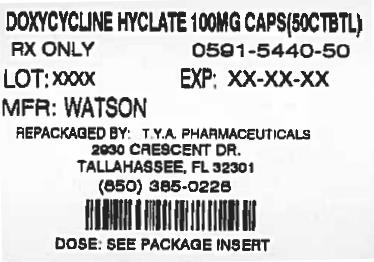
Hydrocodone Bitartrate label

Hydrocodone Bitartrate

Hydrocodone Bitartrate Recall

Get an alert when a recall is issued.

Side Effects & Adverse Reactions

There is currently no warning information available for this product. We apologize for any inconvenience.

FDA Safety Alerts

There are currently no FDA safety alerts available for this drug.

Manufacturer Warnings

There is currently no manufacturer warning information available for this drug.

FDA Labeling Changes

There are currently no FDA labeling changes available for this drug.

Uses

1.1 Attention-Deficit/Hyperactivity Disorder (ADHD)

STRATTERA is indicated for the treatment of Attention-Deficit/Hyperactivity Disorder (ADHD).

The efficacy of STRATTERA Capsules was established in seven clinical trials in outpatients with ADHD: four 6 to 9-week trials in pediatric patients (ages 6 to 18), two 10-week trial in adults, and one maintenance trial in pediatrics (ages 6 to 15) . [see Clinical Studies ( )] 14

1.2 Diagnostic Considerations

A diagnosis of ADHD (DSM-IV) implies the presence of hyperactive-impulsive or inattentive symptoms that cause impairment and that were present before age 7 years. The symptoms must be persistent, must be more severe than is typically observed in individuals at a comparable level of development, must cause clinically significant impairment, e.g., in social, academic, or occupational functioning, and must be present in 2 or more settings, e.g., school (or work) and at home. The symptoms must not be better accounted for by another mental disorder.

The specific etiology of ADHD is unknown, and there is no single diagnostic test. Adequate diagnosis requires the use not only of medical but also of special psychological, educational, and social resources. Learning may or may not be impaired. The diagnosis must be based upon a complete history and evaluation of the patient and not solely on the presence of the required number of DSM-IV characteristics.

For the Inattentive Type, at least 6 of the following symptoms must have persisted for at least 6 months: lack of attention to details/careless mistakes, lack of sustained attention, poor listener, failure to follow through on tasks, poor organization, avoids tasks requiring sustained mental effort, loses things, easily distracted, forgetful. For the Hyperactive-Impulsive Type, at least 6 of the following symptoms must have persisted for at least 6 months: fidgeting/squirming, leaving seat, inappropriate running/climbing, difficulty with quiet activities, “on the go,” excessive talking, blurting answers, can’t wait turn, intrusive. For a Combined Type diagnosis, both inattentive and hyperactive-impulsive criteria must be met.

1.3 Need for Comprehensive Treatment Program

STRATTERA is indicated as an integral part of a total treatment program for ADHD that may include other measures (psychological, educational, social) for patients with this syndrome. Drug treatment may not be indicated for all patients with this syndrome. Drug treatment is not intended for use in the patient who exhibits symptoms secondary to environmental factors and/or other primary psychiatric disorders, including psychosis. Appropriate educational placement is essential in children and adolescents with this diagnosis and psychosocial intervention is often helpful. When remedial measures alone are insufficient, the decision to prescribe drug treatment medication will depend upon the physician’s assessment of the chronicity and severity of the patient’s symptoms.

History

There is currently no drug history available for this drug.

Other Information

STRATTERA (atomoxetine) is a selective norepinephrine reuptake inhibitor. Atomoxetine HCl is the (-) isomer as determined by x-ray diffraction. The chemical designation is (-)- -Methyl-3-phenyl-3-( -tolyloxy)-propylamine hydrochloride. The molecular formula is C H NO•HCl, which corresponds to a molecular weight of 291.82. The chemical structure is: ®RNo1721

Chemical Structure

Atomoxetine HCl is a white to practically white solid, which has a solubility of 27.8 mg/mL in water.

STRATTERA capsules are intended for oral administration only.

Each capsule contains atomoxetine HCl equivalent to 10, 18, 25, 40, 60, 80, or 100 mg of atomoxetine. The capsules also contain pregelatinized starch and dimethicone. The capsule shells contain gelatin, sodium lauryl sulfate, and other inactive ingredients. The capsule shells also contain one or more of the following:

FD&C Blue No. 2, synthetic yellow iron oxide, titanium dioxide, red iron oxide. The capsules are imprinted with edible black ink.

Hydrocodone Bitartrate Manufacturers

  • Direct Rx
    Hydrocodone Bitartrate | Tya Pharmaceuticals
    No Recall

    Hydrocodone Bitartrate | Tya Pharmaceuticals

    Hydrocodone Bitartrate | Tya Pharmaceuticals
    2.1 Acute Treatment

     — STRATTERA should be initiated at a total daily dose of approximately 0.5 mg/kg and increased after a minimum of 3 days to a target total daily dose of approximately 1.2 mg/kg administered either as a single daily dose in the morning or as evenly divided doses in the morning and late afternoon/early evening. No additional benefit has been demonstrated for doses higher than 1.2 mg/kg/day . Dosing of children and adolescents up to 70 kg body weight[see Clinical Studies ( )] 14

    The total daily dose in children and adolescents should not exceed 1.4 mg/kg or 100 mg, whichever is less.

     — STRATTERA should be initiated at a total daily dose of 40 mg and increased after a minimum of 3 days to a target total daily dose of approximately 80 mg administered either as a single daily dose in the morning or as evenly divided doses in the morning and late afternoon/early evening. After 2 to 4 additional weeks, the dose may be increased to a maximum of 100 mg in patients who have not achieved an optimal response. There are no data that support increased effectiveness at higher doses . Dosing of children and adolescents over 70 kg body weight and adults[see Clinical Studies ( )] 14

    The maximum recommended total daily dose in children and adolescents over 70 kg and adults is 100 mg.

    2.2 Maintenance/Extended Treatment

    It is generally agreed that pharmacological treatment of ADHD may be needed for extended periods. The benefit of maintaining pediatric patients (ages 6-15 years) with ADHD on STRATTERA after achieving a response in a dose range of 1.2 to 1.8 mg/kg/day was demonstrated in a controlled trial. Patients assigned to STRATTERA in the maintenance phase were generally continued on the same dose used to achieve a response in the open label phase. The physician who elects to use STRATTERA for extended periods should periodically reevaluate the long-term usefulness of the drug for the individual patient . [see Clinical Studies ( )] 14.1

    2.3 General Dosing Information

    STRATTERA may be taken with or without food.

    STRATTERA can be discontinued without being tapered.

    STRATTERA capsules are not intended to be opened, they should be taken whole . [see Patient Counseling Information ( )] 17.6

    The safety of single doses over 120 mg and total daily doses above 150 mg have not been systematically evaluated.

    2.4 Dosing in Specific Populations

    — For those ADHD patients who have hepatic insufficiency (HI), dosage adjustment is recommended as follows: For patients with moderate HI (Child-Pugh Class B), initial and target doses should be reduced to 50% of the normal dose (for patients without HI). For patients with severe HI (Child-Pugh Class C), initial dose and target doses should be reduced to 25% of normal . Dosing adjustment for hepatically impaired patients[see Use In Specific Populations ( )] 8.6

    — In children and adolescents up to 70 kg body weight administered strong CYP2D6 inhibitors, e.g., paroxetine, fluoxetine, and quinidine, or in patients who are known to be CYP2D6 PMs, STRATTERA should be initiated at 0.5 mg/kg/day and only increased to the usual target dose of 1.2 mg/kg/day if symptoms fail to improve after 4 weeks and the initial dose is well tolerated. Dosing adjustment for use with a strong CYP2D6 inhibitor or in patients who are known to be CYP2D6 PMs

    In children and adolescents over 70 kg body weight and adults administered strong CYP2D6 inhibitors, e.g., paroxetine, fluoxetine, and quinidine, STRATTERA should be initiated at 40 mg/day and only increased to the usual target dose of 80 mg/day if symptoms fail to improve after 4 weeks and the initial dose is well tolerated.

  • Direct Rx
    Hydrocodone Bitartrate | Direct Rx
    No Recall

    Hydrocodone Bitartrate | Direct Rx

    Hydrocodone Bitartrate | Direct Rx

    Carefully consider the potential benefits and risks of hydrocodone bitartrate and ibuprofen tablets and other treatment options before deciding to use hydrocodone bitartrate and ibuprofen tablets. Use the lowest effective dose for the shortest duration consistent with individual patient treatment goals (see WARNINGS).

    After observing the response to initial therapy with hydrocodone bitartrate and ibuprofen tablets, the dose and frequency should be adjusted to suit an individual patient's needs.

    For the short-term (generally less than 10 days) management of acute pain, the recommended dose of hydrocodone bitartrate and ibuprofen tablets is one tablet every 4 to 6 hours, as necessary. Dosage should not exceed 5 tablets in a 24-hour period. It should be kept in mind that tolerance to hydrocodone can develop with continued use and that the incidence of untoward effects is dose related.

    The lowest effective dose or the longest dosing interval should be sought for each patient (see WARNINGS), especially in the elderly. After observing the initial response to therapy with hydrocodone bitartrate and ibuprofen tablets, the dose and frequency of dosing should be adjusted to suit the individual patient's need, without exceeding the total daily dose recommended.

  • Direct Rx
    Hydrocodone Bitartrate | Tya Pharmaceuticals
    No Recall

    Hydrocodone Bitartrate | Tya Pharmaceuticals

    Hydrocodone Bitartrate | Tya Pharmaceuticals

    THE USUAL DOSAGE AND FREQUENCY OF ADMINISTRATION OF DOXYCYCLINE DIFFERS FROM THAT OF THE OTHER TETRACYCLINES. EXCEEDING THE RECOMMENDED DOSAGE MAY RESULT IN AN INCREASED INCIDENCE OF SIDE EFFECTS. Adults: The usual dose of oral doxycycline is 200 mg on the first day of treatment (administered 100 mg every 12 hours) followed by a maintenance dose of 100 mg/day.

    In the management of more severe infections (particularly chronic infections of the urinary tract), 100 mg every 12 hours is recommended.

    For children above eight years of age: The recommended dosage schedule for children weighing 100 pounds or less is 2 mg/lb of body weight divided into two doses on the first day of treatment, followed by 1 mg/lb of body weight given as a single daily dose or divided into two doses, on subsequent days. For more severe infections up to 2 mg/lb of body weight may be used. For children over 100 lb the usual adult dose should be used.

    The therapeutic antibacterial serum activity will usually persist for 24 hours following recommended dosage.

    When used in streptococcal infections, therapy should be continued for 10 days.

    Administration of adequate amounts of fluid along with capsule and tablet forms of drugs in the tetracycline class is recommended to wash down the drugs and reduce the risk of esophageal irritation and ulceration. (See ) ADVERSE REACTIONS.

    If gastric irritation occurs, it is recommended that doxycycline be given with food or milk. The absorption of doxycycline is not markedly influenced by simultaneous ingestion of food or milk.

    Studies to date have indicated that administration of doxycycline at the usual recommended doses does not lead to excessive accumulation of the antibiotic in patients with renal impairment.

    Uncomplicated gonococcal infections in adults (except anorectal infections in men): 100 mg, by mouth, twice a day for 7 days. As an alternate single visit dose, administer 300 mg stat followed in one hour by a second 300 mg dose. The dose may be administered with food, including milk or carbonated beverage, as required.

    Uncomplicated urethral, endocervical, or rectal infection in adults caused by : 100 mg, by mouth, twice a day for 7 days. Chlamydia trachomatis

    Nongonococcal urethritis (NGU) caused by or : 100 mg, by mouth, twice a day for 7 days. C. trachomatisU. urealyticum

    Syphilis–early: Patients who are allergic to penicillin should be treated with doxycycline 100 mg, by mouth, twice a day for 2 weeks.

    Syphilis of more than one year’s duration: Patients who are allergic to penicillin should be treated with doxycycline 100 mg, by mouth, twice a day for 4 weeks.

    Acute epididymo-orchitis caused by : 100 mg, by mouth, twice a day for at least 10 days. N. gonorrhoeae

    Acute epididymo-orchitis caused by : 100 mg, by mouth, twice a day for at least 10 days. C. trachomatis

    For the prophylaxis of malaria: For adults, the recommended dose is 100 mg daily. For children over 8 years of age, the recommended dose is 2 mg/kg given once daily up to the adult dose. Prophylaxis should begin 1 to 2 days before travel to the malarious area.

    Prophylaxis should be continued daily during travel in the malarious area and for 4 weeks after the traveler leaves the malarious area.

    Inhalational anthrax (post-exposure):

    ADULTS: 100 mg of doxycycline, by mouth, twice a day for 60 days.       CHILDREN: weighing less than 100 lb (45 kg); 1 mg/lb (2.2 mg/kg) of body weight, by mouth, twice a day for 60 days. Children weighing 100 lb or more should receive the adult dose.

  • Paddock Laboratories, Llc
    Hydrocodone Bitartrate | Paddock Laboratories, Llc
    No Recall

    Hydrocodone Bitartrate | Paddock Laboratories, Llc

    Hydrocodone Bitartrate | Paddock Laboratories, Llc

    Administer Hydrocodone Bitartrate, Chlorpheniramine Maleate and Pseudoephedrine Hydrochloride Oral Solution by the oral route only. Measure Hydrocodone Bitartrate, Chlorpheniramine Maleate and Pseudoephedrine Hydrochloride Oral Solution with an accurate milliliter measuring device. Do not use a household teaspoon to measure the dose [see WARNINGS AND PRECAUTIONS (5.9)].

    2.1 Adults 18 Years of Age and Older

    5 mL every 4 to 6 hours as needed, not to exceed 4 doses (20 mL) in 24 hours.

  • Cypress Pharmaceutical, Inc.
    Hydrocodone Bitartrate | Cypress Pharmaceutical, Inc.
    No Recall

    Hydrocodone Bitartrate | Cypress Pharmaceutical, Inc.

    Hydrocodone Bitartrate | Cypress Pharmaceutical, Inc.

    Administer hydrocodone bitartrate, pseudoephedrine HCl, and chlorpheniramine maleate oral solution by the oral route only. Measure hydrocodone bitartrate, pseudoephedrine HCl, and chlorpheniramine maleate oral solution with an accurate milliliter measuring device. Do not use a household teaspoon to measure the dose [see Warnings and Precautions (5.9)].

    2.1 Adults 18 Years of Age and Older

    5 mL every 4 to 6 hours as needed, not to exceed 4 doses (20 mL) in 24 hours.