Carilion Materials Management

Manufacturer Details

There are currently no manufacturer details available.

Share This Page

Carilion Materials Management Drugs

  • Equaline Childrens Acet...
    Equaline Childrens Acetaminophen (Acetaminophen) Suspension [Supervalu Inc]

    Equaline Childrens Acetaminophen

    Equaline Childrens Acetaminophen (Acetaminophen) Suspension [Supervalu Inc]

    Active Duodenal Ulcer: The current recommended adult oral dosage of ranitidine for duodenal ulcer is 150 mg or 10 mL of oral solution (2 teaspoonfuls of oral solution equivalent to 150 mg of ranitidine) twice daily. An alternative dosage of 300 mg or 20 mL of oral solution (4 teaspoonfuls of oral solution equivalent to 300 mg of ranitidine) once daily after the evening meal or at bedtime can be used for patients in whom dosing convenience is important. The advantages of one treatment regimen compared to the other in a particular patient population have yet to be demonstrated (see Clinical Trials: Active Duodenal Ulcer). Smaller doses have been shown to be equally effective in inhibiting gastric acid secretion in US studies, and several foreign trials have shown that 100 mg twice daily is as effective as the 150-mg dose.

    Antacid should be given as needed for relief of pain (see CLINICAL PHARMACOLOGY: Pharmacokinetics).

    Maintenance of Healing of Duodenal Ulcers: The current recommended adult oral dosage is 150 mg or 10 mL of oral solution (2 teaspoonfuls of oral solution equivalent to 150 mg of ranitidine) at bedtime.

    Pathological Hypersecretory Conditions (such as Zollinger-Ellison syndrome): The current recommended adult oral dosage is 150 mg or 10 mL of oral solution (2 teaspoonfuls of oral solution equivalent to 150 mg of ranitidine) twice daily. In some patients it may be necessary to administer ranitidine 150-mg doses more frequently. Dosages should be adjusted to individual patient needs, and should continue as long as clinically indicated. Dosages up to 6 g/day have been employed in patients with severe disease.

    Benign Gastric Ulcer: The current recommended adult oral dosage is 150 mg or 10 mL of oral solution (2 teaspoonfuls of oral solution equivalent to 150 mg of ranitidine) twice daily.

    Maintenance of Healing of Gastric Ulcers: The current recommended adult oral dosage is 150 mg or 10 mL of oral solution (2 teaspoonfuls of oral solution equivalent to 150 mg of ranitidine) at bedtime.

    GERD: The current recommended adult oral dosage is 150 mg or 10 mL of oral solution (2 teaspoonfuls of oral solution equivalent to 150 mg of ranitidine) twice daily.

    Erosive Esophagitis: The current recommended adult oral dosage is 150 mg or 10 mL of oral solution (2 teaspoonfuls of oral solution equivalent to 150 mg of ranitidine) 4 times daily.

    Maintenance of Healing of Erosive Esophagitis: The current recommended adult oral dosage is 150 mg or 10 mL of oral solution (2 teaspoonfuls of oral solution equivalent to 150 mg of ranitidine) twice daily.

    Pediatric Use: The safety and effectiveness of ranitidine have been established in the age-group of 1 month to 16 years. There is insufficient information about the pharmacokinetics of ranitidine in neonatal patients (less than 1 month of age) to make dosing recommendations.

    The following 3 subsections provide dosing information for each of the pediatric indications. Treatment of Duodenal and Gastric Ulcers: The recommended oral dose for the treatment of active duodenal and gastric ulcers is 2 to 4 mg/kg twice daily to a maximum of 300 mg/day. This recommendation is derived from adult clinical studies and pharmacokinetic data in pediatric patients. Maintenance of Healing of Duodenal and Gastric Ulcers: The recommended oral dose for the maintenance of healing of duodenal and gastric ulcers is 2 to 4 mg/kg once daily to a maximum of 150 mg/day. This recommendation is derived from adult clinical studies and pharmacokinetic data in pediatric patients. Treatment of GERD and Erosive Esophagitis: Although limited data exist for these conditions in pediatric patients, published literature supports a dosage of 5 to 10 mg/kg/day, usually given as 2 divided doses. Dosage Adjustment for Patients With Impaired Renal Function: On the basis of experience with a group of subjects with severely impaired renal function treated with ranitidine, the recommended dosage in patients with a creatinine clearance <50 mL/min is 150 mg or 10 mL of oral solution (2 teaspoonfuls of oral solution equivalent to 150 mg of ranitidine) every 24 hours. Should the patient's condition require, the frequency of dosing may be increased to every 12 hours or even further with caution. Hemodialysis reduces the level of circulating ranitidine. Ideally, the dosing schedule should be adjusted so that the timing of a scheduled dose coincides with the end of hemodialysis. Elderly patients are more likely to have decreased renal function, therefore caution should be exercised in dose selection, and it may be useful to monitor renal function (see CLINICAL PHARMACOLOGY: Pharmacokinetics: Geriatrics and PRECAUTIONS: Geriatric Use).

  • Plaquenil (Hydroxychloroquine Sulfate) Tablet [Carilion Materials Management]

    Plaquenil

    Plaquenil (Hydroxychloroquine Sulfate) Tablet [Carilion Materials Management]

    There is currently no dosage information available for this product. We apologize for any inconvenience.

  • Throat Formula (Baptisia Tinctoria, Phytolacca Decandra, Apis Mellifica, Belladonna, Lachesis Mutus, Mercurius Solubilis, Hepar Sulphuris Calcareum,) Spray [Apotheca Company]

    Throat Formula

    Throat Formula (Baptisia Tinctoria, Phytolacca Decandra, Apis Mellifica, Belladonna, Lachesis Mutus, Mercurius Solubilis, Hepar Sulphuris Calcareum,) Spray [Apotheca Company]

    General

    Because of the variable bioavailability of propranolol, the dose should be individualized based on response.

    Hypertension

    The usual initial dosage is 40 mg propranolol hydrochloride twice daily, whether used alone or added to a diuretic. Dosage may be increased gradually until adequate blood pressure control is achieved. The usual maintenance dosage is 120 mg to 240 mg per day. In some instances a dosage of 640 mg a day may be required. The time needed for full antihypertensive response to a given dosage is variable and may range from a few days to several weeks.

    While twice-daily dosing is effective and can maintain a reduction in blood pressure throughout the day, some patients, especially when lower doses are used, may experience a modest rise in blood pressure toward the end of the 12-hour dosing interval. This can be evaluated by measuring blood pressure near the end of the dosing interval to determine whether satisfactory control is being maintained throughout the day. If control is not adequate, a larger dose, or 3-times-daily therapy may achieve better control.

    Angina Pectoris

    Total daily doses of 80 mg to 320 mg propranolol hydrochloride, when administered orally, twice a day, three times a day, or four times a day, have been shown to increase exercise tolerance and to reduce ischemic changes in the ECG. If treatment is to be discontinued, reduce dosage gradually over a period of several weeks. (See .) WARNINGS

    Atrial Fibrillation

    The recommended dose is 10 mg to 30 mg propranolol hydrochloride three or four times daily before meals and at bedtime.

    Myocardial Infarction

    In the Beta-Blocker Heart Attack Trial (BHAT), the initial dose was 40 mg t.i.d., with titration after 1 month to 60 mg to 80 mg t.i.d. as tolerated. The recommended daily dosage is 180 mg to 240 mg propranolol hydrochloride per day in divided doses. Although a t.i.d. regimen was used in the BHAT and a q.i.d. regimen in the Norwegian Multicenter Trial, there is a reasonable basis for the use of either a t.i.d. or b.i.d. regimen (see ). The effectiveness and safety of daily dosages greater than 240 mg for prevention of cardiac mortality have not been established. However, higher dosages may be needed to effectively treat coexisting diseases such as angina or hypertension (see above). PHARMACODYNAMICS AND CLINICAL EFFECTS

    Migraine

    The initial dose is 80 mg propranolol hydrochloride daily in divided doses. The usual effective dose range is 160 mg to 240 mg per day. The dosage may be increased gradually to achieve optimum migraine prophylaxis. If a satisfactory response is not obtained within four to six weeks after reaching the maximum dose, propranolol therapy should be discontinued. It may be advisable to withdraw the drug gradually over a period of several weeks.

    Essential Tremor

    The initial dosage is 40 mg propranolol hydrochloride twice daily. Optimum reduction of essential tremor is usually achieved with a dose of 120 mg per day. Occasionally, it may be necessary to administer 240 mg to 320 mg per day.

    Hypertrophic Subaortic Stenosis

    The usual dosage is 20 mg to 40 mg propranolol hydrochloride three or four times daily before meals and at bedtime.

    Pheochromocytoma

    The usual dosage is 60 mg propranolol hydrochloride daily in divided doses for three days prior to surgery as adjunctive therapy to alpha-adrenergic blockade. For the management of inoperable tumors, the usual dosage is 30 mg daily in divided doses as adjunctive therapy to alpha-adrenergic blockade.

  • Phentermine Hydrochloride Capsule [Pd-rx Pharmaceuticals, Inc.]

    Phentermine Hydrochloride

    Phentermine Hydrochloride Capsule [Pd-rx Pharmaceuticals, Inc.]

    There is currently no dosage information available for this product. We apologize for any inconvenience.

  • Calcium Carbonate Tablet [Carilion Materials Management]

    Calcium Carbonate

    Calcium Carbonate Tablet [Carilion Materials Management]

    take one to four tablets daily do not take more than 4 tablets in 24 hours do not use the maximum dosage for more than 2 weeks

  • Liothyronine Sodium Tablet [Carilion Materials Management]

    Liothyronine Sodium

    Liothyronine Sodium Tablet [Carilion Materials Management]

    The dosage of thyroid hormones is determined by the indication and must in every case be individualized according to patient response and laboratory findings.

    Liothyronine Sodium Tablets, USP are intended for oral administration; once-a-day dosage is recommended. Although liothyronine sodium has a rapid cutoff, its metabolic effects persist for a few days following discontinuance.

    Mild Hypothyroidism

    Recommended starting dosage is 25 mcg daily. Daily dosage then may be increased by up to 25 mcg every 1 or 2 weeks. Usual maintenance dose is 25 to 75 mcg daily.

    The rapid onset and dissipation of action of liothyronine sodium (T ), as compared with levothyroxine sodium (T ), has led some clinicians to prefer its use in patients who might be more susceptible to the untoward effects of thyroid medication. However, the wide swings in serum T levels that follow its administration and the possibility of more pronounced cardiovascular side effects tend to counterbalance the stated advantages. 343

    Liothyronine Sodium Tablets, USP may be used in preference to levothyroxine (T ) during radioisotope scanning procedures, since induction of hypothyroidism in those cases is more abrupt and can be of shorter duration. It may also be preferred when impairment of peripheral conversion of T to T is suspected. 443

    Myxedema

    Recommended starting dosage is 5 mcg daily. This may be increased by 5 to 10 mcg daily every 1 or 2 weeks. When 25 mcg daily is reached, dosage may be increased by 5 to 25 mcg every 1 or 2 weeks until a satisfactory therapeutic response is attained. Usual maintenance dose is 50 to 100 mcg daily.

    Myxedema Coma

    Myxedema coma is usually precipitated in the hypothyroid patient of long standing by intercurrent illness or drugs such as sedatives and anesthetics and should be considered a medical emergency.

    An intravenous preparation of liothyronine sodium is marketed under the trade name Triostat for use in myxedema coma/precoma. ®

    Congenital Hypothyroidism

    Recommended starting dosage is 5 mcg daily, with a 5 mcg increment every 3 to 4 days until the desired response is achieved. Infants a few months old may require only 20 mcg daily for maintenance. At 1 year, 50 mcg daily may be required. Above 3 years, full adult dosage may be necessary (see ). PRECAUTIONS, Pediatric Use

    Simple (non-toxic) Goiter

    Recommended starting dosage is 5 mcg daily. This dosage may be increased by 5 to 10 mcg daily every 1 or 2 weeks. When 25 mcg daily is reached, dosage may be increased every week or two by 12.5 or 25 mcg. Usual maintenance dosage is 75 mcg daily.

    therapy should be started with 5 mcg daily and increased only by 5 mcg increments at the recommended intervals. In the elderly or in pediatric patients,

    from thyroid, L-thyroxine or thyroglobulin, discontinue the other medication, initiate Liothyronine Sodium Tablets, USP at a low dosage, and increase gradually according to the patient's response. When selecting a starting dosage, bear in mind that this drug has a rapid onset of action, and that residual effects of the other thyroid preparation may persist for the first several weeks of therapy. When switching a patient to Liothyronine Sodium Tablets, USP

    Thyroid Suppression Therapy

    Administration of thyroid hormone in doses higher than those produced physiologically by the gland results in suppression of the production of endogenous hormone. This is the basis for the thyroid suppression test and is used as an aid in the diagnosis of patients with signs of mild hyperthyroidism in whom baseline laboratory tests appear normal or to demonstrate thyroid gland autonomy in patients with Graves' ophthalmopathy. I uptake is determined before and after the administration of the exogenous hormone. A 50% or greater suppression of uptake indicates a normal thyroid-pituitary axis and thus rules out thyroid gland autonomy. 131

    Liothyronine Sodium Tablets, USP are given in doses of 75 to 100 mcg/day for 7 days, and radioactive iodine uptake is determined before and after administration of the hormone. If thyroid function is under normal control, the radioiodine uptake will drop significantly after treatment. Liothyronine Sodium Tablets, USP should be administered cautiously to patients in whom there is a strong suspicion of thyroid gland autonomy, in view of the fact that the exogenous hormone effects will be additive to the endogenous source.

  • Dyrenium (Triamterene) Capsule [Carilion Materials Management]

    Dyrenium

    Dyrenium (Triamterene) Capsule [Carilion Materials Management]

    Adult Dosage

    Dosage should be titrated to the needs of the individual patient. When used alone, the usual starting dose is 100 mg twice daily after meals. When combined with another diuretic or antihypertensive agent, the total daily dosage of each agent should usually be lowered initially and then adjusted to the patient’s needs. The total daily dosage should not exceed 300 mg. Please refer to PRECAUTIONS−General.

    When Dyrenium (triamterene) is added to other diuretic therapy or when patients are switched to Dyrenium from other diuretics, all potassium supplementation should be discontinued.

  • Famotidine Tablet, Film Coated [Carilion Materials Management]

    Famotidine

    Famotidine Tablet, Film Coated [Carilion Materials Management]

    Duodenal Ulcer

    Acute Therapy: The recommended adult oral dosage for active duodenal ulcer is 40 mg once a day at bedtime. Most patients heal within 4 weeks; there is rarely reason to use famotidine at full dosage for longer than 6 to 8 weeks. A regimen of 20 mg b.i.d. is also effective.Maintenance Therapy: The recommended adult oral dose is 20 mg once a day at bedtime.  

      Benign Gastric Ulcer

    Acute Therapy: The recommended adult oral dosage for active benign gastric ulcer is 40 mg once a day at bedtime.

    The recommended oral dosage for treatment of adult patients with symptoms of GERD is 20 mg b.i.d. for up to 6 weeks. The recommended oral dosage for the treatment of adult patients with esophagitis including erosions and ulcerations and accompanying symptoms due to GERD is 20 or 40 mg b.i.d. for up to 12 weeks (see ) Gastroesophageal Reflux Disease (GERD)CLINICAL PHARMACOLOGY IN ADULTS, Clinical Studies. 

    Dosage for Pediatric Patients <1 year of ageGastroesophageal Reflux Disease (GERD)

    See PRECAUTIONS, Pediatric Patients <1 year of age.

    The studies described in PRECAUTIONS, PediatricPatients <1 year of age suggest the following startingdoses in pediatric patients <1 year of age:Gastroesophageal Reflux Disease (GERD) - 0.5mg/kg/dose of famotidine oral suspension for thetreatment of GERD for up to 8 weeks once daily inpatients <3 months of age and 0.5 mg/kg/dose twicedaily in patients 3 months to <1 year of age. Patientsshould also be receiving conservative measures (e.g.,thickened feedings). The use of intravenous famotidinein pediatric patients <1 year of age with GERD has notbeen adequately studied.

    Dosage for Pediatric Patients 1-16 years of age

    See   PRECAUTIONS, Pediatric Patients 1-16 years of age.

    The studies described in PRECAUTIONS, Pediatric Patients 1-16 years of age suggest the following starting doses in pediatric patients 1-16 years of age. 

    Peptic Ulcer - 0.5 mg/kg/day p.o. at bedtime or divided b.i.d. up to 40 mg/day.

    Gastroesophageal Reflux Disease with or without Esophagitis Including Erosions and Ulcerations – 1 mg/kg/day p.o. divided b.i.d. up to 40 mg b.i.d. 

    While published uncontrolled studies suggest effectiveness of famotidine in the treatment of gastroesophageal reflux disease and peptic ulcer, data in pediatric patients are insufficient to establish percent response with dose and duration of therapy. Therefore, treatment duration (initially based on adult duration recommendations) and dose should be individualized based on clinical response and/or pH determination (gastric or esophageal) and endoscopy. Published uncontrolled clinical studies in pediatric patients 1-16 years of age have employed doses up to    1 mg/kg/day for peptic ulcer and 2 mg/kg/day for GERD with or without esophagitis including erosions and ulcerations.  

    Pathological Hypersecretory Conditions (e.g., Zollinger-Ellison Syndrome, Multiple Endocrine Adenomas)

    The dosage of famotidine in patients with pathological hypersecretory conditions varies with the individual patient. The recommended adult oral starting dose for pathological hypersecretory conditions is 20 mg q 6 h. In some patients, a higher starting dose may be required. Doses should be adjusted to individual patient needs and should continue as long as clinically indicated. Doses up to 160 mg q 6 h have been administered to some adult patients with severe Zollinger-Ellison Syndrome.  

    Concomitant Use of Antacids

    Antacids may be given concomitantly if needed. 

    Dosage Adjustment for Patients with Moderate or Severe Renal Insufficiency

    In adult patients with moderate (creatinine clearance < 50 mL/min) or severe (creatinine clearance < 10 mL/min) renal insufficiency, the elimination half-life of famotidine is increased. For patients with severe renal insufficiency, it may exceed 20 hours, reaching approximately 24 hours in anuric patients. Since CNS adverse effects have been reported in patients with moderate and severe renal insufficiency, to avoid excess accumulation of the drug in patients with moderate or severe renal insufficiency, the dose of famotidine may be reduced to half the dose or the dosing interval may be prolonged to 36-48 hours as indicated by the patient’s clinical response. 

    Based on the comparison of pharmacokinetic parameters for famotidine in adults and pediatric patients, dosage adjustment in pediatric patients with moderate or severe renal insufficiency should be considered.

  • Norpace (Disopyramide Phosphate) Capsule, Gelatin Coated [Carilion Materials Management]

    Norpace

    Norpace (Disopyramide Phosphate) Capsule, Gelatin Coated [Carilion Materials Management]

    The dosage of Norpace or Norpace CR must be individualized for each patient on the basis of response and tolerance. The usual adult dosage of Norpace or Norpace CR is 400 to 800 mg per day given in divided doses. The recommended dosage for most adults is 600 mg/day given in divided doses (either 150 mg every 6 hours for immediate-release Norpace or 300 mg every 12 hours for Norpace CR). For patients whose body weight is less than 110 pounds (50 kg), the recommended dosage is 400 mg/day given in divided doses (either 100 mg every 6 hours for immediate-release Norpace or 200 mg every 12 hours for Norpace CR). In the event of increased anticholinergic side effects, plasma levels of disopyramide should be monitored and the dose of the drug adjusted accordingly. A reduction of the dose by one third, from the recommended 600 mg/day to 400 mg/day, would be reasonable, without changing the dosing interval.

    Subsequent dosage adjustments should be made gradually, with close monitoring for the possible development of hypotension and/or congestive heart failure (see ). For patients with cardiomyopathy or possible cardiac decompensation, a loading dose, as discussed below, should not be given, and initial dosage should be limited to 100 mg of immediate-release Norpace every 6 to 8 hours.Warnings

    For patients with moderate renal insufficiency (creatinine clearance greater than 40 ml/min) or hepatic insufficiency, the recommended dosage is 400 mg/day given in divided doses (either 100 mg every 6 hours for immediate-release Norpace or 200 mg every 12 hours for Norpace CR).

    For patients with severe renal insufficiency (C 40 ml/min or less), the recommended dosage regimen of immediate-release Norpace is 100 mg at intervals shown in the table below, with or without an initial loading dose of 150 mg. cr

    IMMEDIATE-RELEASE NORPACE DOSAGE INTERVAL FOR PATIENTS WITH RENAL INSUFFICIENCY Creatinine clearance (ml/min) 40–30 30–15 less than 15 Approximate maintenance-dosing interval q 8 hr q 12 hr q 24 hr

    The above dosing schedules are for Norpace immediate-release capsules; Norpace CR is not recommended for patients with severe renal insufficiency.

    For patients in whom rapid control of ventricular arrhythmia is essential, an initial loading dose of 300 mg of immediate-release Norpace (200 mg for patients whose body weight is less than 110 pounds) is recommended, followed by the appropriate maintenance dosage. Therapeutic effects are usually attained 30 minutes to 3 hours after administration of a 300-mg loading dose. If there is no response or evidence of toxicity within 6 hours of the loading dose, 200 mg of immediate-release Norpace every 6 hours may be prescribed instead of the usual 150 mg. If there is no response to this dosage within 48 hours, either Norpace should then be discontinued or the physician should consider hospitalizing the patient for careful monitoring while subsequent immediate-release Norpace doses of 250 mg or 300 mg every 6 hours are given. A limited number of patients with severe refractory ventricular tachycardia have tolerated daily doses of Norpace up to 1600 mg per day (400 mg every 6 hours), resulting in disopyramide plasma levels up to 9 mcg/ml. If such treatment is warranted, it is essential that patients be hospitalized for close evaluation and continuous monitoring.

    Norpace CR should not be used initially if rapid establishment of disopyramide plasma levels is desired.

    Transferring to Norpace or Norpace CR

    The following dosage schedule based on theoretical considerations rather than experimental data is suggested for transferring patients with normal renal function from either quinidine sulfate or procainamide therapy (Type 1 antiarrhythmic agents) to Norpace or Norpace CR therapy:

    Norpace or Norpace CR should be started using the regular maintenance schedule 6 to 12 hours after the last dose of quinidine sulfate or 3 to 6 hours after the last dose of procainamide. without a loading dose

    In patients in whom withdrawal of quinidine sulfate or procainamide is likely to produce life-threatening arrhythmias, the physician should consider hospitalization of the patient. When transferring a patient from immediate-release Norpace to Norpace CR, the maintenance schedule of Norpace CR may be started 6 hours after the last dose of immediate-release Norpace.

    Pediatric Dosage

    Controlled clinical studies have not been conducted in pediatric patients; however, the following suggested dosage table is based on published clinical experience.

    Total daily dosage should be divided and equal doses administered orally every 6 hours or at intervals according to individual patient needs. Disopyramide plasma levels and therapeutic response must be monitored closely. Patients should be hospitalized during the initial treatment period, and dose titration should start at the lower end of the ranges provided below.

    SUGGESTED TOTAL DAILY DOSAGE * Age (years) Disopyramide (mg/kg body weight/day) * Dosage is expressed in milligrams of disopyramide base. Since Norpace (disopyramide phosphate) 100-mg capsules contain 100 mg of disopyramide base, the pharmacist can readily prepare a 1-mg/mL to 10-mg/mL liquid suspension by adding the entire contents of Norpace capsules to cherry syrup. (Prepare cherry syrup as follows: cherry juice, 475 ml; sucrose 800 g; alcohol, 20 ml; purified water, a sufficient quantity to make 1000 ml.) The resulting suspension, when refrigerated, is stable for one month and should be thoroughly shaken before the measurement of each dose. The suspension should be dispensed in an amber glass bottle with a child-resistant closure. Under 1 10 to 30 1 to 4 10 to 20 4 to 12 10 to 15 12 to 18 6 to 15

    Norpace CR capsules should not be used to prepare the above suspension.

  • Isosorbide (Isosorbide Mononitrate) Tablet, Film Coated, Extended Release [Carilion Materials Management]

    Isosorbide

    Isosorbide (Isosorbide Mononitrate) Tablet, Film Coated, Extended Release [Carilion Materials Management]

    The recommended starting dose of Isosorbide Mononitrate Tablets is 30 mg (given as a single 30 mg tablet or as 1/2 of a 60 mg tablet) or 60 mg (given as a single tablet) once daily. After several days, the dosage may be increased to 120 mg (given as a single 120 mg tablet or as two 60 mg tablets) once daily. Rarely, 240 mg may be required. The daily dose of Isosorbide Mononitrate Tablets should be taken in the morning on arising. Isosorbide Mononitrate Extended-Release Tablets should not be chewed or crushed and should be swallowed together with a half-glassful of fluid. Do not break the 30 mg tablet.

  • Hyoscyamine Sulfate Tablet [Carilion Materials Management]

    Hyoscyamine Sulfate

    Hyoscyamine Sulfate Tablet [Carilion Materials Management]

    Dosage may be adjusted according to the conditions and severity of symptoms. The tablets may be taken sublingually, orally or chewed.

    1 to 2 tablets every four hours or as needed. Do not exceed 12 tablets in 24 hours. Adults and pediatric patients 12 years of age and older:

    1/2 to 1 tablet every four hours or as needed. Do not exceed 6 tablets in 24 hours. Pediatric patients 2 to under 12 years of age:

  • Pindolol Tablet [Carilion Materials Management]

    Pindolol

    Pindolol Tablet [Carilion Materials Management]

    The dosage of pindolol tablets should be individualized. The recommended initial dose of pindolol tablets is 5 mg b.i.d. alone or in combination with other antihypertensive agents. An antihypertensive response usually occurs within the first week of treatment. Maximal response, however, may take as long as or occasionally longer than 2 weeks. If a satisfactory reduction in blood pressure does not occur within 3 to 4 weeks, the dose may be adjusted in increments of 10 mg/day at these intervals up to a maximum of 60 mg/day.

  • Disopyramide Phosphate Capsule [Carilion Materials Management]

    Disopyramide Phosphate

    Disopyramide Phosphate Capsule [Carilion Materials Management]

    The dosage of Disopyramide Phosphate must be individualized for each patient on the basis of response and tolerance. The usual adult dosage of Disopyramide Phosphate is 400 to 800 mg per day given in divided doses. The recommended dosage for most adults is 600 mg/day given in divided doses (150 mg every 6 hours). For patients whose body weight is less than 110 pounds (50 kg), the recommended dosage is 400 mg/day given in divided doses (100 mg every 6 hours). In the event of increased anticholinergic side effects, plasma levels of disopyramide should be monitored and the dose of the drug adjusted accordingly. A reduction of the dose by one third, from the recommended 600 mg/day to 400 mg/day, would be reasonable, without changing the dosing interval.

    Subsequent dosage adjustments should be made gradually, with close monitoring for the possible development of hypotension and/or congestive heart failure (see ). For patients with cardiomyopathy or possible cardiac decompensation, a loading dose, as discussed below, should not be given, and initial dosage should be limited to 100 mg every 6 to 8 hours.WARNINGS

    For patients with moderate renal insufficiency (creatinine clearance greater than 40 mL/min) or hepatic insufficiency, the recommended dosage is 400 mg/day given in divided doses (100 mg every 6 hours).

    For patients with severe renal insufficiency (C 40 mL/min or less), the recommended dosage regimen is 100 mg at intervals shown in the table below, with or without an initial loading dose of 150 mg. cr

    DISOPYRAMIDE PHOSPHATE DOSAGE INTERVAL FOR PATIENTS WITH RENAL INSUFFICIENCY Creatinine clearance (mL/min) 40 to 30 30 to 15 less than 15 Approximate maintenance – dosing interval q 8 hr q 12 hr q 24 hr

    For patients in whom rapid control of ventricular arrhythmia is essential, an initial loading dose of 300 mg of Disopyramide Phosphate (200 mg for patients whose body weight is less than 110 pounds) is recommended, followed by the appropriate maintenance dosage. Therapeutic effects are usually attained 30 minutes to 3 hours after administration of a 300 mg loading dose. If there is no response or evidence of toxicity within 6 hours of the loading dose, 200 mg of Disopyramide Phosphate every 6 hours may be prescribed instead of the usual 150 mg. If there is no response to this dosage within 48 hours, either Disopyramide Phosphate should then be discontinued or the physician should consider hospitalizing the patient for careful monitoring while subsequent Disopyramide Phosphate doses of 250 mg or 300 mg every 6 hours are given. A limited number of patients with severe refractory ventricular tachycardia have tolerated daily doses of Disopyramide Phosphate up to 1600 mg per day (400 mg every 6 hours), resulting in disopyramide plasma levels up to 9 mcg/mL. If such treatment is warranted, it is essential that patients be hospitalized for close evaluation and continuous monitoring.

    Transferring to Disopyramide Phosphate

    The following dosage schedule based on theoretical considerations rather than experimental data is suggested for transferring patients with normal renal function from either quinidine sulfate or procainamide therapy (Type 1 antiarrhythmic agents) to Disopyramide Phosphate therapy:

    Disopyramide Phosphate should be started using the regular maintenance schedule 6 to 12 hours after the last dose of quinidine sulfate or 3 to 6 hours after the last dose of procainamide. without a loading dose

    In patients in whom withdrawal of quinidine sulfate or procainamide is likely to produce life-threatening arrhythmias, the physician should consider hospitalization of the patient.

    Pediatric Dosage

    Controlled clinical studies have not been conducted in pediatric patients; however, the following suggested dosage table is based on published clinical experience.

    Total daily dosage should be divided and equal doses administered orally every 6 hours or at intervals according to individual patient needs. Disopyramide plasma levels and therapeutic response must be monitored closely. Patients should be hospitalized during the initial treatment period, and dose titration should start at the lower end of the ranges provided below.

    SUGGESTED TOTAL DAILY DOSAGE * * Dosage is expressed in milligrams of disopyramide base. Since disopyramide phosphate 100 mg capsules contain 100 mg of disopyramide base, the pharmacist can readily prepare a 1 mg/mL to 10 mg/mL liquid suspension by adding the entire contents of disopyramide capsules to cherry syrup. (Prepare cherry syrup as follows: cherry juice, 475 mL; sucrose 800 g; alcohol 20 mL; purified water, a sufficient quantity to make 1000 mL.) The resulting suspension, when refrigerated, is stable for one month and should be thoroughly shaken before the measurement of each dose. The suspension should be dispensed in an amber glass bottle with a child-resistant closure. Age (years) Disopyramide (mg/kg body weight/day) Under 1 10 to 30 1 to 4 10 to 20 4 to 12 10 to 15 12 to 18 6 to 15
  • Amlodipine Besylate And Benazepril Hydrochloride Capsule [Carilion Materials Management]

    Amlodipine Besylate And Benazepril Hydrochloride

    Amlodipine Besylate And Benazepril Hydrochloride Capsule [Carilion Materials Management]

    2.1 General Considerations

    The recommended initial dose of amlodipine besylate and benazepril hydrochloride capsules is one capsule of amlodipine 2.5 mg/benazepril 10 mg orally once daily.

    It is usually appropriate to begin therapy with amlodipine besylate and benazepril hydrochloride capsules only after a patient has either (a) failed to achieve the desired antihypertensive effect with amlodipine or benazepril monotherapy, or (b) demonstrated inability to achieve adequate antihypertensive effect with amlodipine therapy without developing edema.

    The antihypertensive effect of amlodipine besylate and benazepril hydrochloride capsules is largely attained within 2 weeks. If blood pressure remains uncontrolled, the dose may be titrated up to amlodipine 10 mg/benazepril 40 mg once daily. The dosing should be individualized and adjusted according to the patient’s clinical response.

    Amlodipine is an effective treatment of hypertension in once-daily doses of 2.5-10 mg while benazepril is effective in doses of 10-80 mg. In clinical trials of amlodipine/benazepril combination therapy using amlodipine doses of 2.5-10 mg and benazepril doses of 10-40 mg, the antihypertensive effects increased with increasing dose of amlodipine in all patient groups, and the effects increased with increasing dose of benazepril in nonblack groups.

    2.2 Dosage adjustment in renal impairment

     Amlodipine besylate and benazepril hydrochloride capsules are not recommended in patients with creatinine clearance ≤ 30 mL/min. No dose adjustment of amlodipine besylate and benazepril hydrochloride capsules is required in patients with creatinine clearance > 30 mL/min/1.73m2 (serum creatinine roughly ≤3 mg/dL or 265 μmol/L) [see ]. Renal Impairment:Warnings and Precautions (5.7), Use in Specific Populations (8.7) and Clinical Pharmacology (12.3)

    2.3 Replacement Therapy 

    Amlodipine besylate and benazepril hydrochloride capsules may be substituted for the titrated components.

  • Losartan Potassium Tablet [Carilion Materials Management]

    Losartan Potassium

    Losartan Potassium Tablet [Carilion Materials Management]

    Adult Hypertensive Patients


    Losartan potassium tablets may be administered with other antihypertensive agents, and with or without food.

    Dosing must be individualized. The usual starting dose of losartan potassium tablets is 50 mg once daily, with 25 mg used in patients with possible depletion of intravascular volume (e.g., patients treated with diuretics) (see WARNINGS, Hypotension ─ Volume-Depleted Patients and patients with a history of hepatic impairment (see PRECAUTIONS, General Losartan potassium tablets can be administered once or twice daily with total daily doses ranging from 25 mg to 100 mg. )).


    If the antihypertensive effect measured at trough using once-a-day dosing is inadequate, a twice-a-day regimen at the same total daily dose or an increase in dose may give a more satisfactory response. The effect of losartan is substantially present within one week but in some studies the maximal effect occurred in 3-6 weeks (see CLINICAL PHARMACOLOGY, Pharmacodynamics and Clinical Effects, Hypertension ).


    If blood pressure is not controlled by losartan potassium tablets alone, a low dose of a diuretic may be added. Hydrochlorothiazide has been shown to have an additive effect (see CLINICAL PHARMACOLOGY, Pharmacodynamics and Clinical Effects, Hypertension ).

    No initial dosage adjustment is necessary for elderly patients or for patients with renal impairment, including patients on dialysis.

    Pediatric Hypertensive Patients ≥6 years of age

    The usual recommended starting dose is 0.7 mg/kg once daily (up to 50 mg total) administered as a tablet or a suspension (see Preparation of Suspension Dosage should be adjusted according to blood pressure response. Doses above 1.4 mg/kg (or in excess of 100 mg) daily have not been studied in pediatric patients (See CLINICAL PHARMACOLOGY, Pharmacokinetics, Special Populations and Pharmacodynamics and Clinical Effects, and WARNINGS, Hypotension ─ Volume-Depleted Patients. ).)


    Losartan potassium tablets are not recommended in pediatric patients <6 years of age or in pediatric patients with glomerular filtration rate <30 mL/min/1.73 m (see CLINICAL PHARMACOLOGY, Pharmacokinetics, Special Populations, Pharmacodynamics and Clinical Effects, and PRECAUTIONS). 2

    Preparation of Suspension (for 200 mL of a 2.5 mg/mL suspension)

    Add 10 mL of Purified Water USP to an 8 ounce (240 mL) amber polyethylene terephthalate (PET) bottle containing ten 50 mg losartan potassium tablets. Immediately shake for at least 2 minutes. Let the concentrate stand for 1 hour and then shake for 1 minute to disperse the tablet contents. Separately prepare a 50/50 volumetric mixture of Ora-Plus and Ora-Sweet SF . Add 190 mL of the 50/50 Ora-Plus /Ora-Sweet SF mixture to the tablet and water slurry in the PET bottle and shake for 1 minute to disperse the ingredients. The suspension should be refrigerated at 2-8°C (36-46°F) and can be stored for up to 4 weeks. Shake the suspension prior to each use and return promptly to the refrigerator. TM1TM1TMTM

    __________________________________________

    Trademark of Paddock Laboratories, Inc. 1

    Hypertensive Patients with Left Ventricular Hypertrophy

    The usual starting dose is 50 mg of losartan potassium tablets once daily. Hydrochlorothiazide 12.5 mg daily should be added and/or the dose of losartan potassium tablets should be increased to 100 mg once daily followed by an increase in hydrochlorothiazide to 25 mg once daily based on blood pressure response (see CLINICAL PHARMACOLOGY, Pharmacodynamics and Clinical Effects, Reduction in the Risk of Stroke   ).

    Nephropathy in Type 2 Diabetic Patients

    The usual starting dose is 50 mg once daily. The dose should be increased to 100 mg once daily based on blood pressure response (see CLINICAL PHARMACOLOGY, Pharmacodynamics and Clinical Effects, Nephropathy in Type 2 Diabetic Patients Losartan potassium tablets may be administered with insulin and other commonly used hypoglycemic agents (e.g., sulfonylureas, glitazones and glucosidase inhibitors). ).

  • Amlodipine Besylate And Benazepril Hydrochloride Capsule [Carilion Materials Management]

    Amlodipine Besylate And Benazepril Hydrochloride

    Amlodipine Besylate And Benazepril Hydrochloride Capsule [Carilion Materials Management]

    2.1 General Considerations

    The recommended initial dose of amlodipine besylate and benazepril hydrochloride is one capsule of amlodipine 2.5 mg/benazepril 10 mg orally once daily.

    It is usually appropriate to begin therapy with amlodipine besylate and benazepril hydrochloride only after a patient has either (a) failed to achieve the desired antihypertensive effect with amlodipine or benazepril monotherapy, or (b) demonstrated inability to achieve adequate antihypertensive effect with amlodipine therapy without developing edema.

    The antihypertensive effect of amlodipine besylate and benazepril hydrochloride is largely attained within 2 weeks. If blood pressure remains uncontrolled, the dose may be titrated up to amlodipine 10 mg/benazepril 40 mg once daily. The dosing should be individualized and adjusted according to the patient's clinical response.

    Amlodipine is an effective treatment of hypertension in once-daily doses of 2.5 to 10 mg while benazepril is effective in doses of 10 to 80 mg. In clinical trials of amlodipine/benazepril combination therapy using amlodipine doses of 2.5 to 10 mg and benazepril doses of 10 to 40 mg, the antihypertensive effects increased with increasing dose of amlodipine in all patient groups, and the effects increased with increasing dose of benazepril in nonblack groups.

    2.2 Dosage Adjustment In Renal Impairment

    Renal Impairment

    Amlodipine besylate and benazepril hydrochloride is not recommended in patients with creatinine clearance ≤ 30 mL/min. No dose adjustment of amlodipine besylate and benazepril hydrochloride is required in patients with creatinine clearance > 30 mL/min (serum creatinine roughly ≤3 mg/dL or 265 μmol/L). [see ( ), ( ) and ( )]. WARNINGS AND PRECAUTIONS5.7USE IN SPECIFIC POPULATIONS8.7CLINICAL PHARMACOLOGY12.3

    2.3 Replacement Therapy

    Amlodipine besylate and benazepril hydrochloride may be substituted for the titrated components.

  • Cimetidine Tablet, Film Coated [Carilion Materials Management]

    Cimetidine

    Cimetidine Tablet, Film Coated [Carilion Materials Management]

    Duodenal Ulcer

    Active Duodenal Ulcer

    Clinical studies have indicated that suppression of nocturnal acid is the most important factor in duodenal ulcer healing (see , ). This is supported by recent clinical trials (see , ). Therefore, there is no apparent rationale, except for familiarity with use, for treating with anything other than a once-daily at bedtime oral dosage regimen. CLINICAL PHARMACOLOGYAcid SecretionClinical TrialsActive duodenal ulcer

    In a U.S. oral dose-ranging study of 400 mg at bedtime, 800 mg at bedtime and 1600 mg at bedtime, a continuous dose response relationship for ulcer healing was demonstrated.

    However, 800 mg at bedtime is the dose of choice for most patients, as it provides a high healing rate (the difference between 800 mg at bedtime and 1600 mg at bedtime being small), maximal pain relief, a decreased potential for drug interactions (see , ) and maximal patient convenience. Patients unhealed at four weeks, or those with persistent symptoms, have been shown to benefit from two to four weeks of continued therapy. PRECAUTIONSDrug Interactions

    It has been shown that patients who both have an endoscopically demonstrated ulcer larger than 1 cm and are also heavy smokers (i.e., smoke one pack of cigarettes or more per day) are more difficult to heal. There is some evidence which suggests that more rapid healing can be achieved in this subpopulation with cimetidine 1600 mg at bedtime. While early pain relief with either 800 mg at bedtime or 1600 mg at bedtime is equivalent in all patients, 1600 mg at bedtime provides an appropriate alternative when it is important to ensure healing within four weeks for this subpopulation. Alternatively, approximately 94% of all patients will also heal in eight weeks with cimetidine 800 mg at bedtime.

    Other cimetidine oral regimens in the U.S. which have been shown to be effective are: 300 mg four times daily, with meals and at bedtime, the original regimen with which U.S. physicians have the most experience, and 400 mg twice daily, in the morning and at bedtime (see , ). Clinical TrialsActive duodenal ulcer

    Concomitant antacids should be given as needed for relief of pain. However, simultaneous administration of oral cimetidine and antacids is not recommended, since antacids have been reported to interfere with the absorption of cimetidine.

    While healing with cimetidine often occurs during the first week or two, treatment should be continued for 4 to 6 weeks unless healing has been demonstrated by endoscopic examination.

    Maintenance Therapy for Duodenal Ulcer

    In those patients requiring maintenance therapy, the recommended adult oral dose is 400 mg at bedtime.

    Active Benign Gastric Ulcer

    The recommended adult oral dosage for short-term treatment of active benign gastric ulcer is 800 mg at bedtime, or 300 mg four times a day with meals and at bedtime. Controlled clinical studies were limited to six weeks of treatment (see ). 800 mg at bedtime is the preferred regimen for most patients based upon convenience and reduced potential for drug interactions. Symptomatic response to cimetidine dose not preclude the presence of a gastric malignancy. It is important to follow gastric ulcer patients to assure rapid progress to complete healing. Clinical Trials

    Erosive Gastroesophageal Reflux Disease (GERD)

    The recommended adult oral dosage for the treatment of erosive esophagitis that has been diagnosed by endoscopy is 1600 mg daily in divided doses (800 mg twice daily or 400 mg four times daily) for 12 weeks. The use of cimetidine beyond 12 weeks has not been established.

    Pathological Hypersecretory Conditions (such as Zollinger-Ellison Syndrome)

    Recommended adult oral dosage: 300 mg four times a day with meals at bedtime. In some patients it may be necessary to administer higher doses more frequently. Doses should be adjusted to individual patient needs, but should not usually exceed 2400 mg per day and should continue as long as clinically needed.

    Dosage Adjustments for Patients with Impaired Renal Function

    Patients with severely impaired renal function have been treated with cimetidine. However, such dosage has been very limited. On the basis of this experience the recommended dosage is 300 mg every 12 hours orally. Should the patient’s condition require, the frequency of dosing may be increased to every 8 hours or even further with caution. In severe renal failure, accumulation may occur and the lower frequency of dosing comparable with an adequate patient response should be used. When liver impairment is also present, further reductions in dosage may be necessary. Hemodialysis reduces the level of circulating cimetidine. Ideally, the dosage schedule should be adjusted so that the timing of a scheduled dose coincides with the end of hemodialysis.

  • Etidronate Disodium
    Etidronate Disodium Tablet [Carilion Materials Management]

    Etidronate Disodium

    Etidronate Disodium Tablet [Carilion Materials Management]

    Etidronate disodium tablets should be taken as a single, oral dose. As with other bisphosphonates, it is recommended that etidronate disodium tablets  should be swallowed with a full glass of water (6 to 8 oz). Patients should not lie down after taking the medication. However, should gastrointestinal discomfort occur, the dose may be divided. To maximize absorption, patients should avoid taking the following items within 2 hours of dosing:

    • Food, especially food high in calcium, such as milk or milk products. • Vitamins with mineral supplements or antacids which are high in metals such as calcium, iron, magnesium, or aluminum.

    Paget’s Disease

    Initial Treatment Regimens

    5 to 10 mg/kg/day, not to exceed 6 months or 11 to 20 mg/kg/day, not to exceed 3 months.

    The recommended initial dose is 5 mg/kg/day for a period not to exceed 6 months. Doses above 10 mg/kg/day should be reserved for when 1) lower doses are ineffective or 2) there is an overriding need to suppress rapid bone turnover (especially when irreversible neurologic damage is possible) or reduce elevated cardiac output. Doses in excess of 20 mg/kg/day are not recommended.

    Retreatment Guidelines

    Retreatment should be initiated only after 1) an etidronate disodium-free period of at least 90 days and 2) there is biochemical, symptomatic or other evidence of active disease process. It is advisable to monitor patients every 3 to 6 months although some patients may go drug free for extended periods. Retreatment regimens are the same as for initial treatment. For most patients the original dose will be adequate for retreatment. If not, consideration should be given to increasing the dose within the recommended guidelines.

    Heterotopic Ossification

    The following treatment regimens have been shown to be effective:

    • Total Hip Replacement Patients: 20 mg/kg/day for 1 month before and 3 months after surgery (4 months total). • Spinal Cord Injured Patients: 20 mg/kg/day for 2 weeks followed by 10 mg/kg/day for 10 weeks (12 weeks total). Etidronate disodium therapy should begin as soon as medically feasible following the injury, preferably prior to evidence of heterotopic ossification.

    Retreatment has not been studied.

  • Theophylline Anhydrous
    Theophylline Anhydrous (Theophylline) Tablet, Extended Release [Carilion Materials Management]

    Theophylline Anhydrous

    Theophylline Anhydrous (Theophylline) Tablet, Extended Release [Carilion Materials Management]

    Theophylline (Anhydrous) Extended-Release Tablets 400 or 600 mg can be taken once a day in the morning or evening. It is recommended that Theophylline (Anhydrous) Extended-Release Tablets be taken with meals. Patients should be advised that if they choose to take Theophylline (Anhydrous) Extended-Release Tablets with food it should be taken consistently with food and if they take it in a fasted condition it should routinely be taken fasted.  It is important that the product whenever dosed be dosed consistently with or without food.

    Theophylline (Anhydrous) Extended-Release Tablets are not to be chewed or crushed because it may lead to a rapid release of theophylline with the potential for toxicity.  The scored tablet may be split. Infrequently, patients receiving Theophylline (Anhydrous) Extended-Release Tablets 400 or 600 mg may pass an intact matrix tablet in the stool or via colostomy.  These matrix tablets usually contain little or no residual theophylline.

    Stabilized patients, 12 years of age or older, who are taking an immediate-release or controlled-release theophylline product may be transferred to once-daily administration of 400 or 600 mg Theophylline (Anhydrous) Extended-Release Tablets on a mg-for-mg basis.

    It must be recognized that the peak and trough serum theophylline levels produced by the once-daily dosing may vary from those produced by the previous product and/or regimen.

    The steady-state peak serum theophylline concentration is a function of the dose, the dosing interval, and the rate of theophylline absorption and clearance in the individual patient.  Because of marked individual differences in the rate of theophylline clearance, the dose required to achieve a peak serum theophylline concentration in the 10 to 20 mcg/mL range varies fourfold among otherwise similar patients in the absence of factors known to alter theophylline clearance (e.g., 400 to 1600 mg/day in adults <60 years old and 10 to 36 mg/kg/day in children 1 to 9 years old).  For a given population there is no single theophylline dose that will provide both safe and effective serum concentrations for all patients.  Administration of the median theophylline dose required to achieve a therapeutic serum theophylline concentration in a given population may result in either sub-therapeutic or potentially toxic serum theophylline concentrations in individual patients.  For example, at a dose of 900 mg/d in adults <60 years or 22 mg/kg/d in children 1 to 9 years, the steady-state peak serum theophylline concentration will be <10 mcg/mL in about 30% of patients, 10 to 20 mcg/mL in about 50% and 20 to 30 mcg/mL in about 20% of patients.  General Considerations: The dose of theophylline must be individualized on the basis of peak serum theophylline concentration measurements in order to achieve a dose that will provide maximum potential benefit with minimal risk of adverse effects.

    Transient caffeine-like adverse effects and excessive serum concentrations in slow metabolizers can be avoided in most patients by starting with a sufficiently low dose and slowly increasing the dose, in small increments (see ).  Dose increases should only be made if the previous dosage is well tolerated and at intervals of no less than 3 days to allow serum theophylline concentrations to reach the new steady-state.  Dosage adjustment should be guided by serum theophylline concentration measurement (see and ).  Healthcare providers should instruct patients and caregivers to discontinue any dosage that causes adverse effects, to withhold the medication until these symptoms are gone and to then resume therapy at a lower, previously tolerated dosage (see ). if judged to be clinically indicated,Table VPRECAUTIONS, Laboratory TestsDOSAGE AND ADMINISTRATION, Table VIWARNINGS

    If the patient’s symptoms are well controlled, there are no apparent adverse effects, and no intervening factors that might alter dosage requirements (see and ), serum theophylline concentrations should be monitored at 6 month intervals for rapidly growing children and at yearly intervals for all others.  In acutely ill patients, serum theophylline concentrations should be monitored at frequent intervals, e.g., every 24 hours. WARNINGSPRECAUTIONS

    Theophylline distributes poorly into body fat, therefore, mg/kg dose should be calculated on the basis of ideal body weight.

    contains theophylline dosing titration schema recommended for patients in various age groups and clinical circumstances.  contains recommendations for theophylline dosage adjustment based upon serum theophylline concentrations. Table VTable VIApplication of these general dosing recommendations to individual patients must take into account the unique clinical characteristics of each patient.  In general, these recommendations should serve as the upper limit for dosage adjustments in order to decrease the risk of potentially serious adverse events associated with unexpected large increases in serum theophylline concentration.

    If caffeine-like adverse effects occur, then consideration should be given to a lower dose and titrating the dose more slowly (see ). 1ADVERSE REACTIONS Table V.  Dosing initiation and titration (as anhydrous theophylline).* Children (12 to 15 years) and adults (16 to 60 years) without risk factors for impaired clearance                                                                            Titration Step                                                                                Children <45 kg                                               Children >45 kg and adults 1.  Starting Dosage        12 to 14 mg/kg/day up to a maximum of 300 mg/day admin. QD*                                           300 to 400 mg/day admin. QD* 1 2.  After 3 days, if       increase      dose to: tolerated,        16 mg/kg/day up to a maximum of 400 mg/day admin. QD*                                           400 to 600 mg/day admin. QD* 1 3.  After 3 more days,       and       increase      dose to: iftolerated,if needed        20 mg/kg/day up to a maximum of 600 mg/day admin. QD*       As with all theophylline products, doses greater than 600 mg should be titrated according to blood level (see Table VI).

      In children 12 to 15 years of age, the theophylline dose should not exceed 16 mg/kg/day up to a maximum of 400 mg/day in the presence of risk factors for reduced theophylline clearance (see ) or if it is not feasible to monitor serum theophylline concentrations. B.Patients with Risk Factors For Impaired Clearance, The Elderly (>60 Years), And those In Whom It Is Not Feasible To Monitor Serum Theophylline Concentrations: WARNINGS

    In adolescents ≥16 years and adults, including the elderly, the theophylline dose should not exceed 400 mg/day in the presence of risk factors for reduced theophylline clearance (see ) or if it is not feasible to monitor serum theophylline concentrations. WARNINGS

    *Patients with more rapid metabolism clinically identified by higher than average dose requirements, should receive a smaller dose more frequently (every 12 hours) to prevent breakthrough symptoms resulting from low trough concentrations before the next dose.

    Table VI.  Dosage adjustment guided by serum theophylline concentration.                                                                                                                                                        ¶Dose reduction and/or serum theophylline concentration measurement is indicated whenever adverse effects are present physiologic abnormalities that can reduce theophylline clearance occur (e.g. sustained fever), or a drug that interacts with theophylline is added or discontinued (see ). WARNINGS Peak Serum Concentration Dosage Adjustment                                                                                           <9.9 mcg/mL                                            If symptoms are controlled and current dosage is tolerated, increase dose about 25%. Recheck serum concentration after three days for further dosage adjustment. not 10 to 14.9 mcg/mL If symptoms are controlled and current dosage is tolerated, maintain dose and recheck serum concentration at 6 to12 month intervals.¶ If symptoms are not controlled and current dosage is tolerated consider adding additional medication(s) to treatment regimen. 15 to 19.9 mcg/mL Consider 10% decrease in dose to provide greater margin of safety even if current dosage is tolerated. ¶ 20 to 24.9 mcg/mL Decrease dose by 25% even if no adverse effects are present.  Recheck serum concentration after 3 days to guide further dosage adjustment. 25 to 30 mcg/mL Skip next dose and decrease subsequent doses at least 25% even if no adverse effects are present. Recheck serum concentration after 3 days to guide further dosage adjustment.  If symptomatic, consider whether overdose treatment is indicated (see recommendations for chronic overdosage). >30 mcg/mL Treat overdose as indicated (see recommendations for chronic overdosage). If theophylline is subsequently resumed, decrease dose by at least 50% and recheck serum concentration after 3 days to guide further dosage adjustment.
  • Isosorbide Mononitrate Tablet [Carilion Materials Management]

    Isosorbide Mononitrate

    Isosorbide Mononitrate Tablet [Carilion Materials Management]

    The recommended regimen of Isosorbide Mononitrate Tablets is 20 mg twice daily, with the doses seven hours apart. A starting dose of 5 mg (½ tablet of the 10 mg dosing strength) might be appropriate for persons of particularly small stature but should be increased to at least 10 mg by the second or third day of therapy. Dosage adjustments are not necessary for elderly patients or patients with altered hepatic or renal function.

    As noted above ( ), multiple studies of organic nitrates have shown that maintenance of continuous 24-hour plasma levels results in refractory tolerance. The asymmetric (2 doses, 7 hours apart) dosing regimen for Isosorbide Mononitrate Tablets provides a daily nitrate-free interval to minimize the development of tolerance. Clinical Pharmacology

    As also noted under , well-controlled studies have shown that tolerance to Isosorbide Mononitrate Tablets occurs to some extent when using the twice-daily regimen in which the two doses are given seven hours apart. This regimen has been shown to have antianginal efficacy beginning one hour after the first dose and lasting at least seven hours after the second dose. The duration (if any) of antianginal activity beyond fourteen hours has not been studied. Clinical Pharmacology

    In clinical trials, isosorbide mononitrate has been administered in a variety of regimens and doses. Doses above 20 mg twice a day (with the doses seven hours apart) have not been adequately studied. Doses of 5 mg twice a day are clearly effective (effectiveness based on exercise tolerance) for only the first day of a twice-a-day (with doses 7 hours apart) regimen.

  • Ramipril Capsule [Carilion Materials Management]

    Ramipril

    Ramipril Capsule [Carilion Materials Management]

    2.1 Hypertension

    The recommended initial dose for patients not receiving a diuretic is 2.5 mg once a day. Adjust dose according to blood pressure response. The usual maintenance dosage range is 2.5 mg to 20 mg per day administered as a single dose or in two equally divided doses. In some patients treated once daily, the antihypertensive effect may diminish toward the end of the dosing interval. In such patients, consider an increase in dosage or twice daily administration. If blood pressure is not controlled with ramipril alone, a diuretic can be added.

    2.3 Heart Failure Post-Myocardial Infarction

    For the treatment of post-myocardial infarction patients who have shown signs of congestive heart failure, the recommended starting dose of ramipril is 2.5 mg twice daily (5 mg per day). A patient who becomes hypotensive at this dose may be switched to 1.25 mg twice daily. After one week at the starting dose, increase dose (if tolerated) toward a target dose of 5 mg twice daily, with dosage increases being about 3 weeks apart.

    After the initial dose of ramipril, observe the patient under medical supervision for at least two hours and until blood pressure has stabilized for at least an additional hour. If possible, reduce the dose of any concomitant diuretic as this may diminish the likelihood of hypotension. The appearance of hypotension after the initial dose of ramipril does not preclude subsequent careful dose titration with the drug, following effective management of the hypotension [see , ] WARNINGS AND PRECAUTIONS (5.5)DRUG INTERACTIONS (7.1).

    2.4 General Dosing Information

    Generally, swallow ramipril capsules whole. The ramipril capsule can also be opened and the contents sprinkled on a small amount (about 4 oz.) of applesauce or mixed in 4 oz. (120 mL) of water or apple juice. To be sure that ramipril is not lost when such a mixture is used, consume the mixture in its entirety. The described mixtures can be pre-prepared and stored for up to 24 hours at room temperature or up to 48 hours under refrigeration.

    Concomitant administration of ramipril with potassium supplements, potassium salt substitutes, or potassium‑sparing diuretics can lead to increases of serum potassium [see ]. WARNINGS AND PRECAUTIONS (5.8)

    2.5 Dosage Adjustment

    Renal Impairment

    Establish baseline renal function in patients initiating ramipril. Usual regimens of therapy with ramipril may be followed in patients with estimated creatinine clearance >40 mL/min. However, in patients with worse impairment, 25% of the usual dose of ramipril is expected to produce full therapeutic levels of ramiprilat [see ]. USE IN SPECIFIC POPULATIONS (8.6)

    Hypertension

    For patients with hypertension and renal impairment, the recommended initial dose is 1.25 mg ramipril once daily. Dosage may be titrated upward until blood pressure is controlled or to a maximum total daily dose of 5 mg.

    Volume Depletion or Renal Artery Stenosis

    Blood pressure decreases associated with any dose of ramipril depend, in part, on the presence or absence of volume depletion (e.g., past and current diuretic use) or the presence or absence of renal artery stenosis. If such circumstances are suspected to be present, initiate dosing at 1.25 mg once daily. Adjust dosage according to blood pressure response.

  • Nitro-time (Nitroglycerin) Capsule [Carilion Materials Management]

    Nitro-time

    Nitro-time (Nitroglycerin) Capsule [Carilion Materials Management]

    As noted above ( ) careful studies with other formulations of nitroglycerin have shown that maintenance of continuous 24-hour plasma levels of nitroglycerin results in tolerance (i.e., loss of clinical response). Every dosing regimen for Nitroglycerin Extended-Release Capsules should provide a daily nitrate-free interval to avoid the development of this tolerance. The minimum necessary length of such an interval has not been defined, but studies with other nitroglycerin formulations have shown that 10 to 12 hours is sufficient. Large controlled studies with other formulations of nitroglycerin show that no dosing regimen with Nitroglycerin Extended-Release Capsules should be expected to provide more than about 12 hours of continuous anti-anginal efficacy per day. CLINICAL PHARMACOLOGY

    The pharmacokinetics of Nitroglycerin capsules, and the clinical effects of multiple-dose regimens, have not been well studied. In clinical trials, the initial regimen of Nitroglycerin has been 2.5 to 6.5 mg three to four times a day, with subsequent upward dose adjustment guided by symptoms and side effects. In one trial, 5 of the 18 subjects were titrated up to a dose of 26 mg four times a day.

  • Venlafaxine Hydrochloride Tablet [Carilion Materials Management]

    Venlafaxine Hydrochloride

    Venlafaxine Hydrochloride Tablet [Carilion Materials Management]

    Initial Treatment

    The recommended starting dose for venlafaxine hydrochloride tablets is 75 mg/day, administered in two or three divided doses, taken with food. Depending on tolerability and the need for further clinical effect, the dose may be increased to 150 mg/day. If needed, the dose should be further increased up to 225 mg/day. When increasing the dose, increments of up to 75 mg/day should be made at intervals of no less than 4 days. In outpatient settings there was no evidence of usefulness of doses greater than 225 mg/day for moderately depressed patients, but more severely depressed inpatients responded to a mean dose of 350 mg/day. Certain patients, including more severely depressed patients, may therefore respond more to higher doses, up to a maximum of 375 mg/day, generally in three divided doses (see , , ). PRECAUTIONSGeneralUse in Patients With Concomitant Illness

    Special Populations

    Treatment of Pregnant Women During the Third Trimester

    Neonates exposed to venlafaxine hydrochloride tablets, other SNRIs, or SSRIs, late in the third trimester have developed complications requiring prolonged hospitalization, respiratory support, and tube feeding (see ). When treating pregnant women with venlafaxine hydrochloride tablets during the third trimester, the physician should carefully consider the potential risks and benefits of treatment. PRECAUTIONS

    Dosage for Patients With Hepatic Impairment

    Given the decrease in clearance and increase in elimination half-life for both venlafaxine and ODV that is observed in patients with hepatic cirrhosis and mild and moderate hepatic impairment compared to normal subjects (see ), it is recommended that the total daily dose be reduced by 50% in patients with mild to moderate hepatic impairment. Since there was much individual variability in clearance between subjects with cirrhosis, it may be necessary to reduce the dose even more than 50%, and individualization of dosing may be desirable in some patients. CLINICAL PHARMACOLOGY

    Dosage for Patients With Renal Impairment

    Given the decrease in clearance for venlafaxine and the increase in elimination half-life for both venlafaxine and ODV that is observed in patients with renal impairment (GFR = 10 to 70 mL/min) compared to normals (see ), it is recommended that the total daily dose be reduced by 25% in patients with mild to moderate renal impairment. It is recommended that the total daily dose be reduced by 50% in patients undergoing hemodialysis. Since there was much individual variability in clearance between patients with renal impairment, individualization of dosing may be desirable in some patients. CLINICAL PHARMACOLOGY

    Dosage for Elderly Patients

    No dose adjustment is recommended for elderly patients on the basis of age. As with any antidepressant, however, caution should be exercised in treating the elderly. When individualizing the dosage, extra care should be taken when increasing the dose.

    Maintenance Treatment

    It is generally agreed that acute episodes of major depressive disorder require several months or longer of sustained pharmacological therapy beyond response to the acute episode. In one study, in which patients responding during 8 weeks of acute treatment with venlafaxine hydrochloride extended-release capsules were assigned randomly to placebo or to the same dose of venlafaxine hydrochloride extended-release capsules (75, 150, or 225 mg/day, qAM) during 26 weeks of maintenance treatment as they had received during the acute stabilization phase, longer-term efficacy was demonstrated. A second longer-term study has demonstrated the efficacy of venlafaxine hydrochloride tablets in maintaining an antidepressant response in patients with recurrent depression who had responded and continued to be improved during an initial 26 weeks of treatment and were then randomly assigned to placebo or venlafaxine hydrochloride tablets for periods of up to 52 weeks on the same dose (100 to 200 mg/day, on a b.i.d. schedule) (see ). Based on these limited data, it is not known whether or not the dose of venlafaxine hydrochloride tablets/venlafaxine hydrochloride extended-release capsules needed for maintenance treatment is identical to the dose needed to achieve an initial response. Patients should be periodically reassessed to determine the need for maintenance treatment and the appropriate dose for such treatment. CLINICAL TRIALS

    Discontinuing Venlafaxine Hydrochloride Tablets

    Symptoms associated with discontinuation of venlafaxine hydrochloride tablets, other SNRIs, and SSRIs, have been reported (see ). Patients should be monitored for these symptoms when discontinuing treatment. A gradual reduction in the dose rather than abrupt cessation is recommended whenever possible. If intolerable symptoms occur following a decrease in the dose or upon discontinuation of treatment, then resuming the previously prescribed dose may be considered. Subsequently, the physician may continue decreasing the dose but at a more gradual rate. PRECAUTIONS

    Switching a Patient to or From a Monoamine Oxidase Inhibitor (MAOI) Intended to Treat Psychiatric Disorders

    At least 14 days should elapse between discontinuation of an MAOI intended to treat psychiatric disorders and initiation of therapy with venlafaxine hydrochloride tablets. Conversely, at least 7 days should be allowed after stopping venlafaxine hydrochloride tablets before starting an MAOI intended to treat psychiatric disorders (see ). CONTRAINDICATIONS

    Use of Venlafaxine Hydrochloride Tablets With Other MAOls, Such as Linezolid or Methylene Blue

    Do not start venlafaxine hydrochloride tablets in a patient who is being treated with linezolid or intravenous methylene blue because there is increased risk of serotonin syndrome. In a patient who requires more urgent treatment of a psychiatric condition, other interventions, including hospitalization, should be considered (see ). CONTRAINDICATIONS

    In some cases, a patient already receiving therapy with venlafaxine hydrochloride tablets may require urgent treatment with linezolid or intravenous methylene blue. If acceptable alternatives to linezolid or intravenous methylene blue treatment are not available and the potential benefits of linezolid or intravenous methylene blue treatment are judged to outweigh the risks of serotonin syndrome in a particular patient, venlafaxine hydrochloride tablets should be stopped promptly, and linezolid or intravenous methylene blue can be administered. The patient should be monitored for symptoms of serotonin syndrome for 7 days or until 24 hours after the last dose of linezolid or intravenous methylene blue, whichever comes first. Therapy with venlafaxine hydrochloride tablets may be resumed 24 hours after the last dose of linezolid or intravenous methylene blue (see ). WARNINGS

    The risk of administering methylene blue by non-intravenous routes (such as oral tablets or by local injection) or in intravenous doses much lower than 1 mg/kg with venlafaxine hydrochloride tablets is unclear. The clinician should, nevertheless, be aware of the possibility of emergent symptoms of serotonin syndrome with such use (see ). WARNINGS

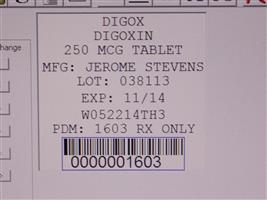
  • Digox
    Digox (Digoxin) Tablet [Carilion Materials Management]

    Digox

    Digox (Digoxin) Tablet [Carilion Materials Management]

    Recommended dosages of digoxin may require considerable modification because of individual sensitivity of the patient to the drug, the presence of associated conditions, or the use of concurrent medications. In selecting a dose of digoxin, the following factors must be considered: General:

    The body weight of the patient. Doses should be calculated based upon lean (i.e., ideal) body weight. The patient’s renal function, preferably evaluated on the basis of estimated creatinine clearance. The patient’s age. Infants and children require different doses of digoxin than adults. Also, advanced age may be indicative of diminished renal function even in patients with normal serum creatinine concentration (i.e., below 1.5 mg/dL). Concomitant disease states, concurrent medications, or other factors likely to alter the pharmacokinetic or pharmacodynamic profile of digoxin (see ). PRECAUTIONS

    In general, the dose of digoxin used should be determined on clinical grounds. However, measurement of serum digoxin concentrations can be helpful to the clinician in determining the adequacy of digoxin therapy and in assigning certain probabilities to the likelihood of digoxin intoxication. About two-thirds of adults considered adequately digitalized (without evidence of toxicity) have serum digoxin concentrations ranging from 0.8 to 2.0 ng/mL. However, digoxin may produce clinical benefits even at serum concentrations below this range. About two-thirds of adult patients with clinical toxicity have serum digoxin concentrations greater than 2.0 ng/mL. However, since one-third of patients with clinical toxicity have concentrations less than 2.0 ng/mL, values below 2.0 ng/mL do not rule out the possibility that a certain sign or symptom is related to digoxin therapy. Rarely, there are patients who are unable to tolerate digoxin at serum concentrations below 0.8 ng/mL. Consequently, the serum concentration of digoxin should always be interpreted in the overall clinical context, and an isolated measurement should not be used alone as the basis for increasing or decreasing the dose of the drug. Serum Digoxin Concentrations:

    To allow adequate time for equilibration of digoxin between serum and tissue, sampling of serum concentrations should be done just before the next scheduled dose of the drug. If this is not possible, sampling should be done at least 6 to 8 hours after the last dose, regardless of the route of administration or the formulation used. On a once-daily dosing schedule, the concentration of digoxin will be 10% to 25% lower when sampled at 24 versus 8 hours, depending upon the patient’s renal function. On a twice-daily dosing schedule, there will be only minor differences in serum digoxin concentrations whether sampling is done at 8 or 12 hours after a dose.

    If a discrepancy exists between the reported serum concentration and the observed clinical response, the clinician should consider the following possibilities:

    Analytical problems in the assay procedure. Inappropriate serum sampling time. Administration of a digitalis glycoside other than digoxin Conditions (described in  and ) causing an alteration in the sensitivity of the patient to digoxin. WARNINGSPRECAUTIONS Serum digoxin concentration may decrease acutely during periods of exercise without any associated change in clinical efficacy due to increased binding of digoxin to skeletal muscle.

    Digitalization may be accomplished by either of two general approaches that vary in dosage and frequency of administration, but reach the same endpoint in terms of total amount of digoxin accumulated in the body. Heart Failure: Adults:

    If rapid digitalization is considered medically appropriate, it may be achieved by administering a loading dose based upon projected peak digoxin body stores. Maintenance dose can be calculated as a percentage of the loading dose. More gradual digitalization may be obtained by beginning an appropriate maintenance dose, thus allowing digoxin body stores to accumulate slowly. Steady-state serum digoxin concentrations will be achieved in approximately five half-lives of the drug for the individual patient. Depending upon the patient's renal function, this will take between 1 and 3 weeks.

    Peak digoxin body stores of 8 to 12 mcg/kg should provide therapeutic effect with minimum risk of toxicity in most patients with heart failure and normal sinus rhythm. Because of altered digoxin distribution and elimination, projected peak body stores for patients with renal insufficiency should be conservative (i.e., 6 to 10 mcg/kg) [see ]. Rapid Digitalization with a Loading Dose:PRECAUTIONS

    The loading dose should be administered in several portions, with roughly half the total given as the first dose. Additional fractions of this planned total dose may be given at 6 to 8-hour intervals, with careful assessment of clinical response before each additional dose.

    If the patient’s clinical response necessitates a change from the calculated loading dose of digoxin, then calculation of the maintenance dose should be based upon the amount actually given.

    A single initial dose of 500 to 750 mcg (0.5 to 0.75 mg) of digoxin tablets usually produces a detectable effect in 0.5 to 2 hours that becomes maximal in 2 to 6 hours. Additional doses of 125 to 375 mcg (0.125 to 0.375 mg) may be given cautiously at 6 to 8-hour intervals until clinical evidence of an adequate effect is noted. The usual amount of digoxin tablets that a 70 kg patient requires to achieve 8 to 12 mcg/kg peak body stores is 750 to 1250 mcg (0.75 to 1.25 mg).

    Digoxin Injection is frequently used to achieve rapid digitalization, with conversion to digoxin tablets or digoxin solution in capsules for maintenance therapy. If patients are switched from intravenous to oral digoxin formulations, allowances must be made for differences in bioavailability when calculating maintenance dosages (see Table 1, ). CLINICAL PHARMACOLOGY

    The doses of digoxin used in controlled trials in patients with heart failure have ranged from 125 to 500 mcg (0.125 to 0.5 mg) once daily. In these studies, the digoxin dose has been generally titrated according to the patient’s age, lean body weight, and renal function. Therapy is generally initiated at a dose of 250 mcg (0.25 mg) once daily in patients under age 70 with good renal function, at a dose of 125 mcg (0.125 mg) once daily in patients over age 70 or with impaired renal function, and at a dose of 62.5 mcg (0.0625 mg) in patients with marked renal impairment. Doses may be increased every 2 weeks according to clinical response. Maintenance Dosing:

    In a subset of approximately 1800 patients enrolled in the DIG trial (wherein dosing was based on an algorithm similar to that in Table 5) the mean (± SD) serum digoxin concentrations at 1 month and 12 months were 1.01 ± 0.47 ng/mL and 0.97 ± 0.43 ng/mL, respectively.

    The maintenance dose should be based upon the percentage of the peak body stores lost each day through elimination. The following formula has had wide clinical use:

    Maintenance Dose = Peak Body Stores (i.e., Loading Dose) x % Daily Loss/100 Where: % Daily Loss = 14 + Ccr/5

    (Ccr is creatinine clearance, corrected to 70 kg body weight or 1.73 m body surface area.) 2

    Table 5 provides average daily maintenance dose requirements of digoxin tablets for patients with heart failure based upon lean body weight and renal function:

    Table 5: Usual Daily Maintenance Dose Requirements (mcg) of Digoxin for Estimated Peak Body Stores of 10 mcg/kg *

    Ccr is creatinine clearance, corrected to 70 kg body weight or 1.73 m body surface area. , if only serum creatinine concentrations (Scr) are available, a Ccr (corrected to 70 kg body weight) may be estimated in men as (140 - Age)/Scr. For women, this result should be multiplied by 0.85. This equation cannot be used for estimating creatinine clearance in infants or children. 2For adultsNote:

    †

    If no loading dose administered.

    ‡ 62.5 mcg = 0.0625 mg     Lean Body Weight  

    Corrected Ccr (mL/min per 70 kg) *

    kg   50 lb  110 60 132 70 154 80 176 90 198 100 220   Number of Days Before Steady State Achieved † 0 62.5 ‡ 125 125 125 187.5 187.5  22 10  125 125 125 187.5 187.5 187.5 19 20  125 125 187.5 187.5 187.5 250 16 30  125 187.5 187.5 187.5 250 250 14 40  125 187.5 187.5 250 250 250 13 50  187.5 187.5 250 250 250 250 12 60  187.5 187.5 250 250 250 375 11 70  187.5 250 250 250 250 375 10 80  187.5 250 250 250 375 375 9 90  187.5 250 250 250 375 500 8 100  250 250 250 375 375 500 7

    Based on Table 5, a patient in heart failure with an estimated lean body weight of 70 kg and a Ccr of 60 mL/min should be given a dose of 250 mcg (0.25 mg) daily of digoxin tablets, usually taken after the morning meal. If no loading dose is administered, steady-state serum concentrations in this patient should be anticipated at approximately 11 days. Example:

    In general, divided daily dosing is recommended for infants and young children (under age 10). In the newborn period, renal clearance of digoxin is diminished and suitable dosage adjustments must be observed. This is especially pronounced in the premature infant. Beyond the immediate newborn period, children generally require proportionally larger doses than adults on the basis of body weight or body surface area. Children over 10 years of age require adult dosages in proportion to their body weight. Some researchers have suggested that infants and young children tolerate slightly higher serum concentrations than do adults. Infants and Children:

    Daily maintenance doses for each age group are given in Table 6 and should provide therapeutic effects with minimum risk of toxicity in most patients with heart failure and normal sinus rhythm. These recommendations assume the presence of normal renal function:

    Table 6: Daily Maintenance Doses in Children with Normal Renal Function Age Daily Maintenance Dose (mcg/kg) 2 to 5 Years 10 to 15 5 to 10 Years 7 to 10 Over 10 Years 3 to 5

    In children with renal disease, digoxin must be carefully titrated based upon clinical response.

    It cannot be overemphasized that both adult and pediatric dosage guidelines provided are based upon average patient response and substantial individual variation can be expected. Accordingly, ultimate dosage selection must be based upon clinical assessment of the patient.

    Peak digoxin body stores larger than the 8 to 12 mcg/kg required for most patients with heart failure and normal sinus rhythm have been used for control of ventricular rate in patients with atrial fibrillation. Doses of digoxin used for the treatment of chronic atrial fibrillation should be titrated to the minimum dose that achieves the desired ventricular rate control without causing undesirable side effects. Data are not available to establish the appropriate resting or exercise target rates that should be achieved. Atrial Fibrillation:

    The difference in bio-availability between Digoxin Injection or Digoxin Solution in Capsules and Digoxin Elixir Pediatric or Digoxin Tablets must be considered when changing patients from one dosage form to another. Doses of 100 mcg (0.1 mg) and 200 mcg (0.2 mg) of Digoxin Solution in Capsules are approximately equivalent to 125 mcg (0.125 mg) and 250 mcg (0.25 mg) doses of Digoxin Tablets and Elixir Pediatric, respectively (see Table 1 in ). Dosage Adjustment When Changing Preparations: CLINICAL PHARMACOLOGY: Pharmacokinetics

  • Glycopyrrolate Tablet [Carilion Materials Management]

    Glycopyrrolate

    Glycopyrrolate Tablet [Carilion Materials Management]

    The dosage of Glycopyrrolate tablets 1 and 2 mg  should be adjusted to the needs of the individual patient to assure symptomatic control with a minimum of adverse reactions. The presently recommended maximum daily dosage of Glycopyrrolate is 8 mg.

    The recommended initial dosage of Glycopyrrolate for adults is one tablet three times daily (in the morning, early afternoon, and at bedtime). Some patients may require two tablets at bedtime to assure overnight control of symptoms. For maintenance, a dosage of one tablet twice a day is frequently adequate. Glycopyrrolate, 1 mg Tablets.

    . The recommended dosage of Glycopyrrolate for adults is one tablet two or three times daily at equally spaced intervals. Glycopyrrolate, 2 mg Tablets

    Glycopyrrolate tablets are not recommended for use in pediatric patients under the age of 12 years.

  • Erythromycin Base
    Erythromycin Base (Erythromycin) Tablet, Film Coated [Carilion Materials Management]

    Erythromycin Base

    Erythromycin Base (Erythromycin) Tablet, Film Coated [Carilion Materials Management]

    In most patients, Erythromycin Tablets are well absorbed and may be dosed orally without regard to meals. However, optimal blood levels are obtained when Erythromycin Tablets are given in the fasting state (at least 1/2 hour and preferably 2 hours before meals).

    Adults

    The usual dosage of Erythromycin Tablets is one 250 mg tablet four times daily in equally spaced doses or one 500 mg tablet every 12 hours. Dosage may be increased up to 4 g per day according to the severity of the infection. However, twice-a-day dosing is not recommended when doses larger than 1 g daily are administered.

    Children

    Age, weight, and severity of the infection are important factors in determining the proper dosage. The usual dosage is 30 to 50 mg/kg/day, in equally divided doses. For more severe infections this dosage may be doubled but should not exceed 4 g per day.

    In the treatment of streptococcal infections of the upper respiratory tract (e.g., tonsillitis or pharyngitis), the therapeutic dosage of erythromycin should be administered for at least ten days.

    The American Heart Association suggests a dosage of 250 mg of erythromycin orally, twice a day in long-term prophylaxis of streptococcal upper respiratory tract infections for the prevention of recurring attacks of rheumatic fever in patients allergic to penicillin and sulfonamides. 4

    Conjunctivitis of the Newborn Caused by Chlamydia trachomatis

    Oral erythromycin suspension 50 mg/kg/day in 4 divided doses for at least 2 weeks. 4

    Pneumonia of Infancy Caused by Chlamydia trachomatis

    Although the optimal duration of therapy has not been established, the recommended therapy is oral erythromycin suspension 50 mg/kg/day in 4 divided doses for at least 3 weeks.

    Urogenital Infections During Pregnancy Due to Chlamydia trachomatis

    Although the optimal dose and duration of therapy have not been established, the suggested treatment is 500 mg of erythromycin by mouth four times a day on an empty stomach for at least 7 days. For women who cannot tolerate this regimen, a decreased dose of one erythromycin 500 mg tablet orally every 12 hours or 250 mg by mouth four times a day should be used for at least 14 days. 6

    For adults with uncomplicated urethral, endocervical, or rectal infections caused by Chlamydia trachomatis, when tetracycline is contraindicated or not tolerated

    500 mg of erythromycin by mouth four times a day for at least 7 days. 6

    For patients with nongonococcal urethritis caused by Ureaplasma urealyticum when tetracycline is contraindicated or not tolerated

    500 mg of erythromycin by mouth four times a day for at least seven days. 6

    Primary syphilis

    30 to 40 g given in divided doses over a period of 10 to 15 days.

    Acute Pelvic Inflammatory Disease Caused by N. gonorrhoeae

    500 mg Erythrocin Lactobionate-I.V. (erythromycin lactobionate for injection, USP) every 6 hours for 3 days, followed by 500 mg of erythromycin base orally every 12 hours for 7 days. ®

    Intestinal Amebiasis

    Adults

    500 mg every 12 hours or 250 mg every 6 hours for 10 to 14 days.

    Children

    30 to 50 mg/kg/day in divided doses for 10 to 14 days.

    Pertussis

    Although optimal dosage and duration have not been established, doses of erythromycin utilized in reported clinical studies were 40 to 50 mg/kg/day, given in divided doses for 5 to 14 days.

    Legionnaires' Disease

    Although optimal dosage has not been established, doses utilized in reported clinical data were 1 to 4 g daily in divided doses.

  • Chloroquine (Chloroquine Phosphate) Tablet, Coated [Carilion Materials Management]

    Chloroquine

    Chloroquine (Chloroquine Phosphate) Tablet, Coated [Carilion Materials Management]

    The dosage of chloroquine phosphate is often expressed in terms of equivalent chloroquine base. Each 250 mg tablet of chloroquine phosphate is equivalent to 150 mg base and each 500 mg tablet of chloroquine phosphate is equivalent to 300 mg base. In infants and children the dosage is preferably calculated by body weight.

    Suppression – 500 mg (= 300 mg base) on exactly the same day of each week. Malaria:Adult Dose:

    The weekly suppressive dosage is 5 mg calculated as base, per kg of body weight, but should not exceed the adult dose regardless of weight. Pediatric Dose:

    If circumstances permit, suppressive therapy should begin two weeks prior to exposure. However, failing this in adults, an initial double (loading) dose of 1 g (= 600 mg base), or in children 10 mg base/kg may be taken in two divided doses, six hours apart. The suppressive therapy should be continued for eight weeks after leaving the endemic area.

    For Treatment of Acute Attack

    An initial dose of 1 g (= 600 mg base) followed by an additional 500 mg (= 300 mg base) after six to eight hours and a single dose of 500 mg (= 300 mg base) on each of two consecutive days. This represents a total dose of 2.5 g chloroquine phosphate of 1.5 g base in three days. Adults:

    The dosage for adults of low body weight and for infants and children should be determined as follows:

    First dose: 10 mg base per kg (but not exceeding a single dose of 600 mg base).

    Second dose: (6 hours after first dose) 5 mg base per kg (but not exceeding a single dose of 300 mg base).

    Third dose: (24 hours after first dose) 5 mg base per kg.

    Fourth dose: (36 hours after first dose) 5 mg base per kg.

    For radical cure of vivax and malariae malaria concomitant therapy with an 8-aminoquinoline compound is necessary.

    1 g (600 mg base) daily for two days, followed by 500 mg (300 mg base) daily for at least two to three weeks. Treatment is usually combined with an effective intestinal amebicide. Extraintestinal Amebiasis: Adults:

    See . Geriatric Use:PRECAUTIONS, Geriatric Use

  • Ethambutol Hydrochloride Tablet [Carilion Materials Management]

    Ethambutol Hydrochloride

    Ethambutol Hydrochloride Tablet [Carilion Materials Management]

    Ethambutol hydrochloride should not be used alone, in initial treatment or in retreatment. Ethambutol hydrochloride should be administered on a once every 24-hour basis only. Absorption is not significantly altered by administration with food. Therapy, in general, should be continued until bacteriological conversion has become permanent and maximal clinical improvement has occurred.

    Ethambutol hydrochloride is not recommended for use in pediatric patients under thirteen years of age since safe conditions for use have not been established.

    Initial Treatment

    In patients who have not received previous antituberculous therapy, administer ethambutol hydrochloride 15 mg/ kg (7 mg/lb) of body weight, as a single oral dose once every 24 hours. In the more recent studies, isoniazid has been administered concurrently in a single, daily, oral dose.

    Retreatment

    In patients who have received previous antituberculous therapy, administer ethambutol hydrochloride 25 mg/kg (11 mg/lb) of body weight, as a single oral dose once every 24 hours. Concurrently administer at least one other antituberculous drug to which the organisms have been demonstrated to be susceptible by appropriate tests. Suitable drugs usually consist of those not previously used in the treatment of the patient. After 60 days of ethambutol hydrochloride administration, decrease the dose to 15 mg/kg (7 mg/lb) of body weight, and administer as a single oral dose once every 24 hours. in-vitro

    During the period when a patient is on a daily dose of 25 mg/kg, monthly eye examinations are advised.

    See Table for easy selection of proper weight-dose tablet(s).

    Weight-Dose Table

    15 mg/kg (7 mg/lb) Schedule

    Weight Range

    Daily Dose

    Pounds

    Kilograms

    -----------------

    In mg Under 85 lbs. Under 37 kg

    -----------------

    500 85 – 94.5 37 – 43

    -----------------

    600 95 – 109.5  43 – 50

    -----------------

    700 110 – 124.5 50 – 57

    -----------------

    800 125 – 139.5 57 – 64

    -----------------

    900 140 – 154.5 64 – 71

    -----------------

    1000 155 – 169.5  71 – 79

    -----------------

    1100 170 – 184.5 79 – 84

    -----------------

    1200 185 – 199.5 84 – 90 

    -----------------

    1300 200 – 214.5  90 – 97

    -----------------

    1400 215 and Over Over 97

    -----------------

    1500

    25 mg/kg (11 mg/lb) Schedule

    Under 85 lbs. Under 38 kg

    -----------------

    900 85 – 92.5 38 – 42

    -----------------

    1000 93 – 101.5 42 – 45.5

    -----------------

    1100 102 – 109.5 45.5 – 50

    -----------------

    1200 110 – 118.5 50 – 54

    -----------------

    1300 119 – 128.5  54 – 58

    -----------------

    1400 129 – 136.5 58 – 62

    -----------------

    1500 137 – 146.5 62 – 67

    -----------------

    1600 147 – 155.5 67 – 71

    -----------------

    1700 156 – 164.5 71 – 75

    -----------------

    1800 165 – 173.5 75 – 79

    -----------------

    1900 174 – 182.5 79 – 83

    -----------------

    2000 183 – 191.5 83 – 87

    -----------------

    2100 192 – 199.5 87 – 91

    -----------------

    2200 200 – 209.5  91 – 95 

    -----------------

    2300 210 – 218.5 95 – 99

    -----------------

    2400 219 and Over Over 99

    -----------------

    2500
  • Liothyronine Sodium Tablet [Carilion Materials Management]

    Liothyronine Sodium

    Liothyronine Sodium Tablet [Carilion Materials Management]

    The dosage of thyroid hormones is determined by the indication and must in every case be individualized according to patient response and laboratory findings.

    Liothyronine Sodium Tablets, USP are intended for oral administration; once-a-day dosage is recommended. Although liothyronine sodium has a rapid cutoff, its metabolic effects persist for a few days following discontinuance.

    Mild Hypothyroidism

    Recommended starting dosage is 25 mcg daily. Daily dosage then may be increased by up to 25 mcg every 1 or 2 weeks. Usual maintenance dose is 25 to 75 mcg daily.

    The rapid onset and dissipation of action of liothyronine sodium (T ), as compared with levothyroxine sodium (T ), has led some clinicians to prefer its use in patients who might be more susceptible to the untoward effects of thyroid medication. However, the wide swings in serum T levels that follow its administration and the possibility of more pronounced cardiovascular side effects tend to counterbalance the stated advantages. 343

    Liothyronine Sodium Tablets, USP may be used in preference to levothyroxine (T ) during radioisotope scanning procedures, since induction of hypothyroidism in those cases is more abrupt and can be of shorter duration. It may also be preferred when impairment of peripheral conversion of T to T is suspected. 443

    Myxedema

    Recommended starting dosage is 5 mcg daily. This may be increased by 5 to 10 mcg daily every 1 or 2 weeks. When 25 mcg daily is reached, dosage may be increased by 5 to 25 mcg every 1 or 2 weeks until a satisfactory therapeutic response is attained. Usual maintenance dose is 50 to 100 mcg daily.

    Myxedema Coma

    Myxedema coma is usually precipitated in the hypothyroid patient of long standing by intercurrent illness or drugs such as sedatives and anesthetics and should be considered a medical emergency.

    An intravenous preparation of liothyronine sodium is marketed under the trade name Triostat for use in myxedema coma/precoma. ®

    Congenital Hypothyroidism

    Recommended starting dosage is 5 mcg daily, with a 5 mcg increment every 3 to 4 days until the desired response is achieved. Infants a few months old may require only 20 mcg daily for maintenance. At 1 year, 50 mcg daily may be required. Above 3 years, full adult dosage may be necessary (see ). PRECAUTIONS, Pediatric Use

    Simple (non-toxic) Goiter

    Recommended starting dosage is 5 mcg daily. This dosage may be increased by 5 to 10 mcg daily every 1 or 2 weeks. When 25 mcg daily is reached, dosage may be increased every week or two by 12.5 or 25 mcg. Usual maintenance dosage is 75 mcg daily.

    therapy should be started with 5 mcg daily and increased only by 5 mcg increments at the recommended intervals. In the elderly or in pediatric patients,

    from thyroid, L-thyroxine or thyroglobulin, discontinue the other medication, initiate Liothyronine Sodium Tablets, USP at a low dosage, and increase gradually according to the patient's response. When selecting a starting dosage, bear in mind that this drug has a rapid onset of action, and that residual effects of the other thyroid preparation may persist for the first several weeks of therapy. When switching a patient to Liothyronine Sodium Tablets, USP

    Thyroid Suppression Therapy

    Administration of thyroid hormone in doses higher than those produced physiologically by the gland results in suppression of the production of endogenous hormone. This is the basis for the thyroid suppression test and is used as an aid in the diagnosis of patients with signs of mild hyperthyroidism in whom baseline laboratory tests appear normal or to demonstrate thyroid gland autonomy in patients with Graves' ophthalmopathy. I uptake is determined before and after the administration of the exogenous hormone. A 50% or greater suppression of uptake indicates a normal thyroid-pituitary axis and thus rules out thyroid gland autonomy. 131

    Liothyronine Sodium Tablets, USP are given in doses of 75 to 100 mcg/day for 7 days, and radioactive iodine uptake is determined before and after administration of the hormone. If thyroid function is under normal control, the radioiodine uptake will drop significantly after treatment. Liothyronine Sodium Tablets, USP should be administered cautiously to patients in whom there is a strong suspicion of thyroid gland autonomy, in view of the fact that the exogenous hormone effects will be additive to the endogenous source.

  • Etodolac Tablet, Film Coated, Extended Release [Carilion Materials Management]

    Etodolac

    Etodolac Tablet, Film Coated, Extended Release [Carilion Materials Management]

    Carefully consider the potential benefits and risks of etodolac extended-release tablets and other treatment options before deciding to use etodolac extended-release tablets. Use the lowest effective dose for the shortest duration consistent with individual patient treatment goals (see ). WARNINGS

    After observing the response to initial therapy with etodolac extended-release tablets, the dose and frequency should be adjusted to suit an individual patient's needs.

    Juvenile Rheumatoid Arthritis

    For the relief of the signs and symptoms of juvenile rheumatoid arthritis in patients 6 to 16 years of age, the recommended dose given orally once per day should be based on body weight, according to the following table:

    Table 4. Body Weight Range (kg) Dose 20 to 30 400 mg Tablet x 1 31 to 45 600 mg Tablet x 1 46 to 60 400 mg Tablet x 2 > 60 500 mg Tablet x 2

    Rheumatoid Arthritis and Osteoarthritis

    For the relief of the signs and symptoms of osteoarthritis or rheumatoid arthritis, the recommended starting dose of etodolac extended-release tablets is 400 to 1000 mg given orally once per day.

    As with other NSAIDs, the lowest effective dose should be sought for each patient. In chronic conditions, a therapeutic response to therapy with etodolac extended-release tablets is sometimes seen within one week of therapy, but most often is observed by two weeks.

  • Divalproex Sodium Tablet, Delayed Release [Carilion Materials Management]

    Divalproex Sodium

    Divalproex Sodium Tablet, Delayed Release [Carilion Materials Management]

    Mania

    Divalproex sodium delayed-release tablets are administered orally. The recommended initial dose is 750 mg daily in divided doses. The dose should be increased as rapidly as possible to achieve the lowest therapeutic dose which produces the desired clinical effect or the desired range of plasma concentrations. In placebo-controlled clinical trials of acute mania, patients were dosed to a clinical response with a trough plasma concentration between 50 and 125 µg/mL. Maximum concentrations were generally achieved within 14 days. The maximum recommended dosage is 60 mg/kg/day.

    There is no body of evidence available from controlled trials to guide a clinician in the longer term management of a patient who improves during divalproex sodium delayed-release tablets treatment of an acute manic episode. While it is generally agreed that pharmacological treatment beyond an acute response in mania is desirable, both for maintenance of the initial response and for prevention of new manic episodes, there are no systematically obtained data to support the benefits of divalproex sodium delayed-release tablets in such longer-term treatment. Although there are no efficacy data that specifically address longer-term antimanic treatment with divalproex sodium delayed-release tablets, the safety of divalproex sodium delayed-release tablets in long-term use is supported by data from record reviews involving approximately 360 patients treated with divalproex sodium delayed-release tablets for greater than 3 months.

    Epilepsy

    Divalproex sodium delayed-release tablets are administered orally. Divalproex sodium delayed-release tablets are indicated as monotherapy and adjunctive therapy in complex partial seizures in adults and pediatric patients down to the age of 10 years, and in simple and complex absence seizures. As the divalproex sodium delayed-release tablets dosage is titrated upward, concentrations of phenobarbital, carbamazepine, and/or phenytoin may be affected (see , ). PRECAUTIONSDrug Interactions

    Complex Partial Seizures

    For adults and children 10 years of age or older.

    Monotherapy (Initial Therapy)

    Divalproex sodium delayed-release tablets have not been systematically studied as initial therapy. Patients should initiate therapy at 10 to 15 mg/kg/day. The dosage should be increased by 5 to 10 mg/kg/week to achieve optimal clinical response. Ordinarily, optimal clinical response is achieved at daily doses below 60 mg/kg/day. If satisfactory clinical response has not been achieved, plasma levels should be measured to determine whether or not they are in the usually accepted therapeutic range (50 to 100 µg/mL). No recommendation regarding the safety of valproate for use at doses above 60 mg/kg/day can be made.

    The probability of thrombocytopenia increases significantly at total trough valproate plasma concentrations above 110 µg/mL in females and 135 µg/mL in males. The benefit of improved seizure control with higher doses should be weighed against the possibility of a greater incidence of adverse reactions.

    Conversion to Monotherapy

    Patients should initiate therapy at 10 to 15 mg/kg/day. The dosage should be increased by 5 to 10 mg/kg/week to achieve optimal clinical response. Ordinarily, optimal clinical response is achieved at daily doses below 60 mg/kg/day. If satisfactory clinical response has not been achieved, plasma levels should be measured to determine whether or not they are in the usually accepted therapeutic range (50-100 µg/mL). No recommendation regarding the safety of valproate for use at doses above 60 mg/kg/day can be made. Concomitant antiepilepsy drug (AED) dosage can ordinarily be reduced by approximately 25% every 2 weeks. This reduction may be started at initiation of divalproex sodium delayed-release tablets therapy, or delayed by 1 to 2 weeks if there is a concern that seizures are likely to occur with a reduction. The speed and duration of withdrawal of the concomitant AED can be highly variable, and patients should be monitored closely during this period for increased seizure frequency.

    Adjunctive Therapy

    Divalproex sodium delayed-release tablets may be added to the patient's regimen at a dosage of 10 to 15 mg/kg/day. The dosage may be increased by 5 to 10 mg/kg/week to achieve optimal clinical response. Ordinarily, optimal clinical response is achieved at daily doses below 60 mg/kg/day. If satisfactory clinical response has not been achieved, plasma levels should be measured to determine whether or not they are in the usually accepted therapeutic range (50 to 100 µg/mL). No recommendation regarding the safety of valproate for use at doses above 60 mg/kg/day can be made. If the total daily dose exceeds 250 mg, it should be given in divided doses.

    In a study of adjunctive therapy for complex partial seizures in which patients were receiving either carbamazepine or phenytoin in addition to divalproex sodium delayed-release tablets, no adjustment of carbamazepine or phenytoin dosage was needed (see ). However, since valproate may interact with these or other concurrently administered AEDs as well as other drugs (see ), periodic plasma concentration determinations of concomitant AEDs are recommended during the early course of therapy (see , ). CLINICAL STUDIESDrug InteractionsPRECAUTIONSDrug Interactions

    Simple and Complex Absence Seizures

    The recommended initial dose is 15 mg/kg/day, increasing at one week intervals by 5 to 10 mg/kg/day until seizures are controlled or side effects preclude further increases. The maximum recommended dosage is 60 mg/kg/day. If the total daily dose exceeds 250 mg, it should be given in divided doses.

    A good correlation has not been established between daily dose, serum concentrations, and therapeutic effect. However, therapeutic valproate serum concentrations for most patients with absence seizures is considered to range from 50 to 100 µg/mL. Some patients may be controlled with lower or higher serum concentrations (see ). CLINICAL PHARMACOLOGY

    As the divalproex sodium delayed-release tablets dosage is titrated upward, blood concentrations of phenobarbital and/or phenytoin may be affected (see ). PRECAUTIONS

    Antiepilepsy drugs should not be abruptly discontinued in patients in whom the drug is administered to prevent major seizures because of the strong possibility of precipitating status epilepticus with attendant hypoxia and threat to life.

    In epileptic patients previously receiving valproic acid therapy, divalproex sodium delayed-release tablets should be initiated at the same daily dose and dosing schedule. After the patient is stabilized on divalproex sodium delayed-release tablets, a dosing schedule of two or three times a day may be elected in selected patients.

    Migraine

    Divalproex sodium delayed-release tablets are administered orally. The recommended starting dose is 250 mg twice daily. Some patients may benefit from doses up to 1000 mg/day. In the clinical trials, there was no evidence that higher doses led to greater efficacy.

    General Dosing Advice

    Dosing in Elderly Patients

    Due to a decrease in unbound clearance of valproate and possibly a greater sensitivity to somnolence in the elderly, the starting dose should be reduced in these patients. Dosage should be increased more slowly and with regular monitoring for fluid and nutritional intake, dehydration, somnolence, and other adverse events. Dose reductions or discontinuation of valproate should be considered in patients with decreased food or fluid intake and in patients with excessive somnolence. The ultimate therapeutic dose should be achieved on the basis of both tolerability and clinical response (see ). WARNINGS

    Dose-Related Adverse Events

    The frequency of adverse effects (particularly elevated liver enzymes and thrombocytopenia) may be dose-related. The probability of thrombocytopenia appears to increase significantly at total valproate concentrations of ≥ 110 µg/mL (females) or ≥ 135 µg/mL (males) (see ). The benefit of improved therapeutic effect with higher doses should be weighed against the possibility of a greater incidence of adverse reactions. PRECAUTIONS

    G.I. Irritation

    Patients who experience G.I. irritation may benefit from administration of the drug with food or by slowly building up the dose from an initial low level.

  • Digox
    Digox (Digoxin) Tablet [Carilion Materials Management]

    Digox

    Digox (Digoxin) Tablet [Carilion Materials Management]

    Recommended dosages of digoxin may require considerable modification because of individual sensitivity of the patient to the drug, the presence of associated conditions, or the use of concurrent medications. In selecting a dose of digoxin, the following factors must be considered: General:

    The body weight of the patient. Doses should be calculated based upon lean (i.e., ideal) body weight. The patient’s renal function, preferably evaluated on the basis of estimated creatinine clearance. The patient’s age. Infants and children require different doses of digoxin than adults. Also, advanced age may be indicative of diminished renal function even in patients with normal serum creatinine concentration (i.e., below 1.5 mg/dL). Concomitant disease states, concurrent medications, or other factors likely to alter the pharmacokinetic or pharmacodynamic profile of digoxin (see ). PRECAUTIONS

    In general, the dose of digoxin used should be determined on clinical grounds. However, measurement of serum digoxin concentrations can be helpful to the clinician in determining the adequacy of digoxin therapy and in assigning certain probabilities to the likelihood of digoxin intoxication. About two-thirds of adults considered adequately digitalized (without evidence of toxicity) have serum digoxin concentrations ranging from 0.8 to 2.0 ng/mL. However, digoxin may produce clinical benefits even at serum concentrations below this range. About two-thirds of adult patients with clinical toxicity have serum digoxin concentrations greater than 2.0 ng/mL. However, since one-third of patients with clinical toxicity have concentrations less than 2.0 ng/mL, values below 2.0 ng/mL do not rule out the possibility that a certain sign or symptom is related to digoxin therapy. Rarely, there are patients who are unable to tolerate digoxin at serum concentrations below 0.8 ng/mL. Consequently, the serum concentration of digoxin should always be interpreted in the overall clinical context, and an isolated measurement should not be used alone as the basis for increasing or decreasing the dose of the drug. Serum Digoxin Concentrations:

    To allow adequate time for equilibration of digoxin between serum and tissue, sampling of serum concentrations should be done just before the next scheduled dose of the drug. If this is not possible, sampling should be done at least 6 to 8 hours after the last dose, regardless of the route of administration or the formulation used. On a once-daily dosing schedule, the concentration of digoxin will be 10% to 25% lower when sampled at 24 versus 8 hours, depending upon the patient’s renal function. On a twice-daily dosing schedule, there will be only minor differences in serum digoxin concentrations whether sampling is done at 8 or 12 hours after a dose.

    If a discrepancy exists between the reported serum concentration and the observed clinical response, the clinician should consider the following possibilities:

    Analytical problems in the assay procedure. Inappropriate serum sampling time. Administration of a digitalis glycoside other than digoxin Conditions (described in  and ) causing an alteration in the sensitivity of the patient to digoxin. WARNINGSPRECAUTIONS Serum digoxin concentration may decrease acutely during periods of exercise without any associated change in clinical efficacy due to increased binding of digoxin to skeletal muscle.

    Digitalization may be accomplished by either of two general approaches that vary in dosage and frequency of administration, but reach the same endpoint in terms of total amount of digoxin accumulated in the body. Heart Failure: Adults:

    If rapid digitalization is considered medically appropriate, it may be achieved by administering a loading dose based upon projected peak digoxin body stores. Maintenance dose can be calculated as a percentage of the loading dose. More gradual digitalization may be obtained by beginning an appropriate maintenance dose, thus allowing digoxin body stores to accumulate slowly. Steady-state serum digoxin concentrations will be achieved in approximately five half-lives of the drug for the individual patient. Depending upon the patient's renal function, this will take between 1 and 3 weeks.

    Peak digoxin body stores of 8 to 12 mcg/kg should provide therapeutic effect with minimum risk of toxicity in most patients with heart failure and normal sinus rhythm. Because of altered digoxin distribution and elimination, projected peak body stores for patients with renal insufficiency should be conservative (i.e., 6 to 10 mcg/kg) [see ]. Rapid Digitalization with a Loading Dose:PRECAUTIONS

    The loading dose should be administered in several portions, with roughly half the total given as the first dose. Additional fractions of this planned total dose may be given at 6 to 8-hour intervals, with careful assessment of clinical response before each additional dose.

    If the patient’s clinical response necessitates a change from the calculated loading dose of digoxin, then calculation of the maintenance dose should be based upon the amount actually given.

    A single initial dose of 500 to 750 mcg (0.5 to 0.75 mg) of digoxin tablets usually produces a detectable effect in 0.5 to 2 hours that becomes maximal in 2 to 6 hours. Additional doses of 125 to 375 mcg (0.125 to 0.375 mg) may be given cautiously at 6 to 8-hour intervals until clinical evidence of an adequate effect is noted. The usual amount of digoxin tablets that a 70 kg patient requires to achieve 8 to 12 mcg/kg peak body stores is 750 to 1250 mcg (0.75 to 1.25 mg).

    Digoxin Injection is frequently used to achieve rapid digitalization, with conversion to digoxin tablets or digoxin solution in capsules for maintenance therapy. If patients are switched from intravenous to oral digoxin formulations, allowances must be made for differences in bioavailability when calculating maintenance dosages (see Table 1, ). CLINICAL PHARMACOLOGY

    The doses of digoxin used in controlled trials in patients with heart failure have ranged from 125 to 500 mcg (0.125 to 0.5 mg) once daily. In these studies, the digoxin dose has been generally titrated according to the patient’s age, lean body weight, and renal function. Therapy is generally initiated at a dose of 250 mcg (0.25 mg) once daily in patients under age 70 with good renal function, at a dose of 125 mcg (0.125 mg) once daily in patients over age 70 or with impaired renal function, and at a dose of 62.5 mcg (0.0625 mg) in patients with marked renal impairment. Doses may be increased every 2 weeks according to clinical response. Maintenance Dosing:

    In a subset of approximately 1800 patients enrolled in the DIG trial (wherein dosing was based on an algorithm similar to that in Table 5) the mean (± SD) serum digoxin concentrations at 1 month and 12 months were 1.01 ± 0.47 ng/mL and 0.97 ± 0.43 ng/mL, respectively.

    The maintenance dose should be based upon the percentage of the peak body stores lost each day through elimination. The following formula has had wide clinical use:

    Maintenance Dose = Peak Body Stores (i.e., Loading Dose) x % Daily Loss/100 Where: % Daily Loss = 14 + Ccr/5

    (Ccr is creatinine clearance, corrected to 70 kg body weight or 1.73 m body surface area.) 2

    Table 5 provides average daily maintenance dose requirements of digoxin tablets for patients with heart failure based upon lean body weight and renal function:

    Table 5: Usual Daily Maintenance Dose Requirements (mcg) of Digoxin for Estimated Peak Body Stores of 10 mcg/kg *

    Ccr is creatinine clearance, corrected to 70 kg body weight or 1.73 m body surface area. , if only serum creatinine concentrations (Scr) are available, a Ccr (corrected to 70 kg body weight) may be estimated in men as (140 - Age)/Scr. For women, this result should be multiplied by 0.85. This equation cannot be used for estimating creatinine clearance in infants or children. 2For adultsNote:

    †

    If no loading dose administered.

    ‡ 62.5 mcg = 0.0625 mg     Lean Body Weight  

    Corrected Ccr (mL/min per 70 kg) *

    kg   50 lb  110 60 132 70 154 80 176 90 198 100 220   Number of Days Before Steady State Achieved † 0 62.5 ‡ 125 125 125 187.5 187.5  22 10  125 125 125 187.5 187.5 187.5 19 20  125 125 187.5 187.5 187.5 250 16 30  125 187.5 187.5 187.5 250 250 14 40  125 187.5 187.5 250 250 250 13 50  187.5 187.5 250 250 250 250 12 60  187.5 187.5 250 250 250 375 11 70  187.5 250 250 250 250 375 10 80  187.5 250 250 250 375 375 9 90  187.5 250 250 250 375 500 8 100  250 250 250 375 375 500 7

    Based on Table 5, a patient in heart failure with an estimated lean body weight of 70 kg and a Ccr of 60 mL/min should be given a dose of 250 mcg (0.25 mg) daily of digoxin tablets, usually taken after the morning meal. If no loading dose is administered, steady-state serum concentrations in this patient should be anticipated at approximately 11 days. Example:

    In general, divided daily dosing is recommended for infants and young children (under age 10). In the newborn period, renal clearance of digoxin is diminished and suitable dosage adjustments must be observed. This is especially pronounced in the premature infant. Beyond the immediate newborn period, children generally require proportionally larger doses than adults on the basis of body weight or body surface area. Children over 10 years of age require adult dosages in proportion to their body weight. Some researchers have suggested that infants and young children tolerate slightly higher serum concentrations than do adults. Infants and Children:

    Daily maintenance doses for each age group are given in Table 6 and should provide therapeutic effects with minimum risk of toxicity in most patients with heart failure and normal sinus rhythm. These recommendations assume the presence of normal renal function:

    Table 6: Daily Maintenance Doses in Children with Normal Renal Function Age Daily Maintenance Dose (mcg/kg) 2 to 5 Years 10 to 15 5 to 10 Years 7 to 10 Over 10 Years 3 to 5

    In children with renal disease, digoxin must be carefully titrated based upon clinical response.

    It cannot be overemphasized that both adult and pediatric dosage guidelines provided are based upon average patient response and substantial individual variation can be expected. Accordingly, ultimate dosage selection must be based upon clinical assessment of the patient.

    Peak digoxin body stores larger than the 8 to 12 mcg/kg required for most patients with heart failure and normal sinus rhythm have been used for control of ventricular rate in patients with atrial fibrillation. Doses of digoxin used for the treatment of chronic atrial fibrillation should be titrated to the minimum dose that achieves the desired ventricular rate control without causing undesirable side effects. Data are not available to establish the appropriate resting or exercise target rates that should be achieved. Atrial Fibrillation:

    The difference in bio-availability between Digoxin Injection or Digoxin Solution in Capsules and Digoxin Elixir Pediatric or Digoxin Tablets must be considered when changing patients from one dosage form to another. Doses of 100 mcg (0.1 mg) and 200 mcg (0.2 mg) of Digoxin Solution in Capsules are approximately equivalent to 125 mcg (0.125 mg) and 250 mcg (0.25 mg) doses of Digoxin Tablets and Elixir Pediatric, respectively (see Table 1 in ). Dosage Adjustment When Changing Preparations: CLINICAL PHARMACOLOGY: Pharmacokinetics

  • Demeclocycline Hydrochloride Tablet [Carilion Materials Management]

    Demeclocycline Hydrochloride

    Demeclocycline Hydrochloride Tablet [Carilion Materials Management]

    Therapy should be continued for at least 24 to 48 hours after symptoms and fever have subsided.

    Concomitant therapy: Absorption of tetracyclines is impaired by antacids containing aluminum, calcium, or magnesium, and by iron-containing preparations. Foods and some dairy products also interfere with absorption. Oral forms of tetracycline should be given at least 1 hour before or 2 hours after meals.

    In patients with renal impairment: (See .) Tetracyclines should be used cautiously in patients with impaired renal function. Total dosage should be decreased by reduction of recommended individual doses and/or by extending time intervals between doses. WARNINGS

    In patients with liver impairment: Tetracyclines should be used cautiously in patients with impaired liver function. Total dosage should be decreased by reduction of recommended individual doses and/or by extending time intervals between doses.

    Administration of adequate amounts of fluid with the oral formulations of tetracyclines is recommended to wash down the drugs and reduce the risk of esophageal irritation and ulceration. (See .) ADVERSE REACTIONS

    Adults: Usual daily dose - Four divided doses of 150 mg each or two divided doses of 300 mg each.

    For pediatric patients above eight years of age: Usual daily dose, 7 to 13 mg per kg body weight per day, depending upon the severity of the disease, divided into two to four doses not to exceed adult dosage of 600 mg per day.

    Gonorrhea patients sensitive to penicillin may be treated with demeclocycline administered as an initial oral dose of 600 mg followed by 300 mg every 12 hours for four days to a total of 3 grams.

  • Bromocriptine Mesylate
    Bromocriptine Mesylate Tablet [Carilion Materials Management]

    Bromocriptine Mesylate

    Bromocriptine Mesylate Tablet [Carilion Materials Management]

    General

    It is recommended that bromocriptine mesylate tablets be taken with food. Patients should be evaluated frequently during dose escalation to determine the lowest dosage that produces a therapeutic response.

    Hyperprolactinemic Indications

    The initial dosage of bromocriptine mesylate tablets in adults is ½ to one 2.5 mg scored tablet daily. An additional 2.5 mg tablet may be added to the treatment regimen as tolerated every 2-7 days until an optimal therapeutic response is achieved. The therapeutic dosage ranged from 2.5-15 mg daily in adults studied clinically.

    Based on limited data in children of age 11 to 15, (see subsection) the initial dose is ½ to one 2.5 mg scored tablet daily. Pediatric Use

    Dosing may need to be increased as tolerated until a therapeutic response is achieved. The therapeutic dosage ranged from 2.5-10 mg daily in children with prolactin-secreting pituitary adenomas.

    In order to reduce the likelihood of prolonged exposure to bromocriptine mesylate tablets should an unsuspected pregnancy occur, a mechanical contraceptive should be used in conjunction with bromocriptine mesylate tablets therapy until normal ovulatory menstrual cycles have been restored. Contraception may then be discontinued in patients desiring pregnancy.

    Thereafter, if menstruation does not occur within 3 days of the expected date, bromocriptine mesylate therapy should be discontinued and a pregnancy test performed.

    Acromegaly

    Virtually all acromegalic patients receiving therapeutic benefit from bromocriptine mesylate tablets also have reductions in circulating levels of growth hormone. Therefore, periodic assessment of circulating levels of growth hormone will, in most cases, serve as a guide in determining the therapeutic potential of bromocriptine mesylate tablets. If, after a brief trial with bromocriptine mesylate tablets therapy, no significant reduction in growth hormone levels has taken place, careful assessment of the clinical features of the disease should be made, and if no change has occurred, dosage adjustment or discontinuation of therapy should be considered.

    The initial recommended dosage is ½ to one 2.5 mg bromocriptine mesylate tablet on retiring (with food) for 3 days. An additional ½ to 1 tablet should be added to the treatment regimen as tolerated every 3-7 days until the patient obtains optimal therapeutic benefit. Patients should be reevaluated monthly and the dosage adjusted based on reductions of growth hormone or clinical response. The usual optimal therapeutic dosage range of bromocriptine mesylate tablets varies from 20-30 mg/day in most patients. The maximal dosage should not exceed 100 mg/day.

    Patients treated with pituitary irradiation should be withdrawn from bromocriptine mesylate tablets therapy on a yearly basis to assess both the clinical effects of radiation on the disease process as well as the effects of bromocriptine mesylate tablets therapy. Usually a 4-8 week withdrawal period is adequate for this purpose. Recurrence of the signs/symptoms or increases in growth hormone indicate the disease process is still active and further courses of bromocriptine mesylate tablets should be considered.

    Parkinson's Disease

    The basic principle of bromocriptine mesylate tablets therapy is to initiate treatment at a low dosage and, on an individual basis, increase the daily dosage slowly until a maximum therapeutic response is achieved. The dosage of levodopa during this introductory period should be maintained, if possible. The initial dose of bromocriptine mesylate tablets is ½ of a 2.5 mg tablet twice daily with meals. Assessments are advised at 2-week intervals during dosage titration to ensure that the lowest dosage producing an optimal therapeutic response is not exceeded. If necessary, the dosage may be increased every 14-28 days by 2.5 mg/day with meals. Should it be advisable to reduce the dosage of levodopa because of adverse reactions, the daily dosage of bromocriptine mesylate tablets, if increased, should be accomplished gradually in small (2.5 mg) increments.

    The safety of bromocriptine mesylate tablets has not been demonstrated in dosages exceeding 100 mg/day.

  • Guanfacine Tablet [Carilion Materials Management]

    Guanfacine

    Guanfacine Tablet [Carilion Materials Management]

    The recommended initial dose of guanfacine (as the hydrochloride) when given alone or in combination with another antihypertensive drug is 1 mg daily given at bedtime to minimize somnolence. If after 3 to 4 weeks of therapy, 1 mg does not give a satisfactory result, a dose of 2 mg may be given, although most of the effect of guanfacine is seen at 1 mg (see ). Higher daily doses have been used, but adverse reactions increase significantly with doses above 3 mg/day. CLINICAL PHARMACOLOGY

    The frequency of rebound hypertension is low, but it can occur. When rebound occurs, it does so after 2-4 days, which is delayed compared with clonidine hydrochloride. This is consistent with the longer half-life of guanfacine. In most cases, after abrupt withdrawal of guanfacine, blood pressure returns to pretreatment levels slowly (within 2-4 days) without ill effects.

  • Nabumetone Tablet, Film Coated [Carilion Materials Management]

    Nabumetone

    Nabumetone Tablet, Film Coated [Carilion Materials Management]

    Carefully consider the potential benefits and risks of nabumetone tablets and other treatment options before deciding to use nabumetone tablets. Use the lowest effective dose for the shortest duration consistent with individual patient treatment goals (see ). WARNINGS

    After observing the response to initial therapy with nabumetone tablets, the dose and frequency should be adjusted to suit an individual patient's needs.

    Osteoarthritis and Rheumatoid Arthritis

    The recommended starting dose is 1,000 mg taken as a single dose with or without food. Some patients may obtain more symptomatic relief from 1,500 mg to 2,000 mg per day. Nabumetone tablets can be given in either a single or twice-daily dose. Dosages greater than 2,000 mg per day have not been studied. The lowest effective dose should be used for chronic treatment (see ). Patients weighing under 50 kg may be less likely to require dosages beyond 1,000 mg; therefore, after observing the response to initial therapy, the dose should be adjusted to meet individual patients' requirements. WARNINGS, Renal Effects

  • Cetirizine Hydrochloride Syrup [Carilion Materials Management]

    Cetirizine Hydrochloride Syrup

    Cetirizine Hydrochloride Syrup [Carilion Materials Management]

    Cetirizine Hydrochloride Syrup, 1 mg/mL can be taken without regard to food consumption.

    The recommended initial dose of Cetirizine Hydrochloride Syrup, 1 mg/mL in children aged 2 to 5 years is 2.5 mg (1/2 teaspoonful) syrup once daily. The dosage in this age group can be increased to a maximum dose of 5 mg per day given as 1 teaspoonful syrup once a day, or one 1/2 teaspoonful syrup given every 12 hours. Children 2 to 5 Years for Chronic Urticaria:

    The recommended dose of Cetirizine Hydrochloride Syrup, 1 mg/mL in children 6 months to 23 months of age is 2.5 mg (1/2 teaspoonful) once daily. The dose in children 12 to 23 months of age can be increased to a maximum dose of 5 mg per day, given as 1/2 teaspoonful (2.5 mg) every 12 hours. Children 6 Months to <2 Years for Perennial Allergic Rhinitis and Chronic Urticaria:

  • Mephyton (Phytonadione) Tablet [Carilion Materials Management]

    Mephyton

    Mephyton (Phytonadione) Tablet [Carilion Materials Management]

    MEPHYTON Summary of Dosage Guidelines (See circular text for details) Adults Initial Dosage (caused by coumarin or indanedione derivatives) Anticoagulant-Induced Prothrombin Deficiency 2.5 mg-10 mg or up to 25 mg (rarely 50 mg) (Antibiotics; Salicylates or other drugs; Factors limiting absorption or synthesis) Hypoprothrombinemia due to other causes 2.5 mg-25 mg or more (rarely up to 50 mg)

    Anticoagulant-Induced Prothrombin Deficiency in Adults

    To correct excessively prolonged prothrombin times caused by oral anticoagulant therapy – 2.5 to 10 mg or up to 25 mg initially is recommended. In rare instances 50 mg may be required, Frequency and amount of subsequent doses should be determined by prothrombin time response or clinical condition. (See .) If, in 12 to 48 hours after oral administration, the prothrombin time has not been shortened satisfactorily, the dose should be repeated. WARNINGS

    Hypoprothrombinemia Due to Other Causes in Adults

    If possible, discontinuation or reduction of the dosage of drugs interfering with coagulation mechanisms (such as salicylates, antibiotics) is suggested as an alternative to administering concurrent MEPHYTON. The severity of the coagulation disorder should determine whether the immediate administration of MEPHYTON is required in addition to discontinuation or reduction of interfering drugs.

    A dosage of 2.5 to 25 mg or more (rarely up to 50 mg) is recommended, the amount and route of administration depending upon the severity of the condition and response obtained.

    The oral route should be avoided when the clinical disorder would prevent proper absorption. Bile salts must be given with the tablets when the endogenous supply of bile to the gastrointestinal tract is deficient.

  • Famotidine Tablet, Film Coated [Carilion Materials Management]

    Famotidine

    Famotidine Tablet, Film Coated [Carilion Materials Management]

    Duodenal Ulcer

    The recommended adult oral dosage for active duodenal ulcer is 40 mg once a day at bedtime. Most patients heal within 4 weeks; there is rarely reason to use famotidine at full dosage for longer than 6 to 8 weeks. A regimen of 20 mg b.i.d. is also effective. Acute Therapy:

    The recommended adult oral dose is 20 mg once a day at bedtime. Maintenance Therapy:

    Benign Gastric Ulcer

    The recommended adult oral dosage for active benign gastric ulcer is 40 mg once a day at bedtime. Acute Therapy:

    Gastroesophageal Reflux Disease (GERD)

    The recommended oral dosage for treatment of adult patients with symptoms of GERD is 20 mg b.i.d. for up to 6 weeks. The recommended oral dosage for the treatment of adult patients with esophagitis including erosions and ulcerations and accompanying symptoms due to GERD is 20 or 40 mg b.i.d. for up to 12 weeks (see ). CLINICAL PHARMACOLOGY IN ADULTS, Clinical Studies

    Dosage for Pediatric Patients <1 year of age Gastroesophageal Reflux Disease (GERD)

    See . PRECAUTIONS, Pediatric Patients <1 year of age

    The studies described in PRECAUTIONS, suggest the following starting doses in pediatric patients <1 year of age: -0.5 mg/kg/dose of famotidine oral suspension for the treatment of GERD for up to 8 weeks once daily in patients <3 months of age and 0.5 mg/kg/dose twice daily in patients 3 months to <1 year of age. Patients should also be receiving conservative measures (e.g., thickened feedings). The use of intravenous famotidine in pediatric patients <1 year of age with GERD has not been adequately studied. Pediatric Patients <1 year of ageGastroesophageal Reflux Disease (GERD)

    Dosage for Pediatric Patients 1-16 years of age

    See . PRECAUTIONS, Pediatric Patients 1-16 years of age

    The studies described in PRECAUTIONS, suggest the following starting doses in pediatric patients 1-16 years of age: Pediatric Patients 1-16 years of age

    - 0.5 mg/kg/day p.o. at bedtime or divided b.i.d. up to 40 mg/day. Peptic ulcer

    - 1.0 mg/kg/day p.o. divided b.i.d. up to 40 mg b.i.d. Gastroesophageal Reflux Disease with or without esophagitis including erosions and ulcerations

    While published uncontrolled studies suggest effectiveness of famotidine in the treatment of gastroesophageal reflux disease and peptic ulcer, data in pediatric patients are insufficient to establish percent response with dose and duration of therapy. Therefore, treatment duration (initially based on adult duration recommendations) and dose should be individualized based on clinical response and/or pH determination (gastric or esophageal) and endoscopy. Published uncontrolled clinical studies in pediatric patients 1-16 years of age have employed doses up to 1 mg/kg/day for peptic ulcer and 2 mg/kg/day for GERD with or without esophagitis including erosions and ulcerations.

    Pathological Hypersecretory Conditions (e.g., Zollinger-Ellison Syndrome, Multiple Endocrine Adenomas)

    The dosage of famotidine in patients with pathological hypersecretory conditions varies with the individual patient. The recommended adult oral starting dose for pathological hypersecretory conditions is 20 mg q 6 h. In some patients, a higher starting dose may be required. Doses should be adjusted to individual patient needs and should continue as long as clinically indicated. Doses up to 160 mg q 6 h have been administered to some adult patients with severe Zollinger-Ellison Syndrome.

    Concomitant Use of Antacids

    Antacids may be given concomitantly if needed.

    Dosage Adjustment for Patients with Moderate or Severe Renal Insufficiency

    In adult patients with moderate (creatinine clearance <50 mL/min) or severe (creatinine clearance <10 mL/min) renal insufficiency, the elimination half-life of famotidine is increased. For patients with severe renal insufficiency, it may exceed 20 hours, reaching approximately 24 hours in anuric patients. Since CNS adverse effects have been reported in patients with moderate and severe renal insufficiency, to avoid excess accumulation of the drug in patients with moderate or severe renal insufficiency, the dose of famotidine may be reduced to half the dose or the dosing interval may be prolonged to 36-48 hours as indicated by the patient's clinical response.

    Based on the comparison of pharmacokinetic parameters for famotidine in adults and pediatric patients, dosage adjustment in pediatric patients with moderate or severe renal insufficiency should be considered.

  • Lithium Carbonate Tablet, Extended Release [Carilion Materials Management]

    Lithium Carbonate

    Lithium Carbonate Tablet, Extended Release [Carilion Materials Management]

    Doses of extended-release tablets are usually given b.i.d. (approximately 12-hour intervals). When initiating therapy with immediate-release or extended-release lithium, dosage must be individualized according to serum levels and clinical response.

    When switching a patient from immediate-release capsules to the Lithium Carbonate Extended Release Tablets, give the same total daily dose when possible. Most patients on maintenance therapy are stabilized on 900 mg daily, e.g., Lithium Carbonate Extended Release Tablets, 450 mg b.i.d. When the previous dosage of immediate-release lithium is not a multiple of 450 mg, e.g., 1500 mg, initiate lithium extended-release tablet at the multiple of 450 mg nearest to, but , the original daily dose, i.e., 1350 mg. When the two doses are unequal, give the larger dose in the evening. In the above example, with a total daily dose of 1350 mg, generally 450 mg of Lithium Carbonate Extended Release Tablets should be given in the morning and 900 mg of Lithium Carbonate Extended Release Tablets in the evening. If desired, the total daily dose of 1350 mg can be given in three equal 450 mg doses of Lithium Carbonate Extended Release Tablets. These patients should be monitored at 1- to 2-week intervals, and dosage adjusted if necessary, until stable and satisfactory serum levels and clinical state are achieved. below

    When patients require closer titration than that available with doses of lithium carbonate extended-release tablets in increments of 450 mg, immediate-release capsules should be used.

    Acute Mania

    Optimal patient response to lithium can usually be established and maintained with 1800 mg per day in divided doses. Such doses will normally produce the desired serum lithium level ranging between 1 and 1.5 mEq/L.

    Dosage must be individualized according to serum levels and clinical response. Regular monitoring of the patient's clinical state and serum lithium levels is necessary. Serum levels should be determined twice per week during the acute phase, and until the serum level and clinical condition of the patient have been stabilized.

    Long-Term Control

    The desirable serum lithium levels are 0.6 to 1.2 mEq/L. Dosage will vary from one individual to another, but usually 900 mg to 1200 mg per day in divided doses will maintain this level. Serum lithium levels in uncomplicated cases receiving maintenance therapy during remission should be monitored at least every two months.

    Patients unusually sensitive to lithium may exhibit toxic signs at serum levels below 1 mEq/L.

    N.B.

    Blood samples for serum lithium determinations should be drawn immediately prior to the next dose when lithium concentrations are relatively stable (i.e., 8 to 12 hours after the previous dose). Total reliance must not be placed on serum levels alone. Accurate patient evaluation requires both clinical and laboratory analysis.

    Elderly patients often respond to reduced dosage, and may exhibit signs of toxicity at serum levels ordinarily tolerated by younger patients.

  • Cimetidine Tablet, Film Coated [Carilion Materials Management]

    Cimetidine

    Cimetidine Tablet, Film Coated [Carilion Materials Management]

    Duodenal Ulcer

    Active Duodenal Ulcer

    Clinical studies have indicated that suppression of nocturnal acid is the most important factor in duodenal ulcer healing (see ). This is supported by recent clinical trials (see ). Therefore, there is no apparent rationale, except for familiarity with use, for treating with anything other than a once daily at bedtime dosage regimen. CLINICAL PHARMACOLOGY: Antisecretory Activity: Acid SecretionCLINICAL TRIALS: Duodenal Ulcer: Active Duodenal Ulcer

    In a U.S. dose-ranging study of 400 mg at bedtime, 800 mg at bedtime and 1600 mg at bedtime, a continuous dose-response relationship for ulcer healing was demonstrated.

    However, 800 mg at bedtime is the dose of choice for most patients, as it provides a high healing rate (the difference between 800 mg at bedtime and 1600 mg at bedtime being small), maximal pain relief, a decreased potential for drug interactions (see ) and maximal patient convenience. Patients unhealed at 4 weeks, or those with persistent symptoms, have been shown to benefit from 2 to 4 weeks of continued therapy. PRECAUTIONS: Drug Interactions

    It has been shown that patients who both have an endoscopically demonstrated ulcer larger than 1 cm and are also heavy smokers (i.e., smoke one pack of cigarettes or more per day) are more difficult to heal. There is some evidence which suggests that more rapid healing can be achieved in this subpopulation with 1600 mg of cimetidine tablets at bedtime. While early pain relief with either 800 mg at bedtime or 1600 mg at bedtime is equivalent in all patients, 1600 mg at bedtime provides an appropriate alternative when it is important to ensure healing within 4 weeks for this subpopulation. Alternatively, approximately 94% of all patients will also heal in 8 weeks with 800 mg of cimetidine tablets at bedtime

    Other regimens of cimetidine tablets in the United States which have been shown to be effective are: 300 mg 4 times daily, with meals and at bedtime, the original regimen with which U.S. physicians have the most experience, and 400 mg twice daily, in the morning and at bedtime (see ). CLINICAL TRIALS: Duodenal Ulcer: Active Duodenal Ulcer

    Concomitant antacids should be given as needed for relief of pain. However, simultaneous administration of cimetidine tablets and antacids is not recommended, since antacids have been reported to interfere with the absorption of cimetidine.

    While healing with cimetidine tablets often occurs during the first week or two, treatment should be continued for 4 to 6 weeks unless healing has been demonstrated by endoscopic examination.

    Maintenance Therapy for Duodenal Ulcer

    In those patients requiring maintenance therapy, the recommended adult oral dose is 400 mg at bedtime.

    Active Benign Gastric Ulcer

    The recommended adult oral dosage for short-term treatment of active benign gastric ulcer is 800 mg at bedtime, or 300 mg 4 times a day with meals and at bedtime. Controlled clinical studies were limited to 6 weeks of treatment (see ). A dose of 800 mg at bedtime is the preferred regimen for most patients based upon convenience and reduced potential for drug interactions. Symptomatic response to cimetidine tablets does not preclude the presence of a gastric malignancy. It is important to follow gastric ulcer patients to assure rapid progress to complete healing. CLINICAL TRIALS

    Erosive Gastroesophageal Reflux Disease (GERD)

    The recommended adult oral dosage for the treatment of erosive esophagitis that has been diagnosed by endoscopy is 1600 mg daily in divided doses (800 mg twice daily or 400 mg 4 times daily) for 12 weeks. The use of cimetidine tablets beyond 12 weeks has not been established.

    Pathological Hypersecretory Conditions (such as Zollinger-Ellison Syndrome)

    Recommended adult oral dosage: 300 mg 4 times a day with meals and at bedtime. In some patients it may be necessary to administer higher doses more frequently. Doses should be adjusted to individual patient needs, but should not usually exceed 2400 mg per day and should continue as long as clinically indicated.

    Dosage Adjustment for Patients with Impaired Renal Function

    Patients with severely impaired renal function have been treated with cimetidine tablets. However, such usage has been very limited. On the basis of this experience the recommended dosage is 300 mg every 12 hours orally. Should the patient’s condition require, the frequency of dosing may be increased to every 8 hours or even further with caution. In severe renal failure, accumulation may occur and the lowest frequency of dosing compatible with an adequate patient response should be used. When liver impairment is also present, further reductions in dosage may be necessary. Hemodialysis reduces the level of circulating cimetidine. Ideally, the dosage schedule should be adjusted so that the timing of a scheduled dose coincides with the end of hemodialysis.

  • Butalbital, Acetaminophen And Caffeine (Butalbital, Acetaminophen, And Caffeine) Tablet [Carilion Materials Management]

    Butalbital

    Butalbital, Acetaminophen And Caffeine (Butalbital, Acetaminophen, And Caffeine) Tablet [Carilion Materials Management]

    One or 2 tablets every 4 hours as needed. Total daily dosage should not exceed 6 tablets.

    Extended and repeated use of this product is not recommended because of the potential for physical dependence.

  • Orphenadrine Citrate Tablet [Carilion Materials Management]

    Orphenadrine Citrate

    Orphenadrine Citrate Tablet [Carilion Materials Management]

    Adults-Two tablets per day; one in the morning and one in the evening.

  • Amiloride Hydrochloride Tablet [Carilion Materials Management]

    Amiloride Hydrochloride

    Amiloride Hydrochloride Tablet [Carilion Materials Management]

    Amiloride HCl should be administered with food.

    Amiloride HCl, one 5 mg tablet daily, should be added to the usual antihypertensive or diuretic dosage of a kaliuretic diuretic. The dosage may be increased to 10 mg per day, if necessary. More than two 5 mg tablets of amiloride HCl daily usually are not needed, and there is little controlled experience with such doses. If persistent hypokalemia is documented with 10 mg, the dose can be increased to 15 mg, then 20 mg, with careful monitoring of electrolytes.

    In treating patients with congestive heart failure after an initial diuresis has been achieved, potassium loss may also decrease and the need for amiloride HCl should be re-evaluated. Dosage adjustment may be necessary. Maintenance therapy may be on an intermittent basis.

    If it is necessary to use amiloride HCl alone (see INDICATIONS), the starting dosage should be one 5 mg tablet daily. This dosage may be increased to 10 mg per day, if necessary. More than two 5 mg tablets usually are not needed, and there is little controlled experience with such doses. If persistent hypokalemia is documented with 10 mg, the dose can be increased to 15 mg, then 20 mg, with careful monitoring of electrolytes.

  • Trandolapril Tablet [Carilion Materials Management]

    Trandolapril

    Trandolapril Tablet [Carilion Materials Management]

    Hypertension

    The recommended initial dosage of trandolapril tablets for patients not receiving a diuretic is 1 mg once daily in non-black patients and 2 mg in black patients. Dosage should be adjusted according to the blood pressure response. Generally, dosage adjustments should be made at intervals of at least 1 week. Most patients have required dosages of 2 to 4 mg once daily. There is little clinical experience with doses above 8 mg.

    Patients inadequately treated with once-daily dosing at 4 mg may be treated with twice-daily dosing. If blood pressure is not adequately controlled with trandolapril tablets monotherapy, a diuretic may be added.

    In patients who are currently being treated with a diuretic, symptomatic hypotension occasionally can occur following the initial dose of trandolapril tablets. To reduce the likelihood of hypotension, the diuretic should, if possible, be discontinued two to three days prior to beginning therapy with trandolapril tablets (see ). Then, if blood pressure is not controlled with trandolapril tablets alone, diuretic therapy should be resumed. If the diuretic cannot be discontinued, an initial dose of 0.5 mg trandolapril tablets should be used with careful medical supervision for several hours until blood pressure has stabilized. The dosage should subsequently be titrated (as described above) to the optimal response (see , PRECAUTIONS, and ). WARNINGSWARNINGSDRUG INTERACTIONS

    Concomitant administration of trandolapril tablets with potassium supplements, potassium salt substitutes, or potassium sparing diuretics can lead to increases of serum potassium (see ). PRECAUTIONS

    Heart Failure Post Myocardial Infarction or Left-Ventricular Dysfunction Post Myocardial Infarction

    The recommended starting dose is 1 mg, once daily. Following the initial dose, all patients should be titrated (as tolerated) toward a target dose of 4 mg, once daily. If a 4 mg dose is not tolerated, patients can continue therapy with the greatest tolerated dose.

    Dosage Adjustment in Renal Impairment or Hepatic Cirrhosis

    For patients with a creatinine clearance <30 mL/min. or with hepatic cirrhosis, the recommended starting dose, based on clinical and pharmacokinetic data, is 0.5 mg daily. Patients should subsequently have their dosage titrated (as described above) to the optimal response.

  • Diclofenac Potassium Tablet, Film Coated [Carilion Materials Management]

    Diclofenac Potassium

    Diclofenac Potassium Tablet, Film Coated [Carilion Materials Management]

    Carefully consider the potential benefits and risks of diclofenac potassium tablets USP and other treatment options before deciding to use diclofenac potassium tablets USP. Use the lowest effective dose for the shortest duration consistent with individual patient treatment goals (see ). WARNINGS

    After observing the response to initial therapy with diclofenac potassium tablets USP, the dose and frequency should be adjusted to suit an individual patient's needs.

    For treatment of pain or primary dysmenorrhea the recommended dosage is 50 mg t.i.d. With experience, physicians may find that in some patients an initial dose of 100 mg of diclofenac potassium tablets USP, followed by 50 mg doses, will provide better relief.

    For the relief of osteoarthritis the recommended dosage is 100 to 150 mg/day in divided doses, 50 mg b.i.d. or t.i.d.

    For the relief of rheumatoid arthritis the recommended dosage is 150 to 200 mg/day in divided doses, 50 mg t.i.d. or q.i.d.

    Different formulations of diclofenac [diclofenac sodium enteric-coated tablets; diclofenac sodium extended-release tablets; diclofenac potassium tablets USP] are not necessarily bioequivalent even if the milligram strength is the same.

  • Lithium Carbonate Tablet, Extended Release [Carilion Materials Management]

    Lithium Carbonate

    Lithium Carbonate Tablet, Extended Release [Carilion Materials Management]

    Acute Mania

    Optimal patient response can usually be established with 1800 mg/day in the following dosages:

    ACUTE MANIA     Morning Afternoon Nighttime Lithium Carbonate Extended Release Tablets

    3 tabs

    (900 mg)

    3 tabs

    (900 mg)

    Such doses will normally produce an effective serum lithium concentration ranging between 1 and 1.5 mEq/L. Dosage must be individualized according to serum concentrations and clinical response. Regular monitoring of the patient’s clinical state and of serum lithium concentrations is necessary. Serum concentrations should be determined twice per week during the acute phase, and until the serum concentrations and clinical condition of the patient have been stabilized.

    Long-Term Control

    Desirable serum lithium concentrations are 0.6 to 1.2 mEq/L which can usually be achieved with 900 to 1200 mg/day. Dosage will vary from one individual to another, but generally the following dosages will maintain this concentration:

    * Can be administered on TID recommended dosing interval up to 1200 mg/day LONG-TERM CONTROL     Morning Afternoon Nighttime Lithium Carbonate Extended Release Tablets *

    2 tabs

    (600 mg)

    2 tabs

    (600 mg)

    Serum lithium concentrations in uncomplicated cases receiving maintenance therapy during remission should be monitored at least every two months. Patients abnormally sensitive to lithium may exhibit toxic signs at serum concentrations of 1 to 1.5 mEq/L. Geriatric patients often respond to reduced dosage, and may exhibit signs of toxicity at serum concentrations ordinarily tolerated by other patients. In general, dose selection for an elderly patient should be cautious, usually starting at the low end of the dosing range, reflecting the greater frequency of decreased hepatic, renal, or cardiac function, and of concomitant disease or other drug therapy.

    Important Considerations

    Blood samples for serum lithium determinations should be drawn immediately prior to the next dose when lithium concentrations are relatively stable (i.e., 8 to 12 hours after previous dose). Total reliance must not be placed on serum concentrations alone. Accurate patient evaluation requires both clinical and laboratory analysis. Lithium Carbonate Extended Release Tablets USP must be swallowed whole and never chewed or crushed.
  • Moexipril Hydrochloride Tablet, Film Coated [Carilion Materials Management]

    Moexipril Hydrochloride

    Moexipril Hydrochloride Tablet, Film Coated [Carilion Materials Management]

    Hypertension

    The recommended initial dose of moexipril hydrochloride tablets in patients not receiving diuretics is 7.5 mg, one hour prior to meals, once daily. Dosage should be adjusted according to blood pressure response. The antihypertensive effect of moexipril hydrochloride tablets may diminish towards the end of the dosing interval. Blood pressure should, therefore, be measured just prior to dosing to determine whether satisfactory blood pressure control is obtained. If control is not adequate, increased dose or divided dosing can be tried. The recommended dose range is 7.5 to 30 mg daily, administered in one or two divided doses one hour before meals. Total daily doses above 60 mg a day have not been studied in hypertensive patients.

    In patients who are currently being treated with a diuretic, symptomatic hypotension may occasionally occur following the initial dose of moexipril hydrochloride tablets. The diuretic should, if possible, be discontinued for 2 to 3 days before therapy with moexipril hydrochloride tablets is begun, to reduce the likelihood of hypotension (see ). If the patient’s blood pressure is not controlled with moexipril hydrochloride tablets alone, diuretic therapy may then be reinstituted. If diuretic therapy cannot be discontinued, an initial dose of 3.75 mg of moexipril hydrochloride tablets should be used with medical supervision until blood pressure has stabilized (see and , ). WARNINGSWARNINGSPRECAUTIONSDrug Interactions

    Dosage Adjustment in Renal Impairment

    For patients with a creatinine clearance ≤ 40 mL/min/1.73 m , an initial dose of 3.75 mg once daily should be given cautiously. Doses may be titrated upward to a maximum daily dose of 15 mg. 2