Carilion Materials Management

Manufacturer Details

There are currently no manufacturer details available.

Share This Page

Carilion Materials Management Drugs

  • Probenecid Tablet, Film Coated [Carilion Materials Management]

    Probenecid

    Probenecid Tablet, Film Coated [Carilion Materials Management]

    Gout

    Therapy with probenecid should not be until an acute gouty attack has subsided. However, if an acute attack is precipitated therapy, probenecid may be continued without changing the dosage, and full therapeutic dosage of colchicine, or other appropriate therapy, should be given to control the acute attack. startedduring

    The recommended adult dosage is 250 mg (1/2 probenecid tablet), twice a day for one week, followed by 500 mg (1 tablet) twice a day thereafter.

    Some degree of renal impairment may be present in patients with gout. A daily dosage of 1000 mg may be adequate. However, if necessary, the daily dosage may be increased by 500 mg increments every 4 weeks within tolerance (and usually not above 2000 mg per day) if symptoms of gouty arthritis are not controlled or the 24 hour uric acid excretion is not above 700 mg. As noted, probenecid may not be effective in chronic renal insufficiency particularly when the glomerular filtration rate is 30 mL/minute or less.

    Gastric intolerance may be indicative of overdosage, and may be corrected by decreasing the dosage.

    As uric acid tends to crystallize out of an acid urine, a liberal fluid intake is recommended, as well as sufficient sodium bicarbonate (3 to 7.5 g daily), or potassium citrate (7.5 g daily) to maintain an alkaline urine (see ). PRECAUTIONS

    Alkalization of the urine is recommended until the serum urate level returns to normal limits and tophaceous deposits disappear, i.e., during the period when urinary excretion of uric acid is at a high level. Thereafter, alkalization of the urine and the usual restriction of purine-producing foods may be somewhat relaxed.

    Probenecid should be continued at the dosage that will maintain normal serum urate levels. When acute attacks have been absent for 6 months or more and serum urate levels remain within normal limits, the daily dosage may be decreased by 500 mg every 6 months. The maintenance dosage should not be reduced to the point where serum urate levels tend to rise.

    Probenecid and Penicillin Therapy (General)

    Adults

    The recommended dosage is 2000 mg (4 tablets of probenecid) daily in divided doses. This dosage should be reduced in older patients in whom renal impairment may be present.

    Children

    2–14 years of age:

    Initial dose: 25 mg/kg body weight (or 0.7 g/square meter body surface).

    Maintenance Dose: 40 mg/kg body weight (or 1.2 g/square meter body surface) per day, divided into 4 doses.

    For children weighing more than 50 kg (110 lb) the adult dosage is recommended.

    Probenecid is contraindicated in children under 2 years of age.

    The PSP excretion test may be used to determine the effectiveness of probenecid in retarding penicillin excretion and maintaining therapeutic levels. The renal clearance of PSP is reduced to about one-fifth the normal rate when dosage of probenecid is adequate.

    Penicillin Therapy (Gonorrhea)*

    In uncomplicated gonococcal infections in men and women (urethral, cervical, rectal), 1 g of probenecid should be given orally with 4.8 million units of aqueous procaine penicillin G (given IM), or 3 g of amoxicillin (given orally), or 3.5 g of ampicillin (given orally). 122

    For further guidance, see CDC recommendations for definition of regimens of choice, alternative regimens, treatment of hypersensitive patients, and other aspects of therapy.

    *Recommended by the Center for Disease Control, U.S. Department of Health and Human Services, Public Health Service (Morbidity and Mortality Weekly Report Supplement, Volume 34, Number 4S, October 18, 1985).

    1 See package circulars of manufacturers for detailed information about CONTRAINDICATIONS, WARNINGS, PRECAUTIONS, and ADVERSE REACTIONS.
  • Nitro-time (Nitroglycerin) Capsule [Carilion Materials Management]

    Nitro-time

    Nitro-time (Nitroglycerin) Capsule [Carilion Materials Management]

    As noted above ( ) careful studies with other formulations of nitroglycerin have shown that maintenance of continuous 24-hour plasma levels of nitroglycerin results in tolerance (i.e., loss of clinical response). Every dosing regimen for Nitroglycerin Extended-Release Capsules should provide a daily nitrate-free interval to avoid the development of this tolerance. The minimum necessary length of such an interval has not been defined, but studies with other nitroglycerin formulations have shown that 10 to 12 hours is sufficient. Large controlled studies with other formulations of nitroglycerin show that no dosing regimen with Nitroglycerin Extended-Release Capsules should be expected to provide more than about 12 hours of continuous anti-anginal efficacy per day. CLINICAL PHARMACOLOGY

    The pharmacokinetics of Nitroglycerin capsules, and the clinical effects of multiple-dose regimens, have not been well studied. In clinical trials, the initial regimen of Nitroglycerin has been 2.5 to 6.5 mg three to four times a day, with subsequent upward dose adjustment guided by symptoms and side effects. In one trial, 5 of the 18 subjects were titrated up to a dose of 26 mg four times a day.

  • Tamsulosin Hydrochloride Capsule [Carilion Materials Management]

    Tamsulosin Hydrochloride

    Tamsulosin Hydrochloride Capsule [Carilion Materials Management]

    Tamsulosin hydrochloride capsules 0.4 mg once daily is recommended as the dose for the treatment of the signs and symptoms of BPH. It should be administered approximately one-half hour following the same meal each day.   For those patients who fail to respond to the 0.4 mg dose after 2 to 4 weeks of dosing, the dose of tamsulosin hydrochloride capsules can be increased to 0.8 mg once daily. Tamsulosin hydrochloride capsules 0.4 mg should not be used in combination with strong inhibitors of CYP3A4 (e.g., ketoconazole) [ ]. If tamsulosin hydrochloride capsules administration is discontinued or interrupted for several days at either the 0.4 mg or 0.8 mg dose, therapy should be started again with the 0.4 mg once-daily dose.

    see Warnings and Precautions ( ) 5.2
  • Isosorbide Dinitrate Tablet [Carilion Materials Management]

    Isosorbide Dinitrate

    Isosorbide Dinitrate Tablet [Carilion Materials Management]

    As noted under , multiple studies with isosorbide dinitrate and other nitrates have shown that maintenance of continuous 24-hour plasma levels results in refractory tolerance. Every dosing regimen for isosorbide dinitrate tablets (oral) must provide a daily dose-free interval to minimize the development of this tolerance. With immediate-release ISDN, it appears that one daily dose-free interval must be at least 14 hours long. CLINICAL PHARMACOLOGY

    As also noted under , the effects of the second and later doses have been smaller and shorter-lasting than the effects of the first. CLINICAL PHARMACOLOGY

    Large controlled studies with other nitrates suggest that no dosing regimen with isosorbide dinitrate oral tablets should be expected to provide more than about 12 hours of continuous anti-anginal efficacy per day.

    As with all titratable drugs, it is important to administer the minimum dose which produces the desired clinical effect. The usual starting dose of isosorbide dinitrate tablets (oral) is 5 mg to 20 mg, two or three times daily. For maintenance therapy, 10 mg to 40 mg, two or three times daily is recommended. Some patients may require higher doses. A daily dose-free interval of at least 14 hours is advisable to minimize tolerance. The optimal interval will vary with the individual patient, dose and regimen.

  • Cardene Sr (Nicardipine Hydrochloride) Capsule, Extended Release [Carilion Materials Management]

    Cardene Sr

    Cardene Sr (Nicardipine Hydrochloride) Capsule, Extended Release [Carilion Materials Management]

    The dose of CARDENE SR should be individually adjusted according to the blood pressure response beginning with 30 mg two times daily. The effective doses in clinical trials have ranged from 30 mg to 60 mg two times daily. The maximum blood pressure lowering effect at steady-state is sustained from 2 hours until 6 hours after dosing.

    When initiating therapy or upon increasing dose, blood pressure should be measured 2 to 4 hours after the first dose or dose increase, as well as at the end of a dosing interval.

    The total daily dose of immediate release nicardipine (CARDENE) may not be a useful guide to judging the effective dose of CARDENE SR. Patients currently receiving immediate release nicardipine may be titrated with CARDENE SR starting at their current total daily dose of immediate release nicardipine and then reexamined to assess the adequacy of blood pressure control.

    Concomitant Use With Other Antihypertensive Agents:

    : CARDENE may be safely coadministered with thiazide diuretics. Diuretics : CARDENE may be safely coadministered with beta-blockers (see ). Beta-BlockersDrug Interactions

    Special Patient Populations

    Although there is no evidence that CARDENE SR impairs renal function, careful dose titration beginning with 30-mg CARDENE SR bid is advised (see ). Renal Insufficiency:PRECAUTIONS

    CARDENE SR has not been studied in patients with severe liver impairment (see ). Hepatic Insufficiency:PRECAUTIONS

    Caution is advised when titrating CARDENE SR dosage in patients with congestive heart failure (see ). Congestive Heart Failure:WARNINGS

  • Metronidazole Tablet [Carilion Materials Management]

    Metronidazole

    Metronidazole Tablet [Carilion Materials Management]

    There is currently no dosage information available for this product. We apologize for any inconvenience.

  • Clemastine Fumarate Tablet [Carilion Materials Management]

    Clemastine Fumarate

    Clemastine Fumarate Tablet [Carilion Materials Management]

    adults and children 12 years and older:

    1 tablet every 12 hours; not more than 2 tablets in 24 hours

    children under 12 years:

    ask a doctor

  • Propranolol Hydrochloride Tablet [Carilion Materials Management]

    Propranolol Hydrochloride

    Propranolol Hydrochloride Tablet [Carilion Materials Management]

    General

    Because of the variable bioavailability of propranolol, the dose should be individualized based on response.

    Hypertension

    The usual initial dosage is 40 mg propranolol hydrochloride twice daily, whether used alone or added to a diuretic. Dosage may be increased gradually until adequate blood pressure control is achieved. The usual maintenance dosage is 120 mg to 240 mg per day. In some instances a dosage of 640 mg a day may be required. The time needed for full antihypertensive response to a given dosage is variable and may range from a few days to several weeks.

    While twice-daily dosing is effective and can maintain a reduction in blood pressure throughout the day, some patients, especially when lower doses are used, may experience a modest rise in blood pressure toward the end of the 12-hour dosing interval. This can be evaluated by measuring blood pressure near the end of the dosing interval to determine whether satisfactory control is being maintained throughout the day. If control is not adequate, a larger dose, or 3-times-daily therapy may achieve better control.

    Angina Pectoris

    Total daily doses of 80 mg to 320 mg propranolol hydrochloride when administered orally, twice a day, three times a day, or four times a day, have been shown to increase exercise tolerance and to reduce ischemic changes in the ECG. If treatment is to be discontinued, reduce dosage gradually over a period of several weeks. (See ) WARNINGS

    Atrial Fibrillation

    The recommended dose is 10 mg to 30 mg propranolol hydrochloride three or four times daily before meals and at bedtime.

    Myocardial Infarction

    In the Beta-Blocker Heart Attack Trial (BHAT), the initial dose was 40 mg t.i.d., with titration after 1- month to 60 mg to 80 mg t.i.d. as tolerated. The recommended daily dosage is 180 mg to 240 mg propranolol hydrochloride per day in divided doses. Although a t.i.d. regimen was used in BHAT and a q.i.d. regimen in the Norwegian Multicenter Trial, there is a reasonable basis for the use of either a t.i.d. or b.i.d. regimen (see The effectiveness and safety of daily dosages greater than 240 mg for prevention of cardiac mortality have not been established. However, higher dosages may be needed to effectively treat coexisting diseases such as angina or hypertension (see above). ). PHARMACODYNAMICS AND CLINICAL EFFECTS

    Migraine

    The initial dose is 80 mg propranolol hydrochloride daily in divided doses. The usual effective dose range is 160 mg to 240 mg per day. The dosage may be increased gradually to achieve optimum migraine prophylaxis. If a satisfactory response is not obtained within four to six weeks after reaching the maximum dose, propranolol hydrochloride therapy should be discontinued. It may be advisable to withdraw the drug gradually over a period of several weeks.

    Essential Tremor

    The initial dosage is 40 mg propranolol hydrochloride twice daily. Optimum reduction of essential tremor is usually achieved with a dose of 120 mg per day. Occasionally, it may be necessary to administer 240 mg to 320 mg per day.

    Hypertrophic Subaortic Stenosis

    The usual dosage is 20 mg to 40 mg propranolol hydrochloride three or four times daily before meals and at bedtime.

    Pheochromocytoma

    The usual dosage is 60 mg propranolol hydrochloride daily in divided doses for three days prior to surgery as adjunctive therapy to alpha-adrenergic blockade. For the management of inoperable tumors, the usual dosage is 30 mg daily in divided doses as adjunctive therapy to alpha-adrenergic blockade.

  • Danazol
    Danazol Capsule [Carilion Materials Management]

    Danazol

    Danazol Capsule [Carilion Materials Management]

    Endometriosis

    In moderate to severe disease, or in patients infertile due to endometriosis, a starting dose of 800 mg given in two divided doses is recommended. Amenorrhea and rapid response to painful symptoms is best achieved at this dosage level. Gradual downward titration to a dose sufficient to maintain amenorrhea may be considered depending upon patient response. For mild cases, an initial daily dose of 200 mg to 400 mg given in two divided doses is recommended and may be adjusted depending on patient response. After termination of therapy, if symptoms recur, treatment can be reinstituted. Therapy should begin during menstruation. Otherwise, appropriate tests should be performed to ensure that the patient is not pregnant while on therapy with danazol (see and ). It is essential that therapy continue uninterrupted for 3 to 6 months but may be extended to 9 months if necessary. CONTRAINDICATIONSWARNINGS

    Fibrocystic Breast Disease

    The total daily dosage of danazol for fibrocystic breast disease ranges from 100 mg to 400 mg given in two divided doses depending upon patient response. A nonhormonal method of contraception is recommended when danazol is administered at this dose, since ovulation may not be suppressed. Therapy should begin during menstruation. Otherwise, appropriate tests should be performed to ensure that the patient is not pregnant while on therapy with danazol.

    In most instances, breast pain and tenderness are significantly relieved by the first month and eliminated in 2 to 3 months. Usually elimination of nodularity requires 4 to 6 months of uninterrupted therapy. Regular menstrual patterns, irregular menstrual patterns, and amenorrhea each occur in approximately one-third of patients treated with 100 mg of danazol. Irregular menstrual patterns and amenorrhea are observed more frequently with higher doses. Clinical studies have demonstrated that 50% of patients may show evidence of recurrence of symptoms within one year. In this event, treatment may be reinstated.

    Hereditary Angioedema

    The dosage requirements for continuous treatment of hereditary angioedema with danazol should be individualized on the basis of the clinical response of the patient. It is recommended that the patient be started on 200 mg, two or three times a day. After a favorable initial response is obtained in terms of prevention of episodes of edematous attacks, the proper continuing dosage should be determined by decreasing the dosage by 50% or less at intervals of one to three months or longer if frequency of attacks prior to treatment dictates. If an attack occurs, the daily dosage may be increased by up to 200 mg. During the dose adjusting phase, close monitoring of the patient's response is indicated, particularly if the patient has a history of airway involvement.

  • Isosorbide Dinitrate Tablet [Carilion Materials Management]

    Isosorbide Dinitrate

    Isosorbide Dinitrate Tablet [Carilion Materials Management]

    As noted under , multiple studies with isosorbide dinitrate and other nitrates have shown that maintenance of continuous 24-hour plasma levels results in refractory tolerance. Every dosing regimen for isosorbide dinitrate tablets (oral) must provide a daily dose-free interval to minimize the development of this tolerance. With immediate-release ISDN, it appears that one daily dose-free interval must be at least 14 hours long. CLINICAL PHARMACOLOGY

    As also noted under , the effects of the second and later doses have been smaller and shorter-lasting than the effects of the first. CLINICAL PHARMACOLOGY

    Large controlled studies with other nitrates suggest that no dosing regimen with isosorbide dinitrate oral tablets should be expected to provide more than about 12 hours of continuous anti-anginal efficacy per day.

    As with all titratable drugs, it is important to administer the minimum dose which produces the desired clinical effect. The usual starting dose of isosorbide dinitrate tablets (oral) is 5 mg to 20 mg, two or three times daily. For maintenance therapy, 10 mg to 40 mg, two or three times daily is recommended. Some patients may require higher doses. A daily dose-free interval of at least 14 hours is advisable to minimize tolerance. The optimal interval will vary with the individual patient, dose and regimen.

  • Mexiletine Hydrochlorid...
    Mexiletine Hydrochloride Capsule [Carilion Materials Management]

    Mexiletine Hydrochloride

    Mexiletine Hydrochloride Capsule [Carilion Materials Management]

    The dosage of mexiletine hydrochloride must be individualized on the basis of response and tolerance, both of which are dose-related. Administration with food or antacid is recommended. Initiate mexiletine therapy with 200 mg every eight hours when rapid control of arrhythmia is not essential. A minimum of two to three days between dose adjustments is recommended. Dose may be adjusted in 50 or 100 mg increments up or down.

    As with any antiarrhythmic drug, clinical and electrocardiographic evaluation (including Holter monitoring if necessary for evaluation) are needed to determine whether the desired antiarrhythmic effect has been obtained and to guide titration and dose adjustment.

    Satisfactory control can be achieved in most patients by 200 to 300 mg given every eight hours with food or antacid. If satisfactory response has not been achieved at 300 mg q8h, and the patient tolerates mexiletine well, a dose of 400 mg q8h may be tried. As the severity of CNS side effects increases with total daily dose, the dose should not exceed 1200 mg/day.

    In general, patients with renal failure will require the usual doses of mexiletine hydrochloride. Patients with severe liver disease, however, may require lower doses and must be monitored closely. Similarly, marked right-sided congestive heart failure can reduce hepatic metabolism and reduce the needed dose. Plasma level may also be affected by certain concomitant drugs (see , ). PRECAUTIONSDrug Interactions

    Loading Dose

    When rapid control of ventricular arrhythmia is essential, an initial loading dose of 400 mg of mexiletine hydrochloride may be administered, followed by a 200 mg dose in eight hours. Onset of therapeutic effect is usually observed within 30 minutes to two hours.

    Q12H Dosage Schedule

    Some patients responding to mexiletine may be transferred to a 12 hour dosage schedule to improve convenience and compliance. If adequate suppression is achieved on a mexiletine hydrochloride dose of 300 mg or less every eight hours, the same total daily dose may be given in divided doses every 12 hours while carefully monitoring the degree of suppression of ventricular ectopy. This dose may be adjusted up to a maximum of 450 mg every 12 hours to achieve the desired response.

    Transferring to Mexiletine Hydrochloride

    The following dosage schedule, based on theoretical considerations rather than experimental data, is suggested for transferring patients from other Class I oral antiarrhythmic agents to mexiletine: mexiletine hydrochloride treatment may be initiated with a 200 mg dose, and titrated to response as described above, 6 to 12 hours after the last dose of quinidine sulfate, 3 to 6 hours after the last dose of procainamide, 6 to 12 hours after the last dose of disopryramide or 8 to 12 hours after the last dose of tocainide.

    In patients in whom withdrawal of the previous antiarrhythmic agent is likely to produce life-threatening arrhythmias, hospitalization of the patient is recommended.

    When transferring from lidocaine to mexiletine, the lidocaine infusion should be stopped when the first oral dose of mexiletine hydrochloride is administered. The infusion line should be left open until suppression of the arrhythmia appears to be satisfactorily maintained. Consideration should be given to the similarity of the adverse effects of lidocaine and mexiletine and the possibility that they may be additive.

  • Phenazopyridine Hydrochloride (Phenazopyridine) Tablet [Carilion Materials Management]

    Phenazopyridine Hydrochloride

    Phenazopyridine Hydrochloride (Phenazopyridine) Tablet [Carilion Materials Management]

    100 mg Tablets: Average adult dosage is two tablets 3 times a day after meals.

    200 mg Tablets: Average adult dosage is one tablet 3 times a day after meals.

    When used concomitantly with an antibacterial agent for the treatment of a urinary tract infection, the administration of Phenazopyridine HCl should not exceed 2 days.

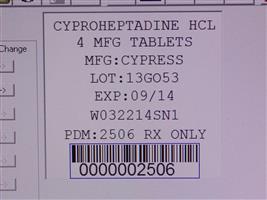
  • Cyproheptadine Hydrochloride Tablet [Carilion Materials Management]

    Cyproheptadine Hydrochloride

    Cyproheptadine Hydrochloride Tablet [Carilion Materials Management]

    DOSAGE SHOULD BE INDIVIDUALIZED ACCORDING TO THE NEEDS AND THE RESPONSE OF THE PATIENT.

    Each tablet contains 4 mg of cyproheptadine hydrochloride.

    The total daily dosage for pediatric patients may be calculated on the basis of body weight or body area using approximately 0.25 mg/kg/day or 8 mg per square meter of body surface (8 mg/m2). Pediatric Patients: Age 2 to 6 years:

    The usual dose is 2 mg (1⁄2 tablet) two or three times a day, adjusted as necessary to the size and response of the patient. The dose is not to exceed 12 mg a day.

    The usual dose is 4 mg (1 tablet) two or three times a day adjusted as necessary to the size and response of the patient. The dose is not to exceed 16 mg a day. Age 7 to 14 years:

    The total daily dose for adults should not exceed 0.5 mg/kg/day. The therapeutic range is 4 to 20 mg a day, with the majority of patients requiring 12 to 16 mg a day. An occasional patient may require as much as 32 mg a day for adequate relief. It is suggested that dosage be initiated with 4 mg (1 tablet) three times a day and adjusted according to the size and response of the patient. Adults:

  • Rifampin Capsule, Coated [Carilion Materials Management]

    Rifampin

    Rifampin Capsule, Coated [Carilion Materials Management]

    Rifampin can be administered by the oral route (see ). INDICATIONS AND USAGE

    See for dosing information in patients with renal failure. CLINICAL PHARMACOLOGY

    Tuberculosis

    Adults: 10 mg/kg, in a single daily administration, not to exceed 600 mg/day.

    Pediatric Patients: 10-20 mg/kg, not to exceed 600 mg/day.

    It is recommended that oral rifampin be administered once daily, either 1 hour before or 2 hours after a meal with a full glass of water.

    Rifampin is indicated in the treatment of all forms of tuberculosis. A three-drug regimen consisting of rifampin, isoniazid, and pyrazinamide (RIFATER manufactured by sanofi-aventisU.S. LLC) is recommended in the initial phase of short-course therapy which is usually continued for 2 months. The Advisory Council for the Elimination of Tuberculosis, the American Thoracic Society, and the Centers for Disease Control and Prevention recommend that either streptomycin or ethambutol be added as a fourth drug in a regimen containing isoniazid (INH), rifampin and pyrazinamide for initial treatment of tuberculosis unless the likelihood of INH resistance is very low. The need for a fourth drug should be reassessed when the results of susceptibility testing are known. If community rates of INH resistance are currently less than 4%, an initial treatment regimen with less than four drugs may be considered. ®

    Following the initial phase, treatment should be continued with rifampin and isoniazid (RIFAMATE manufactured by sanofi-aventis U.S. LLC) for at least 4 months. Treatment should be continued for longer if the patient is still sputum or culture positive, if resistant organisms are present, or if the patient is HIV positive. ®

    Meningococcal Carriers

    Adults: For adults, it is recommended that 600 mg rifampin be administered twice daily for two days.

    Pediatric Patients: Pediatric patients 1 month of age or older: 10 mg/kg (not to exceed 600 mg per dose) every 12 hours for two days.

    Pediatric patients under 1 month of age: 5 mg/kg every 12 hours for two days.

    Preparation of Extemporaneous Oral Suspension

    For pediatric and adult patients in whom capsule swallowing is difficult or where lower doses are needed, a liquid suspension may be prepared as follows:

    Rifampin 1% w/v suspension (10 mg/mL) can be compounded using Simple Syrup (Syrup NF):

    1. Empty the contents of four Rifampin 300 mg capsules or eight Rifampin 150 mg capsules onto a piece of weighing paper.

    2. If necessary, gently crush the capsule contents with a spatula to produce a fine powder.

    3. Transfer the rifampin powder blend to a 4-ounce amber glass or plastic (high density polyethylene [HDPE], polypropylene, or polycarbonate) prescription bottle.

    4. Rinse the paper and spatula with 20 mL of syrup, and add the rinse to the bottle. Shake vigorously.

    5. Add 100 mL of syrup to the bottle and shake vigorously.

    This compounding procedure results in a 1% w/v suspension containing 10 mg rifampin/mL. Stability studies indicate that the suspension is stable when stored at room temperature (25 ± 3°C) or in a refrigerator (2-8°C) for four weeks. This extemporaneously prepared suspension must be shaken well prior to administration.

  • Dibasic Sodium Phosphate, Monobasic Potassium Phosphate And Monobasic Sodium Phosphate Tablet [Carilion Materials Management]

    Dibasic Sodium Phosphate

    Dibasic Sodium Phosphate, Monobasic Potassium Phosphate And Monobasic Sodium Phosphate Tablet [Carilion Materials Management]

    PHOSPHA 250 NEUTRAL tablets should be taken with a full glass of water, with meals and at bedtime. TM

    One or two tablets, four times daily; Adults:

    One tablet four times daily. Pediatric patients over 4 years of age:

    Use only as directed by physician. Pediatric Patients under 4 years of age:

  • Ranitidine Tablet [Carilion Materials Management]

    Ranitidine

    Ranitidine Tablet [Carilion Materials Management]

    The current recommended adult dosage of Ranitidine Tablets, USP for duodenal ulcer is 150 mg twice daily. An alternative dosage of 300 mg once daily after the evening meal or at bedtime can be used for patients in whom dosing convenience is important. The advantages of one treatment regimen compared to the other in a particular patient population have yet to be demonstrated (see ). Smaller doses have been shown to be equally effective in inhibiting gastric acid secretion in US studies, and several foreign trials have shown that 100 mg twice daily is as effective as the 150-mg dose. Active Duodenal Ulcer:Clinical Trials: Active Duodenal Ulcer

    Antacid should be given as needed for relief of pain (see ). CLINICAL PHARMACOLOGY: Pharmacokinetics

    The current recommended adult oral dosage is 150 mg at bedtime. Maintenance of Healing of Duodenal Ulcers:

    Pathological Hypersecretory Conditions (such as Zollinger-Ellison syndrome):

    The current recommended adult oral dosage is 150 mg twice a day. In some patients it may be necessary to administer Ranitidine Tablets, USP 150-mg doses more frequently. Dosages should be adjusted to individual patient needs, and should continue as long as clinically indicated. Dosages up to 6 g/day have been employed in patients with severe disease.

    The current recommended adult oral dosage is 150 mg twice a day. Benign Gastric Ulcer:

    The current recommended adult oral dosage is 150 mg at bedtime. Maintenance of Healing of Gastric Ulcers:

    The current recommended adult oral dosage is 150 mg twice a day. GERD:

    The current recommended adult oral dosage is 150 mg four times a day. Erosive Esophagitis:

    The current recommended adult oral dosage is 150 mg twice a day. Maintenance of Healing of Erosive Esophagitis:

    The safety and effectiveness of Ranitidine Tablets, USP have been established in the age-group of 1 month to 16 years. There is insufficient information about the pharmacokinetics of Ranitidine Tablets, USP in neonatal patients (less than 1 month of age) to make dosing recommendations. Pediatric Use:

    The following 3 subsections provide dosing information for each of the pediatric indications.

    The recommended oral dose for the treatment of active duodenal and gastric ulcers is 2 to 4 mg/kg twice daily to a maximum of 300 mg/day. This recommendation is derived from adult clinical studies and pharmacokinetic data in pediatric patients. Treatment of Duodenal and Gastric Ulcers:

    The recommended oral dose for the maintenance of healing of duodenal and gastric ulcers is 2 to 4 mg/kg once daily to a maximum of 150 mg/day. This recommendation is derived from adult clinical studies and pharmacokinetic data in pediatric patients. Maintenance of Healing of Duodenal and Gastric Ulcers:

    Although limited data exist for these conditions in pediatric patients, published literature supports a dosage of 5 to 10 mg/kg per day, usually given as two divided doses. Treatment of GERD and Erosive Esophagitis:

    On the basis of experience with a group of subjects with severely impaired renal function treated with Ranitidine Tablets, USP, the recommended dosage in patients with a creatinine clearance  <50 mL/min is 150 mg every 24 hours. Should the patient's condition require, the frequency of dosing may be increased to every 12 hours or even further with caution. Hemodialysis reduces the level of circulating ranitidine. Ideally, the dosing schedule should be adjusted so that the timing of a scheduled dose coincides with the end of hemodialysis. Dosage Adjustment for Patients With Impaired Renal Function:

    Elderly patients are more likely to have decreased renal function, therefore caution should be exercised in dose selection, and it may be useful to monitor renal function (see and ). CLINICAL PHARMACOLOGY: Pharmacokinetics: GeriatricsPRECAUTIONS: Geriatric Use

  • Quinapril Hydrochloride Tablet, Film Coated [Carilion Materials Management]

    Quinapril Hydrochloride

    Quinapril Hydrochloride Tablet, Film Coated [Carilion Materials Management]

    Hypertension

    Monotherapy

    The recommended initial dosage of quinapril hydrochloride tablets in patients not on diuretics is 10 or 20 mg once daily. Dosage should be adjusted according to blood pressure response measured at peak (2–6 hours after dosing) and trough (predosing). Generally, dosage adjustments should be made at intervals of at least 2 weeks. Most patients have required dosages of 20, 40, or 80 mg/day, given as a single dose or in two equally divided doses. In some patients treated once daily, the antihypertensive effect may diminish toward the end of the dosing interval. In such patients an increase in dosage or twice daily administration may be warranted. In general, doses of 40–80 mg and divided doses give a somewhat greater effect at the end of the dosing interval.

    Concomitant Diuretics

    If blood pressure is not adequately controlled with quinapril hydrochloride monotherapy, a diuretic may be added. In patients who are currently being treated with a diuretic, symptomatic hypotension occasionally can occur following the initial dose of quinapril hydrochloride tablets. To reduce the likelihood of hypotension, the diuretic should, if possible, be discontinued 2 to 3 days prior to beginning therapy with quinapril hydrochloride tablets (see ). Then, if blood pressure is not controlled with quinapril hydrochloride tablets alone, diuretic therapy should be resumed. WARNINGS

    If the diuretic cannot be discontinued, an initial dose of 5 mg quinapril hydrochloride should be used with careful medical supervision for several hours and until blood pressure has stabilized.

    The dosage should subsequently be titrated (as described above) to the optimal response (see , , and ). WARNINGSPRECAUTIONSDrug Interactions

    Renal Impairment

    Kinetic data indicate that the apparent elimination half-life of quinaprilat increases as creatinine clearance decreases. Recommended starting doses, based on clinical and pharmacokinetic data from patients with renal impairment, are as follows:

    Creatinine Clearance Maximum Recommended Initial Dose >60 mL/min 10 mg 30–60 mL/min 5 mg 10–30 mL/min 2.5 mg <10 mL/min Insufficient data for dosage recommendation

    Patients should subsequently have their dosage titrated (as described above) to the optimal response.

    Elderly (≥65 years)

    The recommended initial dosage of quinapril hydrochloride tablets in elderly patients is 10 mg given once daily followed by titration (as described above) to the optimal response.

    Heart Failure

    Quinapril hydrochloride tablets are indicated as adjunctive therapy when added to conventional therapy including diuretics and/or digitalis. The recommended starting dose is 5 mg twice daily. This dose may improve symptoms of heart failure, but increases in exercise duration have generally required higher doses. Therefore, if the initial dosage of quinapril hydrochloride tablets is well tolerated, patients should then be titrated at weekly intervals until an effective dose, usually 20 to 40 mg daily given in two equally divided doses, is reached or undesirable hypotension, orthostatis, or azotemia (see ) prohibit reaching this dose. WARNINGS

    Following the initial dose of quinapril hydrochloride tablets, the patient should be observed under medical supervision for at least two hours for the presence of hypotension or orthostatis and, if present, until blood pressure stabilizes. The appearance of hypotension, orthostatis, or azotemia early in dose titration should not preclude further careful dose titration. Consideration should be given to reducing the dose of concomitant diuretics.

    DOSE ADJUSTMENTS IN PATIENTS WITH HEART FAILURE AND RENAL IMPAIRMENT OR HYPONATREMIA

    Pharmacokinetic data indicate that quinapril elimination is dependent on level of renal function. In patients with heart failure and renal impairment, the recommended initial dose of quinapril hydrochloride tablets is 5 mg in patients with a creatinine clearance above 30 mL/min and 2.5 mg in patients with a creatinine clearance of 10 to 30 mL/min. There is insufficient data for dosage recommendation in patients with a creatinine clearance less than 10 mL/min (see , , and ). DOSAGE AND ADMINISTRATION, Heart FailureWARNINGSPRECAUTIONS, Drug Interactions

    If the initial dose is well tolerated, quinapril hydrochloride tablets may be administered the following day as a twice daily regimen. In the absence of excessive hypotension or significant deterioration of renal function, the dose may be increased at weekly intervals based on clinical and hemodynamic response.

  • Diltiazem Hydrochloride Capsule, Extended Release [Carilion Materials Management]

    Diltiazem Hydrochloride

    Diltiazem Hydrochloride Capsule, Extended Release [Carilion Materials Management]

    Dosage needs to be adjusted by titration to individual patient needs. When used as monotherapy, usual starting doses are 120 to 240 mg once daily. Maximum antihypertensive effect is usually observed by 14 days of chronic therapy; therefore, dosage adjustments should be scheduled accordingly. The usual dosage range studied in clinical trials was 120 to 540 mg once daily. Current clinical experience with 540 mg dose is limited; however, the dose may be increased to 540 mg once daily. Hypertension.

    Dosages for the treatment of angina should be adjusted to each patient's needs, starting with a dose of 120 mg to 180 mg once daily. Individual patients may respond to higher doses of up to 540 mg once daily. When necessary, titration should be carried out over 7 to 14 days. Angina.

    Concomitant use with Other Cardiovascular Agents.

    May be taken as required to abort acute anginal attacks during diltiazem hydrochloride therapy. 1.Sublingual Nitroglycerin (NTG).

    . Diltiazem hydrochloride may be safely co-administered with short- and long-acting nitrates. 2Prophylactic Nitrate Therapy.

    (See and .) 3.Beta-blockersWARNINGSPRECAUTIONS

    Diltiazem hydrochloride has an additive antihypertensive effect when used with other antihypertensive agents. Therefore, the dosage of diltiazem hydrochloride or the concomitant antihypertensives may need to be adjusted when adding one to the other. 4.Antihypertensives.

    Hypertensive or anginal patients who are treated with other formulations of diltiazem can safely be switched to diltiazem hydrochloride extended-release capsules at the nearest equivalent total daily dose. Subsequent titration to higher or lower doses may, however, be necessary and should be initiated as clinically indicated.

    Sprinkling the Capsule Contents on Food

    Diltiazem hydrochloride extended-release capsules may also be administered by carefully opening the capsule and sprinkling the capsule contents on a spoonful of applesauce. The applesauce should be swallowed immediately without chewing and followed with a glass of cool water to ensure complete swallowing of the capsule contents. The applesauce should not be hot, and it should be soft enough to be swallowed without chewing. Any capsule contents/applesauce mixture should be used immediately and not stored for future use. Subdividing the contents of a diltiazem hydrochloride extended-release capsules is not recommended.

  • Isosorbide Dinitrate Tablet, Extended Release [Carilion Materials Management]

    Isosorbide Dinitrate

    Isosorbide Dinitrate Tablet, Extended Release [Carilion Materials Management]

    As noted under “ ” multiple-dose studies with ISDN and other nitrates have shown that maintenance of continuous 24-hour plasma levels results in refractory tolerance. Every dosing regimen for Isosorbide Dinitrate Extended-release Tablets must provide a daily dose-free interval to minimize the development of this tolerance. With immediate-release ISDN, it appears that one daily dose-free interval must be at least 14 hours long. The necessary dose- free interval for Isosorbide Dinitrate Extended-release Tablets has not been clearly identified, but is presumably somewhat longer. CLINICAL PHARMACOLOGY

    As also noted under “ , only one trial has ever studied the use of controlled-release isosorbide dinitrate for more than one dose. In that trial, 40 mg of a different formulation of controlled-release ISDN was administered twice daily in doses given 6 hours apart. After 4 weeks, active treatment could not be distinguished from placebo. CLINICAL PHARMACOLOGY”

    Large controlled studies with other nitrates suggest that no dosing regimen with Isosorbide Dinitrate Extended-release Tablets should be expected to provide more than about 12 hours of continuous anti-anginal efficacy per day.

    In clinical trials, immediate-release oral isosorbide dinitrate has been administered in a variety of regimens, with total daily doses ranging from 30 mg to 480 mg.

  • Nitro-time (Nitroglycerin) Capsule [Carilion Materials Management]

    Nitro-time

    Nitro-time (Nitroglycerin) Capsule [Carilion Materials Management]

    As noted above ( ) careful studies with other formulations of nitroglycerin have shown that maintenance of continuous 24-hour plasma levels of nitroglycerin results in tolerance (i.e., loss of clinical response). Every dosing regimen for Nitroglycerin Extended-Release Capsules should provide a daily nitrate-free interval to avoid the development of this tolerance. The minimum necessary length of such an interval has not been defined, but studies with other nitroglycerin formulations have shown that 10 to 12 hours is sufficient. Large controlled studies with other formulations of nitroglycerin show that no dosing regimen with Nitroglycerin Extended-Release Capsules should be expected to provide more than about 12 hours of continuous anti-anginal efficacy per day. CLINICAL PHARMACOLOGY

    The pharmacokinetics of Nitroglycerin capsules, and the clinical effects of multiple-dose regimens, have not been well studied. In clinical trials, the initial regimen of Nitroglycerin has been 2.5 to 6.5 mg three to four times a day, with subsequent upward dose adjustment guided by symptoms and side effects. In one trial, 5 of the 18 subjects were titrated up to a dose of 26 mg four times a day.

  • Quinapril Hydrochloride Tablet, Film Coated [Carilion Materials Management]

    Quinapril Hydrochloride

    Quinapril Hydrochloride Tablet, Film Coated [Carilion Materials Management]

    Hypertension

    Monotherapy

    The recommended initial dosage of quinapril hydrochloride tablets in patients not on diuretics is 10 or 20 mg once daily. Dosage should be adjusted according to blood pressure response measured at peak (2–6 hours after dosing) and trough (predosing). Generally, dosage adjustments should be made at intervals of at least 2 weeks. Most patients have required dosages of 20, 40, or 80 mg/day, given as a single dose or in two equally divided doses. In some patients treated once daily, the antihypertensive effect may diminish toward the end of the dosing interval. In such patients an increase in dosage or twice daily administration may be warranted. In general, doses of 40–80 mg and divided doses give a somewhat greater effect at the end of the dosing interval.

    Concomitant Diuretics

    If blood pressure is not adequately controlled with quinapril hydrochloride monotherapy, a diuretic may be added. In patients who are currently being treated with a diuretic, symptomatic hypotension occasionally can occur following the initial dose of quinapril hydrochloride tablets. To reduce the likelihood of hypotension, the diuretic should, if possible, be discontinued 2 to 3 days prior to beginning therapy with quinapril hydrochloride tablets (see ). Then, if blood pressure is not controlled with quinapril hydrochloride tablets alone, diuretic therapy should be resumed. WARNINGS

    If the diuretic cannot be discontinued, an initial dose of 5 mg quinapril hydrochloride should be used with careful medical supervision for several hours and until blood pressure has stabilized.

    The dosage should subsequently be titrated (as described above) to the optimal response (see , , and ). WARNINGSPRECAUTIONSDrug Interactions

    Renal Impairment

    Kinetic data indicate that the apparent elimination half-life of quinaprilat increases as creatinine clearance decreases. Recommended starting doses, based on clinical and pharmacokinetic data from patients with renal impairment, are as follows:

    Creatinine Clearance Maximum Recommended Initial Dose >60 mL/min 10 mg 30–60 mL/min 5 mg 10–30 mL/min 2.5 mg <10 mL/min Insufficient data for dosage recommendation

    Patients should subsequently have their dosage titrated (as described above) to the optimal response.

    Elderly (≥65 years)

    The recommended initial dosage of quinapril hydrochloride tablets in elderly patients is 10 mg given once daily followed by titration (as described above) to the optimal response.

    Heart Failure

    Quinapril hydrochloride tablets are indicated as adjunctive therapy when added to conventional therapy including diuretics and/or digitalis. The recommended starting dose is 5 mg twice daily. This dose may improve symptoms of heart failure, but increases in exercise duration have generally required higher doses. Therefore, if the initial dosage of quinapril hydrochloride tablets is well tolerated, patients should then be titrated at weekly intervals until an effective dose, usually 20 to 40 mg daily given in two equally divided doses, is reached or undesirable hypotension, orthostatis, or azotemia (see ) prohibit reaching this dose. WARNINGS

    Following the initial dose of quinapril hydrochloride tablets, the patient should be observed under medical supervision for at least two hours for the presence of hypotension or orthostatis and, if present, until blood pressure stabilizes. The appearance of hypotension, orthostatis, or azotemia early in dose titration should not preclude further careful dose titration. Consideration should be given to reducing the dose of concomitant diuretics.

    DOSE ADJUSTMENTS IN PATIENTS WITH HEART FAILURE AND RENAL IMPAIRMENT OR HYPONATREMIA

    Pharmacokinetic data indicate that quinapril elimination is dependent on level of renal function. In patients with heart failure and renal impairment, the recommended initial dose of quinapril hydrochloride tablets is 5 mg in patients with a creatinine clearance above 30 mL/min and 2.5 mg in patients with a creatinine clearance of 10 to 30 mL/min. There is insufficient data for dosage recommendation in patients with a creatinine clearance less than 10 mL/min (see , , and ). DOSAGE AND ADMINISTRATION, Heart FailureWARNINGSPRECAUTIONS, Drug Interactions

    If the initial dose is well tolerated, quinapril hydrochloride tablets may be administered the following day as a twice daily regimen. In the absence of excessive hypotension or significant deterioration of renal function, the dose may be increased at weekly intervals based on clinical and hemodynamic response.

  • Salsalate Tablet [Carilion Materials Management]

    Salsalate

    Salsalate Tablet [Carilion Materials Management]

    Carefully consider the potential benefits and risks of Salsalate tablet, USP and other treatment options before deciding to use Salsalate tablet, USP. Use the lowest effective dose for the shortest duration consistent with individual patient treatment goals (see ). WARNINGS

    After observing the response to initial therapy with Salsalate tablet, USP, the dose and frequency should be adjusted to suit an individual patient's needs. Salsalate is indicated for relief of the signs and symptoms of rheumatoid arthritis, osteoarthritis and related rheumatic disorder.

    The usual dosage is 3000 mg daily, given in divided doses as follows: Adults:

    1) two doses of two 750 mg tablets; 2) two doses of three 500 mg tablets; or 3) three doses of two 500 mg tablets. Some patients, e.g., the elderly, may require a lower dosage to achieve therapeutic blood concentrations and to avoid the more common side effects such as auditory.

    Alleviation of symptoms is gradual, and full benefit may not be evident for 3 to 4 days, when plasma salicylate levels have achieved steady state. There is no evidence for development of tissue tolerance (tachyphylaxis), but salicylate therapy may induce increased activity of metabolizing liver enzymes, causing a greater rate of salicyluric acid production and excretion, with a resultant increase in dosage requirement for maintenance of therapeutic serum salicylate levels.

    Dosage recommendations and indications for salsalate use in children have not been established. Children:

  • Minocycline Hydrochloride Capsule [Carilion Materials Management]

    Minocycline Hydrochloride

    Minocycline Hydrochloride Capsule [Carilion Materials Management]

    THE USUAL DOSAGE AND FREQUENCY OF ADMINISTRATION OF MINOCYCLINE DIFFERS FROM THAT OF THE OTHER TETRACYCLINES. EXCEEDING THE RECOMMENDED DOSAGE MAY RESULT IN AN INCREASED INCIDENCE OF SIDE EFFECTS.

    Minocycline hydrochloride capsules may be taken with or without food. (See .) CLINICAL PHARMACOLOGY

    Ingestion of adequate amounts of fluids along with capsule and tablet forms of drugs in the tetracycline-class is recommended to reduce the risk of esophageal irritation and ulceration. The capsules should be swallowed whole.

    For Pediatric Patients Above 8 Years of Age

    Usual pediatric dose: 4 mg/kg initially followed by 2 mg/kg every 12 hours, not to exceed the usual adult dose.

    Adults

    The usual dosage of minocycline hydrochloride is 200 mg initially followed by 100 mg every 12 hours. Alternatively, if more frequent doses are preferred, two or four 50 mg capsules may be given initially followed by one 50 mg capsule 4 times daily.

    Uncomplicated gonococcal infections other than urethritis and anorectal infections in men: 200 mg initially, followed by 100 mg every 12 hours for a minimum of 4 days, with post-therapy cultures within 2 to 3 days.

    In the treatment of uncomplicated gonococcal urethritis in men, 100 mg every 12 hours for 5 days is recommended.

    For the treatment of syphilis, the usual dosage of minocycline hydrochloride should be administered over a period of 10 to 15 days. Close follow-up, including laboratory tests, is recommended.

    In the treatment of meningococcal carrier state, the recommended dosage is 100 mg every 12 hours for 5 days.

    infections: Although optimal doses have not been established, 100 mg every 12 hours for 6 to 8 weeks have been used successfully in a limited number of cases. Mycobacterium marinum

    Uncomplicated urethral, endocervical, or rectal infection in adults caused by or 100 mg orally, every 12 hours for at least 7 days. Chlamydia trachomatisUreaplasma urealyticum:

    Ingestion of adequate amounts of fluids along with capsule and tablet forms of drugs in the tetracycline-class is recommended to reduce the risk of esophageal irritation and ulceration.

    The pharmacokinetics of minocycline in patients with renal impairment (CL CR <80 mL/min) have not been fully characterized. Current data are insufficient to determine if a dosage adjustment is warranted. The total daily dosage should not exceed 200 mg in 24 hours. However, due to the anti-anabolic effect of tetracyclines, BUN and creatinine should be monitored. (See .) WARNINGS

  • Thiothixene Capsule [Carilion Materials Management]

    Thiothixene

    Thiothixene Capsule [Carilion Materials Management]

    Dosage of thiothixene capsules should be individually adjusted depending on the chronicity and severity of the symptoms of schizophrenia. In general, small doses should be used initially and gradually increased to the optimal effective level, based on patient response.

    Some patients have been successfully maintained on once a day thiothixene capsule therapy.

    The use of thiothixene capsules in children under 12 years of age is not recommended because safe conditions for its use have not been established.

    In milder conditions, an initial dose of 2 mg three times daily is recommended. If indicated, a subsequent increase to 15 mg/day total daily dose is often effective.

    In more severe conditions, an initial dose of 5 mg twice daily is recommended.

    The usual optimal dose is 20 mg to 30 mg daily. If indicated, an increase to 60 mg/day total daily dose is often effective. Exceeding a total daily dose of 60 mg rarely increases the beneficial response.

  • Quinidine Sulfate
    Quinidine Sulfate Tablet [Carilion Materials Management]

    Quinidine Sulfate

    Quinidine Sulfate Tablet [Carilion Materials Management]

    Treatment of P. falciparum  malaria

    Quinidine sulfate tablets are used in one of the approved regimens for the treatment of life-threatening malaria. The central component of the regimen is Quinidine Gluconate Injection, and the regimen is described in the package insert of Quinidine Gluconate Injection. P. falciparum

    Conversion of atrial fibrillation/flutter to sinus rhythm

    Especially in patients with known structural heart disease or other risk factors for toxicity, initiation or dose-adjustment of treatment with quinidine sulfate should generally be performed in a setting where facilities and personnel for monitoring and resuscitation are continuously available. Patients with symptomatic atrial fibrillation/flutter should be treated with quinidine sulfate only after ventricular rate control ( with digitalis or ß-blockers) has failed to provide satisfactory control of symptoms. e.g.,

    Adequate trials have not identified an optimal regimen of quinidine sulfate for conversion of atrial fibrillation/flutter to sinus rhythm. In one reported regimen, the patient first receives two tablets (400 mg; 332 mg of quinidine base) of quinidine sulfate every six hours. If this regimen has not resulted in conversion after 4 or 5 doses, then the dose is cautiously increased. If, at any point during administration, the QRS complex widens to 130% of its pre-treatment duration; the QT interval widens to 130% of its pre-treatment duration and is then longer than 500 ms; P waves disappear; or the patient develops significant tachycardia, symptomatic bradycardia, or hypotension, then quinidine sulfate is discontinued, and other means of conversion ( direct-current cardioversion) are considered. Ce.g.,

    Reduction of frequency of release into atrial fibrillation/flutter

    In a patient with a history of frequent symptomatic episodes of atrial fibrillation/flutter, the goal of therapy with quinidine sulfate should be an increase in the average time between episodes. In most patients, the tachyarrhythmia during therapy with quinidine sulfate, and a single recurrence should not be interpreted as therapeutic failure. will recur

    Especially in patients with known structural heart disease or other risk factors for toxicity, initiation or dose-adjustment of treatment with quinidine sulfate should generally be performed in a setting where facilities and personnel for monitoring and resuscitation are continuously available. Monitoring should be continued for two or three days after initiation of the regimen on which the patient will be discharged.

    Therapy with quinidine sulfate should be begun with 200 mg (equivalent to 166 mg of quinidine base) every six hours. If this regimen is well tolerated, if the serum quinidine level is still well within the laboratory’s therapeutic range, and if the average time between arrhythmic episodes has not been satisfactorily increased, then the dose may be cautiously raised. The total daily dosage should be reduced if the QRS complex widens to 130% of its pre-treatment duration; the QT interval widens to 130% of its pre-treatment duration and is then longer than 500 ms; P waves disappear; or the patient develops significant tachycardia, symptomatic bradycardia, or hypotension. C

    Suppression of ventricular arrhythmias

    Dosing regimens for the use of quinidine sulfate in suppressing life-threatening ventricular arrhythmias have not been adequately studied. Described regimens have generally been similar to the regimen described just above for the prophylaxis of symptomatic atrial fibrillation/flutter. Where possible, therapy should be guided by the results of programmed electrical stimulation and/or Holter monitoring with exercise.

  • Quinapril Hydrochloride Tablet, Film Coated [Carilion Materials Management]

    Quinapril Hydrochloride

    Quinapril Hydrochloride Tablet, Film Coated [Carilion Materials Management]

    Hypertension

    Monotherapy

    The recommended initial dosage of quinapril hydrochloride tablets in patients not on diuretics is 10 or 20 mg once daily. Dosage should be adjusted according to blood pressure response measured at peak (2–6 hours after dosing) and trough (predosing). Generally, dosage adjustments should be made at intervals of at least 2 weeks. Most patients have required dosages of 20, 40, or 80 mg/day, given as a single dose or in two equally divided doses. In some patients treated once daily, the antihypertensive effect may diminish toward the end of the dosing interval. In such patients an increase in dosage or twice daily administration may be warranted. In general, doses of 40–80 mg and divided doses give a somewhat greater effect at the end of the dosing interval.

    Concomitant Diuretics

    If blood pressure is not adequately controlled with quinapril hydrochloride monotherapy, a diuretic may be added. In patients who are currently being treated with a diuretic, symptomatic hypotension occasionally can occur following the initial dose of quinapril hydrochloride tablets. To reduce the likelihood of hypotension, the diuretic should, if possible, be discontinued 2 to 3 days prior to beginning therapy with quinapril hydrochloride tablets (see ). Then, if blood pressure is not controlled with quinapril hydrochloride tablets alone, diuretic therapy should be resumed. WARNINGS

    If the diuretic cannot be discontinued, an initial dose of 5 mg quinapril hydrochloride should be used with careful medical supervision for several hours and until blood pressure has stabilized.

    The dosage should subsequently be titrated (as described above) to the optimal response (see , , and ). WARNINGSPRECAUTIONSDrug Interactions

    Renal Impairment

    Kinetic data indicate that the apparent elimination half-life of quinaprilat increases as creatinine clearance decreases. Recommended starting doses, based on clinical and pharmacokinetic data from patients with renal impairment, are as follows:

    Creatinine Clearance Maximum Recommended Initial Dose >60 mL/min 10 mg 30–60 mL/min 5 mg 10–30 mL/min 2.5 mg <10 mL/min Insufficient data for dosage recommendation

    Patients should subsequently have their dosage titrated (as described above) to the optimal response.

    Elderly (≥65 years)

    The recommended initial dosage of quinapril hydrochloride tablets in elderly patients is 10 mg given once daily followed by titration (as described above) to the optimal response.

    Heart Failure

    Quinapril hydrochloride tablets are indicated as adjunctive therapy when added to conventional therapy including diuretics and/or digitalis. The recommended starting dose is 5 mg twice daily. This dose may improve symptoms of heart failure, but increases in exercise duration have generally required higher doses. Therefore, if the initial dosage of quinapril hydrochloride tablets is well tolerated, patients should then be titrated at weekly intervals until an effective dose, usually 20 to 40 mg daily given in two equally divided doses, is reached or undesirable hypotension, orthostatis, or azotemia (see ) prohibit reaching this dose. WARNINGS

    Following the initial dose of quinapril hydrochloride tablets, the patient should be observed under medical supervision for at least two hours for the presence of hypotension or orthostatis and, if present, until blood pressure stabilizes. The appearance of hypotension, orthostatis, or azotemia early in dose titration should not preclude further careful dose titration. Consideration should be given to reducing the dose of concomitant diuretics.

    DOSE ADJUSTMENTS IN PATIENTS WITH HEART FAILURE AND RENAL IMPAIRMENT OR HYPONATREMIA

    Pharmacokinetic data indicate that quinapril elimination is dependent on level of renal function. In patients with heart failure and renal impairment, the recommended initial dose of quinapril hydrochloride tablets is 5 mg in patients with a creatinine clearance above 30 mL/min and 2.5 mg in patients with a creatinine clearance of 10 to 30 mL/min. There is insufficient data for dosage recommendation in patients with a creatinine clearance less than 10 mL/min (see , , and ). DOSAGE AND ADMINISTRATION, Heart FailureWARNINGSPRECAUTIONS, Drug Interactions

    If the initial dose is well tolerated, quinapril hydrochloride tablets may be administered the following day as a twice daily regimen. In the absence of excessive hypotension or significant deterioration of renal function, the dose may be increased at weekly intervals based on clinical and hemodynamic response.

  • Pramipexole Dihydrochloride Tablet [Carilion Materials Management]

    Pramipexole Dihydrochloride

    Pramipexole Dihydrochloride Tablet [Carilion Materials Management]

    2.1 General Dosing Considerations

    Pramipexole dihydrochloride tablets are taken orally, with or without food.

    If a significant interruption in therapy with pramipexole dihydrochloride tablets have occurred, re-titration of therapy may be warranted.

    2.2 Parkinson’s Disease

    In all clinical studies, dosage was initiated at a subtherapeutic level to avoid intolerable adverse effects and orthostatic hypotension. Pramipexole dihydrochloride tablets should be titrated gradually in all patients. The dose should be increased to achieve a maximum therapeutic effect, balanced against the principal side effects of dyskinesia, hallucinations, somnolence, and dry mouth.

    Dosing in Patients with Normal Renal Function

    Initial Treatment

    Doses should be increased gradually from a starting dose of 0.375 mg/day given in three divided doses and should not be increased more frequently than every 5 to 7 days. A suggested ascending dosage schedule that was used in clinical studies is shown in the following table:

    Table 1 Ascending Dosage Schedule of pramipexole dihydrochloride tablets for Parkinson’s Disease Week Dosage (mg) Total Daily Dose (mg) 1 0.125 TID 0.375 2 0.25 TID 0.75 3 0.5 TID 1.50 4 0.75 TID 2.25 5 1 TID 3.0 6 1.25 TID 3.75 7 1.5 TID 4.50

    Maintenance Treatment

    Pramipexole Dihydrochloride Tablets were effective and well tolerated over a dosage range of 1.5 to 4.5 mg/day administered in equally divided doses three times per day with or without concomitant levodopa (approximately 800 mg/day).

    In a fixed-dose study in early Parkinson's disease patients, doses of 3 mg, 4.5 mg, and 6 mg per day of pramipexole dihydrochloride tablets were not shown to provide any significant benefit beyond that achieved at a daily dose of 1.5 mg/day. However, in the same fixed-dose study, the following adverse events were dose related: postural hypotension, nausea, constipation, somnolence, and amnesia. The frequency of these events was generally 2-fold greater than placebo for pramipexole doses greater than 3 mg/day. The incidence of somnolence reported with pramipexole at a dose of 1.5 mg/day was comparable to placebo.

    When pramipexole dihydrochloride tablets are used in combination with levodopa, a reduction of the levodopa dosage should be considered. In a controlled study in advanced Parkinson's disease, the dosage of levodopa was reduced by an average of 27% from baseline.

    Dosing in Patients with Renal Impairment

    Table 2 Dosing of pramipexole dihydrochloride tablets in Parkinson’s Disease Patients with Renal Impairment Renal Status Starting Dose (mg) Maximum Dose (mg) Normal to mild impairment  (creatinine Cl > 50 mL/min) 0.125 TID 1.5 TID Moderate impairment  (creatinine Cl = 30 to 50 mL/min) 0.125 BID 0.75 TID Severe impairment  (creatinine Cl = 15 to <30 mL/min) 0.125 QD 1.5 QD Very severe impairment  (creatinine Cl < 15 mL/min and hemodialysis patients) The use of pramipexole dihydrochloride tablets not been adequately studied in this group of patients.

    Discontinuation of Treatment

    Pramipexole dihydrochloride Tablets should be tapered off at a rate of 0.75 mg per day until the daily dose has been reduced to 0.75 mg. Thereafter, the dose should be reduced by 0.375 mg per day. In some studies, however, abrupt discontinuation was uneventful.

  • Niaspan (Niacin) Tablet, Film Coated, Extended Release [Carilion Materials Management]

    Niaspan

    Niaspan (Niacin) Tablet, Film Coated, Extended Release [Carilion Materials Management]

    NIASPAN should be taken at bedtime, after a low-fat snack, and doses should be individualized according to patient response. Therapy with NIASPAN must be initiated at 500 mg at bedtime in order to reduce the incidence and severity of side effects which may occur during early therapy. The recommended dose escalation is shown in below. Table 1

    Table 1. Recommended Dosing   Week(s) Daily dose NIASPAN Dosage INITIAL TITRATION 1 to 4 500 mg 1 NIASPAN 500 mg tablet at bedtime SCHEDULE 5 to 8 1000 mg 1 NIASPAN 1000 mg tablet or 2 NIASPAN 500 mg tablets at bedtime   * 1500 mg 2 NIASPAN 750 mg tablets or 3 NIASPAN 500 mg tablets at bedtime   * 2000 mg 2 NIASPAN 1000 mg tablets or 4 NIASPAN 500 mg tablets at bedtime * After Week 8, titrate to patient response and tolerance. If response to 1000 mg daily is inadequate, increase dose to 1500 mg daily; may subsequently increase dose to 2000 mg daily. Daily dose should not be increased more than 500 mg in a 4-week period, and doses above 2000 mg daily are not recommended. Women may respond at lower doses than men.

    Maintenance Dose

    The daily dosage of NIASPAN should not be increased by more than 500 mg in any 4-week period. The recommended maintenance dose is 1000 mg (two 500 mg tablets or one 1000 mg tablet) to 2000 mg (two 1000 mg tablets or four 500 mg tablets) once daily at bedtime. Doses greater than 2000 mg daily are not recommended. Women may respond at lower NIASPAN doses than men . [see Clinical Studies ] (14.2)

    Single-dose bioavailability studies have demonstrated that two of the 500 mg and one of the 1000 mg tablet strengths are interchangeable but three of the 500 mg and two of the 750 mg tablet strengths are not interchangeable.

    If lipid response to NIASPAN alone is insufficient or if higher doses of NIASPAN are not well tolerated, some patients may benefit from combination therapy with a bile acid binding resin or statin , below and . [see Drug Interactions (7.3)Concomitant TherapyClinical Studies , ] (14.314.4)

    Flushing of the skin may be reduced in frequency or severity by pretreatment with aspirin (up to the recommended dose of 325 mg taken 30 minutes prior to NIASPAN dose). Tolerance to this flushing develops rapidly over the course of several weeks. Flushing, pruritus, and gastrointestinal distress are also greatly reduced by slowly increasing the dose of niacin and avoiding administration on an empty stomach. Concomitant alcoholic, hot drinks or spicy foods may increase the side effects of flushing and pruritus and should be avoided around the time of NIASPAN ingestion. [see Adverse Reactions ] (6.1)

    Equivalent doses of NIASPAN should not be substituted for sustained-release (modified-release, timed-release) niacin preparations or immediate-release (crystalline) niacin . Patients previously receiving other niacin products should be started with the recommended NIASPAN titration schedule (see ), and the dose should subsequently be individualized based on patient response. [see Warnings and Precautions ] (5)Table 1

    If NIASPAN therapy is discontinued for an extended period, reinstitution of therapy should include a titration phase (see ). Table 1

    NIASPAN tablets should be taken whole and should not be broken, crushed or chewed before swallowing.

    Concomitant Therapy

    Concomitant Therapy with Lovastatin or Simvastatin

    Patients already receiving a stable dose of lovastatin or simvastatin who require further TG-lowering or HDL-raising (e.g., to achieve NCEP non-HDL-C goals), may receive concomitant dosage titration with NIASPAN per NIASPAN recommended initial titration schedule . For patients already receiving a stable dose of NIASPAN who require further LDL-lowering (e.g., to achieve NCEP LDL-C goals), the usual recommended starting dose of lovastatin and simvastatin is 20 mg once a day. Dose adjustments should be made at intervals of 4 weeks or more. Combination therapy with NIASPAN and lovastatin or NIASPAN and simvastatin should not exceed doses of 2000 mg NIASPAN and 40 mg lovastatin or simvastatin daily. [see Dosage and Administration ] (2)

    Dosage in Patients with Renal or Hepatic Impairment

    Use of NIASPAN in patients with renal or hepatic impairment has not been studied. NIASPAN is contraindicated in patients with significant or unexplained hepatic dysfunction. NIASPAN should be used with caution in patients with renal impairment . [see Warnings and Precautions ] (5)

  • Atacand
    Atacand (Candesartan Cilexetil) Tablet [Carilion Materials Management]

    Atacand

    Atacand (Candesartan Cilexetil) Tablet [Carilion Materials Management]

    2.1 Adult Hypertension

    Dosage must be individualized. Blood pressure response is dose related over the range of 2 to 32 mg. The usual recommended starting dose of ATACAND is 16 mg once daily when it is used as monotherapy in patients who are not volume depleted. ATACAND can be administered once or twice daily with total daily doses ranging from 8 mg to 32 mg. Larger doses do not appear to have a greater effect, and there is relatively little experience with such doses. Most of the antihypertensive effect is present within 2 weeks, and maximal blood pressure reduction is generally obtained within 4 to 6 weeks of treatment with ATACAND.

    Use in Hepatic Impairment: Initiate with 8 mg ATACAND in patients with moderate hepatic insufficiency. Dosing recommendations cannot be provided for patients with severe hepatic insufficiency [ ]. see CLINICAL PHARMACOLOGY (12.3)

    ATACAND may be administered with or without food.

    If blood pressure is not controlled by ATACAND alone, a diuretic may be added. ATACAND may be administered with other antihypertensive agents.

    2.2 Pediatric Hypertension 1 to < 17 Years of age

    ATACAND may be administered once daily or divided into two equal doses. Adjust the dosage according to blood pressure response. For patients with possible depletion of intravascular volume (e.g., patients treated with diuretics, particularly those with impaired renal function), initiate ATACAND under close medical supervision and consider administration of a lower dose . [see ] WARNINGS AND PRECAUTIONS (5.3)

    Children 1 to < 6 years of age:

    The dose range is 0.05 to 0.4 mg/kg per day. The recommended starting dose is 0.20 mg/kg (oral suspension).

    Children 6 to < 17 years of age:

    For those less than 50 kg, the dose range is 2 to 16 mg per day. The recommended starting dose is 4 to 8 mg.

    For those greater than 50 kg, the dose range is 4 to 32 mg per day. The recommended starting dose is 8 to 16 mg.

    Doses above 0.4 mg/kg (1 to < 6 year olds) or 32 mg (6 to < 17 year olds) have not been studied in pediatric patients [see ]. CLINICAL STUDIES (14.1)

    An antihypertensive effect is usually present within 2 weeks, with full effect generally obtained within 4 weeks of treatment with ATACAND.

    Children < 1 year of age must not receive ATACAND for hypertension.

    All pediatric patients with a glomerular filtration rate less than 30 ml/min/1.73m should not receive ATACAND since ATACAND has not been studied in this population 2[see]. SPECIAL POPULATIONS (8)

    For children who cannot swallow tablets, an oral suspension may be substituted as described below:

    Preparation of Oral Suspension:

    ATACAND oral suspension can be prepared in concentrations within the range of 0.1 to 2.0 mg/mL. Typically, a concentration of 1 mg/mL will be suitable for the prescribed dose. Any strength of ATACAND tablets can be used in the preparation of the suspension.

    Follow the steps below for preparation of the suspension. The number of tablets and volume of vehicle specified below will yield 160 mL of a 1 mg/mL suspension.

    • Prepare the vehicle by adding equal volumes of Ora-Plus (80 mL) and Ora-Sweet SF (80 mL) or, alternatively, use, Ora-Blend SF (160 mL). 1 ® 1 ® 1,2 ® • Add a small amount of vehicle to the required number of ATACAND tablets (five 32 mg tablets) and grind into a smooth paste using a mortar and pestle. • Add the paste to a preparation vessel of suitable size. • Rinse the mortar and pestle clean using the vehicle and add this to the vessel. Repeat, if necessary. • Prepare the final volume by adding the remaining vehicle. • Mix thoroughly. • Dispense into suitably sized amber PET bottles. • Label with an expiry date of 100 days and include the following instructions:

    Store at room temperature (below 30°C/86°F). Use within 30 days after first opening. Do not use after the expiry date stated on the bottle.

    Do not freeze.

    Shake well before each use.

    1 Ora-Plus®, Ora-Sweet SF®, and Ora-Blend SF® are registered trademarks of Paddock Laboratories, Inc. Supplied as a 50/50% pre-mix of Ora-Plus® and Ora-Sweet® 2

    2.3 Adult Heart Failure

    The recommended initial dose for treating heart failure is 4 mg once daily. The target dose is 32 mg once daily, which is achieved by doubling the dose at approximately 2-week intervals, as tolerated by the patient.

  • Aggrenox (Aspirin And Dipyridamole) Capsule [Carilion Materials Management]

    Aggrenox

    Aggrenox (Aspirin And Dipyridamole) Capsule [Carilion Materials Management]

    AGGRENOX is not interchangeable with the individual components of aspirin and dipyridamole tablets.

    The recommended dose of AGGRENOX is one capsule given orally twice daily, one in the morning and one in the evening. Swallow capsules whole without chewing. AGGRENOX can be administered with or without food.

    2.1  Alternative Regimen in Case of Intolerable Headaches

    In the event of intolerable headaches during initial treatment, switch to one capsule at bedtime and low-dose aspirin in the morning. Because there are no outcome data with this regimen and headaches become less of a problem as treatment continues, patients should return to the usual regimen as soon as possible, usually within one week.

  • Pioglitazone Tablet [Carilion Materials Management]

    Pioglitazone

    Pioglitazone Tablet [Carilion Materials Management]

    2.1 Recommendations for All Patients

    Pioglitazone tablets should be taken once daily and can be taken without regard to meals.

    The recommended starting dose for patients without congestive heart failure is 15 mg or 30 mg once daily.

    The recommended starting dose for patients with congestive heart failure (NYHA Class I or II) is 15 mg once daily.

    The dose can be titrated in increments of 15 mg up to a maximum of 45 mg once daily based on glycemic response as determined by HbA1c.

    After initiation of pioglitazone tablets or with dose increase, monitor patients carefully for adverse reactions related to fluid retention such as weight gain, edema, and signs and symptoms of congestive heart failure . [see and ] Boxed WarningWarnings and Precautions (5.2)

    Liver tests (serum alanine and aspartate aminotransferases, alkaline phosphatase, and total bilirubin) should be obtained prior to initiating pioglitazone tablets. Routine periodic monitoring of liver tests during treatment with pioglitazone tablets is not recommended in patients without liver disease. Patients who have liver test abnormalities prior to initiation of pioglitazone tablets or who are found to have abnormal liver tests while taking pioglitazone tablets should be managed as described under Warnings and Precautions . [see and ] Warnings and Precautions (5.3)Clinical Pharmacology (12.3)

    2.2 Concomitant Use with an Insulin Secretagogue or Insulin

    If hypoglycemia occurs in a patient coadministered pioglitazone tablets and an insulin secretagogue (e.g., sulfonylurea), the dose of the insulin secretagogue should be reduced.

    If hypoglycemia occurs in a patient coadministered pioglitazone tablets and insulin, the dose of insulin should be decreased by 10% to 25%. Further adjustments to the insulin dose should be individualized based on glycemic response.

    2.3 Coadministration with Strong CYP2C8 Inhibitors

    Coadministration of pioglitazone tablets and gemfibrozil, a strong CYP2C8 inhibitor, increases pioglitazone exposure approximately 3-fold. Therefore, the maximum recommended dose of pioglitazone tablets is 15 mg daily when used in combination with gemfibrozil or other strong CYP2C8 inhibitors [see and ]. Drug Interactions (7.1)Clinical Pharmacology (12.3)

  • Cilostazol Tablet [Carilion Materials Management]

    Cilostazol

    Cilostazol Tablet [Carilion Materials Management]

    The recommended dosage of Cilostazol Tablets USP is 100 mg b.i.d. taken at least half an hour before or two hours after breakfast and dinner. A dose of 50 mg b.i.d. should be considered during coadministration of such inhibitors of CYP3A4 as ketoconazole, itraconazole, erythromycin and diltiazem, and during coadministration of such inhibitors of CYP2C19 as omeprazole.

    Patients may respond as early as 2 to 4 weeks after the initiation of therapy, but treatment for up to 12 weeks may be needed before a beneficial effect is experienced.

    Discontinuation of Therapy

    The available data suggest that the dosage of Cilostazol Tablets USP can be reduced or discontinued without rebound (i.e., platelet hyperaggregability).

  • Trandolapril Tablet [Carilion Materials Management]

    Trandolapril

    Trandolapril Tablet [Carilion Materials Management]

    Hypertension

    The recommended initial dosage of trandolapril tablets for patients not receiving a diuretic is 1 mg once daily in non-black patients and 2 mg in black patients. Dosage should be adjusted according to the blood pressure response. Generally, dosage adjustments should be made at intervals of at least 1 week. Most patients have required dosages of 2 to 4 mg once daily. There is little clinical experience with doses above 8 mg.

    Patients inadequately treated with once-daily dosing at 4 mg may be treated with twice-daily dosing. If blood pressure is not adequately controlled with trandolapril tablets monotherapy, a diuretic may be added.

    In patients who are currently being treated with a diuretic, symptomatic hypotension occasionally can occur following the initial dose of trandolapril tablets. To reduce the likelihood of hypotension, the diuretic should, if possible, be discontinued two to three days prior to beginning therapy with trandolapril tablets. (See .) Then, if blood pressure is not controlled with trandolapril tablets alone, diuretic therapy should be resumed. If the diuretic cannot be discontinued, an initial dose of 0.5 mg trandolapril tablets should be used with careful medical supervision for several hours until blood pressure has stabilized. The dosage should subsequently be titrated (as described above) to the optimal response. (See and , .) WARNINGSWARNINGSPRECAUTIONSDrug Interactions

    Concomitant administration of trandolapril tablets with potassium supplements, potassium salt substitutes, or potassium sparing diuretics can lead to increases of serum potassium. (See .) PRECAUTIONS

    Dosage Adjustment in Renal Impairment or Hepatic Cirrhosis

    For patients with a creatinine clearance < 30 mL/min. or with hepatic cirrhosis, the recommended starting dose, based on clinical and pharmacokinetic data, is 0.5 mg daily. Patients should subsequently have their dosage titrated (as described above) to the optimal response.

  • Prandin (Repaglinide) Tablet [Carilion Materials Management]

    Prandin

    Prandin (Repaglinide) Tablet [Carilion Materials Management]

    There is no fixed dosage regimen for the management of type 2 diabetes with PRANDIN.

    The patient's blood glucose should be monitored periodically to determine the minimum effective dose for the patient; to detect primary failure, i.e., inadequate lowering of blood glucose at the maximum recommended dose of medication; and to detect secondary failure, i.e., loss of an adequate blood glucose-lowering response after an initial period of effectiveness. Glycosylated hemoglobin levels are of value in monitoring the patient's longer term response to therapy.

    Short-term administration of PRANDIN may be sufficient during periods of transient loss of control in patients usually well controlled on diet.

    PRANDIN doses are usually taken within 15 minutes of the meal but time may vary from immediately preceding the meal to as long as 30 minutes before the meal.

    Starting Dose

    For patients not previously treated or whose HbA is < 8%, the starting dose should be 0.5 mg with each meal. For patients previously treated with blood glucose-lowering drugs and whose HbA is ≥ 8%, the initial dose is 1 or 2 mg with each meal preprandially (see previous paragraph). 1c1c

    Dose Adjustment

    Dosing adjustments should be determined by blood glucose response, usually fasting blood glucose. Postprandial glucose levels testing may be clinically helpful in patients whose pre-meal blood glucose levels are satisfactory but whose overall glycemic control (HbA ) is inadequate. The preprandial dose should be doubled up to 4 mg with each meal until satisfactory blood glucose response is achieved. At least one week should elapse to assess response after each dose adjustment. 1c

    The recommended dose range is 0.5 mg to 4 mg taken with meals. PRANDIN may be dosed preprandially 2, 3, or 4 times a day in response to changes in the patient’s meal pattern. The maximum recommended daily dose is 16 mg.

    Patient Management

    Long-term efficacy should be monitored by measurement of HbA levels approximately every 3 months. Failure to follow an appropriate dosage regimen may precipitate hypoglycemia or hyperglycemia. Patients who do not adhere to their prescribed dietary and drug regimen are more prone to exhibit unsatisfactory response to therapy including hypoglycemia. When hypoglycemia occurs in patients taking a combination of PRANDIN and a thiazolidinedione or PRANDIN and metformin, the dose of PRANDIN should be reduced. 1c

    Patients Receiving Other Oral Hypoglycemic Agents

    When PRANDIN is used to replace therapy with other oral hypoglycemic agents, PRANDIN may be started on the day after the final dose is given. Patients should then be observed carefully for hypoglycemia due to potential overlapping of drug effects. When transferred from longer half-life sulfonylurea agents (e.g., chlorpropamide) to repaglinide, close monitoring may be indicated for up to one week or longer.

    Combination Therapy

    If PRANDIN monotherapy does not result in adequate glycemic control, metformin or a thiazolidinedione may be added. If metformin or thiazolidinedione monotherapy does not provide adequate control, PRANDIN may be added. The starting dose and dose adjustments for PRANDIN combination therapy is the same as for PRANDIN monotherapy. The dose of each drug should be carefully adjusted to determine the minimal dose required to achieve the desired pharmacologic effect. Failure to do so could result in an increase in the incidence of hypoglycemic episodes. Appropriate monitoring of FPG and HbA measurements should be used to ensure that the patient is not subjected to excessive drug exposure or increased probability of secondary drug failure. 1c

  • Metolazone Tablet [Carilion Materials Management]

    Metolazone

    Metolazone Tablet [Carilion Materials Management]

    Effective dosage of metolazone tablets should be individualized according to indication and patient response. A single daily dose is recommended. Therapy with metolazone tablets should be titrated to gain an initial therapeutic response and to determine the minimal dose possible to maintain the desired therapeutic response.

    Usual Single Daily Dosage Schedules

    Suitable initial dosages will usually fall in the ranges given.

    Edema of cardiac failure:

      Metolazone tablets 5 to 20 mg once daily.

    Edema of renal disease:

      Metolazone tablets 5 to 20 mg once daily.

    Mild to moderate essential hypertension:

      Metolazone tablets 2.5 to 5 mg once daily. New patients- If considered desirable to switch patients currently on Zaroxolyn tablets and other formulations of metolazone that share its slow and incomplete bioavailability to Mykrox , the dose should be determined by titration starting at one tablet (0.5 mg) once daily and increasing to two tablets (1 mg) once daily if needed. ® ®

    Treatment of Edematous States

    The time interval required for the initial dosage to produce an effect may vary. Diuresis and saluresis usually begin within one hour and persist for 24 hours or longer. When a desired therapeutic effect has been obtained, it may be advisable to reduce the dose if possible. The daily dose depends on the severity of the patient's condition, sodium intake, and responsiveness. A decision to change the daily dose should be based on the results of thorough clinical and laboratory evaluations. If antihypertensive drugs or diuretics are given concurrently with metolazone tablets, more careful dosage adjustment may be necessary. For patients who tend to experience paroxysmal nocturnal dyspnea, it may be advisable to employ a larger dose to ensure prolongation of diuresis and saluresis for a full 24-hour period.

    Treatment of Hypertension

    The time interval required for the initial dosage regimen to show effect may vary from three or four days to three to six weeks in the treatment of elevated blood pressure. Doses should be adjusted at appropriate intervals to achieve maximum therapeutic effect.

  • Lisinopril Tablet [Carilion Materials Management]

    Lisinopril

    Lisinopril Tablet [Carilion Materials Management]

    Hypertension

    Initial Therapy

    In patients with uncomplicated essential hypertension not on diuretic therapy, the recommended initial dose is 10 mg once a day. Dosage should be adjusted according to blood pressure response. The usual dosage range is 20 mg to 40 mg per day administered in a single daily dose. The antihypertensive effect may diminish toward the end of the dosing interval regardless of the administered dose, but most commonly with a dose of 10 mg daily. This can be evaluated by measuring blood pressure just prior to dosing to determine whether satisfactory control is being maintained for 24 hours. If it is not, an increase in dose should be considered. Doses up to 80 mg have been used but do not appear to give greater effect. If blood pressure is not controlled with lisinopril tablets alone, a low dose of a diuretic may be added. Hydrochlorothiazide, 12.5 mg has been shown to provide an additive effect. After the addition of a diuretic, it may be possible to reduce the dose of lisinopril tablets.

    Diuretic Treated Patients

    In hypertensive patients who are currently being treated with a diuretic, symptomatic hypotension may occur occasionally following the initial dose of lisinopril tablets. The diuretic should be discontinued, if possible, for two to three days before beginning therapy with lisinopril tablets to reduce the likelihood of hypotension (see ). The dosage of lisinopril tablets should be adjusted according to blood pressure response. If the patient's blood pressure is not controlled with lisinopril tablets alone, diuretic therapy may be resumed as described above. WARNINGS

    If the diuretic cannot be discontinued, an initial dose of 5 mg should be used under medical supervision for at least two hours and until blood pressure has stabilized for at least an additional hour (see and , ). WARNINGSPRECAUTIONSDrug Interactions

    Concomitant administration of lisinopril tablets with potassium supplements, potassium salt substitutes, or potassium-sparing diuretics may lead to increases of serum potassium (see ). PRECAUTIONS

    Dosage Adjustment in Renal Impairment

    The usual dose of lisinopril tablets (10 mg) is recommended for patients with creatinine clearance >30 mL/min (serum creatinine of up to approximately 3 mg/dL). For patients with creatinine clearance ≥10 mL/min ≤30 mL/min (serum creatinine ≥3 mg/dL), the first dose is 5 mg once daily. For patients with creatinine clearance <10 mL/min (usually on hemodialysis) the recommended initial dose is 2.5 mg. The dosage may be titrated upward until blood pressure is controlled or to a maximum of 40 mg daily.

    * See WARNINGS, Anaphylactoid Reactions During Membrane Exposure . † Dosage or dosing interval should be adjusted depending on the blood pressure response.

    Renal Status

    Creatinine

    Clearance

    mL/min

    Initial

    Dose

    mg/day

    Normal Renal Function

    to Mild Impairment

    >30

    10

    Moderate to Severe

    Impairment

    ≥10 ≤30

    5

    Dialysis Patients *

    <10

    2.5 †

    Heart Failure

    Lisinopril tablets are indicated as adjunctive therapy with diuretics and (usually) digitalis. The recommended starting dose is 5 mg once a day. When initiating treatment with lisinopril in patients with heart failure, the initial dose should be administered under medical observation, especially in those patients with low blood pressure (systolic blood pressure below 100 mmHg). The mean peak blood pressure lowering occurs six to eight hours after dosing. Observation should continue until blood pressure is stable. The concomitant diuretic dose should be reduced, if possible, to help minimize hypovolemia which may contribute to hypotension (see and , ). The appearance of hypotension after the initial dose of lisinopril tablets does not preclude subsequent careful dose titration with the drug, following effective management of the hypotension. WARNINGSPRECAUTIONSDrug Interactions

    The usual effective dosage range is 5 mg to 40 mg per day administered as a single daily dose. The dose of lisinopril tablets can be increased by increments of no greater than 10 mg, at intervals of no less than 2 weeks to the highest tolerated dose, up to a maximum of 40 mg daily. Dose adjustment should be based on the clinical response of individual patients.

    Dosage Adjustment in Patients with Heart Failure and Renal Impairment or Hyponatremia

     In patients with heart failure who have hyponatremia (serum sodium <130 mEq/L) or moderate to severe renal impairment (creatinine clearance ≤30 mL/min or serum creatinine >3 mg/dL), therapy with lisinopril tablets should be initiated at a dose of 2.5 mg once a day under close medical supervision (see and , ). WARNINGSPRECAUTIONSDrug Interactions

    Acute Myocardial Infarction

    In hemodynamically stable patients within 24 hours of the onset of symptoms of acute myocardial infarction, the first dose of lisinopril tablets is 5 mg given orally, followed by 5 mg after 24 hours, 10 mg after 48 hours and then 10 mg of lisinopril tablets once daily. Dosing should continue for six weeks. Patients should receive, as appropriate, the standard recommended treatments such as thrombolytics, aspirin, and beta-blockers.

    Patients with a low systolic blood pressure (≤120 mmHg) when treatment is started or during the first 3 days after the infarct should be given a lower 2.5 mg oral dose of lisinopril tablets (see ). If hypotension occurs (systolic blood pressure ≤100 mmHg) a daily maintenance dose of 5 mg may be given with temporary reductions to 2.5 mg if needed. If prolonged hypotension occurs (systolic blood pressure <90 mmHg for more than 1 hour) lisinopril tablets should be withdrawn. For patients who develop symptoms of heart failure, see , . WARNINGSDOSAGE AND ADMINISTRATIONHeart Failure

    Dosage Adjustment in Patients with Myocardial Infarction with Renal Impairment

    In acute myocardial infarction, treatment with lisinopril tablets should be initiated with caution in patients with evidence of renal dysfunction, defined as serum creatinine concentration exceeding 2 mg/dL. No evaluation of dosing adjustments in myocardial infarction patients with severe renal impairment has been performed.

    Use in Elderly

    In general, the clinical response was similar in younger and older patients given similar doses of lisinopril tablets. Pharmacokinetic studies, however indicate that maximum blood levels and area under the plasma concentration time curve (AUC) are doubled in older patients, so that dosage adjustments should be made with particular caution.

    Pediatric Hypertensive Patients ≥ 6 Years of Age

    The usual recommended starting dose is 0.07 mg/kg once daily (up to 5 mg total). Dosage should be adjusted according to blood pressure response. Doses above 0.61 mg/kg (or in excess of 40 mg) have not been studied in pediatric patients (see and ). CLINICAL PHARMACOLOGY, Pharmacokinetics and MetabolismPharmacodynamics and Clinical Effects

    Lisinopril tablets are not recommended in pediatric patients < 6 years or in pediatric patients with glomerular filtration rate <30 mL/min/1.73 m (see , and and PRECAUTIONS). 2CLINICALPHARMACOLOGYPharmacokinetics and MetabolismPharmacodynamics and Clinical EffectsPRECAUTIONS

    Preparation of Suspension (for 200 mL of a 1.0 mg/mL suspension)

    Add 10 mL of Purified Water USP to a polyethylene terephthalate (PET) bottle containing ten 20 mg tablets of lisinopril and shake for at least one minute. Add 30 mL of Bicitra diluent and 160 mL of Ora-Sweet SF™ to the concentrate in the PET bottle and gently shake for several seconds to disperse the ingredients. The suspension should be stored at or below 25°C (77°F) and can be stored for up to four weeks. Shake the suspension before each use. ®34

    Registered trademark of Alza Corporation 3

    Trademark of Paddock Laboratories, Inc. 4

  • Selegiline Hydrochloride Capsule [Carilion Materials Management]

    Selegiline Hydrochloride

    Selegiline Hydrochloride Capsule [Carilion Materials Management]

    Selegiline hydrochloride capsules are intended for administration to Parkinsonian patients receiving levodopa/carbidopa therapy who demonstrate a deteriorating response to this treatment. The recommended regimen for the administration of selegiline is 10 mg per day administered as divided doses of 5 mg each taken at breakfast and lunch. There is no evidence that additional benefit will be obtained from the administration of higher doses. Moreover, higher doses should ordinarily be avoided because of the increased risk of side effects.

    After two to three days of selegiline treatment, an attempt may be made to reduce the dose of levodopa/carbidopa. A reduction of 10 to 30% was achieved with the typical participant in the domestic placebo controlled trials who was assigned to selegiline treatment. Further reductions of levodopa/carbidopa may be possible during continued selegiline therapy.

  • Naproxen Tablet, Delayed Release [Carilion Materials Management]

    Naproxen

    Naproxen Tablet, Delayed Release [Carilion Materials Management]

    Carefully consider the potential benefits and risks of Naproxen Delayed-Release Tablets and other treatment options before deciding to use Naproxen Delayed-Release Tablets. Use the lowest effective dose for the shortest duration consistent with individual patient treatment goals (see ). WARNINGS

    After observing the response to initial therapy with Naproxen Delayed-Release Tablets, the dose and frequency should be adjusted to suit an individual patient's needs.

    Different dose strengths and formulations (i.e., tablets, suspension) of the drug are not necessarily bioequivalent. This difference should be taken into consideration when changing formulation.

    Although naproxen tablets, naproxen suspension, Naproxen Delayed-Release Tablets, and naproxen sodium tablets all circulate in the plasma as naproxen, they have pharmacokinetic differences that may affect onset of action. Onset of pain relief can begin within 30 minutes in patients taking naproxen sodium and within 1 hour in patients taking naproxen. Because Naproxen Delayed-Release Tablets dissolve in the small intestine rather than in the stomach, the absorption of the drug is delayed compared to the other naproxen formulations (see ). CLINICAL PHARMACOLOGY

    The recommended strategy for initiating therapy is to choose a formulation and a starting dose likely to be effective for the patient and then adjust the dosage based on observation of benefit and/or adverse events. A lower dose should be considered in patients with renal or hepatic impairment or in elderly patients (see and ). WARNINGSPRECAUTIONS

    Geriatric Patients

    Studies indicate that although total plasma concentration of naproxen is unchanged, the unbound plasma fraction of naproxen is increased in the elderly. Caution is advised when high doses are required and some adjustment of dosage may be required in elderly patients. As with other drugs used in the elderly, it is prudent to use the lowest effective dose.

    Patients With Moderate to Severe Renal Impairment

    Naproxen-containing products are not recommended for use in patients with moderate to severe and severe renal impairment (creatinine clearance < 30 mL/min) (see , ). WARNINGSRenal Effects

    Rheumatoid Arthritis, Osteoarthritis and Ankylosing Spondylitis

    Naproxen Delayed-Release Tablets 375 mg twice daily or 500 mg twice daily

    To maintain the integrity of the enteric coating, the Naproxen Delayed-Release Tablet should not be broken, crushed, or chewed during ingestion.

    During long-term administration, the dose of naproxen may be adjusted up or down depending on the clinical response of the patient. A lower daily dose may suffice for long-term administration. The morning and evening doses do not have to be equal in size and the administration of the drug more frequently than twice daily is not necessary.

    In patients who tolerate lower doses well, the dose may be increased to naproxen 1500 mg/day for limited periods of up to 6 months when a higher level of anti-inflammatory/analgesic activity is required. When treating such patients with naproxen 1500 mg/day, the physician should observe sufficient increased clinical benefits to offset the potential increased risk. The morning and evening doses do not have to be equal in size and administration of the drug more frequently than twice daily does not generally make a difference in response (see ). CLINICAL PHARMACOLOGY

    Juvenile Arthritis

    The recommended total daily dose of naproxen is approximately 10 mg/kg given in 2 divided doses (i.e., 5 mg/kg given twice a day). Naproxen Delayed-Release Tablets are not well suited to this dosage so use of naproxen oral suspension is recommended for this indication.

  • Prazosin Hydrochloride Capsule [Carilion Materials Management]

    Prazosin Hydrochloride

    Prazosin Hydrochloride Capsule [Carilion Materials Management]

    The dose of prazosin hydrochloride capsules USP should be adjusted according to the patient’s individual blood pressure response. The following is a guide to its administration:

    Initial Dose

    1 mg two or three times a day (see ). WARNINGS

    Maintenance Dose

    Dosage may be slowly increased to a total daily dose of 20 mg given in divided doses. The therapeutic dosages most commonly employed have ranged from 6 mg to 15 mg daily given in divided doses. Doses higher than 20 mg usually do not increase efficacy, however a few patients may benefit from further increases up to a daily dose of 40 mg given in divided doses. After initial titration some patients can be maintained adequately on a twice daily dosage regimen.

    Use With Other Drugs

    When adding a diuretic or other antihypertensive agent, the dose of prazosin hydrochloride capsules USP should be reduced to 1 mg or 2 mg three times a day and retitration then carried out.

    Concomitant administration of prazosin hydrochloride capsules USP with a PDE-5 inhibitor can result in additive blood pressure lowering effects and symptomatic hypotension; therefore, PDE-5 inhibitor therapy should be initiated at the lowest dose in patients taking prazosin hydrochloride capsules USP.

  • Banophen (Diphenhydramine Hcl) Tablet [Carilion Materials Management]

    Banophen

    Banophen (Diphenhydramine Hcl) Tablet [Carilion Materials Management]

    take every 4 to 6 hours, or as directed by a doctor

    do not take more than 6 doses in 24 hours

     adults and children 12 years of and over  1 to 2 tablets    children 6 to under 12 years   1 tablet      children under 6 years   do not use
  • Disopyramide Phosphate Capsule [Carilion Materials Management]

    Disopyramide Phosphate

    Disopyramide Phosphate Capsule [Carilion Materials Management]

    The dosage of Disopyramide Phosphate must be individualized for each patient on the basis of response and tolerance. The usual adult dosage of Disopyramide Phosphate is 400 to 800 mg per day given in divided doses. The recommended dosage for most adults is 600 mg/day given in divided doses (150 mg every 6 hours). For patients whose body weight is less than 110 pounds (50 kg), the recommended dosage is 400 mg/day given in divided doses (100 mg every 6 hours). In the event of increased anticholinergic side effects, plasma levels of disopyramide should be monitored and the dose of the drug adjusted accordingly. A reduction of the dose by one third, from the recommended 600 mg/day to 400 mg/day, would be reasonable, without changing the dosing interval.

    Subsequent dosage adjustments should be made gradually, with close monitoring for the possible development of hypotension and/or congestive heart failure (see ). For patients with cardiomyopathy or possible cardiac decompensation, a loading dose, as discussed below, should not be given, and initial dosage should be limited to 100 mg every 6 to 8 hours.WARNINGS

    For patients with moderate renal insufficiency (creatinine clearance greater than 40 mL/min) or hepatic insufficiency, the recommended dosage is 400 mg/day given in divided doses (100 mg every 6 hours).

    For patients with severe renal insufficiency (C 40 mL/min or less), the recommended dosage regimen is 100 mg at intervals shown in the table below, with or without an initial loading dose of 150 mg. cr

    DISOPYRAMIDE PHOSPHATE DOSAGE INTERVAL FOR PATIENTS WITH RENAL INSUFFICIENCY Creatinine clearance (mL/min) 40 to 30 30 to 15 less than 15 Approximate maintenance – dosing interval q 8 hr q 12 hr q 24 hr

    For patients in whom rapid control of ventricular arrhythmia is essential, an initial loading dose of 300 mg of Disopyramide Phosphate (200 mg for patients whose body weight is less than 110 pounds) is recommended, followed by the appropriate maintenance dosage. Therapeutic effects are usually attained 30 minutes to 3 hours after administration of a 300 mg loading dose. If there is no response or evidence of toxicity within 6 hours of the loading dose, 200 mg of Disopyramide Phosphate every 6 hours may be prescribed instead of the usual 150 mg. If there is no response to this dosage within 48 hours, either Disopyramide Phosphate should then be discontinued or the physician should consider hospitalizing the patient for careful monitoring while subsequent Disopyramide Phosphate doses of 250 mg or 300 mg every 6 hours are given. A limited number of patients with severe refractory ventricular tachycardia have tolerated daily doses of Disopyramide Phosphate up to 1600 mg per day (400 mg every 6 hours), resulting in disopyramide plasma levels up to 9 mcg/mL. If such treatment is warranted, it is essential that patients be hospitalized for close evaluation and continuous monitoring.

    Transferring to Disopyramide Phosphate

    The following dosage schedule based on theoretical considerations rather than experimental data is suggested for transferring patients with normal renal function from either quinidine sulfate or procainamide therapy (Type 1 antiarrhythmic agents) to Disopyramide Phosphate therapy:

    Disopyramide Phosphate should be started using the regular maintenance schedule 6 to 12 hours after the last dose of quinidine sulfate or 3 to 6 hours after the last dose of procainamide. without a loading dose

    In patients in whom withdrawal of quinidine sulfate or procainamide is likely to produce life-threatening arrhythmias, the physician should consider hospitalization of the patient.

    Pediatric Dosage

    Controlled clinical studies have not been conducted in pediatric patients; however, the following suggested dosage table is based on published clinical experience.

    Total daily dosage should be divided and equal doses administered orally every 6 hours or at intervals according to individual patient needs. Disopyramide plasma levels and therapeutic response must be monitored closely. Patients should be hospitalized during the initial treatment period, and dose titration should start at the lower end of the ranges provided below.

    SUGGESTED TOTAL DAILY DOSAGE * * Dosage is expressed in milligrams of disopyramide base. Since disopyramide phosphate 100 mg capsules contain 100 mg of disopyramide base, the pharmacist can readily prepare a 1 mg/mL to 10 mg/mL liquid suspension by adding the entire contents of disopyramide capsules to cherry syrup. (Prepare cherry syrup as follows: cherry juice, 475 mL; sucrose 800 g; alcohol 20 mL; purified water, a sufficient quantity to make 1000 mL.) The resulting suspension, when refrigerated, is stable for one month and should be thoroughly shaken before the measurement of each dose. The suspension should be dispensed in an amber glass bottle with a child-resistant closure. Age (years) Disopyramide (mg/kg body weight/day) Under 1 10 to 30 1 to 4 10 to 20 4 to 12 10 to 15 12 to 18 6 to 15
  • Atacand
    Atacand (Candesartan Cilexetil) Tablet [Carilion Materials Management]

    Atacand

    Atacand (Candesartan Cilexetil) Tablet [Carilion Materials Management]

    2.1 Adult Hypertension

    Dosage must be individualized. Blood pressure response is dose related over the range of 2 to 32 mg. The usual recommended starting dose of ATACAND is 16 mg once daily when it is used as monotherapy in patients who are not volume depleted. ATACAND can be administered once or twice daily with total daily doses ranging from 8 mg to 32 mg. Larger doses do not appear to have a greater effect, and there is relatively little experience with such doses. Most of the antihypertensive effect is present within 2 weeks, and maximal blood pressure reduction is generally obtained within 4 to 6 weeks of treatment with ATACAND.

    Use in Hepatic Impairment: Initiate with 8 mg ATACAND in patients with moderate hepatic insufficiency. Dosing recommendations cannot be provided for patients with severe hepatic insufficiency [ ]. see CLINICAL PHARMACOLOGY (12.3)

    ATACAND may be administered with or without food.

    If blood pressure is not controlled by ATACAND alone, a diuretic may be added. ATACAND may be administered with other antihypertensive agents.

    2.2 Pediatric Hypertension 1 to < 17 Years of age

    ATACAND may be administered once daily or divided into two equal doses. Adjust the dosage according to blood pressure response. For patients with possible depletion of intravascular volume (e.g., patients treated with diuretics, particularly those with impaired renal function), initiate ATACAND under close medical supervision and consider administration of a lower dose . [see ] WARNINGS AND PRECAUTIONS (5.3)

    Children 1 to < 6 years of age:

    The dose range is 0.05 to 0.4 mg/kg per day. The recommended starting dose is 0.20 mg/kg (oral suspension).

    Children 6 to < 17 years of age:

    For those less than 50 kg, the dose range is 2 to 16 mg per day. The recommended starting dose is 4 to 8 mg.

    For those greater than 50 kg, the dose range is 4 to 32 mg per day. The recommended starting dose is 8 to 16 mg.

    Doses above 0.4 mg/kg (1 to < 6 year olds) or 32 mg (6 to < 17 year olds) have not been studied in pediatric patients [see ]. CLINICAL STUDIES (14.1)

    An antihypertensive effect is usually present within 2 weeks, with full effect generally obtained within 4 weeks of treatment with ATACAND.

    Children < 1 year of age must not receive ATACAND for hypertension.

    All pediatric patients with a glomerular filtration rate less than 30 ml/min/1.73m should not receive ATACAND since ATACAND has not been studied in this population 2[see]. SPECIAL POPULATIONS (8)

    For children who cannot swallow tablets, an oral suspension may be substituted as described below:

    Preparation of Oral Suspension:

    ATACAND oral suspension can be prepared in concentrations within the range of 0.1 to 2.0 mg/mL. Typically, a concentration of 1 mg/mL will be suitable for the prescribed dose. Any strength of ATACAND tablets can be used in the preparation of the suspension.

    Follow the steps below for preparation of the suspension. The number of tablets and volume of vehicle specified below will yield 160 mL of a 1 mg/mL suspension.

    • Prepare the vehicle by adding equal volumes of Ora-Plus (80 mL) and Ora-Sweet SF (80 mL) or, alternatively, use, Ora-Blend SF (160 mL). 1 ® 1 ® 1,2 ® • Add a small amount of vehicle to the required number of ATACAND tablets (five 32 mg tablets) and grind into a smooth paste using a mortar and pestle. • Add the paste to a preparation vessel of suitable size. • Rinse the mortar and pestle clean using the vehicle and add this to the vessel. Repeat, if necessary. • Prepare the final volume by adding the remaining vehicle. • Mix thoroughly. • Dispense into suitably sized amber PET bottles. • Label with an expiry date of 100 days and include the following instructions:

    Store at room temperature (below 30°C/86°F). Use within 30 days after first opening. Do not use after the expiry date stated on the bottle.

    Do not freeze.

    Shake well before each use.

    1 Ora-Plus®, Ora-Sweet SF®, and Ora-Blend SF® are registered trademarks of Paddock Laboratories, Inc. Supplied as a 50/50% pre-mix of Ora-Plus® and Ora-Sweet® 2

    2.3 Adult Heart Failure

    The recommended initial dose for treating heart failure is 4 mg once daily. The target dose is 32 mg once daily, which is achieved by doubling the dose at approximately 2-week intervals, as tolerated by the patient.

  • Ketoconazole Tablet [Carilion Materials Management]

    Ketoconazole

    Ketoconazole Tablet [Carilion Materials Management]

    There should be laboratory as well as clinical documentation of infection prior to starting ketoconazole therapy. The usual duration of therapy for systemic infection is 6 months. Treatment should be continued until active fungal infection has subsided.

    Adults

    The recommended starting dose of ketoconazole tablets is a single daily administration of 200 mg (one tablet). If clinical responsiveness is insufficient within the expected time, the dose of ketoconazole tablets may be increased to 400 mg (two tablets) once daily.

    Children

    In small numbers of children over 2 years of age, a single daily dose of 3.3 to 6.6 mg/kg has been used. Ketoconazole tablets have not been studied in children under 2 years of age.

  • Felodipine Tablet, Film Coated, Extended Release [Carilion Materials Management]

    Felodipine

    Felodipine Tablet, Film Coated, Extended Release [Carilion Materials Management]

    The recommended starting dose is 5 mg once a day. Depending on the patient's response, the dosage can be decreased to 2.5 mg or increased to 10 mg once a day. These adjustments should occur generally at intervals of not less than 2 weeks. The recommended dosage range is 2.5–10 mg once daily. In clinical trials, doses above 10 mg daily showed an increased blood pressure response but a large increase in the rate of peripheral edema and other vasodilatory adverse events (see ). Modification of the recommended dosage is usually not required in patients with renal impairment. ADVERSE REACTIONS

    Felodipine extended-release tablets should regularly be taken either without food or with a light meal (see ). Felodipine extended-release tablets should be swallowed whole and not crushed or chewed. CLINICAL PHARMACOLOGY, Pharmacokinetics and Metabolism

    — Patients over 65 years of age are likely to develop higher plasma concentrations of felodipine (see ). In general, dose selection for an elderly patient should be cautious, usually starting at the low end of the dosing range (2.5 mg daily). Elderly patients should have their blood pressure closely monitored during any dosage adjustment. Geriatric UseCLINICAL PHARMACOLOGY

    — Patients with impaired liver function may have elevated plasma concentrations of felodipine and may respond to lower doses of felodipine extended-release tablets; therefore, patients should have their blood pressure monitored closely during dosage adjustment of felodipine extended-release tablets (see ). Patients with Impaired Liver FunctionCLINICAL PHARMACOLOGY

  • Torsemide Tablet [Carilion Materials Management]

    Torsemide

    Torsemide Tablet [Carilion Materials Management]

    Torsemide tablets may be given at any time in relation to a meal, as convenient. Special dosage adjustment in the elderly is not necessary. The usual initial dose is 10 mg or 20 mg of once-daily oral torsemide. If the diuretic response is inadequate, the dose should be titrated upward by approximately doubling until the desired diuretic response is obtained. Single doses higher than 200 mg have not been adequately studied. The usual initial dose of torsemide is 20 mg of once-daily oral torsemide. If the diuretic response is inadequate, the dose should be titrated upward by approximately doubling until the desired diuretic response is obtained. Single doses higher than 200 mg have not been adequately studied. The usual initial dose is 5 mg or 10 mg of once-daily oral torsemide, administered together with an aldosterone antagonist or a potassium-sparing diuretic. If the diuretic response is inadequate, the dose should be titrated upward by approximately doubling until the desired diuretic response is obtained. Single doses higher than 40 mg have not been adequately studied. Chronic use of any diuretic in hepatic disease has not been studied in adequate and well-controlled trials. The usual initial dose is 5 mg once daily. If the 5 mg dose does not provide adequate reduction in blood pressure within 4 to 6 weeks, the dose may be increased to 10 mg once daily. If the response to 10 mg is insufficient, an additional antihypertensive agent should be added to the treatment regimen.

    General Congestive Heart Failure Chronic Renal Failure Hepatic Cirrhosis Hypertension
  • Theophylline (Anhydrous) (Theophylline) Tablet, Extended Release [Carilion Materials Management]

    Theophylline

    Theophylline (Anhydrous) (Theophylline) Tablet, Extended Release [Carilion Materials Management]

    Theophylline (Anhydrous) Extended-Release Tablets 400 or 600 mg Tablets can be taken once a day in the morning or evening. It is recommended that Theophylline (Anhydrous) Extended-Release Tablets be taken with meals. Patients should be advised that if they choose to take Theophylline (Anhydrous) Extended-Release Tablets with food it should be taken consistently with food and if they take it in a fasted condition it should routinely be taken fasted. It is important that the product whenever dosed be dosed consistently with or without food.

    Theophylline (Anhydrous) Extended-Release Tablets are not to be chewed or crushed because it may lead to a rapid release of theophylline with the potential for toxicity. The scored tablet may be split. Infrequently, patients receiving Theophylline (Anhydrous) Extended-Release 400 or 600 mg Tablets may pass an intact matrix tablet in the stool or via colostomy. These matrix tablets usually contain little or no residual theophylline.

    Stabilized patients, 12 years of age or older, who are taking an immediate-release or controlled-release theophylline product may be transferred to once-daily administration of 400 mg or 600 mg Theophylline (Anhydrous) Extended-Release Tablets on a mg-for-mg basis.

    It must be recognized that the peak and trough serum theophylline levels produced by the once-daily dosing may vary from those produced by the previous product and/or regimen.

    General Considerations

    The steady-state peak serum theophylline concentration is a function of the dose, the dosing interval, and the rate of theophylline absorption and clearance in the individual patient. Because of marked individual differences in the rate of theophylline clearance, the dose required to achieve a peak serum theophylline concentration in the 10-20 mcg/mL range varies fourfold among otherwise similar patients in the absence of factors known to alter theophylline clearance (e.g., 400-1600 mg/day in adults <60 years old and 10-36 mg/kg/day in children 1-9 years old). For a given population there is no single theophylline dose that will provide both safe and effective serum concentrations for all patients. Administration of the median theophylline dose required to achieve a therapeutic serum theophylline concentration in a given population may result in either sub-therapeutic or potentially toxic serum theophylline concentrations in individual patients. For example, at a dose of 900 mg/d in adults <60 years or 22 mg/kg/d in children 1-9 years, the steady-state peak serum theophylline concentration will be <10 mcg/mL in about 30% of patients, 10-20 mcg/mL in about 50% and 20-30 mcg/mL in about 20% of patients. The dose of theophylline must be individualized on the basis of peak serum theophylline concentration measurements in order to achieve a dose that will provide maximum potential benefit with minimal risk of adverse effects.

    Transient caffeine-like adverse effects and excessive serum concentrations in slow metabolizers can be avoided in most patients by starting with a sufficiently low dose and slowly increasing the dose, in small increments (See ). Dose increases should only be made if the previous dosage is well tolerated and at intervals of no less than 3 days to allow serum theophylline concentrations to reach the new steady-state. Dosage adjustment should be guided by serum theophylline concentration measurement (see and , ). Healthcare providers should instruct patients and caregivers to discontinue any dosage that causes adverse effects, to withhold the medication until these symptoms are gone and to then resume therapy at a lower, previously tolerated dosage (see ). if judged to be clinically indicated,Table VPRECAUTIONS, Laboratory TestsDOSAGE AND ADMINISTRATIONTable VIWARNINGS

    If the patient’s symptoms are well controlled, there are no apparent adverse effects, and no intervening factors that might alter dosage requirements (see and ), serum theophylline concentrations should be monitored at 6 month intervals for rapidly growing children and at yearly intervals for all others. In acutely ill patients, serum theophylline concentrations should be monitored at frequent intervals, e.g., every 24 hours. WARNINGSPRECAUTIONS

    Theophylline distributes poorly into body fat, therefore, mg/kg dose should be calculated on the basis of ideal body weight.

    Table V contains theophylline dosing titration schema recommended for patients in various age groups and clinical circumstances. Table VI contains recommendations for theophylline dosage adjustment based upon serum theophylline concentrations. Application of these general dosing recommendations to individual patients must take into account the unique clinical characteristics of each patient. In general, these recommendations should serve as the upper limit for dosage adjustments in order to decrease the risk of potentially serious adverse events associated with unexpected large increases in serum theophylline concentration.

    Table V. Dosing initiation and titration (as anhydrous theophylline). *

      A. Children (12-15 years) and adults (16-60 years) without risk factors for impaired clearance.          Titration Step          Children <45 kg    Children >45 kg and adults If caffeine-like adverse effects occur, then consideration should be given to a lower dose and titrating the dose more slowly (see ). 1ADVERSE REACTIONS 1. Starting Dosage 12-14 mg/kg/day up to a maximum of 300 mg/day admin. QD* 300-400 mg/day1 admin. QD* 2. After 3 days, if , increase dose to: tolerated 16 mg/kg/day up to a maximum of 400 mg/day admin. QD* 400-600 mg/day admin. QD* 1 3. After 3 more days,   , and   increase dose to: if tolerated if needed 20 mg/kg/day up to a maximum of 600 mg/day admin. QD* As with all theophylline products, doses greater than 600 mg should be titrated according to blood level (see Table VI)   B. Patients With Risk Factors For Impaired Clearance, The Elderly (>60 Years), And Those In Whom It Is Not Feasible To Monitor Serum Theophylline Concentrations:   In children 12-15 years of age, the theophylline dose should not exceed 16 mg/kg/day up to a maximum of 400 mg/day in the presence of risk factors for reduced theophylline clearance (see ) or if it is not feasible to monitor serum theophylline concentrations. WARNINGS   In adolescents ≥16 years and adults, including the elderly, the theophylline dose should not exceed 400 mg/day in the presence of risk factors for reduced theophylline clearance (see ) or if it is not feasible to monitor serum theophylline concentrations. WARNINGS

    *Patients with more rapid metabolism clinically identified by higher than average dose requirements, should receive a smaller dose more frequently (every 12 hours) to prevent breakthrough symptoms resulting from low trough concentrations before the next dose.

    TABLE VI. Dosage adjustment guided by serum theophylline concentration. ¶Dose reduction and/or serum theophylline concentration measurement is indicated whenever adverse effects are present physiologic abnormalities that can reduce theophylline clearance occur (e.g. sustained fever), or a drug that interacts with theophylline is added or discontinued (see ). WARNINGS Peak Serum Concentration Dosage Adjustment <9.9 mcg/mL If symptoms are controlled and current dosage is tolerated, increase dose about 25%. Recheck serum concentration after three days for further dosage adjustment. not 10-14.9 mcg/mL If symptoms are controlled and current dosage is tolerated, maintain dose and recheck serum concentration at 6-12 month intervals.¶ If symptoms are not controlled and current dosage is tolerated consider adding additional medication(s) to treatment regimen. 15-19.9 mcg/mL Consider 10% decrease in dose to provide greater margin of safety even if current dosage is tolerated. ¶ 20-24.9 mcg/mL Decrease dose by 25% even if no adverse effects are present. Recheck serum concentration after 3 days to guide further dosage adjustment. 25-30 mcg/mL Skip next dose and decrease subsequent doses at least 25% even if no adverse effects are present. Recheck serum concentration after 3 days to guide further dosage adjustment. If symptomatic, consider whether overdose treatment is indicated (see recommendations for chronic overdosage). >30 mcg/mL Treat overdose as indicated (see recommendations for chronic overdosage). If theophylline is subsequently resumed, decrease dose by at least 50% and recheck serum concentration after 3 days to guide further dosage adjustment.
  • Venlafaxine Hydrochloride Capsule, Extended Release [Carilion Materials Management]

    Venlafaxine Hydrochloride

    Venlafaxine Hydrochloride Capsule, Extended Release [Carilion Materials Management]

    Venlafaxine hydrochloride extended-release should be administered in a single dose with food either in the morning or in the evening at approximately the same time each day. Each capsule should be swallowed whole with fluid and not divided, crushed, chewed, or placed in water, or it may be administered by carefully opening the capsule and sprinkling the entire contents on a spoonful of applesauce. This drug/food mixture should be swallowed immediately without chewing and followed with a glass of water to ensure complete swallowing of the pellets.

    Initial Treatment

    Major Depressive Disorder

    For most patients, the recommended starting dose for venlafaxine hydrochloride extended-release is 75 mg/day, administered in a single dose. In the clinical trials establishing the efficacy of venlafaxine hydrochloride extended-release in moderately depressed outpatients, the initial dose of venlafaxine was 75 mg/day. For some patients, it may be desirable to start at 37.5 mg/day for 4 to 7 days, to allow new patients to adjust to the medication before increasing to 75 mg/day. While the relationship between dose and antidepressant response for venlafaxine hydrochloride extended-release has not been adequately explored, patients not responding to the initial 75 mg/day dose may benefit from dose increases to a maximum of approximately 225 mg/day. Dose increases should be in increments of up to 75 mg/day, as needed, and should be made at intervals of not less than 4 days, since steady state plasma levels of venlafaxine and its major metabolites are achieved in most patients by day 4. In the clinical trials establishing efficacy, upward titration was permitted at intervals of 2 weeks or more; the average doses were about 140 to 180 mg/day (see under ). Clinical TrialsCLINICAL PHARMACOLOGY

    It should be noted that, while the maximum recommended dose for moderately depressed outpatients is also 225 mg/day for venlafaxine hydrochloride immediate-release, more severely depressed inpatients in one study of the development program for that product responded to a mean dose of 350 mg/day (range of 150 to 375 mg/day). Whether or not higher doses of venlafaxine hydrochloride extended-release are needed for more severely depressed patients is unknown; however, the experience with venlafaxine hydrochloride extended-release doses higher than 225 mg/day is very limited. (See .) PRECAUTIONS-General-Use in Patients with Concomitant Illness

    Generalized Anxiety Disorder

    For most patients, the recommended starting dose for venlafaxine hydrochloride extended-release is 75 mg/day, administered in a single dose. In clinical trials establishing the efficacy of venlafaxine hydrochloride extended-release in outpatients with Generalized Anxiety Disorder (GAD), the initial dose of venlafaxine was 75 mg/day. For some patients, it may be desirable to start at 37.5 mg/day for 4 to 7 days, to allow new patients to adjust to the medication before increasing to 75 mg/day. Although a dose-response relationship for effectiveness in GAD was not clearly established in fixed-dose studies, certain patients not responding to the initial 75 mg/day dose may benefit from dose increases to a maximum of approximately 225 mg/day. Dose increases should be in increments of up to 75 mg/day, as needed, and should be made at intervals of not less than 4 days. (See the section of .) Use in Patients with Concomitant IllnessPRECAUTIONS

    Social Anxiety Disorder (Social Phobia)

    The recommended dose is 75 mg/day, administered in a single dose. There was no evidence that higher doses confer any additional benefit. (See the section of .) Use in Patients with Concomitant IllnessPRECAUTIONS

    Panic Disorder

    It is recommended that initial single doses of 37.5 mg/day of venlafaxine hydrochloride extended-release be used for 7 days. In clinical trials establishing the efficacy of venlafaxine hydrochloride extended-release in outpatients with panic disorder, initial doses of 37.5 mg/day for 7 days were followed by doses of 75 mg/day and subsequent weekly dose increases of 75 mg/day to a maximum dose of 225 mg/day. Although a dose-response relationship for effectiveness in patients with panic disorder was not clearly established in fixed‑dose studies, certain patients not responding to 75 mg/day may benefit from dose increases to a maximum of approximately 225 mg/day. Dose increases should be in increments of up to 75 mg/day, as needed, and should be made at intervals of not less than 7 days. (See the section of .) Use in Patients with Concomitant IllnessPRECAUTIONS

    Switching Patients from Venlafaxine Hydrochloride Immediate-Release Tablets

    Depressed patients who are currently being treated at a therapeutic dose with venlafaxine hydrochloride immediate-release may be switched to venlafaxine hydrochloride extended-release at the nearest equivalent dose (mg/day), eg, 37.5 mg venlafaxine two‑times-a-day to 75 mg venlafaxine hydrochloride extended-release once daily. However, individual dosage adjustments may be necessary.

    Switching a Patient To or From a Monoamine Oxidase Inhibitor (MAOI) Intended to Treat Psychiatric Disorders

    At least 14 days should elapse between discontinuation of an MAOI intended to treat psychiatric disorders and initiation of therapy with venlafaxine hydrochloride extended-release. Conversely, at least 7 days should be allowed after stopping venlafaxine hydrochloride extended-release before starting an MAOI intended to treat psychiatric disorders (see ). CONTRAINDICATIONS

    Use of Venlafaxine Hydrochloride Extended-Release With Other MAOls, Such as Linezolid or Methylene Blue

    Do not start venlafaxine hydrochloride extended-release in a patient who is being treated with linezolid or intravenous methylene blue because there is increased risk of serotonin syndrome. In a patient who requires more urgent treatment of a psychiatric condition, other interventions, including hospitalization, should be considered (see ). CONTRAINDICATIONS

    In some cases, a patient already receiving therapy with venlafaxine hydrochloride extended-release may require urgent treatment with linezolid or intravenous methylene blue. If acceptable alternatives to linezolid or intravenous methylene blue treatment are not available and the potential benefits of linezolid or intravenous methylene blue treatment are judged to outweigh the risks of serotonin syndrome in a particular patient, venlafaxine hydrochloride extended-release should be stopped promptly, and linezolid or intravenous methylene blue can be administered. The patient should be monitored for symptoms of serotonin syndrome for 7 days or until 24 hours after the last dose of linezolid or intravenous methylene blue, whichever comes first. Therapy with venlafaxine hydrochloride extended-release may be resumed 24 hours after the last dose of linezolid or intravenous methylene blue (see ). WARNINGS

    The risk of administering methylene blue by non-intravenous routes (such as oral tablets or by local injection) or in intravenous doses much lower than 1 mg/kg with venlafaxine hydrochloride extended-release is unclear. The clinician should, nevertheless, be aware of the possibility of emergent symptoms of serotonin syndrome with such use (see ). WARNINGS

    Special Populations

    Treatment of Pregnant Women During the Third Trimester

    Neonates exposed to venlafaxine hydrochloride extended-release, other SNRIs, or SSRIs, late in the third trimester have developed complications requiring prolonged hospitalization, respiratory support, and tube feeding (see ). When treating pregnant women with venlafaxine hydrochloride extended-release during the third trimester, the physician should carefully consider the potential risks and benefits of treatment. PRECAUTIONS

    Patients with Hepatic Impairment

    Given the decrease in clearance and increase in elimination half-life for both venlafaxine and ODV that is observed in patients with hepatic cirrhosis and mild and moderate hepatic impairment compared with normal subjects (see ), it is recommended that the total daily dose be reduced by 50% in patients with mild to moderate hepatic impairment. Since there was much individual variability in clearance between subjects with cirrhosis, it may be necessary to reduce the dose even more than 50%, and individualization of dosing may be desirable in some patients. CLINICAL PHARMACOLOGY

    Patients with Renal Impairment

    Given the decrease in clearance for venlafaxine and the increase in elimination half-life for both venlafaxine and ODV that is observed in patients with renal impairment (GFR = 10 to 70 mL/min) compared with normal subjects (see ), it is recommended that the total daily dose be reduced by 25% to 50%. In patients undergoing hemodialysis, it is recommended that the total daily dose be reduced by 50%. Because there was much individual variability in clearance between patients with renal impairment, individualization of dosage may be desirable in some patients. CLINICAL PHARMACOLOGY

    Elderly Patients

    No dose adjustment is recommended for elderly patients solely on the basis of age. As with any drug for the treatment of major depressive disorder, Generalized Anxiety Disorder, Social Anxiety Disorder, or panic disorder, however, caution should be exercised in treating the elderly. When individualizing the dosage, extra care should be taken when increasing the dose.

    Maintenance Treatment

    There is no body of evidence available from controlled trials to indicate how long patients with major depressive disorder, Generalized Anxiety Disorder, Social Anxiety Disorder, or panic disorder, should be treated with venlafaxine hydrochloride extended-release.

    It is generally agreed that acute episodes of major depressive disorder require several months or longer of sustained pharmacological therapy beyond response to the acute episode. In one study, in which patients responding during 8 weeks of acute treatment with venlafaxine hydrochloride extended-release were assigned randomly to placebo or to the same dose of venlafaxine hydrochloride extended-release (75, 150, or 225 mg/day, qAM) during 26 weeks of maintenance treatment as they had received during the acute stabilization phase, longer-term efficacy was demonstrated. A second longer-term study has demonstrated the efficacy of venlafaxine hydrochloride immediate-release in maintaining a response in patients with recurrent major depressive disorder who had responded and continued to be improved during an initial 26 weeks of treatment and were then randomly assigned to placebo or venlafaxine hydrochloride immediate-release for periods of up to 52 weeks on the same dose (100 to 200 mg/day, on a b.i.d. schedule) (see under ). Based on these limited data, it is not known whether or not the dose of venlafaxine hydrochloride immediate or extended-release needed for maintenance treatment is identical to the dose needed to achieve an initial response. Patients should be periodically reassessed to determine the need for maintenance treatment and the appropriate dose for such treatment. Clinical TrialsCLINICAL PHARMACOLOGY

    In patients with Generalized Anxiety Disorder, venlafaxine hydrochloride extended‑release has been shown to be effective in 6‑month clinical trials. The need for continuing medication in patients with GAD who improve with venlafaxine hydrochloride extended-release treatment should be periodically reassessed.

    In patients with Social Anxiety Disorder, venlafaxine hydrochloride extended-release has been shown to be effective in a 6‑month clinical trial. The need for continuing medication in patients with Social Anxiety Disorder who improve with venlafaxine hydrochloride extended-release treatment should be periodically reassessed.

    In a study of panic disorder in which patients responding during 12 weeks of acute treatment with venlafaxine hydrochloride extended-release were assigned randomly to placebo or to the same dose of venlafaxine hydrochloride extended-release (75, 150, or 225 mg/day), patients continuing venlafaxine hydrochloride extended-release experienced a significantly longer time to relapse than patients randomized to placebo. The need for continuing medication in patients with panic disorder who improve with venlafaxine hydrochloride extended-release treatment should be periodically reassessed.

    Discontinuing Venlafaxine Hydrochloride Extended-Release

    Symptoms associated with discontinuation of venlafaxine hydrochloride extended‑release, other SNRIs, and SSRIs, have been reported (see ). Patients should be monitored for these symptoms when discontinuing treatment. A gradual reduction in the dose rather than abrupt cessation is recommended whenever possible. If intolerable symptoms occur following a decrease in the dose or upon discontinuation of treatment, then resuming the previously prescribed dose may be considered. Subsequently, the physician may continue decreasing the dose but at a more gradual rate. In clinical trials with venlafaxine hydrochloride extended-release, tapering was achieved by reducing the daily dose by 75 mg at 1 week intervals. Individualization of tapering may be necessary. PRECAUTIONS

  • Bisacodyl Enteric Coate...
    Bisacodyl Enteric Coated (Bisacodyl) Tablet, Coated [Carilion Materials Management]

    Bisacodyl Enteric Coated

    Bisacodyl Enteric Coated (Bisacodyl) Tablet, Coated [Carilion Materials Management]

     -take with a glass of water

    adults and children 12 years and over- take 1 to 3 tablets in a single daily dose

    children 6 to under 12 years of age - take 1 tablet in a single daily dose

    children under 6 years of age - ask a doctor