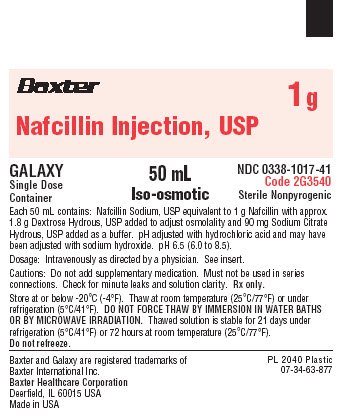
Nafcillin label

Nafcillin

Nafcillin Recall

Get an alert when a recall is issued.

Side Effects & Adverse Reactions

Do not use

if you have ever had an allergic reaction to this product or any of its ingredients or to an antihistamine containing hydroxyzine.

Ask a doctor before use if you have

liver or kidney disease.  Your doctor should determine if you need a different dose.

Ask a doctor or pharmacist before use if you are

taking tranquilizers or sedatives.

When using this product

  • drowsiness may occur
  • alcohol, sedatives, and tranquilizers may increase drowsiness
  • avoid alcoholic drinks
  • be careful when driving a motor vehicle or operating machinery

Stop use and ask a doctor if

an allergic reaction to this product occurs. Seek medical help right away.

If pregnant or breast-feeding:

  • if breast-feeding: not recommended
  • if pregnant: ask a health professional before use

Keep out of reach of children.

In case of overdose, get medical help or contact a Poison Control Center right away.

Do not use

if you have ever had an allergic reaction to this product or any of its ingredients or to an antihistamine containing hydroxyzine.

Ask a doctor before use if you have

liver or kidney disease.  Your doctor should determine if you need a different dose.

Ask a doctor or pharmacist before use if you are

taking tranquilizers or sedatives.

Stop use and ask a doctor if

an allergic reaction to this product occurs. Seek medical help right away.

FDA Safety Alerts

There are currently no FDA safety alerts available for this drug.

Manufacturer Warnings

There is currently no manufacturer warning information available for this drug.

FDA Labeling Changes

There are currently no FDA labeling changes available for this drug.

Uses

temporarily relieves these symptoms due to hay fever or other upper respiratory allergies:

  • runny nose 
  • sneezing
  • itchy, watery eyes
  • itching of the nose or throat

History

There is currently no drug history available for this drug.

Other Information

There are no additional details available for this product.

Nafcillin Manufacturers

  • Wg Critical Care, Llc
    Nafcillin | Walgreens
    No Recall

    Nafcillin | Walgreens

    Nafcillin | Walgreens
    adults and children 6 years and over one 10 mg capsule once daily; do not take more than one 10 mg capsule in 24 hours. A 5 mg product may be appropriate for less severe symptoms.  adults 65 years and over   ask a doctor  children under 6 years of age   ask a doctor  consumers with liver or kidney disease   ask a doctor
  • Auromedics Pharma Llc
    Nafcillin | Auromedics Pharma Llc
    No Recall

    Nafcillin | Auromedics Pharma Llc

    Nafcillin | Auromedics Pharma Llc

    Nafcillin for injection is available for intramuscular and intravenous use. The penicillinase-resistant penicillins are available for oral administration and for intramuscular and intravenous injection. The sodium salts of methicillin, oxacillin, and nafcillin may be administered parenterally and the sodium salts of cloxacillin, dicloxacillin, oxacillin, and nafcillin are available for oral use. The usual I.V. dosage for adults is 500 mg every 4 hours. For severe infections, 1 gram every 4 hours is recommended. Administer slowly over at least 30 to 60 minutes to minimize the risk of vein irritation and extravasation.


    RECOMMENDED DOSAGE FOR NAFCILLIN FOR INJECTION, USP Drug Adults Infants and
    Children <40 kg
    (88 lbs) Other
    Recommendations  Nafcillin
     500 mg IM every
     4 to 6 hours.
     IV every 4 hours
     25 mg/kg IM twice daily
     Neonates 10 mg/kg IM twice daily
     Nafcillin
     1 gram IM or IV every
     4 hours (severe infections)


    Bacteriologic studies to determine the causative organisms and their susceptibility to nafcillin should always be performed. Duration of therapy varies with the type and severity of infection as well as the overall condition of the patient; therefore, it should be determined by the clinical and bacteriological response of the patient. In severe staphylococcal infections, therapy with nafcillin should be continued for at least 14 days. Therapy should be continued for at least 48 hours after the patient has become afebrile, asymptomatic, and cultures are negative. The treatment of endocarditis and osteomyelitis may require a longer duration of therapy.

    Concurrent administration of the penicillinase-resistant penicillins and probenecid increases and prolongs serum penicillin levels. Probenecid decreases the apparent volume of distribution and slows the rate of excretion by competitively inhibiting renal tubular secretion of penicillin. Nafcillin-probenecid therapy is generally limited to those infections where very high serum levels of nafcillin are necessary.

    No dosage alterations are necessary for patients with renal dysfunction, including those on hemodialysis. Hemodialysis does not accelerate nafcillin clearance from the blood.

    For patients with hepatic insufficiency and renal failure, measurement of nafcillin serum levels should be performed and dosage adjusted accordingly.

    With intravenous administration, particularly in elderly patients, care should be taken because of the possibility of thrombophlebitis.

    Parenteral drug products should be inspected visually for particulate matter and discoloration prior to administration whenever solution and container permit.

    Do not add supplementary medication to nafcillin.

    Oral preparations of the penicillinase-resistant penicillins should not be used as initial therapy in serious life-threatening infections (see PRECAUTIONS, General). Oral therapy with the penicillinase-resistant penicillins may be used to follow-up the previous use of a parenteral agent as soon as the clinical condition warrants. For intramuscular gluteal injections, care should be taken to avoid sciatic nerve injury. With intravenous administration, particularly in elderly patients, care should be taken because of the possibility of thrombophlebitis.

    Directions for Use

    For Intramuscular Use

    Reconstitute with Sterile Water for Injection, USP, 0.9% Sodium Chloride Injection, USP or Bacteriostatic Water for Injection, USP (with benzyl alcohol or parabens); add 6.6 mL to the 2 g vial for 8 mL resulting solution. All reconstituted vials have a concentration of 250 mg per mL.

    The clear solution should be administered by deep intragluteal injection immediately after reconstitution.

    Reconstituted Stability

    Reconstitute with the required amount of Sterile Water for Injection, USP, 0.9% Sodium Chloride Injection, USP or Bacteriostatic Water for Injection, USP (with benzyl alcohol or parabens). The resulting solutions are stable for 3 days at room temperature or 7 days under refrigeration and 90 days frozen.

    For Direct Intravenous Use

    The required amount of drug should be diluted in 15 to 30 mL of Sterile Water for Injection, USP or Sodium Chloride Injection, USP and injected over a 5- to 10-minute period. This may be accomplished through the tubing of an intravenous infusion if desirable.

    For Administration by Intravenous Drip

    Reconstitute as directed above (For Intravenous Use) prior to diluting with Intravenous Solution.


    STABILITY PERIODS FOR NAFCILLIN FOR INJECTION, USP* Concentration
    mg/mL Sterile Water for
    Injection USP Sodium Chloride
    Injection USP (0.9%) Sodium Lactate
    Solution USP (M/6 Molar) Dextrose Injection
    USP (5%) Dextrose and Sodium
    Chloride Injection USP
    (5% Dextrose and
    0.45% Sodium Chloride) Invert Sugar
    Injection USP
    (10%) Lactated Ringer’s
    Injection USP * IMPORTANT: This chemical stability information in no way indicates that it would be acceptable practice to use this product well after the preparation time. Good professional practice suggests that a product should be used as soon after preparation as feasible.
    ROOM TEMPERATURE (25ºC)
     10-200
     24 Hrs
     24 Hrs


     30
     
     
     24 Hrs


     2-30


     24 Hrs
     24 Hrs
     
     
     10-30


     24 Hrs
     24 Hrs
    REFRIGERATION (4ºC)
     10-200
     7 Days
     7 Days


     10-30
     
     
     7 Days
     7 Days
     7 Days
     7 Days
     7 Days
    FROZEN (-15ºC)
     250
     90 Days
     90 Days


     10-250
     
     
     90 Days
     90 Days
     90 Days
     90 Days
     90 Days

    Only those solutions listed above should be used for the intravenous infusion of nafcillin sodium. The concentration of the antibiotic should fall within the range specified. The drug concentration and the rate and volume of the infusion should be adjusted so that the total dose of nafcillin is administered before the drug loses its stability in the solution in use.

    There is no clinical experience available on the use of this agent in neonates or infants for this route of administration.

    This route of administration should be used for relatively short-term therapy (24 to 48 hours) because of the occasional occurrence of thrombophlebitis particularly in elderly patients.

    If another agent is used in conjunction with nafcillin therapy, it should not be physically mixed with nafcillin but should be administered separately.

  • Auromedics Pharma Llc
    Nafcillin | Auromedics Pharma Llc
    No Recall

    Nafcillin | Auromedics Pharma Llc

    Nafcillin | Auromedics Pharma Llc

    Nafcillin for injection Pharmacy Bulk Package is available for intravenous use only. The usual I.V. dosage for adults is 500 mg every 4 hours. For severe infections, 1 gram every 4 hours is recommended. Administer slowly over at least 30 to 60 minutes to minimize the risk of vein irritation and extravasation.

    Bacteriologic studies to determine the causative organisms and their susceptibility to nafcillin should always be performed. Duration of therapy varies with the type and severity of infection as well as the overall condition of the patient; therefore, it should be determined by the clinical and bacteriological response of the patient. In severe staphylococcal infections, therapy with nafcillin should be continued for at least 14 days. Therapy should be continued for at least 48 hours after the patient has become afebrile, asymptomatic, and cultures are negative. The treatment of endocarditis and osteomyelitis may require a longer duration of therapy.

    Concurrent administration of the penicillinase-resistant penicillins and probenecid increases and prolongs serum penicillin levels. Probenecid decreases the apparent volume of distribution and slows the rate of excretion by competitively inhibiting renal tubular secretion of penicillin. Nafcillin-probenecid therapy is generally limited to those infections where very high serum levels of nafcillin are necessary.

    No dosage alterations are necessary of patients with renal dysfunction, including those on hemodialysis. Hemodialysis does not accelerate nafcillin clearance from the blood.

    For patients with hepatic insufficiency and renal failure, measurement of nafcillin serum levels should be performed and dosage adjusted accordingly.

    With intravenous administration, particularly in elderly patients, care should be taken because of the possibility of thrombophlebitis.

    Parenteral drug products should be inspected visually for particulate matter and discoloration prior to administration whenever solution and container permit.

    Do not add supplementary medication to nafcillin.

    Oral preparation of the penicillinase-resistant penicillins should not be used as initial therapy in serious life-threatening infections (see PRECAUTIONS, General). Oral therapy with the penicillinase-resistant penicillins may be used to follow-up the previous use of a parenteral agent as soon as the clinical condition warrants. With intravenous administration, particularly in elderly patients, care should be taken because of the possibility of thrombophlebitis.

    DIRECTIONS FOR PROPER USE OF A PHARMACY BULK PACKAGE

    The container closure may be penetrated only one time after reconstitution using a suitable sterile transfer device or dispensing set which allows measured dispensing of the contents. Use of a syringe and needle is not recommended as it may cause leakage. Use of this product is restricted to a suitable work area, such as a laminar flow hood. The withdrawal of container contents should be accomplished without delay. However, should this not be possible, a maximum of 4 HOURS from initial closure entry is permitted to complete fluid transfer operations. This time limit should begin with the introduction of solvent or diluent into the Pharmacy Bulk Package bottle.

    Pharmacy Bulk Package

    Each nafcillin for injection, USP Pharmacy Bulk Package bottle contains nafcillin sodium as the monohydrate equivalent to 10 g nafcillin. The Pharmacy Bulk Package bottle is intended for use in a pharmacy admixture program and is restricted to the preparation of admixtures for intravenous infusion. Add 93 mL Sterile Water for Injection, USP or 0.9% Sodium Chloride Injection, USP. The resulting solution will contain 100 mg nafcillin activity per mL and will require further dilution.

    CAUTION: NOT TO BE DISPENSED AS A UNIT.

    Do not add supplementary medication to nafcillin.

    DIRECTIONS FOR USE

    For Administration by Intravenous Drip: Reconstitute as directed above (For Intravenous Use) prior to diluting with intravenous solution.

    STABILITY PERIODS FOR NAFCILLIN FOR INJECTION, USP* Concentration
    mg/mL Sterile
    Water for
    Injection USP Sodium
    Chloride Injection USP (0.9%) Sodium
    Lactate Solution USP (M/6 Molar) Dextrose
    Injection USP (5%) Dextrose
    and Sodium Chloride Injection USP
    (5% Dextrose and
    0.45% Sodium Chloride) Invert
    Sugar Injection USP (10%) Lactated
    Ringer’s
    Injection USP * IMPORTANT: This chemical stability information in no way indicates that it would be acceptable practice to use this product well after the preparation time. Good professional practice suggests that a product should be used as soon after preparation as feasible.
    ROOM TEMPERATURE (25ºC)
       10-200
    24 Hrs
    24 Hrs


       30
     
     
    24 Hrs


       2-30


    24 Hrs
    24 Hrs
     
     
       10-30


    24 Hrs
    24 Hrs
    REFRIGERATION (4ºC)
       10-200
    7 Days
    7 Days


       10-30
     
     
    7 Days
    7 Days
    7 Days
    7 Days
    7 Days
    FROZEN (-15ºC)
       250
    90 Days
    90 Days


       10-250
     
     
    90 Days
    90 Days
    90 Days
    90 Days
    90 Days

    Only those solutions listed above should be used for the intravenous infusion of nafcillin sodium. The concentration of the antibiotic should fall within the range specified. The drug concentration and the rate and volume of the infusion should be adjusted so that the total dose of nafcillin is administered before the drug loses its stability in the solution in use.

    There is no clinical experience available on the use of this agent in neonates or infants for this route of administration.

    This route of administration should be used for relatively short-term therapy (24 to 48 hours) because of the occasional occurrence of thrombophlebitis particularly in elderly patients.

    If another agent is used in conjunction with nafcillin therapy, it should not be physically mixed with nafcillin but should be administered separately.
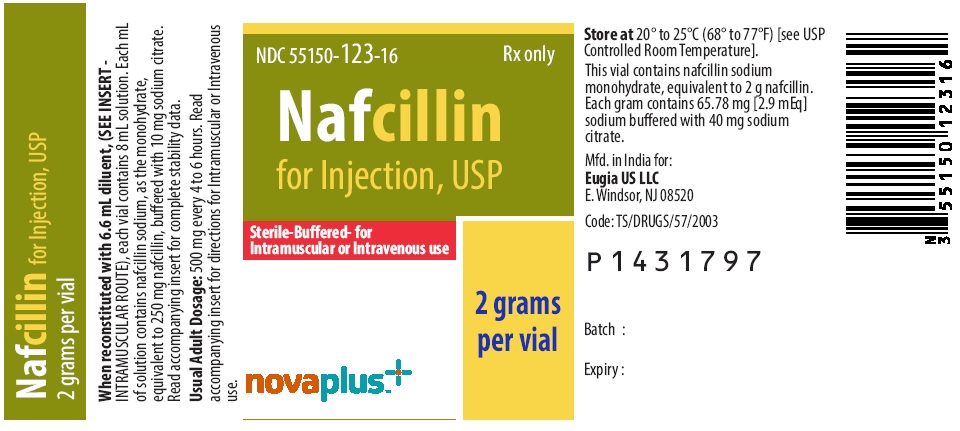
    Parenteral drug products should be inspected visually for particulate matter and discoloration prior to administration whenever solution and container permit.

  • App Pharmaceuticals, Llc
    Nafcillin | App Pharmaceuticals, Llc
    No Recall

    Nafcillin | App Pharmaceuticals, Llc

    Nafcillin | App Pharmaceuticals, Llc

    Nafcillin for Injection is available for intramuscular and intravenous use.  The penicillinase-resistant penicillins are available for oral administration and for intramuscular and intravenous injection.  The sodium salts of methicillin, oxacillin, and nafcillin may be administered parenterally and the sodium salts of cloxacillin, dicloxacillin, oxacillin, and nafcillin are available for oral use.  The usual IV dosage for adults is 500 mg every 4 hours.  For severe infections, 1 g every 4 hours is recommended.  Administer slowly over at least 30 to 60 minutes to minimize the risk of vein irritation and extravasation. 


    RECOMMENDED DOSAGE FOR NAFCILLIN FOR INJECTION, USP

    Drug

    Adults

    Infants and Children <40 kg

    (88 lbs)

    Other Recommendations

    Nafcillin

    500 mg IM

    every 4 to 6 hours

    IV every 4 hours

    25 mg/kg IM

    twice daily

    Neonates 10 mg/kg IM

    twice daily

    Nafcillin

    1 gram IM or IV

    every 4 hours.

    (severe infections)


    Bacteriologic studies to determine the causative organisms and their susceptibility to nafcillin should always be performed.  Duration of therapy varies with the type and severity of infection as well as the overall condition of the patient; therefore, it should be determined by the clinical and bacteriological response of the patient.  In severe staphylococcal infections, therapy with nafcillin should be continued for at least 14 days.  Therapy should be continued for at least 48 hours after the patient has become afebrile, asymptomatic, and cultures are negative.  The treatment of endocarditis and osteomyelitis may require a longer duration of therapy.

    Concurrent administration of the penicillinase-resistant penicillins and probenecid increases and prolongs serum penicillin levels.  Probenecid decreases the apparent volume of distribution and slows the rate of excretion by competitively inhibiting renal tubular secretion of penicillin.  Nafcillin-probenecid therapy is generally limited to those infections where very high serum levels of nafcillin are necessary. 

    Oral preparations of the penicillinase-resistant penicillins should not be used as initial therapy in serious life-threatening infections (see PRECAUTIONS, General).  Oral therapy with the penicillinase-resistant penicillins may be used to follow-up the previous use of a parenteral agent as soon as the clinical condition warrants.  For intramuscular gluteal injections, care should be taken to avoid sciatic nerve injury.  With intravenous administration, particularly in elderly patients, care should be taken because of the possibility of thrombophlebitis.

    No dosage alterations are necessary for patients with renal dysfunction, including those on hemodialysis. Hemodialysis does not accelerate nafcillin clearance from the blood.

    For patients with hepatic insufficiency and renal failure, measurement of nafcillin serum levels should be performed and dosage adjusted accordingly.

    Parenteral drug products should be inspected visually for particulate matter and discoloration prior to administration whenever solution and container permit.

    Do not add supplementary medication to Nafcillin.

  • Sandoz Inc
    Nafcillin | Sandoz Inc
    No Recall

    Nafcillin | Sandoz Inc

    Nafcillin | Sandoz Inc

    The penicillinase-resistant penicillins are available for oral administration and for intramuscular and intravenous injection. The sodium salts of methicillin, oxacillin and nafcillin may be administered parenterally and the sodium salts of cloxacillin, dicloxacillin, oxacillin and nafcillin are available for oral use.

    Nafcillin for Injection is available for intramuscular and intravenous injection. The usual I.V. dosage for adults is 500 mg every 4 hours. For severe infections, 1 g every 4 hours is recommended. Administer slowly over at least 30 to 60 minutes to minimize the risk of vein irritation and extravasation.

    RECOMMENDED DOSAGE FOR NAFCILLIN FOR INJECTION, USP

    Drug

    Adults

    Infants and Children

    <40 kg (88 lbs)

    Other Recommendations

    Nafcillin

    500 mg IM every 4 to 6 hours

    IV every 4 hours

    25 mg/kg IM twice daily

    Neonates 10 mg/kg IM twice daily

    Nafcillin

    1 gram IM or IV every 4 hours (severe infections)

    Bacteriologic studies to determine the causative organisms and their susceptibility to nafcillin should always be performed. Duration of therapy varies with the type and severity of infection as well as the overall condition of the patient; therefore, it should be determined by the clinical and bacteriological response of the patient. In severe staphylococcal infections, therapy with nafcillin should be continued for at least 14 days. Therapy should be continued for at least 48 hours after the patient has become afebrile, asymptomatic, and cultures are negative. The treatment of endocarditis and osteomyelitis may require a longer duration of therapy.

    Concurrent administration of the penicillinase-resistant penicillins and probenecid increases and prolongs serum penicillin levels. Probenecid decreases the apparent volume of distribution and slows the rate of excretion by competitively inhibiting renal tubular secretion of penicillin.

    Oral preparations of the penicillinase-resistant penicillins should not be used as initial therapy in serious, life-threatening infections (see PRECAUTIONS: General). Oral therapy with the penicillinase-resistant penicillins may be used to follow-up the previous use of a parenteral agent as soon as the clinical condition warrants.

    Nafcillin-probenecid therapy is generally limited to those infections where very high serum levels of nafcillin are necessary.

    No dosage alterations are necessary for patients with renal dysfunction, including those on hemodialysis. Hemodialysis does not accelerate nafcillin clearance from the blood.

    For patients with hepatic insufficiency and renal failure, measurement of nafcillin serum levels should be performed and dosage adjusted accordingly.

    For intramuscular gluteal injections, care should be taken to avoid sciatic nerve injury. With intravenous administration, particularly in elderly patients, care should be taken because of the possibility of thrombophlebitis.

    Do not add supplementary medication to Nafcillin for Injection, USP.

    Prior to administration parenteral drug products should be inspected visually for particulate matter and discoloration whenever solution and container permit.

  • Sandoz Inc
    Nafcillin | Sandoz Inc
    No Recall

    Nafcillin | Sandoz Inc

    Nafcillin | Sandoz Inc

    The intent of the pharmacy bulk package for this product is for preparation of solutions for IV infusion only.

    Nafcillin for Injection is available for intravenous use.

    The usual I.V. dosage for adults is 500 mg every 4 hours. For severe infections, 1 gram every 4 hours is recommended. Administer slowly over at least 30 to 60 minutes to minimize the risk of vein irritation and extravasation.

    Bacteriologic studies to determine the causative organisms and their susceptibility to nafcillin should always be performed. Duration of therapy varies with the type and severity of infection as well as the overall condition of the patient; therefore, it should be determined by the clinical and bacteriological response of the patient. In severe staphylococcal infections, therapy with nafcillin should be continued for at least 14 days. Therapy should be continued for at least 48 hours after the patient has become afebrile, asymptomatic, and cultures are negative. The treatment of endocarditis and osteomyelitis may require a longer duration of therapy.

    Nafcillin-probenecid therapy is generally limited to those infections where very high serum levels of nafcillin are necessary.

    No dosage alterations are necessary for patients with renal dysfunction, including those on hemodialysis. Hemodialysis does not accelerate nafcillin clearance from the blood.

    For patients with hepatic insufficiency and renal failure, measurement of nafcillin serum levels should be performed and dosage adjusted accordingly.

    With intravenous administration, particularly in elderly patients, care should be taken because of the possibility of thrombophlebitis.

    Parenteral drug products should be inspected visually for particulate matter and discoloration prior to administration whenever solution and container permit.

  • Sandoz Inc
    Nafcillin | Sandoz Inc
    No Recall

    Nafcillin | Sandoz Inc

    Nafcillin | Sandoz Inc

    The intent of the pharmacy bulk package for this product is for preparation of solutions for IV infusion only.

    Nafcillin for Injection is available for intravenous use.

    The usual I.V. dosage for adults is 500 mg every 4 hours. For severe infections, 1 gram every 4 hours is recommended. Administer slowly over at least 30 to 60 minutes to minimize the risk of vein irritation and extravasation.

    Bacteriologic studies to determine the causative organisms and their susceptibility to nafcillin should always be performed. Duration of therapy varies with the type and severity of infection as well as the overall condition of the patient; therefore, it should be determined by the clinical and bacteriological response of the patient. In severe staphylococcal infections, therapy with nafcillin should be continued for at least 14 days. Therapy should be continued for at least 48 hours after the patient has become afebrile, asymptomatic, and cultures are negative. The treatment of endocarditis and osteomyelitis may require a longer duration of therapy.

    Nafcillin-probenecid therapy is generally limited to those infections where very high serum levels of nafcillin are necessary.

    No dosage alterations are necessary for patients with renal dysfunction, including those on hemodialysis. Hemodialysis does not accelerate nafcillin clearance from the blood.

    For patients with hepatic insufficiency and renal failure, measurement of nafcillin serum levels should be performed and dosage adjusted accordingly.

    With intravenous administration, particularly in elderly patients, care should be taken because of the possibility of thrombophlebitis.

    Parenteral drug products should be inspected visually for particulate matter and discoloration prior to administration whenever solution and container permit.

  • Claris Lifesciences, Inc.
    Nafcillin | Claris Lifesciences, Inc.
    No Recall

    Nafcillin | Claris Lifesciences, Inc.

    Nafcillin | Claris Lifesciences, Inc.

    The penicillinase-resistant penicillins are available for oral administration and for intramuscular and intravenous injection. The sodium salts of methicillin, oxacillin and nafcillin may be administered parenterally and the sodium salts of cloxacillin, dicloxacillin, oxacillin and nafcillin are available for oral use.

    Nafcillin for Injection is available for intramuscular and intravenous injection. The usual I.V. dosage for adults is 500 mg every 4 hours. For severe infections, 1 g every 4 hours is recommended. Administer slowly over at least 30 to 60 minutes to minimize the risk of vein irritation and extravasation.

    RECOMMENDED DOSAGE FOR NAFCILLIN FOR INJECTION, USP Drug Adults

    Infants and Children

    <40 kg (88 lbs) Other Recommendations Nafcillin 500 mg IM every 4 to 6 hours
    IV every 4 hours 25 mg/kg IM twice daily Neonates 10 mg/kg IM twice daily 1 gram IM every 4 hours (severe infections)

    Bacteriologic studies to determine the causative organisms and their susceptibility to nafcillin should always be performed. Duration of therapy varies with the type and severity of infection as well as the overall condition of the patient, therefore it should be determined by the clinical and bacteriological response of the patient. In severe staphylococcal infections, therapy with nafcillin should be continued for at least 14 days. Therapy should be continued for at least 48 hours after the patient has become afebrile, asymptomatic, and cultures are negative. The treatment of endocarditis and osteomyelitis may require a longer duration of therapy.

    Concurrent administration of the penicillinase-resistant penicillins and probenecid increases and prolongs serum penicillin levels. Probenecid decreases the apparent volume of distribution and slows the rate of excretion by competitively inhibiting renal tubular secretion of penicillin. Nafcillin-probenecid therapy is generally limited to those infections where very high serum levels of nafcillin are necessary.

    No dosage alterations are necessary for patients with renal dysfunction, including those on hemodialysis. Hemodialysis does not accelerate nafcillin clearance from the blood.

    For patients with hepatic insufficiency and renal failure, measurement of nafcillin serum levels should be performed and dosage adjusted accordingly.

    For intramuscular gluteal injections, care should be taken to avoid sciatic nerve injury. With intravenous administration, particularly in elderly patients, care should be taken because of the possibility of thrombophlebitis.

    Parenteral drug products should be inspected visually for particulate matter and discoloration prior to administration whenever solution and container permit.

    Do not add supplementary medication to Nafcillin for Injection, USP.

    Oral preparations of the penicillinase-resistant penicillins should not be used as initial therapy in serious, life-threatening infections (see PRECAUTIONS - General). Oral therapy with the penicillinase-resistant penicillins may be used to follow-up the previous use of a parenteral agent as soon as the clinical condition warrants. For intramuscular gluteal injections, care should be taken to avoid sciatic nerve injury. With intravenous administration, particularly in elderly patients, care should be taken because of the possibility of thrombophlebitis.

  • Sagent Pharmaceuticals
    Nafcillin | Sagent Pharmaceuticals
    No Recall

    Nafcillin | Sagent Pharmaceuticals

    Nafcillin | Sagent Pharmaceuticals

    This insert is for a Pharmacy Bulk Package and is intended for preparing IV admixtures only.

    The usual IV dosage for adults is 500 mg every 4 hours. For severe infections, 1 g every 4 hours is recommended. Administer slowly over at least 30 to 60 minutes to minimize the risk of vein irritation and extravasation. Bacteriologic studies to determine the causative organisms and their susceptibility to nafcillin should always be performed. Duration of therapy varies with the type and severity of infection as well as the overall condition of the patient, therefore it should be determined by the clinical and bacteriological response of the patient. In severe staphylococcal infections, therapy with nafcillin should be continued for at least 14 days. Therapy should be continued for at least 48 hours after the patient has become afebrile, asymptomatic, and cultures are negative. The treatment of endocarditis and osteomyelitis may require a longer duration of therapy.

    Concurrent administration of the penicillinase-resistant penicillins and probenecid increases and prolongs serum penicillin levels. Probenecid decreased the apparent volume of distribution and slows the rate of excretion by competitively inhibiting renal tubular secretion of penicillin. Nafcillin-probenecid therapy is generally limited to those infections where very high serum levels of nafcillin are necessary.

    No dosage alterations are necessary for patients with renal dysfunction, including those on hemodialysis. Hemodialysis does not accelerate nafcillin clearance from the blood.

    For patients with hepatic insufficiency and renal failure, measurement of nafcillin serum levels should be performed and dosage adjusted accordingly.

    With intravenous administration, particularly in elderly patients, care should be taken because of the possibility of thrombophlebitis.

    Parenteral drug products should be inspected visually for particulate matter and discoloration prior to administration whenever solution and container permit.

    Do not add supplementary medication to Nafcillin.

    Oral preparations of the penicillinase-resistant penicillins should not be used as initial therapy in serious life-threatening infections (see PRECAUTIONS - General). Oral therapy with the penicillinase-resistant penicillins may be used to follow-up the previous use of a parenteral agent as soon as the clinical condition warrants.

  • Sagent Pharmaceuticals
    Nafcillin | Sagent Pharmaceuticals
    No Recall

    Nafcillin | Sagent Pharmaceuticals

    Nafcillin | Sagent Pharmaceuticals

    Nafcillin for injection is available for intramuscular and intravenous use.

    The penicillinase-resistant penicillins are available for oral administration and for intramuscular and intravenous injection. The sodium salts of methicillin, oxacillin, and nafcillin may be administered parenterally and the sodium salts of cloxacillin, dicloxacillin, oxacillin, and nafcillin are available for oral use. The usual IV dosage for adults is 500 mg every 4 hours. For severe infections, 1 g every 4 hours is recommended. Administer slowly over at least 30 to 60 minutes to minimize the risk of vein irritation and extravasation.

    RECOMMENDED DOSAGE FOR NAFCILLIN FOR INJECTION, USP Drug Adults Infants and Children
    <40 kg (88 lbs) Other
    Recommendations Nafcillin 500 mg IM every
    4 to 6 hours
    IV every 4 hours 25 mg/kg IM
    twice daily Neonates 10 mg/kg
    IM twice daily Nafcillin 1 gram IM or IV
    every 4 hours
    (severe infections)

    Bacteriologic studies to determine the causative organisms and their susceptibility to nafcillin should always be performed. Duration of therapy varies with the type and severity of infection as well as the overall condition of the patient, therefore it should be determined by the clinical and bacteriological response of the patient. In severe staphylococcal infections, therapy with nafcillin should be continued for at least 14 days. Therapy should be continued for at least 48 hours after the patient has become afebrile, asymptomatic, and cultures are negative. The treatment of endocarditis and osteomyelitis may require a longer duration of therapy.

    Concurrent administration of the penicillinase-resistant penicillins and probenecid increases and prolongs serum penicillin levels. Probenecid decreased the apparent volume of distribution and slows the rate of excretion by competitively inhibiting renal tubular secretion of penicillin. Nafcillin-probenecid therapy is generally limited to those infections where very high serum levels of nafcillin are necessary.

    No dosage alterations are necessary for patients with renal dysfunction, including those on hemodialysis. Hemodialysis does not accelerate nafcillin clearance from the blood.

    For patients with hepatic insufficiency and renal failure, measurement of nafcillin serum levels should be performed and dosage adjusted accordingly.

    With intravenous administration, particularly in elderly patients, care should be taken because of the possibility of thrombophlebitis.

    Parenteral drug products should be inspected visually for particulate matter and discoloration prior to administration whenever solution and container permit.

    Do not add supplementary medication to nafcillin.

    Oral preparations of the penicillinase-resistant penicillins should not be used as initial therapy in serious, life-threatening infections (see PRECAUTIONS-General). Oral therapy with the penicillinase-resistant penicillins may be used to follow-up the previous use of a parenteral agent as soon as the clinical condition warrants. For intramuscular gluteal injections, care should be taken to avoid sciatic nerve injury. With intravenous administration, particularly in elderly patients, care should be taken because of the possibility of thrombophlebitis.

  • Wg Critical Care, Llc
    Nafcillin | Wg Critical Care, Llc
    No Recall

    Nafcillin | Wg Critical Care, Llc

    Nafcillin | Wg Critical Care, Llc

    Nafcillin for Injection is available for intramuscular and intravenous injection. The usual I.V. dosage for adults is 500 mg every 4 hours. For severe infections, 1 g every 4 hours is recommended. Administer slowly over at least 30 to 60 minutes to minimize the risk of vein irritation and extravasation.

    RECOMMENDED DOSAGE FOR NAFCILLIN FOR INJECTION, USP

    Drug

    Adults

    Infants and Children < 40 kg (88 lbs)

    Other Recommendations

    Nafcillin

    500 mg IM every 4 to 6 hours. IV every 4 hours

    25 mg/kg IM twice daily

    Neonates 10 mg/kg IM twice daily

    1 gram IM or IV every 4 hours (severe infections)

    Bacteriologic studies to determine the causative organisms and their susceptibility to nafcillin should always be performed. Duration of therapy varies with the type and severity of infection as well as the overall condition of the patient, therefore it should be determined by the clinical and bacteriological response of the patient. In severe staphylococcal infections, therapy with nafcillin should be continued for at least 14 days. Therapy should be continued for at least 48 hours after the patient has become afebrile, asymptomatic, and cultures are negative. The treatment of endocarditis and osteomyelitis may require a longer duration of therapy.

    Nafcillin-probenecid therapy is generally limited to those infections where very high serum levels of nafcillin are necessary.

    No dosage alterations are necessary for patients with renal dysfunction, including those on hemodialysis. Hemodialysis does not accelerate nafcillin clearance from the blood.

    For patients with hepatic insufficiency and renal failure, measurement of nafcillin serum levels should be performed and dosage adjusted accordingly.

    With intravenous administration, particularly in elderly patients, care should be taken because of the possibility of thrombophlebitis.

    Parenteral drug products should be inspected visually for particulate matter and discoloration prior to administration whenever solution and container permit.

    DIRECTIONS FOR USE

    For Intramuscular Use

    Reconstitute with Sterile Water for Injection, USP, 0.9% Sodium Chloride Injection, USP or Bacteriostatic Water for Injection, USP (with benzyl alcohol or parabens); add 3.4 mL to the 1 g vial for 4 mL resulting solution; 6.6 mL to the 2 g vial for 8 mL resulting solution. All reconstituted vials have a concentration of 250 mg per mL.

    The clear solution should be administered by deep intragluteal injection immediately after reconstitution.

    Reconstituted Stability

    Reconstitute with the required amount of Sterile Water for Injection, USP, 0.9% Sodium Chloride Injection, USP or Bacteriostatic Water for Injection, USP (with benzyl alcohol or parabens). The resulting solutions are stable for 3 days at room temperature or 7 days under refrigeration and 90 days frozen.

    For Direct Intravenous Use

    The required amount of drug should be diluted in 15 to 30 mL of Sterile Water for Injection, USP or Sodium Chloride Injection, USP and injected over a 5- to 10- minute period. This may be accomplished through the tubing of an intravenous infusion if desirable.

    For Administration by Intravenous Drip

    Reconstitute as directed above (for intravenous use) prior to diluting with intravenous Solution.

    STABILITY PERIODS FOR NAFCILLIN FOR INJECTION, USP*

    Concentration mg/mL

    Sterile Water for Injection, USP

    Sodium Chloride Injection, USP (0.9%)

    Sodium Lactate Solution, USP (M/6 Molar)

    Dextrose Injection, USP (5%)

    Dextrose and Sodium Chloride Injection USP (5% Dextrose and 0.45% Sodium Chloride)

    Invert Sugar Injection USP (10%)

    Lactated Ringer’s Injection, USP

    ROOM TEMPERATURE (25° C)

    10-200

    24 Hrs

    24 Hrs

    30

    24 Hrs

    2-30

    24 Hrs

    24 Hrs

    10-30

    24 Hrs

    24 Hrs

    REFRIGERATION (4° C)

    10-200

    7 Days

    7 Days

    10-30

    7 Days

    7 Days

    7 Days

    7 Days

    7 Days

    FROZEN (-15° C)

    250

    90 Days

    90 Days

    10-250

    90 Days

    90 Days

    90 Days

    90 Days

    90 Days

    *IMPORTANT: This chemical stability information in no way indicates that it would be acceptable practice to use this product well after the preparation time. Good professional practices suggest that a product should be used as soon after preparation as feasible.

    Only those solutions listed above should be used for the intravenous infusion of Nafcillin for Injection, USP. The concentration of the antibiotic should fall within the range specified. The drug concentration and the rate and volume of the infusion should be adjusted so that the total dose of nafcillin is administered before the drug loses its stability in the solution in use.

    There is no clinical experience available on the use of this agent in neonates or infants for this route of administration.


    This route of administration should be used for relatively short-term therapy (24 to 48 hours) because of the occasional occurrence of thrombophlebitis particularly in elderly patients.

    If another agent is used in conjunction with nafcillin therapy, it should not be physically mixed with nafcillin but should be administered separately.

  • App Pharmaceuticals, Llc
    Nafcillin | App Pharmaceuticals, Llc
    No Recall

    Nafcillin | App Pharmaceuticals, Llc

    Nafcillin | App Pharmaceuticals, Llc

    Nafcillin for Injection, in the Pharmacy Bulk Package Bottle is for intravenous injection only.

    The usual IV dosage for adults is 500 mg every 4 hours.  For severe infections, 1 g every 4 hours is recommended.  Administer slowly over at least 30 to 60 minutes to minimize the risk of vein irritation and extravasation.  Bacteriologic studies to determine the causative organisms and their susceptibility to nafcillin should always be performed.  Duration of therapy varies with the type and severity of infection as well as the overall condition of the patient; therefore, it should be determined by the clinical and bacteriological response of the patient.  In severe staphylococcal infections, therapy with nafcillin should be continued for at least 14 days.  Therapy should be continued for at least 48 hours after the patient has become afebrile, asymptomatic, and cultures are negative.  The treatment of endocarditis and osteomyelitis may require a longer duration of therapy.

    Nafcillin-probenecid therapy is generally limited to those infections where very high serum levels of nafcillin are necessary.

    No dosage alterations are necessary for patients with renal dysfunction, including those on hemodialysis.  Hemodialysis does not accelerate nafcillin clearance from the blood.

    For patients with hepatic insufficiency and renal failure, measurement of nafcillin serum levels should be performed and dosage adjusted accordingly.

    With intravenous administration, particularly in elderly patients, care should be taken because of the possibility of thrombophlebitis.

    Parenteral drug products should be inspected visually for particulate matter and discoloration prior to administration whenever solution and container permit.

    Do not add supplementary medication to Nafcillin for Injection, USP.

  • Auromedics Pharma Llc
    Nafcillin | Auromedics Pharma Llc
    No Recall

    Nafcillin | Auromedics Pharma Llc

    Nafcillin | Auromedics Pharma Llc

    Nafcillin for injection is available for intramuscular and intravenous use. The penicillinase-resistant penicillins are available for oral administration and for intramuscular and intravenous injection. The sodium salts of methicillin, oxacillin, and nafcillin may be administered parenterally and the sodium salts of cloxacillin, dicloxacillin, oxacillin, and nafcillin are available for oral use. The usual I.V. dosage for adults is 500 mg every 4 hours. For severe infections, 1 gram every 4 hours is recommended. Administer slowly over at least 30 to 60 minutes to minimize the risk of vein irritation and extravasation.


    RECOMMENDED DOSAGE FOR NAFCILLIN FOR INJECTION, USP Drug Adults Infants and
    Children <40 kg
    (88 lbs) Other
    Recommendations  Nafcillin
     500 mg IM every
     4 to 6 hours.
     IV every 4 hours
     25 mg/kg IM twice daily
     Neonates 10 mg/kg IM twice daily
     Nafcillin
     1 gram IM or IV every
     4 hours (severe infections)


    Bacteriologic studies to determine the causative organisms and their susceptibility to nafcillin should always be performed. Duration of therapy varies with the type and severity of infection as well as the overall condition of the patient; therefore, it should be determined by the clinical and bacteriological response of the patient. In severe staphylococcal infections, therapy with nafcillin should be continued for at least 14 days. Therapy should be continued for at least 48 hours after the patient has become afebrile, asymptomatic, and cultures are negative. The treatment of endocarditis and osteomyelitis may require a longer duration of therapy.

    Concurrent administration of the penicillinase-resistant penicillins and probenecid increases and prolongs serum penicillin levels. Probenecid decreases the apparent volume of distribution and slows the rate of excretion by competitively inhibiting renal tubular secretion of penicillin. Nafcillin-probenecid therapy is generally limited to those infections where very high serum levels of nafcillin are necessary.

    No dosage alterations are necessary for patients with renal dysfunction, including those on hemodialysis. Hemodialysis does not accelerate nafcillin clearance from the blood.

    For patients with hepatic insufficiency and renal failure, measurement of nafcillin serum levels should be performed and dosage adjusted accordingly.

    With intravenous administration, particularly in elderly patients, care should be taken because of the possibility of thrombophlebitis.

    Parenteral drug products should be inspected visually for particulate matter and discoloration prior to administration whenever solution and container permit.

    Do not add supplementary medication to nafcillin.

    Oral preparations of the penicillinase-resistant penicillins should not be used as initial therapy in serious life-threatening infections (see PRECAUTIONS, General). Oral therapy with the penicillinase-resistant penicillins may be used to follow-up the previous use of a parenteral agent as soon as the clinical condition warrants. For intramuscular gluteal injections, care should be taken to avoid sciatic nerve injury. With intravenous administration, particularly in elderly patients, care should be taken because of the possibility of thrombophlebitis.

    Directions for Use

    For Intramuscular Use

    Reconstitute with Sterile Water for Injection, USP, 0.9% Sodium Chloride Injection, USP or Bacteriostatic Water for Injection, USP (with benzyl alcohol or parabens); add 3.4 mL to the 1 g vial for 4 mL resulting solution; 6.6 mL to the 2 g vial for 8 mL resulting solution. All reconstituted vials have a concentration of 250 mg per mL.

    The clear solution should be administered by deep intragluteal injection immediately after reconstitution.

    Reconstituted Stability

    Reconstitute with the required amount of Sterile Water for Injection, USP, 0.9% Sodium Chloride Injection, USP or Bacteriostatic Water for Injection, USP (with benzyl alcohol or parabens). The resulting solutions are stable for 3 days at room temperature or 7 days under refrigeration and 90 days frozen.

    For Direct Intravenous Use

    The required amount of drug should be diluted in 15 to 30 mL of Sterile Water for Injection, USP or Sodium Chloride Injection, USP and injected over a 5- to 10-minute period. This may be accomplished through the tubing of an intravenous infusion if desirable.

    For Administration by Intravenous Drip

    Reconstitute as directed above (For Intravenous Use) prior to diluting with Intravenous Solution.


    STABILITY PERIODS FOR NAFCILLIN FOR INJECTION, USP* Concentration
    mg/mL Sterile Water for
    Injection USP Sodium Chloride
    Injection USP (0.9%) Sodium Lactate
    Solution USP (M/6 Molar) Dextrose Injection
    USP (5%) Dextrose and Sodium
    Chloride Injection USP
    (5% Dextrose and
    0.45% Sodium Chloride) Invert Sugar
    Injection USP
    (10%) Lactated Ringer’s
    Injection USP * IMPORTANT: This chemical stability information in no way indicates that it would be acceptable practice to use this product well after the preparation time. Good professional practice suggests that a product should be used as soon after preparation as feasible.
    ROOM TEMPERATURE (25ºC)
     10-200
     24 Hrs
     24 Hrs


     30
     
     
     24 Hrs


     2-30


     24 Hrs
     24 Hrs
     
     
     10-30


     24 Hrs
     24 Hrs
    REFRIGERATION (4ºC)
     10-200
     7 Days
     7 Days


     10-30
     
     
     7 Days
     7 Days
     7 Days
     7 Days
     7 Days
    FROZEN (-15ºC)
     250
     90 Days
     90 Days


     10-250
     
     
     90 Days
     90 Days
     90 Days
     90 Days
     90 Days

    Only those solutions listed above should be used for the intravenous infusion of nafcillin sodium. The concentration of the antibiotic should fall within the range specified. The drug concentration and the rate and volume of the infusion should be adjusted so that the total dose of nafcillin is administered before the drug loses its stability in the solution in use.

    There is no clinical experience available on the use of this agent in neonates or infants for this route of administration.

    This route of administration should be used for relatively short-term therapy (24 to 48 hours) because of the occasional occurrence of thrombophlebitis particularly in elderly patients.

    If another agent is used in conjunction with nafcillin therapy, it should not be physically mixed with nafcillin but should be administered separately.

  • Auromedics Pharma Llc
    Nafcillin | Auromedics Pharma Llc
    No Recall

    Nafcillin | Auromedics Pharma Llc

    Nafcillin | Auromedics Pharma Llc

    Nafcillin for injection Pharmacy Bulk Package is available for intravenous use only. The usual I.V. dosage for adults is 500 mg every 4 hours. For severe infections, 1 gram every 4 hours is recommended. Administer slowly over at least 30 to 60 minutes to minimize the risk of vein irritation and extravasation.

    Bacteriologic studies to determine the causative organisms and their susceptibility to nafcillin should always be performed. Duration of therapy varies with the type and severity of infection as well as the overall condition of the patient; therefore, it should be determined by the clinical and bacteriological response of the patient. In severe staphylococcal infections, therapy with nafcillin should be continued for at least 14 days. Therapy should be continued for at least 48 hours after the patient has become afebrile, asymptomatic, and cultures are negative. The treatment of endocarditis and osteomyelitis may require a longer duration of therapy.

    Concurrent administration of the penicillinase-resistant penicillins and probenecid increases and prolongs serum penicillin levels. Probenecid decreases the apparent volume of distribution and slows the rate of excretion by competitively inhibiting renal tubular secretion of penicillin. Nafcillin-probenecid therapy is generally limited to those infections where very high serum levels of nafcillin are necessary.

    No dosage alterations are necessary of patients with renal dysfunction, including those on hemodialysis. Hemodialysis does not accelerate nafcillin clearance from the blood.

    For patients with hepatic insufficiency and renal failure, measurement of nafcillin serum levels should be performed and dosage adjusted accordingly.

    With intravenous administration, particularly in elderly patients, care should be taken because of the possibility of thrombophlebitis.

    Parenteral drug products should be inspected visually for particulate matter and discoloration prior to administration whenever solution and container permit.

    Do not add supplementary medication to nafcillin.

    Oral preparation of the penicillinase-resistant penicillins should not be used as initial therapy in serious life-threatening infections (see PRECAUTIONS, General). Oral therapy with the penicillinase-resistant penicillins may be used to follow-up the previous use of a parenteral agent as soon as the clinical condition warrants. With intravenous administration, particularly in elderly patients, care should be taken because of the possibility of thrombophlebitis.

    DIRECTIONS FOR PROPER USE OF A PHARMACY BULK PACKAGE

    The container closure may be penetrated only one time after reconstitution using a suitable sterile transfer device or dispensing set which allows measured dispensing of the contents. Use of a syringe and needle is not recommended as it may cause leakage. Use of this product is restricted to a suitable work area, such as a laminar flow hood. The withdrawal of container contents should be accomplished without delay. However, should this not be possible, a maximum of 4 HOURS from initial closure entry is permitted to complete fluid transfer operations. This time limit should begin with the introduction of solvent or diluent into the Pharmacy Bulk Package bottle.

    Pharmacy Bulk Package

    Each nafcillin for injection, USP Pharmacy Bulk Package bottle contains nafcillin sodium as the monohydrate equivalent to 10 g nafcillin. The Pharmacy Bulk Package bottle is intended for use in a pharmacy admixture program and is restricted to the preparation of admixtures for intravenous infusion. Add 93 mL Sterile Water for Injection, USP or 0.9% Sodium Chloride Injection, USP. The resulting solution will contain 100 mg nafcillin activity per mL and will require further dilution.

    CAUTION: NOT TO BE DISPENSED AS A UNIT.

    Do not add supplementary medication to nafcillin.

    DIRECTIONS FOR USE

    For Administration by Intravenous Drip: Reconstitute as directed above (For Intravenous Use) prior to diluting with intravenous solution.

    STABILITY PERIODS FOR NAFCILLIN FOR INJECTION, USP* Concentration
    mg/mL Sterile
    Water for
    Injection USP Sodium
    Chloride Injection USP (0.9%) Sodium
    Lactate Solution USP (M/6 Molar) Dextrose
    Injection USP (5%) Dextrose
    and Sodium Chloride Injection USP
    (5% Dextrose and
    0.45% Sodium Chloride) Invert
    Sugar Injection USP (10%) Lactated
    Ringer’s
    Injection USP * IMPORTANT: This chemical stability information in no way indicates that it would be acceptable practice to use this product well after the preparation time. Good professional practice suggests that a product should be used as soon after preparation as feasible.
    ROOM TEMPERATURE (25ºC)
       10-200
    24 Hrs
    24 Hrs


       30
     
     
    24 Hrs


       2-30


    24 Hrs
    24 Hrs
     
     
       10-30


    24 Hrs
    24 Hrs
    REFRIGERATION (4ºC)
       10-200
    7 Days
    7 Days


       10-30
     
     
    7 Days
    7 Days
    7 Days
    7 Days
    7 Days
    FROZEN (-15ºC)
       250
    90 Days
    90 Days


       10-250
     
     
    90 Days
    90 Days
    90 Days
    90 Days
    90 Days

    Only those solutions listed above should be used for the intravenous infusion of nafcillin sodium. The concentration of the antibiotic should fall within the range specified. The drug concentration and the rate and volume of the infusion should be adjusted so that the total dose of nafcillin is administered before the drug loses its stability in the solution in use.

    There is no clinical experience available on the use of this agent in neonates or infants for this route of administration.

    This route of administration should be used for relatively short-term therapy (24 to 48 hours) because of the occasional occurrence of thrombophlebitis particularly in elderly patients.

    If another agent is used in conjunction with nafcillin therapy, it should not be physically mixed with nafcillin but should be administered separately.

    Parenteral drug products should be inspected visually for particulate matter and discoloration prior to administration whenever solution and container permit.

  • Sandoz Inc
    Nafcillin | Sandoz Inc
    No Recall

    Nafcillin | Sandoz Inc

    Nafcillin | Sandoz Inc

    The penicillinase-resistant penicillins are available for oral administration and for intramuscular and intravenous injection. The sodium salts of methicillin, oxacillin and nafcillin may be administered parenterally and the sodium salts of cloxacillin, dicloxacillin, oxacillin and nafcillin are available for oral use.

    Nafcillin for Injection is available for intramuscular and intravenous injection. The usual I.V. dosage for adults is 500 mg every 4 hours. For severe infections, 1 g every 4 hours is recommended. Administer slowly over at least 30 to 60 minutes to minimize the risk of vein irritation and extravasation.

    RECOMMENDED DOSAGE FOR NAFCILLIN FOR INJECTION, USP

    Drug

    Adults

    Infants and Children

    <40 kg (88 lbs)

    Other Recommendations

    Nafcillin

    500 mg IM every 4 to 6 hours

    IV every 4 hours

    25 mg/kg IM twice daily

    Neonates 10 mg/kg IM twice daily

    Nafcillin

    1 gram IM or IV every 4 hours (severe infections)

    Bacteriologic studies to determine the causative organisms and their susceptibility to nafcillin should always be performed. Duration of therapy varies with the type and severity of infection as well as the overall condition of the patient; therefore, it should be determined by the clinical and bacteriological response of the patient. In severe staphylococcal infections, therapy with nafcillin should be continued for at least 14 days. Therapy should be continued for at least 48 hours after the patient has become afebrile, asymptomatic, and cultures are negative. The treatment of endocarditis and osteomyelitis may require a longer duration of therapy.

    Concurrent administration of the penicillinase-resistant penicillins and probenecid increases and prolongs serum penicillin levels. Probenecid decreases the apparent volume of distribution and slows the rate of excretion by competitively inhibiting renal tubular secretion of penicillin.

    Oral preparations of the penicillinase-resistant penicillins should not be used as initial therapy in serious, life-threatening infections (see PRECAUTIONS: General). Oral therapy with the penicillinase-resistant penicillins may be used to follow-up the previous use of a parenteral agent as soon as the clinical condition warrants.

    Nafcillin-probenecid therapy is generally limited to those infections where very high serum levels of nafcillin are necessary.

    No dosage alterations are necessary for patients with renal dysfunction, including those on hemodialysis. Hemodialysis does not accelerate nafcillin clearance from the blood.

    For patients with hepatic insufficiency and renal failure, measurement of nafcillin serum levels should be performed and dosage adjusted accordingly.

    For intramuscular gluteal injections, care should be taken to avoid sciatic nerve injury. With intravenous administration, particularly in elderly patients, care should be taken because of the possibility of thrombophlebitis.

    Do not add supplementary medication to Nafcillin for Injection, USP.

    Prior to administration parenteral drug products should be inspected visually for particulate matter and discoloration whenever solution and container permit.

  • Baxter Healthcare Corporation
    Nafcillin | Baxter Healthcare Corporation
    No Recall

    Nafcillin | Baxter Healthcare Corporation

    Nafcillin | Baxter Healthcare Corporation

    Nafcillin Injection, USP supplied as a premixed frozen solution is to be administered as an intravenous infusion. The usual I.V. dosage for adults is 500 mg every 4 hours. For severe infections, 1 g every 4 hours is recommended. Administer slowly over at least 30 to 60 minutes to minimize the risk of vein irritation and extravasation. Bacteriologic studies to determine the causative organisms and their susceptibility to nafcillin should always be performed. Duration of therapy varies with the type and severity of infection as well as the overall condition of the patient; therefore, it should be determined by the clinical and bacteriological response of the patient. In severe staphylococcal infections, therapy with nafcillin should be continued for at least 14 days. Therapy should be continued for at least 48 hours after the patient has become afebrile, asymptomatic, and cultures are negative. The treatment of endocarditis and osteomyelitis may require a longer duration of therapy.

    Nafcillin-probenecid therapy is generally limited to those infections where very high serum levels of nafcillin are necessary.

    No dosage alterations are necessary for patients with renal dysfunction, including those on hemodialysis. Hemodialysis does not accelerate nafcillin clearance from the blood.

    For patients with hepatic insufficiency and renal failure, measurement of nafcillin serum levels should be performed and dosage adjusted accordingly.

    With intravenous administration, particularly in elderly patients, care should be taken because of the possibility of thrombophlebitis.

    Parenteral drug products should be inspected visually for particulate matter and discoloration prior to administration whenever solution and container permit.

    Do not add supplementary medication to Nafcillin Injection, USP.

    Store in a freezer capable of maintaining a temperature of -20°C (-4°F) or less.