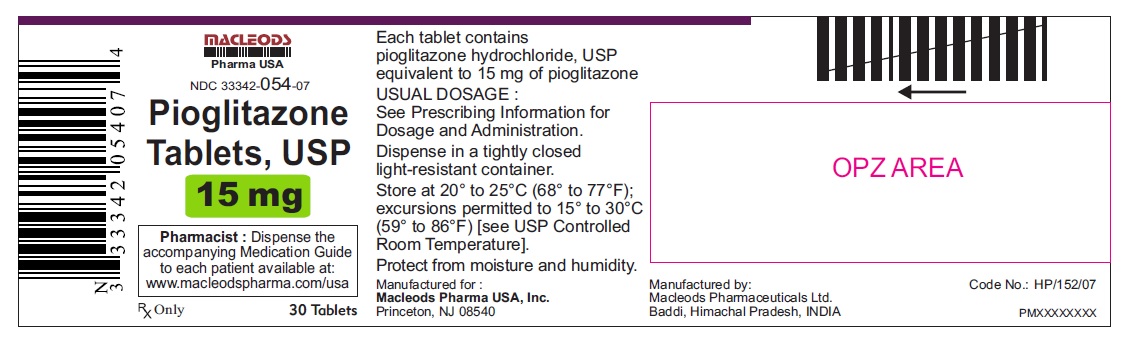
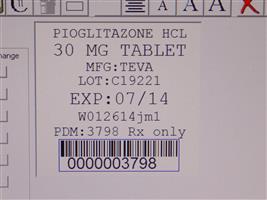
Pioglitazone label

Pioglitazone

Pioglitazone Recall

Get an alert when a recall is issued.

Side Effects & Adverse Reactions

There is currently no warning information available for this product. We apologize for any inconvenience.

FDA Safety Alerts

There are currently no FDA safety alerts available for this drug.

Manufacturer Warnings

There is currently no manufacturer warning information available for this drug.

FDA Labeling Changes

There are currently no FDA labeling changes available for this drug.

Uses

Monotherapy and Combination Therapy

Pioglitazone tablets USP are indicated as an adjunct to diet and exercise to improve glycemic control in adults with type 2 diabetes mellitus in multiple clinical settings [see Clinical Studies (14)].

Important Limitations of Use

Pioglitazone tablets USP exert their antihyperglycemic effect only in the presence of endogenous insulin. Pioglitazone tablets USP should not be used to treat type 1 diabetes or diabetic ketoacidosis, as it would not be effective in these settings.

Use caution in patients with liver disease [see Warnings and Precautions (5.3)].

History

There is currently no drug history available for this drug.

Other Information

Pioglitazone hydrochloride tablets USP are a thiazolidinedione and an agonist for peroxisome proliferator-activated receptor (PPAR) gamma that contains an oral antidiabetic medication: pioglitazone.

Pioglitazone [(±)-5-[[4-[2-(5-ethyl-2-pyridinyl)ethoxy]phenyl]methyl]-2,4-] thiazolidinedione monohydrochloride contains one asymmetric carbon, and the compound is synthesized and used as the racemic mixture. The two enantiomers of pioglitazone interconvert in vivo. No differences were found in the pharmacologic activity between the two enantiomers. The structural formula is as shown:

Chemical structure

C19H20N2O3S•HCl M.W. 392.90

Pioglitazone hydrochloride, USP is an odorless white crystalline powder. It is soluble in N,N-dimethylformamide, slightly soluble in anhydrous ethanol, very slightly soluble in acetone and acetonitrile, practically insoluble in water, and insoluble in ether.

Pioglitazone tablets USP are available for oral administration containing 15 mg, 30 mg, or 45 mg of pioglitazone (as the base) formulated with the following excipients: carboxymethylcellulose calcium, hydroxypropyl cellulose, magnesium stearate, and mannitol.

Pioglitazone Manufacturers

  • Pioglitazone | International Labs, Inc.
    No Recall

    Pioglitazone | International Labs, Inc.

    Pioglitazone | International Labs, Inc.
    2.1 Recommendations for All Patients

    Pioglitazone tablets USP should be taken once daily and can be taken without regard to meals.

    The recommended starting dose for patients without congestive heart failure is 15 mg or 30 mg once daily.

    The recommended starting dose for patients with congestive heart failure (NYHA Class I or II) is 15 mg once daily.

    The dose can be titrated in increments of 15 mg up to a maximum of 45 mg once daily based on glycemic response as determined by HbA1c.

    After initiation of pioglitazone tablets USP or with dose increase, monitor patients carefully for adverse reactions related to fluid retention such as weight gain, edema, and signs and symptoms of congestive heart failure [see Boxed Warning and Warnings and Precautions (5.5)].

    Liver tests (serum alanine and aspartate aminotransferases, alkaline phosphatase, and total bilirubin) should be obtained prior to initiating pioglitazone tablets USP. Routine periodic monitoring of liver tests during treatment with pioglitazone tablets USP is not recommended in patients without liver disease. Patients who have liver test abnormalities prior to initiation of pioglitazone tablets USP or who are found to have abnormal liver tests while taking pioglitazone tablets USP should be managed as described under Warnings and Precautions [see Warnings and Precautions (5.3) and Clinical Pharmacology (12.3)].

    2.2 Concomitant Use With an Insulin Secretagogue or Insulin

    If hypoglycemia occurs in a patient coadministered pioglitazone tablets USP and an insulin secretagogue (e.g., sulfonylurea), the dose of the insulin secretagogue should be reduced.

    If hypoglycemia occurs in a patient coadministered pioglitazone tablets USP and insulin, the dose of insulin should be decreased by 10% to 25%. Further adjustments to the insulin dose should be individualized based on glycemic response.

    2.3 Concomitant Use With Strong CYP2C8 Inhibitors

    Coadministration of pioglitazone tablets USP and gemfibrozil, a strong CYP2C8 inhibitor, increases pioglitazone exposure approximately 3 fold. Therefore, the maximum recommended dose of pioglitazone tablets USP is 15 mg daily when used in combination with gemfibrozil or other strong CYP2C8 inhibitors [see Drug Interactions (7.1) and Clinical Pharmacology (12.3)].

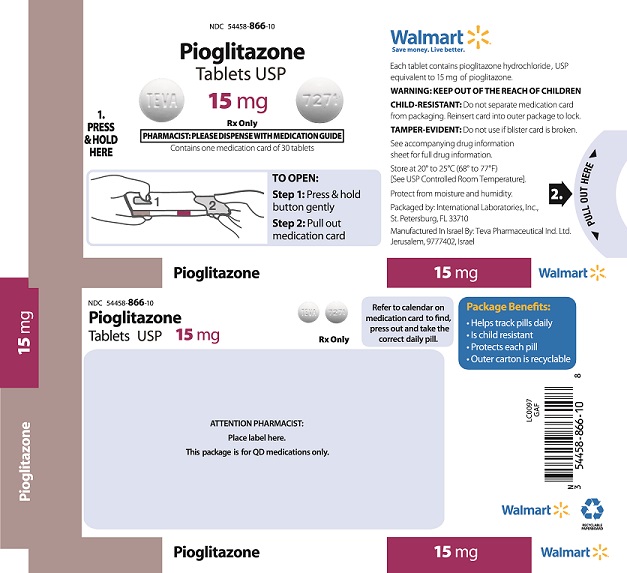
  • Pioglitazone | Teva Pharmaceuticals Usa Inc
    No Recall

    Pioglitazone | Teva Pharmaceuticals Usa Inc

    Pioglitazone | Teva Pharmaceuticals Usa Inc
    2.1 Recommendations for All Patients

    Pioglitazone tablets USP should be taken once daily and can be taken without regard to meals.

    The recommended starting dose for patients without congestive heart failure is 15 mg or 30 mg once daily.

    The recommended starting dose for patients with congestive heart failure (NYHA Class I or II) is 15 mg once daily.

    The dose can be titrated in increments of 15 mg up to a maximum of 45 mg once daily based on glycemic response as determined by HbA1c.

    After initiation of pioglitazone tablets USP or with dose increase, monitor patients carefully for adverse reactions related to fluid retention such as weight gain, edema, and signs and symptoms of congestive heart failure [see Boxed Warning and Warnings and Precautions (5.5)].

    Liver tests (serum alanine and aspartate aminotransferases, alkaline phosphatase, and total bilirubin) should be obtained prior to initiating pioglitazone tablets USP. Routine periodic monitoring of liver tests during treatment with pioglitazone tablets USP is not recommended in patients without liver disease. Patients who have liver test abnormalities prior to initiation of pioglitazone tablets USP or who are found to have abnormal liver tests while taking pioglitazone tablets USP should be managed as described under Warnings and Precautions [see Warnings and Precautions (5.3) and Clinical Pharmacology (12.3)].

    2.2 Concomitant Use With an Insulin Secretagogue or Insulin

    If hypoglycemia occurs in a patient coadministered pioglitazone tablets USP and an insulin secretagogue (e.g., sulfonylurea), the dose of the insulin secretagogue should be reduced.

    If hypoglycemia occurs in a patient coadministered pioglitazone tablets USP and insulin, the dose of insulin should be decreased by 10% to 25%. Further adjustments to the insulin dose should be individualized based on glycemic response.

    2.3 Concomitant Use With Strong CYP2C8 Inhibitors

    Coadministration of pioglitazone tablets USP and gemfibrozil, a strong CYP2C8 inhibitor, increases pioglitazone exposure approximately 3 fold. Therefore, the maximum recommended dose of pioglitazone tablets USP is 15 mg daily when used in combination with gemfibrozil or other strong CYP2C8 inhibitors [see Drug Interactions (7.1) and Clinical Pharmacology (12.3)].

  • Mylan Institutional Inc.
    Pioglitazone | Airweld, Inc.
    No Recall

    Pioglitazone | Airweld, Inc.

    Pioglitazone | Airweld, Inc.

    There is currently no dosage information available for this product. We apologize for any inconvenience.

  • Pioglitazone | Teva Pharmaceuticals Usa Inc
    No Recall

    Pioglitazone | Teva Pharmaceuticals Usa Inc

    Pioglitazone | Teva Pharmaceuticals Usa Inc
    2.1 Recommendations for All Patients

    Pioglitazone tablets should be taken once daily and can be taken without regard to meals.

    The recommended starting dose for patients without congestive heart failure is 15 mg or 30 mg once daily.

    The recommended starting dose for patients with congestive heart failure (NYHA Class I or II) is 15 mg once daily.

    The dose can be titrated in increments of 15 mg up to a maximum of 45 mg once daily based on glycemic response as determined by HbA1c.

    After initiation of pioglitazone tablets or with dose increase, monitor patients carefully for adverse reactions related to fluid retention such as weight gain, edema, and signs and symptoms of congestive heart failure [see Boxed Warning and Warnings and Precautions (5.2)].

    Liver tests (serum alanine and aspartate aminotransferases, alkaline phosphatase, and total bilirubin) should be obtained prior to initiating pioglitazone tablets. Routine periodic monitoring of liver tests during treatment with pioglitazone tablets is not recommended in patients without liver disease. Patients who have liver test abnormalities prior to initiation of pioglitazone tablets or who are found to have abnormal liver tests while taking pioglitazone tablets should be managed as described under Warnings and Precautions [see Warnings and Precautions (5.3) and Clinical Pharmacology (12.3)].

    2.2 Concomitant Use with an Insulin Secretagogue or Insulin

    If hypoglycemia occurs in a patient coadministered pioglitazone tablets and an insulin secretagogue (e.g., sulfonylurea), the dose of the insulin secretagogue should be reduced.

    If hypoglycemia occurs in a patient coadministered pioglitazone tablets and insulin, the dose of insulin should be decreased by 10% to 25%. Further adjustments to the insulin dose should be individualized based on glycemic response.

    2.3 Coadministration with Strong CYP2C8 Inhibitors

    Coadministration of pioglitazone tablets and gemfibrozil, a strong CYP2C8 inhibitor, increases pioglitazone exposure approximately 3-fold. Therefore, the maximum recommended dose of pioglitazone tablets is 15 mg daily when used in combination with gemfibrozil or other strong CYP2C8 inhibitors [see Drug Interactions (7.1) and Clinical Pharmacology (12.3)].

  • Pioglitazone | Ranbaxy Pharmaceuticals Inc.
    No Recall

    Pioglitazone | Ranbaxy Pharmaceuticals Inc.

    Pioglitazone | Ranbaxy Pharmaceuticals Inc.
    2.1 Recommendations for All Patients

    Pioglitazone tablets should be taken once daily and can be taken without regard to meals.

    The recommended starting dose for patients without congestive heart failure is 15 mg or 30 mg once daily.

    The recommended starting dose for patients with congestive heart failure (NYHA Class I or II) is 15 mg once daily.

    The dose can be titrated in increments of 15 mg up to a maximum of 45 mg once daily based on glycemic response as determined by HbA1c.

    After initiation of pioglitazone tablets or with dose increase, monitor patients carefully for adverse reactions related to fluid retention such as weight gain, edema, and signs and symptoms of congestive heart failure [see Boxed Warning and Warnings and Precautions (5.2)].

    Liver tests (serum alanine and aspartate aminotransferases, alkaline phosphatase, and total bilirubin) should be obtained prior to initiating pioglitazone tablets. Routine periodic monitoring of liver tests during treatment with pioglitazone tablets is not recommended in patients without liver disease. Patients who have liver test abnormalities prior to initiation of pioglitazone tablets or who are found to have abnormal liver tests while taking pioglitazone tablets should be managed as described under Warnings and Precautions [see Warnings and Precautions (5.3) and Clinical Pharmacology (12.3)].

    2.2 Concomitant Use with an Insulin Secretagogue or Insulin

    If hypoglycemia occurs in a patient coadministered pioglitazone tablets and an insulin secretagogue (e.g., sulfonylurea), the dose of the insulin secretagogue should be reduced.

    If hypoglycemia occurs in a patient coadministered pioglitazone tablets and insulin, the dose of insulin should be decreased by 10% to 25%. Further adjustments to the insulin dose should be individualized based on glycemic response.

    2.3 Coadministration with Strong CYP2C8 Inhibitors

    Coadministration of pioglitazone tablets and gemfibrozil, a strong CYP2C8 inhibitor, increases pioglitazone exposure approximately 3-fold. Therefore, the maximum recommended dose of pioglitazone tablets is 15 mg daily when used in combination with gemfibrozil or other strong CYP2C8 inhibitors [see Drug Interactions (7.1) and Clinical Pharmacology (12.3)].

  • Ranbaxy Pharmaceuticals Inc
    Pioglitazone | Ranbaxy Pharmaceuticals Inc
    No Recall

    Pioglitazone | Ranbaxy Pharmaceuticals Inc

    Pioglitazone | Ranbaxy Pharmaceuticals Inc
    2.1 Recommendations for all patients

     Pioglitazone tablets should be taken once daily and can be taken without regard to meals. The recommended starting dose for patients without congestive heart failure is 15 mg or 30 mg once daily.

    The recommended starting dose for patients with congestive heart failure (NYHA Class I or II) is 15 mg once daily. The dose can be titrated in increments of 15 mg up to a maximum of 45 mg once daily based on glycemic response as determined by HbA1c.

    After initiation of pioglitazone hydrochloride or with dose increase, monitor patients carefully for adverse reactions related to fluid retention such as weight gain, edema, and signs and symptoms of congestive heart failure [see Boxed Warning and Warnings and Precautions (5.2)].

    Liver tests (serum alanine and aspartate aminotransferases, alkaline phosphatase, and total bilirubin) should be obtained prior to initiating pioglitazone tablets. Routine periodic monitoring of liver tests during treatment with pioglitazone tablets is not recommended in patients without liver disease. Patients who have liver test abnormalities prior to initiation of pioglitazone hydrochloride or who are found to have abnormal liver tests while taking pioglitazone tablets should be managed as described under Warnings and Precautions [see Warnings andPrecautions (5.3) and Clinical Pharmacology (12.3)].

    2.2 Concomitant use with an insulin secretagogue or insulin

    If hypoglycemia occurs in a patient co-administered pioglitazone hydrochloride and an insulin secretagogue (e.g., sulfonylurea), the dose of the insulin secretagogue should be reduced.
    If hypoglycemia occurs in a patient co-administered pioglitazone hydrochloride and insulin, the dose of insulin should be decreased by 10% to 25%. Further adjustments to the insulin dose should be individualized based on glycemic response

    2.3 Coadministration with strong CYP2C8 inhibitors

     Coadministration of pioglitazone hydrochloride and gemfibrozil, a strong CYP2C8 inhibitor, increases pioglitazone exposure approximately 3-fold. Therefore, the maximum recommended dose of pioglitazone tablet is 15 mg daily when used in combination with gemfibrozil or other strong CYP2C8 inhibitors [see Drug Interactions (7.1) and Clinical Pharmacology (12.3)]. 

  • Medvantx, Inc.
    Pioglitazone | Medvantx, Inc.
    No Recall

    Pioglitazone | Medvantx, Inc.

    Pioglitazone | Medvantx, Inc.
    2.1 Recommendations for All Patients

    Pioglitazone tablets should be taken once daily and can be taken without regard to meals.

    The recommended starting dose for patients without congestive heart failure is 15 mg or 30 mg once daily.

    The recommended starting dose for patients with congestive heart failure (NYHA Class I or II) is 15 mg once daily.

    The dose can be titrated in increments of 15 mg up to a maximum of 45 mg once daily based on glycemic response as determined by HbA1c.

    After initiation of pioglitazone tablets or with dose increase, monitor patients carefully for adverse reactions related to fluid retention such as weight gain, edema, and signs and symptoms of congestive heart failure [see Boxed Warning and Warnings and Precautions (5.2)].

    Liver tests (serum alanine and aspartate aminotransferases, alkaline phosphatase, and total bilirubin) should be obtained prior to initiating pioglitazone tablets. Routine periodic monitoring of liver tests during treatment with pioglitazone tablets is not recommended in patients without liver disease. Patients who have liver test abnormalities prior to initiation of pioglitazone tablets or who are found to have abnormal liver tests while taking pioglitazone tablets should be managed as described under Warnings and Precautions [see Warnings and Precautions (5.3) and Clinical Pharmacology (12.3)].

    2.2 Concomitant Use with an Insulin Secretagogue or Insulin

    If hypoglycemia occurs in a patient coadministered pioglitazone tablets and an insulin secretagogue (e.g., sulfonylurea), the dose of the insulin secretagogue should be reduced.

    If hypoglycemia occurs in a patient coadministered pioglitazone tablets and insulin, the dose of insulin should be decreased by 10% to 25%. Further adjustments to the insulin dose should be individualized based on glycemic response.

    2.3 Coadministration with Strong CYP2C8 Inhibitors

    Coadministration of pioglitazone tablets and gemfibrozil, a strong CYP2C8 inhibitor, increases pioglitazone exposure approximately 3-fold. Therefore, the maximum recommended dose of pioglitazone tablets is 15 mg daily when used in combination with gemfibrozil or other strong CYP2C8 inhibitors [see Drug Interactions (7.1) and Clinical Pharmacology (12.3)].

  • Clinical Solutions Wholesale
    Pioglitazone | Clinical Solutions Wholesale
    No Recall

    Pioglitazone | Clinical Solutions Wholesale

    Pioglitazone | Clinical Solutions Wholesale
    2.1 Recommendations for All Patients

    Pioglitazone tablets, USP should be taken once daily and can be taken without regard to meals.

    The recommended starting dose for patients without congestive heart failure is 15 mg or 30 mg once daily.

    The recommended starting dose for patients with congestive heart failure (NYHA Class I or II) is 15 mg once daily.

    The dose can be titrated in increments of 15 mg up to a maximum of 45 mg once daily based on glycemic response as determined by HbA1c.

    After initiation of pioglitazone tablets, USP or with dose increase, monitor patients carefully for adverse reactions related to fluid retention such as weight gain, edema and signs and symptoms of congestive heart failure [see Boxed Warning and WARNINGS AND PRECAUTIONS(5.2)].

    Liver tests (serum alanine and aspartate aminotransferases, alkaline phosphatase and total bilirubin) should be obtained prior to initiating pioglitazone tablets, USP. Routine periodic monitoring of liver tests during treatment with pioglitazone tablets, USP is not recommended in patients without liver disease. Patients who have liver test abnormalities prior to initiation of pioglitazone tablets, USP or who are found to have abnormal liver tests while taking pioglitazone tablets, USP should be managed as described under Warnings and Precautions [see WARNINGS AND PRECAUTIONS(5.3) and CLINICALPHARMACOLOGY(12.3)].

    2.2 Concomitant Use with an Insulin Secretagogue or Insulin

    If hypoglycemia occurs in a patient coadministered pioglitazone tablets, USP and an insulin secretagogue (e.g., sulfonylurea), the dose of the insulin secretagogue should be reduced.

    If hypoglycemia occurs in a patient coadministered pioglitazone tablets, USP and insulin, the dose of insulin should be decreased by 10% to 25%. Further adjustments to the insulin dose should be individualized based on glycemic response.

    2.3 Coadministration with Strong CYP2C8 Inhibitors

    Coadministration of pioglitazone tablets, USP and gemfibrozil, a strong CYP2C8 inhibitor, increases pioglitazone exposure approximately 3-fold. Therefore, the maximum recommended dose of pioglitazone tablets, USP is 15 mg daily when used in combination with gemfibrozil or other strong CYP2C8 inhibitors [see DRUG INTERACTIONS(7.1) and CLINICAL PHARMACOLOGY(12.3)].

  • Mylan Pharmaceuticals Inc.
    Pioglitazone | Roxane Laboratories, Inc
    No Recall

    Pioglitazone | Roxane Laboratories, Inc

    Pioglitazone | Roxane Laboratories, Inc

    Factors to be considered in determining the dose are age, body weight, physical status, underlying pathological condition, the use of other drugs, type of anesthesia to be used, and surgical procedure involved. Use in the elderly, in patients with hepatic or renal disease, or in labor requires extra caution (see PRECAUTIONS section and Individualization of Dosage in CLINICAL PHARMACOLOGYsection). The following doses are for patients who do not have impaired hepatic or renal function and who are not on CNS active agents.

    Use for Pain

    The usual recommended dose for initial nasal administration is 1 mg (1 spray in one nostril). Adherence to this dose reduces the incidence of drowsiness and dizziness. If adequate pain relief is not achieved within 60 to 90 minutes, an additional 1 mg dose may be given.

    The initial dose sequence outlined above may be repeated in 3 to 4 hours as required after the second dose of the sequence.

    Depending on the severity of the pain, an initial dose of 2 mg (1 spray in each nostril) may be used in patients who will be able to remain recumbent in the event drowsiness or dizziness occurs. In such patients single additional 2 mg doses should not be given for 3 to 4 hours.

    Use in Balanced Anesthesia

    The use of butorphanol tartrate nasal spray is not recommended because it has not been studied in induction or maintenance of anesthesia.

    Labor

    The use of butorphanol tartrate nasal spray is not recommended as it has not been studied in labor.

    Safety and Handling

    Butorphanol tartrate nasal spray is an open delivery system with increased risk of exposure to health care workers.

    In the priming process, a certain amount of butorphanol may be aerosolized; therefore, the pump sprayer should be aimed away from the patient or other people or animals.

    The disposal of Schedule IV controlled substances must be consistent with State and Federal Regulations. The unit should be disposed of by unscrewing the cap, rinsing the bottle, and placing the parts in a waste container.

  • Pioglitazone | Aplicare, Inc.
    No Recall

    Pioglitazone | Aplicare, Inc.

    Pioglitazone | Aplicare, Inc.

    Directions

    use with care in premature infants or infants under 2 months of age. These products may cause irritation or chemical burns.

    Surgical hand scrub:

    wet hands and forearms under running water for 30 seconds. Clean fingernails using a nail stick or similar cleaner. scrub for 1.5 minutes with about 8 mL of product with or without a wet brush paying close attention to the nails, cuticles and skin between the fingers. rinse thoroughly under running water for 30 seconds wash for an additional 1.5 minutes with 8 mL of product and rinse under running water for 30 seconds dry thoroughly

    Healthcare personnel handwash

    wet hands with water dispense about 5 mL of product into cupped hands and wash in a vigorous manner for 15 seconds rinse and dry thoroughly

    Patient preoperative skin preparation

    apply product liberally to surgical site and swab for at least 2 minutes and dry with a sterile towel repeat procedure for an additional 2 minutes and dry with a sterile towel

    Skin wound and general skin cleansing

    thoroughly rinse the area to be cleaned with water apply the minimum amount of product necessary to cover the skin or wound area and wash gently rinse again thoroughly
  • Pioglitazone | American Health Packaging
    No Recall

    Pioglitazone | American Health Packaging

    Pioglitazone | American Health Packaging
    2.1 Recommendations for All Patients

    Pioglitazone tablets, USP should be taken once daily and can be taken without regard to meals.

    The recommended starting dose for patients without congestive heart failure is 15 mg or 30 mg once daily.

    The recommended starting dose for patients with congestive heart failure (NYHA Class I or II) is 15 mg once daily.

    The dose can be titrated in increments of 15 mg up to a maximum of 45 mg once daily based on glycemic response as determined by HbA1c.

    After initiation of pioglitazone tablets, USP or with dose increase, monitor patients carefully for adverse reactions related to fluid retention such as weight gain, edema and signs and symptoms of congestive heart failure [see Boxed Warning and WARNINGS AND PRECAUTIONS(5.2)].

    Liver tests (serum alanine and aspartate aminotransferases, alkaline phosphatase and total bilirubin) should be obtained prior to initiating pioglitazone tablets, USP. Routine periodic monitoring of liver tests during treatment with pioglitazone tablets, USP is not recommended in patients without liver disease. Patients who have liver test abnormalities prior to initiation of pioglitazone tablets, USP or who are found to have abnormal liver tests while taking pioglitazone tablets, USP should be managed as described under Warnings and Precautions [see WARNINGS AND PRECAUTIONS(5.3) and CLINICALPHARMACOLOGY(12.3)].

    2.2 Concomitant Use with an Insulin Secretagogue or Insulin

    If hypoglycemia occurs in a patient coadministered pioglitazone tablets, USP and an insulin secretagogue (e.g., sulfonylurea), the dose of the insulin secretagogue should be reduced.

    If hypoglycemia occurs in a patient coadministered pioglitazone tablets, USP and insulin, the dose of insulin should be decreased by 10% to 25%. Further adjustments to the insulin dose should be individualized based on glycemic response.

    2.3 Coadministration with Strong CYP2C8 Inhibitors

    Coadministration of pioglitazone tablets, USP and gemfibrozil, a strong CYP2C8 inhibitor, increases pioglitazone exposure approximately 3-fold. Therefore, the maximum recommended dose of pioglitazone tablets, USP is 15 mg daily when used in combination with gemfibrozil or other strong CYP2C8 inhibitors [see DRUG INTERACTIONS(7.1) and CLINICAL PHARMACOLOGY(12.3)].

  • Macleods Pharmaceuticals Limited
    Pioglitazone | Macleods Pharmaceuticals Limited
    No Recall

    Pioglitazone | Macleods Pharmaceuticals Limited

    Pioglitazone | Macleods Pharmaceuticals Limited
    2.1 Recommendations for All Patients

    Pioglitazone tablets should be taken once daily and can be taken without regard to meals. The recommended starting dose for patients without congestive heart failure is 15 mg or 30 mg once daily.
    The recommended starting dose for patients with congestive heart failure (NYHA Class I or II) is 15 mg once daily.
    The dose can be titrated in increments of 15 mg up to a maximum of 45 mg once daily based on glycemic response as determined by HbA1c. After initiation of pioglitazone hydrochloride or with dose increase, monitor patients carefully for adverse reactions related to fluid retention such as weight gain, edema, and signs and symptoms of congestive heart failure [see Boxed Warningand Warnings and Precautions (5.2)].

    Liver tests (serum alanine and aspartate aminotransferases, alkaline phosphatase, and total bilirubin) should be obtained prior to initiating pioglitazone tablets. Routine periodic monitoring of liver tests during treatment with pioglitazone tablets is not recommended in patients without liver disease. Patients who have liver test abnormalities prior to initiation of pioglitazone hydrochloride or who are found to have abnormal liver tests while taking pioglitazone tablets should be managed as described under Warnings and Precautions [see Warnings and Precautions (5.3) and Clinical Pharmacology (12.3)].


    2.2 Concomitant Use with an Insulin Secretagogue or Insulin

    If hypoglycemia occurs in a patient co-administered pioglitazone hydrochloride and an insulin secretagogue (e.g., sulfonylurea), the dose of the insulin secretagogue should be reduced.

    If hypoglycemia occurs in a patient co-administered pioglitazone hydrochloride and insulin, the dose of insulin should be decreased by 10% to 25%. Further adjustments to the insulin dose should be individualized based on glycemic response

    2.3 Concomitant Use with Strong CYP2C8 Inhibitors

    Coadministration of pioglitazone hydrochloride and gemfibrozil, a strong CYP2C8 inhibitor, increases pioglitazone exposure approximately 3-fold. Therefore, the maximum recommended dose of pioglitazone tablet is 15 mg daily when used in combination with gemfibrozil or other strong CYP2C8 inhibitors [see Drug Interactions (7.1) and Clinical Pharmacology (12.3)]. 

  • Sandoz Inc
    Pioglitazone | Sandoz Inc
    No Recall

    Pioglitazone | Sandoz Inc

    Pioglitazone | Sandoz Inc
    2.1 Recommendations for All Patients

    Pioglitazone tablets, USP should be taken once daily and can be taken without regard to meals.

    The recommended starting dose for patients without congestive heart failure is 15 mg or 30 mg once daily.

    The recommended starting dose for patients with congestive heart failure (NYHA Class I or II) is 15 mg once daily.

    The dose can be titrated in increments of 15 mg up to a maximum of 45 mg once daily based on glycemic response as determined by HbA1c.

    After initiation of pioglitazone tablets, USP or with dose increase, monitor patients carefully for adverse reactions related to fluid retention such as weight gain, edema, and signs and symptoms of congestive heart failure [see Boxed Warning and Warnings and Precautions (5.5)].

    Liver tests (serum alanine and aspartate aminotransferases, alkaline phosphatase, and total bilirubin) should be obtained prior to initiating pioglitazone tablets, USP. Routine periodic monitoring of liver tests during treatment with pioglitazone tablets, USP is not recommended in patients without liver disease. Patients who have liver test abnormalities prior to initiation of pioglitazone tablets, USP or who are found to have abnormal liver tests while taking pioglitazone tablets, USP should be managed as described under Warnings and Precautions [see Warnings and Precautions (5.3) and Clinical Pharmacology (12.3)].

    2.2 Concomitant Use with an Insulin Secretagogue or Insulin

    If hypoglycemia occurs in a patient coadministered pioglitazone tablets, USP and an insulin secretagogue (e.g., sulfonylurea), the dose of the insulin secretagogue should be reduced.

    If hypoglycemia occurs in a patient coadministered pioglitazone tablets, USP and insulin, the dose of insulin should be decreased by 10% to 25%. Further adjustments to the insulin dose should be individualized based on glycemic response.

    2.3 Coadministration with Strong CYP2C8 Inhibitors

    Coadministration of pioglitazone tablets, USP and gemfibrozil, a strong CYP2C8 inhibitor, increases pioglitazone exposure approximately 3-fold. Therefore, the maximum recommended dose of pioglitazone tablets, USP is 15 mg daily when used in combination with gemfibrozil or other strong CYP2C8 inhibitors [see Drug Interactions (7.1) and Clinical Pharmacology (12.3)].

  • Pioglitazone | Carilion Materials Management
    No Recall

    Pioglitazone | Carilion Materials Management

    Pioglitazone | Carilion Materials Management
    2.1 Recommendations for All Patients

    Pioglitazone tablets should be taken once daily and can be taken without regard to meals.

    The recommended starting dose for patients without congestive heart failure is 15 mg or 30 mg once daily.

    The recommended starting dose for patients with congestive heart failure (NYHA Class I or II) is 15 mg once daily.

    The dose can be titrated in increments of 15 mg up to a maximum of 45 mg once daily based on glycemic response as determined by HbA1c.

    After initiation of pioglitazone tablets or with dose increase, monitor patients carefully for adverse reactions related to fluid retention such as weight gain, edema, and signs and symptoms of congestive heart failure . [see and ] Boxed WarningWarnings and Precautions (5.2)

    Liver tests (serum alanine and aspartate aminotransferases, alkaline phosphatase, and total bilirubin) should be obtained prior to initiating pioglitazone tablets. Routine periodic monitoring of liver tests during treatment with pioglitazone tablets is not recommended in patients without liver disease. Patients who have liver test abnormalities prior to initiation of pioglitazone tablets or who are found to have abnormal liver tests while taking pioglitazone tablets should be managed as described under Warnings and Precautions . [see and ] Warnings and Precautions (5.3)Clinical Pharmacology (12.3)

    2.2 Concomitant Use with an Insulin Secretagogue or Insulin

    If hypoglycemia occurs in a patient coadministered pioglitazone tablets and an insulin secretagogue (e.g., sulfonylurea), the dose of the insulin secretagogue should be reduced.

    If hypoglycemia occurs in a patient coadministered pioglitazone tablets and insulin, the dose of insulin should be decreased by 10% to 25%. Further adjustments to the insulin dose should be individualized based on glycemic response.

    2.3 Coadministration with Strong CYP2C8 Inhibitors

    Coadministration of pioglitazone tablets and gemfibrozil, a strong CYP2C8 inhibitor, increases pioglitazone exposure approximately 3-fold. Therefore, the maximum recommended dose of pioglitazone tablets is 15 mg daily when used in combination with gemfibrozil or other strong CYP2C8 inhibitors [see and ]. Drug Interactions (7.1)Clinical Pharmacology (12.3)