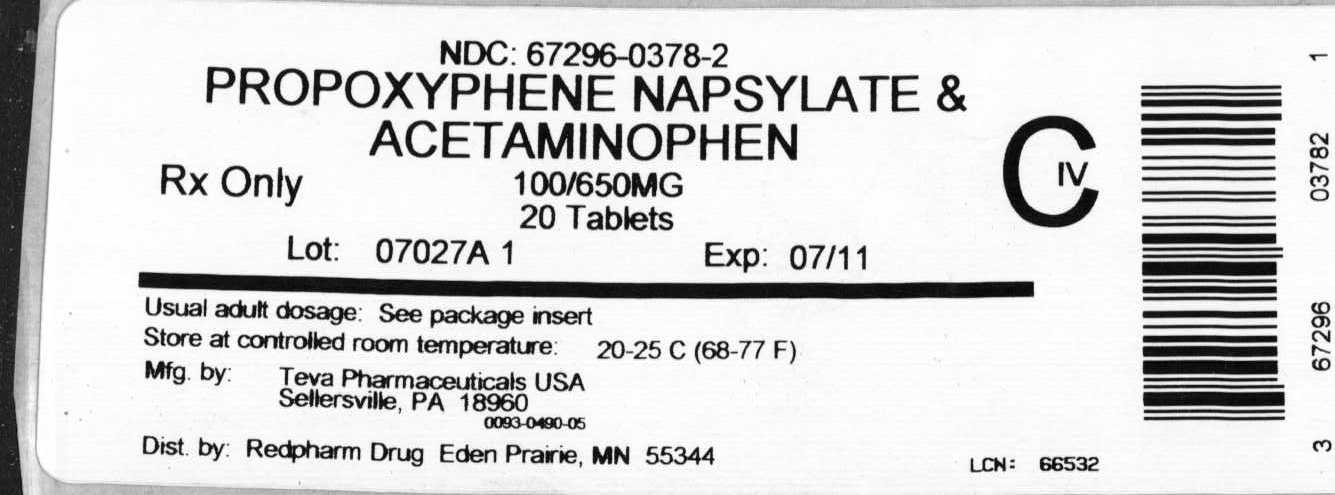
Propoxyphene Napsylate And Acetaminophen label

Propoxyphene Napsylate And Acetaminophen

Propoxyphene Napsylate And Acetaminophen Recall

Get an alert when a recall is issued.

Side Effects & Adverse Reactions

Risk of Overdose

There have been numerous cases of accidental and intentional overdose with propoxyphene products either alone or in combination with other CNS depressants, including alcohol. Fatalities within the first hour of overdosage are not uncommon. Many of the propoxyphene-related deaths have occurred in patients with previous histories of emotional disturbances or suicidal ideation/attempts and/or concomitant administration of sedatives, tranquilizers, muscle relaxants, antidepressants, or other CNS-depressant drugs. Do not prescribe propoxyphene for patients who are suicidal or have a history of suicidal ideation.

Respiratory Depression

Respiratory depression is the chief hazard from all opioid agonist preparations. Respiratory depression occurs most frequently in elderly or debilitated patients, usually following large initial doses in non-tolerant patients, or when opioids are given in conjunction with other agents that depress respiration. Propoxyphene napsylate and acetaminophen tablets should be used with extreme caution in patients with significant chronic obstructive pulmonary disease or cor pulmonale, and in patients having substantially decreased respiratory reserve, hypoxia, hypercapnia, or preexisting respiratory depression. In such patients, even usual therapeutic doses of propoxyphene napsylate and acetaminophen tablets may decrease respiratory drive to the point of apnea. In these patients alternative non-opioid analgesics should be considered, and opioids should be employed only under careful medical supervision at the lowest effective dose.

Hypotensive Effect

Propoxyphene napsylate and acetaminophen tablets, like all opioid analgesics, may cause severe hypotension in an individual whose ability to maintain blood pressure has been compromised by a depleted blood volume, or after concurrent administration with drugs such as phenothiazines or other agents which compromise vasomotor tone. Propoxyphene napsylate and acetaminophen tablets may produce orthostatic hypotension in ambulatory patients. Propoxyphene napsylate and acetaminophen tablets, like all opioid analgesics, should be administered with caution to patients in circulatory shock, since vasodilatation produced by the drug may further reduce cardiac output and blood pressure.

Head Injury and Increased Intracranial Pressure

The respiratory depressant effects of narcotics and their capacity to elevate cerebrospinal fluid pressure may be markedly exaggerated in the presence of head injury, other intracranial lesions or a preexisting increase in intracranial pressure. Furthermore, narcotics produce adverse reactions which may obscure the clinical course of patients with head injuries.

Drug Interactions

The concomitant use of propoxyphene and CNS depressants, including alcohol, can result in potentially serious adverse events including death. Because of its added depressant effects, propoxyphene should be prescribed with caution for those patients whose medical condition requires the concomitant administration of sedatives, tranquilizers, muscle relaxants, antidepressants, or other CNS-depressant drugs.

Usage in Ambulatory Patients

Propoxyphene may impair the mental and/or physical abilities required for the performance of potentially hazardous tasks, such as driving a car or operating machinery. The patient should be cautioned accordingly.

Use With Other Acetaminophen-Containing Agents

Due to the potential for acetaminophen hepatotoxicity at doses higher than the recommended dose, propoxyphene napsylate and acetaminophen tablets should not be used concomitantly with other acetaminophen-containing products.

Use With Alcohol

Hepatotoxicity and severe hepatic failure occurred in chronic alcoholics following therapeutic doses of acetaminophen. Patients should be cautioned about the concomitant use of propoxyphene products and alcohol because of potentially serious CNS-additive effects of these agents that can lead to death.

FDA Safety Alerts

There are currently no FDA safety alerts available for this drug.

Manufacturer Warnings

There is currently no manufacturer warning information available for this drug.

FDA Labeling Changes

There are currently no FDA labeling changes available for this drug.

Uses

Propoxyphene napsylate and acetaminophen tablets are indicated for the relief of mild to moderate pain.

History

There is currently no drug history available for this drug.

Other Information

Propoxyphene napsylate and acetaminophen tablets USP contain propoxyphene napsylate and acetaminophen.

Propoxyphene napsylate is an odorless, white crystalline powder with a bitter taste. It is very slightly soluble in water, soluble in methanol, in ethanol, in chloroform, and in acetone. Chemically it is (αS,1R)-α-[2-(dimethylamino)-1-methylethyl]-α-phenylphenethyl propionate compound with 2-naphthalenesulfonic acid (1:1) monohydrate and can be represented by the following structural formula:

propoxyphene napsylate structural formula

C22H29NO2•C10H8O3S•H2O          M.W. 565.74

Propoxyphene napsylate differs from propoxyphene hydrochloride in that it allows more stable liquid dosage forms and tablet formulations. Because of differences in molecular weight, a dose of 100 mg (176.8 μmol) of propoxyphene napsylate is required to supply an amount of propoxyphene equivalent to that present in 65 mg (172.9 μmol) of propoxyphene hydrochloride.

Acetaminophen, 4′-hydroxyacetanilide, is a non-opiate, non-salicylate analgesic and antipyretic which occurs as a white, odorless, crystalline powder, possessing a slightly bitter taste. Chemically, it is acetamide, N-(4-hydroxyphenyl)- and can structurally be represented by the following:

acetaminophen structural formula

C8H9NO2          M.W. 151.16

Each pink or white tablet of propoxyphene napsylate and acetaminophen tablets contains 100 mg propoxyphene napsylate and 650 mg acetaminophen.

Propoxyphene napsylate and acetaminophen tablets, USP 100 mg/650 mg (PINK) contain the following inactive ingredients: colloidal silicon dioxide, D&C red No. 27 aluminum lake, D&C yellow No. 10 aluminum lake, hydroxypropyl cellulose, hypromellose, magnesium stearate, microcrystalline cellulose, polyethylene glycol, povidone, pregelatinized starch, stearic acid, titanium dioxide, and crospovidone.

Propoxyphene napsylate and acetaminophen tablets, USP 100 mg/650 mg (WHITE) contain the following inactive ingredients: castor oil, colloidal silicon dioxide, hypromellose, magnesium stearate, microcrystalline cellulose, povidone, pregelatinized starch, stearic acid, and crospovidone.
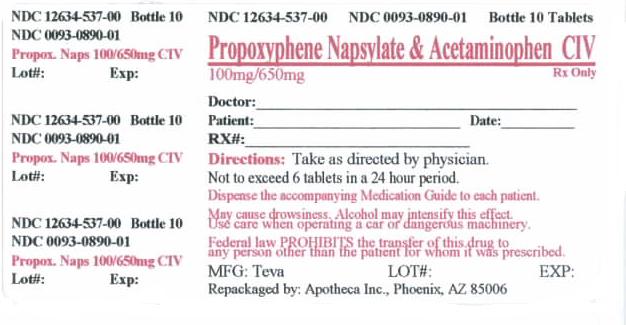
Propoxyphene Napsylate And Acetaminophen Manufacturers

  • Rebel Distributors Corp.
    Propoxyphene Napsylate And Acetaminophen | Rebel Distributors Corp.
    No Recall

    Propoxyphene Napsylate And Acetaminophen | Rebel Distributors Corp.

    Propoxyphene Napsylate And Acetaminophen | Rebel Distributors Corp.

    Proproxyphene napsylate and acetaminophen tablets USP are intended for the management of mild to moderate pain. The dose should be individually adjusted according to severity of pain, patient response and patient size.

    Propoxyphene napsylate and acetaminophen tablets USP (100 mg propoxyphene napsylate and 650 mg acetaminophen)

    The usual dosage is one tablet every 4 hours orally as needed for pain. The maximum dose of propoxyphene napsylate and acetaminophen tablets USP is 6 tablets per day. Do not exceed the maximum daily dose.

    Patients receiving propoxyphene and any CYP3A4 inhibitor should be carefully monitored for an extended period of time and dosage adjustments should be made if warranted.

    Consideration should be given to a reduced total daily dosage in elderly patients and in patients with hepatic or renal impairment.

    Cessation of Therapy

    For patients who used propoxyphene napsylate and acetaminophen tablets USP on a regular basis for a period of time, when therapy with propoxyphene napsylate and acetaminophen tablets USP is no longer needed for the treatment of their pain, it may be useful to gradually discontinue the propoxyphene napsylate and acetaminophen tablets USP over time to prevent the development of an opioid abstinence syndrome (narcotic withdrawal). In general, therapy can be decreased by 25% to 50% per day with careful monitoring for signs and symptoms of withdrawal (see DRUG ABUSE AND DEPENDENCE for description of the signs and symptoms of withdrawal). If the patient develops these signs or symptoms, the dose should be raised to the previous level and titrated down more slowly, either by increasing the interval between decreases, decreasing the amount of change in dose, or both.

  • Apotheca, Inc.
    Propoxyphene Napsylate And Acetaminophen | Apotheca, Inc.
    No Recall

    Propoxyphene Napsylate And Acetaminophen | Apotheca, Inc.

    Propoxyphene Napsylate And Acetaminophen | Apotheca, Inc.

    Proproxyphene napsylate and acetaminophen tablets USP are intended for the management of mild to moderate pain. The dose should be individually adjusted according to severity of pain, patient response and patient size.

    Propoxyphene napsylate and acetaminophen tablets USP (100 mg propoxyphene napsylate and 650 mg acetaminophen)

    The usual dosage is one tablet every 4 hours orally as needed for pain. The maximum dose of propoxyphene napsylate and acetaminophen tablets USP is 6 tablets per day. Do not exceed the maximum daily dose.

    Patients receiving propoxyphene and any CYP3A4 inhibitor should be carefully monitored for an extended period of time and dosage adjustments should be made if warranted.

    Consideration should be given to a reduced total daily dosage in elderly patients and in patients with hepatic or renal impairment.

    Cessation of TherapyFor patients who used propoxyphene napsylate and acetaminophen tablets USP on a regular basis for a period of time, when therapy with propoxyphene napsylate and acetaminophen tablets USP is no longer needed for the treatment of their pain, it may be useful to gradually discontinue the propoxyphene napsylate and acetaminophen tablets USP over time to prevent the development of an opioid abstinence syndrome (narcotic withdrawal). In general, therapy can be decreased by 25% to 50% per day with careful monitoring for signs and symptoms of withdrawal (see DRUG ABUSE AND DEPENDENCE for description of the signs and symptoms of withdrawal). If the patient develops these signs or symptoms, the dose should be raised to the previous level and titrated down more slowly, either by increasing the interval between decreases, decreasing the amount of change in dose, or both. Cessation of TherapyFor patients who used propoxyphene napsylate and acetaminophen tablets USP on a regular basis for a period of time, when therapy with propoxyphene napsylate and acetaminophen tablets USP is no longer needed for the treatment of their pain, it may be useful to gradually discontinue the propoxyphene napsylate and acetaminophen tablets USP over time to prevent the development of an opioid abstinence syndrome (narcotic withdrawal). In general, therapy can be decreased by 25% to 50% per day with careful monitoring for signs and symptoms of withdrawal (see DRUG ABUSE AND DEPENDENCE for description of the signs and symptoms of withdrawal). If the patient develops these signs or symptoms, the dose should be raised to the previous level and titrated down more slowly, either by increasing the interval between decreases, decreasing the amount of change in dose, or both.
  • Remedyrepack Inc.
    Propoxyphene Napsylate And Acetaminophen | Remedyrepack Inc.
    No Recall

    Propoxyphene Napsylate And Acetaminophen | Remedyrepack Inc.

    Propoxyphene Napsylate And Acetaminophen | Remedyrepack Inc.

    There is currently no dosage information available for this product. We apologize for any inconvenience.

  • Redpharm Drug Inc.
    Propoxyphene Napsylate And Acetaminophen | Redpharm Drug Inc.
    No Recall

    Propoxyphene Napsylate And Acetaminophen | Redpharm Drug Inc.

    Propoxyphene Napsylate And Acetaminophen | Redpharm Drug Inc.

    Proproxyphene napsylate and acetaminophen tablets USP are intended for the management of mild to moderate pain. The dose should be individually adjusted according to severity of pain, patient response and patient size.

    Propoxyphene napsylate and acetaminophen tablets USP (100 mg propoxyphene napsylate and 650 mg acetaminophen)

    The usual dosage is one tablet every 4 hours orally as needed for pain. The maximum dose of propoxyphene napsylate and acetaminophen tablets USP is 6 tablets per day. Do not exceed the maximum daily dose.

    Patients receiving propoxyphene and any CYP3A4 inhibitor should be carefully monitored for an extended period of time and dosage adjustments should be made if warranted.

    Consideration should be given to a reduced total daily dosage in elderly patients and in patients with hepatic or renal impairment.

    Cessation of Therapy

    For patients who used propoxyphene napsylate and acetaminophen tablets USP on a regular basis for a period of time, when therapy with propoxyphene napsylate and acetaminophen tablets USP is no longer needed for the treatment of their pain, it may be useful to gradually discontinue the propoxyphene napsylate and acetaminophen tablets USP over time to prevent the development of an opioid abstinence syndrome (narcotic withdrawal). In general, therapy can be decreased by 25% to 50% per day with careful monitoring for signs and symptoms of withdrawal (see DRUG ABUSE AND DEPENDENCE for description of the signs and symptoms of withdrawal). If the patient develops these signs or symptoms, the dose should be raised to the previous level and titrated down more slowly, either by increasing the interval between decreases, decreasing the amount of change in dose, or both.

  • Redpharm Drug Inc.
    Propoxyphene Napsylate And Acetaminophen | Redpharm Drug Inc.
    No Recall

    Propoxyphene Napsylate And Acetaminophen | Redpharm Drug Inc.

    Propoxyphene Napsylate And Acetaminophen | Redpharm Drug Inc.
    This product is given orally. The usual dosage is 100 mg propoxyphene napsylate and 650 mg acetaminophen every 4 hours as needed for pain. The maximum recommended dose of propoxyphene napsylate is 600 mg per day.

    Consideration should be given to a reduced total daily dosage in patients with hepatic or renal impairment.
  • Bryant Ranch Prepack
    Propoxyphene Napsylate And Acetaminophen | Bryant Ranch Prepack
    No Recall

    Propoxyphene Napsylate And Acetaminophen | Bryant Ranch Prepack

    Propoxyphene Napsylate And Acetaminophen | Bryant Ranch Prepack

    Propoxyphene napsylate and acetaminophen tablets are intended for the management of mild to moderate pain. The dose should be individually adjusted according to severity of pain, patient response and patient size.

  • Lake Erie Medical Dba Quality Care Products
    Propoxyphene Napsylate And Acetaminophen | Lake Erie Medical Dba Quality Care Products
    No Recall

    Propoxyphene Napsylate And Acetaminophen | Lake Erie Medical Dba Quality Care Products

    Propoxyphene Napsylate And Acetaminophen | Lake Erie Medical Dba Quality Care Products

    Proproxyphene napsylate and acetaminophen tablets USP are intended for the management of mild to moderate pain. The dose should be individually adjusted according to severity of pain, patient response and patient size.

    Propoxyphene napsylate and acetaminophen tablets USP (100 mg propoxyphene napsylate and 650 mg acetaminophen)

    The usual dosage is one tablet every 4 hours orally as needed for pain. The maximum dose of propoxyphene napsylate and acetaminophen tablets USP is 6 tablets per day. Do not exceed the maximum daily dose.

    Patients receiving propoxyphene and any CYP3A4 inhibitor should be carefully monitored for an extended period of time and dosage adjustments should be made if warranted.

    Consideration should be given to a reduced total daily dosage in elderly patients and in patients with hepatic or renal impairment.

    Cessation of Therapy

    For patients who used propoxyphene napsylate and acetaminophen tablets USP on a regular basis for a period of time, when therapy with propoxyphene napsylate and acetaminophen tablets USP is no longer needed for the treatment of their pain, it may be useful to gradually discontinue the propoxyphene napsylate and acetaminophen tablets USP over time to prevent the development of an opioid abstinence syndrome (narcotic withdrawal). In general, therapy can be decreased by 25% to 50% per day with careful monitoring for signs and symptoms of withdrawal (see DRUG ABUSE AND DEPENDENCE for description of the signs and symptoms of withdrawal). If the patient develops these signs or symptoms, the dose should be raised to the previous level and titrated down more slowly, either by increasing the interval between decreases, decreasing the amount of change in dose, or both.