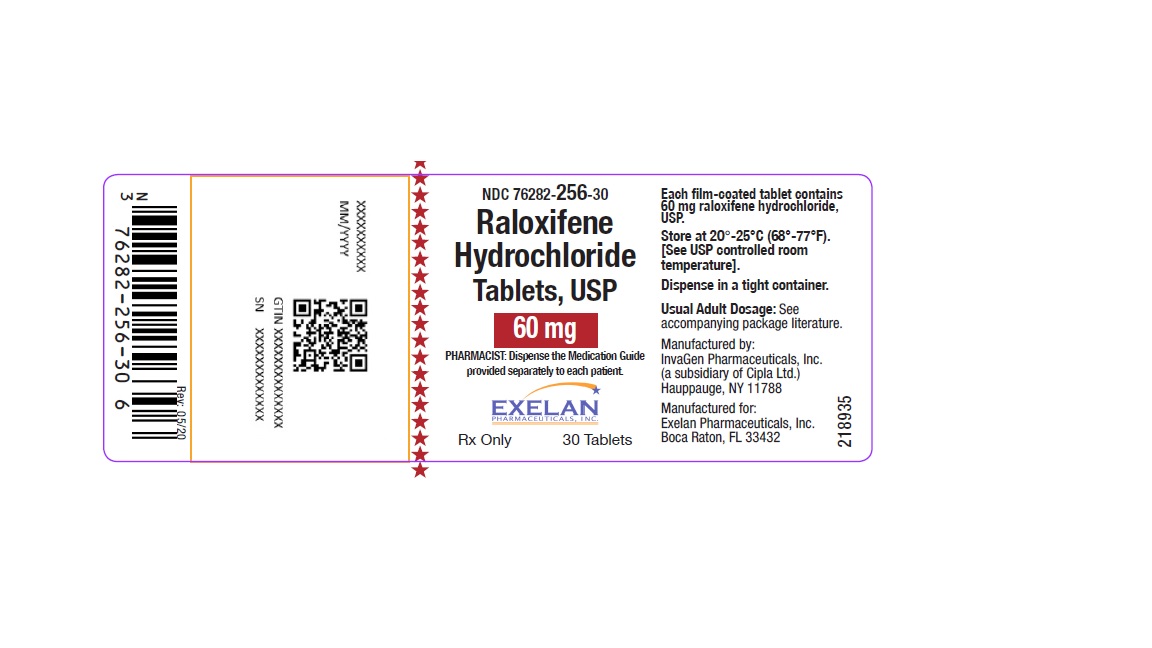
Raloxifene Hydrochloride label

Raloxifene Hydrochloride

Raloxifene Hydrochloride Recall

Get an alert when a recall is issued.

Side Effects & Adverse Reactions

There is currently no warning information available for this product. We apologize for any inconvenience.

FDA Safety Alerts

There are currently no FDA safety alerts available for this drug.

Manufacturer Warnings

There is currently no manufacturer warning information available for this drug.

FDA Labeling Changes

There are currently no FDA labeling changes available for this drug.

Uses

1.1 Treatment of Osteoporosis in Postmenopausal Women

Raloxifene hydrochloride tablets, USP are indicated for the treatment of osteoporosis in postmenopausal women [see Clinical Studies (14.1)].

History

There is currently no drug history available for this drug.

Other Information

Raloxifene hydrochloride, USP is an estrogen agonist/antagonist, commonly referred to as a selective estrogen receptor modulator (SERM) that belongs to the benzothiophene class of compounds. The chemical structure is:

Raloxifene hydrochloride Structural formula

The chemical designation is methanone, [6-hydroxy-2-(4-hydroxyphenyl)benzo[b]thien-3-yl]-[4-[2-(1-piperidinyl) ethoxy]phenyl]-, hydrochloride. Raloxifene hydrochloride (HCl) has the empirical formula C28H27NO4S•HCl, which corresponds to a molecular weight of 510.05. Raloxifene HCl, USP is an off-white to pale-yellow solid that is very slightly soluble in water.

Raloxifene hydrochloride tablets, USP are supplied in a tablet dosage form for oral administration. Each raloxifene hydrochloride tablet contains 60 mg of raloxifene HCl, USP which is the molar equivalent of 55.71 mg of free base. Inactive ingredients include mannitol, crospovidone, hydroxypropyl cellulose, poloxamer 407, magnesium stearate and opadry white (titanium Dioxide, hypromellose 2910 (3cP), hypromellose 2910 (6cP), macrogol/PEG 400 and polysorbate 80).

Raloxifene Hydrochloride Manufacturers

  • Raloxifene Hydrochloride | American Health Packaging
    No Recall

    Raloxifene Hydrochloride | American Health Packaging

    Raloxifene Hydrochloride | American Health Packaging
    2.1 Recommended Dosing

    The recommended dosage is one 60 mg raloxifene hydrochloride tablet daily, which may be administered any time of day without regard to meals [see Clinical Pharmacology (12.3)].

    2.2 Recommendations for Calcium and Vitamin D Supplementation

    For osteoporosis treatment, supplemental calcium and/or vitamin D should be added to the diet if daily intake is inadequate. Postmenopausal women require an average of 1500 mg/day of elemental calcium. Total daily intake of calcium above 1500 mg has not demonstrated additional bone benefits while daily intake above 2000 mg has been associated with increased risk of adverse effects, including hypercalcemia and kidney stones. The recommended intake of vitamin D is 400-800 IU daily. Patients at increased risk for vitamin D insufficiency (e.g., over the age of 70 years, nursing home bound, or chronically ill) may need additional vitamin D supplements. Patients with gastrointestinal malabsorption syndromes may require higher doses of vitamin D supplementation and measurement of 25-hydroxyvitamin D should be considered.

  • Exelan Pharmaceuticals, Inc.
    Raloxifene Hydrochloride | Exelan Pharmaceuticals, Inc.
    No Recall

    Raloxifene Hydrochloride | Exelan Pharmaceuticals, Inc.

    Raloxifene Hydrochloride | Exelan Pharmaceuticals, Inc.
    2.1 Recommended Dosing

    The recommended dosage is one 60 mg raloxifene hydrochloride tablet daily, which may be administered any time of day without regard to meals [see Clinical Pharmacology (12.3)].

    2.2 Recommendations for Calcium and Vitamin D Supplementation

    For osteoporosis treatment, supplemental calcium and/or vitamin D should be added to the diet if daily intake is inadequate. Postmenopausal women require an average of 1500 mg/day of elemental calcium. Total daily intake of calcium above 1500 mg has not demonstrated additional bone benefits while daily intake above 2000 mg has been associated with increased risk of adverse effects, including hypercalcemia and kidney stones. The recommended intake of vitamin D is 400-800 IU daily. Patients at increased risk for vitamin D insufficiency (e.g., over the age of 70 years, nursing home bound, or chronically ill) may need additional vitamin D supplements. Patients with gastrointestinal malabsorption syndromes may require higher doses of vitamin D supplementation and measurement of 25-hydroxyvitamin D should be considered.

  • Avkare, Inc.
    Raloxifene Hydrochloride | Avkare, Inc.
    No Recall

    Raloxifene Hydrochloride | Avkare, Inc.

    Raloxifene Hydrochloride | Avkare, Inc.
    2.1 Recommended Dosing

    The recommended dosage is one 60 mg raloxifene hydrochloride tablet USP daily, which may be administered any time of day without regard to meals [see Clinical Pharmacology (12.3)].

    For the indications in risk of invasive breast cancer the optimum duration of treatment is not known [see Clinical Studies (14.3, 14.4)].

    2.2 Recommendations for Calcium and Vitamin D Supplementation

    For either osteoporosis treatment or prevention, supplemental calcium and/or vitamin D should be added to the diet if daily intake is inadequate. Postmenopausal women require an average of 1500 mg/day of elemental calcium. Total daily intake of calcium above 1500 mg has not demonstrated additional bone benefits while daily intake above 2000 mg has been associated with increased risk of adverse effects, including hypercalcemia and kidney stones. The recommended intake of vitamin D is 400 to 800 IU daily. Patients at increased risk for vitamin D insufficiency (e.g., over the age of 70 years, nursing home bound, or chronically ill) may need additional vitamin D supplements. Patients with gastrointestinal malabsorption syndromes may require higher doses of vitamin D supplementation and measurement of 25-hydroxyvitamin D should be considered.

  • Prasco Laboratories
    Raloxifene Hydrochloride | Proficient Rx Lp
    No Recall

    Raloxifene Hydrochloride | Proficient Rx Lp

    Raloxifene Hydrochloride | Proficient Rx Lp

    Venlafaxine hydrochloride extended-release capsules should be administered in a single dose with food either in the morning or in the evening at approximately the same time each day. Each capsule should be swallowed whole with fluid and not divided, crushed, chewed, or placed in water, or it may be administered by carefully opening the capsule and sprinkling the entire contents on a spoonful of applesauce. This drug/food mixture should be swallowed immediately without chewing and followed with a glass of water to ensure complete swallowing of the pellets.

    Initial Treatment  Major Depressive Disorder

    For most patients, the recommended starting dose for venlafaxine hydrochloride extended-release capsules is 75 mg/day, administered in a single dose. In the clinical trials establishing the efficacy of venlafaxine hydrochloride extended-release capsules in moderately depressed outpatients, the initial dose of venlafaxine was 75 mg/day. For some patients, it may be desirable to start at 37.5 mg/day for 4 to 7 days, to allow new patients to adjust to the medication before increasing to 75 mg/day. While the relationship between dose and antidepressant response for venlafaxine hydrochloride extended-release capsules has not been adequately explored, patients not responding to the initial 75 mg/day dose may benefit from dose increases to a maximum of approximately 225 mg/day. Dose increases should be in increments of up to 75 mg/day, as needed, and should be made at intervals of not less than 4 days, since steady state plasma levels of venlafaxine and its major metabolites are achieved in most patients by day 4. In the clinical trials establishing efficacy, upward titration was permitted at intervals of 2 weeks or more; the average doses were about 140 to 180 mg/day (see CLINICAL PHARMACOLOGY, Clinical Trials).

    It should be noted that, while the maximum recommended dose for moderately depressed outpatients is also 225 mg/day for venlafaxine hydrochloride tablets (immediate release), more severely depressed inpatients in one study of the development program for that product responded to a mean dose of 350 mg/day (range of 150 to 375 mg/day). Whether or not higher doses of venlafaxine hydrochloride extended-release capsules are needed for more severely depressed patients is unknown; however, the experience with venlafaxine hydrochloride extended-release capsule doses higher than 225 mg/day is very limited (see PRECAUTIONS, General, Use in Patients With Concomitant Illness).

    Panic Disorder

    It is recommended that initial single doses of 37.5 mg/day of venlafaxine hydrochloride extended-release capsules be used for 7 days. In clinical trials establishing the efficacy of venlafaxine hydrochloride extended-release capsules in outpatients with panic disorder, initial doses of 37.5 mg/day for 7 days were followed by doses of 75 mg/day and subsequent weekly dose increases of 75 mg/day to a maximum dose of 225 mg/day. Although a dose-response relationship for effectiveness in patients with panic disorder was not clearly established in fixed-dose studies, certain patients not responding to 75 mg/day may benefit from dose increases to a maximum of approximately 225 mg/day. Dose increases should be in increments of up to 75 mg/day, as needed, and should be made at intervals of not less than 7 days (see PRECAUTIONS, Use in Patients With Concomitant Illness).

    Switching Patients From Venlafaxine Hydrochloride Tablets

    Depressed patients who are currently being treated at a therapeutic dose with venlafaxine hydrochloride tablets (immediate release) may be switched to venlafaxine hydrochloride extended-release capsules at the nearest equivalent dose (mg/day), e.g., 37.5 mg venlafaxine two-times-a-day to 75 mg venlafaxine hydrochloride extended-release capsules once daily. However, individual dosage adjustments may be necessary.

    Switching a Patient To or From a Monoamine Oxidase Inhibitor (MAOI) Intended to Treat Psychiatric Disorders

    At least 14 days should elapse between discontinuation of an MAOI intended to treat psychiatric disorders and initiation of therapy with venlafaxine hydrochloride extended-release capsules. Conversely, at least 7 days should be allowed after stopping venlafaxine hydrochloride extended-release capsules before starting an MAOI intended to treat psychiatric disorders (see CONTRAINDICATIONS).

    Use of Venlafaxine Hydrochloride Extended-Release Capsules With Other MAOls, Such as Linezolid or Methylene Blue

    Do not start venlafaxine hydrochloride extended-release capsules in a patient who is being treated with linezolid or intravenous methylene blue because there is increased risk of serotonin syndrome. In a patient who requires more urgent treatment of a psychiatric condition, other interventions, including hospitalization, should be considered (see CONTRAINDICATIONS).

    In some cases, a patient already receiving therapy with venlafaxine hydrochloride extended-release capsules may require urgent treatment with linezolid or intravenous methylene blue. If acceptable alternatives to linezolid or intravenous methylene blue treatment are not available and the potential benefits of linezolid or intravenous methylene blue treatment are judged to outweigh the risks of serotonin syndrome in a particular patient, venlafaxine hydrochloride extended-release capsules should be stopped promptly, and linezolid or intravenous methylene blue can be administered. The patient should be monitored for symptoms of serotonin syndrome for 7 days or until 24 hours after the last dose of linezolid or intravenous methylene blue, whichever comes first. Therapy with venlafaxine hydrochloride extended-release capsules may be resumed 24 hours after the last dose of linezolid or intravenous methylene blue (see WARNINGS).

    The risk of administering methylene blue by non-intravenous routes (such as oral tablets or by local injection) or in intravenous doses much lower than 1 mg/kg with venlafaxine hydrochloride extended-release capsules is unclear. The clinician should, nevertheless, be aware of the possibility of emergent symptoms of serotonin syndrome with such use (see WARNINGS).

    Special Populations Treatment of Pregnant Women During the Third Trimester

    Neonates exposed to venlafaxine hydrochloride extended-release capsules, other SNRIs, or SSRIs, late in the third trimester have developed complications requiring prolonged hospitalization, respiratory support, and tube feeding (see PRECAUTIONS). When treating pregnant women with venlafaxine hydrochloride extended-release capsules during the third trimester, the physician should carefully consider the potential risks and benefits of treatment.

    Patients With Hepatic Impairment

    Given the decrease in clearance and increase in elimination half-life for both venlafaxine and ODV that is observed in patients with hepatic cirrhosis and mild and moderate hepatic impairment compared with normal subjects (see CLINICAL PHARMACOLOGY), it is recommended that the total daily dose be reduced by 50% in patients with mild to moderate hepatic impairment. Since there was much individual variability in clearance between subjects with cirrhosis, it may be necessary to reduce the dose even more than 50%, and individualization of dosing may be desirable in some patients.

    Patients With Renal Impairment

    Given the decrease in clearance for venlafaxine and the increase in elimination half-life for both venlafaxine and ODV that is observed in patients with renal impairment (GFR = 10 to 70 mL/min) compared with normal subjects (see CLINICAL PHARMACOLOGY), it is recommended that the total daily dose be reduced by 25% to 50%. In patients undergoing hemodialysis, it is recommended that the total daily dose be reduced by 50%. Because there was much individual variability in clearance between patients with renal impairment, individualization of dosage may be desirable in some patients.

    Elderly Patients

    No dose adjustment is recommended for elderly patients solely on the basis of age. As with any drug for the treatment of major depressive disorder or panic disorder, however, caution should be exercised in treating the elderly. When individualizing the dosage, extra care should be taken when increasing the dose.

    Maintenance Treatment

    There is no body of evidence available from controlled trials to indicate how long patients with major depressive disorder or panic disorder, should be treated with venlafaxine hydrochloride extended-release capsules.

    It is generally agreed that acute episodes of major depressive disorder require several months or longer of sustained pharmacological therapy beyond response to the acute episode. In one study, in which patients responding during 8 weeks of acute treatment with venlafaxine hydrochloride extended-release capsules were assigned randomly to placebo or to the same dose of venlafaxine hydrochloride extended-release capsules (75, 150, or 225 mg/day, qAM) during 26 weeks of maintenance treatment as they had received during the acute stabilization phase, longer-term efficacy was demonstrated. A second longer-term study has demonstrated the efficacy of venlafaxine hydrochloride tablets in maintaining a response in patients with recurrent major depressive disorder who had responded and continued to be improved during an initial 26 weeks of treatment and were then randomly assigned to placebo or venlafaxine hydrochloride tablets for periods of up to 52 weeks on the same dose (100 to 200 mg/day, on a b.i.d. schedule) (see CLINICAL PHARMACOLOGY, Clinical Trials). Based on these limited data, it is not known whether or not the dose of venlafaxine hydrochloride tablets/venlafaxine hydrochloride extended-release capsules needed for maintenance treatment is identical to the dose needed to achieve an initial response. Patients should be periodically reassessed to determine the need for maintenance treatment and the appropriate dose for such treatment.

    In a study of panic disorder in which patients responding during 12 weeks of acute treatment with venlafaxine hydrochloride extended-release capsules were assigned randomly to placebo or to the same dose of venlafaxine hydrochloride extended-release capsules (75, 150, or 225 mg/day), patients continuing venlafaxine hydrochloride extended-release capsules experienced a significantly longer time to relapse than patients randomized to placebo. The need for continuing medication in patients with panic disorder who improve with venlafaxine hydrochloride extended-release capsules treatment should be periodically reassessed.

    Discontinuing Venlafaxine Hydrochloride Extended-Release Capsules

    Symptoms associated with discontinuation of venlafaxine hydrochloride extended-release capsules, other SNRIs, and SSRIs, have been reported (see PRECAUTIONS). Patients should be monitored for these symptoms when discontinuing treatment. A gradual reduction in the dose rather than abrupt cessation is recommended whenever possible. If intolerable symptoms occur following a decrease in the dose or upon discontinuation of treatment, then resuming the previously prescribed dose may be considered. Subsequently, the physician may continue decreasing the dose but at a more gradual rate. In clinical trials with venlafaxine hydrochloride extended-release capsules, tapering was achieved by reducing the daily dose by 75 mg at 1 week intervals. Individualization of tapering may be necessary.

  • Raloxifene Hydrochloride | Dermarite Industries Llc
    No Recall

    Raloxifene Hydrochloride | Dermarite Industries Llc

    Raloxifene Hydrochloride | Dermarite Industries Llc

    Apply to soiled and/or odorous areas. Wipe gently with soft cloth. Repeat as necessary until all soils are removed and skin is clean. Pat dry. No need to rinse.

  • Raloxifene Hydrochloride | Kaiser Foundation Hospitals
    No Recall

    Raloxifene Hydrochloride | Kaiser Foundation Hospitals

    Raloxifene Hydrochloride | Kaiser Foundation Hospitals
    2.1 Recommended Dosing

    The recommended dosage is one 60 mg raloxifene hydrochloride tablet daily, which may be administered any time of day without regard to meals [see Clinical Pharmacology (12.3)].

    For the indications in risk of invasive breast cancer the optimum duration of treatment is not known [see Clinical Studies (14.3, 14.4)].

    2.2 Recommendations for Calcium and Vitamin D Supplementation

    For either osteoporosis treatment or prevention, supplemental calcium and/or vitamin D should be added to the diet if daily intake is inadequate. Postmenopausal women require an average of 1500 mg/day of elemental calcium. Total daily intake of calcium above 1500 mg has not demonstrated additional bone benefits while daily intake above 2000 mg has been associated with increased risk of adverse effects, including hypercalcemia and kidney stones. The recommended intake of vitamin D is 400-800 IU daily. Patients at increased risk for vitamin D insufficiency (e.g., over the age of 70 years, nursing home bound, or chronically ill) may need additional vitamin D supplements. Patients with gastrointestinal malabsorption syndromes may require higher doses of vitamin D supplementation and measurement of 25-hydroxyvitamin D should be considered.

  • Camber Pharmaceuticals Inc
    Raloxifene Hydrochloride | Camber Pharmaceuticals Inc
    No Recall

    Raloxifene Hydrochloride | Camber Pharmaceuticals Inc

    Raloxifene Hydrochloride | Camber Pharmaceuticals Inc
    2.1 Recommended Dosing

    The recommended dosage is one 60 mg raloxifene hydrochloride tablet daily, which may be administered any time of day without regard to meals [see Clinical Pharmacology (12.3)].

    2.2 Recommendations for Calcium and Vitamin D Supplementation

    For osteoporosis treatment, supplemental calcium and/or vitamin D should be added to the diet if daily intake is inadequate. Postmenopausal women require an average of 1500 mg/day of elemental calcium. Total daily intake of calcium above 1500 mg has not demonstrated additional bone benefits while daily intake above 2000 mg has been associated with increased risk of adverse effects, including hypercalcemia and kidney stones. The recommended intake of vitamin D is 400-800 IU daily. Patients at increased risk for vitamin D insufficiency (e.g., over the age of 70 years, nursing home bound, or chronically ill) may need additional vitamin D supplements. Patients with gastrointestinal malabsorption syndromes may require higher doses of vitamin D supplementation and measurement of 25-hydroxyvitamin D should be considered.

  • Aurobindo Pharma Limited
    Raloxifene Hydrochloride | Aurobindo Pharma Limited
    No Recall

    Raloxifene Hydrochloride | Aurobindo Pharma Limited

    Raloxifene Hydrochloride | Aurobindo Pharma Limited
    2.1 Recommended Dosing

    The recommended dosage is one 60 mg raloxifene hydrochloride tablet daily, which may be administered any time of day without regard to meals [see Clinical Pharmacology (12.3)].


    For the indications in risk of invasive breast cancer the optimum duration of treatment is not known [see Clinical Studies (14.3, 14.4)].

    2.2 Recommendations for Calcium and Vitamin D Supplementation

    For either osteoporosis treatment or prevention, supplemental calcium and/or vitamin D should be added to the diet if daily intake is inadequate. Postmenopausal women require an average of 1500 mg/day of elemental calcium. Total daily intake of calcium above 1500 mg has not demonstrated additional bone benefits while daily intake above 2000 mg has been associated with increased risk of adverse effects, including hypercalcemia and kidney stones. The recommended intake of vitamin D is 400 to 800 IU daily. Patients at increased risk for vitamin D insufficiency (e.g., over the age of 70 years, nursing home bound, or chronically ill) may need additional vitamin D supplements. Patients with gastrointestinal malabsorption syndromes may require higher doses of vitamin D supplementation and measurement of 25-hydroxyvitamin D should be considered.

  • Prasco Laboratories
    Raloxifene Hydrochloride | Prasco Laboratories
    No Recall

    Raloxifene Hydrochloride | Prasco Laboratories

    Raloxifene Hydrochloride | Prasco Laboratories
    2.1 Recommended Dosing

    The recommended dosage is one 60 mg raloxifene hydrochloride tablet daily, which may be administered any time of day without regard to meals [see Clinical Pharmacology (12.3)].


    For the indications in risk of invasive breast cancer the optimum duration of treatment is not known [see Clinical Studies (14.3, 14.4)].

    2.2 Recommendations for Calcium and Vitamin D Supplementation

    For either osteoporosis treatment or prevention, supplemental calcium and/or vitamin D should be added to the diet if daily intake is inadequate. Postmenopausal women require an average of 1500 mg/day of elemental calcium. Total daily intake of calcium above 1500 mg has not demonstrated additional bone benefits while daily intake above 2000 mg has been associated with increased risk of adverse effects, including hypercalcemia and kidney stones. The recommended intake of vitamin D is 400 to 800 IU daily. Patients at increased risk for vitamin D insufficiency (e.g., over the age of 70 years, nursing home bound, or chronically ill) may need additional vitamin D supplements. Patients with gastrointestinal malabsorption syndromes may require higher doses of vitamin D supplementation and measurement of 25-hydroxyvitamin D should be considered.