Childrens Allergy label

Childrens Allergy

Childrens Allergy Recall

Get an alert when a recall is issued.

Side Effects & Adverse Reactions

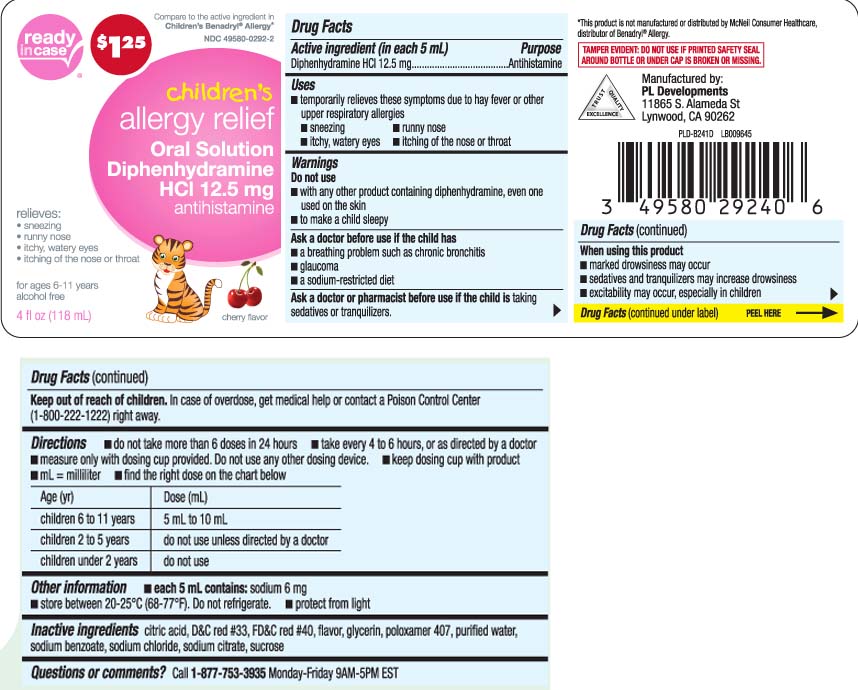
Do not use

  • with any other drug containing diphenhydramine, even one used on skin
  • to make a child sleepy

Ask a doctor before use if the child has

  • a breathing problem such as chronic bronchitis
  • glaucoma
  • a sodium-restricted diet

Ask a doctor or pharmacist before use if the child is

taking sedatives or tranquilizers.

When using this product

  • marked drowsiness may occur
  • sedatives and tranquilizers may increase drowsiness
  • excitability may occur, especially in children

Keep out of the reach of children.

In case of overdose, get medical help or contact a Poison Control Center right away (1-800-222-1222).

Ask a doctor before use if the child has

  • a breathing problem such as chronic bronchitis
  • glaucoma
  • a sodium-restricted diet

Ask a doctor or pharmacist before use if the child is

taking sedatives or tranquilizers.

FDA Safety Alerts

There are currently no FDA safety alerts available for this drug.

Manufacturer Warnings

There is currently no manufacturer warning information available for this drug.

FDA Labeling Changes

There are currently no FDA labeling changes available for this drug.

Uses

  • temporarily relieves these symptoms due to hay fever or other upper respiratory allergies:
  • runny nose
  • sneezing
  • itchy, watery eyes
  • itching of the nose or throat

History

There is currently no drug history available for this drug.

Other Information

There are no additional details available for this product.

Childrens Allergy Manufacturers

  • Freds Inc
    Childrens Allergy | Freds Inc
    No Recall

    Childrens Allergy | Freds Inc

    Childrens Allergy | Freds Inc
    find the right dose on the chart mL = milliliter, tsp = teaspoon measure only with dosing cup provided keep dosing cup with product take every 4 to 6 hours, or as directed by a doctor do not take more than 6 doses in 24 hours  age (yrs) dose (mL or tsp)  children 6 to 11 years  5 mL (1 tsp) to 10 mL (2 tsp)  children 2 to 5 years  do not use unless directed by a doctor  children under 2 years  do not use
  • Chain Drug Consortium, Llc
    Childrens Allergy | Chain Drug Consortium, Llc
    No Recall

    Childrens Allergy | Chain Drug Consortium, Llc

    Childrens Allergy | Chain Drug Consortium, Llc
    take every 4 to 6 hours, or as directed by a doctor do not take more than 6 doses in 24 hours mL = milliliter 
    Age (yr)
    Dose (mL)
    children under 6 years of age
    ask a doctor
    children 6 years to under 12 years of age
    5 mL to 10 mL

    Attention: Use only enclosed dosing cup specifically designed for use with this product. Do not use any other dosing device.

  • Childrens Allergy | Aaron Industries Inc.
    No Recall

    Childrens Allergy | Aaron Industries Inc.

    Childrens Allergy | Aaron Industries Inc.
    find the right dose on the chart mL = milliliter, tsp = teaspoon measure only with dosing cup provided keep dosing cup with product take every 4 to 6 hours, or as directed by a doctor do not take more than 6 doses in 24 hours Age (yrs) Dose (mL or tsp)  children 6 to 11 years  5 mL (1 tsp) to 10 mL (2tsp)  children 2 to 5 years  do not use unless directed by a doctor  children under 2 years  do not use
  • Publix Super Markets Inc
    Childrens Allergy | Publix Super Markets Inc
    No Recall

    Childrens Allergy | Publix Super Markets Inc

    Childrens Allergy | Publix Super Markets Inc
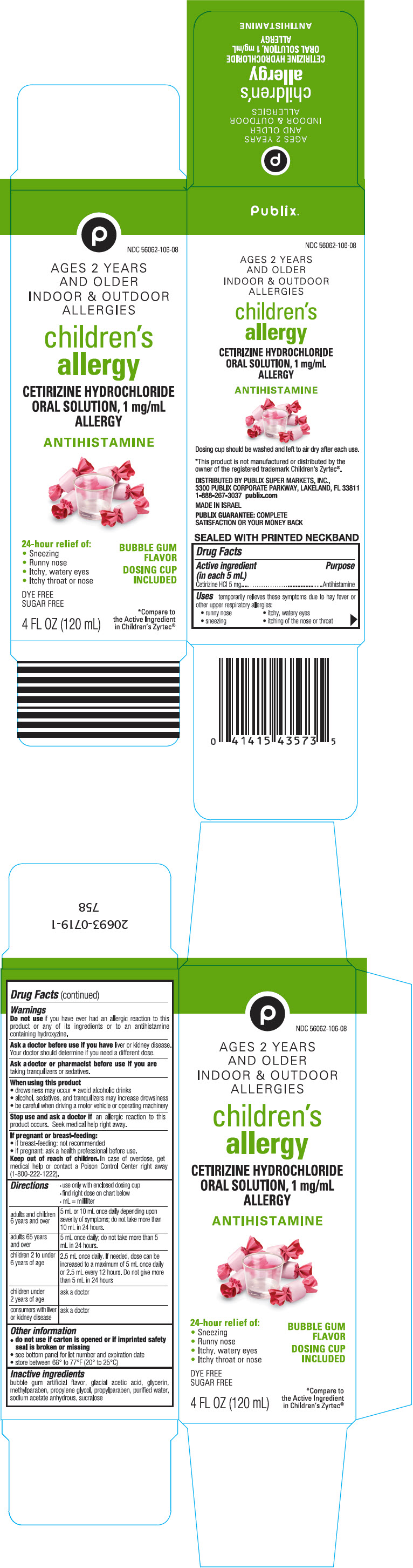
    use only with enclosed dosing cup find right dose on chart below mL = milliliter adults and children 6 years and over 5 mL or 10 mL once daily depending upon severity of symptoms; do not take more than 10 mL in 24 hours. adults 65 years and over 5 mL once daily; do not take more than 5 mL in 24 hours. children 2 to under 6 years of age 2.5 mL once daily. If needed, dose can be increased to a maximum of 5 mL once daily or 2.5 mL every 12 hours. Do not give more than 5 mL in 24 hours. children under 2 years of age ask a doctor consumers with liver or kidney disease ask a doctor
  • Best Choice (Valu Merchandisers Company)
    Childrens Allergy | Best Choice (valu Merchandisers Company)
    No Recall

    Childrens Allergy | Best Choice (valu Merchandisers Company)

    Childrens Allergy | Best Choice (valu Merchandisers Company)
    find the right dose on the chart mL= milliliter, tsp=teaspoon measure only with dosing cup provided keep dosing cup with product take every 4 to 6 hours, or as directed by a doctor do not take more than 6 doses in 24 hours age (yr)  Dose (mL or tsp) children 6 to 11 years  1 to 2 tsp (5 mL to 10 mL) every 4 to 6 hours  children 4 to 5 years  do  not use unless directed by a doctor  children under 4 years  do not use
  • Family Dollar (Family Wellness)
    Childrens Allergy | Family Dollar (family Wellness)
    No Recall

    Childrens Allergy | Family Dollar (family Wellness)

    Childrens Allergy | Family Dollar (family Wellness)
    find the right dose on the chart mL= milliliter, tsp=teaspoon measure only with dosing cup provided keep dosing cup with product take every 4 to 6 hours, or as directed by a doctor do not take more than 6 doses in 24 hours age (yr)  dose (mL or tsp) children 6 to 11 years  1 to 2 tsp (5 mL to 10 mL) every 4 to 6 hours  children 4 to 5 years  do  not use unless directed by a doctor  children under 4 years  do not use
  • Quality Choice (Chain Drug Marketing Association)
    Childrens Allergy | Quality Choice (chain Drug Marketing Association)
    No Recall

    Childrens Allergy | Quality Choice (chain Drug Marketing Association)

    Childrens Allergy | Quality Choice (chain Drug Marketing Association)
    use only with enclosed dosing cup  adults and children 6 years and over  1 teaspoonful (5 mL) or 2 teaspoonfuls (10 mL) once daily depending upon severity of symptoms; do not take more than 2 teaspoonfuls (10 mL) in 24 hours.  adults 65 years and over  1 teaspoonful (5 ML) once daily; do not take more than 1 teaspoonful (5 mL) in 24 hours  children 2 to under 6 years of age  1/2 teaspoonful (2.5 mL) once dailly. If needed, dose can be increased to a maximum of 1 teaspoonful (5 mL) once daily or 1/2 teaspoonful (2.5 mL) every 12 hours. Do not give more than 1 teaspoonful (5 mL) in 24 hours.  children under 2 years of age  ask a doctor  consumers with liver or kidney disease  ask a doctor
  • C.d.m.a., Inc.
    Childrens Allergy | C.d.m.a., Inc.
    No Recall

    Childrens Allergy | C.d.m.a., Inc.

    Childrens Allergy | C.d.m.a., Inc.
    take every 4 to 6 hours, or as directed by a doctor do not take more than 6 doses in 24 hours mL = milliliter  Age (yr)
    Dose (mL)
    children under 6 years of age
    ask a doctor
    children 6 years to under 12 years of age
    5 mL to 10 mL

    Attention: Use only enclosed dosing cup specifically designed for use with this product. Do not use any other dosing device.

  • Publix Super Markets Inc
    Childrens Allergy | Publix Super Markets Inc
    No Recall

    Childrens Allergy | Publix Super Markets Inc

    Childrens Allergy | Publix Super Markets Inc
    use only with enclosed dosing cup adults and children 6 years and over 1 teaspoonful (5 mL) or 2 teaspoonfuls (10 mL) once daily depending upon severity of symptoms; do not take more than 2 teaspoonfuls (10 mL) in 24 hours. adults 65 years and over 1 teaspoonful (5 mL) once daily; do not take more than 1 teaspoonful (5 mL) in 24 hours. children 2 to under 6 years of age 1/2 teaspoonful (2.5 mL) once daily. If needed, dose can be increased to a maximum of 1 teaspoonful (5 mL) once daily or 1/2 teaspoonful (2.5 mL) every 12 hours. Do not give more than 1 teaspoonful (5 mL) in 24 hours. children under 2 years of age ask a doctor consumers with liver or kidney disease ask a doctor
  • Dollar General
    Childrens Allergy | Dollar General
    No Recall

    Childrens Allergy | Dollar General

    Childrens Allergy | Dollar General

    • use only enclosed dosing cup designed for use with
    this product. Do not use any other dosing device.
    • take every 4 to 6 hours
    • do not exceed 6 doses in a 24-hour period

    age                                                           dose
    children 6 years to under 12 years      1 to 2 teaspoonfuls (12.5 mg to 25 mg)
    children 4 years to under 6 years        do not use unless directed by a doctor
    children under 4 years                          do not use

  • Nash-finch Company
    Childrens Allergy | Nash-finch Company
    No Recall

    Childrens Allergy | Nash-finch Company

    Childrens Allergy | Nash-finch Company

    • use only enclosed dosing cup designed for use with
    this product. Do not use any other dosing device.
    • take every 4 to 6 hours
    • do not exceed 6 doses in a 24-hour period

    age                                                           dose
    children 6 years to under 12 years      1 to 2 teaspoonfuls (12.5 mg to 25 mg)
    children 4 years to under 6 years        do not use unless directed by a doctor
    children under 4 years                          do not use

  • Rite Aid
    Childrens Allergy | Rite Aid
    No Recall

    Childrens Allergy | Rite Aid

    Childrens Allergy | Rite Aid

    • use only enclosed dosing cup designed for use with
    this product. Do not use any other dosing device.
    • take every 4 to 6 hours
    • do not exceed 6 doses in a 24-hour period

    age                                                           dose
    children 6 years to under 12 years      1 to 2 teaspoonfuls (12.5 mg to 25 mg)
    children 4 years to under 6 years        do not use unless directed by a doctor
    children under 4 years                          do not use

  • Aaron Industries, Inc.
    Childrens Allergy | Aaron Industries, Inc.
    No Recall

    Childrens Allergy | Aaron Industries, Inc.

    Childrens Allergy | Aaron Industries, Inc.

    • use only enclosed dosing cup designed for use with
    this product. Do not use any other dosing device.
    • take every 4 to 6 hours
    • do not exceed 6 doses in a 24-hour period

    age                                                           dose
    children 6 years to under 12 years      1 to 2 teaspoonfuls (12.5 mg to 25 mg)
    children 4 years to under 6 years        do not use unless directed by a doctor
    children under 4 years                          do not use

  • American Sales Company
    Childrens Allergy | American Sales Company
    No Recall

    Childrens Allergy | American Sales Company

    Childrens Allergy | American Sales Company

    • use only enclosed dosing cup designed for use with
    this product. Do not use any other dosing device.
    • take every 4 to 6 hours
    • do not exceed 6 doses in a 24-hour period

    age                                                           dose
    children 6 years to under 12 years      1 to 2 teaspoonfuls (12.5 mg to 25 mg)
    children 4 years to under 6 years        do not use unless directed by a doctor
    children under 4 years                          do not use

  • H.e.b
    Childrens Allergy | H.e.b
    No Recall

    Childrens Allergy | H.e.b

    Childrens Allergy | H.e.b

    • use only enclosed dosing cup designed for use with
    this product. Do not use any other dosing device.
    • take every 4 to 6 hours
    • do not exceed 6 doses in a 24-hour period

    age                                                           dose
    children 6 years to under 12 years      1 to 2 teaspoonfuls (12.5 mg to 25 mg)
    children 4 years to under 6 years        do not use unless directed by a doctor
    children under 4 years                          do not use

  • Rite Aid
    Childrens Allergy | Rite Aid
    No Recall

    Childrens Allergy | Rite Aid

    Childrens Allergy | Rite Aid

    • use only enclosed dosing cup designed for use with
    this product. Do not use any other dosing device.
    • take every 4 to 6 hours
    • do not exceed 6 doses in a 24-hour period

    age                                                           dose
    children 6 years to under 12 years      1 to 2 teaspoonfuls (12.5 mg to 25 mg)
    children 4 years to under 6 years        do not use unless directed by a doctor
    children under 4 years                          do not use

  • Capricorn Pharma Inc.
    Childrens Allergy | Capricorn Pharma Inc.
    No Recall

    Childrens Allergy | Capricorn Pharma Inc.

    Childrens Allergy | Capricorn Pharma Inc.
    Take every 4 to 6 hours Do not take more than 6 times in 24 hours Adults and Children 12 years of age and over 2 to 4 tablets Children 6 to under 12 years of age 1 to 2 tablets Children under 6 years of age Consult a doctor Children under 4 years of age Do not use
  • Harris Teeter
    Childrens Allergy | Harris Teeter
    No Recall

    Childrens Allergy | Harris Teeter

    Childrens Allergy | Harris Teeter

    • use only enclosed dosing cup designed for use with
    this product. Do not use any other dosing device.
    • take every 4 to 6 hours
    • do not exceed 6 doses in a 24-hour period

    age                                                           dose
    children 6 years to under 12 years      1 to 2 teaspoonfuls (12.5 mg to 25 mg)
    children 4 years to under 6 years        do not use unless directed by a doctor
    children under 4 years                          do not use

  • Childrens Allergy | H E B
    No Recall

    Childrens Allergy | H E B

    Childrens Allergy | H E B
    use only with enclosed dosing cup adults and children 6 years and over 1 teaspoonful (5 mL) or 2 teaspoonfuls (10 mL) once daily depending upon severity of symptoms; do not take more than 2 teaspoonfuls (10 mL) in 24 hours. adults 65 years and over 1 teaspoonful (5 mL) once daily; do not take more than 1 teaspoonful (5 mL) in 24 hours. children 2 to under 6 years of age 1/2 teaspoonful (2.5 mL) once daily. If needed, dose can be increased to a maximum of 1 teaspoonful (5 mL) once daily or 1/2 teaspoonful (2.5 mL) every 12 hours. Do not give more than 1 teaspoonful (5 mL) in 24 hours. children under 2 years of age ask a doctor consumers with liver or kidney disease ask a doctor
  • Childrens Allergy | Demoulas Market Basket
    No Recall

    Childrens Allergy | Demoulas Market Basket

    Childrens Allergy | Demoulas Market Basket

    Directions

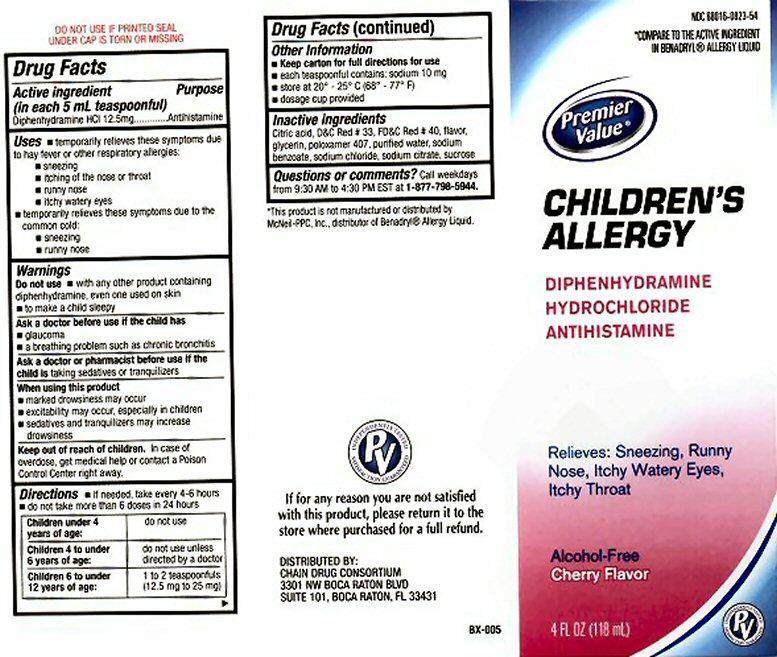
    •    if needed, take every 4-6 hours
    •    do not take more than 6 doses in 24 hours

    Children under 4 years of age:                                    do not use
    Children 4 to under 6 years of age:                             do not use unless directed by a doctor
    Children 6 to under 12 years of age:                           1 to 2 teaspoonfuls
                                                                                   (12.5 mg to 25 mg)

  • Chain Drug Consortium, Llc
    Childrens Allergy | Chain Drug Consortium, Llc
    No Recall

    Childrens Allergy | Chain Drug Consortium, Llc

    Childrens Allergy | Chain Drug Consortium, Llc

    Directions

    •    if needed, take every 4-6 hours
    •    do not take more than 6 doses in 24 hours

    Children under 4 years of age:                                          do not use
    Children 4 to under 6 years of age:                                   do not use unless directed by a doctor
    Children 6 to under 12 years of age:                                 1 to 2 teaspoonfuls (12.5 mg to 25 mg)

  • Chain Drug Consortium, Llc
    Childrens Allergy | Chain Drug Consortium, Llc
    No Recall

    Childrens Allergy | Chain Drug Consortium, Llc

    Childrens Allergy | Chain Drug Consortium, Llc

    Directions

    •    if needed, take every 4-6 hours
    •    do not take more than 6 doses in 24 hours

    Children under 4 years of age:                                          do not use
    Children 4 to under 6 years of age:                                   do not use unless directed by a doctor
    Children 6 to under 12 years of age:                                 1 to 2 teaspoonfuls (12.5 mg to 25 mg)

  • Walgreen Company
    Childrens Allergy | Walgreen Company
    No Recall

    Childrens Allergy | Walgreen Company

    Childrens Allergy | Walgreen Company
    • use only with enclosed dosing cup

    adults and children 6 years and over

    1 teaspoonful (5 mL) or 2 teaspoonfuls (10 mL) once daily depending upon severity of symptoms; do not take more than 2 teaspoonfuls (10 mL) in 24 hours.

    adults 65 years and over

    1 teaspoonful (5 mL) once daily; do not take more than 1 teaspoonful (5 mL) in 24 hours.

    children 2 to under 6 years of age

    1/2 teaspoonful (2.5 mL) once daily. If needed, dose can be increased to a maximum of 1 teaspoonful (5 mL) once daily or 1/2 teaspoonful (2.5 mL) every 12 hours. Do not give more than 1 teaspoonful (5 mL) in 24 hours.

    children under 2 years of age

    ask a doctor

    consumers with liver or kidney disease

    ask a doctor

  • Publix Super Markets Inc
    Childrens Allergy | Publix Super Markets Inc
    No Recall

    Childrens Allergy | Publix Super Markets Inc

    Childrens Allergy | Publix Super Markets Inc
    • find right dose on chart below • use only enclosed dosing cup designed for use with this product. Do not use any other dosing device. • take every 4 to 6 hours • do not take more than 6 doses in 24 hours

    Age (yr)

    Dose

    children under 2 years

    do not use

    children 2 to 5 years

    do not use unless directed by a doctor

    children 6 to 11 years

    5 to 10 mL (1 to 2 tsp)

    Attention: use only enclosed dosing cup designed for use with this product. Do not use any other dosing device

  • Stephen L. Lafrance Pharmacy, Inc.
    Childrens Allergy | Stephen L. Lafrance Pharmacy, Inc.
    No Recall

    Childrens Allergy | Stephen L. Lafrance Pharmacy, Inc.

    Childrens Allergy | Stephen L. Lafrance Pharmacy, Inc.
    dissolve in mouth or chew before swallowing take every 4 to 6 hours do not take more than 6 doeses in 24 hours children under 2 years of age  do not use  children 2 to under 6 years of age  do not use unless
    directed by a doctor  children 6 to under 12 years of age  1 to 2 tablets  adults and children 12 years of age
    and over   2 to 4 tablets
  • Quality Choice (Chain Drug Marketing Association)
    Childrens Allergy | Quality Choice (chain Drug Marketing Association)
    No Recall

    Childrens Allergy | Quality Choice (chain Drug Marketing Association)

    Childrens Allergy | Quality Choice (chain Drug Marketing Association)
    do not take more than 6 doses in any 24-hour period  measure only with dosing cup provided keep dosing cup with product mL = milliliter, tsp = teaspoon  age  dose  children 6 to 11 years 1 to 2 tsp (5 mL to 10 mL) every 4 to 6 hours  children 4 to 5 years  do not use unless directed by a doctor  children under 4 years do not use
  • Quality Choice (Chain Drug Marketing Association)
    Childrens Allergy | Smiths Medical Asd, Inc.
    No Recall

    Childrens Allergy | Smiths Medical Asd, Inc.

    Childrens Allergy | Smiths Medical Asd, Inc.

    Table I (Recommended Dosages) summarizes the recommended volumes and concentrations of Lidocaine Hydrochloride Injection, USP for various types of anesthetic procedures. The dosages suggested in this table are for normal healthy adults and refer to the use of epinephrine-free solutions. When larger volumes are required only solutions containing epinephrine should be used, except in those cases where vasopressor drugs may be contraindicated.

    There have been adverse event reports of chondrolysis in patients receiving intra-articular infusions of local anesthetics following arthroscopic and other surgical procedures. Lidocaine is not approved for this use (see WARNINGS and DOSAGE AND ADMINISTRATION).

    These recommended doses serve only as a guide to the amount of anesthetic required for most routine procedures. The actual volumes and concentrations to be used depend on a number of factors such as type and extent of surgical procedure, depth of anesthesia and degree of muscular relaxation required, duration of anesthesia required, and the physical condition of the patient. In all cases the lowest concentration and smallest dose that will produce the desired result should be given. Dosages should be reduced for children and for elderly and debilitated patients and patients with cardiac and/or liver disease.

    The onset of anesthesia, the duration of anesthesia and the degree of muscular relaxation are proportional to the volume and concentration (i.e., total dose) of local anesthetic used. Thus, an increase in volume and concentration of Lidocaine Hydrochloride Injection, USP will decrease the onset of anesthesia, prolong the duration of anesthesia, provide a greater degree of muscular relaxation and increase the segmental spread of anesthesia. However, increasing the volume and concentration of Lidocaine Hydrochloride Injection, USP may result in a more profound fall in blood pressure when used in epidural anesthesia. Although the incidence of side effects with lidocaine is quite low, caution should be exercised when employing large volumes and concentrations, since the incidence of side effects is directly proportional to the total dose of local anesthetic agent injected.

    Epidural Anesthesia

    For an epidural test dose, only the following available specific product of Lidocaine Hydrochloride and Epinephrine Injection, USP by Hospira is recommended:

    1.5% with epinephrine 1:200,000.................... 5 mL single-dose ampuls

    For epidural anesthesia, only the following available specific products of Lidocaine Hydrochloride and Epinephrine Injection, USP by Hospira are recommended:

    1% with epinephrine 1:200,000............................ 30 mL single-dose ampuls

    30 mL single-dose vials

    1.5% with epinephrine 1:200,000.......................... 30 mL single-dose ampuls

    30 mL single-dose vials

    2% with epinephrine 1:200,000................................ 20 mL single-dose vials

    Although these solutions are intended specifically for epidural anesthesia, they may also be used for infiltration and peripheral nerve block provided they are employed as single-dose units. These solutions contain no bacteriostatic agent.

    In epidural anesthesia, the dosage varies with the number of dermatomes to be anesthetized (generally 2-3 mL of the indicated concentration per dermatome).

    Caudal and Lumbar Epidural Block: As a precaution against the adverse experiences sometimes observed following unintentional penetration of the subarachnoid space, a test dose such as 2-3 mL of 1.5% lidocaine injection should be administered at least 5 minutes prior to injecting the total volume required for a lumbar or caudal epidural block. The test dose should be repeated if the patient is moved in a manner that may have displaced the catheter. Epinephrine, if contained in the test dose (10-15 µg have been suggested), may serve as a warning of unintentional intravascular injection. If injected into a blood vessel, this amount of epinephrine is likely to produce a transient “epinephrine response” within 45 seconds, consisting of an increase in heart rate and systolic blood pressure, circumoral pallor, palpitations and nervousness in the unsedated patient. The sedated patient may exhibit only a pulse rate increase of 20 or more beats per minute for 15 or more seconds. Patients on beta-blockers may not manifest changes in heart rate, but blood pressure monitoring can detect an evanescent rise in systolic blood pressure. Adequate time should be allowed for onset of anesthesia after administration of each test dose. The rapid injection of a large volume of Lidocaine Hydrochloride and Epinephrine Injection, USP through the catheter should be avoided, and, when feasible, fractional doses should be administered.

    In the event of the known injection of a large volume of local anesthetic solution into the subarachnoid space, after suitable resuscitation and if the catheter is in place, consider attempting the recovery of drug by draining a moderate amount of cerebrospinal fluid (such as 10 mL) through the epidural catheter.

    Maximum Recommended Dosages

    Adults: For normal healthy adults, the individual maximum dose of Lidocaine Hydrochloride and Epinephrine Injection, USP should not exceed 7 mg/kg (3.5 mg/lb) of body weight and in general it is recommended that the maximum total dose not exceed 500 mg. When used without epinephrine, the maximum individual dose should not exceed 4.5 mg/kg (2 mg per lb) of body weight, and in general it is recommended that the maximum total dose does not exceed 300 mg. For continuous epidural or caudal anesthesia, the maximum recommended dosage should not be administered at intervals of less than 90 minutes. When continuous lumbar or caudal epidural anesthesia is used for non-obstetrical procedures, more drug may be administered if required to produce adequate anesthesia.

    The maximum recommended dose per 90 minute period of lidocaine hydrochloride for paracervical block in obstetrical patients and non-obstetrical patients is 200 mg total. One half of the total dose is usually administered to each side. Inject slowly five minutes between sides. (See also discussion of paracervical block in PRECAUTIONS).

    Pediatric Population: It is difficult to recommend a maximum dose of any drug for pediatric patients, since this varies as a function of age and weight. For pediatric patients over 3 years of age who have a normal lean body mass and normal body development, the maximum dose is determined by the child’s age and weight. For example, in a child of 5 years weighing 50 lbs., the dose of lidocaine HCl should not exceed 75-100 mg (1.5-2 mg/lb).

    In order to guard against systemic toxicity, the lowest effective concentration and lowest effective dose should be used at all times. In some cases it will be necessary to dilute available concentrations with 0.9% sodium chloride injection in order to obtain the required final concentration.

    FOR EPIDURAL USE ONLY.

    Note: Parenteral drug products should be inspected visually for particulate matter and discoloration prior to administration whenever the solution and container permit. Do not use the injection if its color is pinkish or darker than slightly yellow or if it contains a precipitate.

    Table I Recommended Dosages of Lidocaine Hydrochloride Injection, USP for Various Anesthetic Procedures in Normal Healthy Adults

    Lidocaine Hydrochloride Injection, USP (without Epinephrine)

    Procedure

    Conc. (%)

    Vol. (mL)

    Total Dose (mg)

    Infiltration
    Percutaneous
    Intravenous Regional

    0.5 or 1.0

    0.5


    1-60

    10-60


    5-300

    50-300

    Peripheral Nerve Blocks, e.g.

    Brachial

    Dental

    Intercostal

    Paravertebral

    Pudendal (each side)

    Paracervical Obstetrical Analgesia (each side)

    1.5

    2.0

    1.0

    1.0

    1.0

    1.0

    15-20

    1-5

    3

    3-5

    10

    10

    225-300

    20-100

    30

    30-50

    100

    100

    Sympathetic Nerve Blocks, e.g.

    Cervical (stellate ganglion)

    Lumbar

    1.0

    1.0

    5

    5-10

    50

    50-100

    Central Neural Blocks

    Epidural*

      Thoracic

      Lumbar

        Analgesia

        Anesthesia


      Caudal

        Obstetrical Analgesia

        Surgical Anesthesia


    1.0


    1.0

    1.5

    2.0


    1.0

    1.5

    20-30


    25-30

    15-20

    10-15


    20-30

    15-20

    200-300


    250-300

    225-300

    200-300


    200-300

    225-300

    *Dose determined by number of dermatomes to be anesthetized (2 to 3 mL/ dermatome).

    THE ABOVE SUGGESTED CONCENTRATIONS AND VOLUMES SERVE ONLY AS A GUIDE. OTHER VOLUMES AND CONCENTRATIONS MAY BE USED PROVIDED THE TOTAL MAXIMUM RECOMMENDED DOSE IS NOT EXCEEDED.

    Sterilization, Storage and Technical Procedures: Disinfecting agents containing heavy metals, which cause release of respective ions (mercury, zinc, copper, etc.) should not be used for skin or mucous membrane disinfection as they have been related to incidence of swelling and edema. When chemical disinfection of multi-dose vials is desired, either isopropyl alcohol (91%) or 70% ethyl alcohol is recommended. Many commercially available brands of rubbing alcohol, as well as solutions of ethyl alcohol not of USP grade, contain denaturants which are injurious to rubber and, therefore, are not to be used. It is recommended that chemical disinfection be accomplished by wiping the vial stopper or ampul thoroughly with cotton or gauze that has been moistened with the recommended alcohol just prior to use.

    Do not autoclave.

    Before Sodium Chloride Injection, USP, 0.9% is used as a vehicle for the administration of a drug, specific references should be checked for any possible incompatibility with sodium chloride. The volume of the preparation to be used for diluting or dissolving any drug for injection is dependent on the vehicle concentration, dose and route of administration as recommended by the manufacture.

    Sodium Chloride Injection, USP, 0.9% is also indicated for use in flushing intravenous catheters. Prior to and after administration of the medication, the intravenous catheter should be flushed in its entirety with Sodium Chloride Injection, USP, 0.9%. Use in accord with any warnings or precautions appropriate to the medication being administered. Parental drug products should be inspected visually for particulate matter and discoloration prior to administration, whenever solution and container permit.

    INSTRUCTIONS FOR USE

    To open ampuls, using gauze, place thumb and forefinger on color line, break at constriction.

    Table 1 (Recommended Dosages) summarizes the recommended volumes and concentrations of Lidocaine Hydrochloride Injection, USP for various types of anesthetic procedures. The dosages suggested in this table are for normal healthy adults and refer to the use of epinephrine-free solutions. When larger volumes are required only solutions containing epinephrine should be used, except in those cases where vasopressor drugs may be contraindicated.

    There have been adverse event reports of chondrolysis in patients receiving intra-articular infusions of local anesthetics following arthroscopic and other surgical procedures. Lidocaine is not approved for this use (see WARNINGS and DOSAGE AND ADMINISTRATION).

    These recommended doses serve only as a guide to the amount of anesthetic required for most routine procedures. The actual volumes and concentrations to be used depend on a number of factors such as type and extent of surgical procedure, depth of anesthesia and degree of muscular relaxation required, duration of anesthesia required, and the physical condition of the patient. In all cases the lowest concentration and smallest dose that will produce the desired result should be given. Dosages should be reduced for children and for elderly and debilitated patients and patients with cardiac and/or liver disease.

    The onset of anesthesia, the duration of anesthesia and the degree of muscular relaxation are proportional to the volume and concentration (i.e., total dose) of local anesthetic used. Thus, an increase in volume and concentration of Lidocaine Hydrochloride Injection will decrease the onset of anesthesia, prolong the duration of anesthesia, provide a greater degree of muscular relaxation and increase the segmental spread of anesthesia. However, increasing the volume and concentration of Lidocaine Hydrochloride Injection may result in a more profound fall in blood pressure when used in epidural anesthesia. Although the incidence of side effects with lidocaine is quite low, caution should be exercised when employing large volumes and concentrations, since the incidence of side effects is directly proportional to the total dose of local anesthetic agent injected.

    For intravenous regional anesthesia, only the 50 mL single-dose vial containing 0.5% Lidocaine Hydrochloride Injection, USP should be used.

    Epidural Anesthesia

    For epidural anesthesia, only the following available specific products of Lidocaine Hydrochloride Injection by Hospira are recommended:

    1%. . . . . . . . . . . . . . . . . . . . 30 mL single-dose teartop vials

    1.5%. . . . . . . . . . . . . . . . . . . . . . . 20 mL single-dose ampuls

    2%. . . . . . . . . . . . . . . . . . . . . . . . . 10 mL single-dose ampuls

    Although these solutions are intended specifically for epidural anesthesia, they may also be used for infiltration and peripheral nerve block provided they are employed as single dose units. These solutions contain no bacteriostatic agent. In epidural anesthesia, the dosage varies with the number of dermatomes to be anesthetized (generally 2−3 mL of the indicated concentration per dermatome).

    Caudal and Lumbar Epidural Block: As a precaution against the adverse experiences sometimes observed following unintentional penetration of the subarachnoid space, a test dose such as 2−3 mL of 1.5% lidocaine hydrochloride should be administered at least 5 minutes prior to injecting the total volume required for a lumbar or caudal epidural block. The test dose should be repeated if the patient is moved in a manner that may have displaced the catheter. Epinephrine, if contained in the test dose (10−15 mcg have been suggested), may serve as a warning of unintentional intravascular injection. If injected into a blood vessel, this amount of epinephrine is likely to produce a transient "epinephrine response" within 45 seconds, consisting of an increase in heart rate and systolic blood pressure, circumoral pallor, palpitations and nervousness in the unsedated patient. The sedated patient may exhibit only a pulse rate increase of 20 or more beats per minute for 15 or more seconds. Patients on beta-blockers may not manifest changes in heart rate, but blood pressure monitoring can detect an evanescent rise in systolic blood pressure. Adequate time should be allowed for onset of anesthesia after administration of each test dose. The rapid injection of a large volume of Lidocaine Hydrochloride Injection through the catheter should be avoided, and, when feasible, fractional doses should be administered.

    In the event of the known injection of a large volume of local anesthetic solutions into the subarachnoid space, after suitable resuscitation and if the catheter is in place, consider attempting the recovery of drug by draining a moderate amount of cerebrospinal fluid (such as 10 mL) through the epidural catheter.

    Maximum Recommended Dosages

    NOTE: The products accompanying this insert do not contain epinephrine.

    Adults: For normal healthy adults, the individual maximum recommended dose of lidocaine HCl with epinephrine should not exceed 7 mg/kg (3.5 mg/lb) of body weight and in general it is recommended that the maximum total dose not exceed 500 mg. When used without epinephrine, the maximum individual dose should not exceed 4.5 mg/kg (2 mg/lb) of body weight and in general it is recommended that the maximum total dose does not exceed 300 mg. For continuous epidural or caudal anesthesia, the maximum recommended dosage should not be administered at intervals of less than 90 minutes. When continuous lumbar or caudal epidural anesthesia is used for non-obstetrical procedures, more drug may be administered if required to produce adequate anesthesia.

    The maximum recommended dose per 90 minute period of lidocaine hydrochloride for paracervical block in obstetrical patients and non-obstetrical patients is 200 mg total. One-half of the total dose is usually administered to each side. Inject slowly five minutes between sides. (See also discussion of paracervical block in PRECAUTIONS).

    For intravenous regional anesthesia, the dose administered should not exceed 4 mg/kg in adults.

    Children: It is difficult to recommend a maximum dose of any drug for children, since this varies as a function of age and weight. For children over 3 years of age who have a normal lean body mass and normal body development, the maximum dose is determined by the child’s age and weight. For example, in a child of 5 years weighing 50 lbs., the dose of lidocaine HCl should not exceed 75 — 100 mg (1.5 — 2 mg/lb). The use of even more dilute solutions (i.e., 0.25 — 0.5%) and total dosages not to exceed 3 mg/kg (1.4 mg/lb) are recommended for induction of intravenous regional anesthesia in children.

    In order to guard against systemic toxicity, the lowest effective concentration and lowest effective dose should be used at all times. In some cases it will be necessary to dilute available concentrations with 0.9% sodium chloride injection in order to obtain the required final concentration.

    Parenteral drug products should be inspected visually for particulate matter and discoloration prior to administration whenever the solution and container permit. Solutions that are discolored and/or contain particulate matter should not be used.

    Table 1

    Recommended Dosages of Lidocaine Hydrochloride Injection, USP for Various Anesthetic

    Procedures in Normal Healthy Adults

    Lidocaine Hydrochloride Injection, USP (without Epinephrine)

    Procedure

    Conc. (%)

    Vol. (mL)

    Total Dose (mg)

    Infiltration

    Percutaneous

    0.5 or 1.0

    1−60

    5−300

    Intravenous Regional

    0.5

    10−60

    50−300

    Peripheral Nerve Blocks, e.g.

    Brachial

    1.5

    15−20

    225−300

    Dental

    2.0

    1−5

    20−100

    Intercostal

    1.0

    3

    30

    Paravertebral

    1.0

    3−5

    30−50

    Pudendal (each side)

    1.0

    10

    100

    Paracervical

    Obstetrical Analgesia

    (each side)

    1.0

    10

    100

    Sympathetic Nerve Blocks, e.g.

    Cervical (stellate ganglion)

    1.0

    5

    50

    Lumbar

    1.0

    5−10

    50−100

    Central Neural Blocks

    Epidural*

    Thoracic

    1.0

    20−30

    200−300

    Lumbar

    Analgesia

    1.0

    25−30

    250−300

    Anesthesia

    1.5

    15−20

    225−300

    2.0

    10−15

    200−300

    Caudal

    Obstetrical Analgesia

    1.0

    20−30

    200−300

    Surgical Anesthesia

    1.5

    15−20

    225−300

    *Dose determined by number of dermatomes to be anesthetized (2 to 3 mL/dermatome).

    THE ABOVE SUGGESTED CONCENTRATIONS AND VOLUMES SERVE ONLY AS A GUIDE. OTHER VOLUMES AND CONCENTRATIONS MAY BE USED PROVIDED THE TOTAL MAXIMUM RECOMMENDED DOSE IS NOT EXCEEDED.

    Sterilization, Storage and Technical Procedures: Disinfecting agents containing heavy metals, which cause release of respective ions (mercury, zinc, copper, etc.) should not be used for skin or mucous membrane disinfection as they have been related to incidence of swelling and edema. When chemical disinfection of multi-dose vials is desired, either isopropyl alcohol (91%) or 70% ethyl alcohol is recommended. Many commercially available brands of rubbing alcohol, as well as solutions of ethyl alcohol not of USP grade, contain denaturants which are injurious to rubber and, therefore, are not to be used. It is recommended that chemical disinfection be accomplished by wiping the vial stopper thoroughly with cotton or gauze that has been moistened with the recommended alcohol just prior to use.

  • Safeway, Inc.
    Childrens Allergy | Safeway, Inc.
    No Recall

    Childrens Allergy | Safeway, Inc.

    Childrens Allergy | Safeway, Inc.
    do not take more than 6 doses in any 24-hour period measure only with dosing cup provided keep dosing cup with product tsp = teaspoon, mL = milliliter age dose  children 6 to 11 years  1 to 2 tsp (5 mL to 10 mL) every 4 to 6 hours  children 4 to 5 years  do not use unless directed by a doctor  children under 4 years  do not use
  • Childrens Allergy | Discount Drug Mart
    No Recall

    Childrens Allergy | Discount Drug Mart

    Childrens Allergy | Discount Drug Mart
    if needed, take every 4-6 hours do not take more than 6 doses in 24 hours  Children under 4 years of age:  do not use  Children 4 to under 6 years of age:  do not use unless directed by a doctor  Children 6 to under 12 years of age:  1 to 2 teaspoonfuls (12.5 mg to 25 mg)

  • Childrens Allergy | Aafes/your Military Exchanges
    No Recall

    Childrens Allergy | Aafes/your Military Exchanges

    Childrens Allergy | Aafes/your Military Exchanges
    find the right dose on the chart mL = milliliter measure only with dosing cup provided keep dosing cup with product take every 4 to 6 hours, or as directed by a doctor do not take more than 6 doses in 24 hours Age (yrs) Dose (mL or tsp)  children 6 to 11 years  5 mL  to 10 mL  children 2 to 5 years  do not use unless directed by a doctor  children under 2 years  do not use