2.1 General Dose Information
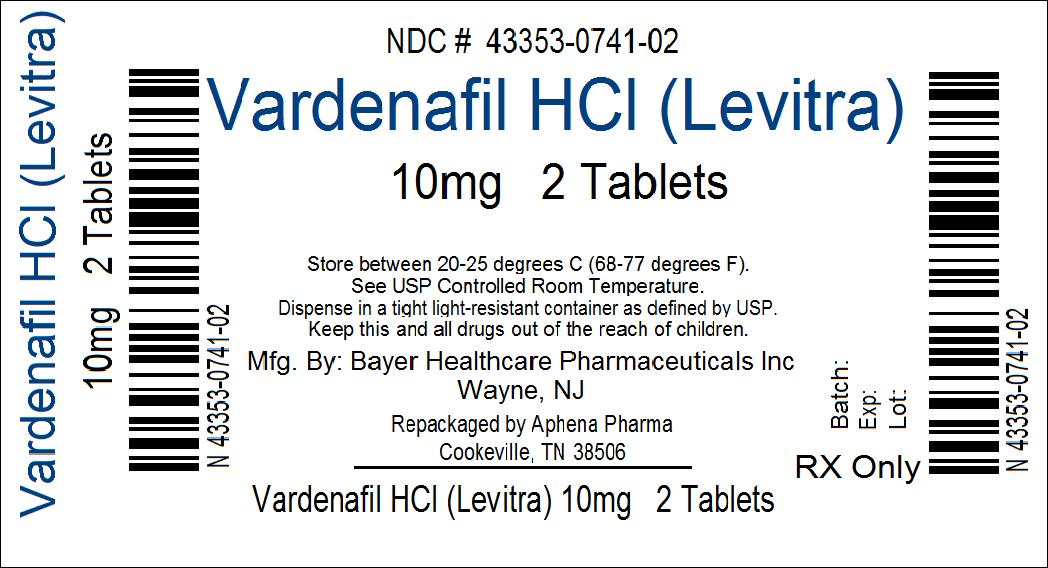
For most patients, the recommended starting dose of LEVITRA is 10 mg, taken orally, as needed, approximately 60 minutes before sexual activity. The dose may be increased to a maximum recommended dose of 20 mg or decreased to 5 mg based on efficacy and side effects. The maximum recommended dosing frequency is once per day. Sexual stimulation is required for a response to treatment.
2.2 Use with Food
LEVITRA can be taken with or without food.
2.3 Use in Specific Populations
Geriatrics: A starting dose of 5 mg LEVITRA should be considered in patients ≥ 65 years of age [see Use in Specific Populations (8.5)].
Hepatic Impairment: For patients with moderate hepatic impairment (Child-Pugh B), a starting dose of 5 mg LEVITRA is recommended. The maximum dose in patients with moderate hepatic impairment should not exceed 10 mg.
Do not use LEVITRA in patients with severe hepatic impairment (Child-Pugh C) [see Warnings and Precautions (5.8), Use in Specific Populations (8.6) and Clinical Pharmacology (12.3)].
Renal Impairment: Do not use LEVITRA in patients on renal dialysis [see Warnings and Precautions (5.9), Use in Specific Populations (8.7) and Clinical Pharmacology (12.3)].
2.4 Concomitant Medications
Nitrates: Concomitant use with nitrates and nitric oxide donors in any form is contraindicated [see Contraindications (4.1)].
Guanylate Cyclase (GC) Stimulators, such as riociguat: Concomitant use is contraindicated [see Contraindications (4.2)].
CYP3A4 Inhibitors: The dosage of LEVITRA may require adjustment in patients receiving potent CYP3A4 inhibitors such as ketoconazole, itraconazole, ritonavir, indinavir, saquinavir, atazanavir, and clarithromycin as well as in other patients receiving moderate CYP3A4 inhibitors such as erythromycin [see Drug Interactions (7.2)]. For ritonavir, a single dose of 2.5 mg LEVITRA should not be exceeded in a 72-hour period. For indinavir, saquinavir, atazanavir, ketoconazole 400 mg daily, itraconazole 400 mg daily, and clarithromycin, a single dose of 2.5 mg LEVITRA should not be exceeded in a 24-hour period. For ketoconazole 200 mg daily, itraconazole 200 mg daily, and erythromycin, a single dose of 5 mg LEVITRA should not be exceeded in a 24-hour period.
Alpha-Blockers: In those patients who are stable on alpha-blocker therapy, phosphodiesterase type 5 (PDE5) inhibitors should be initiated at the lowest recommended starting dose. Concomitant treatment should be initiated only if the patient is stable on his alpha-blocker therapy. Stepwise increase in alpha-blocker dose may be associated with further lowering of blood pressure in patients taking a phosphodiesterase (PDE5) inhibitor including vardenafil. In those patients who are stable on alpha-blocker therapy, LEVITRA should be initiated at a dose of 5 mg (2.5 mg when used concomitantly with certain CYP3A4 inhibitors). [See Warnings and Precautions (5.6) and Drug Interactions (7.1).]
A time interval between dosing should be considered when Levitra is prescribed concomitantly with alpha-blocker therapy [see Clinical Pharmacology (12.2)].