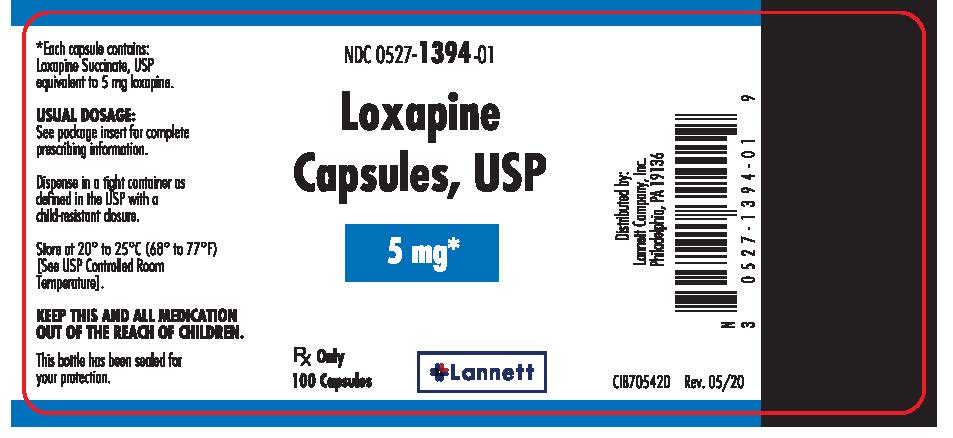
Loxapine label

Loxapine

Loxapine Recall

Get an alert when a recall is issued.

Side Effects & Adverse Reactions

Increased Mortality in Elderly Patients with Dementia-Related Psychosis
Elderly patients with dementia-related psychosis treated with antipsychotic drugs are at an increased risk of death. Loxapine is not approved for the treatment of patients with dementia-related psychosis (see BOXED WARNING).

Tardive Dyskinesia

Tardive dyskinesia, a syndrome consisting of potentially irreversible, involuntary, dyskinetic movements, may develop in patients treated with antipsychotic drugs. Although the prevalence of the syndrome appears to be highest among the elderly, especially elderly women, it is impossible to rely upon prevalence estimates to predict, at the inception of antipsychotic treatment, which patients are likely to develop the syndrome. Whether antipsychotic drug products differ in their potential to cause tardive dyskinesia is unknown.

Both the risk of developing the syndrome and the likelihood that it will become irreversible are believed to increase as the duration of treatment and the total cumulative dose of antipsychotic drugs administered to the patient increase. However, the syndrome can develop, although much less commonly, after relatively brief treatment periods at low doses.

There is no known treatment for established cases of tardive dyskinesia, although the syndrome may remit, partially or completely, if antipsychotic treatment is withdrawn. Antipsychotic treatment itself, however, may suppress (or partially suppress) the signs and symptoms of the syndrome and thereby may possibly mask the underlying disease process. The effect that symptomatic suppression has upon the long-term course of the syndrome is unknown.

Given these considerations, antipsychotics should be prescribed in a manner that is most likely to minimize the occurrence of tardive dyskinesia. Chronic antipsychotic treatment should generally be reserved for patients who suffer from a chronic illness that, 1) is known to respond to antipsychotic drugs, and 2) for whom alternative, equally effective, but potentially less harmful treatments are not available or appropriate. In patients who do require chronic treatment, the smallest dose and the shortest duration of treatment producing a satisfactory clinical response should be sought. The need for continued treatment should be reassessed periodically.

If signs and symptoms of tardive dyskinesia appear in a patient on antipsychotics, drug discontinuation should be considered. However, some patients may require treatment despite the presence of the syndrome. (See ADVERSE REACTIONS and Information for Patients sections).

Neuroleptic Malignant Syndrome (NMS)

A potentially fatal symptom complex sometimes referred to as Neuroleptic Malignant Syndrome (NMS) has been reported in association with antipsychotic drugs. Clinical manifestations of NMS are hyperpyrexia, muscle rigidity, altered mental status, and evidence of autonomic instability (irregular pulse or blood pressure, tachycardia, diaphoresis, and cardiac dysrhythmias).

The diagnostic evaluation of patients with this syndrome is complicated. In arriving at a diagnosis, it is important to identify cases where the clinical presentation includes both serious medical illness (e.g., pneumonia, systemic infection, etc.) and untreated or inadequately treated extrapyramidal signs and symptoms (EPS). Other important considerations in the differential diagnosis include central anticholinergic toxicity, heat stroke, drug fever, and primary central nervous system (CNS) pathology.

The management of NMS should include: 1) immediate discontinuation of antipsychotic drugs and other drugs not essential to concurrent therapy, 2) intensive symptomatic treatment and medical monitoring, and 3) treatment of any concomitant serious medical problems for which specific treatments are available. There is no general agreement about specific pharmacological treatment regimens for uncomplicated NMS.

If a patient requires antipsychotic drug treatment after recovery from NMS, the potential reintroduction of drug therapy should be carefully considered. The patient should be carefully monitored, since recurrences of NMS have been reported.

Loxapine, like other antipsychotics, may impair mental and/or physical abilities, especially during the first few days of therapy. Therefore, ambulatory patients should be warned about activities requiring alertness (e.g., operating vehicles or machinery) and about concomitant use of alcohol and other CNS depressants.

Loxapine has not been evaluated for the management of behavioral complications in patients with mental retardation, and therefore, it cannot be recommended.

FDA Safety Alerts

There are currently no FDA safety alerts available for this drug.

Manufacturer Warnings

There is currently no manufacturer warning information available for this drug.

FDA Labeling Changes

There are currently no FDA labeling changes available for this drug.

Uses

Loxapine Capsules USP are indicated for the treatment of schizophrenia. The efficacy of loxapine in schizophrenia was established in clinical studies which enrolled newly hospitalized and chronically hospitalized acutely ill schizophrenic patients as subjects.

History

There is currently no drug history available for this drug.

Other Information

Loxapine, a dibenzoxazepine compound, represents a subclass of tricyclic antipsychotic agents, chemically distinct from the thioxanthenes, butyrophenones, and phenothiazines. Chemically, it is 2-Chloro-11-(4-methyl-1-piperazinyl)dibenz[b,f][1,4]oxazepine. It is present as the succinate salt.

Structural formula of loxapine succinate salt

Each capsule for oral administration, contains loxapine succinate USP 6.8, 13.6, 34.0 or 68.1 mg equivalent to 5, 10, 25 or 50 mg of loxapine base respectively. It also contains the following inactive ingredients: anhydrous lactose, benzyl alcohol NF, butyl paraben NF, edetate calcium disodium USP, gelatin, magnesium stearate, methyl paraben NF, polacrilin potassium, propyl paraben NF, sodium lauryl sulfate NF, sodium propionate NF, talc, and titanium dioxide. Additionally, the 10 mg capsule contains D&C Yellow 10 and FD&C Yellow 6, the 25 mg capsule contains D&C Yellow 10 and FD&C Blue 1, the 50 mg capsule contains FD&C Blue 1.

Loxapine Manufacturers

  • Watson Laboratories, Inc.
    Loxapine | Watson Laboratories, Inc.
    No Recall

    Loxapine | Watson Laboratories, Inc.

    Loxapine | Watson Laboratories, Inc.

    Loxapine Capsules USP are administered, usually in divided doses, two to four times a day. Daily dosage (in terms of base equivalents) should be adjusted to the individual patient’s needs as assessed by the severity of symptoms and previous history of response to antipsychotic drugs.

    Oral Administration

    Initial dosage of 10 mg twice daily is recommended, although in severely disturbed patients initial dosage up to a total of 50 mg daily may be desirable. Dosage should then be increased fairly rapidly over the first seven to ten days until there is effective control of symptoms of schizophrenia. The usual therapeutic and maintenance range is 60 mg to 100 mg daily. However, as with other drugs used to treat schizophrenia, some patients respond to lower dosage and others require higher dosage for optimal benefit. Daily dosage higher than 250 mg is not recommended.

    Maintenance Therapy

    For maintenance therapy, dosage should be reduced to the lowest level compatible with symptom control; many patients have been maintained satisfactorily at dosages in the range of 20 to 60 mg daily.

  • Lannett Company, Inc.
    Loxapine | Lannett Company, Inc.
    No Recall

    Loxapine | Lannett Company, Inc.

    Loxapine | Lannett Company, Inc.

    Loxapine Capsules, USP are administered, usually in divided doses, two to four times a day. Daily dosage (in terms of base equivalents) should be adjusted to the individual patient's needs as assessed by the severity of symptoms and previous history of response to antipsychotic drugs.

    Oral Administration

    Initial dosage of 10 mg twice daily is recommended, although in severely disturbed patients initial dosage up to a total of 50 mg daily may be desirable. Dosage should then be increased fairly rapidly over the first seven to ten days until there is effective control of symptoms of schizophrenia. The usual therapeutic and maintenance range is 60 mg to 100 mg daily. However, as with other drugs used to treat schizophrenia, some patients respond to lower dosage and others require higher dosage for optimal benefit. Daily dosage higher than 250 mg is not recommended.

    Maintenance Therapy

    For maintenance therapy, dosage should be reduced to the lowest level compatible with symptom control; many patients have been maintained satisfactorily at dosages in the range of 20 to 60 mg daily.

  • Loxapine | American Health Packaging
    No Recall

    Loxapine | American Health Packaging

    Loxapine | American Health Packaging

    Loxapine Capsules, USP are administered, usually in divided doses, two to four times a day. Daily dosage (in terms of base equivalents) should be adjusted to the individual patient's needs as assessed by the severity of symptoms and previous history of response to antipsychotic drugs.

    Oral Administration

    Initial dosage of 10 mg twice daily is recommended, although in severely disturbed patients initial dosage up to a total of 50 mg daily may be desirable. Dosage should then be increased fairly rapidly over the first seven to ten days until there is effective control of symptoms of schizophrenia. The usual therapeutic and maintenance range is 60 mg to 100 mg daily. However, as with other drugs used to treat schizophrenia, some patients respond to lower dosage and others require higher dosage for optimal benefit. Daily dosage higher than 250 mg is not recommended.

    Maintenance Therapy

    For maintenance therapy, dosage should be reduced to the lowest level compatible with symptom control; many patients have been maintained satisfactorily at dosages in the range of 20 to 60 mg daily.

  • Mylan Pharmaceuticals Inc.
    Loxapine | Mylan Pharmaceuticals Inc.
    No Recall

    Loxapine | Mylan Pharmaceuticals Inc.

    Loxapine | Mylan Pharmaceuticals Inc.

    Loxapine capsules are administered, usually in divided doses, 2 to 4 times a day. Daily dosage (in terms of base equivalents) should be adjusted to the individual patient's needs as assessed by the severity of symptoms and previous history of response to antipsychotic drugs.

    Oral Administration

    Initial dosage of 10 mg twice daily is recommended, although in severely disturbed patients initial dosage up to a total of 50 mg daily may be desirable. Dosage should then be increased fairly rapidly over the first 7 to 10 days until there is effective control of symptoms of schizophrenia. The usual therapeutic and maintenance range is 60 mg to 100 mg daily. However, as with other drugs used to treat schizophrenia, some patients respond to lower dosage and others require higher dosage for optimal benefit. Daily dosage higher than 250 mg is not recommended.

    Maintenance Therapy

    For maintenance therapy, dosage should be reduced to the lowest level compatible with symptom control; many patients have been maintained satisfactorily at dosages in the range of 20 mg to 60 mg daily.

  • Remedyrepack Inc.
    Loxapine | Remedyrepack Inc.
    No Recall

    Loxapine | Remedyrepack Inc.

    Loxapine | Remedyrepack Inc.

    Loxapine Capsules, USP are administered, usually in divided doses, two to four times a day. Daily dosage (in terms of base equivalents) should be adjusted to the individual patient's needs as assessed by the severity of symptoms and previous history of response to antipsychotic drugs.


    Initial dosage of 10 mg twice daily is recommended, although in severely disturbed patients initial dosage up to a total of 50 mg daily may be desirable. Dosage should then be increased fairly rapidly over the first seven to ten days until there is effective control of symptoms of schizophrenia. The usual therapeutic and maintenance range is 60 mg to 100 mg daily. However, as with other drugs used to treat schizophrenia, some patients respond to lower dosage and others require higher dosage for optimal benefit. Daily dosage higher than 250 mg is not recommended.


    For maintenance therapy, dosage should be reduced to the lowest level compatible with symptom control; many patients have been maintained satisfactorily at dosages in the range of 20 to 60 mg daily.


  • Mylan Institutional Inc.
    Loxapine | Mylan Institutional Inc.
    No Recall

    Loxapine | Mylan Institutional Inc.

    Loxapine | Mylan Institutional Inc.

    Loxapine capsules are administered, usually in divided doses, 2 to 4 times a day. Daily dosage (in terms of base equivalents) should be adjusted to the individual patient's needs as assessed by the severity of symptoms and previous history of response to antipsychotic drugs.

    Oral Administration

    Initial dosage of 10 mg twice daily is recommended, although in severely disturbed patients initial dosage up to a total of 50 mg daily may be desirable. Dosage should then be increased fairly rapidly over the first 7 to 10 days until there is effective control of symptoms of schizophrenia. The usual therapeutic and maintenance range is 60 mg to 100 mg daily. However, as with other drugs used to treat schizophrenia, some patients respond to lower dosage and others require higher dosage for optimal benefit. Daily dosage higher than 250 mg is not recommended.

    Maintenance Therapy

    For maintenance therapy, dosage should be reduced to the lowest level compatible with symptom control; many patients have been maintained satisfactorily at dosages in the range of 20 mg to 60 mg daily.

  • Clinical Solutions Wholesale
    Loxapine | Clinical Solutions Wholesale
    No Recall

    Loxapine | Clinical Solutions Wholesale

    Loxapine | Clinical Solutions Wholesale

    Loxapine Capsules USP are administered, usually in divided doses, two to four times a day. Daily dosage (in terms of base equivalents) should be adjusted to the individual patient’s needs as assessed by the severity of symptoms and previous history of response to antipsychotic drugs.

    Oral Administration

    Initial dosage of 10 mg twice daily is recommended, although in severely disturbed patients initial dosage up to a total of 50 mg daily may be desirable. Dosage should then be increased fairly rapidly over the first seven to ten days until there is effective control of symptoms of schizophrenia. The usual therapeutic and maintenance range is 60 mg to 100 mg daily. However, as with other drugs used to treat schizophrenia, some patients respond to lower dosage and others require higher dosage for optimal benefit. Daily dosage higher than 250 mg is not recommended.

    Maintenance Therapy

    For maintenance therapy, dosage should be reduced to the lowest level compatible with symptom control; many patients have been maintained satisfactorily at dosages in the range of 20 to 60 mg daily.

  • Loxapine | Carilion Materials Management
    No Recall

    Loxapine | Carilion Materials Management

    Loxapine | Carilion Materials Management

    Loxapine Capsules USP are administered, usually in divided doses, two to four times a day. Daily dosage (in terms of base equivalents) should be adjusted to the individual patient’s needs as assessed by the severity of symptoms and previous history of response to antipsychotic drugs.

    Oral Administration

    Initial dosage of 10 mg twice daily is recommended, although in severely disturbed patients initial dosage up to a total of 50 mg daily may be desirable. Dosage should then be increased fairly rapidly over the first seven to ten days until there is effective control of symptoms of schizophrenia. The usual therapeutic and maintenance range is 60 mg to 100 mg daily. However, as with other drugs used to treat schizophrenia, some patients respond to lower dosage and others require higher dosage for optimal benefit. Daily dosage higher than 250 mg is not recommended.

    Maintenance Therapy

    For maintenance therapy, dosage should be reduced to the lowest level compatible with symptom control; many patients have been maintained satisfactorily at dosages in the range of 20 to 60 mg daily.