

Maxidex label

Maxidex

Maxidex Recall

Get an alert when a recall is issued.

Side Effects & Adverse Reactions

Prolonged use may result in ocular hypertension and/or glaucoma, with damage to the optic nerve, defects in visual acuity and fields of vision, and posterior subcapsular cataract formation. Prolonged use may suppress the host response and thus increase the hazard of secondary ocular infections. In those diseases causing thinning of the cornea or sclera, perforations have been known to occur with the use of topical corticosteroids. In acute purulent conditions of the eye, corticosteroids may mask infection or enhance existing infection. If these products are used for 10 days or longer, intraocular pressure should be routinely monitored even though it may be difficult in children and uncooperative patients.

Employment of corticosteroid medication in the treatment of herpes simplex other than epithelial herpes simplex keratitis, in which it is contraindicated, requires great caution; periodic slit-lamp microscopy is essential.

FDA Safety Alerts

There are currently no FDA safety alerts available for this drug.

Manufacturer Warnings

There is currently no manufacturer warning information available for this drug.

FDA Labeling Changes

There are currently no FDA labeling changes available for this drug.

Uses

Steroid responsive inflammatory conditions of the palpebral and bulbar conjunctiva, cornea, and anterior segment of the globe such as allergic conjunctivitis, acne rosacea, superficial punctuate keratitis, herpes zoster keratitis, iritis, cyclitis, selected infective conjunctivitides when the inherent hazard of steroid use is accepted to obtain an advisable diminution in edema and inflammation; corneal injury from chemical, radiation, or thermal burns, or penetration of foreign bodies.

History

There is currently no drug history available for this drug.

Other Information

MAXIDEX® 0.1% (dexamethasone ophthalmic suspension) is an adrenocortical steroid prepared as a sterile topical ophthalmic suspension. The active ingredient is represented by the chemical structure:
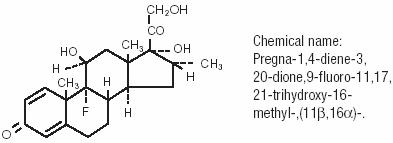
Image from Drug Label Content

Each mL contains

Active: dexamethasone 0.1%. Preservative: benzalkonium chloride 0.01%. Vehicle: hypromellose 0.5%. Inactives: sodium chloride, dibasic sodium phosphate, polysorbate 80, edetate disodium, citric acid and/or sodium hydroxide (to adjust pH), purified water.

Maxidex Manufacturers

  • Maxidex | Alcon Laboratories, Inc.
    No Recall

    Maxidex | Alcon Laboratories, Inc.

    Maxidex | Alcon Laboratories, Inc.

    SHAKE WELL BEFORE USING. One or two drops topically in the conjunctival sac(s). In severe disease, drops may be used hourly, being tapered to discontinuation as the inflammation subsides. In mild disease, drops may be used up to four to six times daily.

  • Maxidex | Alcon
    No Recall

    Maxidex | Alcon

    Maxidex | Alcon

    The duration of treatment will vary with the type of lesion and may extend from a few days to several weeks, according to therapeutic response. Relapses, more common in chronic active lesions than in self-limited conditions, usually respond to treatment. Apply a one-half to one inch ribbon of ointment into the conjunctival sac(s) up to four times daily. When a favorable response is observed, dosage may be reduced gradually to once a day application for several days. MAXIDEX Ointment may be used in conjunction with MAXIDEX suspension.

  • Maxidex | Alcon Laboratories, Inc.
    No Recall

    Maxidex | Alcon Laboratories, Inc.

    Maxidex | Alcon Laboratories, Inc.

    SHAKE WELL BEFORE USING. One or two drops topically in the conjunctival sac(s). In severe disease, drops may be used hourly, being tapered to discontinuation as the inflammation subsides. In mild disease, drops may be used up to four to six times daily.