Nexium label

Nexium

Nexium Recall

Get an alert when a recall is issued.

Side Effects & Adverse Reactions

There is currently no warning information available for this product. We apologize for any inconvenience.

FDA Safety Alerts

There are currently no FDA safety alerts available for this drug.

Manufacturer Warnings

There is currently no manufacturer warning information available for this drug.

FDA Labeling Changes

There are currently no FDA labeling changes available for this drug.

Uses

1.1 Treatment of Gastroesophageal Reflux Disease (GERD)

Healing of Erosive Esophagitis

NEXIUM is indicated for the short-term treatment (4 to 8 weeks) in the healing and symptomatic resolution of diagnostically confirmed erosive esophagitis. For those patients who have not healed after 4 to 8 weeks of treatment, an additional 4 to 8 week course of NEXIUM may be considered.

Maintenance of Healing of Erosive Esophagitis

NEXIUM is indicated to maintain symptom resolution and healing of erosive esophagitis. Controlled studies do not extend beyond 6 months.

Symptomatic Gastroesophageal Reflux Disease

NEXIUM is indicated for short-term treatment (4 to 8 weeks) of heartburn and other symptoms associated with GERD in adults and children 1 year or older.

1.2 Risk Reduction of NSAID-Associated Gastric Ulcer

NEXIUM is indicated for the reduction in the occurrence of gastric ulcers associated with continuous NSAID therapy in patients at risk for developing gastric ulcers. Patients are considered to be at risk due to their age (≥ 60) and/or documented history of gastric ulcers. Controlled studies do not extend beyond 6 months.

1.3 H. pylori Eradication to Reduce the Risk of Duodenal Ulcer Recurrence

Triple Therapy (NEXIUM plus amoxicillin and clarithromycin): NEXIUM, in combination with amoxicillin and clarithromycin, is indicated for the treatment of patients with H. pylori infection and duodenal ulcer disease (active or history of within the past 5 years) to eradicate H. pylori. Eradication of H. pylori has been shown to reduce the risk of duodenal ulcer recurrence [see Clinical Studies (14) and Dosage and Administration. (2)].

In patients who fail therapy, susceptibility testing should be done. If resistance to clarithromycin is demonstrated or susceptibility testing is not possible, alternative antimicrobial therapy should be instituted [see Clinical Pharmacology (12.4) and the clarithromycin package insert, Clinical Pharmacology, Microbiology].

1.4 Pathological Hypersecretory Conditions Including Zollinger-Ellison Syndrome

NEXIUM is indicated for the long-term treatment of pathological hypersecretory conditions, including Zollinger-Ellison Syndrome.

History

There is currently no drug history available for this drug.

Other Information

The active ingredient in NEXIUM® (esomeprazole magnesium) Delayed-Release Capsules and NEXIUM (esomeprazole magnesium) For Delayed-Release Oral Suspension is bis(5-methoxy-2-[(S)-[(4-methoxy-3,5-dimethyl-2-pyridinyl)methyl]sulfinyl]-1H-benzimidazole-1-yl) magnesium trihydrate. Esomeprazole is the S-isomer of omeprazole, which is a mixture of the S- and R- isomers. (Initial U.S. approval of esomeprazole magnesium: 2001). Its molecular formula is (C17H18N3O3S)2Mg x 3 H2O with molecular weight of 767.2 as a trihydrate and 713.1 on an anhydrous basis. The structural formula is:

Figure 1

Figure 1 - Chemiical Structure

The magnesium salt is a white to slightly colored crystalline powder. It contains 3 moles of water of solvation and is slightly soluble in water. The stability of esomeprazole magnesium is a function of pH; it rapidly degrades in acidic media, but it has acceptable stability under alkaline conditions. At pH 6.8 (buffer), the half-life of the magnesium salt is about 19 hours at 25°C and about 8 hours at 37°C.

NEXIUM is supplied in delayed-release capsules and in packets for a delayed-release oral suspension. Each delayed-release capsule contains 20 mg, or 40 mg of esomeprazole (present as 22.3 mg, or 44.5 mg esomeprazole magnesium trihydrate) in the form of enteric-coated granules with the following inactive ingredients: glyceryl monostearate 40-55, hydroxypropyl cellulose, hypromellose, magnesium stearate, methacrylic acid copolymer type C, polysorbate 80, sugar spheres, talc, and triethyl citrate. The capsule shells have the following inactive ingredients: gelatin, FD&C Blue #1, FD&C Red #40, D&C Red #28, titanium dioxide, shellac, ethyl alcohol, isopropyl alcohol, n-butyl alcohol, propylene glycol, sodium hydroxide, polyvinyl pyrrolidone, and D&C Yellow #10.

Each packet of NEXIUM For Delayed-Release Oral Suspension contains 10 mg, 20 mg, or 40 mg of esomeprazole, in the form of the same enteric-coated granules used in NEXIUM Delayed-Release Capsules, and also inactive granules. The inactive granules are composed of the following ingredients: dextrose, xanthan gum, crospovidone, citric acid, iron oxide, and hydroxypropyl cellulose. The esomeprazole granules and inactive granules are constituted with water to form a suspension and are given by oral, nasogastric, or gastric administration.

Nexium Manufacturers

  • Nexium | A-s Medication Solutions Llc
    No Recall

    Nexium | A-s Medication Solutions Llc

    Nexium | A-s Medication Solutions Llc

    NEXIUM is supplied as delayed-release capsules for oral administration or in packets for preparation of delayed-release oral suspensions. The recommended dosages are outlined in the table below. NEXIUM should be taken at least one hour before meals.

    The duration of proton pump inhibitor administration should be based on available safety and efficacy data specific to the defined indication and dosing frequency, as described in the Prescribing Information, and individual patient medical needs. Proton pump inhibitor treatment should only be initiated and continued if the benefits outweigh the risks of treatment.

    Table 1

    Recommended Dosage Schedule of NEXIUM * [ See Clinical Studies. (14.1) ]The majority of patients are healed within 4 to 8 weeks. For patients who do not heal after 4 to 8 weeks, an additional 4 to 8 weeks of treatment may be considered. † Controlled studies did not extend beyond six months. ‡ If symptoms do not resolve completely after 4 weeks, an additional 4 weeks of treatment may be considered. § Doses over 1 mg/kg/day have not been studied. ¶ The dosage of NEXIUM in patients with pathological hypersecretory conditions varies with the individual patient. Dosage regimens should be adjusted to individual patient needs. # Doses up to 240 mg daily have been administered. [ see Drug Interactions (7)].  

    Indication


    Dose


    Frequency


    Gastroesophageal Reflux Disease (GERD)


    Healing of Erosive Esophagitis


    20 mg or 40 mg


    Once Daily for 4 to 8 Weeks*


    Maintenance of Healing of Erosive Esophagitis


    20 mg


    Once Daily†


    Symptomatic Gastroesophageal Reflux Disease


    20 mg


    Once Daily for 4 Weeks‡


    Pediatric GERD


    12 to 17 Year Olds

    Short-term Treatment of GERD


    20 mg or 40 mg


    Once Daily for up to 8 Weeks


    1 to 11 Year Olds§ Short-term Treatment of Symptomatic GERD


    10 mg


    Once Daily for up to 8 Weeks


    Healing of Erosive Esophagitis


    weight < 20 kg


    10 mg


    Once Daily for 8 Weeks


    weight ≥ 20 kg


    10 mg or 20 mg


    Once Daily for 8 Weeks


    Risk Reduction of NSAID-Associated Gastric Ulcer


    20 mg or 40 mg


    Once Daily for up to 6 months†


    H. pylori Eradication to Reduce the Risk of Duodenal Ulcer Recurrence


    Triple Therapy:


    NEXIUM


    40 mg


    Once Daily for 10 Days


    Amoxicillin


    1000 mg


    Twice Daily for 10 Days


    Clarithromycin


    500 mg


    Twice Daily for 10 Days


    Pathological Hypersecretory Conditions Including Zollinger-Ellison Syndrome


    40 mg¶


    # Twice Daily

    Please refer to amoxicillin and clarithromycin full prescribing information for Contraindications, Warnings and dosing in elderly and renally-impaired patients.

    Special Populations

    Geriatric

    No dosage adjustment is necessary [See Clinical Pharmacology(12.3)].

    Renal Insufficiency

    No dosage adjustment is necessary. [See Clinical Pharmacology (12.3)].

    Hepatic Insufficiency

    In patients with mild to moderate liver impairment (Child Pugh Classes A and B), no dosage adjustment is necessary. For patients with severe liver impairment (Child Pugh Class C), a dose of 20 mg of NEXIUM should not be exceeded [See Clinical Pharmacology (12.3)].

    Gender

    No dosage adjustment is necessary [See Clinical Pharmacology (12.3)].

    Administration Options

    Directions for use specific to the route and available methods of administration for each of these dosage forms are presented below.

    Table 2


    Administration Options

    (See text following table for additional instructions)

           Type  Route  Options        

    Delayed-Release Capsule


    Oral


    Capsule can be swallowed whole.

    -or-

    Capsule can be opened and mixed with applesauce.


    Delayed-Release Capsule


    Nasogastric Tube


    Capsule can be opened and the intact granules emptied into a syringe and delivered through the nasogastric tube.


    For Delayed-Release Oral Suspension


    Oral


    Mix contents of packet with 1 tablespoon (15 mL) of water, leave 2 to 3 minutes to thicken, stir and drink within 30 minutes.


    For Delayed-Release Oral Suspension


    Nasogastric or Gastric Tube


    Add 15 mL of water to a syringe and then add contents of packet. Shake the syringe; leave 2 to 3 minutes to thicken. Shake the syringe and inject through the nasogastric or gastric tube within 30 minutes.

    NEXIUM Delayed-Release Capsules

    NEXIUM Delayed-Release Capsules should be swallowed whole.

    Alternatively, for patients who have difficulty swallowing capsules, one tablespoon of applesauce can be added to an empty bowl and the NEXIUM Delayed-Release Capsule can be opened, and the granules inside the capsule carefully emptied onto the applesauce. The granules should be mixed with the applesauce and then swallowed immediately. The applesauce used should not be hot and should be soft enough to be swallowed without chewing. The granules should not be chewed or crushed. The granules/applesauce mixture should not be stored for future use.

    For patients who have a nasogastric tube in place, NEXIUM Delayed-Release Capsules can be opened and the intact granules emptied into a 60 mL catheter tipped syringe and mixed with 50 mL of water. It is important to only use a catheter tipped syringe when administering NEXIUM through a nasogastric tube. Replace the plunger and shake the syringe vigorously for 15 seconds. Hold the syringe with the tip up and check for granules remaining in the tip. Attach the syringe to a nasogastric tube and deliver the contents of the syringe through the nasogastric tube into the stomach. After administering the granules, the nasogastric tube should be flushed with additional water. Do not administer the granules if they have dissolved or disintegrated.

    The suspension must be used immediately after preparation.

    NEXIUM For Delayed-Release Oral Suspension

    NEXIUM For Delayed-Release Oral Suspension should be administered as follows:

    Empty the contents of a 10 mg, 20 mg, or 40 mg packet into a container containing 1 tablespoon (15 mL) of water.

    Stir.

    Leave 2 to 3 minutes to thicken.

    Stir and drink within 30 minutes.

    If any material remains after drinking, add more water, stir, and drink immediately.

    For patients who have a nasogastric or gastric tube in place, NEXIUM For Delayed-Release Oral Suspension can be administered as follows:

    Add 15 mL of water to a catheter tipped syringe and then add the contents of a 10 mg, 20 mg, or 40 mg NEXIUM packet. It is important to only use a catheter tipped syringe when administering NEXIUM through a nasogastric tube or gastric tube.

    Immediately shake the syringe and leave 2 to 3 minutes to thicken.

    Shake the syringe and inject through the nasogastric or gastric tube, French size 6 or larger, into the stomach within 30 minutes.

    Refill the syringe with 15 mL of water.

    Shake and flush any remaining contents from the nasogastric or gastric tube into the stomach.

  • Stat Rx Usa Llc
    Nexium | Stat Rx Usa Llc
    No Recall

    Nexium | Stat Rx Usa Llc

    Nexium | Stat Rx Usa Llc

    NEXIUM is supplied as delayed-release capsules for oral administration or in packets for preparation of delayed-release oral suspensions. The recommended dosages are outlined in the table below. NEXIUM should be taken at least one hour before meals.

    The duration of proton pump inhibitor administration should be based on available safety and efficacy data specific to the defined indication and dosing frequency, as described in the Prescribing Information, and individual patient medical needs. Proton pump inhibitor treatment should only be initiated and continued if the benefits outweigh the risks of treatment.

    Table 1

    Recommended Dosage Schedule of NEXIUM * Controlled studies did not extend beyond six months.

    Indication

    Dose

    Frequency

    Gastroesophageal Reflux Disease (GERD)

    Healing of Erosive Esophagitis

    20 mg or 40 mg

    Once Daily for 4 to 8 Weeks

    Maintenance of Healing of Erosive Esophagitis

    20 mg

    Once Daily*

    Symptomatic Gastroesophageal Reflux Disease

    20 mg

    Once Daily for 4 Weeks

    Pediatric GERD

    12 to 17 Year Olds

    Short-term Treatment of GERD

    20 mg or 40 mg

    Once Daily for up to 8 Weeks

    1 to 11 Year Olds Short-term Treatment of Symptomatic GERD

    10 mg

    Once Daily for up to 8 Weeks

    Healing of Erosive Esophagitis

    weight < 20 kg

    10 mg

    Once Daily for 8 Weeks

    weight ≥ 20 kg

    10 mg or 20 mg

    Once Daily for 8 Weeks

    Risk Reduction of NSAID-Associated Gastric Ulcer

    20 mg or 40 mg

    Once Daily for up to 6 months*

    H. pylori Eradication to Reduce the Risk of Duodenal Ulcer Recurrence

    Triple Therapy:

    NEXIUM

    40 mg

    Once Daily for 10 Days

    Amoxicillin

    1000 mg

    Twice Daily for 10 Days

    Clarithromycin

    500 mg

    Twice Daily for 10 Days

    Pathological Hypersecretory Conditions Including Zollinger-Ellison Syndrome

    40 mg

    Twice Daily

    Please refer to amoxicillin and clarithromycin full prescribing information for Contraindications, Warnings and dosing in elderly and renally-impaired patients.

    Special Populations

    Geriatric

    No dosage adjustment is necessary [see Clinical Pharmacology (12.3)].

    Renal Insufficiency

    No dosage adjustment is necessary [see Clinical Pharmacology (12.3)].

    Hepatic Insufficiency

    In patients with mild to moderate liver impairment (Child Pugh Classes A and B), no dosage adjustment is necessary. For patients with severe liver impairment (Child Pugh Class C), a dose of 20 mg of NEXIUM should not be exceeded [see Clinical Pharmacology (12.3)].

    Gender

    No dosage adjustment is necessary [see Clinical Pharmacology (12.3)].

    Administration Options

    Directions for use specific to the route and available methods of administration for each of these dosage forms are presented below.

    Table 2

    Administration Options

    (See text following table for additional instructions.)

    Type Route Options

    Delayed-Release Capsule

    Oral

    Capsule can be swallowed whole.

    -or-

    Capsule can be opened and mixed with applesauce.

    Delayed-Release Capsule

    Nasogastric Tube

    Capsule can be opened and the intact granules emptied into a syringe and delivered through the nasogastric tube.

    For Delayed-Release Oral Suspension

    Oral

    Mix contents of packet with 1 tablespoon (15 mL) of water, leave 2 to 3 minutes to thicken, stir and drink within 30 minutes.

    For Delayed-Release Oral Suspension

    Nasogastric or Gastric Tube

    Add 15 mL of water to a syringe and then add contents of packet. Shake the syringe; leave 2 to 3 minutes to thicken. Shake the syringe and inject through the nasogastric or gastric tube within 30 minutes.

    NEXIUM Delayed-Release Capsules

    NEXIUM Delayed-Release Capsules should be swallowed whole.

    Alternatively, for patients who have difficulty swallowing capsules, one tablespoon of applesauce can be added to an empty bowl and the NEXIUM Delayed-Release Capsule can be opened, and the granules inside the capsule carefully emptied onto the applesauce. The granules should be mixed with the applesauce and then swallowed immediately. The applesauce used should not be hot and should be soft enough to be swallowed without chewing. The granules should not be chewed or crushed. The granules/applesauce mixture should not be stored for future use.

    For patients who have a nasogastric tube in place, NEXIUM Delayed-Release Capsules can be opened and the intact granules emptied into a 60 mL catheter tipped syringe and mixed with 50 mL of water. It is important to only use a catheter tipped syringe when administering NEXIUM through a nasogastric tube. Replace the plunger and shake the syringe vigorously for 15 seconds. Hold the syringe with the tip up and check for granules remaining in the tip. Attach the syringe to a nasogastric tube and deliver the contents of the syringe through the nasogastric tube into the stomach. After administering the granules, the nasogastric tube should be flushed with additional water. Do not administer the granules if they have dissolved or disintegrated.

    The suspension must be used immediately after preparation.

    NEXIUM For Delayed-Release Oral Suspension

    NEXIUM For Delayed-Release Oral Suspension should be administered as follows:

    Empty the contents of a 10 mg, 20 mg, or 40 mg packet into a container containing 1 tablespoon (15 mL) of water.

    Stir.

    Leave 2 to 3 minutes to thicken.

    Stir and drink within 30 minutes.

    If any material remains after drinking, add more water, stir, and drink immediately.

    For patients who have a nasogastric or gastric tube in place, NEXIUM For Delayed-Release Oral Suspension can be administered as follows:

    Add 15 mL of water to a catheter tipped syringe and then add the contents of a 10 mg, 20 mg, or 40 mg NEXIUM packet. It is important to only use a catheter tipped syringe when administering NEXIUM through a nasogastric tube or gastric tube.

    Immediately shake the syringe and leave 2 to 3 minutes to thicken.

    Shake the syringe and inject through the nasogastric or gastric tube, French size 6 or larger, into the stomach within 30 minutes.

    Refill the syringe with 15 mL of water.

    Shake and flush any remaining contents from the nasogastric or gastric tube into the stomach.

  • Nexium | Rebel Distributors Corp
    No Recall

    Nexium | Rebel Distributors Corp

    Nexium | Rebel Distributors Corp

    NEXIUM is supplied as delayed-release capsules for oral administration or in packets for preparation of delayed-release oral suspensions. The recommended dosages are outlined in the table below. NEXIUM should be taken at least one hour before meals.

    The duration of proton pump inhibitor administration should be based on available safety and efficacy data specific to the defined indication and dosing frequency, as described in the Prescribing Information, and individual patient medical needs. Proton pump inhibitor treatment should only be initiated and continued if the benefits outweigh the risks of treatment.

    Table 1

    Recommended Dosage Schedule of NEXIUM * [ See Clinical Studies (14.1) ]The majority of patients are healed within 4 to 8 weeks. For patients who do not heal after 4 to 8 weeks, an additional 4 to 8 weeks of treatment may be considered. † Controlled studies did not extend beyond six months. ‡ If symptoms do not resolve completely after 4 weeks, an additional 4 weeks of treatment may be considered. § Doses over 1 mg/kg/day have not been studied. ¶ The dosage of NEXIUM in patients with pathological hypersecretory conditions varies with the individual patient. Dosage regimens should be adjusted to individual patient needs. # Doses up to 240 mg daily have been administered [ see Drug Interactions (7)].

    Indication

    Dose

    Frequency

    Gastroesophageal Reflux Disease (GERD)

    Healing of Erosive Esophagitis

    20 mg or 40 mg

    Once Daily for 4 to 8 Weeks*

    Maintenance of Healing of Erosive Esophagitis

    20 mg

    Once Daily†

    Symptomatic Gastroesophageal Reflux Disease

    20 mg

    Once Daily for 4 Weeks‡

    Pediatric GERD

    12 to 17 Year Olds

    Short-term Treatment of GERD

    20 mg or 40 mg

    Once Daily for up to 8 Weeks

    1 to 11 Year Olds§

    Short-term Treatment of Symptomatic GERD

    10 mg

    Once Daily for up to 8 Weeks

    Healing of Erosive Esophagitis

    weight < 20 kg

    10 mg

    Once Daily for 8 Weeks

    weight ≥ 20 kg

    10 mg or 20 mg

    Once Daily for 8 Weeks

    Risk Reduction of NSAID-Associated Gastric Ulcer

    20 mg or 40 mg

    Once Daily for up to 6 months†

    H. pylori Eradication to Reduce the Risk of Duodenal Ulcer Recurrence

    Triple Therapy:

    NEXIUM

    40 mg

    Once Daily for 10 Days

    Amoxicillin

    1000 mg

    Twice Daily for 10 Days

    Clarithromycin

    500 mg

    Twice Daily for 10 Days

    Pathological Hypersecretory Conditions Including Zollinger-Ellison Syndrome

    40 mg¶

    # Twice Daily

    Please refer to amoxicillin and clarithromycin full prescribing information for Contraindications, Warnings, and dosing in elderly and renally-impaired patients.

    Special Populations

    Geriatric

    No dosage adjustment is necessary [see Clinical Pharmacology   (12.3)].

    Renal Insufficiency

    No dosage adjustment is necessary [see Clinical Pharmacology (12.3)].

    Hepatic Insufficiency

    In patients with mild to moderate liver impairment (Child Pugh Classes A and B), no dosage adjustment is necessary. For patients with severe liver impairment (Child Pugh Class C), a dose of 20 mg of NEXIUM should not be exceeded [see Clinical Pharmacology (12.3)].

    Gender

    No dosage adjustment is necessary [see Clinical Pharmacology (12.3)].

    Administration Options

    Directions for use specific to the route and available methods of administration for each of these dosage forms are presented below.

    Table 2

    Administration Options

    (See text following table for additional instructions.)

    Type Route Options

    Delayed-Release Capsule

    Oral

    Capsule can be swallowed whole.

    -or-

    Capsule can be opened and mixed with applesauce.

    Delayed-Release Capsule

    Nasogastric Tube

    Capsule can be opened and the intact granules emptied into a syringe and delivered through the nasogastric tube.

    For Delayed-Release Oral Suspension

    Oral

    Mix contents of packet with 1 tablespoon (15 mL) of water, leave 2 to 3 minutes to thicken, stir and drink within 30 minutes.

    For Delayed-Release Oral Suspension

    Nasogastric or Gastric Tube

    Add 15 mL of water to a syringe and then add contents of packet. Shake the syringe; leave 2 to 3 minutes to thicken. Shake the syringe and inject through the nasogastric or gastric tube within 30 minutes.

    NEXIUM Delayed-Release Capsules

    NEXIUM Delayed-Release Capsules should be swallowed whole.

    Alternatively, for patients who have difficulty swallowing capsules, one tablespoon of applesauce can be added to an empty bowl and the NEXIUM Delayed-Release Capsule can be opened, and the granules inside the capsule carefully emptied onto the applesauce. The granules should be mixed with the applesauce and then swallowed immediately. The applesauce used should not be hot and should be soft enough to be swallowed without chewing. The granules should not be chewed or crushed. The granules/applesauce mixture should not be stored for future use.

    For patients who have a nasogastric tube in place, NEXIUM Delayed-Release Capsules can be opened and the intact granules emptied into a 60 mL catheter tipped syringe and mixed with 50 mL of water. It is important to only use a catheter tipped syringe when administering NEXIUM through a nasogastric tube. Replace the plunger and shake the syringe vigorously for 15 seconds. Hold the syringe with the tip up and check for granules remaining in the tip. Attach the syringe to a nasogastric tube and deliver the contents of the syringe through the nasogastric tube into the stomach. After administering the granules, the nasogastric tube should be flushed with additional water. Do not administer the granules if they have dissolved or disintegrated.

    The suspension must be used immediately after preparation.

    NEXIUM For Delayed-Release Oral Suspension

    NEXIUM For Delayed-Release Oral Suspension should be administered as follows:

      Empty the contents of a 10 mg, 20 mg, or 40 mg packet into a container containing 1 tablespoon (15 mL) of water.   Stir.   Leave 2 to 3 minutes to thicken.   Stir and drink within 30 minutes.   If any material remains after drinking, add more water, stir, and drink immediately.

    For patients who have a nasogastric or gastric tube in place, NEXIUM For Delayed-Release Oral Suspension can be administered as follows:

      Add 15 mL of water to a catheter tipped syringe and then add the contents of a 10 mg, 20 mg, or 40 mg NEXIUM packet. It is important to only use a catheter tipped syringe when administering NEXIUM through a nasogastric tube or gastric tube.   Immediately shake the syringe and leave 2 to 3 minutes to thicken.   Shake the syringe and inject through the nasogastric or gastric tube, French size 6 or larger, into the stomach within 30 minutes.   Refill the syringe with 15 mL of water.   Shake and flush any remaining contents from the nasogastric or gastric tube into the stomach.
  • Lake Erie Medical & Surgical Supply Dba Quality Care Products Llc
    Nexium | Lake Erie Medical & Surgical Supply Dba Quality Care Products Llc
    No Recall

    Nexium | Lake Erie Medical & Surgical Supply Dba Quality Care Products Llc

    Nexium | Lake Erie Medical & Surgical Supply Dba Quality Care Products Llc

    NEXIUM is supplied as delayed-release capsules for oral administration or in packets for preparation of delayed-release oral suspensions. The recommended dosages are outlined in the table below. NEXIUM should be taken at least one hour before meals.

    The duration of proton pump inhibitor administration should be based on available safety and efficacy data specific to the defined indication and dosing frequency, as described in the Prescribing Information, and individual patient medical needs. Proton pump inhibitor treatment should only be initiated and continued if the benefits outweigh the risks of treatment.

    Table 1

    Recommended Dosage Schedule of NEXIUM * Controlled studies did not extend beyond six months.

    Indication

    Dose

    Frequency

    Gastroesophageal Reflux Disease (GERD)

    Healing of Erosive Esophagitis

    20 mg or 40 mg

    Once Daily for 4 to 8 Weeks

    Maintenance of Healing of Erosive Esophagitis

    20 mg

    Once Daily*

    Symptomatic Gastroesophageal Reflux Disease

    20 mg

    Once Daily for 4 Weeks

    Pediatric GERD

    12 to 17 Year Olds

    Short-term Treatment of GERD

    20 mg or 40 mg

    Once Daily for up to 8 Weeks

    1 to 11 Year Olds Short-term Treatment of Symptomatic GERD

    10 mg

    Once Daily for up to 8 Weeks

    Healing of Erosive Esophagitis

    weight < 20 kg

    10 mg

    Once Daily for 8 Weeks

    weight ≥ 20 kg

    10 mg or 20 mg

    Once Daily for 8 Weeks

    Risk Reduction of NSAID-Associated Gastric Ulcer

    20 mg or 40 mg

    Once Daily for up to 6 months*

    H. pylori Eradication to Reduce the Risk of Duodenal Ulcer Recurrence

    Triple Therapy:

    NEXIUM

    40 mg

    Once Daily for 10 Days

    Amoxicillin

    1000 mg

    Twice Daily for 10 Days

    Clarithromycin

    500 mg

    Twice Daily for 10 Days

    Pathological Hypersecretory Conditions Including Zollinger-Ellison Syndrome

    40 mg

    Twice Daily

    Please refer to amoxicillin and clarithromycin full prescribing information for Contraindications, Warnings, and dosing in elderly and renally-impaired patients.

    Special Populations

    Geriatric

    No dosage adjustment is necessary [see Clinical Pharmacology (12.3)].

    Renal Insufficiency

    No dosage adjustment is necessary [see Clinical Pharmacology (12.3)].

    Hepatic Insufficiency

    In patients with mild to moderate liver impairment (Child Pugh Classes A and B), no dosage adjustment is necessary. For patients with severe liver impairment (Child Pugh Class C), a dose of 20 mg of NEXIUM should not be exceeded [see Clinical Pharmacology (12.3)].

    Gender

    No dosage adjustment is necessary [see Clinical Pharmacology (12.3)].

    Administration Options

    Directions for use specific to the route and available methods of administration for each of these dosage forms are presented below.

    Table 2

    Administration Options

    (See text following table for additional instructions.)

    Type Route Options

    Delayed-Release Capsule

    Oral

    Capsule can be swallowed whole.

    -or-

    Capsule can be opened and mixed with applesauce.

    Delayed-Release Capsule

    Nasogastric Tube

    Capsule can be opened and the intact granules emptied into a syringe and delivered through the nasogastric tube.

    For Delayed-Release Oral Suspension

    Oral

    Mix contents of packet with 1 tablespoon (15 mL) of water, leave 2 to 3 minutes to thicken, stir and drink within 30 minutes.

    For Delayed-Release Oral Suspension

    Nasogastric or Gastric Tube

    Add 15 mL of water to a syringe and then add contents of packet. Shake the syringe; leave 2 to 3 minutes to thicken. Shake the syringe and inject through the nasogastric or gastric tube within 30 minutes.

    NEXIUM Delayed-Release Capsules

    NEXIUM Delayed-Release Capsules should be swallowed whole.

    Alternatively, for patients who have difficulty swallowing capsules, one tablespoon of applesauce can be added to an empty bowl and the NEXIUM Delayed-Release Capsule can be opened, and the granules inside the capsule carefully emptied onto the applesauce. The granules should be mixed with the applesauce and then swallowed immediately. The applesauce used should not be hot and should be soft enough to be swallowed without chewing. The granules should not be chewed or crushed. The granules/applesauce mixture should not be stored for future use.

    For patients who have a nasogastric tube in place, NEXIUM Delayed-Release Capsules can be opened and the intact granules emptied into a 60 mL catheter tipped syringe and mixed with 50 mL of water. It is important to only use a catheter tipped syringe when administering NEXIUM through a nasogastric tube. Replace the plunger and shake the syringe vigorously for 15 seconds. Hold the syringe with the tip up and check for granules remaining in the tip. Attach the syringe to a nasogastric tube and deliver the contents of the syringe through the nasogastric tube into the stomach. After administering the granules, the nasogastric tube should be flushed with additional water. Do not administer the granules if they have dissolved or disintegrated.

    The suspension must be used immediately after preparation.

    NEXIUM For Delayed-Release Oral Suspension

    NEXIUM For Delayed-Release Oral Suspension should be administered as follows:

    Empty the contents of a 10 mg, 20 mg, or 40 mg packet into a container containing 1 tablespoon (15 mL) of water.

    Stir.

    Leave 2 to 3 minutes to thicken.

    Stir and drink within 30 minutes.

    If any material remains after drinking, add more water, stir, and drink immediately.

    For patients who have a nasogastric or gastric tube in place, NEXIUM For Delayed-Release Oral Suspension can be administered as follows:

    Add 15 mL of water to a catheter tipped syringe and then add the contents of a 10 mg, 20 mg, or 40 mg NEXIUM packet. It is important to only use a catheter tipped syringe when administering NEXIUM through a nasogastric tube or gastric tube.

    Immediately shake the syringe and leave 2 to 3 minutes to thicken.

    Shake the syringe and inject through the nasogastric or gastric tube, French size 6 or larger, into the stomach within 30 minutes.

    Refill the syringe with 15 mL of water.

    Shake and flush any remaining contents from the nasogastric or gastric tube into the stomach.

  • Physicians Total Care, Inc.
    Nexium | Physicians Total Care, Inc.
    No Recall

    Nexium | Physicians Total Care, Inc.

    Nexium | Physicians Total Care, Inc.

    NEXIUM is supplied as delayed-release capsules for oral administration or in packets for preparation of delayed-release oral suspensions. The recommended dosages are outlined in Table 1. NEXIUM should be taken at least one hour before meals.

    The duration of proton pump inhibitor administration should be based on available safety and efficacy data specific to the defined indication and dosing frequency, as described in the prescribing information, and individual patient medical needs. Proton pump inhibitor treatment should only be initiated and continued if the benefits outweigh the risks of treatment

    Table 1: Recommended Dosage Schedule of NEXIUM * Controlled studies did not extend beyond six months.

    Indication

    Dose

    Frequency

    Gastroesophageal Reflux Disease (GERD)

    Healing of Erosive Esophagitis

    20 mg or 40 mg

    Once Daily for 4 to 8 Weeks

    Maintenance of Healing of Erosive Esophagitis

    20 mg

    Once Daily*

    Symptomatic Gastroesophageal Reflux Disease

    20 mg

    Once Daily for 4 Weeks

    Pediatric GERD

    12 to 17 Year Olds

    Short-term Treatment of GERD

    20 mg or 40 mg

    Once Daily for up to 8 Weeks

    1 to 11 Year Olds

    Short-term Treatment of Symptomatic GERD

    10 mg

    Once Daily for up to 8 Weeks

    Healing of Erosive Esophagitis

    weight < 20 kg

    10 mg

    Once Daily for 8 Weeks

    weight ≥ 20 kg

    10 mg or 20 mg

    Once Daily for 8 Weeks

    1 month to < 1 year old

    Erosive esophagitis due to acidmediated GERD

    weight 3 kg to 5 kg

    2.5 mg

    Once Daily for up to 6 Weeks

    weight > 5 kg to 7.5 kg

    5 mg

    Once Daily for up to 6 Weeks

    weight >7.5 kg to 12 kg

    10 mg

    Once Daily for up to 6 Weeks

    Risk Reduction of NSAID-Associated Gastric Ulcer

    20 mg or 40 mg

    Once Daily for up to 6 months*

    H. pylori Eradication to Reduce the Risk of Duodenal Ulcer Recurrence

    Triple Therapy:

    NEXIUM

    40 mg

    Once Daily for 10 Days

    Amoxicillin

    1000 mg

    Twice Daily for 10 Days

    Clarithromycin

    500 mg

    Twice Daily for 10 Days

    Pathological Hypersecretory Conditions Including Zollinger-Ellison Syndrome

    40 mg

    Twice Daily

    Please refer to amoxicillin and clarithromycin prescribing information for Contraindications, Warnings, and dosing in elderly and renally-impaired patients.

    Special Populations

    Hepatic Insufficiency

    In patients with mild to moderate liver impairment (Child Pugh Classes A and B), no dosage adjustment is necessary. For patients with severe liver impairment (Child Pugh Class C), a dose of 20 mg of NEXIUM should not be exceeded [see Clinical Pharmacology (12.3)].

    Directions for use specific to the route and available methods of administration for each of these dosage forms are presented in Table 2.

    Table 2: Administration Options

    Administration Options

    (See text following table for additional instructions.)

    Type Route Options

    Delayed-Release Capsules

    Oral

    Capsule can be swallowed whole.

    -or-

    Capsule can be opened and mixed with applesauce.

    Delayed-Release Capsules

    Nasogastric Tube

    Capsule can be opened and the intact granules emptied into a syringe and delivered through the nasogastric tube.

    For Delayed-Release Oral Suspension

    Oral

    For the 2.5 mg and 5 mg strengths, mix the contents of packet with 5 mL of water, leave 2 to 3 minutes to thicken, stir and drink within 30 minutes.

    For the 10 mg, 20 mg and 40 mg strengths, mix contents of packet with 15 mL of water, and follow the instructions above.

    For Delayed-Release Oral Suspension

    Nasogastric or Gastric Tube

    For the 2.5 mg and 5 mg strengths, add 5 mL of water to a syringe and then add contents of packet. Shake the syringe; leave 2 to 3 minutes to thicken. Shake the syringe and inject through the nasogastric or gastric tube within 30 minutes.

    For the 10 mg, 20 mg and 40 mg strengths, add 15 mL of water, and follow the instructions above.

    NEXIUM Delayed-Release Capsules

    NEXIUM Delayed-Release Capsules should be swallowed whole.

    Alternatively, for patients who have difficulty swallowing capsules, one tablespoon of applesauce can be added to an empty bowl and the NEXIUM Delayed-Release Capsule can be opened, and the granules inside the capsule carefully emptied onto the applesauce. The granules should be mixed with the applesauce and then swallowed immediately: do not store for future use. The applesauce used should not be hot and should be soft enough to be swallowed without chewing. The granules should not be chewed or crushed. If the granules/applesauce mixture is not used in its entirety, the remaining mixture should be discarded immediately.

    For patients who have a nasogastric tube in place, NEXIUM Delayed-Release Capsules can be opened and the intact granules emptied into a 60 mL catheter tipped syringe and mixed with 50 mL of water. It is important to only use a catheter tipped syringe when administering NEXIUM through a nasogastric tube. Replace the plunger and shake the syringe vigorously for 15 seconds. Hold the syringe with the tip up and check for granules remaining in the tip. Attach the syringe to a nasogastric tube and deliver the contents of the syringe through the nasogastric tube into the stomach. After administering the granules, the nasogastric tube should be flushed with additional water. Do not administer the granules if they have dissolved or disintegrated.

    The mixture must be used immediately after preparation.

    NEXIUM For Delayed-Release Oral Suspension

    NEXIUM For Delayed-Release Oral Suspension should be administered as follows:

    Empty the contents of a 2.5 mg or 5 mg packet into a container containing 5 mL of water. For the 10 mg, 20 mg, and 40 mg strengths, the contents of a packet should be emptied into a container containing 15 mL of water.

    Stir.

    Leave 2 to 3 minutes to thicken.

    Stir and drink within 30 minutes.

    If any medicine remains after drinking, add more water, stir, and drink immediately.

    In cases where there is a need to use two packets, they may be mixed in a similar way by adding twice the required amount of water or follow the mixing instructions provided by your pharmacist or doctor.

    For patients who have a nasogastric or gastric tube in place, NEXIUM For Delayed-Release Oral Suspension can be administered as follows:

    Add 5 mL of water to a catheter tipped syringe and then add the contents of a 2.5 mg or 5 mg NEXIUM packet. For the 10 mg, 20 mg, and 40 mg strengths, the volume of water in the syringe should be 15 mL. It is important to only use a catheter tipped syringe when administering NEXIUM through a nasogastric tube or gastric tube.

    Immediately shake the syringe and leave 2 to 3 minutes to thicken.

    Shake the syringe and inject through the nasogastric or gastric tube, French size 6 or larger, into the stomach within 30 minutes.

    Refill the syringe with an equal amount of water (5 mL or 15 mL).

    Shake and flush any remaining contents from the nasogastric or gastric tube into the stomach.

  • Nexium | Unit Dose Services
    No Recall

    Nexium | Unit Dose Services

    Nexium | Unit Dose Services

    NEXIUM is supplied as delayed-release capsules for oral administration or in packets for preparation of delayed-release oral suspensions. The recommended dosages are outlined in Table 1. NEXIUM should be taken at least one hour before meals.

    The duration of proton pump inhibitor administration should be based on available safety and efficacy data specific to the defined indication and dosing frequency, as described in the prescribing information, and individual patient medical needs. Proton pump inhibitor treatment should only be initiated and continued if the benefits outweigh the risks of treatment.

    Table 1: Recommended Dosage Schedule of NEXIUM * [ . ]The majority of patients are healed within 4 to 8 weeks. For patients who do not heal after 4 to 8 weeks, an additional 4 to 8 weeks of treatment may be considered. See (14.1) Clinical Studies † Controlled studies did not extend beyond six months. ‡ If symptoms do not resolve completely after 4 weeks, an additional 4 weeks of treatment may be considered. § Doses over 1 mg/kg/day have not been studied. ¶ Doses over 1.33 mg/kg/day have not been studied. # The dosage of NEXIUM in patients with pathological hypersecretory conditions varies with the individual patient. Dosage regimens should be adjusted to individual patient needs. Þ Doses up to 240 mg daily have been administered [ ]. see Drug Interactions (7)

    Indication

    Dose

    Frequency

    Gastroesophageal Reflux Disease (GERD)

    Healing of Erosive Esophagitis

    20 mg or 40 mg

    Once Daily for 4 to 8 Weeks *

    Maintenance of Healing of Erosive Esophagitis

    20 mg

    Once Daily †

    Symptomatic Gastroesophageal Reflux Disease

    20 mg

    Once Daily for 4 Weeks ‡

    Pediatric GERD

    12 to 17 Year Olds

    Short-term Treatment of GERD

    20 mg or 40 mg

    Once Daily for up to 8 Weeks

    1 to 11 Year Olds§

    Short-term Treatment of Symptomatic GERD

    10 mg

    Once Daily for up to 8 Weeks

    Healing of Erosive Esophagitis

    weight < 20 kg

    10 mg

    Once Daily for 8 Weeks

    weight ≥ 20 kg

    10 mg or 20 mg

    Once Daily for 8 Weeks

    1 month to < 1 year old¶

    Erosive esophagitis due to acid-mediated GERD

    weight 3 kg to 5 kg

    2.5 mg

    Once Daily for up to 6 Weeks

    weight > 5 kg to 7.5 kg

    5 mg

    Once Daily for up to 6 Weeks

    weight >7.5 kg to 12 kg

    10 mg

    Once Daily for up to 6 Weeks

    Risk Reduction of NSAID-Associated Gastric Ulcer

    20 mg or 40 mg

    Once Daily for up to 6 months †

    Eradication to Reduce the Risk of Duodenal Ulcer Recurrence H. pylori

    Triple Therapy:

    NEXIUM

    40 mg

    Once Daily for 10 Days

    Amoxicillin

    1000 mg

    Twice Daily for 10 Days

    Clarithromycin

    500 mg

    Twice Daily for 10 Days

    Pathological Hypersecretory Conditions Including Zollinger-Ellison Syndrome

    40 mg #

    Twice Daily Þ

    Please refer to amoxicillin and clarithromycin prescribing information for Contraindications, Warnings, and dosing in elderly and renally-impaired patients.

    Special Populations

    Hepatic Insufficiency

    In patients with mild to moderate liver impairment (Child Pugh Classes A and B), no dosage adjustment is necessary. For patients with severe liver impairment (Child Pugh Class C), a dose of 20 mg of NEXIUM should not be exceeded [ ]. see Clinical Pharmacology (12.3)

    Directions for use specific to the route and available methods of administration for each of these dosage forms are presented in Table 2.

    Table 2: Administration Options

    Administration Options

    (See text following table for additional instructions.)

    Dosage Form Route Options

    Delayed-Release Capsules

    Oral

    Capsule can be swallowed whole.

    -or-

    Capsule can be opened and mixed with applesauce.

    Delayed-Release Capsules

    Nasogastric Tube

    Capsule can be opened and the intact granules emptied into a syringe and delivered through the nasogastric tube.

    For Delayed-Release Oral Suspension

    Oral

    For the 2.5 mg and 5 mg strengths, mix the contents of packet with 5 mL of water, leave 2 to 3 minutes to thicken, stir and drink within 30 minutes.

    For the 10 mg, 20 mg and 40 mg strengths, mix contents of packet with 15 mL of water, and follow the instructions above.

    For Delayed-Release Oral Suspension

    Nasogastric or Gastric Tube

    For the 2.5 mg and 5 mg strengths, add 5 mL of water to a syringe and then add contents of packet. Shake the syringe; leave 2 to 3 minutes to thicken. Shake the syringe and inject through the nasogastric or gastric tube within 30 minutes.

    For the 10 mg, 20 mg and 40 mg strengths, add 15 mL of water, and follow the instructions above.

    NEXIUM Delayed-Release Capsules

    NEXIUM Delayed-Release Capsules should be swallowed whole.

    Alternatively, for patients who have difficulty swallowing capsules, one tablespoon of applesauce can be added to an empty bowl and the NEXIUM Delayed-Release Capsule can be opened, and the granules inside the capsule carefully emptied onto the applesauce. The granules should be mixed with the applesauce and then swallowed immediately: do not store for future use. The applesauce used should not be hot and should be soft enough to be swallowed without chewing. The granules should not be chewed or crushed. If the granules/applesauce mixture is not used in its entirety, the remaining mixture should be discarded immediately.

    For patients who have a nasogastric tube in place, NEXIUM Delayed-Release Capsules can be opened and the intact granules emptied into a 60 mL catheter tipped syringe and mixed with 50 mL of water. It is important to only use a catheter tipped syringe when administering NEXIUM through a nasogastric tube. Replace the plunger and shake the syringe vigorously for 15 seconds. Hold the syringe with the tip up and check for granules remaining in the tip. Attach the syringe to a nasogastric tube and deliver the contents of the syringe through the nasogastric tube into the stomach. After administering the granules, the nasogastric tube should be flushed with additional water. Do not administer the granules if they have dissolved or disintegrated.

    The mixture must be used immediately after preparation.

    NEXIUM For Delayed-Release Oral Suspension

    NEXIUM For Delayed-Release Oral Suspension should be administered as follows:

    Empty the contents of a 2.5 mg or 5 mg packet into a container containing 5 mL of water. For the 10 mg, 20 mg, and 40 mg strengths, the contents of a packet should be emptied into a container containing 15 mL of water.

    Stir.

    Leave 2 to 3 minutes to thicken.

    Stir and drink within 30 minutes.

    If any medicine remains after drinking, add more water, stir, and drink immediately.

    In cases where there is a need to use two packets, they may be mixed in a similar way by adding twice the required amount of water or follow the mixing instructions provided by your pharmacist or doctor.

    For patients who have a nasogastric or gastric tube in place, NEXIUM For Delayed-Release Oral Suspension can be administered as follows:

    Add 5 mL of water to a catheter tipped syringe and then add the contents of a 2.5 mg or 5 mg NEXIUM packet. For the 10 mg, 20 mg, and 40 mg strengths, the volume of water in the syringe should be 15 mL. It is important to only use a catheter tipped syringe when administering NEXIUM through a nasogastric tube or gastric tube.

    Immediately shake the syringe and leave 2 to 3 minutes to thicken.

    Shake the syringe and inject through the nasogastric or gastric tube, French size 6 or larger, into the stomach within 30 minutes.

    Refill the syringe with an equal amount of water (5 mL or 15 mL).

    Shake and flush any remaining contents from the nasogastric or gastric tube into the stomach.

  • Bryant Ranch Prepack
    Nexium | Bryant Ranch Prepack
    No Recall

    Nexium | Bryant Ranch Prepack

    Nexium | Bryant Ranch Prepack

    NEXIUM is supplied as delayed-release capsules for oral administration or in packets for preparation of delayed-release oral suspensions. The recommended dosages are outlined in Table 1. NEXIUM should be taken at least one hour before meals.

    The duration of proton pump inhibitor administration should be based on available safety and efficacy data specific to the defined indication and dosing frequency, as described in the prescribing information, and individual patient medical needs. Proton pump inhibitor treatment should only be initiated and continued if the benefits outweigh the risks of treatment.

    Table 1: Recommended Dosage Schedule of NEXIUM * [ See Clinical Studies (14.1) ]The majority of patients are healed within 4 to 8 weeks. For patients who do not heal after 4 to 8 weeks, an additional 4 to 8 weeks of treatment may be considered. † Controlled studies did not extend beyond six months. ‡ If symptoms do not resolve completely after 4 weeks, an additional 4 weeks of treatment may be considered. § Doses over 1 mg/kg/day have not been studied. ¶ The dosage of NEXIUM in patients with pathological hypersecretory conditions varies with the individual patient. Dosage regimens should be adjusted to individual patient needs. # Doses up to 240 mg daily have been administered [ see Drug Interactions (7)].

    Indication

    Dose

    Frequency

    Gastroesophageal Reflux Disease (GERD)

    Healing of Erosive Esophagitis

    20 mg or 40 mg

    Once Daily for 4 to 8 Weeks*

    Maintenance of Healing of Erosive Esophagitis

    20 mg

    Once Daily†

    Symptomatic Gastroesophageal Reflux Disease

    20 mg

    Once Daily for 4 Weeks‡

    Pediatric GERD

    12 to 17 Year Olds

    Healing of Erosive Esophagitis

    Symptomatic GERD

    20 mg or 40 mg

    20 mg

    Once Daily for 4 to 8 Weeks

    Once Daily for 4 Weeks

    1 to 11 Year Olds§

    Short-term Treatment of Symptomatic GERD

    10 mg

    Once Daily for up to 8 Weeks

    Healing of Erosive Esophagitis

    weight < 20 kg

    10 mg

    Once Daily for 8 Weeks

    weight ≥ 20 kg

    10 mg or 20 mg

    Once Daily for 8 Weeks

    1 month to < 1 year old

    Erosive esophagitis due to acid-mediated GERD

    weight 3 kg to 5 kg

    2.5 mg

    Once Daily for up to 6 Weeks

    weight > 5 kg to 7.5 kg

    5 mg

    Once Daily for up to 6 Weeks

    weight >7.5 kg to 12 kg

    10 mg

    Once Daily for up to 6 Weeks

    Risk Reduction of NSAID-Associated Gastric Ulcer

    20 mg or 40 mg

    Once Daily for up to 6 months†

    H. pylori Eradication to Reduce the Risk of Duodenal Ulcer Recurrence

    Triple Therapy:

    NEXIUM

    40 mg

    Once Daily for 10 Days

    Amoxicillin

    1000 mg

    Twice Daily for 10 Days

    Clarithromycin

    500 mg

    Twice Daily for 10 Days

    Pathological Hypersecretory Conditions Including Zollinger-Ellison Syndrome

    40 mg¶

    # Twice Daily

    Please refer to amoxicillin and clarithromycin prescribing information for Contraindications, Warnings, and dosing in elderly and renally-impaired patients.

    Special Populations

    Hepatic Insufficiency

    In patients with mild to moderate liver impairment (Child Pugh Classes A and B), no dosage adjustment is necessary. For patients with severe liver impairment (Child Pugh Class C), a dose of 20 mg of NEXIUM should not be exceeded [seeClinical Pharmacology (12.3)].

    Directions for use specific to the route and available methods of administration for each of these dosage forms are presented in Table 2.

    Table 2: Administration Options

    Administration Options

    (See text following table for additional instructions.)

    Dosage Form

    Route

    Options

    Delayed-Release Capsules

    Oral

    Capsule can be swallowed whole.

    -or-

    Capsule can be opened and mixed with applesauce.

    Delayed-Release Capsules

    Nasogastric Tube

    Capsule can be opened and the intact granules emptied into a syringe and delivered through the nasogastric tube.

    For Delayed-Release Oral Suspension

    Oral

    For the 2.5 mg and 5 mg strengths, mix the contents of packet with 5 mL of water, leave 2 to 3 minutes to thicken, stir and drink within 30 minutes.

    For the 10 mg, 20 mg and 40 mg strengths, mix contents of packet with 15 mL of water, and follow the instructions above.

    For Delayed-Release Oral Suspension

    Nasogastric or Gastric Tube

    For the 2.5 mg and 5 mg strengths, add 5 mL of water to a syringe and then add contents of packet. Shake the syringe; leave 2 to 3 minutes to thicken. Shake the syringe and inject through the nasogastric or gastric tube within 30 minutes.

    For the 10 mg, 20 mg and 40 mg strengths, add 15 mL of water, and follow the instructions above.

    NEXIUM Delayed-Release Capsules

    NEXIUM Delayed-Release Capsules should be swallowed whole.

    Alternatively, for patients who have difficulty swallowing capsules, one tablespoon of applesauce can be added to an empty bowl and the NEXIUM Delayed-Release Capsule can be opened, and the granules inside the capsule carefully emptied onto the applesauce. The granules should be mixed with the applesauce and then swallowed immediately: do not store for future use. The applesauce used should not be hot and should be soft enough to be swallowed without chewing. The granules should not be chewed or crushed. If the granules/applesauce mixture is not used in its entirety, the remaining mixture should be discarded immediately.

    For patients who have a nasogastric tube in place, NEXIUM Delayed-Release Capsules can be opened and the intact granules emptied into a 60 mL catheter tipped syringe and mixed with 50 mL of water. It is important to only use a catheter tipped syringe when administering NEXIUM through a nasogastric tube. Replace the plunger and shake the syringe vigorously for 15 seconds. Hold the syringe with the tip up and check for granules remaining in the tip. Attach the syringe to a nasogastric tube and deliver the contents of the syringe through the nasogastric tube into the stomach. After administering the granules, the nasogastric tube should be flushed with additional water. Do not administer the granules if they have dissolved or disintegrated.

    The mixture must be used immediately after preparation.

    NEXIUM For Delayed-Release Oral Suspension

    NEXIUM For Delayed-Release Oral Suspension should be administered as follows:

    • Empty the contents of a 2.5 mg or 5 mg packet into a container containing 5 mL of water. For the 10 mg, 20 mg, and 40 mg strengths, the contents of a packet should be emptied into a container containing 15 mL of water. • Stir. • Leave 2 to 3 minutes to thicken. • Stir and drink within 30 minutes. • If any medicine remains after drinking, add more water, stir, and drink immediately. • In cases where there is a need to use two packets, they may be mixed in a similar way by adding twice the required amount of water or follow the mixing instructions provided by your pharmacist or doctor.

    For patients who have a nasogastric or gastric tube in place, NEXIUM For Delayed-Release Oral Suspension can be administered as follows:

    • Add 5 mL of water to a catheter tipped syringe and then add the contents of a 2.5 mg or 5 mg NEXIUM packet. For the 10 mg, 20 mg, and 40 mg strengths, the volume of water in the syringe should be 15 mL. It is important to only use a catheter tipped syringe when administering NEXIUM through a nasogastric tube or gastric tube. • Immediately shake the syringe and leave 2 to 3 minutes to thicken. • Shake the syringe and inject through the nasogastric or gastric tube, French size 6 or larger, into the stomach within 30 minutes. • Refill the syringe with an equal amount of water (5 mL or 15 mL). • Shake and flush any remaining contents from the nasogastric or gastric tube into the stomach.
  • Remedyrepack Inc.
    Nexium | Remedyrepack Inc.
    No Recall

    Nexium | Remedyrepack Inc.

    Nexium | Remedyrepack Inc.

    NEXIUM is supplied as delayed-release capsules for oral administration or in packets for preparation of delayed-release oral suspensions. The recommended dosages are outlined in Table 1. NEXIUM should be taken at least one hour before meals.

    The duration of proton pump inhibitor administration should be based on available safety and efficacy data specific to the defined indication and dosing frequency, as described in the prescribing information, and individual patient medical needs. Proton pump inhibitor treatment should only be initiated and continued if the benefits outweigh the risks of treatment.

    Table 1: Recommended Dosage Schedule of NEXIUM

    Indication

    Dose

    Frequency

    Gastroesophageal Reflux Disease (GERD)

    Healing of Erosive Esophagitis

    20 mg or 40 mg

    Once Daily for 4 to 8 Weeks*

    Maintenance of Healing of Erosive Esophagitis

    20 mg

    Once Daily†

    Symptomatic Gastroesophageal Reflux Disease

    20 mg

    Once Daily for 4 Weeks‡

    Pediatric GERD

    12 to 17 Year Olds

    Healing of Erosive Esophagitis

    Symptomatic GERD

    20 mg or 40 mg

    20 mg

    Once Daily for 4 to 8 Weeks

    Once Daily for 4 Weeks

    1 to 11 Year Olds§

    Short-term Treatment of Symptomatic GERD

    10 mg

    Once Daily for up to 8 Weeks

    Healing of Erosive Esophagitis

    weight < 20 kg

    10 mg

    Once Daily for 8 Weeks

    weight ≥ 20 kg

    10 mg or 20 mg

    Once Daily for 8 Weeks

    1 month to < 1 year old

    Erosive esophagitis due to acid-mediated GERD

    weight 3 kg to 5 kg

    2.5 mg

    Once Daily for up to 6 Weeks

    weight > 5 kg to 7.5 kg

    5 mg

    Once Daily for up to 6 Weeks

    weight >7.5 kg to 12 kg

    10 mg

    Once Daily for up to 6 Weeks

    Risk Reduction of NSAID-Associated Gastric Ulcer

    20 mg or 40 mg

    Once Daily for up to 6 months2

    H. pylori Eradication to Reduce the Risk of Duodenal Ulcer Recurrence

    Triple Therapy:

    NEXIUM

    40 mg

    Once Daily for 10 Days

    Amoxicillin

    1000 mg

    Twice Daily for 10 Days

    Clarithromycin

    500 mg

    Twice Daily for 10 Days

    Pathological Hypersecretory Conditions Including Zollinger-Ellison Syndrome

    40 mg¶

    # Twice Daily


    Please refer to amoxicillin and clarithromycin prescribing information for Contraindications, Warnings, and dosing in elderly and renally-impaired patients.

    Special Populations

    Hepatic Insufficiency

    In patients with mild to moderate liver impairment (Child Pugh Classes A and B), no dosage adjustment is necessary. For patients with severe liver impairment (Child Pugh Class C), a dose of 20 mg of NEXIUM should not be exceeded [seeClinical Pharmacology (12.3)].

    Directions for use specific to the route and available methods of administration for each of these dosage forms are presented in Table 2.

    Table 2: Administration Options

    Administration Options

    (See text following table for additional instructions.)

    Dosage Form

    Route

    Options

    Delayed-Release Capsules

    Oral

    Capsule can be swallowed whole.

    -or-

    Capsule can be opened and mixed with applesauce.

    Delayed-Release Capsules

    Nasogastric Tube

    Capsule can be opened and the intact granules emptied into a syringe and delivered through the nasogastric tube.

    For Delayed-Release Oral Suspension

    Oral

    For the 2.5 mg and 5 mg strengths, mix the contents of packet with 5 mL of water, leave 2 to 3 minutes to thicken, stir and drink within 30 minutes.

    For the 10 mg, 20 mg and 40 mg strengths, mix contents of packet with 15 mL of water, and follow the instructions above.

    For Delayed-Release Oral Suspension

    Nasogastric or Gastric Tube

    For the 2.5 mg and 5 mg strengths, add 5 mL of water to a syringe and then add contents of packet. Shake the syringe; leave 2 to 3 minutes to thicken. Shake the syringe and inject through the nasogastric or gastric tube within 30 minutes.

    For the 10 mg, 20 mg and 40 mg strengths, add 15 mL of water, and follow the instructions above.

    NEXIUM Delayed-Release Capsules

    NEXIUM Delayed-Release Capsules should be swallowed whole.

    Alternatively, for patients who have difficulty swallowing capsules, one tablespoon of applesauce can be added to an empty bowl and the NEXIUM Delayed-Release Capsule can be opened, and the granules inside the capsule carefully emptied onto the applesauce. The granules should be mixed with the applesauce and then swallowed immediately: do not store for future use. The applesauce used should not be hot and should be soft enough to be swallowed without chewing. The granules should not be chewed or crushed. If the granules/applesauce mixture is not used in its entirety, the remaining mixture should be discarded immediately.

    For patients who have a nasogastric tube in place, NEXIUM Delayed-Release Capsules can be opened and the intact granules emptied into a 60 mL catheter tipped syringe and mixed with 50 mL of water. It is important to only use a catheter tipped syringe when administering NEXIUM through a nasogastric tube. Replace the plunger and shake the syringe vigorously for 15 seconds. Hold the syringe with the tip up and check for granules remaining in the tip. Attach the syringe to a nasogastric tube and deliver the contents of the syringe through the nasogastric tube into the stomach. After administering the granules, the nasogastric tube should be flushed with additional water. Do not administer the granules if they have dissolved or disintegrated.

    The mixture must be used immediately after preparation.

    NEXIUM For Delayed-Release Oral Suspension

    NEXIUM For Delayed-Release Oral Suspension should be administered as follows:

    •Empty the contents of a 2.5 mg or 5 mg packet into a container containing 5 mL of water. For the 10 mg, 20 mg, and 40 mg strengths, the contents of a packet should be emptied into a container containing 15 mL of water.•Stir.•Leave 2 to 3 minutes to thicken. •Stir and drink within 30 minutes.•If any medicine remains after drinking, add more water, stir, and drink immediately.•In cases where there is a need to use two packets, they may be mixed in a similar way by adding twice the required amount of water or follow the mixing instructions provided by your pharmacist or doctor.

    For patients who have a nasogastric or gastric tube in place, NEXIUM For Delayed-Release Oral Suspension can be administered as follows:

    •Add 5 mL of water to a catheter tipped syringe and then add the contents of a 2.5 mg or 5 mg NEXIUM packet. For the 10 mg, 20 mg, and 40 mg strengths, the volume of water in the syringe should be 15 mL. It is important to only use a catheter tipped syringe when administering NEXIUM through a nasogastric tube or gastric tube.•Immediately shake the syringe and leave 2 to 3 minutes to thicken.•Shake the syringe and inject through the nasogastric or gastric tube, French size 6 or larger, into the stomach within 30 minutes.•Refill the syringe with an equal amount of water (5 mL or 15 mL).•Shake and flush any remaining contents from the nasogastric or gastric tube into the stomach.


    1 [ 2 Controlled studies did not extend beyond six months. 3 If symptoms do not resolve completely after 4 weeks, an additional 4 weeks of treatment may be considered. 4 Doses over 1 mg/kg/day have not been studied. 5 The dosage of NEXIUM in patients with pathological hypersecretory conditions varies with the individual patient. Dosage regimens should be adjusted to individual patient needs. 6 Doses up to 240 mg daily have been administered [
  • Nexium | Cardinal Health
    No Recall

    Nexium | Cardinal Health

    Nexium | Cardinal Health

    NEXIUM is supplied as delayed-release capsules for oral administration or in packets for preparation of delayed-release oral suspensions. The recommended dosages are outlined in Table 1. NEXIUM should be taken at least one hour before meals.

    The duration of proton pump inhibitor administration should be based on available safety and efficacy data specific to the defined indication and dosing frequency, as described in the prescribing information, and individual patient medical needs. Proton pump inhibitor treatment should only be initiated and continued if the benefits outweigh the risks of treatment.

    Table 1: Recommended Dosage Schedule of NEXIUM

    Indication

    Dose

    Frequency

    Gastroesophageal Reflux Disease (GERD)

    Healing of Erosive Esophagitis

    20 mg or 40 mg

    Once Daily for 4 to 8 Weeksa

    Maintenance of Healing of Erosive Esophagitis

    20 mg

    Once Dailyb

    Symptomatic Gastroesophageal Reflux Disease

    20 mg

    Once Daily for 4 Weeksc

    Pediatric GERD

    12 to 17 Year Olds

    Healing of Erosive Esophagitis

    Symptomatic GERD

    20 mg or 40 mg

    20 mg

    Once Daily for 4 to 8 Weeks

    Once Daily for 4 Weeks

    1 to 11 Year Oldsd

    Short-term Treatment of Symptomatic GERD

    10 mg

    Once Daily for up to 8 Weeks

    Healing of Erosive Esophagitis

    weight < 20 kg

    10 mg

    Once Daily for 8 Weeks

    weight ≥ 20 kg

    10 mg or 20 mg

    Once Daily for 8 Weeks

    1 month to < 1 year old

    Erosive esophagitis due to acid-mediated GERD

    weight 3 kg to 5 kg

    2.5 mg

    Once Daily for up to 6 Weeks

    weight > 5 kg to 7.5 kg

    5 mg

    Once Daily for up to 6 Weeks

    weight >7.5 kg to 12 kg

    10 mg

    Once Daily for up to 6 Weeks

    Risk Reduction of NSAID-Associated Gastric Ulcer

    20 mg or 40 mg

    Once Daily for up to 6 monthsb

    H. pylori Eradication to Reduce the Risk of Duodenal Ulcer Recurrence

    Triple Therapy:

    NEXIUM

    40 mg

    Once Daily for 10 Days

    Amoxicillin

    1000 mg

    Twice Daily for 10 Days

    Clarithromycin

    500 mg

    Twice Daily for 10 Days

    Pathological Hypersecretory Conditions Including Zollinger-Ellison Syndrome

    40 mge

    f Twice Daily

    a) [SeeClinical Studies (14.1) ]The majority of patients are healed within 4 to 8 weeks. For patients who do not heal after 4 to 8 weeks, an additional 4 to 8 weeks of treatment may be considered.

    b) Controlled studies did not extend beyond six months.

    c) If symptoms do not resolve completely after 4 weeks, an additional 4 weeks of treatment may be considered.

    d) Doses over 1 mg/kg/day have not been studied.

    e) The dosage of NEXIUM in patients with pathological hypersecretory conditions varies with the individual patient. Dosage regimens should be adjusted to individual patient needs.

    f) Doses up to 240 mg daily have been administered [seeDrug Interactions (7)].

    Please refer to amoxicillin and clarithromycin prescribing information for Contraindications, Warnings, and dosing in elderly and renally-impaired patients.

    Special Populations

    Hepatic Insufficiency

    In patients with mild to moderate liver impairment (Child Pugh Classes A and B), no dosage adjustment is necessary. For patients with severe liver impairment (Child Pugh Class C), a dose of 20 mg of NEXIUM should not be exceeded [seeClinical Pharmacology (12.3)].

    Directions for use specific to the route and available methods of administration for each of these dosage forms are presented in Table 2.

    Table 2: Administration Options

    Administration Options

    (See text following table for additional instructions.)

    Dosage Form

    Route

    Options

    Delayed-Release Capsules

    Oral

    Capsule can be swallowed whole.

    -or-

    Capsule can be opened and mixed with applesauce.

    Delayed-Release Capsules

    Nasogastric Tube

    Capsule can be opened and the intact granules emptied into a syringe and delivered through the nasogastric tube.

    For Delayed-Release Oral Suspension

    Oral

    For the 2.5 mg and 5 mg strengths, mix the contents of packet with 5 mL of water, leave 2 to 3 minutes to thicken, stir and drink within 30 minutes.

    For the 10 mg, 20 mg and 40 mg strengths, mix contents of packet with 15 mL of water, and follow the instructions above.

    For Delayed-Release Oral Suspension

    Nasogastric or Gastric Tube

    For the 2.5 mg and 5 mg strengths, add 5 mL of water to a syringe and then add contents of packet. Shake the syringe; leave 2 to 3 minutes to thicken. Shake the syringe and inject through the nasogastric or gastric tube within 30 minutes.

    For the 10 mg, 20 mg and 40 mg strengths, add 15 mL of water, and follow the instructions above.

    NEXIUM Delayed-Release Capsules

    NEXIUM Delayed-Release Capsules should be swallowed whole.

    Alternatively, for patients who have difficulty swallowing capsules, one tablespoon of applesauce can be added to an empty bowl and the NEXIUM Delayed-Release Capsule can be opened, and the granules inside the capsule carefully emptied onto the applesauce. The granules should be mixed with the applesauce and then swallowed immediately: do not store for future use. The applesauce used should not be hot and should be soft enough to be swallowed without chewing. The granules should not be chewed or crushed. If the granules/applesauce mixture is not used in its entirety, the remaining mixture should be discarded immediately.

    For patients who have a nasogastric tube in place, NEXIUM Delayed-Release Capsules can be opened and the intact granules emptied into a 60 mL catheter tipped syringe and mixed with 50 mL of water. It is important to only use a catheter tipped syringe when administering NEXIUM through a nasogastric tube. Replace the plunger and shake the syringe vigorously for 15 seconds. Hold the syringe with the tip up and check for granules remaining in the tip. Attach the syringe to a nasogastric tube and deliver the contents of the syringe through the nasogastric tube into the stomach. After administering the granules, the nasogastric tube should be flushed with additional water. Do not administer the granules if they have dissolved or disintegrated.

    The mixture must be used immediately after preparation.

    NEXIUM For Delayed-Release Oral Suspension

    NEXIUM For Delayed-Release Oral Suspension should be administered as follows:

    • •Empty the contents of a 2.5 mg or 5 mg packet into a container containing 5 mL of water. For the 10 mg, 20 mg, and 40 mg strengths, the contents of a packet should be emptied into a container containing 15 mL of water. • •Stir. • •Leave 2 to 3 minutes to thicken. • •Stir and drink within 30 minutes. • •If any medicine remains after drinking, add more water, stir, and drink immediately. • •In cases where there is a need to use two packets, they may be mixed in a similar way by adding twice the required amount of water or follow the mixing instructions provided by your pharmacist or doctor.

    For patients who have a nasogastric or gastric tube in place, NEXIUM For Delayed-Release Oral Suspension can be administered as follows:

    • •Add 5 mL of water to a catheter tipped syringe and then add the contents of a 2.5 mg or 5 mg NEXIUM packet. For the 10 mg, 20 mg, and 40 mg strengths, the volume of water in the syringe should be 15 mL. It is important to only use a catheter tipped syringe when administering NEXIUM through a nasogastric tube or gastric tube. • •Immediately shake the syringe and leave 2 to 3 minutes to thicken. • •Shake the syringe and inject through the nasogastric or gastric tube, French size 6 or larger, into the stomach within 30 minutes. • •Refill the syringe with an equal amount of water (5 mL or 15 mL). • •Shake and flush any remaining contents from the nasogastric or gastric tube into the stomach.
  • Clinical Solutions Wholesale
    Nexium | Clinical Solutions Wholesale
    No Recall

    Nexium | Clinical Solutions Wholesale

    Nexium | Clinical Solutions Wholesale

    NEXIUM is supplied as delayed-release capsules for oral administration or in packets for preparation of delayed-release oral suspensions. The recommended dosages are outlined in Table 1. NEXIUM should be taken at least one hour before meals.

    The duration of proton pump inhibitor administration should be based on available safety and efficacy data specific to the defined indication and dosing frequency, as described in the prescribing information, and individual patient medical needs. Proton pump inhibitor treatment should only be initiated and continued if the benefits outweigh the risks of treatment.

    Table 1: Recommended Dosage Schedule of NEXIUM * [ SeeClinical Studies (14.1) ]The majority of patients are healed within 4 to 8 weeks. For patients who do not heal after 4 to 8 weeks, an additional 4 to 8 weeks of treatment may be considered. † Controlled studies did not extend beyond six months. ‡ If symptoms do not resolve completely after 4 weeks, an additional 4 weeks of treatment may be considered. § Doses over 1 mg/kg/day have not been studied. ¶ The dosage of NEXIUM in patients with pathological hypersecretory conditions varies with the individual patient. Dosage regimens should be adjusted to individual patient needs. # Doses up to 240 mg daily have been administered [ seeDrug Interactions (7)].

    Indication

    Dose

    Frequency

    Gastroesophageal Reflux Disease (GERD)

    Healing of Erosive Esophagitis

    20 mg or 40 mg

    Once Daily for 4 to 8 Weeks*

    Maintenance of Healing of Erosive Esophagitis

    20 mg

    Once Daily†

    Symptomatic Gastroesophageal Reflux Disease

    20 mg

    Once Daily for 4 Weeks‡

    Pediatric GERD

    12 to 17 Year Olds

    Healing of Erosive Esophagitis

    Symptomatic GERD

    20 mg or 40 mg

    20 mg

    Once Daily for 4 to 8 Weeks

    Once Daily for 4 Weeks

    1 to 11 Year Olds§

    Short-term Treatment of Symptomatic GERD

    10 mg

    Once Daily for up to 8 Weeks

    Healing of Erosive Esophagitis

    weight < 20 kg

    10 mg

    Once Daily for 8 Weeks

    weight ≥ 20 kg

    10 mg or 20 mg

    Once Daily for 8 Weeks

    1 month to < 1 year old

    Erosive esophagitis due to acid-mediated GERD

    weight 3 kg to 5 kg

    2.5 mg

    Once Daily for up to 6 Weeks

    weight > 5 kg to 7.5 kg

    5 mg

    Once Daily for up to 6 Weeks

    weight >7.5 kg to 12 kg

    10 mg

    Once Daily for up to 6 Weeks

    Risk Reduction of NSAID-Associated Gastric Ulcer

    20 mg or 40 mg

    Once Daily for up to 6 months†

    H. pylori Eradication to Reduce the Risk of Duodenal Ulcer Recurrence

    Triple Therapy:

    NEXIUM

    40 mg

    Once Daily for 10 Days

    Amoxicillin

    1000 mg

    Twice Daily for 10 Days

    Clarithromycin

    500 mg

    Twice Daily for 10 Days

    Pathological Hypersecretory Conditions Including Zollinger-Ellison Syndrome

    40 mg¶

    # Twice Daily

    Please refer to amoxicillin and clarithromycin prescribing information for Contraindications, Warnings, and dosing in elderly and renally-impaired patients.

    Special Populations

    Hepatic Insufficiency

    In patients with mild to moderate liver impairment (Child Pugh Classes A and B), no dosage adjustment is necessary. For patients with severe liver impairment (Child Pugh Class C), a dose of 20 mg of NEXIUM should not be exceeded [seeClinical Pharmacology (12.3)].

    Directions for use specific to the route and available methods of administration for each of these dosage forms are presented in Table 2.

    Table 2: Administration Options

    Administration Options

    (See text following table for additional instructions.)

    Dosage Form

    Route

    Options

    Delayed-Release Capsules

    Oral

    Capsule can be swallowed whole.

    -or-

    Capsule can be opened and mixed with applesauce.

    Delayed-Release Capsules

    Nasogastric Tube

    Capsule can be opened and the intact granules emptied into a syringe and delivered through the nasogastric tube.

    For Delayed-Release Oral Suspension

    Oral

    For the 2.5 mg and 5 mg strengths, mix the contents of packet with 5 mL of water, leave 2 to 3 minutes to thicken, stir and drink within 30 minutes.

    For the 10 mg, 20 mg and 40 mg strengths, mix contents of packet with 15 mL of water, and follow the instructions above.

    For Delayed-Release Oral Suspension

    Nasogastric or Gastric Tube

    For the 2.5 mg and 5 mg strengths, add 5 mL of water to a syringe and then add contents of packet. Shake the syringe; leave 2 to 3 minutes to thicken. Shake the syringe and inject through the nasogastric or gastric tube within 30 minutes.

    For the 10 mg, 20 mg and 40 mg strengths, add 15 mL of water, and follow the instructions above.

    NEXIUM Delayed-Release Capsules

    NEXIUM Delayed-Release Capsules should be swallowed whole.

    Alternatively, for patients who have difficulty swallowing capsules, one tablespoon of applesauce can be added to an empty bowl and the NEXIUM Delayed-Release Capsule can be opened, and the granules inside the capsule carefully emptied onto the applesauce. The granules should be mixed with the applesauce and then swallowed immediately: do not store for future use. The applesauce used should not be hot and should be soft enough to be swallowed without chewing. The granules should not be chewed or crushed. If the granules/applesauce mixture is not used in its entirety, the remaining mixture should be discarded immediately.

    For patients who have a nasogastric tube in place, NEXIUM Delayed-Release Capsules can be opened and the intact granules emptied into a 60 mL catheter tipped syringe and mixed with 50 mL of water. It is important to only use a catheter tipped syringe when administering NEXIUM through a nasogastric tube. Replace the plunger and shake the syringe vigorously for 15 seconds. Hold the syringe with the tip up and check for granules remaining in the tip. Attach the syringe to a nasogastric tube and deliver the contents of the syringe through the nasogastric tube into the stomach. After administering the granules, the nasogastric tube should be flushed with additional water. Do not administer the granules if they have dissolved or disintegrated.

    The mixture must be used immediately after preparation.

    NEXIUM For Delayed-Release Oral Suspension

    NEXIUM For Delayed-Release Oral Suspension should be administered as follows:

    • Empty the contents of a 2.5 mg or 5 mg packet into a container containing 5 mL of water. For the 10 mg, 20 mg, and 40 mg strengths, the contents of a packet should be emptied into a container containing 15 mL of water. • Stir. • Leave 2 to 3 minutes to thicken. • Stir and drink within 30 minutes. • If any medicine remains after drinking, add more water, stir, and drink immediately. • In cases where there is a need to use two packets, they may be mixed in a similar way by adding twice the required amount of water or follow the mixing instructions provided by your pharmacist or doctor.

    For patients who have a nasogastric or gastric tube in place, NEXIUM For Delayed-Release Oral Suspension can be administered as follows:

    • Add 5 mL of water to a catheter tipped syringe and then add the contents of a 2.5 mg or 5 mg NEXIUM packet. For the 10 mg, 20 mg, and 40 mg strengths, the volume of water in the syringe should be 15 mL. It is important to only use a catheter tipped syringe when administering NEXIUM through a nasogastric tube or gastric tube. • Immediately shake the syringe and leave 2 to 3 minutes to thicken. • Shake the syringe and inject through the nasogastric or gastric tube, French size 6 or larger, into the stomach within 30 minutes. • Refill the syringe with an equal amount of water (5 mL or 15 mL). • Shake and flush any remaining contents from the nasogastric or gastric tube into the stomach.
  • Nexium | Lupin Pharmaceuticals, Inc.
    No Recall

    Nexium | Lupin Pharmaceuticals, Inc.

    Nexium | Lupin Pharmaceuticals, Inc.
    Depression

    Lower dosages are recommended for elderly patients and adolescents. Lower dosages are also recommended for outpatients as compared to hospitalized patients who will be under close supervision. Dosage should be initiated at a low level and increased gradually, noting carefully the clinical response and any evidence of intolerance. Following remission, maintenance medication may be required for a longer period of time, at the lowest dose that will maintain remission.

    Usual Adult Dose Hospitalized Patients

    Initially, 100 mg/day in divided doses gradually increased to 200 mg/day as required. If no response after two weeks, increase to 250 to 300 mg/day.

    Outpatients

    Initially, 75 mg/day increased to 150 mg/day. Dosages over 200 mg/day are not recommended. Maintenance, 50 to 150 mg/day.

    Adolescent and Geriatric Patients

    Initially, 30 to 40 mg/day; it is generally not necessary to exceed 100 mg/day.

    Childhood Enuresis

    Initially, an oral dose of 25 mg/day should be tried in children aged 6 and older. Medication should be given one hour before bedtime. If a satisfactory response does not occur within one week, increase the dose to 50 mg nightly in children under 12 years; children over 12 may receive up to 75 mg nightly. A daily dose greater than 75 mg does not enhance efficacy and tends to increase side effects. Evidence suggests that in early night bedwetters, the drug is more effective given earlier and in divided amounts, i.e., 25 mg in midafternoon, repeated at bedtime. Consideration should be given to instituting a drug free period following an adequate therapeutic trial with a favorable response. Dosage should be tapered off gradually rather than abruptly discontinued; this may reduce the tendency to relapse. Children who relapse when the drug is discontinued do not always respond to a subsequent course of treatment.

    A dose of 2.5 mg/kg/day should not be exceeded. ECG changes of unknown significance have been reported in pediatric patients with doses twice this amount.

    The safety and effectiveness of imipramine hydrochloride tablets as temporary adjunctive therapy for nocturnal enuresis in children less than 6 years of age has not been established.

  • Nexium | Astrazeneca Lp
    No Recall

    Nexium | Astrazeneca Lp

    Nexium | Astrazeneca Lp

    NEXIUM is supplied as delayed-release capsules for oral administration or in packets for preparation of delayed-release oral suspensions. The recommended dosages are outlined in Table 1. NEXIUM should be taken at least one hour before meals.

    The duration of proton pump inhibitor administration should be based on available safety and efficacy data specific to the defined indication and dosing frequency, as described in the prescribing information, and individual patient medical needs. Proton pump inhibitor treatment should only be initiated and continued if the benefits outweigh the risks of treatment.

    Table 1: Recommended Dosage Schedule for NEXIUM * [ See Clinical Studies (14.1) ] The majority of patients are healed within 4 to 8 weeks. For patients who do not heal after 4 to 8 weeks, an additional 4 to 8 weeks of treatment may be considered. † Controlled studies did not extend beyond six months. ‡ If symptoms do not resolve completely after 4 weeks, an additional 4 weeks of treatment may be considered. § Doses over 1 mg/kg/day have not been studied. ¶ The dosage of NEXIUM in patients with pathological hypersecretory conditions varies with the individual patient. Dosage regimens should be adjusted to individual patient needs. # Doses up to 240 mg daily have been administered [ see Drug Interactions (7)].

    Indication

    Dose

    Frequency

    Gastroesophageal Reflux Disease (GERD)

      Healing of Erosive Esophagitis

    20 mg or 40 mg

    Once Daily for 4 to 8 Weeks*

      Maintenance of Healing of Erosive Esophagitis

    20 mg

    Once Daily†

      Symptomatic Gastroesophageal Reflux Disease

    20 mg

    Once Daily for 4 Weeks‡

    Pediatric GERD

    12 to 17 Year Olds

    Healing of Erosive Esophagitis

    Symptomatic GERD

    20 mg or 40 mg

    20 mg

    Once Daily for 4 to 8 Weeks

    Once Daily for 4 Weeks

    1 to 11 Year Olds§

    Short-term Treatment of Symptomatic GERD

    10 mg

    Once Daily for up to 8 Weeks

    Healing of Erosive Esophagitis

      weight < 20 kg

    10 mg

    Once Daily for 8 Weeks

      weight ≥ 20 kg

    10 mg or 20 mg

    Once Daily for 8 Weeks

    1 month to < 1 year old¶

    Erosive esophagitis due to acid-mediated GERD

      weight 3 kg to 5 kg

    2.5 mg

    Once Daily for up to 6 Weeks

      weight > 5 kg to 7.5 kg

    5 mg

    Once Daily for up to 6 Weeks

      weight >7.5 kg to 12 kg

    10 mg

    Once Daily for up to 6 Weeks

      Risk Reduction of NSAID-Associated Gastric Ulcer

    20 mg or 40 mg

    Once Daily for up to 6 months†

    H. pylori Eradication to Reduce the Risk of Duodenal Ulcer Recurrence

      Triple Therapy:   NEXIUM

    40 mg

    Once Daily for 10 Days

      Amoxicillin

    1000 mg

    Twice Daily for 10 Days

      Clarithromycin

    500 mg

    Twice Daily for 10 Days

    Pathological Hypersecretory Conditions Including Zollinger-Ellison Syndrome

    40 mg¶

    #Twice Daily

    Please refer to amoxicillin and clarithromycin prescribing information for Contraindications, Warnings, and dosing in elderly and renally-impaired patients.

    Special Populations

    Hepatic Insufficiency

    In patients with mild to moderate liver impairment (Child Pugh Classes A and B), no dosage adjustment is necessary. For patients with severe liver impairment (Child Pugh Class C), a dose of 20 mg of NEXIUM should not be exceeded [seeClinical Pharmacology (12.3)].

    Directions for use specific to the route and available methods of administration for each of these dosage forms are presented in Table 2.

    Table 2: Administration Options

    Administration Options

    (See text following table for additional instructions.)

    Dosage Form

    Route

    Options

    Delayed-Release Capsules

    Oral

    Capsule can be swallowed whole.

    -or-

    Capsule can be opened and mixed with applesauce.

    Delayed-Release Capsules

    Nasogastric Tube

    Capsule can be opened and the intact granules emptied into a syringe and delivered through the nasogastric tube.

    For Delayed-Release Oral Suspension

    Oral

    For the 2.5 mg and 5 mg strengths, mix the contents of packet with 5 mL of water, leave 2 to 3 minutes to thicken, stir and drink within 30 minutes.

    For the 10 mg, 20 mg and 40 mg strengths, mix contents of packet with 15 mL of water, and follow the instructions above.

    For Delayed-Release Oral Suspension

    Nasogastric or Gastric Tube

    For the 2.5 mg and 5 mg strengths, add 5 mL of water to a syringe and then add contents of packet. Shake the syringe; leave 2 to 3 minutes to thicken. Shake the syringe and inject through the nasogastric or gastric tube within 30 minutes.

    For the 10 mg, 20 mg and 40 mg strengths, add 15 mL of water, and follow the instructions above.

    NEXIUM Delayed-Release Capsules

    NEXIUM Delayed-Release Capsules should be swallowed whole.

    Alternatively, for patients who have difficulty swallowing capsules, one tablespoon of applesauce can be added to an empty bowl and the NEXIUM Delayed-Release Capsule can be opened, and the granules inside the capsule carefully emptied onto the applesauce. The granules should be mixed with the applesauce and then swallowed immediately: do not store for future use. The applesauce used should not be hot and should be soft enough to be swallowed without chewing. The granules should not be chewed or crushed. If the granules/applesauce mixture is not used in its entirety, the remaining mixture should be discarded immediately.

    For patients who have a nasogastric tube in place, NEXIUM Delayed-Release Capsules can be opened and the intact granules emptied into a 60 mL catheter tipped syringe and mixed with 50 mL of water. It is important to only use a catheter tipped syringe when administering NEXIUM through a nasogastric tube. Replace the plunger and shake the syringe vigorously for 15 seconds. Hold the syringe with the tip up and check for granules remaining in the tip. Attach the syringe to a nasogastric tube and deliver the contents of the syringe through the nasogastric tube into the stomach. After administering the granules, the nasogastric tube should be flushed with additional water. Do not administer the granules if they have dissolved or disintegrated.

    The mixture must be used immediately after preparation.

    NEXIUM For Delayed-Release Oral Suspension

    NEXIUM For Delayed-Release Oral Suspension should be administered as follows:

    • Empty the contents of a 2.5 mg or 5 mg packet into a container containing 5 mL of water. For the 10 mg, 20 mg, and 40 mg strengths, the contents of a packet should be emptied into a container containing 15 mL of water. • Stir. • Leave 2 to 3 minutes to thicken. • Stir and drink within 30 minutes. • If any medicine remains after drinking, add more water, stir, and drink immediately. • In cases where there is a need to use two packets, they may be mixed in a similar way by adding twice the required amount of water or follow the mixing instructions provided by your pharmacist or doctor.

    For patients who have a nasogastric or gastric tube in place, NEXIUM For Delayed-Release Oral Suspension can be administered as follows:

    • Add 5 mL of water to a catheter tipped syringe and then add the contents of a 2.5 mg or 5 mg NEXIUM packet. For the 10 mg, 20 mg, and 40 mg strengths, the volume of water in the syringe should be 15 mL. It is important to only use a catheter tipped syringe when administering NEXIUM through a nasogastric tube or gastric tube. • Immediately shake the syringe and leave 2 to 3 minutes to thicken. • Shake the syringe and inject through the nasogastric or gastric tube, French size 6 or larger, into the stomach within 30 minutes. • Refill the syringe with an equal amount of water (5 mL or 15 mL). • Shake and flush any remaining contents from the nasogastric or gastric tube into the stomach.
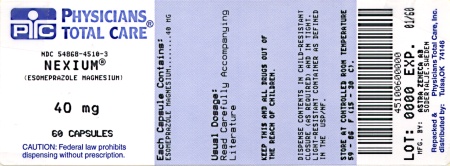
  • Bryant Ranch Prepack
    Nexium | Bryant Ranch Prepack
    No Recall

    Nexium | Bryant Ranch Prepack

    Nexium | Bryant Ranch Prepack

    NEXIUM is supplied as delayed-release capsules for oral administration or in packets for preparation of delayed-release oral suspensions. The recommended dosages are outlined in Table 1. NEXIUM should be taken at least one hour before meals.

    The duration of proton pump inhibitor administration should be based on available safety and efficacy data specific to the defined indication and dosing frequency, as described in the prescribing information, and individual patient medical needs. Proton pump inhibitor treatment should only be initiated and continued if the benefits outweigh the risks of treatment.

    Table 1: Recommended Dosage Schedule of NEXIUM * [ See Clinical Studies (14.1) ]The majority of patients are healed within 4 to 8 weeks. For patients who do not heal after 4 to 8 weeks, an additional 4 to 8 weeks of treatment may be considered. † Controlled studies did not extend beyond six months. ‡ If symptoms do not resolve completely after 4 weeks, an additional 4 weeks of treatment may be considered. § Doses over 1 mg/kg/day have not been studied. ¶ The dosage of NEXIUM in patients with pathological hypersecretory conditions varies with the individual patient. Dosage regimens should be adjusted to individual patient needs. # Doses up to 240 mg daily have been administered [ see Drug Interactions (7)].

    Indication

    Dose

    Frequency

    Gastroesophageal Reflux Disease (GERD)

    Healing of Erosive Esophagitis

    20 mg or 40 mg

    Once Daily for 4 to 8 Weeks*

    Maintenance of Healing of Erosive Esophagitis

    20 mg

    Once Daily†

    Symptomatic Gastroesophageal Reflux Disease

    20 mg

    Once Daily for 4 Weeks‡

    Pediatric GERD

    12 to 17 Year Olds

    Healing of Erosive Esophagitis

    Symptomatic GERD

    20 mg or 40 mg

    20 mg

    Once Daily for 4 to 8 Weeks

    Once Daily for 4 Weeks

    1 to 11 Year Olds§

    Short-term Treatment of Symptomatic GERD

    10 mg

    Once Daily for up to 8 Weeks

    Healing of Erosive Esophagitis

    weight < 20 kg

    10 mg

    Once Daily for 8 Weeks

    weight ≥ 20 kg

    10 mg or 20 mg

    Once Daily for 8 Weeks

    1 month to < 1 year old

    Erosive esophagitis due to acid-mediated GERD

    weight 3 kg to 5 kg

    2.5 mg

    Once Daily for up to 6 Weeks

    weight > 5 kg to 7.5 kg

    5 mg

    Once Daily for up to 6 Weeks

    weight >7.5 kg to 12 kg

    10 mg

    Once Daily for up to 6 Weeks

    Risk Reduction of NSAID-Associated Gastric Ulcer

    20 mg or 40 mg

    Once Daily for up to 6 months†

    H. pylori Eradication to Reduce the Risk of Duodenal Ulcer Recurrence

    Triple Therapy:

    NEXIUM

    40 mg

    Once Daily for 10 Days

    Amoxicillin

    1000 mg

    Twice Daily for 10 Days

    Clarithromycin

    500 mg

    Twice Daily for 10 Days

    Pathological Hypersecretory Conditions Including Zollinger-Ellison Syndrome

    40 mg¶

    # Twice Daily

    Please refer to amoxicillin and clarithromycin prescribing information for Contraindications, Warnings, and dosing in elderly and renally-impaired patients.

    Special Populations

    Hepatic Insufficiency

    In patients with mild to moderate liver impairment (Child Pugh Classes A and B), no dosage adjustment is necessary. For patients with severe liver impairment (Child Pugh Class C), a dose of 20 mg of NEXIUM should not be exceeded [seeClinical Pharmacology (12.3)].

    Directions for use specific to the route and available methods of administration for each of these dosage forms are presented in Table 2.

    Table 2: Administration Options

    Administration Options

    (See text following table for additional instructions.)

    Dosage Form

    Route

    Options

    Delayed-Release Capsules

    Oral

    Capsule can be swallowed whole.

    -or-

    Capsule can be opened and mixed with applesauce.

    Delayed-Release Capsules

    Nasogastric Tube

    Capsule can be opened and the intact granules emptied into a syringe and delivered through the nasogastric tube.

    For Delayed-Release Oral Suspension

    Oral

    For the 2.5 mg and 5 mg strengths, mix the contents of packet with 5 mL of water, leave 2 to 3 minutes to thicken, stir and drink within 30 minutes.

    For the 10 mg, 20 mg and 40 mg strengths, mix contents of packet with 15 mL of water, and follow the instructions above.

    For Delayed-Release Oral Suspension

    Nasogastric or Gastric Tube

    For the 2.5 mg and 5 mg strengths, add 5 mL of water to a syringe and then add contents of packet. Shake the syringe; leave 2 to 3 minutes to thicken. Shake the syringe and inject through the nasogastric or gastric tube within 30 minutes.

    For the 10 mg, 20 mg and 40 mg strengths, add 15 mL of water, and follow the instructions above.

    NEXIUM Delayed-Release Capsules

    NEXIUM Delayed-Release Capsules should be swallowed whole.

    Alternatively, for patients who have difficulty swallowing capsules, one tablespoon of applesauce can be added to an empty bowl and the NEXIUM Delayed-Release Capsule can be opened, and the granules inside the capsule carefully emptied onto the applesauce. The granules should be mixed with the applesauce and then swallowed immediately: do not store for future use. The applesauce used should not be hot and should be soft enough to be swallowed without chewing. The granules should not be chewed or crushed. If the granules/applesauce mixture is not used in its entirety, the remaining mixture should be discarded immediately.

    For patients who have a nasogastric tube in place, NEXIUM Delayed-Release Capsules can be opened and the intact granules emptied into a 60 mL catheter tipped syringe and mixed with 50 mL of water. It is important to only use a catheter tipped syringe when administering NEXIUM through a nasogastric tube. Replace the plunger and shake the syringe vigorously for 15 seconds. Hold the syringe with the tip up and check for granules remaining in the tip. Attach the syringe to a nasogastric tube and deliver the contents of the syringe through the nasogastric tube into the stomach. After administering the granules, the nasogastric tube should be flushed with additional water. Do not administer the granules if they have dissolved or disintegrated.

    The mixture must be used immediately after preparation.

    NEXIUM For Delayed-Release Oral Suspension

    NEXIUM For Delayed-Release Oral Suspension should be administered as follows:

    • Empty the contents of a 2.5 mg or 5 mg packet into a container containing 5 mL of water. For the 10 mg, 20 mg, and 40 mg strengths, the contents of a packet should be emptied into a container containing 15 mL of water. • Stir. • Leave 2 to 3 minutes to thicken. • Stir and drink within 30 minutes. • If any medicine remains after drinking, add more water, stir, and drink immediately. • In cases where there is a need to use two packets, they may be mixed in a similar way by adding twice the required amount of water or follow the mixing instructions provided by your pharmacist or doctor.

    For patients who have a nasogastric or gastric tube in place, NEXIUM For Delayed-Release Oral Suspension can be administered as follows:

    • Add 5 mL of water to a catheter tipped syringe and then add the contents of a 2.5 mg or 5 mg NEXIUM packet. For the 10 mg, 20 mg, and 40 mg strengths, the volume of water in the syringe should be 15 mL. It is important to only use a catheter tipped syringe when administering NEXIUM through a nasogastric tube or gastric tube. • Immediately shake the syringe and leave 2 to 3 minutes to thicken. • Shake the syringe and inject through the nasogastric or gastric tube, French size 6 or larger, into the stomach within 30 minutes. • Refill the syringe with an equal amount of water (5 mL or 15 mL). • Shake and flush any remaining contents from the nasogastric or gastric tube into the stomach.