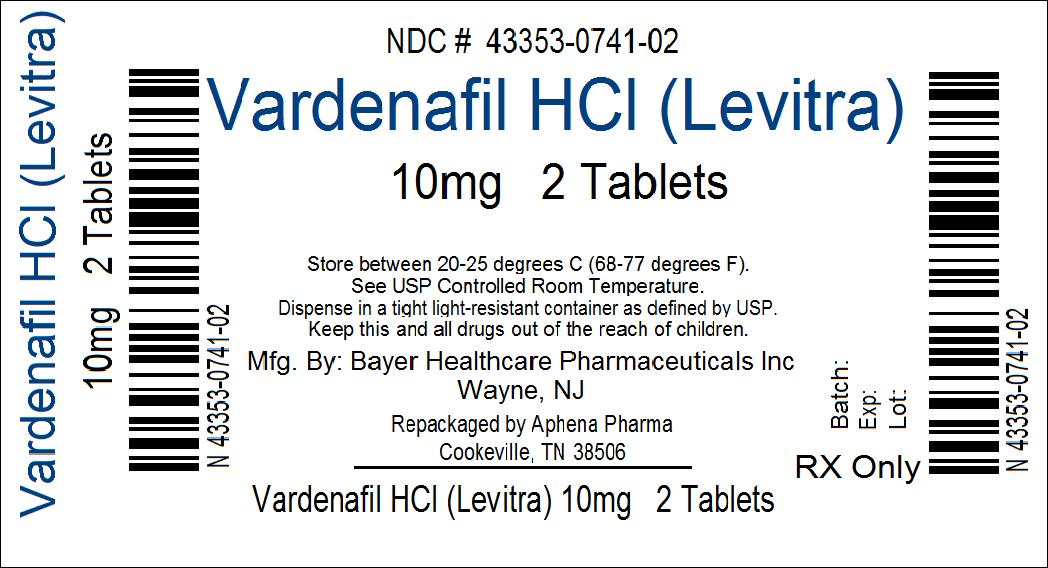
Levitra label

Levitra

Levitra Recall

Get an alert when a recall is issued.

Side Effects & Adverse Reactions

Cardiovascular effects

General: Physicians should consider the cardiovascular status of their patients, since there is a degree of cardiac risk associated with sexual activity. In men for whom sexual activity is not recommended because of their underlying cardiovascular status, any treatment for erectile dysfunction, including LEVITRA, generally should not be used.

Left Ventricular Outflow Obstruction: Patients with left ventricular outflow obstruction, e.g., aortic stenosis and idiopathic hypertrophic subaortic stenosis, can be sensitive to the action of vasodilators including Type 5 phosphodiesterase inhibitors.

Blood Pressure Effects: LEVITRA has systemic vasodilatory properties that resulted in transient decreases in supine blood pressure in healthy volunteers (mean maximum decrease of 7 mmHg systolic and 8 mmHg diastolic) (see CLINICAL PHARMACOLOGY, Pharmacodynamics). While this normally would be expected to be of little consequence in most patients, prior to prescribing LEVITRA, physicians should carefully consider whether their patients with underlying cardiovascular disease could be affected adversely by such vasodilatory effects.

Effect of Co-administration of Potent CYP3A4 Inhibitors

Long-term safety information is not available on the concomitant administration of vardenafil with HIV protease inhibitors. Concomitant administration with ritonavir or indinavir substantially increases plasma concentrations of vardenafil. Because ritonavir prolongs LEVITRA elimination half-life (5 to 6-fold), no more than a single 2.5 mg dose of LEVITRA should be taken in a 72-hour period by patients also taking ritonavir. Patients taking indinavir, saquinavir, atazanavir or other potent CYP3A4 inhibitors such as clarithromycin, ketoconazole 400 mg daily, or itraconazole 400 mg daily should not exceed a dose of LEVITRA 2.5 mg once daily. For patients taking ketoconazole 200 mg daily or itraconazole 200 mg daily, a single dose of 5 mg LEVITRA should not be exceeded in a 24-hour period (see PRECAUTIONS,Drug Interactions and DOSAGE AND ADMINISTRATION).

Other Effects

There have been rare reports of prolonged erections greater than 4 hours and priapism (painful erections greater than 6 hours in duration) for this class of compounds, including vardenafil. In the event that an erection persists longer than 4 hours, the patient should seek immediate medical assistance. If priapism is not treated immediately, penile tissue damage and permanent loss of potency may result.

Patient Subgroups Not Studied in Clinical Trials

There are no controlled clinical data on the safety or efficacy of LEVITRA in the following patients; and therefore its use is not recommended until further information is available.

  • unstable angina; hypotension (resting systolic blood pressure of <90 mmHg); uncontrolled hypertension (>170/110 mmHg); recent history of stroke, life-threatening arrhythmia, or myocardial infarction (within the last 6 months); severe cardiac failure
  • severe hepatic impairment (Child-Pugh C)
  • end stage renal disease requiring dialysis
  • known hereditary degenerative retinal disorders, including retinitis pigmentosa

FDA Safety Alerts

There are currently no FDA safety alerts available for this drug.

Manufacturer Warnings

There is currently no manufacturer warning information available for this drug.

FDA Labeling Changes

There are currently no FDA labeling changes available for this drug.

Uses

LEVITRA is indicated for the treatment of erectile dysfunction.

History

There is currently no drug history available for this drug.

Other Information

LEVITRA® is an oral therapy for the treatment of erectile dysfunction. This monohydrochloride salt of vardenafil is a selective inhibitor of cyclic guanosine monophosphate (cGMP)-specific phosphodiesterase type 5 (PDE5).

Vardenafil HCl is designated chemically as piperazine, 1-[[3-(1,4-dihydro-5-methyl-4-oxo-7-propylimidazo[5,1-f ][1,2,4]triazin-2-yl)-4-ethoxyphenyl]sulfonyl]-4-ethyl-, monohydrochloride and has the following structural formula:

Structural Formula

Vardenafil HCl is a nearly colorless, solid substance with a molecular weight of 579.1 g/mol and a solubility of 0.11 mg/mL in water. LEVITRA is formulated as orange, round, film-coated tablets with “BAYER” cross debossed on one side and “2.5”, “5”, “10”, and “20” on the other side corresponding to 2.5 mg, 5 mg, 10 mg, and 20 mg of vardenafil, respectively. In addition to the active ingredient, vardenafil HCl, each tablet contains microcrystalline cellulose, crospovidone, colloidal silicon dioxide, magnesium stearate, hypromellose, polyethylene glycol, titanium dioxide, yellow ferric oxide, and red ferric oxide.

Levitra Manufacturers

  • Physicians Total Care, Inc.
    Levitra | Physicians Total Care, Inc.
    No Recall

    Levitra | Physicians Total Care, Inc.

    Levitra | Physicians Total Care, Inc.

    For most patients, the recommended starting dose of LEVITRA is 10 mg, taken orally approximately 60 minutes before sexual activity. The dose may be increased to a maximum recommended dose of 20 mg or decreased to 5 mg based on efficacy and side effects. The maximum recommended dosing frequency is once per day. LEVITRA can be taken with or without food. Sexual stimulation is required for a response to treatment.

    Geriatrics: A starting dose of 5 mg LEVITRA should be considered in patients ≥65 years of age (see CLINICAL PHARMACOLOGY, Pharmacokinetics in Special Populations and PRECAUTIONS).

    Hepatic Impairment: For patients with mild hepatic impairment (Child-Pugh A), no dose adjustment of LEVITRA is required. Vardenafil clearance is reduced in patients with moderate hepatic impairment (Child-Pugh B), and a starting dose of 5 mg LEVITRA is recommended. The maximum dose in patients with moderate hepatic impairment should not exceed 10 mg. LEVITRA has not been evaluated in patients with severe hepatic impairment (Child-Pugh C) (see CLINICAL PHARMACOLOGY, Metabolism and ExcretionWARNINGS and PRECAUTIONS).

    Renal Impairment: For patients with mild (CLcr = 50-80 ml/min), moderate (CLcr = 30-50 ml/min), or severe (CLcr<30 ml/min) renal impairment, no dose adjustment is required. LEVITRA has not been evaluated in patients on renal dialysis (see CLINICAL PHARMACOLOGY, Metabolism and Excretion and PRECAUTIONS).

    Concomitant Medications: The dosage of LEVITRA may require adjustment in patients receiving potent CYP3A4 inhibitors such as ketoconazole, itraconazole, ritonavir, indinavir, saquinavir, atazanavir, and clarithromycin as well as in other patients receiving moderate CYP3A4 inhibitors such as erythromycin (see WARNINGS, PRECAUTIONS, Drug Interactions). For ritonavir, a single dose of 2.5 mg LEVITRA should not be exceeded in a 72-hour period. For indinavir, saquinavir, atazanavir, ketoconazole 400 mg daily, itraconazole 400 mg daily, and clarithromycin, a single dose of 2.5 mg LEVITRA should not be exceeded in a 24-hour period. For ketoconazole 200 mg daily, itraconazole 200 mg daily, and erythromycin, a single dose of 5 mg LEVITRA should not be exceeded in a 24-hour period. For alpha-blockers, caution is advised when PDE5 inhibitors, including LEVITRA, are used concomitantly with alpha-blockers because of the potential for an additive effect on blood pressure. In some patients, concomitant use of these two drug classes can lower blood pressure significantly (see PRECAUTIONS,Alpha-blockers and Drug Interactions) leading to symptomatic hypotension (e.g., fainting). Concomitant treatment should be initiated only if the patient is stable on his alpha blocker therapy. In those patients who are stable on alpha-blocker therapy, LEVITRA should be initiated at a dose of 5 mg (2.5 mg when used concomitantly with certain CYP3A4 inhibitors - see Drug Interactions).

  • Aphena Pharma Solutions – Tennessee, Inc.
    Levitra | Aphena Pharma Solutions - Tennessee, Inc.
    No Recall

    Levitra | Aphena Pharma Solutions - Tennessee, Inc.

    Levitra | Aphena Pharma Solutions - Tennessee, Inc.

    For most patients, the recommended starting dose of LEVITRA is 10 mg, taken orally approximately 60 minutes before sexual activity. The dose may be increased to a maximum recommended dose of 20 mg or decreased to 5 mg based on efficacy and side effects. The maximum recommended dosing frequency is once per day. LEVITRA can be taken with or without food. Sexual stimulation is required for a response to treatment.

    Geriatrics: A starting dose of 5 mg LEVITRA should be considered in patients ≥65 years of age (see CLINICAL PHARMACOLOGY, Pharmacokinetics in Special Populations and PRECAUTIONS).

    Hepatic Impairment: For patients with mild hepatic impairment (Child-Pugh A), no dose adjustment of LEVITRA is required. Vardenafil clearance is reduced in patients with moderate hepatic impairment (Child-Pugh B), and a starting dose of 5 mg LEVITRA is recommended. The maximum dose in patients with moderate hepatic impairment should not exceed 10 mg. LEVITRA has not been evaluated in patients with severe hepatic impairment (Child-Pugh C) (see CLINICAL PHARMACOLOGY, Metabolism and ExcretionWARNINGS and PRECAUTIONS).

    Renal Impairment: For patients with mild (CLcr = 50-80 ml/min), moderate (CLcr = 30-50 ml/min), or severe (CLcr<30 ml/min) renal impairment, no dose adjustment is required. LEVITRA has not been evaluated in patients on renal dialysis (see CLINICAL PHARMACOLOGY, Metabolism and Excretion and PRECAUTIONS).

    Concomitant Medications: The dosage of LEVITRA may require adjustment in patients receiving potent CYP3A4 inhibitors such as ketoconazole, itraconazole, ritonavir, indinavir, saquinavir, atazanavir, and clarithromycin as well as in other patients receiving moderate CYP3A4 inhibitors such as erythromycin (see WARNINGS, PRECAUTIONS, Drug Interactions). For ritonavir, a single dose of 2.5 mg LEVITRA should not be exceeded in a 72-hour period. For indinavir, saquinavir, atazanavir, ketoconazole 400 mg daily, itraconazole 400 mg daily, and clarithromycin, a single dose of 2.5 mg LEVITRA should not be exceeded in a 24-hour period. For ketoconazole 200 mg daily, itraconazole 200 mg daily, and erythromycin, a single dose of 5 mg LEVITRA should not be exceeded in a 24-hour period. For alpha-blockers, caution is advised when PDE5 inhibitors, including LEVITRA, are used concomitantly with alpha-blockers because of the potential for an additive effect on blood pressure. In some patients, concomitant use of these two drug classes can lower blood pressure significantly (see PRECAUTIONS,Alpha-blockers and Drug Interactions) leading to symptomatic hypotension (e.g., fainting). Concomitant treatment should be initiated only if the patient is stable on his alpha blocker therapy. In those patients who are stable on alpha-blocker therapy, LEVITRA should be initiated at a dose of 5 mg (2.5 mg when used concomitantly with certain CYP3A4 inhibitors - see Drug Interactions).

  • Levitra | Kaiser Foundation Hospitals
    No Recall

    Levitra | Kaiser Foundation Hospitals

    Levitra | Kaiser Foundation Hospitals

    For most patients, the recommended starting dose of LEVITRA is 10 mg, taken orally approximately 60 minutes before sexual activity. The dose may be increased to a maximum recommended dose of 20 mg or decreased to 5 mg based on efficacy and side effects. The maximum recommended dosing frequency is once per day. LEVITRA can be taken with or without food. Sexual stimulation is required for a response to treatment.

    Geriatrics: A starting dose of 5 mg LEVITRA should be considered in patients ≥65 years of age (see CLINICAL PHARMACOLOGY, Pharmacokinetics in Special Populations and PRECAUTIONS ).

    Hepatic Impairment: For patients with mild hepatic impairment (Child-Pugh A), no dose adjustment of LEVITRA is required. Vardenafil clearance is reduced in patients with moderate hepatic impairment (Child-Pugh B), and a starting dose of 5 mg LEVITRA is recommended. The maximum dose in patients with moderate hepatic impairment should not exceed 10 mg. LEVITRA has not been evaluated in patients with severe hepatic impairment (Child-Pugh C) (see CLINICAL PHARMACOLOGY, Metabolism and ExcretionWARNINGS and PRECAUTIONS).

    Renal Impairment: For patients with mild (CLcr = 50-80 ml/min), moderate (CLcr = 30-50 ml/min), or severe (CLcr<30 ml/min) renal impairment, no dose adjustment is required. LEVITRA has not been evaluated in patients on renal dialysis (see CLINICAL PHARMACOLOGY, Metabolism and Excretion and PRECAUTIONS).

    Concomitant Medications: The dosage of LEVITRA may require adjustment in patients receiving potent CYP3A4 inhibitors such as ketoconazole, itraconazole, ritonavir, indinavir, saquinavir, atazanavir, and clarithromycin as well as in other patients receiving moderate CYP3A4 inhibitors such as erythromycin (see WARNINGS, PRECAUTIONS, Drug Interactions ). For ritonavir, a single dose of 2.5 mg LEVITRA should not be exceeded in a 72-hour period. For indinavir, saquinavir, atazanavir, ketoconazole 400 mg daily, itraconazole 400 mg daily, and clarithromycin, a single dose of 2.5 mg LEVITRA should not be exceeded in a 24-hour period. For ketoconazole 200 mg daily, itraconazole 200 mg daily, and erythromycin, a single dose of 5 mg LEVITRA should not be exceeded in a 24-hour period. For alpha-blockers, caution is advised when PDE5 inhibitors, including LEVITRA, are used concomitantly with alpha-blockers because of the potential for an additive effect on blood pressure. In some patients, concomitant use of these two drug classes can lower blood pressure significantly (see PRECAUTIONS, Alpha-blockers and Drug Interactions) leading to symptomatic hypotension (e.g., fainting). Concomitant treatment should be initiated only if the patient is stable on his alpha blocker therapy. In those patients who are stable on alpha-blocker therapy, LEVITRA should be initiated at a dose of 5 mg (2.5 mg when used concomitantly with certain CYP3A4 inhibitors - see Drug Interactions).

  • Pd-rx Pharmaceuticals, Inc.
    Levitra | Pd-rx Pharmaceuticals, Inc.
    No Recall

    Levitra | Pd-rx Pharmaceuticals, Inc.

    Levitra | Pd-rx Pharmaceuticals, Inc.

    For most patients, the recommended starting dose of LEVITRA is 10 mg, taken orally approximately 60 minutes before sexual activity. The dose may be increased to a maximum recommended dose of 20 mg or decreased to 5 mg based on efficacy and side effects. The maximum recommended dosing frequency is once per day. LEVITRA can be taken with or without food. Sexual stimulation is required for a response to treatment.

    Geriatrics: A starting dose of 5 mg LEVITRA should be considered in patients ≥65 years of age (see CLINICAL PHARMACOLOGY, Pharmacokinetics in Special Populations and PRECAUTIONS).

    Hepatic Impairment: For patients with mild hepatic impairment (Child-Pugh A), no dose adjustment of LEVITRA is required. Vardenafil clearance is reduced in patients with moderate hepatic impairment (Child-Pugh B), and a starting dose of 5 mg LEVITRA is recommended. The maximum dose in patients with moderate hepatic impairment should not exceed 10 mg. LEVITRA has not been evaluated in patients with severe hepatic impairment (Child-Pugh C) (see CLINICAL PHARMACOLOGY, Metabolism and ExcretionWARNINGS and PRECAUTIONS).

    Renal Impairment: For patients with mild (CLcr = 50-80 ml/min), moderate (CLcr = 30-50 ml/min), or severe (CLcr<30 ml/min) renal impairment, no dose adjustment is required. LEVITRA has not been evaluated in patients on renal dialysis (see CLINICAL PHARMACOLOGY, Metabolism and Excretion and PRECAUTIONS).

    Concomitant Medications: The dosage of LEVITRA may require adjustment in patients receiving potent CYP3A4 inhibitors such as ketoconazole, itraconazole, ritonavir, indinavir, saquinavir, atazanavir, and clarithromycin as well as in other patients receiving moderate CYP3A4 inhibitors such as erythromycin (see WARNINGS, PRECAUTIONS, Drug Interactions). For ritonavir, a single dose of 2.5 mg LEVITRA should not be exceeded in a 72-hour period. For indinavir, saquinavir, atazanavir, ketoconazole 400 mg daily, itraconazole 400 mg daily, and clarithromycin, a single dose of 2.5 mg LEVITRA should not be exceeded in a 24-hour period. For ketoconazole 200 mg daily, itraconazole 200 mg daily, and erythromycin, a single dose of 5 mg LEVITRA should not be exceeded in a 24-hour period. For alpha-blockers, caution is advised when PDE5 inhibitors, including LEVITRA, are used concomitantly with alpha-blockers because of the potential for an additive effect on blood pressure. In some patients, concomitant use of these two drug classes can lower blood pressure significantly (see PRECAUTIONS,Alpha-blockers and Drug Interactions) leading to symptomatic hypotension (e.g., fainting). Concomitant treatment should be initiated only if the patient is stable on his alpha blocker therapy. In those patients who are stable on alpha-blocker therapy, LEVITRA should be initiated at a dose of 5 mg (2.5 mg when used concomitantly with certain CYP3A4 inhibitors - see Drug Interactions).

  • Bryant Ranch Prepack
    Levitra | Bryant Ranch Prepack
    No Recall

    Levitra | Bryant Ranch Prepack

    Levitra | Bryant Ranch Prepack

    For most patients, the recommended starting dose of LEVITRA is 10 mg, taken orally approximately 60 minutes before sexual activity. The dose may be increased to a maximum recommended dose of 20 mg or decreased to 5 mg based on efficacy and side effects. The maximum recommended dosing frequency is once per day. LEVITRA can be taken with or without food. Sexual stimulation is required for a response to treatment.

    Geriatrics: A starting dose of 5 mg LEVITRA should be considered in patients ≥65 years of age (see CLINICAL PHARMACOLOGY, Pharmacokinetics in Special Populations and PRECAUTIONS).

    Hepatic Impairment: For patients with mild hepatic impairment (Child-Pugh A), no dose adjustment of LEVITRA is required. Vardenafil clearance is reduced in patients with moderate hepatic impairment (Child-Pugh B), and a starting dose of 5 mg LEVITRA is recommended. The maximum dose in patients with moderate hepatic impairment should not exceed 10 mg. LEVITRA has not been evaluated in patients with severe hepatic impairment (Child-Pugh C) (see CLINICAL PHARMACOLOGY, Metabolism and ExcretionWARNINGS and PRECAUTIONS).

    Renal Impairment: For patients with mild (CLcr = 50-80 ml/min), moderate (CLcr = 30-50 ml/min), or severe (CLcr<30 ml/min) renal impairment, no dose adjustment is required. LEVITRA has not been evaluated in patients on renal dialysis (see CLINICAL PHARMACOLOGY, Metabolism and Excretion and PRECAUTIONS).

    Concomitant Medications: The dosage of LEVITRA may require adjustment in patients receiving potent CYP3A4 inhibitors such as ketoconazole, itraconazole, ritonavir, indinavir, saquinavir, atazanavir, and clarithromycin as well as in other patients receiving moderate CYP3A4 inhibitors such as erythromycin (see WARNINGS, PRECAUTIONS, Drug Interactions). For ritonavir, a single dose of 2.5 mg LEVITRA should not be exceeded in a 72-hour period. For indinavir, saquinavir, atazanavir, ketoconazole 400 mg daily, itraconazole 400 mg daily, and clarithromycin, a single dose of 2.5 mg LEVITRA should not be exceeded in a 24-hour period. For ketoconazole 200 mg daily, itraconazole 200 mg daily, and erythromycin, a single dose of 5 mg LEVITRA should not be exceeded in a 24-hour period. For alpha-blockers, caution is advised when PDE5 inhibitors, including LEVITRA, are used concomitantly with alpha-blockers because of the potential for an additive effect on blood pressure. In some patients, concomitant use of these two drug classes can lower blood pressure significantly (see PRECAUTIONS,Alpha-blockers and Drug Interactions) leading to symptomatic hypotension (e.g., fainting). Concomitant treatment should be initiated only if the patient is stable on his alpha blocker therapy. In those patients who are stable on alpha-blocker therapy, LEVITRA should be initiated at a dose of 5 mg (2.5 mg when used concomitantly with certain CYP3A4 inhibitors - see Drug Interactions).

  • Levitra | Glaxosmithkline Llc
    No Recall

    Levitra | Glaxosmithkline Llc

    Levitra | Glaxosmithkline Llc
    2.1 General Dose Information

    For most patients, the recommended starting dose of LEVITRA is 10 mg, taken orally, as needed, approximately 60 minutes before sexual activity. The dose may be increased to a maximum recommended dose of 20 mg or decreased to 5 mg based on efficacy and side effects. The maximum recommended dosing frequency is once per day. Sexual stimulation is required for a response to treatment.

    2.2 Use with Food

    LEVITRA can be taken with or without food.

    2.3 Use in Specific Populations

    Geriatrics: A starting dose of 5 mg LEVITRA should be considered in patients ≥ 65 years of age [see Use in Specific Populations (8.5)].

    Hepatic Impairment: For patients with moderate hepatic impairment (Child-Pugh B), a starting dose of 5 mg LEVITRA is recommended. The maximum dose in patients with moderate hepatic impairment should not exceed 10 mg.

    Do not use LEVITRA in patients with severe hepatic impairment (Child-Pugh C) [see Warnings and Precautions (5.8), Use in Specific Populations (8.6) and Clinical Pharmacology (12.3)].

    Renal Impairment: Do not use LEVITRA in patients on renal dialysis [see Warnings and Precautions (5.9), Use in Specific Populations (8.7) and Clinical Pharmacology (12.3)].

    2.4 Concomitant Medications

    Nitrates: Concomitant use with nitrates and nitric oxide donors in any form is contraindicated [see Contraindications (4.1)].

    Guanylate Cyclase (GC) Stimulators, such as riociguat: Concomitant use is contraindicated [see Contraindications (4.2)].

    CYP3A4 Inhibitors: The dosage of LEVITRA may require adjustment in patients receiving potent CYP3A4 inhibitors such as ketoconazole, itraconazole, ritonavir, indinavir, saquinavir, atazanavir, and clarithromycin as well as in other patients receiving moderate CYP3A4 inhibitors such as erythromycin [see Drug Interactions (7.2)]. For ritonavir, a single dose of 2.5 mg LEVITRA should not be exceeded in a 72-hour period. For indinavir, saquinavir, atazanavir, ketoconazole 400 mg daily, itraconazole 400 mg daily, and clarithromycin, a single dose of 2.5 mg LEVITRA should not be exceeded in a 24-hour period. For ketoconazole 200 mg daily, itraconazole 200 mg daily, and erythromycin, a single dose of 5 mg LEVITRA should not be exceeded in a 24-hour period.

    Alpha-Blockers: In those patients who are stable on alpha-blocker therapy, phosphodiesterase type 5 (PDE5) inhibitors should be initiated at the lowest recommended starting dose. Concomitant treatment should be initiated only if the patient is stable on his alpha-blocker therapy. Stepwise increase in alpha-blocker dose may be associated with further lowering of blood pressure in patients taking a phosphodiesterase (PDE5) inhibitor including vardenafil. In those patients who are stable on alpha-blocker therapy, LEVITRA should be initiated at a dose of 5 mg (2.5 mg when used concomitantly with certain CYP3A4 inhibitors). [See Warnings and Precautions (5.6) and Drug Interactions (7.1).]

    A time interval between dosing should be considered when Levitra is prescribed concomitantly with alpha-blocker therapy [see Clinical Pharmacology (12.2)].