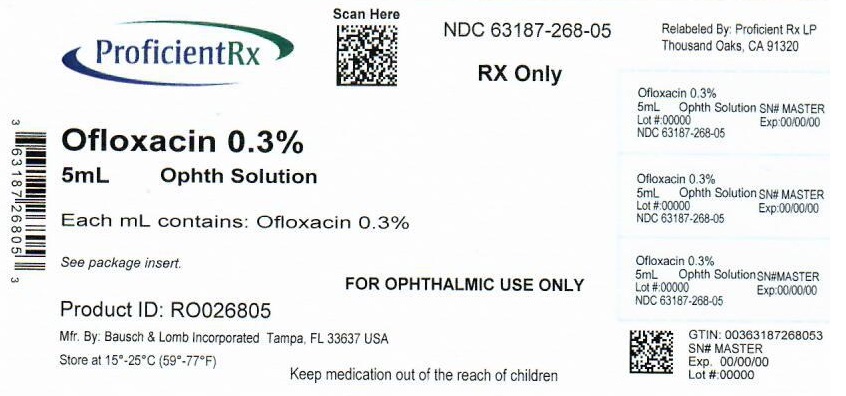
Ofloxacin Solution/ Drops label

Ofloxacin Solution/ Drops

Ofloxacin Solution/ Drops Recall

Get an alert when a recall is issued.

Side Effects & Adverse Reactions

Warnings

For external Use only

DO NOT USE

In the eyes or apply over large areas of the body

Longer that a weel unless directed by doctor

Stop Use

And consult a doctor if the condition persists or gets worse, or if a rash or other allergic reaction develops

FDA Safety Alerts

There are currently no FDA safety alerts available for this drug.

Manufacturer Warnings

There is currently no manufacturer warning information available for this drug.

FDA Labeling Changes

There are currently no FDA labeling changes available for this drug.

Uses

Clean the affected area. Aplly a small amount of the product on the area 1 to 3 times daily.

May be covered with a sterile bandage

History

There is currently no drug history available for this drug.

Other Information

There are no additional details available for this product.

Ofloxacin Solution/ Drops Manufacturers

  • Henry Schein Inc.
    Ofloxacin Solution/ Drops | Teresa Cecena Dba Genesis
    No Recall

    Ofloxacin Solution/ Drops | Teresa Cecena Dba Genesis

    Ofloxacin Solution/ Drops | Teresa Cecena Dba Genesis

    Directions

    Clean the affected area. Apply a small amout of the product ( an amount equeal to the surface area of the tip of finger) on the area 1 to 3 times daily. May be covered with a sterile bandage.

  • Mwi
    Ofloxacin Solution/ Drops | Proficient Rx Lp
    No Recall

    Ofloxacin Solution/ Drops | Proficient Rx Lp

    Ofloxacin Solution/ Drops | Proficient Rx Lp

    Dexamethasone sodium phosphate injection, 10 mg/mL– For intravenous and intramuscular injection only.

    Dexamethasone sodium phosphate injection can be given directly from the vial, or it can be added to Sodium Chloride Injection or Dextrose Injection and administered by intravenous drip.

    Solutions used for intravenous administration or further dilution of this product should be preservative free when used in the neonate, especially the premature infant.

    When it is mixed with an infusion solution, sterile precautions should be observed.  Since infusion solutions generally do not contain preservatives, mixtures should be used within 24 hours.

    DOSAGE REQUIREMENTS ARE VARIABLE AND MUST BE INDIVIDUALIZED ON THE BASIS OF THE DISEASE AND THE RESPONSE OF THE PATIENT.

    Intravenous and Intramuscular Injection

    The initial dosage of dexamethasone sodium phosphate injection varies from 0.5 to 9 mg a day depending on the disease being treated.  In less severe diseases doses lower than 0.5 mg may suffice, while in severe diseases doses higher than 9 mg may be required.

    The initial dosage should be maintained or adjusted until the patient’s response is satisfactory.  If a satisfactory clinical response does not occur after a reasonable period of time, discontinue dexamethasone sodium phosphate injection and transfer the patient to other therapy.

    After a favorable initial response, the proper maintenance dosage should be determined by decreasing the initial dosage in small amounts to the lowest dosage that maintains an adequate clinical response.

    Patients should be observed closely for signs that might require dosage adjustment, including changes in clinical status resulting from remissions or exacerbations of the disease, individual drug responsiveness, and the effect of stress (e.g., surgery, infection, trauma).  During stress it may be necessary to increase dosage temporarily.  If the drug is to be stopped after more than a few days of treatment, it usually should be withdrawn gradually.

    When the intravenous route of administration is used, dosage usually should be the same as the oral dosage.  In certain overwhelming, acute, life-threatening situations, however, administration in dosages exceeding the usual dosages may be justified and may be in multiples of the oral dosages.  The slower rate of absorption by intramuscular administration should be recognized.

    Shock

    There is a tendency in current medical practice to use high (pharmacologic) doses of corticosteroids for the treatment of unresponsive shock.  The following dosages of dexamethasone sodium phosphate injection have been suggested by various authors:

    Author

    Dosage

    Cavanagh1

    3 mg/kg of body weight per 24 hours by constant intravenous infusion after an initial intravenous injection of 20 mg

    Dietzman2

    2 to 6 mg/kg of body weight as a single intravenous injection

    Frank3

    40 mg initially followed by repeat intravenous injection every 4 to 6 hours while shock persists

    Oaks4

    40 mg initially followed by repeat intravenous injection every 2 to 6 hours while shock persists

    Schumer5

    1 mg/kg of body weight as a single intravenous injection

    Administration of high dose corticosteroid therapy should be continued only until the patient’s condition has stabilized and usually not longer than 48 to 72 hours.

    Although adverse reactions associated with high dose, short term corticosteroid therapy are uncommon, peptic ulceration may occur.

    Cerebral Edema

    Dexamethasone sodium phosphate injection is generally administered initially in a dosage of 10 mg intravenously followed by four mg every six hours intramuscularly until the symptoms of cerebral edema subside.  Response is usually noted within 12 to 24 hours and dosage may be reduced after two to four days and gradually discontinued over a period of five to seven days. For palliative management of patients with recurrent or inoperable brain tumors, maintenance therapy with 2 mg two or three times a day may be effective.

    Acute Allergic Disorders

    In acute, self-limited allergic disorders or acute exacerbations of chronic allergic disorders, the following dosage schedule combining parenteral and oral therapy is suggested:

    Dexamethasone sodium phosphate injection, first day, 4 or 8 mg intramuscularly.

    Dexamethasone tablets, 0.75 mg: second and third days, 4 tablets in two divided doses each day; fourth day, 2 tablets in two divided doses; fifth and sixth days, 1 tablet each day; seventh day, no treatment; eighth day, follow-up visit.

    This schedule is designed to ensure adequate therapy during acute episodes, while minimizing the risk of overdosage in chronic cases.

    Parenteral drug products should be inspected visually for particulate matter and discoloration prior to administration, whenever the solution and container permit.

    Intravenous and Intramuscular Injection

    The initial dosage of dexamethasone sodium phosphate injection varies from 0.5 to 9 mg a day depending on the disease being treated.  In less severe diseases doses lower than 0.5 mg may suffice, while in severe diseases doses higher than 9 mg may be required.

    The initial dosage should be maintained or adjusted until the patient’s response is satisfactory.  If a satisfactory clinical response does not occur after a reasonable period of time, discontinue dexamethasone sodium phosphate injection and transfer the patient to other therapy.

    After a favorable initial response, the proper maintenance dosage should be determined by decreasing the initial dosage in small amounts to the lowest dosage that maintains an adequate clinical response.

    Patients should be observed closely for signs that might require dosage adjustment, including changes in clinical status resulting from remissions or exacerbations of the disease, individual drug responsiveness, and the effect of stress (e.g., surgery, infection, trauma).  During stress it may be necessary to increase dosage temporarily.  If the drug is to be stopped after more than a few days of treatment, it usually should be withdrawn gradually.

    When the intravenous route of administration is used, dosage usually should be the same as the oral dosage.  In certain overwhelming, acute, life-threatening situations, however, administration in dosages exceeding the usual dosages may be justified and may be in multiples of the oral dosages.  The slower rate of absorption by intramuscular administration should be recognized.

    Shock

    There is a tendency in current medical practice to use high (pharmacologic) doses of corticosteroids for the treatment of unresponsive shock.  The following dosages of dexamethasone sodium phosphate injection have been suggested by various authors:

    Author

    Dosage

    Cavanagh1

    3 mg/kg of body weight per 24 hours by constant intravenous infusion after an initial intravenous injection of 20 mg

    Dietzman2

    2 to 6 mg/kg of body weight as a single intravenous injection

    Frank3

    40 mg initially followed by repeat intravenous injection every 4 to 6 hours while shock persists

    Oaks4

    40 mg initially followed by repeat intravenous injection every 2 to 6 hours while shock persists

    Schumer5

    1 mg/kg of body weight as a single intravenous injection

    Administration of high dose corticosteroid therapy should be continued only until the patient’s condition has stabilized and usually not longer than 48 to 72 hours.

    Although adverse reactions associated with high dose, short term corticosteroid therapy are uncommon, peptic ulceration may occur.

    Cerebral Edema

    Dexamethasone sodium phosphate injection is generally administered initially in a dosage of 10 mg intravenously followed by four mg every six hours intramuscularly until the symptoms of cerebral edema subside.  Response is usually noted within 12 to 24 hours and dosage may be reduced after two to four days and gradually discontinued over a period of five to seven days. For palliative management of patients with recurrent or inoperable brain tumors, maintenance therapy with 2 mg two or three times a day may be effective.

    Acute Allergic Disorders

    In acute, self-limited allergic disorders or acute exacerbations of chronic allergic disorders, the following dosage schedule combining parenteral and oral therapy is suggested:

    Dexamethasone sodium phosphate injection, first day, 4 or 8 mg intramuscularly.

    Dexamethasone tablets, 0.75 mg: second and third days, 4 tablets in two divided doses each day; fourth day, 2 tablets in two divided doses; fifth and sixth days, 1 tablet each day; seventh day, no treatment; eighth day, follow-up visit.

    This schedule is designed to ensure adequate therapy during acute episodes, while minimizing the risk of overdosage in chronic cases.

    Parenteral drug products should be inspected visually for particulate matter and discoloration prior to administration, whenever the solution and container permit.

    Table 1 (Recommended Dosages) summarizes the recommended volumes and concentrations of Lidocaine Hydrochloride Injection, USP for various types of anesthetic procedures. The dosages suggested in this table are for normal healthy adults and refer to the use of epinephrine-free solutions. When larger volumes are required only solutions containing epinephrine should be used, except in those cases where vasopressor drugs may be contraindicated.

    There have been adverse event reports of chondrolysis in patients receiving intra-articular infusions of local anesthetics following arthroscopic and other surgical procedures.  Lidocaine is not approved for this use (see WARNINGS and DOSAGE AND ADMINISTRATION).

    These recommended doses serve only as a guide to the amount of anesthetic required for most routine procedures. The actual volumes and concentrations to be used depend on a number of factors such as type and extent of surgical procedure, depth of anesthesia and degree of muscular relaxation required, duration of anesthesia required, and the physical condition of the patient. In all cases the lowest concentration and smallest dose that will produce the desired result should be given. Dosages should be reduced for children and for elderly and debilitated patients and patients with cardiac and/or liver disease.

    The onset of anesthesia, the duration of anesthesia and the degree of muscular relaxation are proportional to the volume and concentration (i.e., total dose) of local anesthetic used. Thus, an increase in volume and concentration of Lidocaine Hydrochloride Injection will decrease the onset of anesthesia, prolong the duration of anesthesia, provide a greater degree of muscular relaxation and increase the segmental spread of anesthesia. However, increasing the volume and concentration of Lidocaine Hydrochloride Injection may result in a more profound fall in blood pressure when used in epidural anesthesia. Although the incidence of side effects with lidocaine is quite low, caution should be exercised when employing large volumes and concentrations, since the incidence of side effects is directly proportional to the total dose of local anesthetic agent injected.

    For intravenous regional anesthesia, only the 50 mL single-dose vial containing 0.5% Lidocaine Hydrochloride Injection, USP should be used.

    Epidural Anesthesia

    For epidural anesthesia, only the following available specific products of Lidocaine Hydrochloride Injection by Hospira are recommended:

    1%. . . . . . . . . . . . . . . . . . . . 30 mL single-dose teartop vials

    1.5%. . . . . . . . . . . . . . . . . . . . . . . 20 mL single-dose ampuls

    2%. . . . . . . . . . . . . . . . . . . . . . . . . 10 mL single-dose ampuls

    Although these solutions are intended specifically for epidural anesthesia, they may also be used for infiltration and peripheral nerve block provided they are employed as single dose units. These solutions contain no bacteriostatic agent. In epidural anesthesia, the dosage varies with the number of dermatomes to be anesthetized (generally 2−3 mL of the indicated concentration per dermatome).

    Caudal and Lumbar Epidural Block: As a precaution against the adverse experiences sometimes observed following unintentional penetration of the subarachnoid space, a test dose such as 2−3 mL of 1.5% lidocaine hydrochloride should be administered at least 5 minutes prior to injecting the total volume required for a lumbar or caudal epidural block. The test dose should be repeated if the patient is moved in a manner that may have displaced the catheter. Epinephrine, if contained in the test dose (10−15 mcg have been suggested), may serve as a warning of unintentional intravascular injection. If injected into a blood vessel, this amount of epinephrine is likely to produce a transient "epinephrine response" within 45 seconds, consisting of an increase in heart rate and systolic blood pressure, circumoral pallor, palpitations and nervousness in the unsedated patient. The sedated patient may exhibit only a pulse rate increase of 20 or more beats per minute for 15 or more seconds. Patients on beta-blockers may not manifest changes in heart rate, but blood pressure monitoring can detect an evanescent rise in systolic blood pressure. Adequate time should be allowed for onset of anesthesia after administration of each test dose. The rapid injection of a large volume of Lidocaine Hydrochloride Injection through the catheter should be avoided, and, when feasible, fractional doses should be administered.

    In the event of the known injection of a large volume of local anesthetic solutions into the subarachnoid space, after suitable resuscitation and if the catheter is in place, consider attempting the recovery of drug by draining a moderate amount of cerebrospinal fluid (such as 10 mL) through the epidural catheter.

    Maximum Recommended Dosages

    NOTE: The products accompanying this insert do not contain epinephrine.

    Adults: For normal healthy adults, the individual maximum recommended dose of lidocaine HCl with epinephrine should not exceed 7 mg/kg (3.5 mg/lb) of body weight and in general it is recommended that the maximum total dose not exceed 500 mg. When used without epinephrine, the maximum individual dose should not exceed 4.5 mg/kg (2 mg/lb) of body weight and in general it is recommended that the maximum total dose does not exceed 300 mg. For continuous epidural or caudal anesthesia, the maximum recommended dosage should not be administered at intervals of less than 90 minutes. When continuous lumbar or caudal epidural anesthesia is used for non-obstetrical procedures, more drug may be administered if required to produce adequate anesthesia.

    The maximum recommended dose per 90 minute period of lidocaine hydrochloride for paracervical block in obstetrical patients and non-obstetrical patients is 200 mg total. One-half of the total dose is usually administered to each side. Inject slowly five minutes between sides. (See also discussion of paracervical block in PRECAUTIONS).

    For intravenous regional anesthesia, the dose administered should not exceed 4 mg/kg in adults.

    Children: It is difficult to recommend a maximum dose of any drug for children, since this varies as a function of age and weight. For children over 3 years of age who have a normal lean body mass and normal body development, the maximum dose is determined by the child’s age and weight. For example, in a child of 5 years weighing 50 lbs., the dose of lidocaine HCl should not exceed 75 — 100 mg (1.5 — 2 mg/lb). The use of even more dilute solutions (i.e., 0.25 — 0.5%) and total dosages not to exceed 3 mg/kg (1.4 mg/lb) are recommended for induction of intravenous regional anesthesia in children.

    In order to guard against systemic toxicity, the lowest effective concentration and lowest effective dose should be used at all times. In some cases it will be necessary to dilute available concentrations with 0.9% sodium chloride injection in order to obtain the required final concentration.

    Parenteral drug products should be inspected visually for particulate matter and discoloration prior to administration whenever the solution and container permit. Solutions that are discolored and/or contain particulate matter should not be used.

    Table 1

    Recommended Dosages of Lidocaine Hydrochloride Injection, USP for Various Anesthetic

    Procedures in Normal Healthy Adults

    Lidocaine Hydrochloride Injection, USP (without Epinephrine)

    Procedure

    Conc. (%)

    Vol. (mL)

    Total Dose (mg)

    Infiltration

    Percutaneous

    0.5 or 1.0

    1−60

    5−300

    Intravenous Regional

    0.5

    10−60

    50−300

    Peripheral Nerve Blocks, e.g.

    Brachial

    1.5

    15−20

    225−300

    Dental

    2.0

    1−5

    20−100

    Intercostal

    1.0

    3

    30

    Paravertebral

    1.0

    3−5

    30−50

    Pudendal (each side)

    1.0

    10

    100

    Paracervical

    Obstetrical Analgesia

    (each side)

    1.0

    10

    100

    Sympathetic Nerve Blocks, e.g.

    Cervical (stellate ganglion)

    1.0

    5

    50

    Lumbar

    1.0

    5−10

    50−100

    Central Neural Blocks

    Epidural*

    Thoracic

    1.0

    20−30

    200−300

    Lumbar

    Analgesia

    1.0

    25−30

    250−300

    Anesthesia

    1.5

    15−20

    225−300

    2.0

    10−15

    200−300

    Caudal

    Obstetrical Analgesia

    1.0

    20−30

    200−300

    Surgical Anesthesia

    1.5

    15−20

    225−300

    *Dose determined by number of dermatomes to be anesthetized (2 to 3 mL/dermatome).

    THE ABOVE SUGGESTED CONCENTRATIONS AND VOLUMES SERVE ONLY AS A GUIDE. OTHER VOLUMES AND CONCENTRATIONS MAY BE USED PROVIDED THE TOTAL MAXIMUM RECOMMENDED DOSE IS NOT EXCEEDED.

    Sterilization, Storage and Technical Procedures: Disinfecting agents containing heavy metals, which cause release of respective ions (mercury, zinc, copper, etc.) should not be used for skin or mucous membrane disinfection as they have been related to incidence of swelling and edema. When chemical disinfection of multi-dose vials is desired, either isopropyl alcohol (91%) or 70% ethyl alcohol is recommended. Many commercially available brands of rubbing alcohol, as well as solutions of ethyl alcohol not of USP grade, contain denaturants which are injurious to rubber and, therefore, are not to be used. It is recommended that chemical disinfection be accomplished by wiping the vial stopper thoroughly with cotton or gauze that has been moistened with the recommended alcohol just prior to use.

    The dose of any local anesthetic administered varies with the anesthetic procedure, the area to be anesthetized, the vascularity of the tissues, the number of neuronal segments to be blocked, the depth of anesthesia and degree of muscle relaxation required, the duration of anesthesia desired, individual tolerance, and the physical condition of the patient. The smallest dose and concentration required to produce the desired result should be administered. Dosages of MARCAINE should be reduced for elderly and/or debilitated patients and patients with cardiac and/or liver disease. The rapid injection of a large volume of local anesthetic solution should be avoided and fractional (incremental) doses should be used when feasible.

    For specific techniques and procedures, refer to standard textbooks.

    There have been adverse event reports of chondrolysis in patients receiving intra-articular infusions of local anesthetics following arthroscopic and other surgical procedures.  MARCAINE is not approved for this use (see WARNINGS and DOSAGE AND ADMINISTRATION).

    In recommended doses, MARCAINE produces complete sensory block, but the effect on motor function differs among the three concentrations.

    0.25%—when used for caudal, epidural, or peripheral nerve block, produces incomplete motor block. Should be used for operations in which muscle relaxation is not important, or when another means of providing muscle relaxation is used concurrently. Onset of action may be slower than with the 0.5% or 0.75% solutions.

    0.5%— provides motor blockade for caudal, epidural, or nerve block, but muscle relaxation may be inadequate for operations in which complete muscle relaxation is essential.

    0.75%—produces complete motor block. Most useful for epidural block in abdominal operations requiring complete muscle relaxation, and for retrobulbar anesthesia. Not for obstetrical anesthesia.

    The duration of anesthesia with MARCAINE is such that for most indications, a single dose is sufficient.

    Maximum dosage limit must be individualized in each case after evaluating the size and physical status of the patient, as well as the usual rate of systemic absorption from a particular injection site. Most experience to date is with single doses of MARCAINE up to 225 mg with epinephrine 1:200,000 and 175 mg without epinephrine; more or less drug may be used depending on individualization of each case.

    These doses may be repeated up to once every three hours. In clinical studies to date, total daily doses have been up to 400 mg. Until further experience is gained, this dose should not be exceeded in 24 hours. The duration of anesthetic effect may be prolonged by the addition of epinephrine.

    The dosages in Table 1 have generally proved satisfactory and are recommended as a guide for use in the average adult. These dosages should be reduced for elderly or debilitated patients. Until further experience is gained, MARCAINE is not recommended for pediatric patients younger than 12 years. MARCAINE is contraindicated for obstetrical paracervical blocks, and is not recommended for intravenous regional anesthesia (Bier Block).

    Use in Epidural Anesthesia: During epidural administration of MARCAINE, 0.5% and 0.75% solutions should be administered in incremental doses of 3 mL to 5 mL with sufficient time between doses to detect toxic manifestations of unintentional intravascular or intrathecal injection. In obstetrics, only the 0.5% and 0.25% concentrations should be used; incremental doses of 3 mL to 5 mL of the 0.5% solution not exceeding 50 mg to 100 mg at any dosing interval are recommended. Repeat doses should be preceded by a test dose containing epinephrine if not contraindicated. Use only the single-dose ampuls and single-dose vials for caudal or epidural anesthesia; the multiple-dose vials contain a preservative and therefore should not be used for these procedures.

    Test Dose for Caudal and Lumbar Epidural Blocks: The Test Dose of MARCAINE (0.5% bupivacaine with 1:200,000 epinephrine in a 3 mL ampul) is recommended for use as a test dose when clinical conditions permit prior to caudal and lumbar epidural blocks. This may serve as a warning of unintended intravascular or subarachnoid injection. (See PRECAUTIONS.) The pulse rate and other signs should be monitored carefully immediately following each test dose administration to detect possible intravascular injection, and adequate time for onset of spinal block should be allotted to detect possible intrathecal injection. An intravascular or subarachnoid injection is still possible even if results of the test dose are negative. The test dose itself may produce a systemic toxic reaction, high spinal or cardiovascular effects from the epinephrine. (See WARNINGS and OVERDOSAGE.)

    Use in Dentistry: The 0.5% concentration with epinephrine is recommended for infiltration and block injection in the maxillary and mandibular area when a longer duration of local anesthetic action is desired, such as for oral surgical procedures generally associated with significant postoperative pain. The average dose of 1.8 mL (9 mg) per injection site will usually suffice; an occasional second dose of 1.8 mL (9 mg) may be used if necessary to produce adequate anesthesia after making allowance for 2 to 10 minutes onset time. (See CLINICAL PHARMACOLOGY.) The lowest effective dose should be employed and time should be allowed between injections; it is recommended that the total dose for all injection sites, spread out over a single dental sitting, should not ordinarily exceed 90 mg for a healthy adult patient (ten 1.8 mL injections of 0.5% MARCAINE with epinephrine). Injections should be made slowly and with frequent aspirations. Until further experience is gained, MARCAINE in dentistry is not recommended for pediatric patients younger than 12 years.

    Unused portions of solution not containing preservatives, i.e., those supplied in single-dose ampuls and single-dose vials, should be discarded following initial use.

    This product should be inspected visually for particulate matter and discoloration prior to administration whenever solution and container permit. Solutions which are discolored or which contain particulate matter should not be administered.

    Table 1. Recommended Concentrations and Doses of MARCAINE

    Type of
    Block

    Conc.

    Each Dose 

    Motor 
    Block1

    (mL)

    (mg)

    Local

    infiltration

    0.25%4

     up to
    max.

    up to 
    max.

    —

    Epidural 

    0.75%2,4 

    10-20 

    75-150 

    complete 

    0.5%4 

    10-20 

    50-100

    moderate 
    to complete

    0.25%4 

    10-20 

    25-50 

    partial
    to moderate

    Caudal 

    0.5%4 

    15-30 

    75-150 

    moderate 
    to complete

     0.25%4

    15-30 

    37.5-75 

    moderate

    Peripheral 
     nerves

     0.5%4

     5 to
    max.

    25 to 
    max.

    moderate
    to complete

     0.25%4

    5 to 
     max.

     12.5 to
     max.

    moderate
    to complete

    Retrobulbar3 

    0.75%4 

     2-4

    15-30 

    complete

    Sympathetic 

     0.25%

    20-50 

    50-125 

    — 

    Dental3

     0.5%
     w/epi

    1.8-3.6 
     per site

    9-18 
    per site

    —

    Epidural3
    Test Dose

     0.5%
     w/epi

    2-3

    10-15 
    (10-15 micrograms epinephrine)

    —

    1With continuous (intermittent) techniques, repeat doses increase the degree of motor block. The first repeat dose of 0.5% may produce complete motor block. Intercostal nerve block with 0.25% may also produce complete motor block for intra-abdominal surgery.

    2For single-dose use, not for intermittent epidural technique. Not for obstetrical anesthesia.

    3See PRECAUTIONS.

    4Solutions with or without epinephrine.

    Tear at notch, remove applicator, use only once.

    As a first aid antiseptic

    • clean affected area • apply 1 to 3 times daily • may be covered with a sterile bandage, if bandaged let dry.


    For preoperative patient skin preparation

    • clean area • apply to operative site prior to surgery using the applicator
    • apply to skin as needed • discard after single use

  • Lake Erie Medical Dba Quality Care Products Llc
    Ofloxacin Solution/ Drops | Lake Erie Medical Dba Quality Care Products Llc
    No Recall

    Ofloxacin Solution/ Drops | Lake Erie Medical Dba Quality Care Products Llc

    Ofloxacin Solution/ Drops | Lake Erie Medical Dba Quality Care Products Llc

    The recommended dosage regimen for the treatment of bacterial conjunctivitis is:

    Days 1 and 2 Instill one to two drops every two to four hours in the affected eye(s). Days 3 through 7 Instill one to two drops four times daily.

    The recommended dosage regimen for the treatment of bacterial corneal ulcer is:

    Days 1 and 2 Instill one to two drops into the affected eye every 30 minutes while awake. Awaken at approximately four and six hours after retiring and instill one to two drops. Days 3 through 7 to 9 Instill one to two drops hourly while awake. Days 7 to 9 through treatment completion Instill one to two drops four times daily.
  • Direct Rx
    Ofloxacin Solution/ Drops | Costco Wholesale Corporation
    No Recall

    Ofloxacin Solution/ Drops | Costco Wholesale Corporation

    Ofloxacin Solution/ Drops | Costco Wholesale Corporation
    drink a full glass of water with each dose adults and children 12 years and over: take 4 to 8 tablets every 4 hours not to exceed 48 tablets in 24 hours unless directed by a doctor children under 12 years: do not use unless directed by a doctor
  • Proficient Rx Lp
    Ofloxacin Solution/ Drops | Proficient Rx Lp
    No Recall

    Ofloxacin Solution/ Drops | Proficient Rx Lp

    Ofloxacin Solution/ Drops | Proficient Rx Lp

    The recommended dosage regimen for the treatment of bacterial conjunctivitis is:

    Days 1 and 2                   Instill one to two drops every two to four hours in the affected eye(s).

    Days 3 through 7             Instill one to two drops four times daily.


    The recommended dosage regimen for the treatment of bacterial corneal ulcer is:

    Days 1 and 2                   Instill one to two drops into the affected eye every 30 minutes, while awake.

                                          Awaken at approximately four and six hours after retiring and instill one to two drops.

    Days 3 through 7 to 9     Instill one to two drops hourly, while awake.

    Days 7 to 9 through        Instill one to two drops, four times daily.
    treatment completion

    DO NOT USE IF IMPRINTED “Protective Seal” WITH YELLOW IS NOT INTACT.

  • Physicians Total Care, Inc.
    Ofloxacin Solution/ Drops | Physicians Total Care, Inc.
    No Recall

    Ofloxacin Solution/ Drops | Physicians Total Care, Inc.

    Ofloxacin Solution/ Drops | Physicians Total Care, Inc.

    The recommended dosage regimen for the treatment of bacterial conjunctivitis is:

    Days 1 and 2 Instill one to two drops every two to four hours in the affected eye(s). Days 3 through 7 Instill one to two drops four times daily.

    The recommended dosage regimen for the treatment of bacterial corneal ulcer is:

    Days 1 and 2 Instill one to two drops into the affected eye every 30 minutes, while awake. Awaken at approximately four and six hours after retiring and instill one to two drops. Days 3 through 7 to 9 Instill one to two drops hourly, while awake. Days 7 to 9 through treatment completion Instill one to two drops, four times daily.
  • Keltman Pharmaceuticals Inc.
    Ofloxacin Solution/ Drops | Keltman Pharmaceuticals Inc.
    No Recall

    Ofloxacin Solution/ Drops | Keltman Pharmaceuticals Inc.

    Ofloxacin Solution/ Drops | Keltman Pharmaceuticals Inc.

    The recommended dosage regimen for the treatment of bacterial conjunctivitis is:

    Days 1 and 2 Instill one to two drops every two to four hours in the affected eye(s). Days 3 through 7 Instill one to two drops four times daily.

    The recommended dosage regimen for the treatment of bacterial corneal ulcer is:

    Days 1 and 2 Instill one to two drops into the affected eye every 30 minutes, while awake. Awaken at approximately four and six hours after retiring and instill one to two drops. Days 3 through 7 to 9 Instill one to two drops hourly, while awake. Days 7 to 9 through treatment completion Instill one to two drops, four times daily.
  • Stat Rx Llc Usa
    Ofloxacin Solution/ Drops | Stat Rx Llc Usa
    No Recall

    Ofloxacin Solution/ Drops | Stat Rx Llc Usa

    Ofloxacin Solution/ Drops | Stat Rx Llc Usa
    DOSAGE AND ADMINISTRATION

    The recommended dosage regimen for the treatment of bacterial conjunctivitis is:

    Days 1 and 2 Instill one to two drops every two to four hours in the affected eye(s). Days 3 through 7 Instill one to two drops four times daily.

    The recommended dosage regimen for the treatment of bacterial corneal ulcer is:

    Days 1 and 2 Instill one to two drops into the affected eye every 30 minutes, while awake. Awaken at approximately four and six hours after retiring and instill one to two drops. Days 3 through 7 to 9 Instill one to two drops hourly, while awake. Days 7 to 9 through treatment completion Instill one to two drops, four times daily.
  • Ofloxacin Solution/ Drops | Rebel Distributors Corp
    No Recall

    Ofloxacin Solution/ Drops | Rebel Distributors Corp

    Ofloxacin Solution/ Drops | Rebel Distributors Corp

    The recommended dosage regimen for the treatment of bacterial conjunctivitis is:

    Days 1 and 2                   Instill one to two drops every two to four hours in the affected eye(s).

    Days 3 through 7            Instill one to two drops four times daily.


    The recommended dosage regimen for the treatment of bacterial corneal ulcer is:

    Days 1 and 2                   Instill one to two drops into the affected eye every 30 minutes, while awake.

                                               Awaken at approximately four and six hours after retiring and instill one to two drops.

    Days 3 through 7 to 9     Instill one to two drops hourly, while awake.

    Days 7 to 9 through        Instill one to two drops, four times daily.
    treatment completion

    DO NOT USE IF IMPRINTED “Protective Seal” WITH YELLOW (mortar and pestle symbol) IS NOT INTACT.

  • Stat Rx Usa Llc
    Ofloxacin Solution/ Drops | Stat Rx Usa Llc
    No Recall

    Ofloxacin Solution/ Drops | Stat Rx Usa Llc

    Ofloxacin Solution/ Drops | Stat Rx Usa Llc

    Otitis Externa

    The recommended dosage regimen for the treatment of otitis externa is:

      For pediatric patients (from 6 months to 13 years old): Five drops (0.25 mL, 0.75 mg ofloxacin) instilled into the affected ear once daily for seven days.   For patients 13 years and older: Ten drops (0.5 mL, 1.5 mg ofloxacin) instilled into the affected ear once daily for seven days.   The solution should be warmed by holding the bottle in the hand for one or two minutes to avoid dizziness which may result from the instillation of a cold solution. The patient should lie with the affected ear upward, and then the drops should be instilled. This position should be maintained for five minutes to facilitate penetration of the drops into the ear canal. Repeat, if necessary, for the opposite ear.


    Acute Otitis Media in pediatric patients with tympanostomy tubes

    The recommended dosage regimen for the treatment of acute otitis media in pediatric patients (from 1 to 12 years old) with tympanostomy tubes is:

      Five drops (0.25 mL, 0.75 mg ofloxacin) instilled into the affected ear twice daily for ten days. The solution should be warmed by holding the bottle in the hand for one or two minutes to avoid dizziness which may result from the instillation of a cold solution. The patient should lie with the affected ear upward, and then the drops should be instilled. The tragus should then be pumped 4 times by pushing inward to facilitate penetration of the drops into the middle ear. This position should be maintained for five minutes. Repeat, if necessary, for the opposite ear.


    Chronic Suppurative Otitis Media with perforated tympanic membranes

    The recommended dosage regimen for the treatment of chronic suppurative otitis media with perforated tympanic membranes in patients 12 years and older is:

      Ten drops (0.5 mL, 1.5 mg ofloxacin) instilled into the affected ear twice daily for fourteen days. The solution should be warmed by holding the bottle in the hand for one or two minutes to avoid dizziness which may result from the instillation of a cold solution. The patient should lie with the affected ear upward, before instilling the drops. The tragus should then be pumped 4 times by pushing inward to facilitate penetration into the middle ear. This position should be maintained for five minutes. Repeat, if necessary, for the opposite ear.
  • Ofloxacin Solution/ Drops | Akorn, Inc.
    No Recall

    Ofloxacin Solution/ Drops | Akorn, Inc.

    Ofloxacin Solution/ Drops | Akorn, Inc.

    The recommended dosage regimen for the treatment of bacterial conjunctivitis is:

    Days 1 and 2 Instill one to two drops every two to four hours in the affected eye(s). Days 3 through 7 Instill one to two drops four times daily.

    The recommended dosage regimen for the treatment of bacterial corneal ulcer is:

    Days 1 and 2 Instill one to two drops into the affected eye every 30 minutes while awake. Awaken at approximately four and six hours after retiring and instill one to two drops. Days 3 through 7 to 9 Instill one to two drops hourly while awake. Days 7 to 9 through treatment completion Instill one to two drops four times daily.
  • Ofloxacin Solution/ Drops | Hi-tech Pharmacal Co., Inc.
    No Recall

    Ofloxacin Solution/ Drops | Hi-tech Pharmacal Co., Inc.

    Ofloxacin Solution/ Drops | Hi-tech Pharmacal Co., Inc.

    The recommended dosage regimen for the treatment of bacterial conjunctivitis is:

    Days 1 and 2 Instill one to two drops every two to four hours in the affected eye(s). Days 3 through 7 Instill one to two drops four times daily.

    The recommended dosage regimen for the treatment of bacterial corneal ulcer is:

    Days 1 and 2 Instill one to two drops into the affected eye every 30 minutes, while awake. Awaken at approximately four and six hours after retiring and instill one to two drops. Days 3 through 7 to 9 Instill one to two drops hourly, while awake. Days 7 to 9 through treatment completion Instill one to two drops, four times daily.
  • Physicians Total Care, Inc.
    Ofloxacin Solution/ Drops | Physicians Total Care, Inc.
    No Recall

    Ofloxacin Solution/ Drops | Physicians Total Care, Inc.

    Ofloxacin Solution/ Drops | Physicians Total Care, Inc.
    Otitis Externa

    The recommended dosage regimen for the treatment of otitis externa is:

     For pediatric patients (from 6 months to 13 years old): Five drops (0.25 mL, 0.75 mg ofloxacin) instilled into the affected ear once daily for seven days. For patients 13 years and older: Ten drops (0.5 mL, 1.5 mg ofloxacin) instilled into the affected ear once daily for seven days. The solution should be warmed by holding the bottle in the hand for one or two minutes to avoid dizziness which may result from the instillation of a cold solution. The patient should lie with the affected ear upward, and then the drops should be instilled. This position should be maintained for five minutes to facilitate penetration of the drops into the ear canal. Repeat, if necessary, for the opposite ear. Acute Otitis Media in pediatric patients with tympanostomy tubes

    The recommended dosage regimen for the treatment of acute otitis media in pediatric patients (from 1 to 12 years old) with tympanostomy tubes is:

     Five drops (0.25 mL, 0.75 mg ofloxacin) instilled into the affected ear twice daily for ten days. The solution should be warmed by holding the bottle in the hand for one or two minutes to avoid dizziness which may result from the instillation of a cold solution. The patient should lie with the affected ear upward, and then the drops should be instilled. The tragus should then be pumped 4 times by pushing inward to facilitate penetration of the drops into the middle ear. This position should be maintained for five minutes. Repeat, if necessary, for the opposite ear. Chronic Suppurative Otitis Media with perforated tympanic membranes

    The recommended dosage regimen for the treatment of chronic suppurative otitis media with perforated tympanic membranes in patients 12 years and older is:

     Ten drops (0.5 mL, 1.5 mg ofloxacin) instilled into the affected ear twice daily for fourteen days. The solution should be warmed by holding the bottle in the hand for one or two minutes to avoid dizziness which may result from the instillation of a cold solution. The patient should lie with the affected ear upward, before instilling the drops. The tragus should then be pumped 4 times by pushing inward to facilitate penetration into the middle ear. This position should be maintained for five minutes. Repeat, if necessary, for the opposite ear.
  • Preferred Pharmaceuticals, Inc
    Ofloxacin Solution/ Drops | Preferred Pharmaceuticals, Inc.
    No Recall

    Ofloxacin Solution/ Drops | Preferred Pharmaceuticals, Inc.

    Ofloxacin Solution/ Drops | Preferred Pharmaceuticals, Inc.

    Prevention of Nausea and Vomiting Associated With Highly Emetogenic Cancer Chemotherapy

    The recommended adult oral dosage of ondansetron tablets is 24 mg given as three 8 mg tablets administered 30 minutes before the start of single-day highly emetogenic chemotherapy, including cisplatin ≥50 mg/m2. Multiday, single-dose administration of a 24 mg dosage has not been studied.

    Pediatric Use

    There is no experience with the use of a 24 mg dosage in pediatric patients.

    Geriatric Use

    The dosage recommendation is the same as for the general population.

    Prevention of Nausea and Vomiting Associated With Moderately Emetogenic Cancer Chemotherapy
     
    The recommended adult oral dosage is one 8 mg ondansetron tablet given twice a day. The first dose should be administered 30 minutes before the start of emetogenic chemotherapy, with a subsequent dose 8 hours after the first dose. One 8 mg ondansetron tablet should be administered twice a day (every 12 hours) for 1 to 2 days after completion of chemotherapy.

    Pediatric Use

    For pediatric patients 12 years of age and older, the dosage is the same as for adults. For pediatric patients 4 through 11 years of age, the dosage is one 4 mg ondansetron tablet given 3 times a day. The first dose should be administered 30 minutes before the start of emetogenic chemotherapy, with subsequent doses 4 and 8 hours after the first dose. One 4 mg ondansetron tablet should be administered 3 times a day (every 8 hours) for 1 to 2 days after completion of chemotherapy.

    Geriatric Use

    The dosage is the same as for the general population.

    Prevention of Nausea and Vomiting Associated With Radiotherapy, Either Total Body Irradiation, or Single High-Dose Fraction or Daily Fractions to the Abdomen
     
    The recommended oral dosage is one 8 mg ondansetron tablet given 3 times a day.

    For total body irradiation, one 8 mg ondansetron tablet should be administered 1 to 2 hours before each fraction of radiotherapy administered each day.

    For single high-dose fraction radiotherapy to the abdomen, one 8 mg ondansetron tablet should be administered 1 to 2 hours before radiotherapy, with subsequent doses every 8 hours after the first dose for 1 to 2 days after completion of radiotherapy.

    For daily fractionated radiotherapy to the abdomen, one 8 mg ondansetron tablet should be administered 1 to 2 hours before radiotherapy, with subsequent doses every 8 hours after the first dose for each day radiotherapy is given.

    Pediatric Use

    There is no experience with the use of ondansetron tablets in the prevention of radiation-induced nausea and vomiting in pediatric patients.

    Geriatric Use

    The dosage recommendation is the same as for the general population.

    Postoperative Nausea and Vomiting
     
    The recommended dosage is 16 mg given as two 8 mg ondansetron tablets 1 hour before induction of anesthesia.

    Pediatric Use

    There is no experience with the use of ondansetron tablets in the prevention of postoperative nausea and vomiting in pediatric patients.

    Geriatric Use

    The dosage is the same as for the general population.

    Dosage Adjustment for Patients With Impaired Renal Function
     
    The dosage recommendation is the same as for the general population. There is no experience beyond first-day administration of ondansetron.

    Dosage Adjustment for Patients With Impaired Hepatic Function 

    In patients with severe hepatic impairment (Child-Pugh2 score of 10 or greater), clearance is reduced and apparent volume of distribution is increased with a resultant increase in plasma half-life. In such patients, a total daily dose of 8 mg should not be exceeded.

  • Ofloxacin Solution/ Drops | Pd-rx Pharmaceuticals, Inc.
    No Recall

    Ofloxacin Solution/ Drops | Pd-rx Pharmaceuticals, Inc.

    Ofloxacin Solution/ Drops | Pd-rx Pharmaceuticals, Inc.

    IF THERE IS ANY QUESTION OF OCCULT OPIOID DEPENDENCE, PERFORM A NALOXONE CHALLENGE TEST AND DO NOT INITIATE NALTREXONE THERAPY UNTIL THE NALOXONE CHALLENGE IS NEGATIVE.

    Treatment of Alcoholism

    A dose of 50 mg once daily is recommended for most patients (see CLINICAL PHARMACOLOGY, Individualization of Dosage). The placebo-controlled studies that demonstrated the efficacy of naltrexone hydrochloride as an adjunctive treatment of alcoholism used a dose regimen of naltrexone hydrochloride 50 mg once daily for up to 12 weeks. Other dose regimens or durations of therapy were not evaluated in these trials.

    A patient is a candidate for treatment with naltrexone if:

    the patient is willing to take a medicine to help with alcohol dependence the patient is opioid free for 7 to 10 days the patient does not have severe or active liver or kidney problems (Typical guidelines suggest liver function tests no greater than 3 times the upper limits of normal, and bilirubin normal.) the patient is not allergic to naltrexone, and no other contraindications are present

    Refer to CONTRAINDICATIONS, WARNINGS, and PRECAUTIONS sections for additional information.

    Naltrexone should be considered as only one of many factors determining the success of treatment of alcoholism. Factors associated with a good outcome in the clinical trials with naltrexone were the type, intensity, and duration of treatment; appropriate management of comorbid conditions; use of community-based support groups; and good medication compliance. To achieve the best possible treatment outcome, appropriate compliance-enhancing techniques should be implemented for all components of the treatment program, especially medication compliance.

    Treatment of Opioid Dependence

    Initiate treatment with naltrexone using the following guidelines –

    Treatment should not be attempted unless the patient has remained opioid-free for at least 7 to 10 days. Self-reporting of abstinence from opioids in opioid addicts should be verified by analysis of the patient’s urine for absence of opioids. The patient should not be manifesting withdrawal signs or reporting withdrawal symptoms. If there is any question of occult opioid dependence, perform a naloxone challenge test. If signs of opioid withdrawal are still observed following naloxone challenge, treatment with naltrexone should not be attempted. The naloxone challenge can be repeated in 24 hours. Treatment should be initiated carefully, with an initial dose of 25 mg of naltrexone hydrochloride. If no withdrawal signs occur, the patient may be started on 50 mg a day thereafter.

    Naloxone Challenge Test – The naloxone challenge test should not be performed in a patient showing clinical signs or symptoms of opioid withdrawal, or in a patient whose urine contains opioids. The naloxone challenge test may be administered by either the intravenous or subcutaneous routes.

    Intravenous:

    Inject 0.2 mg naloxone.
    Observe for 30 seconds for signs or symptoms of withdrawal.
    If no evidence of withdrawal, inject 0.6 mg of naloxone.
    Observe for an additional 20 minutes.

    Subcutaneous:

    Administer 0.8 mg naloxone.
    Observe for 20 minutes for signs or symptoms of withdrawal.

    Note: Individual patients, especially those with opioid dependence, may respond to lower doses of naloxone. In some cases, 0.1 mg IV naloxone has produced a diagnostic response.

    Interpretation of the Challenge – Monitor vital signs and observe the patient for signs and symptoms of opioid withdrawal. These may include but are not limited to: nausea, vomiting, dysphoria, yawning, sweating, tearing, rhinorrhea, stuffy nose, craving for opioids, poor appetite, abdominal cramps, sense of fear, skin erythema, disrupted sleep patterns, fidgeting, uneasiness, poor ability to focus, mental lapses, muscle aches or cramps, pupillary dilation, piloerection, fever, changes in blood pressure, pulse or temperature, anxiety, depression, irritability, backache, bone or joint pains, tremors, sensations of skin crawling, or fasciculations. If signs or symptoms of withdrawal appear, the test is positive and no additional naloxone should be administered.

    Warning: If the test is positive, do NOT initiate naltrexone therapy. Repeat the challenge in 24 hours. If the test is negative, naltrexone therapy may be started if no other contraindications are present. If there is any doubt about the result of the test, hold naltrexone and repeat the challenge in 24 hours.

    Alternative Dosing Schedules

    Once the patient has been started on naltrexone hydrochloride, 50 mg every 24 hours will produce adequate clinical blockade of the actions of parenterally administered opioids (i.e., this dose will block the effects of a 25 mg intravenous heroin challenge). A flexible approach to a dosing regimen may need to be employed in cases of supervised administration. Thus, patients may receive 50 mg of naltrexone hydrochloride every weekday with a 100 mg dose on Saturday, 100 mg every other day, or 150 mg every third day. The degree of blockade produced by naltrexone may be reduced by these extended dosing intervals.

    There may be a higher risk of hepatocellular injury with single doses above 50 mg, and use of higher doses and extended dosing intervals should balance the possible risks against the probable benefits (see WARNINGS and CLINICAL PHARMACOLOGY, Individualization of Dosage).

    Patient Compliance

    Naltrexone should be considered as only one of many factors determining the success of treatment. To achieve the best possible treatment outcome, appropriate compliance-enhancing techniques should be implemented for all components of the treatment program, including medication compliance.

  • Ofloxacin Solution/ Drops | Unit Dose Services
    No Recall

    Ofloxacin Solution/ Drops | Unit Dose Services

    Ofloxacin Solution/ Drops | Unit Dose Services

    The recommended dosage regimen for the treatment of is: bacterial conjunctivitis

    Days 1 and 2                   Instill one to two drops every two to four hours in the affected eye(s).

    Days 3 through 7             Instill one to two drops four times daily.

    The recommended dosage regimen for the treatment of is:
    bacterial corneal ulcer

    Days 1 and 2                   Instill one to two drops into the affected eye every 30 minutes, while awake.

                                          Awaken at approximately four and six hours after retiring and instill one to two drops.

    Days 3 through 7 to 9     Instill one to two drops hourly, while awake.

    Days 7 to 9 through        Instill one to two drops, four times daily. treatment completion

    DO NOT USE IF IMPRINTED “Protective Seal” WITH YELLOW IS NOT INTACT.

  • Clinical Solutions Wholesale
    Ofloxacin Solution/ Drops | Clinical Solutions Wholesale
    No Recall

    Ofloxacin Solution/ Drops | Clinical Solutions Wholesale

    Ofloxacin Solution/ Drops | Clinical Solutions Wholesale

    The recommended dosage regimen for the treatment of bacterial conjunctivitis is:

    Days 1 and 2                   Instill one to two drops every two to four hours in the affected eye(s).

    Days 3 through 7             Instill one to two drops four times daily.


    The recommended dosage regimen for the treatment of bacterial corneal ulcer is:

    Days 1 and 2                   Instill one to two drops into the affected eye every 30 minutes, while awake.

                                          Awaken at approximately four and six hours after retiring and instill one to two drops.

    Days 3 through 7 to 9     Instill one to two drops hourly, while awake.

    Days 7 to 9 through        Instill one to two drops, four times daily.
    treatment completion

    DO NOT USE IF IMPRINTED “Protective Seal” WITH YELLOW IS NOT INTACT.
  • Remedyrepack Inc.
    Ofloxacin Solution/ Drops | Remedyrepack Inc.
    No Recall

    Ofloxacin Solution/ Drops | Remedyrepack Inc.

    Ofloxacin Solution/ Drops | Remedyrepack Inc.

    The recommended dosage regimen for the treatment of bacterial conjunctivitis is:

    Days 1 and 2 Instill one to two drops every two to four hours in the affected eye(s). Days 3 through 7 Instill one to two drops four times daily.

    The recommended dosage regimen for the treatment of bacterial corneal ulcer is:

    Days 1 and 2 Instill one to two drops into the affected eye every 30 minutes while awake. Awaken at approximately four and six hours after retiring and instill one to two drops. Days 3 through 7 to 9 Instill one to two drops hourly while awake. Days 7 to 9 through treatment completion Instill one to two drops four times daily.


  • Remedyrepack Inc.
    Ofloxacin Solution/ Drops | Remedyrepack Inc.
    No Recall

    Ofloxacin Solution/ Drops | Remedyrepack Inc.

    Ofloxacin Solution/ Drops | Remedyrepack Inc.

    The recommended dosage regimen for the treatment of bacterial conjunctivitis is:

    Days 1 and 2                   Instill one to two drops every two to four hours in the affected eye(s).

    Days 3 through 7             Instill one to two drops four times daily.


    The recommended dosage regimen for the treatment of bacterial corneal ulcer is:

    Days 1 and 2                   Instill one to two drops into the affected eye every 30 minutes, while awake.

                                          Awaken at approximately four and six hours after retiring and instill one to two drops.

    Days 3 through 7 to 9     Instill one to two drops hourly, while awake.

    Days 7 to 9 through        Instill one to two drops, four times daily.
    treatment completion

    DO NOT USE IF IMPRINTED “Protective Seal” WITH YELLOW IS NOT INTACT.


  • Remedyrepack Inc.
    Ofloxacin Solution/ Drops | Remedyrepack Inc.
    No Recall

    Ofloxacin Solution/ Drops | Remedyrepack Inc.

    Ofloxacin Solution/ Drops | Remedyrepack Inc.

    The recommended dosage regimen for the treatment of bacterial conjunctivitis is:

    Days 1 and 2 Instill one to two drops every two to four hours in the affected eye(s). Days 3 through 7 Instill one to two drops four times daily.

    The recommended dosage regimen for the treatment of bacterial corneal ulcer is:

    Days 1 and 2 Instill one to two drops into the affected eye every 30 minutes while awake. Awaken at approximately four and six hours after retiring and instill one to two drops. Days 3 through 7 to 9 Instill one to two drops hourly while awake. Days 7 to 9 through treatment completion Instill one to two drops four times daily.