Rebel Distributors Corp

Manufacturer Details

There are currently no manufacturer details available.

Share This Page

Rebel Distributors Corp Drugs

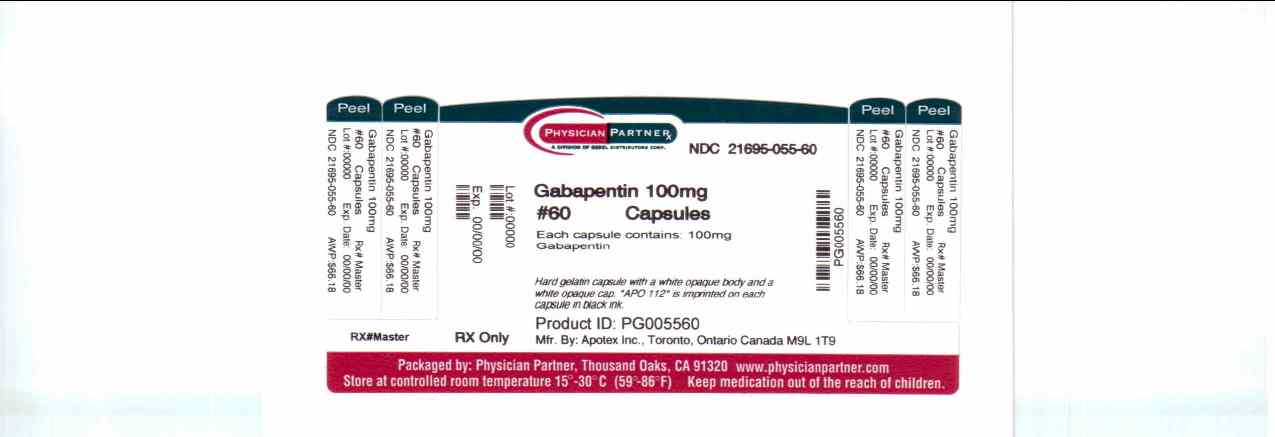
  • Gabapentin (Gabapentin) Tablet, Film Coated [Rebel Distributors Corp.]

    Gabapentin

    Gabapentin (Gabapentin) Tablet, Film Coated [Rebel Distributors Corp.]

    Gabapentin tablets are given orally with or without food. Patients should be informed that, should they break the scored 600 or 800 mg tablet in order to administer a half-tablet, they should take the unused half-tablet as the next dose. Half-tablets not used within several days of breaking the scored tablet should be discarded.

    If gabapentin dose is reduced, discontinued or substituted with an alternative medication, this should be done gradually over a minimum of 1 week (a longer period may be needed at the discretion of the prescriber).

    Postherpetic Neuralgia

    In adults with postherpetic neuralgia, gabapentin therapy may be initiated as a single 300 mg dose on Day 1, 600 mg/day on Day 2 (divided BID), and 900 mg/day on Day 3 (divided TID). The dose can subsequently be titrated up as needed for pain relief to a daily dose of 1800 mg (divided TID). In clinical studies, efficacy was demonstrated over a range of doses from 1800 mg/day to 3600 mg/day with comparable effects across the dose range. Additional benefit of using doses greater than 1800 mg/day was not demonstrated.

    Epilepsy

    Gabapentin tablets are recommended for add-on therapy in patients 3 years of age and older. Effectiveness in pediatric patients below the age of 3 years has not been established.

    Patients >12 years of age: The effective dose of gabapentin is 900 to 1800 mg/day and given in divided doses (three times a day) using 600 or 800 mg tablets. The starting dose is 300 mg three times a day. If necessary, the dose may be increased using 600 or 800 mg tablets three times a day up to 1800 mg/day. Dosages up to 2400 mg/day have been well tolerated in long-term clinical studies. Doses of 3600 mg/day have also been administered to a small number of patients for a relatively short duration, and have been well tolerated. The maximum time between doses in the TID schedule should not exceed 12 hours.

    Pediatric Patients Age 3 to 12 years:  The starting dose should range from 10 to 15 mg/kg/day in 3 divided doses, and the effective dose reached by upward titration over a period of approximately 3 days. The effective dose of gabapentin in patients 5 years of age and older is 25 to 35 mg/kg/day and given in divided doses (three times a day). The effective dose in pediatric patients ages 3 and 4 years is 40 mg/kg/day and given in divided doses (three times a day). (see CLINICAL PHARMACOLOGY, Pediatrics). Gabapentin may be administered as the capsule, or tablet, or using combinations of these formulations. Dosages up to 50 mg/kg/day have been well-tolerated in a long-term clinical study. The maximum time interval between doses should not exceed 12 hours.

    It is not necessary to monitor gabapentin plasma concentrations to optimize gabapentin therapy. Further, because there are no significant pharmacokinetic interactions among gabapentin and other commonly used antiepileptic drugs, the addition of gabapentin does not alter the plasma levels of these drugs appreciably.

    If gabapentin is discontinued and/or an alternate anticonvulsant medication is added to the therapy, this should be done gradually over a minimum of 1 week.

    Dosage in Renal Impairment

    Creatinine clearance is difficult to measure in outpatients. In patients with stable renal function, creatinine clearance (CCr) can be reasonably well estimated using the equation of Cockcroft and Gault:

    for females CCr =(0.85)(140-age)(weight)/[(72)(SCr)]for males CCr =(140-age)(weight)/[(72)(SCr)]

    where age is in years, weight is in kilograms and SCr is serum creatinine in mg/dL.

    Dosage adjustment in patients ≥12 years of age with compromised renal function or undergoing hemodialysis is recommended as follows (see dosing recommendations above for effective doses in each indication).

    TABLE 6. Gabapentin Dosage Based on Renal Function Renal Function Creatinine Clearance (mL/min) Total Daily Dose Range (mg/day) Dose Regimen(mg) * For patients with creatinine clearance <15 mL/min, reduce daily dose in proportion to creatinine clearance (e.g., patients with a creatinine clearance of 7.5 mL/min should receive one-half the daily dose that patients with a creatinine clearance of 15 mL/min receive). † Patients on hemodialysis should receive maintenance doses based on estimates of creatinine clearance as indicated in the upper portion of the table and a supplemental post-hemodialysis dose administered after each 4 hours of hemodialysis as indicated in the lower portion of the table. ≥60 900 to 3600 300 TID 400 TID 600 TID 800 TID 1200 TID >30 to 59 400 to 1400 200 BID 300 BID 400 BID 500 BID 700 BID >15 to 29 200 to 700 200 QD 300 QD 400 QD 500 QD 700 QD 15* 100 to 300 100 QD 125 QD 150 QD 200 QD 300 QD Post-Hemodialysis Supplemental Dose (mg)† Hemodialysis 125† 150† 200† 250† 350†

    The use of gabapentin in patients <12 years of age with compromised renal function has not been studied.

    Dosage in Elderly

    Because elderly patients are more likely to have decreased renal function, care should be taken in dose selection, and dose should be adjusted based on creatinine clearance values in these patients.

  • Ertaczo Cream [Rebel Distributors Corp.]

    Ertaczo

    Ertaczo Cream [Rebel Distributors Corp.]

    In the treatment of interdigital tinea pedis, ERTACZO® Cream, 2%, should be applied twice daily for 4 weeks. Sufficient ERTACZO® Cream, 2%, should be applied to cover both the affected areas between the toes and the immediately surrounding healthy skin of patients with interdigital tinea pedis. If a patient shows no clinical improvement 2 weeks after the treatment period, the diagnosis should be reviewed.

  • Ciclopirox Solution [Rebel Distributors Corp.]

    Ciclopirox Solution

    Ciclopirox Solution [Rebel Distributors Corp.]

    Ciclopirox Topical Solution, 8% (Nail Lacquer) should be used as a component of a comprehensive management program for onychomycosis. Removal of the unattached, infected nail, as frequently as monthly, by a health care professional, weekly trimming by the patient, and daily application of the medication are all integral parts of this therapy. Careful consideration of the appropriate nail management program should be given to patients with diabetes (see PRECAUTIONS).

    Nail Care By Health Care Professionals

    Removal of the unattached, infected nail, as frequently as monthly, trimming of onycholytic nail, and filing of excess horny material should be performed by professionals trained in treatment of nail disorders.

    Nail Care By Patient

    Patients should file away (with emery board) loose nail material and trim nails, as required, or as directed by the health care professional, every seven days after Ciclopirox Topical Solution, 8% (Nail Lacquer) is removed with alcohol. Ciclopirox Topical Solution, 8% (Nail Lacquer) should be applied once daily (preferably at bedtime or eight hours before washing) to all affected nails with the applicator brush provided. Ciclopirox Topical Solution, 8% (Nail Lacquer) should be applied evenly over the entire nail plate.

    If possible, Ciclopirox Topical Solution, 8% (Nail Lacquer) should be applied to the nail bed, hyponychium, and the under surface of the nail plate when it is free of the nail bed (e.g., onycholysis).

    Ciclopirox Topical Solution, 8% (Nail Lacquer) should not be removed on a daily basis. Daily applications should be made over the previous coat and removed with alcohol every seven days. This cycle should be repeated throughout the duration of therapy.

  • Ventolinhfa (Albuterol Sulfate) Aerosol, Metered [Rebel Distributors Corp.]

    Ventolinhfa

    Ventolinhfa (Albuterol Sulfate) Aerosol, Metered [Rebel Distributors Corp.]

    Administer VENTOLIN HFA by oral inhalation only. Shake VENTOLIN HFA well before each spray.

    2.1 Bronchospasm

    For treatment of acute episodes of bronchospasm or prevention of symptoms associated with bronchospasm, the usual dosage for adults and children is 2 inhalations repeated every 4 to 6 hours; in some patients, 1 inhalation every 4 hours may be sufficient. More frequent administration or a larger number of inhalations is not recommended.

    2.2 Exercise-Induced Bronchospasm

    The usual dosage for adults and children 4 years of age and older is 2 inhalations 15 to 30 minutes before exercise.

    2.3 Administration Information

    Priming: Priming VENTOLIN HFA is essential to ensure appropriate albuterol content in each actuation. Prime VENTOLIN HFA before using for the first time, when the inhaler has not been used for more than 2 weeks, or when the inhaler has been dropped. To prime VENTOLIN HFA, release 4 sprays into the air away from the face, shaking well before each spray.

    Cleaning: To ensure proper dosing and to prevent actuator orifice blockage, wash the actuator with warm water and let it air-dry completely at least once a week.

    Dose Counter: VENTOLIN HFA has a dose counter attached to the canister that starts at 204 or 64 and counts down each time a spray is released [see Dosage Forms and Strengths (3)]. When the counter reads 020, the patient should contact the pharmacist for a refill of medication or consult the physician to determine whether a prescription refill is needed.

    VENTOLIN HFA comes in a moisture-protective foil pouch, which should be removed prior to use. Discard VENTOLIN HFA when the counter reads 000 or 6 months after removal from the moisture-protective foil pouch, whichever comes first [see Dosage Forms and Strengths (3)].

    See 17.8 FDA-Approved Patient Labeling for instructions on how to prime and clean the inhaler to ensure proper dosing and to prevent actuator orifice blockage.

  • Oxistat (Oxiconazole Nitrate) Lotion [Rebel Distributors Corp.]

    Oxistat

    Oxistat (Oxiconazole Nitrate) Lotion [Rebel Distributors Corp.]

    OXISTAT® Cream or Lotion should be applied to affected and immediately surrounding areas once to twice daily in patients with tinea pedis, tinea corporis, or tinea cruris. OXISTAT® Cream should be applied once daily in the treatment of tinea (pityriasis) versicolor. Tinea corporis, tinea cruris, and tinea (pityriasis) versicolor should be treated for 2 weeks and tinea pedis for 1 month to reduce the possibility of recurrence. If a patient shows no clinical improvement after the treatment period, the diagnosis should be reviewed.

    Note: Tinea (pityriasis) versicolor may give rise to hyperpigmented or hypopigmented patches on the trunk that may extend to the neck, arms, and upper thighs. Treatment of the infection may not immediately result in restoration of pigment to the affected sites. Normalization of pigment following successful therapy is variable and may take months, depending on individual skin type and incidental sun exposure. Although tinea (pityriasis) versicolor is not contagious, it may recur because the organism that causes the disease is part of the normal skin flora.

  • Zaleplon Capsule [Rebel Distributors Corp.]

    Zaleplon

    Zaleplon Capsule [Rebel Distributors Corp.]

    The dose of zaleplon should be individualized. The recommended dose of zaleplon for most nonelderly adults is 10 mg. For certain low weight individuals, 5 mg may be a sufficient dose. Although the risk of certain adverse events associated with the use of zaleplon appears to be dose dependent, the 20 mg dose has been shown to be adequately tolerated and may be considered for the occasional patient who does not benefit from a trial of a lower dose. Doses above 20 mg have not been adequately evaluated and are not recommended.

    Zaleplon should be taken immediately before bedtime or after the patient has gone to bed and has experienced difficulty falling asleep (see PRECAUTIONS.). Taking zaleplon with or immediately after a heavy, high-fat meal results in slower absorption and would be expected to reduce the effect of zaleplon on sleep latency (see Pharmacokinetics under CLINICAL PHARMACOLOGY).

    Special Populations Elderly patients and debilitated patients appear to be more sensitive to the effects of hypnotics, and respond to 5 mg of zaleplon. The recommended dose for these patients is therefore 5 mg. Doses over 10 mg are not recommended.

    Hepatic insufficiency: Patients with mild to moderate hepatic impairment should be treated with zaleplon 5 mg because clearance is reduced in this population. Zaleplon is not recommended for use in patients with severe hepatic impairment.

    Renal insufficiency: No dose adjustment is necessary in patients with mild to moderate renal impairment. Zaleplon has not been adequately studied in patients with severe renal impairment.

    An initial dose of 5 mg should be given to patients concomitantly taking cimetidine because zaleplon clearance is reduced in this population (see Drug Interactions under PRECAUTIONS).

  • Oxybutynin Chloride Tablet [Rebel Distributors Corp.]

    Oxybutynin Chloride

    Oxybutynin Chloride Tablet [Rebel Distributors Corp.]

    Adults:

    The usual dose is one 5-mg tablet two to three times a day. The maximum recommended dose is one 5-mg tablet four times a day. A lower starting dose of 2.5 mg two or three times a day is recommended for the frail elderly.

    Pediatric patients over 5 years of age:

    The usual dose is one 5-mg tablet two times a day. The maximum recommended dose is one 5-mg tablet three times a day.

    Adults:

    The usual dose is one 5-mg tablet two to three times a day. The maximum recommended dose is one 5-mg tablet four times a day. A lower starting dose of 2.5 mg two or three times a day is recommended for the frail elderly.

    Pediatric patients over 5 years of age:

    The usual dose is one 5-mg tablet two times a day. The maximum recommended dose is one 5-mg tablet three times a day.

  • Next Choice (Levonorgestrel) Tablet [Rebel Distributors Corp.]

    Next Choice

    Next Choice (Levonorgestrel) Tablet [Rebel Distributors Corp.]

    One levonorgestrel tablet should be taken orally as soon as possible within 72 hours after unprotected intercourse. The second tablet should be taken 12 hours after the first dose. Efficacy is better if levonorgestrel tablets are taken as directed as soon as possible after unprotected intercourse. Levonorgestrel tablets can be used at any time during the menstrual cycle.

    The user should be instructed that if she vomits within one hour of taking either dose of medication she should contact her health care professional to discuss whether to repeat that dose.

  • Celebrex (Celecoxib) Capsule [Rebel Distributors Corp.]

    Celebrex

    Celebrex (Celecoxib) Capsule [Rebel Distributors Corp.]

    Use lowest effective dose for the shortest duration consistent with treatment goals for the individual patient.

    These doses can be given without regard to timing of meals.

    2.1 Osteoarthritis

    For relief of the signs and symptoms of OA the recommended oral dose is 200 mg per day administered as a single dose or as 100 mg twice daily.

    2.2 Rheumatoid Arthritis

    For relief of the signs and symptoms of RA the recommended oral dose is 100 to 200 mg twice daily.

    2.3 Juvenile Rheumatoid Arthritis

    For the relief of the signs and symptoms of JRA the recommended oral dose for pediatric patients (age 2 years and older) is based on weight. For patients ≥10 kg to ≤25 kg the recommended dose is 50 mg twice daily. For patients >25 kg the recommended dose is 100 mg twice daily.

    For patients who have difficulty swallowing capsules, the contents of a CELEBREX capsule can be added to applesauce. The entire capsule contents are carefully emptied onto a level teaspoon of cool or room temperature applesauce and ingested immediately with water. The sprinkled capsule contents on applesauce are stable for up to 6 hours under refrigerated conditions (2–8° C/ 35–45° F).

    2.4 Ankylosing Spondylitis

    For the management of the signs and symptoms of AS, the recommended dose of CELEBREX is 200 mg daily in single (once per day) or divided (twice per day) doses. If no effect is observed after 6 weeks, a trial of 400 mg daily may be worthwhile. If no effect is observed after 6 weeks on 400 mg daily, a response is not likely and consideration should be given to alternate treatment options.

    2.5 Management of Acute Pain and Treatment of Primary Dysmenorrhea

    The recommended dose of CELEBREX is 400 mg initially, followed by an additional 200 mg dose if needed on the first day. On subsequent days, the recommended dose is 200 mg twice daily as needed.

    2.6 Familial Adenomatous Polyposis

    Usual medical care for FAP patients should be continued while on CELEBREX. To reduce the number of adenomatous colorectal polyps in patients with FAP, the recommended oral dose is 400 mg twice per day to be taken with food.

    2.7 Special Populations

    Hepatic insufficiency: The daily recommended dose of CELEBREX capsules in patients with moderate hepatic impairment (Child-Pugh Class B) should be reduced by 50%. The use of CELEBREX in patients with severe hepatic impairment is not recommended [see Warnings and Precautions (5.5), Use in Specific Populations (8.6) and Clinical Pharmacology (12.3)].

    Poor Metabolizers of CYP2C9 Substrates: Patients who are known or suspected to be poor CYP2C9 metabolizers based on previous history/experience with other CYP2C9 substrates (such as warfarin, phenytoin) should be administered celecoxib with caution. Consider starting treatment at half the lowest recommended dose in poor metabolizers. Consider using alternative management in JRA patients who are poor metabolizers. [see Use in Specific populations (8.8), and Clinical Pharmacology (12.3)].

  • Levothyroxine Sodium Tablet [Rebel Distributors Corp.]

    Levothyroxine Sodium

    Levothyroxine Sodium Tablet [Rebel Distributors Corp.]

    General Principles:

    The goal of replacement therapy is to achieve and maintain a clinical and biochemical euthyroid state. The goal of suppressive therapy is to inhibit growth and/or function of abnormal thyroid tissue. The dose of Levothyroxine Sodium Tablets, USP that is adequate to achieve these goals depends on a variety of factors including the patient's age, body weight, cardiovascular status, concomitant medical conditions, including pregnancy, concomitant medications, and the specific nature of the condition being treated (see WARNINGS and PRECAUTIONS). Hence, the following recommendations serve only as dosing guidelines. Dosing must be individualized and adjustments made based on periodic assessment of the patient's clinical response and laboratory parameters (see PRECAUTIONS, Laboratory Tests).

    Levothyroxine Sodium Tablets, USP should be taken in the morning on an empty stomach, at least one-half hour to one hour before any food is eaten. Levothyroxine Sodium Tablets, USP should be taken at least 4 hours apart from drugs that are known to interfere with its absorption (see PRECAUTIONS, Drug Interactions).

    Due to the long half-life of levothyroxine, the peak therapeutic effect at a given dose of levothyroxine sodium may not be attained for 4-6 weeks.

    Caution should be exercised when administering Levothyroxine Sodium Tablets, USP to patients with underlying cardiovascular disease, to the elderly, and to those with concomitant adrenal insufficiency (see PRECAUTIONS).

    Specific Patient Populations:

    Hypothyroidism in Adults and in Children in Whom Growth and Puberty are Complete (see WARNINGS and PRECAUTIONS, Laboratory Tests).

    Therapy may begin at full replacement doses in otherwise healthy individuals less than 50 years old and in those older than 50 years who have been recently treated for hyperthyroidism or who have been hypothyroid for only a short time (such as a few months). The average full replacement dose of levothyroxine sodium is approximately 1.7 mcg/kg/day (e.g., 100-125 mcg/day for a 70 kg adult). Older patients may require less than 1 mcg/kg/day. Levothyroxine sodium doses greater than 200 mcg/day are seldom required. An inadequate response to daily doses ≥ 300 mcg/day is rare and may indicate poor compliance, malabsorption, and/or drug interactions.

    For most patients older than 50 years or for patients under 50 years of age with underlying cardiac disease, an initial starting dose of 25-50 mcg/day of levothyroxine sodium is recommended, with gradual increments in dose at 6-8 week intervals, as needed. The recommended starting dose of levothyroxine sodium in elderly patients with cardiac disease is 12.5-25 mcg/day, with gradual dose increments at 4-6 week intervals. The levothyroxine sodium dose is generally adjusted in 12.5-25 mcg increments until the patient with primary hypothyroidism is clinically euthyroid and the serum TSH has normalized.

    In patients with severe hypothyroidism, the recommended initial levothyroxine sodium dose is 12.5-25 mcg/day with increases of 25 mcg/day every 2-4 weeks, accompanied by clinical and laboratory assessment, until the TSH level is normalized.

    In patients with secondary (pituitary) or tertiary (hypothalamic) hypothyroidism, the levothyroxine sodium dose should be titrated until the patient is clinically euthyroid and the serum free-T4 level is restored to the upper half of the normal range.

    Pediatric Dosage - Congenital or Acquired Hypothyroidism (see PRECAUTIONS, Laboratory Tests)

    General Principles

    In general, levothyroxine therapy should be instituted at full replacement doses as soon as possible. Delays in diagnosis and institution of therapy may have deleterious effects on the child's intellectual and physical growth and development.

    Undertreatment and overtreatment should be avoided (see PRECAUTIONS, Pediatric Use).

    Levothyroxine Sodium Tablets, USP may be administered to infants and children who cannot swallow intact tablets by crushing the tablet and suspending the freshly crushed tablet in a small amount (5-10 mL or 1-2 teaspoons) of water. This suspension can be administered by spoon or dropper. DO NOT STORE THE SUSPENSION. Foods that decrease absorption of levothyroxine, such as soybean infant formula, should not be used for administering levothyroxine sodium tablets. (see PRECAUTIONS, Drug-Food Interactions).

    Newborns

    The recommended starting dose of levothyroxine sodium in newborn infants is 10-15 mcg/kg/day. A lower starting dose (e.g., 25 mcg/day) should be considered in infants at risk for cardiac failure, and the dose should be increased in 4-6 weeks as needed based on clinical and laboratory response to treatment. In infants with very low (< 5 mcg/dL) or undetectable serum T4 concentrations, the recommended initial starting dose is 50 mcg/day of levothyroxine sodium.

    Infants and Children

    Levothyroxine therapy is usually initiated at full replacement doses, with the recommended dose per body weight decreasing with age (see Table 3). However, in children with chronic or severe hypothyroidism, an initial dose of 25 mcg/day of levothyroxine sodium is recommended with increments of 25 mcg every 2-4 weeks until the desired effect is achieved.

    Hyperactivity in an older child can be minimized if the starting dose is one-fourth of the recommended full replacement dose, and the dose is then increased on a weekly basis by an amount equal to one-fourth the full-recommended replacement dose until the full recommended replacement dose is reached.

    Table 3: Levothyroxine Sodium Dosing Guidelines For Pediatric Hypothyroidism

    a. The dose should be adjusted based on clinical response and laboratory parameters (see PRECAUTlONS, Laboratory Tests and Pediatric Use).

    AGE Daily Dose Per Kg Body Weighta 0-3 months 10-15 mcg/kg/day 3-6 months 8-10 mcg/kg/day 6-12 months 6-8 mcg/kg/day 1-5 years 5-6 mcg/kg/day 6-12 years 4-5 mcg/kg/day >12 years but growth and puberty incomplete 2-3 mcg/kg/day Growth and puberty complete 1.7 mcg/kg/day

    Pregnancy- Pregnancy may increase levothyroxine requirements (see PREGNANCY).

    Subclinical Hypothyroidism- If this condition is treated, a lower levothyroxine sodium dose (e.g., 1 mcg/kg/day) than that used for full replacement may be adequate to normalize the serum TSH level. Patients who are not treated should be monitored yearly for changes in clinical status and thyroid laboratory parameters.

    TSH Suppression in Well-differentiated Thyroid Cancer and Thyroid Nodules- The target level for TSH suppression in these conditions has not been established with controlled studies. In addition, the efficacy of TSH suppression for benign nodular disease is controversial. Therefore, the dose of Levothyroxine Sodium Tablets, USP used for TSH suppression should be individualized based on the specific disease and the patient being treated.

    In the treatment of well differentiated (papillary and follicular) thyroid cancer, levothyroxine is used as an adjunct to surgery and radioiodine therapy. Generally, TSH is suppressed to <0.1 mU/L, and this usually requires a levothyroxine sodium dose of greater than 2 mcg/kg/day. However, in patients with high-risk tumors, the target level for TSH suppression may be <0.01 mU/L.

    In the treatment of benign nodules and nontoxic multinodular goiter, TSH is generally suppressed to a higher target (e.g., 0.1-0.5 mU/L for nodules and 0.5-1.0 mU/L for multinodular goiter) than that used for the treatment of thyroid cancer. Levothyroxine sodium is contraindicated if the serum TSH is already suppressed due to the risk of precipitating overt thyrotoxicosis (see CONTRAINDICATIONS, WARNINGS and PRECAUTIONS).

    Myxedema Coma - Myxedema coma is a life-threatening emergency characterized by poor circulation and hypometabolism, and may result in unpredictable absorption of levothyroxine sodium from the gastrointestinal tract. Therefore, oral thyroid hormone drug products are not recommended to treat this condition. Thyroid hormone products formulated for intravenous administration should be administered.

  • Dicyclomine Capsule [Rebel Distributors Corp.]

    Dicyclomine

    Dicyclomine Capsule [Rebel Distributors Corp.]

    DOSAGE MUST BE ADJUSTED TO INDIVIDUAL PATIENT NEEDS. (See CLINICAL PHARMACOLOGY.)

    Adults-Oral

    The only oral dose clearly shown to be effective is 160 mg per day (in 4 equally divided doses). Since this dose is associated with a significant incidence of side effects, it is prudent to begin with 80 mg per day (in 4 equally divided doses). Depending upon the patient's response during the first week of therapy, the dose should be increased to 160 mg per day unless side effects limit dosage escalation.  If efficacy is not achieved within 2 weeks or side effects require doses below 80 mg per day, the drug should be discontinued. Documented safety data are not available for doses above 80 mg daily for periods longer than 2 weeks.

  • Trimethobenzamide Hydrochloride (Trimethobenzamide) Capsule [Rebel Distributors Corp.]

    Trimethobenzamide Hydrochloride

    Trimethobenzamide Hydrochloride (Trimethobenzamide) Capsule [Rebel Distributors Corp.]

    (See WARNINGS and PRECAUTIONS.)

    Dosage should be adjusted according to the indication for therapy, severity of symptoms and the response of the patient.

    Geriatric Patients

    Dose adjustment such as reducing the total dose administered at each dosing or increasing the dosing interval should be considered in elderly patients with renal impairment (creatinine clearance ≤70 mL/min/1.73m2). Final dose adjustment should be based upon integration of clinical efficacy and safety considerations. (See CLINICAL PHARMACOLOGY and PRECAUTIONS).

    Patients with Renal Impairment

    In subjects with renal impairment (creatinine clearance ≤70 mL/min/1.73m2), dose adjustment such as reducing the total dose administered at each dosing or increasing the dosing interval should be considered. (See CLINICAL PHARMACOLOGY and PRECAUTIONS).

    CAPSULES, 300 mg

    Usual Adult Dosage

    One 300 mg capsule t.i.d. or q.i.d.

  • Omeprazole Capsule, Delayed Release [Rebel Distributors Corp.]

    Omeprazole

    Omeprazole Capsule, Delayed Release [Rebel Distributors Corp.]

    Omeprazole Delayed-Release Capsule should be taken before eating. In the clinical trials, antacids were used concomitantly with omeprazole.

    Patients should be informed that the Omeprazole Delayed-Release Capsules should be swallowed whole.

    For patients unable to swallow an intact capsule, alternative administration options are available. [See Dosage and Administration  (2.8)]

    2.1 Short-Term Treatment of Active Duodenal Ulcer

    The recommended adult oral dose of Omeprazole Delayed-Release Capsules is 20 mg once daily. Most patients heal within four weeks. Some patients may require an additional four weeks of therapy.

    2.2 H. pylori Eradication for the Reduction of the Risk of Duodenal Ulcer Recurrence

    Triple Therapy (omeprazole/clarithromycin/amoxicillin)— The recommended adult oral regimen is omeprazole 20 mg plus clarithromycin 500 mg plus amoxicillin 1000 mg each given twice daily for 10 days. In patients with an ulcer present at the time of initiation of therapy, an additional 18 days of omeprazole 20 mg once daily is recommended for ulcer healing and symptom relief.


    Dual Therapy (omeprazole/clarithromycin)— The recommended adult oral regimen is omeprazole 40 mg once daily plus clarithromycin 500 mg three times daily for 14 days. In patients with an ulcer present at the time of initiation of therapy, an additional 14 days of omeprazole 20 mg once daily is recommended for ulcer healing and symptom relief.

    2.3 Gastric Ulcer

    The recommended adult oral dose is 40 mg once daily for 4-8 weeks.

    2.4 Gastroesophageal Reflux Disease (GERD)

    The recommended adult oral dose for the treatment of patients with symptomatic GERD and no esophageal lesions is 20 mg daily for up to 4 weeks. The recommended adult oral dose for the treatment of patients with erosive esophagitis and accompanying symptoms due to GERD is 20 mg daily for 4 to 8 weeks.

    2.5 Maintenance of Healing of Erosive Esophagitis

    The recommended adult oral dose is 20 mg daily. [See Clinical Studies (14.4) ]

    2.6 Pathological Hypersecretory Conditions

    The dosage of omeprazole in patients with pathological hypersecretory conditions varies with the individual patient. The recommended adult oral starting dose is 60 mg once daily. Doses should be adjusted to individual patient needs and should continue for as long as clinically indicated. Doses up to 120 mg three times daily have been administered. Daily dosages of greater than 80 mg should be administered in divided doses. Some patients with Zollinger-Ellison syndrome have been treated continuously with omeprazole for more than 5 years.

    2.7 Pediatric Patients

    For the treatment of GERD and maintenance of healing of erosive esophagitis, the recommended daily dose for pediatric patients 2 to 16 years of age is as follows:

    Patient Weight Omeprazole Daily Dose 10 < 20 kg 10 mg ≥ 20 kg 20 mg

    On a per kg basis, the doses of omeprazole required to heal erosive esophagitis in pediatric patients are greater than those for adults.

    Alternative administrative options can be used for pediatric patients unable to swallow an intact capsule [See Dosage and Administration  (2.8) ].

    2.8 Alternative Administration Options

    Omeprazole is available as a delayed-release capsule.

    For patients who have difficulty swallowing capsules, the contents of a Omeprazole Delayed-Release Capsules can be added to applesauce. One tablespoon of applesauce should be added to an empty bowl and the capsule should be opened. All of the microtablets inside the capsule should be carefully emptied on the applesauce. The microtablets should be mixed with the applesauce and then swallowed immediately with a glass of cool water to ensure complete swallowing of the microtablets. The applesauce used should not be hot and should be soft enough to be swallowed without chewing. The microtablets should not be chewed or crushed. The microtablets/applesauce mixture should not be stored for future use.

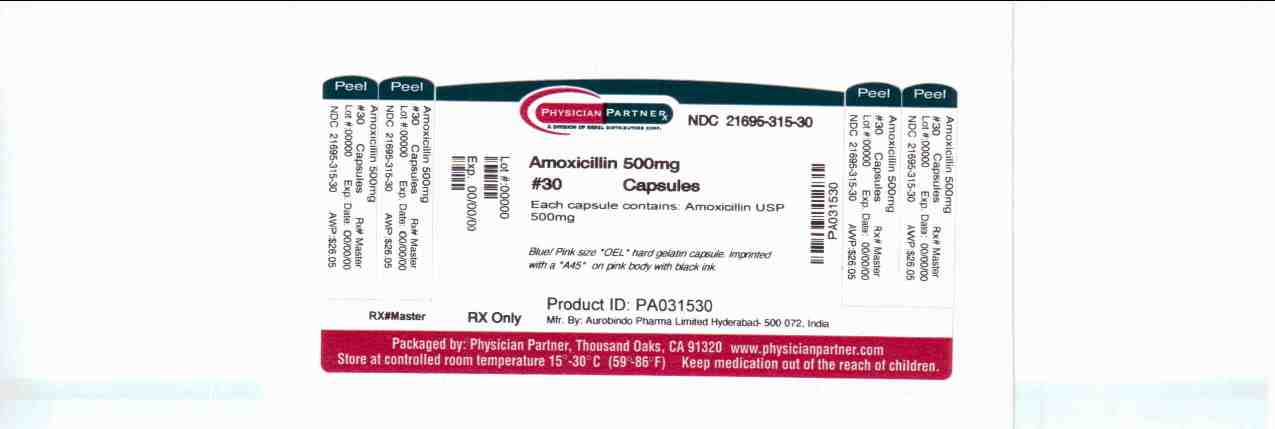
  • Amoxicillin (Amoxicillin) Capsule [Rebel Distributors Corp.]

    Amoxicillin

    Amoxicillin (Amoxicillin) Capsule [Rebel Distributors Corp.]

    Capsules, chewable tablets, and oral suspensions of amoxicillin may be given without regard to meals. The 400 mg suspension, 400 mg chewable tablet, and the 875 mg tablet have been studied only when administered at the start of a light meal. However, food effect studies have not been performed with the 200 mg and 500 mg formulations.

    Neonates and Infants Aged ≤12 Weeks (≤3 Months)

    Due to incompletely developed renal function affecting elimination of amoxicillin in this age group, the recommended upper dose of amoxicillin is 30 mg/kg/day divided q12h.

    Adults and Pediatric Patients >3 Months

    * Dosing for infections caused by less susceptible organisms should follow the recommendations for    severe infections. †  The children’s dosage is intended for individuals whose weight is less than 40 kg. Children weighing 40 kg   or more should be dosed according to the adult recommendations.‡  Each strength of the suspension of amoxicillin is available as a chewable tablet for use by older children.    Infection    Severity*    Usual Adult Dose    Usual Dose for Children   >3 Months†‡    Ear/Nose/Throat    Mild/Moderate    500 mg every 12 hours   or   250 mg every 8 hours    25 mg/kg/day in divided   doses every 12 hours    or    20 mg/kg/day in divided   doses every 8 hours    Severe    875 mg every 12 hours    or   500 mg every 8 hours    45 mg/kg/day in divided   doses every 12 hours    or    40 mg/kg/day in divided   doses every 8 hours    Lower Respiratory Tract       Mild/Moderate    or Severe      875 mg every 12 hours    or   500 mg every 8 hours    45 mg/kg/day in divided   doses every 12 hours    or    40 mg/kg/day in divided   doses every 8 hours    Skin/Skin Structure    Mild/Moderate    500 mg every 12 hours    or   250 mg every 8 hours    25 mg/kg/day in divided   doses every 12 hours    or    20 mg/kg/day in divided   doses every 8 hours    Severe    875 mg every 12 hours    or   500 mg every 8 hours    45 mg/kg/day in divided   doses every 12 hours    or    40 mg/kg/day in divided   doses every 8 hours    Genitourinary Tract        Mild/Moderate    500 mg every 12 hours    or   250 mg every 8 hours    25 mg/kg/day in divided   doses every 12 hours    or    20 mg/kg/day in divided   doses every 8 hours    Severe    875 mg every 12 hours    or   500 mg every 8 hours    45 mg/kg/day in divided   doses every 12 hours    or    40 mg/kg/day in divided   doses every 8 hours    Gonorrhea Acute,   uncomplicated   ano-genital and   urethral infections   in males and females      3 grams as single oral    dose       Prepubertal children:   50 mg/kg amoxicillin,       combined with 25 mg/kg      probenecid as a single      dose.   NOTE: SINCE    PROBENECID IS    CONTRAINDICATED    IN CHILDREN UNDER       2 YEARS, DO NOT USE       THIS REGIMEN IN    THESE CASES. All patients with gonorrhea should be evaluated for syphilis. (See PRECAUTIONS: Laboratory Tests.)   Larger doses may be required for stubborn or severe infections.

    General

    It should be recognized that in the treatment of chronic urinary tract infections, frequent bacteriological and clinical appraisals are necessary. Smaller doses than those recommended above should not be used. Even higher doses may be needed at times. In stubborn infections, therapy may be required for several weeks. It may be necessary to continue clinical and/or bacteriological follow-up for several months after cessation of therapy. Except for gonorrhea, treatment should be continued for a minimum of 48 to 72 hours beyond the time that the patient becomes asymptomatic or evidence of bacterial eradication has been obtained. It is recommended that there be at least 10 days’ treatment for any infection caused by Streptococcus pyogenes to prevent the occurrence of acute rheumatic fever.

    H. pylori Eradication to Reduce the Risk of Duodenal Ulcer Recurrence

    Triple Therapy

    Amoxicillin/clarithromycin/lansoprazole

    The recommended adult oral dose is 1 gram amoxicillin, 500 mg clarithromycin, and 30 mg lansoprazole, all given twice daily (q12h) for 14 days. (See INDICATIONS AND USAGE.)

    Dual Therapy

    Amoxicillin/lansoprazole

    The recommended adult oral dose is 1 gram amoxicillin and 30 mg lansoprazole, each given three times daily (q8h) for 14 days. (See INDICATIONS AND USAGE.)   Please refer to clarithromycin and lansoprazole full prescribing information for CONTRAINDICATIONS and WARNINGS, and for information regarding dosing in elderly and renally impaired patients.

    Dosing Recommendations for Adults with Impaired Renal Function

    Patients with impaired renal function do not generally require a reduction in dose unless the impairment is severe. Severely impaired patients with a glomerular filtration rate of  <30 mL/min. should not receive the 875 mg tablet. Patients with a glomerular filtration rate of 10 to 30 mL/min. should receive 500 mg or 250 mg every 12 hours, depending on the severity of the infection. Patients with a less than 10 mL/min. glomerular filtration rate should receive 500 mg or 250 mg every 24 hours, depending on severity of the infection.   Hemodialysis patients should receive 500 mg or 250 mg every 24 hours, depending on severity of the infection. They should receive an additional dose both during and at the end of dialysis. There are currently no dosing recommendations for pediatric patients with impaired renal function.
  • Phentermine Hydrochloride Tablet [Rebel Distributors Corp.]

    Phentermine Hydrochloride

    Phentermine Hydrochloride Tablet [Rebel Distributors Corp.]

    Exogenous Obesity: Dosage should be individualized to obtain an adequate response with the lowest effective dose.

    The usual adult dose is one tablet (37.5 mg) daily, administered before breakfast or 1 – 2 hours after breakfast. The dosage may be adjusted to the patient's need. For some patients 1/2 tablet (18.75 mg) daily may be adequate, while in some cases it may be desirable to give 1/2 tablet (18.75 mg) two times a day.

    Late evening medication should be avoided because of the possibility of resulting insomnia.

    Phentermine is not recommended for use in patients sixteen (16) years of age and under.

  • Diclofenac Sodium Extended-release (Diclofenac Sodium) Tablet, Extended Release [Rebel Distributors Corp.]

    Diclofenac Sodium Extended-release

    Diclofenac Sodium Extended-release (Diclofenac Sodium) Tablet, Extended Release [Rebel Distributors Corp.]

    Carefully consider the potential benefits and risks of diclofenac sodium extended-release and other treatment options before deciding to use diclofenac sodium extended-release. Use the lowest effective dose for the shortest duration consistent with individual patient treatment goals (see WARNINGS).

    After observing the response to initial therapy with diclofenac sodium extended-release, the dose and frequency should be adjusted to suit an individual patient’s needs.

    For the relief of osteoarthritis, the recommended dosage is 100 mg q.d.

    For the relief of rheumatoid arthritis, the recommended dosage is 100 mg q.d. In the rare patient where diclofenac sodium extended-release 100 mg/day is unsatisfactory, the dose may be increased to 100 mg b.i.d. if the benefits outweigh the clinical risks of increased side effects.

    Different formulations of diclofenac (diclofenac sodium delayed-release tablets; diclofenac sodium extended-release tablets; diclofenac potassium immediate-release tablets) are not necessarily bioequivalent even if the milligram strength is the same.

  • Propoxyphene Napsylate And Acetaminophen Tablet, Film Coated [Rebel Distributors Corp.]

    Propoxyphene Napsylate And Acetaminophen

    Propoxyphene Napsylate And Acetaminophen Tablet, Film Coated [Rebel Distributors Corp.]

    Proproxyphene napsylate and acetaminophen tablets USP are intended for the management of mild to moderate pain. The dose should be individually adjusted according to severity of pain, patient response and patient size.

    Propoxyphene napsylate and acetaminophen tablets USP (100 mg propoxyphene napsylate and 650 mg acetaminophen)

    The usual dosage is one tablet every 4 hours orally as needed for pain. The maximum dose of propoxyphene napsylate and acetaminophen tablets USP is 6 tablets per day. Do not exceed the maximum daily dose.

    Patients receiving propoxyphene and any CYP3A4 inhibitor should be carefully monitored for an extended period of time and dosage adjustments should be made if warranted.

    Consideration should be given to a reduced total daily dosage in elderly patients and in patients with hepatic or renal impairment.

    Cessation of Therapy

    For patients who used propoxyphene napsylate and acetaminophen tablets USP on a regular basis for a period of time, when therapy with propoxyphene napsylate and acetaminophen tablets USP is no longer needed for the treatment of their pain, it may be useful to gradually discontinue the propoxyphene napsylate and acetaminophen tablets USP over time to prevent the development of an opioid abstinence syndrome (narcotic withdrawal). In general, therapy can be decreased by 25% to 50% per day with careful monitoring for signs and symptoms of withdrawal (see DRUG ABUSE AND DEPENDENCE for description of the signs and symptoms of withdrawal). If the patient develops these signs or symptoms, the dose should be raised to the previous level and titrated down more slowly, either by increasing the interval between decreases, decreasing the amount of change in dose, or both.

  • Cephalexin Capsule [Rebel Distributors Corp.]

    Cephalexin

    Cephalexin Capsule [Rebel Distributors Corp.]

    Cephalexin capsules are administered orally.   Adults —  The adult dosage ranges from 1 to 4 g daily in divided doses. The usual adult dose is 250 mg every 6 hours. For the following infections, a dosage of 500 mg may be administered every 12 hours: streptococcal pharyngitis, skin and skin structure infections, and uncomplicated cystitis in patients over 15 years of age. Cystitis therapy should be continued for 7 to 14 days. For more severe infections or those caused by less susceptible organisms, larger doses may be needed. If daily doses of cephalexin greater than 4 g are required, parenteral cephalosporins, in appropriate doses, should be considered.   Pediatric Patients —  The usual recommended daily dosage for pediatric patients is 25 to 50 mg/kg in divided doses. For streptococcal pharyngitis in patients over 1 year of age and for skin and skin structure infections, the total daily dose may be divided and administered every 12 hours.   In severe infections, the dosage may be doubled.   In the therapy of otitis media, clinical studies have shown that a dosage of 75 to 100 mg/kg/day in 4 divided doses is required.   In the treatment of β-hemolytic streptococcal infections, a therapeutic dosage of cephalexin should be administered for at least 10 days.     

  • Carisoprodol Tablet [Rebel Distributors Corp.]

    Carisoprodol

    Carisoprodol Tablet [Rebel Distributors Corp.]

    The recommended dose of Carisoprodol is 350 mg three times a day and at bedtime. The recommended maximum duration of Carisiprodol use is up to two or three weeks

    The recommended dose of Carisoprodol Tablets, USP is 350 mg three times a day and at bedtime. The recommended maximum duration of Carisoprodol Tablets, USP use is up to two or three weeks.

  • Ciprofloxacin (Ciprofloxacin Hydrochloride) Tablet, Film Coated [Rebel Distributors Corp.]

    Ciprofloxacin

    Ciprofloxacin (Ciprofloxacin Hydrochloride) Tablet, Film Coated [Rebel Distributors Corp.]

    Ciprofloxacin tablets should be administered orally to adults as described in the Dosage Guidelines table.

    The determination of dosage for any particular patient must take into consideration the severity and nature of the infection, the susceptibility of the causative organism, the integrity of the patient's host-defense mechanisms, and the status of renal function and hepatic function.

    The duration of treatment depends upon the severity of infection. The usual duration is 7 to 14 days; however, for severe and complicated infections more prolonged therapy may be required. Ciprofloxacin should be administered at least 2 hours before or 6 hours after magnesium/aluminum antacids, or sucralfate, Videx® (didanosine) chewable/buffered tablets or pediatric powder for oral solution, other highly buffered drugs, or other products containing calcium, iron or zinc.

    ADULT DOSAGE GUIDELINES Infection Severity Dose Frequency Usual Durations†

    * used in conjunction with metronidazole

    † Generally ciprofloxacin should be continued for at least 2 days after the signs and symptoms of infection have disappeared, except for inhalational anthrax (post-exposure).

    ** Drug administration should begin as soon as possible after suspected or confirmed exposure.

    This indication is based on a surrogate endpoint, ciprofloxacin serum concentrations achieved in humans, reasonably likely to predict clinical benefit.4 For a discussion of ciprofloxacin serum concentrations in various human populations, see INHALATIONAL ANTHRAX – ADDITIONAL INFORMATION).

    Urinary Tract Acute Uncomplicated 100 mg or 250 mg q 12 h 3 days Mild/Moderate 250 mg q 12 h 7 to 14 days Severe/Complicated 500 mg q 12 h 7 to 14 days Chronic Bacterial Mild/Moderate 500 mg q 12 h 28 days Prostatitis Lower Respiratory Tract Mild/Moderate 500 mg q 12 h 7 to 14 days Severe/Complicated 750 mg q 12 h 7 to 14 days Acute Sinusitis Mild/Moderate 500 mg q 12 h 10 days Skin and Mild/Moderate 500 mg q 12 h 7 to 14 days Skin Structure Severe/Complicated 750 mg q 12 h 7 to 14 days Bone and Joint Mild/Moderate 500 mg q 12 h ≥ 4 to 6 weeks Severe/Complicated 750 mg q 12 h ≥ 4 to 6 weeks Intra-Abdominal* Complicated 500 mg q 12 h 7 to 14 days Infectious Diarrhea Mild/Moderate/Severe 500 mg q 12 h 5 to 7 days Typhoid Fever Mild/Moderate 500 mg q 12 h 10 days Urethral and Cervical Uncomplicated 250 mg single dose single dose Gonococcal Infections Inhalational anthrax 500 mg q 12 h 60 days (post-exposure)**

    Conversion of I.V. to Oral Dosing in Adults:

    Patients whose therapy is started with ciprofloxacin hydrochloride I.V. may be switched to ciprofloxacin tablets when clinically indicated at the discretion of the physician (See CLINICAL PHARMACOLOGYand table below for the equivalent dosing regimens).

    Equivalent AUC Dosing Regimens Ciprofloxacin Oral Dosage Equivalent Ciprofloxacin I.V. Dosage 250 mg Tablet q 12 h   200 mg I.V. q 12 h 500 mg Tablet q 12 h   400 mg I.V. q 12 h 750 mg Tablet q 12 h 400 mg I.V. q 8 h

    Adults with Impaired Renal Function:

    Ciprofloxacin is eliminated primarily by renal excretion; however, the drug is also metabolized and partially cleared through the biliary system of the liver and through the intestine. These alternative pathways of drug elimination appear to compensate for the reduced renal excretion in patients with renal impairment. Nonetheless, some modification of dosage is recommended, particularly for patients with severe renal dysfunction. The following table provides dosage guidelines for use in patients with renal impairment:

    RECOMMENDED STARTING AND MAINTENANCE DOSES FOR PATIENTS WITH IMPAIRED RENAL FUNCTION Creatinine Clearance (mL/min)       Dose > 50 See Usual Dosage. 30 – 50 250 – 500 mg q 12 h 5 – 29 250 – 500 mg q 18 h Patients on hemodialysisor Peritoneal dialysis 250 – 500 mg q 24 h (after dialysis)

    When only the serum creatinine concentration is known, the following formula may be used to estimate creatinine clearance.

       Men: Creatinine clearance (mL/min) =    Weight (kg) x (140 - age)

    72 x serum creatinine (mg/dL)

       Women: 0.85 x the value calculated for men.  

    The serum creatinine should represent a steady state of renal function.

    In patients with severe infections and severe renal impairment, a unit dose of 750 mg may be administered at the intervals noted above. Patients should be carefully monitored.

    DOSAGE AND ADMINISTRATION - PEDIATRICS

    Ciprofloxacin tablets should be administered orally as described in the Dosage Guidelines table. An increased incidence of adverse events compared to controls, including events related to joints and/or surrounding tissues, has been observed. (See ADVERSE REACTIONS and CLINICAL STUDIES.)

    Dosing and initial route of therapy (i.e., I.V. or oral) for complicated urinary tract infection or pyelonephritis should be determined by the severity of the infection. In the clinical trial, pediatric patients with moderate to severe infection were initiated on 6 to 10 mg/kg I.V. every 8 hours and allowed to switch to oral therapy (10 to 20 mg/kg every 12 hours), at the discretion of the physician.

    PEDIATRIC DOSAGE GUIDELINES

    * The total duration of therapy for complicated urinary tract infection and pyelonephritis in the clinical trial was determined by the physician. The mean duration of treatment was 11 days (range 10 to 21 days).

    ** Drug administration should begin as soon as possible after suspected or confirmed exposure to Bacillus anthracis spores. This indication is based on a surrogate endpoint, ciprofloxacin serum concentrations achieved in humans, reasonably likely to predict clinical benefit.5 For a discussion of ciprofloxacin serum concentrations in various human populations, see INHALATIONAL ANTHRAX – ADDITIONAL INFORMATION).

    Infection Route of Administration Dose(mg/kg) Frequency Total Duration Complicated Urinary Tract or Pyelonephritis(patients from 1 to 17 years of age) 10-21 days* Oral 10 mg/kg to 20 mg/kg(maximum 750 mg per dose; not to be exceeded even in patients weighing > 51 kg) Every 12 hours Inhalational Anthrax(Post-Exposure)** 60 days Oral 15 mg/kg(maximum 500 mg per dose) Every 12 hours

    Pediatric patients with moderate to severe renal insufficiency were excluded from the clinical trial of complicated urinary tract infection and pyelonephritis. No information is available on dosing adjustments necessary for pediatric patients with moderate to severe renal insufficiency (i.e., creatinine clearance of < 50 mL/min/1.73m2).

  • Azithromycin (Azithromycin) Tablet, Film Coated [Rebel Distributors Corp.]

    Azithromycin

    Azithromycin (Azithromycin) Tablet, Film Coated [Rebel Distributors Corp.]

    (See INDICATIONS AND USAGE and CLINICAL PHARMACOLOGY.)

    Adults:

    Infection* Recommended Dose/Duration of Therapy Community-acquired pneumonia (mild severity) Pharyngitis/tonsillitis (second line therapy) Skin/skin structure (uncomplicated) 500 mg as a single dose on Day 1, followed by 250 mg once daily on Days 2 through 5. Acute bacterial exacerbations of chronic obstructive pulmonary disease (mild to moderate) 500 mg QD x 3 days OR 500 mg as a single dose on Day 1, followed by 250 mg once daily on Days 2 through 5. Acute bacterial sinusitis 500 mg QD x 3 days Genital ulcer disease (chancroid) One single 1 gram dose Non-gonoccocal urethritis and cervicitis One single 1 gram dose Gonococcal urethritis and cervicitis One single 2 gram dose * DUE TO THE INDICATED ORGANISMS (See INDICATIONS AND USAGE.)Azithromycin tablets can be taken with or without food. Renal Insufficiency: No dosage adjustment is recommended for subjects with renal impairment (GFR ≤80 mL/min). The mean AUC 0-120 was similar in subjects with GFR 10-80 mL/min compared to subjects with normal renal function, whereas it increased 35% in subjects with GFR <10 mL/min compared to subjects with normal renal function. Caution should be exercised when azithromycin is administered to subjects with severe renal impairment. (See CLINICAL PHARMACOLOGY, Special Populations, Renal Insufficiency.) Hepatic Insufficiency: The pharmacokinetics of azithromycin in subjects with hepatic impairment have not been established. No dose adjustment recommendations can be made in patients with impaired hepatic function (See CLINICAL PHARMACOLOGY, Special Populations, Hepatic Insufficiency.) No dosage adjustment is recommended based on age or gender. (See CLINICAL PHARMACOLOGY, Special Populations.) Pediatric Patients: Azithromycin for oral suspension can be taken with or without food. Acute Otitis Media: The recommended dose of azithromycin for oral suspension for the treatment of pediatric patients with acute otitis media is 30 mg/kg given as a single dose or 10 mg/kg once daily for 3 days or 10 mg/kg as a single dose on the first day followed by 5 mg/kg/day on Days 2 through 5. (See chart below.) Acute bacterial Sinusitis: The recommended dose of azithromycin for oral suspension for the treatment of pediatric patients with acute bacterial sinusitis is 10 mg/kg once daily for 3 days.(See chart below.) Community-Acquired Pneumonia: The recommended dose of azithromycin for oral suspension for the treatment of pediatric patients with community-acquired pneumonia is 10 mg/kg as a single dose on the first day followed by 5 mg/kg on Days 2 through 5. (See chart below.) PEDIATRIC DOSAGE GUIDELINES FOR OTITIS MEDIA,ACUTE BACTERIAL SINUSITIS AND COMMUNITY-ACQUIRED PNEUMONIA (Age 6 months and above, see PRECAUTIONS-Pediatric Use.) Based on Body Weight OTITIS MEDIA AND COMMUNITY-ACQUIRED PNEUMONIA: (5-Day Regimen)*Dosing Calculated on 10 mg/kg/day Day 1 and 5 mg/kg/day Days 2 to 5.     Weight                    100 mg/5 mL                                 200 mg/5 mL Total mL     per Treatment Course  Total mg per Treatment Course Kg  Lbs.     Day 1  Days 2-5               Day 1   Days 2-5 5 11 2.5 mL (½ tsp) 1.25 mL (¼ tsp)                 7.5 mL                      150 mg 10 22   5 mL  (1 tsp) 2.5 mL (½ tsp)                 15 mL          300 mg 20 44           5 mL (1 tsp)   2.5 mL (½ tsp)                 15 mL                      600 mg 30 66     7.5 mL (1½ tsp)  3.75 mL (3/4tsp)               22.5 mL            900 mg 40 88        10 mL (2  tsp)            5 mL (1tsp)                 30 mL          1200 mg 50 and above 12.5 mL (2 ½ tsp)  6.25 mL (1¼ tsp)              37.5 mL         1500 mg *Effectiveness of the 3-day or 1-day regimen in pediatric patients with community-acquired pneumonia has not been established. OTITIS MEDIA AND ACUTE BACTERIAL SINUSITIS: (3-Day Regimen)*Dosing Calculated on 10 mg/kg/day Day 1.     Weight    100 mg/5 mL     200 mg/5 mL Total mL per Treatment Course Total mg per Treatment Course Kg  Lbs.            Day 1-3              Day 1-3 5 11             2.5 mL (½ tsp)                 7.5 mL              150 mg 10 22             5 mL (1 tsp)                 15 mL              300 mg 20 44                          5 mL (1 tsp)                 15 mL              600 mg 30 66                      7.5 mL (1½ tsp)                 22.5 mL             900 mg 40 88                      10 mL (2 tsp)                 30 mL            1200 mg 50 and above 110 and above               12.5 mL (2 ½ tsp )                37.5 mL           1500 mg *Effectiveness of the 5-day or 1-day regimen in pediatric patients with acute bacterial sinusitis has not been established. OTITIS MEDIA : (1-Day Regimen)Dosing Calculated on 30 mg/kg as a single dose Weight 200 mg/5 mL Total mL per Treatment course Total mg per Treatment course Kg Lbs. Day1 5 11 3.75 mL (3/4 tsp)                             3.75  mL                               150 mg 10 22 7.5 mL (1½ tsp)                               7.5 mL                               300 mg 20 44 15 mL (3 tsp)                               15 mL                               600 mg 30 66 22.5 mL (4 ½ tsp)                               22.5 mL                               900 mg 40 88 30 mL (6tsp)                               30 mL                               1200 mg 50 and above 110 and above 37.5 mL (7½ tsp)                               37.5 mL                               1500 mg The safety of re-dosing azithromycin in pediatric patients who vomit after receiving 30 mg/kg as a single dose has not been established. In clinical studies involving 487 patients with acute otitis media given a single 30 mg/kg dose of azithromycin, eight patients who vomited within 30 minutes of dosing were re-dosed at the same total dose.   Pharyngitis/Tonsillitis: The recommended dose of azithromycin for children with pharyngitis/tonsillitis is 12 mg/kg once daily for 5 days. (See chart below.) PEDIATRIC DOSAGE GUIDELINES FOR PHARYNGITIS /TONSILLITIS(Age 2 years and above, see PRECAUTIONS-Pediatric Use.)Based on Body weight PHARYNGITIS/TONSILITIS: (5-Day Regimen)Dosing Calculated on 12 mg/kg/day for 5 days Weight 200mg/5mL Total mL per Treatment course Total mg per Treatment course Kg Lbs.            Day 1-5 8 18          2.5 mL (½ tsp)                             12.5  mL                               500 mg 17 37          5 mL (1 tsp)                               25 mL                               1000 mg 25 55         7.5 mL (1 ½ tsp)                               37.5 mL                              1500 mg 33 73         10 mL (2  tsp)                               50 mL                              2000 mg 40 88         12.5 mL (2 ½ tsp)                               62.5 mL                              2500 mg

    Adults:

    Infection* Recommended Dose/Duration of Therapy Community-acquired pneumonia (mild severity) Pharyngitis/tonsillitis (second line therapy) Skin/skin structure (uncomplicated) 500 mg as a single dose on Day 1, followed by 250 mg once daily on Days 2 through 5. Acute bacterial exacerbations of chronic obstructive pulmonary disease (mild to moderate) 500 mg QD x 3 days OR 500 mg as a single dose on Day 1, followed by 250 mg once daily on Days 2 through 5. Acute bacterial sinusitis 500 mg QD x 3 days Genital ulcer disease (chancroid) One single 1 gram dose Non-gonoccocal urethritis and cervicitis One single 1 gram dose Gonococcal urethritis and cervicitis One single 2 gram dose * DUE TO THE INDICATED ORGANISMS (See INDICATIONS AND USAGE.)Azithromycin tablets can be taken with or without food. Renal Insufficiency: No dosage adjustment is recommended for subjects with renal impairment (GFR ≤80 mL/min). The mean AUC 0-120 was similar in subjects with GFR 10-80 mL/min compared to subjects with normal renal function, whereas it increased 35% in subjects with GFR <10 mL/min compared to subjects with normal renal function. Caution should be exercised when azithromycin is administered to subjects with severe renal impairment. (See CLINICAL PHARMACOLOGY, Special Populations, Renal Insufficiency.) Hepatic Insufficiency: The pharmacokinetics of azithromycin in subjects with hepatic impairment have not been established. No dose adjustment recommendations can be made in patients with impaired hepatic function (See CLINICAL PHARMACOLOGY, Special Populations, Hepatic Insufficiency.) No dosage adjustment is recommended based on age or gender. (See CLINICAL PHARMACOLOGY, Special Populations.) Pediatric Patients: Azithromycin for oral suspension can be taken with or without food. Acute Otitis Media: The recommended dose of azithromycin for oral suspension for the treatment of pediatric patients with acute otitis media is 30 mg/kg given as a single dose or 10 mg/kg once daily for 3 days or 10 mg/kg as a single dose on the first day followed by 5 mg/kg/day on Days 2 through 5. (See chart below.) Acute bacterial Sinusitis: The recommended dose of azithromycin for oral suspension for the treatment of pediatric patients with acute bacterial sinusitis is 10 mg/kg once daily for 3 days.(See chart below.) Community-Acquired Pneumonia: The recommended dose of azithromycin for oral suspension for the treatment of pediatric patients with community-acquired pneumonia is 10 mg/kg as a single dose on the first day followed by 5 mg/kg on Days 2 through 5. (See chart below.) PEDIATRIC DOSAGE GUIDELINES FOR OTITIS MEDIA,ACUTE BACTERIAL SINUSITIS AND COMMUNITY-ACQUIRED PNEUMONIA (Age 6 months and above, see PRECAUTIONS-Pediatric Use.) Based on Body Weight OTITIS MEDIA AND COMMUNITY-ACQUIRED PNEUMONIA: (5-Day Regimen)*Dosing Calculated on 10 mg/kg/day Day 1 and 5 mg/kg/day Days 2 to 5.     Weight                    100 mg/5 mL                                 200 mg/5 mL Total mL     per Treatment Course  Total mg per Treatment Course Kg  Lbs.     Day 1  Days 2-5               Day 1   Days 2-5 5 11 2.5 mL (½ tsp) 1.25 mL (¼ tsp)                 7.5 mL                      150 mg 10 22   5 mL  (1 tsp) 2.5 mL (½ tsp)                 15 mL          300 mg 20 44           5 mL (1 tsp)   2.5 mL (½ tsp)                 15 mL                      600 mg 30 66     7.5 mL (1½ tsp)  3.75 mL (3/4tsp)               22.5 mL            900 mg 40 88        10 mL (2  tsp)            5 mL (1tsp)                 30 mL          1200 mg 50 and above 12.5 mL (2 ½ tsp)  6.25 mL (1¼ tsp)              37.5 mL         1500 mg *Effectiveness of the 3-day or 1-day regimen in pediatric patients with community-acquired pneumonia has not been established. OTITIS MEDIA AND ACUTE BACTERIAL SINUSITIS: (3-Day Regimen)*Dosing Calculated on 10 mg/kg/day Day 1.     Weight    100 mg/5 mL     200 mg/5 mL Total mL per Treatment Course Total mg per Treatment Course Kg  Lbs.            Day 1-3              Day 1-3 5 11             2.5 mL (½ tsp)                 7.5 mL              150 mg 10 22             5 mL (1 tsp)                 15 mL              300 mg 20 44                          5 mL (1 tsp)                 15 mL              600 mg 30 66                      7.5 mL (1½ tsp)                 22.5 mL             900 mg 40 88                      10 mL (2 tsp)                 30 mL            1200 mg 50 and above 110 and above               12.5 mL (2 ½ tsp )                37.5 mL           1500 mg *Effectiveness of the 5-day or 1-day regimen in pediatric patients with acute bacterial sinusitis has not been established. OTITIS MEDIA : (1-Day Regimen)Dosing Calculated on 30 mg/kg as a single dose Weight 200 mg/5 mL Total mL per Treatment course Total mg per Treatment course Kg Lbs. Day1 5 11 3.75 mL (3/4 tsp)                             3.75  mL                               150 mg 10 22 7.5 mL (1½ tsp)                               7.5 mL                               300 mg 20 44 15 mL (3 tsp)                               15 mL                               600 mg 30 66 22.5 mL (4 ½ tsp)                               22.5 mL                               900 mg 40 88 30 mL (6tsp)                               30 mL                               1200 mg 50 and above 110 and above 37.5 mL (7½ tsp)                               37.5 mL                               1500 mg The safety of re-dosing azithromycin in pediatric patients who vomit after receiving 30 mg/kg as a single dose has not been established. In clinical studies involving 487 patients with acute otitis media given a single 30 mg/kg dose of azithromycin, eight patients who vomited within 30 minutes of dosing were re-dosed at the same total dose.   Pharyngitis/Tonsillitis: The recommended dose of azithromycin for children with pharyngitis/tonsillitis is 12 mg/kg once daily for 5 days. (See chart below.) PEDIATRIC DOSAGE GUIDELINES FOR PHARYNGITIS /TONSILLITIS(Age 2 years and above, see PRECAUTIONS-Pediatric Use.)Based on Body weight PHARYNGITIS/TONSILITIS: (5-Day Regimen)Dosing Calculated on 12 mg/kg/day for 5 days Weight 200mg/5mL Total mL per Treatment course Total mg per Treatment course Kg Lbs.            Day 1-5 8 18          2.5 mL (½ tsp)                             12.5  mL                               500 mg 17 37          5 mL (1 tsp)                               25 mL                               1000 mg 25 55         7.5 mL (1 ½ tsp)                               37.5 mL                              1500 mg 33 73         10 mL (2  tsp)                               50 mL                              2000 mg 40 88         12.5 mL (2 ½ tsp)                               62.5 mL                              2500 mg
  • Lidoderm (Lidocaine) Patch [Rebel Distributors Corp.]

    Lidoderm

    Lidoderm (Lidocaine) Patch [Rebel Distributors Corp.]

    Apply LIDODERM to intact skin to cover the most painful area. Apply up to three patches, only once for up to 12 hours within a 24-hour period. Patches may be cut into smaller sizes with scissors prior to removal of the release liner. (See HANDLING AND DISPOSAL) Clothing may be worn over the area of application. Smaller areas of treatment are recommended in a debilitated patient, or a patient with impaired elimination.

    If irritation or a burning sensation occurs during application, remove the patch (es) and do not reapply until the irritation subsides.

    When LIDODERM is used concomitantly with other products containing local anesthetic agents, the amount absorbed from all formulations must be considered.

  • Meloxicam (Meloxicam) Tablet Meloxicam (Meloxicam) Tablet [Rebel Distributors Corp.]

    Meloxicam

    Meloxicam (Meloxicam) Tablet Meloxicam (Meloxicam) Tablet [Rebel Distributors Corp.]

    Osteoarthritis and Rheumatoid Arthritis

    Carefully consider the potential benefits and risks of meloxicam and other treatment options before deciding to use meloxicam. Use the lowest effective dose for the shortest duration consistent with individual patient treatment goals (see WARNINGS).

    After observing the response to initial therapy with meloxicam, the dose should be adjusted to suit an individual patient's needs.

    For the relief of the signs and symptoms of osteoarthritis the recommended starting and maintenance oral dose of meloxicam is 7.5 mg once daily. Some patients may receive additional benefit by increasing the dose to 15 mg once daily. For the relief of the signs and symptoms of rheumatoid arthritis, the recommended starting and maintenance oral dose of meloxicam is 7.5 mg once daily. Some patients may receive additional benefit by increasing the dose to 15 mg once daily.

    The maximum recommended daily oral dose of meloxicam is 15 mg.

    Meloxicam may be taken without regard to timing of meals.

  • Doxycycline (Doxycycline Hyclate) Tablet, Coated [Rebel Distributors Corp.]

    Doxycycline

    Doxycycline (Doxycycline Hyclate) Tablet, Coated [Rebel Distributors Corp.]

    Other dosage forms of doxycycline may be more appropriate to meet some of the dosing recommendations listed below.

    THE USUAL DOSAGE AND FREQUENCY OF ADMINISTRATION OF DOXYCYCLINE DIFFERS FROM THAT OF THE OTHER TETRACYCLINES. EXCEEDING THE RECOMMENDED DOSAGE MAY RESULT IN AN INCREASED INCIDENCE OF SIDE EFFECTS.

    Adults: The usual dose of oral doxycycline is 200 mg on the first day of treatment (administered 100 mg every 12 hours) followed by a maintenance dose of 100 mg/day. The maintenance dose may be administered as a single dose or as 50 mg every 12 hours.

    In the management of more severe infections (particularly chronic infections of the urinary tract), 100 mg every 12 hours is recommended.

    For children above eight years of age: The recommended dosage schedule for children weighing 100 pounds or less is 2 mg/lb of body weight divided into two doses on the first day of treatment, followed by 1 mg/lb of body weight given as a single daily dose or divided into two doses, on subsequent days. For more severe infections up to 2 mg/lb of body weight may be used. For children over 100 lb the usual adult dose should be used.

    The therapeutic antibacterial serum activity will usually persist for 24 hours following recommended dosage.

    When used in streptococcal infections, therapy should be continued for 10 days.

    Administration of adequate amounts of fluid along with capsule and tablet forms of drugs in the tetracycline class is recommended to wash down the drugs and reduce the risk of esophageal irritation and ulceration. (See ADVERSE REACTIONS).

    If gastric irritation occurs, it is recommended that doxycycline be given with food or milk. The absorption of doxycycline is not markedly influenced by simultaneous ingestion of food or milk.

    Studies to date have indicated that administration of doxycycline at the usual recommended doses does not lead to excessive accumulation of the antibiotic in patients with renal impairment.

    Uncomplicated gonococcal infections in adults (except anorectal infections in men): 100 mg, by mouth, twice a day for 7 days. As an alternate single visit dose, administer 300 mg stat followed in one hour by a second 300 mg dose. The dose may be administered with food, including milk or carbonated beverage, as required.

    Uncomplicated urethral, endocervical, or rectal infection in adults caused by Chlamydia trachomatis:

    100 mg, by mouth, twice a day for 7 days.

    Nongonococcal urethritis (NGU) caused by C. trachomatis and U. urealyticum: 100 mg, by mouth, twice a day for 7 days.

    Syphilis - early: Patients who are allergic to penicillin should be treated with doxycycline 100 mg by mouth twice a day for 2 weeks.

    Syphilis of more than one year's duration: Patients who are allergic to penicillin should be treated with doxycycline 100 mg, by mouth, twice a day for 4 weeks.

    Acute epididymo-orchitis caused by N. gonorrhoeae: 100 mg, by mouth, twice a day for at least 10 days.

    Acute epididymo-orchitis caused by C. trachomatis: 100 mg, by mouth, twice a day for at least 10 days.

    For the prophylaxis of malaria: For adults, the recommended dose is 100 mg daily. For children over 8 years of age, the recommended dose is 2 mg/kg given once daily up to the adult dose. Prophylaxis should begin 1 to 2 days before travel to the malarious area. Prophylaxis should be continued daily during travel in the malarious area and for 4 weeks after the traveler leaves the malarious area.

    Inhalational anthrax (post-exposure):

    ADULTS: 100 mg of doxycycline, by mouth, twice a day for 60 days.

    CHILDREN: weighing less than 100 lb (45 kg); 1 mg/lb (2.2 mg/kg) of body weight, by mouth, twice a day for 60 days. Children weighing 100 lb or more should receive the adult dose.

  • Amoxicillin Powder, For Suspension [Rebel Distributors Corp.]

    Amoxicillin

    Amoxicillin Powder, For Suspension [Rebel Distributors Corp.]

    Amoxicillin capsules, chewable tablets, and oral suspensions may be given without regard to meals.

    Neonates and Infants Aged ≤ 12 Weeks (≤ 3 Months)

    Due to incompletely developed renal function affecting elimination of amoxicillin in this age group, the recommended upper dose of amoxicillin is 30 mg/kg/day divided q12h.

    Adults and Pediatric Patients > 3 Months

    Infection Severity Usual Adult Dose Usual Dose for Children > 3 Months Ear/Nose/Throat Mild/Moderate 500 mg every 12 hours or 250 mg every 8 hours 25 mg/kg/day in divided doses every 12 hours or 20 mg/kg/day in divided doses every 8 hours Severe 875 mg every 12 hours or 500 mg every 8 hours 45 mg/kg/day in divided doses every 12 hours or 40 mg/kg/day in divided doses every 8 hours Lower Respiratory Tract Mild/Moderate or Severe 875 mg every 12 hours or 500 mg every 8 hours 45 mg/kg/day in divided doses every 12 hours or 40 mg/kg/day in divided doses every 8 hours Skin/Skin Structure Mild/Moderate 500 mg every 12 hours or 250 mg every 8 hours 25 mg/kg/day in divided doses every 12 hours or 20 mg/kg/day in divided doses every 8 hours Severe 875 mg every 12 hours or 500 mg every 8 hours 45 mg/kg/day in divided doses every 12 hours or 40 mg/kg/day in divided doses every 8 hours Genitourinary Tract Mild/Moderate 500 mg every 12 hours or 250 mg every 8 hours 25 mg/kg/day in divided doses every 12 hours or 20 mg/kg/day in divided doses every 8 hours Severe 875 mg every 12 hours or 500 mg every 8 hours 45 mg/kg/day in divided doses every 12 hours or 40 mg/kg/day in divided doses every 8 hours Gonorrhea Acute, uncomplicated ano-genital and urethral infections in males and females 3 grams as single oral dose Prepubertal children: 50 mg/kg amoxicillin, combined with 25 mg/kg probenecid as a single dose. NOTE:SINCE PROBENECID IS CONTRAINDICATED IN CHILDREN UNDER 2 YEARS, DO NOT USE THIS REGIMEN IN THESE CASES.

    After reconstitution, the required amount of suspension should be placed directly on the child’s tongue for swallowing. Alternate means of administration are to add the required amount of suspension to formula, milk, fruit juice, water, ginger ale, or cold drinks. These preparations should then be taken immediately. To be certain the child is receiving full dosage, such preparations should be consumed in entirety.

    All patients with gonorrhea should be evaluated for syphilis (see PRECAUTIONS, Laboratory Tests).

    Larger doses may be required for stubborn or severe infections.

    General

    It should be recognized that in the treatment of chronic urinary tract infections, frequent bacteriological and clinical appraisals are necessary. Smaller doses than those recommended above should not be used. Even higher doses may be needed at times. In stubborn infections, therapy may be required for several weeks. It may be necessary to continue clinical and/or bacteriological follow-up for several months after cessation of therapy. Except for gonorrhea, treatment should be continued for a minimum of 48 to 72 hours beyond the time that the patient becomes asymptomatic or evidence of bacterial eradication has been obtained. It is recommended that there be at least 10 days’ treatment for any infection caused by Streptococcus pyogenes to prevent the occurrence of acute rheumatic fever.

    H. pylori Eradication to Reduce the Risk of Duodenal Ulcer Recurrence

    Triple Therapy

    Amoxicillin/clarithromycin/lansoprazole

    The recommended adult oral dose is 1 gram amoxicillin, 500 mg clarithromycin, and 30 mg lansoprazole, all given twice daily (q12h) for 14 days (see INDICATIONS AND USAGE).

    Dual Therapy

    Amoxicillin/lansoprazole

    The recommended adult oral dose is 1 gram amoxicillin and 30 mg lansoprazole, each given three times daily (q8h) for 14 days (see INDICATIONS AND USAGE).

    Please refer to clarithromycin and lansoprazole full prescribing information for CONTRAINDICATIONS and WARNINGS, and for information regarding dosing in elderly and renally impaired patients.

    Dosing Recommendations for Adults With Impaired Renal Function

    Patients with impaired renal function do not generally require a reduction in dose unless the impairment is severe. Severely impaired patients with a glomerular filtration rate of < 30 mL/ min. should not receive the 875 mg tablet. Patients with a glomerular filtration rate of 10 to 30 mL/min. should receive 500 mg or 250 mg every 12 hours, depending on the severity of the infection. Patients with a less than 10 mL/min. glomerular filtration rate should receive 500 mg or 250 mg every 24 hours, depending on severity of the infection.

    Hemodialysis patients should receive 500 mg or 250 mg every 24 hours, depending on severity of the infection. They should receive an additional dose both during and at the end of dialysis.

    There are currently no dosing recommendations for pediatric patients with impaired renal function.

    Directions for Mixing Oral Suspension

    Prepare suspension at time of dispensing as follows: Tap bottle until all powder flows freely. Add approximately 1/3 of the total amount of water for reconstitution (see table below) and shake vigorously to wet powder. Add remainder of the water and again shake vigorously.

    125 mg/5 mL Bottle Size Amount of Water Required for Reconstitution 80 mL 62 mL 100 mL 77 mL 150 mL 113 mL

    Each teaspoonful (5 mL) will contain 125 mg amoxicillin (as the trihydrate).

    250 mg/5 mL Bottle Size Amount of Water Required for Reconstitution 80 mL 47 mL 100 mL 60 mL 150 mL 90 mL

    Each teaspoonful (5 mL) will contain 250 mg amoxicillin (as the trihydrate).

    NOTE: SHAKE ORAL SUSPENSION WELL BEFORE USING. Keep bottle tightly closed. Any unused portion of the reconstituted suspension must be discarded after 14 days. Refrigeration preferable, but not required.

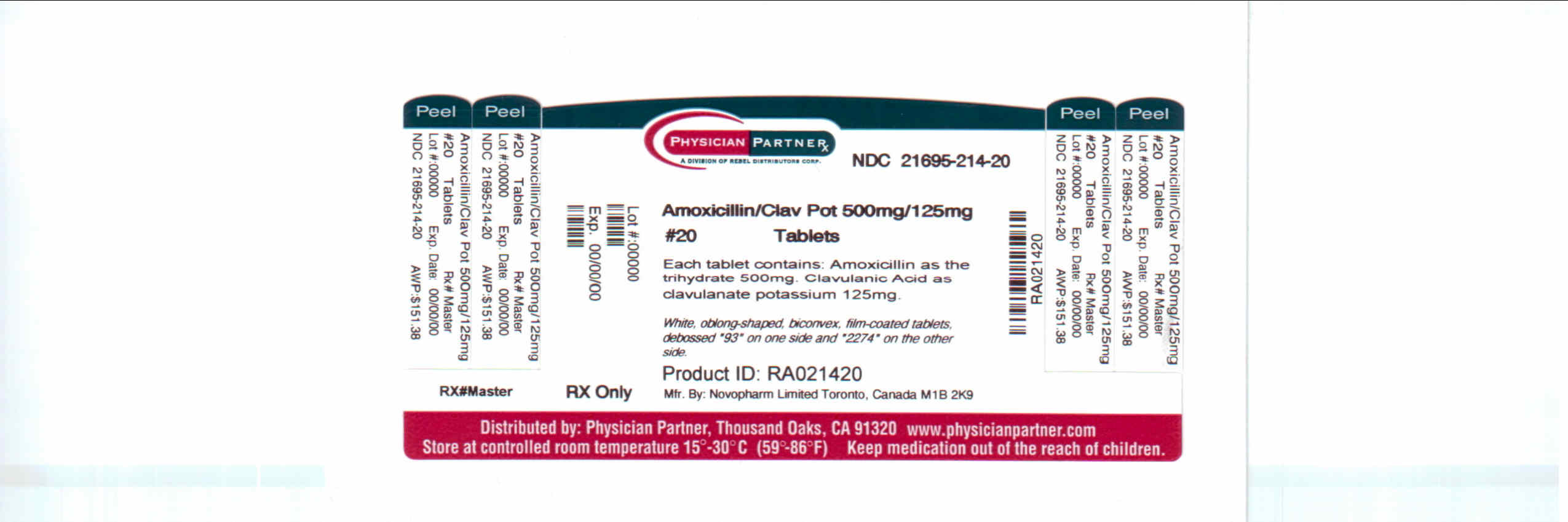
  • Amoxicillin And Clavulanate Potassium Tablet, Film Coated [Rebel Distributors Corp.]

    Amoxicillin And Clavulanate Potassium

    Amoxicillin And Clavulanate Potassium Tablet, Film Coated [Rebel Distributors Corp.]

    Since both amoxicillin and clavulanate potassium tablets USP, 250 mg/125 mg and 500 mg/125 mg, contain the same amount of clavulanic acid (125 mg, as the potassium salt), two amoxicillin and clavulanate potassium tablets USP, 250 mg/125 mg are not equivalent to one amoxicillin and clavulanate potassium tablet USP, 500 mg/125 mg. Therefore, two amoxicillin and clavulanate potassium tablets USP, 250 mg/125 mg should not be substituted for one amoxicillin and clavulanate potassium tablet USP, 500 mg/125 mg.

    Dosage

    Adults

    The usual adult dose is one amoxicillin and clavulanate potassium tablet USP, 500 mg/125 mg every 12 hours or one amoxicillin and clavulanate potassium tablet USP, 250 mg/125 mg every 8 hours. For more severe infections and infections of the respiratory tract, the dose should be one amoxicillin and clavulanate potassium tablet USP, 875 mg/125 mg every 12 hours or one amoxicillin and clavulanate potassium tablet USP, 500 mg/125 mg every 8 hours.

    Patients with impaired renal function do not generally require a reduction in dose unless the impairment is severe. Severely impaired patients with a glomerular filtration rate of < 30 mL/min. should not receive the amoxicillin and clavulanate potassium tablets USP, 875 mg/125 mg. Patients with a glomerular filtration rate of 10 to 30 mL/min. should receive amoxicillin and clavulanate potassium tablets USP, 500 mg/125 mg or 250 mg/125 mg every 12 hours, depending on the severity of the infection. Patients with a less than 10 mL/min. glomerular filtration rate should receive amoxicillin and clavulanate potassium tablets USP, 500 mg/125 mg or 250 mg/125 mg every 24 hours, depending on severity of the infection.

    Hemodialysis patients should receive amoxicillin and clavulanate potassium tablets USP, 500 mg/125 mg or 250 mg/125 mg every 24 hours, depending on severity of the infection. They should receive an additional dose both during and at the end of dialysis.

    Hepatically impaired patients should be dosed with caution and hepatic function monitored at regular intervals (see WARNINGS).

    Pediatric Patients

    Pediatric patients weighing 40 kg or more should be dosed according to the adult recommendations.

    Due to the different amoxicillin to clavulanic acid ratios in the amoxicillin and clavulanate potassium tablets USP, 250 mg/125 mg versus the amoxicillin and clavulanate potassium chewable tablets USP, 250 mg/62.5 mg, the amoxicillin and clavulanate potassium tablets USP, 250 mg/125 mg should not be used until the pediatric patient weighs at least 40 kg or more.

    Administration

    Amoxicillin and clavulanate potassium tablets USP may be taken without regard to meals; however, absorption of clavulanate potassium is enhanced when amoxicillin and clavulanate potassium tablets USP are administered at the start of a meal. To minimize the potential for gastrointestinal intolerance, amoxicillin and clavulanate potassium tablets USP should be taken at the start of a meal.

  • Methylprednisolone Tablet [Rebel Distributors Corp.]

    Methylprednisolone

    Methylprednisolone Tablet [Rebel Distributors Corp.]

    The initial dosage of Methylprednisolone Tablets may vary from 4 mg to 48 mg of methylprednisolone per day depending on the specific disease entity being treated. In situations of less severity lower doses will generally suffice while in selected patients higher initial doses may be required. The initial dosage should be maintained or adjusted until a satisfactory response is noted. If after a reasonable period of time there is a lack of satisfactory clinical response, Methylprednisolone should be discontinued and the patient transferred to other appropriate therapy.

    IT SHOULD BE EMPHASIZED THAT DOSAGE REQUIREMENTS ARE VARIABLE AND MUST BE INDIVIDUALIZED ON THE BASIS OF THE DISEASE UNDER TREATMENT AND THE RESPONSE OF THE PATIENT. After a favorable response is noted, the proper maintenance dosage should be determined by decreasing the initial drug dosage in small decrements at appropriate time intervals until the lowest dosage which will maintain an adequate clinical response is reached. It should be kept in mind that constant monitoring is needed in regard to drug dosage. Included in the situations which may make dosage adjustments necessary are changes in clinical status secondary to remissions or exacerbations in the disease process, the patient's individual drug responsiveness, and the effect of patient exposure to stressful situations not directly related to the disease entity under treatment; in this latter situation it may be necessary to increase the dosage of Methylprednisolone for a period of time consistent with the patient's condition. If after long-term therapy the drug is to be stopped, it is recommended that it be withdrawn gradually rather than abruptly.

    Multiple Sclerosis: In treatment of acute exacerbations of multiple sclerosis daily doses of 200 mg of prednisolone for a week followed by 80 mg every other day for 1 month have been shown to be effective (4 mg of methylprednisolone is equivalent to 5 mg of prednisolone).

    ADT (Alternative Day Therapy): Alternative day therapy is a corticosteroid dosing regimen in which twice the usual daily dose of corticoid is administered every other morning. The purpose of this mode of therapy isto provide the patient requiring long-term pharmacologic dose treatment with the beneficial effects of corticoids while minimizing certain undesirable effects, including pituitary-adrenal suppression, the Cushingoid state, Corticoid withdrawal symptoms, and growth suppression in children.

    The rationale for this treatment schedule is based on two major premises: (a) the anti-inflammatory or therapeutic effect of corticoids persists longer than their physical presence and metabolic effects and (b) administration of the corticosteroid every other morning allows for reestablishment of more nearly normal hypothalamic-pituitary-adrenal (HPA) activity on the off-steroid day.

    A brief review of the HPA physiology may be helpful in understanding this rationale. Acting primarily through the hypothalamus a fall in free cortisol stimulates the pituitary gland to produce increasing amounts of corticotropin (ACTH) while a rise in free cortisol inhibits ACTH secretion. Normally the HPA system is characterized by diurnal (circadian) rhythm. Serum levels of ACTH rise from a low point about 10 pm to a peak level about 6 am. Increasing levels of ACTH stimulate adrenal cortical activity resulting in a rise in plasma cortisol with maximal levels occurring between 2 am and 8 am. This rise in cortisol dampens ACTH production and in turn adrenal cortical activity. There is a gradual fall in plasma corticoids during the day with lowest levels occurring about midnight.

    The diurnal rhythm of the HPA axis is lost in Cushing's disease, a syndrome of adrenal cortical hyperfunction characterized by obesity with centripetal fat distribution, thinning of the skin with easy bruisability, muscle wasting with weakness, hypertension, latent diabetes, osteoporosis, electrolyte imbalance, etc. The same clinical findings of hyperadrenocorticism may be noted during long-term pharmacologic dose corticoid therapy administered in conventional daily divided doses. It would appear, then, that a disturbance in the diurnal cycle with maintenance of elevated corticoid values during the night may play a significant role in the development of undesirable corticoid effects. Escape from these constantly elevated plasma levels for even short periods of time may be instrumental in protecting against undesirable pharmacologic effects.

    During conventional pharmacologic dose corticosteroid therapy, ACTH production is inhibited with subsequent suppression of cortisol production by the adrenal cortex. Recovery time for normal HPA activity is variable depending upon the dose and duration of treatment. During this time the patient is vulnerable to any stressful situation. Although it has been shown that there is considerably less adrenal suppression following a single morning dose of prednisolone (10 mg) as opposed to a quarter of that dose administered every six hours, there is evidence that some suppressive effect on adrenal activity may be carried over into the following day when pharmacologic doses are used. Further, it has been shown that a single dose of certain corticosteroids will produce adrenal cortical suppression for two or more days. Other corticoids, including methylprednisolone, hydrocortisone, prednisone, and prednisolone, are considered to be short acting (producing adrenal cortical suppression for 1 1/4 to 1 1/2 days following a single dose) and thus are recommended for alternate day therapy.

    The following should be kept in mind when considering alternate day therapy:

    Basic principles and indications for corticosteroid therapy should apply. The benefits of ADT should not encourage the indiscriminate use of steroids. ADT is a therapeutic technique primarily designed for patients in whom long-term pharmacologic corticoid therapy is anticipated. In less severe disease processes in which corticoid therapy is indicated, it may be possible to initiate treatment with ADT. More severe disease states usually will require daily divided high dose therapy for initial control of the disease process. The initial suppressive dose level should be continued until satisfactory clinical response is obtained, usually four to ten days in the case of many allergic and collagen diseases. It is important to keep the period of initial suppressive dose as brief as possible particularly when subsequent use of alternate day therapy is intended. Once control has been established, two courses are available: (a) change to ADT and then gradually reduce the amount of corticoid given every other day or (b) following control of the disease process reduce the daily dose of corticoid to the lowest effective level as rapidly as possible and then change over to an alternate day schedule. Theoretically, course (a) may be preferable. Because of the advantages of ADT, it may be desirable to try patients on this form of therapy who have been on daily corticoids for long periods of time (eg, patients with rheumatoid arthritis). Since these patients may already have a suppressed HPA axis, establishing them on ADT may be difficult and not always successful. However, it is recommended that regular attempts be made to change them over. It may be helpful to triple or even quadruple the daily maintenance dose and administer this every other day rather than just doubling the daily dose if difficulty is encountered. Once the patient is again controlled, an attempt should be made to reduce this dose to a minimum. As indicated above, certain corticosteroids, because of their prolonged suppressive effect on adrenal activity, are not recommended for alternate day therapy (eg, dexamethasone and betamethasone). The maximal activity of the adrenal cortex is between 2 am and 8 am, and it is minimal between 4 pm and midnight. Exogenous corticosteroids suppress adrenocortical activity the least, when given at the time of maximal activity (am). In using ADT it is important, as in all therapeutic situations to individualize and tailor the therapy to each patient. Complete control of symptoms will not be possible in all patients. An explanation of the benefits of ADT will help the patient to understand and tolerate the possible flare-up in symptoms which may occur in the latter part of the off-steroid day. Other symptomatic therapy may be added or increased at this time if needed. In the event of an acute flare-up of the disease process, it may be necessary to return to a full suppressive daily divided corticoid dose for control. Once control is again established alternate day therapy may be reinstituted. Although many of the undesirable features of corticosteroid therapy can be minimized by ADT, as in any therapeutic situation, the physician must carefully weigh the benefit-risk ratio for each patient in whom corticoid therapy is being considered.
  • Gabapentin (Gabapentin) Capsule [Rebel Distributors Corp.]

    Gabapentin

    Gabapentin (Gabapentin) Capsule [Rebel Distributors Corp.]

    Gabapentin is given orally with or without food.

    If gabapentin dose is reduced, discontinued or substituted with an alternative medication, this should be done gradually over a minimum of 1 week (a longer period may be needed at the discretion of the prescriber).

    Postherpetic Neuralgia

    In adults with postherpetic neuralgia, gabapentin therapy may be initiated as a single 300-mg dose on Day 1, 600 mg/day on Day 2 (divided BID), and 900 mg/day on Day 3 (divided TID). The dose can subsequently be titrated up as needed for pain relief to a daily dose of 1800 mg (divided TID). In clinical studies, efficacy was demonstrated over a range of doses from 1800 mg/day to 3600 mg/day with comparable effects across the dose range. Additional benefit of using doses greater than 1800 mg/day was not demonstrated.

    Epilepsy

    Gabapentin is recommended for add-on therapy in patients 3 years of age and older. Effectiveness in pediatric patients below the age of 3 years has not been established.

    Patients greater than 12 Years of Age: The effective dose of gabapentin is 900 to 1800 mg/day and given in divided doses (three times a day) using 300 or 400 mg capsules. The starting dose is 300 mg three times a day. If necessary, the dose may be increased using 300 or 400 mg capsules three times a day up to 1800 mg/day. Dosages up to 2400 mg/day have been well tolerated in long-term clinical studies. Doses of 3600 mg/day have also been administered to a small number of patients for a relatively short duration, and have been well tolerated. The maximum time between doses in the TID schedule should not exceed 12 hours.

    Pediatric Patients Age 3–12 Years: The starting dose should range from 10-15 mg/kg/day in 3 divided doses, and the effective dose reached by upward titration over a period of approximately 3 days. The effective dose of gabapentin in patients 5 years of age and older is 25–35 mg/kg/day and given in divided doses (three times a day). The effective dose in pediatric patients ages 3 and 4 years is 40 mg/kg/day and given in divided doses (three times a day) (see CLINICAL PHARMACOLOGY, Pediatrics). Dosages up to 50 mg/kg/day have been well-tolerated in a long-term clinical study. The maximum time interval between doses should not exceed 12 hours.

    It is not necessary to monitor gabapentin plasma concentrations to optimize gabapentin therapy. Further, because there are no significant pharmacokinetic interactions among gabapentin and other commonly used antiepileptic drugs, the addition of gabapentin does not alter the plasma levels of these drugs appreciably.

    If gabapentin is discontinued and/or an alternate anticonvulsant medication is added to the therapy, this should be done gradually over a minimum of 1 week.

    Dosage in Renal Impairment

    Creatinine clearance is difficult to measure in outpatients. In patients with stable renal function, creatinine clearance (CCr) can be reasonably well estimated using the equation of Cockcroft and Gault:

    for females CCr = (0.85)(140-age)(weight)/[(72)(SCr)]

    for males CCr = (140-age)(weight)/[(72)(SCr)]

    where age is in years, weight is in kilograms and SCr is serum creatinine in mg/dL.

    Dosage adjustment in patients ≥ 12 years of age with compromised renal function or undergoing hemodialysis is recommended as follows (see dosing recommendations above for effective doses in each indication).


                                                            Table 5. Gabapentin Dosage Based on Renal Function Renal Function Creatinine Clearance (mL/min) Total Daily Dose Range (mg/day) Dose Regimen(mg) ≥ 60 900 to 3600 300 TID 400 TID 600 TID 800 TID 1200 TID > 30 to 59 400 to 1400 200 BID 300 BID 400 BID 500 BID 700 BID > 15 to 29 200 to 700 200 QD 300 QD 400 QD 500 QD 700 QD 15a 100 to 300 100 QD 125 QD 150 QD 200 QD 300 QD Post-Hemodialysis Supplemental Dose (mg)b Hemodialysis 125b 150b 200b 250b 350b

    aFor patients with creatinine clearance less than 15 mL/min, reduce daily dose in proportion to creatinine clearance (e.g., patients with a creatinine clearance of 7.5 mL/min should receive one-half the daily dose that patients with a creatinine clearance of 15 mL/min receive).

    bPatients on hemodialysis should receive maintenance doses based on estimates of creatinine clearance as indicated in the upper portion of the table and a supplemental post-hemodialysis dose administered after each 4 hours of hemodialysis as indicated in the lower portion of the table.

    The use of gabapentin in patients less than 12 years of age with compromised renal function has not been studied.

    Dosage in Elderly

    Because elderly patients are more likely to have decreased renal function, care should be taken in dose selection, and dose should be adjusted based on creatinine clearance values in these patients.

  • Amitriptyline Hydrochloride Tablet, Film Coated [Rebel Distributors Corp.]

    Amitriptyline Hydrochloride

    Amitriptyline Hydrochloride Tablet, Film Coated [Rebel Distributors Corp.]

    Oral Dosage

    Dosage should be initiated at a low level and increased gradually, noting carefully the clinical response and any evidence of intolerance.

    Initial Dosage for Adults

    For outpatients, 75 mg of amitriptyline HCl a day in divided doses is usually satisfactory. If necessary, this may be increased to a total of 150 mg per day. Increases are made preferably in the late afternoon and/or bedtime doses. A sedative effect may be apparent before the antidepressant effect is noted, but an adequate therapeutic effect may take as long as 30 days to develop.

    An alternate method of initiating therapy in outpatients is to begin with 50 to 100 mg amitriptyline HCl at bedtime. This may be increased by 25 or 50 mg as necessary in the bedtime dose to a total of 150 mg per day.

    Hospitalized patients may require 100 mg a day initially. This can be increased gradually to 200 mg a day if necessary. A small number of hospitalized patients may need as much as 300 mg a day.

    Adolescent and Elderly Patients

    In general, lower dosages are recommended for these patients. Ten mg 3 times a day with 20 mg at bedtime may be satisfactory in adolescent and elderly patients who do not tolerate higher dosages.

    Maintenance

    The usual maintenance dosage of amitriptyline HCl is 50 to 100 mg per day. In some patients, 40 mg per day is sufficient. For maintenance therapy, the total daily dosage may be given in a single dose, preferably at bedtime. When satisfactory improvement has been reached, dosage should be reduced to the lowest amount that will maintain relief of symptoms. It is appropriate to continue maintenance therapy 3 months or longer to lessen the possibility of relapse.

    Usage in Pediatric Patients

    In view of the lack of experience with the use of this drug in pediatric patients, it is not recommended at the present time for patients under 12 years of age.

    Plasma Levels

    Because of the wide variation in the absorption and distribution of tricyclic antidepressants in body fluids, it is difficult to directly correlate plasma levels and therapeutic effect. However, determination of plasma levels may be useful in identifying patients who appear to have toxic effects and may have excessively high levels, or those in whom lack of absorption or noncompliance is suspected. Because of increased intestinal transit time and decreased hepatic metabolism in elderly patients, plasma levels are generally higher for a given oral dose of amitriptyline hydrochloride than in younger patients. Elderly patients should be monitored carefully and quantitative serum levels obtained as clinically appropriate. Adjustments in dosage should be made according to the patient’s clinical response and not on the basis of plasma levels.2

    2

    Hollister, L.E.; Monitoring Tricyclic Antidepressant Plasma Concentrations. JAMA 1979; 241(23):2530-2533.

  • Azathioprine ( Azathioprine ) Tablet [Rebel Distributors Corp..]

    Azathioprine

    Azathioprine ( Azathioprine ) Tablet [Rebel Distributors Corp..]

    TPMT TESTING CANNOT SUBSTITUTE FOR COMPLETE BLOOD COUNT (CBC) MONITORING IN PATIENTS RECEIVING AZATHIOPRINE TABLETS. TPMT genotyping or phenotyping can be used to identify patients with absent or reduced TPMT activity. Patients with low or absent TPMT activity are at an increased risk of developing severe, life-threatening myelotoxicity from azathioprine tablets if conventional doses are given. Physicians may consider alternative therapies for patients who have low or absent TPMT activity (homozygous for non-functional alleles). Azathioprine tablets should be administered with caution to patients having one non-functional allele (heterozygous) who are at risk for reduced TPMT activity that may lead to toxicity if conventional doses are given. Dosage reduction is recommended in patients with reduced TPMT activity. Early drug discontinuation may be considered in patients with abnormal CBC results that do not respond to dose reduction.

    Renal Homotransplantation

    The dose of azathioprine tablets required to prevent rejection and minimize toxicity will vary with individual patients; this necessitates careful management. The initial dose is usually 3 to 5 mg/kg daily, beginning at the time of transplant. Azathioprine tablets are usually given as a single daily dose on the day of, and in a minority of cases 1 to 3 days before, transplantation. Azathioprine is often initiated with the intravenous administration of the sodium salt, with subsequent use of tablets (at the same dose level) after the postoperative period. Intravenous administration of the sodium salt is indicated only in patients unable to tolerate oral medications. Dose reduction to maintenance levels of 1 to 3 mg/kg daily is usually possible. The dose of azathioprine tablets should not be increased to toxic levels because of threatened rejection. Discontinuation may be necessary for severe hematologic or other toxicity, even if rejection of the homograft may be a consequence of drug withdrawal.

    Rheumatoid Arthritis

    Azathioprine tablets are usually given on a daily basis. The initial dose should be approximately 1.0 mg/kg (50 to 100 mg) given as a single dose or on a twice-daily schedule. The dose may be increased, beginning at 6 to 8 weeks and thereafter by steps at 4-week intervals, if there are no serious toxicities and if initial response is unsatisfactory. Dose increments should be 0.5 mg/kg daily, up to a maximum dose of 2.5 mg/kg per day. Therapeutic response occurs after several weeks of treatment, usually 6 to 8; an adequate trial should be a minimum of 12 weeks. Patients not improved after 12 weeks can be considered refractory. Azathioprine tablets may be continued long-term in patients with clinical response, but patients should be monitored carefully, and gradual dosage reduction should be attempted to reduce risk of toxicities.

    Maintenance therapy should be at the lowest effective dose, and the dose given can be lowered decrementally with changes of 0.5 mg/kg or approximately 25 mg daily every 4 weeks while other therapy is kept constant. The optimum duration of maintenance azathioprine tablets has not been determined. Azathioprine tablets can be discontinued abruptly, but delayed effects are possible.

    Use in Renal Dysfunction

    Relatively oliguric patients, especially those with tubular necrosis in the immediate postcadaveric transplant period, may have delayed clearance of azathioprine tablets or its metabolites, may be particularly sensitive to this drug, and are usually given lower doses.

  • Zolpidem Tartrate Tablet [Rebel Distributors Corp.]

    Zolpidem Tartrate

    Zolpidem Tartrate Tablet [Rebel Distributors Corp.]

    The dose of zolpidem tartrate tablets should be individualized.

    2.1 Dosage in adults

    The recommended dose for adults is 10 mg once daily immediately before bedtime. The total zolpidem tartrate dose should not exceed 10 mg per day.

    2.2 Special populations

    Elderly or debilitated patients may be especially sensitive to the effects of zolpidem tartrate. Patients with hepatic insufficiency do not clear the drug as rapidly as normal subjects. The recommended dose of zolpidem tartrate in both of these patient populations is 5 mg once daily immediately before bedtime [see Warnings and Precautions (5.6)].

    2.3 Use with CNS depressants

    Dosage adjustment may be necessary when zolpidem tartrate tablets are combined with other CNS depressant drugs because of the potentially additive effects [see Warnings and Precautions (5.5)].

    2.4 Administration

    The effect of zolpidem tartrate tablets may be slowed by ingestion with or immediately after a meal.

  • Citalopram (Citalopram Hydrobromide) Tablet, Film Coated [Rebel Distributors Corp.]

    Citalopram

    Citalopram (Citalopram Hydrobromide) Tablet, Film Coated [Rebel Distributors Corp.]

    Initial Treatment

    Citalopram tablets should be administered at an initial dose of 20 mg once daily, generally with an increase to a dose of 40 mg/day. Dose increases should usually occur in increments of 20 mg at intervals of no less than one week. Although certain patients may require a dose of 60 mg/day, the only study pertinent to dose response for effectiveness did not demonstrate an advantage for the 60 mg/day dose over the 40 mg/day dose; doses above 40 mg are therefore not ordinarily recommended.   Citalopram tablets should be administered once daily, in the morning or evening, with or without food.

    Special Populations

    20 mg/day is the recommended dose for most elderly patients and patients with hepatic impairment, with titration to 40 mg/day only for nonresponding patients.   No dosage adjustment is necessary for patients with mild or moderate renal impairment. Citalopram tablets should be used with caution in patients with severe renal impairment.

    Treatment of Pregnant Women During the Third Trimester

    Neonates exposed to citalopram and other SSRIs or SNRIs, late in the third trimester, have developed complications requiring prolonged hospitalization, respiratory support, and tube feeding (see PRECAUTIONS). When treating pregnant women with citalopram during the third trimester, the physician should carefully consider the potential risks and benefits of treatment. The physician may consider tapering citalopram in the third trimester.

    Maintenance Treatment

    It is generally agreed that acute episodes of depression require several months or longer of sustained pharmacologic therapy. Systematic evaluation of citalopram tablets in two studies has shown that its antidepressant efficacy is maintained for periods of up to 24 weeks following 6 or 8 weeks of initial treatment (32 weeks total). In one study, patients were assigned randomly to placebo or to the same dose of citalopram tablets (20-60 mg/day) during maintenance treatment as they had received during the acute stabilization phase, while in the other study, patients were assigned randomly to continuation of citalopram tablets 20 or 40 mg/day, or placebo, for maintenance treatment.  In the latter study, the rates of relapse to depression were similar for the two dose groups (see Clinical Trials under CLINICAL PHARMACOLOGY). Based on these limited data, it is not known whether the dose of citalopram needed to maintain euthymia is identical to the dose needed to induce remission.  If adverse reactions are bothersome, a decrease in dose to 20 mg/day can be considered.
    Discontinuation of Treatment with Citalopram Tablets

    Symptoms associated with discontinuation of citalopram and other SSRIs and SNRIs have been reported (see PRECAUTIONS). Patients should be monitored for these symptoms when discontinuing treatment.  A gradual reduction in the dose rather than abrupt cessation is recommended whenever possible. If intolerable symptoms occur following a decrease in the dose or upon discontinuation of treatment, then resuming the previously prescribed dose may be considered. Subsequently, the physician may continue decreasing the dose but at a more gradual rate.

    Switching Patients To or From a Monoamine Oxidase Inhibitor

    At least 14 days should elapse between discontinuation of an MAOI and initiation of citalopram tablets therapy. Similarly, at least 14 days should be allowed after stopping citalopram tablets before starting an MAOI (see CONTRAINDICATIONS and WARNINGS).
  • Cialis (Tadalafil) Tablet, Film Coated [Rebel Distributors Corp.]

    Cialis

    Cialis (Tadalafil) Tablet, Film Coated [Rebel Distributors Corp.]

    2.1 Erectile Dysfunction

    CIALIS for Use as Needed

    The recommended starting dose of CIALIS for use as needed in most patients is 10 mg, taken prior to anticipated sexual activity. The dose may be increased to 20 mg or decreased to 5 mg, based on individual efficacy and tolerability. The maximum recommended dosing frequency is once per day in most patients. CIALIS for use as needed was shown to improve erectile function compared to placebo up to 36 hours following dosing. Therefore, when advising patients on optimal use of CIALIS, this should be taken into consideration.

    CIALIS for Once Daily Use

    The recommended starting dose of CIALIS for once daily use is 2.5 mg, taken at approximately the same time every day, without regard to timing of sexual activity. The CIALIS dose for once daily use may be increased to 5 mg, based on individual efficacy and tolerability.

    2.2 Use with Food

    CIALIS may be taken without regard to food.

    2.3 Use in Special Populations

    Renal Insufficiency

    CIALIS for Use as Needed

    Mild (creatinine clearance 51 to 80 mL/min): No dose adjustment is required. Moderate (creatinine clearance 31 to 50 mL/min): A starting dose of 5 mg not more than once per day is recommended, and the maximum dose should be limited to 10 mg not more than once in every 48 hours. Severe (creatinine clearance <30 mL/min and on hemodialysis): The maximum recommended dose is 5 mg not more than once in every 72 hours [see Warnings and Precautions (5.7) and Use In Specific Populations (8.7)].

    CIALIS for Once Daily Use

    Mild (creatinine clearance 51 to 80 mL/min): No dose adjustment is required. Moderate (creatinine clearance 31 to 50 mL/min): No dose adjustment is required. Severe (creatinine clearance <30 mL/min and on hemodialysis): CIALIS for once daily use is not recommended [see Warnings and Precautions (5.7) and Use In Specific Populations (8.7)].

    Hepatic Impairment

    CIALIS for Use as Needed

    Mild or moderate (Child Pugh Class A or B): The dose of CIALIS should not exceed 10 mg once per day. The use of CIALIS once per day has not been extensively evaluated in patients with hepatic insufficiency and therefore, caution is advised. Severe (Child Pugh Class C): The use of CIALIS is not recommended [see Warnings and Precautions (5.8) and Use in Specific Populations (8.6)].

    CIALIS for Once Daily Use

    Mild or moderate (Child Pugh Class A or B): CIALIS for once daily use has not been extensively evaluated in patients with hepatic insufficiency. Therefore, caution is advised if CIALIS for once daily use is prescribed to these patients. Severe (Child Pugh Class C): The use of CIALIS is not recommended [see Warnings and Precautions (5.8) and Use in Specific Populations (8.6)].

    Geriatrics

    No dose adjustment is required in patients >65 years of age.

    2.4 Concomitant Medications

    Nitrates

    Concomitant use of nitrates in any form is contraindicated [see Contraindications (4.1)].

    Alpha Blockers

    When CIALIS is coadministered with an alpha blocker, patients should be stable on alpha-blocker therapy prior to initiating treatment with CIALIS, and CIALIS should be initiated at the lowest recommended dose [see Warnings and Precautions (5.6), Drug Interactions (7.1) and Clinical Pharmacology (12.2)].

    CYP3A4 Inhibitors

    CIALIS for Use as Needed — For patients taking concomitant potent inhibitors of CYP3A4, such as ketoconazole or ritonavir, the maximum recommended dose of CIALIS is 10 mg, not to exceed once every 72 hours [see Warnings and Precautions (5.10) and Drug Interactions (7.2)].

    CIALIS for Once Daily Use — For patients taking concomitant potent inhibitors of CYP3A4, such as ketoconazole or ritonavir, the dose should not exceed 2.5 mg [see Warnings and Precautions (5.10) and Drug Interactions (7.2)].

  • Baclofen Tablet [Rebel Distributors Corp.]

    Baclofen

    Baclofen Tablet [Rebel Distributors Corp.]

    The determination of optimal dosage requires individual titration. Start therapy at a low dosage and increase gradually until optimum effect is achieved (usually between 40-80 mg daily).

    The following dosage titration schedule is suggested:

    5 mg t.i.d. for 3 days

    10 mg t.i.d. for 3 days

    15 mg t.i.d. for 3 days

    20 mg t.i.d. for 3 days

    Thereafter additional increases may be necessary but the total daily dose should not exceed a maximum of 80 mg daily (20 mg q.i.d.).

    The lowest dose compatible with an optimal response is recommended. If benefits are not evident after a reasonable trial period, patients should be slowly withdrawn from the drug (see WARNINGSAbrupt Drug Withdrawal ).

  • Allopurinol Tablet [Rebel Distributors Corp.]

    Allopurinol

    Allopurinol Tablet [Rebel Distributors Corp.]

    The dosage of allopurinol to accomplish full control of gout and to lower serum uric acid to normal or near-normal levels varies with the severity of the disease. The average is 200 to 300 mg per day for patients with mild gout and 400 to 600 mg per day for those with moderately severe tophaceous gout. The appropriate dosage may be administered in divided doses or as a single equivalent dose with the 300 mg tablet. Dosage requirements in excess of 300 mg should be administered in divided doses. The minimal effective dosage is 100 to 200 mg daily and the maximal recommended dosage is 800 mg daily. To reduce the possibility of flare-up of acute gouty attacks, it is recommended that the patient start with a low dose of allopurinol (100 mg daily) and increase at weekly intervals by 100 mg until a serum uric acid level of 6 mg/dL or less is attained but without exceeding the maximal recommended dosage.

    Normal serum urate levels are usually achieved in one to three weeks. The upper limit of normal is about 7 mg/dL for men and postmenopausal women and 6 mg/dL for premenopausal women. Too much reliance should not be placed on a single serum uric acid determination since, for technical reasons, estimation of uric acid may be difficult. By selecting the appropriate dosage and, in certain patients, using uricosuric agents concurrently, it is possible to reduce serum uric acid to normal or, if desired, to as low as 2 to 3 mg/ dL and keep it there indefinitely.

    While adjusting the dosage of allopurinol in patients who are being treated with colchicine and/or anti-inflammatory agents, it is wise to continue the latter therapy until serum uric acid has been normalized and there has been freedom from acute gouty attacks for several months.

    In transferring a patient from a uricosuric agent to allopurinol, the dose of the uricosuric agent should be gradually reduced over a period of several weeks and the dose of allopurinol gradually increased to the required dose needed to maintain a normal serum uric acid level.

    It should also be noted that allopurinol is generally better tolerated if taken following meals. A fluid intake sufficient to yield a daily urinary output of at least 2 liters and the maintenance of a neutral or, preferably, slightly alkaline urine are desirable.

    Since allopurinol and its metabolites are primarily eliminated only by the kidney, accumulation of the drug can occur in renal failure, and the dose of allopurinol should consequently be reduced. With a creatinine clearance of 10 to 20 mL/min, a daily dosage of 200 mg of allopurinol is suitable. When the creatinine clearance is less than 10 mL/min the daily dosage should not exceed 100 mg. With extreme renal impairment (creatinine clearance less than 3 mL/min) the interval between doses may also need to be lengthened.

    The correct size and frequency of dosage for maintaining the serum uric acid just within the normal range is best determined by using the serum uric acid level as an index.

    For the prevention of uric acid nephropathy during the vigorous therapy of neoplastic disease, treatment with 600 to 800 mg daily for two or three days is advisable together with a high fluid intake. Otherwise similar considerations to the above recommendations for treating patients with gout govern the regulation of dosage for maintenance purposes in secondary hyperuricemia.

    The dose of allopurinol recommended for management of recurrent calcium oxalate stones in hyperuricosuric patients is 200 to 300 mg/day in divided doses or as the single equivalent. This dose may be adjusted up or down depending upon the resultant control of the hyperuricosuria based upon subsequent 24 hour urinary urate determinations. Clinical experience suggests that patients with recurrent calcium oxalate stones may also benefit from dietary changes such as the reduction of animal protein, sodium, refined sugars, oxalate- rich foods, and excessive calcium intake as well as an increase in oral fluids and dietary fiber.

    Children, 6 to 10 years of age, with secondary hyperuricemia associated with malignancies may be given 300 mg allopurinol daily while those under 6 years are generally given 150 mg daily. The response is evaluated after approximately 48 hours of therapy and a dosage adjustment is made if necessary.

  • Atenolol Tablet [Rebel Distributors Corp.]

    Atenolol

    Atenolol Tablet [Rebel Distributors Corp.]

    Hypertension

    The initial dose of atenolol is 50 mg given as one tablet a day either alone or added to diuretic therapy. The full effect of this dose will usually be seen within one to two weeks. If an optimal response is not achieved, the dosage should be increased to atenolol 100 mg given as one tablet a day. Increasing the dosage beyond 100 mg a day is unlikely to produce any further benefit.

    Atenolol may be used alone or concomitantly with other antihypertensive agents including thiazide-type diuretics, hydralazine, prazosin, and alpha-methyldopa.

    Angina Pectoris

    The initial dose of atenolol is 50 mg given as one tablet a day. If an optimal response is not achieved within one week, the dosage should be increased to atenolol 100 mg given as one tablet a day. Some patients may require a dosage of 200 mg once a day for optimal effect.

    Twenty-four hour control with once daily dosing is achieved by giving doses larger than necessary to achieve an immediate maximum effect. The maximum early effect on exercise tolerance occurs with doses of 50 to 100 mg, but at these doses the effect at 24 hours is attenuated, averaging about 50% to 75% of that observed with once a day oral doses of 200 mg.

    Acute Myocardial Infarction

    In patients with definite or suspected acute myocardial infarction, treatment with atenolol I.V. Injection should be initiated as soon as possible after the patient’s arrival in the hospital and after eligibility is established. Such treatment should be initiated in a coronary care or similar unit immediately after the patient’s hemodynamic condition has stabilized. Treatment should begin with the intravenous administration of 5 mg atenolol over 5 minutes followed by another 5 mg intravenous injection 10 minutes later. Atenolol I.V. Injection should be administered under carefully controlled conditions including monitoring of blood pressure, heart rate, and electrocardiogram. Dilutions of atenolol I.V. Injection in Dextrose Injection USP, Sodium Chloride Injection USP, or Sodium Chloride and Dextrose Injection may be used. These admixtures are stable for 48 hours if they are not used immediately.

    In patients who tolerate the full intravenous dose (10 mg), atenolol tablets 50 mg should be initiated 10 minutes after the last intravenous dose followed by another 50 mg oral dose 12 hours later. Thereafter, atenolol can be given orally either 100 mg once daily or 50 mg twice a day for a further 6 to 9 days or until discharge from the hospital. If bradycardia or hypotension requiring treatment or any other untoward effects occur, atenolol should be discontinued. (See full prescribing information prior to initiating therapy with atenolol tablets.)

    Data from other beta-blocker trials suggest that if there is any question concerning the use of IV beta-blocker or clinical estimate that there is a contraindication, the IV beta-blocker may be eliminated and patients fulfilling the safety criteria may be given atenolol tablets 50 mg twice daily or 100 mg once a day for at least seven days (if the IV dosing is excluded).

    Although the demonstration of efficacy of atenolol is based entirely on data from the first seven postinfarction days, data from other beta-blocker trials suggest that treatment with beta-blockers that are effective in the postinfarction setting may be continued for one to three years if there are no contraindications.

    Atenolol is an additional treatment to standard coronary care unit therapy.

    Elderly Patients or Patients with Renal Impairment

    Atenolol is excreted by the kidneys; consequently dosage should be adjusted in cases of severe impairment of renal function. In general, dose selection for an elderly patient should be cautious, usually starting at the low end of the dosing range, reflecting greater frequency of decreased hepatic, renal, or cardiac function, and of concomitant disease or other drug therapy. Evaluation of patients with hypertension or myocardial infarction should always include assessment of renal function. Atenolol excretion would be expected to decrease with advancing age.

    No significant accumulation of atenolol occurs until creatinine clearance falls below 35 mL/min/1.73 m2. Accumulation of atenolol and prolongation of its half-life were studied in subjects with creatinine clearance between 5 and 105 mL/min. Peak plasma levels were significantly increased in subjects with creatinine clearances below 30 mL/min.

    The following maximum oral dosages are recommended for elderly, renally-impaired patients and for patients with renal impairment due to other causes:

    Creatinine Clearance(mL/min/1.73 m2) AtenololElimination Half-Life(h) Maximum Dosage 15 to 35 16 to 27 50 mg daily < 15 > 27 25 mg daily

    Some renally-impaired or elderly patients being treated for hypertension may require a lower starting dose of atenolol: 25 mg given as one tablet a day. If this 25 mg dose is used, assessment of efficacy must be made carefully. This should include measurement of blood pressure just prior to the next dose ("trough" blood pressure) to ensure that the treatment effect is present for a full 24 hours.

    Although a similar dosage reduction may be considered for elderly and/or renally-impaired patients being treated for indications other than hypertension, data are not available for these patient populations.

    Patients on hemodialysis should be given 25 mg or 50 mg after each dialysis; this should be done under hospital supervision as marked falls in blood pressure can occur.

    Cessation of Therapy in Patients with Angina Pectoris

    If withdrawal of atenolol therapy is planned, it should be achieved gradually and patients should be carefully observed and advised to limit physical activity to a minimum.

  • Alprazolam Tablet [Rebel Distributors Corp.]

    Alprazolam

    Alprazolam Tablet [Rebel Distributors Corp.]

    Dosage should be individualized for maximum beneficial effect. While the usual daily dosages given below will meet the needs of most patients, there will be some who require doses greater than 4 mg/day. In such cases, dosage should be increased cautiously to avoid adverse effects.

    Anxiety Disorders and Transient Symptoms of Anxiety

    Treatment for patients with anxiety should be initiated with a dose of 0.25 to 0.5 mg given three times daily. The dose may be increased to achieve a maximum therapeutic effect, at intervals of 3 to 4 days, to a maximum daily dose of 4 mg, given in divided doses. The lowest possible effective dose should be employed and the need for continued treatment reassessed frequently. The risk of dependence may increase with dose and duration of treatment.

    In all patients, dosage should be reduced gradually when discontinuing therapy or when decreasing the daily dosage. Although there are no systematically collected data to support a specific discontinuation schedule, it is suggested that the daily dosage be decreased by no more than 0.5 mg every three days. Some patients may require an even slower dosage reduction.

    Panic Disorder

    The successful treatment of many panic disorder patients has required the use of alprazolam at doses greater than 4 mg daily. In controlled trials conducted to establish the efficacy of alprazolam in panic disorder, doses in the range of 1 to 10 mg daily were used. The mean dosage employed was approximately 5 to 6 mg daily. Among the approximately 1700 patients participating in the panic disorder development program, about 300 received alprazolam in dosages of greater than 7 mg/day, including approximately 100 patients who received maximum dosages of greater than 9 mg/day. Occasional patients required as much as 10 mg a day to achieve a successful response.

    Dose Titration

    Treatment may be initiated with a dose of 0.5 mg three times daily. Depending on the response, the dose may be increased at intervals of 3 to 4 days in increments of no more than 1 mg per day. Slower titration to the dose levels greater than 4 mg/day may be advisable to allow full expression of the pharmacodynamic effect of alprazolam. To lessen the possibility of interdose symptoms, the times of administration should be distributed as evenly as possible throughout the waking hours, that is, on a three or four times per day schedule.

    Generally, therapy should be initiated at a low dose to minimize the risk of adverse responses in patients especially sensitive to the drug. Dose should be advanced until an acceptable therapeutic response (ie, a substantial reduction in or total elimination of panic attacks) is achieved, intolerance occurs, or the maximum recommended dose is attained.

    Dose Maintenance

    For patients receiving doses greater than 4 mg/day, periodic reassessment and consideration of dosage reduction is advised. In a controlled postmarketing dose-response study, patients treated with doses of alprazolam greater than 4 mg/day for 3 months were able to taper to 50% of their total maintenance dose without apparent loss of clinical benefit. Because of the danger of withdrawal, abrupt discontinuation of treatment should be avoided. (See WARNINGS, PRECAUTIONS, DRUG ABUSE AND DEPENDENCE.)

    The necessary duration of treatment for panic disorder patients responding to alprazolam is unknown. After a period of extended freedom from attacks, a carefully supervised tapered discontinuation may be attempted, but there is evidence that this may often be difficult to accomplish without recurrence of symptoms and/or the manifestation of withdrawal phenomena.

    Dose Reduction

    Because of the danger of withdrawal, abrupt discontinuation of treatment should be avoided (see WARNINGS, PRECAUTIONS, DRUG ABUSE AND DEPENDENCE).

    In all patients, dosage should be reduced gradually when discontinuing therapy or when decreasing the daily dosage. Although there are no systematically collected data to support a specific discontinuation schedule, it is suggested that the daily dosage be decreased by no more than 0.5 mg every three days. Some patients may require an even slower dosage reduction.

    In any case, reduction of dose must be undertaken under close supervision and must be gradual. If significant withdrawal symptoms develop, the previous dosing schedule should be reinstituted and, only after stabilization, should a less rapid schedule of discontinuation be attempted. In a controlled postmarketing discontinuation study of panic disorder patients which compared this recommended taper schedule with a slower taper schedule, no difference was observed between the groups in the proportion of patients who tapered to zero dose; however, the slower schedule was associated with a reduction in symptoms associated with a withdrawal syndrome. It is suggested that the dose be reduced by no more than 0.5 mg every 3 days, with the understanding that some patients may benefit from an even more gradual discontinuation. Some patients may prove resistant to all discontinuation regimens.

    Dosing in Special Populations

    In elderly patients, in patients with advanced liver disease or in patients with debilitating disease, the usual starting dose is 0.25 mg, given two or three times daily. This may be gradually increased if needed and tolerated. The elderly may be especially sensitive to the effects of benzodiazepines. If side effects occur at the recommended starting dose, the dose may be lowered.

  • Bupropion Hydrochloride Tablet, Extended Release [Rebel Distributors Corp.]

    Bupropion Hydrochloride

    Bupropion Hydrochloride Tablet, Extended Release [Rebel Distributors Corp.]

    General Dosing Considerations: It is particularly important to administer bupropion hydrochloride extended-release tablets (SR) in a manner most likely to minimize the risk of seizure (see WARNINGS). Gradual escalation in dosage is also important if agitation, motor restlessness, and insomnia, often seen during the initial days of treatment, are to be minimized. If necessary, these effects may be managed by temporary reduction of dose or the short-term administration of an intermediate to long-acting sedative hypnotic. A sedative hypnotic usually is not required beyond the first week of treatment. Insomnia may also be minimized by avoiding bedtime doses. If distressing, untoward effects supervene, dose escalation should be stopped. Bupropion hydrochloride extended-release tablets (SR) should be swallowed whole and not crushed, divided, or chewed.

    Initial Treatment: The usual adult target dose for bupropion hydrochloride extended-release tablets (SR) is 300 mg/day, given as 150 mg twice daily. Dosing with bupropion hydrochloride extended-release tablets (SR) should begin at 150 mg/day given as a single daily dose in the morning. If the 150 mg initial dose is adequately tolerated, an increase to the 300 mg/day target dose, given as 150 mg twice daily, may be made as early as day 4 of dosing. There should be an interval of at least 8 hours between successive doses.

    Increasing the Dosage Above 300 mg/day: As with other antidepressants, the full antidepressant effect of bupropion hydrochloride extended-release tablets (SR) may not be evident until 4 weeks of treatment or longer. An increase in dosage to the maximum of 400 mg/day, given as 200 mg twice daily, may be considered for patients in whom no clinical improvement is noted after several weeks of treatment at 300 mg/day.

    Maintenance Treatment: It is generally agreed that acute episodes of depression require several months or longer of sustained pharmacological therapy beyond response to the acute episode. In a study in which patients with major depressive disorder, recurrent type, who had responded during 8 weeks of acute treatment with bupropion hydrochloride extended-release tablets (SR) were assigned randomly to placebo or to the same dose of bupropion hydrochloride extended-release tablets (SR) (150 mg twice daily) during 44 weeks of maintenance treatment as they had received during the acute stabilization phase, longer-term efficacy was demonstrated (see CLINICAL TRIALS under CLINICAL PHARMACOLOGY). Based on these limited data, it is unknown whether or not the dose of bupropion hydrochloride extended-release tablets (SR) needed for maintenance treatment is identical to the dose needed to achieve an initial response. Patients should be periodically reassessed to determine the need for maintenance treatment and the appropriate dose for such treatment.

    Dosage Adjustment for Patients with Impaired Hepatic Function: Bupropion hydrochloride extended-release tablets (SR) should be used with extreme caution in patients with severe hepatic cirrhosis. The dose should not exceed 100 mg every day or 150 mg every other day in these patients. Bupropion hydrochloride extended-release tablets (SR) should be used with caution in patients with hepatic impairment (including mild to moderate hepatic cirrhosis) and a reduced frequency and/or dose should be considered in patients with mild to moderate hepatic cirrhosis (see CLINICAL PHARMACOLOGY, WARNINGS, and PRECAUTIONS).

    Dosage Adjustment for Patients with Impaired Renal Function: Bupropion hydrochloride extended-release tablets (SR) should be used with caution in patients with renal impairment and a reduced frequency and/or dose should be considered (see CLINICAL PHARMACOLOGY and PRECAUTIONS).

  • Cymbalta (Duloxetine Hydrochloride) Capsule, Delayed Release [Rebel Distributors Corp.]

    Cymbalta

    Cymbalta (Duloxetine Hydrochloride) Capsule, Delayed Release [Rebel Distributors Corp.]

    Cymbalta should be swallowed whole and should not be chewed or crushed, nor should the capsule be opened and its contents sprinkled on food or mixed with liquids. All of these might affect the enteric coating. Cymbalta should be given without regard to meals.

    2.1 Initial Treatment

    Major Depressive Disorder — Cymbalta should be administered at a total dose of 40 mg/day (given as 20 mg twice daily) to 60 mg/day (given either once daily or as 30 mg twice daily). For some patients, it may be desirable to start at 30 mg once daily for 1 week, to allow patients to adjust to the medication before increasing to 60 mg once daily. While a 120 mg/day dose was shown to be effective, there is no evidence that doses greater than 60 mg/day confer any additional benefits. The safety of doses above 120 mg/day has not been adequately evaluated [see Clinical Studies (14.1)].

    Generalized Anxiety Disorder — For most patients, the recommended starting dose for Cymbalta is 60 mg administered once daily. For some patients, it may be desirable to start at 30 mg once daily for 1 week, to allow patients to adjust to the medication before increasing to 60 mg once daily. While a 120 mg once daily dose was shown to be effective, there is no evidence that doses greater than 60 mg/day confer additional benefit. Nevertheless, if a decision is made to increase the dose beyond 60 mg once daily, dose increases should be in increments of 30 mg once daily. The safety of doses above 120 mg once daily has not been adequately evaluated [see Clinical Studies (14.2)].

    Diabetic Peripheral Neuropathic Pain — The recommended dose for Cymbalta is 60 mg administered once daily. There is no evidence that doses higher than 60 mg confer additional significant benefit and the higher dose is clearly less well tolerated [see Clinical Studies (14.3)]. For patients for whom tolerability is a concern, a lower starting dose may be considered.

    Since diabetes is frequently complicated by renal disease, a lower starting dose and gradual increase in dose should be considered for patients with renal impairment [see Clinical Pharmacology (12.3) and Dosage and Administration (2.3)].

    Fibromyalgia — The recommended dose for Cymbalta is 60 mg administered once daily. Treatment should begin at 30 mg once daily for 1 week, to allow patients to adjust to the medication before increasing to 60 mg once daily. Some patients may respond to the starting dose. There is no evidence that doses greater than 60 mg/day confer additional benefit, even in patients who do not respond to a 60 mg dose, and higher doses are associated with a higher rate of adverse reactions [see Clinical Studies (14.4)].

    2.2 Maintenance/Continuation/Extended Treatment

    Major Depressive Disorder — It is generally agreed that acute episodes of major depression require several months or longer of sustained pharmacologic therapy. Maintenance of efficacy in MDD was demonstrated with Cymbalta as monotherapy. Cymbalta should be administered at a total dose of 60 mg once daily. Patients should be periodically reassessed to determine the need for maintenance treatment and the appropriate dose for such treatment [see Clinical Studies (14.1)].

    Generalized Anxiety Disorder — It is generally agreed that episodes of generalized anxiety disorder require several months or longer of sustained pharmacological therapy. Maintenance of efficacy in GAD was demonstrated with Cymbalta as monotherapy. Cymbalta should be administered in a dose range of 60-120 mg once daily. Patients should be periodically reassessed to determine the continued need for maintenance treatment and the appropriate dose for such treatment [see Clinical Studies (14.2)].

    Diabetic Peripheral Neuropathic Pain — As the progression of diabetic peripheral neuropathy is highly variable and management of pain is empirical, the effectiveness of Cymbalta must be assessed individually. Efficacy beyond 12 weeks has not been systematically studied in placebo-controlled trials.

    Fibromyalgia — Fibromyalgia is recognized as a chronic condition. The efficacy of Cymbalta in the management of fibromyalgia has been demonstrated in placebo-controlled studies up to 3 months. The efficacy of Cymbalta was not demonstrated in longer studies; however, continued treatment should be based on individual patient response.

    2.3 Dosing in Special Populations

    Hepatic Insufficiency — It is recommended that Cymbalta should ordinarily not be administered to patients with any hepatic insufficiency [see Warnings and Precautions (5.12) and Use in Specific Populations (8.9)].

    Severe Renal Impairment — Cymbalta is not recommended for patients with end-stage renal disease or severe renal impairment (estimated creatinine clearance <30 mL/min) [see Warnings and Precautions (5.12) and Use in Specific Populations (8.10)].

    Elderly Patients — No dose adjustment is recommended for elderly patients on the basis of age. As with any drug, caution should be exercised in treating the elderly. When individualizing the dosage in elderly patients, extra care should be taken when increasing the dose [see Use in Specific Populations (8.5)].

    Pregnant Women — There are no adequate and well-controlled studies in pregnant women; therefore, Cymbalta should be used during pregnancy only if the potential benefit justifies the potential risk to the fetus [see Use in Specific Populations (8.1)].

    Nursing Mothers — Because the safety of duloxetine in infants is not known, nursing while on Cymbalta is not recommended [see Use in Specific Populations (8.3)].

    2.4 Discontinuing Cymbalta

    Symptoms associated with discontinuation of Cymbalta and other SSRIs and SNRIs have been reported. A gradual reduction in the dose rather than abrupt cessation is recommended whenever possible [see Warnings and Precautions (5.6)].

    2.5 Switching Patients to or from a Monoamine Oxidase Inhibitor

    At least 14 days should elapse between discontinuation of an MAOI and initiation of therapy with Cymbalta. In addition, at least 5 days should be allowed after stopping Cymbalta before starting an MAOI [see Contraindications (4.1) and Warnings and Precautions (5.4)].

  • Alprazolam Tablet, Extended Release [Rebel Distributors Corp.]

    Alprazolam

    Alprazolam Tablet, Extended Release [Rebel Distributors Corp.]

    Alprazolam extended-release tablets may be administered once daily, preferably in the morning. The tablets should be taken intact; they should not be chewed, crushed, or broken.

    The suggested total daily dose ranges between 3 to 6 mg/day. Dosage should be individualized for maximum beneficial effect. While the suggested total daily dosages given will meet the needs of most patients, there will be some patients who require doses greater than 6 mg/day. In such cases, dosage should be increased cautiously to avoid adverse effects.

    Dosing in Special Populations

    In elderly patients, in patients with advanced liver disease, or in patients with debilitating disease, the usual starting dose of alprazolam extended-release tablets is 0.5 mg once daily. This may be gradually increased if needed and tolerated (see Dose Titration).The elderly may be especially sensitive to the effects of benzodiazepines.

    Dose Titration

    Treatment with alprazolam extended-release tablets may be initiated with a dose of 0.5 mg to 1 mg once daily. Depending on the response, the dose may be increased at intervals of 3 to 4 days in increments of no more than 1 mg/day. Slower titration to the dose levels may be advisable to allow full expression of the pharmacodynamic effect of alprazolam extended-release tablets.

    Generally, therapy should be initiated at a low dose to minimize the risk of adverse responses in patients especially sensitive to the drug. Dose should be advanced until an acceptable therapeutic response (i.e., a substantial reduction in or total elimination of panic attacks) is achieved, intolerance occurs, or the maximum recommended dose is attained.

    Dose Maintenance

    In controlled trials conducted to establish the efficacy of alprazolam extended-release tablets in panic disorder, doses in the range of 1 to 10 mg/day were used. Most patients showed efficacy in the dose range of 3 to 6 mg/day. Occasional patients required as much as 10 mg/day to achieve a successful response.

    The necessary duration of treatment for panic disorder patients responding to alprazolam extended-release tablets is unknown. However, periodic reassessment is advised. After a period of extended freedom from attacks, a carefully supervised tapered discontinuation may be attempted, but there is evidence that this may often be difficult to accomplish without recurrence of symptoms and/or the manifestation of withdrawal phenomena.

    Dose Reduction

    Because of the danger of withdrawal, abrupt discontinuation of treatment should be avoided (see WARNINGS, PRECAUTIONS, DRUG ABUSE AND DEPENDENCE).

    In all patients, dosage should be reduced gradually when discontinuing therapy or when decreasing the daily dosage. Although there are no systematically collected data to support a specific discontinuation schedule, it is suggested that the daily dosage be decreased by no more than 0.5 mg every three days. Some patients may require an even slower dosage reduction.

    In any case, reduction of dose must be undertaken under close supervision and must be gradual. If significant withdrawal symptoms develop, the previous dosing schedule should be reinstituted and, only after stabilization, should a less rapid schedule of discontinuation be attempted. In a controlled postmarketing discontinuation study of panic disorder patients which compared this recommended taper schedule with a slower taper schedule, no difference was observed between the groups in the proportion of patients who tapered to zero dose; however, the slower schedule was associated with a reduction in symptoms associated with a withdrawal syndrome. It is suggested that the dose be reduced by no more than 0.5 mg every three days, with the understanding that some patients may benefit from an even more gradual discontinuation. Some patients may prove resistant to all discontinuation regimens.

    Switch from alprazolam (immediate-release) tablets to alprazolam extended-release tablets

    Patients who are currently being treated with divided doses of alprazolam (immediate-release) tablets, for example 3 to 4 times a day, may be switched to alprazolam extended-release tablets at the same total daily dose taken once daily. If the therapeutic response after switching is inadequate, the dosage may be titrated as outlined above.

  • Ambien (Zolpidem Tartrate) Tablet, Film Coated [Rebel Distributors Corp.]

    Ambien

    Ambien (Zolpidem Tartrate) Tablet, Film Coated [Rebel Distributors Corp.]

    The dose of Ambien should be individualized.

    2.1 Dosage in adults

    The recommended dose for adults is 10 mg once daily immediately before bedtime. The total Ambien dose should not exceed 10 mg per day.

    2.2 Special populations

    Elderly or debilitated patients may be especially sensitive to the effects of zolpidem tartrate. Patients with hepatic insufficiency do not clear the drug as rapidly as normal subjects. The recommended dose of Ambien in both of these patient populations is 5 mg once daily immediately before bedtime [see Warnings and Precautions (5.6)].

    2.3 Use with CNS depressants

    Dosage adjustment may be necessary when Ambien is combined with other CNS depressant drugs because of the potentially additive effects [see Warnings and Precautions (5.5)].

    2.4 Administration

    The effect of Ambien may be slowed by ingestion with or immediately after a meal.

  • Ambien Cr (Zolpidem Tartrate) Tablet, Coated [Rebel Distributors Corp.]

    Ambien Cr

    Ambien Cr (Zolpidem Tartrate) Tablet, Coated [Rebel Distributors Corp.]

    The dose of Ambien CR should be individualized.

    2.1 Dosage in adults

    The recommended dose of Ambien CR for adults is 12.5 mg once daily immediately before bedtime. The total Ambien CR dose should not exceed 12.5 mg per day.

    2.2 Special populations

    Elderly or debilitated patients may be especially sensitive to the effects of zolpidem tartrate. Patients with hepatic insufficiency do not clear the drug as rapidly as normals. The recommended dose of Ambien CR in both of these patient populations is 6.25 mg once daily immediately before bedtime [see Warnings and Precautions (5.6)].

    2.3 Use with CNS depressants

    Dosage adjustments may be necessary when Ambien CR is combined with other CNS depressant drugs because of the potentially additive effects [see Warnings and Precautions (5.5)].

    2.4 Administration

    Ambien CR extended-release tablets should be swallowed whole, and not be divided, crushed, or chewed. The effect of Ambien CR may be slowed by ingestion with or immediately after a meal.

  • Tramadol Hydrochloride Tablet, Extended Release Tramadol Hydrochloride Tablet, Extended Release [Rebel Distributors Corp.]

    Tramadol Hydrochloride

    Tramadol Hydrochloride Tablet, Extended Release Tramadol Hydrochloride Tablet, Extended Release [Rebel Distributors Corp.]

    Tramadol hydrochloride ER tablets should not be used in patients with:

    creatinine clearance less than 30 mL/min, severe hepatic impairment (Child-Pugh Class C)

    (See PRECAUTIONS - Use in Renal and Hepatic Disease.)

    Tramadol hydrochloride ER tablets must be swallowed whole and must not be chewed, crushed, or split (see WARNINGS - Misuse, Abuse and Diversion of Opioids and DRUG ABUSE AND ADDICTION).

    Adults (18 years of age and over)

    Patients Not Currently on Tramadol Immediate-Release Products

    For patients not currently treated with tramadol immediate-release (IR) products, tramadol hydrochloride ER tablets should be initiated at a dose of 100 mg once daily and titrated up as necessary by 100 mg increments every five days for relief of pain and depending upon tolerability. Tramadol hydrochloride ER tablets should not be administered at a dose exceeding 300 mg per day.

    Patients Currently on Tramadol Immediate-Release Products

    For patients maintained on tramadol IR products, calculate the 24 hour tramadol IR dose and initiate a total daily dose of tramadol hydrochloride ER tablets rounded down to the next lowest 100 mg increment. The dose may subsequently be individualized according to patient need. Due to limitations in flexibility of dose selection with tramadol hydrochloride ER tablets, some patients maintained on tramadol IR products may not be able to convert tramadol hydrochloride ER tablets. Tramadol hydrochloride ER tablets should not be administered at a dose exceeding 300 mg per day. The concomitant use of tramadol hydrochloride ER tablets with other tramadol products is not recommended (see WARNINGS).

    Individualization of Dose

    Good pain management practice dictates that the dose be individualized according to patient need using the lowest beneficial dose. Start at the lowest possible dose and titrate upward as tolerated to achieve an adequate effect. Clinical studies of tramadol hydrochloride ER tablets have not demonstrated a clinical benefit at a total daily dose exceeding 300 mg.

    In general, dosing of an elderly patient (over 65 years of age) should be initiated cautiously, usually starting at the low end of the dosing range, reflecting the greater frequency of decreased hepatic, renal or cardiac function and of concomitant disease or other drug therapy. Tramadol hydrochloride ER tablets should be administered with even greater caution in patients over 75 years, due to the greater frequency of adverse events seen in this population.

  • Albuterol Sulfate Solution [Rebel Distributors Corp.]

    Albuterol Sulfate Solution

    Albuterol Sulfate Solution [Rebel Distributors Corp.]

    To avoid microbial contamination, proper aseptic techniques should be used each time the bottle is opened. Precautions should be taken to prevent contact of the dropper tip of the bottle with any surface, including the nebulizer reservoir and associated ventilatory equipment. In addition, if the solution changes color or becomes cloudy, it should not be used.

    Children 2 to 12 Years of Age

     For children 2 to 12 years of age, initial dosing should be based upon body weight (0.1 to 0.15 mg/kg per dose), with subsequent dosing titrated to achieve the desired clinical response. Dosing should not exceed 2.5 mg three to four times daily by nebulization. The following table outlines approximate dosing according to body weight.

    Approximate Weight (kg) Approximate Weight (lb) Dose (mg) Volume of Inhalation Solution 10-15 22-33 1.25 0.25 mL >15 >33 2.5 0.5 mL

    The appropriate volume of the 0.5% inhalation solution should be diluted in sterile normal saline solution to a total volume of 3 mL prior to administration via nebulization.

    Adults and Children Over 12 Years of Age

     The usual dosage for adults and children 12 years of age and older is 2.5 mg of albuterol administered three to four times daily by nebulization.

    More frequent administration or higher doses are not recommended. To administer 2.5 mg of albuterol, dilute 0.5 mL of the 0.5% inhalation solution with 2.5 mL of sterile normal saline solution. The flow rate is regulated to suit the particular nebulizer so that albuterol sulfate inhalation solution will be delivered over approximately 5 to 15 minutes.

    The use of albuterol sulfate inhalation solution can be continued as medically indicated to control recurring bouts of bronchospasm. During this time most patients gain optimal benefit from regular use of the inhalation solution.

    If a previously effective dosage regimen fails to provide the usual relief, medical advice should be sought immediately as this is often a sign of seriously worsening asthma that would require reassessment of therapy.

    Drug compatibility (physical and chemical), efficacy, and safety of albuterol sulfate inhalation solution when mixed with other drugs in a nebulizer have not been established.

  • Altabax (Retapamulin) Ointment [Rebel Distributors Corp.]

    Altabax

    Altabax (Retapamulin) Ointment [Rebel Distributors Corp.]

    A thin layer of ALTABAX should be applied to the affected area (up to 100 cm2 in total area in adults or 2% total body surface area in pediatric patients aged 9 months or older) twice daily for 5 days. The treated area may be covered with a sterile bandage or gauze dressing if desired [see Patient Counseling Information (17)].

  • Acetaminophen And Codeine Phosphate Solution [Rebel Distributors Corp.]

    Acetaminophen And Codeine Phosphate Solution

    Acetaminophen And Codeine Phosphate Solution [Rebel Distributors Corp.]

    Dosage should be adjusted according to severity of pain and response of the patient. However, it should be kept in mind that tolerance to codeine can develop with continued use and that the incidence of untoward effects is dose related. Adult doses of codeine higher than 60 mg fail to give commensurate relief of pain but merely prolong analgesia and are associated with an appreciable increased incidence of undesirable side effects. Equivalently high doses in children would have similar effects.

    Acetaminophen and codeine phosphate oral solution contains 120 mg of acetaminophen and 12 mg of codeine phosphate per 5 mL (teaspoonful) and is given orally.

    The recommended dose of codeine phosphate for children is 0.5 mg/kg body weight. The usual doses are:

    Children

    (7 to 12 years): 10 mL (2 teaspoonfuls) 3 or 4 times daily.

    (3 to 6 years): 5 mL (1 teaspoonful) 3 or 4 times daily.

    (under 3 years): safe dosage has not been established.

    Adults

    15 mL (1 tablespoonful) every 4 hours as needed.

  • Abilify (Aripiprazole) Tablet [Rebel Distributors Corp.]

    Abilify

    Abilify (Aripiprazole) Tablet [Rebel Distributors Corp.]

    2.1 Schizophrenia

    Adults

    Dose Selection: The recommended starting and target dose for ABILIFY is 10 mg/day or 15 mg/day administered on a once-a-day schedule without regard to meals. ABILIFY has been systematically evaluated and shown to be effective in a dose range of 10 mg/day to 30 mg/day, when administered as the tablet formulation; however, doses higher than 10 mg/day or 15 mg/day were not more effective than 10 mg/day or 15 mg/day. Dosage increases should generally not be made before 2 weeks, the time needed to achieve steady-state [see CLINICAL STUDIES (14.1)].

    Maintenance Treatment: Maintenance of efficacy in schizophrenia was demonstrated in a trial involving patients with schizophrenia who had been symptomatically stable on other antipsychotic medications for periods of 3 months or longer. These patients were discontinued from those medications and randomized to either ABILIFY 15 mg/day or placebo, and observed for relapse [see CLINICAL STUDIES (14.1)]. Patients should be periodically reassessed to determine the continued need for maintenance treatment.

    Adolescents

    Dose Selection: The recommended target dose of ABILIFY is 10 mg/day. Aripiprazole was studied in adolescent patients 13 to 17 years of age with schizophrenia at daily doses of 10 mg and 30 mg. The starting daily dose of the tablet formulation in these patients was 2 mg, which was titrated to 5 mg after 2 days and to the target dose of 10 mg after 2 additional days. Subsequent dose increases should be administered in 5 mg increments. The 30 mg/day dose was not shown to be more efficacious than the 10 mg/day dose. ABILIFY can be administered without regard to meals [see CLINICAL STUDIES (14.1)].

    Maintenance Treatment: The efficacy of ABILIFY for the maintenance treatment of schizophrenia in the adolescent population has not been evaluated. While there is no body of evidence available to answer the question of how long the adolescent patient treated with ABILIFY should be maintained on the drug, maintenance efficacy can be extrapolated from adult data along with comparisons of aripiprazole pharmacokinetic parameters in adult and pediatric patients. Thus, it is generally recommended that responding patients be continued beyond the acute response, but at the lowest dose needed to maintain remission. Patients should be periodically reassessed to determine the need for maintenance treatment.

    Switching from Other Antipsychotics

    There are no systematically collected data to specifically address switching patients with schizophrenia from other antipsychotics to ABILIFY or concerning concomitant administration with other antipsychotics. While immediate discontinuation of the previous antipsychotic treatment may be acceptable for some patients with schizophrenia, more gradual discontinuation may be most appropriate for others. In all cases, the period of overlapping antipsychotic administration should be minimized.

    2.2 Bipolar I Disorder

    Adults

    Dose Selection: The recommended starting and target dose is 15 mg given once daily as monotherapy or as adjunctive therapy with lithium or valproate. ABILIFY may be given without regard to meals. The dose may be increased to 30 mg/day based on clinical response. The safety of doses above 30 mg/day has not been evaluated in clinical trials [see CLINICAL STUDIES (14.2)].

    Maintenance Treatment: Maintenance of efficacy in bipolar I disorder was demonstrated in a trial involving patients who had been symptomatically stable on ABILIFY Tablets (15 mg/day or 30 mg/day, as monotherapy) for at least 6 consecutive weeks. These patients were discontinued from those medications and randomized to either ABILIFY, at the same dose they were stabilized on, or placebo, and observed for relapse [see CLINICAL STUDIES (14.2)]. Patients should be periodically reassessed to determine the continued need for maintenance treatment.

    Pediatric Patients

    Dose Selection: The efficacy of ABILIFY has been established in the treatment of pediatric patients 10 to 17 years of age with bipolar I disorder at doses of 10 mg/day or 30 mg/day. The recommended target dose of ABILIFY is 10 mg/day, as monotherapy or as adjunctive therapy with lithium or valproate. The starting daily dose of the tablet formulation in these patients was 2 mg/day, which was titrated to 5 mg/day after 2 days and to the target dose of 10 mg/day after 2 additional days. Subsequent dose increases should be administered in 5 mg/day increments. ABILIFY can be administered without regard to meals. [See CLINICAL STUDIES (14.2).]

    Maintenance Treatment: The efficacy of ABILIFY for the maintenance treatment of bipolar I disorder in the pediatric population has not been evaluated. While there is no body of evidence available to answer the question of how long the pediatric patient treated with ABILIFY should be maintained, maintenance efficacy can be extrapolated from adult data along with comparisons of aripiprazole pharmacokinetic parameters in adult and pediatric patients. Thus, responding patients may be considered for continued treatment beyond the acute response at the lowest dose required to maintain remission. Patients should be periodically reassessed to determine the continued need for maintenance treatment.

    2.3 Adjunctive Treatment of Major Depressive Disorder

    Adults

    Dose Selection: The recommended starting dose for ABILIFY as adjunctive treatment for patients already taking an antidepressant is 2 mg/day to 5 mg/day. The efficacy of ABILIFY as an adjunctive therapy for major depressive disorder was established within a dose range of 2 mg/day to 15 mg/day. Dose adjustments of up to 5 mg/day should occur gradually, at intervals of no less than 1 week [see CLINICAL STUDIES (14.3)].

    Maintenance Treatment: The efficacy of ABILIFY for the adjunctive maintenance treatment of major depressive disorder has not been evaluated. While there is no body of evidence available to answer the question of how long the patient treated with ABILIFY should be maintained, patients should be periodically reassessed to determine the continued need for maintenance treatment.

    2.4 Irritability Associated with Autistic Disorder

    Pediatric Patients

    Dose Selection: The efficacy of aripiprazole has been established in the treatment of pediatric patients 6 to 17 years of age with irritability associated with autistic disorder at doses of 5 mg/day to 15 mg/day. The dosage of ABILIFY should be individualized according to tolerability and response.

    Dosing should be initiated at 2 mg/day. The dose should be increased to 5 mg/day, with subsequent increases to 10 mg/day or 15 mg/day if needed. Dose adjustments of up to 5 mg/day should occur gradually, at intervals of no less than 1 week [see CLINICAL STUDIES (14.4)].

    Maintenance Treatment: The efficacy of ABILIFY for the maintenance treatment of irritability associated with autistic disorder has not been evaluated. While there is no body of evidence available to answer the question of how long the patient treated with ABILIFY should be maintained, patients should be periodically reassessed to determine the continued need for maintenance treatment.

    2.5 Agitation Associated with Schizophrenia or Bipolar Mania (Intramuscular Injection)

    Adults

    Dose Selection: The recommended dose in these patients is 9.75 mg. The effectiveness of aripiprazole injection in controlling agitation in schizophrenia and bipolar mania was demonstrated over a dose range of 5.25 mg to 15 mg. No additional benefit was demonstrated for 15 mg compared to 9.75 mg. A lower dose of 5.25 mg may be considered when clinical factors warrant. If agitation warranting a second dose persists following the initial dose, cumulative doses up to a total of 30 mg/day may be given. However, the efficacy of repeated doses of aripiprazole injection in agitated patients has not been systematically evaluated in controlled clinical trials. The safety of total daily doses greater than 30 mg or injections given more frequently than every 2 hours have not been adequately evaluated in clinical trials [see CLINICAL STUDIES (14.5)].

    If ongoing aripiprazole therapy is clinically indicated, oral aripiprazole in a range of 10 mg/day to 30 mg/day should replace aripiprazole injection as soon as possible [see DOSAGE AND ADMINISTRATION (2.1 and 2.2)].

    Administration of ABILIFY Injection

    To administer ABILIFY Injection, draw up the required volume of solution into the syringe as shown in Table 1. Discard any unused portion.

    Table 1: ABILIFY Injection Dosing Recommendations Single-Dose Required Volume of Solution 5.25 mg 0.7 mL 9.75 mg 1.3 mL 15 mg 2 mL

    ABILIFY Injection is intended for intramuscular use only. Do not administer intravenously or subcutaneously. Inject slowly, deep into the muscle mass.

    Parenteral drug products should be inspected visually for particulate matter and discoloration prior to administration, whenever solution and container permit.

    2.6 Dosage Adjustment

    Dosage adjustments in adults are not routinely indicated on the basis of age, gender, race, or renal or hepatic impairment status [see USE IN SPECIFIC POPULATIONS (8.4-8.10)].

    Dosage adjustment for patients taking aripiprazole concomitantly with strong CYP3A4 inhibitors: When concomitant administration of aripiprazole with strong CYP3A4 inhibitors such as ketoconazole or clarithromycin is indicated, the aripiprazole dose should be reduced to one-half the usual dose. When the CYP3A4 inhibitor is withdrawn from the combination therapy, the aripiprazole dose should then be increased [see DRUG INTERACTIONS (7.1)]. Dosage adjustment for patients taking aripiprazole concomitantly with potential CYP2D6 inhibitors: When concomitant administration of potential CYP2D6 inhibitors such as quinidine, fluoxetine, or paroxetine with aripiprazole occurs, aripiprazole dose should be reduced at least to one-half of its normal dose. When the CYP2D6 inhibitor is withdrawn from the combination therapy, the aripiprazole dose should then be increased [see DRUG INTERACTIONS (7.1)]. When adjunctive ABILIFY is administered to patients with major depressive disorder, ABILIFY should be administered without dosage adjustment as specified in DOSAGE AND ADMINISTRATION (2.3). Dosage adjustment for patients taking potential CYP3A4 inducers: When a potential CYP3A4 inducer such as carbamazepine is added to aripiprazole therapy, the aripiprazole dose should be doubled. Additional dose increases should be based on clinical evaluation. When the CYP3A4 inducer is withdrawn from the combination therapy, the aripiprazole dose should be reduced to 10 mg to 15 mg [see DRUG INTERACTIONS (7.1)].

    2.7 Dosing of Oral Solution

    The oral solution can be substituted for tablets on a mg-per-mg basis up to the 25 mg dose level. Patients receiving 30 mg tablets should receive 25 mg of the solution [see CLINICAL PHARMACOLOGY (12.3)].

    2.8 Dosing of Orally Disintegrating Tablets

    The dosing for ABILIFY Orally Disintegrating Tablets is the same as for the oral tablets [see DOSAGE AND ADMINISTRATION (2.1, 2.2, 2.3, and 2.4)].

  • Advair Diskus (Fluticasone Propionate And Salmeterol) Powder [Rebel Distributors Corp.]

    Advair Diskus

    Advair Diskus (Fluticasone Propionate And Salmeterol) Powder [Rebel Distributors Corp.]

    ADVAIR DISKUS should be administered twice daily every day by the orally inhaled route only. After inhalation, the patient should rinse the mouth with water without swallowing [see Patient Counseling Information (17.4)].

    More frequent administration or a higher number of inhalations (more than 1 inhalation twice daily) of the prescribed strength of ADVAIR DISKUS is not recommended as some patients are more likely to experience adverse effects with higher doses of salmeterol. Patients using ADVAIR DISKUS should not use additional LABAs for any reason. [See Warnings and Precautions (5.3, 5.12).]

    2.1 Asthma

    If asthma symptoms arise in the period between doses, an inhaled, short-acting beta2-agonist should be taken for immediate relief.

    Adult and Adolescent Patients Aged 12 Years and Older: For patients aged 12 years and older, the dosage is 1 inhalation twice daily (morning and evening, approximately 12 hours apart).

    The recommended starting dosages for ADVAIR DISKUS for patients aged 12 years and older are based upon patients’ asthma severity.

    The maximum recommended dosage is ADVAIR DISKUS 500/50 twice daily.

    Improvement in asthma control following inhaled administration of ADVAIR DISKUS can occur within 30 minutes of beginning treatment, although maximum benefit may not be achieved for 1 week or longer after starting treatment. Individual patients will experience a variable time to onset and degree of symptom relief.

    For patients who do not respond adequately to the starting dosage after 2 weeks of therapy, replacing the current strength of ADVAIR DISKUS with a higher strength may provide additional improvement in asthma control.

    If a previously effective dosage regimen of ADVAIR DISKUS fails to provide adequate improvement in asthma control, the therapeutic regimen should be reevaluated and additional therapeutic options (e.g., replacing the current strength of ADVAIR DISKUS with a higher strength, adding additional inhaled corticosteroid, initiating oral corticosteroids) should be considered.

    Pediatric Patients Aged 4 to 11 Years: For patients with asthma aged 4 to 11 years who are not controlled on an inhaled corticosteroid, the dosage is 1 inhalation of ADVAIR DISKUS 100/50 twice daily (morning and evening, approximately 12 hours apart).

    2.2 Chronic Obstructive Pulmonary Disease

    The recommended dosage for patients with COPD is 1 inhalation of ADVAIR DISKUS 250/50 twice daily (morning and evening, approximately 12 hours apart).

    If shortness of breath occurs in the period between doses, an inhaled, short-acting beta2-agonist should be taken for immediate relief.