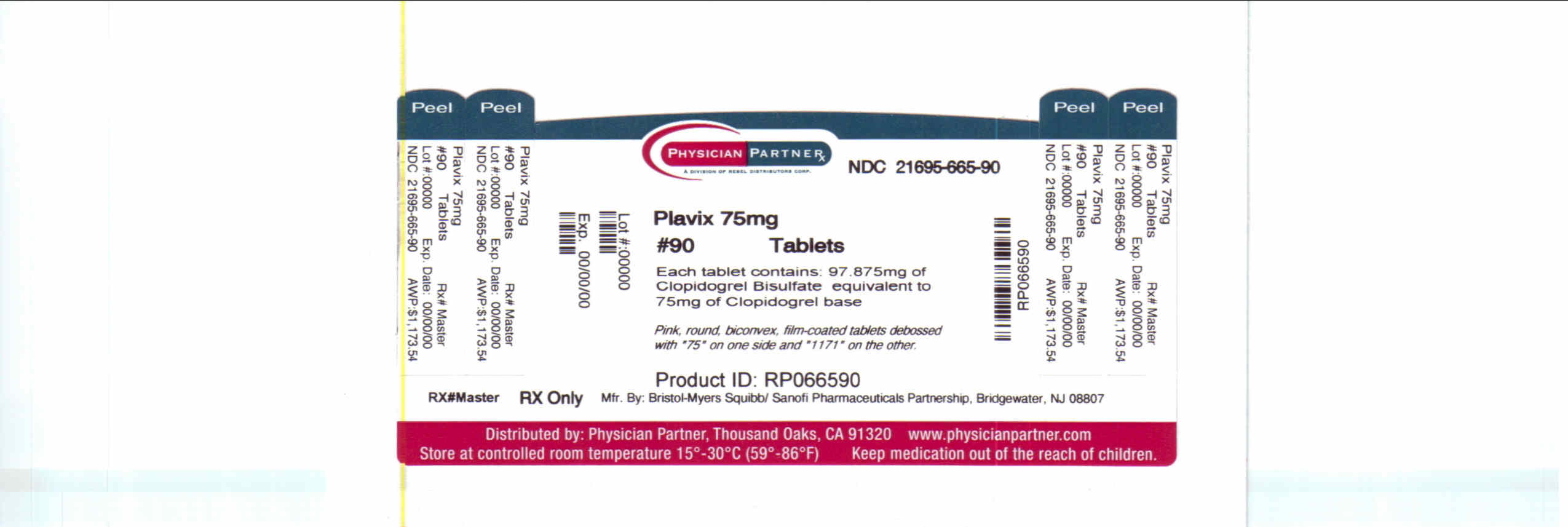
Plavix label

Plavix

Plavix Recall

Get an alert when a recall is issued.

Side Effects & Adverse Reactions

Thrombotic thrombocytopenic purpura (TTP)

TTP has been reported rarely following use of PLAVIX, sometimes after a short exposure (<2 weeks). TTP is a serious condition that can be fatal and requires urgent treatment including plasmapheresis (plasma exchange). It is characterized by thrombocytopenia, microangiopathic hemolytic anemia (schistocytes [fragmented RBCs] seen on peripheral smear), neurological findings, renal dysfunction, and fever. (See ADVERSE REACTIONS.)

FDA Safety Alerts

There are currently no FDA safety alerts available for this drug.

Manufacturer Warnings

There is currently no manufacturer warning information available for this drug.

FDA Labeling Changes

There are currently no FDA labeling changes available for this drug.

Uses

PLAVIX (clopidogrel bisulfate) is indicated for the reduction of atherothrombotic events as follows:

  • Recent MI, Recent Stroke or Established Peripheral Arterial Disease
    For patients with a history of recent myocardial infarction (MI), recent stroke, or established peripheral arterial disease, PLAVIX has been shown to reduce the rate of a combined endpoint of new ischemic stroke (fatal or not), new MI (fatal or not), and other vascular death.
  • Acute Coronary Syndrome
    • -For patients with non-ST-segment elevation acute coronary syndrome (unstable angina/non-Q-wave MI) including patients who are to be managed medically and those who are to be managed with percutaneous coronary intervention (with or without stent) or CABG, PLAVIX has been shown to decrease the rate of a combined endpoint of cardiovascular death, MI, or stroke as well as the rate of a combined endpoint of cardiovascular death, MI, stroke, or refractory ischemia.
    • -For patients with ST-segment elevation acute myocardial infarction, PLAVIX has been shown to reduce the rate of death from any cause and the rate of a combined endpoint of death, re-infarction or stroke. This benefit is not known to pertain to patients who receive primary angioplasty.

History

There is currently no drug history available for this drug.

Other Information

PLAVIX (clopidogrel bisulfate) is an inhibitor of ADP-induced platelet aggregation acting by direct inhibition of adenosine diphosphate (ADP) binding to its receptor and of the subsequent ADP-mediated activation of the glycoprotein GPIIb/IIIa complex. Chemically it is methyl (+)-(S)-α-(2-chlorophenyl)-6,7-dihydrothieno[3,2-c]pyridine-5(4H)-acetate sulfate (1:1). The empirical formula of clopidogrel bisulfate is C16H16ClNO2S•H2SO4 and its molecular weight is 419.9.

     The structural formula is as follows:

Chemical Structure

Clopidogrel bisulfate is a white to off-white powder. It is practically insoluble in water at neutral pH but freely soluble at pH 1. It also dissolves freely in methanol, dissolves sparingly in methylene chloride, and is practically insoluble in ethyl ether. It has a specific optical rotation of about +56°.

PLAVIX for oral administration is provided as either pink, round, biconvex, debossed, film-coated tablets containing 97.875 mg of clopidogrel bisulfate which is the molar equivalent of 75 mg of clopidogrel base or pink, oblong, debossed film-coated tablets containing 391.5 mg of clopidogrel bisulfate which is the molar equivalent of 300 mg of clopidogrel base.

Each tablet contains hydrogenated castor oil, hydroxypropylcellulose, mannitol, microcrystalline cellulose and polyethylene glycol 6000 as inactive ingredients. The pink film coating contains ferric oxide, hypromellose 2910, lactose monohydrate, titanium dioxide and triacetin. The tablets are polished with Carnauba wax.

Plavix Manufacturers

  • Plavix | A-s Medication Solutions Llc
    No Recall

    Plavix | A-s Medication Solutions Llc

    Plavix | A-s Medication Solutions Llc
    Recent MI, Recent Stroke, or Established Peripheral Arterial Disease

    The recommended daily dose of PLAVIX is 75 mg once daily.

    Acute Coronary Syndrome

    For patients with non-ST-segment elevation acute coronary syndrome (unstable angina/non-Q-wave MI), PLAVIX should be initiated with a single 300-mg loading dose and then continued at 75 mg once daily. Aspirin (75 mg–325 mg once daily) should be initiated and continued in combination with PLAVIX. In CURE, most patients with Acute Coronary Syndrome also received heparin acutely (see CLINICAL STUDIES).

    For patients with ST-segment elevation acute myocardial infarction, the recommended dose of PLAVIX is 75 mg once daily, administered in combination with aspirin, with or without thrombolytics. PLAVIX may be initiated with or without a loading dose (300 mg was used in CLARITY; see CLINICAL STUDIES).

    Pharmacogenetics

    CYP2C19 poor metabolizer status is associated with diminished response to clopidogrel. The optimal dose regimen for poor metabolizers has yet to be determined. (See CLINICAL PHARMACOLOGY: Pharmacogenetics.)

    No dosage adjustment is necessary for elderly patients or patients with renal disease. (See CLINICAL PHARMACOLOGY: Special Populations.)

  • Stat Rx Usa Llc
    Plavix | Stat Rx Usa Llc
    No Recall

    Plavix | Stat Rx Usa Llc

    Plavix | Stat Rx Usa Llc

    DOSAGE AND ADMINISTRATION Recent MI, Recent Stroke, or Established Peripheral Arterial Disease

    The recommended daily dose of PLAVIX is 75 mg once daily.

    Acute Coronary Syndrome

    For patients with non-ST-segment elevation acute coronary syndrome (unstable angina/non-Q-wave MI), PLAVIX should be initiated with a single 300-mg loading dose and then continued at 75 mg once daily. Aspirin (75 mg-325 mg once daily) should be initiated and continued in combination with PLAVIX. In CURE, most patients with Acute Coronary Syndrome also received heparin acutely (see CLINICAL STUDIES).

    For patients with ST-segment elevation acute myocardial infarction, the recommended dose of PLAVIX is 75 mg once daily, administered in combination with aspirin, with or without thrombolytics. PLAVIX may be initiated with or without a loading dose (300 mg was used in CLARITY; see CLINICAL STUDIES).

    Pharmacogenetics

    CYP2C19 poor metabolizer status is associated with diminished response to clopidogrel. The optimal dose regimen for poor metabolizers has yet to be determined. (See CLINICAL PHARMACOLOGY: Pharmacogenetics.)

    No dosage adjustment is necessary for elderly patients or patients with renal disease. (See CLINICAL PHARMACOLOGY: Special Populations.)

  • State Of Florida Doh Central Pharmacy
    Plavix | State Of Florida Doh Central Pharmacy
    No Recall

    Plavix | State Of Florida Doh Central Pharmacy

    Plavix | State Of Florida Doh Central Pharmacy
    2.1 Acute Coronary Syndrome

    Plavix can be administered with or without food [see Clinical Pharmacology (12.3)]

    For patients with non-ST-elevation ACS (UA/NSTEMI), initiate Plavix with a single 300 mg oral loading dose and then continue at 75 mg once daily. Initiate aspirin (75–325 mg once daily) and continue in combination with Plavix [see Clinical Studies (14.1)]. For patients with STEMI, the recommended dose of Plavix is 75 mg once daily orally, administered in combination with aspirin (75–325 mg once daily), with or without thrombolytics. Plavix may be initiated with or without a loading dose [see Clinical Studies (14.1)]. 2.2 Recent MI, Recent Stroke, or Established Peripheral Arterial Disease

    The recommended daily dose of Plavix is 75 mg once daily orally, with or without food [see Clinical Pharmacology (12.3)].

    2.3 CYP2C19 Poor Metabolizers

    CYP2C19 poor metabolizer status is associated with diminished antiplatelet response to clopidogrel. Although a higher dose regimen (600 mg loading dose followed by 150 mg once daily) in poor metabolizers increases antiplatelet response [see Clinical Pharmacology (12.5)], an appropriate dose regimen for this patient population has not been established in clinical outcome trials.

  • Contract Pharmacy Services-pa
    Plavix | Contract Pharmacy Services-pa
    No Recall

    Plavix | Contract Pharmacy Services-pa

    Plavix | Contract Pharmacy Services-pa
    2.1 Acute Coronary Syndrome

    Plavix can be administered with or without food [see Clinical Pharmacology (12.3)]

    For patients with non-ST-elevation ACS (UA/NSTEMI), initiate Plavix with a single 300 mg oral loading dose and then continue at 75 mg once daily. Initiate aspirin (75–325 mg once daily) and continue in combination with Plavix [see Clinical Studies (14.1)]. For patients with STEMI, the recommended dose of Plavix is 75 mg once daily orally, administered in combination with aspirin (75–325 mg once daily), with or without thrombolytics. Plavix may be initiated with or without a loading dose [see Clinical Studies (14.1)]. 2.2 Recent MI, Recent Stroke, or Established Peripheral Arterial Disease

    The recommended daily dose of Plavix is 75 mg once daily orally, with or without food [see Clinical Pharmacology (12.3)].

    2.3 CYP2C19 Poor Metabolizers

    CYP2C19 poor metabolizer status is associated with diminished antiplatelet response to clopidogrel. Although a higher dose regimen (600 mg loading dose followed by 150 mg once daily) in poor metabolizers increases antiplatelet response [see Clinical Pharmacology (12.5)], an appropriate dose regimen for this patient population has not been established in clinical outcome trials.

  • Plavix | Rebel Distributors Corp
    No Recall

    Plavix | Rebel Distributors Corp

    Plavix | Rebel Distributors Corp
    2.1 Acute Coronary Syndrome

    Plavix can be administered with or without food [see Clinical Pharmacology (12.3)]

    For patients with non-ST-elevation ACS (UA/NSTEMI), initiate Plavix with a single 300 mg oral loading dose and then continue at 75 mg once daily. Initiate aspirin (75–325 mg once daily) and continue in combination with Plavix [see Clinical Studies (14.1)]. For patients with STEMI, the recommended dose of Plavix is 75 mg once daily orally, administered in combination with aspirin (75–325 mg once daily), with or without thrombolytics. Plavix may be initiated with or without a loading dose [see Clinical Studies (14.1)]. 2.2 Recent MI, Recent Stroke, or Established Peripheral Arterial Disease

    The recommended daily dose of Plavix is 75 mg once daily orally, with or without food [see Clinical Pharmacology (12.3)].

    2.3 CYP2C19 Poor Metabolizers

    CYP2C19 poor metabolizer status is associated with diminished antiplatelet response to clopidogrel. Although a higher dose regimen (600 mg loading dose followed by 150 mg once daily) in poor metabolizers increases antiplatelet response [see Clinical Pharmacology (12.5)], an appropriate dose regimen for this patient population has not been established in clinical outcome trials.

  • Plavix | Cardinal Health
    No Recall

    Plavix | Cardinal Health

    Plavix | Cardinal Health
    2.1 Acute Coronary Syndrome

    Plavix can be administered with or without food [see Clinical Pharmacology (12.3)]

    For patients with non-ST-elevation ACS (UA/NSTEMI), initiate Plavix with a single 300 mg oral loading dose and then continue at 75 mg once daily. Initiate aspirin (75–325 mg once daily) and continue in combination with Plavix [see Clinical Studies (14.1)]. For patients with STEMI, the recommended dose of Plavix is 75 mg once daily orally, administered in combination with aspirin (75–325 mg once daily), with or without thrombolytics. Plavix may be initiated with or without a loading dose [see Clinical Studies (14.1)]. 2.2 Recent MI, Recent Stroke, or Established Peripheral Arterial Disease

    The recommended daily dose of Plavix is 75 mg once daily orally, with or without food [see Clinical Pharmacology (12.3)].

    2.3 CYP2C19 Poor Metabolizers

    CYP2C19 poor metabolizer status is associated with diminished antiplatelet response to clopidogrel. Although a higher dose regimen in poor metabolizers increases antiplatelet response [see Clinical Pharmacology (12.5)], an appropriate dose regimen for this patient population has not been established.

    2.4 Use with Proton Pump Inhibitors (PPI)

    Omeprazole, a moderate CYP2C19 inhibitor, reduces the pharmacological activity of Plavix. Avoid using omeprazole concomitantly or 12 hours apart with Plavix. Consider using another acid reducing agent with less CYP2C19 inhibitory activity. A higher dose regimen of clopidogrel concomitantly administered with omeprazole increases antiplatelet response; an appropriate dose regimen has not been established [see Warnings and Precautions (5.1), Drug Interactions (7.1) and Clinical Pharmacology (12.5)].

  • Pd-rx Pharmaceuticals, Inc.
    Plavix | Pd-rx Pharmaceuticals, Inc.
    No Recall

    Plavix | Pd-rx Pharmaceuticals, Inc.

    Plavix | Pd-rx Pharmaceuticals, Inc.
    2.1 Acute Coronary Syndrome

    Plavix can be administered with or without food [see Clinical Pharmacology (12.3)].

    For patients with non-ST-elevation ACS (UA/NSTEMI), initiate Plavix with a single 300 mg oral loading dose and then continue at 75 mg once daily. Initiate aspirin (75–325 mg once daily) and continue in combination with Plavix [see Clinical Studies (14.1)]. For patients with STEMI, the recommended dose of Plavix is 75 mg once daily orally, administered in combination with aspirin (75–325 mg once daily), with or without thrombolytics. Plavix may be initiated with or without a loading dose [see Clinical Studies (14.1)]. 2.2 Recent MI, Recent Stroke, or Established Peripheral Arterial Disease

    The recommended daily dose of Plavix is 75 mg once daily orally, with or without food [see Clinical Pharmacology (12.3)].

    2.3 CYP2C19 Poor Metabolizers

    CYP2C19 poor metabolizer status is associated with diminished antiplatelet response to clopidogrel. Although a higher dose regimen in poor metabolizers increases antiplatelet response [see Clinical Pharmacology (12.5)], an appropriate dose regimen for this patient population has not been established.

    2.4 Use with Proton Pump Inhibitors (PPI)

    Omeprazole, a moderate CYP2C19 inhibitor, reduces the pharmacological activity of Plavix. Avoid using omeprazole concomitantly or 12 hours apart with Plavix. Consider using another acid-reducing agent with less CYP2C19 inhibitory activity. A higher dose regimen of clopidogrel concomitantly administered with omeprazole increases antiplatelet response; an appropriate dose regimen has not been established [see Warnings and Precautions (5.1), Drug Interactions (7.1) and Clinical Pharmacology (12.5)].

  • Lake Erie Medical & Surgical Supply Dba Quality Care Products Llc
    Plavix | Lake Erie Medical & Surgical Supply Dba Quality Care Products Llc
    No Recall

    Plavix | Lake Erie Medical & Surgical Supply Dba Quality Care Products Llc

    Plavix | Lake Erie Medical & Surgical Supply Dba Quality Care Products Llc
    2.1 Acute Coronary Syndrome

    Plavix can be administered with or without food [see Clinical Pharmacology (12.3)].

    For patients with non-ST-elevation ACS (UA/NSTEMI), initiate Plavix with a single 300 mg oral loading dose and then continue at 75 mg once daily. Initiate aspirin (75–325 mg once daily) and continue in combination with Plavix [see Clinical Studies (14.1)]. For patients with STEMI, the recommended dose of Plavix is 75 mg once daily orally, administered in combination with aspirin (75–325 mg once daily), with or without thrombolytics. Plavix may be initiated with or without a loading dose [see Clinical Studies (14.1)]. 2.2 Recent MI, Recent Stroke, or Established Peripheral Arterial Disease

    The recommended daily dose of Plavix is 75 mg once daily orally, with or without food [see Clinical Pharmacology (12.3)].

    2.3 CYP2C19 Poor Metabolizers

    CYP2C19 poor metabolizer status is associated with diminished antiplatelet response to clopidogrel. Although a higher dose regimen in poor metabolizers increases antiplatelet response [see Clinical Pharmacology (12.5)], an appropriate dose regimen for this patient population has not been established.

    2.4 Use with Proton Pump Inhibitors (PPI)

    Omeprazole, a moderate CYP2C19 inhibitor, reduces the pharmacological activity of Plavix. Avoid using omeprazole concomitantly or 12 hours apart with Plavix. Consider using another acid-reducing agent with less CYP2C19 inhibitory activity. A higher dose regimen of clopidogrel concomitantly administered with omeprazole increases antiplatelet response; an appropriate dose regimen has not been established [see Warnings and Precautions (5.1), Drug Interactions (7.1) and Clinical Pharmacology (12.5)].

  • Physicians Total Care, Inc.
    Plavix | Physicians Total Care, Inc.
    No Recall

    Plavix | Physicians Total Care, Inc.

    Plavix | Physicians Total Care, Inc.
    2.1 Acute Coronary Syndrome

    Plavix can be administered with or without food [see Clinical Pharmacology (12.3)].

    For patients with non-ST-elevation ACS (UA/NSTEMI), initiate Plavix with a single 300 mg oral loading dose and then continue at 75 mg once daily. Initiate aspirin (75–325 mg once daily) and continue in combination with Plavix [see Clinical Studies (14.1)]. For patients with STEMI, the recommended dose of Plavix is 75 mg once daily orally, administered in combination with aspirin (75–325 mg once daily), with or without thrombolytics. Plavix may be initiated with or without a loading dose [see Clinical Studies (14.1)]. 2.2 Recent MI, Recent Stroke, or Established Peripheral Arterial Disease

    The recommended daily dose of Plavix is 75 mg once daily orally, with or without food [see Clinical Pharmacology (12.3)].

    2.3 CYP2C19 Poor Metabolizers

    CYP2C19 poor metabolizer status is associated with diminished antiplatelet response to clopidogrel. Although a higher dose regimen in poor metabolizers increases antiplatelet response [see Clinical Pharmacology (12.5)], an appropriate dose regimen for this patient population has not been established.

    2.4 Use with Proton Pump Inhibitors (PPI)

    Avoid using omeprazole or esomeprazole with Plavix. Omeprazole and esomeprazole significantly reduce the antiplatelet activity of Plavix. When concomitant administration of a PPI is required, consider using another acid-reducing agent with minimal or no CYP2C19 inhibitory effect on the formation of clopidogrel active metabolite [see Warnings and Precautions (5.1), Drug Interactions (7.1) and Clinical Pharmacology (12.3)].

  • Bryant Ranch Prepack
    Plavix | Bryant Ranch Prepack
    No Recall

    Plavix | Bryant Ranch Prepack

    Plavix | Bryant Ranch Prepack
    2.1 Acute Coronary Syndrome

    Plavix can be administered with or without food [see Clinical Pharmacology (12.3)].

    For patients with non-ST-elevation ACS (UA/NSTEMI), initiate Plavix with a single 300 mg oral loading dose and then continue at 75 mg once daily. Initiate aspirin (75–325 mg once daily) and continue in combination with Plavix [see Clinical Studies (14.1)]. For patients with STEMI, the recommended dose of Plavix is 75 mg once daily orally, administered in combination with aspirin (75–325 mg once daily), with or without thrombolytics. Plavix may be initiated with or without a loading dose [see Clinical Studies (14.1)]. 2.2 Recent MI, Recent Stroke, or Established Peripheral Arterial Disease

    The recommended daily dose of Plavix is 75 mg once daily orally, with or without food [see Clinical Pharmacology (12.3)].

    2.3 CYP2C19 Poor Metabolizers

    CYP2C19 poor metabolizer status is associated with diminished antiplatelet response to clopidogrel. Although a higher dose regimen in poor metabolizers increases antiplatelet response [see Clinical Pharmacology (12.5)], an appropriate dose regimen for this patient population has not been established.

    2.4 Use with Proton Pump Inhibitors (PPI)

    Omeprazole, a moderate CYP2C19 inhibitor, reduces the pharmacological activity of Plavix. Avoid using omeprazole concomitantly or 12 hours apart with Plavix. Consider using another acid-reducing agent with less CYP2C19 inhibitory activity. A higher dose regimen of clopidogrel concomitantly administered with omeprazole increases antiplatelet response; an appropriate dose regimen has not been established [see Warnings and Precautions (5.1), Drug Interactions (7.1) and Clinical Pharmacology (12.5)].

  • Remedyrepack Inc.
    Plavix | Remedyrepack Inc.
    No Recall

    Plavix | Remedyrepack Inc.

    Plavix | Remedyrepack Inc.

    Acute coronary syndrome (2.1)- Non-ST-segment elevation ACS (UA/NSTEMI): 300 mg loading dose followed by 75 mg once daily, in combination with aspirin (75–325 mg once daily)- STEMI: 75 mg once daily, in combination with aspirin (75–325 mg once daily), with or without a loading dose and with or without thrombolytics Recent MI, recent stroke, or established peripheral arterial disease: 75 mg once daily (2.2)


    Plavix can be administered with or without food [see Clinical Pharmacology (12.3)].

    For patients with non-ST-elevation ACS (UA/NSTEMI), initiate Plavix with a single 300 mg oral loading dose and then continue at 75 mg once daily. Initiate aspirin (75–325 mg once daily) and continue in combination with Plavix [see Clinical Studies (14.1)]. For patients with STEMI, the recommended dose of Plavix is 75 mg once daily orally, administered in combination with aspirin (75–325 mg once daily), with or without thrombolytics. Plavix may be initiated with or without a loading dose [see Clinical Studies (14.1)].


    The recommended daily dose of Plavix is 75 mg once daily orally, with or without food [see Clinical Pharmacology (12.3)].


    CYP2C19 poor metabolizer status is associated with diminished antiplatelet response to clopidogrel. Although a higher dose regimen in poor metabolizers increases antiplatelet response [see Clinical Pharmacology (12.5)], an appropriate dose regimen for this patient population has not been established.


    Avoid using omeprazole or esomeprazole with Plavix. Omeprazole and esomeprazole significantly reduce the antiplatelet activity of Plavix. When concomitant administration of a PPI is required, consider using another acid-reducing agent with minimal or no CYP2C19 inhibitory effect on the formation of clopidogrel active metabolite [see Warnings and Precautions (5.1), Drug Interactions (7.1) and Clinical Pharmacology (12.3)].


  • Bristol-myers Squibb/sanofi Pharmaceuticals Partnership
    Plavix | Bristol-myers Squibb/sanofi Pharmaceuticals Partnership
    No Recall

    Plavix | Bristol-myers Squibb/sanofi Pharmaceuticals Partnership

    Plavix | Bristol-myers Squibb/sanofi Pharmaceuticals Partnership
    2.1 Acute Coronary Syndrome

    Plavix can be administered with or without food [see Clinical Pharmacology (12.3)].

    For patients with non-ST-elevation ACS (UA/NSTEMI), initiate Plavix with a single 300 mg oral loading dose and then continue at 75 mg once daily. Initiate aspirin (75–325 mg once daily) and continue in combination with Plavix [see Clinical Studies (14.1)]. For patients with STEMI, the recommended dose of Plavix is 75 mg once daily orally, administered in combination with aspirin (75–325 mg once daily), with or without thrombolytics. Plavix may be initiated with or without a loading dose [see Clinical Studies (14.1)]. 2.2 Recent MI, Recent Stroke, or Established Peripheral Arterial Disease

    The recommended daily dose of Plavix is 75 mg once daily orally, with or without food [see Clinical Pharmacology (12.3)].

    2.3 CYP2C19 Poor Metabolizers

    CYP2C19 poor metabolizer status is associated with diminished antiplatelet response to clopidogrel. Although a higher dose regimen in poor metabolizers increases antiplatelet response [see Clinical Pharmacology (12.5)], an appropriate dose regimen for this patient population has not been established.

    2.4 Use with Proton Pump Inhibitors (PPI)

    Avoid using omeprazole or esomeprazole with Plavix. Omeprazole and esomeprazole significantly reduce the antiplatelet activity of Plavix. When concomitant administration of a PPI is required, consider using another acid-reducing agent with minimal or no CYP2C19 inhibitory effect on the formation of clopidogrel active metabolite [see Warnings and Precautions (5.1), Drug Interactions (7.1) and Clinical Pharmacology (12.3)].