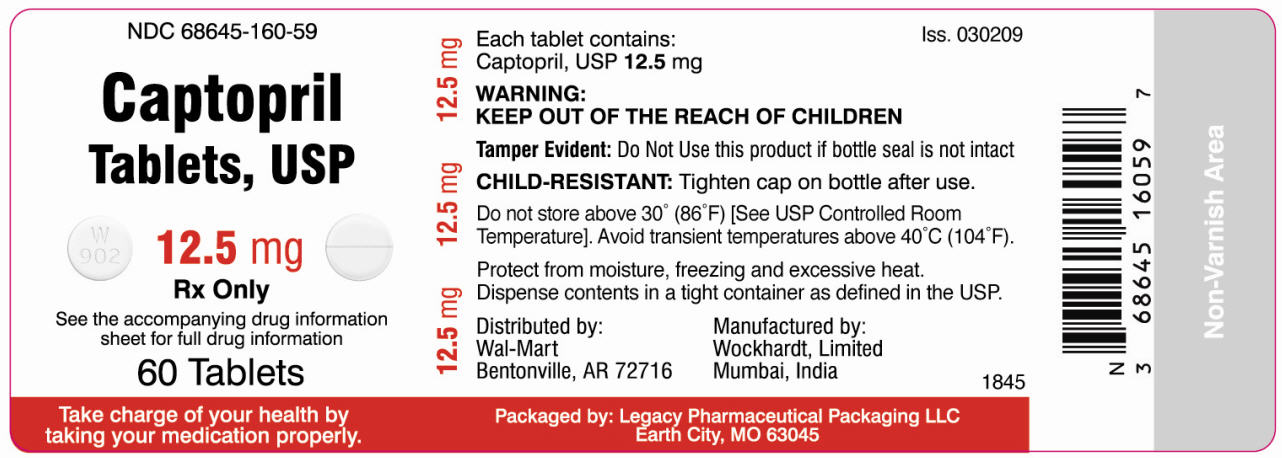
Captopril label

Captopril

Captopril Recall

Get an alert when a recall is issued.

Side Effects & Adverse Reactions

Anaphylaclold and Possibly Related Reactions

Presumably because angiotensln·converting enzyme inhibitors affect the metabolism of elcosanoids and polypeptides, inclUding

endogenous bradykinin, patients receiving ACE}nhibitors (including caplopril) may be subject to avariety 01 adverse reactions, some of

them serious.

Headand Neck Angioedema: AngioedemaInvolving the extremities, face, Ij~, mucous membranes, longue, glottis or larynx has been

seen In patients Irealed with ACE inhibitors, Including captopril. If angioedema Involves the tongue, glottis or larynx, airway obstruction

may occur and be falal. Emergencytherapy, including but not necessarily limited 10, sUbculaneous administration of a1:1000 solution of

epinephrine should be prompUyinsUtuted.

Swelling confined to ~_e face, mucous membranes of the mouth, lips and extremities has usually resolved with discontinuatJon of

captopril; some cases required medlcallherapy. (See PRECAUTIONS: Information for Patients and ADVERSE REACTIONS.)

Intestinal Angioedema: Intestinal angioedema has been reported in patients trealed wah ACE lnhibil.ors. These patients presenled

with abdominal pain (with or without naUSeaorvomiting); in somecasesIherewas noprior history of facial angioedemaandC·l esterase

levels were normal. Thf! angioedema Vias diagnosed by procedures Including abdominal CT scan or ultrasound, or at surgery, and

symploms resolved after slopping the ACE inhibitor.lnlestinal angioedema shouldbe Included In the dillerential diagnosis of patlents on

ACEInhibitorspresenting with abdominal pain.

Anaphylactoid reactions during desensitization: Two patienls undergoing desensitizing lreatment wilh hymenoplera venom while

receiving ACE Inhibitors suslained liIe-threatenlng anaphylactoid reactions. In the same patients, these reacUonswere avoided When

ACE inhibilors were temporarity wHhheld, butthey reappeared uponinadvertentrechallenge.

Anaphylactoid reactions during membrane exposure: Anaphylactoid reactions have been reported in pauenls dIalyzed with highflux

membranes and treated concomitantly with an ACE inhibitor. Anaphylactoid reactions have also been reported in patienls

undergoing low-densitylipoproleln apheresls with dextran sulfate absorption.

Neutropenia/Agranulocytosis

Neutropenia «1OOO!mm~ with myeloid hypoplasia has resulted from use of caplopril. About hal( of the neutropenic patients developed

syslemic or oral cavity inlecUons or other features Qf the syndrome of agranUlocytosis.

The risk of neutropeniais dependenton the clinical status of the paUent :

In clinical trials inpatients with hypertension who have normal renat function (serum creatinine less than 1.6 ml}’dL and no collagen

vascular disease), neutropenia hasbeen seenin one patient oul of over 8,600 exposed.

In patienls with some degree of renal failure (serum creatinine at least 1.6 mgldl) but no collagen vascular disease, the risk of

neutropenia in cl!nicallrials was about 1per 500, afrequency over 15 times that for uncomplicated hYpertension. Dally doses of

caplopril were relatively highin these patients, p~rticulartyln view of Ihelrdiminished renal function. In foreign markeling experience

In patients wilh renal fallure, use of allopUrinol concomitantly with caplopril has been assoclaled with neutropenIa but this

association has notappeared in U.S. reports.

In patient& with collagen vascular diseases (e.g’ systemic lupus el)”thematosus, scleroderma) and impaired renal function,·

neutropenia occurred in 3.7 percent oipalients In c1inicat trials.

While f1pne of the over 750 patlents In formal clinlcallrials of heart failure .developed neulropenla, it has occurred during the

subsequent clinical experience. About half of the reported cases had &erurn creatinine ~1.6 mgldL and more than 75 percent were In

patlenls also receiving procainamide.ln heart failure, itappears thatlhe same risk factors for neutropenia are present.

The neutropenia has usually been detected within three months alter caplopril was started. Bone marrow examinations in palienls with

neutropenia consistently showed myeloId hypoplasia, frequently accompanied by erythroid hypoplasia and decreased numbers of

megakaryocytes (e,g’ hypoplasticbone marrowand pancytopenia); anemia and thrombocytopenia were sometimes seen.

In general, neutrophlls returried to normal in about two weeks after captopril was discontinued,·and serious infections Were limned to

clinically complex patients. About 13 percent oIlhe cases of neutropenia have eooed fatally, but afmostall falalitles were In patients with

serious illness, having collagen vascular disease, renalfaHure, heart failure or immunosuppressant therapy, or acombination of these

complicalingfactors.

Evaluation of the hypertensive orheart failure pallent should always Include assessmenl of renal function.

If captoprills used In patients with ImpaIred renal function, white blood cell and differenllal counts shoUld be evalualedpn”orto starting

treatment and at approxlmalely two·weekIntelvels foraboul three monlhs, Ihen periodically.

In patients with collagen vascular disease or Who are exposed to other drugs known to affect the while cells or Immune response.

particularly when there is impaired renal function, captopril should be used only after an assessment of benefit and risk, and then with

caution.

All patients Ireated wilh capt~’” shouldbe told to report any signs of Infection (e.g., sore Ihroat, fever). ‘infection Is susPected, white cell

counts should be performed without delay,

~ince discontinuation of captopril and other drugs has genera/ly led to prompt relurn of the white count to normal, upon confirmation of

neutropenia(neutrophil count<1OOOImm~ Ihe physlcien should wilhdraw captopol and closely follow the patienrs course.

Proteinuria

Total urinary proteins greater than 1gperday were seen in about 0.7 percentaf patients receiving captopril. Aboul90 petcentofaffected

patlents had evidence of prior renal disease or received relatively high doses of captopril (in excess 01150 rng/day), or both. The

nephrotic syndrome occurred In aboul one·fifth of protelnuric patients. In most cases, proteinuria subsided or cleared within six months

whether or not captopril was continued. Parameters of renal function, such as BUN and creatinIne, were s~ldom altered In the patients

with proteinuria.

Hypotension

Excessive hypotension was rarely seen in hypertensive paUenls but is apossible consequence of captopril use in salVvolume depleted

persons (such as those treated vigorously with diurelics), patients with heart faflure or those paUenls undergoing renal dialysis (see

PRECAUTIONS: Drug Interactions.)

In heart failure, where the blood pressure was elther nonnal or low, lranslentdecreases In mean blood pressure greater than 20 percent

were recorded in about half of the patients. This transient hypotension is more likely 10 occur after any of the first several doses and Is

usually welliolerated, producing

either no symptoms or brief mUd IIghUleadedness although,

In rare Instances it has been assoclaled with arrhythmia or conduction defects. Hypotension was the reason for discontinuation of drug in 3.6 patients with heart failure.

BECAUSE OFTHE POTENTIAL FALL IN BLOOD PRESSURE IN THESE PATIENTS, THERAPY SHOULD BE STARTED UNDER

VERY CLOSE MEDlCA~ SUPERVISION.

Astarting dosa of 6.25 or 12.5mg t.i.d. may minimize the hypotensive effect

Pellents should

be followed closely for the first two weeks of treatment and whenever the dose of captopril and/or diurelic Is increased. In patients with

hearffailure, reducing the dose of diuretic, if feasible, mayminimize the fall in blood pressure.

Hypotension is not per se a reason to disconlinue captoprll. Some decrease of systemic blood pressure is acommon and desirable

observation upon initiation of caploprillablets, USP treatment in heart failure. The magnItude of the decrease Is greatesl earty in the

course of treatment; this effect stabHizes within a week or two, and generally relums to prelreatmentlevels, without a decrease in

therapeutic efficacy, wilhlntwomonlhs.

FetallNeonatal MorbiditY and Mortality

ACE inhibitors can cause fetal and neonalal morbidity and death when admlnlslered to pregnant women. Several dozen cases have

been reported In the world literature.WhenpregnancyIs delected,ACE inhibitors should bediscontinuedas soon as possible.

The use of ACE InhIbitors during the second and third trimeslers of pregnancy has been associated with fetal and neonatal injury,

Including hypolension, neonatal skull hypoplasia, anuria, reversible or irreversible renal failure. and death. OligohydramnIos has also

been reported, presumably resulling from decreased fetal renal function; oligohydramnios

in this selling has been assoclated with fetal

limb cootraclures, craniofacial defonnalfon, and hypoplastic lung developmenl. Premalunty, Intrauterine growth retardation, and patent

ductus. arteriosus havEl alsobeen reported, althougbJt Is notdear’Yheth.er ~~~e opcurrences were dueto the ACE·inhlbltor exposure.

These adverse effects do notappear to have resulted from Intraulerine ACE·inhibitor exposure that has been limited to the first trimester.

Mothers whose embryos and fetuses are exposed to ACE inhlbilors only during the first trimester should be so Informed Nonetheless,

when patients becomepregnant, physicians shouldmake every effort to discontinue the use 01 captopril as soon a~ possible.

Rarely (probably less often than once In everylhousand pregnancies), no alternative toACE lnhlbll6ts will be found. In these rare cases,

the molhers should be apprised of the potential hazatds to their feluses, and serial ultrasOund examinations should be peJfOlmed to

assess the Intraamnlotlcenvironment.

If oligohydramnios is obselVed, caploprilshould be discon~nued unless it is considered life.saving for lhe mother. Contraction stress

lesting{CST}, a non-stress tosl (NST), or biophysical profiling (BPP) may be approprtate, depending upon the weak 01 pregnency.

Patients and physldans should be aware, however,that oligohydramnios may nol appear unl!! after the fetus has sustained Irreversible

InJury.

Infants with histories of in utero expOsure to ACE inhibitors should be closely observed for hypolension, oliguria, and hyperkalemia. If

oliguria occurs. atlention.should be directed toward support of blood pressure and renal perfusion. Exchangetransfusion or dialysis may

be required as ameans of reversing hypotension and/or sUbsli!utingIor disordered renal fuoction. While captopril maybe removed from

the adult circulation by hemodialysis, there is inadequate data concerning the effectiveness of hemodialysis for removing it from the

clrculalion ofneonates orchildren. Peritoneal dialysis is not effective for removing captopril; there is no Informationconcerning exchange

transfusion for removing captopril from the general circulation. “.

When caplopril was given to rabbits at doses about 0.8 to 70 Urnes (on amglkg basis) the maximum recommended human dose, low

incidences of craniofacial malformations were seen. No teratogenic effects of captopril were seen In studies of pregnant rats and

hamsters. On amg!k:g basts, the doses used were up to 150 times (in hamsters) and 625 times ~n rats} the maximum recommended

humandose.

Hepatic Failure

Rarely, ACE inhibitors have been associated with asyndrome that starts with cholestaUc Jaundice and progresses to fulminant h!3psllc

necrosis and {sometimes} death. The mechanism of this syndrome Is not understood. Patienls receMng ACE inhibitors who develop

Jaundice or marked elevations of hepaticenzymesshould discontinue theACEinhlbllorand receive appropriate medical follOW-Up.

FDA Safety Alerts

There are currently no FDA safety alerts available for this drug.

Manufacturer Warnings

There is currently no manufacturer warning information available for this drug.

FDA Labeling Changes

There are currently no FDA labeling changes available for this drug.

Uses

Hypertension: Captopril tablets US?are indicated for the Teatment of hypertension.

tn using captopril, conslderallon should be gtven to the risk of neutropenia!agranutocytosls (seeWARNINGS).

Captoprll maybe used as Initial therapy for patientswilh normal renal function, In whomthe rlskls relatively low. In patients with impaired

renal function, particularly those wfth collagen vascular olSeas6, captopril should be reseNed for,hypertenslves who have either

develoPed unacceptable side effecls on otherdrugs, orhave failed to responq satislactorily 10drug cOmbinations.

Captopril is effective alone and in combination with other antihypertensive agents, ~peclally thiazide-type diuretics. The blood pressure

lowering effecls of captoprif and thlazldes are approximalaly a<!dlltva.Heart Failure:Captopril tabletsare indicated in the treatmentof congestive heart failure usually in cornblnatlpn with

diuretics and

di9italls_ The beneficial effect 01 captopril in~eart failure does notrequl.re the presence 01 digllaUs, however, most controlled cliniCal trial

experience with captopril has been in paUentsreceMng digitalis, as well as dluretlctrealmen!. .

Left V~ntrlcular Dysfunction After MYQcar~lal tnlarctlon : Gaplopril tablels are indicated to Improve survival following myocardial

fnfarclion In clinically stable patients with left ventriCUlardysfUnction manlfesled as an ejection fraction ::;40% and 10 reduce the Incidence

01 overt heart failure and subsequenthospitalizations forcongesUve heart failure In these patients.

Diabetic Nephropathy: Captopril lablels are indicated fortha trealment ot diabetic nephropathy (proteinuria> 500 mg/day) in paUents

with type Ilnsulin-dependenl diabetes mellitus and retinopathy. Caplopriltablets decreases the rate of progression of renallns·uffJcienCy

and development of serious adverse clinical outcomes {death or need for renallransplantation or dialysisl.

In considering use of caplopril tablets, it should be noted that In controlled trtals ACE inhibllors have an effect on blogd pressure that is

less in black patients than In nonblacks. In addition, ACE Inhibitors (for which adequate data are available) cause a higher rate of

angioedema in black than In non-black palients {seeWARNINGS: Head and NeckAngloedema and Intestinal AngIQedema}.

History

There is currently no drug history available for this drug.

Other Information

Captoprills a specific competitive inhibitor of angio!erlSln I-converting enzyme (ACE), the enzyme responsible for the conversion of

anglolensln Iloanglolensin II.

eaploprills deslgnaled chemically as j-[(2S)-3-mercaplo-2-malhylpropionylj-L-prolina. Moler:ular fonnul. e,H’NO,S [MW 217.29) and

has the follo”NIngstruclural.formula:

Captopril structural formula

Captoprills a white to off-white crystalline powder that may have a slight sulfurous odor; it is soluble in waler (approx. 160 m9fml),

malhanol, and alhanol and sparingly soluQleln chIorolonn and alhyl acelala.

Each scored tablet, for oral administration, contains 12.5 mg, 25 mg, 50 mg or 100 mg of captopril.ln add~ion, each lablet contains the

following inactive ingredients: microcf)”stalline cellulose,comstarch, anhydrous ladose, coHoidalsilicon dioxide, talc andpalmilic acid.

Captopril Manufacturers

  • Ncs Healthcare Of Ky, Inc Dba Vangard Labs
    Captopril | Ncs Healthcare Of Ky, Inc Dba Vangard Labs
    No Recall

    Captopril | Ncs Healthcare Of Ky, Inc Dba Vangard Labs

    Captopril | Ncs Healthcare Of Ky, Inc Dba Vangard Labs

    Caplopril tablets should be taken one ho.ur before meals. Dosage mustbe individualized.

    Hypertension· Inlliation of therapy requires consideration of recent antihypertensive drug treatment, the extent of blood pressure

    elevation, salt restriction, and other clinical circumstances. Ifpossible, discontinue the paUenfs prf?vious antihypertensive drug regimen for

    one weekbefore starting captopril.

    The initial dose of captopril tablels US?is 25mgb.l.d. orUd.1f satisfactory reduction of blood pressure has not been achieved after one or

    two weeks, the dose may be increased 10 50 ffig b.l.d. or t.l.d. Concomitant sodium restrictfon may be beneficial when caploprills used

    alone.

    The dose of caplopril in hypertension usually does not exceed 50 mg t.i.d. Therefore, if the blood pressure has not been satisfactorily

    controlled after one to two weeks at this dose, (and the patrent is nol already receiving adiuretic), a modest dose of thIazide-type diuretlc

    (e.g., hydrochlorolhiazide, 25 mg daily), should beadded. The diureticdose may be increased at one-Io two-week intervals untilits highest

    usual antihypertensive dose isreached.. .

    If cap!opril is beIng starte~ in a patient already receiving adiuretic, captopriliherapy should be iniUaled under close medical supervision

    (see WARNINGS and PRECAUTIONS: Drug Interactions regarding hypotension), wiih dosageandtilration of caplopol as notedabove.

    l{ further blood pressure reduction Is required, the dose of captopril may be Increased to 100mgb.l.d. orUd. aodthen, if necessary, to 150

    mg b.l.d. or t.l.d . (while continuing the diuretic). The usual dose range Is 25 10 150 mg b.l.d. or t.l.d. Amaximum daily dose of 450 mg

    caplopril should notbe exceeded.

    For patients vlith severe hypertension (e.g., accelerated or malignant hypertension), when temporary discontinualion of curren!

    antihypertensive therapy Is not practical or desirable, or when prompt titration to more normotensive blood pressure levels ls Indicaled,

    c;liureUc should be continued but other current antihypertensive medication slopped and captopril dosage promptly Initialed at 25 mgb.l.d.

    orUd., underdose medical supervision.

    When necessitated bylhe patient"s clinical condition, the dallydose of captopril maybeincreased every 24 hours or less undercontinuous

    medical supervision until asatisfaclo/y blood pressure response is oblalned or the maximum dose of captoprills reached. In !his regimen.

    addition of amore potent diureUc, e.g., furosemide, may alsobe Indicated.

    Bela-blockers mayalso be used inconjuncUon with caplopril therapy (see PRECAUTIONS: Drug Interactions), butthe effecls of the two

    drugs are less than additive.

    Heart Failure -Initiation ollherapv requiles consideration of recent diuretic therapy and the possibility of severe salVvolume depletion. In

    patients with either normal or low blood pressure, who have been vigorously lrealed with diuretics and who may be hyponalremic and/or

    hypoVolemic, aslarting dose of 6.25 or 12.5mg l.i.d. may minimize the magnitude or duration of the hypotensive effect (see WARNINGS:

    Hypotension); for lhese patients, titration 10 the usual daily dosagecan then occur within the next several days.

    For most patients the usual initial daily dosage Is 25 mg ti.d, After adose of 50 mg t.l,d. is reached, further Increases in dosage should be

    delayed, whete possible, for at least two weeks to determine Ha satisfactory response occurs. Most patients studied have had a

    sallsfactol)" clinical improvementat50or 100mgIJ.d.Amaximumdaily dose of 450mg of captopril should nol be exceeded.

    Captopril shouW generally be used In conjunction with adiuretic and digitalis. Captopriltherapymust be initiated under vel)" close medical

    supervision.

    Left Ventrlcular Dysfunction After Myocardlallnfarctlon - The recommended dose for long-term use In patients following amyocardial

    infarction is atarget maintenance dO!je of 50mgU.d.

    Therapy may be Initiated as early as three days following amyocardial infarction. After asingle dose of 6.25l"ng, caploprillablets therapy

    should belnltialed at 12.5 mg t.i.d. Captoprillablets should then be Increased to 25 mg t.l.d. during Ihe next several days and to atarget

    dose 0150 mg tid. over the next several weeks as toleraled (seeClINICALPHARMACOLOGY).

    CaplopriJ tablets maybe used in patlenls treated wHh other posl·myocardiallnfarcllon therapies, e.g.lhrombolyllcs, aspirin, beta blockers.

    Dla belle Nephropathy:The recommended dose of Captoprll tablets for long term use 10 treat diabeticnephropathyis 25mgl.l.d.

    Other antihypertensives such as diuretics, bela blockers, centrally acllng agents orvasodilalors may be used in conjuctlon with Captopril

    lablelsit additiqnal therapyIS reqUired 10 further lowerblood pressure.

    Dosage Adjustment In Renal Impairment - Because captopril is excreled primarily by the kidneys, excretion rates are reduced in

    patients with Impaired renal function.

    These paUenls will take longer. 10 reach steady-state cap!oprtllevels and will reach higher steady·stale levels for agiven daily dose Ihan

    patients with normal renal function. Therefore, these patientsmayrespond to smaller or less frequent doses.

    AcCordingly, for patlents with significant renal Impairment, Initial dailY dosage of caplopril should be reduced, and smaller Incremenls

    utilized fortltration, Yihich should be quite"slow (one-Io two-week intelVals). After the desired therapeutic effect has been achIeved, the

    dose should be slowlyback titrated to determine the minimal effective dose. When concomitant diurellc-therapy Is required, aloOp diuretic

    (e.g., furosemide), ratherlhan athiazidediuretlp, Is preferred"ln palienlswlthsevere renal Impairment. (Sea WARNINGS: Anaphylactoid

    reactions during membrane exposure B'nd PRECAUTIONS: Hemodialysis.)

  • State Of Florida Doh Central Pharmacy
    Captopril | State Of Florida Doh Central Pharmacy
    No Recall

    Captopril | State Of Florida Doh Central Pharmacy

    Captopril | State Of Florida Doh Central Pharmacy

    Captopril should be taken one hour before meals. Dosage must be individualized.

    Hypertension

    Initiation of therapy requires consideration of recent antihypertensive drug treatment, the extent of blood pressure elevation, salt restriction, and other clinical circumstances. If possible, discontinue the patient’s previous antihypertensive drug regimen for one week before starting captopril.

    The initial dose of captopril is 25 mg b.i.d. or t.i.d. If satisfactory reduction of blood pressure has not been achieved after one or two weeks, the dose may be increased to 50 mg b.i.d. or t.i.d. Concomitant sodium restriction may be beneficial when captopril is used alone.

    The dose of captopril in hypertension usually does not exceed 50 mg t.i.d. Therefore, if the blood pressure has not been satisfactorily controlled after one to two weeks at this dose, (and the patient is not already receiving a diuretic), a modest dose of thiazide-type diuretic (e.g., hydrochlorothiazide, 25 mg daily), should be added. The diuretic dose may be increased at one- to two-week intervals until its highest usual antihypertensive dose is reached.

    If captopril is being started in a patient already receiving a diuretic, captopril therapy should be initiated under close medical supervision (see WARNINGS and PRECAUTIONS: Drug Interactions regarding hypotension), with dosage and titration of captopril as noted above.

    If further blood pressure reduction is required, the dose of captopril may be increased to 100 mg b.i.d. or t.i.d. and then, if necessary, to 150 mg b.i.d. or t.i.d. (while continuing the diuretic). The usual dose range is 25 to 150 mg b.i.d. or t.i.d. A maximum daily dose of 450 mg captopril should not be exceeded.

    For patients with severe hypertension (e.g., accelerated or malignant hypertension), when temporary discontinuation of current antihypertensive therapy is not practical or desirable, or when prompt titration to more normotensive blood pressure levels is indicated, diuretic should be continued but other current antihypertensive medication stopped and captopril dosage promptly initiated at 25 mg b.i.d. or t.i.d., under close medical supervision.

    When necessitated by the patient’s clinical condition, the daily dose of captopril may be increased every 24 hours or less under continuous medical supervision until a satisfactory blood pressure response is obtained or the maximum dose of captopril is reached. In this regimen, addition of a more potent diuretic, e.g., furosemide, may also be indicated.

    Beta-blockers may also be used in conjunction with captopril therapy (see PRECAUTIONS: Drug Interactions), but the effects of the two drugs are less than additive.

    Heart Failure

    Initiation of therapy requires consideration of recent diuretic therapy and the possibility of severe salt/volume depletion. In patients with either normal or low blood pressure, who have been vigorously treated with diuretics and who may be hyponatremic and/or hypovolemic, a starting dose of 6.25 or 12.5 mg tid may minimize the magnitude or duration of the hypotensive effect (see WARNINGS: Hypotension); for these patients, titration of the usual daily dosage can then occur within the next several days.

    For most patients the usual initial daily dosage is 25 mg tid. After a dose of 50 mg tid is reached, further increases in dosage should be delayed, where possible, for at least two weeks to determine if a satisfactory response occurs. Most patients studied have had a satisfactory clinical improvement at 50 or 100 mg tid. A maximum daily dose of 450 mg of captopril should not be exceeded.

    Captopril should generally be used in conjunction with a diuretic and digitalis. Captopril therapy must be initiated under very close medical supervision.

    Left Ventricular Dysfunction After Myocardial Infarction

    The recommended dose for long-term use in patients following a myocardial infarction is a target maintenance dose of 50 mg t.i.d.

    Therapy may be initiated as early as three days following a myocardial infarction. After a single dose of 6.25 mg, captopril therapy should be initiated at 12.5 mg t.i.d. Captopril should then be increased to 25 mg t.i.d. during the next several days and to a target dose of 50 mg t.i.d. over the next several weeks as tolerated (see CLINICAL PHARMACOLOGY).

    Captopril may be used in patients treated with other post-myocardial infarction therapies, e.g., thrombolytics, aspirin, beta blockers.

    Diabetic Nephropathy

    The recommended dose of captopril for long term use to treat diabetic nephropathy is 25 mg t.i.d.

    Other antihypertensives such as diuretics, beta blockers, centrally acting agents or vasodilators may be used in conjunction with captopril if additional therapy is required to further lower blood pressure.

    Dosage Adjustment in Renal Impairment

    Because captopril is excreted primarily by the kidneys, excretion rates are reduced in patients with impaired renal function. These patients will take longer to reach steady-state captopril levels and will reach higher steady-state levels for a given daily dose than patients with normal renal function. Therefore, these patients may respond to smaller or less frequent doses.

    Accordingly, for patients with significant renal impairment, initial daily dosage of captopril should be reduced, and smaller increments utilized for titration, which should be quite slow (one- to two-week intervals). After the desired therapeutic effect has been achieved, the dose should be slowly back-titrated to determine the minimal effective dose. When concomitant diuretic therapy is required, a loop diuretic (e.g., furosemide), rather than a thiazide diuretic, is preferred in patients with severe renal impairment. (See also WARNINGS: Anaphylactoid reactions during membrane exposure and PRECAUTIONS: Hemodialysis.)

  • Captopril | Rebel Distributors Corp
    No Recall

    Captopril | Rebel Distributors Corp

    Captopril | Rebel Distributors Corp

    Captopril should be taken one hour before meals. Dosage must be individualized.

    Hypertension

    Initiation of therapy requires consideration of recent antihypertensive drug treatment, the extent of blood pressure elevation, salt restriction, and other clinical circumstances. If possible, discontinue the patient’s previous antihypertensive drug regimen for one week before starting captopril.

    The initial dose of captopril is 25 mg b.i.d. or t.i.d. If satisfactory reduction of blood pressure has not been achieved after one or two weeks, the dose may be increased to 50 mg b.i.d. or t.i.d. Concomitant sodium restriction may be beneficial when captopril is used alone.

    The dose of captopril in hypertension usually does not exceed 50 mg t.i.d. Therefore, if the blood pressure has not been satisfactorily controlled after one to two weeks at this dose, (and the patient is not already receiving a diuretic), a modest dose of thiazide-type diuretic (e.g., hydrochlorothiazide, 25 mg daily), should be added. The diuretic dose may be increased at one- to two-week intervals until its highest usual antihypertensive dose is reached.

    If captopril is being started in a patient already receiving a diuretic, captopril therapy should be initiated under close medical supervision (see WARNINGS and PRECAUTIONS: Drug Interactions regarding hypotension), with dosage and titration of captopril as noted above.

    If further blood pressure reduction is required, the dose of captopril may be increased to 100 mg b.i.d. or t.i.d. and then, if necessary, to 150 mg b.i.d. or t.i.d. (while continuing the diuretic). The usual dose range is 25 to 150 mg b.i.d. or t.i.d. A maximum daily dose of 450 mg captopril should not be exceeded.

    For patients with severe hypertension (e.g., accelerated or malignant hypertension), when temporary discontinuation of current antihypertensive therapy is not practical or desirable, or when prompt titration to more normotensive blood pressure levels is indicated, diuretic should be continued but other current antihypertensive medication stopped and captopril dosage promptly initiated at 25 mg b.i.d. or t.i.d., under close medical supervision.

    When necessitated by the patient’s clinical condition, the daily dose of captopril may be increased every 24 hours or less under continuous medical supervision until a satisfactory blood pressure response is obtained or the maximum dose of captopril is reached. In this regimen, addition of a more potent diuretic, e.g., furosemide, may also be indicated.

    Beta-blockers may also be used in conjunction with captopril therapy (see PRECAUTIONS: Drug Interactions), but the effects of the two drugs are less than additive.

    Heart Failure

    Initiation of therapy requires consideration of recent diuretic therapy and the possibility of severe salt/volume depletion. In patients with either normal or low blood pressure, who have been vigorously treated with diuretics and who may be hyponatremic and/or hypovolemic, a starting dose of 6.25 or 12.5 mg tid may minimize the magnitude or duration of the hypotensive effect (see WARNINGS: Hypotension); for these patients, titration of the usual daily dosage can then occur within the next several days.

    For most patients the usual initial daily dosage is 25 mg tid. After a dose of 50 mg tid is reached, further increases in dosage should be delayed, where possible, for at least two weeks to determine if a satisfactory response occurs. Most patients studied have had a satisfactory clinical improvement at 50 or 100 mg tid. A maximum daily dose of 450 mg of captopril should not be exceeded.

    Captopril should generally be used in conjunction with a diuretic and digitalis. Captopril therapy must be initiated under very close medical supervision.

    Left Ventricular Dysfunction After Myocardial Infarction

    The recommended dose for long-term use in patients following a myocardial infarction is a target maintenance dose of 50 mg t.i.d.

    Therapy may be initiated as early as three days following a myocardial infarction. After a single dose of 6.25 mg, captopril therapy should be initiated at 12.5 mg t.i.d. Captopril should then be increased to 25 mg t.i.d. during the next several days and to a target dose of 50 mg t.i.d. over the next several weeks as tolerated (see CLINICAL PHARMACOLOGY).

    Captopril may be used in patients treated with other post-myocardial infarction therapies, e.g., thrombolytics, aspirin, beta blockers.

    Diabetic Nephropathy

    The recommended dose of captopril for long term use to treat diabetic nephropathy is 25 mg t.i.d.

    Other antihypertensives such as diuretics, beta blockers, centrally acting agents or vasodilators may be used in conjunction with captopril if additional therapy is required to further lower blood pressure.

    Dosage Adjustment in Renal Impairment

    Because captopril is excreted primarily by the kidneys, excretion rates are reduced in patients with impaired renal function. These patients will take longer to reach steady-state captopril levels and will reach higher steady-state levels for a given daily dose than patients with normal renal function. Therefore, these patients may respond to smaller or less frequent doses.

    Accordingly, for patients with significant renal impairment, initial daily dosage of captopril should be reduced, and smaller increments utilized for titration, which should be quite slow (one- to two-week intervals). After the desired therapeutic effect has been achieved, the dose should be slowly back-titrated to determine the minimal effective dose. When concomitant diuretic therapy is required, a loop diuretic (e.g., furosemide), rather than a thiazide diuretic, is preferred in patients with severe renal impairment. (See also WARNINGS: Anaphylactoid reactions during membrane exposure and PRECAUTIONS: Hemodialysis.)

  • Legacy Pharmaceutical Packaging
    Captopril | Legacy Pharmaceutical Packaging
    No Recall

    Captopril | Legacy Pharmaceutical Packaging

    Captopril | Legacy Pharmaceutical Packaging

    Captopril tablets should be taken one hour before meals. Dosage must be individualized.

    Hypertension - Initiation of therapy requires consideration of recent antihypertensive drug treatment, the extent of blood pressure elevation, salt restriction, and other clinical circumstances. If possible, discontinue the patient’s previous antihypertensive drug regimen for one week before starting captopril.

    The initial dose of captopril tablets USP is 25 mg bid or tid. If satisfactory reduction of blood pressure has not been achieved after one or two weeks, the dose may be increased to 50 mg bid or tid. Concomitant sodium restriction may be beneficial when captopril is used alone.

    The dose of captopril in hypertension usually does not exceed 50 mg tid. Therefore, if the blood pressure has not been satisfactorily controlled after one to two weeks at this dose, (and the patient is not already receiving a diuretic), a modest dose of thiazide-type diuretic (e.g., hydrochlorothiazide, 25 mg daily), should be added. The diuretic dose may be increased at one- to two-week intervals until its highest usual antihypertensive dose is reached.

    If captopril is being started in a patient already receiving a diuretic, captopril therapy should be initiated under close medical supervision (see WARNINGS and PRECAUTIONS: Drug Interactions regarding hypotension), with dosage and titration of captopril as noted above.

    If further blood pressure reduction is required, the dose of captopril may be increased to 100 mg bid or tid and then, if necessary, to 150 mg bid or tid (while continuing the diuretic). The usual dose range is 25 to 150 mg bid or tid. A maximum daily dose of 450 mg captopril should not be exceeded.

    For patients with severe hypertension (e.g., accelerated or malignant hypertension), when temporary discontinuation of current antihypertensive therapy is not practical or desirable, or when prompt titration to more normotensive blood pressure levels is indicated, diuretic should be continued but other current antihypertensive medication stopped and captopril dosage promptly initiated at 25 mg bid or tid, under close medical supervision.

    When necessitated by the patient’s clinical condition, the daily dose of captopril may be increased every 24 hours or less under continuous medical supervision until a satisfactory blood pressure response is obtained or the maximum dose of captopril is reached. In this regimen, addition of a more potent diuretic, e.g., furosemide, may also be indicated.

    Beta-blockers may also be used in conjunction with captopril therapy (see PRECAUTIONS: Drug Interactions), but the effects of the two drugs are less than additive.

    Heart Failure - Initiation of therapy requires consideration of recent diuretic therapy and the possibility of severe salt/volume depletion. In patients with either normal or low blood pressure, who have been vigorously treated with diuretics and who may be hyponatremic and/or hypovolemic, a starting dose of 6.25 or 12.5 mg tid may minimize the magnitude or duration of the hypotensive effect (see WARNINGS: Hypotension ); for these patients, titration to the usual daily dosage can then occur within the next several days.

    For most patients the usual initial daily dosage is 25 mg tid. After a dose of 50 mg tid is reached, further increases in dosage should be delayed, where possible, for at least two weeks to determine if a satisfactory response occurs. Most patients studied have had a satisfactory clinical improvement at 50 or 100 mg tid. A maximum daily dose of 450 mg of captopril should not be exceeded.

    Captopril should generally be used in conjunction with a diuretic and digitalis. Captopril therapy must be initiated under very close medical supervision.

    Left Ventricular Dysfunction After Myocardial Infarction - The recommended dose for long-term use in patients following a myocardial infarction is a target maintenance dose of 50 mg tid.

    Therapy may be initiated as early as three days following a myocardial infarction. After a single dose of 6.25 mg, captopril tablets therapy should be initiated at 12.5 mg tid. Captopril tablets should then be increased to 25 mg tid during the next several days and to a target dose of 50 mg tid over the next several weeks as tolerated (see CLINICAL PHARMACOLOGY).

    Captopril tablets may be used in patients treated with other post-myocardial infarction therapies, e.g. thrombolytics, aspirin, beta blockers.

    Diabetic Nephropathy: The recommended dose of Captopril tablets for long term use to treat diabetic nephropathy is 25 mg tid.

    Other antihypertensives such as diuretics, beta blockers, centrally acting agents or vasodilators may be used in conjuction with Captopril tablets if additional therapy is required to further lower blood pressure.

    Dosage Adjustment in Renal Impairment - Because captopril is excreted primarily by the kidneys, excretion rates are reduced in patients with impaired renal function.

    These patients will take longer to reach steady-state captopril levels and will reach higher steady-state levels for a given daily dose than patients with normal renal function. Therefore, these patients may respond to smaller or less frequent doses.

    Accordingly, for patients with significant renal impairment, initial daily dosage of captopril should be reduced, and smaller increments utilized for titration, which should be quite slow (one- to two-week intervals). After the desired therapeutic effect has been achieved, the dose should be slowly back titrated to determine the minimal effective dose. When concomitant diuretic therapy is required, a loop diuretic (e.g., furosemide), rather than a thiazide diuretic, is preferred in patients with severe renal impairment. (See WARNINGS: Anaphylactoid reactions during membrane exposure and PRECAUTIONS: Hemodialysis .)

  • Remedyrepack Inc.
    Captopril | Remedyrepack Inc.
    No Recall

    Captopril | Remedyrepack Inc.

    Captopril | Remedyrepack Inc.
    Captopril should be taken one hour before meals. Dosage must be individualized.

    Hypertension
    Initiation of therapy requires consideration of recent antihypertensive drug treatment, the extent of blood pressure elevation, salt restriction, and other clinical circumstances. If possible, discontinue the patient's previous antihypertensive drug regimen for one week before starting captopril.
    The initial dose of captopril is 25 mg b.i.d. or t.i.d. If satisfactory reduction of blood pressure has not been achieved after one or two weeks, the dose may be increased to 50 mg b.i.d. or t.i.d. Concomitant sodium restriction may be beneficial when captopril is used alone.
    The dose of captopril in hypertension usually does not exceed 50 mg t.i.d. Therefore, if the blood pressure has not been satisfactorily controlled after one to two weeks at this dose, (and the patient is not already receiving a diuretic), a modest dose of thiazide-type diuretic (e.g., hydrochlorothiazide, 25 mg daily), should be added. The diuretic dose may be increased at one- to two-week intervals until its highest usual antihypertensive dose is reached.
    If captopril is being started in a patient already receiving a diuretic, captopril therapy should be initiated under close medical supervision (see WARNINGSand PRECAUTIONS: Drug Interactionsregarding hypotension), with dosage and titration of captopril as noted above.
    If further blood pressure reduction is required, the dose of captopril may be increased to 100 mg b.i.d. or t.i.d. and then, if necessary, to 150 mg b.i.d. or t.i.d. (while continuing the diuretic). The usual dose range is 25 to 150 mg b.i.d. or t.i.d. A maximum daily dose of 450 mg captopril should not be exceeded.
    For patients with severe hypertension (e.g., accelerated or malignant hypertension), when temporary discontinuation of current antihypertensive therapy is not practical or desirable, or when prompt titration to more normotensive blood pressure levels is indicated, diuretic should be continued but other current antihypertensive medication stopped and captopril dosage promptly initiated at 25 mg b.i.d. or t.i.d., under close medical supervision.
    When necessitated by the patient's clinical condition, the daily dose of captopril may be increased every 24 hours or less under continuous medical supervision until a satisfactory blood pressure response is obtained or the maximum dose of captopril is reached. In this regimen, addition of a more potent diuretic, e.g., furosemide, may also be indicated.
    Beta-blockers may also be used in conjunction with captopril therapy (see PRECAUTIONS: Drug Interactions), but the effects of the two drugs are less than additive.

    Heart Failure
    Initiation of therapy requires consideration of recent diuretic therapy and the possibility of severe salt/volume depletion. In patients with either normal or low blood pressure, who have been vigorously treated with diuretics and who may be hyponatremic and/or hypovolemic, a starting dose of 6.25 or 12.5 mg tid may minimize the magnitude or duration of the hypotensive effect (see WARNINGS: Hypotension
    For most patients the usual initial daily dosage is 25 mg tid. After a dose of 50 mg tid is reached, further increases in dosage should be delayed, where possible, for at least two weeks to determine if a satisfactory response occurs. Most patients studied have had a satisfactory clinical improvement at 50 or 100 mg tid. A maximum daily dose of 450 mg of captopril should not be exceeded.
    Captopril should generally be used in conjunction with a diuretic and digitalis. Captopril therapy must be initiated under very close medical supervision.

    Left Ventricular Dysfunction After Myocardial Infarction
    The recommended dose for long-term use in patients following a myocardial infarction is a target maintenance dose of 50 mg t.i.d.
    Therapy may be initiated as early as three days following a myocardial infarction. After a single dose of 6.25 mg, captopril therapy should be initiated at 12.5 mg t.i.d. Captopril should then be increased to 25 mg t.i.d. during the next several days and to a target dose of 50 mg t.i.d. over the next several weeks as tolerated (seeCLINICAL PHARMACOLOGY).
    Captopril may be used in patients treated with other post-myocardial infarction therapies, e.g., thrombolytics, aspirin, beta blockers.

    Diabetic Nephropathy
    The recommended dose of captopril for long term use to treat diabetic nephropathy is 25 mg t.i.d.
    Other antihypertensives such as diuretics, beta blockers, centrally acting agents or vasodilators may be used in conjunction with captopril if additional therapy is required to further lower blood pressure.

    Dosage Adjustment in Renal Impairment
    Because captopril is excreted primarily by the kidneys, excretion rates are reduced in patients with impaired renal function. These patients will take longer to reach steady-state captopril levels and will reach higher steady-state levels for a given daily dose than patients with normal renal function. Therefore, these patients may respond to smaller or less frequent doses.
    Accordingly, for patients with significant renal impairment, initial daily dosage of captopril should be reduced, and smaller increments utilized for titration, which should be quite slow (one- to two-week intervals). After the desired therapeutic effect has been achieved, the dose should be slowly back-titrated to determine the minimal effective dose. When concomitant diuretic therapy is required, a loop diuretic (e.g., furosemide), rather than a thiazide diuretic, is preferred in patients with severe renal impairment. (See alsoWARNINGS: Anaphylactoid reactions during membrane exposureandPRECAUTIONS: Hemodialysis.)

  • Pd-rx Pharmaceuticals, Inc.
    Captopril | Pd-rx Pharmaceuticals, Inc.
    No Recall

    Captopril | Pd-rx Pharmaceuticals, Inc.

    Captopril | Pd-rx Pharmaceuticals, Inc.

    Captopril should be taken one hour before meals. Dosage must be individualized.

    Hypertension

    Initiation of therapy requires consideration of recent antihypertensive drug treatment, the extent of blood pressure elevation, salt restriction, and other clinical circumstances. If possible, discontinue the patient's previous antihypertensive drug regimen for one week before starting captopril.

    The initial dose of captopril is 25 mg bid or tid. If satisfactory reduction of blood pressure has not been achieved after one or two weeks, the dose may be increased to 50 mg bid or tid. Concomitant sodium restriction may be beneficial when captopril is used alone.

    The dose of captopril in hypertension usually does not exceed 50 mg tid. Therefore, if the blood pressure has not been satisfactorily controlled after one to two weeks at this dose, (and the patient is not already receiving a diuretic), a modest dose of a thiazide-type diuretic (e.g., hydrochlorothiazide, 25 mg daily), should be added. The diuretic dose may be increased at one- to two-week intervals until its highest usual antihypertensive dose is reached.

    If captopril is being started in a patient already receiving a diuretic, captopril therapy should be initiated under close medical supervision (see WARNINGS and PRECAUTIONS [Drug Interactions] regarding hypotension), with dosage and titration of captopril as noted above.

    If further blood pressure reduction is required, the dose of captopril may be increased to 100 mg bid or tid and then, if necessary, to 150 mg bid or tid (while continuing the diuretic). The usual dose range is 25 to 150 mg bid or tid. A maximum daily dose of 450 mg captopril should not be exceeded.

    For patients with severe hypertension (e.g., accelerated or malignant hypertension), when temporary discontinuation of current antihypertensive therapy is not practical or desirable, or when prompt titration to more normotensive blood pressure levels is indicated, diuretic should be continued but other current antihypertensive medication stopped and captopril dosage promptly initiated at 25 mg bid or tid, under close medical supervision.

    When necessitated by the patient's clinical condition, the daily dose of captopril may be increased every 24 hours or less under continuous medical supervision until a satisfactory blood pressure response is obtained or the maximum dose of captopril is reached. In this regimen, addition of a more potent diuretic, e.g., furosemide, may also be indicated.

    Beta-blockers may also be used in conjunction with captopril therapy (see PRECAUTIONS: Drug Interactions), but the effects of the two drugs are less than additive.

    Heart Failure

    Initiation of therapy requires consideration of recent diuretic therapy and the possibility of severe salt/volume depletion. In patients with either normal or low blood pressure, who have been vigorously treated with diuretics and who may be hyponatremic and/or hypovolemic, a starting dose of 6.25 or 12.5 mg tid may minimize the magnitude or duration of the hypotensive effect (see WARNINGS: Hypotension); for these patients, titration to the usual daily dosage can then occur within the next several days.

    For most patients the usual initial daily dosage is 25 mg tid. After a dose of 50 mg tid is reached, further increases in dosage should be delayed, where possible, for at least two weeks to determine if a satisfactory response occurs. Most patients studied have had a satisfactory clinical improvement at 50 or 100 mg tid. A maximum daily dose of 450 mg of captopril should not be exceeded.

    Captopril should generally be used in conjunction with a diuretic and digitalis. Captopril therapy must be initiated under very close medical supervision.

    Left Ventricular Dysfunction After Myocardial Infarction

    The recommended dose for long-term use in patients following a myocardial infarction is a target maintenance dose of 50 mg tid.

    Therapy may be initiated as early as three days following a myocardial infarction. After a single dose of 6.25 mg, captopril therapy should be initiated at 12.5 mg tid. Captopril should then be increased to 25 mg tid during the next several days and to a target dose of 50 mg tid over the next several weeks as tolerated (see CLINICAL PHARMACOLOGY).

    Captopril may be used in patients treated with other post-myocardial infarction therapies, e.g., thrombolytics, aspirin, beta-blockers.

    Dosage Adjustment in Renal Impairment

    Because captopril is excreted primarily by the kidneys, excretion rates are reduced in patients with impaired renal function. These patients will take longer to reach steady-state captopril levels and will reach higher steady-state levels for a given daily dose than patients with normal renal function. Therefore, these patients may respond to smaller or less frequent doses.

    Accordingly, for patients with significant renal impairment, initial daily dosage of captopril should be reduced, and smaller increments utilized for titration, which should be quite slow (one- to two-week intervals). After the desired therapeutic effect has been achieved, the dose should be slowly back-titrated to determine the minimal effective dose. When concomitant diuretic therapy is required, a loop diuretic (e.g., furosemide), rather than a thiazide diuretic, is preferred in patients with severe renal impairment. (See WARNINGS: Anaphylactoid Reactions During Membrane Exposure and PRECAUTIONS: Hemodialysis.)

  • Redpharm Drug Inc.
    Captopril | Redpharm Drug Inc.
    No Recall

    Captopril | Redpharm Drug Inc.

    Captopril | Redpharm Drug Inc.

    Captopril should be taken one hour before meals. Dosage must be individualized.

    Hypertension

    Initiation of therapy requires consideration of recent antihypertensive drug treatment, the extent of blood pressure elevation, salt restriction, and other clinical circumstances. If possible, discontinue the patient’s previous antihypertensive drug regimen for one week before starting captopril.

    The initial dose of captopril is 25 mg b.i.d. or t.i.d. If satisfactory reduction of blood pressure has not been achieved after one or two weeks, the dose may be increased to 50 mg b.i.d. or t.i.d. Concomitant sodium restriction may be beneficial when captopril is used alone.

    The dose of captopril in hypertension usually does not exceed 50 mg t.i.d. Therefore, if the blood pressure has not been satisfactorily controlled after one to two weeks at this dose, (and the patient is not already receiving a diuretic), a modest dose of thiazide-type diuretic (e.g., hydrochlorothiazide, 25 mg daily), should be added. The diuretic dose may be increased at one- to two-week intervals until its highest usual antihypertensive dose is reached.

    If captopril is being started in a patient already receiving a diuretic, captopril therapy should be initiated under close medical supervision (see WARNINGS and PRECAUTIONS: Drug Interactions regarding hypotension), with dosage and titration of captopril as noted above.

    If further blood pressure reduction is required, the dose of captopril may be increased to 100 mg b.i.d. or t.i.d. and then, if necessary, to 150 mg b.i.d. or t.i.d. (while continuing the diuretic). The usual dose range is 25 to 150 mg b.i.d. or t.i.d. A maximum daily dose of 450 mg captopril should not be exceeded.

    For patients with severe hypertension (e.g., accelerated or malignant hypertension), when temporary discontinuation of current antihypertensive therapy is not practical or desirable, or when prompt titration to more normotensive blood pressure levels is indicated, diuretic should be continued but other current antihypertensive medication stopped and captopril dosage promptly initiated at 25 mg b.i.d. or t.i.d., under close medical supervision.

    When necessitated by the patient’s clinical condition, the daily dose of captopril may be increased every 24 hours or less under continuous medical supervision until a satisfactory blood pressure response is obtained or the maximum dose of captopril is reached. In this regimen, addition of a more potent diuretic, e.g., furosemide, may also be indicated.

    Beta-blockers may also be used in conjunction with captopril therapy (see PRECAUTIONS: Drug Interactions), but the effects of the two drugs are less than additive.

    Heart Failure

    Initiation of therapy requires consideration of recent diuretic therapy and the possibility of severe salt/volume depletion. In patients with either normal or low blood pressure, who have been vigorously treated with diuretics and who may be hyponatremic and/or hypovolemic, a starting dose of 6.25 or 12.5 mg tid may minimize the magnitude or duration of the hypotensive effect (see WARNINGS: Hypotension); for these patients, titration of the usual daily dosage can then occur within the next several days.

    For most patients the usual initial daily dosage is 25 mg tid. After a dose of 50 mg tid is reached, further increases in dosage should be delayed, where possible, for at least two weeks to determine if a satisfactory response occurs. Most patients studied have had a satisfactory clinical improvement at 50 or 100 mg tid. A maximum daily dose of 450 mg of captopril should not be exceeded.

    Captopril should generally be used in conjunction with a diuretic and digitalis. Captopril therapy must be initiated under very close medical supervision.

    Left Ventricular Dysfunction After Myocardial Infarction

    The recommended dose for long-term use in patients following a myocardial infarction is a target maintenance dose of 50 mg t.i.d.

    Therapy may be initiated as early as three days following a myocardial infarction. After a single dose of 6.25 mg, captopril therapy should be initiated at 12.5 mg t.i.d. Captopril should then be increased to 25 mg t.i.d. during the next several days and to a target dose of 50 mg t.i.d. over the next several weeks as tolerated (see CLINICAL PHARMACOLOGY).

    Captopril may be used in patients treated with other post-myocardial infarction therapies, e.g., thrombolytics, aspirin, beta blockers.

    Diabetic Nephropathy

    The recommended dose of captopril for long term use to treat diabetic nephropathy is 25 mg t.i.d.

    Other antihypertensives such as diuretics, beta blockers, centrally acting agents or vasodilators may be used in conjunction with captopril if additional therapy is required to further lower blood pressure.

    Dosage Adjustment in Renal Impairment

    Because captopril is excreted primarily by the kidneys, excretion rates are reduced in patients with impaired renal function. These patients will take longer to reach steady-state captopril levels and will reach higher steady-state levels for a given daily dose than patients with normal renal function. Therefore, these patients may respond to smaller or less frequent doses.

    Accordingly, for patients with significant renal impairment, initial daily dosage of captopril should be reduced, and smaller increments utilized for titration, which should be quite slow (one- to two-week intervals). After the desired therapeutic effect has been achieved, the dose should be slowly back-titrated to determine the minimal effective dose. When concomitant diuretic therapy is required, a loop diuretic (e.g., furosemide), rather than a thiazide diuretic, is preferred in patients with severe renal impairment. (See also WARNINGS: Anaphylactoid reactions during membrane exposure and PRECAUTIONS: Hemodialysis.)

  • Pd-rx Pharmaceuticals, Inc.
    Captopril | Pd-rx Pharmaceuticals, Inc.
    No Recall

    Captopril | Pd-rx Pharmaceuticals, Inc.

    Captopril | Pd-rx Pharmaceuticals, Inc.

    Captopril should be taken one hour before meals. Dosage must be individualized.

    Hypertension

    Initiation of therapy requires consideration of recent antihypertensive drug treatment, the extent of blood pressure elevation, salt restriction, and other clinical circumstances. If possible, discontinue the patient’s previous antihypertensive drug regimen for one week before starting captopril.

    The initial dose of captopril is 25 mg b.i.d. or t.i.d. If satisfactory reduction of blood pressure has not been achieved after one or two weeks, the dose may be increased to 50 mg b.i.d. or t.i.d. Concomitant sodium restriction may be beneficial when captopril is used alone.

    The dose of captopril in hypertension usually does not exceed 50 mg t.i.d. Therefore, if the blood pressure has not been satisfactorily controlled after one to two weeks at this dose, (and the patient is not already receiving a diuretic), a modest dose of thiazide-type diuretic (e.g., hydrochlorothiazide, 25 mg daily), should be added. The diuretic dose may be increased at one- to two-week intervals until its highest usual antihypertensive dose is reached.

    If captopril is being started in a patient already receiving a diuretic, captopril therapy should be initiated under close medical supervision (see WARNINGS and PRECAUTIONS: Drug Interactions regarding hypotension), with dosage and titration of captopril as noted above.

    If further blood pressure reduction is required, the dose of captopril may be increased to 100 mg b.i.d. or t.i.d. and then, if necessary, to 150 mg b.i.d. or t.i.d. (while continuing the diuretic). The usual dose range is 25 to 150 mg b.i.d. or t.i.d. A maximum daily dose of 450 mg captopril should not be exceeded.

    For patients with severe hypertension (e.g., accelerated or malignant hypertension), when temporary discontinuation of current antihypertensive therapy is not practical or desirable, or when prompt titration to more normotensive blood pressure levels is indicated, diuretic should be continued but other current antihypertensive medication stopped and captopril dosage promptly initiated at 25 mg b.i.d. or t.i.d., under close medical supervision.

    When necessitated by the patient’s clinical condition, the daily dose of captopril may be increased every 24 hours or less under continuous medical supervision until a satisfactory blood pressure response is obtained or the maximum dose of captopril is reached. In this regimen, addition of a more potent diuretic, e.g., furosemide, may also be indicated.

    Beta-blockers may also be used in conjunction with captopril therapy (see PRECAUTIONS: Drug Interactions), but the effects of the two drugs are less than additive.

    Heart Failure

    Initiation of therapy requires consideration of recent diuretic therapy and the possibility of severe salt/volume depletion. In patients with either normal or low blood pressure, who have been vigorously treated with diuretics and who may be hyponatremic and/or hypovolemic, a starting dose of 6.25 or 12.5 mg tid may minimize the magnitude or duration of the hypotensive effect (see WARNINGS: Hypotension); for these patients, titration of the usual daily dosage can then occur within the next several days.

    For most patients the usual initial daily dosage is 25 mg tid. After a dose of 50 mg tid is reached, further increases in dosage should be delayed, where possible, for at least two weeks to determine if a satisfactory response occurs. Most patients studied have had a satisfactory clinical improvement at 50 or 100 mg tid. A maximum daily dose of 450 mg of captopril should not be exceeded.

    Captopril should generally be used in conjunction with a diuretic and digitalis. Captopril therapy must be initiated under very close medical supervision.

    Left Ventricular Dysfunction After Myocardial Infarction

    The recommended dose for long-term use in patients following a myocardial infarction is a target maintenance dose of 50 mg t.i.d.

    Therapy may be initiated as early as three days following a myocardial infarction. After a single dose of 6.25 mg, captopril therapy should be initiated at 12.5 mg t.i.d. Captopril should then be increased to 25 mg t.i.d. during the next several days and to a target dose of 50 mg t.i.d. over the next several weeks as tolerated (see CLINICAL PHARMACOLOGY).

    Captopril may be used in patients treated with other post-myocardial infarction therapies, e.g., thrombolytics, aspirin, beta blockers.

    Diabetic Nephropathy

    The recommended dose of captopril for long term use to treat diabetic nephropathy is 25 mg t.i.d.

    Other antihypertensives such as diuretics, beta blockers, centrally acting agents or vasodilators may be used in conjunction with captopril if additional therapy is required to further lower blood pressure.

    Dosage Adjustment in Renal Impairment

    Because captopril is excreted primarily by the kidneys, excretion rates are reduced in patients with impaired renal function. These patients will take longer to reach steady-state captopril levels and will reach higher steady-state levels for a given daily dose than patients with normal renal function. Therefore, these patients may respond to smaller or less frequent doses.

    Accordingly, for patients with significant renal impairment, initial daily dosage of captopril should be reduced, and smaller increments utilized for titration, which should be quite slow (one- to two-week intervals). After the desired therapeutic effect has been achieved, the dose should be slowly back-titrated to determine the minimal effective dose. When concomitant diuretic therapy is required, a loop diuretic (e.g., furosemide), rather than a thiazide diuretic, is preferred in patients with severe renal impairment. (See also WARNINGS: Anaphylactoid reactions during membrane exposure and PRECAUTIONS: Hemodialysis.)

  • Wockhardt Usa Llc.
    Captopril | Wockhardt Usa Llc.
    No Recall

    Captopril | Wockhardt Usa Llc.

    Captopril | Wockhardt Usa Llc.

    Captopril tablets should be taken one hour before meals. Dosage must be individualized.

    Hypertension : Initiation of therapy requires consideration of recent antihypertensive drug treatment, the extent of blood pressure elevation, salt restriction, and other clinical circumstances. If possible, discontinue the patient's previous antihypertensive drug regimen for one week before starting captopril.

    The initial dose of captopril tablets, USP is 25 mg b.i.d. or t.i.d. If satisfactory reduction of blood pressure has not been achieved after one or two weeks, the dose may be increased to 50 mg b.i.d. or t.i.d. Concomitant sodium restriction may be beneficial when captopril is used alone.

    The dose of captopril in hypertension usually does not exceed 50 mg t.i.d. Therefore, if the blood pressure has not been satisfactorily controlled after one to two weeks at this dose, (and the patient is not already receiving a diuretic), a modest dose of a thiazide-type diuretic (e.g., hydrochlorothiazide, 25 mg daily), should be added. The diuretic dose may be increased at one- to two-week intervals until its highest usual antihypertensive dose is reached.

    If captopril is being started in a patient already receiving a diuretic, captopril therapy should be initiated under close medical supervision (see WARNINGS and PRECAUTIONS: Drug Interactions regarding hypotension), with dosage and titration of captopril as noted above.

    If further blood pressure reduction is required, the dose of captopril may be increased to 100 mg b.i.d. or t.i.d. and then, if necessary, to 150 mg b.i.d. or t.i.d. (while continuing the diuretic). The usual dose range is 25 to 150 mg b.i.d. or t.i.d. A maximum daily dose of 450 mg captopril should not be exceeded.

    For patients with severe hypertension (e.g., accelerated or malignant hypertension), when temporary discontinuation of current antihypertensive therapy is not practical or desirable, or when prompt titration to more normotensive blood pressure levels is indicated, diuretic should be continued but other current antihypertensive medication stopped and captopril dosage promptly initiated at 25 mg b.i.d. or t.i.d., under close medical supervision.

    When necessitated by the patient's clinical condition, the daily dose of captopril may be increased every 24 hours or less under continuous medical supervision until a satisfactory blood pressure response is obtained or the maximum dose of captopril is reached. In this regimen, addition of a more potent diuretic, e.g., furosemide, may also be indicated.

    Beta-blockers may also be used in conjunction with captopril therapy (see PRECAUTIONS: Drug Interactions), but the effects of the two drugs are less than additive.

    Heart Failure : Initiation of therapy requires consideration of recent diuretic therapy and the possibility of severe salt/volume depletion. In patients with either normal or low blood pressure, who have been vigorously treated with diuretics and who may be hyponatremic and/or hypovolemic, a starting dose of 6.25 or 12.5 mg t.i.d. may minimize the magnitude or duration of the hypotensive effect (see WARNINGS: Hypotension); for these patients, titration to the usual daily dosage can then occur within the next several days.

    For most patients the usual initial daily dosage is 25 mg t.i.d. After a dose of 50 mg t.i.d. is reached, further increases in dosage should be delayed, where possible, for at least two weeks to determine if a satisfactory response occurs. Most patients studied have had a satisfactory clinical improvement at 50 or 100 mg t.i.d. A maximum daily dose of 450 mg of captopril should not be exceeded.

    Captopril should generally be used in conjunction with a diuretic and digitalis.

    Captopril therapy must be initiated under very close medical supervision.

    Left Ventricular Dysfunction After Myocardial Infarction : The recommended dose for long-term use in patients following a myocardial infarction is a target maintenance dose of 50 mg t.i.d.

    Therapy may be initiated as early as three days following a myocardial infarction. After a single dose of 6.25 mg, captopril tablets therapy should be initiated at 12.5 mg t.i.d. Captopril tablets should then be increased to 25 mg t.i.d. during the next several days and to a target dose of 50 mg t.i.d. over the next several weeks as tolerated (see CLINICAL PHARMACOLOGY).

    Captopril tablets may be used in patients treated with other post-myocardial infarction therapies, e.g., thrombolytics, aspirin, beta blockers.

    Diabetic Nephropathy: The recommended dose of captopril tablets for long term use to treat diabetic nephropathy is 25 mg t.i.d.

    Other antihypertensives such as diuretics, beta blockers, centrally acting agents or vasodilators may be used in conjuction with captopril tablets if additional therapy is required to further lower blood pressure.

    Dosage Adjustment in Renal Impairment : Because captopril is excreted primarily by the kidneys, excretion rates are reduced in patients with impaired renal function. These patients will take longer to reach steady-state captopril levels and will reach higher steady-state levels for a given daily dose than patients with normal renal function. Therefore, these patients may respond to smaller or less frequent doses.

    Accordingly, for patients with significant renal impairment, initial daily dosage of captopril should be reduced, and smaller increments utilized for titration, which should be quite slow (one- to two-week intervals). After the desired therapeutic effect has been achieved, the dose should be slowly back-titrated to determine the minimal effective dose. When concomitant diuretic therapy is required, a loop diuretic (e.g., furosemide), rather than a thiazide diuretic, is preferred in patients with severe renal impairment. (See WARNINGS: Anaphylactoid reactions during membrane exposure and PRECAUTIONS: Hemodialysis.)

  • Wockhardt Limited
    Captopril | Wockhardt Limited
    No Recall

    Captopril | Wockhardt Limited

    Captopril | Wockhardt Limited

    Captopril tablets should be taken one hour before meals. Dosage must be individualized.

    Hypertension : Initiation of therapy requires consideration of recent antihypertensive drug treatment, the extent of blood pressure elevation, salt restriction, and other clinical circumstances. If possible, discontinue the patient's previous antihypertensive drug regimen for one week before starting captopril.

    The initial dose of captopril tablets, USP is 25 mg b.i.d. or t.i.d. If satisfactory reduction of blood pressure has not been achieved after one or two weeks, the dose may be increased to 50 mg b.i.d. or t.i.d. Concomitant sodium restriction may be beneficial when captopril is used alone.

    The dose of captopril in hypertension usually does not exceed 50 mg t.i.d. Therefore, if the blood pressure has not been satisfactorily controlled after one to two weeks at this dose, (and the patient is not already receiving a diuretic), a modest dose of a thiazide-type diuretic (e.g., hydrochlorothiazide, 25 mg daily), should be added. The diuretic dose may be increased at one- to two-week intervals until its highest usual antihypertensive dose is reached.

    If captopril is being started in a patient already receiving a diuretic, captopril therapy should be initiated under close medical supervision (see WARNINGS and PRECAUTIONS: Drug Interactions regarding hypotension), with dosage and titration of captopril as noted above.

    If further blood pressure reduction is required, the dose of captopril may be increased to 100 mg b.i.d. or t.i.d. and then, if necessary, to 150 mg b.i.d. or t.i.d. (while continuing the diuretic). The usual dose range is 25 to 150 mg b.i.d. or t.i.d. A maximum daily dose of 450 mg captopril should not be exceeded.

    For patients with severe hypertension (e.g., accelerated or malignant hypertension), when temporary discontinuation of current antihypertensive therapy is not practical or desirable, or when prompt titration to more normotensive blood pressure levels is indicated, diuretic should be continued but other current antihypertensive medication stopped and captopril dosage promptly initiated at 25 mg b.i.d. or t.i.d., under close medical supervision.

    When necessitated by the patient's clinical condition, the daily dose of captopril may be increased every 24 hours or less under continuous medical supervision until a satisfactory blood pressure response is obtained or the maximum dose of captopril is reached. In this regimen, addition of a more potent diuretic, e.g., furosemide, may also be indicated.

    Beta-blockers may also be used in conjunction with captopril therapy (see PRECAUTIONS: Drug Interactions), but the effects of the two drugs are less than additive.

    Heart Failure : Initiation of therapy requires consideration of recent diuretic therapy and the possibility of severe salt/volume depletion. In patients with either normal or low blood pressure, who have been vigorously treated with diuretics and who may be hyponatremic and/or hypovolemic, a starting dose of 6.25 or 12.5 mg t.i.d. may minimize the magnitude or duration of the hypotensive effect (see WARNINGS: Hypotension); for these patients, titration to the usual daily dosage can then occur within the next several days.

    For most patients the usual initial daily dosage is 25 mg t.i.d. After a dose of 50 mg t.i.d. is reached, further increases in dosage should be delayed, where possible, for at least two weeks to determine if a satisfactory response occurs. Most patients studied have had a satisfactory clinical improvement at 50 or 100 mg t.i.d. A maximum daily dose of 450 mg of captopril should not be exceeded.

    Captopril should generally be used in conjunction with a diuretic and digitalis.

    Captopril therapy must be initiated under very close medical supervision.

    Left Ventricular Dysfunction After Myocardial Infarction : The recommended dose for long-term use in patients following a myocardial infarction is a target maintenance dose of 50 mg t.i.d.

    Therapy may be initiated as early as three days following a myocardial infarction. After a single dose of 6.25 mg, captopril tablets therapy should be initiated at 12.5 mg t.i.d. Captopril tablets should then be increased to 25 mg t.i.d. during the next several days and to a target dose of 50 mg t.i.d. over the next several weeks as tolerated (see CLINICAL PHARMACOLOGY).

    Captopril tablets may be used in patients treated with other post-myocardial infarction therapies, e.g. thrombolytics, aspirin, beta blockers.

    Diabetic Nephropathy: The recommended dose of captopril tablets for long term use to treat diabetic nephropathy is 25 mg t.i.d.

    Other antihypertensives such as diuretics, beta blockers, centrally acting agents or vasodilators may be used in conjuction with captopril tablets if additional therapy is required to further lower blood pressure.

    Dosage Adjustment in Renal Impairment : Because captopril is excreted primarily by the kidneys, excretion rates are reduced in patients with impaired renal function. These patients will take longer to reach steady-state captopril levels and will reach higher steady-state levels for a given daily dose than patients with normal renal function. Therefore, these patients may respond to smaller or less frequent doses.

    Accordingly, for patients with significant renal impairment, initial daily dosage of captopril should be reduced, and smaller increments utilized for titration, which should be quite slow (one- to two-week intervals). After the desired therapeutic effect has been achieved, the dose should be slowly back-titrated to determine the minimal effective dose. When concomitant diuretic therapy is required, a loop diuretic (e.g., furosemide), rather than a thiazide diuretic, is preferred in patients with severe renal impairment. (See WARNINGS: Anaphylactoid reactions during membrane exposure and PRECAUTIONS: Hemodialysis.)

  • Bryant Ranch Prepack
    Captopril | Bryant Ranch Prepack
    No Recall

    Captopril | Bryant Ranch Prepack

    Captopril | Bryant Ranch Prepack

    Captopril tablets should be taken one hour before meals. Dosage must be individualized.

    Initiation of therapy requires consideration of recent antihypertensive drug treatment, the extent of blood pressure elevation, salt restriction, and other clinical circumstances. If possible, discontinue the patient’s previous antihypertensive drug regimen for one week before starting captopril. Hypertension -

    The initial dose of captopril tablets USP is 25 mg bid or tid. If satisfactory reduction of blood pressure has not been achieved after one or two weeks, the dose may be increased to 50 mg bid or tid. Concomitant sodium restriction may be beneficial when captopril is used alone.

    The dose of captopril in hypertension usually does not exceed 50 mg tid. Therefore, if the blood pressure has not been satisfactorily controlled after one to two weeks at this dose, (and the patient is not already receiving a diuretic), a modest dose of thiazide-type diuretic (e.g., hydrochlorothiazide, 25 mg daily), should be added. The diuretic dose may be increased at one- to two-week intervals until its highest usual antihypertensive dose is reached.

    If captopril is being started in a patient already receiving a diuretic, captopril therapy should be initiated under close medical supervision (see and regarding hypotension), with dosage and titration of captopril as noted above. WARNINGS: PRECAUTIONSDrug Interactions

    If further blood pressure reduction is required, the dose of captopril may be increased to 100 mg bid or tid and then, if necessary, to 150 mg bid or tid (while continuing the diuretic). The usual dose range is 25 to 150 mg bid or tid. A maximum daily dose of 450 mg captopril should not be exceeded.

    For patients with severe hypertension (e.g., accelerated or malignant hypertension), when temporary discontinuation of current antihypertensive therapy is not practical or desirable, or when prompt titration to more normotensive blood pressure levels is indicated, diuretic should be continued but other current antihypertensive medication stopped and captopril dosage promptly initiated at 25 mg bid or tid, under close medical supervision.

    When necessitated by the patient’s clinical condition, the daily dose of captopril may be increased every 24 hours or less under continuous medical supervision until a satisfactory blood pressure response is obtained or the maximum dose of captopril is reached. In this regimen, addition of a more potent diuretic, e.g., furosemide, may also be indicated.

    Beta-blockers may also be used in conjunction with captopril therapy (see ), but the effects of the two drugs are less than additive. : PRECAUTIONSDrug Interactions

    Initiation of therapy requires consideration of recent diuretic therapy and the possibility of severe salt/volume depletion. In patients with either normal or low blood pressure, who have been vigorously treated with diuretics and who may be hyponatremic and/or hypovolemic, a starting dose of 6.25 or 12.5 mg tid may minimize the magnitude or duration of the hypotensive effect (see ); for these patients, titration to the usual daily dosage can then occur within the next several days. Heart Failure -: WARNINGSHypotension

    For most patients the usual initial daily dosage is 25 mg tid. After a dose of 50 mg tid is reached, further increases in dosage should be delayed, where possible, for at least two weeks to determine if a satisfactory response occurs. Most patients studied have had a satisfactory clinical improvement at 50 or 100 mg tid. A maximum daily dose of 450 mg of captopril should not be exceeded.

    Captopril should generally be used in conjunction with a diuretic and digitalis. Captopril therapy must be initiated under very close medical supervision.

    The recommended dose for long-term use in patients following a myocardial infarction is a target maintenance dose of 50 mg tid. Left Ventricular Dysfunction After Myocardial Infarction -

    Therapy may be initiated as early as three days following a myocardial infarction. After a single dose of 6.25 mg, captopril tablets therapy should be initiated at 12.5 mg tid. Captopril tablets should then be increased to 25 mg tid during the next several days and to a target dose of 50 mg tid over the next several weeks as tolerated (see ). CLINICAL PHARMACOLOGY

    Captopril tablets may be used in patients treated with other post-myocardial infarction therapies, e.g. thrombolytics, aspirin, beta blockers.

    The recommended dose of Captopril tablets for long term use to treat diabetic nephropathy is 25 mg tid. Diabetic Nephropathy:

    Other antihypertensives such as diuretics, beta blockers, centrally acting agents or vasodilators may be used in conjuction with Captopril tablets if additional therapy is required to further lower blood pressure.

    Because captopril is excreted primarily by the kidneys, excretion rates are reduced in patients with impaired renal function. Dosage Adjustment in Renal Impairment -

    These patients will take longer to reach steady-state captopril levels and will reach higher steady-state levels for a given daily dose than patients with normal renal function. Therefore, these patients may respond to smaller or less frequent doses.

    Accordingly, for patients with significant renal impairment, initial daily dosage of captopril should be reduced, and smaller increments utilized for titration, which should be quite slow (one- to two-week intervals). After the desired therapeutic effect has been achieved, the dose should be slowly back titrated to determine the minimal effective dose. When concomitant diuretic therapy is required, a loop diuretic (e.g., furosemide), rather than a thiazide diuretic, is preferred in patients with severe renal impairment. (See .) : and : WARNINGSAnaphylactoid reactions during membrane exposurePRECAUTIONSHemodialysis

  • Mylan Pharmaceuticals Inc.
    Captopril | Mylan Pharmaceuticals Inc.
    No Recall

    Captopril | Mylan Pharmaceuticals Inc.

    Captopril | Mylan Pharmaceuticals Inc.

    Captopril tablets should be taken one hour before meals. Dosage must be individualized.

    Hypertension

    Initiation of therapy requires consideration of recent antihypertensive drug treatment, the extent of blood pressure elevation, salt restriction, and other clinical circumstances. If possible, discontinue the patient's previous antihypertensive drug regimen for one week before starting captopril tablets.

    The initial dose of captopril tablets is 25 mg b.i.d. or t.i.d. If satisfactory reduction of blood pressure has not been achieved after 1 or 2 weeks, the dose may be increased to 50 mg b.i.d. or t.i.d. Concomitant sodium restriction may be beneficial when captopril tablets are used alone.

    The dose of captopril tablets in hypertension usually does not exceed 50 mg t.i.d. Therefore, if the blood pressure has not been satisfactorily controlled after 1 to 2 weeks at this dose, (and the patient is not already receiving a diuretic), a modest dose of a thiazide-type diuretic (e.g., hydrochlorothiazide, 25 mg daily), should be added. The diuretic dose may be increased at 1- to 2-week intervals until its highest usual antihypertensive dose is reached.

    If captopril tablets are being started in a patient already receiving a diuretic, captopril therapy should be initiated under close medical supervision (see WARNINGS and PRECAUTIONS: Drug Interactions regarding hypotension), with dosage and titration of captopril as noted above.

    If further blood pressure reduction is required, the dose of captopril tablets may be increased to 100 mg b.i.d. or t.i.d. and then, if necessary, to 150 mg b.i.d. or t.i.d. (while continuing the diuretic). The usual dose range is 25 mg to 150 mg b.i.d. or t.i.d. A maximum daily dose of 450 mg captopril tablets should not be exceeded.

    For patients with severe hypertension (e.g., accelerated or malignant hypertension), when temporary discontinuation of current antihypertensive therapy is not practical or desirable, or when prompt titration to more normotensive blood pressure levels is indicated, diuretic should be continued but other current antihypertensive medication stopped and captopril dosage promptly initiated at 25 mg b.i.d. or t.i.d., under close medical supervision.

    When necessitated by the patient’s clinical condition, the daily dose of captopril tablets may be increased every 24 hours or less under continuous medical supervision until a satisfactory blood pressure response is obtained or the maximum dose of captopril tablets is reached. In this regimen, addition of a more potent diuretic, e.g., furosemide, may also be indicated.

    Beta-blockers may also be used in conjunction with captopril therapy (see PRECAUTIONS: Drug Interactions), but the effects of the two drugs are less than additive.

    Heart Failure

    Initiation of therapy requires consideration of recent diuretic therapy and the possibility of severe salt/volume depletion. In patients with either normal or low blood pressure, who have been vigorously treated with diuretics and who may be hyponatremic and/or hypovolemic, a starting dose of 6.25 mg or 12.5 mg t.i.d. may minimize the magnitude or duration of the hypotensive effect (see WARNINGS: Hypotension); for these patients, titration to the usual daily dosage can then occur within the next several days.

    For most patients the usual initial daily dosage is 25 mg t.i.d. After a dose of 50 mg t.i.d. is reached, further increases in dosage should be delayed, where possible, for at least 2 weeks to determine if a satisfactory response occurs. Most patients studied have had a satisfactory clinical improvement at 50 mg or 100 mg t.i.d. A maximum daily dose of 450 mg of captopril tablets should not be exceeded.

    Captopril tablets should generally be used in conjunction with a diuretic and digitalis. Captopril therapy must be initiated under very close medical supervision.

    Left Ventricular Dysfunction After Myocardial Infarction

    The recommended dose for long-term use in patients following a myocardial infarction is a target maintenance dose of 50 mg t.i.d.

    Therapy may be initiated as early as 3 days following a myocardial infarction. After a single dose of 6.25 mg, captopril therapy should be initiated at 12.5 mg t.i.d. Captopril tablets should then be increased to 25 mg t.i.d. during the next several days and to a target dose of 50 mg t.i.d. over the next several weeks as tolerated (see CLINICAL PHARMACOLOGY).

    Captopril tablets may be used in patients treated with other post-myocardial infarction therapies, e.g., thrombolytics, aspirin, beta blockers.

    Diabetic Nephropathy

    The recommended dose of captopril tablets for long term use to treat diabetic nephropathy is 25 mg t.i.d.

    Other antihypertensives such as diuretics, beta blockers, centrally acting agents or vasodilators may be used in conjunction with captopril tablets if additional therapy is required to further lower blood pressure.

    Dosage Adjustment in Renal Impairment

    Because captopril is excreted primarily by the kidneys, excretion rates are reduced in patients with impaired renal function. These patients will take longer to reach steady-state captopril levels and will reach higher steady-state levels for a given daily dose than patients with normal renal function. Therefore, these patients may respond to smaller or less frequent doses.

    Accordingly, for patients with significant renal impairment, initial daily dosage of captopril tablets should be reduced, and smaller increments utilized for titration, which should be quite slow (1- to 2-week intervals). After the desired therapeutic effect has been achieved, the dose should be slowly back-titrated to determine the minimal effective dose. When concomitant diuretic therapy is required, a loop diuretic (e.g., furosemide), rather than a thiazide diuretic, is preferred in patients with severe renal impairment (see WARNINGS: Anaphylactoid Reactions During Membrane Exposure and PRECAUTIONS: Hemodialysis).

  • Major Pharmaceuticals
    Captopril | Major Pharmaceuticals
    No Recall

    Captopril | Major Pharmaceuticals

    Captopril | Major Pharmaceuticals

    Captopril should be taken one hour before meals. Dosage must be individualized.

    Hypertension

    Initiation of therapy requires consideration of recent antihypertensive drug treatment, the extent of blood pressure elevation, salt restriction, and other clinical circumstances. If possible, discontinue the patient’s previous antihypertensive drug regimen for one week before starting captopril.

    The initial dose of captopril is 25 mg b.i.d. or t.i.d. If satisfactory reduction of blood pressure has not been achieved after one or two weeks, the dose may be increased to 50 mg b.i.d. or t.i.d. Concomitant sodium restriction may be beneficial when captopril is used alone.

    The dose of captopril in hypertension usually does not exceed 50 mg t.i.d. Therefore, if the blood pressure has not been satisfactorily controlled after one to two weeks at this dose, (and the patient is not already receiving a diuretic), a modest dose of thiazide-type diuretic (e.g., hydrochlorothiazide, 25 mg daily), should be added. The diuretic dose may be increased at one- to two-week intervals until its highest usual antihypertensive dose is reached.

    If captopril is being started in a patient already receiving a diuretic, captopril therapy should be initiated under close medical supervision (see WARNINGS and PRECAUTIONS: Drug Interactions regarding hypotension), with dosage and titration of captopril as noted above.

    If further blood pressure reduction is required, the dose of captopril may be increased to 100 mg b.i.d. or t.i.d. and then, if necessary, to 150 mg b.i.d. or t.i.d. (while continuing the diuretic). The usual dose range is 25 to 150 mg b.i.d. or t.i.d. A maximum daily dose of 450 mg captopril should not be exceeded.

    For patients with severe hypertension (e.g., accelerated or malignant hypertension), when temporary discontinuation of current antihypertensive therapy is not practical or desirable, or when prompt titration to more normotensive blood pressure levels is indicated, diuretic should be continued but other current antihypertensive medication stopped and captopril dosage promptly initiated at 25 mg b.i.d. or t.i.d., under close medical supervision.

    When necessitated by the patient’s clinical condition, the daily dose of captopril may be increased every 24 hours or less under continuous medical supervision until a satisfactory blood pressure response is obtained or the maximum dose of captopril is reached. In this regimen, addition of a more potent diuretic, e.g., furosemide, may also be indicated.

    Beta-blockers may also be used in conjunction with captopril therapy (see PRECAUTIONS: Drug Interactions), but the effects of the two drugs are less than additive.

    Heart Failure

    Initiation of therapy requires consideration of recent diuretic therapy and the possibility of severe salt/volume depletion. In patients with either normal or low blood pressure, who have been vigorously treated with diuretics and who may be hyponatremic and/or hypovolemic, a starting dose of 6.25 or 12.5 mg tid may minimize the magnitude or duration of the hypotensive effect (see WARNINGS: Hypotension); for these patients, titration of the usual daily dosage can then occur within the next several days.

    For most patients the usual initial daily dosage is 25 mg tid. After a dose of 50 mg tid is reached, further increases in dosage should be delayed, where possible, for at least two weeks to determine if a satisfactory response occurs. Most patients studied have had a satisfactory clinical improvement at 50 or 100 mg tid. A maximum daily dose of 450 mg of captopril should not be exceeded.

    Captopril should generally be used in conjunction with a diuretic and digitalis. Captopril therapy must be initiated under very close medical supervision.

    Left Ventricular Dysfunction After Myocardial Infarction

    The recommended dose for long-term use in patients following a myocardial infarction is a target maintenance dose of 50 mg t.i.d.

    Therapy may be initiated as early as three days following a myocardial infarction. After a single dose of 6.25 mg, captopril therapy should be initiated at 12.5 mg t.i.d. Captopril should then be increased to 25 mg t.i.d. during the next several days and to a target dose of 50 mg t.i.d. over the next several weeks as tolerated (see CLINICAL PHARMACOLOGY).

    Captopril may be used in patients treated with other post-myocardial infarction therapies, e.g., thrombolytics, aspirin, beta blockers.

    Diabetic Nephropathy

    The recommended dose of captopril for long term use to treat diabetic nephropathy is 25 mg t.i.d.

    Other antihypertensives such as diuretics, beta blockers, centrally acting agents or vasodilators may be used in conjunction with captopril if additional therapy is required to further lower blood pressure.

    Dosage Adjustment in Renal Impairment

    Because captopril is excreted primarily by the kidneys, excretion rates are reduced in patients with impaired renal function. These patients will take longer to reach steady-state captopril levels and will reach higher steady-state levels for a given daily dose than patients with normal renal function. Therefore, these patients may respond to smaller or less frequent doses.

    Accordingly, for patients with significant renal impairment, initial daily dosage of captopril should be reduced, and smaller increments utilized for titration, which should be quite slow (one- to two-week intervals). After the desired therapeutic effect has been achieved, the dose should be slowly back-titrated to determine the minimal effective dose. When concomitant diuretic therapy is required, a loop diuretic (e.g., furosemide), rather than a thiazide diuretic, is preferred in patients with severe renal impairment. (See also WARNINGS: Anaphylactoid reactions during membrane exposure and PRECAUTIONS: Hemodialysis)

  • Physicians Total Care, Inc.
    Captopril | Physicians Total Care, Inc.
    No Recall

    Captopril | Physicians Total Care, Inc.

    Captopril | Physicians Total Care, Inc.

    Captopril should be taken one hour before meals. Dosage must be individualized.

    Hypertension

    Initiation of therapy requires consideration of recent antihypertensive drug treatment, the extent of blood pressure elevation, salt restriction, and other clinical circumstances. If possible, discontinue the patient’s previous antihypertensive drug regimen for one week before starting captopril.

    The initial dose of captopril is 25 mg b.i.d. or t.i.d. If satisfactory reduction of blood pressure has not been achieved after one or two weeks, the dose may be increased to 50 mg b.i.d. or t.i.d. Concomitant sodium restriction may be beneficial when captopril is used alone.

    The dose of captopril in hypertension usually does not exceed 50 mg t.i.d. Therefore, if the blood pressure has not been satisfactorily controlled after one to two weeks at this dose, (and the patient is not already receiving a diuretic), a modest dose of thiazide-type diuretic (e.g., hydrochlorothiazide, 25 mg daily), should be added. The diuretic dose may be increased at one- to two-week intervals until its highest usual antihypertensive dose is reached.

    If captopril is being started in a patient already receiving a diuretic, captopril therapy should be initiated under close medical supervision (see WARNINGS and PRECAUTIONS: Drug Interactions regarding hypotension), with dosage and titration of captopril as noted above.

    If further blood pressure reduction is required, the dose of captopril may be increased to 100 mg b.i.d. or t.i.d. and then, if necessary, to 150 mg b.i.d. or t.i.d. (while continuing the diuretic). The usual dose range is 25 to 150 mg b.i.d. or t.i.d. A maximum daily dose of 450 mg captopril should not be exceeded.

    For patients with severe hypertension (e.g., accelerated or malignant hypertension), when temporary discontinuation of current antihypertensive therapy is not practical or desirable, or when prompt titration to more normotensive blood pressure levels is indicated, diuretic should be continued but other current antihypertensive medication stopped and captopril dosage promptly initiated at 25 mg b.i.d. or t.i.d., under close medical supervision.

    When necessitated by the patient’s clinical condition, the daily dose of captopril may be increased every 24 hours or less under continuous medical supervision until a satisfactory blood pressure response is obtained or the maximum dose of captopril is reached. In this regimen, addition of a more potent diuretic, e.g., furosemide, may also be indicated.

    Beta-blockers may also be used in conjunction with captopril therapy (see PRECAUTIONS: Drug Interactions), but the effects of the two drugs are less than additive.

    Heart Failure

    Initiation of therapy requires consideration of recent diuretic therapy and the possibility of severe salt/volume depletion. In patients with either normal or low blood pressure, who have been vigorously treated with diuretics and who may be hyponatremic and/or hypovolemic, a starting dose of 6.25 or 12.5 mg tid may minimize the magnitude or duration of the hypotensive effect (see WARNINGS: Hypotension); for these patients, titration of the usual daily dosage can then occur within the next several days.

    For most patients the usual initial daily dosage is 25 mg tid. After a dose of 50 mg tid is reached, further increases in dosage should be delayed, where possible, for at least two weeks to determine if a satisfactory response occurs. Most patients studied have had a satisfactory clinical improvement at 50 or 100 mg tid. A maximum daily dose of 450 mg of captopril should not be exceeded.

    Captopril should generally be used in conjunction with a diuretic and digitalis. Captopril therapy must be initiated under very close medical supervision.

    Left Ventricular Dysfunction After Myocardial Infarction

    The recommended dose for long-term use in patients following a myocardial infarction is a target maintenance dose of 50 mg t.i.d.

    Therapy may be initiated as early as three days following a myocardial infarction. After a single dose of 6.25 mg, captopril therapy should be initiated at 12.5 mg t.i.d. Captopril should then be increased to 25 mg t.i.d. during the next several days and to a target dose of 50 mg t.i.d. over the next several weeks as tolerated (see CLINICAL PHARMACOLOGY).

    Captopril may be used in patients treated with other post-myocardial infarction therapies, e.g., thrombolytics, aspirin, beta blockers.

    Diabetic Nephropathy

    The recommended dose of captopril for long term use to treat diabetic nephropathy is 25 mg t.i.d.

    Other antihypertensives such as diuretics, beta blockers, centrally acting agents or vasodilators may be used in conjunction with captopril if additional therapy is required to further lower blood pressure.

    Dosage Adjustment in Renal Impairment

    Because captopril is excreted primarily by the kidneys, excretion rates are reduced in patients with impaired renal function. These patients will take longer to reach steady-state captopril levels and will reach higher steady-state levels for a given daily dose than patients with normal renal function. Therefore, these patients may respond to smaller or less frequent doses.

    Accordingly, for patients with significant renal impairment, initial daily dosage of captopril should be reduced, and smaller increments utilized for titration, which should be quite slow (one- to two-week intervals). After the desired therapeutic effect has been achieved, the dose should be slowly back-titrated to determine the minimal effective dose. When concomitant diuretic therapy is required, a loop diuretic (e.g., furosemide), rather than a thiazide diuretic, is preferred in patients with severe renal impairment. (See also WARNINGS: Anaphylactoid reactions during membrane exposure and PRECAUTIONS: Hemodialysis)

  • Captopril | Unit Dose Services
    No Recall

    Captopril | Unit Dose Services

    Captopril | Unit Dose Services

    Captopril should be taken one hour before meals. Dosage must be individualized.

    Hypertension

    Initiation of therapy requires consideration of recent antihypertensive drug treatment, the extent of blood pressure elevation, salt restriction, and other clinical circumstances. If possible, discontinue the patient’s previous antihypertensive drug regimen for one week before starting captopril.

    The initial dose of captopril is 25 mg b.i.d. or t.i.d. If satisfactory reduction of blood pressure has not been achieved after one or two weeks, the dose may be increased to 50 mg b.i.d. or t.i.d. Concomitant sodium restriction may be beneficial when captopril is used alone.

    The dose of captopril in hypertension usually does not exceed 50 mg t.i.d. Therefore, if the blood pressure has not been satisfactorily controlled after one to two weeks at this dose, (and the patient is not already receiving a diuretic), a modest dose of thiazide-type diuretic (e.g., hydrochlorothiazide, 25 mg daily), should be added. The diuretic dose may be increased at one- to two-week intervals until its highest usual antihypertensive dose is reached.

    If captopril is being started in a patient already receiving a diuretic, captopril therapy should be initiated under close medical supervision (see and regarding hypotension), with dosage and titration of captopril as noted above. WARNINGSPRECAUTIONS: Drug Interactions

    If further blood pressure reduction is required, the dose of captopril may be increased to 100 mg b.i.d. or t.i.d. and then, if necessary, to 150 mg b.i.d. or t.i.d. (while continuing the diuretic). The usual dose range is 25 to 150 mg b.i.d. or t.i.d. A maximum daily dose of 450 mg captopril should not be exceeded.

    For patients with severe hypertension (e.g., accelerated or malignant hypertension), when temporary discontinuation of current antihypertensive therapy is not practical or desirable, or when prompt titration to more normotensive blood pressure levels is indicated, diuretic should be continued but other current antihypertensive medication stopped and captopril dosage promptly initiated at 25 mg b.i.d. or t.i.d., under close medical supervision.

    When necessitated by the patient’s clinical condition, the daily dose of captopril may be increased every 24 hours or less under continuous medical supervision until a satisfactory blood pressure response is obtained or the maximum dose of captopril is reached. In this regimen, addition of a more potent diuretic, e.g., furosemide, may also be indicated.

    Beta-blockers may also be used in conjunction with captopril therapy (see ), but the effects of the two drugs are less than additive. PRECAUTIONS: Drug Interactions

    Heart Failure

    Initiation of therapy requires consideration of recent diuretic therapy and the possibility of severe salt/volume depletion. In patients with either normal or low blood pressure, who have been vigorously treated with diuretics and who may be hyponatremic and/or hypovolemic, a starting dose of 6.25 or 12.5 mg tid may minimize the magnitude or duration of the hypotensive effect (see ); for these patients, titration of the usual daily dosage can then occur within the next several days. WARNINGS: Hypotension

    For most patients the usual initial daily dosage is 25 mg tid. After a dose of 50 mg tid is reached, further increases in dosage should be delayed, where possible, for at least two weeks to determine if a satisfactory response occurs. Most patients studied have had a satisfactory clinical improvement at 50 or 100 mg tid. A maximum daily dose of 450 mg of captopril should not be exceeded.

    Captopril should generally be used in conjunction with a diuretic and digitalis. Captopril therapy must be initiated under very close medical supervision.

    Left Ventricular Dysfunction After Myocardial Infarction

    The recommended dose for long-term use in patients following a myocardial infarction is a target maintenance dose of 50 mg t.i.d.

    Therapy may be initiated as early as three days following a myocardial infarction. After a single dose of 6.25 mg, captopril therapy should be initiated at 12.5 mg t.i.d. Captopril should then be increased to 25 mg t.i.d. during the next several days and to a target dose of 50 mg t.i.d. over the next several weeks as tolerated (see ). CLINICAL PHARMACOLOGY

    Captopril may be used in patients treated with other post-myocardial infarction therapies, e.g., thrombolytics, aspirin, beta blockers.

    Diabetic Nephropathy

    The recommended dose of captopril for long term use to treat diabetic nephropathy is 25 mg t.i.d.

    Other antihypertensives such as diuretics, beta blockers, centrally acting agents or vasodilators may be used in conjunction with captopril if additional therapy is required to further lower blood pressure.

    Dosage Adjustment in Renal Impairment

    Because captopril is excreted primarily by the kidneys, excretion rates are reduced in patients with impaired renal function. These patients will take longer to reach steady-state captopril levels and will reach higher steady-state levels for a given daily dose than patients with normal renal function. Therefore, these patients may respond to smaller or less frequent doses.

    Accordingly, for patients with significant renal impairment, initial daily dosage of captopril should be reduced, and smaller increments utilized for titration, which should be quite slow (one- to two-week intervals). After the desired therapeutic effect has been achieved, the dose should be slowly back-titrated to determine the minimal effective dose. When concomitant diuretic therapy is required, a loop diuretic (e.g., furosemide), rather than a thiazide diuretic, is preferred in patients with severe renal impairment. (See also and ) WARNINGS: Anaphylactoid reactions during membrane exposurePRECAUTIONS: Hemodialysis

  • Captopril | Unit Dose Services
    No Recall

    Captopril | Unit Dose Services

    Captopril | Unit Dose Services

    Captopril tablets should be taken one hour before meals. Dosage must be individualized.

    Initiation of therapy requires consideration of recent antihypertensive drug treatment, the extent of blood pressure elevation, salt restriction, and other clinical circumstances. If possible, discontinue the patient's previous antihypertensive drug regimen for one week before starting captopril. Hypertension :

    The initial dose of captopril tablets, USP is 25 mg b.i.d. or t.i.d. If satisfactory reduction of blood pressure has not been achieved after one or two weeks, the dose may be increased to 50 mg b.i.d. or t.i.d. Concomitant sodium restriction may be beneficial when captopril is used alone.

    The dose of captopril in hypertension usually does not exceed 50 mg t.i.d. Therefore, if the blood pressure has not been satisfactorily controlled after one to two weeks at this dose, (and the patient is not already receiving a diuretic), a modest dose of thiazide-type diuretic (e.g., hydrochlorothiazide, 25 mg daily), should be added. The diuretic dose may be increased at one- to two-week intervals until its highest usual antihypertensive dose is reached.

    If captopril is being started in a patient already receiving a diuretic, captopril therapy should be initiated under close medical supervision (see and with dosage and titration of captopril as noted above. WARNINGS), PRECAUTIONS: Drug Interactions regarding hypotension

    If further blood pressure reduction is required, the dose of captopril may be increased to 100 mg b.i.d. or t.i.d. and then, if necessary, to 150 mg b.i.d. or t.i.d . (while continuing the diuretic). The usual dose range is 25 to 150 mg b.i.d. or t.i.d. A maximum daily dose of 450 mg captopril should not be exceeded.

    For patients with severe hypertension (e.g., accelerated or malignant hypertension), when temporary discontinuation of current antihypertensive therapy is not practical or desirable, or when prompt titration to more normotensive blood pressure levels is indicated, diuretic should be continued but other current antihypertensive medication stopped and captopril dosage promptly initiated at 25 mg b.i.d. or t.i.d., under close medical supervision.

    When necessitated by the patient's clinical condition, the daily dose of captopril may be increased every 24 hours or less under continuous medical supervision until a satisfactory blood pressure response is obtained or the maximum dose of captopril is reached. In this regimen, addition of a more potent diuretic, e.g., furosemide, may also be indicated.

    Beta-blockers may also be used in conjunction with captopril therapy (see but the effects of the two drugs are less than additive. ), PRECAUTIONS: Drug Interactions

    Initiation of therapy requires consideration of recent diuretic therapy and the possibility of severe salt/volume depletion. In patients with either normal or low blood pressure, who have been vigorously treated with diuretics and who may be hyponatremic and/or hypovolemic, a starting dose of 6.25 or 12.5 mg t.i.d. may minimize the magnitude or duration of the hypotensive effect (see ); for these patients, titration to the usual daily dosage can then occur within the next several days. Heart Failure :WARNINGS: Hypotension

    For most patients the usual initial daily dosage is 25 mg t.i.d. After a dose of 50 mg t.i.d. is reached, further increases in dosage should be delayed, where possible, for at least two weeks to determine if a satisfactory response occurs. Most patients studied have had a satisfactory clinical improvement at 50 or 100 mg t.i.d. A maximum daily dose of 450 mg of captopril should not be exceeded.

    Captopril should generally be used in conjunction with a diuretic and digitalis.

    Captopril therapy must be initiated under very close medical supervision.

    The recommended dose for long-term use in patients following a myocardial infarction is a target maintenance dose of 50 mg t.i.d. Left Ventricular Dysfunction After Myocardial Infarction :

    Therapy may be initiated as early as three days following a myocardial infarction. After a single dose of 6.25 mg, captopril tablets therapy should be initiated at 12.5 mg t.i.d. Captopril tablets should then be increased to 25 mg t.i.d. during the next several days and to a target dose of 50 mg t.i.d. over the next several weeks as tolerated (see ). CLINICAL PHARMACOLOGY

    Captopril tablets may be used in patients treated with other post-myocardial infarction therapies, e.g. thrombolytics, aspirin, beta blockers.

    The recommended dose of captopril tablets for long term use to treat diabetic nephropathy is 25 mg t.i.d. Diabetic Nephropathy:

    Other antihypertensives such as diuretics, beta blockers, centrally acting agents or vasodilators may be used in conjuction with captopril tablets if additional therapy is required to further lower blood pressure.

    : Because captopril is excreted primarily by the kidneys, excretion rates are reduced in patients with impaired renal function. These patients will take longer to reach steady-state captopril levels and will reach higher steady-state levels for a given daily dose than patients with normal renal function. Therefore, these patients may respond to smaller or less frequent doses. Dosage Adjustment in Renal Impairment

    Accordingly, for patients with significant renal impairment, initial daily dosage of captopril should be reduced, and smaller increments utilized for titration, which should be quite slow (one- to two-week intervals). After the desired therapeutic effect has been achieved, the dose should be slowly back titrated to determine the minimal effective dose. When concomitant diuretic therapy is required, a loop diuretic (e.g., furosemide), rather than a thiazide diuretic, is preferred in patients with severe renal impairment. (See and WARNINGS: Anaphylactoid reactions during membrane exposure.) PRECAUTIONS: Hemodialysis

  • Captopril | Unit Dose Services
    No Recall

    Captopril | Unit Dose Services

    Captopril | Unit Dose Services

    Captopril should be taken one hour before meals. Dosage must be individualized.

    Hypertension

    Initiation of therapy requires consideration of recent antihypertensive drug treatment, the extent of blood pressure elevation, salt restriction, and other clinical circumstances. If possible, discontinue the patient’s previous antihypertensive drug regimen for one week before starting captopril.

    The initial dose of captopril is 25 mg b.i.d. or t.i.d. If satisfactory reduction of blood pressure has not been achieved after one or two weeks, the dose may be increased to 50 mg b.i.d. or t.i.d. Concomitant sodium restriction may be beneficial when captopril is used alone.

    The dose of captopril in hypertension usually does not exceed 50 mg t.i.d. Therefore, if the blood pressure has not been satisfactorily controlled after one to two weeks at this dose, (and the patient is not already receiving a diuretic), a modest dose of thiazide-type diuretic (e.g., hydrochlorothiazide, 25 mg daily), should be added. The diuretic dose may be increased at one- to two-week intervals until its highest usual antihypertensive dose is reached.

    If captopril is being started in a patient already receiving a diuretic, captopril therapy should be initiated under close medical supervision (see and regarding hypotension), with dosage and titration of captopril as noted above. WARNINGSPRECAUTIONS: Drug Interactions

    If further blood pressure reduction is required, the dose of captopril may be increased to 100 mg b.i.d. or t.i.d. and then, if necessary, to 150 mg b.i.d. or t.i.d. (while continuing the diuretic). The usual dose range is 25 to 150 mg b.i.d. or t.i.d. A maximum daily dose of 450 mg captopril should not be exceeded.

    For patients with severe hypertension (e.g., accelerated or malignant hypertension), when temporary discontinuation of current antihypertensive therapy is not practical or desirable, or when prompt titration to more normotensive blood pressure levels is indicated, diuretic should be continued but other current antihypertensive medication stopped and captopril dosage promptly initiated at 25 mg b.i.d. or t.i.d., under close medical supervision.

    When necessitated by the patient’s clinical condition, the daily dose of captopril may be increased every 24 hours or less under continuous medical supervision until a satisfactory blood pressure response is obtained or the maximum dose of captopril is reached. In this regimen, addition of a more potent diuretic, e.g., furosemide, may also be indicated.

    Beta-blockers may also be used in conjunction with captopril therapy (see ), but the effects of the two drugs are less than additive. PRECAUTIONS: Drug Interactions

    Heart Failure

    Initiation of therapy requires consideration of recent diuretic therapy and the possibility of severe salt/volume depletion. In patients with either normal or low blood pressure, who have been vigorously treated with diuretics and who may be hyponatremic and/or hypovolemic, a starting dose of 6.25 or 12.5 mg tid may minimize the magnitude or duration of the hypotensive effect (see ); for these patients, titration of the usual daily dosage can then occur within the next several days. WARNINGS: Hypotension

    For most patients the usual initial daily dosage is 25 mg tid. After a dose of 50 mg tid is reached, further increases in dosage should be delayed, where possible, for at least two weeks to determine if a satisfactory response occurs. Most patients studied have had a satisfactory clinical improvement at 50 or 100 mg tid. A maximum daily dose of 450 mg of captopril should not be exceeded.

    Captopril should generally be used in conjunction with a diuretic and digitalis. Captopril therapy must be initiated under very close medical supervision.

    Left Ventricular Dysfunction After Myocardial Infarction

    The recommended dose for long-term use in patients following a myocardial infarction is a target maintenance dose of 50 mg t.i.d.

    Therapy may be initiated as early as three days following a myocardial infarction. After a single dose of 6.25 mg, captopril therapy should be initiated at 12.5 mg t.i.d. Captopril should then be increased to 25 mg t.i.d. during the next several days and to a target dose of 50 mg t.i.d. over the next several weeks as tolerated (see ). CLINICAL PHARMACOLOGY

    Captopril may be used in patients treated with other post-myocardial infarction therapies, e.g., thrombolytics, aspirin, beta blockers.

    Diabetic Nephropathy

    The recommended dose of captopril for long term use to treat diabetic nephropathy is 25 mg t.i.d.

    Other antihypertensives such as diuretics, beta blockers, centrally acting agents or vasodilators may be used in conjunction with captopril if additional therapy is required to further lower blood pressure.

    Dosage Adjustment in Renal Impairment

    Because captopril is excreted primarily by the kidneys, excretion rates are reduced in patients with impaired renal function. These patients will take longer to reach steady-state captopril levels and will reach higher steady-state levels for a given daily dose than patients with normal renal function. Therefore, these patients may respond to smaller or less frequent doses.

    Accordingly, for patients with significant renal impairment, initial daily dosage of captopril should be reduced, and smaller increments utilized for titration, which should be quite slow (one- to two-week intervals). After the desired therapeutic effect has been achieved, the dose should be slowly back-titrated to determine the minimal effective dose. When concomitant diuretic therapy is required, a loop diuretic (e.g., furosemide), rather than a thiazide diuretic, is preferred in patients with severe renal impairment. (See also and ) WARNINGS: Anaphylactoid reactions during membrane exposurePRECAUTIONS: Hemodialysis

  • Bryant Ranch Prepack
    Captopril | Bryant Ranch Prepack
    No Recall

    Captopril | Bryant Ranch Prepack

    Captopril | Bryant Ranch Prepack

    Captopril should be taken one hour before meals. Dosage must be individualized.

    Hypertension

    Initiation of therapy requires consideration of recent antihypertensive drug treatment, the extent of blood pressure elevation, salt restriction, and other clinical circumstances. If possible, discontinue the patient’s previous antihypertensive drug regimen for one week before starting captopril.

    The initial dose of captopril is 25 mg b.i.d. or t.i.d. If satisfactory reduction of blood pressure has not been achieved after one or two weeks, the dose may be increased to 50 mg b.i.d. or t.i.d. Concomitant sodium restriction may be beneficial when captopril is used alone.

    The dose of captopril in hypertension usually does not exceed 50 mg t.i.d. Therefore, if the blood pressure has not been satisfactorily controlled after one to two weeks at this dose, (and the patient is not already receiving a diuretic), a modest dose of thiazide-type diuretic (e.g., hydrochlorothiazide, 25 mg daily), should be added. The diuretic dose may be increased at one- to two-week intervals until its highest usual antihypertensive dose is reached.

    If captopril is being started in a patient already receiving a diuretic, captopril therapy should be initiated under close medical supervision (see WARNINGS and PRECAUTIONS: Drug Interactions regarding hypotension), with dosage and titration of captopril as noted above.

    If further blood pressure reduction is required, the dose of captopril may be increased to 100 mg b.i.d. or t.i.d. and then, if necessary, to 150 mg b.i.d. or t.i.d. (while continuing the diuretic). The usual dose range is 25 to 150 mg b.i.d. or t.i.d. A maximum daily dose of 450 mg captopril should not be exceeded.

    For patients with severe hypertension (e.g., accelerated or malignant hypertension), when temporary discontinuation of current antihypertensive therapy is not practical or desirable, or when prompt titration to more normotensive blood pressure levels is indicated, diuretic should be continued but other current antihypertensive medication stopped and captopril dosage promptly initiated at 25 mg b.i.d. or t.i.d., under close medical supervision.

    When necessitated by the patient’s clinical condition, the daily dose of captopril may be increased every 24 hours or less under continuous medical supervision until a satisfactory blood pressure response is obtained or the maximum dose of captopril is reached. In this regimen, addition of a more potent diuretic, e.g., furosemide, may also be indicated.

    Beta-blockers may also be used in conjunction with captopril therapy (see PRECAUTIONS: Drug Interactions), but the effects of the two drugs are less than additive.

    Heart Failure

    Initiation of therapy requires consideration of recent diuretic therapy and the possibility of severe salt/volume depletion. In patients with either normal or low blood pressure, who have been vigorously treated with diuretics and who may be hyponatremic and/or hypovolemic, a starting dose of 6.25 or 12.5 mg tid may minimize the magnitude or duration of the hypotensive effect (see WARNINGS: Hypotension); for these patients, titration of the usual daily dosage can then occur within the next several days.

    For most patients the usual initial daily dosage is 25 mg tid. After a dose of 50 mg tid is reached, further increases in dosage should be delayed, where possible, for at least two weeks to determine if a satisfactory response occurs. Most patients studied have had a satisfactory clinical improvement at 50 or 100 mg tid. A maximum daily dose of 450 mg of captopril should not be exceeded.

    Captopril should generally be used in conjunction with a diuretic and digitalis. Captopril therapy must be initiated under very close medical supervision.

    Left Ventricular Dysfunction After Myocardial Infarction

    The recommended dose for long-term use in patients following a myocardial infarction is a target maintenance dose of 50 mg t.i.d.

    Therapy may be initiated as early as three days following a myocardial infarction. After a single dose of 6.25 mg, captopril therapy should be initiated at 12.5 mg t.i.d. Captopril should then be increased to 25 mg t.i.d. during the next several days and to a target dose of 50 mg t.i.d. over the next several weeks as tolerated (see CLINICAL PHARMACOLOGY).

    Captopril may be used in patients treated with other post-myocardial infarction therapies, e.g., thrombolytics, aspirin, beta blockers.

    Diabetic Nephropathy

    The recommended dose of captopril for long term use to treat diabetic nephropathy is 25 mg t.i.d.

    Other antihypertensives such as diuretics, beta blockers, centrally acting agents or vasodilators may be used in conjunction with captopril if additional therapy is required to further lower blood pressure.

    Dosage Adjustment in Renal Impairment

    Because captopril is excreted primarily by the kidneys, excretion rates are reduced in patients with impaired renal function. These patients will take longer to reach steady-state captopril levels and will reach higher steady-state levels for a given daily dose than patients with normal renal function. Therefore, these patients may respond to smaller or less frequent doses.

    Accordingly, for patients with significant renal impairment, initial daily dosage of captopril should be reduced, and smaller increments utilized for titration, which should be quite slow (one- to two-week intervals). After the desired therapeutic effect has been achieved, the dose should be slowly back-titrated to determine the minimal effective dose. When concomitant diuretic therapy is required, a loop diuretic (e.g., furosemide), rather than a thiazide diuretic, is preferred in patients with severe renal impairment. (See also WARNINGS: Anaphylactoid reactions during membrane exposure and PRECAUTIONS: Hemodialysis)

  • Captopril | Rebel Distributors Corp
    No Recall

    Captopril | Rebel Distributors Corp

    Captopril | Rebel Distributors Corp

    Captopril tablets should be taken one hour before meals. Dosage must be individualized.

    Hypertension : Initiation of therapy requires consideration of recent antihypertensive drug treatment, the extent of blood pressure elevation, salt restriction, and other clinical circumstances. If possible, discontinue the patient's previous antihypertensive drug regimen for one week before starting captopril.

    The initial dose of captopril tablets, USP is 25 mg b.i.d. or t.i.d. If satisfactory reduction of blood pressure has not been achieved after one or two weeks, the dose may be increased to 50 mg b.i.d. or t.i.d. Concomitant sodium restriction may be beneficial when captopril is used alone.

    The dose of captopril in hypertension usually does not exceed 50 mg t.i.d. Therefore, if the blood pressure has not been satisfactorily controlled after one to two weeks at this dose, (and the patient is not already receiving a diuretic), a modest dose of thiazide-type diuretic (e.g., hydrochlorothiazide, 25 mg daily), should be added. The diuretic dose may be increased at one- to two-week intervals until its highest usual antihypertensive dose is reached.

    If captopril is being started in a patient already receiving a diuretic, captopril therapy should be initiated under close medical supervision (see WARNINGS and PRECAUTIONS: Drug Interactions regarding hypotension), with dosage and titration of captopril as noted above.

    If further blood pressure reduction is required, the dose of captopril may be increased to 100 mg b.i.d. or t.i.d. and then, if necessary, to 150 mg b.i.d. or t.i.d . (while continuing the diuretic). The usual dose range is 25 to 150 mg b.i.d. or t.i.d. A maximum daily dose of 450 mg captopril should not be exceeded.

    For patients with severe hypertension (e.g., accelerated or malignant hypertension), when temporary discontinuation of current antihypertensive therapy is not practical or desirable, or when prompt titration to more normotensive blood pressure levels is indicated, diuretic should be continued but other current antihypertensive medication stopped and captopril dosage promptly initiated at 25 mg b.i.d. or t.i.d., under close medical supervision.

    When necessitated by the patient's clinical condition, the daily dose of captopril may be increased every 24 hours or less under continuous medical supervision until a satisfactory blood pressure response is obtained or the maximum dose of captopril is reached. In this regimen, addition of a more potent diuretic, e.g., furosemide, may also be indicated.

    Beta-blockers may also be used in conjunction with captopril therapy (see PRECAUTIONS: Drug Interactions), but the effects of the two drugs are less than additive.

    Heart Failure : Initiation of therapy requires consideration of recent diuretic therapy and the possibility of severe salt/volume depletion. In patients with either normal or low blood pressure, who have been vigorously treated with diuretics and who may be hyponatremic and/or hypovolemic, a starting dose of 6.25 or 12.5 mg t.i.d. may minimize the magnitude or duration of the hypotensive effect (see WARNINGS: Hypotension); for these patients, titration to the usual daily dosage can then occur within the next several days.

    For most patients the usual initial daily dosage is 25 mg t.i.d. After a dose of 50 mg t.i.d. is reached, further increases in dosage should be delayed, where possible, for at least two weeks to determine if a satisfactory response occurs. Most patients studied have had a satisfactory clinical improvement at 50 or 100 mg t.i.d. A maximum daily dose of 450 mg of captopril should not be exceeded.

    Captopril should generally be used in conjunction with a diuretic and digitalis.

    Captopril therapy must be initiated under very close medical supervision.

    Left Ventricular Dysfunction After Myocardial Infarction : The recommended dose for long-term use in patients following a myocardial infarction is a target maintenance dose of 50 mg t.i.d.

    Therapy may be initiated as early as three days following a myocardial infarction. After a single dose of 6.25 mg, captopril tablets therapy should be initiated at 12.5 mg t.i.d. Captopril tablets should then be increased to 25 mg t.i.d. during the next several days and to a target dose of 50 mg t.i.d. over the next several weeks as tolerated (see CLINICAL PHARMACOLOGY).

    Captopril tablets may be used in patients treated with other post-myocardial infarction therapies, e.g. thrombolytics, aspirin, beta blockers.

    Diabetic Nephropathy: The recommended dose of captopril tablets for long term use to treat diabetic nephropathy is 25 mg t.i.d.

    Other antihypertensives such as diuretics, beta blockers, centrally acting agents or vasodilators may be used in conjuction with captopril tablets if additional therapy is required to further lower blood pressure.

    Dosage Adjustment in Renal Impairment : Because captopril is excreted primarily by the kidneys, excretion rates are reduced in patients with impaired renal function. These patients will take longer to reach steady-state captopril levels and will reach higher steady-state levels for a given daily dose than patients with normal renal function. Therefore, these patients may respond to smaller or less frequent doses.

    Accordingly, for patients with significant renal impairment, initial daily dosage of captopril should be reduced, and smaller increments utilized for titration, which should be quite slow (one- to two-week intervals). After the desired therapeutic effect has been achieved, the dose should be slowly back titrated to determine the minimal effective dose. When concomitant diuretic therapy is required, a loop diuretic (e.g., furosemide), rather than a thiazide diuretic, is preferred in patients with severe renal impairment. (See WARNINGS: Anaphylactoid reactions during membrane exposure and PRECAUTIONS: Hemodialysis.)

  • Remedyrepack Inc.
    Captopril | Remedyrepack Inc.
    No Recall

    Captopril | Remedyrepack Inc.

    Captopril | Remedyrepack Inc.

    Captopril tablets should be taken one hour before meals. Dosage must be individualized.

    Hypertension : Initiation of therapy requires consideration of recent antihypertensive drug treatment, the extent of blood pressure elevation, salt restriction, and other clinical circumstances. If possible, discontinue the patient's previous antihypertensive drug regimen for one week before starting captopril.

    The initial dose of captopril tablets, USP is 25 mg b.i.d. or t.i.d. If satisfactory reduction of blood pressure has not been achieved after one or two weeks, the dose may be increased to 50 mg b.i.d. or t.i.d. Concomitant sodium restriction may be beneficial when captopril is used alone.

    The dose of captopril in hypertension usually does not exceed 50 mg t.i.d. Therefore, if the blood pressure has not been satisfactorily controlled after one to two weeks at this dose, (and the patient is not already receiving a diuretic), a modest dose of thiazide-type diuretic (e.g., hydrochlorothiazide, 25 mg daily), should be added. The diuretic dose may be increased at one- to two-week intervals until its highest usual antihypertensive dose is reached.

    If captopril is being started in a patient already receiving a diuretic, captopril therapy should be initiated under close medical supervision (see WARNINGS and PRECAUTIONS: Drug Interactions regarding hypotension), with dosage and titration of captopril as noted above.

    If further blood pressure reduction is required, the dose of captopril may be increased to 100 mg b.i.d. or t.i.d. and then, if necessary, to 150 mg b.i.d. or t.i.d . (while continuing the diuretic). The usual dose range is 25 to 150 mg b.i.d. or t.i.d. A maximum daily dose of 450 mg captopril should not be exceeded.

    For patients with severe hypertension (e.g., accelerated or malignant hypertension), when temporary discontinuation of current antihypertensive therapy is not practical or desirable, or when prompt titration to more normotensive blood pressure levels is indicated, diuretic should be continued but other current antihypertensive medication stopped and captopril dosage promptly initiated at 25 mg b.i.d. or t.i.d., under close medical supervision.

    When necessitated by the patient's clinical condition, the daily dose of captopril may be increased every 24 hours or less under continuous medical supervision until a satisfactory blood pressure response is obtained or the maximum dose of captopril is reached. In this regimen, addition of a more potent diuretic, e.g., furosemide, may also be indicated.

    Beta-blockers may also be used in conjunction with captopril therapy (see PRECAUTIONS: Drug Interactions), but the effects of the two drugs are less than additive.

    Heart Failure : Initiation of therapy requires consideration of recent diuretic therapy and the possibility of severe salt/volume depletion. In patients with either normal or low blood pressure, who have been vigorously treated with diuretics and who may be hyponatremic and/or hypovolemic, a starting dose of 6.25 or 12.5 mg t.i.d. may minimize the magnitude or duration of the hypotensive effect (see WARNINGS: Hypotension); for these patients, titration to the usual daily dosage can then occur within the next several days.

    For most patients the usual initial daily dosage is 25 mg t.i.d. After a dose of 50 mg t.i.d. is reached, further increases in dosage should be delayed, where possible, for at least two weeks to determine if a satisfactory response occurs. Most patients studied have had a satisfactory clinical improvement at 50 or 100 mg t.i.d. A maximum daily dose of 450 mg of captopril should not be exceeded.

    Captopril should generally be used in conjunction with a diuretic and digitalis.

    Captopril therapy must be initiated under very close medical supervision.

    Left Ventricular Dysfunction After Myocardial Infarction : The recommended dose for long-term use in patients following a myocardial infarction is a target maintenance dose of 50 mg t.i.d.

    Therapy may be initiated as early as three days following a myocardial infarction. After a single dose of 6.25 mg, captopril tablets therapy should be initiated at 12.5 mg t.i.d. Captopril tablets should then be increased to 25 mg t.i.d. during the next several days and to a target dose of 50 mg t.i.d. over the next several weeks as tolerated (see CLINICAL PHARMACOLOGY).

    Captopril tablets may be used in patients treated with other post-myocardial infarction therapies, e.g. thrombolytics, aspirin, beta blockers.

    Diabetic Nephropathy: The recommended dose of captopril tablets for long term use to treat diabetic nephropathy is 25 mg t.i.d.

    Other antihypertensives such as diuretics, beta blockers, centrally acting agents or vasodilators may be used in conjuction with captopril tablets if additional therapy is required to further lower blood pressure.

    Dosage Adjustment in Renal Impairment : Because captopril is excreted primarily by the kidneys, excretion rates are reduced in patients with impaired renal function. These patients will take longer to reach steady-state captopril levels and will reach higher steady-state levels for a given daily dose than patients with normal renal function. Therefore, these patients may respond to smaller or less frequent doses.

    Accordingly, for patients with significant renal impairment, initial daily dosage of captopril should be reduced, and smaller increments utilized for titration, which should be quite slow (one- to two-week intervals). After the desired therapeutic effect has been achieved, the dose should be slowly back titrated to determine the minimal effective dose. When concomitant diuretic therapy is required, a loop diuretic (e.g., furosemide), rather than a thiazide diuretic, is preferred in patients with severe renal impairment. (See WARNINGS: Anaphylactoid reactions during membrane exposure and PRECAUTIONS: Hemodialysis.)


  • Captopril | Cardinal Health
    No Recall

    Captopril | Cardinal Health

    Captopril | Cardinal Health

    Captopril should be taken one hour before meals. Dosage must be individualized.

    Hypertension

    Initiation of therapy requires consideration of recent antihypertensive drug treatment, the extent of blood pressure elevation, salt restriction, and other clinical circumstances. If possible, discontinue the patient’s previous antihypertensive drug regimen for one week before starting captopril.

    The initial dose of captopril is 25 mg b.i.d. or t.i.d. If satisfactory reduction of blood pressure has not been achieved after one or two weeks, the dose may be increased to 50 mg b.i.d. or t.i.d. Concomitant sodium restriction may be beneficial when captopril is used alone.

    The dose of captopril in hypertension usually does not exceed 50 mg t.i.d. Therefore, if the blood pressure has not been satisfactorily controlled after one to two weeks at this dose, (and the patient is not already receiving a diuretic), a modest dose of thiazide-type diuretic (e.g., hydrochlorothiazide, 25 mg daily), should be added. The diuretic dose may be increased at one- to two-week intervals until its highest usual antihypertensive dose is reached.

    If captopril is being started in a patient already receiving a diuretic, captopril therapy should be initiated under close medical supervision (see WARNINGS and PRECAUTIONS: Drug Interactions regarding hypotension), with dosage and titration of captopril as noted above.

    If further blood pressure reduction is required, the dose of captopril may be increased to 100 mg b.i.d. or t.i.d. and then, if necessary, to 150 mg b.i.d. or t.i.d. (while continuing the diuretic). The usual dose range is 25 to 150 mg b.i.d. or t.i.d. A maximum daily dose of 450 mg captopril should not be exceeded.

    For patients with severe hypertension (e.g., accelerated or malignant hypertension), when temporary discontinuation of current antihypertensive therapy is not practical or desirable, or when prompt titration to more normotensive blood pressure levels is indicated, diuretic should be continued but other current antihypertensive medication stopped and captopril dosage promptly initiated at 25 mg b.i.d. or t.i.d., under close medical supervision.

    When necessitated by the patient’s clinical condition, the daily dose of captopril may be increased every 24 hours or less under continuous medical supervision until a satisfactory blood pressure response is obtained or the maximum dose of captopril is reached. In this regimen, addition of a more potent diuretic, e.g., furosemide, may also be indicated.

    Beta-blockers may also be used in conjunction with captopril therapy (see PRECAUTIONS: Drug Interactions), but the effects of the two drugs are less than additive.

    Heart Failure

    Initiation of therapy requires consideration of recent diuretic therapy and the possibility of severe salt/volume depletion. In patients with either normal or low blood pressure, who have been vigorously treated with diuretics and who may be hyponatremic and/or hypovolemic, a starting dose of 6.25 or 12.5 mg tid may minimize the magnitude or duration of the hypotensive effect (see WARNINGS: Hypotension); for these patients, titration of the usual daily dosage can then occur within the next several days.

    For most patients the usual initial daily dosage is 25 mg tid. After a dose of 50 mg tid is reached, further increases in dosage should be delayed, where possible, for at least two weeks to determine if a satisfactory response occurs. Most patients studied have had a satisfactory clinical improvement at 50 or 100 mg tid. A maximum daily dose of 450 mg of captopril should not be exceeded.

    Captopril should generally be used in conjunction with a diuretic and digitalis. Captopril therapy must be initiated under very close medical supervision.

    Left Ventricular Dysfunction After Myocardial Infarction

    The recommended dose for long-term use in patients following a myocardial infarction is a target maintenance dose of 50 mg t.i.d.

    Therapy may be initiated as early as three days following a myocardial infarction. After a single dose of 6.25 mg, captopril therapy should be initiated at 12.5 mg t.i.d. Captopril should then be increased to 25 mg t.i.d. during the next several days and to a target dose of 50 mg t.i.d. over the next several weeks as tolerated (see CLINICAL PHARMACOLOGY).

    Captopril may be used in patients treated with other post-myocardial infarction therapies, e.g., thrombolytics, aspirin, beta blockers.

    Diabetic Nephropathy

    The recommended dose of captopril for long term use to treat diabetic nephropathy is 25 mg t.i.d.

    Other antihypertensives such as diuretics, beta blockers, centrally acting agents or vasodilators may be used in conjunction with captopril if additional therapy is required to further lower blood pressure.

    Dosage Adjustment in Renal Impairment

    Because captopril is excreted primarily by the kidneys, excretion rates are reduced in patients with impaired renal function. These patients will take longer to reach steady-state captopril levels and will reach higher steady-state levels for a given daily dose than patients with normal renal function. Therefore, these patients may respond to smaller or less frequent doses.

    Accordingly, for patients with significant renal impairment, initial daily dosage of captopril should be reduced, and smaller increments utilized for titration, which should be quite slow (one- to two-week intervals). After the desired therapeutic effect has been achieved, the dose should be slowly back-titrated to determine the minimal effective dose. When concomitant diuretic therapy is required, a loop diuretic (e.g., furosemide), rather than a thiazide diuretic, is preferred in patients with severe renal impairment. (See also WARNINGS: Anaphylactoid reactions during membrane exposure and PRECAUTIONS: Hemodialysis)

  • Preferred Pharmaceuticals, Inc.
    Captopril | Preferred Pharmaceuticals, Inc.
    No Recall

    Captopril | Preferred Pharmaceuticals, Inc.

    Captopril | Preferred Pharmaceuticals, Inc.

    Captopril tablets should be taken one hour before meals. Dosage must be individualized.

    Hypertension : Initiation of therapy requires consideration of recent antihypertensive drug treatment, the extent of blood pressure elevation, salt restriction, and other clinical circumstances. If possible, discontinue the patient's previous antihypertensive drug regimen for one week before starting captopril.

    The initial dose of captopril tablets, USP is 25 mg b.i.d. or t.i.d. If satisfactory reduction of blood pressure has not been achieved after one or two weeks, the dose may be increased to 50 mg b.i.d. or t.i.d. Concomitant sodium restriction may be beneficial when captopril is used alone.

    The dose of captopril in hypertension usually does not exceed 50 mg t.i.d. Therefore, if the blood pressure has not been satisfactorily controlled after one to two weeks at this dose, (and the patient is not already receiving a diuretic), a modest dose of thiazide-type diuretic (e.g., hydrochlorothiazide, 25 mg daily), should be added. The diuretic dose may be increased at one- to two-week intervals until its highest usual antihypertensive dose is reached.

    If captopril is being started in a patient already receiving a diuretic, captopril therapy should be initiated under close medical supervision (seeWARNINGS and PRECAUTIONS: Drug Interactions regarding hypotension), with dosage and titration of captopril as noted above.

    If further blood pressure reduction is required, the dose of captopril may be increased to 100 mg b.i.d. or t.i.d. and then, if necessary, to 150 mg b.i.d. or t.i.d . (while continuing the diuretic). The usual dose range is 25 to 150 mg b.i.d. or t.i.d. A maximum daily dose of 450 mg captopril should not be exceeded.

    For patients with severe hypertension (e.g., accelerated or malignant hypertension), when temporary discontinuation of current antihypertensive therapy is not practical or desirable, or when prompt titration to more normotensive blood pressure levels is indicated, diuretic should be continued but other current antihypertensive medication stopped and captopril dosage promptly initiated at 25 mg b.i.d. or t.i.d., under close medical supervision.

    When necessitated by the patient's clinical condition, the daily dose of captopril may be increased every 24 hours or less under continuous medical supervision until a satisfactory blood pressure response is obtained or the maximum dose of captopril is reached. In this regimen, addition of a more potent diuretic, e.g., furosemide, may also be indicated.

    Beta-blockers may also be used in conjunction with captopril therapy (seePRECAUTIONS: Drug Interactions), but the effects of the two drugs are less than additive.

    Heart Failure : Initiation of therapy requires consideration of recent diuretic therapy and the possibility of severe salt/volume depletion. In patients with either normal or low blood pressure, who have been vigorously treated with diuretics and who may be hyponatremic and/or hypovolemic, a starting dose of 6.25 or 12.5 mg t.i.d. may minimize the magnitude or duration of the hypotensive effect (see WARNINGS: Hypotension); for these patients, titration to the usual daily dosage can then occur within the next several days.

    For most patients the usual initial daily dosage is 25 mg t.i.d. After a dose of 50 mg t.i.d. is reached, further increases in dosage should be delayed, where possible, for at least two weeks to determine if a satisfactory response occurs. Most patients studied have had a satisfactory clinical improvement at 50 or 100 mg t.i.d. A maximum daily dose of 450 mg of captopril should not be exceeded.

    Captopril should generally be used in conjunction with a diuretic and digitalis.

    Captopril therapy must be initiated under very close medical supervision.

    Left Ventricular Dysfunction After Myocardial Infarction : The recommended dose for long-term use in patients following a myocardial infarction is a target maintenance dose of 50 mg t.i.d.

    Therapy may be initiated as early as three days following a myocardial infarction. After a single dose of 6.25 mg, captopril tablets therapy should be initiated at 12.5 mg t.i.d. Captopril tablets should then be increased to 25 mg t.i.d. during the next several days and to a target dose of 50 mg t.i.d. over the next several weeks as tolerated (seeCLINICAL PHARMACOLOGY).

    Captopril tablets may be used in patients treated with other post-myocardial infarction therapies, e.g. thrombolytics, aspirin, beta blockers.

    Diabetic Nephropathy: The recommended dose of captopril tablets for long term use to treat diabetic nephropathy is 25 mg t.i.d.

    Other antihypertensives such as diuretics, beta blockers, centrally acting agents or vasodilators may be used in conjuction with captopril tablets if additional therapy is required to further lower blood pressure.

    Dosage Adjustment in Renal Impairment : Because captopril is excreted primarily by the kidneys, excretion rates are reduced in patients with impaired renal function. These patients will take longer to reach steady-state captopril levels and will reach higher steady-state levels for a given daily dose than patients with normal renal function. Therefore, these patients may respond to smaller or less frequent doses.

    Accordingly, for patients with significant renal impairment, initial daily dosage of captopril should be reduced, and smaller increments utilized for titration, which should be quite slow (one- to two-week intervals). After the desired therapeutic effect has been achieved, the dose should be slowly back titrated to determine the minimal effective dose. When concomitant diuretic therapy is required, a loop diuretic (e.g., furosemide), rather than a thiazide diuretic, is preferred in patients with severe renal impairment. (SeeWARNINGS: Anaphylactoid reactions during membrane exposure and PRECAUTIONS: Hemodialysis.)

  • Captopril | Par Pharmaceutical, Inc.
    No Recall

    Captopril | Par Pharmaceutical, Inc.

    Captopril | Par Pharmaceutical, Inc.

    Divalproex Sodium Extended-Release Tablets, USP, are an extended-release product intended for once-a-day oral administration. Divalproex Sodium Extended-Release Tablets, USP should be swallowed whole and should not be crushed or chewed.

    2.1 Mania

    Divalproex Sodium Extended-Release Tablets, USP are administered orally. The recommended initial dose is 25 mg/kg/day given once daily. The dose should be increased as rapidly as possible to achieve the lowest therapeutic dose which produces the desired clinical effect or the desired range of plasma concentrations. In a placebo-controlled clinical trial of acute mania or mixed type, patients were dosed to a clinical response with a trough plasma concentration between 85 and 125 mcg/mL. The maximum recommended dosage is 60 mg/kg/day.

    There is no body of evidence available from controlled trials to guide a clinician in the longer term management of a patient who improves during divalproex sodium extended-release tablets treatment of an acute manic episode. While it is generally agreed that pharmacological treatment beyond an acute response in mania is desirable, both for maintenance of the initial response and for prevention of new manic episodes, there are no data to support the benefits of divalproex sodium extended-release tablets in such longer-term treatment (i.e., beyond 3 weeks).

    2.2 Epilepsy

    Divalproex sodium extended-release tablets, USP are administered orally, and must be swallowed whole. As divalproex sodium extended-release tablets, USP dosage is titrated upward, concentrations of clonazepam, diazepam, ethosuximide, lamotrigine, tolbutamide, phenobarbital, carbamazepine, and/or phenytoin may be affected [see Drug Interactions (7.2)].

    Complex Partial Seizures

    For adults and children 10 years of age or older.

    Monotherapy (Initial Therapy)

    Divalproex sodium extended-release tablets have not been systematically studied as initial therapy. Patients should initiate therapy at 10 to 15 mg/kg/day. The dosage should be increased by 5 to 10 mg/kg/week to achieve optimal clinical response. Ordinarily, optimal clinical response is achieved at daily doses below 60 mg/kg/day. If satisfactory clinical response has not been achieved, plasma levels should be measured to determine whether or not they are in the usually accepted therapeutic range (50 to 100 mcg/mL). No recommendation regarding the safety of valproate for use at doses above 60 mg/kg/day can be made.

    The probability of thrombocytopenia increases significantly at total trough valproate plasma concentrations above 110 mcg/mL in females and 135 mcg/mL in males. The benefit of improved seizure control with higher doses should be weighed against the possibility of a greater incidence of adverse reactions.

    Conversion to Monotherapy

    Patients should initiate therapy at 10 to 15 mg/kg/day. The dosage should be increased by 5 to 10 mg/kg/week to achieve optimal clinical response. Ordinarily, optimal clinical response is achieved at daily doses below 60 mg/kg/day. If satisfactory clinical response has not been achieved, plasma levels should be measured to determine whether or not they are in the usually accepted therapeutic range (50 to 100 mcg/mL). No recommendation regarding the safety of valproate for use at doses above 60 mg/kg/day can be made.

    Concomitant antiepilepsy drug (AED) dosage can ordinarily be reduced by approximately 25% every 2 weeks. This reduction may be started at initiation of divalproex sodium extended-release tablets therapy, or delayed by 1 to 2 weeks if there is a concern that seizures are likely to occur with a reduction. The speed and duration of withdrawal of the concomitant AED can be highly variable, and patients should be monitored closely during this period for increased seizure frequency.

    Adjunctive Therapy

    Divalproex sodium extended-release tablets may be added to the patient's regimen at a dosage of 10 to 15 mg/kg/day. The dosage may be increased by 5 to 10 mg/kg/week to achieve optimal clinical response. Ordinarily, optimal clinical response is achieved at daily doses below 60 mg/kg/day. If satisfactory clinical response has not been achieved, plasma levels should be measured to determine whether or not they are in the usually accepted therapeutic range (50 to 100 mcg/mL). No recommendation regarding the safety of valproate for use at doses above 60 mg/kg/day can be made.

    In a study of adjunctive therapy for complex partial seizures in which patients were receiving either carbamazepine or phenytoin in addition to valproate, no adjustment of carbamazepine or phenytoin dosage was needed [see Clinical Studies (14.2)]. However, since valproate may interact with these or other concurrently administered AEDs as well as other drugs, periodic plasma concentration determinations of concomitant AEDs are recommended during the early course of therapy [see DRUG INTERACTIONS (7)].

    Simple and Complex Absence Seizures

    The recommended initial dose is 15 mg/kg/day, increasing at one week intervals by 5 to 10 mg/kg/day until seizures are controlled or side effects preclude further increases. The maximum recommended dosage is 60 mg/kg/day.

    A good correlation has not been established between daily dose, serum concentrations, and therapeutic effect. However, therapeutic valproate serum concentration for most patients with absence seizures is considered to range from 50 to 100 mcg/mL. Some patients may be controlled with lower or higher serum concentrations [see Clinical Pharmacology (12.3)].

    As divalproex sodium extended-release tablets dosage is titrated upward, blood concentrations of phenobarbital and/or phenytoin may be affected [see Drug Interactions (7.2)].

    Antiepilepsy drugs should not be abruptly discontinued in patients in whom the drug is administered to prevent major seizures because of the strong possibility of precipitating status epilepticus with attendant hypoxia and threat to life.

    2.3 Migraine

    Divalproex sodium extended-release tablets are indicated for prophylaxis of migraine headaches in adults.

    The recommended starting dose is 500 mg once daily for 1 week, thereafter increasing to 1,000 mg once daily. Although doses other than 1,000 mg once daily of divalproex sodium extended-release tablets have not been evaluated in patients with migraine, the effective dose range of divalproex sodium delayed-release tablets in these patients is 500 to 1,000 mg/day. As with other valproate products, doses of divalproex sodium extended-release tablets should be individualized and dose adjustment may be necessary. If a patient requires smaller dose adjustments than that available with divalproex sodium extended-release tablets, divalproex sodium delayed-release tablets should be used instead.

    2.4 Conversion from Divalproex Sodium Delayed-Release Tablets to Divalproex Sodium Extended-Release Tablets

    In adult patients and pediatric patients 10 years of age or older with epilepsy previously receiving divalproex sodium delayed-release tablets, divalproex sodium extended-release tablets should be administered once-daily using a dose 8 to 20% higher than the total daily dose of divalproex sodium delayed-release tablets (Table 1). For patients whose divalproex sodium delayed-release tablets total daily dose cannot be directly converted to divalproex sodium extended-release tablets, consideration may be given at the clinician’s discretion to increase the patient’s divalproex sodium delayed-release tablets total daily dose to the next higher dosage before converting to the appropriate total daily dose of divalproex sodium extended-release tablets.

    Table 1. Dose Conversion
    * These total daily doses of divalproex sodium delayed-release tablets cannot be directly converted to an 8 to 20% higher total daily dose of divalproex sodium extended-release tablets because the required dosing strengths of divalproex sodium extended-release tablets are not available. Consideration may be given at the clinician’s discretion to increase the patient’s divalproex sodium delayed-release tablets total daily dose to the next higher dosage before converting to the appropriate total daily dose of divalproex sodium extended-release tablets.

    Divalproex Sodium Delayed-Release Tablets
    Total Daily Dose (mg)

    Divalproex Sodium Extended-Release Tablets
    (mg)

    500*-625

    750

    750*-875

    1,000

    1,000*-1,125

    1,250

    1,250-1,375

    1,500

    1,500-1,625

    1,750

    1,750

    2,000

    1,875-2,000

    2,250

    2,125-2,250

    2,500

    2,375

    2,750

    2,500-2,750

    3,000

    2,875

    3,250

    3,000-3,125

    3,500

    There is insufficient data to allow a conversion factor recommendation for patients with divalproex sodium delayed-release tablet doses above 3,125 mg/day. Plasma valproate Cmin concentrations for divalproex sodium extended-release tablets on average are equivalent to divalproex sodium delayed-release tablets, but may vary across patients after conversion. If satisfactory clinical response has not been achieved, plasma levels should be measured to determine whether or not they are in the usually accepted therapeutic range (50 to 100 mcg/mL) [see Clinical Pharmacology (12.2)].

    2.5 General Dosing Advice

    Dosing in Elderly Patients

    Due to a decrease in unbound clearance of valproate and possibly a greater sensitivity to somnolence in the elderly, the starting dose should be reduced in these patients. Starting doses in the elderly lower than 250 mg can only be achieved by the use of divalproex sodium delayed-release tablets. Dosage should be increased more slowly and with regular monitoring for fluid and nutritional intake, dehydration, somnolence, and other adverse reactions. Dose reductions or discontinuation of valproate should be considered in patients with decreased food or fluid intake and in patients with excessive somnolence. The ultimate therapeutic dose should be achieved on the basis of both tolerability and clinical response [see Warnings and Precautions (5.14), Use in Specific Populations (8.5) and Clinical Pharmacology (12.3)].

    Dose-Related Adverse Reactions

    The frequency of adverse effects (particularly elevated liver enzymes and thrombocytopenia) may be dose-related. The probability of thrombocytopenia appears to increase significantly at total valproate concentrations of ≥ 110 mcg/mL (females) or ≥ 135 mcg/mL (males) [see Warnings and Precautions (5.8)]. The benefit of improved therapeutic effect with higher doses should be weighed against the possibility of a greater incidence of adverse reactions.

    G.I. Irritation

    Patients who experience G.I. irritation may benefit from administration of the drug with food or by slowly building up the dose from an initial low level.

    Compliance

    Patients should be informed to take divalproex sodium extended-release tablets every day as prescribed. If a dose is missed it should be taken as soon as possible, unless it is almost time for the next dose. If a dose is skipped, the patient should not double the next dose.

  • Captopril | Golden State Medical Supply, Inc.
    No Recall

    Captopril | Golden State Medical Supply, Inc.

    Captopril | Golden State Medical Supply, Inc.

    Captopril should be taken one hour before meals. Dosage must be individualized.

    Hypertension

    Initiation of therapy requires consideration of recent antihypertensive drug treatment, the extent of blood pressure elevation, salt restriction, and other clinical circumstances. If possible, discontinue the patient’s previous antihypertensive drug regimen for one week before starting captopril.

    The initial dose of captopril is 25 mg b.i.d. or t.i.d. If satisfactory reduction of blood pressure has not been achieved after one or two weeks, the dose may be increased to 50 mg b.i.d. or t.i.d. Concomitant sodium restriction may be beneficial when captopril is used alone.

    The dose of captopril in hypertension usually does not exceed 50 mg t.i.d. Therefore, if the blood pressure has not been satisfactorily controlled after one to two weeks at this dose, (and the patient is not already receiving a diuretic), a modest dose of thiazide-type diuretic (e.g., hydrochlorothiazide, 25 mg daily), should be added. The diuretic dose may be increased at one- to two-week intervals until its highest usual antihypertensive dose is reached.

    If captopril is being started in a patient already receiving a diuretic, captopril therapy should be initiated under close medical supervision (see WARNINGS and PRECAUTIONS: Drug Interactions regarding hypotension), with dosage and titration of captopril as noted above.

    If further blood pressure reduction is required, the dose of captopril may be increased to 100 mg b.i.d. or t.i.d. and then, if necessary, to 150 mg b.i.d. or t.i.d. (while continuing the diuretic). The usual dose range is 25 to 150 mg b.i.d. or t.i.d. A maximum daily dose of 450 mg captopril should not be exceeded.

    For patients with severe hypertension (e.g., accelerated or malignant hypertension), when temporary discontinuation of current antihypertensive therapy is not practical or desirable, or when prompt titration to more normotensive blood pressure levels is indicated, diuretic should be continued but other current antihypertensive medication stopped and captopril dosage promptly initiated at 25 mg b.i.d. or t.i.d., under close medical supervision.

    When necessitated by the patient’s clinical condition, the daily dose of captopril may be increased every 24 hours or less under continuous medical supervision until a satisfactory blood pressure response is obtained or the maximum dose of captopril is reached. In this regimen, addition of a more potent diuretic, e.g., furosemide, may also be indicated.

    Beta-blockers may also be used in conjunction with captopril therapy (see PRECAUTIONS: Drug Interactions), but the effects of the two drugs are less than additive.

    Heart Failure

    Initiation of therapy requires consideration of recent diuretic therapy and the possibility of severe salt/volume depletion. In patients with either normal or low blood pressure, who have been vigorously treated with diuretics and who may be hyponatremic and/or hypovolemic, a starting dose of 6.25 or 12.5 mg tid may minimize the magnitude or duration of the hypotensive effect (see WARNINGS: Hypotension); for these patients, titration of the usual daily dosage can then occur within the next several days.

    For most patients the usual initial daily dosage is 25 mg tid. After a dose of 50 mg tid is reached, further increases in dosage should be delayed, where possible, for at least two weeks to determine if a satisfactory response occurs. Most patients studied have had a satisfactory clinical improvement at 50 or 100 mg tid. A maximum daily dose of 450 mg of captopril should not be exceeded.

    Captopril should generally be used in conjunction with a diuretic and digitalis. Captopril therapy must be initiated under very close medical supervision.

    Left Ventricular Dysfunction After Myocardial Infarction

    The recommended dose for long-term use in patients following a myocardial infarction is a target maintenance dose of 50 mg t.i.d.

    Therapy may be initiated as early as three days following a myocardial infarction. After a single dose of 6.25 mg, captopril therapy should be initiated at 12.5 mg t.i.d. Captopril should then be increased to 25 mg t.i.d. during the next several days and to a target dose of 50 mg t.i.d. over the next several weeks as tolerated (see CLINICAL PHARMACOLOGY).

    Captopril may be used in patients treated with other post-myocardial infarction therapies, e.g., thrombolytics, aspirin, beta blockers.

    Diabetic Nephropathy

    The recommended dose of captopril for long term use to treat diabetic nephropathy is 25 mg t.i.d.

    Other antihypertensives such as diuretics, beta blockers, centrally acting agents or vasodilators may be used in conjunction with captopril if additional therapy is required to further lower blood pressure.

    Dosage Adjustment in Renal Impairment

    Because captopril is excreted primarily by the kidneys, excretion rates are reduced in patients with impaired renal function. These patients will take longer to reach steady-state captopril levels and will reach higher steady-state levels for a given daily dose than patients with normal renal function. Therefore, these patients may respond to smaller or less frequent doses.

    Accordingly, for patients with significant renal impairment, initial daily dosage of captopril should be reduced, and smaller increments utilized for titration, which should be quite slow (one- to two-week intervals). After the desired therapeutic effect has been achieved, the dose should be slowly back-titrated to determine the minimal effective dose. When concomitant diuretic therapy is required, a loop diuretic (e.g., furosemide), rather than a thiazide diuretic, is preferred in patients with severe renal impairment. (See also WARNINGS: Anaphylactoid reactions during membrane exposure and PRECAUTIONS: Hemodialysis.)

  • Aidarex Pharmaceuticals Llc
    Captopril | Aidarex Pharmaceuticals Llc
    No Recall

    Captopril | Aidarex Pharmaceuticals Llc

    Captopril | Aidarex Pharmaceuticals Llc

    Captopril tablets should be taken one hour before meals. Dosage must be individualized.

    Hypertension : Initiation of therapy requires consideration of recent antihypertensive drug treatment, the extent of blood pressure elevation, salt restriction, and other clinical circumstances. If possible, discontinue the patient's previous antihypertensive drug regimen for one week before starting captopril.

    The initial dose of captopril tablets, USP is 25 mg b.i.d. or t.i.d. If satisfactory reduction of blood pressure has not been achieved after one or two weeks, the dose may be increased to 50 mg b.i.d. or t.i.d. Concomitant sodium restriction may be beneficial when captopril is used alone.

    The dose of captopril in hypertension usually does not exceed 50 mg t.i.d. Therefore, if the blood pressure has not been satisfactorily controlled after one to two weeks at this dose, (and the patient is not already receiving a diuretic), a modest dose of thiazide-type diuretic (e.g., hydrochlorothiazide, 25 mg daily), should be added. The diuretic dose may be increased at one- to two-week intervals until its highest usual antihypertensive dose is reached.

    If captopril is being started in a patient already receiving a diuretic, captopril therapy should be initiated under close medical supervision (see WARNINGS and PRECAUTIONS: Drug Interactions regarding hypotension), with dosage and titration of captopril as noted above.

    If further blood pressure reduction is required, the dose of captopril may be increased to 100 mg b.i.d. or t.i.d. and then, if necessary, to 150 mg b.i.d. or t.i.d . (while continuing the diuretic). The usual dose range is 25 to 150 mg b.i.d. or t.i.d. A maximum daily dose of 450 mg captopril should not be exceeded.

    For patients with severe hypertension (e.g., accelerated or malignant hypertension), when temporary discontinuation of current antihypertensive therapy is not practical or desirable, or when prompt titration to more normotensive blood pressure levels is indicated, diuretic should be continued but other current antihypertensive medication stopped and captopril dosage promptly initiated at 25 mg b.i.d. or t.i.d., under close medical supervision.

    When necessitated by the patient's clinical condition, the daily dose of captopril may be increased every 24 hours or less under continuous medical supervision until a satisfactory blood pressure response is obtained or the maximum dose of captopril is reached. In this regimen, addition of a more potent diuretic, e.g., furosemide, may also be indicated.

    Beta-blockers may also be used in conjunction with captopril therapy (see PRECAUTIONS: Drug Interactions), but the effects of the two drugs are less than additive.

    Heart Failure : Initiation of therapy requires consideration of recent diuretic therapy and the possibility of severe salt/volume depletion. In patients with either normal or low blood pressure, who have been vigorously treated with diuretics and who may be hyponatremic and/or hypovolemic, a starting dose of 6.25 or 12.5 mg t.i.d. may minimize the magnitude or duration of the hypotensive effect (see WARNINGS: Hypotension); for these patients, titration to the usual daily dosage can then occur within the next several days.

    For most patients the usual initial daily dosage is 25 mg t.i.d. After a dose of 50 mg t.i.d. is reached, further increases in dosage should be delayed, where possible, for at least two weeks to determine if a satisfactory response occurs. Most patients studied have had a satisfactory clinical improvement at 50 or 100 mg t.i.d. A maximum daily dose of 450 mg of captopril should not be exceeded.

    Captopril should generally be used in conjunction with a diuretic and digitalis.

    Captopril therapy must be initiated under very close medical supervision.

    Left Ventricular Dysfunction After Myocardial Infarction : The recommended dose for long-term use in patients following a myocardial infarction is a target maintenance dose of 50 mg t.i.d.

    Therapy may be initiated as early as three days following a myocardial infarction. After a single dose of 6.25 mg, captopril tablets therapy should be initiated at 12.5 mg t.i.d. Captopril tablets should then be increased to 25 mg t.i.d. during the next several days and to a target dose of 50 mg t.i.d. over the next several weeks as tolerated (see CLINICAL PHARMACOLOGY).

    Captopril tablets may be used in patients treated with other post-myocardial infarction therapies, e.g. thrombolytics, aspirin, beta blockers.

    Diabetic Nephropathy: The recommended dose of captopril tablets for long term use to treat diabetic nephropathy is 25 mg t.i.d.

    Other antihypertensives such as diuretics, beta blockers, centrally acting agents or vasodilators may be used in conjuction with captopril tablets if additional therapy is required to further lower blood pressure.

    Dosage Adjustment in Renal Impairment : Because captopril is excreted primarily by the kidneys, excretion rates are reduced in patients with impaired renal function. These patients will take longer to reach steady-state captopril levels and will reach higher steady-state levels for a given daily dose than patients with normal renal function. Therefore, these patients may respond to smaller or less frequent doses.

    Accordingly, for patients with significant renal impairment, initial daily dosage of captopril should be reduced, and smaller increments utilized for titration, which should be quite slow (one- to two-week intervals). After the desired therapeutic effect has been achieved, the dose should be slowly back titrated to determine the minimal effective dose. When concomitant diuretic therapy is required, a loop diuretic (e.g., furosemide), rather than a thiazide diuretic, is preferred in patients with severe renal impairment. (See WARNINGS: Anaphylactoid reactions during membrane exposure and PRECAUTIONS: Hemodialysis.)

  • St Marys Medical Park Pharmacy
    Captopril | St Marys Medical Park Pharmacy
    No Recall

    Captopril | St Marys Medical Park Pharmacy

    Captopril | St Marys Medical Park Pharmacy

    Captopril tablets should be taken one hour before meals. Dosage must be individualized.

    Hypertension : Initiation of therapy requires consideration of recent antihypertensive drug treatment, the extent of blood pressure elevation, salt restriction, and other clinical circumstances. If possible, discontinue the patient's previous antihypertensive drug regimen for one week before starting captopril.

    The initial dose of captopril tablets, USP is 25 mg b.i.d. or t.i.d. If satisfactory reduction of blood pressure has not been achieved after one or two weeks, the dose may be increased to 50 mg b.i.d. or t.i.d. Concomitant sodium restriction may be beneficial when captopril is used alone.

    The dose of captopril in hypertension usually does not exceed 50 mg t.i.d. Therefore, if the blood pressure has not been satisfactorily controlled after one to two weeks at this dose, (and the patient is not already receiving a diuretic), a modest dose of thiazide-type diuretic (e.g., hydrochlorothiazide, 25 mg daily), should be added. The diuretic dose may be increased at one- to two-week intervals until its highest usual antihypertensive dose is reached.

    If captopril is being started in a patient already receiving a diuretic, captopril therapy should be initiated under close medical supervision (see WARNINGS and PRECAUTIONS: Drug Interactions regarding hypotension), with dosage and titration of captopril as noted above.

    If further blood pressure reduction is required, the dose of captopril may be increased to 100 mg b.i.d. or t.i.d. and then, if necessary, to 150 mg b.i.d. or t.i.d . (while continuing the diuretic). The usual dose range is 25 to 150 mg b.i.d. or t.i.d. A maximum daily dose of 450 mg captopril should not be exceeded.

    For patients with severe hypertension (e.g., accelerated or malignant hypertension), when temporary discontinuation of current antihypertensive therapy is not practical or desirable, or when prompt titration to more normotensive blood pressure levels is indicated, diuretic should be continued but other current antihypertensive medication stopped and captopril dosage promptly initiated at 25 mg b.i.d. or t.i.d., under close medical supervision.

    When necessitated by the patient's clinical condition, the daily dose of captopril may be increased every 24 hours or less under continuous medical supervision until a satisfactory blood pressure response is obtained or the maximum dose of captopril is reached. In this regimen, addition of a more potent diuretic, e.g., furosemide, may also be indicated.

    Beta-blockers may also be used in conjunction with captopril therapy (see PRECAUTIONS: Drug Interactions), but the effects of the two drugs are less than additive.

    Heart Failure : Initiation of therapy requires consideration of recent diuretic therapy and the possibility of severe salt/volume depletion. In patients with either normal or low blood pressure, who have been vigorously treated with diuretics and who may be hyponatremic and/or hypovolemic, a starting dose of 6.25 or 12.5 mg t.i.d. may minimize the magnitude or duration of the hypotensive effect (see WARNINGS: Hypotension); for these patients, titration to the usual daily dosage can then occur within the next several days.

    For most patients the usual initial daily dosage is 25 mg t.i.d. After a dose of 50 mg t.i.d. is reached, further increases in dosage should be delayed, where possible, for at least two weeks to determine if a satisfactory response occurs. Most patients studied have had a satisfactory clinical improvement at 50 or 100 mg t.i.d. A maximum daily dose of 450 mg of captopril should not be exceeded.

    Captopril should generally be used in conjunction with a diuretic and digitalis.

    Captopril therapy must be initiated under very close medical supervision.

    Left Ventricular Dysfunction After Myocardial Infarction : The recommended dose for long-term use in patients following a myocardial infarction is a target maintenance dose of 50 mg t.i.d.

    Therapy may be initiated as early as three days following a myocardial infarction. After a single dose of 6.25 mg, captopril tablets therapy should be initiated at 12.5 mg t.i.d. Captopril tablets should then be increased to 25 mg t.i.d. during the next several days and to a target dose of 50 mg t.i.d. over the next several weeks as tolerated (see CLINICAL PHARMACOLOGY).

    Captopril tablets may be used in patients treated with other post-myocardial infarction therapies, e.g. thrombolytics, aspirin, beta blockers.

    Diabetic Nephropathy: The recommended dose of captopril tablets for long term use to treat diabetic nephropathy is 25 mg t.i.d.

    Other antihypertensives such as diuretics, beta blockers, centrally acting agents or vasodilators may be used in conjuction with captopril tablets if additional therapy is required to further lower blood pressure.

    Dosage Adjustment in Renal Impairment : Because captopril is excreted primarily by the kidneys, excretion rates are reduced in patients with impaired renal function. These patients will take longer to reach steady-state captopril levels and will reach higher steady-state levels for a given daily dose than patients with normal renal function. Therefore, these patients may respond to smaller or less frequent doses.

    Accordingly, for patients with significant renal impairment, initial daily dosage of captopril should be reduced, and smaller increments utilized for titration, which should be quite slow (one- to two-week intervals). After the desired therapeutic effect has been achieved, the dose should be slowly back titrated to determine the minimal effective dose. When concomitant diuretic therapy is required, a loop diuretic (e.g., furosemide), rather than a thiazide diuretic, is preferred in patients with severe renal impairment. (See WARNINGS: Anaphylactoid reactions during membrane exposure and PRECAUTIONS: Hemodialysis.)

  • Remedyrepack Inc.
    Captopril | Remedyrepack Inc.
    No Recall

    Captopril | Remedyrepack Inc.

    Captopril | Remedyrepack Inc.

    Captopril tablets should be taken one hour before meals. Dosage must be individualized.


    Initiation of therapy requires consideration of recent antihypertensive drug treatment, the extent of blood pressure elevation, salt restriction, and other clinical circumstances. If possible, discontinue the patient's previous antihypertensive drug regimen for one week before starting captopril tablets.

    The initial dose of captopril tablets is 25 mg bid or tid. If satisfactory reduction of blood pressure has not been achieved after 1 or 2 weeks, the dose may be increased to 50 mg bid or tid. Concomitant sodium restriction may be beneficial when captopril tablets are used alone.

    The dose of captopril tablets in hypertension usually does not exceed 50 mg tid. Therefore, if the blood pressure has not been satisfactorily controlled after 1 to 2 weeks at this dose, (and the patient is not already receiving a diuretic), a modest dose of a thiazide-type diuretic (e.g., hydrochlorothiazide, 25 mg daily), should be added. The diuretic dose may be increased at 1- to 2-week intervals until its highest usual antihypertensive dose is reached.

    If captopril tablets are being started in a patient already receiving a diuretic, captopril tablet therapy should be initiated under close medical supervision (see WARNINGS and PRECAUTIONS: Drug Interactions regarding hypotension), with dosage and titration of captopril as noted above.

    If further blood pressure reduction is required, the dose of captopril tablets may be increased to 100 mg bid or tid and then, if necessary, to 150 mg bid or tid (while continuing the diuretic). The usual dose range is 25 mg to 150 mg bid or tid. A maximum daily dose of 450 mg captopril tablets should not be exceeded.

    For patients with severe hypertension (e.g., accelerated or malignant hypertension), when temporary discontinuation of current antihypertensive therapy is not practical or desirable, or when prompt titration to more normotensive blood pressure levels is indicated, diuretic should be continued but other current antihypertensive medication stopped and captopril tablet dosage promptly initiated at 25 mg bid or tid, under close medical supervision.

    When necessitated by the patient’s clinical condition, the daily dose of captopril tablets may be increased every 24 hours or less under continuous medical supervision until a satisfactory blood pressure response is obtained or the maximum dose of captopril tablets is reached. In this regimen, addition of a more potent diuretic, e.g., furosemide, may also be indicated.

    Beta-blockers may also be used in conjunction with captopril tablet therapy (see PRECAUTIONS: Drug Interactions), but the effects of the two drugs are less than additive.


    Initiation of therapy requires consideration of recent diuretic therapy and the possibility of severe salt/volume depletion. In patients with either normal or low blood pressure, who have been vigorously treated with diuretics and who may be hyponatremic and/or hypovolemic, a starting dose of 6.25 mg or 12.5 mg tid may minimize the magnitude or duration of the hypotensive effect (see WARNINGS: Hypotension); for these patients, titration to the usual daily dosage can then occur within the next several days.

    For most patients the usual initial daily dosage is 25 mg tid. After a dose of 50 mg tid is reached, further increases in dosage should be delayed, where possible, for at least 2 weeks to determine if a satisfactory response occurs. Most patients studied have had a satisfactory clinical improvement at 50 mg or 100 mg tid. A maximum daily dose of 450 mg of captopril tablets should not be exceeded.

    Captopril tablets should generally be used in conjunction with a diuretic and digitalis. Captopril tablet therapy must be initiated under very close medical supervision.


    The recommended dose for long-term use in patients following a myocardial infarction is a target maintenance dose of 50 mg tid.

    Therapy may be initiated as early as 3 days following a myocardial infarction. After a single dose of 6.25 mg, captopril tablet therapy should be initiated at 12.5 mg tid. Captopril tablets should then be increased to 25 mg tid during the next several days and to a target dose of 50 mg tid over the next several weeks as tolerated (see CLINICAL PHARMACOLOGY).

    Captopril tablets may be used in patients treated with other post-myocardial infarction therapies, e.g., thrombolytics, aspirin, beta-blockers.


    The recommended dose of captopril tablets for long-term use to treat diabetic nephropathy is 25 mg tid.

    Other antihypertensives such as diuretics, beta-blockers, centrally acting agents or vasodilators may be used in conjunction with captopril tablets if additional therapy is required to further lower blood pressure.


    Because captopril is excreted primarily by the kidneys, excretion rates are reduced in patients with impaired renal function. These patients will take longer to reach steady-state captopril levels and will reach higher steady-state levels for a given daily dose than patients with normal renal function. Therefore, these patients may respond to smaller or less frequent doses.

    Accordingly, for patients with significant renal impairment, initial daily dosage of captopril tablets should be reduced, and smaller increments utilized for titration, which should be quite slow (1- to 2-week intervals). After the desired therapeutic effect has been achieved, the dose should be slowly back-titrated to determine the minimal effective dose. When concomitant diuretic therapy is required, a loop diuretic (e.g., furosemide), rather than a thiazide diuretic, is preferred in patients with severe renal impairment (see WARNINGS: Anaphylactoid Reactions During Membrane Exposure and PRECAUTIONS: Hemodialysis).


  • Aidarex Pharmaceuticals Llc
    Captopril | Aidarex Pharmaceuticals Llc
    No Recall

    Captopril | Aidarex Pharmaceuticals Llc

    Captopril | Aidarex Pharmaceuticals Llc

    Captopril tablets should be taken one hour before meals. Dosage must be individualized.

    Hypertension : Initiation of therapy requires consideration of recent antihypertensive drug treatment, the extent of blood pressure elevation, salt restriction, and other clinical circumstances. If possible, discontinue the patient's previous antihypertensive drug regimen for one week before starting captopril.

    The initial dose of captopril tablets, USP is 25 mg b.i.d. or t.i.d. If satisfactory reduction of blood pressure has not been achieved after one or two weeks, the dose may be increased to 50 mg b.i.d. or t.i.d. Concomitant sodium restriction may be beneficial when captopril is used alone.

    The dose of captopril in hypertension usually does not exceed 50 mg t.i.d. Therefore, if the blood pressure has not been satisfactorily controlled after one to two weeks at this dose, (and the patient is not already receiving a diuretic), a modest dose of thiazide-type diuretic (e.g., hydrochlorothiazide, 25 mg daily), should be added. The diuretic dose may be increased at one- to two-week intervals until its highest usual antihypertensive dose is reached.

    If captopril is being started in a patient already receiving a diuretic, captopril therapy should be initiated under close medical supervision (see WARNINGS and PRECAUTIONS: Drug Interactions regarding hypotension), with dosage and titration of captopril as noted above.

    If further blood pressure reduction is required, the dose of captopril may be increased to 100 mg b.i.d. or t.i.d. and then, if necessary, to 150 mg b.i.d. or t.i.d . (while continuing the diuretic). The usual dose range is 25 to 150 mg b.i.d. or t.i.d. A maximum daily dose of 450 mg captopril should not be exceeded.

    For patients with severe hypertension (e.g., accelerated or malignant hypertension), when temporary discontinuation of current antihypertensive therapy is not practical or desirable, or when prompt titration to more normotensive blood pressure levels is indicated, diuretic should be continued but other current antihypertensive medication stopped and captopril dosage promptly initiated at 25 mg b.i.d. or t.i.d., under close medical supervision.

    When necessitated by the patient's clinical condition, the daily dose of captopril may be increased every 24 hours or less under continuous medical supervision until a satisfactory blood pressure response is obtained or the maximum dose of captopril is reached. In this regimen, addition of a more potent diuretic, e.g., furosemide, may also be indicated.

    Beta-blockers may also be used in conjunction with captopril therapy (see PRECAUTIONS: Drug Interactions), but the effects of the two drugs are less than additive.

    Heart Failure : Initiation of therapy requires consideration of recent diuretic therapy and the possibility of severe salt/volume depletion. In patients with either normal or low blood pressure, who have been vigorously treated with diuretics and who may be hyponatremic and/or hypovolemic, a starting dose of 6.25 or 12.5 mg t.i.d. may minimize the magnitude or duration of the hypotensive effect (see WARNINGS: Hypotension); for these patients, titration to the usual daily dosage can then occur within the next several days.

    For most patients the usual initial daily dosage is 25 mg t.i.d. After a dose of 50 mg t.i.d. is reached, further increases in dosage should be delayed, where possible, for at least two weeks to determine if a satisfactory response occurs. Most patients studied have had a satisfactory clinical improvement at 50 or 100 mg t.i.d. A maximum daily dose of 450 mg of captopril should not be exceeded.

    Captopril should generally be used in conjunction with a diuretic and digitalis.

    Captopril therapy must be initiated under very close medical supervision.

    Left Ventricular Dysfunction After Myocardial Infarction : The recommended dose for long-term use in patients following a myocardial infarction is a target maintenance dose of 50 mg t.i.d.

    Therapy may be initiated as early as three days following a myocardial infarction. After a single dose of 6.25 mg, captopril tablets therapy should be initiated at 12.5 mg t.i.d. Captopril tablets should then be increased to 25 mg t.i.d. during the next several days and to a target dose of 50 mg t.i.d. over the next several weeks as tolerated (see CLINICAL PHARMACOLOGY).

    Captopril tablets may be used in patients treated with other post-myocardial infarction therapies, e.g. thrombolytics, aspirin, beta blockers.

    Diabetic Nephropathy: The recommended dose of captopril tablets for long term use to treat diabetic nephropathy is 25 mg t.i.d.

    Other antihypertensives such as diuretics, beta blockers, centrally acting agents or vasodilators may be used in conjuction with captopril tablets if additional therapy is required to further lower blood pressure.

    Dosage Adjustment in Renal Impairment : Because captopril is excreted primarily by the kidneys, excretion rates are reduced in patients with impaired renal function. These patients will take longer to reach steady-state captopril levels and will reach higher steady-state levels for a given daily dose than patients with normal renal function. Therefore, these patients may respond to smaller or less frequent doses.

    Accordingly, for patients with significant renal impairment, initial daily dosage of captopril should be reduced, and smaller increments utilized for titration, which should be quite slow (one- to two-week intervals). After the desired therapeutic effect has been achieved, the dose should be slowly back titrated to determine the minimal effective dose. When concomitant diuretic therapy is required, a loop diuretic (e.g., furosemide), rather than a thiazide diuretic, is preferred in patients with severe renal impairment. (See WARNINGS: Anaphylactoid reactions during membrane exposure and PRECAUTIONS: Hemodialysis.)

  • Mylan Institutional Inc.
    Captopril | Mylan Institutional Inc.
    No Recall

    Captopril | Mylan Institutional Inc.

    Captopril | Mylan Institutional Inc.

    Captopril tablets should be taken one hour before meals. Dosage must be individualized.

    Hypertension

    Initiation of therapy requires consideration of recent antihypertensive drug treatment, the extent of blood pressure elevation, salt restriction, and other clinical circumstances. If possible, discontinue the patient's previous antihypertensive drug regimen for one week before starting captopril tablets.

    The initial dose of captopril tablets is 25 mg bid or tid. If satisfactory reduction of blood pressure has not been achieved after 1 or 2 weeks, the dose may be increased to 50 mg bid or tid. Concomitant sodium restriction may be beneficial when captopril tablets are used alone.

    The dose of captopril tablets in hypertension usually does not exceed 50 mg tid. Therefore, if the blood pressure has not been satisfactorily controlled after 1 to 2 weeks at this dose, (and the patient is not already receiving a diuretic), a modest dose of a thiazide-type diuretic (e.g., hydrochlorothiazide, 25 mg daily), should be added. The diuretic dose may be increased at 1- to 2-week intervals until its highest usual antihypertensive dose is reached.

    If captopril tablets are being started in a patient already receiving a diuretic, captopril tablet therapy should be initiated under close medical supervision (see WARNINGS and PRECAUTIONS: Drug Interactions regarding hypotension), with dosage and titration of captopril as noted above.

    If further blood pressure reduction is required, the dose of captopril tablets may be increased to 100 mg bid or tid and then, if necessary, to 150 mg bid or tid (while continuing the diuretic). The usual dose range is 25 mg to 150 mg bid or tid. A maximum daily dose of 450 mg captopril tablets should not be exceeded.

    For patients with severe hypertension (e.g., accelerated or malignant hypertension), when temporary discontinuation of current antihypertensive therapy is not practical or desirable, or when prompt titration to more normotensive blood pressure levels is indicated, diuretic should be continued but other current antihypertensive medication stopped and captopril tablet dosage promptly initiated at 25 mg bid or tid, under close medical supervision.

    When necessitated by the patient’s clinical condition, the daily dose of captopril tablets may be increased every 24 hours or less under continuous medical supervision until a satisfactory blood pressure response is obtained or the maximum dose of captopril tablets is reached. In this regimen, addition of a more potent diuretic, e.g., furosemide, may also be indicated.

    Beta-blockers may also be used in conjunction with captopril tablet therapy (see PRECAUTIONS: Drug Interactions), but the effects of the two drugs are less than additive.

    Heart Failure

    Initiation of therapy requires consideration of recent diuretic therapy and the possibility of severe salt/volume depletion. In patients with either normal or low blood pressure, who have been vigorously treated with diuretics and who may be hyponatremic and/or hypovolemic, a starting dose of 6.25 mg or 12.5 mg tid may minimize the magnitude or duration of the hypotensive effect (see WARNINGS: Hypotension); for these patients, titration to the usual daily dosage can then occur within the next several days.

    For most patients the usual initial daily dosage is 25 mg tid. After a dose of 50 mg tid is reached, further increases in dosage should be delayed, where possible, for at least 2 weeks to determine if a satisfactory response occurs. Most patients studied have had a satisfactory clinical improvement at 50 mg or 100 mg tid. A maximum daily dose of 450 mg of captopril tablets should not be exceeded.

    Captopril tablets should generally be used in conjunction with a diuretic and digitalis. Captopril tablet therapy must be initiated under very close medical supervision.

    Left Ventricular Dysfunction After Myocardial Infarction

    The recommended dose for long-term use in patients following a myocardial infarction is a target maintenance dose of 50 mg tid.

    Therapy may be initiated as early as 3 days following a myocardial infarction. After a single dose of 6.25 mg, captopril tablet therapy should be initiated at 12.5 mg tid. Captopril tablets should then be increased to 25 mg tid during the next several days and to a target dose of 50 mg tid over the next several weeks as tolerated (see CLINICAL PHARMACOLOGY).

    Captopril tablets may be used in patients treated with other post-myocardial infarction therapies, e.g., thrombolytics, aspirin, beta-blockers.

    Diabetic Nephropathy

    The recommended dose of captopril tablets for long-term use to treat diabetic nephropathy is 25 mg tid.

    Other antihypertensives such as diuretics, beta-blockers, centrally acting agents or vasodilators may be used in conjunction with captopril tablets if additional therapy is required to further lower blood pressure.

    Dosage Adjustment in Renal Impairment

    Because captopril is excreted primarily by the kidneys, excretion rates are reduced in patients with impaired renal function. These patients will take longer to reach steady-state captopril levels and will reach higher steady-state levels for a given daily dose than patients with normal renal function. Therefore, these patients may respond to smaller or less frequent doses.

    Accordingly, for patients with significant renal impairment, initial daily dosage of captopril tablets should be reduced, and smaller increments utilized for titration, which should be quite slow (1- to 2-week intervals). After the desired therapeutic effect has been achieved, the dose should be slowly back-titrated to determine the minimal effective dose. When concomitant diuretic therapy is required, a loop diuretic (e.g., furosemide), rather than a thiazide diuretic, is preferred in patients with severe renal impairment (see WARNINGS: Anaphylactoid Reactions During Membrane Exposure and PRECAUTIONS: Hemodialysis).

  • St Marys Medical Park Pharmacy
    Captopril | St Marys Medical Park Pharmacy
    No Recall

    Captopril | St Marys Medical Park Pharmacy

    Captopril | St Marys Medical Park Pharmacy

    Captopril tablets should be taken one hour before meals. Dosage must be individualized.

    Hypertension : Initiation of therapy requires consideration of recent antihypertensive drug treatment, the extent of blood pressure elevation, salt restriction, and other clinical circumstances. If possible, discontinue the patient's previous antihypertensive drug regimen for one week before starting captopril.

    The initial dose of captopril tablets, USP is 25 mg b.i.d. or t.i.d. If satisfactory reduction of blood pressure has not been achieved after one or two weeks, the dose may be increased to 50 mg b.i.d. or t.i.d. Concomitant sodium restriction may be beneficial when captopril is used alone.

    The dose of captopril in hypertension usually does not exceed 50 mg t.i.d. Therefore, if the blood pressure has not been satisfactorily controlled after one to two weeks at this dose, (and the patient is not already receiving a diuretic), a modest dose of thiazide-type diuretic (e.g., hydrochlorothiazide, 25 mg daily), should be added. The diuretic dose may be increased at one- to two-week intervals until its highest usual antihypertensive dose is reached.

    If captopril is being started in a patient already receiving a diuretic, captopril therapy should be initiated under close medical supervision (see WARNINGS and PRECAUTIONS: Drug Interactions regarding hypotension), with dosage and titration of captopril as noted above.

    If further blood pressure reduction is required, the dose of captopril may be increased to 100 mg b.i.d. or t.i.d. and then, if necessary, to 150 mg b.i.d. or t.i.d . (while continuing the diuretic). The usual dose range is 25 to 150 mg b.i.d. or t.i.d. A maximum daily dose of 450 mg captopril should not be exceeded.

    For patients with severe hypertension (e.g., accelerated or malignant hypertension), when temporary discontinuation of current antihypertensive therapy is not practical or desirable, or when prompt titration to more normotensive blood pressure levels is indicated, diuretic should be continued but other current antihypertensive medication stopped and captopril dosage promptly initiated at 25 mg b.i.d. or t.i.d., under close medical supervision.

    When necessitated by the patient's clinical condition, the daily dose of captopril may be increased every 24 hours or less under continuous medical supervision until a satisfactory blood pressure response is obtained or the maximum dose of captopril is reached. In this regimen, addition of a more potent diuretic, e.g., furosemide, may also be indicated.

    Beta-blockers may also be used in conjunction with captopril therapy (see PRECAUTIONS: Drug Interactions), but the effects of the two drugs are less than additive.

    Heart Failure : Initiation of therapy requires consideration of recent diuretic therapy and the possibility of severe salt/volume depletion. In patients with either normal or low blood pressure, who have been vigorously treated with diuretics and who may be hyponatremic and/or hypovolemic, a starting dose of 6.25 or 12.5 mg t.i.d. may minimize the magnitude or duration of the hypotensive effect (see WARNINGS: Hypotension); for these patients, titration to the usual daily dosage can then occur within the next several days.

    For most patients the usual initial daily dosage is 25 mg t.i.d. After a dose of 50 mg t.i.d. is reached, further increases in dosage should be delayed, where possible, for at least two weeks to determine if a satisfactory response occurs. Most patients studied have had a satisfactory clinical improvement at 50 or 100 mg t.i.d. A maximum daily dose of 450 mg of captopril should not be exceeded.

    Captopril should generally be used in conjunction with a diuretic and digitalis.

    Captopril therapy must be initiated under very close medical supervision.

    Left Ventricular Dysfunction After Myocardial Infarction : The recommended dose for long-term use in patients following a myocardial infarction is a target maintenance dose of 50 mg t.i.d.

    Therapy may be initiated as early as three days following a myocardial infarction. After a single dose of 6.25 mg, captopril tablets therapy should be initiated at 12.5 mg t.i.d. Captopril tablets should then be increased to 25 mg t.i.d. during the next several days and to a target dose of 50 mg t.i.d. over the next several weeks as tolerated (see CLINICAL PHARMACOLOGY).

    Captopril tablets may be used in patients treated with other post-myocardial infarction therapies, e.g. thrombolytics, aspirin, beta blockers.

    Diabetic Nephropathy: The recommended dose of captopril tablets for long term use to treat diabetic nephropathy is 25 mg t.i.d.

    Other antihypertensives such as diuretics, beta blockers, centrally acting agents or vasodilators may be used in conjuction with captopril tablets if additional therapy is required to further lower blood pressure.

    Dosage Adjustment in Renal Impairment : Because captopril is excreted primarily by the kidneys, excretion rates are reduced in patients with impaired renal function. These patients will take longer to reach steady-state captopril levels and will reach higher steady-state levels for a given daily dose than patients with normal renal function. Therefore, these patients may respond to smaller or less frequent doses.

    Accordingly, for patients with significant renal impairment, initial daily dosage of captopril should be reduced, and smaller increments utilized for titration, which should be quite slow (one- to two-week intervals). After the desired therapeutic effect has been achieved, the dose should be slowly back titrated to determine the minimal effective dose. When concomitant diuretic therapy is required, a loop diuretic (e.g., furosemide), rather than a thiazide diuretic, is preferred in patients with severe renal impairment. (See WARNINGS: Anaphylactoid reactions during membrane exposure and PRECAUTIONS: Hemodialysis.)

  • Captopril | Cardinal Health
    No Recall

    Captopril | Cardinal Health

    Captopril | Cardinal Health

    Captopril tablets should be taken one hour before meals. Dosage must be individualized.

    Hypertension

    Initiation of therapy requires consideration of recent antihypertensive drug treatment, the extent of blood pressure elevation, salt restriction, and other clinical circumstances. If possible, discontinue the patient's previous antihypertensive drug regimen for one week before starting captopril tablets.

    The initial dose of captopril tablets is 25 mg bid or tid. If satisfactory reduction of blood pressure has not been achieved after 1 or 2 weeks, the dose may be increased to 50 mg bid or tid. Concomitant sodium restriction may be beneficial when captopril tablets are used alone.

    The dose of captopril tablets in hypertension usually does not exceed 50 mg tid. Therefore, if the blood pressure has not been satisfactorily controlled after 1 to 2 weeks at this dose, (and the patient is not already receiving a diuretic), a modest dose of a thiazide-type diuretic (e.g., hydrochlorothiazide, 25 mg daily), should be added. The diuretic dose may be increased at 1- to 2-week intervals until its highest usual antihypertensive dose is reached.

    If captopril tablets are being started in a patient already receiving a diuretic, captopril tablet therapy should be initiated under close medical supervision (see WARNINGS and PRECAUTIONS: Drug Interactions regarding hypotension), with dosage and titration of captopril as noted above.

    If further blood pressure reduction is required, the dose of captopril tablets may be increased to 100 mg bid or tid and then, if necessary, to 150 mg bid or tid (while continuing the diuretic). The usual dose range is 25 mg to 150 mg bid or tid. A maximum daily dose of 450 mg captopril tablets should not be exceeded.

    For patients with severe hypertension (e.g., accelerated or malignant hypertension), when temporary discontinuation of current antihypertensive therapy is not practical or desirable, or when prompt titration to more normotensive blood pressure levels is indicated, diuretic should be continued but other current antihypertensive medication stopped and captopril tablet dosage promptly initiated at 25 mg bid or tid, under close medical supervision.

    When necessitated by the patient’s clinical condition, the daily dose of captopril tablets may be increased every 24 hours or less under continuous medical supervision until a satisfactory blood pressure response is obtained or the maximum dose of captopril tablets is reached. In this regimen, addition of a more potent diuretic, e.g., furosemide, may also be indicated.

    Beta-blockers may also be used in conjunction with captopril tablet therapy (see PRECAUTIONS: Drug Interactions), but the effects of the two drugs are less than additive.

    Heart Failure

    Initiation of therapy requires consideration of recent diuretic therapy and the possibility of severe salt/volume depletion. In patients with either normal or low blood pressure, who have been vigorously treated with diuretics and who may be hyponatremic and/or hypovolemic, a starting dose of 6.25 mg or 12.5 mg tid may minimize the magnitude or duration of the hypotensive effect (see WARNINGS: Hypotension); for these patients, titration to the usual daily dosage can then occur within the next several days.

    For most patients the usual initial daily dosage is 25 mg tid. After a dose of 50 mg tid is reached, further increases in dosage should be delayed, where possible, for at least 2 weeks to determine if a satisfactory response occurs. Most patients studied have had a satisfactory clinical improvement at 50 mg or 100 mg tid. A maximum daily dose of 450 mg of captopril tablets should not be exceeded.

    Captopril tablets should generally be used in conjunction with a diuretic and digitalis. Captopril tablet therapy must be initiated under very close medical supervision.

    Left Ventricular Dysfunction After Myocardial Infarction

    The recommended dose for long-term use in patients following a myocardial infarction is a target maintenance dose of 50 mg tid.

    Therapy may be initiated as early as 3 days following a myocardial infarction. After a single dose of 6.25 mg, captopril tablet therapy should be initiated at 12.5 mg tid. Captopril tablets should then be increased to 25 mg tid during the next several days and to a target dose of 50 mg tid over the next several weeks as tolerated (see CLINICAL PHARMACOLOGY).

    Captopril tablets may be used in patients treated with other post-myocardial infarction therapies, e.g., thrombolytics, aspirin, beta-blockers.

    Diabetic Nephropathy

    The recommended dose of captopril tablets for long-term use to treat diabetic nephropathy is 25 mg tid.

    Other antihypertensives such as diuretics, beta-blockers, centrally acting agents or vasodilators may be used in conjunction with captopril tablets if additional therapy is required to further lower blood pressure.

    Dosage Adjustment in Renal Impairment

    Because captopril is excreted primarily by the kidneys, excretion rates are reduced in patients with impaired renal function. These patients will take longer to reach steady-state captopril levels and will reach higher steady-state levels for a given daily dose than patients with normal renal function. Therefore, these patients may respond to smaller or less frequent doses.

    Accordingly, for patients with significant renal impairment, initial daily dosage of captopril tablets should be reduced, and smaller increments utilized for titration, which should be quite slow (1- to 2-week intervals). After the desired therapeutic effect has been achieved, the dose should be slowly back-titrated to determine the minimal effective dose. When concomitant diuretic therapy is required, a loop diuretic (e.g., furosemide), rather than a thiazide diuretic, is preferred in patients with severe renal impairment (see WARNINGS: Anaphylactoid Reactions During Membrane Exposure and PRECAUTIONS: Hemodialysis).

  • Bryant Ranch Prepack
    Captopril | Bryant Ranch Prepack
    No Recall

    Captopril | Bryant Ranch Prepack

    Captopril | Bryant Ranch Prepack

    Captopril should be taken one hour before meals. Dosage must be individualized.

    Hypertension

    Initiation of therapy requires consideration of recent antihypertensive drug treatment, the extent of blood pressure elevation, salt restriction, and other clinical circumstances. If possible, discontinue the patient’s previous antihypertensive drug regimen for one week before starting captopril.

    The initial dose of captopril is 25 mg b.i.d. or t.i.d. If satisfactory reduction of blood pressure has not been achieved after one or two weeks, the dose may be increased to 50 mg b.i.d. or t.i.d. Concomitant sodium restriction may be beneficial when captopril is used alone.

    The dose of captopril in hypertension usually does not exceed 50 mg t.i.d. Therefore, if the blood pressure has not been satisfactorily controlled after one to two weeks at this dose, (and the patient is not already receiving a diuretic), a modest dose of thiazide-type diuretic (e.g., hydrochlorothiazide, 25 mg daily), should be added. The diuretic dose may be increased at one- to two-week intervals until its highest usual antihypertensive dose is reached.

    If captopril is being started in a patient already receiving a diuretic, captopril therapy should be initiated under close medical supervision (see WARNINGS and PRECAUTIONS: Drug Interactions regarding hypotension), with dosage and titration of captopril as noted above.

    If further blood pressure reduction is required, the dose of captopril may be increased to 100 mg b.i.d. or t.i.d. and then, if necessary, to 150 mg b.i.d. or t.i.d. (while continuing the diuretic). The usual dose range is 25 to 150 mg b.i.d. or t.i.d. A maximum daily dose of 450 mg captopril should not be exceeded.

    For patients with severe hypertension (e.g., accelerated or malignant hypertension), when temporary discontinuation of current antihypertensive therapy is not practical or desirable, or when prompt titration to more normotensive blood pressure levels is indicated, diuretic should be continued but other current antihypertensive medication stopped and captopril dosage promptly initiated at 25 mg b.i.d. or t.i.d., under close medical supervision.

    When necessitated by the patient’s clinical condition, the daily dose of captopril may be increased every 24 hours or less under continuous medical supervision until a satisfactory blood pressure response is obtained or the maximum dose of captopril is reached. In this regimen, addition of a more potent diuretic, e.g., furosemide, may also be indicated.

    Beta-blockers may also be used in conjunction with captopril therapy (see PRECAUTIONS: Drug Interactions), but the effects of the two drugs are less than additive.

    Heart Failure

    Initiation of therapy requires consideration of recent diuretic therapy and the possibility of severe salt/volume depletion. In patients with either normal or low blood pressure, who have been vigorously treated with diuretics and who may be hyponatremic and/or hypovolemic, a starting dose of 6.25 or 12.5 mg tid may minimize the magnitude or duration of the hypotensive effect (see WARNINGS: Hypotension); for these patients, titration of the usual daily dosage can then occur within the next several days.

    For most patients the usual initial daily dosage is 25 mg tid. After a dose of 50 mg tid is reached, further increases in dosage should be delayed, where possible, for at least two weeks to determine if a satisfactory response occurs. Most patients studied have had a satisfactory clinical improvement at 50 or 100 mg tid. A maximum daily dose of 450 mg of captopril should not be exceeded.

    Captopril should generally be used in conjunction with a diuretic and digitalis. Captopril therapy must be initiated under very close medical supervision.

    Left Ventricular Dysfunction After Myocardial Infarction

    The recommended dose for long-term use in patients following a myocardial infarction is a target maintenance dose of 50 mg t.i.d.

    Therapy may be initiated as early as three days following a myocardial infarction. After a single dose of 6.25 mg, captopril therapy should be initiated at 12.5 mg t.i.d. Captopril should then be increased to 25 mg t.i.d. during the next several days and to a target dose of 50 mg t.i.d. over the next several weeks as tolerated (see CLINICAL PHARMACOLOGY).

    Captopril may be used in patients treated with other post-myocardial infarction therapies, e.g., thrombolytics, aspirin, beta blockers.

    Diabetic Nephropathy

    The recommended dose of captopril for long term use to treat diabetic nephropathy is 25 mg t.i.d.

    Other antihypertensives such as diuretics, beta blockers, centrally acting agents or vasodilators may be used in conjunction with captopril if additional therapy is required to further lower blood pressure.

    Dosage Adjustment in Renal Impairment

    Because captopril is excreted primarily by the kidneys, excretion rates are reduced in patients with impaired renal function. These patients will take longer to reach steady-state captopril levels and will reach higher steady-state levels for a given daily dose than patients with normal renal function. Therefore, these patients may respond to smaller or less frequent doses.

    Accordingly, for patients with significant renal impairment, initial daily dosage of captopril should be reduced, and smaller increments utilized for titration, which should be quite slow (one- to two-week intervals). After the desired therapeutic effect has been achieved, the dose should be slowly back-titrated to determine the minimal effective dose. When concomitant diuretic therapy is required, a loop diuretic (e.g., furosemide), rather than a thiazide diuretic, is preferred in patients with severe renal impairment. (See also WARNINGS: Anaphylactoid reactions during membrane exposure and PRECAUTIONS: Hemodialysis)

  • Preferred Pharmaceuticals, Inc.
    Captopril | Preferred Pharmaceuticals, Inc.
    No Recall

    Captopril | Preferred Pharmaceuticals, Inc.

    Captopril | Preferred Pharmaceuticals, Inc.

    Captopril should be taken one hour before meals. Dosage must be individualized.

    Hypertension:

    Initiation of therapy requires consideration of recent antihypertensive drug treatment, the extent of blood pressure elevation, salt restriction, and other clinical circumstances. If possible, discontinue the patient’s previous antihypertensive drug regimen for one week before starting captopril.

    The initial dose of captopril is 25 mg b.i.d. or t.i.d. If satisfactory reduction of blood pressure has not been achieved after one or two weeks, the dose may be increased to 50 mg b.i.d. or t.i.d. Concomitant sodium restriction may be beneficial when captopril is used alone.

    The dose of captopril in hypertension usually does not exceed 50 mg t.i.d. Therefore, if the blood pressure has not been satisfactorily controlled after one to two weeks at this dose, (and the patient is not already receiving a diuretic), a modest dose of a thiazide-type diuretic (e.g., hydrochlorothiazide, 25 mg daily), should be added. The diuretic dose may be increased at one- to two-week intervals until its highest usual antihypertensive dose is reached.

    If captopril is being started in a patient already receiving a diuretic, captopril therapy should be initiated under close medical supervision (see WARNINGS and PRECAUTIONS: Drug Interactions regarding hypotension), with dosage and titration of captopril as noted above.

    If further blood pressure reduction is required, the dose of captopril may be increased to 100 mg b.i.d. or t.i.d. and then, if necessary, to 150 mg b.i.d. or t.i.d. (while continuing the diuretic). The usual dose range is 25 to 150 mg b.i.d. or t.i.d. A maximum daily dose of 450 mg captopril should not be exceeded.

    For patients with severe hypertension (e.g., accelerated or malignant hypertension), when temporary discontinuation of current antihypertensive therapy is not practical or desirable, or when prompt titration to more normotensive blood pressure levels is indicated, diuretic should be continued but other current antihypertensive medication stopped and captopril dosage promptly initiated at 25 mg b.i.d. or t.i.d., under close medical supervision.

    When necessitated by the patient’s clinical condition, the daily dose of captopril may be increased every 24 hours or less under continuous medical supervision until a satisfactory blood pressure response is obtained or the maximum dose of captopril is reached. In this regimen, addition of a more potent diuretic, e.g., furosemide, may also be indicated.

    Beta-blockers may also be used in conjunction with captopril therapy (see PRECAUTIONS: Drug Interactions), but the effects of the two drugs are less than additive.

    Heart Failure:

    Initiation of therapy requires consideration of recent diuretic therapy and the possibility of severe salt/volume depletion. In patients with either normal or low blood pressure, who have been vigorously treated with diuretics and who may be hyponatremic and/or hypovolemic, a starting dose of 6.25 or 12.5 mg t.i.d. may minimize the magnitude or duration of the hypotensive effect (See WARNINGS: Hypotension); for these patients, titration to the usual daily dosage can then occur within the next several days.

    For most patients the usual initial daily dosage is 25 mg t.i.d. After a dose of 50 mg t.i.d. is reached, further increases in dosage should be delayed, where possible, for at least two weeks to determine if a satisfactory response occurs. Most patients studied have had a satisfactory clinical improvement at 50 or 100 mg t.i.d. A maximum daily dose of 450 mg of captopril should not be exceeded.

    Captopril should generally be used in conjunction with a diuretic and digitalis. Captopril therapy must be initiated under very close medical supervision.

    Left Ventricular Dysfunction After Myocardial Infarction:

    The recommended dose for long-term use in patients following a myocardial infarction is a target maintenance dose of 50 mg t.i.d.

    Therapy may be initiated as early as three days following a myocardial infarction. After a single dose of 6.25 mg, captopril therapy should be initiated at 12.5 mg t.i.d. Captopril should then be increased to 25 mg t.i.d. during the next several days and to a target dose of 50 mg t.i.d. over the next several weeks as tolerated (see CLINICAL PHARMACOLOGY).

    Captopril may be used in patients treated with other post-myocardial infarction therapies, e.g., thrombolytics, aspirin, beta blockers.

    Diabetic Nephropathy:

    The recommended dose of captopril for long term use to treat diabetic nephropathy is 25 mg t.i.d.

    Other antihypertensives such as diuretics, beta blockers, centrally acting agents or vasodilators may be used in conjunction with captopril if additional therapy is required to further lower blood pressure.

    Dosage Adjustment in Renal Impairment:

    Because captopril is excreted primarily by the kidneys, excretion rates are reduced in patients with impaired renal function. These patients will take longer to reach steady-state captopril levels and will reach higher steady-state levels for a given daily dose than patients with normal renal function. Therefore, these patients may respond to smaller or less frequent doses.

    Accordingly, for patients with significant renal impairment, initial daily dosage of captopril should be reduced, and smaller increments utilized for titration, which should be quite slow (one- to two-week intervals). After the desired therapeutic effect has been achieved, the dose should be slowly back-titrated to determine the minimal effective dose. When concomitant diuretic therapy is required, a loop diuretic (e.g., furosemide), rather than a thiazide diuretic, is preferred in patients with severe renal impairment. (See also WARNINGS: Anaphylactoid reactions during membrane exposure and PRECAUTIONS: Hemodialysis)

  • West-ward Pharmaceutical Corp
    Captopril | Chain Drug Consortium, Llc
    No Recall

    Captopril | Chain Drug Consortium, Llc

    Captopril | Chain Drug Consortium, Llc

    Directions

    Do not take more than 6 doses in any 24 hour period This adult strength product is not intended for use in children under 12 years of age

    Age                                         Dose

    adults and children 12               2 teaspoons every 4 hours
    years and over

    children under 12                      do not use

  • Glenview Pharma Inc.
    Captopril | Glenview Pharma Inc.
    No Recall

    Captopril | Glenview Pharma Inc.

    Captopril | Glenview Pharma Inc.

    Captopril tablets should be taken one hour before meals. Dosage must be individualized.

    Hypertension: Initiation of therapy requires consideration of recent antihypertensive drug treatment, the extent of blood pressure elevation, salt restriction, and other clinical circumstances. If possible, discontinue the patient's previous antihypertensive drug regimen for one week before starting captopril.

    The initial dose of Captopril Tablets, USP is 25 mg b.i.d. or t.i.d. If satisfactory reduction of blood pressure has not been achieved after one or two weeks, the dose may be increased to 50 mg b.i.d. or t.i.d. Concomitant sodium restriction may be beneficial when captopril is used alone.

    The dose of captopril in hypertension usually does not exceed 50 mg t.i.d. Therefore, if the blood pressure has not been satisfactorily controlled after one to two weeks at this dose, (and the patient is not already receiving a diuretic), a modest dose of thiazide-type diuretic (e.g., hydrochlorothiazide, 25 mg daily), should be added. The diuretic dose may be increased at one- to two-week intervals until its highest usual antihypertensive dose is reached.

    If captopril is being started in a patient already receiving a diuretic, captopril therapy should be initiated under close medical supervision (see WARNINGS and PRECAUTIONS: Drug Interactions regarding hypotension), with dosage and titration of captopril as noted above.

    If further blood pressure reduction is required, the dose of captopril may be increased to 100 mg b.i.d. or t.i.d. and then, if necessary, to 150 mg b.i.d. or t.i.d . (while continuing the diuretic). The usual dose range is 25 to 150 mg b.i.d. or t.i.d. A maximum daily dose of 450 mg captopril should not be exceeded.

    For patients with severe hypertension (e.g., accelerated or malignant hypertension), when temporary discontinuation of current antihypertensive therapy is not practical or desirable, or when prompt titration to more normotensive blood pressure levels is indicated, diuretic should be continued but other current antihypertensive medication stopped and captopril dosage promptly initiated at 25 mg b.i.d. or t.i.d., under close medical supervision.

    When necessitated by the patient's clinical condition, the daily dose of captopril may be increased every 24 hours or less under continuous medical supervision until a satisfactory blood pressure response is obtained or the maximum dose of captopril is reached. In this regimen, addition of a more potent diuretic, e.g., furosemide, may also be indicated.

    Beta-blockers may also be used in conjunction with captopril therapy (see PRECAUTIONS: Drug Interactions), but the effects of the two drugs are less than additive.

    Heart Failure:  Initiation of therapy requires consideration of recent diuretic therapy and the possibility of severe salt/volume depletion. In patients with either normal or low blood pressure, who have been vigorously treated with diuretics and who may be hyponatremic and/or hypovolemic, a starting dose of 6.25 or 12.5 mg t.i.d. may minimize the magnitude or duration of the hypotensive effect (see WARNINGS: Hypotension); for these patients, titration to the usual daily dosage can then occur within the next several days.

    For most patients the usual initial daily dosage is 25 mg t.i.d. After a dose of 50 mg t.i.d. is reached, further increases in dosage should be delayed, where possible, for at least two weeks to determine if a satisfactory response occurs. Most patients studied have had a satisfactory clinical improvement at 50 or 100 mg t.i.d. A maximum daily dose of 450 mg of captopril should not be exceeded.

    Captopril should generally be used in conjunction with a diuretic and digitalis.

    Captopril therapy must be initiated under very close medical supervision.

    Left Ventricular Dysfunction after Myocardial Infarction: The recommended dose for long-term use in patients following a myocardial infarction is a target maintenance dose of 50 mg t.i.d.

    Therapy may be initiated as early as three days following a myocardial infarction. After a single dose of 6.25 mg, captopril tablets therapy should be initiated at 12.5 mg t.i.d. Captopril tablets should then be increased to 25 mg t.i.d. during the next several days and to a target dose of 50 mg t.i.d. over the next several weeks as tolerated (see CLINICAL PHARMACOLOGY).

    Captopril tablets may be used in patients treated with other post-myocardial infarction therapies, e.g. thrombolytics, aspirin, beta blockers.

    Diabetic Nephropathy: The recommended dose of captopril tablets for long term use to treat diabetic nephropathy is 25 mg t.i.d.

    Other antihypertensives such as diuretics, beta blockers, centrally acting agents or vasodilators may be used in conjunction with captopril tablets if additional therapy is required to further lower blood pressure.

    Dosage Adjustment in Renal Impairment: Because captopril is excreted primarily by the kidneys, excretion rates are reduced in patients with impaired renal function. These patients will take longer to reach steady-state captopril levels and will reach higher steady-state levels for a given daily dose than patients with normal renal function. Therefore, these patients may respond to smaller or less frequent doses.

    Accordingly, for patients with significant renal impairment, initial daily dosage of captopril should be reduced, and smaller increments utilized for titration, which should be quite slow (one- to two-week intervals). After the desired therapeutic effect has been achieved, the dose should be slowly back titrated to determine the minimal effective dose. When concomitant diuretic therapy is required, a loop diuretic (e.g., furosemide), rather than a thiazide diuretic, is preferred in patients with severe renal impairment. (See WARNINGS: Anaphylactoid reactions during membrane exposure and PRECAUTIONS: Hemodialysis.)

  • Remedyrepack Inc.
    Captopril | Remedyrepack Inc.
    No Recall

    Captopril | Remedyrepack Inc.

    Captopril | Remedyrepack Inc.

    Captopril should be taken one hour before meals. Dosage must be individualized.


    Initiation of therapy requires consideration of recent antihypertensive drug treatment, the extent of blood pressure elevation, salt restriction, and other clinical circumstances. If possible, discontinue the patient’s previous antihypertensive drug regimen for one week before starting captopril.

    The initial dose of captopril is 25 mg b.i.d. or t.i.d. If satisfactory reduction of blood pressure has not been achieved after one or two weeks, the dose may be increased to 50 mg b.i.d. or t.i.d. Concomitant sodium restriction may be beneficial when captopril is used alone.

    The dose of captopril in hypertension usually does not exceed 50 mg t.i.d. Therefore, if the blood pressure has not been satisfactorily controlled after one to two weeks at this dose, (and the patient is not already receiving a diuretic), a modest dose of a thiazide-type diuretic (e.g., hydrochlorothiazide, 25 mg daily), should be added. The diuretic dose may be increased at one- to two-week intervals until its highest usual antihypertensive dose is reached.

    If captopril is being started in a patient already receiving a diuretic, captopril therapy should be initiated under close medical supervision (see WARNINGS and PRECAUTIONS: Drug Interactions regarding hypotension), with dosage and titration of captopril as noted above.

    If further blood pressure reduction is required, the dose of captopril may be increased to 100 mg b.i.d. or t.i.d. and then, if necessary, to 150 mg b.i.d. or t.i.d. (while continuing the diuretic). The usual dose range is 25 to 150 mg b.i.d. or t.i.d. A maximum daily dose of 450 mg captopril should not be exceeded.

    For patients with severe hypertension (e.g., accelerated or malignant hypertension), when temporary discontinuation of current antihypertensive therapy is not practical or desirable, or when prompt titration to more normotensive blood pressure levels is indicated, diuretic should be continued but other current antihypertensive medication stopped and captopril dosage promptly initiated at 25 mg b.i.d. or t.i.d., under close medical supervision.

    When necessitated by the patient’s clinical condition, the daily dose of captopril may be increased every 24 hours or less under continuous medical supervision until a satisfactory blood pressure response is obtained or the maximum dose of captopril is reached. In this regimen, addition of a more potent diuretic, e.g., furosemide, may also be indicated.

    Beta-blockers may also be used in conjunction with captopril therapy (see PRECAUTIONS: Drug Interactions), but the effects of the two drugs are less than additive.


    Initiation of therapy requires consideration of recent diuretic therapy and the possibility of severe salt/volume depletion. In patients with either normal or low blood pressure, who have been vigorously treated with diuretics and who may be hyponatremic and/or hypovolemic, a starting dose of 6.25 or 12.5 mg t.i.d. may minimize the magnitude or duration of the hypotensive effect (See WARNINGS: Hypotension); for these patients, titration to the usual daily dosage can then occur within the next several days.

    For most patients the usual initial daily dosage is 25 mg t.i.d. After a dose of 50 mg t.i.d. is reached, further increases in dosage should be delayed, where possible, for at least two weeks to determine if a satisfactory response occurs. Most patients studied have had a satisfactory clinical improvement at 50 or 100 mg t.i.d. A maximum daily dose of 450 mg of captopril should not be exceeded.

    Captopril should generally be used in conjunction with a diuretic and digitalis. Captopril therapy must be initiated under very close medical supervision.


    The recommended dose for long-term use in patients following a myocardial infarction is a target maintenance dose of 50 mg t.i.d.

    Therapy may be initiated as early as three days following a myocardial infarction. After a single dose of 6.25 mg, captopril therapy should be initiated at 12.5 mg t.i.d. Captopril should then be increased to 25 mg t.i.d. during the next several days and to a target dose of 50 mg t.i.d. over the next several weeks as tolerated (see CLINICAL PHARMACOLOGY).

    Captopril may be used in patients treated with other post-myocardial infarction therapies, e.g., thrombolytics, aspirin, beta blockers.


    The recommended dose of captopril for long term use to treat diabetic nephropathy is 25 mg t.i.d.

    Other antihypertensives such as diuretics, beta blockers, centrally acting agents or vasodilators may be used in conjunction with captopril if additional therapy is required to further lower blood pressure.


    Because captopril is excreted primarily by the kidneys, excretion rates are reduced in patients with impaired renal function. These patients will take longer to reach steady-state captopril levels and will reach higher steady-state levels for a given daily dose than patients with normal renal function. Therefore, these patients may respond to smaller or less frequent doses.

    Accordingly, for patients with significant renal impairment, initial daily dosage of captopril should be reduced, and smaller increments utilized for titration, which should be quite slow (one- to two-week intervals). After the desired therapeutic effect has been achieved, the dose should be slowly back-titrated to determine the minimal effective dose. When concomitant diuretic therapy is required, a loop diuretic (e.g., furosemide), rather than a thiazide diuretic, is preferred in patients with severe renal impairment. (See also WARNINGS: Anaphylactoid reactions during membrane exposure and PRECAUTIONS: Hemodialysis)


  • West-ward Pharmaceuticals Corp
    Captopril | West-ward Pharmaceuticals Corp
    No Recall

    Captopril | West-ward Pharmaceuticals Corp

    Captopril | West-ward Pharmaceuticals Corp

    Captopril tablets should be taken one hour before meals. Dosage must be individualized.

    Hypertension: Initiation of therapy requires consideration of recent antihypertensive drug treatment, the extent of blood pressure elevation, salt restriction, and other clinical circumstances. If possible, discontinue the patient’s previous antihypertensive drug regimen for one week before starting captopril tablets.

    The initial dose of captopril tablets is 25 mg b.i.d. or t.i.d. If satisfactory reduction of blood pressure has not been achieved after one or two weeks, the dose may be increased to 50 mg b.i.d. or t.i.d. Concomitant sodium restriction may be beneficial when captopril tablets are used alone.

    The dose of captopril tablets in hypertension usually does not exceed 50 mg t.i.d. Therefore, if the blood pressure has not been satisfactorily controlled after one to two weeks at this dose, (and the patient is not already receiving a diuretic), a modest dose of a thiazide-type diuretic (e.g., hydrochlorothiazide, 25 mg daily), should be added. The diuretic dose may be increased at one to two-week intervals until its highest usual antihypertensive dose is reached.

    If captopril tablets are being started in a patient already receiving a diuretic, captopril tablets therapy should be initiated under close medical supervision (See WARNINGS and PRECAUTIONS: Drug Interactions regarding hypotension), with dosage and titration of captopril tablet as noted above.

    If further blood pressure reduction is required, the dose of captopril tablets may be increased to 100 mg b.i.d. or t.i.d. and then, if necessary, to 150 mg b.i.d. or t.i.d. (while continuing the diuretic). The usual dose range is 25 to 150 mg b.i.d. or t.i.d. A maximum daily dose of 450 mg captopril tablets should not be exceeded.

    For patients with severe hypertension (e.g., accelerated or malignant hypertension), when temporary discontinuation of current antihypertensive therapy is not practical or desirable, or when prompt titration to more normotensive blood pressure levels is indicated, diuretic should be continued but other current antihypertensive medication stopped and captopril tablets dosage promptly initiated at 25 mg b.i.d. or t.i.d., under close medical supervision.

    When necessitated by the patient’s clinical condition, the daily dose of captopril tablets may be increased every 24 hours or less under continuous medical supervision until a satisfactory blood pressure response is obtained or the maximum dose of captopril tablets is reached. In this regimen, addition of a more potent diuretic, e.g., furosemide, may also be indicated.

    Beta-blockers may also be used in conjunction with captopril tablets therapy (See PRECAUTIONS: Drug Interactions), but the effects of the two drugs are less than additive.

    Heart Failure: Initiation of therapy requires consideration of recent diuretic therapy and the possibility of severe salt/volume depletion. In patients with either normal or low blood pressure, who have been vigorously treated with diuretics and who may be hyponatremic and/or hypovolemic, a starting dose of 6.25 or 12.5 mg t.i.d. may minimize the magnitude or duration of the hypotensive effect (See WARNINGS: Hypotension); for these patients, titration to the usual daily dosage can then occur within the next several days.

    For most patients the usual initial daily dosage is 25 mg t.i.d. After a dose of 50 mg t.i.d. is reached, further increases in dosage should be delayed, where possible, for at least two weeks to determine if a satisfactory response occurs. Most patients studied have had a satisfactory clinical improvement at 50 or 100 mg t.i.d. A maximum daily dose of 450 mg of captopril tablets should not be exceeded.

    Captopril tablets should generally be used in conjunction with a diuretic and digitalis. Captopril tablets therapy must be initiated under very close medical supervision.

    Left Ventricular Dysfunction After Myocardial Infarction: The recommended dose for long-term use in patients following a myocardial infarction is a target maintenance dose of 50 mg t.i.d.

    Therapy may be initiated as early as three days following a myocardial infarction. After a single dose of 6.25 mg, captopril tablets therapy should be initiated at 12.5 mg t.i.d. Captopril tablets should then be increased to 25 mg t.i.d. during the next several days and to a target dose of 50 mg t.i.d. over the next several weeks as tolerated (See CLINICAL PHARMACOLOGY).

    Captopril tablets may be used in patients treated with other post-myocardial infarction therapies, e.g., thrombolytics, aspirin, beta blockers.

    Diabetic Nephropathy: The recommended dose of captopril tablets for long term use to treat diabetic nephropathy is 25 mg t.i.d.

    Other antihypertensives such as diuretics, beta blockers, centrally acting agents or vasodilators may be used in conjunction with captopril tablets if additional therapy is required to further lower blood pressure.

    Dosage Adjustment in Renal Impairment: Because captopril tablets are excreted primarily by the kidneys, excretion rates are reduced in patients with impaired renal function. These patients will take longer to reach steady-state captopril levels and will reach higher steady-state levels for a given daily dose than patients with normal renal function. Therefore, these patients may respond to smaller or less frequent doses.

    Accordingly, for patients with significant renal impairment, initial daily dosage of captopril tablets should be reduced, and smaller increments utilized for titration, which should be quite slow (one- to two-week intervals). After the desired therapeutic effect has been achieved, the dose should be slowly back-titrated to determine the minimal effective dose. When concomitant diuretic therapy is required, a loop diuretic (e.g., furosemide), rather than a thiazide diuretic, is preferred in patients with severe renal impairment. (See WARNINGS: Anaphylactoid reactions during membrane exposure and PRECAUTIONS: Hemodialysis.)