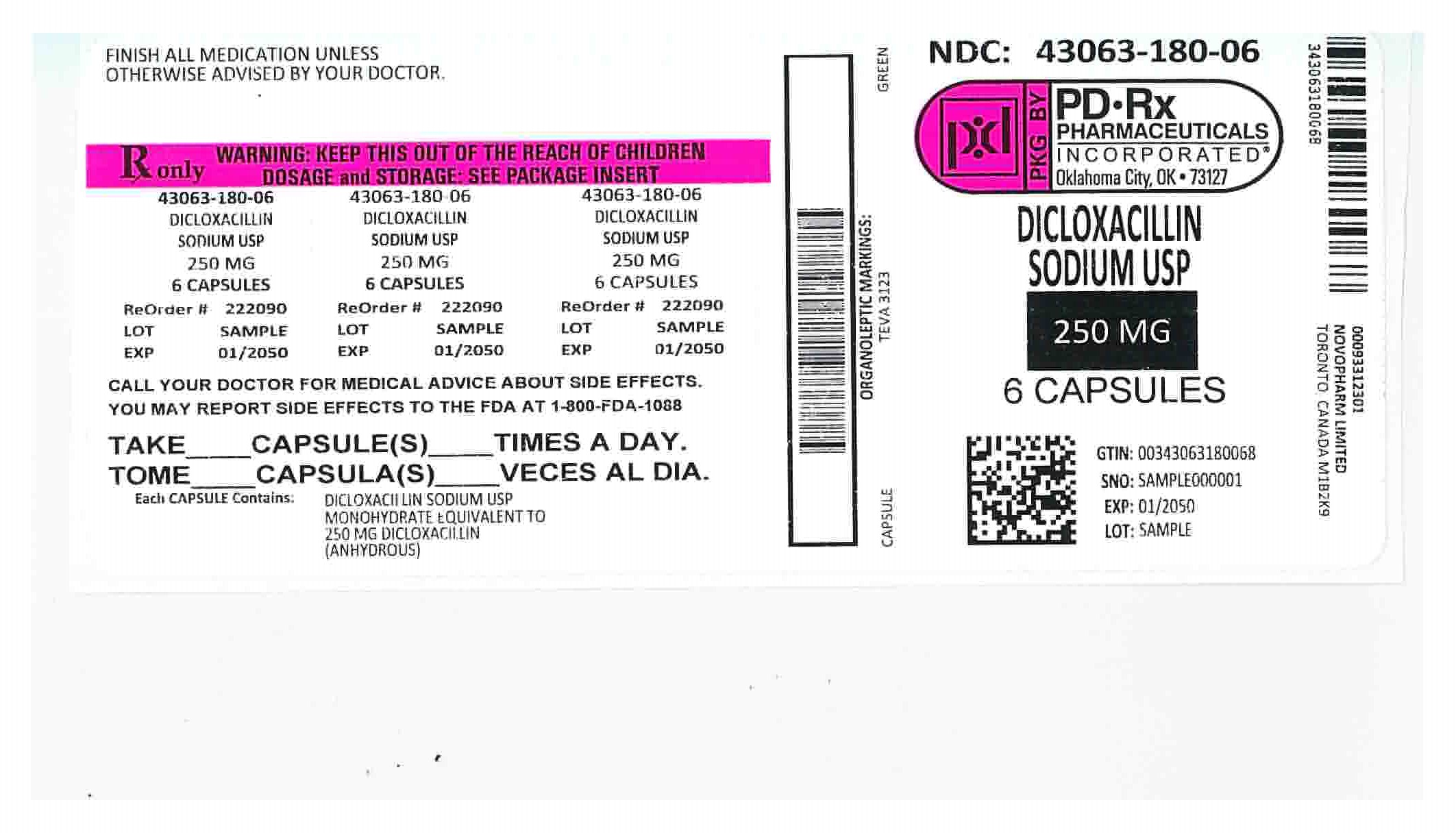
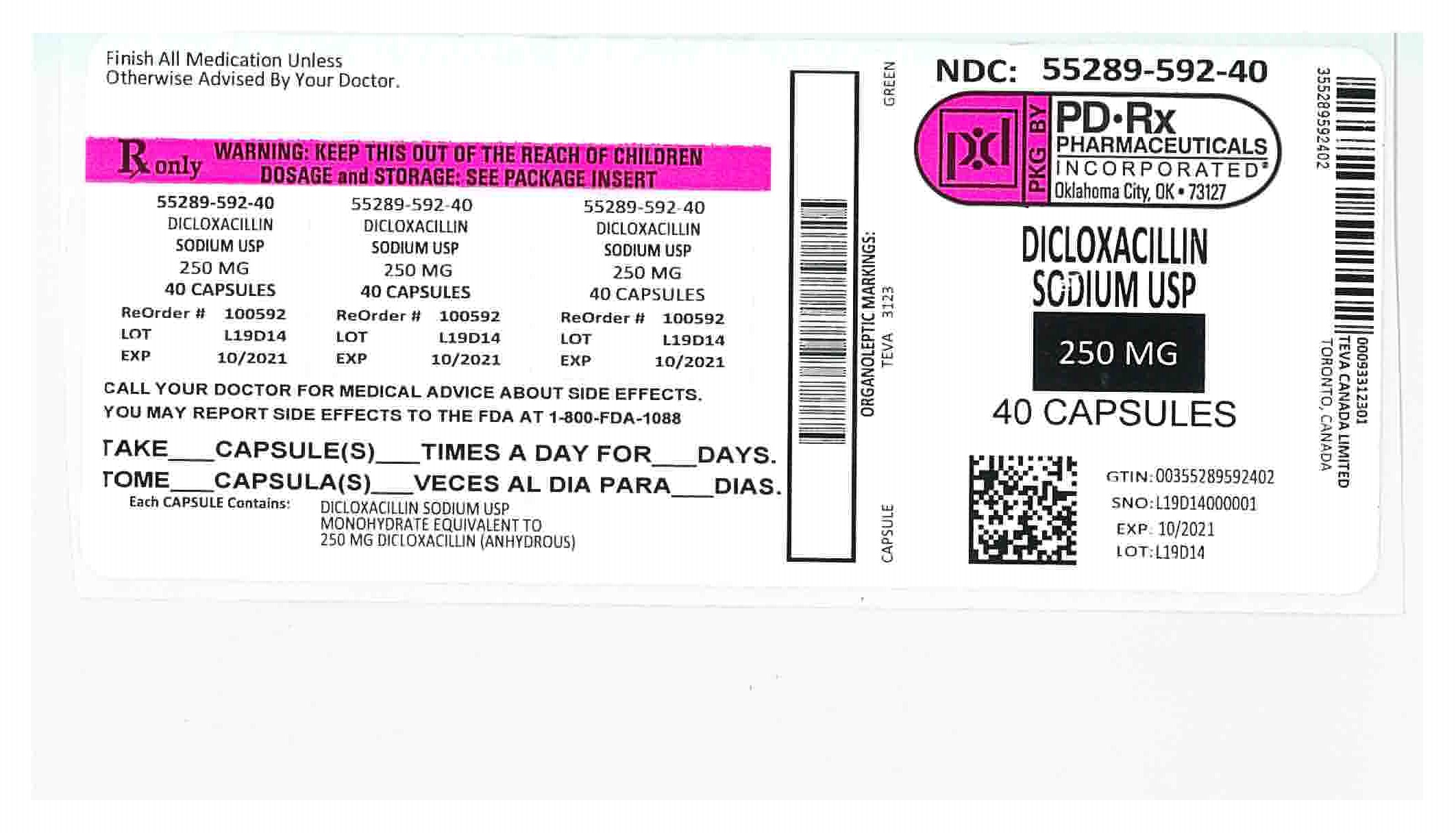
Dicloxacillin Sodium label

Dicloxacillin Sodium

Dicloxacillin Sodium Recall

Get an alert when a recall is issued.

Questions & Answers

Question

STANSPHARMACY

DOES THE DICLOXACILLIN RECALL GO TO THE PATIENT LEVEL

posted on July 16, 2016

Answer

Risa Blair, M.S. Ed., MHC

This medication has been recalled at the retail level but not the patient level (medical practitioners, hospitals, supermarkets, and pharmacies are notified but not individual consumers). The FDA determines the recall level according to the known severity of risk. I recommend contacting your doctor and discussing discontinuing this medication if you are still taking it.

posted on July 20, 2016

Side Effects & Adverse Reactions

Serious and occasionally fatal hypersensitivity (anaphylactic shock with collapse) reactions have occurred in patients receiving penicillin. The incidence of anaphylactic shock in all penicillin-treated patients is between 0.015 and 0.04 percent. Anaphylactic shock resulting in death has occurred in approximately 0.002 percent of the patients treated. Although anaphylaxis is more frequent following a parenteral administration, it has occurred in patients receiving oral penicillins.

When penicillin therapy is indicated, it should be initiated only after a comprehensive patient drug and allergy history has been obtained. If an allergic reaction occurs, the drug should be discontinued and the patient should receive supportive treatment, eg, artificial maintenance of ventilation, pressor amines, antihistamines, and corticosteroids. Individuals with a history of penicillin hypersensitivity may also experience allergic reactions when treated with a cephalosporin.

Clostridium difficile associated diarrhea (CDAD) has been reported with use of nearly all antibacterial agents, including dicloxacillin sodium, and may range in severity from mild diarrhea to fatal colitis. Treatment with antibacterial agents alters the normal flora of the colon leading to overgrowth of C. difficile.

C. difficile produces toxins A and B which contribute to the development of CDAD. Hypertoxin producing strains of C. difficile cause increased morbidity and mortality, as these infections can be refractory to antimicrobial therapy and may require colectomy. CDAD must be considered in all patients who present with diarrhea following antibiotic use. Careful medical history is necessary since CDAD has been reported to occur over two months after the administration of antibacterial agents.

If CDAD is suspected or confirmed, ongoing antibiotic use not directed against C. difficile may need to be discontinued. Appropriate fluid and electrolyte management, protein supplementation, antibiotic treatment of C. difficile, and surgical evaluation should be instituted as clinically indicated.

FDA Safety Alerts

There are currently no FDA safety alerts available for this drug.

Manufacturer Warnings

There is currently no manufacturer warning information available for this drug.

FDA Labeling Changes

There are currently no FDA labeling changes available for this drug.

Uses

The penicillinase-resistant penicillins are indicated in the treatment of infections caused by penicillinase-producing staphylococci which have demonstrated susceptibility to the drugs. Cultures and susceptibility tests should be performed initially to determine the causative organism and their sensitivity to the drug (see CLINICAL PHARMACOLOGY – Susceptibility Testing).

The penicillinase-resistant penicillins may be used to initiate therapy in suspected cases of resistant staphylococcal infections prior to the availability of laboratory test results. The penicillinase-resistant penicillins should not be used in infections caused by organisms susceptible to penicillin G. If the susceptibility tests indicate that the infection is due to an organism other than a resistant staphylococcus, therapy should not be continued with a penicillinase-resistant penicillin.

To reduce the development of drug-resistant bacteria and maintain the effectiveness of dicloxacillin sodium capsules and other antibacterial drugs, dicloxacillin sodium capsules should be used only to treat or prevent infections that are proven or strongly suspected to be caused by susceptible bacteria. When culture and susceptibility information are available, they should be considered in selecting or modifying antibacterial therapy. In the absence of such data, local epidemiology and susceptibility patterns may contribute to the empiric selection of therapy.

History

There is currently no drug history available for this drug.

Other Information

Dicloxacillin sodium, USP is an antibacterial agent of the isoxazolyl penicillin series. It is a penicillinase-resistant, acid resistant semisynthetic penicillin suitable for oral administration.

Dicloxacillin sodium is chemically designated as 4-Thia-1-azabicyclo [3.2.0]heptane-2-carboxylic acid, 6-[[[3-(2,6-dichlorophenyl)-5-methyl-4-isoxazolyl]-carbonyl]-amino]-3,3-dimethyl-7-oxo-, monosodium salt, monohydrate, [2S-(2α5α,6β)] and has the following structural formula:

Dicloxacillin sodium chemical structure

Each capsule for oral administration contains dicloxacillin sodium equivalent to 250 or 500 mg of dicloxacillin. The inactive ingredient is magnesium stearate. The capsule shells contain FD&C Blue 1, titanium dioxide, and gelatin.

Dicloxacillin Sodium Manufacturers

  • Dicloxacillin Sodium | A-s Medication Solutions Llc
    No Recall

    Dicloxacillin Sodium | A-s Medication Solutions Llc

    Dicloxacillin Sodium | A-s Medication Solutions Llc

    The penicillinase-resistant penicillins are available for oral administration and for intramuscular and intravenous injection. The sodium salts of methicillin, oxacillin, and nafcillin may be administered parenterally and the sodium salts of cloxacillin, dicloxacillin, oxacillin, and nafcillin are available for oral use.

    Bacteriologic studies to determine the causative organisms and their sensitivity to the penicillinase-resistant penicillins should always be performed. Duration of therapy varies with the type and severity of infection as well as the overall condition of the patient, therefore, it should be determined by the clinical and bacteriological response of the patient. In severe staphylococcal infections, therapy with penicillinase-resistant penicillins should be continued for at least 14 days. Therapy should be continued for at least 48 hours after the patient has become afebrile, asymptomatic, and cultures are negative. The treatment of endocarditis and osteomyelitis may require a longer term of therapy.

    Concurrent administration of the penicillinase-resistant penicillins and probenecid increases and prolongs serum penicillin levels. Probenecid decreases the apparent volume of distribution and slows the rate of excretion by competitively inhibiting renal tubular secretion of penicillin. Penicillin-probenecid therapy is generally limited to those infections where very high serum levels of penicillin are necessary.

    Oral preparations of the penicillinase-resistant penicillins should not be used as initial therapy in serious, life-threatening infections (see PRECAUTIONS – General). Oral therapy with the penicillinase-resistant penicillins may be used to follow-up the previous use of a parenteral agent as soon as the clinical condition warrants. For intramuscular gluteal injections, care should be taken to avoid sciatic nerve injury. With intravenous administration, particularly in elderly patients, care should be taken because of the possibility of thrombophlebitis.

    RECOMMENDED DOSAGES FOR DICLOXACILLIN SODIUM, USP IN MILD TO MODERATE AND SEVERE INFECTIONS DRUG ADULTS CHILDREN    Mild to
    Moderate Severe Mild to
    Moderate Severe * Patients weighing less than 40 kg (88 lbs.)

    Dicloxacillin

    125 mg
    every
    6 hours

    250 mg
    every
    6 hours

    12.5 mg/kg/
    day* in
    equally
    divided
    doses every
    6 hours

    25 mg/kg/
    day* in
    equally
    divided
    doses every
    6 hours

    Dicloxacillin is best absorbed when taken on an empty stomach, and should be administered at least 1 hour before or 2 hours after meals. Dicloxacillin should be taken with at least 4 fluid ounces (120 mL) of water and should not be taken in the supine position or immediately before going to bed (see PRECAUTIONS).

  • Dicloxacillin Sodium | A-s Medication Solutions Llc
    No Recall

    Dicloxacillin Sodium | A-s Medication Solutions Llc

    Dicloxacillin Sodium | A-s Medication Solutions Llc

    Bacteriologic studies to determine the causative organisms and their sensitivity to the penicillinase-resistant penicillins should always be performed. Duration of therapy varies with the type and severity of infection as well as the overall condition of the patient, therefore it should be determined by the clinical and bacteriological response of the patient. In severe staphylococcal infections, therapy with penicillinase-resistant penicillins should be continued for at least 14 days. Therapy should be continued for at least 48 hours after the patient has become afebrile, asymptomatic and cultures are negative. The treatment of endocarditis and osteomyelitis may require a longer term of therapy.

    Concurrent administration of the penicillinase-resistant penicillins and probenecid increases and prolongs serum penicillin levels.

    Probenecid decreases the apparent volume of distribution and slows the rate of excretion by competitively inhibiting renal tubular secretion of penicillin. Penicillin-probenecid therapy is generally limited to those infections where very high serum levels of penicillin are necessary.

    Oral preparations of the penicillinase-resistant penicillins should not be used as initial therapy in serious, life-threatening infections (see PRECAUTIONS - General). Oral therapy with the penicillinase-resistant penicillins may be used to follow up the previous use of a parenteral agent as soon as the clinical condition warrants. For intramuscular gluteal injections, care should be taken to avoid sciatic nerve injury. With intravenous administration, particularly in elderly patients, care should be taken because of the possibility of thrombophlebitis.

    NB: INFECTIONS CAUSED BY GROUP A BETA-HEMOLYTIC STREPTOCOCCI SHOULD BE TREATED FOR AT LEAST 10 DAYS TO HELP PREVENT THE OCCURRENCE OF ACUTE RHEUMATIC FEVER OR ACUTE GLOMERULONEPHRITIS.

  • Dicloxacillin Sodium | Rebel Distributors Corp
    No Recall

    Dicloxacillin Sodium | Rebel Distributors Corp

    Dicloxacillin Sodium | Rebel Distributors Corp

    The penicillinase-resistant penicillins are available for oral administration and for intramuscular and intravenous injection. The sodium salts of methicillin, oxacillin, and nafcillin may be administered parenterally and the sodium salts of cloxacillin, dicloxacillin, oxacillin, and nafcillin are available for oral use.

    Bacteriologic studies to determine the causative organisms and their sensitivity to the penicillinase-resistant penicillins should always be performed. Duration of therapy varies with the type and severity of infection as well as the overall condition of the patient, therefore, it should be determined by the clinical and bacteriological response of the patient. In severe staphylococcal infections, therapy with penicillinase-resistant penicillins should be continued for at least 14 days. Therapy should be continued for at least 48 hours after the patient has become afebrile, asymptomatic, and cultures are negative. The treatment of endocarditis and osteomyelitis may require a longer term of therapy.

    Concurrent administration of the penicillinase-resistant penicillins and probenecid increases and prolongs serum penicillin levels. Probenecid decreases the apparent volume of distribution and slows the rate of excretion by competitively inhibiting renal tubular secretion of penicillin. Penicillin-probenecid therapy is generally limited to those infections where very high serum levels of penicillin are necessary.

    Oral preparations of the penicillinase-resistant penicillins should not be used as initial therapy in serious, life-threatening infections (see PRECAUTIONS–General). Oral therapy with the penicillinase-resistant penicillins may be used to follow-up the previous use of a parenteral agent as soon as the clinical condition warrants. For intramuscular gluteal injections, care should be taken to avoid sciatic nerve injury. With intravenous administration, particularly in elderly patients, care should be taken because of the possibility of thrombophlebitis.

    RECOMMENDED DOSAGES FOR DICLOXACILLIN SODIUM, USP IN MILD TO MODERATE AND SEVERE INFECTIONS DRUG ADULTS CHILDREN    Mild to
    Moderate Severe Mild to
    Moderate Severe * Patients weighing less than 40 kg (88 lbs.) Dicloxacillin 125 mg
    every
    6 hours 250 mg
    every
    6 hours 12.5 mg/kg/
    day* in
    equally
    divided
    doses every
    6 hours 25 mg/kg/
    day* in
    equally
    divided
    doses every
    6 hours

    Dicloxacillin is best absorbed when taken on an empty stomach, and should be administered at least 1 hour before or 2 hours after meals. Dicloxacillin should be taken with at least 4 fluid ounces (120 mL) of water and should not be be taken in the supine position or immediately before going to bed (see PRECAUTIONS).

  • Stat Rx Usa Llc
    Dicloxacillin Sodium | Stat Rx Usa Llc
    No Recall

    Dicloxacillin Sodium | Stat Rx Usa Llc

    Dicloxacillin Sodium | Stat Rx Usa Llc

    Bacteriologic studies to determine the causative organisms and their sensitivity to the penicillinase-resistant penicillins should always be performed. Duration of therapy varies with the type and severity of infection as well as the overall condition of the patient, therefore it should be determined by the clinical and bacteriological response of the patient. In severe staphylococcal infections, therapy with penicillinase-resistant penicillins should be continued for at least 14 days. Therapy should be continued for at least 48 hours after the patient has become afebrile, asymptomatic and cultures are negative. The treatment of endocarditis and osteomyelitis may require a longer term of therapy.

    Concurrent administration of the penicillinase-resistant penicillins and probenecid increases and prolongs serum penicillin levels.

    Probenecid decreases the apparent volume of distribution and slows the rate of excretion by competitively inhibiting renal tubular secretion of penicillin. Penicillin-probenecid therapy is generally limited to those infections where very high serum levels of penicillin are necessary.

    Oral preparations of the penicillinase-resistant penicillins should not be used as initial therapy in serious, life-threatening infections (see PRECAUTIONS - General). Oral therapy with the penicillinase-resistant penicillins may be used to follow up the previous use of a parenteral agent as soon as the clinical condition warrants. For intramuscular gluteal injections, care should be taken to avoid sciatic nerve injury. With intravenous administration, particularly in elderly patients, care should be taken because of the possibility of thrombophlebitis.

    NB: INFECTIONS CAUSED BY GROUP A BETA-HEMOLYTIC STREPTOCOCCI SHOULD BE TREATED FOR AT LEAST 10 DAYS TO HELP PREVENT THE OCCURRENCE OF ACUTE RHEUMATIC FEVER OR ACUTE GLOMERULONEPHRITIS.

  • Pd-rx Pharmaceuticals, Inc.
    Dicloxacillin Sodium | Pd-rx Pharmaceuticals, Inc.
    No Recall

    Dicloxacillin Sodium | Pd-rx Pharmaceuticals, Inc.

    Dicloxacillin Sodium | Pd-rx Pharmaceuticals, Inc.

    Bacteriologic studies to determine the causative organisms and their sensitivity to the penicillinase-resistant penicillins should always be performed. Duration of therapy varies with the type and severity of infection as well as the overall condition of the patient, therefore it should be determined by the clinical and bacteriological response of the patient. In severe staphylococcal infections, therapy with penicillinase-resistant penicillins should be continued for at least 14 days. Therapy should be continued for at least 48 hours after the patient has become afebrile, asymptomatic and cultures are negative. The treatment of endocarditis and osteomyelitis may require a longer term of therapy.

    Concurrent administration of the penicillinase-resistant penicillins and probenecid increases and prolongs serum penicillin levels.

    Probenecid decreases the apparent volume of distribution and slows the rate of excretion by competitively inhibiting renal tubular secretion of penicillin. Penicillin-probenecid therapy is generally limited to those infections where very high serum levels of penicillin are necessary.

    Oral preparations of the penicillinase-resistant penicillins should not be used as initial therapy in serious, life-threatening infections (see PRECAUTIONS - General). Oral therapy with the penicillinase-resistant penicillins may be used to follow up the previous use of a parenteral agent as soon as the clinical condition warrants. For intramuscular gluteal injections, care should be taken to avoid sciatic nerve injury. With intravenous administration, particularly in elderly patients, care should be taken because of the possibility of thrombophlebitis.

    NB: INFECTIONS CAUSED BY GROUP A BETA-HEMOLYTIC STREPTOCOCCI SHOULD BE TREATED FOR AT LEAST 10 DAYS TO HELP PREVENT THE OCCURRENCE OF ACUTE RHEUMATIC FEVER OR ACUTE GLOMERULONEPHRITIS.

  • Redpharm Drug Inc.
    Dicloxacillin Sodium | Redpharm Drug Inc.
    No Recall

    Dicloxacillin Sodium | Redpharm Drug Inc.

    Dicloxacillin Sodium | Redpharm Drug Inc.

    Bacteriologic studies to determine the causative organisms and their sensitivity to the penicillinase-resistant penicillins should always be performed. Duration of therapy varies with the type and severity of infection as well as the overall condition of the patient, therefore it should be determined by the clinical and bacteriological response of the patient. In severe staphylococcal infections, therapy with penicillinase-resistant penicillins should be continued for at least 14 days. Therapy should be continued for at least 48 hours after the patient has become afebrile, asymptomatic and cultures are negative. The treatment of endocarditis and osteomyelitis may require a longer term of therapy.

    Concurrent administration of the penicillinase-resistant penicillins and probenecid increases and prolongs serum penicillin levels.

    Probenecid decreases the apparent volume of distribution and slows the rate of excretion by competitively inhibiting renal tubular secretion of penicillin. Penicillin-probenecid therapy is generally limited to those infections where very high serum levels of penicillin are necessary.

    Oral preparations of the penicillinase-resistant penicillins should not be used as initial therapy in serious, life-threatening infections (see PRECAUTIONS - General). Oral therapy with the penicillinase-resistant penicillins may be used to follow up the previous use of a parenteral agent as soon as the clinical condition warrants. For intramuscular gluteal injections, care should be taken to avoid sciatic nerve injury. With intravenous administration, particularly in elderly patients, care should be taken because of the possibility of thrombophlebitis.

    NB: INFECTIONS CAUSED BY GROUP A BETA-HEMOLYTIC STREPTOCOCCI SHOULD BE TREATED FOR AT LEAST 10 DAYS TO HELP PREVENT THE OCCURRENCE OF ACUTE RHEUMATIC FEVER OR ACUTE GLOMERULONEPHRITIS.

  • Pd-rx Pharmaceuticals, Inc.
    Dicloxacillin Sodium | Pd-rx Pharmaceuticals, Inc.
    No Recall

    Dicloxacillin Sodium | Pd-rx Pharmaceuticals, Inc.

    Dicloxacillin Sodium | Pd-rx Pharmaceuticals, Inc.

    The penicillinase-resistant penicillins are available for oral administration and for intramuscular and intravenous injection. The sodium salts of methicillin, oxacillin, and nafcillin may be administered parenterally and the sodium salts of cloxacillin, dicloxacillin, oxacillin, and nafcillin are available for oral use.

    Bacteriologic studies to determine the causative organisms and their sensitivity to the penicillinase-resistant penicillins should always be performed. Duration of therapy varies with the type and severity of infection as well as the overall condition of the patient, therefore, it should be determined by the clinical and bacteriological response of the patient. In severe staphylococcal infections, therapy with penicillinase-resistant penicillins should be continued for at least 14 days. Therapy should be continued for at least 48 hours after the patient has become afebrile, asymptomatic, and cultures are negative. The treatment of endocarditis and osteomyelitis may require a longer term of therapy.

    Concurrent administration of the penicillinase-resistant penicillins and probenecid increases and prolongs serum penicillin levels. Probenecid decreases the apparent volume of distribution and slows the rate of excretion by competitively inhibiting renal tubular secretion of penicillin. Penicillin-probenecid therapy is generally limited to those infections where very high serum levels of penicillin are necessary.

    Oral preparations of the penicillinase-resistant penicillins should not be used as initial therapy in serious, life-threatening infections (see PRECAUTIONS–General). Oral therapy with the penicillinase-resistant penicillins may be used to follow-up the previous use of a parenteral agent as soon as the clinical condition warrants. For intramuscular gluteal injections, care should be taken to avoid sciatic nerve injury. With intravenous administration, particularly in elderly patients, care should be taken because of the possibility of thrombophlebitis.

    RECOMMENDED DOSAGES FOR DICLOXACILLIN SODIUM, USP IN MILD TO MODERATE AND SEVERE INFECTIONS DRUG ADULTS CHILDREN    Mild to
    Moderate Severe Mild to
    Moderate Severe * Patients weighing less than 40 kg (88 lbs.) Dicloxacillin 125 mg
    every
    6 hours 250 mg
    every
    6 hours 12.5 mg/kg/
    day* in
    equally
    divided
    doses every
    6 hours 25 mg/kg/
    day* in
    equally
    divided
    doses every
    6 hours

    Dicloxacillin is best absorbed when taken on an empty stomach, and should be administered at least 1 hour before or 2 hours after meals. Dicloxacillin should be taken with at least 4 fluid ounces (120 mL) of water and should not be be taken in the supine position or immediately before going to bed (see PRECAUTIONS).

  • Pd-rx Pharmaceuticals, Inc.
    Dicloxacillin Sodium | Pd-rx Pharmaceuticals, Inc.
    No Recall

    Dicloxacillin Sodium | Pd-rx Pharmaceuticals, Inc.

    Dicloxacillin Sodium | Pd-rx Pharmaceuticals, Inc.

    Bacteriologic studies to determine the causative organisms and their sensitivity to the penicillinase-resistant penicillins should always be performed. Duration of therapy varies with the type and severity of infection as well as the overall condition of the patient, therefore it should be determined by the clinical and bacteriological response of the patient. In severe staphylococcal infections, therapy with penicillinase-resistant penicillins should be continued for at least 14 days. Therapy should be continued for at least 48 hours after the patient has become afebrile, asymptomatic and cultures are negative. The treatment of endocarditis and osteomyelitis may require a longer term of therapy.

    Concurrent administration of the penicillinase-resistant penicillins and probenecid increases and prolongs serum penicillin levels.

    Probenecid decreases the apparent volume of distribution and slows the rate of excretion by competitively inhibiting renal tubular secretion of penicillin. Penicillin-probenecid therapy is generally limited to those infections where very high serum levels of penicillin are necessary.

    Oral preparations of the penicillinase-resistant penicillins should not be used as initial therapy in serious, life-threatening infections (see PRECAUTIONS - General). Oral therapy with the penicillinase-resistant penicillins may be used to follow up the previous use of a parenteral agent as soon as the clinical condition warrants. For intramuscular gluteal injections, care should be taken to avoid sciatic nerve injury. With intravenous administration, particularly in elderly patients, care should be taken because of the possibility of thrombophlebitis.

    NB: INFECTIONS CAUSED BY GROUP A BETA-HEMOLYTIC STREPTOCOCCI SHOULD BE TREATED FOR AT LEAST 10 DAYS TO HELP PREVENT THE OCCURRENCE OF ACUTE RHEUMATIC FEVER OR ACUTE GLOMERULONEPHRITIS.

  • Dicloxacillin Sodium | H.j. Harkins Company, Inc.
    No Recall

    Dicloxacillin Sodium | H.j. Harkins Company, Inc.

    Dicloxacillin Sodium | H.j. Harkins Company, Inc.

    Bacteriologic studies to determine the causative organisms and their sensitivity to the penicillinase-resistant penicillins should always be performed. Duration of therapy varies with the type and severity of infection as well as the overall condition of the patient, therefore it should be determined by the clinical and bacteriological response of the patient. In severe staphylococcal infections, therapy with penicillinase-resistant penicillins should be continued for at least 14 days. Therapy should be continued for at least 48 hours after the patient has become afebrile, asymptomatic and cultures are negative. The treatment of endocarditis and osteomyelitis may require a longer term of therapy.

    Concurrent administration of the penicillinase-resistant penicillins and probenecid increases and prolongs serum penicillin levels.

    Probenecid decreases the apparent volume of distribution and slows the rate of excretion by competitively inhibiting renal tubular secretion of penicillin. Penicillin-probenecid therapy is generally limited to those infections where very high serum levels of penicillin are necessary.

    Oral preparations of the penicillinase-resistant penicillins should not be used as initial therapy in serious, life-threatening infections (see PRECAUTIONS - General). Oral therapy with the penicillinase-resistant penicillins may be used to follow up the previous use of a parenteral agent as soon as the clinical condition warrants. For intramuscular gluteal injections, care should be taken to avoid sciatic nerve injury. With intravenous administration, particularly in elderly patients, care should be taken because of the possibility of thrombophlebitis.

    NB: INFECTIONS CAUSED BY GROUP A BETA-HEMOLYTIC STREPTOCOCCI SHOULD BE TREATED FOR AT LEAST 10 DAYS TO HELP PREVENT THE OCCURRENCE OF ACUTE RHEUMATIC FEVER OR ACUTE GLOMERULONEPHRITIS.

  • Physicians Total Care, Inc.
    Dicloxacillin Sodium | Physicians Total Care, Inc.
    No Recall

    Dicloxacillin Sodium | Physicians Total Care, Inc.

    Dicloxacillin Sodium | Physicians Total Care, Inc.

    The penicillinase-resistant penicillins are available for oral administration and for intramuscular and intravenous injection. The sodium salts of methicillin, oxacillin, and nafcillin may be administered parenterally and the sodium salts of cloxacillin, dicloxacillin, oxacillin, and nafcillin are available for oral use.

    Bacteriologic studies to determine the causative organisms and their sensitivity to the penicillinase-resistant penicillins should always be performed. Duration of therapy varies with the type and severity of infection as well as the overall condition of the patient, therefore, it should be determined by the clinical and bacteriological response of the patient. In severe staphylococcal infections, therapy with penicillinase-resistant penicillins should be continued for at least 14 days. Therapy should be continued for at least 48 hours after the patient has become afebrile, asymptomatic, and cultures are negative. The treatment of endocarditis and osteomyelitis may require a longer term of therapy.

    Concurrent administration of the penicillinase-resistant penicillins and probenecid increases and prolongs serum penicillin levels. Probenecid decreases the apparent volume of distribution and slows the rate of excretion by competitively inhibiting renal tubular secretion of penicillin. Penicillin-probenecid therapy is generally limited to those infections where very high serum levels of penicillin are necessary.

    Oral preparations of the penicillinase-resistant penicillins should not be used as initial therapy in serious, life-threatening infections (see PRECAUTIONS–General). Oral therapy with the penicillinase-resistant penicillins may be used to follow-up the previous use of a parenteral agent as soon as the clinical condition warrants. For intramuscular gluteal injections, care should be taken to avoid sciatic nerve injury. With intravenous administration, particularly in elderly patients, care should be taken because of the possibility of thrombophlebitis.

    RECOMMENDED DOSAGES FOR DICLOXACILLIN SODIUM, USP IN MILD TO MODERATE AND SEVERE INFECTIONS DRUG ADULTS CHILDREN    Mild to
    Moderate Severe Mild to
    Moderate Severe * Patients weighing less than 40 kg (88 lbs.) Dicloxacillin 125 mg
    every
    6 hours 250 mg
    every
    6 hours 12.5 mg/kg/
    day* in
    equally
    divided
    doses every
    6 hours 25 mg/kg/
    day* in
    equally
    divided
    doses every
    6 hours

    Dicloxacillin is best absorbed when taken on an empty stomach, and should be administered at least 1 hour before or 2 hours after meals. Dicloxacillin should be taken with at least 4 fluid ounces (120 mL) of water and should not be be taken in the supine position or immediately before going to bed (see PRECAUTIONS).

  • Lake Erie Medical & Surgical Supply Dba Quality Care Products Llc
    Dicloxacillin Sodium | Lake Erie Medical & Surgical Supply Dba Quality Care Products Llc
    No Recall

    Dicloxacillin Sodium | Lake Erie Medical & Surgical Supply Dba Quality Care Products Llc

    Dicloxacillin Sodium | Lake Erie Medical & Surgical Supply Dba Quality Care Products Llc

    Bacteriologic studies to determine the causative organisms and their sensitivity to the penicillinase-resistant penicillins should always be performed. Duration of therapy varies with the type and severity of infection as well as the overall condition of the patient, therefore it should be determined by the clinical and bacteriological response of the patient. In severe staphylococcal infections, therapy with penicillinase-resistant penicillins should be continued for at least 14 days. Therapy should be continued for at least 48 hours after the patient has become afebrile, asymptomatic and cultures are negative. The treatment of endocarditis and osteomyelitis may require a longer term of therapy.

    Concurrent administration of the penicillinase-resistant penicillins and probenecid increases and prolongs serum penicillin levels.

    Probenecid decreases the apparent volume of distribution and slows the rate of excretion by competitively inhibiting renal tubular secretion of penicillin. Penicillin-probenecid therapy is generally limited to those infections where very high serum levels of penicillin are necessary.

    Oral preparations of the penicillinase-resistant penicillins should not be used as initial therapy in serious, life-threatening infections (see PRECAUTIONS - General). Oral therapy with the penicillinase-resistant penicillins may be used to follow up the previous use of a parenteral agent as soon as the clinical condition warrants. For intramuscular gluteal injections, care should be taken to avoid sciatic nerve injury. With intravenous administration, particularly in elderly patients, care should be taken because of the possibility of thrombophlebitis.

    NB: INFECTIONS CAUSED BY GROUP A BETA-HEMOLYTIC STREPTOCOCCI SHOULD BE TREATED FOR AT LEAST 10 DAYS TO HELP PREVENT THE OCCURRENCE OF ACUTE RHEUMATIC FEVER OR ACUTE GLOMERULONEPHRITIS.

  • Dicloxacillin Sodium | Sun Pharmaceutical Industries Limited
    No Recall

    Dicloxacillin Sodium | Sun Pharmaceutical Industries Limited

    Dicloxacillin Sodium | Sun Pharmaceutical Industries Limited

    Verify dose using body surface area prior to dispensing. Recommended dosage should generally not exceed 4 mg intravenously [see Overdosage (10)].

    2.1 Ovarian Cancer

    Recommended Dose and Schedule


    The recommended dose of topotecan hydrochloride for injection is 1.5 mg/m2 by intravenous infusion over 30 minutes daily for 5 consecutive days, starting on Day 1 of a 21-day course.

    2.2 Small Cell Lung Cancer

    Recommended Dose and Schedule


    The recommended dose of topotecan hydrochloride for injection is 1.5 mg/m2 by intravenous infusion over 30 minutes daily for 5 consecutive days, starting on Day 1 of a 21-day course.

    2.3 Cervical Cancer

    Recommended Dose and Schedule


    The recommended dose of topotecan hydrochloride for injection is 0.75 mg/m2 by intravenous infusion over 30 minutes daily on Days 1, 2, and 3 in combination with cisplatin 50 mg/m2 on Day 1, repeated every 21 days.

    2.4 Dose Modifications

    Hematologic Toxicities


    For single-agent use, dose reduce topotecan hydrochloride for injectionto 1.25 mg/m2 for:

    neutrophil counts of less than 500 cells/mm3, or administer granulocyte-colony stimulating factor (G-CSF) starting no sooner than 24 hours following the last dose of topotecan hydrochloride for injection. platelet counts less than 25,000 cells/mm3 during previous cycle.

    For combination use with cisplatin, dose reduce topotecan hydrochloride for injectionto 0.6 mg/m2 (and further to 0.45 mg/m2 if necessary) for:

    febrile neutropenia (defined as neutrophil counts less than 1,000 cells/mm3 with temperature of greater than or equal to 38°C (100.4°F), or administer G-CSF starting no sooner than 24 hours following the last dose of topotecan hydrochloride for injection. platelet counts less than 25,000 cells/mm3 during previous cycle.

    Renal Impairment


    For single-agent use, dose reduce topotecan hydrochloride for injection to 0.75 mg/m2 in patients with moderate renal impairment (creatinine clearance [Clcr] = 20 to 39 mL/min). Insufficient data are available in patients with severe renal impairment (Clcr less than 20 mL/min) to provide a dosage recommendation for topotecan hydrochloride for injection[see Use in Specific Populations (8.6), Clinical Pharmacology (12.3)].

    2.5 Preparation and Intravenous Administration

    Topotecan hydrochloride for injection is a cytotoxic drug. Follow applicable special handling and disposable procedures.1


    Preparation and Administration

    Reconstitute each 4-mg vial of topotecan hydrochloride for injection with 4 mL Sterile Water for Injection, USP. Dilute the appropriate volume of the reconstituted solution in either 0.9% Sodium Chloride Intravenous Infusion, USP or 5% Dextrose in Water Injection, USP prior to administration.


    Stability


    Unopened vials of topotecan hydrochloride for injection are stable until the date indicated on the package when stored between 20°C and 25°C (68°F and 77°F) [see USP] and protected from light in the original carton. Because the vials contain no preservative, contents should be used immediately after reconstitution.


    Reconstituted vials of topotecan hydrochloride for injection diluted for infusion are stable at approximately 20°C to 25°C (68°F to 77°F) and ambient lighting conditions for 24 hours.

  • Dicloxacillin Sodium | A-s Medication Solutions Llc
    No Recall

    Dicloxacillin Sodium | A-s Medication Solutions Llc

    Dicloxacillin Sodium | A-s Medication Solutions Llc

    Bacteriologic studies to determine the causative organisms and their sensitivity to the penicillinase-resistant penicillins should always be performed. Duration of therapy varies with the type and severity of infection as well as the overall condition of the patient, therefore it should be determined by the clinical and bacteriological response of the patient. In severe staphylococcal infections, therapy with penicillinase-resistant penicillins should be continued for at least 14 days. Therapy should be continued for at least 48 hours after the patient has become afebrile, asymptomatic and cultures are negative. The treatment of endocarditis and osteomyelitis may require a longer term of therapy.

    Concurrent administration of the penicillinase-resistant penicillins and probenecid increases and prolongs serum penicillin levels.

    Probenecid decreases the apparent volume of distribution and slows the rate of excretion by competitively inhibiting renal tubular secretion of penicillin. Penicillin-probenecid therapy is generally limited to those infections where very high serum levels of penicillin are necessary.

    Oral preparations of the penicillinase-resistant penicillins should not be used as initial therapy in serious, life-threatening infections (see PRECAUTIONS - General). Oral therapy with the penicillinase-resistant penicillins may be used to follow up the previous use of a parenteral agent as soon as the clinical condition warrants. For intramuscular gluteal injections, care should be taken to avoid sciatic nerve injury. With intravenous administration, particularly in elderly patients, care should be taken because of the possibility of thrombophlebitis.

    NB: INFECTIONS CAUSED BY GROUP A BETA-HEMOLYTIC STREPTOCOCCI SHOULD BE TREATED FOR AT LEAST 10 DAYS TO HELP PREVENT THE OCCURRENCE OF ACUTE RHEUMATIC FEVER OR ACUTE GLOMERULONEPHRITIS.

  • Liberty Pharmaceuticals, Inc.
    Dicloxacillin Sodium | Liberty Pharmaceuticals, Inc.
    No Recall

    Dicloxacillin Sodium | Liberty Pharmaceuticals, Inc.

    Dicloxacillin Sodium | Liberty Pharmaceuticals, Inc.

    Bacteriologic studies to determine the causative organisms and their sensitivity to the penicillinase-resistant penicillins should always be performed. Duration of therapy varies with the type and severity of infection as well as the overall condition of the patient, therefore it should be determined by the clinical and bacteriological response of the patient. In severe staphylococcal infections, therapy with penicillinase-resistant penicillins should be continued for at least 14 days. Therapy should be continued for at least 48 hours after the patient has become afebrile, asymptomatic and cultures are negative. The treatment of endocarditis and osteomyelitis may require a longer term of therapy.

    Concurrent administration of the penicillinase-resistant penicillins and probenecid increases and prolongs serum penicillin levels.

    Probenecid decreases the apparent volume of distribution and slows the rate of excretion by competitively inhibiting renal tubular secretion of penicillin. Penicillin-probenecid therapy is generally limited to those infections where very high serum levels of penicillin are necessary.

    Oral preparations of the penicillinase-resistant penicillins should not be used as initial therapy in serious, life-threatening infections (see PRECAUTIONS - General). Oral therapy with the penicillinase-resistant penicillins may be used to follow up the previous use of a parenteral agent as soon as the clinical condition warrants. For intramuscular gluteal injections, care should be taken to avoid sciatic nerve injury. With intravenous administration, particularly in elderly patients, care should be taken because of the possibility of thrombophlebitis.

    NB: INFECTIONS CAUSED BY GROUP A BETA-HEMOLYTIC STREPTOCOCCI SHOULD BE TREATED FOR AT LEAST 10 DAYS TO HELP PREVENT THE OCCURRENCE OF ACUTE RHEUMATIC FEVER OR ACUTE GLOMERULONEPHRITIS.

  • Sandoz Inc
    Dicloxacillin Sodium | Sandoz Inc
    No Recall

    Dicloxacillin Sodium | Sandoz Inc

    Dicloxacillin Sodium | Sandoz Inc

    The penicillinase-resistant penicillins are available for oral administration and for intramuscular and intravenous injection. The sodium salts of methicillin, oxacillin, and nafcillin may be administered parenterally and the sodium salts of cloxacillin, dicloxacillin, oxacillin, and nafcillin are available for oral use.

    Bacteriologic studies to determine the causative organisms and their sensitivity to the penicillinase-resistant penicillins should always be performed. Duration of therapy varies with the type and severity of infection as well as the overall condition of the patient, therefore, it should be determined by the clinical and bacteriological response of the patient. In severe staphylococcal infections, therapy with penicillinase-resistant penicillins should be continued for at least 14 days. Therapy should be continued for at least 48 hours after the patient has become afebrile, asymptomatic, and cultures are negative. The treatment of endocarditis and osteomyelitis may require a longer term of therapy.

    Concurrent administration of the penicillinase-resistant penicillins and probenecid increases and prolongs serum penicillin levels. Probenecid decreases the apparent volume of distribution and slows the rate of excretion by competitively inhibiting renal tubular secretion of penicillin. Penicillin-probenecid therapy is generally limited to those infections where very high serum levels of penicillin are necessary.

    Oral preparations of the penicillinase-resistant penicillins should not be used as initial therapy in serious, life-threatening infections (see PRECAUTIONS – General). Oral therapy with the penicillinase-resistant penicillins may be used to follow-up the previous use of a parenteral agent as soon as the clinical condition warrants. For intramuscular gluteal injections, care should be taken to avoid sciatic nerve injury. With intravenous administration, particularly in elderly patients, care should be taken because of the possibility of thrombophlebitis.

    RECOMMENDED DOSAGES FOR DICLOXACILLIN SODIUM, USP IN MILD TO MODERATE AND SEVERE INFECTIONS DRUG ADULTS CHILDREN    Mild to
    Moderate Severe Mild to
    Moderate Severe * Patients weighing less than 40 kg (88 lbs.)

    Dicloxacillin

    125 mg
    every
    6 hours

    250 mg
    every
    6 hours

    12.5 mg/kg/
    day* in
    equally
    divided
    doses every
    6 hours

    25 mg/kg/
    day* in
    equally
    divided
    doses every
    6 hours

    Dicloxacillin is best absorbed when taken on an empty stomach, and should be administered at least 1 hour before or 2 hours after meals. Dicloxacillin should be taken with at least 4 fluid ounces (120 mL) of water and should not be taken in the supine position or immediately before going to bed (see PRECAUTIONS).

  • Pd-rx Pharmaceuticals, Inc.
    Dicloxacillin Sodium | Pd-rx Pharmaceuticals, Inc.
    No Recall

    Dicloxacillin Sodium | Pd-rx Pharmaceuticals, Inc.

    Dicloxacillin Sodium | Pd-rx Pharmaceuticals, Inc.

    Bacteriologic studies to determine the causative organisms and their sensitivity to the penicillinase-resistant penicillins should always be performed. Duration of therapy varies with the type and severity of infection as well as the overall condition of the patient, therefore it should be determined by the clinical and bacteriological response of the patient. In severe staphylococcal infections, therapy with penicillinase-resistant penicillins should be continued for at least 14 days. Therapy should be continued for at least 48 hours after the patient has become afebrile, asymptomatic and cultures are negative. The treatment of endocarditis and osteomyelitis may require a longer term of therapy.

    Concurrent administration of the penicillinase-resistant penicillins and probenecid increases and prolongs serum penicillin levels.

    Probenecid decreases the apparent volume of distribution and slows the rate of excretion by competitively inhibiting renal tubular secretion of penicillin. Penicillin-probenecid therapy is generally limited to those infections where very high serum levels of penicillin are necessary.

    Oral preparations of the penicillinase-resistant penicillins should not be used as initial therapy in serious, life-threatening infections (see PRECAUTIONS - General). Oral therapy with the penicillinase-resistant penicillins may be used to follow up the previous use of a parenteral agent as soon as the clinical condition warrants. For intramuscular gluteal injections, care should be taken to avoid sciatic nerve injury. With intravenous administration, particularly in elderly patients, care should be taken because of the possibility of thrombophlebitis.

    NB: INFECTIONS CAUSED BY GROUP A BETA-HEMOLYTIC STREPTOCOCCI SHOULD BE TREATED FOR AT LEAST 10 DAYS TO HELP PREVENT THE OCCURRENCE OF ACUTE RHEUMATIC FEVER OR ACUTE GLOMERULONEPHRITIS.

  • Liberty Pharmaceuticals, Inc.
    Dicloxacillin Sodium | Liberty Pharmaceuticals, Inc.
    No Recall

    Dicloxacillin Sodium | Liberty Pharmaceuticals, Inc.

    Dicloxacillin Sodium | Liberty Pharmaceuticals, Inc.

    The penicillinase-resistant penicillins are available for oral administration and for intramuscular and intravenous injection. The sodium salts of methicillin, oxacillin, and nafcillin may be administered parenterally and the sodium salts of cloxacillin, dicloxacillin, oxacillin, and nafcillin are available for oral use.

    Bacteriologic studies to determine the causative organisms and their sensitivity to the penicillinase-resistant penicillins should always be performed. Duration of therapy varies with the type and severity of infection as well as the overall condition of the patient, therefore, it should be determined by the clinical and bacteriological response of the patient. In severe staphylococcal infections, therapy with penicillinase-resistant penicillins should be continued for at least 14 days. Therapy should be continued for at least 48 hours after the patient has become afebrile, asymptomatic, and cultures are negative. The treatment of endocarditis and osteomyelitis may require a longer term of therapy.

    Concurrent administration of the penicillinase-resistant penicillins and probenecid increases and prolongs serum penicillin levels. Probenecid decreases the apparent volume of distribution and slows the rate of excretion by competitively inhibiting renal tubular secretion of penicillin. Penicillin-probenecid therapy is generally limited to those infections where very high serum levels of penicillin are necessary.

    Oral preparations of the penicillinase-resistant penicillins should not be used as initial therapy in serious, life-threatening infections (see PRECAUTIONS – General). Oral therapy with the penicillinase-resistant penicillins may be used to follow-up the previous use of a parenteral agent as soon as the clinical condition warrants. For intramuscular gluteal injections, care should be taken to avoid sciatic nerve injury. With intravenous administration, particularly in elderly patients, care should be taken because of the possibility of thrombophlebitis.

    RECOMMENDED DOSAGES FOR DICLOXACILLIN SODIUM, USP IN MILD TO MODERATE AND SEVERE INFECTIONS DRUG ADULTS CHILDREN    Mild to
    Moderate Severe Mild to
    Moderate Severe * Patients weighing less than 40 kg (88 lbs.)  

    Dicloxacillin


    125 mg
    every
    6 hours


    250 mg
    every
    6 hours


    12.5 mg/kg/
    day* in
    equally
    divided
    doses every
    6 hours


    25 mg/kg/
    day* in
    equally
    divided
    doses every
    6 hours

    Dicloxacillin is best absorbed when taken on an empty stomach, and should be administered at least 1 hour before or 2 hours after meals. Dicloxacillin should be taken with at least 4 fluid ounces (120 mL) of water and should not be taken in the supine position or immediately before going to bed (see PRECAUTIONS).