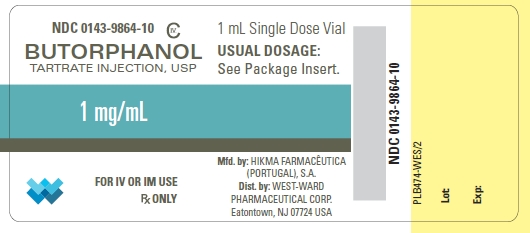
Butorphanol Tartrate label

Butorphanol Tartrate

Butorphanol Tartrate Recall

Get an alert when a recall is issued.

Side Effects & Adverse Reactions

DO NOT USE IN HORSES INTENDED FOR HUMAN CONSUMPTION. NOT FOR HUMAN USE.

FDA Safety Alerts

There are currently no FDA safety alerts available for this drug.

Manufacturer Warnings

There is currently no manufacturer warning information available for this drug.

FDA Labeling Changes

There are currently no FDA labeling changes available for this drug.

Uses

Butorphanol Tartrate Injection is indicated for the relief of pain associated with colic in adult horses and yearlings. Clinical studies in the horse have shown that Butorphanol Tartrate Injection alleviates abdominal pain associated with torsion, impaction, intussusception, spasmodic and tympanic colic and postpartum pain.

History

There is currently no drug history available for this drug.

Other Information

Butorphanol Tartrate Injection is a totally synthetic, centrally acting, narcotic agonist-antagonist analgesic with potent antitussive activity. It is a member of the phenanthrene series. The chemical name is Morphinan-3, 14-diol, 17-(cyclobutylmethyl)-, (-)-, (S- (R*, R*))-2, 3-dihydroxybutanedioate (1:1) (salt). It is a white, crystalline, water soluble substance having a molecular weight of 477.55; its molecular formula is C21H29NO2.C4H6O6.

Butorphanol Tartrate structural formula

Each mL of Butorphanol Tartrate Injection contains 10 mg butorphanol base (as butorphanol tartrate, USP), 3.3 mg citric acid, USP, 6.4 mg sodium citrate, USP, 4.7 mg sodium chloride, USP, and 0.1 mg benzethonium chloride, USP, q.s. with water for injection, USP.

Butorphanol Tartrate Manufacturers

  • Bayer Healthcare, Llc Animal Health Division
    Butorphanol Tartrate | Bayer Healthcare, Llc Animal Health Division
    No Recall

    Butorphanol Tartrate | Bayer Healthcare, Llc Animal Health Division

    Butorphanol Tartrate | Bayer Healthcare, Llc Animal Health Division

    The recommended dosage in the horse is 0.1 mg of butorphanol per kilogram of body weight, (0.05 mg/lb) by intravenous injection. This is equivalent to 5 mL of Butorphanol Tartrate Injection for each 1000 lbs body weight. The dose may be repeated within 3 to 4 hours but treatment should not exceed 48 hours. Pre-clinical model studies and clinical field trials in horses demonstrate that the analgesic effects of Butorphanol Tartrate Injection are seen within 15 minutes following injection and persist for about 4 hours.

  • Butorphanol Tartrate | Apotex Inc.
    No Recall

    Butorphanol Tartrate | Apotex Inc.

    Butorphanol Tartrate | Apotex Inc.

    Factors to be considered in determining the dose are age, body weight, physical status, underlying pathological condition, use of other drugs, type of anesthesia to be used, and surgical procedure involved. Use in elderly, patients with hepatic or renal disease, or in labor requires extra caution (seePRECAUTIONS section andCLINICAL PHARMACOLOGY: Individualization of Dosage section). The following doses are for patients who do not have impaired hepatic or renal function and who are not on CNS active agents.

    Use for Pain

    Intravenous: The usual recommended single dose for IV administration is 1 mg repeated every 3 to 4 hours as necessary. The effective dosage range, depending on the severity of pain, is 0.5 mg to 2 mg repeated every 3 to 4 hours.

    Intramuscular: The usual recommended single dose for IM administration is 2 mg in patients who will be able to remain recumbent, in the event drowsiness or dizziness occurs. This may be repeated every 3 to 4 hours, as necessary. The effective dosage range depending on the severity of pain is 1 mg to 4 mg repeated every 3 to 4 hours. There are insufficient clinical data to recommend single doses above 4 mg.

    Use as Preoperative/Preanesthetic Medication

    The preoperative medication dosage of butorphanol tartrate injection should be individualized (seeCLINICAL PHARMACOLOGY: Individualization of Dosage section). The usual adult dose is 2 mg IM, administered 60 to 90 minutes before surgery. This is approximately equivalent in sedative effect to 10 mg morphine or 80 mg meperidine.

    Use in Balanced Anesthesia

    The usual dose of butorphanol tartrate injection is 2 mg IV shortly before induction and/or 0.5 mg to 1 mg IV in increments during anesthesia. The increment may be higher, up to 0.06 mg/kg (4 mg/70 kg), depending on previous sedative, analgesic, and hypnotic drugs administered. The total dose of butorphanol tartrate will vary; however, patients seldom require less than 4 mg or more than 12.5 mg (approximately 0.06 mg/kg to 0.18 mg/kg).

    Labor

    In patients at full term in early labor a 1 mg to 2 mg dose of butorphanol tartrate IV or IM may be administered and repeated after 4 hours. Alternative analgesia should be used for pain associated with delivery or if delivery is expected to occur within 4 hours.

    If concomitant use of butorphanol tartrate with drugs that may potentiate its effects is deemed necessary (seePRECAUTIONS: Drug Interactions section), the lowest effective dose should be employed.

    Safety and Handling

    Butorphanol tartrate injection is supplied in sealed delivery systems that have a low risk of accidental exposure to health care workers. Ordinary care should be taken to avoid aerosol generation while preparing a syringe for use. Following skin contact, rinsing with cool water is recommended.

    The disposal of Schedule IV controlled substances must be consistent with State and Federal Regulations.

  • West-ward Pharmaceutical Corp
    Butorphanol Tartrate | West-ward Pharmaceutical Corp
    No Recall

    Butorphanol Tartrate | West-ward Pharmaceutical Corp

    Butorphanol Tartrate | West-ward Pharmaceutical Corp

    Factors to be considered in determining the dose are age, body weight, physical status, underlying pathological condition, use of other drugs, type of anesthesia to be used, and surgical procedure involved. Use in the elderly, in patients with hepatic or renal disease, or in labor requires extra caution (see PRECAUTIONS section and CLINICAL PHARMACOLOGY: Individualization of Dosage section). The following doses are for patients who do not have impaired hepatic or renal function and who are not on CNS active agents.

    Use for Pain Butorphanol Tartrate Injection

    Intravenous: The usual recommended single dose for IV administration is 1 mg repeated every 3 to 4 hours as necessary. The effective dosage range, depending on the severity of pain, is 0.5 to 2 mg repeated every 3 to 4 hours.

    Intramuscular: The usual recommended single dose for IM administration is 2 mg in patients who will be able to remain recumbent, in the event drowsiness or dizziness occurs. This may be repeated every 3 to 4 hours, as necessary. The effective dosage range depending on the severity of pain is 1 to 4 mg repeated every 3 to 4 hours. There are insufficient clinical data to recommend single doses above 4 mg.

    Use as Preoperative/Preanesthetic Medication

    The preoperative medication dosage of butorphanol tartrate injection should be individualized (see CLINICAL PHARMACOLOGY: Individualization of Dosage section). The usual adult dose is 2 mg IM, administered 60 to 90 minutes before surgery. This is approximately equivalent in sedative effect to 10 mg morphine or 80 mg meperidine.

    Use in Balanced Anesthesia

    The usual dose of butorphanol tartrate injection is 2 mg IV shortly before induction and/or 0.5 to 1.0 mg IV in increments during anesthesia. The increment may be higher, up to 0.06 mg/kg (4 mg/70 kg), depending on previous sedative, analgesic, and hypnotic drugs administered. The total dose of butorphanol tartrate injection will vary; however, patients seldom require less than 4 mg or more than 12.5 mg (approximately 0.06 to 0.18 mg/kg).

    Labor

    In patients at full term in early labor a 1 to 2 mg dose of butorphanol tartrate injection IV or IM may be administered and repeated after 4 hours. Alternative analgesia should be used for pain associated with delivery or if delivery is expected to occur within 4 hours.

    If concomitant use of butorphanol tartrate injection with drugs that may potentiate its effects is deemed necessary (see PRECAUTIONS: Drug Interactions), the lowest effective dose should be employed.

    Safety and Handling

    Butorphanol tartrate injection is supplied in sealed delivery systems that have a low risk of accidental exposure to health care workers. Ordinary care should be taken to avoid aerosol generation while preparing a syringe for use. Following skin contact, rinsing with cool water is recommended.

    The disposal of Schedule IV controlled substances must be consistent with State and Federal Regulations. 

  • Butorphanol Tartrate | Apotex Corp.
    No Recall

    Butorphanol Tartrate | Apotex Corp.

    Butorphanol Tartrate | Apotex Corp.

    Factors to be considered in determining the dose are age, body weight, physical status, underlying pathological condition, use of other drugs, type of anesthesia to be used, and surgical procedure involved. Use in the elderly and in patients with hepatic or renal disease requires extra caution (see PRECAUTIONS and CLINICAL PHARMACOLOGY: Individualization of Dosage). The following doses are for patients who do not have impaired hepatic or renal function and who are not on CNS active agents.

    Use for Pain

    The usual recommended dose for initial nasal administration of butorphanol tartrate nasal solution is 1 mg (1 spray in one nostril).  Adherence to this dose reduces the incidence of drowsiness and dizziness.  If adequate pain relief is not achieved within 60 to 90 minutes, an additional 1 mg dose may be given.

    The initial dose sequence outlined above may be repeated in 3 to 4 hours as required after the second dose of the sequence.

    Depending on the severity of the pain, an initial dose of 2 mg (1 spray in each nostril) may be used in patients who will be able to remain recumbent in the event drowsiness or dizziness occurs.  In such patients single additional 2 mg doses should not be given for 3 to 4 hours.

    Use in Balanced Anesthesia

    The use of butorphanol tartrate nasal solution is not recommended because it has not been studied in induction or maintenance of anesthesia.

    Labor

    The use of butorphanol tartrate nasal solution is not recommended as it has not been studied in labor.

    Safety and Handling

    Butorphanol tartrate nasal solution is an open delivery system with increased risk of exposure to health care workers.

    In the priming process, a certain amount of butorphanol may be aerosolized; therefore, the pump sprayer should be aimed away from the patient or other people or animals.

    The disposal of Schedule IV controlled substances must be consistent with State and Federal Regulations.  The unit should be disposed of by unscrewing the cap, rinsing the bottle, and placing the parts in a waste container.

  • General Injectables & Vaccines, Inc
    Butorphanol Tartrate | General Injectables & Vaccines, Inc
    No Recall

    Butorphanol Tartrate | General Injectables & Vaccines, Inc

    Butorphanol Tartrate | General Injectables & Vaccines, Inc

    Factors to be considered in determining the dose are age, body weight, physical status, underlying pathological condition, use of other drugs, type of anesthesia to be used, and surgical procedure involved. Use in the elderly, patients with hepatic or renal disease, or in labor requires extra caution (see PRECAUTIONS section and CLINICAL PHARMACOLOGY:  Individualization of Dosage section). The following doses are for patients who do not have impaired hepatic or renal function and who are not on CNS active agents.

    Use for Pain

    Intravenous - The usual recommended single dose for IV administration is 1 mg repeated every three to four hours as necessary. The effective dosage range, depending on the severity of pain, is 0.5 to 2 mg repeated every three to four hours.

    Intramuscular - The usual recommended single dose for IM administration is 2 mg in patients who will be able to remain recumbent, in the event drowsiness or dizziness occurs. This may be repeated every three to four hours, as necessary. The effective dosage range depending on the severity of pain is 1 to 4 mg repeated every three to four hours. There are insufficient clinical data to recommend single doses above 4 mg.

    Use as Preoperative/Preanesthetic Medication

    The preoperative medication dosage of butorphanol tartrate injection should be individualized (see CLINICAL PHARMACOLOGY:  Individualization of Dosage section). The usual adult dose is 2 mg IM, administered 60 to 90 minutes before surgery. This is approximately equivalent in sedative effect to 10 mg morphine or 80 mg meperidine.

    Use in Balanced Anesthesia

    The usual dose of butorphanol tartrate injection is 2 mg IV shortly before induction and/or 0.5 to 1 mg IV in increments during anesthesia. The increment may be higher, up to 0.06 mg/kg (4 mg/70 kg), depending on previous sedative, analgesic, and hypnotic drugs administered. The total dose of butorphanol injection will vary; however, patients seldom require less than 4 mg or more than 12.5 mg (approximately 0.06 to 0.18 mg/kg).

    Labor

    In patients at full term in early labor a 1 to 2 mg dose of butorphanol tartrate IV or IM may be administered and repeated after 4 hours. Alternative analgesia should be used for pain associated with delivery or if delivery is expected to occur within 4 hours.

    If concomitant use of butorphanol with drugs that may potentiate its effects is deemed necessary (see PRECAUTIONS:  Drug Interactions section) the lowest effective dose should be employed.

    Safety and Handling

    Butorphanol tartrate injection is supplied in sealed delivery systems that have a low risk of accidental exposure to health care workers. Ordinary care should be taken to avoid aerosol generation while preparing a syringe for use. Following skin contact, rinsing with cool water is recommended.

    The disposal of Schedule IV controlled substances must be consistent with State and Federal Regulations.

    Parenteral drug products should be inspected visually for particulate matter and discoloration prior to administration, whenever solution and container permit.

  • Butorphanol Tartrate | Hospira, Inc.
    No Recall

    Butorphanol Tartrate | Hospira, Inc.

    Butorphanol Tartrate | Hospira, Inc.

    Factors to be considered in determining the dose are age, body weight, physical status, underlying pathological condition, use of other drugs, type of anesthesia to be used, and surgical procedure involved. Use in the elderly, patients with hepatic or renal disease, or in labor requires extra caution (see PRECAUTIONS section and CLINICAL PHARMACOLOGY: Individualization of Dosage section). The following doses are for patients who do not have impaired hepatic or renal function and who are not on CNS active agents.

    Use for Pain

    Intravenous — The usual recommended single dose for IV administration is 1 mg repeated every three to four hours as necessary. The effective dosage range, depending on the severity of pain, is 0.5 to 2 mg repeated every three to four hours.

    Intramuscular — The usual recommended single dose for IM administration is 2 mg in patients who will be able to remain recumbent, in the event drowsiness or dizziness occurs. This may be repeated every three to four hours, as necessary. The effective dosage range depending on the severity of pain is 1 to 4 mg repeated every three to four hours. There are insufficient clinical data to recommend single doses above 4 mg.

    Use as Preoperative/Preanesthetic Medication

    The preoperative medication dosage of butorphanol tartrate injection should be individualized (see CLINICAL PHARMACOLOGY: Individualization of Dosage section). The usual adult dose is 2 mg IM, administered 60 to 90 minutes before surgery. This is approximately equivalent in sedative effect to 10 mg morphine or 80 mg meperidine.

    Use in Balanced Anesthesia

    The usual dose of butorphanol tartrate injection is 2 mg IV shortly before induction and/or 0.5 to 1 mg IV in increments during anesthesia. The increment may be higher, up to 0.06 mg/kg (4 mg/70 kg), depending on previous sedative, analgesic, and hypnotic drugs administered. The total dose of butorphanol injection will vary; however, patients seldom require less than 4 mg or more than 12.5 mg (approximately 0.06 to 0.18 mg/kg).

    Labor

    In patients at full term in early labor a 1 to 2 mg dose of butorphanol tartrate IV or IM may be administered and repeated after 4 hours. Alternative analgesia should be used for pain associated with delivery or if delivery is expected to occur within 4 hours.

    If concomitant use of butorphanol with drugs that may potentiate its effects is deemed necessary (see PRECAUTIONS: Drug Interactions section) the lowest effective dose should be employed.

    Safety and Handling

    Butorphanol tartrate injection is supplied in sealed delivery systems that have a low risk of accidental exposure to health care workers. Ordinary care should be taken to avoid aerosol generation while preparing a syringe for use. Following skin contact, rinsing with cool water is recommended.

    The disposal of Schedule IV controlled substances must be consistent with State and Federal Regulations.

    Parenteral drug products should be inspected visually for particulate matter and discoloration prior to administration, whenever solution and container permit.

  • Butorphanol Tartrate | Cardinal Health
    No Recall

    Butorphanol Tartrate | Cardinal Health

    Butorphanol Tartrate | Cardinal Health

    Factors to be considered in determining the dose are age, body weight, physical status, underlying pathological condition, use of other drugs, type of anesthesia to be used, and surgical procedure involved. Use in the elderly, patients with hepatic or renal disease, or in labor requires extra caution (see PRECAUTIONS section and CLINICAL PHARMACOLOGY: Individualization of Dosage section). The following doses are for patients who do not have impaired hepatic or renal function and who are not on CNS active agents.

    Use for Pain

    Intravenous: The usual recommended single dose for IV administration is 1 mg repeated every three to four hours, as necessary. The effective dosage range, depending on the severity of pain, is 0.5 mg to 2 mg repeated every 3 to 4 hours.

    Intramuscular: The usual recommended single dose for IM administration is 2 mg in patients who will be able to remain recumbent, in the event drowsiness or dizziness occurs. This may be repeated every 3 to 4 hours as necessary. The effective dosage range depending on the severity of pain is 1 mg to 4 mg repeated every 3 to 4 hours. There are insufficient clinical data to recommend single doses above 4 mg.

    Use as Preoperative/Preanesthetic Medication

    The preoperative medication dosage of butorphanol tartrate injection should be individualized (see CLINICAL PHARMACOLOGY, Individualization of Dosage section). The usual adult dose is 2 mg IM, administered 60 to 90 minutes before surgery. This is approximately equivalent in sedative effect to 10 mg morphine or 80 mg meperidine.

    Use in Balanced Anesthesia

    The usual dose of butorphanol tartrate injection is 2 mg IV shortly before induction and/or 0.5 mg to 1 mg IV in increments during anesthesia. The increment may be higher, up to 0.06 mg/kg (4 mg/70 kg), depending on previous sedative, analgesic, and hypnotic drugs administered. The total dose of butorphanol tartrate will vary; however, patients seldom require less than 4 mg or more than 12.5 mg (approximately 0.06 to 0.18 mg/kg).

    Labor

    In patients at full term in early labor a 1 to 2 mg dose of butorphanol tartrate IV or IM may be administered and repeated after 4 hours. Alternative analgesia should be used for pain associated with delivery or if delivery is expected to occur within 4 hours.

    If concomitant use of butorphanol tartrate with drugs that may potentiate its effects is deemed necessary (see PRECAUTIONS: Drug Interactions section) the lowest effective dose should be employed.

    Safety and Handling

    Butorphanol tartrate injection is supplied in sealed delivery systems that have a low risk of accidental exposure to health care workers. Ordinary care should be taken to avoid aerosol generation while preparing a syringe for use. Following skin contact, rinsing with cool water is recommended.

    The disposal of Schedule IV controlled substances must be consistent with State and Federal Regulations.