Hydrochlorothiazide label

Hydrochlorothiazide

Hydrochlorothiazide Recall

Get an alert when a recall is issued.

Side Effects & Adverse Reactions

Acute Myopia and Secondary Angle-Closure Glaucoma: Hydrochlorothiazide, a sulfonamide, can cause an idiosyncratic reaction, resulting in acute transient myopia and acute angle-closure glaucoma. Symptoms include acute onset of decreased visual acuity or ocular pain and typically occur within hours to weeks of drug initiation.  Untreated acute angle-closure glaucoma can lead to permanent vision loss.  The primary treatment is to discontinue hydrochlorothiazide as rapidly as possible.  Prompt medical or surgical treatments may need to be considered if the intraocular pressure remains uncontrolled.  Risk factors for developing acute angle-closure glaucoma may include a history of sulfonamide or penicillin allergy.

Diabetes and Hypoglycemia: Latent diabetes mellitus may become manifest and diabetic patients given thiazides may require adjustment of their insulin dose.

Renal Disease: Cumulative effects of the thiazides may develop in patients with impaired renal function. In such patients, thiazides may precipitate azotemia.

FDA Safety Alerts

There are currently no FDA safety alerts available for this drug.

Manufacturer Warnings

There is currently no manufacturer warning information available for this drug.

FDA Labeling Changes

There are currently no FDA labeling changes available for this drug.

Uses

Hydrochlorothiazide capsules are indicated in the management of hypertension either as the sole therapeutic agent, or in combination with other antihypertensives. Unlike potassium sparing combination diuretic products, hydrochlorothiazide capsules may be used in those patients in whom the development of hyperkalemia cannot be risked, including patients taking ACE inhibitors.

Usage in Pregnancy: The routine use of diuretics in an otherwise healthy woman is inappropriate and exposes mother and fetus to unnecessary hazard. Diuretics do not prevent development of toxemia of pregnancy, and there is no satisfactory evidence that they are useful in the treatment of developed toxemia.

Edema during pregnancy may arise from pathological causes or from the physiologic and mechanical consequences of pregnancy. Diuretics are indicated in pregnancy when edema is due to pathologic causes, just as they are in the absence of pregnancy. Dependent edema in pregnancy resulting from restriction of venous return by the expanded uterus is properly treated through elevation of the lower extremities and use of support hose; use of diuretics to lower intravascular volume in this case is illogical and unnecessary. There is hypervolemia during normal pregnancy which is harmful to neither the fetus nor the mother (in the absence of cardiovascular disease), but which is associated with edema, including generalized edema in the majority of pregnant women. If this edema produces discomfort, increased recumbency will often provide relief. In rare instances this edema may cause extreme discomfort which is not relieved by rest. In these cases a short course of diuretics may provide relief and may be appropriate.

History

There is currently no drug history available for this drug.

Other Information

Hydrochlorothiazide is the 3,4-dihydro derivative of chlorothiazide. Its chemical name is 6-Chloro-3,4-dihydro-2H-1,2,4-benzothiadiazine-7-sulfonamide 1,1-dioxide. Its molecular formula is C7H8ClN3O4S2; its molecular weight is 297.74; and its structural formula is:

MM1

It is a white, or practically white, crystalline powder which is slightly soluble in water, but freely soluble in sodium hydroxide solution.

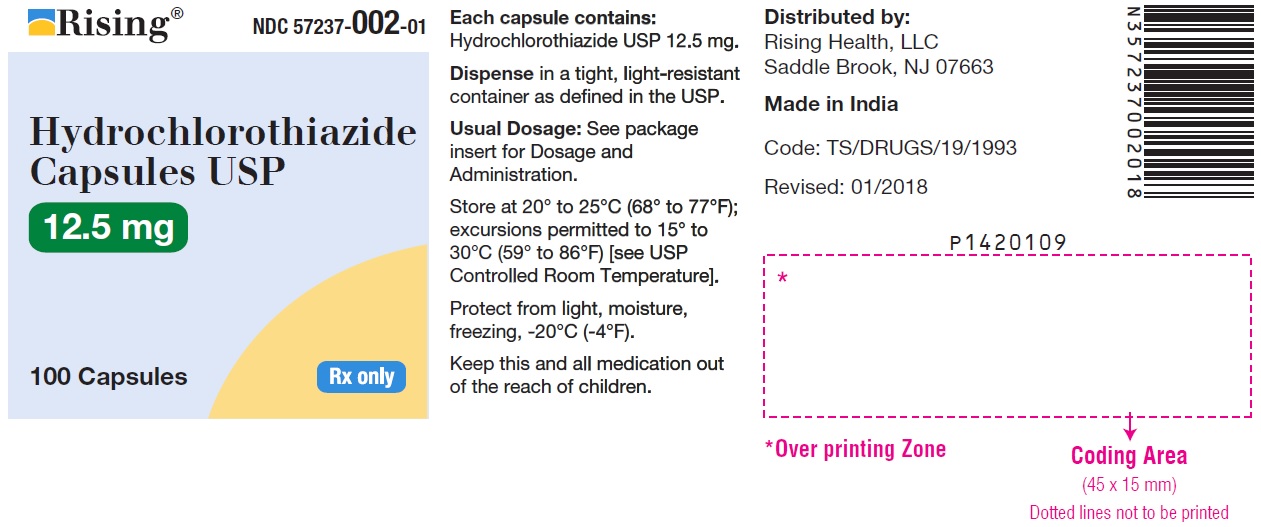
Hydrochlorothiazide is supplied as 12.5 mg capsules for oral use.

Inactive ingredients: microcrystalline cellulose, pregelatinized starch, colloidal silicon dioxide, magnesium stearate, gelatin, titanium dioxide, sodium lauryl sulfate and black iron oxide.

Hydrochlorothiazide Manufacturers

  • Remedyrepack Inc.
    Hydrochlorothiazide | Remedyrepack Inc.
    No Recall

    Hydrochlorothiazide | Remedyrepack Inc.

    Hydrochlorothiazide | Remedyrepack Inc.

    For Control of Hypertension: The adult initial dose of hydrochlorothiazide capsules is one capsule given once daily whether given alone or in combination with other antihypertensives. Total daily doses greater than 50 mg are not recommended.


  • Remedyrepack Inc.
    Hydrochlorothiazide | Remedyrepack Inc.
    No Recall

    Hydrochlorothiazide | Remedyrepack Inc.

    Hydrochlorothiazide | Remedyrepack Inc.

    Therapy should be individualized according to patient response. Use the smallest dosage necessary to achieve the required response.

    Adults:For Edema: The usual adult dosage is 25 to 100 mg daily as a single or divided dose. Many patients with edema respond to intermittent therapy, i.e., administration on alternate days or on 3 to 5 days each week. With an intermittent schedule, excessive response and the resulting undesirable electrolyte imbalance are less likely to occur.

    For Control of Hypertension: The usual initial dose in adults is 25 mg daily given as a single dose. The dose may be increased to 50 mg daily, given as a single or two divided doses. Doses above 50 mg are often associated with marked reductions in serum potassium (see also PRECAUTIONS).

    Patients usually do not require doses in excess of 50 mg of hydrochlorothiazide daily when used concomitantly with other antihypertensive agents.

    Infants and Children: For Diuresis and for Control of Hypertension: The usual pediatric dosage is 0.5 mg to 1 mg per pound (1 to 2 mg/kg) per day in single or two divided doses, not to exceed 37.5 mg per day in infants up to 2 years of age or 100 mg per day in children 2 to 12 years of age. In infants less than 6 months of age, doses up to 1.5 mg per pound (3 mg/kg) per day in two divided doses may be required (See PRECAUTIONS: Pediatric Use).


  • Preferred Pharmaceuticals, Inc.
    Hydrochlorothiazide | Preferred Pharmaceuticals, Inc.
    No Recall

    Hydrochlorothiazide | Preferred Pharmaceuticals, Inc.

    Hydrochlorothiazide | Preferred Pharmaceuticals, Inc.

    Therapy should be individualized according to patient response. Use the smallest dosage necessary to achieve the required response.

    Adults

    For Edema

    The usual adult dosage is 25 to 100 mg daily as a single or divided dose. Many patients with edema respond to intermittent therapy, i.e., administration on alternate days or on 3 to 5 days each week. With an intermittent schedule, excessive response and the resulting undesirable electrolyte imbalance are less likely to occur.

    For Control of Hypertension

    The usual initial dose in adults is 25 mg daily given as a single dose. The dose may be increased to 50 mg daily, given as a single or two divided doses. Doses above 50 mg are often associated with marked reductions in serum potassium (see also PRECAUTIONS).

    Patients usually do not require doses in excess of 50 mg of hydrochlorothiazide daily when used concomitantly with other antihypertensive agents.

    Infants and Children

    For Diuresis and for Control of Hypertension

    The usual pediatric dosage is 0.5 to 1 mg per pound (1 to 2 mg/kg) per day in single or two divided doses, not to exceed 37.5 mg per day in infants up to 2 years of age or 100 mg per day in children 2 to 12 years of age. In infants less than 6 months of age, doses up to 1.5 mg per pound (3 mg/kg) per day in two divided doses may be required. (See PRECAUTIONS, Pediatric Use).

  • Proficient Rx Lp
    Hydrochlorothiazide | Auromedics Pharma Llc
    No Recall

    Hydrochlorothiazide | Auromedics Pharma Llc

    Hydrochlorothiazide | Auromedics Pharma Llc

    [see Indications and Usage (1) and Clinical Pharmacology (12.3)]

    2.1 Community-Acquired Pneumonia

    The recommended dose of azithromycin for injection for the treatment of adult patients with community-acquired pneumonia due to the indicated organisms is 500 mg as a single daily dose by the intravenous route for at least two days. Intravenous therapy should be followed by azithromycin by the oral route at a single, daily dose of 500 mg, administered as two 250 mg tablets to complete a 7- to 10-day course of therapy. The timing of the switch to oral therapy should be done at the discretion of the physician and in accordance with clinical response.

    2.2 Pelvic Inflammatory Disease

    The recommended dose of azithromycin for injection for the treatment of adult patients with pelvic inflammatory disease due to the indicated organisms is 500 mg as a single daily dose by the intravenous route for one or two days. Intravenous therapy should be followed by azithromycin by the oral route at a single, daily dose of 250 mg to complete a 7-day course of therapy. The timing of the switch to oral therapy should be done at the discretion of the physician and in accordance with clinical response.

    2.3 Preparation of the Solution for Intravenous Administration

    The infusate concentration and rate of infusion for azithromycin for injection should be either 1 mg/mL over 3 hours or 2 mg/mL over 1 hour. Azithromycin for injection should not be given as a bolus or as an intramuscular injection.

    Reconstitution

    Prepare the initial solution of azithromycin for injection by adding 4.8 mL of Sterile Water for Injection to the 500 mg vial, and shaking the vial until all of the drug is dissolved. Since azithromycin for injection is supplied under vacuum, it is recommended that a standard 5 mL (non-automated) syringe be used to ensure that the exact amount of 4.8 mL of Sterile Water is dispensed. Each mL of reconstituted solution contains 100 mg azithromycin. Reconstituted solution is stable for 24 hours when stored below 30°C (86°F).

    Parenteral drug products should be inspected visually for particulate matter prior to administration. If particulate matter is evident in reconstituted fluids, the drug solution should be discarded.

    Dilute this solution further prior to administration as instructed below.

    Dilution

    To provide azithromycin over a concentration range of 1 to 2 mg/mL, transfer 5 mL of the 100 mg/mL azithromycin solution into the appropriate amount of any of the diluents listed below:

    Normal Saline (0.9% sodium chloride)
    1/2 Normal Saline (0.45% sodium chloride)
    5% Dextrose in Water
    Lactated Ringer’s Solution
    5% Dextrose in 1/2 Normal Saline (0.45% sodium chloride) with 20 mEq KCl
    5% Dextrose in Lactated Ringer’s Solution
    5% Dextrose in 1/3 Normal Saline (0.3% sodium chloride)
    5% Dextrose in 1/2 Normal Saline (0.45% sodium chloride)
    Normosol®-M in 5% Dextrose
    Normosol®-R in 5% Dextrose


    Final Infusion Solution Concentration (mg/mL)                         Amount of Diluent (mL)
                1 mg/mL                                                                                       500 mL
                2 mg/mL                                                                                        250 mL

    Other intravenous substances, additives, or medications should not be added to azithromycin for injection, or infused simultaneously through the same intravenous line.

    Storage

    When diluted according to the instructions (1 mg/mL to 2 mg/mL), azithromycin for injection is stable for 24 hours at or below room temperature 30°C (86°F), or for 7 days if stored under refrigeration 5°C (41°F).

  • Northwind Pharmaceuticals, Llc
    Hydrochlorothiazide | Northwind Pharmaceuticals, Llc
    No Recall

    Hydrochlorothiazide | Northwind Pharmaceuticals, Llc

    Hydrochlorothiazide | Northwind Pharmaceuticals, Llc

    Therapy should be individualized according to patient response. Use the smallest dosage necessary to achieve the required response.

    Adults:For Edema: The usual adult dosage is 25 to 100 mg daily as a single or divided dose. Many patients with edema respond to intermittent therapy, i.e., administration on alternate days or on 3 to 5 days each week. With an intermittent schedule, excessive response and the resulting undesirable electrolyte imbalance are less likely to occur.

    For Control of Hypertension: The usual initial dose in adults is 25 mg daily given as a single dose. The dose may be increased to 50 mg daily, given as a single or two divided doses. Doses above 50 mg are often associated with marked reductions in serum potassium (see also PRECAUTIONS).

    Patients usually do not require doses in excess of 50 mg of hydrochlorothiazide daily when used concomitantly with other antihypertensive agents.

    Infants and Children: For Diuresis and for Control of Hypertension: The usual pediatric dosage is 0.5 mg to 1 mg per pound (1 to 2 mg/kg) per day in single or two divided doses, not to exceed 37.5 mg per day in infants up to 2 years of age or 100 mg per day in children 2 to 12 years of age. In infants less than 6 months of age, doses up to 1.5 mg per pound (3 mg/kg) per day in two divided doses may be required (See PRECAUTIONS: Pediatric Use).

  • Blenheim Pharmacal, Inc.
    Hydrochlorothiazide | Blenheim Pharmacal, Inc.
    No Recall

    Hydrochlorothiazide | Blenheim Pharmacal, Inc.

    Hydrochlorothiazide | Blenheim Pharmacal, Inc.

    For Control of Hypertension: The adult initial dose of hydrochlorothiazide is one capsule given once daily whether given alone or in combination with other antihypertensives. Total daily doses greater than 50 mg are not recommended.

  • Hydrochlorothiazide | Actavis Pharma, Inc.
    No Recall

    Hydrochlorothiazide | Actavis Pharma, Inc.

    Hydrochlorothiazide | Actavis Pharma, Inc.

    Matzim® LA extended-release tablets are an extended release formulation intended for once-a-day administration.

    Patients controlled on diltiazem alone or in combination with other medications may be switched to Matzim® LA extended-release tablets once-a-day at the nearest equivalent total daily dose. Higher doses of Matzim® LA extended-release tablets once-a-day dosage may be needed in some patients. Patients should be closely monitored. Subsequent titration to higher or lower doses may be necessary and should be initiated as clinically warranted. There is limited general clinical experience with doses above 360 mg, but the safety and efficacy of doses as high as 540 mg have been studied in clinical trials. The incidence of side effects increases as the dose increases with first-degree AV block, dizziness, and sinus bradycardia bearing the strongest relationship to dose.

    The tablet should be swallowed whole and not chewed or crushed.

    Hypertension

    Dosage needs to be adjusted by titration to individual patient needs. When used as monotherapy, reasonable starting doses are 180 to 240 mg once daily, although some patients may respond to lower doses. Maximum antihypertensive effect is usually observed by 14 days of chronic therapy; therefore, dosage adjustments should be scheduled accordingly. The dosage range studied in clinical trials was 120 to 540 mg once daily. The dosage may be titrated to a maximum of 540 mg daily.

    Matzim® LA extended-release tablets should be taken about the same time once each day either in the morning or at bedtime. The time of dosing should be considered when making dose adjustments based on trough effects.

    Angina

    Dosage for the treatment of angina should be individualized based on response. The initial dose of 180 mg once daily may be increased at intervals of 7 to 14 days if adequate response is not obtained. Matzim® LA doses above 360 mg appear to confer no additional benefit.

    Matzim® LA can be given once daily, either in the evening or in the morning.

    Concomitant Use with Other Cardiovascular Agents Sublingual NTG. May be taken as required to abort acute anginal attacks during diltiazem hydrochloride extended-release therapy. Prophylactic Nitrate Therapy. Diltiazem hydrochloride extended-release tablets may be safely coadministered with short-and long-acting nitrates. Beta-blockers. (See WARNINGS and PRECAUTIONS.) Antihypertensives. Matzim® LA has an additive antihypertensive effect when used with other antihypertensive agents. Therefore, the dosage of diltiazem hydrochloride extended-release tablets or the concomitant antihypertensives may need to be adjusted when adding one to the other.
  • Blenheim Pharmacal, Inc.
    Hydrochlorothiazide | Blenheim Pharmacal, Inc.
    No Recall

    Hydrochlorothiazide | Blenheim Pharmacal, Inc.

    Hydrochlorothiazide | Blenheim Pharmacal, Inc.

    Therapy should be individualized according to patient response. Use the smallest dosage necessary to achieve the required response.

    Adults

    For Edema: The usual adult dosage is 25 to 100 mg daily as a single or divided dose. Many patients with edema respond to intermittent therapy, i.e., administration on alternate days or on three to five days each week. With an intermittent schedule, excessive response and the resulting undesirable electrolyte imbalance are less likely to occur.

    For Control of Hypertension: The usual initial dose in adults is 25 mg daily given as a single dose. The dose may be increased to 50 mg daily, given as a single or two divided doses. Doses above 50 mg are often associated with marked reductions in serum potassium (see also PRECAUTIONS).

    Patients usually do not require doses in excess of 50 mg of hydrochlorothiazide daily when used concomitantly with other antihypertensive agents.

    Infants And Children

    For Diuresis And For Control Of Hypertension: The usual pediatric dosage is 0.5 to 1 mg per pound (1 to 2 mg/kg) per day in single or two divided doses, not to exceed 37.5 mg per day in infants up to 2 years of age or 100 mg per day in children 2 to 12 years of age. In infants less than 6 months of age, doses up to 1.5 mg per pound (3 mg/kg) per day in two divided doses may be required (See PRECAUTIONS, Pediatric Use).

  • Heritage Pharmaceuticals Inc.
    Hydrochlorothiazide | Heritage Pharmaceuticals Inc.
    No Recall

    Hydrochlorothiazide | Heritage Pharmaceuticals Inc.

    Hydrochlorothiazide | Heritage Pharmaceuticals Inc.

    Therapy should be individualized according to patient response. Use the smallest dosage necessary to achieve the required response.

    Adults

    For Edema

    The usual adult dosage is 25 to 100 mg daily as a single or divided dose. Many patients with edema respond to intermittent therapy, i.e., administration on alternate days or on three to five days each week. With an intermittent schedule, excessive response and the resulting undesirable electrolyte imbalnce are less likely to occur.

    For Control of Hypertension

    The usual initial dose in adults is 25 mg daily given as a single dose. The dose may be increased to 50 mg daily, given as a single or two divided doses. Doses above 50 mg are often associated with marked reductions in serum potassium (see also PRECAUTIONS).

    Patients usually do not require doses in excess of 50 mg of hydrochlorothiazide daily when used concomitantly with other antihypertensive agents.

    Infants and Children

    For Diuresis and For Control of Hypertension

    The usual pediatric dosage is 0.5 to 1 mg per pound (1 to 2 mg/kg) per day in single or two divided doses, not to exceed 37.5 mg per day in infants up to 2 years of age or 100 mg per day in children 2 to 12 years of age. In infants less than 6 months of age, doses up to 1.5 mg per pound (3 mg/kg) per day in two divided doses may be required. (See PRECAUTIONS, Pediatric Use.)

  • Hydrochlorothiazide | A-s Medication Solutions Llc
    No Recall

    Hydrochlorothiazide | A-s Medication Solutions Llc

    Hydrochlorothiazide | A-s Medication Solutions Llc

    Therapy should be individualized according to patient response. Use the smallest dosage necessary to achieve the required response.

    Adults

    For Edema

    The usual adult dosage is 25 to 100 mg daily as a single or divided dose. Many patients with edema respond to intermittent therapy, i.e., administration on alternate days or on 3 to 5 days each week. With an intermittent schedule, excessive response and the resulting undesirable electrolyte imbalance are less likely to occur.

    For Control of Hypertension

    The usual initial dose in adults is 25 mg daily given as a single dose. The dose may be increased to 50 mg daily, given as a single or two divided doses. Doses above 50 mg are often associated with marked reductions in serum potassium (see also PRECAUTIONS).

    Patients usually do not require doses in excess of 50 mg of hydrochlorothiazide daily when used concomitantly with other antihypertensive agents.

    Infants and Children

    For Diuresis and for Control of Hypertension

    The usual pediatric dosage is 0.5 to 1 mg per pound (1 to 2 mg/kg) per day in single or two divided doses, not to exceed 37.5 mg per day in infants up to 2 years of age or 100 mg per day in children 2 to 12 years of age. In infants less than 6 months of age, doses up to 1.5 mg per pound (3 mg/kg) per day in two divided doses may be required. (See PRECAUTIONS, Pediatric Use).

  • Hydrochlorothiazide | A-s Medication Solutions Llc
    No Recall

    Hydrochlorothiazide | A-s Medication Solutions Llc

    Hydrochlorothiazide | A-s Medication Solutions Llc


    Therapy should be individualized according to patient response. Use the smallest dosage necessary to achieve the required response.

    Adults For Edema


    The usual adult dosage is 25 mg to 100 mg daily as a single or divided dose. Many patients with edema respond to intermittent therapy, i.e., administration on alternate days or on 3 to 5 days each week.  With an intermittent schedule, excessive response and the resulting undesirable electrolyte imbalance are less likely to occur.

    For Control of Hypertension


    The usual initial dose in adults is 25 mg daily given as a single dose. The dose may be increased to 50 mg daily, given as a single or two divided doses. Doses above 50 mg are often associated with marked reductions in serum potassium (see also PRECAUTIONS).

    Patients usually do not require doses in excess of 50 mg of hydrochlorothiazide daily when used concomitantly with other antihypertensive agents.

    Infants and Children For Diuresis and for Control of Hypertension


    The usual pediatric dosage is 0.5 mg to 1 mg per pound (1 to 2 mg/kg) per day in single or two divided doses, not to exceed 37.5 mg per day in infants up to 2 years of age or 100 mg per day in children 2 to 12 years of age. In infants less than 6 months of age, doses up to 1.5 mg per pound (3 mg/kg) per day in two divided doses may be required. (See PRECAUTIONS, Pediatric Use.)

  • Direct Rx
    Hydrochlorothiazide | Direct Rx
    No Recall

    Hydrochlorothiazide | Direct Rx

    Hydrochlorothiazide | Direct Rx

    For Control of Hypertension: The adult initial dose of hydrochlorothiazide capsules is one capsule given once daily whether given alone or in combination with other antihypertensives. Total daily doses greater than 50 mg are not recommended.

  • State Of Florida Doh Central Pharmacy
    Hydrochlorothiazide | State Of Florida Doh Central Pharmacy
    No Recall

    Hydrochlorothiazide | State Of Florida Doh Central Pharmacy

    Hydrochlorothiazide | State Of Florida Doh Central Pharmacy

    For Control of Hypertension: The adult initial dose of hydrochlorothiazide capsules is one capsule given once daily whether given alone or in combination with other antihypertensives. Total daily doses greater than 50 mg are not recommended.

  • Remedyrepack Inc.
    Hydrochlorothiazide | Remedyrepack Inc.
    No Recall

    Hydrochlorothiazide | Remedyrepack Inc.

    Hydrochlorothiazide | Remedyrepack Inc.

    For Control of Hypertension: The adult initial dose of hydrochlorothiazide capsules is one capsule given once daily whether given alone or in combination with other antihypertensives. Total daily doses greater than 50 mg are not recommended.


  • Remedyrepack Inc.
    Hydrochlorothiazide | Remedyrepack Inc.
    No Recall

    Hydrochlorothiazide | Remedyrepack Inc.

    Hydrochlorothiazide | Remedyrepack Inc.

    Therapy should be individualized according to patient response. Use the smallest dosage necessary to achieve the required response.

    Adults:For Edema: The usual adult dosage is 25 to 100 mg daily as a single or divided dose. Many patients with edema respond to intermittent therapy, i.e., administration on alternate days or on 3 to 5 days each week. With an intermittent schedule, excessive response and the resulting undesirable electrolyte imbalance are less likely to occur.

    For Control of Hypertension: The usual initial dose in adults is 25 mg daily given as a single dose. The dose may be increased to 50 mg daily, given as a single or two divided doses. Doses above 50 mg are often associated with marked reductions in serum potassium (see also PRECAUTIONS).

    Patients usually do not require doses in excess of 50 mg of hydrochlorothiazide daily when used concomitantly with other antihypertensive agents.

    Infants and Children: For Diuresis and for Control of Hypertension: The usual pediatric dosage is 0.5 mg to 1 mg per pound (1 to 2 mg/kg) per day in single or two divided doses, not to exceed 37.5 mg per day in infants up to 2 years of age or 100 mg per day in children 2 to 12 years of age. In infants less than 6 months of age, doses up to 1.5 mg per pound (3 mg/kg) per day in two divided doses may be required (See PRECAUTIONS: Pediatric Use).


  • Vensun Pharmaceuticals, Inc.
    Hydrochlorothiazide | Vensun Pharmaceuticals, Inc.
    No Recall

    Hydrochlorothiazide | Vensun Pharmaceuticals, Inc.

    Hydrochlorothiazide | Vensun Pharmaceuticals, Inc.

    Therapy should be individualized according to patient response. Use the smallest dosage necessary to achieve the required response.

    Adults:
    For Edema:

    The usual adult dosage is 25 mg to 100 mg daily as a single or divided dose. Many patients with edema respond to intermittent therapy, i.e., administration on alternate days or on three to five days each week. With an intermittent schedule, excessive response and the resulting undesirable electrolyte imbalance are less likely to occur.

    For Control of Hypertension:

    The usual initial dose in adults is 25 mg daily given as a single dose. The dose may be increased to 50 mg daily, given as a single or two divided doses. Doses above 50 mg are often associated with marked reductions in serum potassium (see also PRECAUTIONS).

    Patients usually do not require doses in excess of 50 mg of hydrochlorothiazide daily when used concomitantly with other antihypertensive agents.

    Infants and Children:
    For Diuresis and For Control of Hypertension:

    The usual pediatric dosage is 0.5 to 1 mg per pound (1 to 2 mg/kg) per day in single or two divided doses, not to exceed 37.5 mg per day in infants up to 2 years of age or 100 mg per day in children 2 to 12 years of age. In infants less than 6 months of age, doses up to 1.5 mg per pound (3 mg/kg) per day in two divided doses may be required. (See PRECAUTIONS: Pediatric Use).

  • Caraco Pharmaceutical Laboratories, Ltd.
    Hydrochlorothiazide | Caraco Pharmaceutical Laboratories, Ltd.
    No Recall

    Hydrochlorothiazide | Caraco Pharmaceutical Laboratories, Ltd.

    Hydrochlorothiazide | Caraco Pharmaceutical Laboratories, Ltd.

    Therapy should be individualized according to patient response. Use the smallest dosage necessary to achieve the required response.

    Adults

    For Edema

    The usual adult dosage is 25 to 100 mg daily as a single or divided dose. Many patients with edema respond to intermittent therapy, i.e., administration on alternate days or on three to five days each week. With an intermittent schedule, excessive response and the resulting undesirable electrolyte imbalance are less likely to occur.

    For Control of Hypertension

    The usual initial dose in adults is 25 mg daily given as a single dose. The dose may be increased to 50 mg daily, given as a single or two divided doses. Doses above 50 mg are often associated with marked reductions in serum potassium (see also PRECAUTIONS).

    Patients usually do not require doses in excess of 50 mg of hydrochlorothiazide daily when used concomitantly with other antihypertensive agents.

    Infants and Children

    For Diuresis and For Control of Hypertension

    The usual pediatric dosage is 0.5 to 1 mg per pound (1 to 2 mg/kg) per day in single or two divided doses, not to exceed 37.5 mg per day in infants up to 2 years of age or 100 mg per day in children 2 to 12 years of age. In infants less than 6 months of age, doses up to 1.5 mg per pound (3 mg/kg) per day in two divided doses may be required. (See PRECAUTIONS, Pediatric Use)

  • Hydrochlorothiazide | Actavis Elizabeth Llc
    No Recall

    Hydrochlorothiazide | Actavis Elizabeth Llc

    Hydrochlorothiazide | Actavis Elizabeth Llc

    Therapy should be individualized according to patient response. Use the smallest dosage necessary to achieve the required response.

    Adults

    For Edema - The usual adult dosage is 25 to 100 mg daily as a single or divided dose. Many patients with edema respond to intermittent therapy, i.e., administration on alternate days or on three to five days each week. With an intermittent schedule, excessive response and the resulting undesirable electrolyte imbalance are less likely to occur.

    For Control Of Hypertension - The usual initial dose in adults is 25 mg daily given as a single dose. The dose may be increased to 50 mg daily, given as a single or two divided doses. Doses above 50 mg are often associated with marked reductions in serum potassium (see also PRECAUTIONS).

    Patients usually do not require doses in excess of 50 mg of hydrochlorothiazide daily when used concomitantly with other antihypertensive agents.

    Infants And Children

    For Diuresis And For Control Of Hypertension- The usual pediatric dosage is 0.5 to 1 mg per pound (1 to 2 mg/kg) per day in single or two divided doses, not to exceed 37.5 mg per day in infants up to 2 years of age or 100 mg per day in children 2 to 12 years of age. In infants less than 6 months of age, doses up to 1.5 mg per pound (3 mg/kg) per day in two divided doses may be required. (See PRECAUTIONS, Pediatric Use).

  • Hydrochlorothiazide | Ipca Laboratories Limited
    No Recall

    Hydrochlorothiazide | Ipca Laboratories Limited

    Hydrochlorothiazide | Ipca Laboratories Limited

    For Control of Hypertension: The adult initial dose of hydrochlorothiazide capsules is one capsule given once daily whether given alone or in combination with other antihypertensives. Total daily doses greater than 50 mg are not recommended.

  • Heritage Pharmaceuticals Inc
    Hydrochlorothiazide | Heritage Pharmaceuticals Inc
    No Recall

    Hydrochlorothiazide | Heritage Pharmaceuticals Inc

    Hydrochlorothiazide | Heritage Pharmaceuticals Inc

    For Control of Hypertension: The adult initial dose of hydrochlorothiazide capsules is one capsule given once daily whether given alone or in combination with other antihypertensives. Total daily doses greater than 50 mg are not recommended.

  • Hydrochlorothiazide | Apotex Corp.
    No Recall

    Hydrochlorothiazide | Apotex Corp.

    Hydrochlorothiazide | Apotex Corp.

    Therapy should be individualized according to patient response. Use the smallest dosage necessary to achieve the required response.

    Adults

    For Edema

    The usual adult dosage is 25 to 100 mg daily as a single or divided dose. Many patients with edema respond to intermittent therapy, i.e., administration on alternate days or on three to five days each week. With an intermittent schedule, excessive response and the resulting undesirable electrolyte imbalance are less likely to occur.

    For Control of Hypertension

    The usual initial dose in adults is 25 mg daily given as a single dose. The dose may be increased to 50 mg daily, given as a single or two divided doses. Doses above 50 mg are often associated with marked reductions in serum potassium (see also PRECAUTIONS). Patients usually do not require doses in excess of 50 mg of hydrochlorothiazide daily when used concomitantly with other antihypertensive agents.

    Infants and Children

    For Diuresis and For Control of Hypertension

    The usual pediatric dosage is 0.5 to 1 mg per pound (1 to 2 mg/kg) per day in single or two divided doses, not to exceed 37.5 mg per day in infants up to 2 years of age or 100 mg per day in children 2 to 12 years of age. In infants less than 6 months of age, doses up to 1.5 mg per pound (3 mg/kg) per day in two divided doses may be required. (See PRECAUTIONS, Pediatric Use)

  • Contract Pharmacy Services-pa
    Hydrochlorothiazide | Contract Pharmacy Services-pa
    No Recall

    Hydrochlorothiazide | Contract Pharmacy Services-pa

    Hydrochlorothiazide | Contract Pharmacy Services-pa

    Therapy should be individualized according to patient response. Use the smallest dosage necessary to achieve the required response.

    Adults For Edema

    The usual adult dosage is 25 to 100 mg daily as a single or divided dose. Many patients with edema respond to intermittent therapy, i.e., administration on alternate days or on three to five days each week. With an intermittent schedule, excessive response and the resulting undesirable electrolyte imbalance are less likely to occur.

    For Control of Hypertension

    The usual initial dose in adults is 25 mg daily given as a single dose. The dose may be increased to 50 mg daily, given as a single or two divided doses. Doses above 50 mg are often associated with marked reductions in serum potassium (see also PRECAUTIONS).

    Patients usually do not require doses in excess of 50 mg of hydrochlorothiazide daily when used concomitantly with other antihypertensive agents.

    Infants and Children For Diuresis and For Control of Hypertension

    The usual pediatric dosage is 0.5 to 1 mg per pound (1 to 2 mg/kg) per day in single or two divided doses, not to exceed 37.5 mg per day in infants up to 2 years of age or 100 mg per day in children 2 to 12 years of age. In infants less than 6 months of age, doses up to 1.5 mg per pound (3 mg/kg) per day in two divided doses may be required (see PRECAUTIONS, Pediatric Use).

  • Apotheca, Inc.
    Hydrochlorothiazide | Apotheca, Inc.
    No Recall

    Hydrochlorothiazide | Apotheca, Inc.

    Hydrochlorothiazide | Apotheca, Inc.

    Therapy should be individualized according to patient response. Use the smallest dosage necessary to achieve the required response.

    Adults

    For Edema

    The usual adult dosage is 25 to 100 mg daily as a single or divided dose. Many patients with edema respond to intermittent therapy, i.e., administration on alternate days or on three to five days each week. With an intermittent schedule, excessive response and the resulting undesirable electrolyte imbalance are less likely to occur.

    For Control of Hypertension

    The usual initial dose in adults is 25 mg daily given as a single dose. The dose may be increased to 50 mg daily, given as a single or two divided doses. Doses above 50 mg are often associated with marked reductions in serum potassium (see also PRECAUTIONS).

    Patients usually do not require doses in excess of 50 mg of hydrochlorothiazide daily when used concomitantly with other antihypertensive agents.


    Infants and Children

    For Diuresis and For Control of Hypertension

    The usual pediatric dosage is 0.5 to 1 mg per pound (1 to 2 mg/kg) per day in single or two divided doses, not to exceed 37.5 mg per day in infants up to 2 years of age or 100 mg per day in children 2 to 12 years of age. In infants less than 6 months of age, doses up to 1.5 mg per pound (3 mg/kg) per day in two divided doses may be required. (See PRECAUTIONS, Pediatric Use)


  • Stat Rx Usa Llc
    Hydrochlorothiazide | Stat Rx Usa Llc
    No Recall

    Hydrochlorothiazide | Stat Rx Usa Llc

    Hydrochlorothiazide | Stat Rx Usa Llc

    Therapy should be individualized according to patient response. Use the smallest dosage necessary to achieve the required response.

    Adults For Edema

    The usual adult dosage is 25 to 100 mg daily as a single or divided dose. Many patients with edema respond to intermittent therapy, i.e., administration on alternate days or on three to five days each week. With an intermittent schedule, excessive response and the resulting undesirable electrolyte imbalance are less likely to occur.

    For Control of Hypertension

    The usual initial dose in adults is 25 mg daily given as a single dose. The dose may be increased to 50 mg daily, given as a single or two divided doses. Doses above 50 mg are often associated with marked reductions in serum potassium (see also PRECAUTIONS).

    Patients usually do not require doses in excess of 50 mg of hydrochlorothiazide daily when used concomitantly with other antihypertensive agents.

    Infants and Children For Diuresis and For Control of Hypertension

    The usual pediatric dosage is 0.5 to 1 mg per pound (1 to 2 mg/kg) per day in single or two divided doses, not to exceed 37.5 mg per day in infants up to 2 years of age or 100 mg per day in children 2 to 12 years of age. In infants less than 6 months of age, doses up to 1.5 mg per pound (3 mg/kg) per day in two divided doses may be required (see PRECAUTIONS, Pediatric Use).

  • Hydrochlorothiazide | Kaiser Foundation Hospitals
    No Recall

    Hydrochlorothiazide | Kaiser Foundation Hospitals

    Hydrochlorothiazide | Kaiser Foundation Hospitals

    Therapy should be individualized according to patient response. Use the smallest dosage necessary to achieve the required response.

    Adults

    For Edema

    The usual adult dosage is 25 to 100 mg daily as a single or divided dose. Many patients with edema respond to intermittent therapy, i.e., administration on alternate days or on three to five days each week. With an intermittent schedule, excessive response and the resulting undesirable electrolyte imbalance are less likely to occur.

    For Control of Hypertension

    The usual initial dose in adults is 25 mg daily given as a single dose. The dose may be increased to 50 mg daily, given as a single or two divided doses. Doses above 50 mg are often associated with marked reductions in serum potassium (see also PRECAUTIONS).

    Patients usually do not require doses in excess of 50 mg of hydrochlorothiazide daily when used concomitantly with other antihypertensive agents.

    Infants and Children

    For Diuresis and For Control of Hypertension

    The usual pediatric dosage is 0.5 to 1 mg per pound (1 to 2 mg/kg) per day in single or two divided doses, not to exceed 37.5 mg per day in infants up to 2 years of age or 100 mg per day in children 2 to 12 years of age. In infants less than 6 months of age, doses up to 1.5 mg per pound (3 mg/kg) per day in two divided doses may be required. (See PRECAUTIONS, Pediatric Use)

  • Contract Pharmacy Services-pa
    Hydrochlorothiazide | Contract Pharmacy Services-pa
    No Recall

    Hydrochlorothiazide | Contract Pharmacy Services-pa

    Hydrochlorothiazide | Contract Pharmacy Services-pa

    Therapy should be individualized according to patient response. Use the smallest dosage necessary to achieve the required response.

    Adults For Edema

    The usual adult dosage is 25 to 100 mg daily as a single or divided dose. Many patients with edema respond to intermittent therapy, i.e., administration on alternate days or on three to five days each week. With an intermittent schedule, excessive response and the resulting undesirable electrolyte imbalance are less likely to occur.

    For Control of Hypertension

    The usual initial dose in adults is 25 mg daily given as a single dose. The dose may be increased to 50 mg daily, given as a single or two divided doses. Doses above 50 mg are often associated with marked reductions in serum potassium (see also PRECAUTIONS).

    Patients usually do not require doses in excess of 50 mg of hydrochlorothiazide daily when used concomitantly with other antihypertensive agents.

    Infants and Children For Diuresis and For Control of Hypertension

    The usual pediatric dosage is 0.5 to 1 mg per pound (1 to 2 mg/kg) per day in single or two divided doses, not to exceed 37.5 mg per day in infants up to 2 years of age or 100 mg per day in children 2 to 12 years of age. In infants less than 6 months of age, doses up to 1.5 mg per pound (3 mg/kg) per day in two divided doses may be required (see PRECAUTIONS, Pediatric Use).

  • State Of Florida Doh Central Pharmacy
    Hydrochlorothiazide | State Of Florida Doh Central Pharmacy
    No Recall

    Hydrochlorothiazide | State Of Florida Doh Central Pharmacy

    Hydrochlorothiazide | State Of Florida Doh Central Pharmacy

    For Control of Hypertension: The adult initial dose of hydrochloro­thiazide is one capsule given once daily whether given alone or in combination with other antihypertensives. Total daily doses greater than 50 mg are not recommended.
  • State Of Florida Doh Central Pharmacy
    Hydrochlorothiazide | State Of Florida Doh Central Pharmacy
    No Recall

    Hydrochlorothiazide | State Of Florida Doh Central Pharmacy

    Hydrochlorothiazide | State Of Florida Doh Central Pharmacy

    Therapy should be individualized according to patient response. Use the smallest dosage necessary to achieve the required response.

    Adults For Edema

    The usual adult dosage is 25 to 100 mg daily as a single or divided dose. Many patients with edema respond to intermittent therapy, i.e., administration on alternate days or on three to five days each week. With an intermittent schedule, excessive response and the resulting undesirable electrolyte imbalance are less likely to occur.

    For Control Of Hypertension

    The usual initial dose in adults is 25 mg daily given as a single dose. The dose may be increased to 50 mg daily, given as a single or two divided doses. Doses above 50 mg are often associated with marked reductions in serum potassium (see also PRECAUTIONS).

    Patients usually do not require doses in excess of 50 mg of hydrochlorothiazide daily when used concomitantly with other antihypertensive agents.

    Infants and Children For Diuresis and For Control of Hypertension

    The usual pediatric dosage is 0.5 to 1 mg per pound (1 to 2 mg/kg) per day in single or two divided doses, not to exceed 37.5 mg per day in infants up to 2 years of age or 100 mg per day in children 2 to 12 years of age. In infants less than 6 months of age, doses up to 1.5 mg per pound (3 mg/kg) per day in two divided doses may be required.

  • State Of Florida Doh Central Pharmacy
    Hydrochlorothiazide | State Of Florida Doh Central Pharmacy
    No Recall

    Hydrochlorothiazide | State Of Florida Doh Central Pharmacy

    Hydrochlorothiazide | State Of Florida Doh Central Pharmacy
    For Control of Hypertension:

    The adult initial dose of hydrochlorothiazide is one capsule given once daily whether given alone or in combination with other antihypertensives. Total daily doses greater than 50 mg are not recommended.

    For Control of Hypertension:

    The adult initial dose of hydrochlorothiazide is one capsule given once daily whether given alone or in combination with other antihypertensives. Total daily doses greater than 50 mg are not recommended.

  • Stat Rx Usa Llc
    Hydrochlorothiazide | Stat Rx Usa Llc
    No Recall

    Hydrochlorothiazide | Stat Rx Usa Llc

    Hydrochlorothiazide | Stat Rx Usa Llc

    For Control of Hypertension: The adult initial dose of hydrochlorothiazide is one capsule given once daily whether given alone or in combination with other antihypertensives. Total daily doses greater than 50 mg are not recommended.

  • Hydrochlorothiazide | Rebel Distributors Corp
    No Recall

    Hydrochlorothiazide | Rebel Distributors Corp

    Hydrochlorothiazide | Rebel Distributors Corp

    Therapy should be individualized according to patient response. Use the smallest dosage necessary to achieve the required response.

    Adults

    For Edema - The usual adult dosage is 25 to 100 mg daily as a single or divided dose. Many patients with edema respond to intermittent therapy, i.e., administration on alternate days or on three to five days each week. With an intermittent schedule, excessive response and the resulting undesirable electrolyte imbalance are less likely to occur.

    For Control Of Hypertension - The usual initial dose in adults is 25 mg daily given as a single dose. The dose may be increased to 50 mg daily, given as a single or two divided doses. Doses above 50 mg are often associated with marked reductions in serum potassium (see also PRECAUTIONS).

    Patients usually do not require doses in excess of 50 mg of hydrochlorothiazide daily when used concomitantly with other antihypertensive agents.

    Infants And Children

    For Diuresis And For Control Of Hypertension- The usual pediatric dosage is 0.5 to 1 mg per pound (1 to 2 mg/kg) per day in single or two divided doses, not to exceed 37.5 mg per day in infants up to 2 years of age or 100 mg per day in children 2 to 12 years of age. In infants less than 6 months of age, doses up to 1.5 mg per pound (3 mg/kg) per day in two divided doses may be required. (See PRECAUTIONS, Pediatric Use).

  • Contract Pharmacy Services-pa
    Hydrochlorothiazide | Contract Pharmacy Services-pa
    No Recall

    Hydrochlorothiazide | Contract Pharmacy Services-pa

    Hydrochlorothiazide | Contract Pharmacy Services-pa

    Therapy should be individualized according to patient response. Use the smallest dosage necessary to achieve the required response.

    Adults For Edema

    The usual adult dosage is 25 to 100 mg daily as a single or divided dose. Many patients with edema respond to intermittent therapy, i.e., administration on alternate days or on three to five days each week. With an intermittent schedule, excessive response and the resulting undesirable electrolyte imbalance are less likely to occur.

    For Control Of Hypertension

    The usual initial dose in adults is 25 mg daily given as a single dose. The dose may be increased to 50 mg daily, given as a single or two divided doses. Doses above 50 mg are often associated with marked reductions in serum potassium (see also PRECAUTIONS).

    Patients usually do not require doses in excess of 50 mg of hydrochlorothiazide daily when used concomitantly with other antihypertensive agents.

    Infants and Children For Diuresis and For Control of Hypertension

    The usual pediatric dosage is 0.5 to 1 mg per pound (1 to 2 mg/kg) per day in single or two divided doses, not to exceed 37.5 mg per day in infants up to 2 years of age or 100 mg per day in children 2 to 12 years of age. In infants less than 6 months of age, doses up to 1.5 mg per pound (3 mg/kg) per day in two divided doses may be required.

  • Ncs Healthcare Of Ky, Inc Dba Vangard Labs
    Hydrochlorothiazide | Valeant Pharmaceuticals North America Llc
    No Recall

    Hydrochlorothiazide | Valeant Pharmaceuticals North America Llc

    Hydrochlorothiazide | Valeant Pharmaceuticals North America Llc

    In the treatment of interdigital tinea pedis, ERTACZO cream, 2%, should be applied twice daily for 4 weeks. Sufficient amount of ERTACZO cream, 2%, should be applied to cover both the affected areas between the toes and the immediately surrounding healthy skin of patients with interdigital tinea pedis.

    Not for ophthalmic, oral, or intravaginal use.

  • Physicians Total Care, Inc.
    Hydrochlorothiazide | Physicians Total Care, Inc.
    No Recall

    Hydrochlorothiazide | Physicians Total Care, Inc.

    Hydrochlorothiazide | Physicians Total Care, Inc.
    For Control of Hypertension

    The adult initial dose of hydrochlorothiazide capsules is one capsule given once daily whether given alone or in combination with other antihypertensives. Total daily doses greater than 50 mg are not recommended.

  • Heritage Pharmaceuticals Inc.
    Hydrochlorothiazide | Heritage Pharmaceuticals Inc.
    No Recall

    Hydrochlorothiazide | Heritage Pharmaceuticals Inc.

    Hydrochlorothiazide | Heritage Pharmaceuticals Inc.

    Therapy should be individualized according to patient response. Use the smallest dosage necessary to achieve the required response.

    Adults

    For Edema

    The usual adult dosage is 25 to 100 mg daily as a single or divided dose. Many patients with edema respond to intermittent therapy, i.e., administration on alternate days or on three to five days each week. With an intermittent schedule, excessive response and the resulting undesirable electrolyte imbalance are less likely to occur.

    For Control of Hypertension

    The usual initial dose in adults is 25 mg daily given as a single dose. The dose may be increased to 50 mg daily, given as a single or two divided doses. Doses above 50 mg are often associated with marked reductions in serum potassium (see also PRECAUTIONS). Patients usually do not require doses in excess of 50 mg of hydrochlorothiazide daily when used concomitantly with other antihypertensive agents.

    Infants and Children

    For Diuresis and For Control of Hypertension

    The usual pediatric dosage is 0.5 to 1 mg per pound (1 to 2 mg/kg) per day in single or two divided doses, not to exceed 37.5 mg per day in infants up to 2 years of age or 100 mg per day in children 2 to 12 years of age. In infants less than 6 months of age, doses up to 1.5 mg per pound (3 mg/kg) per day in two divided doses may be required. (See PRECAUTIONS, Pediatric Use)

  • Northstar Rxllc
    Hydrochlorothiazide | Northstar Rxllc
    No Recall

    Hydrochlorothiazide | Northstar Rxllc

    Hydrochlorothiazide | Northstar Rxllc

    For Control of Hypertension: The adult initial dose of hydrochlorothiazide capsules is one capsule given once daily whether given alone or in combination with other antihypertensives. Total daily doses greater than 50 mg are not recommended.

  • Remedyrepack Inc.
    Hydrochlorothiazide | Remedyrepack Inc.
    No Recall

    Hydrochlorothiazide | Remedyrepack Inc.

    Hydrochlorothiazide | Remedyrepack Inc.
    DOSAGE AND ADMINISTRATION
    Therapy should be individualized according to patient response. Use the smallest dosage necessary to achieve the required response.

    Adults
    For Edema
    The usual adult dosage is 25 to 100 mg daily as a single or divided dose. Many patients with edema respond to intermittent therapy, i.e., administration on alternate days or on three to five days each week. With an intermittent schedule, excessive response and the resulting undesirable electrolyte imbalance are less likely to occur.
    For Control of Hypertension
    The usual initial dose in adults is 25 mg daily given as a single dose. The dose may be increased to 50 mg daily, given as a single or two divided doses. Doses above 50 mg are often associated with marked reductions in serum potassium (see also PRECAUTIONS).
    Patients usually do not require doses in excess of 50 mg of hydrochlorothiazide daily when used concomitantly with other antihypertensive agents.

    Infants and Children
    For Diuresis and For Control of Hypertension
    The usual pediatric dosage is 0.5 to 1 mg per pound (1 to 2 mg/kg) per day in single or two divided doses, not to exceed 37.5 mg per day in infants up to 2 years of age or 100 mg per day in children 2 to 12 years of age. In infants less than 6 months of age, doses up to 1.5 mg per pound (3 mg/kg) per day in two divided doses may be required. (See PRECAUTIONS, Pediatric Use)

  • Remedyrepack Inc.
    Hydrochlorothiazide | Remedyrepack Inc.
    No Recall

    Hydrochlorothiazide | Remedyrepack Inc.

    Hydrochlorothiazide | Remedyrepack Inc.
    For Control of Hypertension: The adult initial dose of hydrochlorothiazide capsules is one capsule given once daily whether given alone or in combination with other antihypertensives. Total daily doses greater than 50 mg are not recommended.

  • Remedyrepack Inc.
    Hydrochlorothiazide | Remedyrepack Inc.
    No Recall

    Hydrochlorothiazide | Remedyrepack Inc.

    Hydrochlorothiazide | Remedyrepack Inc.


    Therapy should be individualized according to patient response. Use the smallest dosage necessary to achieve the required response.

    Adults For Edema

    The usual adult dosage is 25 to 100 mg daily as a single or divided dose. Many patients with edema respond to intermittent therapy, i.e., administration on alternate days or on three to five days each week. With an intermittent schedule, excessive response and the resulting undesirable electrolyte imbalance are less likely to occur.

    For Control Of Hypertension

    The usual initial dose in adults is 25 mg daily given as a single dose. The dose may be increased to 50 mg daily, given as a single or two divided doses. Doses above 50 mg are often associated with marked reductions in serum potassium (see also PRECAUTIONS).

    Patients usually do not require doses in excess of 50 mg of hydrochlorothiazide daily when used concomitantly with other antihypertensive agents.

    Infants and Children For Diuresis and For Control of Hypertension

    The usual pediatric dosage is 0.5 to 1 mg per pound (1 to 2 mg/kg) per day in single or two divided doses, not to exceed 37.5 mg per day in infants up to 2 years of age or 100 mg per day in children 2 to 12 years of age. In infants less than 6 months of age, doses up to 1.5 mg per pound (3 mg/kg) per day in two divided doses may be required.


  • West-ward Pharmaceutical Corp
    Hydrochlorothiazide | West-ward Pharmaceutical Corp
    No Recall

    Hydrochlorothiazide | West-ward Pharmaceutical Corp

    Hydrochlorothiazide | West-ward Pharmaceutical Corp
    For Control of Hypertension

    The adult initial dose of hydrochlorothiazide is one capsule given once daily whether given alone or in combination with other antihypertensives. Total daily doses greater than 50 mg are not recommended.

  • Redpharm Drug Inc.
    Hydrochlorothiazide | Redpharm Drug Inc.
    No Recall

    Hydrochlorothiazide | Redpharm Drug Inc.

    Hydrochlorothiazide | Redpharm Drug Inc.
    For Control of Hypertension:

    The adult initial dose of hydrochlorothiazide is one capsule given once daily whether given alone or in combination with other antihypertensives. Total daily doses greater than 50 mg are not recommended.

    For Control of Hypertension:

    The adult initial dose of hydrochlorothiazide is one capsule given once daily whether given alone or in combination with other antihypertensives. Total daily doses greater than 50 mg are not recommended.

  • Remedyrepack Inc.
    Hydrochlorothiazide | Remedyrepack Inc.
    No Recall

    Hydrochlorothiazide | Remedyrepack Inc.

    Hydrochlorothiazide | Remedyrepack Inc.
    Therapy should be individualized according to patient response. Use the smallest dosage necessary to achieve the required response.

    Adults
    For Edema
    The usual adult dosage is 25 to 100 mg daily as a single or divided dose. Many patients with edema respond to intermittent therapy, i.e., administration on alternate days or on three to five days each week. With an intermittent schedule, excessive response and the resulting undesirable electrolyte imbalance are less likely to occur.
    For Control of Hypertension
    The usual initial dose in adults is 25 mg daily given as a single dose. The dose may be increased to 50 mg daily, given as a single or two divided doses. Doses above 50 mg are often associated with marked reductions in serum potassium (see also PRECAUTIONS).
    Patients usually do not require doses in excess of 50 mg of hydrochlorothiazide daily when used concomitantly with other antihypertensive agents.

    Infants and Children
    For Diuresis and for Control of Hypertension
    The usual pediatric dosage is 0.5 to 1 mg per pound (1 to 2 mg/kg) per day in single or two divided doses, not to exceed 37.5 mg per day in infants up to 2 years of age or 100 mg per day in children 2 to 12 years of age. In infants less than 6 months of age, doses up to 1.5 mg per pound (3 mg/kg) per day in two divided doses may be required. (See PRECAUTIONS, Pediatric Use).

  • Lannett Company, Inc.
    Hydrochlorothiazide | Lannett Company, Inc.
    No Recall

    Hydrochlorothiazide | Lannett Company, Inc.

    Hydrochlorothiazide | Lannett Company, Inc.

    Therapy should be individualized according to patient response. Use the smallest dosage necessary to achieve the required response.

    Adults

    For Edema

    The usual adult dosage is 25 to 100 mg daily as a single or divided dose. Many patients with edema respond to intermittent therapy, i.e., administration on alternate days or on three to five days each week. With an intermittent schedule, excessive response and the resulting undesirable electrolyte imbalance are less likely to occur.

    For Control of Hypertension

    The usual initial dose in adults is 25 mg daily given as a single dose. The dose may be increased to 50 mg daily, given as a single or two divided doses. Doses above 50 mg are often associated with marked reductions in serum potassium (see also PRECAUTIONS).

    Patients usually do not require doses in excess of 50 mg of hydrochlorothiazide daily when used concomitantly with other antihypertensive agents.

    Infants and Children

    For Diuresis and For Control of Hypertension

    The usual pediatric dosage is 0.5 to 1 mg per pound (1 to 2 mg/kg) per day in single or two divided doses, not to exceed 37.5 mg per day in infants up to 2 years of age or 100 mg per day in children 2 to 12 years of age. In infants less than 6 months of age, doses up to 1.5 mg per pound (3 mg/kg) per day in two divided doses may be required. (See PRECAUTIONS, Pediatric Use)

  • Pd-rx Pharmaceuticals, Inc.
    Hydrochlorothiazide | Zydus Pharmaceuticals (usa) Inc.
    No Recall

    Hydrochlorothiazide | Zydus Pharmaceuticals (usa) Inc.

    Hydrochlorothiazide | Zydus Pharmaceuticals (usa) Inc.
    2.1 Adults

    The usual initial antihypertensive oral dose of amlodipine besylate tablets is 5 mg once daily, and the maximum dose is 10 mg once daily.

    Small, fragile, or elderly patients, or patients with hepatic insufficiency may be started on 2.5 mg once daily and this dose may be used when adding amlodipine besylate tablets to other antihypertensive therapy.

    Adjust dosage according to blood pressure goals. In general, wait 7 to 14 days between titration steps. Titrate more rapidly, however, if clinically warranted, provided the patient is assessed frequently.

    Angina: The recommended dose for chronic stable or vasospastic angina is 5 to 10 mg, with the lower dose suggested in the elderly and in patients with hepatic insufficiency. Most patients will require 10 mg for adequate effect.

    Coronary artery disease: The recommended dose range for patients with coronary artery disease is 5 to 10 mg once daily. In clinical studies, the majority of patients required 10 mg [see CLINICAL STUDIES (14.4)].

    2.2 Children

    The effective antihypertensive oral dose in pediatric patients ages 6 to 17 years is 2.5 mg to 5 mg once daily. Doses in excess of 5 mg daily have not been studied in pediatric patients [see CLINICAL PHARMACOLOGY (12.4), CLINICAL STUDIES (14.1)].

  • Remedyrepack Inc.
    Hydrochlorothiazide | Remedyrepack Inc.
    No Recall

    Hydrochlorothiazide | Remedyrepack Inc.

    Hydrochlorothiazide | Remedyrepack Inc.

    There is currently no dosage information available for this product. We apologize for any inconvenience.

  • St Marys Medical Park Pharmacy
    Hydrochlorothiazide | St Marys Medical Park Pharmacy
    No Recall

    Hydrochlorothiazide | St Marys Medical Park Pharmacy

    Hydrochlorothiazide | St Marys Medical Park Pharmacy

    Therapy should be individualized according to patient response. Use the smallest dosage necessary to achieve the required response.

    Adults

    For Edema

    The usual adult dosage is 25 to 100 mg daily as a single or divided dose. Many patients with edema respond to intermittent therapy, i.e., administration on alternate days or on three to five days each week. With an intermittent schedule, excessive response and the resulting undesirable electrolyte imbalance are less likely to occur.

    For Control of Hypertension

    The usual initial dose in adults is 25 mg daily given as a single dose. The dose may be increased to 50 mg daily, given as a single or two divided doses. Doses above 50 mg are often associated with marked reductions in serum potassium (see also PRECAUTIONS).

    Patients usually do not require doses in excess of 50 mg of hydrochlorothiazide daily when used concomitantly with other antihypertensive agents.

    Infants and Children

    For Diuresis and For Control of Hypertension

    The usual pediatric dosage is 0.5 to 1 mg per pound (1 to 2 mg/kg) per day in single or two divided doses, not to exceed 37.5 mg per day in infants up to 2 years of age or 100 mg per day in children 2 to 12 years of age. In infants less than 6 months of age, doses up to 1.5 mg per pound (3 mg/kg) per day in two divided doses may be required. (See PRECAUTIONS, Pediatric Use)

  • Hydrochlorothiazide | Rebel Distributors Corp
    No Recall

    Hydrochlorothiazide | Rebel Distributors Corp

    Hydrochlorothiazide | Rebel Distributors Corp

    Therapy should be individualized according to patient response. Use the smallest dosage necessary to achieve the required response.

    Adults For Edema

    The usual adult dosage is 25 to 100 mg daily as a single or divided dose. Many patients with edema respond to intermittent therapy, i.e., administration on alternate days or on three to five days each week. With an intermittent schedule, excessive response and the resulting undesirable electrolyte imbalance are less likely to occur.

    For Control Of Hypertension

    The usual initial dose in adults is 25 mg daily given as a single dose. The dose may be increased to 50 mg daily, given as a single or two divided doses. Doses above 50 mg are often associated with marked reductions in serum potassium (see also PRECAUTIONS).

    Patients usually do not require doses in excess of 50 mg of hydrochlorothiazide daily when used concomitantly with other antihypertensive agents.

    Infants and Children For Diuresis and For Control of Hypertension

    The usual pediatric dosage is 0.5 to 1 mg per pound (1 to 2 mg/kg) per day in single or two divided doses, not to exceed 37.5 mg per day in infants up to 2 years of age or 100 mg per day in children 2 to 12 years of age. In infants less than 6 months of age, doses up to 1.5 mg per pound (3 mg/kg) per day in two divided doses may be required.

  • Remedyrepack Inc.
    Hydrochlorothiazide | Remedyrepack Inc.
    No Recall

    Hydrochlorothiazide | Remedyrepack Inc.

    Hydrochlorothiazide | Remedyrepack Inc.
    Therapy should be individualized according to patient response. Use the smallest dosage necessary to achieve the required response.

    Adults

    For Edema
    The usual adult dosage is 25 to 100 mg daily as a single or divided dose. Many patients with edema respond to intermittent therapy, i.e., administration on alternate days or on three to five days each week. With an intermittent schedule, excessive response and the resulting undesirable electrolyte imbalance are less likely to occur.

    For Control of Hypertension
    The usual initial dose in adults is 25 mg daily given as a single dose. The dose may be increased to 50 mg daily, given as a single or two divided doses. Doses above 50 mg are often associated with marked reductions in serum potassium (see also PRECAUTIONS).
    Patients usually do not require doses in excess of 50 mg of hydrochlorothiazide daily when used concomitantly with other antihypertensive agents.

    Infants and Children

    For Diuresis and For Control of Hypertension
    The usual pediatric dosage is 0.5 to 1 mg per pound (1 to 2 mg/kg) per day in single or two divided doses, not to exceed 37.5 mg per day in infants up to 2 years of age or 100 mg per day in children 2 to 12 years of age. In infants less than 6 months of age, doses up to 1.5 mg per pound (3 mg/kg) per day in two divided doses may be required. (See PRECAUTIONS, Pediatric Use.)

  • Remedyrepack Inc.
    Hydrochlorothiazide | Remedyrepack Inc.
    No Recall

    Hydrochlorothiazide | Remedyrepack Inc.

    Hydrochlorothiazide | Remedyrepack Inc.
    Therapy should be individualized according to patient response. Use the smallest dosage necessary to achieve the required response.

    Adults
    For Edema
    The usual adult dosage is 25 to 100 mg daily as a single or divided dose. Many patients with edema respond to intermittent therapy, i.e., administration on alternate days or on three to five days each week. With an intermittent schedule, excessive response and the resulting undesirable electrolyte imbalance are less likely to occur.
    For Control of Hypertension
    The usual initial dose in adults is 25 mg daily given as a single dose. The dose may be increased to 50 mg daily, given as a single or two divided doses. Doses above 50 mg are often associated with marked reductions in serum potassium (see also PRECAUTIONS).
    Patients usually do not require doses in excess of 50 mg of hydrochlorothiazide daily when used concomitantly with other antihypertensive agents.

    Infants and Children
    For Diuresis and for Control of Hypertension
    The usual pediatric dosage is 0.5 to 1 mg per pound (1 to 2 mg/kg) per day in single or two divided doses, not to exceed 37.5 mg per day in infants up to 2 years of age or 100 mg per day in children 2 to 12 years of age. In infants less than 6 months of age, doses up to 1.5 mg per pound (3 mg/kg) per day in two divided doses may be required. (See PRECAUTIONS, Pediatric Use).

  • Dispensing Solutions, Inc.
    Hydrochlorothiazide | Dispensing Solutions, Inc.
    No Recall

    Hydrochlorothiazide | Dispensing Solutions, Inc.

    Hydrochlorothiazide | Dispensing Solutions, Inc.

    Therapy should be individualized according to patient response. Use the smallest dosage necessary to achieve the required response.

    Adults For Edema

    The usual adult dosage is 25 to 100 mg daily as a single or divided dose. Many patients with edema respond to intermittent therapy, i.e., administration on alternate days or on three to five days each week. With an intermittent schedule, excessive response and the resulting undesirable electrolyte imbalance are less likely to occur.

    For Control of Hypertension

    The usual initial dose in adults is 25 mg daily given as a single dose. The dose may be increased to 50 mg daily, given as a single or two divided doses. Doses above 50 mg are often associated with marked reductions in serum potassium (see also PRECAUTIONS).

    Patients usually do not require doses in excess of 50 mg of hydrochlorothiazide daily when used concomitantly with other antihypertensive agents.

    Infants and Children For Diuresis and For Control of Hypertension

    The usual pediatric dosage is 0.5 to 1 mg per pound (1 to 2 mg/kg) per day in single or two divided doses, not to exceed 37.5 mg per day in infants up to 2 years of age or 100 mg per day in children 2 to 12 years of age. In infants less than 6 months of age, doses up to 1.5 mg per pound (3 mg/kg) per day in two divided doses may be required. (See PRECAUTIONS, Pediatric Use.)

    Adults For Edema

    The usual adult dosage is 25 to 100 mg daily as a single or divided dose. Many patients with edema respond to intermittent therapy, i.e., administration on alternate days or on three to five days each week. With an intermittent schedule, excessive response and the resulting undesirable electrolyte imbalance are less likely to occur.

    For Control of Hypertension

    The usual initial dose in adults is 25 mg daily given as a single dose. The dose may be increased to 50 mg daily, given as a single or two divided doses. Doses above 50 mg are often associated with marked reductions in serum potassium (see also PRECAUTIONS).

    Patients usually do not require doses in excess of 50 mg of hydrochlorothiazide daily when used concomitantly with other antihypertensive agents.

    For Edema

    The usual adult dosage is 25 to 100 mg daily as a single or divided dose. Many patients with edema respond to intermittent therapy, i.e., administration on alternate days or on three to five days each week. With an intermittent schedule, excessive response and the resulting undesirable electrolyte imbalance are less likely to occur.

    For Control of Hypertension

    The usual initial dose in adults is 25 mg daily given as a single dose. The dose may be increased to 50 mg daily, given as a single or two divided doses. Doses above 50 mg are often associated with marked reductions in serum potassium (see also PRECAUTIONS).

    Patients usually do not require doses in excess of 50 mg of hydrochlorothiazide daily when used concomitantly with other antihypertensive agents.

    Infants and Children For Diuresis and For Control of Hypertension

    The usual pediatric dosage is 0.5 to 1 mg per pound (1 to 2 mg/kg) per day in single or two divided doses, not to exceed 37.5 mg per day in infants up to 2 years of age or 100 mg per day in children 2 to 12 years of age. In infants less than 6 months of age, doses up to 1.5 mg per pound (3 mg/kg) per day in two divided doses may be required. (See PRECAUTIONS, Pediatric Use.)

    For Diuresis and For Control of Hypertension

    The usual pediatric dosage is 0.5 to 1 mg per pound (1 to 2 mg/kg) per day in single or two divided doses, not to exceed 37.5 mg per day in infants up to 2 years of age or 100 mg per day in children 2 to 12 years of age. In infants less than 6 months of age, doses up to 1.5 mg per pound (3 mg/kg) per day in two divided doses may be required. (See PRECAUTIONS, Pediatric Use.)

  • Pd-rx Pharmaceuticals, Inc.
    Hydrochlorothiazide | Pd-rx Pharmaceuticals, Inc.
    No Recall

    Hydrochlorothiazide | Pd-rx Pharmaceuticals, Inc.

    Hydrochlorothiazide | Pd-rx Pharmaceuticals, Inc.

    Therapy should be individualized according to patient response. Use the smallest dosage necessary to achieve the required response.

    Adults For Edema

    The usual adult dosage is 25 to 100 mg daily as a single or divided dose. Many patients with edema respond to intermittent therapy, i.e., administration on alternate days or on three to five days each week. With an intermittent schedule, excessive response and the resulting undesirable electrolyte imbalance are less likely to occur.

    For Control Of Hypertension

    The usual initial dose in adults is 25 mg daily given as a single dose. The dose may be increased to 50 mg daily, given as a single or two divided doses. Doses above 50 mg are often associated with marked reductions in serum potassium (see also PRECAUTIONS).

    Patients usually do not require doses in excess of 50 mg of hydrochlorothiazide daily when used concomitantly with other antihypertensive agents.

    Infants and Children For Diuresis and For Control of Hypertension

    The usual pediatric dosage is 0.5 to 1 mg per pound (1 to 2 mg/kg) per day in single or two divided doses, not to exceed 37.5 mg per day in infants up to 2 years of age or 100 mg per day in children 2 to 12 years of age. In infants less than 6 months of age, doses up to 1.5 mg per pound (3 mg/kg) per day in two divided doses may be required.

  • Hydrochlorothiazide | Jubilant Cadista Pharmaceuticals, Inc.
    No Recall

    Hydrochlorothiazide | Jubilant Cadista Pharmaceuticals, Inc.

    Hydrochlorothiazide | Jubilant Cadista Pharmaceuticals, Inc.

    For Control of Hypertension:The adult initial dose of Hydrochlorothiazide is one capsule given once daily whether given alone or in combination with other anti-hypertensives. Total daily doses greater than 50 mg are not recommended.

  • Hydrochlorothiazide | Jubilant Cadista Pharmaceuticals, Inc.
    No Recall

    Hydrochlorothiazide | Jubilant Cadista Pharmaceuticals, Inc.

    Hydrochlorothiazide | Jubilant Cadista Pharmaceuticals, Inc.

    Therapy should be individualized according to patient response. Use the smallest dosage necessary to achieve the required response.

    Adults

    For Edema

    The usual adult dosage is 25 to 100 mg daily as a single or divided dose. Many patients with edema respond to intermittent therapy, i.e., administration on alternate days or on three to five days each week. With an intermittent schedule, excessive response and the resulting undesirable electrolyte imbalance are less likely to occur.

    For Control of Hypertension

    The usual initial dose in adults is 25 mg daily given as a single dose. The dose may be increased to 50 mg daily, given as a single or two divided doses. Doses above 50 mg are often associated with marked reductions in serum potassium (see also PRECAUTIONS).

    Patients usually do not require doses in excess of 50 mg of hydrochlorothiazide daily when used concomitantly with other antihypertensive agents.

    Infants and Children

    For Diuresis and For Control of Hypertension

    The usual pediatric dosage is 0.5 to 1 mg per pound (1 to 2 mg/kg) per day in single or two divided doses, not to exceed 37.5 mg per day in infants up to 2 years of age or 100 mg per day in children 2 to 12 years of age. In infants less than 6 months of age, doses up to 1.5 mg per pound (3 mg/kg) per day in two divided doses may be required. (See PRECAUTIONS, Pediatric Use).

  • Hydrochlorothiazide | Unit Dose Services
    No Recall

    Hydrochlorothiazide | Unit Dose Services

    Hydrochlorothiazide | Unit Dose Services

    The adult initial dose of Hydrochlorothiazide is one capsule given once daily whether given alone or in combination with other anti-hypertensives. Total daily doses greater than 50 mg are not recommended. For Control of Hypertension:

  • Hydrochlorothiazide | H.j. Harkins Company, Inc.
    No Recall

    Hydrochlorothiazide | H.j. Harkins Company, Inc.

    Hydrochlorothiazide | H.j. Harkins Company, Inc.

    Therapy should be individualized according to patient response. Use the smallest dosage necessary to achieve the required response.

    Adults For Edema

    The usual adult dosage is 25 to 100 mg daily as a single or divided dose. Many patients with edema respond to intermittent therapy, i.e., administration on alternate days or on three to five days each week. With an intermittent schedule, excessive response and the resulting undesirable electrolyte imbalance are less likely to occur.

    For Control of Hypertension

    The usual initial dose in adults is 25 mg daily given as a single dose. The dose may be increased to 50 mg daily, given as a single or two divided doses. Doses above 50 mg are often associated with marked reductions in serum potassium (see also PRECAUTIONS). Patients usually do not require doses in excess of 50 mg of hydrochlorothiazide daily when used concomitantly with other antihypertensive agents.

    Infants and Children For Diuresis and For Control of Hypertension

    The usual pediatric dosage is 0.5 to 1 mg per pound (1 to 2 mg/kg) per day in single or two divided doses, not to exceed 37.5 mg per day in infants up to 2 years of age or 100 mg per day in children 2 to 12 years of age. In infants less than 6 months of age, doses up to 1.5 mg per pound (3 mg/kg) per day in two divided doses may be required. (See PRECAUTIONS, Pediatric Use)

  • Lake Erie Medical & Surgical Supply Dba Quality Care Products Llc
    Hydrochlorothiazide | Lake Erie Medical & Surgical Supply Dba Quality Care Products Llc
    No Recall

    Hydrochlorothiazide | Lake Erie Medical & Surgical Supply Dba Quality Care Products Llc

    Hydrochlorothiazide | Lake Erie Medical & Surgical Supply Dba Quality Care Products Llc

    For Control of Hypertension: The adult initial dose of hydrochlorothiazide is one capsule given once daily whether given alone or in combination with other antihypertensives. Total daily doses greater than 50 mg are not recommended.

  • West-ward Pharmaceutical Corp
    Hydrochlorothiazide | West-ward Pharmaceutical Corp
    No Recall

    Hydrochlorothiazide | West-ward Pharmaceutical Corp

    Hydrochlorothiazide | West-ward Pharmaceutical Corp

    Therapy should be individualized according to patient response. Use the smallest dosage necessary to achieve the required response.

    Adults For Edema

    The usual adult dosage is 25 to 100 mg daily as a single or divided dose. Many patients with edema respond to intermittent therapy, i.e., administration on alternate days or on three to five days each week. With an intermittent schedule, excessive response and the resulting undesirable electrolyte imbalance are less likely to occur.

    For Control Of Hypertension

    The usual initial dose in adults is 25 mg daily given as a single dose. The dose may be increased to 50 mg daily, given as a single or two divided doses. Doses above 50 mg are often associated with marked reductions in serum potassium (see also PRECAUTIONS).

    Patients usually do not require doses in excess of 50 mg of hydrochlorothiazide daily when used concomitantly with other antihypertensive agents.

    Infants and Children For Diuresis and For Control of Hypertension

    The usual pediatric dosage is 0.5 to 1 mg per pound (1 to 2 mg/kg) per day in single or two divided doses, not to exceed 37.5 mg per day in infants up to 2 years of age or 100 mg per day in children 2 to 12 years of age. In infants less than 6 months of age, doses up to 1.5 mg per pound (3 mg/kg) per day in two divided doses may be required (see PRECAUTIONS, Pediatric Use).

  • Pd-rx Pharmaceuticals, Inc.
    Hydrochlorothiazide | Pd-rx Pharmaceuticals, Inc.
    No Recall

    Hydrochlorothiazide | Pd-rx Pharmaceuticals, Inc.

    Hydrochlorothiazide | Pd-rx Pharmaceuticals, Inc.
    Hypertension

    Initial Therapy: In patients with uncomplicated essential hypertension not on diuretic therapy, the recommended initial dose is 10 mg once a day. Dosage should be adjusted according to blood pressure response. The usual dosage range is 20 to 40 mg per day administered in a single daily dose. The antihypertensive effect may diminish toward the end of the dosing interval regardless of the administered dose, but most commonly with a dose of 10 mg daily. This can be evaluated by measuring blood pressure just prior to dosing to determine whether satisfactory control is being maintained for 24 hours. If it is not, an increase in dose should be considered. Doses up to 80 mg have been used but do not appear to give greater effect.  If blood pressure is not controlled with lisinopril tablet alone, a low dose of a diuretic may be added. Hydrochlorothiazide, 12.5 mg has been shown to provide an additive effect. After the addition of a diuretic, it may be possible to reduce the dose of lisinopril tablet.

    Diuretic Treated Patients: In hypertensive patients who are currently being treated with a diuretic, symptomatic hypotension may occur occasionally following the initial dose of lisinopril tablet. The diuretic should be discontinued, if possible, for two to three days before beginning therapy with lisinopril tablet to reduce the likelihood of hypotension (See WARNINGS). The dosage of lisinopril tablet should be adjusted according to blood pressure response. If the patient's blood pressure is not controlled with lisinopril tablet alone, diuretic therapy may be resumed as described above.

    If the diuretic cannot be discontinued, an initial dose of 5 mg should be used under medical supervision for at least two hours and until blood pressure has stabilized for at least an additional hour (See WARNINGS and PRECAUTIONS, Drug Interactions).

    Concomitant administration of lisinopril with potassium supplements, potassium salt substitutes, or potassium-sparing diuretics may lead to increases of serum potassium (See PRECAUTIONS).

    Dosage Adjustment in Renal Impairment: The usual dose of lisinopril tablet (10 mg) is recommended for patients with creatinine clearance > 30 mL/min (serum creatinine of up to approximately 3 mg/dL). For patients with creatinine clearance ≥ 10 mL/min ≤ 30 mL/min (serum creatinine ≥ 3 mg/dL), the first dose is 5 mg once daily. For patients with creatinine clearance < 10 mL/min (usually on hemodialysis) the recommended initial dose is 2.5 mg. The dosage may be titrated upward until blood pressure is controlled or to a maximum of 40 mg daily.


    Renal Status
    Creatinine
    Clearance
    mL/min
    Initial
    Dose
    mg/day
    Normal Renal Function to Mild Impairment
    >30
    10
    Moderate to Severe Impairment
    ≥10 ≤30
    5
    Dialysis Patients
    <10
    2.5

    Heart Failure: Lisinopril tablets are indicated as adjunctive therapy with diuretics and (usually) digitalis. The recommended starting dose is 5 mg once a day. When initiating treatment with lisinopril in patients with heart failure, the initial dose should be administered under medical observation, especially in those patients with low blood pressure (systolic blood pressure below 100 mmHg).  The mean peak blood pressure lowering occurs six to eight hours after dosing. Observation should continue until blood pressure is stable. The concomitant diuretic dose should be reduced, if possible, to help minimize hypovolemia which may contribute to hypotension. (See WARNINGS and PRECAUTIONS, Drug Interactions). The appearance of hypotension after the initial dose of lisinopril tablet does not preclude subsequent careful dose titration with the drug, following effective management of the hypotension.

    The usual effective dosage range is 5 to 40 mg per day administered as a single daily dose. The dose of lisinopril tablets can be increased by increments of no greater than 10 mg, at intervals of no less than 2 weeks to the highest tolerated dose, up to a maximum of 40 mg daily. Dose adjustment should be based on the clinical response of individual patients.

    Dosage Adjustment in Patients with Heart Failure and Renal Impairment or Hyponatremia: In patients with heart failure who have hyponatremia (serum sodium < 130 mEq/L) or moderate to severe renal impairment (creatinine clearance ≤ 30 mL/min or serum creatinine > 3 mg/dL), therapy with lisinopril tablet should be initiated at a dose of 2.5 mg once a day under close medical supervision. (See WARNINGS and PRECAUTIONS, Drug Interactions).

    Acute Myocardial Infarction: In hemodynamically stable patients within 24 hours of the onset of symptoms of acute myocardial infarction, the first dose of lisinopril tablet is 5 mg given orally, followed by 5 mg after 24 hours, 10 mg after 48 hours and then 10 mg of lisinopril once daily. Dosing should continue for six weeks. Patients should receive, as appropriate, the standard recommended treatments such as thrombolytics, aspirin, and beta-blockers.

    Patients with a low systolic blood pressure (≤ 120 mmHg) when treatment is started or during the first 3 days after the infarct should be given a lower 2.5 mg oral dose of lisinopril tablet (see WARNINGS). If hypotension occurs (systolic blood pressure ≤ 100 mmHg) a daily maintenance( dose of 5 mg may be given with temporary reductions to 2.5 mg if needed. If prolonged hypotension occurs (systolic blood pressure < 90 mmHg for more than 1 hour) lisinopril tablet should be withdrawn. For patients who develop symptoms of heart failure, see DOSAGE AND ADMINISTRATION, Heart Failure.

    Dosage Adjustment in Patients With Myocardial Infarction with Renal Impairment: In acute myocardial infarction, treatment with lisinopril tablet should be initiated with caution in patients with evidence of renal dysfunction, defined as serum creatinine concentration exceeding 2 mg/dL. No evaluation of dosing adjustments in myocardial infarction patients with severe renal impairment has been performed.

    Use in Elderly: In general, the clinical response was similar in younger and older patients given similar doses of lisinopril. Pharmacokinetic studies, however, indicate that maximum blood levels and area under the plasma concentration time curve (AUC) are doubled in older patients, so that dosage adjustments should be made with particular caution.

    Pediatric Hypertensive Patients ≥ 6 years of age: The usual recommended starting dose is 0.07 mg/kg once daily (up to 5 mg total). Dosage should be adjusted according to blood pressure response. Doses above 0.61 mg/kg (or in excess of 40 mg) have not been studied in pediatric patients. (See CLINICAL PHARMACOLOGY, Pharmacokinetics and Metabolism and Pharmacodynamics and Clinical Effects).

    Lisinopril is not recommend in pediatric patients < 6 years or in pediatric patients with glomerular filtration rate < 30 mL/min/1.73 min2 (see CLINICAL PHARMACOLOGY, Pharmacokinetics and Metabolism and Pharmacodynamics and Clinical Effects and PRECAUTIONS ).

  • Legacy Pharmaceutical Packaging
    Hydrochlorothiazide | Legacy Pharmaceutical Packaging
    No Recall

    Hydrochlorothiazide | Legacy Pharmaceutical Packaging

    Hydrochlorothiazide | Legacy Pharmaceutical Packaging

    Therapy should be individualized according to patient response. Use the smallest dosage necessary to achieve the required response.

    Adults For Edema

    The usual adult dosage is 25 mg to 100 mg daily as a single or divided dose. Many patients with edema respond to intermittent therapy, i.e., administration on alternate days or on 3 to 5 days each week. With an intermittent schedule, excessive response and the resulting undesirable electrolyte imbalance are less likely to occur.

    For Control of Hypertension

    The usual initial dose in adults is 25 mg daily given as a single dose. The dose may be increased to 50 mg daily, given as a single or two divided doses. Doses above 50 mg are often associated with marked reductions in serum potassium (see also PRECAUTIONS).

    Patients usually do not require doses in excess of 50 mg of hydrochlorothiazide daily when used concomitantly with other antihypertensive agents.

    Infants and Children For Diuresis and For Control of Hypertension

    The usual pediatric dosage is 0.5 mg to 1 mg per pound (1 to 2 mg/kg) per day in single or two divided doses, not to exceed 37.5 mg per day in infants up to 2 years of age or 100 mg per day in children 2 to 12 years of age. In infants less than 6 months of age, doses up to 1.5 mg per pound (3 mg/kg) per day in two divided doses may be required (see PRECAUTIONS, Pediatric Use).

    Adults For Edema

    The usual adult dosage is 25 mg to 100 mg daily as a single or divided dose. Many patients with edema respond to intermittent therapy, i.e., administration on alternate days or on 3 to 5 days each week. With an intermittent schedule, excessive response and the resulting undesirable electrolyte imbalance are less likely to occur.

    For Control of Hypertension

    The usual initial dose in adults is 25 mg daily given as a single dose. The dose may be increased to 50 mg daily, given as a single or two divided doses. Doses above 50 mg are often associated with marked reductions in serum potassium (see also PRECAUTIONS).

    Patients usually do not require doses in excess of 50 mg of hydrochlorothiazide daily when used concomitantly with other antihypertensive agents.

    For Edema

    The usual adult dosage is 25 mg to 100 mg daily as a single or divided dose. Many patients with edema respond to intermittent therapy, i.e., administration on alternate days or on 3 to 5 days each week. With an intermittent schedule, excessive response and the resulting undesirable electrolyte imbalance are less likely to occur.

    For Control of Hypertension

    The usual initial dose in adults is 25 mg daily given as a single dose. The dose may be increased to 50 mg daily, given as a single or two divided doses. Doses above 50 mg are often associated with marked reductions in serum potassium (see also PRECAUTIONS).

    Patients usually do not require doses in excess of 50 mg of hydrochlorothiazide daily when used concomitantly with other antihypertensive agents.

    Infants and Children For Diuresis and For Control of Hypertension

    The usual pediatric dosage is 0.5 mg to 1 mg per pound (1 to 2 mg/kg) per day in single or two divided doses, not to exceed 37.5 mg per day in infants up to 2 years of age or 100 mg per day in children 2 to 12 years of age. In infants less than 6 months of age, doses up to 1.5 mg per pound (3 mg/kg) per day in two divided doses may be required (see PRECAUTIONS, Pediatric Use).

    For Diuresis and For Control of Hypertension

    The usual pediatric dosage is 0.5 mg to 1 mg per pound (1 to 2 mg/kg) per day in single or two divided doses, not to exceed 37.5 mg per day in infants up to 2 years of age or 100 mg per day in children 2 to 12 years of age. In infants less than 6 months of age, doses up to 1.5 mg per pound (3 mg/kg) per day in two divided doses may be required (see PRECAUTIONS, Pediatric Use).

  • Aurobindo Pharma Limited
    Hydrochlorothiazide | Aurobindo Pharma Limited
    No Recall

    Hydrochlorothiazide | Aurobindo Pharma Limited

    Hydrochlorothiazide | Aurobindo Pharma Limited

    Therapy should be individualized according to patient response. Use the smallest dosage necessary to achieve the required response. Adults For Edema
    The usual adult dosage is 25 mg to 100 mg daily as a single or divided dose. Many patients with edema respond to intermittent therapy, i.e., administration on alternate days or on 3 to 5 days each week.  With an intermittent schedule, excessive response and the resulting undesirable electrolyte imbalance are less likely to occur. For Control of Hypertension
    The usual initial dose in adults is 25 mg daily given as a single dose. The dose may be increased to 50 mg daily, given as a single or two divided doses. Doses above 50 mg are often associated with marked reductions in serum potassium (see also PRECAUTIONS).

    Patients usually do not require doses in excess of 50 mg of hydrochlorothiazide daily when used concomitantly with other antihypertensive agents. Infants and Children For Diuresis and for Control of Hypertension
    The usual pediatric dosage is 0.5 mg to 1 mg per pound (1 to 2 mg/kg) per day in single or two divided doses, not to exceed 37.5 mg per day in infants up to 2 years of age or 100 mg per day in children 2 to 12 years of age. In infants less than 6 months of age, doses up to 1.5 mg per pound (3 mg/kg) per day in two divided doses may be required. (See PRECAUTIONS, Pediatric Use.)
  • Lannett Company, Inc.
    Hydrochlorothiazide | Lannett Company, Inc.
    No Recall

    Hydrochlorothiazide | Lannett Company, Inc.

    Hydrochlorothiazide | Lannett Company, Inc.

    For Control of Hypertension: The adult initial dose of Hydrochlorothiazide Capsules is one capsule given once daily whether given alone or in combination with other antihypertensives. Total daily doses greater than 50 mg are not recommended.

  • Life Line Home Care Services, Inc.
    Hydrochlorothiazide | Life Line Home Care Services, Inc.
    No Recall

    Hydrochlorothiazide | Life Line Home Care Services, Inc.

    Hydrochlorothiazide | Life Line Home Care Services, Inc.

    For Control of Hypertension: The adult initial dose of hydrochlorothiazide capsules is one capsule given once daily whether given alone or in combination with other antihypertensives. Total daily doses greater than 50 mg are not recommended.

  • Legacy Pharmaceutical Packaging
    Hydrochlorothiazide | Legacy Pharmaceutical Packaging
    No Recall

    Hydrochlorothiazide | Legacy Pharmaceutical Packaging

    Hydrochlorothiazide | Legacy Pharmaceutical Packaging
    For Control of Hypertension:

    The adult initial dose of hydrochlorothiazide is one capsule given once daily whether given alone or in combination with other antihypertensives. Total daily doses greater than 50 mg are not recommended.

    For Control of Hypertension:

    The adult initial dose of hydrochlorothiazide is one capsule given once daily whether given alone or in combination with other antihypertensives. Total daily doses greater than 50 mg are not recommended.

  • Remedyrepack Inc.
    Hydrochlorothiazide | Remedyrepack Inc.
    No Recall

    Hydrochlorothiazide | Remedyrepack Inc.

    Hydrochlorothiazide | Remedyrepack Inc.
    Therapy should be individualized according to patient response. Use the smallest dosage necessary to achieve the required response.

    Adults

    For Edema
    The usual adult dosage is 25 mg to 100 mg daily as a single or divided dose. Many patients with edema respond to intermittent therapy, i.e., administration on alternate days or on 3 to 5 days each week. With an intermittent schedule, excessive response and the resulting undesirable electrolyte imbalance are less likely to occur.

    For Control of Hypertension
    The usual initial dose in adults is 25 mg daily given as a single dose. The dose may be increased to 50 mg daily, given as a single or two divided doses. Doses above 50 mg are often associated with marked reductions in serum potassium (see also PRECAUTIONS).
    Patients usually do not require doses in excess of 50 mg of hydrochlorothiazide daily when used concomitantly with other antihypertensive agents.

    Infants and Children

    For Diuresis and For Control of Hypertension
    The usual pediatric dosage is 0.5 mg to 1 mg per pound (1 to 2 mg/kg) per day in single or two divided doses, not to exceed 37.5 mg per day in infants up to 2 years of age or 100 mg per day in children 2 to 12 years of age. In infants less than 6 months of age, doses up to 1.5 mg per pound (3 mg/kg) per day in two divided doses may be required (see PRECAUTIONS, Pediatric Use).

  • Hydrochlorothiazide | Cvs Pharmacy
    No Recall

    Hydrochlorothiazide | Cvs Pharmacy

    Hydrochlorothiazide | Cvs Pharmacy
    • do not use more than directed • adults and children 2 years of age and older: apply to affected area no more than 3 to 4 times daily • children under 2 years of age: ask a doctor
  • Lake Erie Medical & Surgical Supply Dba Quality Care Products Llc
    Hydrochlorothiazide | Lake Erie Medical & Surgical Supply Dba Quality Care Products Llc
    No Recall

    Hydrochlorothiazide | Lake Erie Medical & Surgical Supply Dba Quality Care Products Llc

    Hydrochlorothiazide | Lake Erie Medical & Surgical Supply Dba Quality Care Products Llc

    Therapy should be individualized according to patient response. Use the smallest dosage necessary to achieve the required response.

    Adults For Edema

    The usual adult dosage is 25 to 100 mg daily as a single or divided dose. Many patients with edema respond to intermittent therapy, i.e., administration on alternate days or on three to five days each week. With an intermittent schedule, excessive response and the resulting undesirable electrolyte imbalance are less likely to occur.

    For Control Of Hypertension

    The usual initial dose in adults is 25 mg daily given as a single dose. The dose may be increased to 50 mg daily, given as a single or two divided doses. Doses above 50 mg are often associated with marked reductions in serum potassium (see also PRECAUTIONS).

    Patients usually do not require doses in excess of 50 mg of hydrochlorothiazide daily when used concomitantly with other antihypertensive agents.

    Infants and Children For Diuresis and For Control of Hypertension

    The usual pediatric dosage is 0.5 to 1 mg per pound (1 to 2 mg/kg) per day in single or two divided doses, not to exceed 37.5 mg per day in infants up to 2 years of age or 100 mg per day in children 2 to 12 years of age. In infants less than 6 months of age, doses up to 1.5 mg per pound (3 mg/kg) per day in two divided doses may be required (see PRECAUTIONS, Pediatric Use).

  • Watson Laboratories, Inc.
    Hydrochlorothiazide | Watson Laboratories, Inc.
    No Recall

    Hydrochlorothiazide | Watson Laboratories, Inc.

    Hydrochlorothiazide | Watson Laboratories, Inc.

    For Control of Hypertension: The adult initial dose of hydrochlorothiazide is one capsule given once daily whether given alone or in combination with other antihypertensives. Total daily doses greater than 50 mg are not recommended.

  • Hydrochlorothiazide | Rebel Distributors Corp
    No Recall

    Hydrochlorothiazide | Rebel Distributors Corp

    Hydrochlorothiazide | Rebel Distributors Corp

    Therapy should be individualized according to patient response. Use the smallest dosage necessary to achieve the required response.

    Adults For Edema

    The usual adult dosage is 25 to 100 mg daily as a single or divided dose. Many patients with edema respond to intermittent therapy, i.e., administration on alternate days or on three to five days each week. With an intermittent schedule, excessive response and the resulting undesirable electrolyte imbalance are less likely to occur.

    For Control of Hypertension

    The usual initial dose in adults is 25 mg daily given as a single dose. The dose may be increased to 50 mg daily, given as a single or two divided doses. Doses above 50 mg are often associated with marked reductions in serum potassium (see also PRECAUTIONS). Patients usually do not require doses in excess of 50 mg of hydrochlorothiazide daily when used concomitantly with other antihypertensive agents.

    Infants and Children For Diuresis and For Control of Hypertension

    The usual pediatric dosage is 0.5 to 1 mg per pound (1 to 2 mg/kg) per day in single or two divided doses, not to exceed 37.5 mg per day in infants up to 2 years of age or 100 mg per day in children 2 to 12 years of age. In infants less than 6 months of age, doses up to 1.5 mg per pound (3 mg/kg) per day in two divided doses may be required. (See PRECAUTIONS, Pediatric Use)

  • Mckesson Contract Packaging
    Hydrochlorothiazide | Mckesson Contract Packaging
    No Recall

    Hydrochlorothiazide | Mckesson Contract Packaging

    Hydrochlorothiazide | Mckesson Contract Packaging

    For Control of Hypertension: The adult initial dose of hydrochlorothiazide is one capsule given once daily whether given alone or in combination with other antihypertensives. Total daily doses greater than 50 mg are not recommended.

  • Mckesson Contract Packaging
    Hydrochlorothiazide | Mckesson Contract Packaging
    No Recall

    Hydrochlorothiazide | Mckesson Contract Packaging

    Hydrochlorothiazide | Mckesson Contract Packaging

    Therapy should be individualized according to patient response. Use the smallest dosage necessary to achieve the required response.

    Adults For Edema

    The usual adult dosage is 25 to 100 mg daily as a single or divided dose. Many patients with edema respond to intermittent therapy, i.e., administration on alternate days or on three to five days each week. With an intermittent schedule, excessive response and the resulting undesirable electrolyte imbalance are less likely to occur.

    For Control of Hypertension

    The usual initial dose in adults is 25 mg daily given as a single dose. The dose may be increased to 50 mg daily, given as a single or two divided doses. Doses above 50 mg are often associated with marked reductions in serum potassium (see also PRECAUTIONS).

    Patients usually do not require doses in excess of 50 mg of hydrochlorothiazide daily when used concomitantly with other antihypertensive agents.

    Infants and Children For Diuresis and For Control of Hypertension

    The usual pediatric dosage is 0.5 to 1 mg per pound (1 to 2 mg/kg) per day in single or two divided doses, not to exceed 37.5 mg per day in infants up to 2 years of age or 100 mg per day in children 2 to 12 years of age. In infants less than 6 months of age, doses up to 1.5 mg per pound (3 mg/kg) per day in two divided doses may be required. (See PRECAUTIONS, Pediatric Use.)

    Adults For Edema

    The usual adult dosage is 25 to 100 mg daily as a single or divided dose. Many patients with edema respond to intermittent therapy, i.e., administration on alternate days or on three to five days each week. With an intermittent schedule, excessive response and the resulting undesirable electrolyte imbalance are less likely to occur.

    For Control of Hypertension

    The usual initial dose in adults is 25 mg daily given as a single dose. The dose may be increased to 50 mg daily, given as a single or two divided doses. Doses above 50 mg are often associated with marked reductions in serum potassium (see also PRECAUTIONS).

    Patients usually do not require doses in excess of 50 mg of hydrochlorothiazide daily when used concomitantly with other antihypertensive agents.

    For Edema

    The usual adult dosage is 25 to 100 mg daily as a single or divided dose. Many patients with edema respond to intermittent therapy, i.e., administration on alternate days or on three to five days each week. With an intermittent schedule, excessive response and the resulting undesirable electrolyte imbalance are less likely to occur.

    For Control of Hypertension

    The usual initial dose in adults is 25 mg daily given as a single dose. The dose may be increased to 50 mg daily, given as a single or two divided doses. Doses above 50 mg are often associated with marked reductions in serum potassium (see also PRECAUTIONS).

    Patients usually do not require doses in excess of 50 mg of hydrochlorothiazide daily when used concomitantly with other antihypertensive agents.

    Infants and Children For Diuresis and For Control of Hypertension

    The usual pediatric dosage is 0.5 to 1 mg per pound (1 to 2 mg/kg) per day in single or two divided doses, not to exceed 37.5 mg per day in infants up to 2 years of age or 100 mg per day in children 2 to 12 years of age. In infants less than 6 months of age, doses up to 1.5 mg per pound (3 mg/kg) per day in two divided doses may be required. (See PRECAUTIONS, Pediatric Use.)

    For Diuresis and For Control of Hypertension

    The usual pediatric dosage is 0.5 to 1 mg per pound (1 to 2 mg/kg) per day in single or two divided doses, not to exceed 37.5 mg per day in infants up to 2 years of age or 100 mg per day in children 2 to 12 years of age. In infants less than 6 months of age, doses up to 1.5 mg per pound (3 mg/kg) per day in two divided doses may be required. (See PRECAUTIONS, Pediatric Use.)

  • Physicians Total Care, Inc.
    Hydrochlorothiazide | Physicians Total Care, Inc.
    No Recall

    Hydrochlorothiazide | Physicians Total Care, Inc.

    Hydrochlorothiazide | Physicians Total Care, Inc.

    Therapy should be individualized according to patient response. Use the smallest dosage necessary to achieve the required response.

    Adults For Edema

    The usual adult dosage is 25 mg to 100 mg daily as a single or divided dose. Many patients with edema respond to intermittent therapy, i.e., administration on alternate days or on 3 to 5 days each week. With an intermittent schedule, excessive response and the resulting undesirable electrolyte imbalance are less likely to occur.

    For Control of Hypertension

    The usual initial dose in adults is 25 mg daily given as a single dose. The dose may be increased to 50 mg daily, given as a single or two divided doses. Doses above 50 mg are often associated with marked reductions in serum potassium (see also PRECAUTIONS).

    Patients usually do not require doses in excess of 50 mg of hydrochlorothiazide daily when used concomitantly with other antihypertensive agents.

    Infants and Children For Diuresis and for Control of Hypertension

    The usual pediatric dosage is 0.5 mg to 1 mg per pound (1 to 2 mg/kg) per day in single or two divided doses, not to exceed 37.5 mg per day in infants up to 2 years of age or 100 mg per day in children 2 to 12 years of age. In infants less than 6 months of age, doses up to 1.5 mg per pound (3 mg/kg) per day in two divided doses may be required (see PRECAUTIONS, Pediatric Use).

  • Lake Erie Medical & Surgical Supply Dba Quality Care Products Llc
    Hydrochlorothiazide | Lake Erie Medical & Surgical Supply Dba Quality Care Products Llc
    No Recall

    Hydrochlorothiazide | Lake Erie Medical & Surgical Supply Dba Quality Care Products Llc

    Hydrochlorothiazide | Lake Erie Medical & Surgical Supply Dba Quality Care Products Llc

    Therapy should be individualized according to patient response. Use the smallest dosage necessary to achieve the required response.
    Adults
    For Edema
    The usual adult dosage is 25 to 100 mg daily as a single or divided dose. Many patients with edema respond to intermittent therapy, i.e., administration on alternate days or on three to five days each week. With an intermittent schedule, excessive response and the resulting undesirable electrolyte imbalance are less likely to occur.
    For Control of Hypertension
    The usual initial dose in adults is 25 mg daily given as a single dose. The dose may be increased to 50 mg daily, given as a single or two divided doses. Doses above 50 mg are often associated with marked reductions in serum potassium (see also PRECAUTIONS). Patients usually do not require doses in excess of 50 mg of hydrochlorothiazide daily when used concomitantly with other antihypertensive agents.
    Infants and Children
    For Diuresis and For Control of Hypertension
    The usual pediatric dosage is 0.5 to 1 mg per pound (1 to 2 mg/kg) per day in single or two divided doses, not to exceed 37.5 mg per day in infants up to 2 years of age or 100 mg per day in children 2 to 12 years of age. In infants less than 6 months of age, doses up to 1.5 mg per pound (3 mg/kg) per day in two divided doses may be required. (See PRECAUTIONS, Pediatric Use)

  • Mylan Pharmaceuticals Inc.
    Hydrochlorothiazide | Mylan Pharmaceuticals Inc.
    No Recall

    Hydrochlorothiazide | Mylan Pharmaceuticals Inc.

    Hydrochlorothiazide | Mylan Pharmaceuticals Inc.
    For Control of Hypertension

    The adult initial dose of hydrochlorothiazide capsules is one capsule given once daily whether given alone or in combination with other antihypertensives. Total daily doses greater than 50 mg are not recommended.

  • Stat Rx Usa Llc
    Hydrochlorothiazide | Stat Rx Usa Llc
    No Recall

    Hydrochlorothiazide | Stat Rx Usa Llc

    Hydrochlorothiazide | Stat Rx Usa Llc

    Therapy should be individualized according to patient response. Use the smallest dosage necessary to achieve the required response.

    Adults For Edema

    The usual adult dosage is 25 mg to 100 mg daily as a single or divided dose. Many patients with edema respond to intermittent therapy, i.e., administration on alternate days or on 3 to 5 days each week. With an intermittent schedule, excessive response and the resulting undesirable electrolyte imbalance are less likely to occur.

    For Control of Hypertension

    The usual initial dose in adults is 25 mg daily given as a single dose. The dose may be increased to 50 mg daily, given as a single or two divided doses. Doses above 50 mg are often associated with marked reductions in serum potassium (see also PRECAUTIONS).

    Patients usually do not require doses in excess of 50 mg of hydrochlorothiazide daily when used concomitantly with other antihypertensive agents.

    Infants and Children For Diuresis and For Control of Hypertension

    The usual pediatric dosage is 0.5 mg to 1 mg per pound (1 to 2 mg/kg) per day in single or two divided doses, not to exceed 37.5 mg per day in infants up to 2 years of age or 100 mg per day in children 2 to 12 years of age. In infants less than 6 months of age, doses up to 1.5 mg per pound (3 mg/kg) per day in two divided doses may be required (see PRECAUTIONS, Pediatric Use).

    Adults For Edema

    The usual adult dosage is 25 mg to 100 mg daily as a single or divided dose. Many patients with edema respond to intermittent therapy, i.e., administration on alternate days or on 3 to 5 days each week. With an intermittent schedule, excessive response and the resulting undesirable electrolyte imbalance are less likely to occur.

    For Control of Hypertension

    The usual initial dose in adults is 25 mg daily given as a single dose. The dose may be increased to 50 mg daily, given as a single or two divided doses. Doses above 50 mg are often associated with marked reductions in serum potassium (see also PRECAUTIONS).

    Patients usually do not require doses in excess of 50 mg of hydrochlorothiazide daily when used concomitantly with other antihypertensive agents.

    For Edema

    The usual adult dosage is 25 mg to 100 mg daily as a single or divided dose. Many patients with edema respond to intermittent therapy, i.e., administration on alternate days or on 3 to 5 days each week. With an intermittent schedule, excessive response and the resulting undesirable electrolyte imbalance are less likely to occur.

    For Control of Hypertension

    The usual initial dose in adults is 25 mg daily given as a single dose. The dose may be increased to 50 mg daily, given as a single or two divided doses. Doses above 50 mg are often associated with marked reductions in serum potassium (see also PRECAUTIONS).

    Patients usually do not require doses in excess of 50 mg of hydrochlorothiazide daily when used concomitantly with other antihypertensive agents.

    Infants and Children For Diuresis and For Control of Hypertension

    The usual pediatric dosage is 0.5 mg to 1 mg per pound (1 to 2 mg/kg) per day in single or two divided doses, not to exceed 37.5 mg per day in infants up to 2 years of age or 100 mg per day in children 2 to 12 years of age. In infants less than 6 months of age, doses up to 1.5 mg per pound (3 mg/kg) per day in two divided doses may be required (see PRECAUTIONS, Pediatric Use).

    For Diuresis and For Control of Hypertension

    The usual pediatric dosage is 0.5 mg to 1 mg per pound (1 to 2 mg/kg) per day in single or two divided doses, not to exceed 37.5 mg per day in infants up to 2 years of age or 100 mg per day in children 2 to 12 years of age. In infants less than 6 months of age, doses up to 1.5 mg per pound (3 mg/kg) per day in two divided doses may be required (see PRECAUTIONS, Pediatric Use).

  • Excellium Pharmaceutical Inc.
    Hydrochlorothiazide | Excellium Pharmaceutical Inc.
    No Recall

    Hydrochlorothiazide | Excellium Pharmaceutical Inc.

    Hydrochlorothiazide | Excellium Pharmaceutical Inc.

    Therapy should be individualized according to patient response. Use the smallest dosage necessary to achieve the required response.

    Adults

    For Edema: The usual adult dosage is 25 to 100 mg daily as a single or divided dose. Many patients with edema respond to intermittent therapy, i.e., administration on alternate days or on three to five days each week. With an intermittent schedule, excessive response and the resulting undesirable electrolyte imbalance are less likely to occur.

    For Control Of Hypertension: The usual initial dose in adults is 25 mg daily given as a single dose. The dose may be increased to 50 mg daily, given as a single or two divided doses. Doses above 50 mg are often associated with marked reductions in serum potassium (see also PRECAUTIONS).

    Patients usually do not require doses in excess of 50 mg of hydrochlorothiazide daily when used concomitantly with other antihypertensive agents.

    Infants And Children

    For Diuresis And For Control Of Hypertension: The usual pediatric dosage is 0.5 to 1 mg per pound (1 to 2 mg/kg) per day in single or two divided doses, not to exceed 37.5 mg per day in infants up to 2 years of age or 100 mg per day in children 2 to 12 years of age. In infants less than 6 months of age, doses up to 1.5 mg per pound (3 mg/kg) per day in two divided doses may be required. (See PRECAUTIONS, Pediatric Use).

  • Bryant Ranch Prepack
    Hydrochlorothiazide | Bryant Ranch Prepack
    No Recall

    Hydrochlorothiazide | Bryant Ranch Prepack

    Hydrochlorothiazide | Bryant Ranch Prepack

    Therapy should be individualized according to patient response. Use the smallest dosage necessary to achieve the required response.

    Adults For Edema

    The usual adult dosage is 25 to 100 mg daily as a single or divided dose. Many patients with edema respond to intermittent therapy, i.e., administration on alternate days or on three to five days each week. With an intermittent schedule, excessive response and the resulting undesirable electrolyte imbalance are less likely to occur.

    For Control of Hypertension

    The usual initial dose in adults is 25 mg daily given as a single dose. The dose may be increased to 50 mg daily, given as a single or two divided doses. Doses above 50 mg are often associated with marked reductions in serum potassium (see also Patients usually do not require doses in excess of 50 mg of hydrochlorothiazide daily when used concomitantly with other antihypertensive agents. ). PRECAUTIONS

    Infants and Children For Diuresis and For Control of Hypertension

    The usual pediatric dosage is 0.5 to 1 mg per pound (1 to 2 mg/kg) per day in single or two divided doses, not to exceed 37.5 mg per day in infants up to 2 years of age or 100 mg per day in children 2 to 12 years of age. In infants less than 6 months of age, doses up to 1.5 mg per pound (3 mg/kg) per day in two divided doses may be required. (See , ) PRECAUTIONSPediatric Use

  • Aurobindo Pharma Limited
    Hydrochlorothiazide | Aurobindo Pharma Limited
    No Recall

    Hydrochlorothiazide | Aurobindo Pharma Limited

    Hydrochlorothiazide | Aurobindo Pharma Limited

    For Control of Hypertension: The adult initial dose of hydrochloro­thiazide is one capsule given once daily whether given alone or in combination with other antihypertensives. Total daily doses greater than 50 mg are not recommended.

  • Pd-rx Pharmaceuticals, Inc.
    Hydrochlorothiazide | Pd-rx Pharmaceuticals, Inc.
    No Recall

    Hydrochlorothiazide | Pd-rx Pharmaceuticals, Inc.

    Hydrochlorothiazide | Pd-rx Pharmaceuticals, Inc.

    For Control of Hypertension: The adult initial dose of Hydrochlorothiazide Capsules is one capsule given once daily whether given alone or in combination with other antihypertensives. Total daily doses greater than 50 mg are not recommended.

  • Accord Healthcare Inc.
    Hydrochlorothiazide | Accord Healthcare Inc.
    No Recall

    Hydrochlorothiazide | Accord Healthcare Inc.

    Hydrochlorothiazide | Accord Healthcare Inc.

    Therapy should be individualized according to patient response. Use the smallest dosage necessary to achieve the required response.

    Adults:For Edema: The usual adult dosage is 25 to 100 mg daily as a single or divided dose. Many patients with edema respond to intermittent therapy, i.e., administration on alternate days or on 3 to 5 days each week. With an intermittent schedule, excessive response and the resulting undesirable electrolyte imbalance are less likely to occur.

    For Control of Hypertension: The usual initial dose in adults is 25 mg daily given as a single dose. The dose may be increased to 50 mg daily, given as a single or two divided doses. Doses above 50 mg are often associated with marked reductions in serum potassium (see also PRECAUTIONS).

    Patients usually do not require doses in excess of 50 mg of hydrochlorothiazide daily when used concomitantly with other antihypertensive agents.

    Infants and Children: For Diuresis and for Control of Hypertension: The usual pediatric dosage is 0.5 mg to 1 mg per pound (1 to 2 mg/kg) per day in single or two divided doses, not to exceed 37.5 mg per day in infants up to 2 years of age or 100 mg per day in children 2 to 12 years of age. In infants less than 6 months of age, doses up to 1.5 mg per pound (3 mg/kg) per day in two divided doses may be required (See PRECAUTIONS: Pediatric Use).

  • Med-health Pharma, Llc
    Hydrochlorothiazide | Med-health Pharma, Llc
    No Recall

    Hydrochlorothiazide | Med-health Pharma, Llc

    Hydrochlorothiazide | Med-health Pharma, Llc

    Therapy should be individualized according to patient response. Use the smallest dosage necessary to achieve the required response.

    Adults

    For Edema - The usual adult dosage is 25 to 100 mg daily as a single or divided dose. Many patients with edema respond to intermittent therapy, i.e., administration on alternate days or on three to five days each week. With an intermittent schedule, excessive response and the resulting undesirable electrolyte imbalance are less likely to occur.

    For Control Of Hypertension - The usual initial dose in adults is 25 mg daily given as a single dose. The dose may be increased to 50 mg daily, given as a single or two divided doses. Doses above 50 mg are often associated with marked reductions in serum potassium (see also PRECAUTIONS).

    Patients usually do not require doses in excess of 50 mg of hydrochlorothiazide daily when used concomitantly with other antihypertensive agents.

    Infants And Children

    For Diuresis And For Control Of Hypertension- The usual pediatric dosage is 0.5 to 1 mg per pound (1 to 2 mg/kg) per day in single or two divided doses, not to exceed 37.5 mg per day in infants up to 2 years of age or 100 mg per day in children 2 to 12 years of age. In infants less than 6 months of age, doses up to 1.5 mg per pound (3 mg/kg) per day in two divided doses may be required. (See PRECAUTIONS, Pediatric Use).

  • Remedyrepack Inc.
    Hydrochlorothiazide | Remedyrepack Inc.
    No Recall

    Hydrochlorothiazide | Remedyrepack Inc.

    Hydrochlorothiazide | Remedyrepack Inc.

    Therapy should be individualized according to patient response. Use the smallest dosage necessary to achieve the required response.


    The usual adult dosage is 25 mg to 100 mg daily as a single or divided dose. Many patients with edema respond to intermittent therapy, i.e., administration on alternate days or on 3 to 5 days each week. With an intermittent schedule, excessive response and the resulting undesirable electrolyte imbalance are less likely to occur.


    The usual initial dose in adults is 25 mg daily given as a single dose. The dose may be increased to 50 mg daily, given as a single or two divided doses. Doses above 50 mg are often associated with marked reductions in serum potassium (see also PRECAUTIONS).

    Patients usually do not require doses in excess of 50 mg of hydrochlorothiazide daily when used concomitantly with other antihypertensive agents.


    The usual pediatric dosage is 0.5 mg to 1 mg per pound (1 to 2 mg/kg) per day in single or two divided doses, not to exceed 37.5 mg per day in infants up to 2 years of age or 100 mg per day in children 2 to 12 years of age. In infants less than 6 months of age, doses up to 1.5 mg per pound (3 mg/kg) per day in two divided doses may be required (see PRECAUTIONS, Pediatric Use).


  • Hydrochlorothiazide | Rebel Distributors Corp
    No Recall

    Hydrochlorothiazide | Rebel Distributors Corp

    Hydrochlorothiazide | Rebel Distributors Corp

    Therapy should be individualized according to patient response. Use the smallest dosage necessary to achieve the required response.

    Adults For Edema

    The usual adult dosage is 25 to 100 mg daily as a single or divided dose. Many patients with edema respond to intermittent therapy, i.e., administration on alternate days or on three to five days each week. With an intermittent schedule, excessive response and the resulting undesirable electrolyte imbalance are less likely to occur.

    For Control of Hypertension

    The usual initial dose in adults is 25 mg daily given as a single dose. The dose may be increased to 50 mg daily, given as a single or two divided doses. Doses above 50 mg are often associated with marked reductions in serum potassium (see also PRECAUTIONS).

    Patients usually do not require doses in excess of 50 mg of hydrochlorothiazide daily when used concomitantly with other antihypertensive agents.

    Infants and Children For Diuresis and For Control of Hypertension

    The usual pediatric dosage is 0.5 to 1 mg per pound (1 to 2 mg/kg) per day in single or two divided doses, not to exceed 37.5 mg per day in infants up to 2 years of age or 100 mg per day in children 2 to 12 years of age. In infants less than 6 months of age, doses up to 1.5 mg per pound (3 mg/kg) per day in two divided doses may be required (see PRECAUTIONS, Pediatric Use).

  • Medvantx, Inc.
    Hydrochlorothiazide | Medvantx, Inc.
    No Recall

    Hydrochlorothiazide | Medvantx, Inc.

    Hydrochlorothiazide | Medvantx, Inc.

    Therapy should be individualized according to patient response. Use the smallest dosage necessary to achieve the required response.

    Adults For Edema

    The usual adult dosage is 25 mg to 100 mg daily as a single or divided dose. Many patients with edema respond to intermittent therapy, i.e., administration on alternate days or on 3 to 5 days each week. With an intermittent schedule, excessive response and the resulting undesirable electrolyte imbalance are less likely to occur.

    For Control of Hypertension

    The usual initial dose in adults is 25 mg daily given as a single dose. The dose may be increased to 50 mg daily, given as a single or two divided doses. Doses above 50 mg are often associated with marked reductions in serum potassium (see also PRECAUTIONS).

    Patients usually do not require doses in excess of 50 mg of hydrochlorothiazide daily when used concomitantly with other antihypertensive agents.

    Infants and Children For Diuresis and for Control of Hypertension

    The usual pediatric dosage is 0.5 mg to 1 mg per pound (1 to 2 mg/kg) per day in single or two divided doses, not to exceed 37.5 mg per day in infants up to 2 years of age or 100 mg per day in children 2 to 12 years of age. In infants less than 6 months of age, doses up to 1.5 mg per pound (3 mg/kg) per day in two divided doses may be required (see PRECAUTIONS, Pediatric Use).

  • Remedyrepack Inc.
    Hydrochlorothiazide | Remedyrepack Inc.
    No Recall

    Hydrochlorothiazide | Remedyrepack Inc.

    Hydrochlorothiazide | Remedyrepack Inc.

    Therapy should be individualized according to patient response. Use the smallest dosage necessary to achieve the required response.


    The usual adult dosage is 25 mg to 100 mg daily as a single or divided dose. Many patients with edema respond to intermittent therapy, i.e., administration on alternate days or on 3 to 5 days each week. With an intermittent schedule, excessive response and the resulting undesirable electrolyte imbalance are less likely to occur.


    The usual initial dose in adults is 25 mg daily given as a single dose. The dose may be increased to 50 mg daily, given as a single or two divided doses. Doses above 50 mg are often associated with marked reductions in serum potassium (see also PRECAUTIONS).

    Patients usually do not require doses in excess of 50 mg of hydrochlorothiazide daily when used concomitantly with other antihypertensive agents.


    The usual pediatric dosage is 0.5 mg to 1 mg per pound (1 to 2 mg/kg) per day in single or two divided doses, not to exceed 37.5 mg per day in infants up to 2 years of age or 100 mg per day in children 2 to 12 years of age. In infants less than 6 months of age, doses up to 1.5 mg per pound (3 mg/kg) per day in two divided doses may be required (see PRECAUTIONS, Pediatric Use).


  • Remedyrepack Inc.
    Hydrochlorothiazide | Remedyrepack Inc.
    No Recall

    Hydrochlorothiazide | Remedyrepack Inc.

    Hydrochlorothiazide | Remedyrepack Inc.

    Therapy should be individualized according to patient response. Use the smallest dosage necessary to achieve the required response.


    For Edema - The usual adult dosage is 25 to 100 mg daily as a single or divided dose. Many patients with edema respond to intermittent therapy, i.e., administration on alternate days or on three to five days each week. With an intermittent schedule, excessive response and the resulting undesirable electrolyte imbalance are less likely to occur.

    For Control Of Hypertension - The usual initial dose in adults is 25 mg daily given as a single dose. The dose may be increased to 50 mg daily, given as a single or two divided doses. Doses above 50 mg are often associated with marked reductions in serum potassium (see also PRECAUTIONS).

    Patients usually do not require doses in excess of 50 mg of hydrochlorothiazide daily when used concomitantly with other antihypertensive agents.


    For Diuresis And For Control Of Hypertension- The usual pediatric dosage is 0.5 to 1 mg per pound (1 to 2 mg/kg) per day in single or two divided doses, not to exceed 37.5 mg per day in infants up to 2 years of age or 100 mg per day in children 2 to 12 years of age. In infants less than 6 months of age, doses up to 1.5 mg per pound (3 mg/kg) per day in two divided doses may be required. (See PRECAUTIONS, Pediatric Use).


  • Remedyrepack Inc.
    Hydrochlorothiazide | Remedyrepack Inc.
    No Recall

    Hydrochlorothiazide | Remedyrepack Inc.

    Hydrochlorothiazide | Remedyrepack Inc.

    For Control of Hypertension: The adult initial dose of hydrochlorothiazide is one capsule given once daily whether given alone or in combination with other antihypertensives. Total daily doses greater than 50 mg are not recommended.


  • Hydrochlorothiazide | Apotex Corp.
    No Recall

    Hydrochlorothiazide | Apotex Corp.

    Hydrochlorothiazide | Apotex Corp.

    For Control of Hypertension 

    The adult initial dose of hydrochlorothiazide capsules is one capsule given once daily whether given alone or in combination with other antihypertensives. Total daily doses greater than 50 mg are not recommended.

  • Remedyrepack Inc.
    Hydrochlorothiazide | Remedyrepack Inc.
    No Recall

    Hydrochlorothiazide | Remedyrepack Inc.

    Hydrochlorothiazide | Remedyrepack Inc.

    Therapy should be individualized according to patient response. Use the smallest dosage necessary to achieve the required response.


    The usual adult dosage is 25 to 100 mg daily as a single or divided dose. Many patients with edema respond to intermittent therapy, i.e., administration on alternate days or on three to five days each week. With an intermittent schedule, excessive response and the resulting undesirable electrolyte imbalance are less likely to occur.


    The usual initial dose in adults is 25 mg daily given as a single dose. The dose may be increased to 50 mg daily, given as a single or two divided doses. Doses above 50 mg are often associated with marked reductions in serum potassium (see also PRECAUTIONS). Patients usually do not require doses in excess of 50 mg of hydrochlorothiazide daily when used concomitantly with other antihypertensive agents.


    The usual pediatric dosage is 0.5 to 1 mg per pound (1 to 2 mg/kg) per day in single or two divided doses, not to exceed 37.5 mg per day in infants up to 2 years of age or 100 mg per day in children 2 to 12 years of age. In infants less than 6 months of age, doses up to 1.5 mg per pound (3 mg/kg) per day in two divided doses may be required. (See PRECAUTIONS, Pediatric Use)


  • St Marys Medical Park Pharmacy
    Hydrochlorothiazide | Cipla Usa Inc.
    No Recall

    Hydrochlorothiazide | Cipla Usa Inc.

    Hydrochlorothiazide | Cipla Usa Inc.
    2.1 Prevention of Chemotherapy-Induced Nausea and Vomiting

    Adult Patients 

    The recommended dosage for Granisetron Hydrochloride Injection is 10 mcg/kg administered intravenously within 30 minutes before initiation of chemotherapy, and only on the day(s) chemotherapy is given.

    Infusion Preparation 

    Granisetron Hydrochloride Injection may be administered intravenously either undiluted over 30 seconds or diluted with 0.9% Sodium Chloride or 5% Dextrose and infused over 5 minutes.

    Stability

    Intravenous infusion of Granisetron Hydrochloride Injection should be prepared at the time of administration. However, Granisetron Hydrochloride Injection has been shown to be stable for at least 24 hours when diluted in 0.9% Sodium Chloride or 5% Dextrose and stored at room temperature under normal lighting conditions.

    As a general precaution, Granisetron Hydrochloride Injection should not be mixed in solution with other drugs. Parenteral drug products should be inspected visually for particulate matter and discoloration before administration whenever solution and container permit.

    Pediatric Patients 

    The recommended dose in pediatric patients 2 to 16 years of age is 10 mcg/kg [see Clinical Studies (14)]. Pediatric patients under 2 years of age have not been studied.

  • Ncs Healthcare Of Ky, Inc Dba Vangard Labs
    Hydrochlorothiazide | E.r. Squibb & Sons, L.l.c.
    No Recall

    Hydrochlorothiazide | E.r. Squibb & Sons, L.l.c.

    Hydrochlorothiazide | E.r. Squibb & Sons, L.l.c.
    2.1 Recommended Dosage

    The dosage of KOMBIGLYZE XR should be individualized on the basis of the patient’s current regimen, effectiveness, and tolerability. KOMBIGLYZE XR should generally be administered once daily with the evening meal, with gradual dose titration to reduce the gastrointestinal side effects associated with metformin. The following dosage forms are available:

    • KOMBIGLYZE XR (saxagliptin and metformin HCl extended-release) tablets 5 mg/500 mg • KOMBIGLYZE XR (saxagliptin and metformin HCl extended-release) tablets 5 mg/1000 mg • KOMBIGLYZE XR (saxagliptin and metformin HCl extended-release) tablets 2.5 mg/1000 mg

    The recommended starting dose of KOMBIGLYZE XR in patients who need 5 mg of saxagliptin and who are not currently treated with metformin is 5 mg saxagliptin/500 mg metformin extended-release once daily with gradual dose escalation to reduce the gastrointestinal side effects due to metformin.

    In patients treated with metformin, the dosage of KOMBIGLYZE XR should provide metformin at the dose already being taken, or the nearest therapeutically appropriate dose. Following a switch from metformin immediate-release to metformin extended-release, glycemic control should be closely monitored and dosage adjustments made accordingly.

    Patients who need 2.5 mg saxagliptin in combination with metformin extended-release may be treated with KOMBIGLYZE XR 2.5 mg/1000 mg. Patients who need 2.5 mg saxagliptin who are either metformin naive or who require a dose of metformin higher than 1000 mg should use the individual components.

    The maximum daily recommended dosage is 5 mg for saxagliptin and 2000 mg for metformin extended-release.

    No studies have been performed specifically examining the safety and efficacy of KOMBIGLYZE XR in patients previously treated with other antihyperglycemic medications and switched to KOMBIGLYZE XR. Any change in therapy of type 2 diabetes should be undertaken with care and appropriate monitoring as changes in glycemic control can occur.

    Inform patients that KOMBIGLYZE XR tablets must be swallowed whole and never crushed, cut, or chewed. Occasionally, the inactive ingredients of KOMBIGLYZE XR will be eliminated in the feces as a soft, hydrated mass that may resemble the original tablet.

    2.2 Dosage Adjustments with Concomitant Use of Strong CYP3A4/5 Inhibitors

    The maximum recommended dosage of saxagliptin is 2.5 mg once daily when coadministered with strong cytochrome P450 3A4/5 (CYP3A4/5) inhibitors (e.g., ketoconazole, atazanavir, clarithromycin, indinavir, itraconazole, nefazodone, nelfinavir, ritonavir, saquinavir, and telithromycin). For these patients, limit the KOMBIGLYZE XR dosage to 2.5 mg/1000 mg once daily. [See Dosage and Administration (2.1), Drug Interactions (7.1), and Clinical Pharmacology (12.3).]

    2.3 Concomitant Use with an Insulin Secretagogue (e.g., Sulfonylurea) or with Insulin

    When KOMBIGLYZE XR is used in combination with an insulin secretagogue (e.g., sulfonylurea) or with insulin, a lower dosage of the insulin secretagogue or insulin may be required to minimize the risk of hypoglycemia. [See Warnings and Precautions (5.9).]

    2.1 Recommended Dosage

    The dosage of KOMBIGLYZE XR should be individualized on the basis of the patient’s current regimen, effectiveness, and tolerability. KOMBIGLYZE XR should generally be administered once daily with the evening meal, with gradual dose titration to reduce the gastrointestinal side effects associated with metformin. The following dosage forms are available:

    • KOMBIGLYZE XR (saxagliptin and metformin HCl extended-release) tablets 5 mg/500 mg • KOMBIGLYZE XR (saxagliptin and metformin HCl extended-release) tablets 5 mg/1000 mg • KOMBIGLYZE XR (saxagliptin and metformin HCl extended-release) tablets 2.5 mg/1000 mg

    The recommended starting dose of KOMBIGLYZE XR in patients who need 5 mg of saxagliptin and who are not currently treated with metformin is 5 mg saxagliptin/500 mg metformin extended-release once daily with gradual dose escalation to reduce the gastrointestinal side effects due to metformin.

    In patients treated with metformin, the dosage of KOMBIGLYZE XR should provide metformin at the dose already being taken, or the nearest therapeutically appropriate dose. Following a switch from metformin immediate-release to metformin extended-release, glycemic control should be closely monitored and dosage adjustments made accordingly.

    Patients who need 2.5 mg saxagliptin in combination with metformin extended-release may be treated with KOMBIGLYZE XR 2.5 mg/1000 mg. Patients who need 2.5 mg saxagliptin who are either metformin naive or who require a dose of metformin higher than 1000 mg should use the individual components.

    The maximum daily recommended dosage is 5 mg for saxagliptin and 2000 mg for metformin extended-release.

    No studies have been performed specifically examining the safety and efficacy of KOMBIGLYZE XR in patients previously treated with other antihyperglycemic medications and switched to KOMBIGLYZE XR. Any change in therapy of type 2 diabetes should be undertaken with care and appropriate monitoring as changes in glycemic control can occur.

    Inform patients that KOMBIGLYZE XR tablets must be swallowed whole and never crushed, cut, or chewed. Occasionally, the inactive ingredients of KOMBIGLYZE XR will be eliminated in the feces as a soft, hydrated mass that may resemble the original tablet.

    2.2 Dosage Adjustments with Concomitant Use of Strong CYP3A4/5 Inhibitors

    The maximum recommended dosage of saxagliptin is 2.5 mg once daily when coadministered with strong cytochrome P450 3A4/5 (CYP3A4/5) inhibitors (e.g., ketoconazole, atazanavir, clarithromycin, indinavir, itraconazole, nefazodone, nelfinavir, ritonavir, saquinavir, and telithromycin). For these patients, limit the KOMBIGLYZE XR dosage to 2.5 mg/1000 mg once daily. [See Dosage and Administration (2.1), Drug Interactions (7.1), and Clinical Pharmacology (12.3).]

    2.3 Concomitant Use with an Insulin Secretagogue (e.g., Sulfonylurea) or with Insulin

    When KOMBIGLYZE XR is used in combination with an insulin secretagogue (e.g., sulfonylurea) or with insulin, a lower dosage of the insulin secretagogue or insulin may be required to minimize the risk of hypoglycemia. [See Warnings and Precautions (5.9).]

  • Blenheim Pharmacal, Inc.
    Hydrochlorothiazide | Cardinal Health
    No Recall

    Hydrochlorothiazide | Cardinal Health

    Hydrochlorothiazide | Cardinal Health
    • do not take more than directed (see overdose warning)

    adults and children 12 years and over

    • take 2 caplets every 8 hours with water • swallow whole – do not crush, chew, split or dissolve • do not take more than 6 caplets in 24 hours • do not use for more than 10 days unless directed by a doctor

    children under 12 years

    • do not use
  • Qualitest Pharmaceuticals
    Hydrochlorothiazide | Qualitest Pharmaceuticals
    No Recall

    Hydrochlorothiazide | Qualitest Pharmaceuticals

    Hydrochlorothiazide | Qualitest Pharmaceuticals
    For Control of Hypertension:

    The adult initial dose of hydrochlorothiazide is one capsule given once daily whether given alone or in combination with other antihypertensives. Total daily doses greater than 50 mg are not recommended.

    For Control of Hypertension:

    The adult initial dose of hydrochlorothiazide is one capsule given once daily whether given alone or in combination with other antihypertensives. Total daily doses greater than 50 mg are not recommended.

  • Lake Erie Medical Dba Quality Care Products Llc
    Hydrochlorothiazide | Lake Erie Medical Dba Quality Care Products Llc
    No Recall

    Hydrochlorothiazide | Lake Erie Medical Dba Quality Care Products Llc

    Hydrochlorothiazide | Lake Erie Medical Dba Quality Care Products Llc

    For Control of Hypertension: The adult initial dose of hydrochlorothiazide capsules is one capsule given once daily whether given alone or in combination with other antihypertensives. Total daily doses greater than 50 mg are not recommended.

  • Remedyrepack Inc.
    Hydrochlorothiazide | Remedyrepack Inc.
    No Recall

    Hydrochlorothiazide | Remedyrepack Inc.

    Hydrochlorothiazide | Remedyrepack Inc.

    Therapy should be individualized according to patient response. Use the smallest dosage necessary to achieve the required response.


    The usual adult dosage is 25 mg to 100 mg daily as a single or divided dose. Many patients with edema respond to intermittent therapy, i.e., administration on alternate days or on 3 to 5 days each week. With an intermittent schedule, excessive response and the resulting undesirable electrolyte imbalance are less likely to occur.


    The usual initial dose in adults is 25 mg daily given as a single dose. The dose may be increased to 50 mg daily, given as a single or two divided doses. Doses above 50 mg are often associated with marked reductions in serum potassium (see also PRECAUTIONS).

    Patients usually do not require doses in excess of 50 mg of hydrochlorothiazide daily when used concomitantly with other antihypertensive agents.


    The usual pediatric dosage is 0.5 mg to 1 mg per pound (1 to 2 mg/kg) per day in single or two divided doses, not to exceed 37.5 mg per day in infants up to 2 years of age or 100 mg per day in children 2 to 12 years of age. In infants less than 6 months of age, doses up to 1.5 mg per pound (3 mg/kg) per day in two divided doses may be required (see PRECAUTIONS, Pediatric Use).


  • Medvantx, Inc.
    Hydrochlorothiazide | Medvantx, Inc.
    No Recall

    Hydrochlorothiazide | Medvantx, Inc.

    Hydrochlorothiazide | Medvantx, Inc.

    For Control of Hypertension: The adult initial dose of hydrochlorothiazide capsules is one capsule given once daily whether given alone or in combination with other antihypertensives. Total daily doses greater than 50 mg are not recommended.

  • Dava Pharmaceuticals, Inc.
    Hydrochlorothiazide | Dava Pharmaceuticals, Inc.
    No Recall

    Hydrochlorothiazide | Dava Pharmaceuticals, Inc.

    Hydrochlorothiazide | Dava Pharmaceuticals, Inc.

    Therapy should be individualized according to patient response. Use the smallest dosage necessary to achieve the required response.

    Adults

    For Edema - The usual adult dosage is 25 to 100 mg daily as a single or divided dose. Many patients with edema respond to intermittent therapy, i.e., administration on alternate days or on three to five days each week. With an intermittent schedule, excessive response and the resulting undesirable electrolyte imbalance are less likely to occur.

    For Control of Hypertension - The usual initial dose in adults is 25 mg daily given as a single dose. The dose may be increased to 50 mg daily, given as a single or two divided doses. Doses above 50 mg are often associated with marked reductions in serum potassium (see also PRECAUTIONS).

    Patients usually do not require doses in excess of 50 mg of hydrochlorothiazide daily when used ‑concomitantly with other antihypertensive agents.

    Infants and Children

    For Diuresis and For Control of Hypertension - The usual pediatric dosage is 0.5 to 1 mg per pound (1 to 2 mg/kg) per day in single or two divided doses, not to exceed 37.5 mg per day in infants up to 2 years of age or 100 mg per day in children 2 to 12 years of age. In infants less than 6 months of age, doses up to 1.5 mg per pound (3 mg/kg) per day in two divided doses may be required

  • Hydrochlorothiazide | A-s Medication Solutions Llc
    No Recall

    Hydrochlorothiazide | A-s Medication Solutions Llc

    Hydrochlorothiazide | A-s Medication Solutions Llc

    Therapy should be individualized according to patient response. Use the smallest dosage necessary to achieve the required response.

    Adults For Edema

    The usual adult dosage is 25 mg to 100 mg daily as a single or divided dose. Many patients with edema respond to intermittent therapy, i.e., administration on alternate days or on 3 to 5 days each week. With an intermittent schedule, excessive response and the resulting undesirable electrolyte imbalance are less likely to occur.

    For Control of Hypertension

    The usual initial dose in adults is 25 mg daily given as a single dose. The dose may be increased to 50 mg daily, given as a single or two divided doses. Doses above 50 mg are often associated with marked reductions in serum potassium (see also PRECAUTIONS).

    Patients usually do not require doses in excess of 50 mg of hydrochlorothiazide daily when used concomitantly with other antihypertensive agents.

    Infants and Children For Diuresis and For Control of Hypertension

    The usual pediatric dosage is 0.5 mg to 1 mg per pound (1 to 2 mg/kg) per day in single or two divided doses, not to exceed 37.5 mg per day in infants up to 2 years of age or 100 mg per day in children 2 to 12 years of age. In infants less than 6 months of age, doses up to 1.5 mg per pound (3 mg/kg) per day in two divided doses may be required (see PRECAUTIONS, Pediatric Use).

    Adults For Edema

    The usual adult dosage is 25 mg to 100 mg daily as a single or divided dose. Many patients with edema respond to intermittent therapy, i.e., administration on alternate days or on 3 to 5 days each week. With an intermittent schedule, excessive response and the resulting undesirable electrolyte imbalance are less likely to occur.

    For Control of Hypertension

    The usual initial dose in adults is 25 mg daily given as a single dose. The dose may be increased to 50 mg daily, given as a single or two divided doses. Doses above 50 mg are often associated with marked reductions in serum potassium (see also PRECAUTIONS).

    Patients usually do not require doses in excess of 50 mg of hydrochlorothiazide daily when used concomitantly with other antihypertensive agents.

    For Edema

    The usual adult dosage is 25 mg to 100 mg daily as a single or divided dose. Many patients with edema respond to intermittent therapy, i.e., administration on alternate days or on 3 to 5 days each week. With an intermittent schedule, excessive response and the resulting undesirable electrolyte imbalance are less likely to occur.

    For Control of Hypertension

    The usual initial dose in adults is 25 mg daily given as a single dose. The dose may be increased to 50 mg daily, given as a single or two divided doses. Doses above 50 mg are often associated with marked reductions in serum potassium (see also PRECAUTIONS).

    Patients usually do not require doses in excess of 50 mg of hydrochlorothiazide daily when used concomitantly with other antihypertensive agents.

    Infants and Children For Diuresis and For Control of Hypertension

    The usual pediatric dosage is 0.5 mg to 1 mg per pound (1 to 2 mg/kg) per day in single or two divided doses, not to exceed 37.5 mg per day in infants up to 2 years of age or 100 mg per day in children 2 to 12 years of age. In infants less than 6 months of age, doses up to 1.5 mg per pound (3 mg/kg) per day in two divided doses may be required (see PRECAUTIONS, Pediatric Use).

    For Diuresis and For Control of Hypertension

    The usual pediatric dosage is 0.5 mg to 1 mg per pound (1 to 2 mg/kg) per day in single or two divided doses, not to exceed 37.5 mg per day in infants up to 2 years of age or 100 mg per day in children 2 to 12 years of age. In infants less than 6 months of age, doses up to 1.5 mg per pound (3 mg/kg) per day in two divided doses may be required (see PRECAUTIONS, Pediatric Use).

  • Pd-rx Pharmaceuticals, Inc.
    Hydrochlorothiazide | Pd-rx Pharmaceuticals, Inc.
    No Recall

    Hydrochlorothiazide | Pd-rx Pharmaceuticals, Inc.

    Hydrochlorothiazide | Pd-rx Pharmaceuticals, Inc.

    Therapy should be individualized according to patient response. Use the smallest dosage necessary to achieve the required response.

    Adults For Edema

    The usual adult dosage is 25 mg to 100 mg daily as a single or divided dose. Many patients with edema respond to intermittent therapy, i.e., administration on alternate days or on 3 to 5 days each week. With an intermittent schedule, excessive response and the resulting undesirable electrolyte imbalance are less likely to occur.

    For Control of Hypertension

    The usual initial dose in adults is 25 mg daily given as a single dose. The dose may be increased to 50 mg daily, given as a single or two divided doses. Doses above 50 mg are often associated with marked reductions in serum potassium (see also PRECAUTIONS).

    Patients usually do not require doses in excess of 50 mg of hydrochlorothiazide daily when used concomitantly with other antihypertensive agents.

    Infants and Children For Diuresis and For Control of Hypertension

    The usual pediatric dosage is 0.5 mg to 1 mg per pound (1 to 2 mg/kg) per day in single or two divided doses, not to exceed 37.5 mg per day in infants up to 2 years of age or 100 mg per day in children 2 to 12 years of age. In infants less than 6 months of age, doses up to 1.5 mg per pound (3 mg/kg) per day in two divided doses may be required (see PRECAUTIONS, Pediatric Use).

    Adults For Edema

    The usual adult dosage is 25 mg to 100 mg daily as a single or divided dose. Many patients with edema respond to intermittent therapy, i.e., administration on alternate days or on 3 to 5 days each week. With an intermittent schedule, excessive response and the resulting undesirable electrolyte imbalance are less likely to occur.

    For Control of Hypertension

    The usual initial dose in adults is 25 mg daily given as a single dose. The dose may be increased to 50 mg daily, given as a single or two divided doses. Doses above 50 mg are often associated with marked reductions in serum potassium (see also PRECAUTIONS).

    Patients usually do not require doses in excess of 50 mg of hydrochlorothiazide daily when used concomitantly with other antihypertensive agents.

    For Edema

    The usual adult dosage is 25 mg to 100 mg daily as a single or divided dose. Many patients with edema respond to intermittent therapy, i.e., administration on alternate days or on 3 to 5 days each week. With an intermittent schedule, excessive response and the resulting undesirable electrolyte imbalance are less likely to occur.

    For Control of Hypertension

    The usual initial dose in adults is 25 mg daily given as a single dose. The dose may be increased to 50 mg daily, given as a single or two divided doses. Doses above 50 mg are often associated with marked reductions in serum potassium (see also PRECAUTIONS).

    Patients usually do not require doses in excess of 50 mg of hydrochlorothiazide daily when used concomitantly with other antihypertensive agents.

    Infants and Children For Diuresis and For Control of Hypertension

    The usual pediatric dosage is 0.5 mg to 1 mg per pound (1 to 2 mg/kg) per day in single or two divided doses, not to exceed 37.5 mg per day in infants up to 2 years of age or 100 mg per day in children 2 to 12 years of age. In infants less than 6 months of age, doses up to 1.5 mg per pound (3 mg/kg) per day in two divided doses may be required (see PRECAUTIONS, Pediatric Use).

    For Diuresis and For Control of Hypertension

    The usual pediatric dosage is 0.5 mg to 1 mg per pound (1 to 2 mg/kg) per day in single or two divided doses, not to exceed 37.5 mg per day in infants up to 2 years of age or 100 mg per day in children 2 to 12 years of age. In infants less than 6 months of age, doses up to 1.5 mg per pound (3 mg/kg) per day in two divided doses may be required (see PRECAUTIONS, Pediatric Use).

  • Qualitest Pharmaceuticals
    Hydrochlorothiazide | Rfx Pharmaceutical Co Ltd
    No Recall

    Hydrochlorothiazide | Rfx Pharmaceutical Co Ltd

    Hydrochlorothiazide | Rfx Pharmaceutical Co Ltd

    Adults and children 2 years of age and older: apply 3 to 4 drops of medicated oil to the affected area 1 to 2 times daily. Children under 2 years of age: Do not use, consult your physician.

  • Remedyrepack Inc.
    Hydrochlorothiazide | Remedyrepack Inc.
    No Recall

    Hydrochlorothiazide | Remedyrepack Inc.

    Hydrochlorothiazide | Remedyrepack Inc.

    Therapy should be individualized according to patient response. Use the smallest dosage necessary to achieve the required response.


    For Edema

    The usual adult dosage is 25 to 100 mg daily as a single or divided dose. Many patients with edema respond to intermittent therapy, i.e., administration on alternate days or on three to five days each week. With an intermittent schedule, excessive response and the resulting undesirable electrolyte imbalance are less likely to occur.

    For Control of Hypertension

    The usual initial dose in adults is 25 mg daily given as a single dose. The dose may be increased to 50 mg daily, given as a single or two divided doses. Doses above 50 mg are often associated with marked reductions in serum potassium (see also PRECAUTIONS).

    Patients usually do not require doses in excess of 50 mg of hydrochlorothiazide daily when used concomitantly with other antihypertensive agents.


    For Diuresis and for Control of Hypertension

    The usual pediatric dosage is 0.5 to 1 mg per pound (1 to 2 mg/kg) per day in single or two divided doses, not to exceed 37.5 mg per day in infants up to 2 years of age or 100 mg per day in children 2 to 12 years of age. In infants less than 6 months of age, doses up to 1.5 mg per pound (3 mg/kg) per day in two divided doses may be required. (See PRECAUTIONS, Pediatric Use).


  • Remedyrepack Inc.
    Hydrochlorothiazide | Remedyrepack Inc.
    No Recall

    Hydrochlorothiazide | Remedyrepack Inc.

    Hydrochlorothiazide | Remedyrepack Inc.

    For Control of Hypertension: The adult initial dose of hydrochlorothiazide capsules is one capsule given once daily whether given alone or in combination with other antihypertensives. Total daily doses greater than 50 mg are not recommended.


  • Hydrochlorothiazide | Paramesh Banerji Life Sciences Llc
    No Recall

    Hydrochlorothiazide | Paramesh Banerji Life Sciences Llc

    Hydrochlorothiazide | Paramesh Banerji Life Sciences Llc

    Adult or child: Take three pills daily. Leaving a gap of 30 minutes after any food or as advised by your physician.

  • Hydrochlorothiazide | Actavis Elizabeth Llc
    No Recall

    Hydrochlorothiazide | Actavis Elizabeth Llc

    Hydrochlorothiazide | Actavis Elizabeth Llc

    Therapy should be individualized according to patient response. Use the smallest dosage necessary to achieve the required response.

    Adults

    For Edema - The usual adult dosage is 25 to 100 mg daily as a single or divided dose. Many patients with edema respond to intermittent therapy, i.e., administration on alternate days or on three to five days each week. With an intermittent schedule, excessive response and the resulting undesirable electrolyte imbalance are less likely to occur.

    For Control Of Hypertension - The usual initial dose in adults is 25 mg daily given as a single dose. The dose may be increased to 50 mg daily, given as a single or two divided doses. Doses above 50 mg are often associated with marked reductions in serum potassium (see also PRECAUTIONS).

    Patients usually do not require doses in excess of 50 mg of hydrochlorothiazide daily when used concomitantly with other antihypertensive agents.

    Infants And Children

    For Diuresis And For Control Of Hypertension- The usual pediatric dosage is 0.5 to 1 mg per pound (1 to 2 mg/kg) per day in single or two divided doses, not to exceed 37.5 mg per day in infants up to 2 years of age or 100 mg per day in children 2 to 12 years of age. In infants less than 6 months of age, doses up to 1.5 mg per pound (3 mg/kg) per day in two divided doses may be required. (See PRECAUTIONS, Pediatric Use).

  • St Marys Medical Park Pharmacy
    Hydrochlorothiazide | St Marys Medical Park Pharmacy
    No Recall

    Hydrochlorothiazide | St Marys Medical Park Pharmacy

    Hydrochlorothiazide | St Marys Medical Park Pharmacy

    Therapy should be individualized according to patient response. Use the smallest dosage necessary to achieve the required response.

    Adults For Edema

    The usual adult dosage is 25 to 100 mg daily as a single or divided dose. Many patients with edema respond to intermittent therapy, i.e., administration on alternate days or on three to five days each week. With an intermittent schedule, excessive response and the resulting undesirable electrolyte imbalance are less likely to occur.

    For Control of Hypertension

    The usual initial dose in adults is 25 mg daily given as a single dose. The dose may be increased to 50 mg daily, given as a single or two divided doses. Doses above 50 mg are often associated with marked reductions in serum potassium (see also PRECAUTIONS). Patients usually do not require doses in excess of 50 mg of hydrochlorothiazide daily when used concomitantly with other antihypertensive agents.

    Infants and Children For Diuresis and For Control of Hypertension

    The usual pediatric dosage is 0.5 to 1 mg per pound (1 to 2 mg/kg) per day in single or two divided doses, not to exceed 37.5 mg per day in infants up to 2 years of age or 100 mg per day in children 2 to 12 years of age. In infants less than 6 months of age, doses up to 1.5 mg per pound (3 mg/kg) per day in two divided doses may be required. (See PRECAUTIONS, Pediatric Use)

  • Lake Erie Medical Dba Quality Care Products Llc
    Hydrochlorothiazide | Lake Erie Medical Dba Quality Care Products Llc
    No Recall

    Hydrochlorothiazide | Lake Erie Medical Dba Quality Care Products Llc

    Hydrochlorothiazide | Lake Erie Medical Dba Quality Care Products Llc

    Therapy should be individualized according to patient response. Use the smallest dosage necessary to achieve the required response.

    Adults
    For Edema
    The usual adult dosage is 25 to 100 mg daily as a single or divided dose. Many patients with edema respond to intermittent therapy, i.e., administration on alternate days or on three to five days each week. With an intermittent schedule, excessive response and the resulting undesirable electrolyte imbalance are less likely to occur.
    For Control of Hypertension
    The usual initial dose in adults is 25 mg daily given as a single dose. The dose may be increased to 50 mg daily, given as a single or two divided doses. Doses above 50 mg are often associated with marked reductions in serum potassium (see alsoPRECAUTIONS).
    Patients usually do not require doses in excess of 50 mg of hydrochlorothiazide daily when used concomitantly with other antihypertensive agents.

    Infants and Children
    For Diuresis and for Control of Hypertension
    The usual pediatric dosage is 0.5 to 1 mg per pound (1 to 2 mg/kg) per day in single or two divided doses, not to exceed 37.5 mg per day in infants up to 2 years of age or 100 mg per day in children 2 to 12 years of age. In infants less than 6 months of age, doses up to 1.5 mg per pound (3 mg/kg) per day in two divided doses may be required. (SeePRECAUTIONS, Pediatric Use).

  • Liberty Pharmaceuticals, Inc.
    Hydrochlorothiazide | Liberty Pharmaceuticals, Inc.
    No Recall

    Hydrochlorothiazide | Liberty Pharmaceuticals, Inc.

    Hydrochlorothiazide | Liberty Pharmaceuticals, Inc.

    Therapy should be individualized according to patient response. Use the smallest dosage necessary to achieve the required response.

    Adults

    For Edema

    The usual adult dosage is 25 to 100 mg daily as a single or divided dose. Many patients with edema respond to intermittent therapy, i.e., administration on alternate days or on three to five days each week. With an intermittent schedule, excessive response and the resulting undesirable electrolyte imbalance are less likely to occur.

    For Control of Hypertension

    The usual initial dose in adults is 25 mg daily given as a single dose. The dose may be increased to 50 mg daily, given as a single or two divided doses. Doses above 50 mg are often associated with marked reductions in serum potassium (see also PRECAUTIONS). Patients usually do not require doses in excess of 50 mg of hydrochlorothiazide daily when used concomitantly with other antihypertensive agents.

    Infants and Children

    For Diuresis and For Control of Hypertension

    The usual pediatric dosage is 0.5 to 1 mg per pound (1 to 2 mg/kg) per day in single or two divided doses, not to exceed 37.5 mg per day in infants up to 2 years of age or 100 mg per day in children 2 to 12 years of age. In infants less than 6 months of age, doses up to 1.5 mg per pound (3 mg/kg) per day in two divided doses may be required. (See PRECAUTIONS, Pediatric Use)

  • Remedyrepack Inc.
    Hydrochlorothiazide | Remedyrepack Inc.
    No Recall

    Hydrochlorothiazide | Remedyrepack Inc.

    Hydrochlorothiazide | Remedyrepack Inc.

    Therapy should be individualized according to patient response. Use the smallest dosage necessary to achieve the required response.


    The usual adult dosage is 25 to 100 mg daily as a single or divided dose. Many patients with edema respond to intermittent therapy, i.e., administration on alternate days or on three to five days each week. With an intermittent schedule, excessive response and the resulting undesirable electrolyte imbalance are less likely to occur.


    The usual initial dose in adults is 25 mg daily given as a single dose. The dose may be increased to 50 mg daily, given as a single or two divided doses. Doses above 50 mg are often associated with marked reductions in serum potassium (see also PRECAUTIONS). Patients usually do not require doses in excess of 50 mg of hydrochlorothiazide daily when used concomitantly with other antihypertensive agents.


    The usual pediatric dosage is 0.5 to 1 mg per pound (1 to 2 mg/kg) per day in single or two divided doses, not to exceed 37.5 mg per day in infants up to 2 years of age or 100 mg per day in children 2 to 12 years of age. In infants less than 6 months of age, doses up to 1.5 mg per pound (3 mg/kg) per day in two divided doses may be required. (See PRECAUTIONS, Pediatric Use)


  • Remedyrepack Inc.
    Hydrochlorothiazide | Remedyrepack Inc.
    No Recall

    Hydrochlorothiazide | Remedyrepack Inc.

    Hydrochlorothiazide | Remedyrepack Inc.

    Therapy should be individualized according to patient response. Use the smallest dosage necessary to achieve the required response.


    For Edema

    The usual adult dosage is 25 to 100 mg daily as a single or divided dose. Many patients with edema respond to intermittent therapy, i.e., administration on alternate days or on three to five days each week. With an intermittent schedule, excessive response and the resulting undesirable electrolyte imbalance are less likely to occur.

    For Control of Hypertension

    The usual initial dose in adults is 25 mg daily given as a single dose. The dose may be increased to 50 mg daily, given as a single or two divided doses. Doses above 50 mg are often associated with marked reductions in serum potassium (see also PRECAUTIONS).

    Patients usually do not require doses in excess of 50 mg of hydrochlorothiazide daily when used concomitantly with other antihypertensive agents.


    For Diuresis and For Control of Hypertension

    The usual pediatric dosage is 0.5 to 1 mg per pound (1 to 2 mg/kg) per day in single or two divided doses, not to exceed 37.5 mg per day in infants up to 2 years of age or 100 mg per day in children 2 to 12 years of age. In infants less than 6 months of age, doses up to 1.5 mg per pound (3 mg/kg) per day in two divided doses may be required. (See PRECAUTIONS, Pediatric Use)


  • Hydrochlorothiazide | International Labs, Inc.
    No Recall

    Hydrochlorothiazide | International Labs, Inc.

    Hydrochlorothiazide | International Labs, Inc.

    DOSAGE AND ADMINISTRATION
    Therapy should be individualized according to patient response. Use the smallest dosage necessary to achieve the required response.
    Adults
    For Edema
    The usual adult dosage is 25 mg to 100 mg daily as a single or divided dose. Many patients with edema respond to intermittent therapy, i.e., administration on alternate days or on 3 to 5 days each week. With an intermittent schedule, excessive response and the resulting undesirable electrolyte imbalance are less likely to occur.
    For Control of Hypertension
    The usual initial dose in adults is 25 mg daily given as a single dose. The dose may be increased to 50 mg daily, given as a single or two divided doses. Doses above 50 mg are often associated with marked reductions in serum potassium (see also PRECAUTIONS). Patients usually do not require doses in excess of 50 mg of hydrochlorothiazide daily when used concomitantly with other antihypertensive agents.
    Infants and Children
    For Diuresis and for Control of Hypertension
    The usual pediatric dosage is 0.5 mg to 1 mg per pound (1 to 2 mg/kg) per day in single or two divided doses, not to exceed 37.5 mg per day in infants up to 2 years of age or 100 mg per day in children 2 to 12 years of  age. In infants less than 6 months of age, doses up to 1.5 mg per pound (3 mg/kg) per day in two divided doses may be required. (See PRECAUTIONS, Pediatric Use.)

  • Hydrochlorothiazide | Unit Dose Services
    No Recall

    Hydrochlorothiazide | Unit Dose Services

    Hydrochlorothiazide | Unit Dose Services

    Therapy should be individualized according to patient response. Use the smallest dosage necessary to achieve the required response.

    Adults For Edema

    The usual adult dosage is 25 to 100 mg daily as a single or divided dose. Many patients with edema respond to intermittent therapy, i.e., administration on alternate days or on three to five days each week. With an intermittent schedule, excessive response and the resulting undesirable electrolyte imbalance are less likely to occur.

    For Control of Hypertension

    The usual initial dose in adults is 25 mg daily given as a single dose. The dose may be increased to 50 mg daily, given as a single or two divided doses. Doses above 50 mg are often associated with marked reductions in serum potassium (see also Patients usually do not require doses in excess of 50 mg of hydrochlorothiazide daily when used concomitantly with other antihypertensive agents. ). PRECAUTIONS

    Infants and Children For Diuresis and For Control of Hypertension

    The usual pediatric dosage is 0.5 to 1 mg per pound (1 to 2 mg/kg) per day in single or two divided doses, not to exceed 37.5 mg per day in infants up to 2 years of age or 100 mg per day in children 2 to 12 years of age. In infants less than 6 months of age, doses up to 1.5 mg per pound (3 mg/kg) per day in two divided doses may be required. (See , ) PRECAUTIONSPediatric Use

  • Remedyrepack Inc.
    Hydrochlorothiazide | Remedyrepack Inc.
    No Recall

    Hydrochlorothiazide | Remedyrepack Inc.

    Hydrochlorothiazide | Remedyrepack Inc.

    For Control of Hypertension: The adult initial dose of hydrochlorothiazide capsules is one capsule given once daily whether given alone or in combination with other antihypertensives. Total daily doses greater than 50 mg are not recommended.


  • Aidarex Pharmaceuticals Llc
    Hydrochlorothiazide | Aidarex Pharmaceuticals Llc
    No Recall

    Hydrochlorothiazide | Aidarex Pharmaceuticals Llc

    Hydrochlorothiazide | Aidarex Pharmaceuticals Llc
    For Control of Hypertension:

    The adult initial dose of hydrochlorothiazide is one capsule given once daily whether given alone or in combination with other antihypertensives. Total daily doses greater than 50 mg are not recommended.

    For Control of Hypertension:

    The adult initial dose of hydrochlorothiazide is one capsule given once daily whether given alone or in combination with other antihypertensives. Total daily doses greater than 50 mg are not recommended.

  • Aidarex Pharmaceuticals Llc
    Hydrochlorothiazide | Aidarex Pharmaceuticals Llc
    No Recall

    Hydrochlorothiazide | Aidarex Pharmaceuticals Llc

    Hydrochlorothiazide | Aidarex Pharmaceuticals Llc

    Therapy should be individualized according to patient response. Use the smallest dosage necessary to achieve the required response.

    Adults For Edema

    The usual adult dosage is 25 mg to 100 mg daily as a single or divided dose. Many patients with edema respond to intermittent therapy, i.e., administration on alternate days or on 3 to 5 days each week. With an intermittent schedule, excessive response and the resulting undesirable electrolyte imbalance are less likely to occur.

    For Control of Hypertension

    The usual initial dose in adults is 25 mg daily given as a single dose. The dose may be increased to 50 mg daily, given as a single or two divided doses. Doses above 50 mg are often associated with marked reductions in serum potassium (see also PRECAUTIONS).

    Patients usually do not require doses in excess of 50 mg of hydrochlorothiazide daily when used concomitantly with other antihypertensive agents.

    Infants and Children For Diuresis and For Control of Hypertension

    The usual pediatric dosage is 0.5 mg to 1 mg per pound (1 to 2 mg/kg) per day in single or two divided doses, not to exceed 37.5 mg per day in infants up to 2 years of age or 100 mg per day in children 2 to 12 years of age. In infants less than 6 months of age, doses up to 1.5 mg per pound (3 mg/kg) per day in two divided doses may be required (see PRECAUTIONS, Pediatric Use).

    Adults For Edema

    The usual adult dosage is 25 mg to 100 mg daily as a single or divided dose. Many patients with edema respond to intermittent therapy, i.e., administration on alternate days or on 3 to 5 days each week. With an intermittent schedule, excessive response and the resulting undesirable electrolyte imbalance are less likely to occur.

    For Control of Hypertension

    The usual initial dose in adults is 25 mg daily given as a single dose. The dose may be increased to 50 mg daily, given as a single or two divided doses. Doses above 50 mg are often associated with marked reductions in serum potassium (see also PRECAUTIONS).

    Patients usually do not require doses in excess of 50 mg of hydrochlorothiazide daily when used concomitantly with other antihypertensive agents.

    For Edema

    The usual adult dosage is 25 mg to 100 mg daily as a single or divided dose. Many patients with edema respond to intermittent therapy, i.e., administration on alternate days or on 3 to 5 days each week. With an intermittent schedule, excessive response and the resulting undesirable electrolyte imbalance are less likely to occur.

    For Control of Hypertension

    The usual initial dose in adults is 25 mg daily given as a single dose. The dose may be increased to 50 mg daily, given as a single or two divided doses. Doses above 50 mg are often associated with marked reductions in serum potassium (see also PRECAUTIONS).

    Patients usually do not require doses in excess of 50 mg of hydrochlorothiazide daily when used concomitantly with other antihypertensive agents.

    Infants and Children For Diuresis and For Control of Hypertension

    The usual pediatric dosage is 0.5 mg to 1 mg per pound (1 to 2 mg/kg) per day in single or two divided doses, not to exceed 37.5 mg per day in infants up to 2 years of age or 100 mg per day in children 2 to 12 years of age. In infants less than 6 months of age, doses up to 1.5 mg per pound (3 mg/kg) per day in two divided doses may be required (see PRECAUTIONS, Pediatric Use).

    For Diuresis and For Control of Hypertension

    The usual pediatric dosage is 0.5 mg to 1 mg per pound (1 to 2 mg/kg) per day in single or two divided doses, not to exceed 37.5 mg per day in infants up to 2 years of age or 100 mg per day in children 2 to 12 years of age. In infants less than 6 months of age, doses up to 1.5 mg per pound (3 mg/kg) per day in two divided doses may be required (see PRECAUTIONS, Pediatric Use).

  • Heritage Pharmaceuticals Inc.
    Hydrochlorothiazide | Heritage Pharmaceuticals Inc.
    No Recall

    Hydrochlorothiazide | Heritage Pharmaceuticals Inc.

    Hydrochlorothiazide | Heritage Pharmaceuticals Inc.

    Therapy should be individualized according to patient response. Use the smallest dosage necessary to achieve the required response.

    Adults For Edema

    The usual adult dosage is 25 to 100 mg daily as a single or divided dose. Many patients with edema respond to intermittent therapy, i.e., administration on alternate days or on three to five days each week. With an intermittent schedule, excessive response and the resulting undesirable electrolyte imbalance are less likely to occur.

    For Control of Hypertension

    The usual initial dose in adults is 25 mg daily given as a single dose. The dose may be increased to 50 mg daily, given as a single or two divided doses. Doses above 50 mg are often associated with marked reductions in serum potassium (see also PRECAUTIONS). Patients usually do not require doses in excess of 50 mg of hydrochlorothiazide daily when used concomitantly with other antihypertensive agents.

    Infants and Children For Diuresis and For Control of Hypertension

    The usual pediatric dosage is 0.5 to 1 mg per pound (1 to 2 mg/kg) per day in single or two divided doses, not to exceed 37.5 mg per day in infants up to 2 years of age or 100 mg per day in children 2 to 12 years of age. In infants less than 6 months of age, doses up to 1.5 mg per pound (3 mg/kg) per day in two divided doses may be required. (See PRECAUTIONS, Pediatric Use)

  • Hydrochlorothiazide | American Health Packaging
    No Recall

    Hydrochlorothiazide | American Health Packaging

    Hydrochlorothiazide | American Health Packaging

    Therapy should be individualized according to patient response. Use the smallest dosage necessary to achieve the required response.

    Adults For Edema

    The usual adult dosage is 25 to 100 mg daily as a single or divided dose. Many patients with edema respond to intermittent therapy, i.e., administration on alternate days or on three to five days each week. With an intermittent schedule, excessive response and the resulting undesirable electrolyte imbalance are less likely to occur.

    For Control of Hypertension

    The usual initial dose in adults is 25 mg daily given as a single dose. The dose may be increased to 50 mg daily, given as a single or two divided doses. Doses above 50 mg are often associated with marked reductions in serum potassium (see also PRECAUTIONS).

    Patients usually do not require doses in excess of 50 mg of hydrochlorothiazide daily when used concomitantly with other antihypertensive agents.

    Infants and Children For Diuresis and For Control of Hypertension

    The usual pediatric dosage is 0.5 to 1 mg per pound (1 to 2 mg/kg) per day in single or two divided doses, not to exceed 37.5 mg per day in infants up to 2 years of age or 100 mg per day in children 2 to 12 years of age. In infants less than 6 months of age, doses up to 1.5 mg per pound (3 mg/kg) per day in two divided doses may be required. (See PRECAUTIONS, Pediatric Use.)

    Adults For Edema

    The usual adult dosage is 25 to 100 mg daily as a single or divided dose. Many patients with edema respond to intermittent therapy, i.e., administration on alternate days or on three to five days each week. With an intermittent schedule, excessive response and the resulting undesirable electrolyte imbalance are less likely to occur.

    For Control of Hypertension

    The usual initial dose in adults is 25 mg daily given as a single dose. The dose may be increased to 50 mg daily, given as a single or two divided doses. Doses above 50 mg are often associated with marked reductions in serum potassium (see also PRECAUTIONS).

    Patients usually do not require doses in excess of 50 mg of hydrochlorothiazide daily when used concomitantly with other antihypertensive agents.

    For Edema

    The usual adult dosage is 25 to 100 mg daily as a single or divided dose. Many patients with edema respond to intermittent therapy, i.e., administration on alternate days or on three to five days each week. With an intermittent schedule, excessive response and the resulting undesirable electrolyte imbalance are less likely to occur.

    For Control of Hypertension

    The usual initial dose in adults is 25 mg daily given as a single dose. The dose may be increased to 50 mg daily, given as a single or two divided doses. Doses above 50 mg are often associated with marked reductions in serum potassium (see also PRECAUTIONS).

    Patients usually do not require doses in excess of 50 mg of hydrochlorothiazide daily when used concomitantly with other antihypertensive agents.

    Infants and Children For Diuresis and For Control of Hypertension

    The usual pediatric dosage is 0.5 to 1 mg per pound (1 to 2 mg/kg) per day in single or two divided doses, not to exceed 37.5 mg per day in infants up to 2 years of age or 100 mg per day in children 2 to 12 years of age. In infants less than 6 months of age, doses up to 1.5 mg per pound (3 mg/kg) per day in two divided doses may be required. (See PRECAUTIONS, Pediatric Use.)

    For Diuresis and For Control of Hypertension

    The usual pediatric dosage is 0.5 to 1 mg per pound (1 to 2 mg/kg) per day in single or two divided doses, not to exceed 37.5 mg per day in infants up to 2 years of age or 100 mg per day in children 2 to 12 years of age. In infants less than 6 months of age, doses up to 1.5 mg per pound (3 mg/kg) per day in two divided doses may be required. (See PRECAUTIONS, Pediatric Use.)

  • Unichem Pharmaceuticals (Usa), Inc.
    Hydrochlorothiazide | Unichem Pharmaceuticals (usa), Inc.
    No Recall

    Hydrochlorothiazide | Unichem Pharmaceuticals (usa), Inc.

    Hydrochlorothiazide | Unichem Pharmaceuticals (usa), Inc.

    For Control of Hypertension: The adult initial dose of hydrochlorothiazide capsules is one capsule given once daily whether given alone or in combination with other antihypertensives. Total daily doses greater than 50 mg are not recommended.

  • Unichem Pharmaceuticals (Usa), Inc.
    Hydrochlorothiazide | Unichem Pharmaceuticals (usa), Inc.
    No Recall

    Hydrochlorothiazide | Unichem Pharmaceuticals (usa), Inc.

    Hydrochlorothiazide | Unichem Pharmaceuticals (usa), Inc.

    Therapy should be individualized according to patient response. Use the smallest dosage necessary to achieve the required response.

    Adults

    For Edema

    The usual adult dosage is 25 to 100 mg daily as a single or divided dose. Many patients with edema respond to intermittent therapy, i.e., administration on alternate days or on 3 to 5 days each week. With an intermittent schedule, excessive response and the resulting undesirable electrolyte imbalance are less likely to occur.

    For Control of Hypertension

    The usual initial dose in adults is 25 mg daily given as a single dose. The dose may be increased to 50 mg daily, given as a single or two divided doses. Doses above 50 mg are often associated with marked reductions in serum potassium (see also PRECAUTIONS).

    Patients usually do not require doses in excess of 50 mg of hydrochlorothiazide daily when used concomitantly with other antihypertensive agents.

    Infants and Children

    For Diuresis and for Control of Hypertension

    The usual pediatric dosage is 0.5 to 1 mg per pound (1 to 2 mg/kg) per day in single or two divided doses, not to exceed 37.5 mg per day in infants up to 2 years of age or 100 mg per day in children 2 to 12 years of age. In infants less than 6 months of age, doses up to 1.5 mg per pound (3 mg/kg) per day in two divided doses may be required. (See PRECAUTIONS, Pediatric Use).

  • Blenheim Pharmacal, Inc.
    Hydrochlorothiazide | Blenheim Pharmacal, Inc.
    No Recall

    Hydrochlorothiazide | Blenheim Pharmacal, Inc.

    Hydrochlorothiazide | Blenheim Pharmacal, Inc.

    Therapy should be individualized according to patient response. Use the smallest dosage necessary to achieve the required response.

    Adults

    For Edema

    The usual adult dosage is 25 to 100 mg daily as a single or divided dose. Many patients with edema respond to intermittent therapy, i.e., administration on alternate days or on three to five days each week. With an intermittent schedule, excessive response and the resulting undesirable electrolyte imbalance are less likely to occur.

    For Control of Hypertension

    The usual initial dose in adults is 25 mg daily given as a single dose. The dose may be increased to 50 mg daily, given as a single or two divided doses. Doses above 50 mg are often associated with marked reductions in serum potassium (see also PRECAUTIONS). Patients usually do not require doses in excess of 50 mg of hydrochlorothiazide daily when used concomitantly with other antihypertensive agents.

    Infants and Children

    For Diuresis and For Control of Hypertension

    The usual pediatric dosage is 0.5 to 1 mg per pound (1 to 2 mg/kg) per day in single or two divided doses, not to exceed 37.5 mg per day in infants up to 2 years of age or 100 mg per day in children 2 to 12 years of age. In infants less than 6 months of age, doses up to 1.5 mg per pound (3 mg/kg) per day in two divided doses may be required. (See PRECAUTIONS, Pediatric Use)

  • Mckesson Packaging Services A Business Unit Of Mckesson Corporation
    Hydrochlorothiazide | Mckesson Packaging Services A Business Unit Of Mckesson Corporation
    No Recall

    Hydrochlorothiazide | Mckesson Packaging Services A Business Unit Of Mckesson Corporation

    Hydrochlorothiazide | Mckesson Packaging Services A Business Unit Of Mckesson Corporation

    Therapy should be individualized according to patient response. Use the smallest dosage necessary to achieve the required response.

    Adults For Edema

    The usual adult dosage is 25 mg to 100 mg daily as a single or divided dose. Many patients with edema respond to intermittent therapy, i.e., administration on alternate days or on 3 to 5 days each week. With an intermittent schedule, excessive response and the resulting undesirable electrolyte imbalance are less likely to occur.

    For Control of Hypertension

    The usual initial dose in adults is 25 mg daily given as a single dose. The dose may be increased to 50 mg daily, given as a single or two divided doses. Doses above 50 mg are often associated with marked reductions in serum potassium (see also PRECAUTIONS).

    Patients usually do not require doses in excess of 50 mg of hydrochlorothiazide daily when used concomitantly with other antihypertensive agents.

    Infants and Children For Diuresis and For Control of Hypertension

    The usual pediatric dosage is 0.5 mg to 1 mg per pound (1 to 2 mg/kg) per day in single or two divided doses, not to exceed 37.5 mg per day in infants up to 2 years of age or 100 mg per day in children 2 to 12 years of age. In infants less than 6 months of age, doses up to 1.5 mg per pound (3 mg/kg) per day in two divided doses may be required (see PRECAUTIONS, Pediatric Use).

    Adults For Edema

    The usual adult dosage is 25 mg to 100 mg daily as a single or divided dose. Many patients with edema respond to intermittent therapy, i.e., administration on alternate days or on 3 to 5 days each week. With an intermittent schedule, excessive response and the resulting undesirable electrolyte imbalance are less likely to occur.

    For Control of Hypertension

    The usual initial dose in adults is 25 mg daily given as a single dose. The dose may be increased to 50 mg daily, given as a single or two divided doses. Doses above 50 mg are often associated with marked reductions in serum potassium (see also PRECAUTIONS).

    Patients usually do not require doses in excess of 50 mg of hydrochlorothiazide daily when used concomitantly with other antihypertensive agents.

    For Edema

    The usual adult dosage is 25 mg to 100 mg daily as a single or divided dose. Many patients with edema respond to intermittent therapy, i.e., administration on alternate days or on 3 to 5 days each week. With an intermittent schedule, excessive response and the resulting undesirable electrolyte imbalance are less likely to occur.

    For Control of Hypertension

    The usual initial dose in adults is 25 mg daily given as a single dose. The dose may be increased to 50 mg daily, given as a single or two divided doses. Doses above 50 mg are often associated with marked reductions in serum potassium (see also PRECAUTIONS).

    Patients usually do not require doses in excess of 50 mg of hydrochlorothiazide daily when used concomitantly with other antihypertensive agents.

    Infants and Children For Diuresis and For Control of Hypertension

    The usual pediatric dosage is 0.5 mg to 1 mg per pound (1 to 2 mg/kg) per day in single or two divided doses, not to exceed 37.5 mg per day in infants up to 2 years of age or 100 mg per day in children 2 to 12 years of age. In infants less than 6 months of age, doses up to 1.5 mg per pound (3 mg/kg) per day in two divided doses may be required (see PRECAUTIONS, Pediatric Use).

    For Diuresis and For Control of Hypertension

    The usual pediatric dosage is 0.5 mg to 1 mg per pound (1 to 2 mg/kg) per day in single or two divided doses, not to exceed 37.5 mg per day in infants up to 2 years of age or 100 mg per day in children 2 to 12 years of age. In infants less than 6 months of age, doses up to 1.5 mg per pound (3 mg/kg) per day in two divided doses may be required (see PRECAUTIONS, Pediatric Use).

  • Hydrochlorothiazide | International Labs, Inc.
    No Recall

    Hydrochlorothiazide | International Labs, Inc.

    Hydrochlorothiazide | International Labs, Inc.

    Therapy should be individualized according to patient response. Use the smallest dosage necessary to achieve the required response.

    Adults

    For Edema

    The usual adult dosage is 25 to 100 mg daily as a single or divided dose. Many patients with edema respond to intermittent therapy, i.e., administration on alternate days or on three to five days each week. With an intermittent schedule, excessive response and the resulting undesirable electrolyte imbalance are less likely to occur.

    For Control of Hypertension

    The usual initial dose in adults is 25 mg daily given as a single dose. The dose may be increased to 50 mg daily, given as a single or two divided doses. Doses above 50 mg are often associated with marked reductions in serum potassium (see also PRECAUTIONS). Patients usually do not require doses in excess of 50 mg of hydrochlorothiazide daily when used concomitantly with other antihypertensive agents.

    Infants and Children

    For Diuresis and For Control of Hypertension

    The usual pediatric dosage is 0.5 to 1 mg per pound (1 to 2 mg/kg) per day in single or two divided doses, not to exceed 37.5 mg per day in infants up to 2 years of age or 100 mg per day in children 2 to 12 years of age. In infants less than 6 months of age, doses up to 1.5 mg per pound (3 mg/kg) per day in two divided doses may be required. (See PRECAUTIONS, Pediatric Use)

  • Ivax Pharmaceuticals, Inc.
    Hydrochlorothiazide | Ivax Pharmaceuticals, Inc.
    No Recall

    Hydrochlorothiazide | Ivax Pharmaceuticals, Inc.

    Hydrochlorothiazide | Ivax Pharmaceuticals, Inc.

    Therapy should be individualized according to patient response. Use the smallest dosage necessary to achieve the required response.

    Adults For Edema

    The usual adult dosage is 25 mg to 100 mg daily as a single or divided dose. Many patients with edema respond to intermittent therapy, i.e., administration on alternate days or on 3 to 5 days each week. With an intermittent schedule, excessive response and the resulting undesirable electrolyte imbalance are less likely to occur.

    For Control of Hypertension

    The usual initial dose in adults is 25 mg daily given as a single dose. The dose may be increased to 50 mg daily, given as a single or two divided doses. Doses above 50 mg are often associated with marked reductions in serum potassium (see also PRECAUTIONS).

    Patients usually do not require doses in excess of 50 mg of hydrochlorothiazide daily when used concomitantly with other antihypertensive agents.

    Infants and Children For Diuresis and for Control of Hypertension

    The usual pediatric dosage is 0.5 mg to 1 mg per pound (1 to 2 mg/kg) per day in single or two divided doses, not to exceed 37.5 mg per day in infants up to 2 years of age or 100 mg per day in children 2 to 12 years of age. In infants less than 6 months of age, doses up to 1.5 mg per pound (3 mg/kg) per day in two divided doses may be required (see PRECAUTIONS, Pediatric Use).

  • Hydrochlorothiazide | Greenstone Llc
    No Recall

    Hydrochlorothiazide | Greenstone Llc

    Hydrochlorothiazide | Greenstone Llc

    For Control of Hypertension: The adult initial dose of hydrochloro­thiazide is one capsule given once daily whether given alone or in combination with other antihypertensives. Total daily doses greater than 50 mg are not recommended.

  • Hydrochlorothiazide | Cardinal Health
    No Recall

    Hydrochlorothiazide | Cardinal Health

    Hydrochlorothiazide | Cardinal Health

    Therapy should be individualized according to patient response. Use the smallest dosage necessary to achieve the required response.

    Adults For Edema

    The usual adult dosage is 25 mg to 100 mg daily as a single or divided dose. Many patients with edema respond to intermittent therapy, i.e., administration on alternate days or on 3 to 5 days each week. With an intermittent schedule, excessive response and the resulting undesirable electrolyte imbalance are less likely to occur.

    For Control of Hypertension

    The usual initial dose in adults is 25 mg daily given as a single dose. The dose may be increased to 50 mg daily, given as a single or two divided doses. Doses above 50 mg are often associated with marked reductions in serum potassium (see also PRECAUTIONS).

    Patients usually do not require doses in excess of 50 mg of hydrochlorothiazide daily when used concomitantly with other antihypertensive agents.

    Infants and Children For Diuresis and For Control of Hypertension

    The usual pediatric dosage is 0.5 mg to 1 mg per pound (1 to 2 mg/kg) per day in single or two divided doses, not to exceed 37.5 mg per day in infants up to 2 years of age or 100 mg per day in children 2 to 12 years of age. In infants less than 6 months of age, doses up to 1.5 mg per pound (3 mg/kg) per day in two divided doses may be required (see PRECAUTIONS, Pediatric Use).

    Adults For Edema

    The usual adult dosage is 25 mg to 100 mg daily as a single or divided dose. Many patients with edema respond to intermittent therapy, i.e., administration on alternate days or on 3 to 5 days each week. With an intermittent schedule, excessive response and the resulting undesirable electrolyte imbalance are less likely to occur.

    For Control of Hypertension

    The usual initial dose in adults is 25 mg daily given as a single dose. The dose may be increased to 50 mg daily, given as a single or two divided doses. Doses above 50 mg are often associated with marked reductions in serum potassium (see also PRECAUTIONS).

    Patients usually do not require doses in excess of 50 mg of hydrochlorothiazide daily when used concomitantly with other antihypertensive agents.

    For Edema

    The usual adult dosage is 25 mg to 100 mg daily as a single or divided dose. Many patients with edema respond to intermittent therapy, i.e., administration on alternate days or on 3 to 5 days each week. With an intermittent schedule, excessive response and the resulting undesirable electrolyte imbalance are less likely to occur.

    For Control of Hypertension

    The usual initial dose in adults is 25 mg daily given as a single dose. The dose may be increased to 50 mg daily, given as a single or two divided doses. Doses above 50 mg are often associated with marked reductions in serum potassium (see also PRECAUTIONS).

    Patients usually do not require doses in excess of 50 mg of hydrochlorothiazide daily when used concomitantly with other antihypertensive agents.

    Infants and Children For Diuresis and For Control of Hypertension

    The usual pediatric dosage is 0.5 mg to 1 mg per pound (1 to 2 mg/kg) per day in single or two divided doses, not to exceed 37.5 mg per day in infants up to 2 years of age or 100 mg per day in children 2 to 12 years of age. In infants less than 6 months of age, doses up to 1.5 mg per pound (3 mg/kg) per day in two divided doses may be required (see PRECAUTIONS, Pediatric Use).

    For Diuresis and For Control of Hypertension

    The usual pediatric dosage is 0.5 mg to 1 mg per pound (1 to 2 mg/kg) per day in single or two divided doses, not to exceed 37.5 mg per day in infants up to 2 years of age or 100 mg per day in children 2 to 12 years of age. In infants less than 6 months of age, doses up to 1.5 mg per pound (3 mg/kg) per day in two divided doses may be required (see PRECAUTIONS, Pediatric Use).

  • Hydrochlorothiazide | Unit Dose Services
    No Recall

    Hydrochlorothiazide | Unit Dose Services

    Hydrochlorothiazide | Unit Dose Services

    Therapy should be individualized according to patient response. Use the smallest dosage necessary to achieve the required response.

    Adults

    For Edema

    The usual adult dosage is 25 to 100 mg daily as a single or divided dose. Many patients with edema respond to intermittent therapy, i.e., administration on alternate days or on three to five days each week. With an intermittent schedule, excessive response and the resulting undesirable electrolyte imbalance are less likely to occur.

    For Control of Hypertension

    The usual initial dose in adults is 25 mg daily given as a single dose. The dose may be increased to 50 mg daily, given as a single or two divided doses. Doses above 50 mg are often associated with marked reductions in serum potassium (see also ). PRECAUTIONS

    Patients usually do not require doses in excess of 50 mg of hydrochlorothiazide daily when used concomitantly with other antihypertensive agents.

    Infants and Children

    For Diuresis and For Control of Hypertension

    The usual pediatric dosage is 0.5 to 1 mg per pound (1 to 2 mg/kg) per day in single or two divided doses, not to exceed 37.5 mg per day in infants up to 2 years of age or 100 mg per day in children 2 to 12 years of age. In infants less than 6 months of age, doses up to 1.5 mg per pound (3 mg/kg) per day in two divided doses may be required. (See ) PRECAUTIONS, Pediatric Use

  • Direct Rx
    Hydrochlorothiazide | Direct Rx
    No Recall

    Hydrochlorothiazide | Direct Rx

    Hydrochlorothiazide | Direct Rx

    For the short-term (five days or less) management of acute pain, the recommended dose of tramadol hydrochloride and acetaminophen tablets is 2 tablets every 4 to 6 hours as needed for pain relief, up to a maximum of 8 tablets per day.

    Individualization of Dose

    In patients with creatinine clearances of less than 30 mL/min, it is recommended that the dosing interval of tramadol hydrochloride and acetaminophen tablets be increased not to exceed 2 tablets every 12 hours. Dose selection for an elderly patient should be cautious, in view of the potential for greater sensitivity to adverse events.

  • State Of Florida Doh Central Pharmacy
    Hydrochlorothiazide | State Of Florida Doh Central Pharmacy
    No Recall

    Hydrochlorothiazide | State Of Florida Doh Central Pharmacy

    Hydrochlorothiazide | State Of Florida Doh Central Pharmacy

    Therapy should be individualized according to patient response. Use the smallest dosage necessary to achieve the required response.

    Adults

    For Edema

    The usual adult dosage is 25 to 100 mg daily as a single or divided dose. Many patients with edema respond to intermittent therapy, i.e., administration on alternate days or on three to five days each week. With an intermittent schedule, excessive response and the resulting undesirable electrolyte imbalance are less likely to occur.

    For Control of Hypertension

    The usual initial dose in adults is 25 mg daily given as a single dose. The dose may be increased to 50 mg daily, given as a single or two divided doses. Doses above 50 mg are often associated with marked reductions in serum potassium (see also PRECAUTIONS).

    Patients usually do not require doses in excess of 50 mg of hydrochlorothiazide daily when used concomitantly with other antihypertensive agents.

    Infants and Children

    For Diuresis and For Control of Hypertension

    The usual pediatric dosage is 0.5 to 1 mg per pound (1 to 2 mg/kg) per day in single or two divided doses, not to exceed 37.5 mg per day in infants up to 2 years of age or 100 mg per day in children 2 to 12 years of age. In infants less than 6 months of age, doses up to 1.5 mg per pound (3 mg/kg) per day in two divided doses may be required. (See PRECAUTIONS, Pediatric Use).

  • State Of Florida Doh Central Pharmacy
    Hydrochlorothiazide | State Of Florida Doh Central Pharmacy
    No Recall

    Hydrochlorothiazide | State Of Florida Doh Central Pharmacy

    Hydrochlorothiazide | State Of Florida Doh Central Pharmacy
    For Control of Hypertension:

    The adult initial dose of hydrochlorothiazide is one capsule given once daily whether given alone or in combination with other antihypertensives. Total daily doses greater than 50 mg are not recommended.

    For Control of Hypertension:

    The adult initial dose of hydrochlorothiazide is one capsule given once daily whether given alone or in combination with other antihypertensives. Total daily doses greater than 50 mg are not recommended.

  • Caraco Pharmaceutical Laboratories, Ltd.
    Hydrochlorothiazide | Reckitt Benckiser Llc
    No Recall

    Hydrochlorothiazide | Reckitt Benckiser Llc

    Hydrochlorothiazide | Reckitt Benckiser Llc
    adults and children 5 years or older: allow lozenge to dissolve slowly in the mouth; may be repeated every 2 hours as needed or as directed by a doctor or dentist. children under 5 years of age: do not use
  • Aphena Pharma Solutions – Tennessee, Llc
    Hydrochlorothiazide | Aphena Pharma Solutions - Tennessee, Llc
    No Recall

    Hydrochlorothiazide | Aphena Pharma Solutions - Tennessee, Llc

    Hydrochlorothiazide | Aphena Pharma Solutions - Tennessee, Llc

    Therapy should be individualized according to patient response. Use the smallest dosage necessary to achieve the required response.

    Adults

    For Edema: The usual adult dosage is 25 to 100 mg daily as a single or divided dose. Many patients with edema respond to intermittent therapy, i.e., administration on alternate days or on three to five days each week. With an intermittent schedule, excessive response and the resulting undesirable electrolyte imbalance are less likely to occur.

    For Control Of Hypertension: The usual initial dose in adults is 25 mg daily given as a single dose. The dose may be increased to 50 mg daily, given as a single or two divided doses. Doses above 50 mg are often associated with marked reductions in serum potassium (see also PRECAUTIONS).

    Patients usually do not require doses in excess of 50 mg of hydrochlorothiazide daily when used concomitantly with other antihypertensive agents.

    Infants And Children

    For Diuresis And For Control Of Hypertension: The usual pediatric dosage is 0.5 to 1 mg per pound (1 to 2 mg/kg) per day in single or two divided doses, not to exceed 37.5 mg per day in infants up to 2 years of age or 100 mg per day in children 2 to 12 years of age. In infants less than 6 months of age, doses up to 1.5 mg per pound (3 mg/kg) per day in two divided doses may be required. (See PRECAUTIONS, Pediatric Use).

  • Hydrochlorothiazide | Cardinal Health
    No Recall

    Hydrochlorothiazide | Cardinal Health

    Hydrochlorothiazide | Cardinal Health
    For Control of Hypertension

    The adult initial dose of hydrochlorothiazide capsules is one capsule given once daily whether given alone or in combination with other antihypertensives. Total daily doses greater than 50 mg are not recommended.

  • Preferred Pharmaceuticals, Inc.
    Hydrochlorothiazide | Preferred Pharmaceuticals, Inc.
    No Recall

    Hydrochlorothiazide | Preferred Pharmaceuticals, Inc.

    Hydrochlorothiazide | Preferred Pharmaceuticals, Inc.

    For Control of Hypertension: The adult initial dose of hydrochlorothiazide capsules is one capsule given once daily whether given alone or in combination with other antihypertensives. Total daily doses greater than 50 mg are not recommended.

  • Preferred Pharmaceuticals, Inc.
    Hydrochlorothiazide | Preferred Pharmaceuticals, Inc.
    No Recall

    Hydrochlorothiazide | Preferred Pharmaceuticals, Inc.

    Hydrochlorothiazide | Preferred Pharmaceuticals, Inc.

    Therapy should be individualized according to patient response. Use the smallest dosage necessary to achieve the required response.

    Adults For Edema

    The usual adult dosage is 25 mg to 100 mg daily as a single or divided dose. Many patients with edema respond to intermittent therapy, i.e., administration on alternate days or on 3 to 5 days each week. With an intermittent schedule, excessive response and the resulting undesirable electrolyte imbalance are less likely to occur.

    For Control of Hypertension

    The usual initial dose in adults is 25 mg daily given as a single dose. The dose may be increased to 50 mg daily, given as a single or two divided doses. Doses above 50 mg are often associated with marked reductions in serum potassium (see also PRECAUTIONS).

    Patients usually do not require doses in excess of 50 mg of hydrochlorothiazide daily when used concomitantly with other antihypertensive agents.

    Infants and Children For Diuresis and For Control of Hypertension

    The usual pediatric dosage is 0.5 mg to 1 mg per pound (1 to 2 mg/kg) per day in single or two divided doses, not to exceed 37.5 mg per day in infants up to 2 years of age or 100 mg per day in children 2 to 12 years of age. In infants less than 6 months of age, doses up to 1.5 mg per pound (3 mg/kg) per day in two divided doses may be required (see PRECAUTIONS, Pediatric Use).

    Adults For Edema

    The usual adult dosage is 25 mg to 100 mg daily as a single or divided dose. Many patients with edema respond to intermittent therapy, i.e., administration on alternate days or on 3 to 5 days each week. With an intermittent schedule, excessive response and the resulting undesirable electrolyte imbalance are less likely to occur.

    For Control of Hypertension

    The usual initial dose in adults is 25 mg daily given as a single dose. The dose may be increased to 50 mg daily, given as a single or two divided doses. Doses above 50 mg are often associated with marked reductions in serum potassium (see also PRECAUTIONS).

    Patients usually do not require doses in excess of 50 mg of hydrochlorothiazide daily when used concomitantly with other antihypertensive agents.

    For Edema

    The usual adult dosage is 25 mg to 100 mg daily as a single or divided dose. Many patients with edema respond to intermittent therapy, i.e., administration on alternate days or on 3 to 5 days each week. With an intermittent schedule, excessive response and the resulting undesirable electrolyte imbalance are less likely to occur.

    For Control of Hypertension

    The usual initial dose in adults is 25 mg daily given as a single dose. The dose may be increased to 50 mg daily, given as a single or two divided doses. Doses above 50 mg are often associated with marked reductions in serum potassium (see also PRECAUTIONS).

    Patients usually do not require doses in excess of 50 mg of hydrochlorothiazide daily when used concomitantly with other antihypertensive agents.

    Infants and Children For Diuresis and For Control of Hypertension

    The usual pediatric dosage is 0.5 mg to 1 mg per pound (1 to 2 mg/kg) per day in single or two divided doses, not to exceed 37.5 mg per day in infants up to 2 years of age or 100 mg per day in children 2 to 12 years of age. In infants less than 6 months of age, doses up to 1.5 mg per pound (3 mg/kg) per day in two divided doses may be required (see PRECAUTIONS, Pediatric Use).

    For Diuresis and For Control of Hypertension

    The usual pediatric dosage is 0.5 mg to 1 mg per pound (1 to 2 mg/kg) per day in single or two divided doses, not to exceed 37.5 mg per day in infants up to 2 years of age or 100 mg per day in children 2 to 12 years of age. In infants less than 6 months of age, doses up to 1.5 mg per pound (3 mg/kg) per day in two divided doses may be required (see PRECAUTIONS, Pediatric Use).

  • Proficient Rx Lp
    Hydrochlorothiazide | Kroger Company
    No Recall

    Hydrochlorothiazide | Kroger Company

    Hydrochlorothiazide | Kroger Company
    • do not take more than directed (see overdose warning)

    adults and children 12 years and over

    • take 2 caplets at bedtime • do not take more than 2 caplets of this product in 24 hours

    children under 12 years

    do not use

  • Preferred Pharmaceuticals, Inc.
    Hydrochlorothiazide | Preferred Pharmaceuticals, Inc.
    No Recall

    Hydrochlorothiazide | Preferred Pharmaceuticals, Inc.

    Hydrochlorothiazide | Preferred Pharmaceuticals, Inc.

    Therapy should be individualized according to patient response. Use the smallest dosage necessary to achieve the required response.

    Adults For Edema

    The usual adult dosage is 25 to 100 mg daily as a single or divided dose. Many patients with edema respond to intermittent therapy, i.e., administration on alternate days or on three to five days each week. With an intermittent schedule, excessive response and the resulting undesirable electrolyte imbalance are less likely to occur.

    For Control of Hypertension

    The usual initial dose in adults is 25 mg daily given as a single dose. The dose may be increased to 50 mg daily, given as a single or two divided doses. Doses above 50 mg are often associated with marked reductions in serum potassium (see also PRECAUTIONS). Patients usually do not require doses in excess of 50 mg of hydrochlorothiazide daily when used concomitantly with other antihypertensive agents.

    Infants and Children For Diuresis and For Control of Hypertension

    The usual pediatric dosage is 0.5 to 1 mg per pound (1 to 2 mg/kg) per day in single or two divided doses, not to exceed 37.5 mg per day in infants up to 2 years of age or 100 mg per day in children 2 to 12 years of age. In infants less than 6 months of age, doses up to 1.5 mg per pound (3 mg/kg) per day in two divided doses may be required. (See PRECAUTIONS, Pediatric Use)

  • Readymeds
    Hydrochlorothiazide | Readymeds
    No Recall

    Hydrochlorothiazide | Readymeds

    Hydrochlorothiazide | Readymeds

    Therapy should be individualized according to patient response. Use the smallest dosage necessary to achieve the required response.

    Adults

    For Edema - The usual adult dosage is 25 to 100 mg daily as a single or divided dose. Many patients with edema respond to intermittent therapy, i.e., administration on alternate days or on three to five days each week. With an intermittent schedule, excessive response and the resulting undesirable electrolyte imbalance are less likely to occur.

    For Control of Hypertension - The usual initial dose in adults is 25 mg daily given as a single dose. The dose may be increased to 50 mg daily, given as a single or two divided doses. Doses above 50 mg are often associated with marked reductions in serum potassium (see also PRECAUTIONS).

    Patients usually do not require doses in excess of 50 mg of hydrochlorothiazide daily when used ‑concomitantly with other antihypertensive agents.

    Infants and Children

    For Diuresis and For Control of Hypertension - The usual pediatric dosage is 0.5 to 1 mg per pound (1 to 2 mg/kg) per day in single or two divided doses, not to exceed 37.5 mg per day in infants up to 2 years of age or 100 mg per day in children 2 to 12 years of age. In infants less than 6 months of age, doses up to 1.5 mg per pound (3 mg/kg) per day in two divided doses may be required

  • Aphena Pharma Solutions – Tennessee, Llc
    Hydrochlorothiazide | Aphena Pharma Solutions - Tennessee, Llc
    No Recall

    Hydrochlorothiazide | Aphena Pharma Solutions - Tennessee, Llc

    Hydrochlorothiazide | Aphena Pharma Solutions - Tennessee, Llc
    For Control of Hypertension:

    The adult initial dose of hydrochlorothiazide is one capsule given once daily whether given alone or in combination with other antihypertensives. Total daily doses greater than 50 mg are not recommended.

    For Control of Hypertension:

    The adult initial dose of hydrochlorothiazide is one capsule given once daily whether given alone or in combination with other antihypertensives. Total daily doses greater than 50 mg are not recommended.

  • Aphena Pharma Solutions – Tennessee, Llc
    Hydrochlorothiazide | Aphena Pharma Solutions - Tennessee, Llc
    No Recall

    Hydrochlorothiazide | Aphena Pharma Solutions - Tennessee, Llc

    Hydrochlorothiazide | Aphena Pharma Solutions - Tennessee, Llc

    Therapy should be individualized according to patient response. Use the smallest dosage necessary to achieve the required response.

    Adults For Edema

    The usual adult dosage is 25 mg to 100 mg daily as a single or divided dose. Many patients with edema respond to intermittent therapy, i.e., administration on alternate days or on 3 to 5 days each week. With an intermittent schedule, excessive response and the resulting undesirable electrolyte imbalance are less likely to occur.

    For Control of Hypertension

    The usual initial dose in adults is 25 mg daily given as a single dose. The dose may be increased to 50 mg daily, given as a single or two divided doses. Doses above 50 mg are often associated with marked reductions in serum potassium (see also PRECAUTIONS).

    Patients usually do not require doses in excess of 50 mg of hydrochlorothiazide daily when used concomitantly with other antihypertensive agents.

    Infants and Children For Diuresis and For Control of Hypertension

    The usual pediatric dosage is 0.5 mg to 1 mg per pound (1 to 2 mg/kg) per day in single or two divided doses, not to exceed 37.5 mg per day in infants up to 2 years of age or 100 mg per day in children 2 to 12 years of age. In infants less than 6 months of age, doses up to 1.5 mg per pound (3 mg/kg) per day in two divided doses may be required (see PRECAUTIONS, Pediatric Use).

    Adults For Edema

    The usual adult dosage is 25 mg to 100 mg daily as a single or divided dose. Many patients with edema respond to intermittent therapy, i.e., administration on alternate days or on 3 to 5 days each week. With an intermittent schedule, excessive response and the resulting undesirable electrolyte imbalance are less likely to occur.

    For Control of Hypertension

    The usual initial dose in adults is 25 mg daily given as a single dose. The dose may be increased to 50 mg daily, given as a single or two divided doses. Doses above 50 mg are often associated with marked reductions in serum potassium (see also PRECAUTIONS).

    Patients usually do not require doses in excess of 50 mg of hydrochlorothiazide daily when used concomitantly with other antihypertensive agents.

    For Edema

    The usual adult dosage is 25 mg to 100 mg daily as a single or divided dose. Many patients with edema respond to intermittent therapy, i.e., administration on alternate days or on 3 to 5 days each week. With an intermittent schedule, excessive response and the resulting undesirable electrolyte imbalance are less likely to occur.

    For Control of Hypertension

    The usual initial dose in adults is 25 mg daily given as a single dose. The dose may be increased to 50 mg daily, given as a single or two divided doses. Doses above 50 mg are often associated with marked reductions in serum potassium (see also PRECAUTIONS).

    Patients usually do not require doses in excess of 50 mg of hydrochlorothiazide daily when used concomitantly with other antihypertensive agents.

    Infants and Children For Diuresis and For Control of Hypertension

    The usual pediatric dosage is 0.5 mg to 1 mg per pound (1 to 2 mg/kg) per day in single or two divided doses, not to exceed 37.5 mg per day in infants up to 2 years of age or 100 mg per day in children 2 to 12 years of age. In infants less than 6 months of age, doses up to 1.5 mg per pound (3 mg/kg) per day in two divided doses may be required (see PRECAUTIONS, Pediatric Use).

    For Diuresis and For Control of Hypertension

    The usual pediatric dosage is 0.5 mg to 1 mg per pound (1 to 2 mg/kg) per day in single or two divided doses, not to exceed 37.5 mg per day in infants up to 2 years of age or 100 mg per day in children 2 to 12 years of age. In infants less than 6 months of age, doses up to 1.5 mg per pound (3 mg/kg) per day in two divided doses may be required (see PRECAUTIONS, Pediatric Use).

  • Readymeds
    Hydrochlorothiazide | Readymeds
    No Recall

    Hydrochlorothiazide | Readymeds

    Hydrochlorothiazide | Readymeds

    For Control of Hypertension: The adult initial dose of hydrochlorothiazide capsules is one capsule given once daily whether given alone or in combination with other antihypertensives. Total daily doses greater than 50 mg are not recommended.

  • Remedyrepack Inc.
    Hydrochlorothiazide | Remedyrepack Inc.
    No Recall

    Hydrochlorothiazide | Remedyrepack Inc.

    Hydrochlorothiazide | Remedyrepack Inc.

    For Control of Hypertension: The adult initial dose of hydrochlorothiazide is one capsule given once daily whether given alone or in combination with other antihypertensives. Total daily doses greater than 50 mg are not recommended.


  • Golden State Medical Supply, Inc
    Hydrochlorothiazide | Golden State Medical Supply, Inc
    No Recall

    Hydrochlorothiazide | Golden State Medical Supply, Inc

    Hydrochlorothiazide | Golden State Medical Supply, Inc

    Therapy should be individualized according to patient response. Use the smallest dosage necessary to achieve the required response.

    Adults For Edema

    The usual adult dosage is 25 mg to 100 mg daily as a single or divided dose. Many patients with edema respond to intermittent therapy, i.e., administration on alternate days or on three to five days each week. With an intermittent schedule, excessive response and the resulting undesirable electrolyte imbalance are less likely to occur.

    For Control of Hypertension

    The usual initial dose in adults is 25 mg daily given as a single dose. The dose may be increased to 50 mg daily, given as a single or two divided doses. Doses above 50 mg are often associated with marked reductions in serum potassium (see also PRECAUTIONS). Patients usually do not require doses in excess of 50 mg of hydrochlorothiazide daily when used concomitantly with other antihypertensive agents.

    Infants and Children For Diuresis and for Control of Hypertension

    The usual pediatric dosage is 0.5 to 1 mg per pound (1 to 2 mg/kg) per day in single or two divided doses, not to exceed 37.5 mg per day in infants up to 2 years of age or 100 mg per day in children 2 to 12 years of age. In infants less than 6 months of age, doses up to 1.5 mg per pound (3 mg/kg) per day in two divided doses may be required (see PRECAUTIONS: Pediatric Use).

  • Sciegen Pharmaceuticals, Inc.
    Hydrochlorothiazide | Sciegen Pharmaceuticals, Inc.
    No Recall

    Hydrochlorothiazide | Sciegen Pharmaceuticals, Inc.

    Hydrochlorothiazide | Sciegen Pharmaceuticals, Inc.

    Therapy should be individualized according to patient response. Use the smallest dosage necessary to achieve the required response.

    Adults: For Edema:

    The usual adult dosage is 25 mg to 100 mg daily as a single or divided dose. Many patients with edema respond to intermittent therapy, i.e., administration on alternate days or on three to five days each week. With an intermittent schedule, excessive response and the resulting undesirable electrolyte imbalance are less likely to occur.

    For Control of Hypertension:

    The usual initial dose in adults is 25 mg daily given as a single dose. The dose may be increased to 50 mg daily, given as a single or two divided doses. Doses above 50 mg are often associated with marked reductions in serum potassium (see also PRECAUTIONS).

    Patients usually do not require doses in excess of 50 mg of hydrochlorothiazide daily when used concomitantly with other antihypertensive agents.

    Infants and Children: For Diuresis and For Control of Hypertension:

    The usual pediatric dosage is 0.5 to 1 mg per pound (1 to 2 mg/kg) per day in single or two divided doses, not to exceed 37.5 mg per day in infants up to 2 years of age or 100 mg per day in children 2 to 12 years of age. In infants less than 6 months of age, doses up to 1.5 mg per pound (3 mg/kg) per day in two divided doses may be required. (See PRECAUTIONS: Pediatric Use).

  • Remedyrepack Inc.
    Hydrochlorothiazide | Remedyrepack Inc.
    No Recall

    Hydrochlorothiazide | Remedyrepack Inc.

    Hydrochlorothiazide | Remedyrepack Inc.

    Therapy should be individualized according to patient response. Use the smallest dosage necessary to achieve the required response.


    The usual adult dosage is 25 to 100 mg daily as a single or divided dose. Many patients with edema respond to intermittent therapy, i.e., administration on alternate days or on three to five days each week. With an intermittent schedule, excessive response and the resulting undesirable electrolyte imbalance are less likely to occur.


    The usual initial dose in adults is 25 mg daily given as a single dose. The dose may be increased to 50 mg daily, given as a single or two divided doses. Doses above 50 mg are often associated with marked reductions in serum potassium (see also PRECAUTIONS). Patients usually do not require doses in excess of 50 mg of hydrochlorothiazide daily when used concomitantly with other antihypertensive agents.


    The usual pediatric dosage is 0.5 to 1 mg per pound (1 to 2 mg/kg) per day in single or two divided doses, not to exceed 37.5 mg per day in infants up to 2 years of age or 100 mg per day in children 2 to 12 years of age. In infants less than 6 months of age, doses up to 1.5 mg per pound (3 mg/kg) per day in two divided doses may be required. (See PRECAUTIONS, Pediatric Use)


  • Heritage Pharmaceuticals Inc.
    Hydrochlorothiazide | Heritage Pharmaceuticals Inc.
    No Recall

    Hydrochlorothiazide | Heritage Pharmaceuticals Inc.

    Hydrochlorothiazide | Heritage Pharmaceuticals Inc.

    For Control of Hypertension: The adult initial dose of hydrochlorothiazide capsules is one capsule given once daily whether given alone or in combination with other antihypertensives. Total daily doses greater than 50 mg are not recommended.

  • Bryant Ranch Prepack
    Hydrochlorothiazide | Bryant Ranch Prepack
    No Recall

    Hydrochlorothiazide | Bryant Ranch Prepack

    Hydrochlorothiazide | Bryant Ranch Prepack

    For Control of Hypertension: The adult initial dose of hydrochlorothiazide is one capsule given once daily whether given alone or in combination with other antihypertensives. Total daily doses greater than 50 mg are not recommended.

  • Hydrochlorothiazide | Carilion Materials Management
    No Recall

    Hydrochlorothiazide | Carilion Materials Management

    Hydrochlorothiazide | Carilion Materials Management

    Therapy should be individualized according to patient response. Use the smallest dosage necessary to achieve the required response.

    Adults For Edema

    The usual adult dosage is 25 mg to 100 mg daily as a single or divided dose. Many patients with edema respond to intermittent therapy, i.e., administration on alternate days or on 3 to 5 days each week. With an intermittent schedule, excessive response and the resulting undesirable electrolyte imbalance are less likely to occur.

    For Control of Hypertension

    The usual initial dose in adults is 25 mg daily given as a single dose. The dose may be increased to 50 mg daily, given as a single or two divided doses. Doses above 50 mg are often associated with marked reductions in serum potassium (see also ). PRECAUTIONS

    Patients usually do not require doses in excess of 50 mg of hydrochlorothiazide daily when used concomitantly with other antihypertensive agents.

    Infants and Children For Diuresis and for Control of Hypertension

    The usual pediatric dosage is 0.5 mg to 1 mg per pound (1 to 2 mg/kg) per day in single or two divided doses, not to exceed 37.5 mg per day in infants up to 2 years of age or 100 mg per day in children 2 to 12 years of age. In infants less than 6 months of age, doses up to 1.5 mg per pound (3 mg/kg) per day in two divided doses may be required (see ). PRECAUTIONS, Pediatric Use

  • Citron Pharma Llc
    Hydrochlorothiazide | Citron Pharma Llc
    No Recall

    Hydrochlorothiazide | Citron Pharma Llc

    Hydrochlorothiazide | Citron Pharma Llc

    For Control of Hypertension: The adult initial dose of hydrochloro­thiazide is one capsule given once daily whether given alone or in combination with other antihypertensives. Total daily doses greater than 50 mg are not recommended.

  • Tya Pharmaceuticals
    Hydrochlorothiazide | Tya Pharmaceuticals
    No Recall

    Hydrochlorothiazide | Tya Pharmaceuticals

    Hydrochlorothiazide | Tya Pharmaceuticals

    Therapy should be individualized according to patient response. Use the smallest dosage necessary to achieve the required response.

    Adults For Edema

    The usual adult dosage is 25 to 100 mg daily as a single or divided dose. Many patients with edema respond to intermittent therapy, i.e., administration on alternate days or on three to five days each week. With an intermittent schedule, excessive response and the resulting undesirable electrolyte imbalance are less likely to occur.

    For Control of Hypertension

    The usual initial dose in adults is 25 mg daily given as a single dose. The dose may be increased to 50 mg daily, given as a single or two divided doses. Doses above 50 mg are often associated with marked reductions in serum potassium (see also Patients usually do not require doses in excess of 50 mg of hydrochlorothiazide daily when used concomitantly with other antihypertensive agents. ). PRECAUTIONS

    Infants and Children For Diuresis and For Control of Hypertension

    The usual pediatric dosage is 0.5 to 1 mg per pound (1 to 2 mg/kg) per day in single or two divided doses, not to exceed 37.5 mg per day in infants up to 2 years of age or 100 mg per day in children 2 to 12 years of age. In infants less than 6 months of age, doses up to 1.5 mg per pound (3 mg/kg) per day in two divided doses may be required. (See , ) PRECAUTIONSPediatric Use

  • Northwind Pharmaceuticals, Llc
    Hydrochlorothiazide | Northwind Pharmaceuticals, Llc
    No Recall

    Hydrochlorothiazide | Northwind Pharmaceuticals, Llc

    Hydrochlorothiazide | Northwind Pharmaceuticals, Llc

    Therapy should be individualized according to patient response. Use the smallest dosage necessary to achieve the required response.

    Adults

    For Edema

    The usual adult dosage is 25 to 100 mg daily as a single or divided dose. Many patients with edema respond to intermittent therapy, i.e., administration on alternate days or on three to five days each week. With an intermittent schedule, excessive response and the resulting undesirable electrolyte imbalance are less likely to occur.

    For Control of Hypertension

    The usual initial dose in adults is 25 mg daily given as a single dose. The dose may be increased to 50 mg daily, given as a single or two divided doses. Doses above 50 mg are often associated with marked reductions in serum potassium (see also PRECAUTIONS). Patients usually do not require doses in excess of 50 mg of hydrochlorothiazide daily when used concomitantly with other antihypertensive agents.

    Infants and Children

    For Diuresis and For Control of Hypertension

    The usual pediatric dosage is 0.5 to 1 mg per pound (1 to 2 mg/kg) per day in single or two divided doses, not to exceed 37.5 mg per day in infants up to 2 years of age or 100 mg per day in children 2 to 12 years of age. In infants less than 6 months of age, doses up to 1.5 mg per pound (3 mg/kg) per day in two divided doses may be required. (See PRECAUTIONS, Pediatric Use)

  • Northwind Pharmaceuticals, Llc
    Hydrochlorothiazide | Northwind Pharmaceuticals, Llc
    No Recall

    Hydrochlorothiazide | Northwind Pharmaceuticals, Llc

    Hydrochlorothiazide | Northwind Pharmaceuticals, Llc

    For Control of Hypertension: The adult initial dose of hydrochlorothiazide capsules is one capsule given once daily whether given alone or in combination with other antihypertensives. Total daily doses greater than 50 mg are not recommended.

  • Hydrochlorothiazide | Cardinal Health
    No Recall

    Hydrochlorothiazide | Cardinal Health

    Hydrochlorothiazide | Cardinal Health

    Therapy should be individualized according to patient response. Use the smallest dosage necessary to achieve the required response.

    Adults For Edema

    The usual adult dosage is 25 to 100 mg daily as a single or divided dose. Many patients with edema respond to intermittent therapy, i.e., administration on alternate days or on three to five days each week. With an intermittent schedule, excessive response and the resulting undesirable electrolyte imbalance are less likely to occur.

    For Control of Hypertension

    The usual initial dose in adults is 25 mg daily given as a single dose. The dose may be increased to 50 mg daily, given as a single or two divided doses. Doses above 50 mg are often associated with marked reductions in serum potassium (see also PRECAUTIONS).

    Patients usually do not require doses in excess of 50 mg of hydrochlorothiazide daily when used concomitantly with other antihypertensive agents.

    Infants and Children For Diuresis and For Control of Hypertension

    The usual pediatric dosage is 0.5 to 1 mg per pound (1 to 2 mg/kg) per day in single or two divided doses, not to exceed 37.5 mg per day in infants up to 2 years of age or 100 mg per day in children 2 to 12 years of age. In infants less than 6 months of age, doses up to 1.5 mg per pound (3 mg/kg) per day in two divided doses may be required. (See PRECAUTIONS, Pediatric Use.)

    Adults For Edema

    The usual adult dosage is 25 to 100 mg daily as a single or divided dose. Many patients with edema respond to intermittent therapy, i.e., administration on alternate days or on three to five days each week. With an intermittent schedule, excessive response and the resulting undesirable electrolyte imbalance are less likely to occur.

    For Control of Hypertension

    The usual initial dose in adults is 25 mg daily given as a single dose. The dose may be increased to 50 mg daily, given as a single or two divided doses. Doses above 50 mg are often associated with marked reductions in serum potassium (see also PRECAUTIONS).

    Patients usually do not require doses in excess of 50 mg of hydrochlorothiazide daily when used concomitantly with other antihypertensive agents.

    For Edema

    The usual adult dosage is 25 to 100 mg daily as a single or divided dose. Many patients with edema respond to intermittent therapy, i.e., administration on alternate days or on three to five days each week. With an intermittent schedule, excessive response and the resulting undesirable electrolyte imbalance are less likely to occur.

    For Control of Hypertension

    The usual initial dose in adults is 25 mg daily given as a single dose. The dose may be increased to 50 mg daily, given as a single or two divided doses. Doses above 50 mg are often associated with marked reductions in serum potassium (see also PRECAUTIONS).

    Patients usually do not require doses in excess of 50 mg of hydrochlorothiazide daily when used concomitantly with other antihypertensive agents.

    Infants and Children For Diuresis and For Control of Hypertension

    The usual pediatric dosage is 0.5 to 1 mg per pound (1 to 2 mg/kg) per day in single or two divided doses, not to exceed 37.5 mg per day in infants up to 2 years of age or 100 mg per day in children 2 to 12 years of age. In infants less than 6 months of age, doses up to 1.5 mg per pound (3 mg/kg) per day in two divided doses may be required. (See PRECAUTIONS, Pediatric Use.)

    For Diuresis and For Control of Hypertension

    The usual pediatric dosage is 0.5 to 1 mg per pound (1 to 2 mg/kg) per day in single or two divided doses, not to exceed 37.5 mg per day in infants up to 2 years of age or 100 mg per day in children 2 to 12 years of age. In infants less than 6 months of age, doses up to 1.5 mg per pound (3 mg/kg) per day in two divided doses may be required. (See PRECAUTIONS, Pediatric Use.)

  • Mylan Institutional Inc.
    Hydrochlorothiazide | Mylan Institutional Inc.
    No Recall

    Hydrochlorothiazide | Mylan Institutional Inc.

    Hydrochlorothiazide | Mylan Institutional Inc.
    For Control of Hypertension

    The adult initial dose of hydrochlorothiazide capsules is one capsule given once daily whether given alone or in combination with other antihypertensives. Total daily doses greater than 50 mg are not recommended.

  • State Of Florida Doh Central Pharmacy
    Hydrochlorothiazide | State Of Florida Doh Central Pharmacy
    No Recall

    Hydrochlorothiazide | State Of Florida Doh Central Pharmacy

    Hydrochlorothiazide | State Of Florida Doh Central Pharmacy

    For Control of Hypertension: The adult initial dose of hydrochlorothiazide capsules is one capsule given once daily whether given alone or in combination with other antihypertensives. Total daily doses greater than 50 mg are not recommended.

  • Remedyrepack Inc.
    Hydrochlorothiazide | Remedyrepack Inc.
    No Recall

    Hydrochlorothiazide | Remedyrepack Inc.

    Hydrochlorothiazide | Remedyrepack Inc.

    Therapy should be individualized according to patient response. Use the smallest dosage necessary to achieve the required response.


    For Edema

    The usual adult dosage is 25 to 100 mg daily as a single or divided dose. Many patients with edema respond to intermittent therapy, i.e., administration on alternate days or on three to five days each week. With an intermittent schedule, excessive response and the resulting undesirable electrolyte imbalnce are less likely to occur.

    For Control of Hypertension

    The usual initial dose in adults is 25 mg daily given as a single dose. The dose may be increased to 50 mg daily, given as a single or two divided doses. Doses above 50 mg are often associated with marked reductions in serum potassium (see also PRECAUTIONS).

    Patients usually do not require doses in excess of 50 mg of hydrochlorothiazide daily when used concomitantly with other antihypertensive agents.


    For Diuresis and For Control of Hypertension

    The usual pediatric dosage is 0.5 to 1 mg per pound (1 to 2 mg/kg) per day in single or two divided doses, not to exceed 37.5 mg per day in infants up to 2 years of age or 100 mg per day in children 2 to 12 years of age. In infants less than 6 months of age, doses up to 1.5 mg per pound (3 mg/kg) per day in two divided doses may be required. (See PRECAUTIONS, Pediatric Use.)


  • Proficient Rx Lp
    Hydrochlorothiazide | Proficient Rx Lp
    No Recall

    Hydrochlorothiazide | Proficient Rx Lp

    Hydrochlorothiazide | Proficient Rx Lp

    For Control of Hypertension: The adult initial dose of hydrochlorothiazide is one capsule given once daily whether given alone or in combination with other antihypertensives. Total daily doses greater than 50 mg are not recommended.

  • Proficient Rx Lp
    Hydrochlorothiazide | Proficient Rx Lp
    No Recall

    Hydrochlorothiazide | Proficient Rx Lp

    Hydrochlorothiazide | Proficient Rx Lp

    Therapy should be individualized according to patient response. Use the smallest dosage necessary to achieve the required response.

    Adults:For Edema: The usual adult dosage is 25 to 100 mg daily as a single or divided dose. Many patients with edema respond to intermittent therapy, i.e., administration on alternate days or on 3 to 5 days each week. With an intermittent schedule, excessive response and the resulting undesirable electrolyte imbalance are less likely to occur.

    For Control of Hypertension: The usual initial dose in adults is 25 mg daily given as a single dose. The dose may be increased to 50 mg daily, given as a single or two divided doses. Doses above 50 mg are often associated with marked reductions in serum potassium (see also PRECAUTIONS).

    Patients usually do not require doses in excess of 50 mg of hydrochlorothiazide daily when used concomitantly with other antihypertensive agents.

    Infants and Children: For Diuresis and for Control of Hypertension: The usual pediatric dosage is 0.5 mg to 1 mg per pound (1 to 2 mg/kg) per day in single or two divided doses, not to exceed 37.5 mg per day in infants up to 2 years of age or 100 mg per day in children 2 to 12 years of age. In infants less than 6 months of age, doses up to 1.5 mg per pound (3 mg/kg) per day in two divided doses may be required (See PRECAUTIONS: Pediatric Use).

  • Preferred Pharmaceuticals Inc.
    Hydrochlorothiazide | Preferred Pharmaceuticals Inc.
    No Recall

    Hydrochlorothiazide | Preferred Pharmaceuticals Inc.

    Hydrochlorothiazide | Preferred Pharmaceuticals Inc.

    Therapy should be individualized according to patient response. Use the smallest dosage necessary to achieve the required response.

    Adults:For Edema: The usual adult dosage is 25 to 100 mg daily as a single or divided dose. Many patients with edema respond to intermittent therapy, i.e., administration on alternate days or on 3 to 5 days each week. With an intermittent schedule, excessive response and the resulting undesirable electrolyte imbalance are less likely to occur.

    For Control of Hypertension: The usual initial dose in adults is 25 mg daily given as a single dose. The dose may be increased to 50 mg daily, given as a single or two divided doses. Doses above 50 mg are often associated with marked reductions in serum potassium (see also PRECAUTIONS).

    Patients usually do not require doses in excess of 50 mg of hydrochlorothiazide daily when used concomitantly with other antihypertensive agents.

    Infants and Children: For Diuresis and for Control of Hypertension: The usual pediatric dosage is 0.5 mg to 1 mg per pound (1 to 2 mg/kg) per day in single or two divided doses, not to exceed 37.5 mg per day in infants up to 2 years of age or 100 mg per day in children 2 to 12 years of age. In infants less than 6 months of age, doses up to 1.5 mg per pound (3 mg/kg) per day in two divided doses may be required (See PRECAUTIONS: Pediatric Use).