Nizatidine USP is a histamine H2-receptor antagonist. Chemically, it is N-[2-[[[2-[(Dimethylamino)methyl]-4-thiazolyl]methyl]thio]ethyl]-N’-methyl-2-nitro-1,1-ethenediamine. The structural formula is represented below:
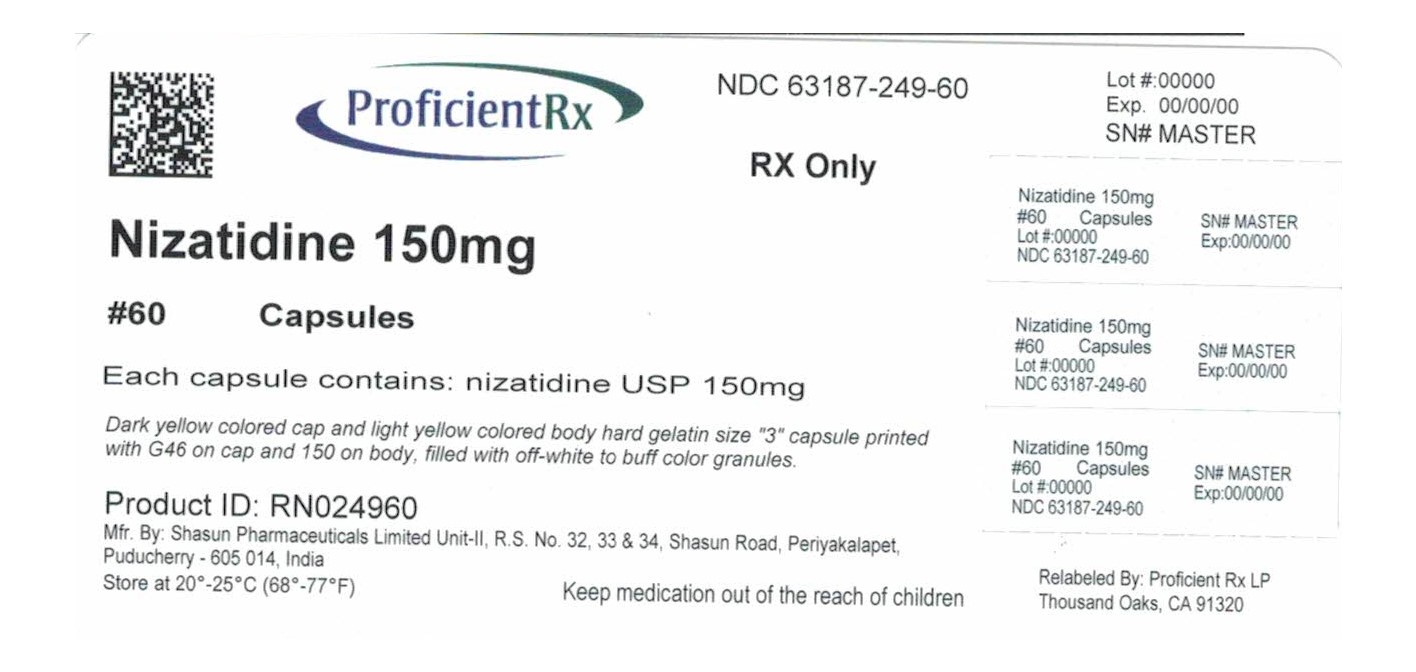
It is an off-white to buff crystalline solid that is soluble in water. Nizatidine has a bitter taste and mild sulfur-like odor. Nizatidine Capsules USP, for oral administration, contain 150 mg or 300 mg nizatidine and the following inactive ingredients: colloidal silicon dioxide, corn starch, croscarmellose sodium, magnesium stearate and pregelatinized starch. The capsule shells contain: ammonium hydroxide, black iron oxide, gelatin, potassium hydroxide, propylene glycol, shellac, silicon dioxide, sodium lauryl sulfate and titanium dioxide.
The 150 mg capsule shell also contains D&C Yellow No. 10 and FD&C Yellow No. 6.
The 300 mg capsule shell also contains black iron oxide, red iron oxide and yellow iron oxide.