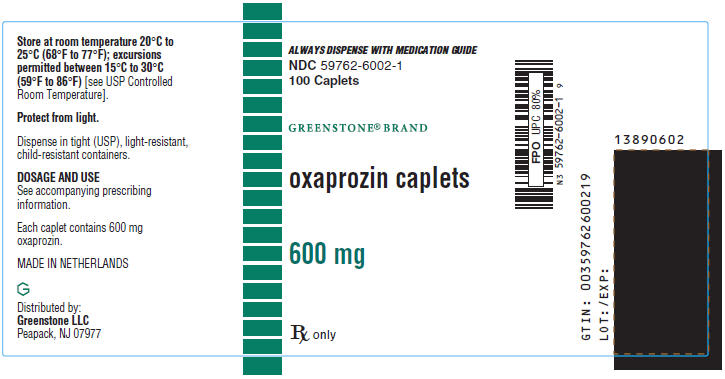
Oxaprozin label

Oxaprozin

Oxaprozin Recall

Get an alert when a recall is issued.

Side Effects & Adverse Reactions

Cardiovascular Effects

Cardiovascular Thrombotic Events: 

Clinical trials of several COX-2 selective and nonselective NSAIDs of up to three years duration have shown an increased risk of serious cardiovascular (CV) thrombotic events, myocardial infarction, and stroke, which can be fatal. All NSAIDs, both COX-2 selective and nonselective, may have a similar risk. Patients with known CV disease or risk factors for CV disease may be at greater risk. To minimize the potential risk for an adverse CV event in patients treated with an NSAID, the lowest effective dose should be used for the shortest duration possible. Physicians and patients should remain alert for the development of such events, even in the absence of previous CV symptoms. Patients should be informed about the signs and/or symptoms of serious CV events and the steps to take if they occur.

There is no consistent evidence that concurrent use of aspirin mitigates the increased risk of serious CV thrombotic events associated with NSAID use. The concurrent use of aspirin and an NSAID does increase the risk of serious GI events (see WARNINGS, Gastrointestinal Effects – Risk of Ulceration, Bleeding, and Perforation).

Two large, controlled clinical trials of a COX-2 selective NSAID for the treatment of pain in the first 10 to 14 days following CABG surgery found an increased incidence of myocardial infarction and stroke (see CONTRAINDICATIONS).

Hypertension: 

NSAIDs, including oxaprozin, can lead to onset of new hypertension or worsening of pre-existing hypertension, either of which may contribute to the increased incidence of CV events. Patients taking thiazides or loop diuretics may have impaired response to these therapies when taking NSAIDs. NSAIDs, including oxaprozin, should be used with caution in patients with hypertension. Blood pressure (BP) should be monitored closely during the initiation of NSAID treatment and throughout the course of therapy.

Congestive Heart Failure and Edema: 

Fluid retention and edema have been observed in some patients taking NSAIDs. Oxaprozin should be used with caution in patients with fluid retention or heart failure.

Gastrointestinal Effects – Risk of Ulceration, Bleeding, and Perforation: 

NSAIDs, including oxaprozin, can cause serious gastrointestinal (GI) adverse events including inflammation, bleeding, ulceration, and perforation of the stomach, small intestine, or large intestine, which can be fatal. These serious adverse events can occur at any time, with or without warning symptoms, in patients treated with NSAIDs. Only one in five patients, who develop a serious upper GI adverse event on NSAID therapy, is symptomatic. Upper GI ulcers, gross bleeding, or perforation caused by NSAIDs occur in approximately 1% of patients treated for 3 to 6 months, and in about 2% to 4% of patients treated for one year. These trends continue with longer duration of use, increasing the likelihood of developing a serious GI event at some time during the course of therapy. However, even short-term therapy is not without risk.

NSAIDs should be prescribed with extreme caution in those with a prior history of ulcer disease or gastrointestinal bleeding. Patients with a prior history of peptic ulcer disease and/or gastrointestinal bleeding who use NSAIDs have a greater than 10-fold increased risk for developing a GI bleed compared to patients treated with neither of these risk factors. Other factors that increase the risk of GI bleeding in patients treated with NSAIDs include concomitant use of oral corticosteroids or anticoagulants, longer duration of NSAID therapy, smoking, use of alcohol, older age, and poor general health status. Most spontaneous reports of fatal GI events are in elderly or debilitated patients and therefore, special care should be taken in treating this population.

To minimize the potential risk for an adverse GI event in patients treated with an NSAID, the lowest effective dose should be used for the shortest possible duration. Patients and physicians should remain alert for signs and symptoms of GI ulcerations and bleeding during NSAID therapy and promptly initiate additional evaluation and treatment if a serious GI event is suspected. This should include discontinuation of the NSAID until a serious GI adverse event is ruled out. For high risk patients, alternate therapies that do not involve NSAIDs should be considered.

Renal Effects

Long-term administration of NSAIDs has resulted in renal papillary necrosis and other renal injury. Renal toxicity has also been seen in patients in whom renal prostaglandins have a compensatory role in the maintenance of renal perfusion. In these patients, administration of a nonsteroidal anti-inflammatory drug may cause a dose dependent reduction in prostaglandin formation and, secondarily, in renal blood flow, which may precipitate overt renal decompensation. Patients at greatest risk of this reaction are those with impaired renal function, heart failure, liver dysfunction, those taking diuretics and ACE inhibitors, and the elderly. Discontinuation of NSAID therapy is usually followed by recovery to the pretreatment state.

Advanced Renal Disease

No information is available from controlled clinical studies regarding the use of oxaprozin in patients with advanced renal disease. Therefore, treatment with oxaprozin is not recommended in these patients with advanced renal disease. If oxaprozin therapy must be initiated, close monitoring of the patient’s renal function is advisable.

Anaphylactoid Reactions

As with other NSAIDs, anaphylactoid reactions may occur in patients without known prior exposure to oxaprozin. Oxaprozin should not be given to patients with the aspirin triad. This symptom complex typically occurs in asthmatic patients who experience rhinitis with or without nasal polyps, or who exhibit severe, potentially fatal bronchospasm after taking aspirin or other NSAIDs (see CONTRAINDICATIONS and PRECAUTIONS, Pre-existing Asthma). Emergency help should be sought in cases where an anaphylactoid reaction occurs.

Skin Reactions

NSAIDs, including oxaprozin, can cause serious skin adverse events such as exfoliative dermatitis, Stevens-Johnson Syndrome (SJS), and toxic epidermal necrolysis (TEN), which can be fatal. These serious events may occur without warning. Patients should be informed about the signs and symptoms of serious skin manifestations and use of the drug should be discontinued at the first appearance of skin rash or any other sign of hypersensitivity.

Pregnancy

In late pregnancy, as with other NSAIDs, oxaprozin should be avoided because it may cause premature closure of the ductus arteriosus.

FDA Safety Alerts

There are currently no FDA safety alerts available for this drug.

Manufacturer Warnings

There is currently no manufacturer warning information available for this drug.

FDA Labeling Changes

There are currently no FDA labeling changes available for this drug.

Uses

Carefully consider the potential benefits and risks of  oxaprozin tablets USP and other treatment options before deciding to use  oxaprozin tablets USP. Use the lowest effective dose for the shortest duration consistent with individual patient treatment goals (see WARNINGS).

Oxaprozin tablets USP are indicated:

•

For relief of the signs and symptoms of osteoarthritis.

•

For relief of the signs and symptoms of rheumatoid arthritis.

•

For relief of the signs and symptoms of juvenile rheumatoid arthritis.

History

There is currently no drug history available for this drug.

Other Information

Oxaprozin USP is a nonsteroidal anti-inflammatory drug (NSAID), chemically designated as 4,5-diphenyl-2-oxazole-propionic acid, and has the following chemical structure:

Chemical Structure

The empirical formula for oxaprozin USP is C18H15NO3, and the molecular weight is 293. Oxaprozin USP is a white to off-white powder with a slight odor and a melting point of 162°C to 163°C. It is slightly soluble in alcohol and insoluble in water, with an octanol/water partition coefficient of 4.8 at physiologic pH (7.4). The pKa in water is 4.3.

Oxaprozin tablets USP contain 600 mg of oxaprozin USP.

In addition, each tablet of oxaprozin USP contains the following inactive ingredients: colloidal silicon dioxide, microcrystalline cellulose, hypromellose, methylcellulose, magnesium stearate, polacrilin potassium, starch, polyethylene glycol, titanium dioxide, and polysorbate 80.

Oxaprozin Manufacturers

  • Oxaprozin | American Health Packaging
    No Recall

    Oxaprozin | American Health Packaging

    Oxaprozin | American Health Packaging

    Carefully consider the potential benefits and risks of oxaprozin tablets and other treatment options before deciding to use oxaprozin tablets. Use the lowest effective dose for the shortest duration consistent with individual patient treatment goals (see WARNINGS).

    After observing the response to initial therapy with oxaprozin tablets, the dose and frequency should be adjusted to suit an individual patient's needs.

    Rheumatoid Arthritis

    For relief of the signs and symptoms of rheumatoid arthritis, the usual recommended dose of oxaprozin tablets is 1200 mg (two 600 mg tablets) given orally once a day (see Individualization of Dosage).

    Osteoarthritis

    For relief of the signs and symptoms of osteoarthritis, the usual recommended dose of oxaprozin tablets is 1200 mg (two 600 mg tablets) given orally once a day (see Individualization of Dosage).

    Juvenile Rheumatoid Arthritis

    For the relief of the signs and symptoms of JRA in patients 6 to 16 years of age, the recommended dose given orally once per day should be based on body weight of the patient as given in Table 3 (see also Individualization of Dosage).

    Table 3

    Body Weight Range (kg)

    Dose (mg)

    22-31

    600

    32-54

    900

    ≥55

    1200

    (see CLINICAL PHARMACOLOGY, Special Populations, Pediatric Patients)

    Individualization of Dosage:

    As with other NSAIDs, the lowest dose should be sought for each patient. Therefore, after observing the response to initial therapy with oxaprozin tablets, the dose and frequency should be adjusted to suit an individual patient’s needs. In osteoarthritis and rheumatoid arthritis and juvenile rheumatoid arthritis, the dosage should be individualized to the lowest effective dose of oxaprozin tablets to minimize adverse effects. The maximum recommended total daily dose of oxaprozin tablets in adults is 1800 mg (26 mg/kg, whichever is lower) in divided doses. In children, doses greater than 1200 mg have not been studied.

    Patients of low body weight should initiate therapy with 600 mg once daily. Patients with severe renal impairment or on dialysis should also initiate therapy with 600 mg once daily. If there is insufficient relief of symptoms in such patients, the dose may be cautiously increased to 1200 mg, but only with close monitoring (see CLINICAL PHARMACOLOGY, Special Populations).

    In adults, in cases where a quick onset of action is important, the pharmacokinetics of oxaprozin allows therapy to be started with a one-time loading dose of 1200 mg to 1800 mg (not to exceed 26 mg/kg). Doses larger than 1200 mg/day on a chronic basis should be reserved for patients who weigh more than 50 kg, have normal renal and hepatic function, are at low risk of peptic ulcer, and whose severity of disease justifies maximal therapy. Physicians should ensure that patients are tolerating doses in the 600 mg/day to 1200 mg/day range without gastroenterologic, renal, hepatic, or dermatologic adverse effects before advancing to the larger doses. Most patients will tolerate once-a-day dosing with oxaprozin, although divided doses may be tried in patients unable to tolerate single doses.

    SAFETY AND HANDLING

    Oxaprozin is supplied as a solid dosage form in closed containers, is not known to produce contact dermatitis, and poses no known risk to healthcare workers. It may be disposed of in accordance with applicable local regulations governing the disposal of pharmaceuticals.

  • Oxaprozin | Genpharm Inc.
    No Recall

    Oxaprozin | Genpharm Inc.

    Oxaprozin | Genpharm Inc.

    Carefully consider the potential benefits and risks of oxaprozin and other treatment options before deciding to use oxaprozin. Use the lowest effective dose for the shortest duration consistent with individual patient treatment goals (see WARNINGS).

    After observing the response to initial therapy with oxaprozin, the dose and frequency should be adjusted to suit an individual patient’s needs.

     Rheumatoid Arthritis

    For relief of the signs and symptoms of rheumatoid arthritis, the usual recommended dose is 1200 mg (two 600-mg tablets) given orally once a day (see Individualization of dosage).

    Osteoarthritis

    For relief of the signs and symptoms of osteoarthritis, the usual recommended dose is 1200 mg (two 600-mg tablets) given orally once a day (see Individualization of dosage).

    Juvenile Rheumatoid Arthritis

    For the relief of the signs and symptoms of JRA in patients 6-16 years of age, the recommended dose given orally once per day should be based on body weight of the patient as given in Table 3 (see also Individualization of dosage).

    Table 3 Body Weight Range (kg) Dose (mg) 22 – 31 600 32 – 54 900 ≥ 55 1200

    (see CLINICAL PHARMACOLOGY: Special populations: Pediatric patients)

    INDIVIDUALIZATION OF DOSAGE

    As with other NSAIDs, the lowest dose should be sought for each patient. Therefore, after observing the response to initial therapy with oxaprozin, the dose and frequency should be adjusted to suit an individual patient’s needs. In osteoarthritis and rheumatoid arthritis and juvenile rheumatoid arthritis, the dosage should be individualized to the lowest effective dose of oxaprozin to minimize adverse effects. The maximum recommended total daily dose of oxaprozin in adults is 1800 mg (26 mg/kg, whichever is lower) in divided doses. In children, doses greater than 1200 mg have not been studied.

    Patients of low body weight should initiate therapy with 600 mg once daily. Patients with severe renal impairment or on dialysis should also initiate therapy with 600 mg once daily. If there is insufficient relief of symptoms in such patients, the dose may be cautiously increased to 1200 mg, but only with close monitoring (see CLINICAL PHARMACOLOGY: Special Populations).

    In adults, in cases where a quick onset of action is important, the pharmacokinetics of oxaprozin allow therapy to be started with a one-time loading dose of 1200 to 1800 mg (not to exceed 26 mg/kg). Doses larger than 1200 mg/day on a chronic basis should be reserved for patients who weigh more than 50 kg, have normal renal and hepatic function, are at low risk of peptic ulcer, and whose severity of disease justifies maximal therapy. Physicians should ensure that patients are tolerating doses in the 600 to 1200 mg/day range without gastroenterologic, renal, hepatic, or dermatologic adverse effects before advancing to the larger doses. Most patients will tolerate once-a-day dosing with oxaprozin, although divided doses may be tried in patients unable to tolerate single doses.


    SAFETY AND HANDLING

    Oxaprozin is supplied as a solid dosage form in closed containers, is not known to produce contact dermatitis, and poses no known risk to healthcare workers. It may be disposed of in accordance with applicable local regulations governing the disposal of pharmaceuticals.

  • Physicians Total Care, Inc.
    Oxaprozin | Physicians Total Care, Inc.
    No Recall

    Oxaprozin | Physicians Total Care, Inc.

    Oxaprozin | Physicians Total Care, Inc.

    Carefully consider the potential benefits and risks of oxaprozin tablet, USP and other treatment options before deciding to use oxaprozin tablet, USP. Use the lowest effective dose for the shortest duration consistent with individual patient treatment goals (see WARNINGS).

    After observing the response to initial therapy with oxaprozin tablet, USP, the dose and frequency should be adjusted to suit an individual patient's needs.

    Rheumatoid arthritis: For relief of the signs and symptoms of rheumatoid arthritis, the usual recommended dose is 1200 mg (two 600-mg tablets) given orally once a day (see Individualization of dosage).

    Osteoarthritis: For relief of the signs and symptoms of osteoarthritis, the usual recommended dose is 1200 mg (two 600-mg tablets) given orally once a day (see Individualization of dosage).

    Juvenile rheumatoid arthritis: For the relief of the signs and symptoms of JRA in patients 6-16 years of age, the recommended dose given orally once per day should be based on body weight of the patient as given in Table 3 (see also Individualization of dosage).

    Table 3 Body Weight Range (kg) Dose (mg) 22-31 600 32-54 900 ≥55 1200

    (see CLINICAL PHARMACOLOGY: Special populations: Pediatric patients)

    Individualization of dosage: As with other NSAIDs, the lowest dose should be sought for each patient. Therefore, after observing the response to initial therapy with oxaprozin tablet, USP, the dose and frequency should be adjusted to suit an individual patient's needs. In osteoarthritis and rheumatoid arthritis and juvenile rheumatoid arthritis, the dosage should be individualized to the lowest effective dose of oxaprozin tablet, USP to minimize adverse effects. The maximum recommended total daily dose of oxaprozin tablet, USP in adults is 1800 mg (26 mg/kg, whichever is lower) in divided doses. In children, doses greater than 1200 mg have not been studied.

    Patients of low body weight should initiate therapy with 600 mg once daily.Patients with severe renal impairment or on dialysis should also initiate therapy with 600 mg once daily. If there is insufficient relief of symptoms in such patients, the dose may be cautiously increased to 1200 mg, but only with close monitoring (see CLINICAL PHARMACOLOGY, Special populations). In adults, in cases where a quick onset of action is important, the pharmacokinetics of oxaprozin allow therapy to be started with a one-time loading dose of 1200 to 1800 mg (not to exceed 26 mg/kg). Doses larger than 1200 mg/day on a chronic basis should be reserved for patients who weigh more than 50 kg, have normal renal and hepatic function, are at low risk of peptic ulcer, and whose severity of disease justifies maximal therapy. Physicians should ensure that patients are tolerating doses in the 600 to 1200 mg/day range without gastroenterologic, renal, hepatic, or dermatologic adverse effects before advancing to the larger doses. Most patients will tolerate once-a-day dosing with oxaprozin tablet, USP, although divided doses may be tried in patients unable to tolerate single doses.

  • Dr. Reddy’s Laboratories Limited
    Oxaprozin | Dr. Reddy's Laboratories Limited
    No Recall

    Oxaprozin | Dr. Reddy's Laboratories Limited

    Oxaprozin | Dr. Reddy's Laboratories Limited

    Carefully consider the potential benefits and risks of oxaprozin and other treatment options before deciding to use oxaprozin. Use the lowest effective dose for the shortest duration consistent with individual patient treatment goals (see WARNINGS).

    After observing the response to initial therapy with oxaprozin, the dose and frequency should be adjusted to suit an individual patient’s needs.

    Rheumatoid Arthritis

    For relief of the signs and symptoms of rheumatoid arthritis, the usual recommended dose is 1200 mg (two 600-mg tablets) given orally once a day (see Individualization of Dosage).

    Osteoarthritis

    For relief of the signs and symptoms of osteoarthritis, the usual recommended dose is 1200 mg (two 600-mg tablets) given orally once a day (see Individualization of Dosage).

    Juvenile Rheumatoid Arthritis

    For the relief of the signs and symptoms of JRA in patients 6-16 years of age, the recommended dose given orally once per day should be based on body weight of the patient as given in Table 3 (see also Individualization of Dosage).

    Table 3

    Body Weight Range (kg) Dose (mg) 22–31 600 32–54 900 ≥55 1200

    (see CLINICAL PHARMACOLOGY, Special Populations, Pediatric Patients)

    Individualization of Dosage

    As with other NSAIDs, the lowest dose should be sought for each patient. Therefore, after observing the response to initial therapy with oxaprozin, the dose and frequency should be adjusted to suit an individual patient’s needs. In osteoarthritis and rheumatoid arthritis and juvenile rheumatoid arthritis, the dosage should be individualized to the lowest effective dose of oxaprozin to minimize adverse effects. The maximum recommended total daily dose of oxaprozin tablets in adults is 1800 mg (26 mg/kg, whichever is lower) in divided doses. In children, doses greater than 1200 mg have not been studied.

    Patients of low body weight should initiate therapy with 600 mg once daily. Patients with severe renal impairment or on dialysis should also initiate therapy with 600 mg once daily. If there is insufficient relief of symptoms in such patients, the dose may be cautiously increased to 1200 mg, but only with close monitoring (see CLINICAL PHARMACOLOGY, Special Populations).

    In adults, in cases where a quick onset of action is important, the pharmacokinetics of oxaprozin allow therapy to be started with a one-time loading dose of 1200 to 1800 mg (not to exceed 26 mg/kg). Doses larger than 1200 mg/day on a chronic basis should be reserved for patients who weigh more than 50 kg, have normal renal and hepatic function, are at low risk of peptic ulcer, and whose severity of disease justifies maximal therapy. Physicians should ensure that patients are tolerating doses in the 600 to 1200 mg/day range without gastroenterologic, renal, hepatic, or dermatologic adverse effects before advancing to the larger doses. Most patients will tolerate once-a-day dosing with oxaprozin, although divided doses may be tried in patients unable to tolerate single doses.

  • Stat Rx Usa Llc
    Oxaprozin | Stat Rx Usa Llc
    No Recall

    Oxaprozin | Stat Rx Usa Llc

    Oxaprozin | Stat Rx Usa Llc

    Carefully consider the potential benefits and risks of oxaprozin and other treatment options before deciding to use oxaprozin. Use the lowest effective dose for the shortest duration consistent with individual patient treatment goals (see WARNINGS).

    After observing the response to initial therapy with oxaprozin, the dose and frequency should be adjusted to suit an individual patient’s needs.


    Rheumatoid Arthritis

    For relief of the signs and symptoms of rheumatoid arthritis, the usual recommended dose is 1200 mg (two 600-mg tablets) given orally once a day (see Individualization of Dosage).


    Osteoarthritis

    For relief of the signs and symptoms of osteoarthritis, the usual recommended dose is 1200 mg (two 600-mg tablets) given orally once a day (see Individualization of Dosage).


    Juvenile Rheumatoid Arthritis

    For the relief of the signs and symptoms of JRA in patients 6-16 years of age, the recommended dose given orally once per day should be based on body weight of the patient as given in Table 3 (see also Individualization of Dosage).

    Table 3

    Body Weight Range (kg) Dose (mg) 22–31 600 32–54 900 ≥55 1200

    (see CLINICAL PHARMACOLOGY, Special Populations, Pediatric Patients)


    Individualization of Dosage

    As with other NSAIDs, the lowest dose should be sought for each patient. Therefore, after observing the response to initial therapy with oxaprozin, the dose and frequency should be adjusted to suit an individual patient’s needs. In osteoarthritis and rheumatoid arthritis and juvenile rheumatoid arthritis, the dosage should be individualized to the lowest effective dose of oxaprozin to minimize adverse effects. The maximum recommended total daily dose of oxaprozin tablets in adults is 1800 mg (26 mg/kg, whichever is lower) in divided doses. In children, doses greater than 1200 mg have not been studied.

    Patients of low body weight should initiate therapy with 600 mg once daily. Patients with severe renal impairment or on dialysis should also initiate therapy with 600 mg once daily. If there is insufficient relief of symptoms in such patients, the dose may be cautiously increased to 1200 mg, but only with close monitoring (see CLINICAL PHARMACOLOGY, Special Populations).

    In adults, in cases where a quick onset of action is important, the pharmacokinetics of oxaprozin allow therapy to be started with a one-time loading dose of 1200 to 1800 mg (not to exceed 26 mg/kg). Doses larger than 1200 mg/day on a chronic basis should be reserved for patients who weigh more than 50 kg, have normal renal and hepatic function, are at low risk of peptic ulcer, and whose severity of disease justifies maximal therapy. Physicians should ensure that patients are tolerating doses in the 600 to 1200 mg/day range without gastroenterologic, renal, hepatic, or dermatologic adverse effects before advancing to the larger doses. Most patients will tolerate once-a-day dosing with oxaprozin, although divided doses may be tried in patients unable to tolerate single doses.


    SAFETY AND HANDLING

    Oxaprozin is supplied as a solid dosage form in closed containers, is not known to produce contact dermatitis, and poses no known risk to healthcare workers. It may be disposed of in accordance with applicable local regulations governing the disposal of pharmaceuticals.

  • Oxaprozin | Rebel Distributors Corp
    No Recall

    Oxaprozin | Rebel Distributors Corp

    Oxaprozin | Rebel Distributors Corp

    Carefully consider the potential benefits and risks of oxaprozin tablets and other treatment options before deciding to use oxaprozin tablets. Use the lowest effective dose for the shortest duration consistent with individual patient treatment goals (see WARNINGS).

    After observing the response to initial therapy with oxaprozin tablets, the dose and frequency should be adjusted to suit an individual patient's needs.

    Rheumatoid Arthritis

    For relief of the signs and symptoms of rheumatoid arthritis, the usual recommended dose is 1200 mg (two 600 mg tablets) given orally once a day (see Individualization of Dosage).

    Osteoarthritis

    For relief of the signs and symptoms of osteoarthritis, the usual recommended dose is 1200 mg (two 600 mg tablets) given orally once a day (see Individualization of Dosage).

    Juvenile Rheumatoid Arthritis

    For the relief of the signs and symptoms of JRA in patients 6 to 16 years of age, the recommended dose given orally once per day should be based on body weight of the patient as given in Table 3 (see also Individualization of Dosage).

    Table 3 Body Weight Range (kg) Dose (mg) 22 to 31 600 32 to 54 900 ≥ 55 1200

    (see CLINICAL PHARMACOLOGY, Special Populations, Pediatric Patients)

    Individualization of Dosage

    As with other NSAIDs, the lowest dose should be sought for each patient. Therefore, after observing the response to initial therapy with oxaprozin, the dose and frequency should be adjusted to suit an individual patient's needs. In osteoarthritis and rheumatoid arthritis and juvenile rheumatoid arthritis, the dosage should be individualized to the lowest effective dose of oxaprozin to minimize adverse effects. The maximum recommended total daily dose of oxaprozin in adults is 1800 mg (26 mg/kg, whichever is lower) in divided doses. In children, doses greater than 1200 mg have not been studied.

    Patients of low body weight should initiate therapy with 600 mg once daily. Patients with severe renal impairment or on dialysis should also initiate therapy with 600 mg once daily. If there is insufficient relief of symptoms in such patients, the dose may be cautiously increased to 1200 mg, but only with close monitoring (see CLINICAL PHARMACOLOGY, Special Populations).

    In adults, in cases where a quick onset of action is important, the pharmacokinetics of oxaprozin allow therapy to be started with a one-time loading dose of 1200 to 1800 mg (not to exceed 26 mg/kg). Doses larger than 1200 mg/day on a chronic basis should be reserved for patients who weigh more than 50 kg, have normal renal and hepatic function, are at low risk of peptic ulcer, and whose severity of disease justifies maximal therapy. Physicians should ensure that patients are tolerating doses in the 600 to 1200 mg/day range without gastroenterologic, renal, hepatic, or dermatologic adverse effects before advancing to the larger doses. Most patients will tolerate once-a-day dosing with oxaprozin, although divided doses may be tried in patients unable to tolerate single doses.

  • Pd-rx Pharmaceuticals, Inc.
    Oxaprozin | Walgreen Company
    No Recall

    Oxaprozin | Walgreen Company

    Oxaprozin | Walgreen Company
    • if you are under 18 years of age, ask a doctor before use. No studies have been done to show if this product will work for you. • before using this product, read the enclosed User’s Guide for complete directions and other important information • begin using the lozenge on your quit day • if you smoke your first cigarette within 30 minutes of waking up, use 4 mg nicotine lozenge • if you smoke your first cigarette more than 30 minutes after waking up, use 2 mg nicotine lozenge according to the following 12 week schedule:

    Weeks 1 to 6

    Weeks 7 to 9

    Weeks 10 to 12

    1 lozenge every

    1 to 2 hours

    1 lozenge every

    2 to 4 hours

    1 lozenge every

    4 to 8 hours

    • nicotine lozenge is a medicine and must be used a certain way to get the best results • place the lozenge in your mouth and allow the lozenge to slowly dissolve (about 20-30 minutes). Minimize swallowing. Do not chew or swallow lozenge. • you may feel a warm or tingling sensation • occasionally move the lozenge from one side of your mouth to the other until completely dissolved (about 20-30 minutes) • do not eat or drink 15 minutes before using or while the lozenge is in your mouth • to improve your chances of quitting, use at least 9 lozenges per day for the first 6 weeks • do not use more than one lozenge at a time or continuously use one lozenge after another since this may cause you hiccups, heartburn, nausea or other side effects • do not use more than 5 lozenges in 6 hours. Do not use more than 20 lozenges per day. • it is important to complete treatment. If you feel you need to use the lozenge for a longer period to keep from smoking, talk to your health care provider.
  • Lake Erie Medical Dba Quality Care Products Llc
    Oxaprozin | Lake Erie Medical Dba Quality Care Products Llc
    No Recall

    Oxaprozin | Lake Erie Medical Dba Quality Care Products Llc

    Oxaprozin | Lake Erie Medical Dba Quality Care Products Llc
    DOSAGE AND ADMINISTRATION

    Carefully consider the potential benefits and risks of oxaprozin and other treatment options before deciding to use oxaprozin. Use the lowest effective dose for the shortest duration consistent with individual patient treatment goals (see WARNINGS).

    After observing the response to initial therapy with oxaprozin, the dose and frequency should be adjusted to suit an individual patient’s needs.

    Rheumatoid Arthritis

    For relief of the signs and symptoms of rheumatoid arthritis, the usual recommended dose is 1200 mg (two 600-mg tablets) given orally once a day (see Individualization of Dosage).

    Osteoarthritis

    For relief of the signs and symptoms of osteoarthritis, the usual recommended dose is 1200 mg (two 600-mg tablets) given orally once a day (see Individualization of Dosage).

    Juvenile Rheumatoid Arthritis

    For the relief of the signs and symptoms of JRA in patients 6-16 years of age, the recommended dose given orally once per day should be based on body weight of the patient as given in Table 3 (see also Individualization of Dosage).

    Table 3

    Body Weight Range (kg) Dose (mg) 22–31 600 32–54 900 ≥55 1200

    (see CLINICAL PHARMACOLOGY, Special Populations, Pediatric Patients)

    Individualization of Dosage

    As with other NSAIDs, the lowest dose should be sought for each patient. Therefore, after observing the response to initial therapy with oxaprozin, the dose and frequency should be adjusted to suit an individual patient’s needs. In osteoarthritis and rheumatoid arthritis and juvenile rheumatoid arthritis, the dosage should be individualized to the lowest effective dose of oxaprozin to minimize adverse effects. The maximum recommended total daily dose of oxaprozin tablets in adults is 1800 mg (26 mg/kg, whichever is lower) in divided doses. In children, doses greater than 1200 mg have not been studied.

    Patients of low body weight should initiate therapy with 600 mg once daily. Patients with severe renal impairment or on dialysis should also initiate therapy with 600 mg once daily. If there is insufficient relief of symptoms in such patients, the dose may be cautiously increased to 1200 mg, but only with close monitoring (see CLINICAL PHARMACOLOGY, Special Populations).

    In adults, in cases where a quick onset of action is important, the pharmacokinetics of oxaprozin allow therapy to be started with a one-time loading dose of 1200 to 1800 mg (not to exceed 26 mg/kg). Doses larger than 1200 mg/day on a chronic basis should be reserved for patients who weigh more than 50 kg, have normal renal and hepatic function, are at low risk of peptic ulcer, and whose severity of disease justifies maximal therapy. Physicians should ensure that patients are tolerating doses in the 600 to 1200 mg/day range without gastroenterologic, renal, hepatic, or dermatologic adverse effects before advancing to the larger doses. Most patients will tolerate once-a-day dosing with oxaprozin, although divided doses may be tried in patients unable to tolerate single doses.

  • Oxaprozin | H.j. Harkins Company, Inc.
    No Recall

    Oxaprozin | H.j. Harkins Company, Inc.

    Oxaprozin | H.j. Harkins Company, Inc.

    Carefully consider the potential benefits and risks of oxaprozin and other treatment options before deciding to use oxaprozin. Use the lowest effective dose for the shortest duration consistent with individual patient treatment goals (see WARNINGS).

    After observing the response to initial therapy with oxaprozin, the dose and frequency should be adjusted to suit an individual patient’s needs.

    Rheumatoid Arthritis

    For relief of the signs and symptoms of rheumatoid arthritis, the usual recommended dose is 1200 mg (two 600-mg tablets) given orally once a day (see Individualization of Dosage).

    Osteoarthritis

    For relief of the signs and symptoms of osteoarthritis, the usual recommended dose is 1200 mg (two 600-mg tablets) given orally once a day (see Individualization of Dosage).

    Juvenile Rheumatoid Arthritis

    For the relief of the signs and symptoms of JRA in patients 6-16 years of age, the recommended dose given orally once per day should be based on body weight of the patient as given in Table 3 (see also Individualization of Dosage).

    Table 3

    Body Weight Range (kg) Dose (mg) 22–31 600 32–54 900 ≥55 1200

    (see CLINICAL PHARMACOLOGY, Special Populations, Pediatric Patients)

    Individualization of Dosage

    As with other NSAIDs, the lowest dose should be sought for each patient. Therefore, after observing the response to initial therapy with oxaprozin, the dose and frequency should be adjusted to suit an individual patient’s needs. In osteoarthritis and rheumatoid arthritis and juvenile rheumatoid arthritis, the dosage should be individualized to the lowest effective dose of oxaprozin to minimize adverse effects. The maximum recommended total daily dose of oxaprozin tablets in adults is 1800 mg (26 mg/kg, whichever is lower) in divided doses. In children, doses greater than 1200 mg have not been studied.

    Patients of low body weight should initiate therapy with 600 mg once daily. Patients with severe renal impairment or on dialysis should also initiate therapy with 600 mg once daily. If there is insufficient relief of symptoms in such patients, the dose may be cautiously increased to 1200 mg, but only with close monitoring (see CLINICAL PHARMACOLOGY, Special Populations).

    In adults, in cases where a quick onset of action is important, the pharmacokinetics of oxaprozin allow therapy to be started with a one-time loading dose of 1200 to 1800 mg (not to exceed 26 mg/kg). Doses larger than 1200 mg/day on a chronic basis should be reserved for patients who weigh more than 50 kg, have normal renal and hepatic function, are at low risk of peptic ulcer, and whose severity of disease justifies maximal therapy. Physicians should ensure that patients are tolerating doses in the 600 to 1200 mg/day range without gastroenterologic, renal, hepatic, or dermatologic adverse effects before advancing to the larger doses. Most patients will tolerate once-a-day dosing with oxaprozin, although divided doses may be tried in patients unable to tolerate single doses.

  • Preferred Pharmaceuticals, Inc
    Oxaprozin | Preferred Pharmaceuticals, Inc
    No Recall

    Oxaprozin | Preferred Pharmaceuticals, Inc

    Oxaprozin | Preferred Pharmaceuticals, Inc

    Carefully consider the potential benefits and risks of oxaprozin and other treatment options before deciding to use oxaprozin. Use the lowest effective dose for the shortest duration consistent with individual patient treatment goals (see WARNINGS).

    After observing the response to initial therapy with oxaprozin, the dose and frequency should be adjusted to suit an individual patient’s needs.

    Rheumatoid Arthritis

    For relief of the signs and symptoms of rheumatoid arthritis, the usual recommended dose is 1200 mg (two 600-mg tablets) given orally once a day (see Individualization of Dosage).

    Osteoarthritis

    For relief of the signs and symptoms of osteoarthritis, the usual recommended dose is 1200 mg (two 600-mg tablets) given orally once a day (see Individualization of Dosage).

    Juvenile Rheumatoid Arthritis

    For the relief of the signs and symptoms of JRA in patients 6-16 years of age, the recommended dose given orally once per day should be based on body weight of the patient as given in Table 3 (see also Individualization of Dosage).

    Table 3

    Body Weight Range (kg) Dose (mg) 22–31 600 32–54 900 ≥55 1200

    (see CLINICAL PHARMACOLOGY, Special Populations, Pediatric Patients)


    Individualization of Dosage

    As with other NSAIDs, the lowest dose should be sought for each patient. Therefore, after observing the response to initial therapy with oxaprozin, the dose and frequency should be adjusted to suit an individual patient’s needs. In osteoarthritis and rheumatoid arthritis and juvenile rheumatoid arthritis, the dosage should be individualized to the lowest effective dose of oxaprozin to minimize adverse effects. The maximum recommended total daily dose of oxaprozin tablets in adults is 1800 mg (26 mg/kg, whichever is lower) in divided doses. In children, doses greater than 1200 mg have not been studied.

    Patients of low body weight should initiate therapy with 600 mg once daily. Patients with severe renal impairment or on dialysis should also initiate therapy with 600 mg once daily. If there is insufficient relief of symptoms in such patients, the dose may be cautiously increased to 1200 mg, but only with close monitoring (see CLINICAL PHARMACOLOGY, Special Populations).

    In adults, in cases where a quick onset of action is important, the pharmacokinetics of oxaprozin allow therapy to be started with a one-time loading dose of 1200 to 1800 mg (not to exceed 26 mg/kg). Doses larger than 1200 mg/day on a chronic basis should be reserved for patients who weigh more than 50 kg, have normal renal and hepatic function, are at low risk of peptic ulcer, and whose severity of disease justifies maximal therapy. Physicians should ensure that patients are tolerating doses in the 600 to 1200 mg/day range without gastroenterologic, renal, hepatic, or dermatologic adverse effects before advancing to the larger doses. Most patients will tolerate once-a-day dosing with oxaprozin, although divided doses may be tried in patients unable to tolerate single doses.

  • Oxaprozin | Unit Dose Services
    No Recall

    Oxaprozin | Unit Dose Services

    Oxaprozin | Unit Dose Services

    Carefully consider the potential benefits and risks of oxaprozin tablets and other treatment options before deciding to use oxaprozin tablets. Use the lowest effective dose for the shortest duration consistent with individual patient treatment goals (see ). WARNINGS

    After observing the response to initial therapy with oxaprozin tablets, the dose and frequency should be adjusted to suit an individual patient's needs.

    Rheumatoid Arthritis

    For relief of the signs and symptoms of rheumatoid arthritis, the usual recommended dose is 1200 mg (two 600 mg tablets) given orally once a day (see ). Individualization of Dosage

    Osteoarthritis

    For relief of the signs and symptoms of osteoarthritis, the usual recommended dose is 1200 mg (two 600 mg tablets) given orally once a day (see ). Individualization of Dosage

    Juvenile Rheumatoid Arthritis

    For the relief of the signs and symptoms of JRA in patients 6 to 16 years of age, the recommended dose given orally once per day should be based on body weight of the patient as given in (see also ). Table 3Individualization of Dosage

    Table 3 Body Weight Range (kg) Dose (mg) 22 to 31 600 32 to 54 900 ≥ 55 1200

    (see , , Pediatric Patients) CLINICAL PHARMACOLOGYSpecial Populations

    Individualization of Dosage

    As with other NSAIDs, the lowest dose should be sought for each patient. Therefore, after observing the response to initial therapy with oxaprozin, the dose and frequency should be adjusted to suit an individual patient's needs. In osteoarthritis and rheumatoid arthritis and juvenile rheumatoid arthritis, the dosage should be individualized to the lowest effective dose of oxaprozin to minimize adverse effects. The recommended total daily dose of oxaprozin in adults is 1800 mg (26 mg/kg, whichever is ) in divided doses. In children, doses greater than 1200 mg have not been studied. maximumlower

    Patients of low body weight should initiate therapy with 600 mg once daily. Patients with severe renal impairment or on dialysis should also initiate therapy with 600 mg once daily. If there is insufficient relief of symptoms in such patients, the dose may be cautiously increased to 1200 mg, but only with close monitoring (see , ). CLINICAL PHARMACOLOGYSpecial Populations

    In adults, in cases where a quick onset of action is important, the pharmacokinetics of oxaprozin allow therapy to be started with a one-time loading dose of 1200 to 1800 mg (not to exceed 26 mg/kg). Doses larger than 1200 mg/day on a chronic basis should be reserved for patients who weigh more than 50 kg, have normal renal and hepatic function, are at low risk of peptic ulcer, and whose severity of disease justifies maximal therapy. Physicians should ensure that patients are tolerating doses in the 600 to 1200 mg/day range without gastroenterologic, renal, hepatic, or dermatologic adverse effects before advancing to the larger doses. Most patients will tolerate once-a-day dosing with oxaprozin, although divided doses may be tried in patients unable to tolerate single doses.

  • Oxaprozin | Teva Pharmaceuticals Usa Inc
    No Recall

    Oxaprozin | Teva Pharmaceuticals Usa Inc

    Oxaprozin | Teva Pharmaceuticals Usa Inc

    Carefully consider the potential benefits and risks of oxaprozin tablets and other treatment options before deciding to use oxaprozin tablets. Use the lowest effective dose for the shortest duration consistent with individual patient treatment goals (see WARNINGS).

    After observing the response to initial therapy with oxaprozin tablets, the dose and frequency should be adjusted to suit an individual patient's needs.

    Rheumatoid Arthritis

    For relief of the signs and symptoms of rheumatoid arthritis, the usual recommended dose is 1200 mg (two 600 mg tablets) given orally once a day (see Individualization of Dosage).

    Osteoarthritis

    For relief of the signs and symptoms of osteoarthritis, the usual recommended dose is 1200 mg (two 600 mg tablets) given orally once a day (see Individualization of Dosage).

    Juvenile Rheumatoid Arthritis

    For the relief of the signs and symptoms of JRA in patients 6 to 16 years of age, the recommended dose given orally once per day should be based on body weight of the patient as given in Table 3 (see also Individualization of Dosage).

    Table 3 Body Weight Range (kg) Dose (mg) 22 to 31 600 32 to 54 900 ≥ 55 1200

    (see CLINICAL PHARMACOLOGY, Special Populations, Pediatric Patients)

    Individualization of Dosage

    As with other NSAIDs, the lowest dose should be sought for each patient. Therefore, after observing the response to initial therapy with oxaprozin, the dose and frequency should be adjusted to suit an individual patient's needs. In osteoarthritis and rheumatoid arthritis and juvenile rheumatoid arthritis, the dosage should be individualized to the lowest effective dose of oxaprozin to minimize adverse effects. The maximum recommended total daily dose of oxaprozin in adults is 1800 mg (26 mg/kg, whichever is lower) in divided doses. In children, doses greater than 1200 mg have not been studied.

    Patients of low body weight should initiate therapy with 600 mg once daily. Patients with severe renal impairment or on dialysis should also initiate therapy with 600 mg once daily. If there is insufficient relief of symptoms in such patients, the dose may be cautiously increased to 1200 mg, but only with close monitoring (see CLINICAL PHARMACOLOGY, Special Populations).

    In adults, in cases where a quick onset of action is important, the pharmacokinetics of oxaprozin allow therapy to be started with a one-time loading dose of 1200 to 1800 mg (not to exceed 26 mg/kg). Doses larger than 1200 mg/day on a chronic basis should be reserved for patients who weigh more than 50 kg, have normal renal and hepatic function, are at low risk of peptic ulcer, and whose severity of disease justifies maximal therapy. Physicians should ensure that patients are tolerating doses in the 600 to 1200 mg/day range without gastroenterologic, renal, hepatic, or dermatologic adverse effects before advancing to the larger doses. Most patients will tolerate once-a-day dosing with oxaprozin, although divided doses may be tried in patients unable to tolerate single doses.

  • Bryant Ranch Prepack
    Oxaprozin | Bryant Ranch Prepack
    No Recall

    Oxaprozin | Bryant Ranch Prepack

    Oxaprozin | Bryant Ranch Prepack

    Carefully consider the potential benefits and risks of oxaprozin tablets and other treatment options before deciding to use oxaprozin tablets. Use the lowest effective dose for the shortest duration consistent with individual patient treatment goals (see WARNINGS).

    After observing the response to initial therapy with oxaprozin tablets, the dose and frequency should be adjusted to suit an individual patient's needs.

    Rheumatoid Arthritis

    For relief of the signs and symptoms of rheumatoid arthritis, the usual recommended dose is 1200 mg (two 600 mg tablets) given orally once a day (see Individualization of Dosage).

    Osteoarthritis

    For relief of the signs and symptoms of osteoarthritis, the usual recommended dose is 1200 mg (two 600 mg tablets) given orally once a day (see Individualization of Dosage).

    Juvenile Rheumatoid Arthritis

    For the relief of the signs and symptoms of JRA in patients 6 to 16 years of age, the recommended dose given orally once per day should be based on body weight of the patient as given in Table 3 (see also Individualization of Dosage).

    Table 3 Body Weight Range (kg) Dose (mg) 22 to 31 600 32 to 54 900 ≥ 55 1200

    (see CLINICAL PHARMACOLOGY, Special Populations, Pediatric Patients)

    Individualization of Dosage

    As with other NSAIDs, the lowest dose should be sought for each patient. Therefore, after observing the response to initial therapy with oxaprozin, the dose and frequency should be adjusted to suit an individual patient's needs. In osteoarthritis and rheumatoid arthritis and juvenile rheumatoid arthritis, the dosage should be individualized to the lowest effective dose of oxaprozin to minimize adverse effects. The maximum recommended total daily dose of oxaprozin in adults is 1800 mg (26 mg/kg, whichever is lower) in divided doses. In children, doses greater than 1200 mg have not been studied.

    Patients of low body weight should initiate therapy with 600 mg once daily. Patients with severe renal impairment or on dialysis should also initiate therapy with 600 mg once daily. If there is insufficient relief of symptoms in such patients, the dose may be cautiously increased to 1200 mg, but only with close monitoring (see CLINICAL PHARMACOLOGY, Special Populations).

    In adults, in cases where a quick onset of action is important, the pharmacokinetics of oxaprozin allow therapy to be started with a one-time loading dose of 1200 to 1800 mg (not to exceed 26 mg/kg). Doses larger than 1200 mg/day on a chronic basis should be reserved for patients who weigh more than 50 kg, have normal renal and hepatic function, are at low risk of peptic ulcer, and whose severity of disease justifies maximal therapy. Physicians should ensure that patients are tolerating doses in the 600 to 1200 mg/day range without gastroenterologic, renal, hepatic, or dermatologic adverse effects before advancing to the larger doses. Most patients will tolerate once-a-day dosing with oxaprozin, although divided doses may be tried in patients unable to tolerate single doses.

  • Caraco Pharmaceutical Laboratories, Ltd.
    Oxaprozin | Caraco Pharmaceutical Laboratories, Ltd.
    No Recall

    Oxaprozin | Caraco Pharmaceutical Laboratories, Ltd.

    Oxaprozin | Caraco Pharmaceutical Laboratories, Ltd.

    Carefully consider the potential benefits and risks of oxaprozin tablet, USP and other treatment options before deciding to use oxaprozin tablet, USP. Use the lowest effective dose for the shortest duration consistent with individual patient treatment goals (see WARNINGS).

    After observing the response to initial therapy with oxaprozin tablet, USP, the dose and frequency should be adjusted to suit an individual patient's needs.

    Rheumatoid arthritis: For relief of the signs and symptoms of rheumatoid arthritis, the usual recommended dose is 1200 mg (two 600-mg tablets) given orally once a day (see Individualization of dosage).

    Osteoarthritis: For relief of the signs and symptoms of osteoarthritis, the usual recommended dose is 1200 mg (two 600-mg tablets) given orally once a day (see Individualization of dosage).

    Juvenile rheumatoid arthritis: For the relief of the signs and symptoms of JRA in patients 6-16 years of age, the recommended dose given orally once per day should be based on body weight of the patient as given in Table 3 (see also Individualization of dosage).

    Table 3 Body Weight Range (kg) Dose (mg) 22-31 600 32-54 900 ≥55 1200

    (see CLINICAL PHARMACOLOGY: Special populations: Pediatric patients)

  • Eon Labs, Inc.
    Oxaprozin | Eon Labs, Inc.
    No Recall

    Oxaprozin | Eon Labs, Inc.

    Oxaprozin | Eon Labs, Inc.

    Carefully consider the potential benefits and risks of oxaprozin tablets and other treatment options before deciding to use oxaprozin tablets. Use the lowest effective dose for the shortest duration consistent with individual patient treatment goals (see WARNINGS).

    After observing the response to initial therapy with oxaprozin tablets, the dose and frequency should be adjusted to suit an individual patient's needs.

    Rheumatoid Arthritis

    For relief of the signs and symptoms of rheumatoid arthritis, the usual recommended dose of oxaprozin tablets is 1200 mg (two 600 mg tablets) given orally once a day (see Individualization of Dosage).

    Osteoarthritis

    For relief of the signs and symptoms of osteoarthritis, the usual recommended dose of oxaprozin tablets is 1200 mg (two 600 mg tablets) given orally once a day (see Individualization of Dosage).

    Juvenile Rheumatoid Arthritis

    For the relief of the signs and symptoms of JRA in patients 6 to 16 years of age, the recommended dose given orally once per day should be based on body weight of the patient as given in Table 3 (see also Individualization of Dosage).

    Table 3

    Body Weight Range (kg)

    Dose (mg)

    22-31

    600

    32-54

    900

    ≥55

    1200

    (see CLINICAL PHARMACOLOGY, Special Populations, Pediatric Patients )

    Individualization of Dosage

    As with other NSAIDs, the lowest dose should be sought for each patient. Therefore, after observing the response to initial therapy with oxaprozin tablets, the dose and frequency should be adjusted to suit an individual patient’s needs. In osteoarthritis and rheumatoid arthritis and juvenile rheumatoid arthritis, the dosage should be individualized to the lowest effective dose of oxaprozin tablets to minimize adverse effects. The maximum recommended total daily dose of oxaprozin tablets in adults is 1800 mg (26 mg/kg, whichever is lower) in divided doses. In children, doses greater than 1200 mg have not been studied.

    Patients of low body weight should initiate therapy with 600 mg once daily. Patients with severe renal impairment or on dialysis should also initiate therapy with 600 mg once daily. If there is insufficient relief of symptoms in such patients, the dose may be cautiously increased to 1200 mg, but only with close monitoring (see CLINICAL PHARMACOLOGY, Special Populations).

    In adults, in cases where a quick onset of action is important, the pharmacokinetics of oxaprozin allows therapy to be started with a one-time loading dose of 1200 mg to 1800 mg (not to exceed 26 mg/kg). Doses larger than 1200 mg/day on a chronic basis should be reserved for patients who weigh more than 50 kg, have normal renal and hepatic function, are at low risk of peptic ulcer, and whose severity of disease justifies maximal therapy. Physicians should ensure that patients are tolerating doses in the 600 mg/day to 1200 mg/day range without gastroenterologic, renal, hepatic, or dermatologic adverse effects before advancing to the larger doses. Most patients will tolerate once-a-day dosing with oxaprozin, although divided doses may be tried in patients unable to tolerate single doses.

    Safety and Handling

    Oxaprozin  is supplied as a solid dosage form in closed containers, is not known to produce contact dermatitis, and poses no known risk to healthcare workers. It may be disposed of in accordance with applicable local regulations governing the disposal of pharmaceuticals.

  • Oxaprozin | Greenstone Llc
    No Recall

    Oxaprozin | Greenstone Llc

    Oxaprozin | Greenstone Llc

    Carefully consider the potential benefits and risks of oxaprozin and other treatment options before deciding to use oxaprozin. Use the lowest effective dose for the shortest duration consistent with individual patient treatment goals (see WARNINGS).

    After observing the response to initial therapy with oxaprozin, the dose and frequency should be adjusted to suit an individual patient's needs.

    Rheumatoid arthritis

    For relief of the signs and symptoms of rheumatoid arthritis, the usual recommended dose is 1200 mg (two 600-mg caplets) given orally once a day (see Individualization of dosage).

    Osteoarthritis

    For relief of the signs and symptoms of osteoarthritis, the usual recommended dose is 1200 mg (two 600-mg caplets) given orally once a day (see Individualization of dosage).

    Juvenile rheumatoid arthritis

    For the relief of the signs and symptoms of JRA in patients 6–16 years of age, the recommended dose given orally once per day should be based on body weight of the patient as given in Table 3 (see also Individualization of dosage).

    Table 3 Body Weight Range (kg) Dose (mg) (see CLINICAL PHARMACOLOGY, Special populations: Pediatric patients) 22–31 600 32–54 900 ≥55 1200 Individualization of dosage

    As with other NSAIDs, the lowest dose should be sought for each patient. Therefore, after observing the response to initial therapy with oxaprozin, the dose and frequency should be adjusted to suit an individual patient's needs. In osteoarthritis and rheumatoid arthritis and juvenile rheumatoid arthritis, the dosage should be individualized to the lowest effective dose of oxaprozin to minimize adverse effects. The maximum recommended total daily dose of oxaprozin in adults is 1800 mg (26 mg/kg, whichever is lower) in divided doses. In children, doses greater than 1200 mg have not been studied.

    Patients of low body weight should initiate therapy with 600 mg once daily. Patients with severe renal impairment or on dialysis should also initiate therapy with 600 mg once daily. If there is insufficient relief of symptoms in such patients, the dose may be cautiously increased to 1200 mg, but only with close monitoring (see CLINICAL PHARMACOLOGY, Special populations).

    In adults, in cases where a quick onset of action is important, the pharmacokinetics of oxaprozin allows therapy to be started with a one-time loading dose of 1200 to 1800 mg (not to exceed 26 mg/kg). Doses larger than 1200 mg/day on a chronic basis should be reserved for patients who weigh more than 50 kg, have normal renal and hepatic function, are at low risk of peptic ulcer, and whose severity of disease justifies maximal therapy. Physicians should ensure that patients are tolerating doses in the 600 to 1200 mg/day range without gastroenterologic, renal, hepatic, or dermatologic adverse effects before advancing to the larger doses. Most patients will tolerate once-a-day dosing with oxaprozin, although divided doses may be tried in patients unable to tolerate single doses.

  • Oxaprozin | Apotex Corp.
    No Recall

    Oxaprozin | Apotex Corp.

    Oxaprozin | Apotex Corp.

    Carefully consider the potential benefits and risks of oxaprozin and other treatment options before deciding to use oxaprozin. Use the lowest effective dose for the shortest duration consistent with individual patient treatment goals (see WARNINGS).

    After observing the response to initial therapy with oxaprozin, the dose and frequency should be adjusted to suit an individual patient's needs.

    Rheumatoid arthritis

    For relief of the signs and symptoms of rheumatoid arthritis, the usual recommended dose is 1200 mg (two 600-mg caplets) given orally once a day (see Individualization of dosage).

    Osteoarthritis

    For relief of the signs and symptoms of osteoarthritis, the usual recommended dose is 1200 mg (two 600-mg caplets) given orally once a day (see Individualization of dosage).

    Juvenile rheumatoid arthritis

    For the relief of the signs and symptoms of JRA in patients 6 to 16 years of age, the recommended dose given orally once per day should be based on body weight of the patient as given in Table 3 (see also Individualization of dosage).

    Table 3 Body Weight Range (kg) Dose (mg) (see CLINICAL PHARMACOLOGY, Special Populations, Pediatric Patients) 22–31 600 32–54 900 ≥55 1200 Individualization of dosage

    As with other NSAIDs, the lowest dose should be sought for each patient. Therefore, after observing the response to initial therapy with oxaprozin, the dose and frequency should be adjusted to suit an individual patient's needs. In osteoarthritis and rheumatoid arthritis and juvenile rheumatoid arthritis, the dosage should be individualized to the lowest effective dose of oxaprozin to minimize adverse effects. The maximum recommended total daily dose of oxaprozin in adults is 1800 mg (26 mg/kg, whichever is lower) in divided doses. In children, doses greater than 1200 mg have not been studied.

    Patients of low body weight should initiate therapy with 600 mg once daily. Patients with severe renal impairment or on dialysis should also initiate therapy with 600 mg once daily. If there is insufficient relief of symptoms in such patients, the dose may be cautiously increased to 1200 mg, but only with close monitoring (see CLINICAL PHARMACOLOGY, Special populations).

    In adults, in cases where a quick onset of action is important, the pharmacokinetics of oxaprozin allows therapy to be started with a one-time loading dose of 1200 to 1800 mg (not to exceed 26 mg/kg). Doses larger than 1200 mg/day on a chronic basis should be reserved for patients who weigh more than 50 kg, have normal renal and hepatic function, are at low risk of peptic ulcer, and whose severity of disease justifies maximal therapy. Physicians should ensure that patients are tolerating doses in the 600 to 1200 mg/day range without gastroenterologic, renal, hepatic, or dermatologic adverse effects before advancing to the larger doses. Most patients will tolerate once-a-day dosing with oxaprozin, although divided doses may be tried in patients unable to tolerate single doses.

  • Dispensing Solutions, Inc.
    Oxaprozin | Dispensing Solutions, Inc.
    No Recall

    Oxaprozin | Dispensing Solutions, Inc.

    Oxaprozin | Dispensing Solutions, Inc.

    Carefully consider the potential benefits and risks of oxaprozin tablets and other treatment options before deciding to use oxaprozin tablets. Use the lowest effective dose for the shortest duration consistent with individual patient treatment goals (see WARNINGS).

    After observing the response to initial therapy with oxaprozin tablets, the dose and frequency should be adjusted to suit an individual patient's needs.

    Rheumatoid Arthritis

    For relief of the signs and symptoms of rheumatoid arthritis, the usual recommended dose of oxaprozin tablets is 1200 mg (two 600 mg tablets) given orally once a day (see Individualization of Dosage).

    Osteoarthritis

    For relief of the signs and symptoms of osteoarthritis, the usual recommended dose of oxaprozin tablets is 1200 mg (two 600 mg tablets) given orally once a day (see Individualization of Dosage).

    Juvenile Rheumatoid Arthritis

    For the relief of the signs and symptoms of JRA in patients 6 to 16 years of age, the recommended dose given orally once per day should be based on body weight of the patient as given in Table 3 (see also Individualization of Dosage).

    Table 3

    Body Weight Range (kg)

    Dose (mg)

    22-31

    600

    32-54

    900

    ≥55

    1200

    (see CLINICAL PHARMACOLOGY, Special Populations, Pediatric Patients )

    Individualization of Dosage

    As with other NSAIDs, the lowest dose should be sought for each patient. Therefore, after observing the response to initial therapy with oxaprozin tablets, the dose and frequency should be adjusted to suit an individual patient’s needs. In osteoarthritis and rheumatoid arthritis and juvenile rheumatoid arthritis, the dosage should be individualized to the lowest effective dose of oxaprozin tablets to minimize adverse effects. The maximum recommended total daily dose of oxaprozin tablets in adults is 1800 mg (26 mg/kg, whichever is lower) in divided doses. In children, doses greater than 1200 mg have not been studied.

    Patients of low body weight should initiate therapy with 600 mg once daily. Patients with severe renal impairment or on dialysis should also initiate therapy with 600 mg once daily. If there is insufficient relief of symptoms in such patients, the dose may be cautiously increased to 1200 mg, but only with close monitoring (see CLINICAL PHARMACOLOGY, Special Populations).

    In adults, in cases where a quick onset of action is important, the pharmacokinetics of oxaprozin allows therapy to be started with a one-time loading dose of 1200 mg to 1800 mg (not to exceed 26 mg/kg). Doses larger than 1200 mg/day on a chronic basis should be reserved for patients who weigh more than 50 kg, have normal renal and hepatic function, are at low risk of peptic ulcer, and whose severity of disease justifies maximal therapy. Physicians should ensure that patients are tolerating doses in the 600 mg/day to 1200 mg/day range without gastroenterologic, renal, hepatic, or dermatologic adverse effects before advancing to the larger doses. Most patients will tolerate once-a-day dosing with oxaprozin, although divided doses may be tried in patients unable to tolerate single doses.

    Safety and Handling

    Oxaprozin  is supplied as a solid dosage form in closed containers, is not known to produce contact dermatitis, and poses no known risk to healthcare workers. It may be disposed of in accordance with applicable local regulations governing the disposal of pharmaceuticals.

  • Clinical Solutions Wholesale
    Oxaprozin | Clinical Solutions Wholesale
    No Recall

    Oxaprozin | Clinical Solutions Wholesale

    Oxaprozin | Clinical Solutions Wholesale

    Carefully consider the potential benefits and risks of oxaprozin and other treatment options before deciding to use oxaprozin. Use the lowest effective dose for the shortest duration consistent with individual patient treatment goals (see WARNINGS).

    After observing the response to initial therapy with oxaprozin, the dose and frequency should be adjusted to suit an individual patient’s needs.

    Rheumatoid Arthritis

    For relief of the signs and symptoms of rheumatoid arthritis, the usual recommended dose is 1200 mg (two 600-mg tablets) given orally once a day (see Individualization of Dosage).

    Osteoarthritis

    For relief of the signs and symptoms of osteoarthritis, the usual recommended dose is 1200 mg (two 600-mg tablets) given orally once a day (see Individualization of Dosage).

    Juvenile Rheumatoid Arthritis

    For the relief of the signs and symptoms of JRA in patients 6-16 years of age, the recommended dose given orally once per day should be based on body weight of the patient as given in Table 3 (see also Individualization of Dosage).

    Table 3

    Body Weight Range (kg)

    Dose (mg)

    22–31

    600

    32–54

    900

    ≥55

    1200

    (see CLINICAL PHARMACOLOGY, Special Populations, Pediatric Patients)

    Individualization of Dosage

    As with other NSAIDs, the lowest dose should be sought for each patient. Therefore, after observing the response to initial therapy with oxaprozin, the dose and frequency should be adjusted to suit an individual patient’s needs. In osteoarthritis and rheumatoid arthritis and juvenile rheumatoid arthritis, the dosage should be individualized to the lowest effective dose of oxaprozin to minimize adverse effects. The maximum recommended total daily dose of oxaprozin tablets in adults is 1800 mg (26 mg/kg, whichever is lower) in divided doses. In children, doses greater than 1200 mg have not been studied.

    Patients of low body weight should initiate therapy with 600 mg once daily. Patients with severe renal impairment or on dialysis should also initiate therapy with 600 mg once daily. If there is insufficient relief of symptoms in such patients, the dose may be cautiously increased to 1200 mg, but only with close monitoring (see CLINICAL PHARMACOLOGY, Special Populations).

    In adults, in cases where a quick onset of action is important, the pharmacokinetics of oxaprozin allow therapy to be started with a one-time loading dose of 1200 to 1800 mg (not to exceed 26 mg/kg). Doses larger than 1200 mg/day on a chronic basis should be reserved for patients who weigh more than 50 kg, have normal renal and hepatic function, are at low risk of peptic ulcer, and whose severity of disease justifies maximal therapy. Physicians should ensure that patients are tolerating doses in the 600 to 1200 mg/day range without gastroenterologic, renal, hepatic, or dermatologic adverse effects before advancing to the larger doses. Most patients will tolerate once-a-day dosing with oxaprozin, although divided doses may be tried in patients unable to tolerate single doses.

  • Avkare, Inc.
    Oxaprozin | Avkare, Inc.
    No Recall

    Oxaprozin | Avkare, Inc.

    Oxaprozin | Avkare, Inc.

    Carefully consider the potential benefits and risks of oxaprozin tablet, USP and other treatment options before deciding to use oxaprozin tablet, USP. Use the lowest effective dose for the shortest duration consistent with individual patient treatment goals (see WARNINGS).

    After observing the response to initial therapy with oxaprozin tablet, USP, the dose and frequency should be adjusted to suit an individual patient's needs.

    Rheumatoid arthritis: For relief of the signs and symptoms of rheumatoid arthritis, the usual recommended dose is 1200 mg (two 600-mg tablets) given orally once a day (see Individualization of dosage).

    Osteoarthritis: For relief of the signs and symptoms of osteoarthritis, the usual recommended dose is 1200 mg (two 600-mg tablets) given orally once a day (see Individualization of dosage).

    Juvenile rheumatoid arthritis: For the relief of the signs and symptoms of JRA in patients 6-16 years of age, the recommended dose given orally once per day should be based on body weight of the patient as given in Table 3 (see also Individualization of dosage).

    Table 3 Body Weight Range (kg) Dose (mg) 22-31 600 32-54 900 ≥55 1200

    (see CLINICAL PHARMACOLOGY: Special populations: Pediatric patients)

  • Direct Rx
    Oxaprozin | Direct Rx
    No Recall

    Oxaprozin | Direct Rx

    Oxaprozin | Direct Rx

    Carefully consider the potential benefits and risks of oxaprozin tablet, USP and other treatment options before deciding to use oxaprozin tablet, USP. Use the lowest effective dose for the shortest duration consistent with individual patient treatment goals (see WARNINGS).

    After observing the response to initial therapy with oxaprozin tablet, USP, the dose and frequency should be adjusted to suit an individual patient's needs.

    Rheumatoid arthritis: For relief of the signs and symptoms of rheumatoid arthritis, the usual recommended dose is 1200 mg (two 600-mg tablets) given orally once a day (see Individualization of dosage).

    Osteoarthritis: For relief of the signs and symptoms of osteoarthritis, the usual recommended dose is 1200 mg (two 600-mg tablets) given orally once a day (see Individualization of dosage).

    Juvenile rheumatoid arthritis: For the relief of the signs and symptoms of JRA in patients 6-16 years of age, the recommended dose given orally once per day should be based on body weight of the patient as given in Table 3 (see also Individualization of dosage).

    Table 3 Body Weight Range (kg) Dose (mg) 22-31 600 32-54 900 ≥55 1200

    (see CLINICAL PHARMACOLOGY: Special populations: Pediatric patients)

    Individualization of dosage:

    As with other NSAIDs, the lowest dose should be sought for each patient. Therefore, after observing the response to initial therapy with oxaprozin tablet, USP, the dose and frequency should be adjusted to suit an individual patient's needs. In osteoarthritis and rheumatoid arthritis and juvenile rheumatoid arthritis, the dosage should be individualized to the lowest effective dose of oxaprozin tablet, USP to minimize adverse effects. The maximum recommended total daily dose of oxaprozin tablet, USP in adults is 1800 mg (26 mg/kg, whichever is lower) in divided doses. In children, doses greater than 1200 mg have not been studied.

    Patients of low body weight should initiate therapy with 600 mg once daily.Patients with severe renal impairment or on dialysis should also initiate therapy with 600 mg once daily. If there is insufficient relief of symptoms in such patients, the dose may be cautiously increased to 1200 mg, but only with close monitoring (see CLINICAL PHARMACOLOGY, Special populations). In adults, in cases where a quick onset of action is important, the pharmacokinetics of oxaprozin allow therapy to be started with a one-time loading dose of 1200 to 1800 mg (not to exceed 26 mg/kg). Doses larger than 1200 mg/day on a chronic basis should be reserved for patients who weigh more than 50 kg, have normal renal and hepatic function, are at low risk of peptic ulcer, and whose severity of disease justifies maximal therapy. Physicians should ensure that patients are tolerating doses in the 600 to 1200 mg/day range without gastroenterologic, renal, hepatic, or dermatologic adverse effects before advancing to the larger doses. Most patients will tolerate once-a-day dosing with oxaprozin tablet, USP, although divided doses may be tried in patients unable to tolerate single doses.

  • Oxaprozin | Carilion Materials Management
    No Recall

    Oxaprozin | Carilion Materials Management

    Oxaprozin | Carilion Materials Management

    Carefully consider the potential benefits and risks of oxaprozin tablets and other treatment options before deciding to use oxaprozin tablets. Use the lowest effective dose for the shortest duration consistent with individual patient treatment goals (see ). WARNINGS

    After observing the response to initial therapy with oxaprozin tablets, the dose and frequency should be adjusted to suit an individual patient s needs. '

    Rheumatoid Arthritis

    For relief of the signs and symptoms of rheumatoid arthritis, the usual recommended dose of oxaprozin tablets is 1200 mg (two 600 mg tablets) given orally once a day (see ). Individualization of Dosage

    Osteoarthritis

    For relief of the signs and symptoms of osteoarthritis, the usual recommended dose of oxaprozin tablets is 1200 mg (two 600 mg tablets) given orally once a day (see ). Individualization of Dosage

    Juvenile Rheumatoid Arthritis

    For the relief of the signs and symptoms of JRA in patients 6 to 16 years of age, the recommended dose given orally once per day should be based on body weight of the patient as given in Table 3 (see also ). Individualization of Dosage

    Table 3

    Body Weight Range (kg)

    Dose (mg)

    22-31

    600

    32-54

    900

    ≥55

    1200

    (see ) CLINICAL PHARMACOLOGY, Special Populations, Pediatric Patients

    Individualization of Dosage

    As with other NSAIDs, the lowest dose should be sought for each patient. Therefore, after observing the response to initial therapy with oxaprozin tablets, the dose and frequency should be adjusted to suit an individual patient’s needs. In osteoarthritis and rheumatoid arthritis and juvenile rheumatoid arthritis, the dosage should be individualized to the lowest effective dose of oxaprozin tablets to minimize adverse effects. The recommended total daily dose of oxaprozin tablets in adults is 1800 mg (26 mg/kg, whichever is ) in divided doses. In children, doses greater than 1200 mg have not been studied. maximumlower

    Patients of low body weight should initiate therapy with 600 mg once daily. Patients with severe renal impairment or on dialysis should also initiate therapy with 600 mg once daily. If there is insufficient relief of symptoms in such patients, the dose may be cautiously increased to 1200 mg, but only with close monitoring (see ). CLINICAL PHARMACOLOGY, Special Populations

    In adults, in cases where a quick onset of action is important, the pharmacokinetics of oxaprozin allows therapy to be started with a one-time loading dose of 1200 mg to 1800 mg (not to exceed 26 mg/kg). Doses larger than 1200 mg/day on a chronic basis should be reserved for patients who weigh more than 50 kg, have normal renal and hepatic function, are at low risk of peptic ulcer, and whose severity of disease justifies maximal therapy. Physicians should ensure that patients are tolerating doses in the 600 mg/day to 1200 mg/day range without gastroenterologic, renal, hepatic, or dermatologic adverse effects before advancing to the larger doses. Most patients will tolerate once-a-day dosing with oxaprozin, although divided doses may be tried in patients unable to tolerate single doses.

    Safety and Handling

    Oxaprozin  is supplied as a solid dosage form in closed containers, is not known to produce contact dermatitis, and poses no known risk to healthcare workers. It may be disposed of in accordance with applicable local regulations governing the disposal of pharmaceuticals.