Carilion Materials Management

Manufacturer Details

There are currently no manufacturer details available.

Share This Page

Carilion Materials Management Drugs

  • Crestor (Rosuvastatin Calcium) Tablet, Film Coated [Carilion Materials Management]

    Crestor

    Crestor (Rosuvastatin Calcium) Tablet, Film Coated [Carilion Materials Management]

    2.1 General Dosing Information

    The dose range for CRESTOR is 5 to 40 mg orally once daily. The usual starting dose is 10‑20 mg.

    CRESTOR can be administered as a single dose at any time of day, with or without food. The tablet should be swallowed whole.

    When initiating CRESTOR therapy or switching from another HMG‑CoA reductase inhibitor therapy, the appropriate CRESTOR starting dose should first be utilized, and only then titrated according to the patient’s response and individualized goal of therapy.

    After initiation or upon titration of CRESTOR, lipid levels should be analyzed within 2 to 4 weeks and the dosage adjusted accordingly.

    The 40 mg dose of CRESTOR should be used only for those patients who have not achieved their LDL‑C goal utilizing the 20 mg dose [see ]. Warnings and Precautions (5.1)

    2.2 Heterozygous Familial Hypercholesterolemia in Pediatric Patients (10 to 17 years of age)

    The usual dose range of CRESTOR is 5‑20 mg/day; the maximum recommended dose is 20 mg/day (doses greater than 20 mg have not been studied in this patient population). Doses should be individualized according to the recommended goal of therapy [see and ]. Adjustments should be made at intervals of 4 weeks or more. Clinical Pharmacology (12)Indications and Usage (1.2)

    2.3 Homozygous Familial Hypercholesterolemia

    The recommended starting dose of CRESTOR is 20 mg once daily. Response to therapy should be estimated from preapheresis LDL‑C levels.

    2.4 Dosing in Asian Patients

    In Asian patients, consider initiation of CRESTOR therapy with 5 mg once daily due to increased rosuvastatin plasma concentrations. The increased systemic exposure should be taken into consideration when treating Asian patients not adequately controlled at doses up to 20 mg/day. [see and ]. Use in Specific Populations (8.8)Clinical Pharmacology (12.3)

    2.5 Use with Concomitant Therapy

    Patients taking cyclosporine

    The dose of CRESTOR should not exceed 5 mg once daily [see , , and ]. Warnings and Precautions (5.1)Drug Interactions (7.1)Clinical Pharmacology (12.3)

    Patients taking gemfibrozil

    Initiate CRESTOR therapy with 5 mg once daily. The dose of CRESTOR should not exceed 10 mg once daily [see and , and ]. Warnings and Precautions (5.1)Drug Interactions (7.2)Clinical Pharmacology (12.3)

    Patients taking lopinavir and ritonavir or atazanavir and ritonavir

    Initiate CRESTOR therapy with 5 mg once daily. The dose of CRESTOR should not exceed 10 mg once daily [see , and ]. Warnings and Precautions (5.1)Drug Interactions (7.3),Clinical Pharmacology (12.3)

    2.6 Dosing in Patients with Severe Renal Impairment

    For patients with severe renal impairment (CL  <30 mL/min/1.73 m ) not on hemodialysis, dosing of CRESTOR should be started at 5 mg once daily and not exceed 10 mg once daily [see and ]. cr2Use in Specific Populations (8.6)Clinical Pharmacology (12.3)

  • Metaxalone Tablet [Carilion Materials Management]

    Metaxalone

    Metaxalone Tablet [Carilion Materials Management]

    The recommended dose for adults and children over 12 years of age is one 800 mg tablet three to four times a day.

  • Eliphos (Calcium Acetate) Tablet [Carilion Materials Management]

    Eliphos

    Eliphos (Calcium Acetate) Tablet [Carilion Materials Management]

    The recommended initial dose of ELIPHOS(R) for the adult dialysis patient is 2 tablets with each meal. The dosage may be increased gradually to bring the serum phosphate value below 6 mg/dl, as long as hypercalcemia does not develop. Most patients require 3–4 tablets with each meal. Dosage and Administration:

  • Bisoprolol Fumarate
    Bisoprolol Fumarate Tablet [Carilion Materials Management]

    Bisoprolol Fumarate

    Bisoprolol Fumarate Tablet [Carilion Materials Management]

    The dose of BISOPROLOL FUMARATE must be individualized to the needs of the patient. The usual starting dose is 5 mg once daily. In some patients, 2.5 mg may be an appropriate starting dose (see ). If the antihypertensive effect of 5 mg is inadequate, the dose may be increased to 10 mg and then, if necessary, to 20 mg once daily. Bronchospastic Disease in WARNINGS

    Patients with Renal or Hepatic Impairment

    In patients with hepatic impairment (hepatitis or cirrhosis) or renal dysfunction (creatinine clearance less than 40 mL/min), the initial daily dose should be 2.5 mg and caution should be used in dose-titration. Since limited data suggest that bisoprolol fumarate is not dialyzable, drug replacement is not necessary in patients undergoing dialysis.

    Geriatric Patients

    It is not necessary to adjust the dose in the elderly, unless there is also significant renal or hepatic dysfunction (see above and ). Geriatric Use in PRECAUTIONS

    Pediatric Patients

    There is no pediatric experience with BISOPROLOL FUMARATE.

  • Strattera (Atomoxetine Hydrochloride) Capsule [Carilion Materials Management]

    Strattera

    Strattera (Atomoxetine Hydrochloride) Capsule [Carilion Materials Management]

    2.1 Acute Treatment

     — STRATTERA should be initiated at a total daily dose of approximately 0.5 mg/kg and increased after a minimum of 3 days to a target total daily dose of approximately 1.2 mg/kg administered either as a single daily dose in the morning or as evenly divided doses in the morning and late afternoon/early evening. No additional benefit has been demonstrated for doses higher than 1.2 mg/kg/day . Dosing of children and adolescents up to 70 kg body weight[see Clinical Studies ( )] 14

    The total daily dose in children and adolescents should not exceed 1.4 mg/kg or 100 mg, whichever is less.

     — STRATTERA should be initiated at a total daily dose of 40 mg and increased after a minimum of 3 days to a target total daily dose of approximately 80 mg administered either as a single daily dose in the morning or as evenly divided doses in the morning and late afternoon/early evening. After 2 to 4 additional weeks, the dose may be increased to a maximum of 100 mg in patients who have not achieved an optimal response. There are no data that support increased effectiveness at higher doses . Dosing of children and adolescents over 70 kg body weight and adults[see Clinical Studies ( )] 14

    The maximum recommended total daily dose in children and adolescents over 70 kg and adults is 100 mg.

    2.2 Maintenance/Extended Treatment

    It is generally agreed that pharmacological treatment of ADHD may be needed for extended periods. The benefit of maintaining pediatric patients (ages 6-15 years) with ADHD on STRATTERA after achieving a response in a dose range of 1.2 to 1.8 mg/kg/day was demonstrated in a controlled trial. Patients assigned to STRATTERA in the maintenance phase were generally continued on the same dose used to achieve a response in the open label phase. The physician who elects to use STRATTERA for extended periods should periodically reevaluate the long-term usefulness of the drug for the individual patient . [see Clinical Studies ( )] 14.1

    2.3 General Dosing Information

    STRATTERA may be taken with or without food.

    STRATTERA can be discontinued without being tapered.

    STRATTERA capsules are not intended to be opened, they should be taken whole . [see Patient Counseling Information ( )] 17.6

    The safety of single doses over 120 mg and total daily doses above 150 mg have not been systematically evaluated.

    2.4 Dosing in Specific Populations

    — For those ADHD patients who have hepatic insufficiency (HI), dosage adjustment is recommended as follows: For patients with moderate HI (Child-Pugh Class B), initial and target doses should be reduced to 50% of the normal dose (for patients without HI). For patients with severe HI (Child-Pugh Class C), initial dose and target doses should be reduced to 25% of normal . Dosing adjustment for hepatically impaired patients[see Use In Specific Populations ( )] 8.6

    — In children and adolescents up to 70 kg body weight administered strong CYP2D6 inhibitors, e.g., paroxetine, fluoxetine, and quinidine, or in patients who are known to be CYP2D6 PMs, STRATTERA should be initiated at 0.5 mg/kg/day and only increased to the usual target dose of 1.2 mg/kg/day if symptoms fail to improve after 4 weeks and the initial dose is well tolerated. Dosing adjustment for use with a strong CYP2D6 inhibitor or in patients who are known to be CYP2D6 PMs

    In children and adolescents over 70 kg body weight and adults administered strong CYP2D6 inhibitors, e.g., paroxetine, fluoxetine, and quinidine, STRATTERA should be initiated at 40 mg/day and only increased to the usual target dose of 80 mg/day if symptoms fail to improve after 4 weeks and the initial dose is well tolerated.

  • Benicar (Olmesartan Medoxomil) Tablet, Film Coated [Carilion Materials Management]

    Benicar

    Benicar (Olmesartan Medoxomil) Tablet, Film Coated [Carilion Materials Management]

    2.1 Adult Hypertension

    Dosage must be individualized. The usual recommended starting dose of Benicar is 20 mg once daily when used as monotherapy in patients who are not volume-contracted. For patients requiring further reduction in blood pressure after 2 weeks of therapy, the dose of Benicar may be increased to 40 mg. Doses above 40 mg do not appear to have greater effect. Twice-daily dosing offers no advantage over the same total dose given once daily.

    No initial dosage adjustment is recommended for elderly patients, for patients with moderate to marked renal impairment (creatinine clearance <40 mL/min) or with moderate to marked hepatic dysfunction . For patients with possible depletion of intravascular volume (e.g., patients treated with diuretics, particularly those with impaired renal function), initiate Benicar under close medical supervision and give consideration to use of a lower starting dose . [see Warnings and Precautions , Use in Specific Populations ( , , ) and Clinical Pharmacology ] (5.4)8.58.68.7(12.3)[see Warnings and Precautions ] (5.3)

    Benicar may be administered with or without food.

    If blood pressure is not controlled by Benicar alone, a diuretic may be added. Benicar may be administered with other antihypertensive agents.

    2.2 Pediatric Hypertension (6 to 16 years of age)

    Dosage must be individualized. For children who can swallow tablets, the usual recommended starting dose of Benicar is 10 mg once daily for patients who weigh 20 to <35 kg (44 to 77 lb), or 20 mg once daily for patients who weigh ≥35 kg. For patients requiring further reduction in blood pressure after 2 weeks of therapy, the dose of Benicar may be increased to a maximum of 20 mg once daily for patients who weigh <35 kg or 40 mg once daily for patients who weigh ≥35 kg.

    Children <1 year of age must not receive Benicar for hypertension.

    For children who cannot swallow tablets, the same dose can be given using an extemporaneous suspension as described below . Follow the suspension preparation instructions below to administer Benicar as a suspension. [see Clinical Pharmacology ] (12.3)

    Preparation of Suspension (for 200 mL of a 2 mg/mL suspension)

    Add 50 mL of Purified Water to an amber polyethylene terephthalate (PET) bottle containing twenty Benicar 20 mg tablets and allow to stand for a minimum of 5 minutes. Shake the container for at least 1 minute and allow the suspension to stand for at least 1 minute. Repeat 1-minute shaking and 1-minute standing for four additional times. Add 100 mL of Ora-Sweet * and 50 mL of Ora-Plus * to the suspension and shake well for at least 1 minute. The suspension should be refrigerated at 2-8°C (36-46°F) and can be stored for up to 4 weeks. Shake the suspension well before each use and return promptly to the refrigerator. * Ora-Sweet and Ora-Plus are registered trademarks of Paddock Laboratories, Inc. ®® ®®

  • Coreg Cr
    Coreg Cr (Carvedilol Phosphate) Capsule, Extended Release [Carilion Materials Management]

    Coreg Cr

    Coreg Cr (Carvedilol Phosphate) Capsule, Extended Release [Carilion Materials Management]

    COREG CR is an extended-release capsule intended for once‑daily administration. Patients controlled with immediate‑release carvedilol tablets alone or in combination with other medications may be switched to COREG CR extended‑release capsules based on the total daily doses shown in Table 1.

    Table 1. Dosing Conversion

    Daily Dose of Immediate-Release Carvedilol Tablets

    Daily Dose of COREG CR Capsules a

    6.25 mg (3.125 mg twice daily)

    10 mg once daily

    12.5 mg (6.25 mg twice daily)

    20 mg once daily

    25 mg (12.5 mg twice daily)

    40 mg once daily

    50 mg (25 mg twice daily)

    80 mg once daily

    When switching from carvedilol 12.5 mg or 25 mg twice daily, a starting dose of COREG CR 20 mg or 40 mg once daily, respectively, may be warranted for elderly patients or those at increased risk of hypotension, dizziness, or syncope. Subsequent titration to higher doses should, as appropriate, be made after an interval of at least 2 weeks. a

    COREG CR should be taken once daily in the morning with food. COREG CR should be swallowed as a whole capsule. COREG CR and/or its contents should not be crushed, chewed, or taken in divided doses.

    The capsules may be carefully opened and the beads sprinkled over a spoonful of applesauce. The applesauce should not be warm because it could affect the modified-release properties of this formulation. The mixture of drug and applesauce should be consumed immediately in its entirety. The drug and applesauce mixture should not be stored for future use. Absorption of the beads sprinkled on other foods has not been tested. Alternative Administration:

    2.1 Heart Failure

    DOSAGE MUST BE INDIVIDUALIZED AND CLOSELY MONITORED BY A PHYSICIAN DURING UP‑TITRATION. Prior to initiation of COREG CR, it is recommended that fluid retention be minimized. The recommended starting dose of COREG CR is 10 mg once daily for 2 weeks. Patients who tolerate a dose of 10 mg once daily may have their dose increased to 20, 40, and 80 mg over successive intervals of at least 2 weeks. Patients should be maintained on lower doses if higher doses are not tolerated.

    Patients should be advised that initiation of treatment and (to a lesser extent) dosage increases may be associated with transient symptoms of dizziness or lightheadedness (and rarely syncope) within the first hour after dosing. Thus, during these periods, they should avoid situations such as driving or hazardous tasks, where symptoms could result in injury. Vasodilatory symptoms often do not require treatment, but it may be useful to separate the time of dosing of COREG CR from that of the ACE inhibitor or to reduce temporarily the dose of the ACE inhibitor. The dose of COREG CR should not be increased until symptoms of worsening heart failure or vasodilation have been stabilized.

    Fluid retention (with or without transient worsening heart failure symptoms) should be treated by an increase in the dose of diuretics.

    The dose of COREG CR should be reduced if patients experience bradycardia (heart rate <55 beats/minute).

    Episodes of dizziness or fluid retention during initiation of COREG CR can generally be managed without discontinuation of treatment and do not preclude subsequent successful titration of, or a favorable response to, COREG CR.

    2.2 Left Ventricular Dysfunction Following Myocardial Infarction

    DOSAGE MUST BE INDIVIDUALIZED AND MONITORED DURING UP‑TITRATION. Treatment with COREG CR may be started as an inpatient or outpatient and should be started after the patient is hemodynamically stable and fluid retention has been minimized. It is recommended that COREG CR be started at 20 mg once daily and increased after 3 to 10 days, based on tolerability, to 40 mg once daily, then again to the target dose of 80 mg once daily. A lower starting dose may be used (10 mg once daily) and/or the rate of up‑titration may be slowed if clinically indicated (e.g., due to low blood pressure or heart rate, or fluid retention). Patients should be maintained on lower doses if higher doses are not tolerated. The recommended dosing regimen need not be altered in patients who received treatment with an IV or oral β‑blocker during the acute phase of the myocardial infarction.

    2.3 Hypertension

    DOSAGE MUST BE INDIVIDUALIZED. The recommended starting dose of COREG CR is 20 mg once daily. If this dose is tolerated, using standing systolic pressure measured about 1 hour after dosing as a guide, the dose should be maintained for 7 to 14 days, and then increased to 40 mg once daily if needed, based on trough blood pressure, again using standing systolic pressure 1 hour after dosing as a guide for tolerance. This dose should also be maintained for 7 to 14 days and can then be adjusted upward to 80 mg once daily if tolerated and needed. Although not specifically studied, it is anticipated the full antihypertensive effect of COREG CR would be seen within 7 to 14 days as had been demonstrated with immediate‑release carvedilol. Total daily dose should not exceed 80 mg.

    Concomitant administration with a diuretic can be expected to produce additive effects and exaggerate the orthostatic component of carvedilol action.

    2.4 Hepatic Impairment

    COREG CR should not be given to patients with severe hepatic impairment . [see Contraindications (4)]

    2.5 Geriatric Use

    When switching elderly patients (65 years of age or older) who are taking the higher doses of immediate-release carvedilol tablets (25 mg twice daily) to COREG CR, a lower starting dose (40 mg) of COREG CR is recommended to minimize the potential for dizziness, syncope, or hypotension . Patients who have switched and who tolerate COREG CR should, as appropriate, have their dose increased after an interval of at least 2 weeks . [see Dosage and Administration (2)][see Use in Specific Populations (8.5)]

  • Pain Reliever Plus
    Pain Reliever Plus (Acetaminophen, Aspirin And Caffeine) Tablet, Film Coated [Carilion Materials Management]

    Pain Reliever Plus

    Pain Reliever Plus (Acetaminophen, Aspirin And Caffeine) Tablet, Film Coated [Carilion Materials Management]

    do not use more than directed drink a full glass of water with each dose adults and children 12 years and over take 2 tablets every 6 hours do not take more than 8 tablets in 24 hours children under 12 years: do not use unless directed by a doctor

  • Sensipar (Cinacalcet Hydrochloride) Tablet, Coated [Carilion Materials Management]

    Sensipar

    Sensipar (Cinacalcet Hydrochloride) Tablet, Coated [Carilion Materials Management]

    Sensipar tablets should be taken whole and should not be divided. Sensipar should be taken with food or shortly after a meal.

    Dosage must be individualized.

    2.1 Secondary Hyperparathyroidism in Patients with Chronic Kidney Disease on Dialysis

    The recommended starting oral dose of Sensipar is 30 mg once daily. Serum calcium and serum phosphorus should be measured within 1 week and intact parathyroid hormone (iPTH) should be measured 1 to 4 weeks after initiation or dose adjustment of Sensipar. Sensipar should be titrated no more frequently than every 2 to 4 weeks through sequential doses of 30, 60, 90, 120, and 180 mg once daily to target iPTH levels of 150 to 300 pg/mL. Serum iPTH levels should be assessed no earlier than 12 hours after dosing with Sensipar.

    Sensipar can be used alone or in combination with vitamin D sterols and/or phosphate binders.

    During dose titration, serum calcium levels should be monitored frequently and if levels decrease below the normal range, appropriate steps should be taken to increase serum calcium levels, such as by providing supplemental calcium, initiating or increasing the dose of calcium-based phosphate binder, initiating or increasing the dose of vitamin D sterols, or temporarily withholding treatment with Sensipar . [see Warnings and Precautions ( , )] 5.15.6

    2.2 Parathyroid Carcinoma and Primary Hyperparathyroidism

    The recommended starting oral dose of Sensipar is 30 mg twice daily.

    The dose of Sensipar should be titrated every 2 to 4 weeks through sequential doses of 30 mg twice daily, 60 mg twice daily, and 90 mg twice daily, and 90 mg 3 or 4 times daily as necessary to normalize serum calcium levels [see Warnings and Precautions ( )]. 5.6

  • Strattera (Atomoxetine Hydrochloride) Capsule [Carilion Materials Management]

    Strattera

    Strattera (Atomoxetine Hydrochloride) Capsule [Carilion Materials Management]

    2.1 Acute Treatment

     — STRATTERA should be initiated at a total daily dose of approximately 0.5 mg/kg and increased after a minimum of 3 days to a target total daily dose of approximately 1.2 mg/kg administered either as a single daily dose in the morning or as evenly divided doses in the morning and late afternoon/early evening. No additional benefit has been demonstrated for doses higher than 1.2 mg/kg/day . Dosing of children and adolescents up to 70 kg body weight[see Clinical Studies ( )] 14

    The total daily dose in children and adolescents should not exceed 1.4 mg/kg or 100 mg, whichever is less.

     — STRATTERA should be initiated at a total daily dose of 40 mg and increased after a minimum of 3 days to a target total daily dose of approximately 80 mg administered either as a single daily dose in the morning or as evenly divided doses in the morning and late afternoon/early evening. After 2 to 4 additional weeks, the dose may be increased to a maximum of 100 mg in patients who have not achieved an optimal response. There are no data that support increased effectiveness at higher doses . Dosing of children and adolescents over 70 kg body weight and adults[see Clinical Studies ( )] 14

    The maximum recommended total daily dose in children and adolescents over 70 kg and adults is 100 mg.

    2.2 Maintenance/Extended Treatment

    It is generally agreed that pharmacological treatment of ADHD may be needed for extended periods. The benefit of maintaining pediatric patients (ages 6-15 years) with ADHD on STRATTERA after achieving a response in a dose range of 1.2 to 1.8 mg/kg/day was demonstrated in a controlled trial. Patients assigned to STRATTERA in the maintenance phase were generally continued on the same dose used to achieve a response in the open label phase. The physician who elects to use STRATTERA for extended periods should periodically reevaluate the long-term usefulness of the drug for the individual patient . [see Clinical Studies ( )] 14.1

    2.3 General Dosing Information

    STRATTERA may be taken with or without food.

    STRATTERA can be discontinued without being tapered.

    STRATTERA capsules are not intended to be opened, they should be taken whole . [see Patient Counseling Information ( )] 17.6

    The safety of single doses over 120 mg and total daily doses above 150 mg have not been systematically evaluated.

    2.4 Dosing in Specific Populations

    — For those ADHD patients who have hepatic insufficiency (HI), dosage adjustment is recommended as follows: For patients with moderate HI (Child-Pugh Class B), initial and target doses should be reduced to 50% of the normal dose (for patients without HI). For patients with severe HI (Child-Pugh Class C), initial dose and target doses should be reduced to 25% of normal . Dosing adjustment for hepatically impaired patients[see Use In Specific Populations ( )] 8.6

    — In children and adolescents up to 70 kg body weight administered strong CYP2D6 inhibitors, e.g., paroxetine, fluoxetine, and quinidine, or in patients who are known to be CYP2D6 PMs, STRATTERA should be initiated at 0.5 mg/kg/day and only increased to the usual target dose of 1.2 mg/kg/day if symptoms fail to improve after 4 weeks and the initial dose is well tolerated. Dosing adjustment for use with a strong CYP2D6 inhibitor or in patients who are known to be CYP2D6 PMs

    In children and adolescents over 70 kg body weight and adults administered strong CYP2D6 inhibitors, e.g., paroxetine, fluoxetine, and quinidine, STRATTERA should be initiated at 40 mg/day and only increased to the usual target dose of 80 mg/day if symptoms fail to improve after 4 weeks and the initial dose is well tolerated.

  • Abilify (Aripiprazole) Tablet [Carilion Materials Management]

    Abilify

    Abilify (Aripiprazole) Tablet [Carilion Materials Management]

    2.1 Schizophrenia

    Adults

    Dose Selection: The recommended starting and target dose for ABILIFY is 10 mg/day or 15 mg/day administered on a once-a-day schedule without regard to meals. ABILIFY has been systematically evaluated and shown to be effective in a dose range of 10 mg/day to 30 mg/day, when administered as the tablet formulation; however, doses higher than 10 mg/day or 15 mg/day were not more effective than 10 mg/day or 15 mg/day. Dosage increases should generally not be made before 2 weeks, the time needed to achieve steady-state . [see CLINICAL STUDIES ] (14.1)

    Maintenance Treatment: Maintenance of efficacy in schizophrenia was demonstrated in a trial involving patients with schizophrenia who had been symptomatically stable on other antipsychotic medications for periods of 3 months or longer. These patients were discontinued from those medications and randomized to either ABILIFY 15 mg/day or placebo, and observed for relapse . Patients should be periodically reassessed to determine the continued need for maintenance treatment. [see CLINICAL STUDIES ] (14.1)

    Adolescents

    Dose Selection: The recommended target dose of ABILIFY is 10 mg/day. Aripiprazole was studied in adolescent patients 13 to 17 years of age with schizophrenia at daily doses of 10 mg and 30 mg. The starting daily dose of the tablet formulation in these patients was 2 mg, which was titrated to 5 mg after 2 days and to the target dose of 10 mg after 2 additional days. Subsequent dose increases should be administered in 5 mg increments. The 30 mg/day dose was not shown to be more efficacious than the 10 mg/day dose. ABILIFY can be administered without regard to meals . [see CLINICAL STUDIES ] (14.1)

    Maintenance Treatment: The efficacy of ABILIFY for the maintenance treatment of schizophrenia in the adolescent population has not been evaluated. While there is no body of evidence available to answer the question of how long the adolescent patient treated with ABILIFY should be maintained on the drug, maintenance efficacy can be extrapolated from adult data along with comparisons of aripiprazole pharmacokinetic parameters in adult and pediatric patients. Thus, it is generally recommended that responding patients be continued beyond the acute response, but at the lowest dose needed to maintain remission. Patients should be periodically reassessed to determine the need for maintenance treatment.

    Switching from Other Antipsychotics

    There are no systematically collected data to specifically address switching patients with schizophrenia from other antipsychotics to ABILIFY or concerning concomitant administration with other antipsychotics. While immediate discontinuation of the previous antipsychotic treatment may be acceptable for some patients with schizophrenia, more gradual discontinuation may be most appropriate for others. In all cases, the period of overlapping antipsychotic administration should be minimized.

    2.2 Bipolar I Disorder

    Acute Treatment of Manic and Mixed Episodes

    Adults: The recommended starting dose in adults is 15 mg given once daily as monotherapy and 10 mg to 15 mg given once daily as adjunctive therapy with lithium or valproate. ABILIFY can be given without regard to meals. The recommended target dose of ABILIFY is 15 mg/day, as monotherapy or as adjunctive therapy with lithium or valproate. The dose may be increased to 30 mg/day based on clinical response. The safety of doses above 30 mg/day has not been evaluated in clinical trials.

    Pediatrics: The recommended starting dose in pediatric patients (10 to 17 years) as monotherapy is 2 mg/day, with titration to 5 mg/day after 2 days, and a target dose of 10 mg/day after 2 additional days. Recommended dosing as adjunctive therapy to lithium or valproate is the same. Subsequent dose increases, if needed, should be administered in 5 mg/day increments. ABILIFY can be given without regard to meals . [see CLINICAL STUDIES ] (14.2)

    Maintenance Treatment

    The recommended dose for maintenance treatment, whether as monotherapy or as adjunctive therapy, is the same dose needed to stabilize patients during acute treatment, both for adult and pediatric patients. Patients should be periodically reassessed to determine the continued need for maintenance treatment [see CLINICAL STUDIES ]. (14.2)

    2.3 Adjunctive Treatment of Major Depressive Disorder

    Adults

    Dose Selection: The recommended starting dose for ABILIFY as adjunctive treatment for patients already taking an antidepressant is 2 mg/day to 5 mg/day. The efficacy of ABILIFY as an adjunctive therapy for major depressive disorder was established within a dose range of 2 mg/day to 15 mg/day. Dose adjustments of up to 5 mg/day should occur gradually, at intervals of no less than 1 week . [see CLINICAL STUDIES ] (14.3)

    Maintenance Treatment: The efficacy of ABILIFY for the adjunctive maintenance treatment of major depressive disorder has not been evaluated. While there is no body of evidence available to answer the question of how long the patient treated with ABILIFY should be maintained, patients should be periodically reassessed to determine the continued need for maintenance treatment.

    2.4 Irritability Associated with Autistic Disorder

    Pediatric Patients

    Dose Selection: The efficacy of aripiprazole has been established in the treatment of pediatric patients 6 to 17 years of age with irritability associated with autistic disorder at doses of 5 mg/day to 15 mg/day. The dosage of ABILIFY should be individualized according to tolerability and response.

    Dosing should be initiated at 2 mg/day. The dose should be increased to 5 mg/day, with subsequent increases to 10 mg/day or 15 mg/day if needed. Dose adjustments of up to 5 mg/day should occur gradually, at intervals of no less than 1 week . [see CLINICAL STUDIES ] (14.4)

    . Maintenance Treatment: In a clinical trial with ABILIFY conducted in children and adolescents (6 to 17 years of age), the efficacy of ABILIFY for the maintenance treatment of irritability associated with autistic disorder was not established [see Use in Specific Populations ]. Patients should be periodically reassessed to determine the continued need for maintenance treatment (8.4)

    2.5 Agitation Associated with Schizophrenia or Bipolar Mania (Intramuscular Injection)

    Adults

    Dose Selection: The recommended dose in these patients is 9.75 mg. The effectiveness of aripiprazole injection in controlling agitation in schizophrenia and bipolar mania was demonstrated over a dose range of 5.25 mg to 15 mg. No additional benefit was demonstrated for 15 mg compared to 9.75 mg. A lower dose of 5.25 mg may be considered when clinical factors warrant. If agitation warranting a second dose persists following the initial dose, cumulative doses up to a total of 30 mg/day may be given. However, the efficacy of repeated doses of aripiprazole injection in agitated patients has not been systematically evaluated in controlled clinical trials. The safety of total daily doses greater than 30 mg or injections given more frequently than every 2 hours have not been adequately evaluated in clinical trials . [see CLINICAL STUDIES ] (14.5)

    If ongoing aripiprazole therapy is clinically indicated, oral aripiprazole in a range of 10 mg/day to 30 mg/day should replace aripiprazole injection as soon as possible . [see DOSAGE AND ADMINISTRATION and ] (2.12.2)

    Administration of ABILIFY Injection

    To administer ABILIFY Injection, draw up the required volume of solution into the syringe as shown in Table 1. Discard any unused portion.

    Table 1: ABILIFY Injection Dosing Recommendations Single-Dose Required Volume of Solution

    5.25 mg

    0.7 mL

    9.75 mg

    1.3 mL

    15 mg

    2 mL

    ABILIFY Injection is intended for intramuscular use only. Do not administer intravenously or subcutaneously. Inject slowly, deep into the muscle mass.

    Parenteral drug products should be inspected visually for particulate matter and discoloration prior to administration, whenever solution and container permit.

    2.6 Dosage Adjustment

    Dosage adjustments in adults are not routinely indicated on the basis of age, gender, race, or renal or hepatic impairment status . [see USE IN SPECIFIC POPULATIONS - ] (8.48.10)

      When concomitant administration of aripiprazole with strong CYP3A4 inhibitors such as ketoconazole or clarithromycin is indicated, the aripiprazole dose should be reduced to one-half of the usual dose. When the CYP3A4 inhibitor is withdrawn from the combination therapy, the aripiprazole dose should then be increased . Dosage adjustment for patients taking aripiprazole concomitantly with strong CYP3A4 inhibitors: [see DRUG INTERACTIONS ] (7.1)   When concomitant administration of potential CYP2D6 inhibitors such as quinidine, fluoxetine, or paroxetine with aripiprazole occurs, aripiprazole dose should be reduced at least to one-half of its normal dose. When the CYP2D6 inhibitor is withdrawn from the combination therapy, the aripiprazole dose should then be increased . When adjunctive ABILIFY is administered to patients with major depressive disorder, ABILIFY should be administered without dosage adjustment as specified in . Dosage adjustment for patients taking aripiprazole concomitantly with potential CYP2D6 inhibitors: [see DRUG INTERACTIONS ] (7.1) DOSAGE AND ADMINISTRATION (2.3)   When concomitant administration of aripiprazole with strong inhibitors of CYP3A4 (such as ketoconazole or clarithromycin) and CYP2D6 (such as quinidine, fluoxetine, or paroxetine) is indicated, the aripiprazole dose should be reduced to one-quarter (25%) of the usual dose. When the CYP3A4 and/or CYP2D6 inhibitor is withdrawn from the combination therapy, the aripiprazole dose should be increased Dosing recommendation in patients taking aripiprazole concomitantly with strong CYP3A4 and CYP2D6 inhibitors: [see DRUG INTERACTIONS ]. (7.1)   Patients who may be receiving a combination of strong, moderate, and weak inhibitors of CYP3A4 and CYP2D6 (eg, a potent CYP3A4 inhibitor and a moderate CYP2D6 inhibitor or a moderate CYP3A4 inhibitor with a moderate CYP2D6 inhibitor), the dosing may be reduced to one-quarter (25%) of the usual dose initially and then adjusted to achieve a favorable clinical response. Dosing recommendation in patients taking aripiprazole concomitantly with strong, moderate, or weak inhibitors of CYP3A4 and CYP2D6:   The aripiprazole dose in PM patients should initially be reduced to one-half (50%) of the usual dose and then adjusted to achieve a favorable clinical response. The dose of aripiprazole for PM patients who are administered a strong CYP3A4 inhibitor should be reduced to one-quarter (25%) of the usual dose . Dosing recommendation in patients who are classified as CYP2D6 poor metabolizers (PM): [see CLINICAL PHARMACOLOGY ] (12.3)   When a potential CYP3A4 inducer such as carbamazepine is added to aripiprazole therapy, the aripiprazole dose should be doubled. Additional dose increases should be based on clinical evaluation. When the CYP3A4 inducer is withdrawn from the combination therapy, the aripiprazole dose should be reduced to 10 mg to 15 mg . Dosage adjustment for patients taking potential CYP3A4 inducers: [see DRUG INTERACTIONS ] (7.1)

    2.7 Dosing of Oral Solution

    The oral solution can be substituted for tablets on a mg-per-mg basis up to the 25 mg dose level. Patients receiving 30 mg tablets should receive 25 mg of the solution . [see CLINICAL PHARMACOLOGY ] (12.3)

    2.8 Dosing of Orally Disintegrating Tablets

    The dosing for ABILIFY Orally Disintegrating Tablets is the same as for the oral tablets . [see DOSAGE AND ADMINISTRATION , , , and ] (2.12.22.32.4)

    2.1 Schizophrenia

    Adults

    Dose Selection: The recommended starting and target dose for ABILIFY is 10 mg/day or 15 mg/day administered on a once-a-day schedule without regard to meals. ABILIFY has been systematically evaluated and shown to be effective in a dose range of 10 mg/day to 30 mg/day, when administered as the tablet formulation; however, doses higher than 10 mg/day or 15 mg/day were not more effective than 10 mg/day or 15 mg/day. Dosage increases should generally not be made before 2 weeks, the time needed to achieve steady-state . [see CLINICAL STUDIES ] (14.1)

    Maintenance Treatment: Maintenance of efficacy in schizophrenia was demonstrated in a trial involving patients with schizophrenia who had been symptomatically stable on other antipsychotic medications for periods of 3 months or longer. These patients were discontinued from those medications and randomized to either ABILIFY 15 mg/day or placebo, and observed for relapse . Patients should be periodically reassessed to determine the continued need for maintenance treatment. [see CLINICAL STUDIES ] (14.1)

    Adolescents

    Dose Selection: The recommended target dose of ABILIFY is 10 mg/day. Aripiprazole was studied in adolescent patients 13 to 17 years of age with schizophrenia at daily doses of 10 mg and 30 mg. The starting daily dose of the tablet formulation in these patients was 2 mg, which was titrated to 5 mg after 2 days and to the target dose of 10 mg after 2 additional days. Subsequent dose increases should be administered in 5 mg increments. The 30 mg/day dose was not shown to be more efficacious than the 10 mg/day dose. ABILIFY can be administered without regard to meals . [see CLINICAL STUDIES ] (14.1)

    Maintenance Treatment: The efficacy of ABILIFY for the maintenance treatment of schizophrenia in the adolescent population has not been evaluated. While there is no body of evidence available to answer the question of how long the adolescent patient treated with ABILIFY should be maintained on the drug, maintenance efficacy can be extrapolated from adult data along with comparisons of aripiprazole pharmacokinetic parameters in adult and pediatric patients. Thus, it is generally recommended that responding patients be continued beyond the acute response, but at the lowest dose needed to maintain remission. Patients should be periodically reassessed to determine the need for maintenance treatment.

    Switching from Other Antipsychotics

    There are no systematically collected data to specifically address switching patients with schizophrenia from other antipsychotics to ABILIFY or concerning concomitant administration with other antipsychotics. While immediate discontinuation of the previous antipsychotic treatment may be acceptable for some patients with schizophrenia, more gradual discontinuation may be most appropriate for others. In all cases, the period of overlapping antipsychotic administration should be minimized.

    2.2 Bipolar I Disorder

    Acute Treatment of Manic and Mixed Episodes

    Adults: The recommended starting dose in adults is 15 mg given once daily as monotherapy and 10 mg to 15 mg given once daily as adjunctive therapy with lithium or valproate. ABILIFY can be given without regard to meals. The recommended target dose of ABILIFY is 15 mg/day, as monotherapy or as adjunctive therapy with lithium or valproate. The dose may be increased to 30 mg/day based on clinical response. The safety of doses above 30 mg/day has not been evaluated in clinical trials.

    Pediatrics: The recommended starting dose in pediatric patients (10 to 17 years) as monotherapy is 2 mg/day, with titration to 5 mg/day after 2 days, and a target dose of 10 mg/day after 2 additional days. Recommended dosing as adjunctive therapy to lithium or valproate is the same. Subsequent dose increases, if needed, should be administered in 5 mg/day increments. ABILIFY can be given without regard to meals . [see CLINICAL STUDIES ] (14.2)

    Maintenance Treatment

    The recommended dose for maintenance treatment, whether as monotherapy or as adjunctive therapy, is the same dose needed to stabilize patients during acute treatment, both for adult and pediatric patients. Patients should be periodically reassessed to determine the continued need for maintenance treatment [see CLINICAL STUDIES ]. (14.2)

    2.3 Adjunctive Treatment of Major Depressive Disorder

    Adults

    Dose Selection: The recommended starting dose for ABILIFY as adjunctive treatment for patients already taking an antidepressant is 2 mg/day to 5 mg/day. The efficacy of ABILIFY as an adjunctive therapy for major depressive disorder was established within a dose range of 2 mg/day to 15 mg/day. Dose adjustments of up to 5 mg/day should occur gradually, at intervals of no less than 1 week . [see CLINICAL STUDIES ] (14.3)

    Maintenance Treatment: The efficacy of ABILIFY for the adjunctive maintenance treatment of major depressive disorder has not been evaluated. While there is no body of evidence available to answer the question of how long the patient treated with ABILIFY should be maintained, patients should be periodically reassessed to determine the continued need for maintenance treatment.

    2.4 Irritability Associated with Autistic Disorder

    Pediatric Patients

    Dose Selection: The efficacy of aripiprazole has been established in the treatment of pediatric patients 6 to 17 years of age with irritability associated with autistic disorder at doses of 5 mg/day to 15 mg/day. The dosage of ABILIFY should be individualized according to tolerability and response.

    Dosing should be initiated at 2 mg/day. The dose should be increased to 5 mg/day, with subsequent increases to 10 mg/day or 15 mg/day if needed. Dose adjustments of up to 5 mg/day should occur gradually, at intervals of no less than 1 week . [see CLINICAL STUDIES ] (14.4)

    . Maintenance Treatment: In a clinical trial with ABILIFY conducted in children and adolescents (6 to 17 years of age), the efficacy of ABILIFY for the maintenance treatment of irritability associated with autistic disorder was not established [see Use in Specific Populations ]. Patients should be periodically reassessed to determine the continued need for maintenance treatment (8.4)

    2.5 Agitation Associated with Schizophrenia or Bipolar Mania (Intramuscular Injection)

    Adults

    Dose Selection: The recommended dose in these patients is 9.75 mg. The effectiveness of aripiprazole injection in controlling agitation in schizophrenia and bipolar mania was demonstrated over a dose range of 5.25 mg to 15 mg. No additional benefit was demonstrated for 15 mg compared to 9.75 mg. A lower dose of 5.25 mg may be considered when clinical factors warrant. If agitation warranting a second dose persists following the initial dose, cumulative doses up to a total of 30 mg/day may be given. However, the efficacy of repeated doses of aripiprazole injection in agitated patients has not been systematically evaluated in controlled clinical trials. The safety of total daily doses greater than 30 mg or injections given more frequently than every 2 hours have not been adequately evaluated in clinical trials . [see CLINICAL STUDIES ] (14.5)

    If ongoing aripiprazole therapy is clinically indicated, oral aripiprazole in a range of 10 mg/day to 30 mg/day should replace aripiprazole injection as soon as possible . [see DOSAGE AND ADMINISTRATION and ] (2.12.2)

    Administration of ABILIFY Injection

    To administer ABILIFY Injection, draw up the required volume of solution into the syringe as shown in Table 1. Discard any unused portion.

    Table 1: ABILIFY Injection Dosing Recommendations Single-Dose Required Volume of Solution

    5.25 mg

    0.7 mL

    9.75 mg

    1.3 mL

    15 mg

    2 mL

    ABILIFY Injection is intended for intramuscular use only. Do not administer intravenously or subcutaneously. Inject slowly, deep into the muscle mass.

    Parenteral drug products should be inspected visually for particulate matter and discoloration prior to administration, whenever solution and container permit.

    2.6 Dosage Adjustment

    Dosage adjustments in adults are not routinely indicated on the basis of age, gender, race, or renal or hepatic impairment status . [see USE IN SPECIFIC POPULATIONS - ] (8.48.10)

      When concomitant administration of aripiprazole with strong CYP3A4 inhibitors such as ketoconazole or clarithromycin is indicated, the aripiprazole dose should be reduced to one-half of the usual dose. When the CYP3A4 inhibitor is withdrawn from the combination therapy, the aripiprazole dose should then be increased . Dosage adjustment for patients taking aripiprazole concomitantly with strong CYP3A4 inhibitors: [see DRUG INTERACTIONS ] (7.1)   When concomitant administration of potential CYP2D6 inhibitors such as quinidine, fluoxetine, or paroxetine with aripiprazole occurs, aripiprazole dose should be reduced at least to one-half of its normal dose. When the CYP2D6 inhibitor is withdrawn from the combination therapy, the aripiprazole dose should then be increased . When adjunctive ABILIFY is administered to patients with major depressive disorder, ABILIFY should be administered without dosage adjustment as specified in . Dosage adjustment for patients taking aripiprazole concomitantly with potential CYP2D6 inhibitors: [see DRUG INTERACTIONS ] (7.1) DOSAGE AND ADMINISTRATION (2.3)   When concomitant administration of aripiprazole with strong inhibitors of CYP3A4 (such as ketoconazole or clarithromycin) and CYP2D6 (such as quinidine, fluoxetine, or paroxetine) is indicated, the aripiprazole dose should be reduced to one-quarter (25%) of the usual dose. When the CYP3A4 and/or CYP2D6 inhibitor is withdrawn from the combination therapy, the aripiprazole dose should be increased Dosing recommendation in patients taking aripiprazole concomitantly with strong CYP3A4 and CYP2D6 inhibitors: [see DRUG INTERACTIONS ]. (7.1)   Patients who may be receiving a combination of strong, moderate, and weak inhibitors of CYP3A4 and CYP2D6 (eg, a potent CYP3A4 inhibitor and a moderate CYP2D6 inhibitor or a moderate CYP3A4 inhibitor with a moderate CYP2D6 inhibitor), the dosing may be reduced to one-quarter (25%) of the usual dose initially and then adjusted to achieve a favorable clinical response. Dosing recommendation in patients taking aripiprazole concomitantly with strong, moderate, or weak inhibitors of CYP3A4 and CYP2D6:   The aripiprazole dose in PM patients should initially be reduced to one-half (50%) of the usual dose and then adjusted to achieve a favorable clinical response. The dose of aripiprazole for PM patients who are administered a strong CYP3A4 inhibitor should be reduced to one-quarter (25%) of the usual dose . Dosing recommendation in patients who are classified as CYP2D6 poor metabolizers (PM): [see CLINICAL PHARMACOLOGY ] (12.3)   When a potential CYP3A4 inducer such as carbamazepine is added to aripiprazole therapy, the aripiprazole dose should be doubled. Additional dose increases should be based on clinical evaluation. When the CYP3A4 inducer is withdrawn from the combination therapy, the aripiprazole dose should be reduced to 10 mg to 15 mg . Dosage adjustment for patients taking potential CYP3A4 inducers: [see DRUG INTERACTIONS ] (7.1)

    2.7 Dosing of Oral Solution

    The oral solution can be substituted for tablets on a mg-per-mg basis up to the 25 mg dose level. Patients receiving 30 mg tablets should receive 25 mg of the solution . [see CLINICAL PHARMACOLOGY ] (12.3)

    2.8 Dosing of Orally Disintegrating Tablets

    The dosing for ABILIFY Orally Disintegrating Tablets is the same as for the oral tablets . [see DOSAGE AND ADMINISTRATION , , , and ] (2.12.22.32.4)

  • Strattera (Atomoxetine Hydrochloride) Capsule [Carilion Materials Management]
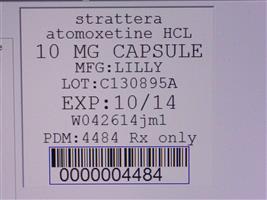
    Strattera

    Strattera (Atomoxetine Hydrochloride) Capsule [Carilion Materials Management]

    2.1 Acute Treatment

     — STRATTERA should be initiated at a total daily dose of approximately 0.5 mg/kg and increased after a minimum of 3 days to a target total daily dose of approximately 1.2 mg/kg administered either as a single daily dose in the morning or as evenly divided doses in the morning and late afternoon/early evening. No additional benefit has been demonstrated for doses higher than 1.2 mg/kg/day . Dosing of children and adolescents up to 70 kg body weight[see Clinical Studies ( )] 14

    The total daily dose in children and adolescents should not exceed 1.4 mg/kg or 100 mg, whichever is less.

     — STRATTERA should be initiated at a total daily dose of 40 mg and increased after a minimum of 3 days to a target total daily dose of approximately 80 mg administered either as a single daily dose in the morning or as evenly divided doses in the morning and late afternoon/early evening. After 2 to 4 additional weeks, the dose may be increased to a maximum of 100 mg in patients who have not achieved an optimal response. There are no data that support increased effectiveness at higher doses . Dosing of children and adolescents over 70 kg body weight and adults[see Clinical Studies ( )] 14

    The maximum recommended total daily dose in children and adolescents over 70 kg and adults is 100 mg.

    2.2 Maintenance/Extended Treatment

    It is generally agreed that pharmacological treatment of ADHD may be needed for extended periods. The benefit of maintaining pediatric patients (ages 6-15 years) with ADHD on STRATTERA after achieving a response in a dose range of 1.2 to 1.8 mg/kg/day was demonstrated in a controlled trial. Patients assigned to STRATTERA in the maintenance phase were generally continued on the same dose used to achieve a response in the open label phase. The physician who elects to use STRATTERA for extended periods should periodically reevaluate the long-term usefulness of the drug for the individual patient . [see Clinical Studies ( )] 14.1

    2.3 General Dosing Information

    STRATTERA may be taken with or without food.

    STRATTERA can be discontinued without being tapered.

    STRATTERA capsules are not intended to be opened, they should be taken whole . [see Patient Counseling Information ( )] 17.6

    The safety of single doses over 120 mg and total daily doses above 150 mg have not been systematically evaluated.

    2.4 Dosing in Specific Populations

    — For those ADHD patients who have hepatic insufficiency (HI), dosage adjustment is recommended as follows: For patients with moderate HI (Child-Pugh Class B), initial and target doses should be reduced to 50% of the normal dose (for patients without HI). For patients with severe HI (Child-Pugh Class C), initial dose and target doses should be reduced to 25% of normal . Dosing adjustment for hepatically impaired patients[see Use In Specific Populations ( )] 8.6

    — In children and adolescents up to 70 kg body weight administered strong CYP2D6 inhibitors, e.g., paroxetine, fluoxetine, and quinidine, or in patients who are known to be CYP2D6 PMs, STRATTERA should be initiated at 0.5 mg/kg/day and only increased to the usual target dose of 1.2 mg/kg/day if symptoms fail to improve after 4 weeks and the initial dose is well tolerated. Dosing adjustment for use with a strong CYP2D6 inhibitor or in patients who are known to be CYP2D6 PMs

    In children and adolescents over 70 kg body weight and adults administered strong CYP2D6 inhibitors, e.g., paroxetine, fluoxetine, and quinidine, STRATTERA should be initiated at 40 mg/day and only increased to the usual target dose of 80 mg/day if symptoms fail to improve after 4 weeks and the initial dose is well tolerated.

  • Welchol
    Welchol (Colesevelam Hydrochloride) Tablet, Film Coated [Carilion Materials Management]

    Welchol

    Welchol (Colesevelam Hydrochloride) Tablet, Film Coated [Carilion Materials Management]

    2.1 Primary Hyperlipidemia

    The recommended dose of WELCHOL Tablets in adults, whether used as monotherapy or in combination with a statin, is 6 tablets once daily or 3 tablets twice daily. WELCHOL Tablets should be taken with a meal and liquid.

    The recommended dose of WELCHOL for Oral Suspension, in adults and children 10 to 17 years of age, is one 3.75 gram packet once daily or one 1.875 gram packet twice daily. To prepare, empty the entire contents of one packet into a glass or cup. Add ½ to 1 cup (4 to 8 ounces) of water, fruit juice, or diet soft drinks. Stir well and drink. WELCHOL for Oral Suspension should be taken with meals. To avoid esophageal distress, WELCHOL for Oral Suspension should not be taken in its dry form. Due to tablet size, it is recommended that any patient who has difficulty swallowing tablets use WELCHOL for Oral Suspension.

    WELCHOL can be dosed at the same time as a statin or the two drugs can be dosed apart [See Clinical Studies ( )]. 14.1

    After initiation of WELCHOL, lipid levels should be analyzed within 4 to 6 weeks.

    2.2 Type 2 Diabetes Mellitus

    The recommended dose of WELCHOL Tablets is 6 tablets once daily or 3 tablets twice daily. WELCHOL should be taken with a meal and liquid.

    The recommended dose of WELCHOL for Oral Suspension is one 3.75 gram packet once daily or one 1.875 gram packet twice daily. To prepare, empty the entire contents of one packet into a glass or cup. Add ½ to 1 cup (4 to 8 ounces) of water, fruit juice, or diet soft drinks. Stir well and drink. WELCHOL for Oral Suspension should be taken with meals. To avoid esophageal distress, WELCHOL for Oral Suspension should not be taken in its dry form.

  • Cymbalta (Duloxetine Hydrochloride) Capsule, Delayed Release [Carilion Materials Management]

    Cymbalta

    Cymbalta (Duloxetine Hydrochloride) Capsule, Delayed Release [Carilion Materials Management]

    Cymbalta should be swallowed whole and should not be chewed or crushed, nor should the capsule be opened and its contents sprinkled on food or mixed with liquids. All of these might affect the enteric coating. Cymbalta can be given without regard to meals.

    2.1 Initial Treatment

    — Cymbalta should be administered at a total dose of 40 mg/day (given as 20 mg twice daily) to 60 mg/day (given either once daily or as 30 mg twice daily). For some patients, it may be desirable to start at 30 mg once daily for 1 week, to allow patients to adjust to the medication before increasing to 60 mg once daily. While a 120 mg/day dose was shown to be effective, there is no evidence that doses greater than 60 mg/day confer any additional benefits. The safety of doses above 120 mg/day has not been adequately evaluated . Major Depressive Disorder[see Clinical Studies ( )] 14.1

    — For most patients, the recommended starting dose for Cymbalta is 60 mg administered once daily. For some patients, it may be desirable to start at 30 mg once daily for 1 week, to allow patients to adjust to the medication before increasing to 60 mg once daily. While a 120 mg once daily dose was shown to be effective, there is no evidence that doses greater than 60 mg/day confer additional benefit. Nevertheless, if a decision is made to increase the dose beyond 60 mg once daily, dose increases should be in increments of 30 mg once daily. The safety of doses above 120 mg once daily has not been adequately evaluated . Generalized Anxiety Disorder[see Clinical Studies ( )] 14.2

    — The recommended dose for Cymbalta is 60 mg administered once daily. There is no evidence that doses higher than 60 mg confer additional significant benefit and the higher dose is clearly less well tolerated . For patients for whom tolerability is a concern, a lower starting dose may be considered. Diabetic Peripheral Neuropathic Pain[see Clinical Studies ( )] 14.3

    Since diabetes is frequently complicated by renal disease, a lower starting dose and gradual increase in dose should be considered for patients with renal impairment . [see Dosage and Administration ( ), Use in Specific Populations ( ), and Clinical Pharmacology ( )] 2.38.1012.3

    — The recommended dose for Cymbalta is 60 mg administered once daily. Treatment should begin at 30 mg once daily for 1 week, to allow patients to adjust to the medication before increasing to 60 mg once daily. Some patients may respond to the starting dose. There is no evidence that doses greater than 60 mg/day confer additional benefit, even in patients who do not respond to a 60 mg dose, and higher doses are associated with a higher rate of adverse reactions . Fibromyalgia[see Clinical Studies ( )] 14.4

    — The recommended dose for Cymbalta is 60 mg once daily. Dosing may be started at 30 mg for one week, to allow patients to adjust to the medication before increasing to 60 mg once daily. There is no evidence that higher doses confer additional benefit, even in patients who do not respond to a 60 mg dose, and higher doses are associated with a higher rate of adverse reactions . Chronic Musculoskeletal Pain[see Clinical Studies ( )] 14.5

    2.2 Maintenance/Continuation/Extended Treatment

    — It is generally agreed that acute episodes of major depression require several months or longer of sustained pharmacologic therapy. Maintenance of efficacy in MDD was demonstrated with Cymbalta as monotherapy. Cymbalta should be administered at a total dose of 60 mg once daily. Patients should be periodically reassessed to determine the need for maintenance treatment and the appropriate dose for such treatment . Major Depressive Disorder[see Clinical Studies ( )] 14.1

    — It is generally agreed that episodes of generalized anxiety disorder require several months or longer of sustained pharmacological therapy. Maintenance of efficacy in GAD was demonstrated with Cymbalta as monotherapy. Cymbalta should be administered in a dose range of 60-120 mg once daily. Patients should be periodically reassessed to determine the continued need for maintenance treatment and the appropriate dose for such treatment . Generalized Anxiety Disorder[see Clinical Studies ( )] 14.2

    — As the progression of diabetic peripheral neuropathy is highly variable and management of pain is empirical, the effectiveness of Cymbalta must be assessed individually. Efficacy beyond 12 weeks has not been systematically studied in placebo-controlled trials. Diabetic Peripheral Neuropathic Pain

    — Fibromyalgia is recognized as a chronic condition. The efficacy of Cymbalta in the management of fibromyalgia has been demonstrated in placebo-controlled studies up to 3 months. The efficacy of Cymbalta was not demonstrated in longer studies; however, continued treatment should be based on individual patient response. Fibromyalgia

    — The efficacy of Cymbalta has not been established in placebo-controlled studies beyond 13 weeks. Chronic Musculoskeletal Pain

    2.3 Dosing in Special Populations

    — It is recommended that Cymbalta should ordinarily not be administered to patients with any hepatic insufficiency . Hepatic Insufficiency[see Warnings and Precautions ( ) and Use in Specific Populations ( )] 5.148.9

    — Cymbalta is not recommended for patients with end-stage renal disease or severe renal impairment (estimated creatinine clearance <30 mL/min) . Severe Renal Impairment[see Warnings and Precautions ( ) and Use in Specific Populations ( )] 5.148.10

    — No dose adjustment is recommended for elderly patients on the basis of age. As with any drug, caution should be exercised in treating the elderly. When individualizing the dosage in elderly patients, extra care should be taken when increasing the dose . Elderly Patients[see Use in Specific Populations ( )] 8.5

    — There are no adequate and well-controlled studies in pregnant women; therefore, Cymbalta should be used during pregnancy only if the potential benefit justifies the potential risk to the fetus . Pregnant Women[see Use in Specific Populations ( )] 8.1

    Lilly maintains a pregnancy registry to monitor the pregnancy outcomes of women exposed to Cymbalta while pregnant. Healthcare providers are encouraged to register any patient who is exposed to Cymbalta during pregnancy by calling the Cymbalta Pregnancy Registry at 1-866-814-6975 or by visiting www.cymbaltapregnancyregistry.com

    — Because the safety of duloxetine in infants is not known, nursing while on Cymbalta is not recommended . Nursing Mothers[see Use in Specific Populations ( )] 8.3

    2.4 Discontinuing Cymbalta

    Symptoms associated with discontinuation of Cymbalta and other SSRIs and SNRIs have been reported. A gradual reduction in the dose rather than abrupt cessation is recommended whenever possible . [see Warnings and Precautions ( )] 5.7

    2.5 Switching a Patient To or From a Monoamine Oxidase Inhibitor (MAOI) Intended to Treat Psychiatric Disorders

    At least 14 days should elapse between discontinuation of an MAOI intended to treat psychiatric disorders and initiation of therapy with Cymbalta. Conversely, at least 5 days should be allowed after stopping Cymbalta before starting an MAOI intended to treat psychiatric disorders [see Contraindications ( )]. 4.1

    2.6 Use of Cymbalta with Other MAOIs such as Linezolid or Methylene Blue

    Do not start Cymbalta in a patient who is being treated with linezolid or intravenous methylene blue because there is an increased risk of serotonin syndrome. In a patient who requires more urgent treatment of a psychiatric condition, other interventions, including hospitalization, should be considered [see Contraindications ( )]. 4.1

    In some cases, a patient already receiving Cymbalta therapy may require urgent treatment with linezolid or intravenous methylene blue. If acceptable alternatives to linezolid or intravenous methylene blue treatment are not available and the potential benefits of linezolid or intravenous methylene blue treatment are judged to outweigh the risks of serotonin syndrome in a particular patient, Cymbalta should be stopped promptly, and linezolid or intravenous methylene blue can be administered. The patient should be monitored for symptoms of serotonin syndrome for 5 days or until 24 hours after the last dose of linezolid or intravenous methylene blue, whichever comes first. Therapy with Cymbalta may be resumed 24 hours after the last dose of linezolid or intravenous methylene blue . [see Warnings and Precautions ( )] 5.4

    The risk of administering methylene blue by non-intravenous routes (such as oral tablets or by local injection) or in intravenous doses much lower than 1 mg/kg with Cymbalta is unclear. The clinician should, nevertheless, be aware of the possibility of emergent symptoms of serotonin syndrome with such use . [see Warnings and Precautions ( )] 5.4

  • Budesonide
    Budesonide Capsule [Carilion Materials Management]

    Budesonide

    Budesonide Capsule [Carilion Materials Management]

    2.1 Mild to Moderate Active Crohn’s Disease

    The recommended adult dosage for the treatment of mild to moderate active Crohn's disease involving the ileum and/or the ascending colon is 9 mg orally taken once daily in the morning for up to 8 weeks. Repeated 8 week courses of budesonide capsules (enteric coated) can be given for recurring episodes of active disease.

    2.2 Maintenance of Clinical Remission of Mild to Moderate Crohn’s Disease

    Following an 8 week course(s) of treatment for active disease and once the patient’s symptoms are controlled (CDAI less than 150), budesonide capsules (enteric coated) 6 mg orally is recommended once daily for maintenance of clinical remission up to 3 months. If symptom control is still maintained at 3 months an attempt to taper to complete cessation is recommended. Continued treatment with budesonide capsules (enteric coated) 6 mg for more than 3 months has not been shown to provide substantial clinical benefit.

    Patients with mild to moderate active Crohn’s disease involving the ileum and/or ascending colon have been switched from oral prednisolone to budesonide capsules (enteric coated) with no reported episodes of adrenal insufficiency. Since prednisolone should not be stopped abruptly, tapering should begin concomitantly with initiating budesonide capsule (enteric coated) treatment.

    2.3 CYP3A4 inhibitors

    If concomitant administration with ketoconazole, or any other CYP3A4 inhibitor, is indicated, patients should be closely monitored for increased signs and/or symptoms of hypercorticism. Grapefruit juice, which is known to inhibit CYP3A4, should also be avoided when taking budesonide capsules (enteric coated). In these cases, reduction in the dose of budesonide capsules (enteric coated) should be considered [ ]. see and Drug Interactions (7)Clinical Pharmacology (12.3)

  • Xifaxan
    Xifaxan (Rifaximin) Tablet [Carilion Materials Management]

    Xifaxan

    Xifaxan (Rifaximin) Tablet [Carilion Materials Management]

    2.1 Dosage for Travelers’ Diarrhea

    The recommended dose of XIFAXAN is one 200 mg tablet taken orally three times a day for 3 days.  XIFAXAN can be administered orally, with or without food [see Clinical Pharmacology ( )]. 12.3

    2.2 Dosage for Hepatic Encephalopathy

    The recommended dose of XIFAXAN is one 550 mg tablet taken orally two times a day, with or without food . [see Clinical Pharmacology ( )] 12.3

    2.1 Dosage for Travelers’ Diarrhea

    The recommended dose of XIFAXAN is one 200 mg tablet taken orally three times a day for 3 days.  XIFAXAN can be administered orally, with or without food [see Clinical Pharmacology ( )]. 12.3

  • Chantix (Varenicline Tartrate) Tablet, Film Coated [Carilion Materials Management]

    Chantix

    Chantix (Varenicline Tartrate) Tablet, Film Coated [Carilion Materials Management]

    2.1 Usual Dosage for Adults

    Smoking cessation therapies are more likely to succeed for patients who are motivated to stop smoking and who are provided additional advice and support. Provide patients with appropriate educational materials and counseling to support the quit attempt.

    The patient should set a date to stop smoking. Begin CHANTIX dosing one week before this date. Alternatively, the patient can begin CHANTIX dosing and then quit smoking between days 8 and 35 of treatment.

    CHANTIX should be taken after eating and with a full glass of water.

    The recommended dose of CHANTIX is 1 mg twice daily following a 1-week titration as follows:

    Days 1 – 3: 0.5 mg once daily Days 4 – 7: 0.5 mg twice daily Day 8 – end of treatment: 1 mg twice daily

    Patients should be treated with CHANTIX for 12 weeks. For patients who have successfully stopped smoking at the end of 12 weeks, an additional course of 12 weeks' treatment with CHANTIX is recommended to further increase the likelihood of long-term abstinence.

    Patients who do not succeed in stopping smoking during 12 weeks of initial therapy, or who relapse after treatment, should be encouraged to make another attempt once factors contributing to the failed attempt have been identified and addressed.

    Consider a temporary or permanent dose reduction in patients who cannot tolerate the adverse effects of CHANTIX.

    2.2 Dosage in Special Populations

    No dosage adjustment is necessary for patients with mild to moderate renal impairment. For patients with severe renal impairment (estimated creatinine clearance <30 mL/min), the recommended starting dose of CHANTIX is 0.5 mg once daily. The dose may then be titrated as needed to a maximum dose of 0.5 mg twice a day. For patients with end-stage renal disease undergoing hemodialysis, a maximum dose of 0.5 mg once daily may be administered if tolerated . Patients with Impaired Renal Function:[see and ] Use in Specific Populations (8.6)Clinical Pharmacology (12.3)

    No dosage adjustment is necessary for patients with hepatic impairment. Because elderly patients are more likely to have decreased renal function, care should be taken in dose selection, and it may be useful to monitor renal function . Elderly and Patients with Impaired Hepatic Function:[see ] Use in Specific Populations (8.5)

  • Coreg Cr
    Coreg Cr (Carvedilol Phosphate) Capsule, Extended Release [Carilion Materials Management]

    Coreg Cr

    Coreg Cr (Carvedilol Phosphate) Capsule, Extended Release [Carilion Materials Management]

    COREG CR is an extended-release capsule intended for once‑daily administration. Patients controlled with immediate‑release carvedilol tablets alone or in combination with other medications may be switched to COREG CR extended‑release capsules based on the total daily doses shown in Table 1.

    Table 1. Dosing Conversion

    Daily Dose of Immediate-Release Carvedilol Tablets

    Daily Dose of COREG CR Capsules a

    6.25 mg (3.125 mg twice daily)

    10 mg once daily

    12.5 mg (6.25 mg twice daily)

    20 mg once daily

    25 mg (12.5 mg twice daily)

    40 mg once daily

    50 mg (25 mg twice daily)

    80 mg once daily

    When switching from carvedilol 12.5 mg or 25 mg twice daily, a starting dose of COREG CR 20 mg or 40 mg once daily, respectively, may be warranted for elderly patients or those at increased risk of hypotension, dizziness, or syncope. Subsequent titration to higher doses should, as appropriate, be made after an interval of at least 2 weeks. a

    COREG CR should be taken once daily in the morning with food. COREG CR should be swallowed as a whole capsule. COREG CR and/or its contents should not be crushed, chewed, or taken in divided doses.

    The capsules may be carefully opened and the beads sprinkled over a spoonful of applesauce. The applesauce should not be warm because it could affect the modified-release properties of this formulation. The mixture of drug and applesauce should be consumed immediately in its entirety. The drug and applesauce mixture should not be stored for future use. Absorption of the beads sprinkled on other foods has not been tested. Alternative Administration:

    2.1 Heart Failure

    DOSAGE MUST BE INDIVIDUALIZED AND CLOSELY MONITORED BY A PHYSICIAN DURING UP‑TITRATION. Prior to initiation of COREG CR, it is recommended that fluid retention be minimized. The recommended starting dose of COREG CR is 10 mg once daily for 2 weeks. Patients who tolerate a dose of 10 mg once daily may have their dose increased to 20, 40, and 80 mg over successive intervals of at least 2 weeks. Patients should be maintained on lower doses if higher doses are not tolerated.

    Patients should be advised that initiation of treatment and (to a lesser extent) dosage increases may be associated with transient symptoms of dizziness or lightheadedness (and rarely syncope) within the first hour after dosing. Thus, during these periods, they should avoid situations such as driving or hazardous tasks, where symptoms could result in injury. Vasodilatory symptoms often do not require treatment, but it may be useful to separate the time of dosing of COREG CR from that of the ACE inhibitor or to reduce temporarily the dose of the ACE inhibitor. The dose of COREG CR should not be increased until symptoms of worsening heart failure or vasodilation have been stabilized.

    Fluid retention (with or without transient worsening heart failure symptoms) should be treated by an increase in the dose of diuretics.

    The dose of COREG CR should be reduced if patients experience bradycardia (heart rate <55 beats/minute).

    Episodes of dizziness or fluid retention during initiation of COREG CR can generally be managed without discontinuation of treatment and do not preclude subsequent successful titration of, or a favorable response to, COREG CR.

    2.2 Left Ventricular Dysfunction Following Myocardial Infarction

    DOSAGE MUST BE INDIVIDUALIZED AND MONITORED DURING UP‑TITRATION. Treatment with COREG CR may be started as an inpatient or outpatient and should be started after the patient is hemodynamically stable and fluid retention has been minimized. It is recommended that COREG CR be started at 20 mg once daily and increased after 3 to 10 days, based on tolerability, to 40 mg once daily, then again to the target dose of 80 mg once daily. A lower starting dose may be used (10 mg once daily) and/or the rate of up‑titration may be slowed if clinically indicated (e.g., due to low blood pressure or heart rate, or fluid retention). Patients should be maintained on lower doses if higher doses are not tolerated. The recommended dosing regimen need not be altered in patients who received treatment with an IV or oral β‑blocker during the acute phase of the myocardial infarction.

    2.3 Hypertension

    DOSAGE MUST BE INDIVIDUALIZED. The recommended starting dose of COREG CR is 20 mg once daily. If this dose is tolerated, using standing systolic pressure measured about 1 hour after dosing as a guide, the dose should be maintained for 7 to 14 days, and then increased to 40 mg once daily if needed, based on trough blood pressure, again using standing systolic pressure 1 hour after dosing as a guide for tolerance. This dose should also be maintained for 7 to 14 days and can then be adjusted upward to 80 mg once daily if tolerated and needed. Although not specifically studied, it is anticipated the full antihypertensive effect of COREG CR would be seen within 7 to 14 days as had been demonstrated with immediate‑release carvedilol. Total daily dose should not exceed 80 mg.

    Concomitant administration with a diuretic can be expected to produce additive effects and exaggerate the orthostatic component of carvedilol action.

    2.4 Hepatic Impairment

    COREG CR should not be given to patients with severe hepatic impairment . [see Contraindications (4)]

    2.5 Geriatric Use

    When switching elderly patients (65 years of age or older) who are taking the higher doses of immediate-release carvedilol tablets (25 mg twice daily) to COREG CR, a lower starting dose (40 mg) of COREG CR is recommended to minimize the potential for dizziness, syncope, or hypotension . Patients who have switched and who tolerate COREG CR should, as appropriate, have their dose increased after an interval of at least 2 weeks . [see Dosage and Administration (2)][see Use in Specific Populations (8.5)]

  • Renvela (Sevelamer Carbonate) Tablet, Film Coated [Carilion Materials Management]

    Renvela

    Renvela (Sevelamer Carbonate) Tablet, Film Coated [Carilion Materials Management]

    Because of the rapid reaction with the hydrochloric acid in the stomach, the dosing of Renvela powder or tablet is anticipated to be similar to that of the sevelamer hydrochloride salt or tablet.

    2.1 General Dosing Information

    Renvela should be given three times a day with meals.

     The recommended starting dose of Renvela is 0.8 to 1.6 g with meals based on serum phosphorus level. provides recommended starting doses of Renvela for patients not taking a phosphate binder. Patients Not Taking a Phosphate Binder.Table 1

    Table 1. Starting Dose for Dialysis Patients Not Taking a Phosphate Binder Serum Phosphorus  Renvela 800 mg Tablet  ®   Renvela Powder  > 5.5 and < 7.5 mg/dL  1 tablet three times daily with meals  0.8 g three times daily with meals ≥ 7.5 mg/dL 2 tablets three times daily with meals 1.6 g three times daily with meals

     For patients switching from sevelamer hydrochloride tablets to sevelamer carbonate tablets or powder, use the same dose in grams. Further titration may be necessary to achieve desired phosphorus levels. The highest daily dose of sevelamer carbonate studied was 14 grams in CKD patients on dialysis. Switching from Sevelamer Hydrochloride Tablets.

    Use the same dose in grams. Further titration may be necessary to achieve desired phosphorus levels. Switching between Sevelamer Carbonate Tablets and Powder.

    In a study in 84 CKD patients on hemodialysis, a similar reduction in serum phosphorus was seen with equivalent doses (approximately mg for mg) of sevelamer hydrochloride and calcium acetate. gives recommended starting doses of Renvela based on a patient’s current calcium acetate dose. Switching from Calcium Acetate.Table 2

    Table 2. Starting Dose for Dialysis Patients Switching From Calcium Acetate to Renvela  Calcium Acetate 667 mg (Tablets per meal) Renvela 800 mg Tablet (Tablets per meal)  ® Renvela Powder  1 tablet 1 tablet 0.8 g 2 tablets 2 tablets 1.6 g 3 tablets 3 tablets  2.4 g

    Titrate the Renvela dose by 0.8 g three times per day with meals at two-week intervals as necessary with the goal of controlling serum phosphorus within the target range. Dose Titration for All Patients Taking Renvela.

    2.2 Sevelamer Carbonate Powder Preparation Instructions

    The entire contents of each 0.8 or 2.4 g packet should be placed in a cup and mixed thoroughly with the amount of water described in . Table 3

    Table 3. Sevelamer Carbonate Powder Preparation Instructions  Renvela Powder Packet Strength Minimum amount of water for dose preparation (either ounces, mL or teaspoon/Tablespoon)   ounces mL tsp/Tbsp 0.8 g 1 30 6 teaspoons/2 Tablespoons 2.4 g 2 60 4 Tablespoons

    Multiple packets may be mixed together with the appropriate amount of water. Patients should be instructed to stir the mixture vigorously (it does not dissolve) and drink the entire preparation within 30 minutes and resuspend the preparation right before drinking.

    Based on clinical studies, the average prescribed daily dose of sevelamer carbonate is approximately 7.2 g per day.

  • Fenofibrate Tablet [Carilion Materials Management]

    Fenofibrate

    Fenofibrate Tablet [Carilion Materials Management]

    2.1 General Considerations

    Patients should be placed on an appropriate lipid-lowering diet before receiving Fenofibrate tablets for oral use, and should continue this diet during treatment with Fenofibrate tablets for oral use. Fenofibrate tablets for oral use can be given without regard to meals.

    The initial treatment for dyslipidemia is dietary therapy specific for the type of lipoprotein abnormality. Excess body weight and excess alcoholic intake may be important factors in hypertriglyceridemia and should be addressed prior to any drug therapy. Physical exercise can be an important ancillary measure. Diseases contributory to hyperlipidemia, such as hypothyroidism or diabetes mellitus should be looked for and adequately treated. Estrogen therapy, thiazide diuretics and beta-blockers, are sometimes associated with massive rises in plasma triglycerides, especially in subjects with familial hypertriglyceridemia. In such cases, discontinuation of the specific etiologic agent may obviate the need for specific drug therapy of hypertriglyceridemia.

    Lipid levels should be monitored periodically and consideration should be given to reducing the dosage of Fenofibrate tablets for oral use if lipid levels fall significantly below the targeted range.

    Therapy should be withdrawn in patients who do not have an adequate response after two months of treatment with the maximum recommended dose of 145 mg once daily.

    2.2 Primary Hypercholesterolemia or Mixed Dyslipidemia

    The initial dose of Fenofibrate tablets for oral use is 145 mg once daily.

    2.3 Severe Hypertriglyceridemia

    The initial dose is 48 to 145 mg per day. Dosage should be individualized according to patient response, and should be adjusted if necessary following repeat lipid determinations at 4 to 8 week intervals. The maximum dose is 145 mg once daily.

    2.4 Impaired Renal Function

    Treatment with Fenofibrate tablets for oral use should be initiated at a dose of 48 mg per day in patients having mild to moderately impaired renal function, and increased only after evaluation of the effects on renal function and lipid levels at this dose. The use of Fenofibrate tablets for oral use should be avoided in patients with severe renal impairment . [see Use in Specific Populations and Clinical Pharmacology ] (8.6)(12.3)

    2.5 Geriatric Patients

    Dose selection for the elderly should be made on the basis of renal function . [see Use in Specific Populations ] (8.5)

    2.5 Geriatric Patients

    Dose selection for the elderly should be made on the basis of renal function . [see Use in Specific Populations ] (8.5)

  • Amitiza
    Amitiza (Lubiprostone) Capsule, Gelatin Coated [Carilion Materials Management]

    Amitiza

    Amitiza (Lubiprostone) Capsule, Gelatin Coated [Carilion Materials Management]

    Take Amitiza orally with food and water. Swallow capsules whole and do not break apart or chew. Physicians and patients should periodically assess the need for continued therapy.

    2.1 Chronic Idiopathic Constipation and Opioid-induced Constipation

    The recommended dose is 24 mcg twice daily orally with food and water.

    Dosage in patients with hepatic impairment

    For patients with moderately impaired hepatic function (Child-Pugh Class B), the recommended starting dose is 16 mcg twice daily. For patients with severely impaired hepatic function (Child-Pugh Class C), the recommended starting dose is 8 mcg twice daily. If this dose is tolerated and an adequate response has not been obtained after an appropriate interval, doses can then be escalated to full dosing with appropriate monitoring of patient response and . [see Use in Specific Populations ( ) 8.7Clinical Pharmacology ( )] 12.3

    2.2 Irritable Bowel Syndrome with Constipation

    The recommended dose is 8 mcg twice daily orally with food and water.

    Dosage in patients with hepatic impairment

    For patients with severely impaired hepatic function (Child-Pugh Class C), the recommended starting dose is 8 mcg once daily. If this dose is tolerated and an adequate response has not been obtained after an appropriate interval, doses can then be escalated to full dosing with appropriate monitoring of patient response. Dosage adjustment is not required for patients with moderately impaired hepatic function (Child-Pugh Class B) . [see Use in Specific Populations ( ) and Clinical Pharmacology ( )] 8.712.3

  • Chantix (Varenicline Tartrate) Tablet, Film Coated [Carilion Materials Management]

    Chantix

    Chantix (Varenicline Tartrate) Tablet, Film Coated [Carilion Materials Management]

    2.1 Usual Dosage for Adults

    Smoking cessation therapies are more likely to succeed for patients who are motivated to stop smoking and who are provided additional advice and support. Provide patients with appropriate educational materials and counseling to support the quit attempt.

    The patient should set a date to stop smoking. Begin CHANTIX dosing one week before this date. Alternatively, the patient can begin CHANTIX dosing and then quit smoking between days 8 and 35 of treatment.

    CHANTIX should be taken after eating and with a full glass of water.

    The recommended dose of CHANTIX is 1 mg twice daily following a 1-week titration as follows:

    Days 1 – 3: 0.5 mg once daily Days 4 – 7: 0.5 mg twice daily Day 8 – end of treatment: 1 mg twice daily

    Patients should be treated with CHANTIX for 12 weeks. For patients who have successfully stopped smoking at the end of 12 weeks, an additional course of 12 weeks' treatment with CHANTIX is recommended to further increase the likelihood of long-term abstinence.

    Patients who do not succeed in stopping smoking during 12 weeks of initial therapy, or who relapse after treatment, should be encouraged to make another attempt once factors contributing to the failed attempt have been identified and addressed.

    Consider a temporary or permanent dose reduction in patients who cannot tolerate the adverse effects of CHANTIX.

    2.2 Dosage in Special Populations

    No dosage adjustment is necessary for patients with mild to moderate renal impairment. For patients with severe renal impairment (estimated creatinine clearance <30 mL/min), the recommended starting dose of CHANTIX is 0.5 mg once daily. The dose may then be titrated as needed to a maximum dose of 0.5 mg twice a day. For patients with end-stage renal disease undergoing hemodialysis, a maximum dose of 0.5 mg once daily may be administered if tolerated . Patients with Impaired Renal Function:[see and ] Use in Specific Populations (8.6)Clinical Pharmacology (12.3)

    No dosage adjustment is necessary for patients with hepatic impairment. Because elderly patients are more likely to have decreased renal function, care should be taken in dose selection, and it may be useful to monitor renal function . Elderly and Patients with Impaired Hepatic Function:[see ] Use in Specific Populations (8.5)

  • Hyoscyamine Sulfate Extended-release Tablet [Carilion Materials Management]

    Hyoscyamine Sulfate Extended-release

    Hyoscyamine Sulfate Extended-release Tablet [Carilion Materials Management]

    Dosage may be adjusted according to the conditions and severity of symptoms.

    1 to 2 tablets every 12 hours. Do not crush or chew tablets. Do not exceed 4 tablets in 24 hours. Adults and pediatric patients 12 years of age and older:

  • Strattera (Atomoxetine Hydrochloride) Capsule [Carilion Materials Management]

    Strattera

    Strattera (Atomoxetine Hydrochloride) Capsule [Carilion Materials Management]

    2.1 Acute Treatment

     — STRATTERA should be initiated at a total daily dose of approximately 0.5 mg/kg and increased after a minimum of 3 days to a target total daily dose of approximately 1.2 mg/kg administered either as a single daily dose in the morning or as evenly divided doses in the morning and late afternoon/early evening. No additional benefit has been demonstrated for doses higher than 1.2 mg/kg/day . Dosing of children and adolescents up to 70 kg body weight[see Clinical Studies ( )] 14

    The total daily dose in children and adolescents should not exceed 1.4 mg/kg or 100 mg, whichever is less.

     — STRATTERA should be initiated at a total daily dose of 40 mg and increased after a minimum of 3 days to a target total daily dose of approximately 80 mg administered either as a single daily dose in the morning or as evenly divided doses in the morning and late afternoon/early evening. After 2 to 4 additional weeks, the dose may be increased to a maximum of 100 mg in patients who have not achieved an optimal response. There are no data that support increased effectiveness at higher doses . Dosing of children and adolescents over 70 kg body weight and adults[see Clinical Studies ( )] 14

    The maximum recommended total daily dose in children and adolescents over 70 kg and adults is 100 mg.

    2.2 Maintenance/Extended Treatment

    It is generally agreed that pharmacological treatment of ADHD may be needed for extended periods. The benefit of maintaining pediatric patients (ages 6-15 years) with ADHD on STRATTERA after achieving a response in a dose range of 1.2 to 1.8 mg/kg/day was demonstrated in a controlled trial. Patients assigned to STRATTERA in the maintenance phase were generally continued on the same dose used to achieve a response in the open label phase. The physician who elects to use STRATTERA for extended periods should periodically reevaluate the long-term usefulness of the drug for the individual patient . [see Clinical Studies ( )] 14.1

    2.3 General Dosing Information

    STRATTERA may be taken with or without food.

    STRATTERA can be discontinued without being tapered.

    STRATTERA capsules are not intended to be opened, they should be taken whole . [see Patient Counseling Information ( )] 17.6

    The safety of single doses over 120 mg and total daily doses above 150 mg have not been systematically evaluated.

    2.4 Dosing in Specific Populations

    — For those ADHD patients who have hepatic insufficiency (HI), dosage adjustment is recommended as follows: For patients with moderate HI (Child-Pugh Class B), initial and target doses should be reduced to 50% of the normal dose (for patients without HI). For patients with severe HI (Child-Pugh Class C), initial dose and target doses should be reduced to 25% of normal . Dosing adjustment for hepatically impaired patients[see Use In Specific Populations ( )] 8.6

    — In children and adolescents up to 70 kg body weight administered strong CYP2D6 inhibitors, e.g., paroxetine, fluoxetine, and quinidine, or in patients who are known to be CYP2D6 PMs, STRATTERA should be initiated at 0.5 mg/kg/day and only increased to the usual target dose of 1.2 mg/kg/day if symptoms fail to improve after 4 weeks and the initial dose is well tolerated. Dosing adjustment for use with a strong CYP2D6 inhibitor or in patients who are known to be CYP2D6 PMs

    In children and adolescents over 70 kg body weight and adults administered strong CYP2D6 inhibitors, e.g., paroxetine, fluoxetine, and quinidine, STRATTERA should be initiated at 40 mg/day and only increased to the usual target dose of 80 mg/day if symptoms fail to improve after 4 weeks and the initial dose is well tolerated.

  • Cymbalta (Duloxetine Hydrochloride) Capsule, Delayed Release [Carilion Materials Management]

    Cymbalta

    Cymbalta (Duloxetine Hydrochloride) Capsule, Delayed Release [Carilion Materials Management]

    Cymbalta should be swallowed whole and should not be chewed or crushed, nor should the capsule be opened and its contents sprinkled on food or mixed with liquids. All of these might affect the enteric coating. Cymbalta can be given without regard to meals.

    2.1 Initial Treatment

    — Cymbalta should be administered at a total dose of 40 mg/day (given as 20 mg twice daily) to 60 mg/day (given either once daily or as 30 mg twice daily). For some patients, it may be desirable to start at 30 mg once daily for 1 week, to allow patients to adjust to the medication before increasing to 60 mg once daily. While a 120 mg/day dose was shown to be effective, there is no evidence that doses greater than 60 mg/day confer any additional benefits. The safety of doses above 120 mg/day has not been adequately evaluated . Major Depressive Disorder[see Clinical Studies ( )] 14.1

    — For most patients, the recommended starting dose for Cymbalta is 60 mg administered once daily. For some patients, it may be desirable to start at 30 mg once daily for 1 week, to allow patients to adjust to the medication before increasing to 60 mg once daily. While a 120 mg once daily dose was shown to be effective, there is no evidence that doses greater than 60 mg/day confer additional benefit. Nevertheless, if a decision is made to increase the dose beyond 60 mg once daily, dose increases should be in increments of 30 mg once daily. The safety of doses above 120 mg once daily has not been adequately evaluated . Generalized Anxiety Disorder[see Clinical Studies ( )] 14.2

    — The recommended dose for Cymbalta is 60 mg administered once daily. There is no evidence that doses higher than 60 mg confer additional significant benefit and the higher dose is clearly less well tolerated . For patients for whom tolerability is a concern, a lower starting dose may be considered. Diabetic Peripheral Neuropathic Pain[see Clinical Studies ( )] 14.3

    Since diabetes is frequently complicated by renal disease, a lower starting dose and gradual increase in dose should be considered for patients with renal impairment . [see Dosage and Administration ( ), Use in Specific Populations ( ), and Clinical Pharmacology ( )] 2.38.1012.3

    — The recommended dose for Cymbalta is 60 mg administered once daily. Treatment should begin at 30 mg once daily for 1 week, to allow patients to adjust to the medication before increasing to 60 mg once daily. Some patients may respond to the starting dose. There is no evidence that doses greater than 60 mg/day confer additional benefit, even in patients who do not respond to a 60 mg dose, and higher doses are associated with a higher rate of adverse reactions . Fibromyalgia[see Clinical Studies ( )] 14.4

    — The recommended dose for Cymbalta is 60 mg once daily. Dosing may be started at 30 mg for one week, to allow patients to adjust to the medication before increasing to 60 mg once daily. There is no evidence that higher doses confer additional benefit, even in patients who do not respond to a 60 mg dose, and higher doses are associated with a higher rate of adverse reactions . Chronic Musculoskeletal Pain[see Clinical Studies ( )] 14.5

    2.2 Maintenance/Continuation/Extended Treatment

    — It is generally agreed that acute episodes of major depression require several months or longer of sustained pharmacologic therapy. Maintenance of efficacy in MDD was demonstrated with Cymbalta as monotherapy. Cymbalta should be administered at a total dose of 60 mg once daily. Patients should be periodically reassessed to determine the need for maintenance treatment and the appropriate dose for such treatment . Major Depressive Disorder[see Clinical Studies ( )] 14.1

    — It is generally agreed that episodes of generalized anxiety disorder require several months or longer of sustained pharmacological therapy. Maintenance of efficacy in GAD was demonstrated with Cymbalta as monotherapy. Cymbalta should be administered in a dose range of 60-120 mg once daily. Patients should be periodically reassessed to determine the continued need for maintenance treatment and the appropriate dose for such treatment . Generalized Anxiety Disorder[see Clinical Studies ( )] 14.2

    — As the progression of diabetic peripheral neuropathy is highly variable and management of pain is empirical, the effectiveness of Cymbalta must be assessed individually. Efficacy beyond 12 weeks has not been systematically studied in placebo-controlled trials. Diabetic Peripheral Neuropathic Pain

    — Fibromyalgia is recognized as a chronic condition. The efficacy of Cymbalta in the management of fibromyalgia has been demonstrated in placebo-controlled studies up to 3 months. The efficacy of Cymbalta was not demonstrated in longer studies; however, continued treatment should be based on individual patient response. Fibromyalgia

    — The efficacy of Cymbalta has not been established in placebo-controlled studies beyond 13 weeks. Chronic Musculoskeletal Pain

    2.3 Dosing in Special Populations

    — It is recommended that Cymbalta should ordinarily not be administered to patients with any hepatic insufficiency . Hepatic Insufficiency[see Warnings and Precautions ( ) and Use in Specific Populations ( )] 5.148.9

    — Cymbalta is not recommended for patients with end-stage renal disease or severe renal impairment (estimated creatinine clearance <30 mL/min) . Severe Renal Impairment[see Warnings and Precautions ( ) and Use in Specific Populations ( )] 5.148.10

    — No dose adjustment is recommended for elderly patients on the basis of age. As with any drug, caution should be exercised in treating the elderly. When individualizing the dosage in elderly patients, extra care should be taken when increasing the dose . Elderly Patients[see Use in Specific Populations ( )] 8.5

    — There are no adequate and well-controlled studies in pregnant women; therefore, Cymbalta should be used during pregnancy only if the potential benefit justifies the potential risk to the fetus . Pregnant Women[see Use in Specific Populations ( )] 8.1

    Lilly maintains a pregnancy registry to monitor the pregnancy outcomes of women exposed to Cymbalta while pregnant. Healthcare providers are encouraged to register any patient who is exposed to Cymbalta during pregnancy by calling the Cymbalta Pregnancy Registry at 1-866-814-6975 or by visiting www.cymbaltapregnancyregistry.com

    — Because the safety of duloxetine in infants is not known, nursing while on Cymbalta is not recommended . Nursing Mothers[see Use in Specific Populations ( )] 8.3

    2.4 Discontinuing Cymbalta

    Symptoms associated with discontinuation of Cymbalta and other SSRIs and SNRIs have been reported. A gradual reduction in the dose rather than abrupt cessation is recommended whenever possible . [see Warnings and Precautions ( )] 5.7

    2.5 Switching a Patient To or From a Monoamine Oxidase Inhibitor (MAOI) Intended to Treat Psychiatric Disorders

    At least 14 days should elapse between discontinuation of an MAOI intended to treat psychiatric disorders and initiation of therapy with Cymbalta. Conversely, at least 5 days should be allowed after stopping Cymbalta before starting an MAOI intended to treat psychiatric disorders [see Contraindications ( )]. 4.1

    2.6 Use of Cymbalta with Other MAOIs such as Linezolid or Methylene Blue

    Do not start Cymbalta in a patient who is being treated with linezolid or intravenous methylene blue because there is an increased risk of serotonin syndrome. In a patient who requires more urgent treatment of a psychiatric condition, other interventions, including hospitalization, should be considered [see Contraindications ( )]. 4.1

    In some cases, a patient already receiving Cymbalta therapy may require urgent treatment with linezolid or intravenous methylene blue. If acceptable alternatives to linezolid or intravenous methylene blue treatment are not available and the potential benefits of linezolid or intravenous methylene blue treatment are judged to outweigh the risks of serotonin syndrome in a particular patient, Cymbalta should be stopped promptly, and linezolid or intravenous methylene blue can be administered. The patient should be monitored for symptoms of serotonin syndrome for 5 days or until 24 hours after the last dose of linezolid or intravenous methylene blue, whichever comes first. Therapy with Cymbalta may be resumed 24 hours after the last dose of linezolid or intravenous methylene blue . [see Warnings and Precautions ( )] 5.4

    The risk of administering methylene blue by non-intravenous routes (such as oral tablets or by local injection) or in intravenous doses much lower than 1 mg/kg with Cymbalta is unclear. The clinician should, nevertheless, be aware of the possibility of emergent symptoms of serotonin syndrome with such use . [see Warnings and Precautions ( )] 5.4

  • Prenatal Plus (Vitamin A Acetate, .beta.-carotene, Ascorbic Acid, Cholecalciferol, .alpha.-tocopherol Acetate, Dl-, Thiamine Mononitrate, Riboflavin, Niacinamide, Pyridoxine Hydrochloride, Folic Acid, Cyanocobalamin, Calcium Carbonate, Ferrous Fumarate, Zinc Oxide, Cupric Oxide) Tablet, Film Coated [Carilion Materials Management]

    Prenatal Plus

    Prenatal Plus (Vitamin A Acetate, .beta.-carotene, Ascorbic Acid, Cholecalciferol, .alpha.-tocopherol Acetate, Dl-, Thiamine Mononitrate, Riboflavin, Niacinamide, Pyridoxine Hydrochloride, Folic Acid, Cyanocobalamin, Calcium Carbonate, Ferrous Fumarate, Zinc Oxide, Cupric Oxide) Tablet, Film Coated [Carilion Materials Management]

     As a dietary adjunct before, during and after pregnancy, take one tablet daily with a meal, or as directed by a physician.

  • Pramipexole Dihydrochloride Tablet [Carilion Materials Management]

    Pramipexole Dihydrochloride

    Pramipexole Dihydrochloride Tablet [Carilion Materials Management]

    2.1 General Dosing Considerations

    Pramipexole dihydrochloride tablets are taken orally, with or without food.

    If a significant interruption in therapy with pramipexole dihydrochloride tablets have occurred, re-titration of therapy may be warranted.

    2.2 Parkinson’s Disease

    In all clinical studies, dosage was initiated at a subtherapeutic level to avoid intolerable adverse effects and orthostatic hypotension. Pramipexole dihydrochloride tablets should be titrated gradually in all patients. The dose should be increased to achieve a maximum therapeutic effect, balanced against the principal side effects of dyskinesia, hallucinations, somnolence, and dry mouth.

    Dosing in Patients with Normal Renal Function

    Initial Treatment

    Doses should be increased gradually from a starting dose of 0.375 mg/day given in three divided doses and should not be increased more frequently than every 5 to 7 days. A suggested ascending dosage schedule that was used in clinical studies is shown in the following table:

    Table 1 Ascending Dosage Schedule of pramipexole dihydrochloride tablets for Parkinson’s Disease Week Dosage (mg) Total Daily Dose (mg) 1 0.125 TID 0.375 2 0.25 TID 0.75 3 0.5 TID 1.50 4 0.75 TID 2.25 5 1 TID 3.0 6 1.25 TID 3.75 7 1.5 TID 4.50

    Maintenance Treatment

    Pramipexole Dihydrochloride Tablets were effective and well tolerated over a dosage range of 1.5 to 4.5 mg/day administered in equally divided doses three times per day with or without concomitant levodopa (approximately 800 mg/day).

    In a fixed-dose study in early Parkinson's disease patients, doses of 3 mg, 4.5 mg, and 6 mg per day of pramipexole dihydrochloride tablets were not shown to provide any significant benefit beyond that achieved at a daily dose of 1.5 mg/day. However, in the same fixed-dose study, the following adverse events were dose related: postural hypotension, nausea, constipation, somnolence, and amnesia. The frequency of these events was generally 2-fold greater than placebo for pramipexole doses greater than 3 mg/day. The incidence of somnolence reported with pramipexole at a dose of 1.5 mg/day was comparable to placebo.

    When pramipexole dihydrochloride tablets are used in combination with levodopa, a reduction of the levodopa dosage should be considered. In a controlled study in advanced Parkinson's disease, the dosage of levodopa was reduced by an average of 27% from baseline.

    Dosing in Patients with Renal Impairment

    Table 2 Dosing of pramipexole dihydrochloride tablets in Parkinson’s Disease Patients with Renal Impairment Renal Status Starting Dose (mg) Maximum Dose (mg) Normal to mild impairment  (creatinine Cl > 50 mL/min) 0.125 TID 1.5 TID Moderate impairment  (creatinine Cl = 30 to 50 mL/min) 0.125 BID 0.75 TID Severe impairment  (creatinine Cl = 15 to <30 mL/min) 0.125 QD 1.5 QD Very severe impairment  (creatinine Cl < 15 mL/min and hemodialysis patients) The use of pramipexole dihydrochloride tablets not been adequately studied in this group of patients.

    Discontinuation of Treatment

    Pramipexole dihydrochloride Tablets should be tapered off at a rate of 0.75 mg per day until the daily dose has been reduced to 0.75 mg. Thereafter, the dose should be reduced by 0.375 mg per day. In some studies, however, abrupt discontinuation was uneventful.

  • Sotalol Hydrochloride Tablet [Carilion Materials Management]

    Sotalol Hydrochloride

    Sotalol Hydrochloride Tablet [Carilion Materials Management]

    As with other antiarrhythmic agents, sotalol hydrochloride should be initiated and doses increased in a hospital with facilities for cardiac rhythm monitoring and assessment (see ). Sotalol should be administered only after appropriate clinical assessment (see ), and the dosage of sotalol hydrochloride must be individualized for each patient on the basis of therapeutic response and tolerance. Proarrhythmic events can occur not only at initiation of therapy, but also with each upward dosage adjustment. INDICATIONS AND USAGEINDICATIONS AND USAGE

    Adults

    Dosage of sotalol hydrochloride should be adjusted gradually, allowing 3 days between dosing increments in order to attain steady-state plasma concentrations, and to allow monitoring of QT intervals. Graded dose adjustment will help prevent the usage of doses which are higher than necessary to control the arrhythmia. The recommended initial dose is 80 mg twice daily. This dose may be increased, if necessary, after appropriate evaluation to 240 or 320 mg/day (120 to 160 mg twice daily). In most patients, a therapeutic response is obtained at a total daily dose of 160 to 320 mg/day, given in two or three divided doses. Some patients with life-threatening refractory ventricular arrhythmias may require doses as high as 480 to 640 mg/day; however, these doses should only be prescribed when the potential benefit outweighs the increased risk of adverse events, in particular proarrhythmia. Because of the long terminal elimination half-life of sotalol, dosing on more than a BID regimen is usually not necessary.

    Children

    As in adults the following precautionary measures should be considered when initiating sotalol treatment in children: initiation of treatment in the hospital after appropriate clinical assessment; individualized regimen as appropriate; gradual increase of doses if required; careful assessment of therapeutic response and tolerability; and frequent monitoring of the QT interval and heart rate. c

    For children aged about 2 years and greater

    For children aged about 2 years and greater, with normal renal function, doses normalized for body surface area are appropriate for both initial and incremental dosing. Since the Class III potency in children (see ) is not very different from that in adults, reaching plasma concentrations that occur within the adult dose range is an appropriate guide. From pediatric pharmacokinetic data the following is recommended. CLINICAL PHARMACOLOGY

    For initiation of treatment, 30 mg/m three times a day (90 mg/m total daily dose) is approximately equivalent to the initial 160 mg total daily dose for adults. Subsequent titration to a maximum of 60 mg/m (approximately equivalent to the 360 mg total daily dose for adults) can then occur. Titration should be guided by clinical response, heart rate and QT , with increased dosing being preferably carried out in-hospital. At least 36 hours should be allowed between dose increments to attain steady-state plasma concentrations of sotalol in patients with age-adjusted normal renal function. 222c

    For children aged about 2 years or younger

    For children aged about 2 years or younger, the above pediatric dosage should be reduced by a factor that depends heavily upon age, as shown in the following graph, age plotted on a logarithmic scale in months.

    For a child aged 20 months, the dosing suggested for children with normal renal function aged 2 years or greater should be multiplied by about 0.97; the initial starting dose would be (30 X 0.97) = 29.1 mg/m , administered three times daily. For a child aged 1 month, the starting dose should be multiplied by 0.68; the initial starting dose would be (30 X 0.68) = 20 mg/m , administered three times daily. For a child aged about 1 week, the initial starting dose should be multiplied by 0.3; the starting dose would be (30 X 0.3) = 9 mg/m . Similar calculations should be made for increased doses as titration proceeds. Since the half-life of sotalol decreases with decreasing age (below about 2 years), time to steady-state will also increase. Thus, in neonates the time to steady-state may be as long as a week or longer. 222

    In all children, individualization of dosage is required. As in adults sotalol hydrochloride should be used with particular caution in children if the QT is greater than 500 msec on therapy, and serious consideration should be given to reducing the dose or discontinuing therapy when QT exceeds 550 msec. cc

    Dosage in Renal Impairment

    Adults

    Because sotalol is excreted predominantly in urine and its terminal elimination half-life is prolonged in conditions of renal impairment, the dosing interval (time between divided doses) of sotalol should be modified (when creatinine clearance is lower than 60 mL/min) according to the following table.

    Creatinine Clearance mL/min Dosing Interval (hours) a  >60  12  30 to 59  24  10 to 29  36 to 48  <10  Dose should be individualized

    The initial dose of 80 mg and subsequent doses should be administered at these intervals. See following paragraph for dosage escalations. a

    Since the terminal elimination half-life of sotalol hydrochloride is increased in patients with renal impairment, a longer duration of dosing is required to reach steady-state. Dose escalations in renal impairment should be done after administration of at least 5 to 6 doses at appropriate intervals (see table above). Extreme caution should be exercised in the use of sotalol in patients with renal failure undergoing hemodialysis. The half-life of sotalol is prolonged (up to 69 hours) in anuric patients. Sotalol, however, can be partly removed by dialysis with subsequent partial rebound in concentrations when dialysis is completed. Both safety (heart rate, QT interval) and efficacy (arrhythmia control) must be closely monitored.

    Children

    The use of sotalol hydrochloride in children with renal impairment has not been investigated. Sotalol elimination is predominantly via the kidney in the unchanged form. Use of sotalol in any age group with decreased renal function should be at lower doses or at increased intervals between doses. Monitoring of heart rate and QT is more important and it will take much longer to reach steady-state with any dose and/or frequency of administration. c

    Transfer to Sotalol

    Before starting sotalol, previous antiarrhythmic therapy should generally be withdrawn under careful monitoring for a minimum of 2 to 3 plasma half-lives if the patient's clinical condition permits (see ). Treatment has been initiated in some patients receiving I.V. lidocaine without ill effect. After discontinuation of amiodarone, sotalol should not be initiated until the QT interval is normalized (see ). Drug InteractionsWARNINGS

    Preparation of Extemporaneous Oral Solution

    Sotalol hydrochloride syrup 5 mg/mL can be compounded using Simple Syrup containing 0.1% sodium benzoate (Syrup, NF) available from Humco Laboratories as follows:

    Measure 120 mL of Simple Syrup. Transfer the syrup to a 6-ounce amber plastic (polyethylene terephthalate [PET]) prescription bottle. NOTE: An oversized bottle is used to allow for a headspace, so that there will be more effective mixing during shaking of the bottle. Add five (5) sotalol hydrochloride 120 mg tablets to the bottle. These tablets are added intact; it is not necessary to crush the tablets. NOTE: The addition of the tablets can also be done first. The tablets can also be crushed if preferred. If the tablets are crushed, care should be taken to transfer the entire quantity of tablet powder into the bottle containing the syrup. Shake the bottle to wet the entire surface of the tablets. If the tablets have been crushed, shake the bottle until the endpoint is achieved. Allow the tablets to hydrate for at least two hours. After at least two hours have elapsed, shake the bottle intermittently over the course of at least another two hours until the tablets are completely disintegrated. NOTE: The tablets can be allowed to hydrate overnight to simplify the disintegration process.

    The endpoint is achieved when a dispersion of fine particles in the syrup is obtained.

    This compounding procedure results in a solution containing 5 mg/mL of sotalol HCI. The fine solid particles are the water-insoluble inactive ingredients of the tablets.

    This extemporaneously prepared oral solution of sotalol HCI (with suspended inactive particles) must be shaken well prior to administration. This is to ensure that the amount of inactive solid particles per dose remains constant throughout the duration of use.

    Stability studies indicate that the suspension is stable for three months when stored at controlled room temperature (20°-25°C/68°-77°F) and ambient humidity.

    Transfer to Betapace AF from Sotalol ®

    Patients with a history of symptomatic AFIB/AFL who are currently receiving sotalol for the maintenance of normal sinus rhythm should be transferred to Betapace AF because of the significant differences in labeling (i.e., patient package insert for Betapace AF , dosing administration, and safety information). ®®

    Adults

    Dosage of sotalol hydrochloride should be adjusted gradually, allowing 3 days between dosing increments in order to attain steady-state plasma concentrations, and to allow monitoring of QT intervals. Graded dose adjustment will help prevent the usage of doses which are higher than necessary to control the arrhythmia. The recommended initial dose is 80 mg twice daily. This dose may be increased, if necessary, after appropriate evaluation to 240 or 320 mg/day (120 to 160 mg twice daily). In most patients, a therapeutic response is obtained at a total daily dose of 160 to 320 mg/day, given in two or three divided doses. Some patients with life-threatening refractory ventricular arrhythmias may require doses as high as 480 to 640 mg/day; however, these doses should only be prescribed when the potential benefit outweighs the increased risk of adverse events, in particular proarrhythmia. Because of the long terminal elimination half-life of sotalol, dosing on more than a BID regimen is usually not necessary.

    Children

    As in adults the following precautionary measures should be considered when initiating sotalol treatment in children: initiation of treatment in the hospital after appropriate clinical assessment; individualized regimen as appropriate; gradual increase of doses if required; careful assessment of therapeutic response and tolerability; and frequent monitoring of the QT interval and heart rate. c

    For children aged about 2 years and greater

    For children aged about 2 years and greater, with normal renal function, doses normalized for body surface area are appropriate for both initial and incremental dosing. Since the Class III potency in children (see ) is not very different from that in adults, reaching plasma concentrations that occur within the adult dose range is an appropriate guide. From pediatric pharmacokinetic data the following is recommended. CLINICAL PHARMACOLOGY

    For initiation of treatment, 30 mg/m three times a day (90 mg/m total daily dose) is approximately equivalent to the initial 160 mg total daily dose for adults. Subsequent titration to a maximum of 60 mg/m (approximately equivalent to the 360 mg total daily dose for adults) can then occur. Titration should be guided by clinical response, heart rate and QT , with increased dosing being preferably carried out in-hospital. At least 36 hours should be allowed between dose increments to attain steady-state plasma concentrations of sotalol in patients with age-adjusted normal renal function. 222c

    For children aged about 2 years or younger

    For children aged about 2 years or younger, the above pediatric dosage should be reduced by a factor that depends heavily upon age, as shown in the following graph, age plotted on a logarithmic scale in months.

    For a child aged 20 months, the dosing suggested for children with normal renal function aged 2 years or greater should be multiplied by about 0.97; the initial starting dose would be (30 X 0.97) = 29.1 mg/m , administered three times daily. For a child aged 1 month, the starting dose should be multiplied by 0.68; the initial starting dose would be (30 X 0.68) = 20 mg/m , administered three times daily. For a child aged about 1 week, the initial starting dose should be multiplied by 0.3; the starting dose would be (30 X 0.3) = 9 mg/m . Similar calculations should be made for increased doses as titration proceeds. Since the half-life of sotalol decreases with decreasing age (below about 2 years), time to steady-state will also increase. Thus, in neonates the time to steady-state may be as long as a week or longer. 222

    In all children, individualization of dosage is required. As in adults sotalol hydrochloride should be used with particular caution in children if the QT is greater than 500 msec on therapy, and serious consideration should be given to reducing the dose or discontinuing therapy when QT exceeds 550 msec. cc

    Dosage in Renal Impairment

    Adults

    Because sotalol is excreted predominantly in urine and its terminal elimination half-life is prolonged in conditions of renal impairment, the dosing interval (time between divided doses) of sotalol should be modified (when creatinine clearance is lower than 60 mL/min) according to the following table.

    Creatinine Clearance mL/min Dosing Interval (hours) a  >60  12  30 to 59  24  10 to 29  36 to 48  <10  Dose should be individualized

    The initial dose of 80 mg and subsequent doses should be administered at these intervals. See following paragraph for dosage escalations. a

    Since the terminal elimination half-life of sotalol hydrochloride is increased in patients with renal impairment, a longer duration of dosing is required to reach steady-state. Dose escalations in renal impairment should be done after administration of at least 5 to 6 doses at appropriate intervals (see table above). Extreme caution should be exercised in the use of sotalol in patients with renal failure undergoing hemodialysis. The half-life of sotalol is prolonged (up to 69 hours) in anuric patients. Sotalol, however, can be partly removed by dialysis with subsequent partial rebound in concentrations when dialysis is completed. Both safety (heart rate, QT interval) and efficacy (arrhythmia control) must be closely monitored.

    Children

    The use of sotalol hydrochloride in children with renal impairment has not been investigated. Sotalol elimination is predominantly via the kidney in the unchanged form. Use of sotalol in any age group with decreased renal function should be at lower doses or at increased intervals between doses. Monitoring of heart rate and QT is more important and it will take much longer to reach steady-state with any dose and/or frequency of administration. c

    Transfer to Sotalol

    Before starting sotalol, previous antiarrhythmic therapy should generally be withdrawn under careful monitoring for a minimum of 2 to 3 plasma half-lives if the patient's clinical condition permits (see ). Treatment has been initiated in some patients receiving I.V. lidocaine without ill effect. After discontinuation of amiodarone, sotalol should not be initiated until the QT interval is normalized (see ). Drug InteractionsWARNINGS

    Preparation of Extemporaneous Oral Solution

    Sotalol hydrochloride syrup 5 mg/mL can be compounded using Simple Syrup containing 0.1% sodium benzoate (Syrup, NF) available from Humco Laboratories as follows:

    Measure 120 mL of Simple Syrup. Transfer the syrup to a 6-ounce amber plastic (polyethylene terephthalate [PET]) prescription bottle. NOTE: An oversized bottle is used to allow for a headspace, so that there will be more effective mixing during shaking of the bottle. Add five (5) sotalol hydrochloride 120 mg tablets to the bottle. These tablets are added intact; it is not necessary to crush the tablets. NOTE: The addition of the tablets can also be done first. The tablets can also be crushed if preferred. If the tablets are crushed, care should be taken to transfer the entire quantity of tablet powder into the bottle containing the syrup. Shake the bottle to wet the entire surface of the tablets. If the tablets have been crushed, shake the bottle until the endpoint is achieved. Allow the tablets to hydrate for at least two hours. After at least two hours have elapsed, shake the bottle intermittently over the course of at least another two hours until the tablets are completely disintegrated. NOTE: The tablets can be allowed to hydrate overnight to simplify the disintegration process.

    The endpoint is achieved when a dispersion of fine particles in the syrup is obtained.

    This compounding procedure results in a solution containing 5 mg/mL of sotalol HCI. The fine solid particles are the water-insoluble inactive ingredients of the tablets.

    This extemporaneously prepared oral solution of sotalol HCI (with suspended inactive particles) must be shaken well prior to administration. This is to ensure that the amount of inactive solid particles per dose remains constant throughout the duration of use.

    Stability studies indicate that the suspension is stable for three months when stored at controlled room temperature (20°-25°C/68°-77°F) and ambient humidity.

    Transfer to Betapace AF from Sotalol ®

    Patients with a history of symptomatic AFIB/AFL who are currently receiving sotalol for the maintenance of normal sinus rhythm should be transferred to Betapace AF because of the significant differences in labeling (i.e., patient package insert for Betapace AF , dosing administration, and safety information). ®®

  • Donepezil Hydrochloride Tablet, Film Coated [Carilion Materials Management]

    Donepezil Hydrochloride

    Donepezil Hydrochloride Tablet, Film Coated [Carilion Materials Management]

    Donepezil hydrochloride tablets should be taken in the evening, just prior to retiring.

    Donepezil hydrochloride tablets can be taken with or without food.

    2.1 Mild to Moderate Alzheimer’s Disease

    The dosages of donepezil hydrochloride tablets shown to be effective in controlled clinical trials are 5 mg and 10 mg administered once per day.

    The higher dose of 10 mg did not provide a statistically significantly greater clinical benefit than 5 mg. There is a suggestion, however, based upon order of group mean scores and dose trend analyses of data from these clinical trials, that a daily dose of 10 mg of donepezil hydrochloride tablets might provide additional benefit for some patients. Accordingly, whether or not to employ a dose of 10 mg is a matter of prescriber and patient preference.

    2.2 Severe Alzheimer’s Disease

    Donepezil hydrochloride tablets have been shown to be effective in controlled clinical trials at a dose of 10 mg administered once daily.

    2.3 Titration

    The recommended starting dose of donepezil hydrochloride tablets is 5 mg once daily. Evidence from the controlled trials in mild to moderate Alzheimer’s disease indicates that the 10 mg dose, with a one week titration, is likely to be associated with a higher incidence of cholinergic adverse events compared to the 5 mg dose. In open-label trials using a 6 week titration, the type and frequency of these same adverse events were similar between the 5 mg and 10 mg dose groups. Therefore, because donepezil hydrochloride tablets steady state is achieved about 15 days after it is started and because the incidence of untoward effects may be influenced by the rate of dose escalation, a dose of 10 mg should not be administered until patients have been on a daily dose of 5 mg for 4 to 6 weeks.

  • Rivastigmine Tartrate Capsule [Carilion Materials Management]

    Rivastigmine Tartrate

    Rivastigmine Tartrate Capsule [Carilion Materials Management]

    Dementia of the Alzheimer's type

    The dosage of Rivastigmine Tartrate Capsules shown to be effective in controlled clinical trials in Alzheimer’s Disease is 6 to 12 mg/day, given as twice a day dosing (daily doses of 3 to 6 mg BID). There is evidence from the clinical trials that doses at the higher end of this range may be more beneficial.   The starting dose of Rivastigmine Tartrate Capsules is 1.5 mg twice a day (BID). If this dose is well tolerated, after a minimum of 2 weeks of treatment, the dose may be increased to 3 mg BID. Subsequent increases to 4.5 mg BID and 6 mg BID should be attempted after a minimum of 2 weeks at the previous dose. If adverse effects (e.g., nausea, vomiting, abdominal pain, loss of appetite) cause intolerance during treatment, the patient should be instructed to discontinue treatment for several doses and then restart at the same or next lower dose level. If treatment is interrupted for longer than several days, treatment should be reinitiated with the lowest daily dose and titrated as described above (see ). The maximum dose is 6 mg BID (12 mg/day).

    WARNINGS

    Dementia associated with Parkinson's Disease

    The dosage of Rivastigmine Tartrate Capsules shown to be effective in the single controlled clinical trial conducted in dementia associated with Parkinson’s Disease is 3 to 12 mg/day, given as twice-a-day dosing (daily doses of 1.5 to 6 mg BID). In that medical condition, the starting dose of Rivastigmine Tartrate Capsules is 1.5 mg BID; subsequently, the dose may be increased to 3 mg BID and further to 4.5 mg BID and 6 mg BID, based on tolerability, with a minimum of 4 weeks at each dose.   Rivastigmine Tartrate Capsules should be taken with meals in divided doses in the morning and evening.

  • Sulindac Tablet [Carilion Materials Management]

    Sulindac

    Sulindac Tablet [Carilion Materials Management]

    Carefully consider the potential benefits and risks of sulindac and other treatment options before deciding to use sulindac. Use the lowest effective dose for the shortest duration consistent with individual patient treatment goals (see ). WARNINGS

    After observing the response to initial therapy with sulindac, the dose and frequency should be adjusted to suit an individual patient's needs.

    Sulindac should be administered orally twice a day with food. The maximum dosage is 400 mg per day. Dosages above 400 mg per day are not recommended.

    In osteoarthritis, rheumatoid arthritis, and ankylosing spondylitis, the recommended starting dosage is 150 mg twice a day. The dosage may be lowered or raised depending on the response.

    A prompt response (within one week) can be expected in about one-half of patients with osteoarthritis, ankylosing spondylitis, and rheumatoid arthritis. Others may require longer to respond.

    In acute painful shoulder (acute subacromial bursitis/supraspinatus tendinitis) and acute gouty arthritis, the recommended dosage is 200 mg twice a day. After a satisfactory response has been achieved, the dosage may be reduced according to the response. In acute painful shoulder, therapy for 7-14 days is adequate. In acute gouty arthritis, therapy for 7 days is adequate. usuallyusually

  • Fenofibrate Tablet [Carilion Materials Management]

    Fenofibrate

    Fenofibrate Tablet [Carilion Materials Management]

    2.1 General Considerations

    Patients should be placed on an appropriate lipid-lowering diet before receiving Fenofibrate tablets for oral use, and should continue this diet during treatment with Fenofibrate tablets for oral use. Fenofibrate tablets for oral use can be given without regard to meals.

    The initial treatment for dyslipidemia is dietary therapy specific for the type of lipoprotein abnormality. Excess body weight and excess alcoholic intake may be important factors in hypertriglyceridemia and should be addressed prior to any drug therapy. Physical exercise can be an important ancillary measure. Diseases contributory to hyperlipidemia, such as hypothyroidism or diabetes mellitus should be looked for and adequately treated. Estrogen therapy, thiazide diuretics and beta-blockers, are sometimes associated with massive rises in plasma triglycerides, especially in subjects with familial hypertriglyceridemia. In such cases, discontinuation of the specific etiologic agent may obviate the need for specific drug therapy of hypertriglyceridemia.

    Lipid levels should be monitored periodically and consideration should be given to reducing the dosage of Fenofibrate tablets for oral use if lipid levels fall significantly below the targeted range.

    Therapy should be withdrawn in patients who do not have an adequate response after two months of treatment with the maximum recommended dose of 145 mg once daily.

    2.2 Primary Hypercholesterolemia or Mixed Dyslipidemia

    The initial dose of Fenofibrate tablets for oral use is 145 mg once daily.

    2.3 Severe Hypertriglyceridemia

    The initial dose is 48 to 145 mg per day. Dosage should be individualized according to patient response, and should be adjusted if necessary following repeat lipid determinations at 4 to 8 week intervals. The maximum dose is 145 mg once daily.

    2.4 Impaired Renal Function

    Treatment with Fenofibrate tablets for oral use should be initiated at a dose of 48 mg per day in patients having mild to moderately impaired renal function, and increased only after evaluation of the effects on renal function and lipid levels at this dose. The use of Fenofibrate tablets for oral use should be avoided in patients with severe renal impairment . [see Use in Specific Populations and Clinical Pharmacology ] (8.6)(12.3)

    2.5 Geriatric Patients

    Dose selection for the elderly should be made on the basis of renal function . [see Use in Specific Populations ] (8.5)

    2.5 Geriatric Patients

    Dose selection for the elderly should be made on the basis of renal function . [see Use in Specific Populations ] (8.5)

  • Lescol Xl (Fluvastatin Sodium) Tablet, Extended Release [Carilion Materials Management]

    Lescol Xl

    Lescol Xl (Fluvastatin Sodium) Tablet, Extended Release [Carilion Materials Management]

    2.1     General Dosing Information

    Dose range: 20 mg to 80 mg/ day.

    LESCOL/LESCOL XL can be administered orally as a single dose, with or without food.

    Do not break, crush or chew LESCOL XL tablets or open LESCOL capsules prior to administration.

    Do not take two LESCOL 40 mg capsules at one time.

    Since the maximal effect of a given dose is seen within 4 weeks, periodic lipid determinations should be performed at this time and dosage adjusted according to the patient’s response to therapy and established treatment guidelines.

    For patients requiring LDL-C reduction to a goal of ≥25%, the recommended starting dose is 40 mg as one capsule in the evening, 80 mg as one LESCOL XL tablet administered as a single dose at any time of the day or 80 mg in divided doses of the 40 mg capsule given twice daily. For patients requiring LDL-C reduction to a goal of <25% a starting dose of 20 mg may be used.

    2.2     Adult Patients with Hypercholesterolemia (Heterozygous Familial and Nonfamilial) and Mixed Dyslipidemia

    Adult patients can be started on either LESCOL or LESCOL XL. The recommended starting dose for LESCOL is one 40 mg capsule in the evening, or one LESCOL 40 mg capsule twice daily. Do not take two LESCOL 40 mg capsules at one time.

    The recommended starting dose for LESCOL XL is one 80 mg tablet administered as a single dose at any time of the day.

    2.3     Pediatric Patients (10-16 years of age) with Heterozygous Familial Hypercholesterolemia

    The recommended starting dose is one 20 mg LESCOL capsule. Dose adjustments, up to a maximum daily dose administered either as LESCOL capsules 40 mg twice daily or one LESCOL XL 80 mg tablet once daily should be made at 6 week intervals. Doses should be individualized according to the goal of therapy [   ] . see NCEP Pediatric Panel Guidelines and CLINICAL STUDIES(14)1

    National Cholesterol Education Program (NCEP): Highlights of the Report of the Expert Panel on Blood Cholesterol Levels in Children and Adolescents. 89(3):495-501. 1992. 1Pediatrics.

    2.4     Use with Cyclosporine

    Do not exceed a dose of 20 mg b.i.d. LESCOL in patients taking cyclosporine . [see Drug Interactions 7.1]

    2.5     Use with Fluconazole

    Do not exceed a dose of 20 mg b.i.d. LESCOL in patients taking fluconazole . [see Drug Interactions 7.2]

  • Nifedipine Capsule [Carilion Materials Management]

    Nifedipine

    Nifedipine Capsule [Carilion Materials Management]

    The dosage of nifedipine needed to suppress angina and that can be tolerated by the patient must be established by titration. Excessive doses can result in hypotension.

    Therapy should be initiated with the 10 mg capsule. The starting dose is one 10 mg capsule, swallowed whole, 3 times/day. The usual effective dose range is 10–20 mg three times daily. Some patients, especially those with evidence of coronary artery spasm, respond only to higher doses, more frequent administration, or both. In such patients, doses of 20–30 mg three or four times daily may be effective.  Doses above 120 mg daily are rarely necessary. More than 180 mg per day is not recommended.

    In most cases, nifedipine titration should proceed over a 7–14 day period so that the physician can assess the response to each dose level andmonitor the blood pressure before proceeding to higher doses.

    If symptoms so warrant, titration may proceed more rapidly provided that the patient is assessed frequently. Based on the patient’s physical activity level, attack frequency, and sublingual nitroglycerin consumption, the dose of nifedipine may be increased from 10 mg t.i.d. to 20 mg t.i.d. and then to 30 mg t.i.d. over a three-day period.

    In hospitalized patients under close observation, the dose may be increased in 10 mg increments over four- to six-hour periods as required to control pain and arrhythmias due to ischemia. A single dose should rarely exceed 30 mg.

    Co-administration of nifedipine with grapefruit juice is to be avoided (See and ). CLINICAL PHARMACOLOGYPRECAUTIONS: Other Interactions

    No “rebound effect” has been observed upon discontinuation of nifedipine. However, if discontinuation of nifedipine is necessary, sound clinical practice suggests that the dosage should be decreased gradually with close physician supervision.

    Co-Administration with Other Antianginal Drugs

    Sublingual nitroglycerin may be taken as required for the control of acute manifestations of angina, particularly during nifedipine titration. See , for information on coadministration of nifedipine with beta blockers or long-acting nitrates. PRECAUTIONS, Drug Interactions

  • Itraconazole
    Itraconazole Capsule [Carilion Materials Management]

    Itraconazole

    Itraconazole Capsule [Carilion Materials Management]

    Itraconazole Capsules should be taken with a full meal to ensure maximal absorption. Itraconazole Capsules must be swallowed whole.

    Itraconazole Capsules are a different preparation than SPORANOX (itraconazole) Oral Solution and should not be used interchangeably. ®

    Treatment of Blastomycosis and Histoplasmosis

    The recommended dose is 200 mg once daily (2 capsules). If there is no obvious improvement, or there is evidence of progressive fungal disease, the dose should be increased in 100-mg increments to a maximum of 400 mg daily. Doses above 200 mg/day should be given in two divided doses.

    Treatment of Aspergillosis

    A daily dose of 200 to 400 mg is recommended.

    Treatment in Life-Threatening Situations

    In life-threatening situations, a loading dose should be used.

    Although clinical studies did not provide for a loading dose, it is recommended, based on pharmacokinetic data, that a loading dose of 200 mg (2 capsules) three times daily (600 mg/day) be given for the first 3 days of treatment.

    Treatment should be continued for a minimum of three months and until clinical parameters and laboratory tests indicate that the active fungal infection has subsided. An inadequate period of treatment may lead to recurrence of active infection.

    Itraconazole Capsules and SPORANOX (itraconazole) Oral Solution should not be used interchangeably. Only the oral solution has been demonstrated effective for oral and/or esophageal candidiasis. ®

    Treatment of Onychomycosis

    Toenails with or without fingernail involvement: The recommended dose is 200 mg (2 capsules) once daily for 12 consecutive weeks.

    Treatment of Onychomycosis

    Fingernails only: The recommended dosing regimen is 2 treatment pulses, each consisting of 200 mg (2 capsules) b.i.d. (400 mg/day) for 1 week. The pulses are separated by a 3-week period without itraconazole.

    Use in Patients with Renal Impairment

    Limited data are available on the use of oral itraconazole in patients with renal impairment. Caution should be exercised when this drug is administered in this patient population. (See and .) CLINICAL PHARMACOLOGY: Special PopulationsPRECAUTIONS

    Use in Patients with Hepatic Impairment

    Limited data are available on the use of oral itraconazole in patients with hepatic impairment. Caution should be exercised when this drug is administered in this patient population. (See , , and .) CLINICAL PHARMACOLOGY: Special PopulationsWARNINGSPRECAUTIONS

  • Strattera (Atomoxetine Hydrochloride) Capsule [Carilion Materials Management]

    Strattera

    Strattera (Atomoxetine Hydrochloride) Capsule [Carilion Materials Management]

    2.1 Acute Treatment

     — STRATTERA should be initiated at a total daily dose of approximately 0.5 mg/kg and increased after a minimum of 3 days to a target total daily dose of approximately 1.2 mg/kg administered either as a single daily dose in the morning or as evenly divided doses in the morning and late afternoon/early evening. No additional benefit has been demonstrated for doses higher than 1.2 mg/kg/day . Dosing of children and adolescents up to 70 kg body weight[see Clinical Studies ( )] 14

    The total daily dose in children and adolescents should not exceed 1.4 mg/kg or 100 mg, whichever is less.

     — STRATTERA should be initiated at a total daily dose of 40 mg and increased after a minimum of 3 days to a target total daily dose of approximately 80 mg administered either as a single daily dose in the morning or as evenly divided doses in the morning and late afternoon/early evening. After 2 to 4 additional weeks, the dose may be increased to a maximum of 100 mg in patients who have not achieved an optimal response. There are no data that support increased effectiveness at higher doses . Dosing of children and adolescents over 70 kg body weight and adults[see Clinical Studies ( )] 14

    The maximum recommended total daily dose in children and adolescents over 70 kg and adults is 100 mg.

    2.2 Maintenance/Extended Treatment

    It is generally agreed that pharmacological treatment of ADHD may be needed for extended periods. The benefit of maintaining pediatric patients (ages 6-15 years) with ADHD on STRATTERA after achieving a response in a dose range of 1.2 to 1.8 mg/kg/day was demonstrated in a controlled trial. Patients assigned to STRATTERA in the maintenance phase were generally continued on the same dose used to achieve a response in the open label phase. The physician who elects to use STRATTERA for extended periods should periodically reevaluate the long-term usefulness of the drug for the individual patient . [see Clinical Studies ( )] 14.1

    2.3 General Dosing Information

    STRATTERA may be taken with or without food.

    STRATTERA can be discontinued without being tapered.

    STRATTERA capsules are not intended to be opened, they should be taken whole . [see Patient Counseling Information ( )] 17.6

    The safety of single doses over 120 mg and total daily doses above 150 mg have not been systematically evaluated.

    2.4 Dosing in Specific Populations

    — For those ADHD patients who have hepatic insufficiency (HI), dosage adjustment is recommended as follows: For patients with moderate HI (Child-Pugh Class B), initial and target doses should be reduced to 50% of the normal dose (for patients without HI). For patients with severe HI (Child-Pugh Class C), initial dose and target doses should be reduced to 25% of normal . Dosing adjustment for hepatically impaired patients[see Use In Specific Populations ( )] 8.6

    — In children and adolescents up to 70 kg body weight administered strong CYP2D6 inhibitors, e.g., paroxetine, fluoxetine, and quinidine, or in patients who are known to be CYP2D6 PMs, STRATTERA should be initiated at 0.5 mg/kg/day and only increased to the usual target dose of 1.2 mg/kg/day if symptoms fail to improve after 4 weeks and the initial dose is well tolerated. Dosing adjustment for use with a strong CYP2D6 inhibitor or in patients who are known to be CYP2D6 PMs

    In children and adolescents over 70 kg body weight and adults administered strong CYP2D6 inhibitors, e.g., paroxetine, fluoxetine, and quinidine, STRATTERA should be initiated at 40 mg/day and only increased to the usual target dose of 80 mg/day if symptoms fail to improve after 4 weeks and the initial dose is well tolerated.

  • Duloxetine (Duloxetine Hydrochloride) Capsule, Delayed Release [Carilion Materials Management]

    Duloxetine

    Duloxetine (Duloxetine Hydrochloride) Capsule, Delayed Release [Carilion Materials Management]

    Duloxetine should be swallowed whole and should not be chewed or crushed, nor should the capsule be opened and its contents sprinkled on food or mixed with liquids. All of these might affect the enteric coating. Duloxetine can be given without regard to meals.

    2.1 Initial Treatment

    — Duloxetine should be administered at a total dose of 40 mg/day (given as 20 mg twice daily) to 60 mg/day (given either once daily or as 30 mg twice daily). For some patients, it may be desirable to start at 30 mg once daily for 1 week, to allow patients to adjust to the medication before increasing to 60 mg once daily. While a 120 mg/day dose was shown to be effective, there is no evidence that doses greater than 60 mg/day confer any additional benefits. The safety of doses above 120 mg/day has not been adequately evaluated . Major Depressive Disorder[see Clinical Studies ( )] 14.1

    — For most patients, the recommended starting dose for duloxetine is 60 mg administered once daily. For some patients, it may be desirable to start at 30 mg once daily for 1 week, to allow patients to adjust to the medication before increasing to 60 mg once daily. While a 120 mg once daily dose was shown to be effective, there is no evidence that doses greater than 60 mg/day confer additional benefit. Nevertheless, if a decision is made to increase the dose beyond 60 mg once daily, dose increases should be in increments of 30 mg once daily. The safety of doses above 120 mg once daily has not been adequately evaluated . Generalized Anxiety Disorder[see Clinical Studies ( )] 14.2

    — The recommended dose for duloxetine is 60 mg administered once daily. There is no evidence that doses higher than 60 mg confer additional significant benefit and the higher dose is clearly less well tolerated . For patients for whom tolerability is a concern, a lower starting dose may be considered. Diabetic Peripheral Neuropathic Pain[see Clinical Studies ( )] 14.3

    Since diabetes is frequently complicated by renal disease, a lower starting dose and gradual increase in dose should be considered for patients with renal impairment . [see Dosage and Administration ( ), Use in Specific Populations ( ), and Clinical Pharmacology ( )] 2.38.1012.3

    — The recommended dose for duloxetine is 60 mg administered once daily. Treatment should begin at 30 mg once daily for 1 week, to allow patients to adjust to the medication before increasing to 60 mg once daily. Some patients may respond to the starting dose. There is no evidence that doses greater than 60 mg/day confer additional benefit, even in patients who do not respond to a 60 mg dose, and higher doses are associated with a higher rate of adverse reactions . Fibromyalgia[see Clinical Studies ( )] 14.4

    — The recommended dose for duloxetine is 60 mg once daily. Dosing may be started at 30 mg for one week, to allow patients to adjust to the medication before increasing to 60 mg once daily. There is no evidence that higher doses confer additional benefit, even in patients who do not respond to a 60 mg dose, and higher doses are associated with a higher rate of adverse reactions . Chronic Musculoskeletal Pain[see Clinical Studies ( )] 14.5

    2.2 Maintenance/Continuation/Extended Treatment

    — It is generally agreed that acute episodes of major depression require several months or longer of sustained pharmacologic therapy. Maintenance of efficacy in MDD was demonstrated with duloxetine as monotherapy. Duloxetine should be administered at a total dose of 60 mg once daily. Patients should be periodically reassessed to determine the need for maintenance treatment and the appropriate dose for such treatment . Major Depressive Disorder[see Clinical Studies ( )] 14.1

    — It is generally agreed that episodes of generalized anxiety disorder require several months or longer of sustained pharmacological therapy. Maintenance of efficacy in GAD was demonstrated with duloxetine as monotherapy. Duloxetine should be administered in a dose range of 60-120 mg once daily. Patients should be periodically reassessed to determine the continued need for maintenance treatment and the appropriate dose for such treatment . Generalized Anxiety Disorder[see Clinical Studies ( )] 14.2

    — As the progression of diabetic peripheral neuropathy is highly variable and management of pain is empirical, the effectiveness of duloxetine must be assessed individually. Efficacy beyond 12 weeks has not been systematically studied in placebo-controlled trials. Diabetic Peripheral Neuropathic Pain

    — Fibromyalgia is recognized as a chronic condition. The efficacy of duloxetine in the management of fibromyalgia has been demonstrated in placebo-controlled studies up to 3 months. The efficacy of duloxetine was not demonstrated in longer studies; however, continued treatment should be based on individual patient response. Fibromyalgia

    — The efficacy of duloxetine has not been established in placebo-controlled studies beyond 13 weeks. Chronic Musculoskeletal Pain

    2.3 Dosing in Special Populations

    — It is recommended that duloxetine should ordinarily not be administered to patients with any hepatic insufficiency . Hepatic Insufficiency[see Warnings and Precautions ( ) and Use in Specific Populations ( )] 5.138.9

    —Duloxetine is not recommended for patients with end-stage renal disease or severe renal impairment (estimated creatinine clearance <30 mL/min) . Severe Renal Impairment[see Warnings and Precautions ( ) and Use in Specific Populations ( )] 5.138.10

    — No dose adjustment is recommended for elderly patients on the basis of age. As with any drug, caution should be exercised in treating the elderly. When individualizing the dosage in elderly patients, extra care should be taken when increasing the dose . Elderly Patients[see Use in Specific Populations ( )] 8.5

    — There are no adequate and well-controlled studies in pregnant women; therefore, duloxetine should be used during pregnancy only if the potential benefit justifies the potential risk to the fetus . Pregnant Women[see Use in Specific Populations ( )] 8.1

    Lilly maintains a pregnancy registry to monitor the pregnancy outcomes of women exposed to duloxetine while pregnant. Healthcare providers are encouraged to register any patient who is exposed to duloxetine during pregnancy by calling the Cymbalta Pregnancy Registry at 1-866-814-6975 or by visiting www.cymbaltapregnancyregistry.com

    — Because the safety of duloxetine in infants is not known, nursing while on duloxetine is not recommended . Nursing Mothers[see Use in Specific Populations ( )] 8.3

    2.4 Discontinuing Duloxetine

    Symptoms associated with discontinuation of duloxetine and other SSRIs and SNRIs have been reported. A gradual reduction in the dose rather than abrupt cessation is recommended whenever possible . [see Warnings and Precautions ( )] 5.7

    2.5 Switching a Patient To or From a Monoamine Oxidase Inhibitor (MAOI) Intended to Treat Psychiatric Disorders

    At least 14 days should elapse between discontinuation of an MAOI intended to treat psychiatric disorders and initiation of therapy with duloxetine. Conversely, at least 5 days should be allowed after stopping duloxetine before starting an MAOI intended to treat psychiatric disorders [see Contraindications ( )]. 4.1

    2.6 Use of Duloxetine with Other MAOIs such as Linezolid or Methylene Blue

    Do not start duloxetine in a patient who is being treated with linezolid or intravenous methylene blue because there is an increased risk of serotonin syndrome. In a patient who requires more urgent treatment of a psychiatric condition, other interventions, including hospitalization, should be considered [see Contraindications ( )]. 4.1

    In some cases, a patient already receiving duloxetine therapy may require urgent treatment with linezolid or intravenous methylene blue. If acceptable alternatives to linezolid or intravenous methylene blue treatment are not available and the potential benefits of linezolid or intravenous methylene blue treatment are judged to outweigh the risks of serotonin syndrome in a particular patient, duloxetine should be stopped promptly, and linezolid or intravenous methylene blue can be administered. The patient should be monitored for symptoms of serotonin syndrome for 5 days or until 24 hours after the last dose of linezolid or intravenous methylene blue, whichever comes first. Therapy with duloxetine may be resumed 24 hours after the last dose of linezolid or intravenous methylene blue . [see Warnings and Precautions ( )] 5.4

    The risk of administering methylene blue by non-intravenous routes (such as oral tablets or by local injection) or in intravenous doses much lower than 1 mg/kg with duloxetine is unclear. The clinician should, nevertheless, be aware of the possibility of emergent symptoms of serotonin syndrome with such use . [see Warnings and Precautions ( )] 5.4

  • Afeditab Cr
    Afeditab Cr (Nifedipine) Tablet, Film Coated, Extended Release [Carilion Materials Management]

    Afeditab Cr

    Afeditab Cr (Nifedipine) Tablet, Film Coated, Extended Release [Carilion Materials Management]

    Dosage should be adjusted according to each patient’s needs. It is recommended that nifedipine extended-release tablets be administered orally once daily on an empty stomach. Afeditab CR is an extended release dosage form and tablets should be swallowed whole, not bitten or divided. In general, titration should proceed over a 7 to 14 day period starting with 30 mg once daily. Upward titration should be based on therapeutic efficacy and safety. The usual maintenance dose is 30 mg to 60 mg once daily. Titration to doses above 90 mg daily is not recommended. ®

    If discontinuation of Afeditab CR is necessary, sound clinical practice suggests that the dosage should be decreased gradually with close physician supervision. Co-administration of nifedipine with grapefruit juice is to be avoided (See and ). ®CLINICAL PHARMACOLOGYPRECAUTIONS

    Care should be taken when dispensing Afeditab CR to assure that the extended-release dosage form has been prescribed. ®

  • Amantadine Hydrochloride Capsule [Carilion Materials Management]

    Amantadine Hydrochloride

    Amantadine Hydrochloride Capsule [Carilion Materials Management]

    The dose of amantadine hydrochloride capsules may need reduction in patients with congestive heart failure, peripheral edema, orthostatic hypotension, or impaired renal function (see ). Dosage for Impaired Renal Function

    Dosage for Prophylaxis and Treatment of Uncomplicated Influenza A Virus Illness

    Adult

    The adult daily dosage of amantadine hydrochloride capsules is 200 mg; two 100 mg capsules as a single daily dose. The daily dosage may be split into one capsule of 100 mg twice a day. If central nervous system effects develop in once-a-day dosage, a split dosage schedule may reduce such complaints. In persons 65 years of age or older, the daily dosage of amantadine hydrochloride capsules is 100 mg.

    A 100 mg daily dose has also been shown in experimental challenge studies to be effective as prophylaxis in healthy adults who are not at high risk for influenza-related complications. However, it has not been demonstrated that a 100 mg daily dose is as effective as a 200 mg daily dose for prophylaxis, nor has the 100 mg daily dose been studied in the treatment of acute influenza illness. In recent clinical trials, the incidence of central nervous system (CNS) side effects associated with the 100 mg daily dose was at or near the level of placebo. The 100 mg dose is recommended for persons who have demonstrated intolerance to 200 mg of amantadine hydrochloride daily because of CNS or other toxicities.

    Pediatric Patients

    1 yr. to 9 yrs. of age

    The total daily dose should be calculated on the basis of 2 to 4 mg/lb/day (4.4 to 8.8 mg/kg/day), but not to exceed 150 mg per day.

    9 yrs. to 12 yrs. of age

    The total daily dose is 200 mg given as one capsule of 100 mg twice a day. The 100 mg daily dose has not been studied in this pediatric population. Therefore, there are no data which demonstrate that this dose is as effective as or is safer than the 200 mg daily dose in this patient population.

    Prophylactic dosing should be started in anticipation of an influenza A outbreak and before or after contact with individuals with influenza A virus respiratory tract illness.

    Amantadine hydrochloride capsules should be continued daily for at least 10 days following a known exposure. If amantadine is used chemoprophylactically in conjunction with inactivated influenza A virus vaccine until protective antibody responses develop, then it should be administered for 2 to 4 weeks after the vaccine has been given. When inactivated influenza A virus vaccine is unavailable or contraindicated, amantadine hydrochloride capsules should be administered for the duration of known influenza A in the community because of repeated and unknown exposure.

    Treatment of influenza A virus illness should be started as soon as possible, preferably within 24 to 48 hours after onset of signs and symptoms, and should be continued for 24 to 48 hours after the disappearance of signs and symptoms.

    Dosage for Parkinsonism

    Adult

    The usual dose of amantadine hydrochloride capsules is 100 mg twice a day when used alone. Amantadine has an onset of action usually within 48 hours.

    The initial dose of amantadine hydrochloride capsules is 100 mg daily for patients with serious associated medical illnesses or who are receiving high doses of other antiparkinson drugs. After one to several weeks at 100 mg once daily, the dose may be increased to 100 mg twice daily, if necessary.

    Occasionally, patients whose responses are not optimal with amantadine hydrochloride capsules at 200 mg daily may benefit from an increase up to 400 mg daily in divided doses. However, such patients should be supervised closely by their physicians.

    Patients initially deriving benefit from amantadine hydrochloride capsules not uncommonly experience a fall-off of effectiveness after a few months. Benefit may be regained by increasing the dose to 300 mg daily. Alternatively, temporary discontinuation of amantadine hydrochloride capsules for several weeks, followed by reinitiation of the drug, may result in regaining benefit in some patients. A decision to use other antiparkinson drugs may be necessary.

    Dosage for Concomitant Therapy

    Some patients who do not respond to anticholinergic antiparkinson drugs may respond to amantadine hydrochloride capsules. When amantadine hydrochloride capsules or anticholinergic antiparkinson drugs are each used with marginal benefit, concomitant use may produce additional benefit.

    When amantadine and levodopa are initiated concurrently, the patient can exhibit rapid therapeutic benefits. Amantadine hydrochloride capsules should be held constant at 100 mg daily or twice daily while the daily dose of levodopa is gradually increased to optimal benefit.

    When amantadine is added to optimal well-tolerated doses of levodopa, additional benefit may result, including smoothing out the fluctuations in improvement which sometimes occur in patients on levodopa alone. Patients who require a reduction in their usual dose of levodopa because of development of side effects may possibly regain lost benefit with the addition of amantadine hydrochloride capsules.

    Dosage for Drug Induced Extrapyramidal Reactions

    Adult

    The usual dose of amantadine hydrochloride capsules is 100 mg twice a day. Occasionally, patients whose responses are not optimal with amantadine hydrochloride capsules at 200 mg daily may benefit from an increase up to 300 mg daily in divided doses.

    Dosage for Impaired Renal Function

    Depending upon creatinine clearance, the following dosage adjustments are recommended:

    CREATININE CLEARANCE

    (mL/min/1.73m ) 2

    AMANTADINE

    HYDROCHLORIDE

    CAPSULES DOSAGE

    30 to 50

    200 mg 1st day and 100 mg each day thereafter

    15 to 29

    200 mg 1st day followed by 100 mg on

    alternate days

    <15

    200 mg every 7 days

    The recommended dosage for patients on hemodialysis is 200 mg every 7 days.

  • Torsemide Tablet [Carilion Materials Management]

    Torsemide

    Torsemide Tablet [Carilion Materials Management]

    Torsemide tablets may be given at any time in relation to a meal, as convenient. Special dosage adjustment in the elderly is not necessary. The usual initial dose is 10 mg or 20 mg of once-daily oral torsemide. If the diuretic response is inadequate, the dose should be titrated upward by approximately doubling until the desired diuretic response is obtained. Single doses higher than 200 mg have not been adequately studied. The usual initial dose of torsemide is 20 mg of once-daily oral torsemide. If the diuretic response is inadequate, the dose should be titrated upward by approximately doubling until the desired diuretic response is obtained. Single doses higher than 200 mg have not been adequately studied. The usual initial dose is 5 mg or 10 mg of once-daily oral torsemide, administered together with an aldosterone antagonist or a potassium-sparing diuretic. If the diuretic response is inadequate, the dose should be titrated upward by approximately doubling until the desired diuretic response is obtained. Single doses higher than 40 mg have not been adequately studied. Chronic use of any diuretic in hepatic disease has not been studied in adequate and well-controlled trials. The usual initial dose is 5 mg once daily. If the 5 mg dose does not provide adequate reduction in blood pressure within 4 to 6 weeks, the dose may be increased to 10 mg once daily. If the response to 10 mg is insufficient, an additional antihypertensive agent should be added to the treatment regimen.

    General Congestive Heart Failure Chronic Renal Failure Hepatic Cirrhosis Hypertension
  • Mexiletine Hydrochlorid...
    Mexiletine Hydrochloride Capsule [Carilion Materials Management]

    Mexiletine Hydrochloride

    Mexiletine Hydrochloride Capsule [Carilion Materials Management]

    The dosage of mexiletine hydrochloride must be individualized on the basis of response and tolerance, both of which are dose-related. Administration with food or antacid is recommended. Initiate mexiletine therapy with 200 mg every eight hours when rapid control of arrhythmia is not essential. A minimum of two to three days between dose adjustments is recommended. Dose may be adjusted in 50 or 100 mg increments up or down.

    As with any antiarrhythmic drug, clinical and electrocardiographic evaluation (including Holter monitoring if necessary for evaluation) are needed to determine whether the desired antiarrhythmic effect has been obtained and to guide titration and dose adjustment.

    Satisfactory control can be achieved in most patients by 200 to 300 mg given every eight hours with food or antacid. If satisfactory response has not been achieved at 300 mg q8h, and the patient tolerates mexiletine well, a dose of 400 mg q8h may be tried. As the severity of CNS side effects increases with total daily dose, the dose should not exceed 1200 mg/day.

    In general, patients with renal failure will require the usual doses of mexiletine hydrochloride. Patients with severe liver disease, however, may require lower doses and must be monitored closely. Similarly, marked right-sided congestive heart failure can reduce hepatic metabolism and reduce the needed dose. Plasma level may also be affected by certain concomitant drugs (see , ). PRECAUTIONSDrug Interactions

    Loading Dose

    When rapid control of ventricular arrhythmia is essential, an initial loading dose of 400 mg of mexiletine hydrochloride may be administered, followed by a 200 mg dose in eight hours. Onset of therapeutic effect is usually observed within 30 minutes to two hours.

    Q12H Dosage Schedule

    Some patients responding to mexiletine may be transferred to a 12 hour dosage schedule to improve convenience and compliance. If adequate suppression is achieved on a mexiletine hydrochloride dose of 300 mg or less every eight hours, the same total daily dose may be given in divided doses every 12 hours while carefully monitoring the degree of suppression of ventricular ectopy. This dose may be adjusted up to a maximum of 450 mg every 12 hours to achieve the desired response.

    Transferring to Mexiletine Hydrochloride

    The following dosage schedule, based on theoretical considerations rather than experimental data, is suggested for transferring patients from other Class I oral antiarrhythmic agents to mexiletine: mexiletine hydrochloride treatment may be initiated with a 200 mg dose, and titrated to response as described above, 6 to 12 hours after the last dose of quinidine sulfate, 3 to 6 hours after the last dose of procainamide, 6 to 12 hours after the last dose of disopryramide or 8 to 12 hours after the last dose of tocainide.

    In patients in whom withdrawal of the previous antiarrhythmic agent is likely to produce life-threatening arrhythmias, hospitalization of the patient is recommended.

    When transferring from lidocaine to mexiletine, the lidocaine infusion should be stopped when the first oral dose of mexiletine hydrochloride is administered. The infusion line should be left open until suppression of the arrhythmia appears to be satisfactorily maintained. Consideration should be given to the similarity of the adverse effects of lidocaine and mexiletine and the possibility that they may be additive.

  • Fexofenadine Hydrochloride Tablet, Film Coated [Carilion Materials Management]

    Fexofenadine Hydrochloride

    Fexofenadine Hydrochloride Tablet, Film Coated [Carilion Materials Management]

    adults and children 12 years of age and over take one 180 mg tablet with water once a day; do not take more than 1 tablet in 24 hours children under 12 years of age do not use adults 65 years of age and older ask a doctor consumers with kidney disease ask a doctor

  • Diovan (Valsartan) Tablet [Carilion Materials Management]

    Diovan

    Diovan (Valsartan) Tablet [Carilion Materials Management]

    2.1     Adult Hypertension

    The recommended starting dose of Diovan (valsartan) is 80 mg or 160 mg once daily when used as monotherapy in patients who are not volume-depleted. Patients requiring greater reductions may be started at the higher dose. Diovan may be used over a dose range of 80 mg to 320 mg daily, administered once a day.

    The antihypertensive effect is substantially present within 2 weeks and maximal reduction is generally attained after 4 weeks. If additional antihypertensive effect is required over the starting dose range, the dose may be increased to a maximum of 320 mg or a diuretic may be added. Addition of a diuretic has a greater effect than dose increases beyond 80 mg.

    No initial dosage adjustment is required for elderly patients, for patients with mild or moderate renal impairment, or for patients with mild or moderate liver insufficiency. Care should be exercised with dosing of Diovan in patients with hepatic or severe renal impairment.

    Diovan may be administered with other antihypertensive agents.

    Diovan may be administered with or without food.

    2.2     Pediatric Hypertension 6 to 16 Years of Age

    For children who can swallow tablets, the usual recommended starting dose is 1.3 mg/kg once daily (up to 40 mg total). The dosage should be adjusted according to blood pressure response. Doses higher than 2.7 mg/kg (up to 160 mg) once daily have not been studied in pediatric patients 6 to 16 years old.

    For children who cannot swallow tablets, or children for whom the calculated dosage (mg/kg) does not correspond to the available tablet strengths of Diovan, the use of a suspension is recommended. Follow the suspension preparation instructions below (see ) to administer valsartan as a suspension. When the suspension is replaced by a tablet, the dose of valsartan may have to be increased. The exposure to valsartan with the suspension is 1.6 times greater than with the tablet. Preparation of Suspension

    No data are available in pediatric patients either undergoing dialysis or with a glomerular filtration rate <30 mL/min/1.73 m . 2[see Pediatric Use (8.4)]

    Diovan is not recommended for patients <6 years old . [see Adverse Reactions (6.1), Clinical Studies (14.1)]

    Preparation of Suspension (for160 mL of a 4mg/mL suspension)

    Add 80 mL of Ora-Plus * oral suspending vehicle to an amber glass bottle containing 8 Diovan 80 mg tablets, and shake for a minimum of 2 minutes. Allow the suspension to stand for a minimum of 1 hour. After the standing time, shake the suspension for a minimum of 1 additional minute. Add 80 mL of Ora-Sweet SF * oral sweetening vehicle to the bottle and shake the suspension for at least 10 seconds to disperse the ingredients. The suspension is homogenous and can be stored for either up to 30 days at room temperature (below 30ºC/86ºF) or up to 75 days at refrigerated conditions (2-8ºC/35-46ºF) in the glass bottle with a child-resistant screw-cap closure. Shake the bottle well (at least 10 seconds) prior to dispensing the suspension. ®®

    *Ora-Sweet SF and Ora-Plus are registered trademarks of Paddock Laboratories, Inc. ®®

    2.3     Heart Failure

    The recommended starting dose of Diovan is 40 mg twice daily. Uptitration to 80 mg and 160 mg twice daily should be done to the highest dose, as tolerated by the patient. Consideration should be given to reducing the dose of concomitant diuretics. The maximum daily dose administered in clinical trials is 320 mg in divided doses.

    2.4     Post-Myocardial Infarction

    Diovan may be initiated as early as 12 hours after a myocardial infarction. The recommended starting dose of Diovan is 20 mg twice daily. Patients may be uptitrated within 7 days to 40 mg twice daily, with subsequent titrations to a target maintenance dose of 160 mg twice daily, as tolerated by the patient. If symptomatic hypotension or renal dysfunction occurs, consideration should be given to a dosage reduction. Diovan may be given with other standard post-myocardial infarction treatment, including thrombolytics, aspirin, beta-blockers, and statins.

  • Dexamethasone Intensol ...
    Dexamethasone Intensol Solution, Concentrate [Carilion Materials Management]

    Dexamethasone Intensol Solution

    Dexamethasone Intensol Solution, Concentrate [Carilion Materials Management]

    There is currently no dosage information available for this product. We apologize for any inconvenience.

  • Chlorhexidine Gluconate Rinse [Carilion Materials Management]

    Chlorhexidine Gluconate Rinse

    Chlorhexidine Gluconate Rinse [Carilion Materials Management]

    Chlorhexidine gluconate oral rinse therapy should be initiated directly following a dental prophylaxis. Patients using chlorhexidine gluconate oral rinse should be reevaluated and given a thorough prophylaxis at intervals no longer than six months.

    Recommended use is twice daily oral rinsing for 30 seconds, morning and evening after tooth brushing. Usual dosage is 15 ml (marked in cap) of undiluted chlorhexidine gluconate oral rinse. Patients should be instructed to not rinse with water, or other mouthwashes, brush teeth, or eat immediately after using chlorhexidine gluconate oral rinse. Chlorhexidine gluconate oral rinse is not intended for ingestion and should be expectorated after rinsing.

  • Triamterene Hydrochlorothiazide (Triamterene And Hydrochlorothiazide) Tablet [Carilion Materials Management]

    Triamterene Hydrochlorothiazide

    Triamterene Hydrochlorothiazide (Triamterene And Hydrochlorothiazide) Tablet [Carilion Materials Management]

    The usual dose of triamterene and hydrochlorothiazide tablets 37.5 mg/25 mg is one or two tablets daily, given as a single dose, with appropriate monitoring of serum potassium (see ). The usual dose of triamterene and hydrochlorothiazide tablets, 75 mg/50 mg, is one tablet daily, with appropriate monitoring of serum potassium (see ). There is no experience with the use of more than one triamterene and hydrochlorothiazide tablet 75 mg/50 mg daily or more than two triamterene and hydrochlorothiazide tablets 37.5 mg/25 mg daily. Clinical experience with the administration of two triamterene and hydrochlorothiazide tablets 37.5 mg/25 mg daily in divided doses (rather than as a single dose) suggests an increased risk of electrolyte imbalance and renal dysfunction. WARNINGSWARNINGS

    Patients receiving 50 mg of hydrochlorothiazide who become hypokalemic may be transferred to triamterene and hydrochlorothiazide tablets 75 mg/50 mg directly. Patients receiving 25 mg hydrochlorothiazide who become hypokalemic may be transferred to one triamterene and hydrochlorothiazide tablet 37.5 mg/25 mg directly.

    In patients requiring hydrochlorothiazide therapy and in whom hypokalemia cannot be risked, therapy may be initiated with triamterene and hydrochlorothiazide tablets 37.5 mg/25 mg. If an optimal blood pressure response is not obtained with this product the dose should be increased to two tablets daily as a single dose, or to one triamterene and hydrochlorothiazide tablet 75 mg/50 mg daily. If blood pressure still is not controlled, another antihypertensive agent may be added (see ). PRECAUTIONS: Drug Interactions

    Clinical studies have shown patients taking less bioavailable formulations of triamterene and hydrochlorothiazide in daily doses of 25 to 50 mg of hydrochlorothiazide and 50 to 100 mg of triamterene may be safely changed to one triamterene and hydrochlorothiazide tablet 37.5 mg/25 mg daily. All patients changed from less bioavailable formulations of triamterene and hydrochlorothiazide to this tablet formulation should be monitored clinically and for serum potassium after the transfer.