Carilion Materials Management

Manufacturer Details

There are currently no manufacturer details available.

Share This Page

Carilion Materials Management Drugs

  • Mexiletine Hydrochlorid...
    Mexiletine Hydrochloride Capsule [Carilion Materials Management]

    Mexiletine Hydrochloride

    Mexiletine Hydrochloride Capsule [Carilion Materials Management]

    The dosage of mexiletine hydrochloride must be individualized on the basis of response and tolerance, both of which are dose-related. Administration with food or antacid is recommended. Initiate mexiletine therapy with 200 mg every eight hours when rapid control of arrhythmia is not essential. A minimum of two to three days between dose adjustments is recommended. Dose may be adjusted in 50 or 100 mg increments up or down.

    As with any antiarrhythmic drug, clinical and electrocardiographic evaluation (including Holter monitoring if necessary for evaluation) are needed to determine whether the desired antiarrhythmic effect has been obtained and to guide titration and dose adjustment.

    Satisfactory control can be achieved in most patients by 200 to 300 mg given every eight hours with food or antacid. If satisfactory response has not been achieved at 300 mg q8h, and the patient tolerates mexiletine well, a dose of 400 mg q8h may be tried. As the severity of CNS side effects increases with total daily dose, the dose should not exceed 1200 mg/day.

    In general, patients with renal failure will require the usual doses of mexiletine hydrochloride. Patients with severe liver disease, however, may require lower doses and must be monitored closely. Similarly, marked right-sided congestive heart failure can reduce hepatic metabolism and reduce the needed dose. Plasma level may also be affected by certain concomitant drugs (see , ). PRECAUTIONSDrug Interactions

    Loading Dose

    When rapid control of ventricular arrhythmia is essential, an initial loading dose of 400 mg of mexiletine hydrochloride may be administered, followed by a 200 mg dose in eight hours. Onset of therapeutic effect is usually observed within 30 minutes to two hours.

    Q12H Dosage Schedule

    Some patients responding to mexiletine may be transferred to a 12 hour dosage schedule to improve convenience and compliance. If adequate suppression is achieved on a mexiletine hydrochloride dose of 300 mg or less every eight hours, the same total daily dose may be given in divided doses every 12 hours while carefully monitoring the degree of suppression of ventricular ectopy. This dose may be adjusted up to a maximum of 450 mg every 12 hours to achieve the desired response.

    Transferring to Mexiletine Hydrochloride

    The following dosage schedule, based on theoretical considerations rather than experimental data, is suggested for transferring patients from other Class I oral antiarrhythmic agents to mexiletine: mexiletine hydrochloride treatment may be initiated with a 200 mg dose, and titrated to response as described above, 6 to 12 hours after the last dose of quinidine sulfate, 3 to 6 hours after the last dose of procainamide, 6 to 12 hours after the last dose of disopryramide or 8 to 12 hours after the last dose of tocainide.

    In patients in whom withdrawal of the previous antiarrhythmic agent is likely to produce life-threatening arrhythmias, hospitalization of the patient is recommended.

    When transferring from lidocaine to mexiletine, the lidocaine infusion should be stopped when the first oral dose of mexiletine hydrochloride is administered. The infusion line should be left open until suppression of the arrhythmia appears to be satisfactorily maintained. Consideration should be given to the similarity of the adverse effects of lidocaine and mexiletine and the possibility that they may be additive.

  • Aspirin Tablet [Carilion Materials Management]

    Aspirin

    Aspirin Tablet [Carilion Materials Management]

    drink a full glass of water with each dose adults and children 12 years and over: take 4 to 8 tablets every 4 hours not to exceed 48 tablets in 24 hours unless directed by a doctor children under 12 years: consult a doctor

  • Lamotrigine Tablet, Chewable [Carilion Materials Management]

    Lamotrigine

    Lamotrigine Tablet, Chewable [Carilion Materials Management]

    2.1 General Dosing Considerations

    : There are suggestions, yet to be proven, that the risk of severe, potentially life-threatening rash may be increased by (1) coadministration of lamotrigine tablets (chewable, dispersible) with valproate, (2) exceeding the recommended initial dose of lamotrigine tablets (chewable, dispersible), or (3) exceeding the recommended dose escalation for lamotrigine tablets (chewable, dispersible). However, cases have occurred in the absence of these factors [see ]. Therefore, it is important that the dosing recommendations be followed closely. RashBoxed Warning

    The risk of nonserious rash may be increased when the recommended initial dose and/or the rate of dose escalation of lamotrigine tablets (chewable, dispersible) is exceeded and in patients with a history of allergy or rash to other AEDs.

    It is recommended that lamotrigine tablets (chewable, dispersible) not be restarted in patients who discontinued due to rash associated with prior treatment with lamotrigine, unless the potential benefits clearly outweigh the risks. If the decision is made to restart a patient who has discontinued lamotrigine, the need to restart with the initial dosing recommendations should be assessed. The greater the interval of time since the previous dose, the greater consideration should be given to restarting with the initial dosing recommendations. If a patient has discontinued lamotrigine for a period of more than 5 half-lives, it is recommended that initial dosing recommendations and guidelines be followed. The half-life of lamotrigine is affected by other concomitant medications [ ]. see Clinical Pharmacology ( ) 12.3

    : Drugs other than those listed in the Clinical Pharmacology section [ ] have not been systematically evaluated in combination with lamotrigine. Because lamotrigine is metabolized predominantly by glucuronic acid conjugation, drugs that are known to induce or inhibit glucuronidation may affect the apparent clearance of lamotrigine and doses of lamotrigine tablets (chewable, dispersible) may require adjustment based on clinical response. Lamotrigine Added to Drugs Known to Induce or Inhibit Glucuronidationsee Clinical Pharmacology ( ) 12.3

    : A therapeutic plasma concentration range has not been established for lamotrigine. Dosing of lamotrigine tablets (chewable, dispersible) should be based on therapeutic response [ ]. Target Plasma Levels for Patients With Epilepsy or Bipolar Disordersee Clinical Pharmacology ( ) 12.3

    : Although estrogen-containing oral contraceptives have been shown to increase the clearance of lamotrigine [ ], no adjustments to the recommended dose-escalation guidelines for lamotrigine tablets (chewable, dispersible) should be necessary solely based on the use of estrogen-containing oral contraceptives. Therefore, dose escalation should follow the recommended guidelines for initiating adjunctive therapy with lamotrigine tablets (chewable, dispersible) based on the concomitant AED or other concomitant medications (see or ). See below for adjustments to maintenance doses of lamotrigine tablets (chewable, dispersible) in women taking estrogen-containing oral contraceptives. Women Taking Estrogen-Containing Oral ContraceptivesStarting Lamotrigine Tablets (Chewable, Dispersible) in Women Taking Estrogen-Containing Oral Contraceptives:see Clinical Pharmacology ( ) 12.3Table 1Table 5

    Adjustments to the Maintenance Dose of Lamotrigine Tablets (Chewable, Dispersible) in Women Taking Estrogen-Containing Oral Contraceptives:

    For women not taking carbamazepine, phenytoin, phenobarbital, primidone, or other drugs such as rifampin that induce lamotrigine glucuronidation [ ], the maintenance dose of lamotrigine tablets (chewable, dispersible) will in most cases need to be increased, by as much as 2 fold over the recommended target maintenance dose, in order to maintain a consistent lamotrigine plasma level [ ]. (1) Taking Estrogen-Containing Oral Contraceptives:see Drug Interactions ( ), Clinical Pharmacology ( ) 712.3see Clinical Pharmacology ( ) 12.3

    In women taking a stable dose of lamotrigine tablets (chewable, dispersible) and not taking carbamazepine, phenytoin, phenobarbital, primidone, or other drugs such as rifampin that induce lamotrigine glucuronidation [ ], the maintenance dose will in most cases need to be increased by as much as 2 fold in order to maintain a consistent lamotrigine plasma level. The dose increases should begin at the same time that the oral contraceptive is introduced and continue, based on clinical response, no more rapidly than 50 to 100 mg/day every week. Dose increases should not exceed the recommended rate (see or ) unless lamotrigine plasma levels or clinical response support larger increases. Gradual transient increases in lamotrigine plasma levels may occur during the week of inactive hormonal preparation (“pill-free” week), and these increases will be greater if dose increases are made in the days before or during the week of inactive hormonal preparation. Increased lamotrigine plasma levels could result in additional adverse reactions, such as dizziness, ataxia, and diplopia. If adverse reactions attributable to lamotrigine tablets (chewable, dispersible) consistently occur during the “pill-free” week, dose adjustments to the overall maintenance dose may be necessary. Dose adjustments limited to the “pill-free” week are not recommended. For women taking lamotrigine tablets (chewable, dispersible) in addition to carbamazepine, phenytoin, phenobarbital, primidone, or other drugs such as rifampin that induce lamotrigine glucuronidation [ ], no adjustment to the dose of lamotrigine tablets (chewable, dispersible) should be necessary. (2) Starting Estrogen-Containing Oral Contraceptives:see Drug Interactions ( ), Clinical Pharmacology ( ) 712.3Table 1Table 5see Drug Interactions ( ), Clinical Pharmacology ( ) 712.3

    For women not taking carbamazepine, phenytoin, phenobarbital, primidone, or other drugs such as rifampin that induce lamotrigine glucuronidation [ ], the maintenance dose of lamotrigine tablets (chewable, dispersible) will in most cases need to be decreased by as much as 50% in order to maintain a consistent lamotrigine plasma level. The decrease in dose of lamotrigine tablets (chewable, dispersible) should not exceed 25% of the total daily dose per week over a 2 week period, unless clinical response or lamotrigine plasma levels indicate otherwise [ ]. For women taking lamotrigine tablets (chewable, dispersible) in addition to carbamazepine, phenytoin, phenobarbital, primidone, or other drugs such as rifampin that induce lamotrigine glucuronidation [ ], no adjustment to the dose of lamotrigine tablets (chewable, dispersible) should be necessary. (3) Stopping Estrogen-Containing Oral Contraceptives:see Drug Interactions ( ), Clinical Pharmacology ( ) 712.3see Clinical Pharmacology ( ) 12.3see Drug Interactions ( ), Clinical Pharmacology ( ) 712.3

    : The effect of other hormonal contraceptive preparations or hormone replacement therapy on the pharmacokinetics of lamotrigine has not been systematically evaluated. It has been reported that ethinylestradiol, not progestogens, increased the clearance of lamotrigine up to 2 fold, and the progestin-only pills had no effect on lamotrigine plasma levels. Therefore, adjustments to the dosage of lamotrigine tablets (chewable, dispersible) in the presence of progestogens alone will likely not be needed. Women and Other Hormonal Contraceptive Preparations or Hormone Replacement Therapy

    : Experience in patients with hepatic impairment is limited. Based on a clinical pharmacology study in 24 patients with mild, moderate, and severe liver impairment [ ], the following general recommendations can be made. No dosage adjustment is needed in patients with mild liver impairment. Initial, escalation, and maintenance doses should generally be reduced by approximately 25% in patients with moderate and severe liver impairment without ascites and 50% in patients with severe liver impairment with ascites. Escalation and maintenance doses may be adjusted according to clinical response. Patients With Hepatic Impairmentsee Use in Specific Populations ( ), Clinical Pharmacology ( ) 8.612.3

    : Initial doses of lamotrigine tablets (chewable, dispersible) should be based on patients' concomitant medications (see to or ); reduced maintenance doses may be effective for patients with significant renal impairment [ ]. Few patients with severe renal impairment have been evaluated during chronic treatment with lamotrigine tablets (chewable, dispersible). Because there is inadequate experience in this population, lamotrigine tablets (chewable, dispersible) should be used with caution in these patients. Patients With Renal ImpairmentTables 13Table 5see Use in Specific Populations ( ), Clinical Pharmacology ( ) 8.712.3

    : For patients receiving lamotrigine tablets (chewable, dispersible) in combination with other AEDs, a reevaluation of all AEDs in the regimen should be considered if a change in seizure control or an appearance or worsening of adverse reactions is observed. Discontinuation StrategyEpilepsy:

    If a decision is made to discontinue therapy with lamotrigine tablets (chewable, dispersible), a step-wise reduction of dose over at least 2 weeks (approximately 50% per week) is recommended unless safety concerns require a more rapid withdrawal [ ]. see Warnings and Precautions ( ) 5.9

    Discontinuing carbamazepine, phenytoin, phenobarbital, primidone, or other drugs such as rifampin that induce lamotrigine glucuronidation should prolong the half-life of lamotrigine; discontinuing valproate should shorten the half-life of lamotrigine.

    In the controlled clinical trials, there was no increase in the incidence, type, or severity of adverse reactions following abrupt termination of lamotrigine tablets (chewable, dispersible). In clinical trials in patients with Bipolar Disorder, 2 patients experienced seizures shortly after abrupt withdrawal of lamotrigine tablets (chewable, dispersible). However, there were confounding factors that may have contributed to the occurrence of seizures in these bipolar patients. Discontinuation of lamotrigine tablets (chewable, dispersible) should involve a step-wise reduction of dose over at least 2 weeks (approximately 50% per week) unless safety concerns require a more rapid withdrawal [ ]. Bipolar Disorder:see Warnings and Precautions ( ) 5.9

    2.2 Epilepsy – Adjunctive Therapy

    This section provides specific dosing recommendations for patients greater than 12 years of age and patients 2 to 12 years of age. Within each of these age-groups, specific dosing recommendations are provided depending upon concomitant AED or other concomitant medications ( for patients greater than 12 years of age and for patients 2 to 12 years of age). A weight-based dosing guide for patients 2 to 12 years of age on concomitant valproate is provided in . Table 1Table 2Table 3

    Recommended dosing guidelines are summarized in . Patients Over 12 Years of Age:Table 1

    Table 1. Escalation Regimen for Lamotrigine in Patients Over 12 Years of Age With Epilepsy * Valproate has been shown to inhibit glucuronidation and decrease the apparent clearance of lamotrigine [ ]. see Drug Interactions ( ), Clinical Pharmacology ( ) 712.3 † These drugs induce lamotrigine glucuronidation and increase clearance [ ]. Other drugs that have similar effects include estrogen-containing oral contraceptives [ ]. Dosing recommendations for oral contraceptives can be found in General Dosing Considerations [ ]. Patients on rifampin, or other drugs that induce lamotrigine glucuronidation and increase clearance, should follow the same dosing titration/maintenance regimen as that used with anticonvulsants that have this effect. see Drug Interactions ( ), Clinical Pharmacology ( ) 712.3 see Drug Interactions ( ), Clinical Pharmacology ( ) 712.3 see Dosage and Administration ( ) 2.1

    For Patients TAKING Valproate *

    For Patients NOT TAKING Carbamazepine, Phenytoin, Phenobarbital, Primidone, or Valproate †* For Patients TAKING Carbamazepine, Phenytoin, Phenobarbital, or Primidone and NOT TAKING Valproate †* Weeks 1 and 2 25 mg every day other 25 mg every day 50 mg/day Weeks 3 and 4 25 mg every day 50 mg/day (in 2 divided doses) 100 mg/day Week 5 onwards to maintenance Increase by 25 to 50 mg/day every 1 to 2 weeks Increase by 50 mg/day every 1 to 2 weeks Increase by 100 mg/day every 1 to 2 weeks Usual Maintenance Dose

    100 to 200 mg/day with valproate alone

    100 to 400 mg/day with valproate and other drugs that induceglucuronidation

    (in 1 or 2 divided doses)

    225 to 375 mg/day

    (in 2 divided doses)

    300 to 500 mg/day

    (in 2 divided doses)

    Recommended dosing guidelines are summarized in . Patients 2 to 12 Years of Age:Table 2

    Smaller starting doses and slower dose escalations than those used in clinical trials are recommended because of the suggestion that the risk of rash may be decreased by smaller starting doses and slower dose escalations. Therefore, maintenance doses will take longer to reach in clinical practice than in clinical trials. It may take several weeks to months to achieve an individualized maintenance dose. Maintenance doses in patients weighing less than 30 kg, regardless of age or concomitant AED, may need to be increased as much as 50%, based on clinical response.

    [ ]. The smallest available strength of lamotrigine tablets (chewable, dispersible) is 2 mg, and only whole tablets should be administered. If the calculated dose cannot be achieved using whole tablets, the dose should be rounded down to the nearest whole tabletsee How Supplied/Storage and Handling ( ) and 16Medication Guide

    Table 2. Escalation Regimen for Lamotrigine in Patients 2 to 12 Years of Age With Epilepsy * Valproate has been shown to inhibit glucuronidation and decrease the apparent clearance of lamotrigine [ ]. see Drug Interactions ( ), Clinical Pharmacology ( ) 712.3 † These drugs induce lamotrigine glucuronidation and increase clearance [ ]. Other drugs that have similar effects include estrogen-containing oral contraceptives [ ]. Dosing recommendations for oral contraceptives can be found in General Dosing Considerations [ ]. Patients on rifampin, or other drugs that induce lamotrigine glucuronidation and increase clearance, should follow the same dosing titration/maintenance regimen as that used with anticonvulsants that have this effect. see Drug Interactions ( ), Clinical Pharmacology ( ) 712.3 see Drug Interactions ( ), Clinical Pharmacology ( ) 712.3 see Dosage and Administration ( ) 2.1 For Patients TAKING Valproate * For Patients NOT TAKING Carbamazepine, Phenytoin, Phenobarbital, Primidone, or Valproate †* For Patients TAKING Carbamazepine, Phenytoin, Phenobarbital, or Primidone and NOT TAKING Valproate †* Weeks 1 and 2 in 1 or 2 divided doses, rounded down to the nearest whole tablet (see for weight based dosing guide) 0.15 mg/kg/dayTable 3 in 1 or 2 divided doses, rounded down to the nearest whole tablet 0.3 mg/kg/day in 2 divided doses, rounded down to the nearest whole tablet 0.6 mg/kg/day Weeks 3 and 4 in 1 or 2 divided doses, rounded down to the nearest whole tablet (see for weight based dosing guide) 0.3 mg/kg/dayTable 3 in 2 divided doses, rounded down to the nearest whole tablet 0.6 mg/kg/day in 2 divided doses, rounded down to the nearest whole tablet 1.2 mg/kg/day Week 5 onwards to maintenance The dose should be increased every 1 to 2 weeks as follows: calculate 0.3 mg/kg/day, round this amount down to the nearest whole tablet, and add this amount to the previously administered daily dose The dose should be increased every 1 to 2 weeks as follows: calculate 0.6 mg/kg/day, round this amount down to the nearest whole tablet, and add this amount to the previously administered daily dose The dose should be increased every 1 to 2 weeks as follows: calculate 1.2 mg/kg/day, round this amount down to the nearest whole tablet, and add this amount to the previously administered daily dose Usual Maintenance Dose (maximum 200 mg/day in 1 or 2 divided doses) with valproate alone 1 to 5 mg/kg/day1 to 3 mg/kg/day (maximum 300 mg/day in 2 divided doses) 4.5 to 7.5 mg/kg/day (maximum 400 mg/day in 2 divided doses) 5 to 15 mg/kg/day Maintenance dose in patients less than 30 kg May need to be increased by as much as 50%, based on clinical response May need to be increased by as much as 50%, based on clinical response May need to be increased by as much as 50%, based on clinical response

    Note: Only whole tablets should be used for dosing.

    Table 3. The Initial Weight-Based Dosing Guide for Patients 2 to 12 Years of Age Taking Valproate (Weeks 1 to 4) With Epilepsy If the patient’s weight is Give this daily dose, using the most appropriate combination of lamotrigine tablets, 2 mg and 5 mg Greater than And less than Weeks 1 and 2 Weeks 3 and 4 6.7 kg 14 kg 2 mg every day other 2 mg every day 14.1 kg 27 kg 2 mg every day 4 mg every day 27.1 kg 34 kg 4 mg every day 8 mg every day 34.1 kg 40 kg 5 mg every day 10 mg every day

    The usual maintenance doses identified in and are derived from dosing regimens employed in the placebo-controlled adjunctive studies in which the efficacy of lamotrigine tablets (chewable, dispersible) was established. In patients receiving multidrug regimens employing carbamazepine, phenytoin, phenobarbital, or primidone , maintenance doses of adjunctive lamotrigine tablets (chewable, dispersible) as high as 700 mg/day have been used. In patients receiving , maintenance doses of adjunctive lamotrigine tablets (chewable, dispersible) as high as 200 mg/day have been used. The advantage of using doses above those recommended in through has not been established in controlled trials. Usual Adjunctive Maintenance Dose for Epilepsy:Tables 12without valproatevalproate aloneTables 14

    2.3 Epilepsy – Conversion From Adjunctive Therapy to Monotherapy

    The goal of the transition regimen is to effect the conversion to monotherapy with lamotrigine tablets (chewable, dispersible) under conditions that ensure adequate seizure control while mitigating the risk of serious rash associated with the rapid titration of lamotrigine tablets (chewable, dispersible).

    The recommended maintenance dose of lamotrigine tablets (chewable, dispersible) as monotherapy is 500 mg/day given in 2 divided doses.

    To avoid an increased risk of rash, the recommended initial dose and subsequent dose escalations of lamotrigine tablets (chewable, dispersible) should not be exceeded [see ]. Boxed Warning

    After achieving a dose of 500 mg/day of lamotrigine tablets (chewable, dispersible) according to the guidelines in , the concomitant AED should be withdrawn by 20% decrements each week over a 4 week period. The regimen for the withdrawal of the concomitant AED is based on experience gained in the controlled monotherapy clinical trial. Conversion From Adjunctive Therapy With Carbamazepine, Phenytoin, Phenobarbital, or Primidone to Monotherapy With Lamotrigine Tablets (Chewable, Dispersible):Table 1

    The conversion regimen involves 4 steps outlined in . Conversion From Adjunctive Therapy With Valproate to Monotherapy With Lamotrigine Tablets (Chewable, Dispersible):Table 4

    Table 4. Conversion From Adjunctive Therapy With Valproate to Monotherapy With Lamotrigine in Patients ≥ 16 Years of Age With Epilepsy Lamotrigine Valproate Step 1 Achieve a dose of 200 mg/day according to guidelines in (if not already on 200 mg/day). Table 1 Maintain previous stable dose. Step 2 Maintain at 200 mg/day. Decrease to 500 mg/day by decrements no greater than 500 mg/day/week and then maintain the dose of 500 mg/day for 1 week. Step 3 Increase to 300 mg/day and maintain for 1 week. Simultaneously decrease to 250 mg/day and maintain for 1 week. Step 4 Increase by 100 mg/day every week to achieve maintenance dose of 500 mg/day. Discontinue.

    No specific dosing guidelines can be provided for conversion to monotherapy with lamotrigine tablets (chewable, dispersible) with AEDs other than carbamazepine, phenobarbital, phenytoin, primidone, or valproate. Conversion From Adjunctive Therapy With Antiepileptic Drugs Other Than Carbamazepine, Phenytoin, Phenobarbital, Primidone, or Valproate to Monotherapy With Lamotrigine Tablets (Chewable, Dispersible):

    2.4 Bipolar Disorder

    The goal of maintenance treatment with lamotrigine tablets (chewable, dispersible) is to delay the time to occurrence of mood episodes (depression, mania, hypomania, mixed episodes) in patients treated for acute mood episodes with standard therapy. The target dose of lamotrigine tablets (chewable, dispersible) is 200 mg/day (100 mg/day in patients taking valproate, which decreases the apparent clearance of lamotrigine, and 400 mg/day in patients not taking valproate and taking either carbamazepine, phenytoin, phenobarbital, primidone, or other drugs such as rifampin that increase the apparent clearance of lamotrigine). In the clinical trials, doses up to 400 mg/day as monotherapy were evaluated; however, no additional benefit was seen at 400 mg/day compared with 200 mg/day [ ]. Accordingly, doses above 200 mg/day are not recommended. Treatment with lamotrigine tablets (chewable, dispersible) is introduced, based on concurrent medications, according to the regimen outlined in . If other psychotropic medications are withdrawn following stabilization, the dose of lamotrigine tablets (chewable, dispersible) should be adjusted. For patients discontinuing valproate, the dose of lamotrigine tablets (chewable, dispersible) should be doubled over a 2 week period in equal weekly increments (see ). For patients discontinuing carbamazepine, phenytoin, phenobarbital, primidone, or other drugs such as rifampin that induce lamotrigine glucuronidation, the dose of lamotrigine tablets (chewable, dispersible) should remain constant for the first week and then should be decreased by half over a 2 week period in equal weekly decrements (see ). The dose of lamotrigine tablets (chewable, dispersible) may then be further adjusted to the target dose (200 mg) as clinically indicated. see Clinical Studies ( ) 14.2Table 5Table 6Table 6

    If other drugs are subsequently introduced, the dose of lamotrigine tablets (chewable, dispersible) may need to be adjusted. In particular, the introduction of valproate requires reduction in the dose of lamotrigine tablets (chewable, dispersible) [ ]. see Drug Interactions ( ), Clinical Pharmacology ( ) 712.3

    To avoid an increased risk of rash, the recommended initial dose and subsequent dose escalations of lamotrigine tablets (chewable, dispersible) should not be exceeded [see ]. Boxed Warning

    Table 5. Escalation Regimen for Lamotrigine for Patients With Bipolar Disorder * Valproate has been shown to inhibit glucuronidation and decrease the apparent clearance of lamotrigine [ ]. see Drug Interactions ( ), Clinical Pharmacology ( ) 712.3 † These drugs induce lamotrigine glucuronidation and increase clearance [ ]. Other drugs that have similar effects include estrogen-containing oral contraceptives [ ]. Dosing recommendations for oral contraceptives can be found in General Dosing Considerations [ ]. Patients on rifampin, or other drugs that induce lamotrigine glucuronidation and increase clearance, should follow the same dosing titration/maintenance regimen as that used with anticonvulsants that have this effect. see Drug Interactions ( ), Clinical Pharmacology ( ) 712.3 see Drug Interactions ( ), Clinical Pharmacology ( ) 712.3 see Dosage and Administration ( ) 2.1 For Patients TAKING Valproate * For Patients NOT TAKING Carbamazepine, Phenytoin, Phenobarbital, Primidone, or Valproate †* For Patients TAKING Carbamazepine, Phenytoin, Phenobarbital, or Primidone and NOT TAKING Valproate †* Weeks 1 and 2 25 mg every day other 25 mg daily 50 mg daily Weeks 3 and 4 25 mg daily 50 mg daily 100 mg daily, in divided doses Week 5 50 mg daily 100 mg daily 200 mg daily, in divided doses Week 6 100 mg daily 200 mg daily 300 mg daily, in divided doses Week 7 100 mg daily 200 mg daily up to 400 mg daily, in divided doses Table 6. Dosage Adjustments to Lamotrigine for Patients With Bipolar Disorder Following Discontinuation of Psychotropic Medications * These drugs induce lamotrigine glucuronidation and increase clearance [ ]. Other drugs that have similar effects include estrogen-containing oral contraceptives [ ]. Dosing recommendations for oral contraceptives can be found in General Dosing Considerations [ ]. Patients on rifampin, or other drugs that induce lamotrigine glucuronidation and increase clearance, should follow the same dosing titration/maintenance regimen as that used with anticonvulsants that have this effect. see Drug Interactions ( ), Clinical Pharmacology ( ) 712.3 see Drug Interactions ( ), Clinical Pharmacology ( ) 712.3 see Dosage and Administration ( ) 2.1 † Valproate has been shown to inhibit glucuronidation and decrease the apparent clearance of lamotrigine [ ]. see Drug Interactions ( ), Clinical Pharmacology ( ) 712.3

    Discontinuation of Psychotropic Drugs (excluding Carbamazepine, Phenytoin, Phenobarbital, Primidone, or Valproate ) *†

    After Discontinuation of Valproate † After Discontinuation of Carbamazepine, Phenytoin, Phenobarbital, or Primidone * Current dose of Lamotrigine (mg/day) 100

    Current dose of Lamotrigine (mg/day)

    400

    Week 1 Maintain current dose of lamotrigine 150 400 Week 2 Maintain current dose of lamotrigine 200 300 Week 3 onward Maintain current dose of lamotrigine 200 200

    The benefit of continuing treatment in patients who had been stabilized in an 8 to 16 week open-label phase with lamotrigine tablets (chewable, dispersible) was established in 2 randomized, placebo-controlled clinical maintenance trials [ ]. However, the optimal duration of treatment with lamotrigine tablets (chewable, dispersible) has not been established. Thus, patients should be periodically reassessed to determine the need for maintenance treatment. see Clinical Studies ( ) 14.2

    2.5 Administration of Lamotrigine Tablets (Chewable, Dispersible)

    Lamotrigine tablets (chewable, dispersible) may be swallowed whole, chewed, or dispersed in water or diluted fruit juice. If the tablets are chewed, consume a small amount of water or diluted fruit juice to aid in swallowing.

    To disperse lamotrigine tablets (chewable, dispersible), add the tablets to a small amount of liquid (1 teaspoon, or enough to cover the medication). Approximately 1 minute later, when the tablets are completely dispersed, swirl the solution and consume the entire quantity immediately. No attempt should be made to administer partial quantities of the dispersed tablets.

  • Pindolol Tablet [Carilion Materials Management]

    Pindolol

    Pindolol Tablet [Carilion Materials Management]

    The dosage of pindolol tablets should be individualized. The recommended initial dose of pindolol tablets is 5 mg b.i.d. alone or in combination with other antihypertensive agents. An antihypertensive response usually occurs within the first week of treatment. Maximal response, however, may take as long as or occasionally longer than 2 weeks. If a satisfactory reduction in blood pressure does not occur within 3 to 4 weeks, the dose may be adjusted in increments of 10 mg/day at these intervals up to a maximum of 60 mg/day.

  • Sulindac Tablet [Carilion Materials Management]

    Sulindac

    Sulindac Tablet [Carilion Materials Management]

    Carefully consider the potential benefits and risks of sulindac and other treatment options before deciding to use sulindac. Use the lowest effective dose for the shortest duration consistent with individual patient treatment goals (see ). WARNINGS

    After observing the response to initial therapy with sulindac, the dose and frequency should be adjusted to suit an individual patient's needs.

    Sulindac should be administered orally twice a day with food. The maximum dosage is 400 mg per day. Dosages above 400 mg per day are not recommended.

    In osteoarthritis, rheumatoid arthritis, and ankylosing spondylitis, the recommended starting dosage is 150 mg twice a day. The dosage may be lowered or raised depending on the response.

    A prompt response (within one week) can be expected in about one-half of patients with osteoarthritis, ankylosing spondylitis, and rheumatoid arthritis. Others may require longer to respond.

    In acute painful shoulder (acute subacromial bursitis/supraspinatus tendinitis) and acute gouty arthritis, the recommended dosage is 200 mg twice a day. After a satisfactory response has been achieved, the dosage may be reduced according to the response. In acute painful shoulder, therapy for 7-14 days is adequate. In acute gouty arthritis, therapy for 7 days is adequate. usuallyusually

  • Candesartan Cilexetil Tablet [Carilion Materials Management]

    Candesartan Cilexetil

    Candesartan Cilexetil Tablet [Carilion Materials Management]

    2.1 Adult Hypertension

    Dosage must be individualized. Blood pressure response is dose related over the range of 2 to 32 mg. The usual recommended starting dose of candesartan cilexetil tablets is 16 mg once daily when it is used as monotherapy in patients who are not volume depleted. Candesartan cilexetil tablets can be administered once or twice daily with total daily doses ranging from 8 mg to 32 mg. Larger doses do not appear to have a greater effect, and there is relatively little experience with such doses. Most of the antihypertensive effect is present within 2 weeks, and maximal blood pressure reduction is generally obtained within 4 to 6 weeks of treatment with candesartan cilexetil tablets.

    Use in Hepatic Impairment: Initiate with 8 mg candesartan cilexetil tablets in patients with moderate hepatic insufficiency. Dosing recommendations cannot be provided for patients with severe hepatic insufficiency [see ]. CLINICAL PHARMACOLOGY ( ) 12.3

    Candesartan cilexetil tablets may be administered with or without food.

    If blood pressure is not controlled by candesartan cilexetil tablets alone, a diuretic may be added. Candesartan cilexetil tablets may be administered with other antihypertensive agents.

    2.2 Pediatric Hypertension 1 to < 17 Years of age

    Candesartan cilexetil tablets may be administered once daily or divided into two equal doses. Adjust the dosage according to blood pressure response. For patients with possible depletion of intravascular volume (e.g., patients treated with diuretics, particularly those with impaired renal function), initiate candesartan cilexetil tablets under close medical supervision and consider administration of a lower dose [see ]. WARNINGS AND PRECAUTIONS ( ) 5.3

    Children 1 to < 6 years of age:

    The dose range is 0.05 to 0.4 mg/kg per day. The recommended starting dose is 0.20 mg/kg (oral suspension).

    Children 6 to < 17 years of age:

    For those less than 50 kg, the dose range is 2 to 16 mg per day. The recommended starting dose is 4 to 8 mg.

    For those greater than 50 kg, the dose range is 4 to 32 mg per day. The recommended starting dose is 8 to 16 mg.

    Doses above 0.4 mg/kg (1 to < 6 year olds) or 32 mg (6 to < 17 year olds) have not been studied in pediatric patients [see CLINICAL STUDIES ( )] 14.1.

    An antihypertensive effect is usually present within 2 weeks, with full effect generally obtained within 4 weeks of treatment with candesartan cilexetil tablets.

    Children < 1 year of age must not receive candesartan cilexetil tablets for hypertension.

    All pediatric patients with a glomerular filtration rate less than 30 ml/min/1.73m should not receive candesartan cilexetil tablets since candesartan cilexetil tablets have not been studied in this population [see ]. 2SPECIAL POPULATIONS (8)

    For children who cannot swallow tablets, an oral suspension may be substituted as described below:

    Preparation of Oral Suspension:

    Candesartan cilexetil oral suspension can be prepared in concentrations within the range of 0.1 to 2 mg/mL. Typically, a concentration of 1 mg/mL will be suitable for the prescribed dose. Any strength of candesartan cilexetil tablets can be used in the preparation of the suspension.

    Follow the steps below for preparation of the suspension. The number of tablets and volume of vehicle specified below will yield 160 mL of a 1 mg/mL suspension.

    • Prepare the vehicle by adding equal volumes of Ora-Plus (80 mL) and Ora-Sweet SF (80 mL) or, alternatively, use, Ora-Blend SF (160 mL). * ® * ® *† ® • Add a small amount of vehicle to the required number of candesartan cilexetil tablets (five 32 mg tablets) and grind into a smooth paste using a mortar and pestle. • Add the paste to a preparation vessel of suitable size. • Rinse the mortar and pestle clean using the vehicle and add this to the vessel. Repeat, if necessary. • Prepare the final volume by adding the remaining vehicle. • Mix thoroughly. • Dispense into suitably sized amber PET bottles. • Label with an expiry date of 100 days and include the following instructions:

    Store at 20º to 25ºC (68º to 77ºF). [See USP Controlled Room Temperature]. Use within 30 days after first opening. Do not use after the expiry date stated on the bottle.

    Do not freeze.

    Shake well before each use.

    2.3 Adult Heart Failure

    The recommended initial dose for treating heart failure is 4 mg once daily. The target dose is 32 mg once daily, which is achieved by doubling the dose at approximately 2-week intervals, as tolerated by the patient.

  • Naproxen Tablet [Carilion Materials Management]

    Naproxen

    Naproxen Tablet [Carilion Materials Management]

    Carefully consider the potential benefits and risks of Naproxen Tablets, USP and other treatment options before deciding to use Naproxen Tablets, USP. Use the lowest effective dose for the shortest duration consistent with individual patient treatment goals (see ). WARNINGS

    After observing the response to initial therapy with Naproxen Tablets, USP, the dose and frequency should be adjusted to suit an individual patient’s needs.

    Different dose strengths and formulations (i.e., tablets, suspension) of the drug are not necessarily bioequivalent. This difference should be taken into consideration when changing formulation.

    Although naproxen tablets, naproxen suspension, naproxen delayed-release tablets, and naproxen sodium tablets all circulate in the plasma as naproxen, they have pharmacokinetic differences that may affect onset of action. Onset of pain relief can begin within 1 hour in patients taking naproxen.

    The recommended strategy for initiating therapy is to choose a formulation and a starting dose likely to be effective for the patient and then adjust the dosage based on observation of benefit and/or adverse events. A lower dose should be considered in patients with renal or hepatic impairment or in elderly patients (see and ). WARNINGSPRECAUTIONS

    Geriatric Patients

    Studies indicate that although total plasma concentration of naproxen is unchanged, the unbound plasma fraction of naproxen is increased in the elderly. Caution is advised when high doses are required and some adjustment of dosage may be required in elderly patients. As with other drugs used in the elderly, it is prudent to use the lowest effective dose.

    Patients With Moderate to Severe Renal Impairment

    Naproxen-containing products are not recommended for use in patients with moderate to severe and severe renal impairment (creatinine clearance <30 mL/min) (see ). WARNINGS: Renal Effects

    Rheumatoid Arthritis, Osteoarthritis and Ankylosing Spondylitis

    Naproxen Tablets, USP 250 mg twice daily or 375 mg twice daily or 500 mg twice daily

    During long-term administration, the dose of naproxen may be adjusted up or down depending on the clinical response of the patient. A lower daily dose may suffice for long-term administration. The morning and evening doses do not have to be equal in size and the administration of the drug more frequently than twice daily is not necessary.

    In patients who tolerate lower doses well, the dose may be increased to naproxen 1500 mg/day for limited periods of up to 6 months when a higher level of anti-inflammatory/analgesic activity is required. When treating such patients with naproxen 1500 mg/day, the physician should observe sufficient increased clinical benefits to offset the potential increased risk. The morning and evening doses do not have to be equal in size and administration of the drug more frequently than twice daily does not generally make a difference in response (see ). CLINICAL PHARMACOLOGY

    Acute Gout

    The recommended starting dose is 750 mg of Naproxen Tablets, USP followed by 250 mg every 8 hours until the attack has subsided.

  • Oxybutynin Chloride Tablet, Extended Release [Carilion Materials Management]

    Oxybutynin Chloride

    Oxybutynin Chloride Tablet, Extended Release [Carilion Materials Management]

    Oxybutynin chloride extended-release tablets must be swallowed whole with the aid of liquids, and must not be chewed, divided, or crushed.

    Oxybutynin chloride extended-release tablets may be administered with or without food.

    2.1 Adults

    The recommended starting dose of oxybutynin chloride extended-release tablets is 5 or 10 mg once daily at approximately the same time each day. Dosage may be adjusted in 5-mg increments to achieve a balance of efficacy and tolerability (up to a maximum of 30 mg/day). In general, dosage adjustment may proceed at approximately weekly intervals.

    2.2 Pediatric Patients Aged 6 Years of Age and Older

    The recommended starting dose of oxybutynin chloride extended-release tablets is 5 mg once daily at approximately the same time each day. Dosage may be adjusted in 5-mg increments to achieve a balance of efficacy and tolerability (up to a maximum of 20 mg/day).

  • Clopidogrel Bisulfate Tablet, Film Coated [Carilion Materials Management]

    Clopidogrel Bisulfate

    Clopidogrel Bisulfate Tablet, Film Coated [Carilion Materials Management]

    2.1 Acute Coronary Syndrome

    Clopidogrel tablets can be administered with or without food [see ] Clinical Pharmacology (12.3)

    For patients with non-ST-elevation ACS (UA/NSTEMI), initiate clopidogrel tablets with a single 300 mg oral loading dose and then continue at 75 mg once daily. Initiate aspirin (75-325 mg once daily) and continue in combination with clopidogrel tablets [see ].   Clinical Studies (14.1) For patients with STEMI, the recommended dose of clopidogrel tablets is 75 mg once daily orally, administered in combination with aspirin (75-325 mg once daily), with or without thrombolytics. Clopidogrel tablets may be initiated with or without a loading dose [see ]. Clinical Studies (14.1)

    2.2 Recent MI, Recent Stroke, or Established Peripheral Arterial Disease

    The recommended daily dose of clopidogrel tablets is 75 mg once daily orally, with or without food [see ]. ) Clinical Pharmacology (12.3

    2.3 CYP2C19 Poor Metabolizers

    CYP2C19 poor metabolizer status is associated with diminished antiplatelet response to clopidogrel. Although a higher dose regimen in poor metabolizers increases antiplatelet response [see ], an appropriate dose regimen for this patient population has not been established. ) Clinical Pharmacology (12.5

    2.4 Use with Proton Pump Inhibitors (PPI)

    Avoid using omeprazole or esomeprazole with clopidogrel tablets. Omeprazole and esomeprazole significantly reduce the antiplatelet activity of clopidogrel tablets. When concomitant administration of a PPI is required, consider using another acid-reducing agent with minimal or no CYP2C19 inhibitory effect on the formation of clopidogrel active metabolite [see , and ]. Warnings and Precautions ( ) 5.1Drug Interactions ( ) 7.1Clinical Pharmacology (12.3)

  • Midodrine Hydrochloride Tablet [Carilion Materials Management]

    Midodrine Hydrochloride

    Midodrine Hydrochloride Tablet [Carilion Materials Management]

    The recommended dose of midodrine hydrochloride tablets is 10 mg, 3 times daily. Dosing should take place during the daytime hours when the patient needs to be upright, pursuing the activities of daily living. A suggested dosing schedule of approximately 4-hour intervals is as follows: shortly before or upon arising in the morning, midday, and late afternoon (not later than 6 PM). Doses may be given in 3-hour intervals, if required, to control symptoms, but not more frequently. Single doses as high as 20 mg have been given to patients, but severe and persistent systolic supine hypertension occurs at a high rate (about 45%) at this dose. In order to reduce the potential for supine hypertension during sleep, midodrine HCl tablets should not be given after the evening meal or less than 4 hours before bedtime. Total daily doses greater than 30 mg have been tolerated by some patients, but their safety and usefulness have not been studied systematically or established. Because of the risk of supine hypertension, midodrine HCl tablets should be continued only in patients who appear to attain symptomatic improvement during initial treatment.

    The supine and standing blood pressure should be monitored regularly, and the administration of midodrine HCl tablets should be stopped if supine blood pressure increases excessively.

    Because desglymidodrine is excreted renally, dosing in patients with abnormal renal function should be cautious; although this has not been systematically studied, it is recommended that treatment of these patients be initiated using 2.5 mg doses.

    Dosing in children has not been adequately studied.

    Blood levels of midodrine and desglymidodrine were similar when comparing levels in patients 65 or older vs. younger than 65 and when comparing males vs. females, suggesting dose modifications for these groups are not necessary.

  • Imipramine Hydrochloride Tablet [Carilion Materials Management]

    Imipramine Hydrochloride

    Imipramine Hydrochloride Tablet [Carilion Materials Management]

    Depression:

    Lower dosages are recommended for elderly patients and adolescents. Lower dosages are also recommended for outpatients as compared to hospitalized patients who will be under close supervision. Dosage should be initiated at low level and increased gradually, noting carefully the clinical response and any evidence of intolerance. Following remission, maintenance medication may be required for a longer period of time, at the lowest dose that will maintain remission.

    - Initially, 100 mg/day in divided doses gradually increased to 200 mg/day as required. If no response after two weeks, increase to 250 to 300 mg/day. Usual Adult Dose: Hospitalized patients

    Initially, 75 mg/day increased to 150 mg/day. Dosages over 200 mg/day are not recommended. Maintenance, 50 to 150 mg/day. Outpatients:

    Initially, 30 to 40 mg/day; it is generally not necessary to exceed 100 mg/day Adolescent and geriatric patients:

    Initially, an oral dose of 25 mg/day should be tried in children aged 6 and older. Medication should be given one hour before bedtime. If a satisfactory response does not occur within one week, increase the dose to 50 mg nightly in children under 12 years; children over 12 may receive up to 75 mg nightly. A daily dose greater than 75 mg does not enhance efficacy and tends to increase side effects. Evidence suggests that in early night bedwetters, the drug is more effective given earlier and in divided amounts, i.e., 25 mg in midafternoon, repeated at bedtime. Consideration should be given to instituting a drug-free period following an adequate therapeutic trial with a favorable response. Dosage should be tapered off gradually rather than abruptly discontinued; this may reduce the tendency to relapse. Children who relapse when the drug is discontinued do not always respond to a subsequent course of treatment. Childhood Enuresis:

    A dose of 2.5 mg/kg/day should not be exceeded. ECG changes of unknown significance have been reported in pediatric patients with doses twice this amount.

    The safety and effectiveness of imipramine hydrochloride as temporary adjunctive therapy for nocturnal enuresis in children less than 6 years of age has not been established.

  • Prandin (Repaglinide) Tablet [Carilion Materials Management]

    Prandin

    Prandin (Repaglinide) Tablet [Carilion Materials Management]

    There is no fixed dosage regimen for the management of type 2 diabetes with PRANDIN.

    The patient's blood glucose should be monitored periodically to determine the minimum effective dose for the patient; to detect primary failure, i.e., inadequate lowering of blood glucose at the maximum recommended dose of medication; and to detect secondary failure, i.e., loss of an adequate blood glucose-lowering response after an initial period of effectiveness. Glycosylated hemoglobin levels are of value in monitoring the patient's longer term response to therapy.

    Short-term administration of PRANDIN may be sufficient during periods of transient loss of control in patients usually well controlled on diet.

    PRANDIN doses are usually taken within 15 minutes of the meal but time may vary from immediately preceding the meal to as long as 30 minutes before the meal.

    Starting Dose

    For patients not previously treated or whose HbA is < 8%, the starting dose should be 0.5 mg with each meal. For patients previously treated with blood glucose-lowering drugs and whose HbA is ≥ 8%, the initial dose is 1 or 2 mg with each meal preprandially (see previous paragraph). 1c1c

    Dose Adjustment

    Dosing adjustments should be determined by blood glucose response, usually fasting blood glucose. Postprandial glucose levels testing may be clinically helpful in patients whose pre-meal blood glucose levels are satisfactory but whose overall glycemic control (HbA ) is inadequate. The preprandial dose should be doubled up to 4 mg with each meal until satisfactory blood glucose response is achieved. At least one week should elapse to assess response after each dose adjustment. 1c

    The recommended dose range is 0.5 mg to 4 mg taken with meals. PRANDIN may be dosed preprandially 2, 3, or 4 times a day in response to changes in the patient’s meal pattern. The maximum recommended daily dose is 16 mg.

    Patient Management

    Long-term efficacy should be monitored by measurement of HbA levels approximately every 3 months. Failure to follow an appropriate dosage regimen may precipitate hypoglycemia or hyperglycemia. Patients who do not adhere to their prescribed dietary and drug regimen are more prone to exhibit unsatisfactory response to therapy including hypoglycemia. When hypoglycemia occurs in patients taking a combination of PRANDIN and a thiazolidinedione or PRANDIN and metformin, the dose of PRANDIN should be reduced. 1c

    Patients Receiving Other Oral Hypoglycemic Agents

    When PRANDIN is used to replace therapy with other oral hypoglycemic agents, PRANDIN may be started on the day after the final dose is given. Patients should then be observed carefully for hypoglycemia due to potential overlapping of drug effects. When transferred from longer half-life sulfonylurea agents (e.g., chlorpropamide) to repaglinide, close monitoring may be indicated for up to one week or longer.

    Combination Therapy

    If PRANDIN monotherapy does not result in adequate glycemic control, metformin or a thiazolidinedione may be added. If metformin or thiazolidinedione monotherapy does not provide adequate control, PRANDIN may be added. The starting dose and dose adjustments for PRANDIN combination therapy is the same as for PRANDIN monotherapy. The dose of each drug should be carefully adjusted to determine the minimal dose required to achieve the desired pharmacologic effect. Failure to do so could result in an increase in the incidence of hypoglycemic episodes. Appropriate monitoring of FPG and HbA measurements should be used to ensure that the patient is not subjected to excessive drug exposure or increased probability of secondary drug failure. 1c

  • Hydrochlorothiazide Tablet [Carilion Materials Management]

    Hydrochlorothiazide

    Hydrochlorothiazide Tablet [Carilion Materials Management]

    Therapy should be individualized according to patient response. Use the smallest dosage necessary to achieve the required response.

    Adults

    For Edema

    The usual adult dosage is 25 mg to 100 mg daily as a single or divided dose. Many patients with edema respond to intermittent therapy, i.e., administration on alternate days or on 3 to 5 days each week. With an intermittent schedule, excessive response and the resulting undesirable electrolyte imbalance are less likely to occur.

    For Control of Hypertension

    The usual initial dose in adults is 25 mg daily given as a single dose. The dose may be increased to 50 mg daily, given as a single or two divided doses. Doses above 50 mg are often associated with marked reductions in serum potassium (see also ). PRECAUTIONS

    Patients usually do not require doses in excess of 50 mg of hydrochlorothiazide daily when used concomitantly with other antihypertensive agents.

    Infants and Children

    For Diuresis and for Control of Hypertension

    The usual pediatric dosage is 0.5 mg to 1 mg per pound (1 to 2 mg/kg) per day in single or two divided doses, not to exceed 37.5 mg per day in infants up to 2 years of age or 100 mg per day in children 2 to 12 years of age. In infants less than 6 months of age, doses up to 1.5 mg per pound (3 mg/kg) per day in two divided doses may be required (see ). PRECAUTIONS, Pediatric Use

  • Ursodiol Capsule [Carilion Materials Management]

    Ursodiol

    Ursodiol Capsule [Carilion Materials Management]

    Gallstone Dissolution

    The recommended dose for ursodiol treatment of radiolucent gallbladder stones is 8-10 mg/kg/day given in 2 or 3 divided doses.

    Ultrasound images of the gallbladder should be obtained at 6-month intervals for the first year of ursodiol therapy to monitor gallstone response. If gallstones appear to have dissolved, ursodiol therapy should be continued and dissolution confirmed on a repeat ultrasound examination within 1-3 months. Most patients who eventually achieve complete stone dissolution will show partial or complete dissolution at the first on-treatment reevaluation. If partial stone dissolution is not seen by 12 months of ursodiol therapy, the likelihood of success is greatly reduced.

    Gallstone Prevention

    The recommended dosage of ursodiol for gallstone prevention in patients undergoing rapid weight loss is 600 mg/day (300 mg b.i.d.).

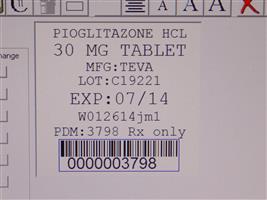
  • Pioglitazone Tablet [Carilion Materials Management]

    Pioglitazone

    Pioglitazone Tablet [Carilion Materials Management]

    2.1 Recommendations for All Patients

    Pioglitazone tablets should be taken once daily and can be taken without regard to meals.

    The recommended starting dose for patients without congestive heart failure is 15 mg or 30 mg once daily.

    The recommended starting dose for patients with congestive heart failure (NYHA Class I or II) is 15 mg once daily.

    The dose can be titrated in increments of 15 mg up to a maximum of 45 mg once daily based on glycemic response as determined by HbA1c.

    After initiation of pioglitazone tablets or with dose increase, monitor patients carefully for adverse reactions related to fluid retention such as weight gain, edema, and signs and symptoms of congestive heart failure . [see and ] Boxed WarningWarnings and Precautions (5.2)

    Liver tests (serum alanine and aspartate aminotransferases, alkaline phosphatase, and total bilirubin) should be obtained prior to initiating pioglitazone tablets. Routine periodic monitoring of liver tests during treatment with pioglitazone tablets is not recommended in patients without liver disease. Patients who have liver test abnormalities prior to initiation of pioglitazone tablets or who are found to have abnormal liver tests while taking pioglitazone tablets should be managed as described under Warnings and Precautions . [see and ] Warnings and Precautions (5.3)Clinical Pharmacology (12.3)

    2.2 Concomitant Use with an Insulin Secretagogue or Insulin

    If hypoglycemia occurs in a patient coadministered pioglitazone tablets and an insulin secretagogue (e.g., sulfonylurea), the dose of the insulin secretagogue should be reduced.

    If hypoglycemia occurs in a patient coadministered pioglitazone tablets and insulin, the dose of insulin should be decreased by 10% to 25%. Further adjustments to the insulin dose should be individualized based on glycemic response.

    2.3 Coadministration with Strong CYP2C8 Inhibitors

    Coadministration of pioglitazone tablets and gemfibrozil, a strong CYP2C8 inhibitor, increases pioglitazone exposure approximately 3-fold. Therefore, the maximum recommended dose of pioglitazone tablets is 15 mg daily when used in combination with gemfibrozil or other strong CYP2C8 inhibitors [see and ]. Drug Interactions (7.1)Clinical Pharmacology (12.3)

  • Cimetidine Tablet, Film Coated [Carilion Materials Management]

    Cimetidine

    Cimetidine Tablet, Film Coated [Carilion Materials Management]

    Duodenal Ulcer

    Active Duodenal Ulcer

    Clinical studies have indicated that suppression of nocturnal acid is the most important factor in duodenal ulcer healing (see , ). This is supported by recent clinical trials (see , ). Therefore, there is no apparent rationale, except for familiarity with use, for treating with anything other than a once-daily at bedtime oral dosage regimen. CLINICAL PHARMACOLOGYAcid SecretionClinical TrialsActive duodenal ulcer

    In a U.S. oral dose-ranging study of 400 mg at bedtime, 800 mg at bedtime and 1600 mg at bedtime, a continuous dose response relationship for ulcer healing was demonstrated.

    However, 800 mg at bedtime is the dose of choice for most patients, as it provides a high healing rate (the difference between 800 mg at bedtime and 1600 mg at bedtime being small), maximal pain relief, a decreased potential for drug interactions (see , ) and maximal patient convenience. Patients unhealed at four weeks, or those with persistent symptoms, have been shown to benefit from two to four weeks of continued therapy. PRECAUTIONSDrug Interactions

    It has been shown that patients who both have an endoscopically demonstrated ulcer larger than 1 cm and are also heavy smokers (i.e., smoke one pack of cigarettes or more per day) are more difficult to heal. There is some evidence which suggests that more rapid healing can be achieved in this subpopulation with cimetidine 1600 mg at bedtime. While early pain relief with either 800 mg at bedtime or 1600 mg at bedtime is equivalent in all patients, 1600 mg at bedtime provides an appropriate alternative when it is important to ensure healing within four weeks for this subpopulation. Alternatively, approximately 94% of all patients will also heal in eight weeks with cimetidine 800 mg at bedtime.

    Other cimetidine oral regimens in the U.S. which have been shown to be effective are: 300 mg four times daily, with meals and at bedtime, the original regimen with which U.S. physicians have the most experience, and 400 mg twice daily, in the morning and at bedtime (see , ). Clinical TrialsActive duodenal ulcer

    Concomitant antacids should be given as needed for relief of pain. However, simultaneous administration of oral cimetidine and antacids is not recommended, since antacids have been reported to interfere with the absorption of cimetidine.

    While healing with cimetidine often occurs during the first week or two, treatment should be continued for 4 to 6 weeks unless healing has been demonstrated by endoscopic examination.

    Maintenance Therapy for Duodenal Ulcer

    In those patients requiring maintenance therapy, the recommended adult oral dose is 400 mg at bedtime.

    Active Benign Gastric Ulcer

    The recommended adult oral dosage for short-term treatment of active benign gastric ulcer is 800 mg at bedtime, or 300 mg four times a day with meals and at bedtime. Controlled clinical studies were limited to six weeks of treatment (see ). 800 mg at bedtime is the preferred regimen for most patients based upon convenience and reduced potential for drug interactions. Symptomatic response to cimetidine dose not preclude the presence of a gastric malignancy. It is important to follow gastric ulcer patients to assure rapid progress to complete healing. Clinical Trials

    Erosive Gastroesophageal Reflux Disease (GERD)

    The recommended adult oral dosage for the treatment of erosive esophagitis that has been diagnosed by endoscopy is 1600 mg daily in divided doses (800 mg twice daily or 400 mg four times daily) for 12 weeks. The use of cimetidine beyond 12 weeks has not been established.

    Pathological Hypersecretory Conditions (such as Zollinger-Ellison Syndrome)

    Recommended adult oral dosage: 300 mg four times a day with meals at bedtime. In some patients it may be necessary to administer higher doses more frequently. Doses should be adjusted to individual patient needs, but should not usually exceed 2400 mg per day and should continue as long as clinically needed.

    Dosage Adjustments for Patients with Impaired Renal Function

    Patients with severely impaired renal function have been treated with cimetidine. However, such dosage has been very limited. On the basis of this experience the recommended dosage is 300 mg every 12 hours orally. Should the patient’s condition require, the frequency of dosing may be increased to every 8 hours or even further with caution. In severe renal failure, accumulation may occur and the lower frequency of dosing comparable with an adequate patient response should be used. When liver impairment is also present, further reductions in dosage may be necessary. Hemodialysis reduces the level of circulating cimetidine. Ideally, the dosage schedule should be adjusted so that the timing of a scheduled dose coincides with the end of hemodialysis.

  • Gabitril (Tiagabine Hydrochloride) Tablet [Carilion Materials Management]

    Gabitril

    Gabitril (Tiagabine Hydrochloride) Tablet [Carilion Materials Management]

    General:

    The blood level of tiagabine obtained after a given dose depends on whether the patient also is receiving a drug that induces the metabolism of tiagabine. The presence of an inducer means that the attained blood level will be substantially reduced. Dosing should take the presence of concomitant medications into account.

    GABITRIL (tiagabine HCl) is recommended as adjunctive therapy for the treatment of partial seizures in patients 12 years and older.

    The following dosing recommendations apply to all patients taking GABITRIL:

    GABITRIL is given orally and should be taken with food. Do not use a loading dose of GABITRIL. Dose titration: Rapid escalation and/or large dose increments of GABITRIL should not be used. Missed dose(s): If the patient forgets to take the prescribed dose of GABITRIL at the scheduled time, the patient should not attempt to make up for the missed dose by increasing the next dose. If a patient has missed multiple doses, patient should refer back to his or her physician for possible re-titration as clinically indicated. Dosage adjustment of GABITRIL should be considered whenever a change in patient’s enzyme-inducing status occurs as a result of the addition, discontinuation, or dose change of the enzyme-inducing agent.

    Induced Adults and Adolescents 12 Years or Older:

     The following dosing recommendations apply to patients who are already taking enzyme-inducing antiepilepsy drugs (AEDs) (e.g., carbamazepine, phenytoin, primidone, and phenobarbital). Such patients are considered induced patients when administering GABITRIL.

    In adolescents 12 to 18 years old, GABITRIL should be initiated at 4 mg once daily. Modification of concomitant antiepilepsy drugs is not necessary, unless clinically indicated. The total daily dose of GABITRIL may be increased by 4 mg at the beginning of Week 2. Thereafter, the total daily dose may be increased by 4 to 8 mg at weekly intervals until clinical response is achieved or up to 32 mg/day. The total daily dose should be given in divided doses two to four times daily. Doses above 32 mg/day have been tolerated in a small number of adolescent patients for a relatively short duration.

    In adults, GABITRIL should be initiated at 4 mg once daily. Modification of concomitant antiepilepsy drugs is not necessary, unless clinically indicated. The total daily dose of GABITRIL may be increased by 4 to 8 mg at weekly intervals until clinical response is achieved or, up to 56 mg/day. The total daily dose should be given in divided doses two to four times daily. Doses above 56 mg/day have not been systematically evaluated in adequate and well-controlled clinical trials.

    Experience is limited in patients taking total daily doses above 32 mg/day using twice daily dosing. A typical dosing titration regimen for patients taking enzyme-inducing AEDs (induced patients) is provided in Table 7.

    Table 7: Typical Dosing Titration Regimen for Patients Already Taking Enzyme-Inducing AEDs Initiation and Titration Schedule Total Daily Dose Week 1 Initiate at 4 mg once daily 4 mg/day Week 2 Increase total daily dose by 4 mg 8 mg/day (in two divided doses) Week 3 Increase total daily dose by 4 mg 12 mg/day (in three divided doses) Week 4 Increase total daily dose by 4 mg 16 mg/day (in two to four divided doses) Week 5 Increase total daily dose by 4 to 8 mg 20 to 24 mg/day (in two to four divided doses) Week 6 Increase total daily dose by 4 to 8 mg 24 to 32 mg/day (in two to four divided doses)   32 to 56 mg/day in two to four divided doses Usual Adult Maintenance Dose in Induced Patients:

    Non-Induced Adults and Adolescents 12 Years or Older:

     The following dosing recommendations apply to patients who are taking only non-enzyme-inducing AEDs. Such patients are considered non-induced patients:

    Following a given dose of GABITRIL, the estimated plasma concentration in the non-induced patients is more than twice that in patients receiving enzyme-inducing agents. Use in non-induced patients requires lower doses of GABITRIL. These patients may also require a slower titration of GABITRIL compared to that of induced patients (see and ). CLINICAL PHARMACOLOGY, PharmacokineticsPRECAUTIONS, General, Use in Non-Induced Patients

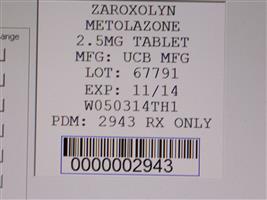
  • Zaroxolyn
    Zaroxolyn (Metolazone) Tablet [Carilion Materials Management]

    Zaroxolyn

    Zaroxolyn (Metolazone) Tablet [Carilion Materials Management]

    Effective dosage of ZAROXOLYN should be individualized according to indication and patient response. A single daily dose is recommended. Therapy with ZAROXOLYN should be titrated to gain an initial therapeutic response and to determine the minimal dose possible to maintain the desired therapeutic response.

    Usual Single Daily Dosage Schedules

    Suitable initial dosages will usually fall in the ranges given.

    Edema of cardiac failure:   ZAROXOLYN 5 to 20 mg once daily.

    Edema of renal disease:   ZAROXOLYN 5 to 20 mg once daily.

    Mild to moderate essential hypertension:   ZAROXOLYN 2½ to 5 mg once daily.

    New patients – MYKROX Tablets (metolazone tablets, USP) (see MYKROX package circular). If considered desirable to switch patients currently on ZAROXOLYN to MYKROX, the dose should be determined by titration starting at one tablet (1/2 mg) once daily and increasing to two tablets (1 mg) once daily if needed.

    Treatment Of Edematous States

    The time interval required for the initial dosage to produce an effect may vary. Diuresis and saluresis usually begin within one hour and persist for 24 hours or longer. When a desired therapeutic effect has been obtained, it may be advisable to reduce the dose if possible. The daily dose depends on the severity of the patient's condition, sodium intake, and responsiveness. A decision to change the daily dose should be based on the results of thorough clinical and laboratory evaluations. If antihypertensive drugs or diuretics are given concurrently with ZAROXOLYN, more careful dosage adjustment may be necessary. For patients who tend to experience paroxysmal nocturnal dyspnea, it may be advisable to employ a larger dose to ensure prolongation of diuresis and saluresis for a full 24-hour period.

    Treatment Of Hypertension

    The time interval required for the initial dosage regimen to show effect may vary from three or four days to three to six weeks in the treatment of elevated blood pressure. Doses should be adjusted at appropriate intervals to achieve maximum therapeutic effect.

  • Anagrelide Hydrochloride Capsule [Carilion Materials Management]

    Anagrelide Hydrochloride

    Anagrelide Hydrochloride Capsule [Carilion Materials Management]

    Treatment with Anagrelide Hydrochloride Capsules should be initiated under close medical supervision. The recommended starting dosage of Anagrelide Hydrochloride Capsules for adult patients is 0.5 mg qid or 1 mg bid (2 capsules of 0.5 mg twice a day), which should be maintained for at least one week. Starting doses in pediatric patients have ranged from 0.5 mg per day to 0.5 mg qid. As there are limited data on the appropriate starting dose for pediatric patients, an initial dose of 0.5 mg per day is recommended. In both adult and pediatric patients, dosage should then be adjusted to the lowest effective dosage required to reduce and maintain platelet count below 600,000/µL, and ideally to the normal range. The dosage should be increased by not more than 0.5 mg/day in any one week. Maintenance dosing is not expected to be different between adult and pediatric patients. Dosage should not exceed 10 mg/day or 2.5 mg in a single dose (see ). PRECAUTIONS

    There are no special requirements for dosing the geriatric population.

    It is recommended that patients with moderate hepatic impairment start anagrelide therapy at a dose of 0.5 mg/day and be maintained for a minimum of one week with careful monitoring of cardiovascular effects. The dosage increment must not exceed more than 0.5 mg/day in any one week. The potential risks and benefits of anagrelide therapy in a patient with mild or moderate impairment of hepatic function should be assessed before treatment is commenced. Use of anagrelide in patients with severe hepatic impairment has not been studied. Use of anagrelide in patients with severe hepatic impairment is contraindicated (see ). CONTRAINDICATIONS

    To monitor the effect of anagrelide and prevent the occurrence of thrombocytopenia, platelet counts should be performed every two days during the first week of treatment and at least weekly thereafter until the maintenance dosage is reached.

    Typically, platelet count begins to respond within 7 to 14 days at the proper dosage. The time to complete response, defined as platelet count ≤ 600,000/µL, ranged from 4 to 12 weeks. Most patients will experience an adequate response at a dose of 1.5 to 3 mg/day. Patients with known or suspected heart disease, renal insufficiency, or hepatic dysfunction should be monitored closely.

  • Cilostazol Tablet [Carilion Materials Management]

    Cilostazol

    Cilostazol Tablet [Carilion Materials Management]

    The recommended dosage of Cilostazol Tablets USP is 100 mg b.i.d. taken at least half an hour before or two hours after breakfast and dinner. A dose of 50 mg b.i.d. should be considered during coadministration of such inhibitors of CYP3A4 as ketoconazole, itraconazole, erythromycin and diltiazem, and during coadministration of such inhibitors of CYP2C19 as omeprazole.

    Patients may respond as early as 2 to 4 weeks after the initiation of therapy, but treatment for up to 12 weeks may be needed before a beneficial effect is experienced.

    Discontinuation of Therapy

    The available data suggest that the dosage of Cilostazol Tablets USP can be reduced or discontinued without rebound (i.e., platelet hyperaggregability).

  • Hydrocortisone Tablet [Carilion Materials Management]

    Hydrocortisone

    Hydrocortisone Tablet [Carilion Materials Management]

    The initial dosage of hydrocortisone tablets may vary from 20 mg to 240 mg of hydrocortisone per day depending on the specific disease entity being treated. In situations of less severity lower doses will generally suffice while in selected patients higher initial doses may be required. The initial dosage should be maintained or adjusted until a satisfactory response is noted. If after a reasonable period of time there is a lack of satisfactory clinical response, hydrocortisone should be discontinued and the patient transferred to other appropriate therapy. IT SHOULD BE EMPHASIZED THAT DOSAGE REQUIREMENTS ARE VARIABLE AND MUST BE INDIVIDUALIZED ON THE BASIS OF THE DISEASE UNDER TREATMENT AND THE RESPONSE OF THE PATIENT. After a favorable response is noted, the proper maintenance dosage should be determined by decreasing the initial drug dosage in small decrements at appropriate time intervals until the lowest dosage which will maintain an adequate clinical response is reached. It should be kept in mind that constant monitoring is needed in regard to drug dosage. Included in the situations which may make dosage adjustments necessary are changes in clinical status secondary to remissions or exacerbations in the disease process, the patient's individual drug responsiveness, and the effect of patient exposure to stressful situations not directly related to the disease entity under treatment; in this latter situation it may be necessary to increase the dosage of hydrocortisone for a period of time consistent with the patient's condition. If after long-term therapy the drug is to be stopped, it is recommended that it be withdrawn gradually, rather than abruptly.

    Multiple Sclerosis

    In treatment of acute exacerbations of multiple sclerosis, daily doses of 200 mg of prednisolone for a week followed by 80 mg every other day for 1 month have been shown to be effective (20 mg of hydrocortisone is equivalent to 5 mg of prednisolone).

    Multiple Sclerosis

    In treatment of acute exacerbations of multiple sclerosis, daily doses of 200 mg of prednisolone for a week followed by 80 mg every other day for 1 month have been shown to be effective (20 mg of hydrocortisone is equivalent to 5 mg of prednisolone).

  • Naproxen Tablet [Carilion Materials Management]

    Naproxen

    Naproxen Tablet [Carilion Materials Management]

    Carefully consider the potential benefits and risks of naproxen, naproxen sodium and other treatment options before deciding to use naproxen and naproxen sodium tablets. Use the lowest effective dose for the shortest duration consistent with individual patient treatment goals (see ). WARNINGS

    After observing the response to initial therapy with naproxen or naproxen sodium the dose and frequency should be adjusted to suit an individual patient's needs.

    Different dose strengths and formulations (ie, tablets, suspension) of the drug are not necessarily bioequivalent. This difference should be taken into consideration when changing formulation.

    Although naproxen and naproxen sodium circulate in the plasma as naproxen, they have pharmacokinetic differences that may affect onset of action. Onset of pain relief can begin within 30 minutes in patients taking naproxen sodium and within 1 hour in patients taking naproxen.

    The recommended strategy for initiating therapy is to choose a formulation and a starting dose likely to be effective for the patient and then adjust the dosage based on observation of benefit and/or adverse events. A lower dose should be considered in patients with renal or hepatic impairment or in elderly patients (see and ). WARNINGSPRECAUTIONS

    Geriatric Patients

    Studies indicate that although total plasma concentration of naproxen is unchanged, the unbound plasma fraction of naproxen is increased in the elderly. Caution is advised when high doses are required and some adjustment of dosage may be required in elderly patients. As with other drugs used in the elderly, it is prudent to use the lowest effective dose.

    Patients With Moderate to Severe Renal Impairment

    Naproxen-containing products are not recommended for use in patients with moderate to severe and severe renal impairment (creatinine clearance <30 mL/min) (see ). WARNINGS: Renal Effects

    Rheumatoid Arthritis, Osteoarthritis and Ankylosing Spondylitis Naproxen or 500 mg

    250 mg

    or 375 mg

    twice daily

    twice daily

    twice daily

    Naproxen sodium 550 mg (naproxen 500 mg with 50 mg sodium)

    275 mg (naproxen 250 mg with 25 mg sodium)

    twice daily

    twice daily

    During long-term administration, the dose of naproxen may be adjusted up or down depending on the clinical response of the patient. A lower daily dose may suffice for long-term administration. The morning and evening doses do not have to be equal in size and the administration of the drug more frequently than twice daily is not necessary.

    In patients who tolerate lower doses well, the dose may be increased to naproxen 1500 mg/day for limited periods of up to 6 months when a higher level of anti-inflammatory/ analgesic activity is required. When treating such patients with naproxen 1500 mg/day, the physician should observe sufficient increased clinical benefits to offset the potential increased risk. The morning and evening doses do not have to be equal in size and administration of the drug more frequently than twice daily does not generally make a difference in response (see ). CLINICAL PHARMACOLOGY

    Juvenile Arthritis

    The recommended total daily dose of naproxen is approximately 10 mg/kg given in 2 divided doses (ie, 5 mg/kg given twice a day).

    Management of Pain, Primary Dysmenorrhea, and Acute Tendonitis and Bursitis

    The recommended starting dose is 550 mg of naproxen sodium as naproxen sodium tablet followed by 550 mg every 12 hours or 275 mg every 6 to 8 hours as required. The initial total daily dose should not exceed 1375 mg of naproxen sodium. Thereafter, the total daily dose should not exceed 1100 mg of naproxen sodium. Because the sodium salt of naproxen is more rapidly absorbed, naproxen sodium tablets are recommended for the management of acute painful conditions when prompt onset of pain relief is desired. Naproxen may also be used for initial treatment of acute pain (see ). , CLINICAL PHARMACOLOGYINDICATIONS AND USAGE

    Acute Gout

    The recommended starting dose is 750 mg of naproxen followed by 250 mg every 8 hours until the attack has subsided. Naproxen sodium may also be used at a starting dose of 825 mg followed by 275 mg every 8 hours.

  • Flavoxate Hydrochloride...
    Flavoxate Hydrochloride Tablet, Film Coated [Carilion Materials Management]

    Flavoxate Hydrochloride

    Flavoxate Hydrochloride Tablet, Film Coated [Carilion Materials Management]

    Adults and children over 12 years of age:

    One or two 100 mg tablets 3 or 4 times a day. With improvement of symptoms, the dose may be reduced. This drug cannot be recommended for infants and children under 12 years of age because safety and efficacy have not been demonstrated in this age group.

  • Ropinirole Tablet [Carilion Materials Management]

    Ropinirole

    Ropinirole Tablet [Carilion Materials Management]

    General Dosing Considerations for Parkinson's Disease and RLS

    Ropinirole can be taken with or without food. Patients may be advised that taking ropinirole with food may reduce the occurrence of nausea. However, this has not been established in controlled clinical trials.

    If a significant interruption in therapy with ropinirole has occurred, retitration of therapy may be warranted.

    Geriatric Use

    Pharmacokinetic studies demonstrated a reduced clearance of ropinirole in the elderly (see ). Dose adjustment is not necessary since the dose is individually titrated to clinical response. CLINICAL PHARMACOLOGY

    Renal Impairment

    The pharmacokinetics of ropinirole were not altered in patients with moderate renal impairment (see ). Therefore, no dosage adjustment is necessary in patients with moderate renal impairment. The use of ropinirole in patients with severe renal impairment has not been studied. CLINICAL PHARMACOLOGY

    Hepatic Impairment

    The pharmacokinetics of ropinirole have not been studied in patients with hepatic impairment. Since patients with hepatic impairment may have higher plasma levels and lower clearance, ropinirole should be titrated with caution in these patients.

    Dosing for Parkinson’s Disease

    In all clinical studies, dosage was initiated at a subtherapeutic level and gradually titrated to therapeutic response. The dosage should be increased to achieve a maximum therapeutic effect, balanced against the principal side effects of nausea, dizziness, somnolence, and dyskinesia.

    The recommended starting dose for Parkinson’s Disease is 0.25 mg three times daily. Based on individual patient response, dosage should then be titrated with weekly increments as described in Table 5. After week 4, if necessary, daily dosage may be increased by 1.5 mg/day on a weekly basis up to a dose of 9 mg/day, and then by up to 3 mg/day weekly to a total dose of 24 mg/day. Doses greater than 24 mg/day have not been tested in clinical trials.

    Table 5: Ascending-Dose Schedule of Ropinirole for Parkinson's Disease

    Week

    Dosage

    Total Daily Dose

    1

    0.25 mg three times daily

    0.75 mg

    2

    0.5 mg three times daily

    1.5 mg

    3

    0.75 mg three times daily

    2.25 mg

    4

    1 mg three times daily

    3 mg

    When ropinirole is administered as adjunct therapy to L-dopa, the concurrent dose of L-dopa may be decreased gradually as tolerated. L-dopa dosage reduction was allowed during the advanced Parkinson’s disease (with L-dopa) study if dyskinesias or other dopaminergic effects occurred. Overall, reduction of L-dopa dose was sustained in 87% of patients treated with ropinirole and in 57% of patients on placebo. On average the L-dopa dose was reduced by 31% in patients treated with ropinirole.

    Ropinirole for Parkinson’s disease patients should be discontinued gradually over a 7-day period. The frequency of administration should be reduced from three times daily to twice daily for 4 days. For the remaining 3 days, the frequency should be reduced to once daily prior to complete withdrawal of ropinirole.

    Dosing for Restless Legs Syndrome

    In all clinical trials, the dose for ropinirole was initiated at 0.25 mg once daily, 1 to 3 hours before bedtime. Patients were titrated based on clinical response and tolerability.

    The recommended adult starting dosage for RLS is 0.25 mg once daily, 1 to 3 hours before bedtime. After 2 days, the dosage can be increased to 0.5 mg once daily and to 1 mg once daily at the end of the first week of dosing, then as shown in Table 6 as needed to achieve efficacy. For RLS, the safety and effectiveness of doses greater than 4 mg once daily have not been established.

    Table 6: Dose Titration Schedule for RLS

    Day/Week

    Dosage to Be Taken Once Daily, 1 to 3 Hours Before Bedtime

    Days 1 and 2

    0.25 mg

    Days 3-7

    0.5 mg

    Week 2

    1 mg

    Week 3

    1.5 mg

    Week 4

    2 mg

    Week 5

    2.5 mg

    Week 6

    3 mg

    Week 7

    4 mg

    In clinical trials of patients being treated for RLS with doses up to 4 mg once daily, ropinirole was discontinued without a taper.

  • Methazolamide
    Methazolamide Tablet [Carilion Materials Management]

    Methazolamide

    Methazolamide Tablet [Carilion Materials Management]

    The effective therapeutic dose administered varies from 50 mg to 100 mg two or three times daily. The drug may be used concomitantly with miotic and osmotic agents.

  • Dipentum (Olsalazine Sodium) Capsule, Gelatin Coated [Carilion Materials Management]

    Dipentum

    Dipentum (Olsalazine Sodium) Capsule, Gelatin Coated [Carilion Materials Management]

    The usual dosage in adults for maintenance of remission is 1.0 g/day in two divided doses.

  • Propranolol Hydrochloride Capsule, Extended Release [Carilion Materials Management]

    Propranolol Hydrochloride

    Propranolol Hydrochloride Capsule, Extended Release [Carilion Materials Management]

    General

    Propranolol hydrochloride extended-release capsules provide propranolol hydrochloride in a sustained-release capsule for administration once daily. If patients are switched from propranolol hydrochloride tablets to propranolol hydrochloride extended-release capsules, care should be

    taken to assure that the desired therapeutic effect is maintained. Propranolol hydrochloride extended-release capsules should not be considered a simple mg-for-mg substitute for propranolol hydrochloride tablets. Propranolol hydrochloride extended-release capsules have different kinetics and produces lower blood levels. Retitration may be necessary, especially to maintain effectiveness at the end of the 24-hour dosing interval.

    Hypertension

    The usual initial dosage is 80 mg propranolol hydrochloride extended-release capsules once daily, whether used alone or added to a diuretic. The dosage may be increased to 120 mg once daily or higher until adequate blood pressure control is achieved. The usual maintenance dosage is 120 to 160 mg once daily. In some instances a dosage of 640 mg may be required. The time needed for full hypertensive response to a given dosage is variable and may range from a few days to several weeks.

    Angina Pectoris

    Starting with 80 mg propranolol hydrochloride extended-release capsules once daily, dosage should be gradually increased at three- to seven-day intervals until optimal response is obtained. Although individual patients may respond at any dosage level, the average optimal dosage appears to be 160 mg once daily. In angina pectoris, the value and safety of dosage exceeding 320 mg per day have not been established.

    If treatment is to be discontinued, reduce dosage gradually over a period of a few weeks (see “ ”). WARNINGS

    Migraine

    The initial oral dose is 80 mg propranolol hydrochloride extended-release capsules once daily. The usual effective dose range is 160 to 240 mg once daily. The dosage may be increased gradually to achieve optimal migraine prophylaxis. If a satisfactory response is not obtained within four to six weeks after reaching the maximal dose, propranolol hydrochloride extended-release capsule therapy should be discontinued. It may be advisable to withdraw the drug gradually over a period of several weeks depending on the patient's age, comorbidity, and dose of propranolol hydrochloride extended-release capsules.

    Hypertrophic Subaortic Stenosis

    The usual dosage is 80 to 160 mg propranolol hydrochloride extended-release capsules once daily.

  • Quinidine Gluconate Tablet, Extended Release [Carilion Materials Management]

    Quinidine Gluconate

    Quinidine Gluconate Tablet, Extended Release [Carilion Materials Management]

    The dose of quinidine delivered by quinidine gluconate extended-release tablets may be titrated by breaking a tablet in half. If tablets are crushed or chewed, their extended-release properties will be lost.

    The dosage of quinidine varies considerably depending upon the general condition and the cardiovascular state of the patient.

    Conversion of atrial fibrillation/flutter to sinus rhythm

    Especially in patients with known structural heart disease or other risk factors for toxicity, initiation or dose-adjustment of treatment with quinidine gluconate should generally be performed in a setting where facilities and personnel for monitoring and resuscitation are continuously available. Patients with symptomatic atrial fibrillation/flutter should be treated with quinidine gluconate only after ventricular rate control (e.g., with digitalis or β-blockers) has failed to provide satisfactory control of symptoms.

    Adequate trials have not identified an optimal regimen of quinidine gluconate for conversion of atrial fibrillation/flutter to sinus rhythm. In one reported regimen, the patient first receives two tablets (648 mg; 403 mg of quinidine base) of quinidine gluconate every eight hours. If this regimen has not resulted in conversion after 3 or 4 doses, then the dose is cautiously increased. If, at any point during administration, the QRS complex widens to 130% of its pre-treatment duration; the QT interval widens to 130% of its pre-treatment duration and is then longer than 500 ms; P waves disappear; or the patient develops significant tachycardia, symptomatic bradycardia, or hypotension, then quinidine gluconate is discontinued, and other means of conversion (e.g., direct-current cardioversion) are considered. c

    In another regimen sometimes used, the patient receives one tablet (324 mg; 202 mg of quinidine base) every eight hours for two days; then two tablets every twelve hours for two days; and finally two tablets every eight hours for up to four days. The four-day stretch may come at one of the lower doses if, in the judgment of the physician, the lower dose is the highest one that will be tolerated. The criteria for discontinuation of treatment with quinidine gluconate are the same as in the other regimen.

    Reduction in the frequency of relapse into atrial fibrillation/flutter

    In a patient with a history of frequent symptomatic episodes of atrial fibrillation/flutter, the goal of therapy with quinidine gluconate should be an increase in the average time between episodes. In most patients, the tachyarrhythmia during therapy with quinidine gluconate, and a single recurrence should not be interpreted as therapeutic failure. will recur

    Especially in patients with known structural heart disease or other risk factors for toxicity, initiation or dose-adjustment of treatment with quinidine gluconate should generally be performed in a setting where facilities and personnel for monitoring and resuscitation are continuously available. Monitoring should be continued for two or three days after initiation of the regimen on which the patient will be discharged.

    Therapy with quinidine gluconate should be begun with one tablet (324 mg; 202 mg of quinidine base) every eight or twelve hours. If this regimen is well tolerated, if the serum quinidine level is still well within the laboratory's therapeutic range, and if the average time between arrhythmic episodes has not been satisfactorily increased, then the dose may be cautiously raised. The total daily dosage should be reduced if the QRS complex widens to 130% of its pre-treatment duration; the QT interval widens to 130% of its pre-treatment duration and is then longer than 500 ms; P waves disappear; or the patient develops significant tachycardia, symptomatic bradycardia, or hypotension. c

    Suppression of life-threatening ventricular arrhythmias

    Dosing regimens for the use of quinidine gluconate in suppressing life-threatening ventricular arrhythmias have not been adequately studied. Described regimens have generally been similar to the regimen described just above for the prophylaxis of symptomatic atrial fibrillation/flutter. Where possible, therapy should be guided by the results of programmed electrical stimulation and/or Holter monitoring with exercise.

  • Ropinirole Tablet [Carilion Materials Management]

    Ropinirole

    Ropinirole Tablet [Carilion Materials Management]

    General Dosing Considerations for Parkinson's Disease and RLS

    Ropinirole can be taken with or without food. Patients may be advised that taking ropinirole with food may reduce the occurrence of nausea. However, this has not been established in controlled clinical trials.

    If a significant interruption in therapy with ropinirole has occurred, retitration of therapy may be warranted.

    Geriatric Use

    Pharmacokinetic studies demonstrated a reduced clearance of ropinirole in the elderly (see ). Dose adjustment is not necessary since the dose is individually titrated to clinical response. CLINICAL PHARMACOLOGY

    Renal Impairment

    The pharmacokinetics of ropinirole were not altered in patients with moderate renal impairment (see ). Therefore, no dosage adjustment is necessary in patients with moderate renal impairment. The use of ropinirole in patients with severe renal impairment has not been studied. CLINICAL PHARMACOLOGY

    Hepatic Impairment

    The pharmacokinetics of ropinirole have not been studied in patients with hepatic impairment. Since patients with hepatic impairment may have higher plasma levels and lower clearance, ropinirole should be titrated with caution in these patients.

    Dosing for Parkinson’s Disease

    In all clinical studies, dosage was initiated at a subtherapeutic level and gradually titrated to therapeutic response. The dosage should be increased to achieve a maximum therapeutic effect, balanced against the principal side effects of nausea, dizziness, somnolence, and dyskinesia.

    The recommended starting dose for Parkinson’s Disease is 0.25 mg three times daily. Based on individual patient response, dosage should then be titrated with weekly increments as described in Table 5. After week 4, if necessary, daily dosage may be increased by 1.5 mg/day on a weekly basis up to a dose of 9 mg/day, and then by up to 3 mg/day weekly to a total dose of 24 mg/day. Doses greater than 24 mg/day have not been tested in clinical trials.

    Table 5: Ascending-Dose Schedule of Ropinirole for Parkinson's Disease

    Week

    Dosage

    Total Daily Dose

    1

    0.25 mg three times daily

    0.75 mg

    2

    0.5 mg three times daily

    1.5 mg

    3

    0.75 mg three times daily

    2.25 mg

    4

    1 mg three times daily

    3 mg

    When ropinirole is administered as adjunct therapy to L-dopa, the concurrent dose of L-dopa may be decreased gradually as tolerated. L-dopa dosage reduction was allowed during the advanced Parkinson’s disease (with L-dopa) study if dyskinesias or other dopaminergic effects occurred. Overall, reduction of L-dopa dose was sustained in 87% of patients treated with ropinirole and in 57% of patients on placebo. On average the L-dopa dose was reduced by 31% in patients treated with ropinirole.

    Ropinirole for Parkinson’s disease patients should be discontinued gradually over a 7-day period. The frequency of administration should be reduced from three times daily to twice daily for 4 days. For the remaining 3 days, the frequency should be reduced to once daily prior to complete withdrawal of ropinirole.

    Dosing for Restless Legs Syndrome

    In all clinical trials, the dose for ropinirole was initiated at 0.25 mg once daily, 1 to 3 hours before bedtime. Patients were titrated based on clinical response and tolerability.

    The recommended adult starting dosage for RLS is 0.25 mg once daily, 1 to 3 hours before bedtime. After 2 days, the dosage can be increased to 0.5 mg once daily and to 1 mg once daily at the end of the first week of dosing, then as shown in Table 6 as needed to achieve efficacy. For RLS, the safety and effectiveness of doses greater than 4 mg once daily have not been established.

    Table 6: Dose Titration Schedule for RLS

    Day/Week

    Dosage to Be Taken Once Daily, 1 to 3 Hours Before Bedtime

    Days 1 and 2

    0.25 mg

    Days 3-7

    0.5 mg

    Week 2

    1 mg

    Week 3

    1.5 mg

    Week 4

    2 mg

    Week 5

    2.5 mg

    Week 6

    3 mg

    Week 7

    4 mg

    In clinical trials of patients being treated for RLS with doses up to 4 mg once daily, ropinirole was discontinued without a taper.

  • Clomipramine Hydrochloride Capsule [Carilion Materials Management]

    Clomipramine Hydrochloride

    Clomipramine Hydrochloride Capsule [Carilion Materials Management]

    The treatment regimens described below are based on those used in controlled clinical trials of clomipramine in 520 adults, and 91 children and adolescents with OCD. During initial titration, clomipramine should be given in divided doses with meals to reduce gastrointestinal side effects. The goal of this initial titration phase is to minimize side effects by permitting tolerance to side effects to develop or allowing the patient time to adapt if tolerance does not develop.

    Because both CMI and its active metabolite, DMI, have long elimination half-lives, the prescriber should take into consideration the fact that steady-state plasma levels may not be achieved until 2 to 3 weeks after dosage change ( ). Therefore, after initial titration, it may be appropriate to wait 2 to 3 weeks between further dosage adjustments. seeCLINICAL PHARMACOLOGY

    Initial Treatment/Dose Adjustment (Adults)

    Treatment with clomipramine should be initiated at a dosage of 25 mg daily and gradually increased, as tolerated, to approximately 100 mg during the first 2 weeks. During initial titration, clomipramine should be given in divided doses with meals to reduce gastrointestinal side effects. Thereafter, the dosage may be increased gradually over the next several weeks, up to a maximum of 250 mg daily. After titration, the total daily dose may be given once daily at bedtime to minimize daytime sedation.

    Initial Treatment/Dose Adjustment (Children and Adolescents)

    As with adults, the starting dose is 25 mg daily and should be gradually increased (also given in divided doses with meals to reduce gastrointestinal side effects) during the first 2 weeks, as tolerated, up to a daily maximum of 3 mg/kg or 100 mg, whichever is smaller. Thereafter, the dosage may be increased gradually over the next several weeks up to a daily maximum of 3 mg/kg or 200 mg, whichever is smaller ( ). As with adults, after titration, the total daily dose may be given once daily at bedtime to minimize daytime sedation. seePRECAUTIONS, Pediatric Use

    Maintenance/Continuation Treatment (Adults, Children, and Adolescents)

    While there are no systematic studies that answer the question of how long to continue clomipramine, OCD is a chronic condition and it is reasonable to consider continuation for a responding patient. Although the efficacy of clomipramine after 10 weeks has not been documented in controlled trials, patients have been continued in therapy under double-blind conditions for up to 1 year without loss of benefit. However, dosage adjustments should be made to maintain the patient on the lowest effective dosage, and patients should be periodically reassessed to determine the need for treatment. During maintenance, the total daily dose may be given once daily at bedtime.

    Switching a Patient To or From a Monoamine Oxidase Inhibitor (MAOI) Intended to Treat Psychiatric Disorders

    At least 14 days should elapse between discontinuation of an MAOI intended to treat psychiatric disorders and initiation of therapy with clomipramine. Conversely, at least 14 days should be allowed after stopping clomipramine before starting an MAOI intended to treat psychiatric disorders ( ). seeCONTRAINDICATIONS

    Use of Clomipramine With Other MAOIs, Such as Linezolid or Methylene Blue

    Do not start clomipramine in a patient who is being treated with linezolid or intravenous methylene blue because there is increased risk of serotonin syndrome. In a patient who requires more urgent treatment of a psychiatric condition, other interventions, including hospitalization, should be considered ( ). seeCONTRAINDICATIONS

    In some cases, a patient already receiving clomipramine therapy may require urgent treatment with linezolid or intravenous methylene blue. If acceptable alternatives to linezolid or intravenous methylene blue treatment are not available and the potential benefits of linezolid or intravenous methylene blue treatment are judged to outweigh the risks of serotonin syndrome in a particular patient, clomipramine should be stopped promptly, and linezolid or intravenous methylene blue can be administered. The patient should be monitored for symptoms of serotonin syndrome for two weeks or until 24 hours after the last dose of linezolid or intravenous methylene blue, whichever comes first. Therapy with clomipramine may be resumed 24 hours after the last dose of linezolid or intravenous methylene blue ( ). seeWARNINGS

    The risk of administering methylene blue by non-intravenous routes (such as oral tablets or by local injection) or in intravenous doses much lower than 1 mg/kg with clomipramine is unclear. The clinician should, nevertheless, be aware of the possibility of emergent symptoms of serotonin syndrome with such use ( ). seeWARNINGS

  • Loxapine Capsule [Carilion Materials Management]

    Loxapine

    Loxapine Capsule [Carilion Materials Management]

    Loxapine Capsules USP are administered, usually in divided doses, two to four times a day. Daily dosage (in terms of base equivalents) should be adjusted to the individual patient’s needs as assessed by the severity of symptoms and previous history of response to antipsychotic drugs.

    Oral Administration

    Initial dosage of 10 mg twice daily is recommended, although in severely disturbed patients initial dosage up to a total of 50 mg daily may be desirable. Dosage should then be increased fairly rapidly over the first seven to ten days until there is effective control of symptoms of schizophrenia. The usual therapeutic and maintenance range is 60 mg to 100 mg daily. However, as with other drugs used to treat schizophrenia, some patients respond to lower dosage and others require higher dosage for optimal benefit. Daily dosage higher than 250 mg is not recommended.

    Maintenance Therapy

    For maintenance therapy, dosage should be reduced to the lowest level compatible with symptom control; many patients have been maintained satisfactorily at dosages in the range of 20 to 60 mg daily.

  • Disulfiram
    Disulfiram Tablet [Carilion Materials Management]

    Disulfiram

    Disulfiram Tablet [Carilion Materials Management]

    Disulfiram should never be administered until the patient has abstained from alcohol for at least 12 hours.

    Initial Dosage Schedule:

    In the first phase of treatment, a of 500 mg daily is given in a single dose for one to two weeks. Although usually taken in the morning, disulfiram may be taken on retiring by patients who experience a sedative effect. Alternatively, to minimize, or eliminate, the sedative effect, dosage may be adjusted downward. maximum

    Maintenance Regimen:

    The average maintenance dose is 250 mg daily (range, 125 to 500 mg), it should not exceed 500 mg daily.

    Occasionally patients, while seemingly on adequate maintenance doses of disulfiram, report that they are able to drink alcoholic beverages with impunity and without any symptomatology. All appearances to the contrary, such patients must be presumed to be disposing of their tablets in some manner without actually taking them. Until such patients have been observed reliably taking their daily disulfiram tablets (preferably crushed and well mixed with liquid), it cannot be concluded that disulfiram is ineffective. Note:

    Duration of Therapy:

    The daily, uninterrupted administration of disulfiram must be continued until the patient is fully recovered socially and a basis for permanent self-control is established. Depending on the individual patient, maintenance therapy may be required for months or even years.

    Trial with Alcohol:

    During early experience with disulfiram, it was thought advisable for each patient to have at least one supervised alcohol-drug reaction. More recently, the test reaction has been largely abandoned. Furthermore, such a test reaction should never be administered to a patient over 50 years of age. A clear, detailed and convincing description of the reaction is felt to be sufficient in most cases.

    However, where a test reaction is deemed necessary, the suggested procedure is as follows:

    After the first one to two weeks’ therapy with 500 mg daily, a drink of 15 mL (1/2 oz) of 100 proof whiskey, or equivalent, is taken slowly. This test dose of alcoholic beverage may be repeated once only, so that the total dose does not exceed 30 mL (1 oz) of whiskey. Once a reaction develops, no more alcohol should be consumed. Such tests should be carried out only when the patient is hospitalized, or comparable supervision and facilities, including oxygen, are available.

    Management of Disulfiram-Alcohol Reaction:

    In severe reactions, whether caused by an excessive test dose or by the patient’s unsupervised ingestion of alcohol, supportive measures to restore blood pressure and treat shock should be instituted. Other recommendations include: oxygen, carbogen (95% oxygen and 5% carbon dioxide), vitamin C intravenously in massive doses (1 g) and ephedrine sulfate. Antihistamines have also been used intravenously. Potassium levels should be monitored, particularly in patients on digitalis, since hypokalemia has been reported.

  • Niaspan (Niacin) Tablet, Film Coated, Extended Release [Carilion Materials Management]

    Niaspan

    Niaspan (Niacin) Tablet, Film Coated, Extended Release [Carilion Materials Management]

    NIASPAN should be taken at bedtime, after a low-fat snack, and doses should be individualized according to patient response. Therapy with NIASPAN must be initiated at 500 mg at bedtime in order to reduce the incidence and severity of side effects which may occur during early therapy. The recommended dose escalation is shown in below. Table 1

    Table 1. Recommended Dosing   Week(s) Daily dose NIASPAN Dosage INITIAL TITRATION 1 to 4 500 mg 1 NIASPAN 500 mg tablet at bedtime SCHEDULE 5 to 8 1000 mg 1 NIASPAN 1000 mg tablet or 2 NIASPAN 500 mg tablets at bedtime   * 1500 mg 2 NIASPAN 750 mg tablets or 3 NIASPAN 500 mg tablets at bedtime   * 2000 mg 2 NIASPAN 1000 mg tablets or 4 NIASPAN 500 mg tablets at bedtime * After Week 8, titrate to patient response and tolerance. If response to 1000 mg daily is inadequate, increase dose to 1500 mg daily; may subsequently increase dose to 2000 mg daily. Daily dose should not be increased more than 500 mg in a 4-week period, and doses above 2000 mg daily are not recommended. Women may respond at lower doses than men.

    Maintenance Dose

    The daily dosage of NIASPAN should not be increased by more than 500 mg in any 4-week period. The recommended maintenance dose is 1000 mg (two 500 mg tablets or one 1000 mg tablet) to 2000 mg (two 1000 mg tablets or four 500 mg tablets) once daily at bedtime. Doses greater than 2000 mg daily are not recommended. Women may respond at lower NIASPAN doses than men . [see Clinical Studies ] (14.2)

    Single-dose bioavailability studies have demonstrated that two of the 500 mg and one of the 1000 mg tablet strengths are interchangeable but three of the 500 mg and two of the 750 mg tablet strengths are not interchangeable.

    If lipid response to NIASPAN alone is insufficient or if higher doses of NIASPAN are not well tolerated, some patients may benefit from combination therapy with a bile acid binding resin or statin , below and . [see Drug Interactions (7.3)Concomitant TherapyClinical Studies , ] (14.314.4)

    Flushing of the skin may be reduced in frequency or severity by pretreatment with aspirin (up to the recommended dose of 325 mg taken 30 minutes prior to NIASPAN dose). Tolerance to this flushing develops rapidly over the course of several weeks. Flushing, pruritus, and gastrointestinal distress are also greatly reduced by slowly increasing the dose of niacin and avoiding administration on an empty stomach. Concomitant alcoholic, hot drinks or spicy foods may increase the side effects of flushing and pruritus and should be avoided around the time of NIASPAN ingestion. [see Adverse Reactions ] (6.1)

    Equivalent doses of NIASPAN should not be substituted for sustained-release (modified-release, timed-release) niacin preparations or immediate-release (crystalline) niacin . Patients previously receiving other niacin products should be started with the recommended NIASPAN titration schedule (see ), and the dose should subsequently be individualized based on patient response. [see Warnings and Precautions ] (5)Table 1

    If NIASPAN therapy is discontinued for an extended period, reinstitution of therapy should include a titration phase (see ). Table 1

    NIASPAN tablets should be taken whole and should not be broken, crushed or chewed before swallowing.

    Concomitant Therapy

    Concomitant Therapy with Lovastatin or Simvastatin

    Patients already receiving a stable dose of lovastatin or simvastatin who require further TG-lowering or HDL-raising (e.g., to achieve NCEP non-HDL-C goals), may receive concomitant dosage titration with NIASPAN per NIASPAN recommended initial titration schedule . For patients already receiving a stable dose of NIASPAN who require further LDL-lowering (e.g., to achieve NCEP LDL-C goals), the usual recommended starting dose of lovastatin and simvastatin is 20 mg once a day. Dose adjustments should be made at intervals of 4 weeks or more. Combination therapy with NIASPAN and lovastatin or NIASPAN and simvastatin should not exceed doses of 2000 mg NIASPAN and 40 mg lovastatin or simvastatin daily. [see Dosage and Administration ] (2)

    Dosage in Patients with Renal or Hepatic Impairment

    Use of NIASPAN in patients with renal or hepatic impairment has not been studied. NIASPAN is contraindicated in patients with significant or unexplained hepatic dysfunction. NIASPAN should be used with caution in patients with renal impairment . [see Warnings and Precautions ] (5)

  • Ergoloid Mesylates
    Ergoloid Mesylates (Dihydroergocornine Mesylate, Dihydroergocristine Mesylate, Dihydro-.alpha.-ergocryptine Mesylate, And Dihydro-.beta.-ergocryptine Mesylate) Tablet [Carilion Materials Management]

    Ergoloid Mesylates

    Ergoloid Mesylates (Dihydroergocornine Mesylate, Dihydroergocristine Mesylate, Dihydro-.alpha.-ergocryptine Mesylate, And Dihydro-.beta.-ergocryptine Mesylate) Tablet [Carilion Materials Management]

    1 mg three times a day.

    Alleviation of symptoms is usually gradual and results may not be observed for 3–4 weeks.

  • Irbesartan Tablet [Carilion Materials Management]

    Irbesartan

    Irbesartan Tablet [Carilion Materials Management]

    Irbesartan tablets USP may be administered with other antihypertensive agents and with or without food.

    Hypertension

    The recommended initial dose of irbesartan tablets USP is 150 mg once daily. Patients requiring further reduction in blood pressure should be titrated to 300 mg once daily.

    A low dose of a diuretic may be added, if blood pressure is not controlled by irbesartan tablets USP alone. Hydrochlorothiazide has been shown to have an additive effect (see , ). Patients not adequately treated by the maximum dose of 300 mg once daily are unlikely to derive additional benefit from a higher dose or twice-daily dosing. CLINICAL PHARMACOLOGYClinical Studies

    No dosage adjustment is necessary in elderly patients, or in patients with hepatic impairment or mild to severe renal impairment.

    Nephropathy in Type 2 Diabetic Patients

    The recommended target maintenance dose is 300 mg once daily. There are no data on the clinical effects of lower doses of irbesartan tablets USP on diabetic nephropathy (see , ). CLINICAL PHARMACOLOGYClinical Studies

    Volume- and Salt-Depleted Patients

    A lower initial dose of irbesartan tablets USP (75 mg) is recommended in patients with depletion of intravascular volume or salt (e.g., patients treated vigorously with diuretics or on hemodialysis) (see , ). WARNINGSHypotension in Volume- or Salt-Depleted Patients

  • Aciphex (Rabeprazole Sodium) Tablet, Delayed Release [Carilion Materials Management]

    Aciphex

    Aciphex (Rabeprazole Sodium) Tablet, Delayed Release [Carilion Materials Management]

    2.1 Healing of Erosive or Ulcerative GERD in Adults

    The recommended adult oral dose is one ACIPHEX 20 mg Delayed-Release tablet to be taken once daily for four to eight weeks [ ]. For those patients who have not healed after 8 weeks of treatment, an additional 8-week course of ACIPHEX may be considered. see Indications and Usage ( ) 1.1

    2.2 Maintenance of Healing of Erosive or Ulcerative GERD in Adults

    The recommended adult oral dose is one ACIPHEX 20 mg Delayed-Release tablet to be taken once daily [ ]. see Indications and Usage ( ) 1.2

    2.3 Treatment of Symptomatic GERD in Adults

    The recommended adult oral dose is one ACIPHEX 20 mg Delayed-Release tablet to be taken once daily for 4 weeks [ ]. If symptoms do not resolve completely after 4 weeks, an additional course of treatment may be considered. The recommended adolescent dosing is one ACIPHEX 20 mg Delayed-Release tablet to be taken once daily for 8 weeks. see Indications and Usage ( ) 1.3

    2.4 Healing of Duodenal Ulcers in Adults

    The recommended adult oral dose is one ACIPHEX 20 mg Delayed-Release tablet to be taken once daily after the morning meal for a period up to four weeks [ ]. Most patients with duodenal ulcer heal within four weeks. A few patients may require additional therapy to achieve healing. see Indications and Usage ( ) 1.5

    2.5 Eradication to Reduce the Risk of Duodenal Ulcer Recurrence in Adults Helicobacter pylori

    TABLE 1 THREE DRUG REGIMEN a All three medications should be taken twice daily with the morning and evening meals. It is important that patients comply with the full 7-day regimen [ ]. asee Clinical Studies ( ) 14.5 ACIPHEX Delayed-Release Tablet 20 mg Twice Daily for 7 Days Amoxicillin 1000 mg Twice Daily for 7 Days Clarithromycin 500 mg Twice Daily for 7 Days

    2.6 Treatment of Pathological Hypersecretory Conditions, Including Zollinger-Ellison Syndrome in Adults

    The dosage of ACIPHEX in patients with pathologic hypersecretory conditions varies with the individual patient. The recommended adult oral starting dose is 60 mg once daily. Doses should be adjusted to individual patient needs and should continue for as long as clinically indicated. Some patients may require divided doses. Doses up to 100 mg QD and 60 mg BID have been administered. Some patients with Zollinger-Ellison syndrome have been treated continuously with ACIPHEX for up to one year.

    2.7 Short-term Treatment of Symptomatic GERD in Adolescent Patients 12 Years of Age and Older

    The recommended oral dose for adolescents 12 years of age and older is one 20 mg Delayed-Release Tablet once daily for up to 8 weeks [ and ]. see Use in Specific Populations ( ) 8.4Clinical Studies ( ) 14.7

    2.8 Treatment of GERD in Pediatric Patients 1 to 11 Years of Age

    The recommended dosage of ACIPHEX Sprinkle for pediatric patients 1 to 11 years of age by body weight is:

    Less than 15 kg: 5 mg once daily for up to 12 weeks with the option to increase to 10 mg if inadequate response [ ]. see Clinical Studies ( ) 14.7 15 kg or more: 10 mg once daily for up to 12 weeks [ ]. see Clinical Studies ( ) 14.7

    2.9 Elderly, Renal and Hepatic Impaired Patients

    No dosage adjustment is necessary in elderly patients, in patients with renal disease or in patients with mild to moderate hepatic impairment. Administration of rabeprazole to patients with mild to moderate liver impairment resulted in increased exposure and decreased elimination. Due to the lack of clinical data on rabeprazole in patients with severe hepatic impairment, caution should be exercised in those patients.

    2.10 Administration Recommendations

    TABLE 2 Administration Recommendations Formulation Population Instructions Delayed-Release Tablet Adults and adolescents 12 years of age and older Swallow tablets whole. Do not chew, crush or split tablets. Tablets can be taken with or without food. Delayed-Release Capsule Pediatric patients 1 to 11 years of age The dose should be taken 30 minutes before a meal. The granules should not be chewed or crushed. Open capsule and sprinkle entire contents on a small amount of soft food (e.g. applesauce, fruit or vegetable based baby food, or yogurt) or empty contents into a small amount of liquid (e.g. infant formula, apple juice, or pediatric electrolyte solution). The whole dose should be taken within 15 minutes of preparation. Food or liquid should be at or below room temperature. Do not store mixture for future use.
  • Meloxicam Tablet [Carilion Materials Management]

    Meloxicam

    Meloxicam Tablet [Carilion Materials Management]

    2.1 General Instructions

    Carefully consider the potential benefits and risks of meloxicam tablets and other treatment options before deciding to use meloxicam tablets. Use the lowest effective dose for the shortest duration consistent with individual patient treatment goals [see WARNINGS AND PRECAUTIONS ( )]. 5.4

    After observing the response to initial therapy with meloxicam tablets, adjust the dose to suit an individual patient's needs.

    In adults, the maximum recommended daily oral dose of meloxicam tablets are 15 mg regardless of formulation. In patients with hemodialysis, a maximum daily dosage of 7.5 mg is recommended [see WARNINGS AND PRECAUTIONS ( ), USE IN SPECIFIC POPULATIONS ( ) AND CLINICAL PHARMACOLOGY ( )]. 5.68.712.3

    Meloxicam may be taken without regard to timing of meals.

    2.2 Osteoarthritis

    For the relief of the signs and symptoms of osteoarthritis the recommended starting and maintenance oral dose of meloxicam tablets is 7.5 mg once daily. Some patients may receive additional benefit by increasing the dose to 15 mg once daily.

    2.3 Rheumatoid Arthritis

    For the relief of the signs and symptoms of rheumatoid arthritis, the recommended starting and maintenance oral dose of meloxicam tablets is 7.5 mg once daily. Some patients may receive additional benefit by increasing the dose to 15 mg once daily.

    2.4 Juvenile Rheumatoid Arthritis (JRA) Pauciarticular and Polyarticular Course

    To improve dosing accuracy in smaller weight children, the use of the meloxicam oral suspension is recommended.

  • Montelukast Sodium Tablet, Chewable [Carilion Materials Management]

    Montelukast Sodium

    Montelukast Sodium Tablet, Chewable [Carilion Materials Management]

    2.1 Asthma

    Montelukast sodium should be taken once daily in the evening. The following doses are recommended:

    For adults and adolescents 15 years of age and older: one 10 mg tablet.

    For pediatric patients 6 to 14 years of age: one 5 mg chewable tablet.

    For pediatric patients 2 to 5 years of age: one 4 mg chewable tablet.

    Safety and effectiveness in pediatric patients less than 12 months of age with asthma have not been established.

    There have been no clinical trials in patients with asthma to evaluate the relative efficacy of morning versus evening dosing. The pharmacokinetics of montelukast are similar whether dosed in the morning or evening. Efficacy has been demonstrated for asthma when montelukast was administered in the evening without regard to time of food ingestion.

    2.2 Exercise-Induced Bronchoconstriction (EIB) in Patients 15 Years of Age and Older

     For prevention of EIB, a single 10 mg dose of montelukast should be taken at least 2 hours before exercise. An additional dose of montelukast should not be taken within 24 hours of a previous dose. Patients already taking montelukast sodium daily for another indication (including chronic asthma) should not take an additional dose to prevent EIB. All patients should have available for rescue a short-acting β-agonist. Safety and effectiveness in patients younger than 15 years of age have not been established. Daily administration of montelukast sodium for the chronic treatment of asthma has not been established to prevent acute episodes of EIB.

    Pediatric use information for patients ages 6 to 14 years of age for acute prevention of exercise-induced bronchoconstriction (EIB) is approved for Merck Sharp & Dohme Corp’s montelukast tablet products. However, due to Merck Sharp & Dohme Corp’s marketing exclusivity rights, this drug product is not labeled with that pediatric information.

    2.3 Allergic Rhinitis

    For allergic rhinitis, montelukast sodium should be taken once daily. Efficacy was demonstrated for seasonal allergic rhinitis when montelukast was administered in the morning or the evening without regard to time of food ingestion. The time of administration may be individualized to suit patient needs.

    The following doses for the treatment of symptoms of seasonal allergic rhinitis are recommended:

    For adults and adolescents 15 years of age and older: one 10 mg tablet.

    For pediatric patients 6 to 14 years of age: one 5 mg chewable tablet.

    For pediatric patients 2 to 5 years of age: one 4 mg chewable tablet.

    Safety and effectiveness in pediatric patients younger than 2 years of age with seasonal allergic rhinitis have not been established.

    The following doses for the treatment of symptoms of perennial allergic rhinitis are recommended:

    For adults and adolescents 15 years of age and older: one 10 mg tablet.

    For pediatric patients 6 to 14 years of age: one 5 mg chewable tablet.

    For pediatric patients 2 to 5 years of age: one 4 mg chewable tablet.

    Safety and effectiveness in pediatric patients younger than 6 months of age with perennial allergic rhinitis have not been established.

    2.4 Asthma and Allergic Rhinitis

    Patients with both asthma and allergic rhinitis should take only one montelukast sodium dose daily in the evening.

  • Ranexa (Ranolazine) Tablet, Film Coated, Extended Release [Carilion Materials Management]

    Ranexa

    Ranexa (Ranolazine) Tablet, Film Coated, Extended Release [Carilion Materials Management]

    2.1 Dosing Information

    Initiate RANEXA dosing at 500 mg twice daily and increase to 1000 mg twice daily, as needed, based on clinical symptoms. Take RANEXA with or without meals. Swallow RANEXA tablets whole; do not crush, break, or chew.

    The maximum recommended daily dose of RANEXA is 1000 mg twice daily.

    If a dose of RANEXA is missed, take the prescribed dose at the next scheduled time; do not double the next dose.

    2.2 Dose Modification

    Dose adjustments may be needed when RANEXA is taken in combination with certain other drugs . Limit the maximum dose of RANEXA to 500 mg twice daily in patients on moderate CYP3A inhibitors such as diltiazem, verapamil, and erythromycin. Use of RANEXA with strong CYP3A inhibitors is contraindicated Use of P-gp inhibitors, such as cyclosporine, may increase exposure to RANEXA. Titrate RANEXA based on clinical response [see ] Drug Interactions (7.1)[see , ]. Contraindications (4)Drug Interactions (7.1)[see ]. Drug Interactions (7.1)

  • Coreg Cr
    Coreg Cr (Carvedilol Phosphate) Capsule, Extended Release [Carilion Materials Management]

    Coreg Cr

    Coreg Cr (Carvedilol Phosphate) Capsule, Extended Release [Carilion Materials Management]

    COREG CR is an extended-release capsule intended for once‑daily administration. Patients controlled with immediate‑release carvedilol tablets alone or in combination with other medications may be switched to COREG CR extended‑release capsules based on the total daily doses shown in Table 1.

    Table 1. Dosing Conversion

    Daily Dose of Immediate-Release Carvedilol Tablets

    Daily Dose of COREG CR Capsules a

    6.25 mg (3.125 mg twice daily)

    10 mg once daily

    12.5 mg (6.25 mg twice daily)

    20 mg once daily

    25 mg (12.5 mg twice daily)

    40 mg once daily

    50 mg (25 mg twice daily)

    80 mg once daily

    When switching from carvedilol 12.5 mg or 25 mg twice daily, a starting dose of COREG CR 20 mg or 40 mg once daily, respectively, may be warranted for elderly patients or those at increased risk of hypotension, dizziness, or syncope. Subsequent titration to higher doses should, as appropriate, be made after an interval of at least 2 weeks. a

    COREG CR should be taken once daily in the morning with food. COREG CR should be swallowed as a whole capsule. COREG CR and/or its contents should not be crushed, chewed, or taken in divided doses.

    The capsules may be carefully opened and the beads sprinkled over a spoonful of applesauce. The applesauce should not be warm because it could affect the modified-release properties of this formulation. The mixture of drug and applesauce should be consumed immediately in its entirety. The drug and applesauce mixture should not be stored for future use. Absorption of the beads sprinkled on other foods has not been tested. Alternative Administration:

    2.1 Heart Failure

    DOSAGE MUST BE INDIVIDUALIZED AND CLOSELY MONITORED BY A PHYSICIAN DURING UP‑TITRATION. Prior to initiation of COREG CR, it is recommended that fluid retention be minimized. The recommended starting dose of COREG CR is 10 mg once daily for 2 weeks. Patients who tolerate a dose of 10 mg once daily may have their dose increased to 20, 40, and 80 mg over successive intervals of at least 2 weeks. Patients should be maintained on lower doses if higher doses are not tolerated.

    Patients should be advised that initiation of treatment and (to a lesser extent) dosage increases may be associated with transient symptoms of dizziness or lightheadedness (and rarely syncope) within the first hour after dosing. Thus, during these periods, they should avoid situations such as driving or hazardous tasks, where symptoms could result in injury. Vasodilatory symptoms often do not require treatment, but it may be useful to separate the time of dosing of COREG CR from that of the ACE inhibitor or to reduce temporarily the dose of the ACE inhibitor. The dose of COREG CR should not be increased until symptoms of worsening heart failure or vasodilation have been stabilized.

    Fluid retention (with or without transient worsening heart failure symptoms) should be treated by an increase in the dose of diuretics.

    The dose of COREG CR should be reduced if patients experience bradycardia (heart rate <55 beats/minute).

    Episodes of dizziness or fluid retention during initiation of COREG CR can generally be managed without discontinuation of treatment and do not preclude subsequent successful titration of, or a favorable response to, COREG CR.

    2.2 Left Ventricular Dysfunction Following Myocardial Infarction

    DOSAGE MUST BE INDIVIDUALIZED AND MONITORED DURING UP‑TITRATION. Treatment with COREG CR may be started as an inpatient or outpatient and should be started after the patient is hemodynamically stable and fluid retention has been minimized. It is recommended that COREG CR be started at 20 mg once daily and increased after 3 to 10 days, based on tolerability, to 40 mg once daily, then again to the target dose of 80 mg once daily. A lower starting dose may be used (10 mg once daily) and/or the rate of up‑titration may be slowed if clinically indicated (e.g., due to low blood pressure or heart rate, or fluid retention). Patients should be maintained on lower doses if higher doses are not tolerated. The recommended dosing regimen need not be altered in patients who received treatment with an IV or oral β‑blocker during the acute phase of the myocardial infarction.

    2.3 Hypertension

    DOSAGE MUST BE INDIVIDUALIZED. The recommended starting dose of COREG CR is 20 mg once daily. If this dose is tolerated, using standing systolic pressure measured about 1 hour after dosing as a guide, the dose should be maintained for 7 to 14 days, and then increased to 40 mg once daily if needed, based on trough blood pressure, again using standing systolic pressure 1 hour after dosing as a guide for tolerance. This dose should also be maintained for 7 to 14 days and can then be adjusted upward to 80 mg once daily if tolerated and needed. Although not specifically studied, it is anticipated the full antihypertensive effect of COREG CR would be seen within 7 to 14 days as had been demonstrated with immediate‑release carvedilol. Total daily dose should not exceed 80 mg.

    Concomitant administration with a diuretic can be expected to produce additive effects and exaggerate the orthostatic component of carvedilol action.

    2.4 Hepatic Impairment

    COREG CR should not be given to patients with severe hepatic impairment . [see Contraindications (4)]

    2.5 Geriatric Use

    When switching elderly patients (65 years of age or older) who are taking the higher doses of immediate-release carvedilol tablets (25 mg twice daily) to COREG CR, a lower starting dose (40 mg) of COREG CR is recommended to minimize the potential for dizziness, syncope, or hypotension . Patients who have switched and who tolerate COREG CR should, as appropriate, have their dose increased after an interval of at least 2 weeks . [see Dosage and Administration (2)][see Use in Specific Populations (8.5)]

  • Pentasa (Mesalamine) Capsule [Carilion Materials Management]

    Pentasa

    Pentasa (Mesalamine) Capsule [Carilion Materials Management]

    The recommended dosage for the induction of remission and the symptomatic treatment of mildly to moderately active ulcerative colitis is 1g (4 PENTASA 250 mg capsules or 2 PENTASA 500 mg capsules) 4 times a day for a total daily dosage of 4g. Treatment duration in controlled trials was up to 8 weeks.

  • Abilify (Aripiprazole) Tablet [Carilion Materials Management]

    Abilify

    Abilify (Aripiprazole) Tablet [Carilion Materials Management]

    2.1 Schizophrenia

    Adults

    Dose Selection: The recommended starting and target dose for ABILIFY is 10 mg/day or 15 mg/day administered on a once-a-day schedule without regard to meals. ABILIFY has been systematically evaluated and shown to be effective in a dose range of 10 mg/day to 30 mg/day, when administered as the tablet formulation; however, doses higher than 10 mg/day or 15 mg/day were not more effective than 10 mg/day or 15 mg/day. Dosage increases should generally not be made before 2 weeks, the time needed to achieve steady-state . [see CLINICAL STUDIES ] (14.1)

    Maintenance Treatment: Maintenance of efficacy in schizophrenia was demonstrated in a trial involving patients with schizophrenia who had been symptomatically stable on other antipsychotic medications for periods of 3 months or longer. These patients were discontinued from those medications and randomized to either ABILIFY 15 mg/day or placebo, and observed for relapse . Patients should be periodically reassessed to determine the continued need for maintenance treatment. [see CLINICAL STUDIES ] (14.1)

    Adolescents

    Dose Selection: The recommended target dose of ABILIFY is 10 mg/day. Aripiprazole was studied in adolescent patients 13 to 17 years of age with schizophrenia at daily doses of 10 mg and 30 mg. The starting daily dose of the tablet formulation in these patients was 2 mg, which was titrated to 5 mg after 2 days and to the target dose of 10 mg after 2 additional days. Subsequent dose increases should be administered in 5 mg increments. The 30 mg/day dose was not shown to be more efficacious than the 10 mg/day dose. ABILIFY can be administered without regard to meals . [see CLINICAL STUDIES ] (14.1)

    Maintenance Treatment: The efficacy of ABILIFY for the maintenance treatment of schizophrenia in the adolescent population has not been evaluated. While there is no body of evidence available to answer the question of how long the adolescent patient treated with ABILIFY should be maintained on the drug, maintenance efficacy can be extrapolated from adult data along with comparisons of aripiprazole pharmacokinetic parameters in adult and pediatric patients. Thus, it is generally recommended that responding patients be continued beyond the acute response, but at the lowest dose needed to maintain remission. Patients should be periodically reassessed to determine the need for maintenance treatment.

    Switching from Other Antipsychotics

    There are no systematically collected data to specifically address switching patients with schizophrenia from other antipsychotics to ABILIFY or concerning concomitant administration with other antipsychotics. While immediate discontinuation of the previous antipsychotic treatment may be acceptable for some patients with schizophrenia, more gradual discontinuation may be most appropriate for others. In all cases, the period of overlapping antipsychotic administration should be minimized.

    2.2 Bipolar I Disorder

    Acute Treatment of Manic and Mixed Episodes

    Adults: The recommended starting dose in adults is 15 mg given once daily as monotherapy and 10 mg to 15 mg given once daily as adjunctive therapy with lithium or valproate. ABILIFY can be given without regard to meals. The recommended target dose of ABILIFY is 15 mg/day, as monotherapy or as adjunctive therapy with lithium or valproate. The dose may be increased to 30 mg/day based on clinical response. The safety of doses above 30 mg/day has not been evaluated in clinical trials.

    Pediatrics: The recommended starting dose in pediatric patients (10 to 17 years) as monotherapy is 2 mg/day, with titration to 5 mg/day after 2 days, and a target dose of 10 mg/day after 2 additional days. Recommended dosing as adjunctive therapy to lithium or valproate is the same. Subsequent dose increases, if needed, should be administered in 5 mg/day increments. ABILIFY can be given without regard to meals . [see CLINICAL STUDIES ] (14.2)

    Maintenance Treatment

    The recommended dose for maintenance treatment, whether as monotherapy or as adjunctive therapy, is the same dose needed to stabilize patients during acute treatment, both for adult and pediatric patients. Patients should be periodically reassessed to determine the continued need for maintenance treatment [see CLINICAL STUDIES ]. (14.2)

    2.3 Adjunctive Treatment of Major Depressive Disorder

    Adults

    Dose Selection: The recommended starting dose for ABILIFY as adjunctive treatment for patients already taking an antidepressant is 2 mg/day to 5 mg/day. The efficacy of ABILIFY as an adjunctive therapy for major depressive disorder was established within a dose range of 2 mg/day to 15 mg/day. Dose adjustments of up to 5 mg/day should occur gradually, at intervals of no less than 1 week . [see CLINICAL STUDIES ] (14.3)

    Maintenance Treatment: The efficacy of ABILIFY for the adjunctive maintenance treatment of major depressive disorder has not been evaluated. While there is no body of evidence available to answer the question of how long the patient treated with ABILIFY should be maintained, patients should be periodically reassessed to determine the continued need for maintenance treatment.

    2.4 Irritability Associated with Autistic Disorder

    Pediatric Patients

    Dose Selection: The efficacy of aripiprazole has been established in the treatment of pediatric patients 6 to 17 years of age with irritability associated with autistic disorder at doses of 5 mg/day to 15 mg/day. The dosage of ABILIFY should be individualized according to tolerability and response.

    Dosing should be initiated at 2 mg/day. The dose should be increased to 5 mg/day, with subsequent increases to 10 mg/day or 15 mg/day if needed. Dose adjustments of up to 5 mg/day should occur gradually, at intervals of no less than 1 week . [see CLINICAL STUDIES ] (14.4)

    . Maintenance Treatment: In a clinical trial with ABILIFY conducted in children and adolescents (6 to 17 years of age), the efficacy of ABILIFY for the maintenance treatment of irritability associated with autistic disorder was not established [see Use in Specific Populations ]. Patients should be periodically reassessed to determine the continued need for maintenance treatment (8.4)

    2.5 Agitation Associated with Schizophrenia or Bipolar Mania (Intramuscular Injection)

    Adults

    Dose Selection: The recommended dose in these patients is 9.75 mg. The effectiveness of aripiprazole injection in controlling agitation in schizophrenia and bipolar mania was demonstrated over a dose range of 5.25 mg to 15 mg. No additional benefit was demonstrated for 15 mg compared to 9.75 mg. A lower dose of 5.25 mg may be considered when clinical factors warrant. If agitation warranting a second dose persists following the initial dose, cumulative doses up to a total of 30 mg/day may be given. However, the efficacy of repeated doses of aripiprazole injection in agitated patients has not been systematically evaluated in controlled clinical trials. The safety of total daily doses greater than 30 mg or injections given more frequently than every 2 hours have not been adequately evaluated in clinical trials . [see CLINICAL STUDIES ] (14.5)

    If ongoing aripiprazole therapy is clinically indicated, oral aripiprazole in a range of 10 mg/day to 30 mg/day should replace aripiprazole injection as soon as possible . [see DOSAGE AND ADMINISTRATION and ] (2.12.2)

    Administration of ABILIFY Injection

    To administer ABILIFY Injection, draw up the required volume of solution into the syringe as shown in Table 1. Discard any unused portion.

    Table 1: ABILIFY Injection Dosing Recommendations Single-Dose Required Volume of Solution

    5.25 mg

    0.7 mL

    9.75 mg

    1.3 mL

    15 mg

    2 mL

    ABILIFY Injection is intended for intramuscular use only. Do not administer intravenously or subcutaneously. Inject slowly, deep into the muscle mass.

    Parenteral drug products should be inspected visually for particulate matter and discoloration prior to administration, whenever solution and container permit.

    2.6 Dosage Adjustment

    Dosage adjustments in adults are not routinely indicated on the basis of age, gender, race, or renal or hepatic impairment status . [see USE IN SPECIFIC POPULATIONS - ] (8.48.10)

      When concomitant administration of aripiprazole with strong CYP3A4 inhibitors such as ketoconazole or clarithromycin is indicated, the aripiprazole dose should be reduced to one-half of the usual dose. When the CYP3A4 inhibitor is withdrawn from the combination therapy, the aripiprazole dose should then be increased . Dosage adjustment for patients taking aripiprazole concomitantly with strong CYP3A4 inhibitors: [see DRUG INTERACTIONS ] (7.1)   When concomitant administration of potential CYP2D6 inhibitors such as quinidine, fluoxetine, or paroxetine with aripiprazole occurs, aripiprazole dose should be reduced at least to one-half of its normal dose. When the CYP2D6 inhibitor is withdrawn from the combination therapy, the aripiprazole dose should then be increased . When adjunctive ABILIFY is administered to patients with major depressive disorder, ABILIFY should be administered without dosage adjustment as specified in . Dosage adjustment for patients taking aripiprazole concomitantly with potential CYP2D6 inhibitors: [see DRUG INTERACTIONS ] (7.1) DOSAGE AND ADMINISTRATION (2.3)   When concomitant administration of aripiprazole with strong inhibitors of CYP3A4 (such as ketoconazole or clarithromycin) and CYP2D6 (such as quinidine, fluoxetine, or paroxetine) is indicated, the aripiprazole dose should be reduced to one-quarter (25%) of the usual dose. When the CYP3A4 and/or CYP2D6 inhibitor is withdrawn from the combination therapy, the aripiprazole dose should be increased Dosing recommendation in patients taking aripiprazole concomitantly with strong CYP3A4 and CYP2D6 inhibitors: [see DRUG INTERACTIONS ]. (7.1)   Patients who may be receiving a combination of strong, moderate, and weak inhibitors of CYP3A4 and CYP2D6 (eg, a potent CYP3A4 inhibitor and a moderate CYP2D6 inhibitor or a moderate CYP3A4 inhibitor with a moderate CYP2D6 inhibitor), the dosing may be reduced to one-quarter (25%) of the usual dose initially and then adjusted to achieve a favorable clinical response. Dosing recommendation in patients taking aripiprazole concomitantly with strong, moderate, or weak inhibitors of CYP3A4 and CYP2D6:   The aripiprazole dose in PM patients should initially be reduced to one-half (50%) of the usual dose and then adjusted to achieve a favorable clinical response. The dose of aripiprazole for PM patients who are administered a strong CYP3A4 inhibitor should be reduced to one-quarter (25%) of the usual dose . Dosing recommendation in patients who are classified as CYP2D6 poor metabolizers (PM): [see CLINICAL PHARMACOLOGY ] (12.3)   When a potential CYP3A4 inducer such as carbamazepine is added to aripiprazole therapy, the aripiprazole dose should be doubled. Additional dose increases should be based on clinical evaluation. When the CYP3A4 inducer is withdrawn from the combination therapy, the aripiprazole dose should be reduced to 10 mg to 15 mg . Dosage adjustment for patients taking potential CYP3A4 inducers: [see DRUG INTERACTIONS ] (7.1)

    2.7 Dosing of Oral Solution

    The oral solution can be substituted for tablets on a mg-per-mg basis up to the 25 mg dose level. Patients receiving 30 mg tablets should receive 25 mg of the solution . [see CLINICAL PHARMACOLOGY ] (12.3)

    2.8 Dosing of Orally Disintegrating Tablets

    The dosing for ABILIFY Orally Disintegrating Tablets is the same as for the oral tablets . [see DOSAGE AND ADMINISTRATION , , , and ] (2.12.22.32.4)

    2.1 Schizophrenia

    Adults

    Dose Selection: The recommended starting and target dose for ABILIFY is 10 mg/day or 15 mg/day administered on a once-a-day schedule without regard to meals. ABILIFY has been systematically evaluated and shown to be effective in a dose range of 10 mg/day to 30 mg/day, when administered as the tablet formulation; however, doses higher than 10 mg/day or 15 mg/day were not more effective than 10 mg/day or 15 mg/day. Dosage increases should generally not be made before 2 weeks, the time needed to achieve steady-state . [see CLINICAL STUDIES ] (14.1)

    Maintenance Treatment: Maintenance of efficacy in schizophrenia was demonstrated in a trial involving patients with schizophrenia who had been symptomatically stable on other antipsychotic medications for periods of 3 months or longer. These patients were discontinued from those medications and randomized to either ABILIFY 15 mg/day or placebo, and observed for relapse . Patients should be periodically reassessed to determine the continued need for maintenance treatment. [see CLINICAL STUDIES ] (14.1)

    Adolescents

    Dose Selection: The recommended target dose of ABILIFY is 10 mg/day. Aripiprazole was studied in adolescent patients 13 to 17 years of age with schizophrenia at daily doses of 10 mg and 30 mg. The starting daily dose of the tablet formulation in these patients was 2 mg, which was titrated to 5 mg after 2 days and to the target dose of 10 mg after 2 additional days. Subsequent dose increases should be administered in 5 mg increments. The 30 mg/day dose was not shown to be more efficacious than the 10 mg/day dose. ABILIFY can be administered without regard to meals . [see CLINICAL STUDIES ] (14.1)

    Maintenance Treatment: The efficacy of ABILIFY for the maintenance treatment of schizophrenia in the adolescent population has not been evaluated. While there is no body of evidence available to answer the question of how long the adolescent patient treated with ABILIFY should be maintained on the drug, maintenance efficacy can be extrapolated from adult data along with comparisons of aripiprazole pharmacokinetic parameters in adult and pediatric patients. Thus, it is generally recommended that responding patients be continued beyond the acute response, but at the lowest dose needed to maintain remission. Patients should be periodically reassessed to determine the need for maintenance treatment.

    Switching from Other Antipsychotics

    There are no systematically collected data to specifically address switching patients with schizophrenia from other antipsychotics to ABILIFY or concerning concomitant administration with other antipsychotics. While immediate discontinuation of the previous antipsychotic treatment may be acceptable for some patients with schizophrenia, more gradual discontinuation may be most appropriate for others. In all cases, the period of overlapping antipsychotic administration should be minimized.

    2.2 Bipolar I Disorder

    Acute Treatment of Manic and Mixed Episodes

    Adults: The recommended starting dose in adults is 15 mg given once daily as monotherapy and 10 mg to 15 mg given once daily as adjunctive therapy with lithium or valproate. ABILIFY can be given without regard to meals. The recommended target dose of ABILIFY is 15 mg/day, as monotherapy or as adjunctive therapy with lithium or valproate. The dose may be increased to 30 mg/day based on clinical response. The safety of doses above 30 mg/day has not been evaluated in clinical trials.

    Pediatrics: The recommended starting dose in pediatric patients (10 to 17 years) as monotherapy is 2 mg/day, with titration to 5 mg/day after 2 days, and a target dose of 10 mg/day after 2 additional days. Recommended dosing as adjunctive therapy to lithium or valproate is the same. Subsequent dose increases, if needed, should be administered in 5 mg/day increments. ABILIFY can be given without regard to meals . [see CLINICAL STUDIES ] (14.2)

    Maintenance Treatment

    The recommended dose for maintenance treatment, whether as monotherapy or as adjunctive therapy, is the same dose needed to stabilize patients during acute treatment, both for adult and pediatric patients. Patients should be periodically reassessed to determine the continued need for maintenance treatment [see CLINICAL STUDIES ]. (14.2)

    2.3 Adjunctive Treatment of Major Depressive Disorder

    Adults

    Dose Selection: The recommended starting dose for ABILIFY as adjunctive treatment for patients already taking an antidepressant is 2 mg/day to 5 mg/day. The efficacy of ABILIFY as an adjunctive therapy for major depressive disorder was established within a dose range of 2 mg/day to 15 mg/day. Dose adjustments of up to 5 mg/day should occur gradually, at intervals of no less than 1 week . [see CLINICAL STUDIES ] (14.3)

    Maintenance Treatment: The efficacy of ABILIFY for the adjunctive maintenance treatment of major depressive disorder has not been evaluated. While there is no body of evidence available to answer the question of how long the patient treated with ABILIFY should be maintained, patients should be periodically reassessed to determine the continued need for maintenance treatment.

    2.4 Irritability Associated with Autistic Disorder

    Pediatric Patients

    Dose Selection: The efficacy of aripiprazole has been established in the treatment of pediatric patients 6 to 17 years of age with irritability associated with autistic disorder at doses of 5 mg/day to 15 mg/day. The dosage of ABILIFY should be individualized according to tolerability and response.

    Dosing should be initiated at 2 mg/day. The dose should be increased to 5 mg/day, with subsequent increases to 10 mg/day or 15 mg/day if needed. Dose adjustments of up to 5 mg/day should occur gradually, at intervals of no less than 1 week . [see CLINICAL STUDIES ] (14.4)

    . Maintenance Treatment: In a clinical trial with ABILIFY conducted in children and adolescents (6 to 17 years of age), the efficacy of ABILIFY for the maintenance treatment of irritability associated with autistic disorder was not established [see Use in Specific Populations ]. Patients should be periodically reassessed to determine the continued need for maintenance treatment (8.4)

    2.5 Agitation Associated with Schizophrenia or Bipolar Mania (Intramuscular Injection)

    Adults

    Dose Selection: The recommended dose in these patients is 9.75 mg. The effectiveness of aripiprazole injection in controlling agitation in schizophrenia and bipolar mania was demonstrated over a dose range of 5.25 mg to 15 mg. No additional benefit was demonstrated for 15 mg compared to 9.75 mg. A lower dose of 5.25 mg may be considered when clinical factors warrant. If agitation warranting a second dose persists following the initial dose, cumulative doses up to a total of 30 mg/day may be given. However, the efficacy of repeated doses of aripiprazole injection in agitated patients has not been systematically evaluated in controlled clinical trials. The safety of total daily doses greater than 30 mg or injections given more frequently than every 2 hours have not been adequately evaluated in clinical trials . [see CLINICAL STUDIES ] (14.5)

    If ongoing aripiprazole therapy is clinically indicated, oral aripiprazole in a range of 10 mg/day to 30 mg/day should replace aripiprazole injection as soon as possible . [see DOSAGE AND ADMINISTRATION and ] (2.12.2)

    Administration of ABILIFY Injection

    To administer ABILIFY Injection, draw up the required volume of solution into the syringe as shown in Table 1. Discard any unused portion.

    Table 1: ABILIFY Injection Dosing Recommendations Single-Dose Required Volume of Solution

    5.25 mg

    0.7 mL

    9.75 mg

    1.3 mL

    15 mg

    2 mL

    ABILIFY Injection is intended for intramuscular use only. Do not administer intravenously or subcutaneously. Inject slowly, deep into the muscle mass.

    Parenteral drug products should be inspected visually for particulate matter and discoloration prior to administration, whenever solution and container permit.

    2.6 Dosage Adjustment

    Dosage adjustments in adults are not routinely indicated on the basis of age, gender, race, or renal or hepatic impairment status . [see USE IN SPECIFIC POPULATIONS - ] (8.48.10)

      When concomitant administration of aripiprazole with strong CYP3A4 inhibitors such as ketoconazole or clarithromycin is indicated, the aripiprazole dose should be reduced to one-half of the usual dose. When the CYP3A4 inhibitor is withdrawn from the combination therapy, the aripiprazole dose should then be increased . Dosage adjustment for patients taking aripiprazole concomitantly with strong CYP3A4 inhibitors: [see DRUG INTERACTIONS ] (7.1)   When concomitant administration of potential CYP2D6 inhibitors such as quinidine, fluoxetine, or paroxetine with aripiprazole occurs, aripiprazole dose should be reduced at least to one-half of its normal dose. When the CYP2D6 inhibitor is withdrawn from the combination therapy, the aripiprazole dose should then be increased . When adjunctive ABILIFY is administered to patients with major depressive disorder, ABILIFY should be administered without dosage adjustment as specified in . Dosage adjustment for patients taking aripiprazole concomitantly with potential CYP2D6 inhibitors: [see DRUG INTERACTIONS ] (7.1) DOSAGE AND ADMINISTRATION (2.3)   When concomitant administration of aripiprazole with strong inhibitors of CYP3A4 (such as ketoconazole or clarithromycin) and CYP2D6 (such as quinidine, fluoxetine, or paroxetine) is indicated, the aripiprazole dose should be reduced to one-quarter (25%) of the usual dose. When the CYP3A4 and/or CYP2D6 inhibitor is withdrawn from the combination therapy, the aripiprazole dose should be increased Dosing recommendation in patients taking aripiprazole concomitantly with strong CYP3A4 and CYP2D6 inhibitors: [see DRUG INTERACTIONS ]. (7.1)   Patients who may be receiving a combination of strong, moderate, and weak inhibitors of CYP3A4 and CYP2D6 (eg, a potent CYP3A4 inhibitor and a moderate CYP2D6 inhibitor or a moderate CYP3A4 inhibitor with a moderate CYP2D6 inhibitor), the dosing may be reduced to one-quarter (25%) of the usual dose initially and then adjusted to achieve a favorable clinical response. Dosing recommendation in patients taking aripiprazole concomitantly with strong, moderate, or weak inhibitors of CYP3A4 and CYP2D6:   The aripiprazole dose in PM patients should initially be reduced to one-half (50%) of the usual dose and then adjusted to achieve a favorable clinical response. The dose of aripiprazole for PM patients who are administered a strong CYP3A4 inhibitor should be reduced to one-quarter (25%) of the usual dose . Dosing recommendation in patients who are classified as CYP2D6 poor metabolizers (PM): [see CLINICAL PHARMACOLOGY ] (12.3)   When a potential CYP3A4 inducer such as carbamazepine is added to aripiprazole therapy, the aripiprazole dose should be doubled. Additional dose increases should be based on clinical evaluation. When the CYP3A4 inducer is withdrawn from the combination therapy, the aripiprazole dose should be reduced to 10 mg to 15 mg . Dosage adjustment for patients taking potential CYP3A4 inducers: [see DRUG INTERACTIONS ] (7.1)

    2.7 Dosing of Oral Solution

    The oral solution can be substituted for tablets on a mg-per-mg basis up to the 25 mg dose level. Patients receiving 30 mg tablets should receive 25 mg of the solution . [see CLINICAL PHARMACOLOGY ] (12.3)

    2.8 Dosing of Orally Disintegrating Tablets

    The dosing for ABILIFY Orally Disintegrating Tablets is the same as for the oral tablets . [see DOSAGE AND ADMINISTRATION , , , and ] (2.12.22.32.4)

  • Colestipol Hydrochloride Tablet [Carilion Materials Management]

    Colestipol Hydrochloride

    Colestipol Hydrochloride Tablet [Carilion Materials Management]

    For adults, micronized colestipol hydrochloride tablets are recommended in doses of 2 to 16 grams/day given once or in divided doses. The starting dose should be 2 grams once or twice daily. Dosage increases of 2 grams, once or twice daily should occur at 1- or 2-month intervals. Appropriate use of lipid profiles as per NCEP guidelines including LDL-C and triglycerides, is advised so that optimal but not excessive doses are used to obtain the desired therapeutic effect on LDL-C level. If the desired therapeutic effect is not obtained at a dose of 2 to 16 grams/day with good compliance and acceptable side effects, combined therapy or alternate treatment should be considered.

    Micronized colestipol hydrochloride tablets must be taken one at a time and be promptly swallowed whole, using plenty of water or other appropriate liquid. Do not cut, crush, or chew the tablets. Patients should take other drugs at least one hour before or four hours after micronized colestipol hydrochloride tablets to minimize possible interference with their absorption. (See .) DRUG INTERACTIONS

    Before Administration of Micronized Colestipol Hydrochloride Tablets

    Define the type of hyperlipoproteinemia, as described in NCEP guidelines. Institute a trial of diet and weight reduction. Establish baseline serum total and LDL-C and triglyceride levels.

    During Administration of Micronized Colestipol Hydrochloride Tablets

    The patient should be carefully monitored clinically, including serum cholesterol and triglyceride levels. Periodic determinations of serum cholesterol levels as outlined in the NCEP guidelines should be done to confirm a favorable initial and long-term response. Failure of total or LDL-C to fall within the desired range should lead one to first examine dietary and drug compliance. If these are deemed acceptable, combined therapy or alternate treatment should be considered. Significant rise in triglyceride level should be considered as indication for dose reduction, drug discontinuation, or combined or alternate therapy.
  • Campral (Acamprosate Calcium) Tablet, Delayed Release [Carilion Materials Management]

    Campral

    Campral (Acamprosate Calcium) Tablet, Delayed Release [Carilion Materials Management]

    The recommended dose of Campral is two 333 mg tablets (each dose should total 666 mg) taken three times daily. A lower dose may be effective in some patients.

    Although dosing may be done without regard to meals, dosing with meals was employed during clinical trials and is suggested in those patients who regularly eat three meals daily.

    Treatment with Campral should be initiated as soon as possible after the period of alcohol withdrawal, when the patient has achieved abstinence, and should be maintained if the patient relapses. Campral should be used as part of a comprehensive psychosocial treatment program.

    2.1 Dosage in Renal Impairment

    For patients with moderate renal impairment (creatinine clearance of 30-50 mL/min), a starting dose of one 333 mg tablet taken three times daily is recommended. Campral is contraindicated in patients with severe renal impairment (creatinine clearance of ≤30 mL/min) [ and ]. see Contraindications ( ), Warnings and Precautions ( ), Use in Specific Populations ( ), 4.25.18.6Clinical Pharmacology ( ) 12.3

  • Felbamate
    Felbamate Tablet [Carilion Materials Management]

    Felbamate

    Felbamate Tablet [Carilion Materials Management]

    Felbamate tablets have been studied as monotherapy and adjunctive therapy in adults and as adjunctive therapy in children with seizures associated with Lennox-Gastaut syndrome. As felbamate tablets are added to or substituted for existing AEDs, it is strongly recommended to reduce the dosage of those AEDs in the range of 20% to 33% to minimize side effects (see subsection). Drug Interactions

    Felbamate should be used with caution in patients with renal dysfunction. In the renally impaired, starting and maintenance doses should be reduced by one-half (See / and ). Adjunctive therapy with medications which affect felbamate plasma concentrations, especially AEDs, may warrant further reductions in felbamate daily doses in patients with renal dysfunction. Dosage Adjustment in the Renally Impaired:CLINICAL PHARMACOLOGYPharmacokineticsPRECAUTIONS

    Adults (14 years of age and over)

    The majority of patients received 3600 mg/day in clinical trials evaluating its use as both monotherapy and adjunctive therapy.

    (Initial therapy) Felbamate tablets have not been systematically evaluated as initial monotherapy. Initiate felbamate tablets at 1200 mg/day in divided doses three or four times daily. The prescriber is advised to titrate previously untreated patients under close clinical supervision, increasing the dosage in 600-mg increments every 2 weeks to 2400 mg/day based on clinical response and thereafter to 3600 mg/day if clinically indicated. Monotherapy:

    Initiate felbamate tablets at 1200 mg/day in divided doses three or four times daily. Reduce the dosage of concomitant AEDs by one-third at initiation of felbamate tablets therapy. At week 2, increase the felbamate tablet dosage to 2400 mg/day while reducing the dosage of other AEDs up to an additional one-third of their original dosage. At week 3, increase the felbamate tablet dosage up to 3600 mg/day and continue to reduce the dosage of other AEDs as clinically indicated. Conversion to Monotherapy:

    Felbamate tablets should be added at 1200 mg/day in divided doses three or four times daily while reducing present AEDs by 20% in order to control plasma concentrations of concurrent phenytoin, valproic acid, phenobarbital, and carbamazepine and its metabolites. Further reductions of the concomitant AEDs dosage may be necessary to minimize side effects due to drug interactions. Increase the dosage of felbamate by 1200 mg/day increments at weekly intervals to 3600 mg/day. Most side effects seen during felbamate tablet adjunctive therapy resolve as the dosage of concomitant AEDs is decreased. Adjunctive Therapy:

    Table 6 Dosage Table (adults) Dosage reduction of concomitant AEDs REDUCE original dose by 20% to 33%* WEEK 1 REDUCE original dose by up to an additional 1/3* WEEK 2 REDUCE as clinically indicated WEEK 3 Felbamate TabletDosage 1200 mg/day Initial dose 2400 mg/day Therapeutic dosage range 3600 mg/day Therapeutic dosage range *See and sections.  AdjunctiveConversion to Monotherapy

    While the above felbamate tablet conversion guidelines may result in a felbamate tablet 3600 mg/day dose within 3 weeks, in some patients titration to a 3600 mg/day felbamate tablet dose has been achieved in as little as 3 days with appropriate adjustment of other AEDs.

    Children with Lennox-Gastaut Syndrome (Ages 2 to 14 years)

    Felbamate tablets should be added at 15 mg/kg/day in divided doses three or four times daily while reducing present AEDs by 20% in order to control plasma levels of concurrent phenytoin, valproic acid, phenobarbital, and carbamazepine and its metabolites. Further reductions of the concomitant AEDs dosage may be necessary to minimize side effects due to drug interactions. Increase the dosage of felbamate tablets by 15 mg/kg/day increments at weekly intervals to 45 mg/kg/day. Most side effects seen during felbamate tablet adjunctive therapy resolve as the dosage of concomitant AEDs is decreased. Adjunctive Therapy:

  • Diovan (Valsartan) Tablet [Carilion Materials Management]

    Diovan

    Diovan (Valsartan) Tablet [Carilion Materials Management]

    2.1     Adult Hypertension

    The recommended starting dose of Diovan (valsartan) is 80 mg or 160 mg once daily when used as monotherapy in patients who are not volume-depleted. Patients requiring greater reductions may be started at the higher dose. Diovan may be used over a dose range of 80 mg to 320 mg daily, administered once a day.

    The antihypertensive effect is substantially present within 2 weeks and maximal reduction is generally attained after 4 weeks. If additional antihypertensive effect is required over the starting dose range, the dose may be increased to a maximum of 320 mg or a diuretic may be added. Addition of a diuretic has a greater effect than dose increases beyond 80 mg.

    No initial dosage adjustment is required for elderly patients, for patients with mild or moderate renal impairment, or for patients with mild or moderate liver insufficiency. Care should be exercised with dosing of Diovan in patients with hepatic or severe renal impairment.

    Diovan may be administered with other antihypertensive agents.

    Diovan may be administered with or without food.

    2.2     Pediatric Hypertension 6 to 16 Years of Age

    For children who can swallow tablets, the usual recommended starting dose is 1.3 mg/kg once daily (up to 40 mg total). The dosage should be adjusted according to blood pressure response. Doses higher than 2.7 mg/kg (up to 160 mg) once daily have not been studied in pediatric patients 6 to 16 years old.

    For children who cannot swallow tablets, or children for whom the calculated dosage (mg/kg) does not correspond to the available tablet strengths of Diovan, the use of a suspension is recommended. Follow the suspension preparation instructions below (see ) to administer valsartan as a suspension. When the suspension is replaced by a tablet, the dose of valsartan may have to be increased. The exposure to valsartan with the suspension is 1.6 times greater than with the tablet. Preparation of Suspension

    No data are available in pediatric patients either undergoing dialysis or with a glomerular filtration rate <30 mL/min/1.73 m . 2[see Pediatric Use (8.4)]

    Diovan is not recommended for patients <6 years old . [see Adverse Reactions (6.1), Clinical Studies (14.1)]

    Preparation of Suspension (for160 mL of a 4mg/mL suspension)

    Add 80 mL of Ora-Plus * oral suspending vehicle to an amber glass bottle containing 8 Diovan 80 mg tablets, and shake for a minimum of 2 minutes. Allow the suspension to stand for a minimum of 1 hour. After the standing time, shake the suspension for a minimum of 1 additional minute. Add 80 mL of Ora-Sweet SF * oral sweetening vehicle to the bottle and shake the suspension for at least 10 seconds to disperse the ingredients. The suspension is homogenous and can be stored for either up to 30 days at room temperature (below 30ºC/86ºF) or up to 75 days at refrigerated conditions (2-8ºC/35-46ºF) in the glass bottle with a child-resistant screw-cap closure. Shake the bottle well (at least 10 seconds) prior to dispensing the suspension. ®®

    *Ora-Sweet SF and Ora-Plus are registered trademarks of Paddock Laboratories, Inc. ®®

    2.3     Heart Failure

    The recommended starting dose of Diovan is 40 mg twice daily. Uptitration to 80 mg and 160 mg twice daily should be done to the highest dose, as tolerated by the patient. Consideration should be given to reducing the dose of concomitant diuretics. The maximum daily dose administered in clinical trials is 320 mg in divided doses.

    2.4     Post-Myocardial Infarction

    Diovan may be initiated as early as 12 hours after a myocardial infarction. The recommended starting dose of Diovan is 20 mg twice daily. Patients may be uptitrated within 7 days to 40 mg twice daily, with subsequent titrations to a target maintenance dose of 160 mg twice daily, as tolerated by the patient. If symptomatic hypotension or renal dysfunction occurs, consideration should be given to a dosage reduction. Diovan may be given with other standard post-myocardial infarction treatment, including thrombolytics, aspirin, beta-blockers, and statins.

  • Abilify (Aripiprazole) Tablet [Carilion Materials Management]

    Abilify

    Abilify (Aripiprazole) Tablet [Carilion Materials Management]

    2.1 Schizophrenia

    Adults

    Dose Selection: The recommended starting and target dose for ABILIFY is 10 mg/day or 15 mg/day administered on a once-a-day schedule without regard to meals. ABILIFY has been systematically evaluated and shown to be effective in a dose range of 10 mg/day to 30 mg/day, when administered as the tablet formulation; however, doses higher than 10 mg/day or 15 mg/day were not more effective than 10 mg/day or 15 mg/day. Dosage increases should generally not be made before 2 weeks, the time needed to achieve steady-state . [see CLINICAL STUDIES ] (14.1)

    Maintenance Treatment: Maintenance of efficacy in schizophrenia was demonstrated in a trial involving patients with schizophrenia who had been symptomatically stable on other antipsychotic medications for periods of 3 months or longer. These patients were discontinued from those medications and randomized to either ABILIFY 15 mg/day or placebo, and observed for relapse . Patients should be periodically reassessed to determine the continued need for maintenance treatment. [see CLINICAL STUDIES ] (14.1)

    Adolescents

    Dose Selection: The recommended target dose of ABILIFY is 10 mg/day. Aripiprazole was studied in adolescent patients 13 to 17 years of age with schizophrenia at daily doses of 10 mg and 30 mg. The starting daily dose of the tablet formulation in these patients was 2 mg, which was titrated to 5 mg after 2 days and to the target dose of 10 mg after 2 additional days. Subsequent dose increases should be administered in 5 mg increments. The 30 mg/day dose was not shown to be more efficacious than the 10 mg/day dose. ABILIFY can be administered without regard to meals . [see CLINICAL STUDIES ] (14.1)

    Maintenance Treatment: The efficacy of ABILIFY for the maintenance treatment of schizophrenia in the adolescent population has not been evaluated. While there is no body of evidence available to answer the question of how long the adolescent patient treated with ABILIFY should be maintained on the drug, maintenance efficacy can be extrapolated from adult data along with comparisons of aripiprazole pharmacokinetic parameters in adult and pediatric patients. Thus, it is generally recommended that responding patients be continued beyond the acute response, but at the lowest dose needed to maintain remission. Patients should be periodically reassessed to determine the need for maintenance treatment.

    Switching from Other Antipsychotics

    There are no systematically collected data to specifically address switching patients with schizophrenia from other antipsychotics to ABILIFY or concerning concomitant administration with other antipsychotics. While immediate discontinuation of the previous antipsychotic treatment may be acceptable for some patients with schizophrenia, more gradual discontinuation may be most appropriate for others. In all cases, the period of overlapping antipsychotic administration should be minimized.

    2.2 Bipolar I Disorder

    Acute Treatment of Manic and Mixed Episodes

    Adults: The recommended starting dose in adults is 15 mg given once daily as monotherapy and 10 mg to 15 mg given once daily as adjunctive therapy with lithium or valproate. ABILIFY can be given without regard to meals. The recommended target dose of ABILIFY is 15 mg/day, as monotherapy or as adjunctive therapy with lithium or valproate. The dose may be increased to 30 mg/day based on clinical response. The safety of doses above 30 mg/day has not been evaluated in clinical trials.

    Pediatrics: The recommended starting dose in pediatric patients (10 to 17 years) as monotherapy is 2 mg/day, with titration to 5 mg/day after 2 days, and a target dose of 10 mg/day after 2 additional days. Recommended dosing as adjunctive therapy to lithium or valproate is the same. Subsequent dose increases, if needed, should be administered in 5 mg/day increments. ABILIFY can be given without regard to meals . [see CLINICAL STUDIES ] (14.2)

    Maintenance Treatment

    The recommended dose for maintenance treatment, whether as monotherapy or as adjunctive therapy, is the same dose needed to stabilize patients during acute treatment, both for adult and pediatric patients. Patients should be periodically reassessed to determine the continued need for maintenance treatment [see CLINICAL STUDIES ]. (14.2)

    2.3 Adjunctive Treatment of Major Depressive Disorder

    Adults

    Dose Selection: The recommended starting dose for ABILIFY as adjunctive treatment for patients already taking an antidepressant is 2 mg/day to 5 mg/day. The efficacy of ABILIFY as an adjunctive therapy for major depressive disorder was established within a dose range of 2 mg/day to 15 mg/day. Dose adjustments of up to 5 mg/day should occur gradually, at intervals of no less than 1 week . [see CLINICAL STUDIES ] (14.3)

    Maintenance Treatment: The efficacy of ABILIFY for the adjunctive maintenance treatment of major depressive disorder has not been evaluated. While there is no body of evidence available to answer the question of how long the patient treated with ABILIFY should be maintained, patients should be periodically reassessed to determine the continued need for maintenance treatment.

    2.4 Irritability Associated with Autistic Disorder

    Pediatric Patients

    Dose Selection: The efficacy of aripiprazole has been established in the treatment of pediatric patients 6 to 17 years of age with irritability associated with autistic disorder at doses of 5 mg/day to 15 mg/day. The dosage of ABILIFY should be individualized according to tolerability and response.

    Dosing should be initiated at 2 mg/day. The dose should be increased to 5 mg/day, with subsequent increases to 10 mg/day or 15 mg/day if needed. Dose adjustments of up to 5 mg/day should occur gradually, at intervals of no less than 1 week . [see CLINICAL STUDIES ] (14.4)

    . Maintenance Treatment: In a clinical trial with ABILIFY conducted in children and adolescents (6 to 17 years of age), the efficacy of ABILIFY for the maintenance treatment of irritability associated with autistic disorder was not established [see Use in Specific Populations ]. Patients should be periodically reassessed to determine the continued need for maintenance treatment (8.4)

    2.5 Agitation Associated with Schizophrenia or Bipolar Mania (Intramuscular Injection)

    Adults

    Dose Selection: The recommended dose in these patients is 9.75 mg. The effectiveness of aripiprazole injection in controlling agitation in schizophrenia and bipolar mania was demonstrated over a dose range of 5.25 mg to 15 mg. No additional benefit was demonstrated for 15 mg compared to 9.75 mg. A lower dose of 5.25 mg may be considered when clinical factors warrant. If agitation warranting a second dose persists following the initial dose, cumulative doses up to a total of 30 mg/day may be given. However, the efficacy of repeated doses of aripiprazole injection in agitated patients has not been systematically evaluated in controlled clinical trials. The safety of total daily doses greater than 30 mg or injections given more frequently than every 2 hours have not been adequately evaluated in clinical trials . [see CLINICAL STUDIES ] (14.5)

    If ongoing aripiprazole therapy is clinically indicated, oral aripiprazole in a range of 10 mg/day to 30 mg/day should replace aripiprazole injection as soon as possible . [see DOSAGE AND ADMINISTRATION and ] (2.12.2)

    Administration of ABILIFY Injection

    To administer ABILIFY Injection, draw up the required volume of solution into the syringe as shown in Table 1. Discard any unused portion.

    Table 1: ABILIFY Injection Dosing Recommendations Single-Dose Required Volume of Solution

    5.25 mg

    0.7 mL

    9.75 mg

    1.3 mL

    15 mg

    2 mL

    ABILIFY Injection is intended for intramuscular use only. Do not administer intravenously or subcutaneously. Inject slowly, deep into the muscle mass.

    Parenteral drug products should be inspected visually for particulate matter and discoloration prior to administration, whenever solution and container permit.

    2.6 Dosage Adjustment

    Dosage adjustments in adults are not routinely indicated on the basis of age, gender, race, or renal or hepatic impairment status . [see USE IN SPECIFIC POPULATIONS - ] (8.48.10)

      When concomitant administration of aripiprazole with strong CYP3A4 inhibitors such as ketoconazole or clarithromycin is indicated, the aripiprazole dose should be reduced to one-half of the usual dose. When the CYP3A4 inhibitor is withdrawn from the combination therapy, the aripiprazole dose should then be increased . Dosage adjustment for patients taking aripiprazole concomitantly with strong CYP3A4 inhibitors: [see DRUG INTERACTIONS ] (7.1)   When concomitant administration of potential CYP2D6 inhibitors such as quinidine, fluoxetine, or paroxetine with aripiprazole occurs, aripiprazole dose should be reduced at least to one-half of its normal dose. When the CYP2D6 inhibitor is withdrawn from the combination therapy, the aripiprazole dose should then be increased . When adjunctive ABILIFY is administered to patients with major depressive disorder, ABILIFY should be administered without dosage adjustment as specified in . Dosage adjustment for patients taking aripiprazole concomitantly with potential CYP2D6 inhibitors: [see DRUG INTERACTIONS ] (7.1) DOSAGE AND ADMINISTRATION (2.3)   When concomitant administration of aripiprazole with strong inhibitors of CYP3A4 (such as ketoconazole or clarithromycin) and CYP2D6 (such as quinidine, fluoxetine, or paroxetine) is indicated, the aripiprazole dose should be reduced to one-quarter (25%) of the usual dose. When the CYP3A4 and/or CYP2D6 inhibitor is withdrawn from the combination therapy, the aripiprazole dose should be increased Dosing recommendation in patients taking aripiprazole concomitantly with strong CYP3A4 and CYP2D6 inhibitors: [see DRUG INTERACTIONS ]. (7.1)   Patients who may be receiving a combination of strong, moderate, and weak inhibitors of CYP3A4 and CYP2D6 (eg, a potent CYP3A4 inhibitor and a moderate CYP2D6 inhibitor or a moderate CYP3A4 inhibitor with a moderate CYP2D6 inhibitor), the dosing may be reduced to one-quarter (25%) of the usual dose initially and then adjusted to achieve a favorable clinical response. Dosing recommendation in patients taking aripiprazole concomitantly with strong, moderate, or weak inhibitors of CYP3A4 and CYP2D6:   The aripiprazole dose in PM patients should initially be reduced to one-half (50%) of the usual dose and then adjusted to achieve a favorable clinical response. The dose of aripiprazole for PM patients who are administered a strong CYP3A4 inhibitor should be reduced to one-quarter (25%) of the usual dose . Dosing recommendation in patients who are classified as CYP2D6 poor metabolizers (PM): [see CLINICAL PHARMACOLOGY ] (12.3)   When a potential CYP3A4 inducer such as carbamazepine is added to aripiprazole therapy, the aripiprazole dose should be doubled. Additional dose increases should be based on clinical evaluation. When the CYP3A4 inducer is withdrawn from the combination therapy, the aripiprazole dose should be reduced to 10 mg to 15 mg . Dosage adjustment for patients taking potential CYP3A4 inducers: [see DRUG INTERACTIONS ] (7.1)

    2.7 Dosing of Oral Solution

    The oral solution can be substituted for tablets on a mg-per-mg basis up to the 25 mg dose level. Patients receiving 30 mg tablets should receive 25 mg of the solution . [see CLINICAL PHARMACOLOGY ] (12.3)

    2.8 Dosing of Orally Disintegrating Tablets

    The dosing for ABILIFY Orally Disintegrating Tablets is the same as for the oral tablets . [see DOSAGE AND ADMINISTRATION , , , and ] (2.12.22.32.4)

    2.1 Schizophrenia

    Adults

    Dose Selection: The recommended starting and target dose for ABILIFY is 10 mg/day or 15 mg/day administered on a once-a-day schedule without regard to meals. ABILIFY has been systematically evaluated and shown to be effective in a dose range of 10 mg/day to 30 mg/day, when administered as the tablet formulation; however, doses higher than 10 mg/day or 15 mg/day were not more effective than 10 mg/day or 15 mg/day. Dosage increases should generally not be made before 2 weeks, the time needed to achieve steady-state . [see CLINICAL STUDIES ] (14.1)

    Maintenance Treatment: Maintenance of efficacy in schizophrenia was demonstrated in a trial involving patients with schizophrenia who had been symptomatically stable on other antipsychotic medications for periods of 3 months or longer. These patients were discontinued from those medications and randomized to either ABILIFY 15 mg/day or placebo, and observed for relapse . Patients should be periodically reassessed to determine the continued need for maintenance treatment. [see CLINICAL STUDIES ] (14.1)

    Adolescents

    Dose Selection: The recommended target dose of ABILIFY is 10 mg/day. Aripiprazole was studied in adolescent patients 13 to 17 years of age with schizophrenia at daily doses of 10 mg and 30 mg. The starting daily dose of the tablet formulation in these patients was 2 mg, which was titrated to 5 mg after 2 days and to the target dose of 10 mg after 2 additional days. Subsequent dose increases should be administered in 5 mg increments. The 30 mg/day dose was not shown to be more efficacious than the 10 mg/day dose. ABILIFY can be administered without regard to meals . [see CLINICAL STUDIES ] (14.1)

    Maintenance Treatment: The efficacy of ABILIFY for the maintenance treatment of schizophrenia in the adolescent population has not been evaluated. While there is no body of evidence available to answer the question of how long the adolescent patient treated with ABILIFY should be maintained on the drug, maintenance efficacy can be extrapolated from adult data along with comparisons of aripiprazole pharmacokinetic parameters in adult and pediatric patients. Thus, it is generally recommended that responding patients be continued beyond the acute response, but at the lowest dose needed to maintain remission. Patients should be periodically reassessed to determine the need for maintenance treatment.

    Switching from Other Antipsychotics

    There are no systematically collected data to specifically address switching patients with schizophrenia from other antipsychotics to ABILIFY or concerning concomitant administration with other antipsychotics. While immediate discontinuation of the previous antipsychotic treatment may be acceptable for some patients with schizophrenia, more gradual discontinuation may be most appropriate for others. In all cases, the period of overlapping antipsychotic administration should be minimized.

    Adults

    Dose Selection: The recommended starting and target dose for ABILIFY is 10 mg/day or 15 mg/day administered on a once-a-day schedule without regard to meals. ABILIFY has been systematically evaluated and shown to be effective in a dose range of 10 mg/day to 30 mg/day, when administered as the tablet formulation; however, doses higher than 10 mg/day or 15 mg/day were not more effective than 10 mg/day or 15 mg/day. Dosage increases should generally not be made before 2 weeks, the time needed to achieve steady-state . [see CLINICAL STUDIES ] (14.1)

    Maintenance Treatment: Maintenance of efficacy in schizophrenia was demonstrated in a trial involving patients with schizophrenia who had been symptomatically stable on other antipsychotic medications for periods of 3 months or longer. These patients were discontinued from those medications and randomized to either ABILIFY 15 mg/day or placebo, and observed for relapse . Patients should be periodically reassessed to determine the continued need for maintenance treatment. [see CLINICAL STUDIES ] (14.1)

    Adolescents

    Dose Selection: The recommended target dose of ABILIFY is 10 mg/day. Aripiprazole was studied in adolescent patients 13 to 17 years of age with schizophrenia at daily doses of 10 mg and 30 mg. The starting daily dose of the tablet formulation in these patients was 2 mg, which was titrated to 5 mg after 2 days and to the target dose of 10 mg after 2 additional days. Subsequent dose increases should be administered in 5 mg increments. The 30 mg/day dose was not shown to be more efficacious than the 10 mg/day dose. ABILIFY can be administered without regard to meals . [see CLINICAL STUDIES ] (14.1)

    Maintenance Treatment: The efficacy of ABILIFY for the maintenance treatment of schizophrenia in the adolescent population has not been evaluated. While there is no body of evidence available to answer the question of how long the adolescent patient treated with ABILIFY should be maintained on the drug, maintenance efficacy can be extrapolated from adult data along with comparisons of aripiprazole pharmacokinetic parameters in adult and pediatric patients. Thus, it is generally recommended that responding patients be continued beyond the acute response, but at the lowest dose needed to maintain remission. Patients should be periodically reassessed to determine the need for maintenance treatment.

    Switching from Other Antipsychotics

    There are no systematically collected data to specifically address switching patients with schizophrenia from other antipsychotics to ABILIFY or concerning concomitant administration with other antipsychotics. While immediate discontinuation of the previous antipsychotic treatment may be acceptable for some patients with schizophrenia, more gradual discontinuation may be most appropriate for others. In all cases, the period of overlapping antipsychotic administration should be minimized.

    2.2 Bipolar I Disorder

    Acute Treatment of Manic and Mixed Episodes

    Adults: The recommended starting dose in adults is 15 mg given once daily as monotherapy and 10 mg to 15 mg given once daily as adjunctive therapy with lithium or valproate. ABILIFY can be given without regard to meals. The recommended target dose of ABILIFY is 15 mg/day, as monotherapy or as adjunctive therapy with lithium or valproate. The dose may be increased to 30 mg/day based on clinical response. The safety of doses above 30 mg/day has not been evaluated in clinical trials.

    Pediatrics: The recommended starting dose in pediatric patients (10 to 17 years) as monotherapy is 2 mg/day, with titration to 5 mg/day after 2 days, and a target dose of 10 mg/day after 2 additional days. Recommended dosing as adjunctive therapy to lithium or valproate is the same. Subsequent dose increases, if needed, should be administered in 5 mg/day increments. ABILIFY can be given without regard to meals . [see CLINICAL STUDIES ] (14.2)

    Maintenance Treatment

    The recommended dose for maintenance treatment, whether as monotherapy or as adjunctive therapy, is the same dose needed to stabilize patients during acute treatment, both for adult and pediatric patients. Patients should be periodically reassessed to determine the continued need for maintenance treatment [see CLINICAL STUDIES ]. (14.2)

    2.3 Adjunctive Treatment of Major Depressive Disorder

    Adults

    Dose Selection: The recommended starting dose for ABILIFY as adjunctive treatment for patients already taking an antidepressant is 2 mg/day to 5 mg/day. The efficacy of ABILIFY as an adjunctive therapy for major depressive disorder was established within a dose range of 2 mg/day to 15 mg/day. Dose adjustments of up to 5 mg/day should occur gradually, at intervals of no less than 1 week . [see CLINICAL STUDIES ] (14.3)

    Maintenance Treatment: The efficacy of ABILIFY for the adjunctive maintenance treatment of major depressive disorder has not been evaluated. While there is no body of evidence available to answer the question of how long the patient treated with ABILIFY should be maintained, patients should be periodically reassessed to determine the continued need for maintenance treatment.

    Adults

    Dose Selection: The recommended starting dose for ABILIFY as adjunctive treatment for patients already taking an antidepressant is 2 mg/day to 5 mg/day. The efficacy of ABILIFY as an adjunctive therapy for major depressive disorder was established within a dose range of 2 mg/day to 15 mg/day. Dose adjustments of up to 5 mg/day should occur gradually, at intervals of no less than 1 week . [see CLINICAL STUDIES ] (14.3)

    Maintenance Treatment: The efficacy of ABILIFY for the adjunctive maintenance treatment of major depressive disorder has not been evaluated. While there is no body of evidence available to answer the question of how long the patient treated with ABILIFY should be maintained, patients should be periodically reassessed to determine the continued need for maintenance treatment.

    2.4 Irritability Associated with Autistic Disorder

    Pediatric Patients

    Dose Selection: The efficacy of aripiprazole has been established in the treatment of pediatric patients 6 to 17 years of age with irritability associated with autistic disorder at doses of 5 mg/day to 15 mg/day. The dosage of ABILIFY should be individualized according to tolerability and response.

    Dosing should be initiated at 2 mg/day. The dose should be increased to 5 mg/day, with subsequent increases to 10 mg/day or 15 mg/day if needed. Dose adjustments of up to 5 mg/day should occur gradually, at intervals of no less than 1 week . [see CLINICAL STUDIES ] (14.4)

    . Maintenance Treatment: In a clinical trial with ABILIFY conducted in children and adolescents (6 to 17 years of age), the efficacy of ABILIFY for the maintenance treatment of irritability associated with autistic disorder was not established [see Use in Specific Populations ]. Patients should be periodically reassessed to determine the continued need for maintenance treatment (8.4)

    2.5 Agitation Associated with Schizophrenia or Bipolar Mania (Intramuscular Injection)

    Adults

    Dose Selection: The recommended dose in these patients is 9.75 mg. The effectiveness of aripiprazole injection in controlling agitation in schizophrenia and bipolar mania was demonstrated over a dose range of 5.25 mg to 15 mg. No additional benefit was demonstrated for 15 mg compared to 9.75 mg. A lower dose of 5.25 mg may be considered when clinical factors warrant. If agitation warranting a second dose persists following the initial dose, cumulative doses up to a total of 30 mg/day may be given. However, the efficacy of repeated doses of aripiprazole injection in agitated patients has not been systematically evaluated in controlled clinical trials. The safety of total daily doses greater than 30 mg or injections given more frequently than every 2 hours have not been adequately evaluated in clinical trials . [see CLINICAL STUDIES ] (14.5)

    If ongoing aripiprazole therapy is clinically indicated, oral aripiprazole in a range of 10 mg/day to 30 mg/day should replace aripiprazole injection as soon as possible . [see DOSAGE AND ADMINISTRATION and ] (2.12.2)

    Administration of ABILIFY Injection

    To administer ABILIFY Injection, draw up the required volume of solution into the syringe as shown in Table 1. Discard any unused portion.

    Table 1: ABILIFY Injection Dosing Recommendations Single-Dose Required Volume of Solution

    5.25 mg

    0.7 mL

    9.75 mg

    1.3 mL

    15 mg

    2 mL

    ABILIFY Injection is intended for intramuscular use only. Do not administer intravenously or subcutaneously. Inject slowly, deep into the muscle mass.

    Parenteral drug products should be inspected visually for particulate matter and discoloration prior to administration, whenever solution and container permit.

    Adults

    Dose Selection: The recommended dose in these patients is 9.75 mg. The effectiveness of aripiprazole injection in controlling agitation in schizophrenia and bipolar mania was demonstrated over a dose range of 5.25 mg to 15 mg. No additional benefit was demonstrated for 15 mg compared to 9.75 mg. A lower dose of 5.25 mg may be considered when clinical factors warrant. If agitation warranting a second dose persists following the initial dose, cumulative doses up to a total of 30 mg/day may be given. However, the efficacy of repeated doses of aripiprazole injection in agitated patients has not been systematically evaluated in controlled clinical trials. The safety of total daily doses greater than 30 mg or injections given more frequently than every 2 hours have not been adequately evaluated in clinical trials . [see CLINICAL STUDIES ] (14.5)

    If ongoing aripiprazole therapy is clinically indicated, oral aripiprazole in a range of 10 mg/day to 30 mg/day should replace aripiprazole injection as soon as possible . [see DOSAGE AND ADMINISTRATION and ] (2.12.2)

    Administration of ABILIFY Injection

    To administer ABILIFY Injection, draw up the required volume of solution into the syringe as shown in Table 1. Discard any unused portion.

    Table 1: ABILIFY Injection Dosing Recommendations Single-Dose Required Volume of Solution

    5.25 mg

    0.7 mL

    9.75 mg

    1.3 mL

    15 mg

    2 mL

    ABILIFY Injection is intended for intramuscular use only. Do not administer intravenously or subcutaneously. Inject slowly, deep into the muscle mass.

    Parenteral drug products should be inspected visually for particulate matter and discoloration prior to administration, whenever solution and container permit.

    2.6 Dosage Adjustment

    Dosage adjustments in adults are not routinely indicated on the basis of age, gender, race, or renal or hepatic impairment status . [see USE IN SPECIFIC POPULATIONS - ] (8.48.10)

      When concomitant administration of aripiprazole with strong CYP3A4 inhibitors such as ketoconazole or clarithromycin is indicated, the aripiprazole dose should be reduced to one-half of the usual dose. When the CYP3A4 inhibitor is withdrawn from the combination therapy, the aripiprazole dose should then be increased . Dosage adjustment for patients taking aripiprazole concomitantly with strong CYP3A4 inhibitors: [see DRUG INTERACTIONS ] (7.1)   When concomitant administration of potential CYP2D6 inhibitors such as quinidine, fluoxetine, or paroxetine with aripiprazole occurs, aripiprazole dose should be reduced at least to one-half of its normal dose. When the CYP2D6 inhibitor is withdrawn from the combination therapy, the aripiprazole dose should then be increased . When adjunctive ABILIFY is administered to patients with major depressive disorder, ABILIFY should be administered without dosage adjustment as specified in . Dosage adjustment for patients taking aripiprazole concomitantly with potential CYP2D6 inhibitors: [see DRUG INTERACTIONS ] (7.1) DOSAGE AND ADMINISTRATION (2.3)   When concomitant administration of aripiprazole with strong inhibitors of CYP3A4 (such as ketoconazole or clarithromycin) and CYP2D6 (such as quinidine, fluoxetine, or paroxetine) is indicated, the aripiprazole dose should be reduced to one-quarter (25%) of the usual dose. When the CYP3A4 and/or CYP2D6 inhibitor is withdrawn from the combination therapy, the aripiprazole dose should be increased Dosing recommendation in patients taking aripiprazole concomitantly with strong CYP3A4 and CYP2D6 inhibitors: [see DRUG INTERACTIONS ]. (7.1)   Patients who may be receiving a combination of strong, moderate, and weak inhibitors of CYP3A4 and CYP2D6 (eg, a potent CYP3A4 inhibitor and a moderate CYP2D6 inhibitor or a moderate CYP3A4 inhibitor with a moderate CYP2D6 inhibitor), the dosing may be reduced to one-quarter (25%) of the usual dose initially and then adjusted to achieve a favorable clinical response. Dosing recommendation in patients taking aripiprazole concomitantly with strong, moderate, or weak inhibitors of CYP3A4 and CYP2D6:   The aripiprazole dose in PM patients should initially be reduced to one-half (50%) of the usual dose and then adjusted to achieve a favorable clinical response. The dose of aripiprazole for PM patients who are administered a strong CYP3A4 inhibitor should be reduced to one-quarter (25%) of the usual dose . Dosing recommendation in patients who are classified as CYP2D6 poor metabolizers (PM): [see CLINICAL PHARMACOLOGY ] (12.3)   When a potential CYP3A4 inducer such as carbamazepine is added to aripiprazole therapy, the aripiprazole dose should be doubled. Additional dose increases should be based on clinical evaluation. When the CYP3A4 inducer is withdrawn from the combination therapy, the aripiprazole dose should be reduced to 10 mg to 15 mg . Dosage adjustment for patients taking potential CYP3A4 inducers: [see DRUG INTERACTIONS ] (7.1)

    2.7 Dosing of Oral Solution

    The oral solution can be substituted for tablets on a mg-per-mg basis up to the 25 mg dose level. Patients receiving 30 mg tablets should receive 25 mg of the solution . [see CLINICAL PHARMACOLOGY ] (12.3)

    2.8 Dosing of Orally Disintegrating Tablets

    The dosing for ABILIFY Orally Disintegrating Tablets is the same as for the oral tablets . [see DOSAGE AND ADMINISTRATION , , , and ] (2.12.22.32.4)