Rebel Distributors Corp

Manufacturer Details

There are currently no manufacturer details available.

Share This Page

Rebel Distributors Corp Drugs

  • Hydrocodone Bitartrate And Acetaminophen Tablet [Rebel Distributors Corp]

    Hydrocodone Bitartrate And Acetaminophen

    Hydrocodone Bitartrate And Acetaminophen Tablet [Rebel Distributors Corp]

    Dosage should be adjusted according to the severity of the pain and response of the patient. However, it should be kept in mind that tolerance to hydrocodone can develop with continued use and that the incidence of untoward effects is dose-related.

    The usual adult dosage for Hydrocodone Bitartrate and Acetaminophen Tablets USP is:

    Product Strength Usual Adult Dosage AS NEEDED FOR PAIN The total daily dosage should not exceed 5 mg/325 mg One or two tablets every four to six hours  12 tablets  5 mg/500 mg  One or two tablets every four to six hours  8 tablets  7.5 mg/325 mg  One tablet every four to six hours  6 tablets  7.5 mg/500 mg  One tablet every four to six hours  6 tablets  7.5 mg/650 mg  One tablet every four to six hours  6 tablets  7.5 mg/750 mg  One tablet every four to six hours  5 tablets  10 mg/325 mg  One tablet every four to six hours  6 tablets  10 mg/500 mg  One tablet every four to six hours  6 tablets  10 mg/650 mg  One tablet every four to six hours  6 tablets  10 mg/660 mg  One tablet every four to six hours  6 tablets 


  • Cephalexin Powder, For Suspension [Rebel Distributors Corp]

    Cephalexin

    Cephalexin Powder, For Suspension [Rebel Distributors Corp]

    Cephalexin for Oral Suspension, USP is administered orally.

    Adults :

    The adult dosage ranges from 1 to 4 g daily in divided doses. The 333 mg and 750 mg strengths should be administered such that the daily dose is within 1 to 4 grams per day. The usual adult dose is 250 mg every 6 hours. For the following infections, a dosage of 500 mg may be administered every 12 hours: streptococcal pharyngitis, skin and skin structure infections, and uncomplicated cystitis in patients over 15 years of age. Cystitis therapy should be continued for 7 to 14 days. For more severe infections or those caused by less susceptible organisms, larger doses may be needed. If daily doses of Cephalexin for Oral Suspension, USP greater than 4 g are required, parenteral cephalosporins, in appropriate doses, should be considered.

    Pediatric Patients :

    The usual recommended daily dosage for pediatric patients is 25 to 50 mg/kg in divided doses. For streptococcal pharyngitis in patients over 1 year of age and for skin and skin structure infections, the total daily dose may be divided and administered every 12 hours.

    Cephalexin Suspension Weight 125 mg/5 mL 10 kg (22 lb) 1/2 to 1 tsp q.i.d. 20 kg (44 lb) 1 to 2 tsp q.i.d. 40 kg (88 lb) 2 to 4 tsp q.i.d. Weight 250 mg/5 mL 10 kg (22 lb) 1/4 to 1/2 tsp q.i.d. 20 kg (44 lb) 1/2 to 1 tsp q.i.d. 40 kg (88 lb) 1 to 2 tsp q.i.d. or   Weight 125 mg/5 mL 10 kg (22 lb) 1 to 2 tsp b.i.d. 20 kg (44 lb) 2 to 4 tsp b.i.d. 40 kg (88 lb) 4 to 8 tsp b.i.d. Weight 250 mg/5 mL 10 kg (22 lb) 1/2 to 1 tsp b.i.d. 20 kg (44 lb) 1 to 2 tsp b.i.d. 40 kg (88 lb) 2 to 4 tsp b.i.d.

    In severe infections, the dosage may be doubled.

    In the therapy of otitis media, clinical studies have shown that a dosage of 75 to 100 mg/kg/day in 4 divided doses is required.

    In the treatment of β-hemolytic streptococcal infections, a therapeutic dosage of Cephalexin for Oral Suspension, USP should be administered for at least 10 days.

    Direction for Mixing: Cephalexin for Oral Suspension, USP Bottle Size Directions for Reconstitution 125 mg/5 mL 100 mL Add 68 mL of water in two portions to the dry mixture in the bottle. Shake well after each addition.   200 mL Add 136 mL of water in two portions to the dry mixture in the bottle. Shake well after each addition. 250 mg/5 mL 100 mL Add 68 mL of water in two portions to the dry mixture in the bottle. Shake well after each addition.   200 mL Add 136 mL of water in two portions to the dry mixture in the bottle. Shake well after each addition.
  • Hydrochlorothiazide Tablet [Rebel Distributors Corp]

    Hydrochlorothiazide

    Hydrochlorothiazide Tablet [Rebel Distributors Corp]

    Therapy should be individualized according to patient response. Use the smallest dosage necessary to achieve the required response.

    Adults

    For Edema

    The usual adult dosage is 25 to 100 mg daily as a single or divided dose. Many patients with edema respond to intermittent therapy, i.e., administration on alternate days or on three to five days each week. With an intermittent schedule, excessive response and the resulting undesirable electrolyte imbalance are less likely to occur.

    For Control of Hypertension

    The usual initial dose in adults is 25 mg daily given as a single dose. The dose may be increased to 50 mg daily, given as a single or two divided doses. Doses above 50 mg are often associated with marked reductions in serum potassium (see also PRECAUTIONS).

    Patients usually do not require doses in excess of 50 mg of hydrochlorothiazide daily when used concomitantly with other antihypertensive agents.

    Infants and Children

    For Diuresis and For Control of Hypertension

    The usual pediatric dosage is 0.5 to 1 mg per pound (1 to 2 mg/kg) per day in single or two divided doses, not to exceed 37.5 mg per day in infants up to 2 years of age or 100 mg per day in children 2 to 12 years of age. In infants less than 6 months of age, doses up to 1.5 mg per pound (3 mg/kg) per day in two divided doses may be required (see PRECAUTIONS, Pediatric Use).

  • Escitalopram Tablet, Film Coated [Rebel Distributors Corp]

    Escitalopram

    Escitalopram Tablet, Film Coated [Rebel Distributors Corp]

    Escitalopram tablets USP should be administered once daily, in the morning or evening, with or without food.

    2.1 Major Depressive Disorder

    Initial Treatment

    Adolescents

    The recommended dose of escitalopram tablets USP is 10 mg once daily. A flexible-dose trial of escitalopram tablets USP (10 to 20 mg/day) demonstrated the effectiveness of escitalopram tablets USP [see Clinical Studies (14.1)]. If the dose is increased to 20 mg, this should occur after a minimum of three weeks.

    Adults

    The recommended dose of escitalopram tablets USP is 10 mg once daily. A fixed-dose trial of escitalopram tablets USP demonstrated the effectiveness of both 10 mg and 20 mg of escitalopram tablets USP, but failed to demonstrate a greater benefit of 20 mg over 10 mg [see Clinical Studies (14.1)]. If the dose is increased to 20 mg, this should occur after a minimum of one week.

    Maintenance Treatment

    It is generally agreed that acute episodes of major depressive disorder require several months or longer of sustained pharmacological therapy beyond response to the acute episode. Systematic evaluation of continuing escitalopram tablets USP 10 or 20 mg/day in adult patients with major depressive disorder who responded while taking escitalopram tablets USP during an 8 week, acute-treatment phase demonstrated a benefit of such maintenance treatment [see Clinical Studies (14.1)]. Nevertheless, the physician who elects to use escitalopram tablets USP for extended periods should periodically re-evaluate the long-term usefulness of the drug for the individual patient. Patients should be periodically reassessed to determine the need for maintenance treatment.

    2.2 Generalized Anxiety Disorder

    Initial Treatment

    Adults

    The recommended starting dose of escitalopram tablets USP is 10 mg once daily. If the dose is increased to 20 mg, this should occur after a minimum of one week.

    Maintenance Treatment

    Generalized anxiety disorder is recognized as a chronic condition. The efficacy of escitalopram tablets USP in the treatment of GAD beyond 8 weeks has not been systematically studied. The physician who elects to use escitalopram tablets USP for extended periods should periodically re-evaluate the long-term usefulness of the drug for the individual patient.

    2.3 Special Populations

    10 mg/day is the recommended dose for most elderly patients and patients with hepatic impairment.

    No dosage adjustment is necessary for patients with mild or moderate renal impairment. Escitalopram tablets USP should be used with caution in patients with severe renal impairment.

    2.4 Discontinuation of Treatment with Escitalopram Tablets USP

    Symptoms associated with discontinuation of escitalopram tablets USP and other SSRIs and SNRIs have been reported [see Warnings and Precautions (5.3)]. Patients should be monitored for these symptoms when discontinuing treatment. A gradual reduction in the dose rather than abrupt cessation is recommended whenever possible. If intolerable symptoms occur following a decrease in the dose or upon discontinuation of treatment, then resuming the previously prescribed dose may be considered. Subsequently, the physician may continue decreasing the dose but at a more gradual rate.

    2.5 Switching a Patient to or From a Monoamine Oxidase Inhibitor (MAOI) Intended to Treat Psychiatric Disorders

    At least 14 days should elapse between discontinuation of an MAOI intended to treat psychiatric disorders and initiation of therapy with escitalopram tablets USP. Conversely, at least 14 days should be allowed after stopping escitalopram tablets USP before starting an MAOI intended to treat psychiatric disorders [see Contraindications (4.1)].

    2.6 Use of Escitalopram Tablets USP With Other MAOIs Such as Linezolid or Methylene Blue

    Do not start escitalopram tablets USP in a patient who is being treated with linezolid or intravenous methylene blue because there is an increased risk of serotonin syndrome. In a patient who requires more urgent treatment of a psychiatric condition, other interventions, including hospitalization, should be considered [see Contraindications (4.1}].

    In some cases, a patient already receiving escitalopram tablets USP therapy may require urgent treatment with linezolid or intravenous methylene blue. If acceptable alternatives to linezolid or intravenous methylene blue treatment are not available and the potential benefits of linezolid or intravenous methylene blue treatment are judged to outweigh the risks of serotonin syndrome in a particular patient, escitalopram tablets USP should be stopped promptly, and linezolid or intravenous methylene blue can be administered. The patient should be monitored for symptoms of serotonin syndrome for 2 weeks or until 24 hours after the last dose of linezolid or intravenous methylene blue, whichever comes first. Therapy with escitalopram tablets USP may be resumed 24 hours after the last dose of linezolid or intravenous methylene blue [see Warnings and Precautions (5.2)].

    The risk of administering methylene blue by non-intravenous routes (such as oral tablets or by local injection) or in intravenous doses much lower than 1 mg/kg with escitalopram tablets USP is unclear. The clinician should, nevertheless, be aware of the possibility of emergent symptoms of serotonin syndrome with such use [see Warnings and Precautions (5.2)].

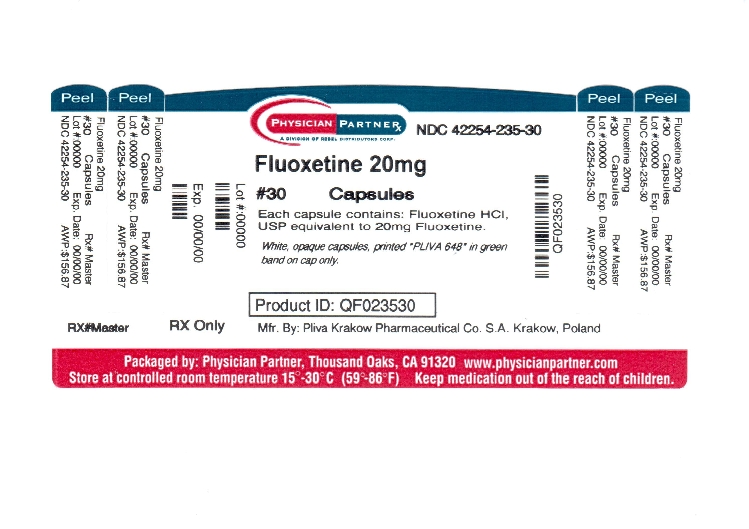
  • Fluoxetine Capsule [Rebel Distributors Corp]

    Fluoxetine

    Fluoxetine Capsule [Rebel Distributors Corp]

    2.1 Major Depressive Disorder

    Initial Treatment

    Adult — In controlled trials used to support the efficacy of fluoxetine, patients were administered morning doses ranging from 20 to 80 mg/day. Studies comparing fluoxetine 20, 40, and 60 mg/day to placebo indicate that 20 mg/day is sufficient to obtain a satisfactory response in Major Depressive Disorder in most cases. Consequently, a dose of 20 mg/day, administered in the morning, is recommended as the initial dose.

    A dose increase may be considered after several weeks if insufficient clinical improvement is observed. Doses above 20 mg/day may be administered on a once-a-day (morning) or BID schedule (i.e., morning and noon) and should not exceed a maximum dose of 80 mg/day.

    Pediatric (children and adolescents) — In the short-term (8 to 9 week) controlled clinical trials of fluoxetine supporting its effectiveness in the treatment of Major Depressive Disorder, patients were administered fluoxetine doses of 10 to 20 mg/day   [see Clinical Studies (14.1)]. Treatment should be initiated with a dose of 10 or 20 mg/day. After 1 week at 10 mg/day, the dose should be increased to 20 mg/day.

    However, due to higher plasma levels in lower weight children, the starting and target dose in this group may be 10 mg/day. A dose increase to 20 mg/day may be considered after several weeks if insufficient clinical improvement is observed.

    All patients — As with other drugs effective in the treatment of Major Depressive Disorder, the full effect may be delayed until 4 weeks of treatment or longer.

    Maintenance/Continuation/Extended Treatment — It is generally agreed that acute episodes of Major Depressive Disorder require several months or longer of sustained pharmacologic therapy. Whether the dose needed to induce remission is identical to the dose needed to maintain and/or sustain euthymia is unknown.

    Daily Dosing — Systematic evaluation of fluoxetine in adult patients has shown that its efficacy in Major Depressive Disorder is maintained for periods of up to 38 weeks following 12 weeks of open-label acute treatment (50 weeks total) at a dose of 20 mg/day [see Clinical Studies (14.1)].

    Switching Patients to a Tricyclic Antidepressant (TCA) — Dosage of a TCA may need to be reduced, and plasma TCA concentrations may need to be monitored temporarily when fluoxetine is coadministered or has been recently discontinued [see Drug Interactions (7.9)].

    Switching Patients to or From a Monoamine Oxidase Inhibitor (MAOI) — At least 14 days should elapse between discontinuation of an MAOI and initiation of therapy with fluoxetine. In addition, at least 5 weeks, perhaps longer, should be allowed after stopping fluoxetine before starting an MAOI [see Contraindications (4) and Drug Interactions (7.1)].

    2.2 Obsessive Compulsive Disorder

    Initial Treatment

    Adult — In the controlled clinical trials of fluoxetine supporting its effectiveness in the treatment of OCD, patients were administered fixed daily doses of 20, 40, or 60 mg of fluoxetine or placebo  [see Clinical Studies (14.2)]. In one of these studies, no dose-response relationship for effectiveness was demonstrated. Consequently, a dose of 20 mg/day, administered in the morning, is recommended as the initial dose. Since there was a suggestion of a possible dose-response relationship for effectiveness in the second study, a dose increase may be considered after several weeks if insufficient clinical improvement is observed. The full therapeutic effect may be delayed until 5 weeks of treatment or longer.

    Doses above 20 mg/day may be administered on a once daily (i.e., morning) or BID schedule (i.e., morning and noon). A dose range of 20 to 60 mg/day is recommended; however, doses of up to 80 mg/day have been well tolerated in open studies of OCD. The maximum fluoxetine dose should not exceed 80 mg/day.

    Pediatric (children and adolescents) — In the controlled clinical trial of fluoxetine supporting its effectiveness in the treatment of OCD, patients were administered fluoxetine doses in the range of 10 to 60 mg/day [see Clinical Studies (14.2)].

    In adolescents and higher weight children, treatment should be initiated with a dose of 10 mg/day. After 2 weeks, the dose should be increased to 20 mg/day. Additional dose increases may be considered after several more weeks if insufficient clinical improvement is observed. A dose range of 20 to 60 mg/day is recommended.

    In lower weight children, treatment should be initiated with a dose of 10 mg/day. Additional dose increases may be considered after several more weeks if insufficient clinical improvement is observed. A dose range of 20 to 30 mg/day is recommended. Experience with daily doses greater than 20 mg is very minimal, and there is no experience with doses greater than 60 mg.Maintenance/Continuation Treatment — While there are no systematic studies that answer the question of how long to continue fluoxetine, OCD is a chronic condition and it is reasonable to consider continuation for a responding patient. Although the efficacy of fluoxetine after 13 weeks has not been documented in controlled trials, adult patients have been continued in therapy under double-blind conditions for up to an additional 6 months without loss of benefit. However, dosage adjustments should be made to maintain the patient on the lowest effective dosage, and patients should be periodically reassessed to determine the need for treatment.

    2.3 Bulimia Nervosa

    Initial Treatment — In the controlled clinical trials of fluoxetine supporting its effectiveness in the treatment of Bulimia Nervosa, patients were administered fixed daily fluoxetine doses of 20 or 60 mg, or placebo [see Clinical Studies (14.3)]. Only the 60 mg dose was statistically significantly superior to placebo in reducing the frequency of binge-eating and vomiting. Consequently, the recommended dose is 60 mg/day, administered in the morning. For some patients it may be advisable to titrate up to this target dose over several days. Fluoxetine doses above 60 mg/day have not been systematically studied in patients with bulimia.

    Maintenance/Continuation Treatment — Systematic evaluation of continuing fluoxetine 60 mg/day for periods of up to 52 weeks in patients with bulimia who have responded while taking fluoxetine 60 mg/day during an 8 week acute treatment phase has demonstrated a benefit of such maintenance treatment [see Clinical Studies (14.3)]. Nevertheless, patients should be periodically reassessed to determine the need for maintenance treatment.

    2.4 Panic Disorder

    Initial Treatment — In the controlled clinical trials of fluoxetine supporting its effectiveness in the treatment of Panic Disorder, patients were administered fluoxetine doses in the range of 10 to 60 mg/day  [see Clinical Studies (14.4)]. Treatment should be initiated with a dose of 10 mg/day. After one week, the dose should be increased to 20 mg/day. The most frequently administered dose in the 2 flexible-dose clinical trials was 20 mg/day.

    A dose increase may be considered after several weeks if no clinical improvement is observed. Fluoxetine doses above 60 mg/day have not been systematically evaluated in patients with Panic Disorder.

    Maintenance/Continuation Treatment — While there are no systematic studies that answer the question of how long to continue fluoxetine, panic disorder is a chronic condition and it is reasonable to consider continuation for a responding patient. Nevertheless, patients should be periodically reassessed to determine the need for continued treatment.

    2.5 Fluoxetine and Olanzapine in Combination: Depressive Episodes Associated With Bipolar I Disorder

    When using fluoxetine and olanzapine in combination, also refer to the Clinical Studies section of the package insert for olanzapine and fluoxetine hydrochloride capsules.

    Fluoxetine should be administered in combination with oral olanzapine once daily in the evening, without regard to meals, generally beginning with 5 mg of oral olanzapine and 20 mg of fluoxetine. Dosage adjustments, if indicated, can be made according to efficacy and tolerability within dose ranges of fluoxetine 20 to 50 mg and oral olanzapine 5 to 12.5 mg. Antidepressant efficacy was demonstrated with olanzapine and fluoxetine in combination with a dose range of olanzapine 6 to 12 mg and fluoxetine 25 to 50 mg.

    Safety and efficacy of fluoxetine in combination with olanzapine was determined in clinical trials supporting approval of olanzapine and fluoxetine hydrochloride capsules (fixed-dose combination of olanzapine and fluoxetine). Olanzapine and fluoxetine hydrochloride capsules are dosed between 3 mg/25 mg (olanzapine/fluoxetine) per day and 12 mg/50 mg (olanzapine/fluoxetine) per day. The following table demonstrates the appropriate individual component doses of fluoxetine and olanzapine versus olanzapine and fluoxetine hydrochloride capsules. Dosage adjustments, if indicated, should be made with the individual components according to efficacy and tolerability.

    Table 1: Approximate Dose Correspondence Between Olanzapine and Fluoxetine Hydrochloride Capsules* and the Combination of Fluoxetine and Olanzapine * Olanzapine and fluoxetine hydrochloride capsules are a fixed-dose combination of fluoxetine and olanzapine. For Olanzapine and Fluoxetine Hydrochloride Capsules(mg/day) Use in Combination Olanzapine (mg/day) Fluoxetine (mg/day) 3 mg olanzapine/25 mg fluoxetine 2.5 20 6 mg olanzapine/25 mg fluoxetine 5 20 12 mg olanzapine/25 mg fluoxetine 10 + 2.5 20 6 mg olanzapine/50 mg fluoxetine 5 40 + 10 12 mg olanzapine/50 mg fluoxetine 10 + 2.5 40 + 10

     While there is no body of evidence to answer the question of how long a patient treated with fluoxetine and olanzapine in combination should remain on it, it is generally accepted that Bipolar I Disorder, including the depressive episodes associated with Bipolar I Disorder, is a chronic illness requiring chronic treatment. The physician should periodically re-examine the need for continued pharmacotherapy.

    Safety of coadministration of doses above 18 mg olanzapine with 75 mg fluoxetine has not been evaluated in clinical studies.

    Fluoxetine monotherapy is not indicated for the treatment of depressive episodes associated with Bipolar I Disorder.

    2.7 Dosing in Specific Populations

    Treatment of pregnant Women During the Third Trimester — When treating pregnant women with fluoxetine during the third trimester, the physician should carefully consider the potential risks and potential benefits of treatment. Neonates exposed to SNRIs or SSRIs late in the third trimester have developed complications requiring prolonged hospitalization, respiratory support, and tube feeding. The physician may consider tapering fluoxetine in the third trimester [see Use in Specific Populations (8.1)].

    Geriatric — A lower or less frequent dosage should be considered for the elderly [see Use in Specific Populations (8.5)]. 

    Hepatic Impairment — As with many other medications, a lower or less frequent dosage should be used in patients with hepatic impairment  [see Clinical Pharmacology (12.4) and Use in Specific Populations (8.6)]. 

    Concomitant Illness — Patients with concurrent disease or on multiple concomitant medications may require dosage adjustments [see Clinical Pharmacology (12.4) and Warnings and Precautions (5.10)].

    Fluoxetine and Olanzapine in Combination – The starting dose of oral olanzapine 2.5 to 5 mg with fluoxetine 20 mg should be used for patients with a predisposition to hypotensive reactions, patients with hepatic impairment, or patients who exhibit a combination of factors that may slow the metabolism of olanzapine or fluoxetine in combination (female gender, geriatric age, nonsmoking status), or those patients who may be pharmacodynamically sensitive to olanzapine. Dosing modifications may be necessary in patients who exhibit a combination of factors that may slow metabolism. When indicated, dose escalation should be performed with caution in these patients. Fluoxetine and olanzapine in combination have not been systematically studied in patients over 65 years of age or in patients less than 18 years of age [see Warnings and Precautions (5.14) and Drug Interactions (7.9)].

    2.8 Discontinuation of Treatment

    Symptoms associated with discontinuation of fluoxetine, SNRIs, and SSRIs, have been reported  [see Warnings and Precautions (5.13)].

  • Dicyclomine Hydrochloride Capsule [Rebel Distributors Corp]

    Dicyclomine Hydrochloride

    Dicyclomine Hydrochloride Capsule [Rebel Distributors Corp]

    DOSAGE MUST BE ADJUSTED TO INDIVIDUAL PATIENT NEEDS. (See CLINICAL PHARMACOLOGY.)

    The only oral dose clearly shown to be effective is 160 mg per day (in 4 equally divided doses). Since this dose is associated with a significant incidence of side effects, it is prudent to begin with 80 mg per day (in 4 equally divided doses). Depending upon the patient's response during the first week of therapy, the dose should be increased to 160 mg per day unless side effects limit dosage escalation.

    If efficacy is not achieved within 2 weeks or side effects require doses below 80 mg per day, the drug should be discontinued. Documented safety data are not available for doses above 80 mg daily for periods longer than 2 weeks.

    The intramuscular dosage form is to be used temporarily when the patient cannot take oral medication. Intramuscular injection is about twice as bioavailable as oral dosage forms; consequently, the recommended intramuscular dose is 80 mg daily (in 4 equally divided doses).

    Oral dicyclomine hydrochloride should be started as soon as possible and the intramuscular form should not be used for periods longer than 1 or 2 days.

  • Halobetasol Propionate Cream [Rebel Distributors Corp]

    Halobetasol Propionate

    Halobetasol Propionate Cream [Rebel Distributors Corp]

    Apply a thin layer of Halobetasol Propionate Cream to the affected skin once or twice daily, as directed by your physician, and rub in gently and completely.

    Halobetasol Propionate Cream is a super-high potency topical corticosteroid; therefore, treatment should be limited to two weeks, and amounts greater than 50 g/wk should not be used. As with other corticosteroids, therapy should be discontinued when control is achieved. If no improvement is seen within 2 weeks, reassessment of diagnosis may be necessary.

    Halobetasol Propionate Cream should not be used with occlusive dressings.

  • Hydrocodone Bitartrate And Acetaminophen Tablet [Rebel Distributors Corp]

    Hydrocodone Bitartrate And Acetaminophen

    Hydrocodone Bitartrate And Acetaminophen Tablet [Rebel Distributors Corp]

    Dosage should be adjusted according to the severity of the pain and the response of the patient. However, it should be kept in mind that tolerance to hydrocodone can develop with continued use and that the incidence of untoward effects is dose related.

    The usual adult dosage is one tablet every four to six hours as needed for pain. The total daily dosage should not exceed 6 tablets.

  • Indomethacin Capsule [Rebel Distributors Corp]

    Indomethacin

    Indomethacin Capsule [Rebel Distributors Corp]

    Carefully consider the potential benefits and risks of indomethacin and other treatment options before deciding to use indomethacin. Use the lowest effective dose for the shortest duration consistent with individual patient treatment goals (see WARNINGS).

    After observing the response to initial therapy with indomethacin, the dose and frequency should be adjusted to suit an individual patient’s needs.

    Indomethacin is available as 25 and 50 mg capsules.

    Adverse reactions appear to correlate with the size of the dose of indomethacin in most patients but not all. Therefore, every effort should be made to determine the smallest effective dosage for the individual patient.

    Pediatric Use

    Indomethacin ordinarily should not be prescribed for pediatric patients 14 years of age and under (see PRECAUTIONS, Pediatric Use).

    Adult Use

    Dosage Recommendations for Active Stages of the Following:

    Moderate to severe rheumatoid arthritis including acute flares of chronic disease; moderate to severe ankylosing spondylitis; and moderate to severe osteoarthritis.Suggested Dosage:Indomethacin capsules 25 mg b.i.d. or t.i.d. If this is well tolerated, increase the daily dosage by 25 or by 50 mg, if required by continuing symptoms, at weekly intervals until a satisfactory response is obtained or until a total daily dose of 150 - 200 mg is reached. DOSES ABOVE THIS AMOUNT GENERALLY DO NOT INCREASE THE EFFECTIVENESS OF THE DRUG.

    In patients who have persistent night pain and/or morning stiffness, the giving of a large portion, up to a maximum of 100 mg, of the total daily dose at bedtime, either orally or by rectal suppositories, may be helpful in affording relief. The total daily dose should not exceed 200 mg. In acute flares of chronic rheumatoid arthritis, it may be necessary to increase the dosage by 25 mg or, if required, by 50 mg daily.

    If minor adverse effects develop as the dosage is increased, reduce the dosage rapidly to a tolerated dose and OBSERVE THE PATIENT CLOSELY.

    If severe adverse reactions occur, STOP THE DRUG. After the acute phase of the disease is under control, an attempt to reduce the daily dose should be made repeatedly until the patient is receiving the smallest effective dose or the drug is discontinued.

    Careful instructions to, and observations of, the individual patient are essential to the prevention of serious, irreversible, including fatal, adverse reactions.

    As advancing years appear to increase the possibility of adverse reactions, indomethacin should be used with greater care in the elderly (see PRECAUTIONS, Geriatric Use).

    Acute painful shoulder (bursitis and/or tendinitis). Initial Dose:75 mg to 150 mg daily in 3 or 4 divided doses.The drug should be discontinued after the signs and symptoms of inflammation have been controlled for several days. The usual course of therapy is 7 to 14 days. Acute gouty arthritis.Suggested Dose:Indomethacin capsules 50 mg t.i.d. until pain is tolerable. The dose should then be rapidly reduced to complete cessation of the drug. Definite relief of pain has been reported within 2 to 4 hours. Tenderness and heat usually subside in 24 to 36 hours, and swelling gradually disappears in 3 to 5 days.
  • Flector (Diclofenac Epolamine) Patch [Rebel Distributors Corp]

    Flector

    Flector (Diclofenac Epolamine) Patch [Rebel Distributors Corp]

    2.1 General Instructions

    The recommended dose of Flector Patch is one (1) patch to the most painful area twice a day.

    2.2 Special Precautions

    Patients should be informed that, if Flector Patch begins to peel-off, the edges of the patch may be taped down. If problems with adhesion persist, patients may overlay the patch with a mesh netting sleeve, where appropriate (e.g. to secure patches applied to ankles, knees, or elbows). The mesh netting sleeve (e.g. Curad® Hold Tite™, Surgilast® Tubular Elastic Dressing) must allow air to pass through and not be occlusive (non-breathable). Do not apply Flector Patch to non-intact or damaged skin resulting from any etiology e.g. exudative dermatitis, eczema, infected lesion, burns or wounds. Do not wear a Flector Patch when bathing or showering. Wash your hands after applying, handling or removing the patch. Avoid eye contact.
  • Donepezil Hydrochloride Tablet, Film Coated [Rebel Distributors Corp]

    Donepezil Hydrochloride

    Donepezil Hydrochloride Tablet, Film Coated [Rebel Distributors Corp]

    Donepezil hydrochloride tablets should be taken in the evening, just prior to retiring.

    Donepezil hydrochloride tablets can be taken with or without food.

    2.1 Mild to Moderate Alzheimer's Disease

    The dosages of donepezil hydrochloride shown to be effective in controlled clinical trials are 5 mg and 10 mg administered once per day.

    The higher dose of 10 mg did not provide a statistically significantly greater clinical benefit than 5 mg. There is a suggestion, however, based upon order of group mean scores and dose trend analyses of data from these clinical trials, that a daily dose of 10 mg of donepezil hydrochloride might provide additional benefit for some patients. Accordingly, whether or not to employ a dose of 10 mg is a matter of prescriber and patient preference.

    2.2 Severe Alzheimer's Disease

    Donepezil hydrochloride has been shown to be effective in controlled clinical trials at a dose of 10 mg administered once daily.

    2.3 Titration

    The recommended starting dose of donepezil hydrochloride is 5 mg once daily. Evidence from the controlled trials in mild to moderate Alzheimer's disease indicates that the 10 mg dose, with a one week titration, is likely to be associated with a higher incidence of cholinergic adverse events compared to the 5 mg dose. In open-label trials using a 6 week titration, the type and frequency of these same adverse events were similar between the 5 mg and 10 mg dose groups. Therefore, because donepezil hydrochloride steady state is achieved about 15 days after it is started and because the incidence of untoward effects may be influenced by the rate of dose escalation, a dose of 10 mg should not be administered until patients have been on a daily dose of 5 mg for 4 to 6 weeks.

    2.1 Mild to Moderate Alzheimer's Disease

    The dosages of donepezil hydrochloride shown to be effective in controlled clinical trials are 5 mg and 10 mg administered once per day.

    The higher dose of 10 mg did not provide a statistically significantly greater clinical benefit than 5 mg. There is a suggestion, however, based upon order of group mean scores and dose trend analyses of data from these clinical trials, that a daily dose of 10 mg of donepezil hydrochloride might provide additional benefit for some patients. Accordingly, whether or not to employ a dose of 10 mg is a matter of prescriber and patient preference.

    2.2 Severe Alzheimer's Disease

    Donepezil hydrochloride has been shown to be effective in controlled clinical trials at a dose of 10 mg administered once daily.

    2.3 Titration

    The recommended starting dose of donepezil hydrochloride is 5 mg once daily. Evidence from the controlled trials in mild to moderate Alzheimer's disease indicates that the 10 mg dose, with a one week titration, is likely to be associated with a higher incidence of cholinergic adverse events compared to the 5 mg dose. In open-label trials using a 6 week titration, the type and frequency of these same adverse events were similar between the 5 mg and 10 mg dose groups. Therefore, because donepezil hydrochloride steady state is achieved about 15 days after it is started and because the incidence of untoward effects may be influenced by the rate of dose escalation, a dose of 10 mg should not be administered until patients have been on a daily dose of 5 mg for 4 to 6 weeks.

  • Ipratropium Bromide Spray, Metered [Rebel Distributors Corp]

    Ipratropium Bromide Spray

    Ipratropium Bromide Spray, Metered [Rebel Distributors Corp]

    For Symptomatic Relief of Rhinorrhea Associated with the Common Cold: The recommended dose of ipratropium bromide nasal solution 0.06% (Nasal Spray) is two sprays (84 mcg) per nostril three or four times daily (total dose 504 to 672 mcg/day) in adults and children age 12 years and older. Optimum dosage varies with response of the individual patient. The recommended dose of ipratropium bromide nasal solution 0.06% (Nasal Spray) for children age 5-11 years is two sprays (84 mcg) per nostril three times daily (total dose of 504 mcg/day).

    The safety and effectiveness of the use of ipratropium bromide nasal solution 0.06% (Nasal Spray) beyond four days in patients with the common cold have not been established.

    For Symptomatic Relief of Rhinorrhea Associated with Seasonal Allergic Rhinitis: The recommended dose of ipratropium bromide nasal solution 0.06% (Nasal Spray) is two sprays (84 mcg) per nostril four times daily (total dose 672 mcg/day) in adults and children age 5 years and older.

    The safety and effectiveness of the use of ipratropium bromide nasal solution 0.06% (Nasal Spray) beyond three weeks in patients with seasonal allergic rhinitis have not been established.

    Initial pump priming requires seven sprays of the pump. If used regularly as recommended, no further priming is required. If not used for more than 24 hours, the pump will require two sprays, or if not used for more than seven days, the pump will require seven sprays to reprime.

    Avoid spraying into eyes.

  • Methyldopa Tablet, Film Coated [Rebel Distributors Corp]

    Methyldopa

    Methyldopa Tablet, Film Coated [Rebel Distributors Corp]

    Adults

    Initiation of Therapy

    The usual starting dosage of methyldopa tablet is 250 mg two or three times a day in the first 48 hours. The daily dosage then may be increased or decreased, preferably at intervals of not less than two days, until an adequate response is achieved. To minimize the sedation, start dosage increases in the evening. By adjustment of dosage, morning hypotension may be prevented without sacrificing control of afternoon blood pressure.

    When methyldopa is given to patients on other anti-hypertensives, the dose of these agents may need to be adjusted to effect a smooth transition. When methyldopa is given with anti-hypertensives other than thiazides, the initial dosage of methyldopa should be limited to 500 mg daily in divided doses; when methyldopa is added to a thiazide, the dosage of thiazide need not be changed.

    Maintenance Therapy

    The usual daily dosage of methyldopa is 500 mg to 2 g in two to four doses. Although occasional patients have responded to higher doses, the maximum recommended daily dosage is 3 g. Once an effective dosage range is attained, a smooth blood pressure response occurs in most patients in 12 to 24 hours. Since methyldopa has a relatively short duration of action, withdrawal is followed by return of hypertension usually within 48 hours. This is not complicated by an overshoot of blood pressure.

    Occasionally tolerance may occur, usually between the second and third month of therapy. Adding a diuretic or increasing the dosage of methyldopa frequently will restore effective control of blood pressure. A thiazide may be added at any time during methyldopa therapy and is recommended if therapy has not been started with a thiazide or if effective control of blood pressure cannot be maintained on 2 g of methyldopa daily.

    Methyldopa is largely excreted by the kidney and patients with impaired renal function may respond to smaller doses. Syncope in older patients may be related to an increased sensitivity and advanced arteriosclerotic vascular disease. This may be avoided by lower doses (see PRECAUTIONS, Geriatric Use).

    PEDIATRIC PATIENTS

    Initial dosage is based on 10 mg/kg of body weight daily in two to four doses. The daily dosage then is increased or decreased until an adequate response is achieved. The maximum dosage is 65 mg/kg or 3 g daily, whichever is less (see PRECAUTIONS, Pediatric Use).

  • Junel Fe 1.5/30 (Norethindrone Acetate And Ethinyl Estradiol, And Ferrous Fumarate) Kit [Rebel Distributors Corp]

    Junel Fe 1.530

    Junel Fe 1.5/30 (Norethindrone Acetate And Ethinyl Estradiol, And Ferrous Fumarate) Kit [Rebel Distributors Corp]

    The tablet dispenser has been designed to make oral contraceptive dosing as easy and as convenient as possible. The tablets are arranged in either three or four rows of seven tablets each, with the days of the week appearing on the tablet dispenser above the first row of tablets.

    Note: Each tablet dispenser has been preprinted with the days of the week, starting with Sunday, to facilitate a Sunday-Start regimen. Six different days of the week stickers have been provided with the Detailed Patient & Brief Summary Patient Package Insert in order to accommodate a Day 1 Start regimen. If the patient is using the Day 1 Start regimen, she should place the self-adhesive days of the week sticker that corresponds to her starting day over the preprinted days.

    Important: The patient should be instructed to use an additional method of protection until after the first week of administration in the initial cycle when utilizing the Sunday-Start regimen.

    The possibility of ovulation and conception prior to initiation of use should be considered.

    Dosage and Administration for 21 Day Dosage Regimen

    To achieve maximum contraceptive effectiveness, Junel ®21 must be taken exactly as directed and at intervals not exceeding 24 hours.

    Junel ®21 provides the patient with a convenient tablet schedule of “3 weeks on --1 week off”. Two dosage regimens are described, one of which may be more convenient or suitable than the other for an individual patient. For the initial cycle of therapy, the patient begins her tablets according to the Day 1 Start or Sunday-Start regimen. With either regimen, the patient takes one tablet daily for 21 consecutive days followed by one week of no tablets.

    Sunday Start Regimen: The patient begins taking tablets from the top row on the first Sunday after menstrual flow begins. When menstrual flow begins on Sunday, the first tablet is taken on the same day. The last tablet in the dispenser will then be taken on a Saturday, followed by no tablets for a week (7 days). For all subsequent cycles, the patient then begins a new 21-tablet regimen on the eighth day, Sunday, after taking her last tablet. Following this regimen, of 21 days on--7 days off, the patient will start all subsequent cycles on a Sunday. Day 1 Regimen: The first day of menstrual flow is Day 1. The patient places the self-adhesive days of the week sticker that corresponds to her starting day over the preprinted days on the blister card. She starts taking one tablet daily, beginning with the first tablet in the top row. The patient completes her 21-tablet regimen when she has taken the last tablet in the tablet dispenser. She will then take no tablets for a week (7 days). For all subsequent cycles, the patient begins a new 21-tablet regimen on the eighth day after taking her last tablet, again starting with the first tablet in the top row after placing the appropriate days of the week sticker over the preprinted days on the tablet dispenser. Following this regimen of 21 days on--7 days off, the patient will start all subsequent cycles on the same day of the week as the first course. Likewise, the interval of no tablets will always start on the same day of the week.Tablets should be taken regularly with a meal or at bedtime. It should be stressed that efficacy of medication depends on strict adherence to the dosage schedule.

    Special Notes on Administration

    Menstruation usually begins two or three days, but may begin as late as the fourth or fifth day, after discontinuing medication. If spotting occurs while on the usual regimen of one tablet daily, the patient should continue medication without interruption.

    If a patient forgets to take one or more tablets, the following is suggested:

    One tablet is missed

    take tablet as soon as remembered take next tablet at the regular time

    Two consecutive tablets are missed (week 1 or week 2)

    take two tablets as soon as remembered take two tablets the next day use another birth control method for seven days following the missed tablets

    Two consecutive tablets are missed (week 3)

    Sunday Start Regimen

    take one tablet daily until Sunday discard remaining tablets start new pack of tablets immediately (Sunday) use another birth control method for seven days following the missed tablets

    Day 1 Start Regimen

    discard remaining tablets start new pack of tablets that same day use another birth control method for seven days following the missed tablets

    Three (or more) consecutive tablets are missed

    Sunday Start Regimen

    take one tablet daily until Sunday discard remaining tablets start new pack of tablets immediately (Sunday) use another birth control method for seven days following the missed tablets

    Day 1 Start Regimen:

    discard remaining tablets start new pack of tablets that same day use another birth control method for seven days following the missed tablets

    The possibility of ovulation occurring increases with each successive day that scheduled tablets are missed. While there is little likelihood of ovulation occurring if only one tablet is missed, the possibility of spotting or bleeding is increased. This is particularly likely to occur if two or more consecutive tablets are missed.

    In the rare case of bleeding which resembles menstruation, the patient should be advised to discontinue medication and then begin taking tablets from a new tablet dispenser on the next Sunday or the first day (Day 1) depending on her regimen. Persistent bleeding which is not controlled by this method indicates the need for reexamination of the patient, at which time nonfunctional causes should be considered.

    Dosage and Administration for 28 Day Dosage Regimen

    To achieve maximum contraceptive effectiveness, Junel ® Fe 28 must be taken exactly as directed and at intervals not exceeding 24 hours.

    Junel ® Fe 28 provides a continuous administration regimen consisting of 21 light yellow or pink tablets of Junel ® and 7 brown nonhormone containing tablets of ferrous fumarate. The ferrous fumarate tablets are present to facilitate ease of drug administration via a 28-day regimen and do not serve any therapeutic purpose. There is no need for the patient to count days between cycles because there are no “off-tablet days.”

    Sunday Start Regimen: The patient begins taking the first light yellow or pink tablet from the top row of the dispenser (labeled Sunday) on the first Sunday after menstrual flow begins. When menstrual flow begins on Sunday, the first light yellow or pink tablet is taken on the same day. The patient takes one light yellow or pink tablet daily for 21 days. The last light yellow or pink tablet in the dispenser will be taken on a Saturday. Upon completion of all 21 light yellow or pink tablets, and without interruption, the patient takes one brown tablet daily for 7 days. Upon completion of this first course of tablets, the patient begins a second course of 28-tablets, without interruption, the next day (Sunday), starting with the Sunday light yellow or pink tablet in the top row. Adhering to this regimen of one light yellow or pink tablet daily for 21 days, followed without interruption by one brown tablet daily for seven days, the patient will start all subsequent cycles on a Sunday. Day 1 Regimen: The first day of menstrual flow is Day 1. The patient places the self-adhesive days of the week sticker that corresponds to her starting day over the preprinted days on the blister card. She starts taking one light yellow or pink tablet daily, beginning with the first light yellow or pink tablet in the top row. After the last light yellow or pink tablet (at the end of the third row) has been taken, the patient will then take the brown tablets for a week (7 days). For all subsequent cycles, the patient begins a new 28 tablet regimen on the eighth day after taking her last light yellow or pink tablet, again starting with the first tablet in the top row after placing the appropriate days of the week sticker over the preprinted days on the tablet dispenser. Following this regimen of 21 light yellow or pink tablets and 7 brown tablets, the patient will start all subsequent cycles on the same day of the week as the first course.Tablets should be taken regularly with a meal or at bedtime. It should be stressed that efficacy of medication depends on strict adherence to the dosage schedule.

    Special Notes on Administration

    Menstruation usually begins two or three days, but may begin as late as the fourth or fifth day, after the brown tablets have been started. In any event, the next course of tablets should be started without interruption. If spotting occurs while the patient is taking light yellow or pink tablets, continue medication without interruption.

    If a patient forgets to take one or more light yellow or pink tablets, the following is suggested:

    One tablet is missed

    take tablet as soon as remembered take next tablet at the regular time

    Two consecutive tablets are missed (week 1 or week 2)

    take two tablets as soon as remembered take two tablets the next day use another birth control method for seven days following the missed tablets

    Two consecutive tablets are missed (week 3)

    Sunday Start Regimen

    take one tablet daily until Sunday discard remaining tablets start new pack of tablets immediately (Sunday) use another birth control method for seven days following the missed tablets

    Day 1 Start Regimen

    discard remaining tablets start new pack of tablets that same day use another birth control method for seven days following the missed tablets

    Three (or more) consecutive tablets are missed

    Sunday Start Regimen

    take one tablet daily until Sunday discard remaining tablets start new pack of tablets immediately (Sunday) use another birth control method for seven days following the missed tablets

    Day 1 Start Regimen

    discard remaining tablets start new pack of tablets that same day use another birth control method for seven days following the missed tablets

    The possibility of ovulation occurring increases with each successive day that scheduled light yellow or pink tablets are missed. While there is little likelihood of ovulation occurring if only one light yellow or pink tablet is missed, the possibility of spotting or bleeding is increased. This is particularly likely to occur if two or more consecutive light yellow or pink tablets are missed.

    If the patient forgets to take any of the seven brown tablets in week four, those brown tablets that were missed are discarded and one brown tablet is taken each day until the pack is empty. A back-up birth control method is not required during this time. A new pack of tablets should be started no later than the eighth day after the last light yellow or pink tablet was taken.

    In the rare case of bleeding which resembles menstruation, the patient should be advised to discontinue medication and then begin taking tablets from a new tablet dispenser on the next Sunday or the first day (Day-1), depending on her regimen. Persistent bleeding which is not controlled by this method indicates the need for reexamination of the patient, at which time nonfunctional causes should be considered.

    Use of Oral Contraceptives in the Event of a Missed Menstrual Period

    If the patient has not adhered to the prescribed dosage regimen, the possibility of pregnancy should be considered after the first missed period and oral contraceptives should be withheld until pregnancy has been ruled out. If the patient has adhered to the prescribed regimen and misses two consecutive periods, pregnancy should be ruled out before continuing the contraceptive regimen.

    After several months on treatment, bleeding may be reduced to a point of virtual absence. This reduced flow may occur as a result of medication, in which event it is not indicative of pregnancy.

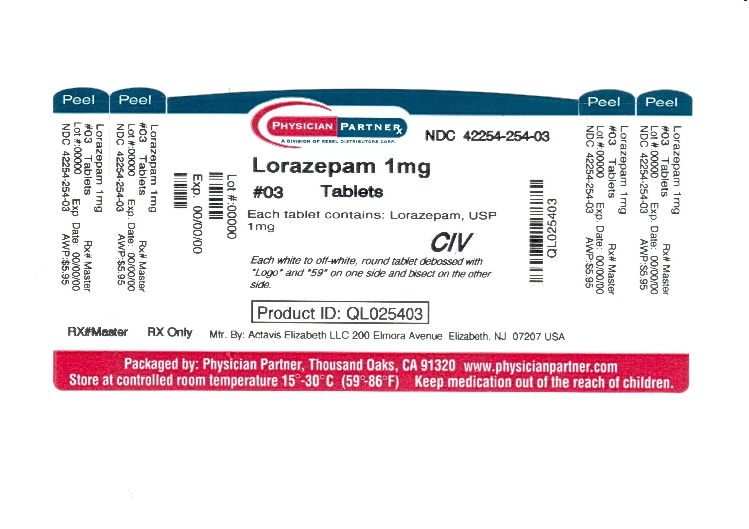
  • Lorazepam Tablet [Rebel Distributors Corp]

    Lorazepam

    Lorazepam Tablet [Rebel Distributors Corp]

    Lorazepam is administered orally. For optimal results, dose, frequency of administration, and duration of therapy should be individualized according to patient response. To facilitate this 0.5 mg, 1 mg, and 2 mg tablets are available.

    The usual range is 2 to 6 mg/day given in divided doses, the largest dose being taken before bedtime, but the daily dosage may vary from 1 to 10 mg/day.

    For anxiety, most patients require an initial dose of 2 to 3 mg/day given b.i.d. or t.i.d.

    For insomnia due to anxiety or transient situational stress, a single daily dose of 2 to 4 mg may be given, usually at bedtime.

    For elderly or debilitated patients, an initial dosage of 1 to 2 mg/day in divided doses is recommended to be adjusted as needed and tolerated.

    The dosage of lorazepam should be increased gradually when needed to help avoid adverse effects. When higher dosage is indicted, the evening dose should be increased before the daytime doses.

  • Lansoprazole Capsule, Delayed Release [Rebel Distributors Corp]

    Lansoprazole

    Lansoprazole Capsule, Delayed Release [Rebel Distributors Corp]

    Lansoprazole delayed-release capsules USP are available in 15 mg and 30 mg strengths. Directions for use specific to the route and available methods of administration for this dosage form is presented below. Lansoprazole delayed-release capsules USP should be taken before eating. Lansoprazole delayed-release capsules USP SHOULD NOT BE CRUSHED OR CHEWED. In the clinical trials, antacids were used concomitantly with lansoprazole.

    2.1 Recommended Dose

    * Please refer to amoxicillin and clarithromycin full prescribing information for CONTRAINDICATIONS and WARNINGS, and for information regarding dosing in elderly and renally-impaired patients. † Controlled studies did not extend beyond indicated duration. ‡ For patients who do not heal with lansoprazole delayed-release capsules USP for 8 weeks (5 to 10%), it may be helpful to give an additional 8 weeks of treatment. If there is a recurrence of erosive esophagitis, an additional 8 week course of lansoprazole delayed-release capsules USP may be considered. § The lansoprazole dose was increased (up to 30 mg twice daily) in some pediatric patients after 2 or more weeks of treatment if they remained symptomatic. For pediatric patients unable to swallow an intact capsule please see Administration Options. ¶ Varies with individual patient. Recommended adult starting dose is 60 mg once daily. Doses should be adjusted to individual patient needs and should continue for as long as clinically indicated. Dosages up to 90 mg twice daily have been administered. Daily dose of greater than 120 mg should be administered in divided doses. Some patients with Zollinger-Ellison syndrome have been treated continuously with lansoprazole for more than 4 years. Indication Recommended Dose Frequency Duodenal Ulcers     Short-Term Treatment 15 mg Once daily for 4 weeks Maintenance of Healed 15 mg Once daily H. pylori Eradication to Reduce the Risk of Duodenal Ulcer Recurrence* Triple Therapy: Lansoprazole Delayed-Release Capsules USP 30 mg Twice daily (q12h) for 10 or 14 days Amoxicillin 1 gram Twice daily (q12h) for 10 or 14 days Clarithromycin 500 mg Twice daily (q12h) for 10 or 14 days Dual Therapy: Lansoprazole Delayed-Release Capsules USP 30 mg Three times daily (q8h) for 14 days Amoxicillin 1 gram Three times daily (q8h) for 14 days Benign Gastric Ulcer     Short-Term Treatment 30 mg Once daily for up to 8 weeks NSAID-associated Gastric Ulcer     Healing 30 mg Once daily for 8 weeks† Risk Reduction 15 mg Once daily for up to 12 weeks† Gastroesophageal Reflux Disease (GERD)     Short-Term Treatment of Symptomatic GERD 15 mg Once daily for up to 8 weeks Short-Term Treatment of Erosive Esophagitis 30 mg Once daily for up to 8 weeks‡ Pediatric   (1 to 11 years of age) Short-Term Treatment of Symptomatic GERD and Short-Term Treatment of Erosive Esophagitis   ≤ 30 kg 15 mg Once daily for up to 12 weeks§ > 30 kg 30 mg Once daily for up to 12 weeks§ (12 to 17 years of age) Short-Term Treatment of Symptomatic GERD     Nonerosive GERD 15 mg Once daily for up to 8 weeks Erosive Esophagitis 30 mg Once daily for up to 8 weeks Maintenance of Healing of Erosive Esophagitis 15 mg Once daily Pathological Hypersecretory Conditions Including Zollinger-Ellison syndrome 60 mg Once daily¶

    Patients should be instructed that if a dose is missed, it should be taken as soon as possible. However, if the next scheduled dose is due, the patient should not take the missed dose, and should be instructed to take the next dose on time. Patients should be instructed not to take 2 doses at one time to make up for a missed dose.

    2.2 Special Populations

    Renal impairment patients and geriatric patients do not require dosage adjustment. However, consider dose adjustment in patients with severe liver impairment [see Use in Specific Populations (8.5, 8.6 and 8.7)].

    2.3 Important Administration Information

    Administration Options

    Lansoprazole Delayed-Release Capsules USP - Oral Administration

    Lansoprazole delayed-release capsules USP should be swallowed whole. Alternatively, for patients who have difficulty swallowing capsules, lansoprazole delayed-release capsules USP can be opened and administered as follows: Open capsule. Sprinkle intact granules on one tablespoon of either applesauce, ENSURE® pudding, cottage cheese, yogurt or strained pears. Swallow immediately. Lansoprazole delayed-release capsules USP may also be emptied into a small volume of either apple juice, orange juice or tomato juice and administered as follows: Open capsule. Sprinkle intact granules into a small volume of either apple juice, orange juice or tomato juice (60 mL — approximately 2 ounces). Mix briefly. Swallow immediately. To ensure complete delivery of the dose, the glass should be rinsed with two or more volumes of juice and the contents swallowed immediately.

    Lansoprazole Delayed-Release Capsules USP - Nasogastric Tube (≥ 16 French) Administration

    For patients who have a nasogastric tube in place, lansoprazole delayed-release capsules USP can be administered as follows: Open capsule. Mix intact granules into 40 mL of apple juice. DO NOT USE OTHER LIQUIDS. Inject through the nasogastric tube into the stomach. Flush with additional apple juice to clear the tube.

    USE IN OTHER FOODS AND LIQUIDS HAS NOT BEEN STUDIED CLINICALLY AND IS THEREFORE NOT RECOMMENDED.

  • Lorazepam Tablet [Rebel Distributors Corp]

    Lorazepam

    Lorazepam Tablet [Rebel Distributors Corp]

    Lorazepam is administered orally. For optimal results, dose, frequency of administration, and duration of therapy should be individualized according to patient response. To facilitate this, 0.5 mg, 1 mg and 2 mg tablets are available.

    The usual range is 2 to 6 mg/day given in divided doses, the largest dose being taken before bedtime, but the daily dosage may vary from 1 to 10 mg/day.

    For anxiety, most patients require an initial dose of 2 to 3 mg/day given b.i.d. or t.i.d.

    For insomnia due to anxiety or transient situational stress, a single daily dose of 2 to 4 mg may be given, usually at bedtime.

    For elderly or debilitated patients, an initial dosage of 1 to 2 mg/day in divided doses is recommended, to be adjusted as needed and tolerated.

    The dosage of Lorazepam should be increased gradually when needed to help avoid adverse effects. When higher dosage is indicated, the evening dose should be increased before the daytime doses.

  • Levora (Levonorgestrel And Ethinyl Estradiol) Kit [Rebel Distributors Corp]

    Levora

    Levora (Levonorgestrel And Ethinyl Estradiol) Kit [Rebel Distributors Corp]

    To achieve maximum contraceptive effectiveness, oral contraceptives must be taken exactly as directed and at intervals not exceeding 24 hours.

    For a DAY 1 START, count the first day of menstrual flow as Day 1 and the first tablet (white) is then taken on Day 1. For a SUNDAY START when menstrual flow begins on or before Sunday, the first tablet (white) is taken on that day. With either a DAY 1 START or SUNDAY START, 1 tablet (white) is taken each day at the same time for 21 days. Then the peach tablets are taken for 7 days, whether bleeding has stopped or not. After all 28 tablets have been taken, whether bleeding has stopped or not, the same dosage schedule is repeated beginning on the following day.

    INSTRUCTIONS TO PATIENTS

      To achieve maximum contraceptive effectiveness, the oral contraceptive pill must be taken exactly as directed and at intervals not exceeding 24 hours.   Important: Women should be instructed to use an additional method of protection until after the first 7 days of administration in the initial cycle.   Due to the normally increased risk of thromboembolism occurring postpartum, women should be instructed not to initiate treatment with oral contraceptives earlier than 4 weeks after a full-term delivery. If pregnancy is terminated in the first 12 weeks, the patient should be instructed to start oral contraceptives immediately or within 7 days. If pregnancy is terminated after 12 weeks, the patient should be instructed to start oral contraceptives after 2 weeks. 33, 77   If spotting or breakthrough bleeding should occur, the patient should continue the medication according to the schedule. Should spotting or breakthrough bleeding persist, the patient should notify her physician.   If the patient misses 1 pill, she should be instructed to take it as soon as she remembers and then take the next pill at the regular time. The patient should be advised that missing a pill can cause spotting or light bleeding and that she may be a little sick to her stomach on the days she takes the missed pill with her regularly scheduled pill. If the patient has missed more than one pill, see DETAILED PATIENT LABELING: HOW TO TAKE THE PILL, WHAT TO DO IF YOU MISS PILLS.   Use of oral contraceptives in the event of a missed menstrual period:   If the patient has not adhered to the prescribed dosage regimen, the possibility of pregnancy should be considered after the first missed period and oral contraceptives should be withheld until pregnancy has been ruled out.   If the patient has adhered to the prescribed regimen and misses consecutive periods, pregnancy should be ruled out before continuing the contraceptive regimen.
  • Lastacaft (Alcaftadine) Solution/ Drops [Rebel Distributors Corp]

    Lastacaft

    Lastacaft (Alcaftadine) Solution/ Drops [Rebel Distributors Corp]

    Instill one drop in each eye once daily.

  • Levetiracetam Tablet, Film Coated [Rebel Distributors Corp]

    Levetiracetam

    Levetiracetam Tablet, Film Coated [Rebel Distributors Corp]

    Levetiracetam is indicated as adjunctive treatment of partial onset seizures in adults and children 4 years of age and older with epilepsy.

    Levetiracetam is indicated as adjunctive therapy in the treatment of myoclonic seizures in adults and adolescents 12 years of age and older with juvenile myoclonic epilepsy.

    Levetiracetam is indicated as adjunctive therapy in the treatment of primary generalized tonic-clonic seizures in adults and children 6 years of age and older with idiopathic generalized epilepsy.

    Partial Onset Seizures

    Adults 16 Years And Older

    In clinical trials, daily doses of 1000 mg, 2000 mg, and 3000 mg, given as twice-daily dosing, were shown to be effective. Although in some studies there was a tendency toward greater response with higher dose (see CLINICAL STUDIES), a consistent increase in response with increased dose has not been shown.

    Treatment should be initiated with a daily dose of 1000 mg/day, given as twice-daily dosing (500 mg BID). Additional dosing increments may be given (1000 mg/day additional every 2 weeks) to a maximum recommended daily dose of 3000 mg. Doses greater than 3000 mg/day have been used in open-label studies for periods of 6 months and longer. There is no evidence that doses greater than 3000 mg/day confer additional benefit.

    Pediatric Patients Ages 4 To <16 Years

    Treatment should be initiated with a daily dose of 20 mg/kg in 2 divided doses (10 mg/kg BID). The daily dose should be increased every 2 weeks by increments of 20 mg/kg to the recommended daily dose of 60 mg/kg (30 mg/kg BID).  If a patient cannot tolerate a daily dose of 60 mg/kg, the daily dose may be reduced. In the clinical trial, the mean daily dose was 52 mg/kg.  Patients with body weight < 20 kg should be dosed with oral solution. Patients with body weight above 20 kg can be dosed with either tablets or oral solution. Table 15 below provides a guideline for tablet dosing based on weight during titration to 60 mg/kg/day. Only whole tablets should be administered.

    Levetiracetam is given orally with or without food.

    Table 15: Levetiracetam Tablet Weight-Based Dosing Guide For Children   Daily Dose Patient Weight  20 mg/kg/day(BID dosing) 40 mg/kg/day(BID dosing) 60 mg/kg/day(BID dosing) 20.1 to 40 kg   500 mg/day(1 x 250 mgtablet BID) 1000 mg/day(1 x 500 mgtablet BID) 1500 mg/day(1 x 750 mgtablet BID) >40 kg  1000 mg/day(1 x 500 mgtablet BID) 2000 mg/day(2 x 500 mgtablets BID) 3000 mg/day(2 x 750 mgtablets BID)

    The following calculation should be used to determine the appropriate daily dose of oral solution for pediatric patients based on a daily dose of 20 mg/kg/day, 40 mg/kg/day or 60 mg/kg/day:


                                                   Daily dose (mg/kg/day) x patient weight (kg)

    Total daily dose (mL/day) =    -----------------------------------------------------------

                                                                           100 mg/mL

    A household teaspoon or tablespoon is not an adequate measuring device. It is recommended that a calibrated measuring device be obtained and used. Healthcare providers should recommend a device that can measure and deliver the prescribed dose accurately, and provide instructions for measuring the dosage.

    Myoclonic Seizures In Patients 12 Years Of Age And Older With Juvenile Myoclonic Epilepsy

    Treatment should be initiated with a dose of 1000 mg/day, given as twice-daily dosing (500 mg BID). Dosage should be increased by 1000 mg/day every 2 weeks to the recommended daily dose of 3000 mg.  The effectiveness of doses lower than 3000 mg/day has not been studied.

    Primary Generalized Tonic-Clonic Seizures

    Adults 16 Years And Older

    Treatment should be initiated with a dose of 1000 mg/day, given as twice-daily dosing (500 mg BID). Dosage should be increased by 1000 mg/day every 2 weeks to the recommended daily dose of 3000 mg. The effectiveness of doses lower than 3000 mg/day has not been adequately studied.

    Pediatric Patients Ages 6 To <16 Years

    Treatment should be initiated with a daily dose of 20 mg/kg in 2 divided doses (10 mg/kg BID). The daily dose should be increased every 2 weeks by increments of 20 mg/kg to the recommended daily dose of 60 mg/kg (30 mg/kg BID). The effectiveness of doses lower than 60 mg/kg/day has not been adequately studied. Patients with body weight ≤ 20 kg should be dosed with oral solution. Patients with body weight above 20 kg can be dosed with either tablets or oral solution. See Table 15 for tablet dosing based on weight during titration to 60 mg/kg/day. Only whole tablets should be administered.

    Adult Patients With Impaired Renal Function

    Levetiracetam dosing must be individualized according to the patient's renal function status. Recommended doses and adjustment for dose for adults are shown in Table 16. To use this dosing table, an estimate of the patient's creatinine clearance (CLcr) in mL/min is needed. CLcr in mL/min may be estimated from serum creatinine (mg/dL) determination using the following formula:

                          [140-age (years)] x weight (kg)

            CLcr = --------------------------------------------- (x 0.85 for female patients)

                            72 x serum creatinine (mg/dL)

    Table 16: Dosing Adjustment Regimen For Adult Patients With Impaired Renal Function Group  Creatinine Clearance(mL/min) Dosage(mg) Frequency  * Following dialysis, a 250 to 500 mg supplemental dose is recommended. Normal > 80 500 to 1,500 Every 12 h Mild 50 to 80 500 to 1,000 Every 12 h Moderate 30 to 50 250 to 750 Every 12 h Severe < 30 250 to 500 Every 12 h ESRD patients using dialysis -- 500 to 1,000 Every 24 h*
  • Levetiracetam Tablet, Film Coated [Rebel Distributors Corp]

    Levetiracetam

    Levetiracetam Tablet, Film Coated [Rebel Distributors Corp]

    Levetiracetam tablets are indicated as adjunctive treatment of partial onset seizures in adults and children 4 years of age and older with epilepsy.

    Adults 16 Years and Older

    In clinical trials, daily doses of 1000 mg, 2000 mg, and 3000 mg, given as twice-daily dosing, were shown to be effective. Although in some studies there was a tendency toward greater response with higher dose (see CLINICAL STUDIES), a consistent increase in response with increased dose has not been shown.

    Treatment should be initiated with a daily dose of 1000 mg/day, given as twice-daily dosing (500 mg BID). Additional dosing increments may be given (1000 mg/day additional every 2 weeks) to a maximum recommended daily dose of 3000 mg. Doses greater than 3000 mg/day have been used in open-label studies for periods of 6 months and longer. There is no evidence that doses greater than 3000 mg/day confer additional benefit.

    Pediatric Patients Ages 4 to <16 Years

    Treatment should be initiated with a daily dose of 20 mg/kg in 2 divided doses (10 mg/kg BID). The daily dose should be increased every 2 weeks by increments of 20 mg/kg to the recommended daily dose of 60 mg/kg (30 mg/kg BID). If a patient cannot tolerate a daily dose of 60 mg/kg, the daily dose may be reduced. In the clinical trial, the mean daily dose was 52 mg/kg. Patients with body weight ≤ 20 kg should be dosed with oral solution. Patients with body weight above 20 kg can be dosed with either tablets or oral solution. Table 10 below provides a guideline for tablet dosing based on weight during titration to 60 mg/kg/day. Only whole tablets should be administered.

    Levetiracetam tablets are given orally with or without food.

    Table 10: Levetiracetam Tablets Weight-Based Dosing Guide for Children Patient Weight Daily Dose

    20 mg/kg/day

    (BID dosing)

    40 mg/kg/day

    (BID dosing)

    60 mg/kg/day

    (BID dosing) 20.1-40 kg

    500 mg/day

    (1 x 250 mg

    tablet BID)

    1000 mg/day

    (1 x 500 mg

    tablet BID)

    1500 mg/day

    (1 x 750 mg

    tablet BID) >40 kg

    1000 mg/day

    (1 x 500 mg

    tablet BID)

    2000 mg/day

    (2 x 500 mg

    tablets BID)

    3000 mg/day

    (2 x 750 mg

    tablets BID)

    The following calculation should be used to determine the appropriate daily dose of oral solution for pediatric patients based on a daily dose of 20 mg/kg/day, 40 mg/kg/day or 60 mg/kg/day:

                                                     Daily dose (mg/kg/day) x patient weight (kg)

    Total daily dose (mL/day) = -------------------------------------------------------------------

                                                                           100 mg/mL

    A household teaspoon or tablespoon is not an adequate measuring device. It is recommended that a calibrated measuring device be obtained and used. Healthcare providers should recommend a device that can measure and deliver the prescribed dose accurately, and provide instructions for measuring the dosage.

    Adult Patients with Impaired Renal Function

    Levetiracetam tablets dosing must be individualized according to the patient's renal function status. Recommended doses and adjustment for dose for adults are shown in Table 11. To use this dosing table, an estimate of the patient's creatinine clearance (CLcr) in mL/min is needed. CLcr in mL/min may be estimated from serum creatinine (mg/dL) determination using the following formula:

                     [140-age (years)] x weight (kg)

    CLcr =--------------------------------------------- (x 0.85 for female patients)

                        72 x serum creatinine (mg/dL)

    Table 11: Dosing Adjustment Regimen for Adult Patients with Impaired Renal Function * Following dialysis, a 250 to 500 mg supplemental dose is recommended. Group

    Creatinine Clearance

    (mL/min)

    Dosage

    (mg) Frequency Normal > 80 500 to 1,500 Every 12 h Mild 50 – 80 500 to 1,000 Every 12 h Moderate 30 – 50 250 to 750 Every 12 h Severe < 30 250 to 500 Every 12 h ESRD patients using dialysis --- 500 to 1,000 *Every 24 h
  • Lansoprazole Capsule, Delayed Release [Rebel Distributors Corp]

    Lansoprazole

    Lansoprazole Capsule, Delayed Release [Rebel Distributors Corp]

    Lansoprazole is available as a capsule, and is available in 15 mg and 30 mg strengths. Directions for use specific to the route and available methods of administration is presented below. Lansoprazole delayed-release capsules should be taken before eating. Lansoprazole delayed-release capsule products SHOULD NOT BE CRUSHED OR CHEWED. In the clinical trials, antacids were used concomitantly with lansoprazole delayed-release capsules.

    2.1 Recommended Dose

    Indication Recommended Dose Frequency * † Controlled studies did not extend beyond indicated duration. ‡ For patients who do not heal with lansoprazole delayed-release capsules for 8 weeks (5 to 10%), it may be helpful to give an additional 8 weeks of treatment. If there is a recurrence of erosive esophagitis, an additional 8 week course of lansoprazole delayed-release capsules may be considered. § The lansoprazole delayed-release capsules dose was increased (up to 30 mg twice daily) in some pediatric patients after 2 or more weeks of treatment if they remained symptomatic. For pediatric patients unable to swallow an intact capsule please see Administration Options. ¶ Varies with individual patient. Recommended adult starting dose is 60 mg once daily. Doses should be adjusted to individual patient needs and should continue for as long as clinically indicated. Dosages up to 90 mg twice daily have been administered. Daily dose of greater than 120 mg should be administered in divided doses. Some patients with Zollinger-Ellison Syndrome have been treated continuously with lansoprazole delayed-release capsules for more than 4 years. Duodenal Ulcers   Short-Term Treatment 15 mg Once daily for 4 weeks   Maintenance of Healed 15 mg Once daily H. pylori Eradication to Reduce the Risk of Duodenal Ulcer Recurrence*   Triple Therapy:  Lansoprazole delayed-release capsules 30 mg Twice daily (q12h) for 10 or 14 days     Amoxicillin 1 gram Twice daily (q12h) for 10 or 14 days     Clarithromycin 500 mg Twice daily (q12h) for 10 or 14 days   Dual Therapy:      Lansoprazole delayed-release capsules 30 mg Three times daily (q8h) for 14 days     Amoxicillin 1 gram Three times daily (q8h) for 14 days Benign Gastric Ulcer   Short-Term Treatment 30 mg Once daily for up to 8 weeks NSAID-associated Gastric Ulcer   Healing 30 mg Once daily for 8 weeks†   Risk Reduction 15 mg Once daily for up to 12 weeks† Gastroesophageal Reflux Disease (GERD)   Short-Term Treatment of Symptomatic GERD 15 mg Once daily for up to 8 weeks   Short -Term Treatment of Erosive Esophagitis 30 mg Once daily for up to 8 weeks‡ Pediatric (1 to 11 years of age)Short-Term Treatment of Symptomatic GERD and Short-Term Treatment of Erosive Esophagitis   ≤ 30 kg 15 mg Once daily for up to 12 weeks§   > 30 kg 30 mg Once daily for up to 12 weeks§ (12 to 17 years of age)Short-Term Treatment of Symptomatic GERD   Nonerosive GERD 15 mg Once daily for up to 8 weeks   Erosive Esophagitis 30 mg Once daily for up to 8 weeks Maintenance of Healing of Erosive Esophagitis 15 mg Once daily Pathological Hypersecretory Conditions Including Zollinger-Ellison Syndrome 60 mg Once daily¶

    Patients should be instructed that if a dose is missed, it should be taken as soon as possible. However, if the next scheduled dose is due, the patient should not take the missed dose, and should be instructed to take the next dose on time. Patients should be instructed not to take 2 doses at one time to make up for a missed dose.

    2.2 Special Populations

    Renal impairment patients and geriatric patients do not require dosage adjustment. However, consider dose adjustment in patients with severe liver impairment. [See Use in Specific Populations (8.5, 8.6 and 8.7]

    2.3 Important Administration Information

    Administration Options

    Lansoprazole Delayed-Release Capsules - Oral Administration

    Lansoprazole delayed-release capsules should be swallowed whole. Alternatively, for patients who have difficulty swallowing capsules, lansoprazole delayed-release capsules can be opened and administered as follows: Open capsule. Sprinkle intact granules on one tablespoon of either applesauce, ENSURE® pudding, cottage cheese, yogurt or strained pears. Swallow immediately. Lansoprazole Delayed-Release Capsules may also be emptied into a small volume of either apple juice, orange juice or tomato juice and administered as follows: Open capsule. Sprinkle intact granules into a small volume of either apple juice, orange juice or tomato juice (60 mL – approximately 2 ounces). Mix briefly. Swallow immediately. To ensure complete delivery of the dose, the glass should be rinsed with two or more volumes of juice and the contents swallowed immediately.

    Lansoprazole Delayed-Release Capsules - Nasogastric Tube (≥ 16 French) Administration

    For patients who have a nasogastric tube in place, lansoprazole delayed-release capsules can be administered as follows:

    USE IN OTHER FOODS AND LIQUIDS HAS NOT BEEN STUDIED CLINICALLY AND IS THEREFORE NOT RECOMMENDED.

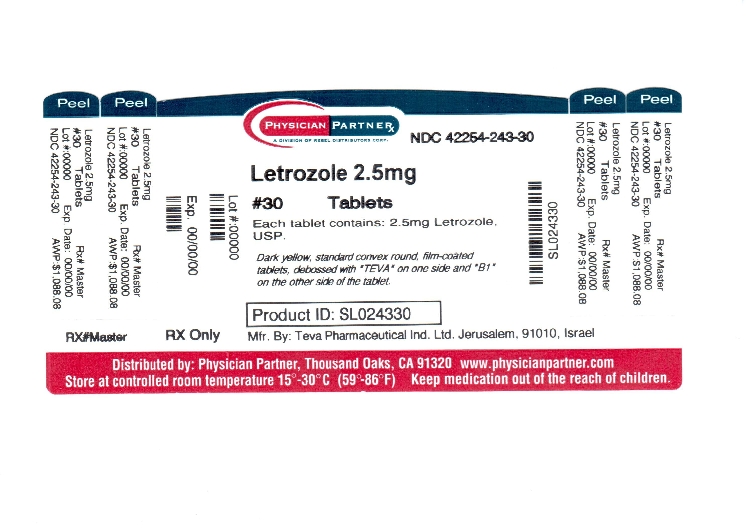
  • Letrozole Tablet, Film Coated [Rebel Distributors Corp]

    Letrozole

    Letrozole Tablet, Film Coated [Rebel Distributors Corp]

    2.1 Recommended Dose

    The recommended dose of letrozole tablets USP is one 2.5 mg tablet administered once a day, without regard to meals.

    2.2 Use in Adjuvant Treatment of Early Breast Cancer

    In the adjuvant setting, the optimal duration of treatment with letrozole is unknown. The planned duration of treatment in the study was 5 years with 73% of the patients having completed adjuvant therapy. Treatment should be discontinued at relapse [see Clinical Studies (14.1)].

    2.3 Use in Extended Adjuvant Treatment of Early Breast Cancer

    In the extended adjuvant setting, the optimal treatment duration with letrozole tablets USP is not known. The planned duration of treatment in the study was 5 years. In the final updated analysis, conducted at a median follow-up of 62 months, the median treatment duration was 60 months. Seventy-one percent of patients were treated for at least 3 years and 58% of patients completed least 4.5 years of extended adjuvant treatment. The treatment should be discontinued at tumor relapse [seeClinical Studies (14.2)].

    2.4 Use in First and Second-Line Treatment of Advanced Breast Cancer

    In patients with advanced disease, treatment with letrozole tablets USP should continue until tumor progression is evident [see Clinical Studies (14.4, 14.5)].

    2.5 Use in Hepatic Impairment

    No dosage adjustment is recommended for patients with mild to moderate hepatic impairment, although letrozole blood concentrations were modestly increased in subjects with moderate hepatic impairment due to cirrhosis. The dose of letrozole tablets USP in patients with cirrhosis and severe hepatic dysfunction should be reduced by 50% [see Warnings and Precautions (5.3)]. The recommended dose of letrozole tablets USP for such patients is 2.5 mg administered every other day. The effect of hepatic impairment on letrozole exposure in noncirrhotic cancer patients with elevated bilirubin levels has not been determined.

    2.6 Use in Renal Impairment

    No dosage adjustment is required for patients with renal impairment if creatinine clearance is ≥ 10 mL/min [see Clinical Pharmacology (12.3)].

  • Acyclovir Tablet [Rebel Distributors Corp]

    Acyclovir

    Acyclovir Tablet [Rebel Distributors Corp]

    Acute Treatment of Herpes Zoster: 800 mg every 4 hours orally, 5 times daily for 7 to 10 days.

    Genital Herpes: Treatment of Initial Genital Herpes: 200 mg every 4 hours, 5 times daily for 10 days.

    Chronic Suppressive Therapy for Recurrent Disease: 400 mg 2 times daily for up to 12 months, followed by re-evaluation. Alternative regimens have included doses ranging from 200 mg 3 times daily to 200 mg 5 times daily.

    The frequency and severity of episodes of untreated genital herpes may change over time. After 1 year of therapy, the frequency and severity of the patient’s genital herpes infection should be re-evaluated to assess the need for continuation of therapy with acyclovir.

    Intermittent Therapy: 200 mg every 4 hours, 5 times daily for 5 days. Therapy should be initiated at the earliest sign or symptom (prodrome) of recurrence.

    Treatment of Chickenpox: Children (2 years of age and older): 20 mg/kg per dose orally 4 times daily (80 mg/kg/day) for 5 days. Children over 40 kg should receive the adult dose for chickenpox.

    Adults and children over 40 kg: 800 mg 4 times daily for 5 days.

    Intravenous acyclovir is indicated for the treatment of varicella-zoster infections in immunocompromised patients.

    When therapy is indicated, it should be initiated at the earliest sign or symptom of chickenpox. There is no information about the efficacy of therapy initiated more than 24 hours after onset of signs and symptoms.

    Patients with Acute or Chronic Renal Impairment: In patients with renal impairment, the dose of Acyclovir capsules and tablets should be modified as shown in Table 3:

    Table 3: Dosage Modification for Renal Impairment Normal Dosage Creatinine Clearance Adjusted Dosage Regimen Regimen (mL/min/1.73 m2) Dose(mg) Dosing Interval 200 mg every > 10 200 every 4 hours, 5 times daily 4 hours 0 to 10 200 every 12 hours 400 mg every > 10 400 every 12 hours 12 hours 0 to 10 200 every 12 hours 800 mg every > 25 800 every 4 hours, 5 times daily 4 hours 10 to 25 800 every 8 hours   0 to 10 800 every 12 hours

    Hemodialysis: For patients who require hemodialysis, the mean plasma half-life of acyclovir during hemodialysis is approximately 5 hours. This results in a 60% decrease in plasma concentrations following a 6-hour dialysis period. Therefore, the patient’s dosing schedule should be adjusted so that an additional dose is administered after each dialysis.

    Peritoneal Dialysis: No supplemental dose appears to be necessary after adjustment of the dosing interval.

    Bioequivalence of Dosage Forms: Acyclovir suspension was shown to be bioequivalent to acyclovir capsules (n = 20) and one acyclovir 800 mg tablet was shown to be bioequivalent to four acyclovir 200 mg capsules (n = 24).

  • Metoprolol Succinate Tablet, Extended Release [Rebel Distributors Corp]

    Metoprolol Succinate

    Metoprolol Succinate Tablet, Extended Release [Rebel Distributors Corp]

    Metoprolol succinate is an extended release tablet intended for once daily administration. For treatment of hypertension and angina, when switching from immediate release metoprolol to metoprolol succinate extended-release tablets, use the same total daily dose of metoprolol succinate extended-release tablets. Individualize the dosage of metoprolol succinate extended-release tablets. Titration may be needed in some patients.

    Metoprolol succinate extended-release tablets are scored and can be divided; however, do not crush or chew the whole or half tablet.

    2.1 Hypertension

    Adults: The usual initial dosage is 25 to 100 mg daily in a single dose. The dosage may be increased at weekly (or longer) intervals until optimum blood pressure reduction is achieved. In general, the maximum effect of any given dosage level will be apparent after 1 week of therapy. Dosages above 400 mg per day have not been studied.

    Pediatric Hypertensive Patients ≥ 6 Years of age: Due to AstraZeneca’s marketing exclusivity rights, this generic drug product is not labeled for pediatric use. Dosage and administration information in pediatric patients 6 years and older is approved for AstraZeneca’s metoprolol succinate extended-release tablets.

    Metoprolol succinate extended-release is not recommended in pediatric patients < 6 years of age [see Use in Specific Population (8.4)]

    2.2 Angina Pectoris

    Individualize the dosage of metoprolol succinate extended-release tablets. The usual initial dosage is 100 mg daily, given in a single dose. Gradually increase the dosage at weekly intervals until optimum clinical response has been obtained or there is a pronounced slowing of the heart rate. Dosages above 400 mg per day have not been studied. If treatment is to be discontinued, reduce the dosage gradually over a period of 1 - 2 weeks [see Warnings and Precautions (5)].

    2.3 Heart Failure 

    Dosage must be individualized and closely monitored during up-titration. Prior to initiation of metoprolol succinate extended-release tablets, stabilize the dose of other heart failure drug therapy. The recommended starting dose of metoprolol succinate extended-release tablets is 25 mg once daily for two weeks in patients with NYHA Class II heart failure and 12.5 mg once daily in patients with more severe heart failure. Double the dose every two weeks to the highest dosage level tolerated by the patient or up to 200 mg of metoprolol succinate extended-release tablets. Initial difficulty with titration should not preclude later attempts to introduce metoprolol succinate extended-release tablets. If patients experience symptomatic bradycardia, reduce the dose of metoprolol succinate extended-release tablets. If transient worsening of heart failure occurs, consider treating with increased doses of diuretics, lowering the dose of metoprolol succinate extended-release tablets or temporarily discontinuing it. The dose of metoprolol succinate extended-release tablets should not be increased until symptoms of worsening heart failure have been stabilized.

  • Cephalexin Capsule [Rebel Distributors Corp]

    Cephalexin

    Cephalexin Capsule [Rebel Distributors Corp]

    Cephalexin capsules, USP are administered orally.

    Adults

    — The adult dosage ranges from 1 to 4 g daily in divided doses. The usual adult dose is 250 mg every 6 hours. For the following infections, a dosage of 500 mg may be administered every 12 hours: streptococcal pharyngitis, skin and skin structure infections, and uncomplicated cystitis in patients over 15 years of age. Cystitis therapy should be continued for 7 to 14 days.  For  more severe infections or those caused by less susceptible organisms, larger doses may  be  needed.  If daily doses of cephalexin capsule, USP greater than 4 g are required, parenteral cephalosporins, in appropriate doses, should be considered.

    Pediatric Patients

    — The usual recommended daily dosage for pediatric patients is 25 to 50 mg/kg in divided doses. For streptococcal pharyngitis in patients over 1 year of age and for skin and skin structure infections, the total daily dose may be divided and administered every 12 hours.

    In severe infections, the dosage may be doubled.

    In the therapy of otitis media, clinical studies have shown that a dosage of 75 to 100 mg/kg/day in 4 divided doses is required.

    In the treatment of β‑hemolytic streptococcal infections, a therapeutic dosage of cephalexin capsules should be administered for at least 10 days.

  • Mupirocin Ointment [Rebel Distributors Corp]

    Mupirocin Ointment

    Mupirocin Ointment [Rebel Distributors Corp]

    A small amount of Mupirocin Ointment USP, 2% should be applied to the affected area 3 times daily. The area treated may be covered with a gauze dressing if desired. Patients not showing a clinical response within 3 to 5 days should be re-evaluated.

  • Nystatin Ointment [Rebel Distributors Corp]

    Nystatin Ointment

    Nystatin Ointment [Rebel Distributors Corp]

    Nystatin Ointment should be applied liberally to affected areas twice a day or as indicated until healing is complete. Nystatin cream is usually preferred to nystatin ointment in candidiasis involving intertriginous areas; very moist lesions, however, are best treated with nystatin topical powder.

    This preparation does not stain skin or mucous membranes and provides a simple, convenient means of treatment.

  • All Day Pain Relief (Naproxen Sodium) Tablet [Rebel Distributors Corp]

    All Day Pain Relief

    All Day Pain Relief (Naproxen Sodium) Tablet [Rebel Distributors Corp]

    do not take more than directed the smallest effective dose should be used do not take longer than 10 days, unless directed by a doctor (see Warnings) drink a full glass of water with each dose

    Adults and children 12 years and older

    take 1 tablet every 8 to 12 hours while symptoms last for the first dose you may take 2 tablets within the first hour do not exceed 2 tablets in any 8- to 12-hour period do not exceed 3 tablets in a 24-hour period

    Children under 12 years

    ask a doctor
  • Ofloxacin Solution [Rebel Distributors Corp]

    Ofloxacin Solution

    Ofloxacin Solution [Rebel Distributors Corp]

    Otitis Externa: The recommended dosage regimen for the treatment of otitis externa is:

    For pediatric patients (from 6 months to 13 years old): Five drops (0.25 mL, 0.75 mg ofloxacin) instilled into the affected ear once daily for seven days.

    For patients 13 years and older: Ten drops (0.5 mL, 1.5 mg ofloxacin) instilled into the affected ear once daily for seven days.

    The solution should be warmed by holding the bottle in the hand for one or two minutes to avoid dizziness which may result from the instillation of a cold solution. The patient should lie with the affected ear upward, and then the drops should be instilled. This position should be maintained for five minutes to facilitate penetration of the drops into the ear canal. Repeat, if necessary, for the opposite ear.

    Acute Otitis Media in pediatric patients with tympanostomy tubes: The recommended dosage regimen for the treatment of acute otitis media in pediatric patients (from 1 to 12 years old) with tympanostomy tubes is:

    Five drops (0.25 mL, 0.75 mg ofloxacin) instilled into the affected ear twice daily for ten days. The solution should be warmed by holding the bottle in the hand for one or two minutes to avoid dizziness which may result from the instillation of a cold solution.

    The patient should lie with the affected ear upward, and then the drops should be instilled. The tragus should then be pumped 4 times by pushing inward to facilitate penetration of the drops into the middle ear. This position should be maintained for five minutes. Repeat, if necessary, for the opposite ear.

    Chronic Suppurative Otitis Media with perforated tympanic membranes: The recommended dosage regimen for the treatment of chronic suppurative otitis media with perforated tympanic membranes in patients 12 years and older is:

    Ten drops (0.5 mL, 1.5 mg ofloxacin) instilled into the affected ear twice daily for fourteen days. The solution should be warmed by holding the bottle in the hand for one or two minutes to avoid dizziness which may result from the instillation of a cold solution. The patient should lie with the affected ear upward, before instilling the drops. The tragus should then be pumped 4 times by pushing inward to facilitate penetration into the middle ear. This position should be maintained for five minutes. Repeat, if necessary, for the opposite ear.

  • Montelukast Sodium Tablet, Film Coated [Rebel Distributors Corp]

    Montelukast Sodium

    Montelukast Sodium Tablet, Film Coated [Rebel Distributors Corp]

    2.1 Asthma

    Montelukast sodium should be taken once daily in the evening. The following doses are recommended:

    For adults and adolescents 15 years of age and older: one 10-mg tablet.

    For pediatric patients 6 to 14 years of age: one 5-mg chewable tablet.

    For pediatric patients 2 to 5 years of age: one 4-mg chewable tablet.

    Safety and effectiveness in pediatric patients less than 12 months of age with asthma have not been established.

    There have been no clinical trials in patients with asthma to evaluate the relative efficacy of morning versus evening dosing. The pharmacokinetics of montelukast are similar whether dosed in the morning or evening. Efficacy has been demonstrated for asthma when montelukast was administered in the evening without regard to time of food ingestion.

    2.2 Exercise-Induced Bronchoconstriction (EIB) in Patients 15 Years of Age and Older

    For prevention of EIB, a single 10 mg dose of montelukast should be taken at least 2 hours before exercise. An additional dose of montelukast should not be taken within 24 hours of a previous dose. Patients already taking montelukast sodium daily for another indication (including chronic asthma) should not take an additional dose to prevent EIB. All patients should have available for rescue a short-acting β-agonist. Safety and effectiveness in patients younger than 15 years of age have not been established. Daily administration of montelukast sodium for the chronic treatment of asthma has not been established to prevent acute episodes of EIB.

    Pediatric use information for patients ages 6 to 14 years of age for acute prevention of exercise-induced bronchoconstriction (EIB) is approved for Merck Sharp & Dohme Corp's montelukast tablet products. However, due to Merck Sharp & Dohme Corp's marketing exclusivity rights, this drug product is not labeled with that pediatric information.

    2.3 Allergic Rhinitis

    For allergic rhinitis, montelukast sodium should be taken once daily. Efficacy was demonstrated for seasonal allergic rhinitis when montelukast was administered in the morning or the evening without regard to time of food ingestion. The time of administration may be individualized to suit patient needs.

    The following doses for the treatment of symptoms of seasonal allergic rhinitis are recommended:

    For adults and adolescents 15 years of age and older: one 10-mg tablet.

    For pediatric patients 6 to 14 years of age: one 5-mg chewable tablet.

    For pediatric patients 2 to 5 years of age: one 4-mg chewable tablet

    Safety and effectiveness in pediatric patients younger than 2 years of age with seasonal allergic rhinitis have not been established.

    The following doses for the treatment of symptoms of perennial allergic rhinitis are recommended:

    For adults and adolescents 15 years of age and older: one 10-mg tablet

    For pediatric patients 6 to 14 years of age: one 5-mg chewable tablet

    For pediatric patients 2 to 5 years of age: one 4-mg chewable tablet

    Safety and effectiveness in pediatric patients younger than 2 years of age with perennial allergic rhinitis have not been established.

    2.4 Asthma and Allergic Rhinitis

    Patients with both asthma and allergic rhinitis should take only one montelukast sodium dose daily in the evening.

  • Nystatin Suspension [Rebel Distributors Corp]

    Nystatin Suspension

    Nystatin Suspension [Rebel Distributors Corp]

    Infants: 2 mL (200,000 units) four times daily (1 mL in each side of mouth).

    Pediatric patients and adults: 4 to 6 mL (400,000 to 600,000 units) four times daily (one-half of dose in each side of mouth).

    NOTE: Limited clinical studies in neonates, including premature and low-birth weight neonates, indicate that 1 mL (100,000 units) four times daily is effective.

    Local treatment should be continued at least 48 hours after perioral symptoms have disappeared and/or cultures returned to normal. It is recommended that the drug be retained in the mouth as long as possible before swallowing.

  • Nasal Decongestant (Pseudoephedrine Hydrochloride) Tablet, Film Coated, Extended Release [Rebel Distributors Corp]

    Nasal Decongestant

    Nasal Decongestant (Pseudoephedrine Hydrochloride) Tablet, Film Coated, Extended Release [Rebel Distributors Corp]

    adults and children 12 years and over take 1 tablet every 12 hours do not take more than 2 tablets in 24 hours children under 12 years do not use this product in children under 12 years of age

  • Xodol
    Xodol (Hydrocodone Bitartrate And Acetaminophen) Tablet [Rebel Distributors Corp]

    Xodol

    Xodol (Hydrocodone Bitartrate And Acetaminophen) Tablet [Rebel Distributors Corp]

    Dosage should be adjusted according to the severity of the pain and the response of the patient. However, it should be kept in mind that tolerance to hydrocodone can develop with continued use and that the incidence of untoward effects is dose related.

    Xodol® 5/300 (Hydrocodone Bitartrate and Acetaminophen Tablets, USP 5 mg/300 mg): The usual adult dosage is one or two tablets every four to six hours as needed for pain. The total daily dosage should not exceed 8 tablets.

    Xodol® 7.5/300 (Hydrocodone Bitartrate and Acetaminophen Tablets, USP 7.5 mg/300 mg): The usual adult dosage is one tablet every four to six hours as needed for pain. The total daily dosage should not exceed 6 tablets.

    Xodol® 10/300 (Hydrocodone Bitartrate and Acetaminophen Tablets, USP 10 mg/300 mg): The usual adult dosage is one tablet every four to six hours as needed for pain. The total daily dosage should not exceed 6 tablets.

  • Necon 0.535
    Necon 0.5/35 (Norethindrone And Ethinyl Estradiol Tablets) Kit [Rebel Distributors Corp]

    Necon 0.535

    Necon 0.5/35 (Norethindrone And Ethinyl Estradiol Tablets) Kit [Rebel Distributors Corp]

    To achieve maximum contraceptive effectiveness, Necon® Tablets must be taken exactly as directed and at intervals not exceeding 24 hours.

    28-Day Regimen (Sunday Start)

    When taking Necon® 1/35, Necon® 0.5/35, Necon® 10/11 and Necon® 1/50, the first tablet should be taken on the first Sunday after menstruation begins. If period begins on Sunday, the first tablet should be taken that day. Take one active tablet daily for 21 days followed by one white placebo tablet daily for 7 days. After 28 tablets have been taken, a new course is started the next day (Sunday). For the first cycle of a Sunday Start regimen, another method of contraception should be used until after the first 7 consecutive days of administration.

    If the patient misses one (1) active tablet in Weeks 1, 2, or 3, the tablet should be taken as soon as she remembers. If the patient misses two (2) active tablets in Week 1 or Week 2, the patient should take two (2) tablets the day she remembers and two (2) tablets the next day; and then continue taking one (1) tablet a day until she finishes the dispenser. The patient should be instructed to use a back-up method of birth control if she has sex in the seven (7) days after missing pills. If the patient misses two (2) active tablets in the third week or misses three (3) or more active tablets in a row, the patient should continue taking one tablet every day until Sunday. On Sunday, the patient should throw out the rest of the dispenser and start a new dispenser that same day. The patient should be instructed to use a back-up method of birth control if she has sex in the seven (7) days after missing pills.

    Complete instructions to facilitate patient counseling on proper pill usage may be found in the Detailed Patient Labeling (“How to Take the Pill” section).

    28-Day Regimen (Day 1 Start)

    The dosage of Necon®1/35, Necon®0.5/35, Necon®10/11 and Necon® 1/50, for the initial cycle of therapy is one active tablet administered daily from the 1st through the 21st day of the menstrual cycle, counting the first day of menstrual flow as “Day 1” followed by one white tablet daily for 7 days. Tablets are taken without interruption for 28 days. After 28 tablets have been taken, a new course is started the next day.

    If the patient misses one (1) active tablet in Weeks 1, 2, or 3, the tablet should be taken as soon as she remembers. If the patient misses two (2) active tablets in Week 1 or Week 2, the patient should take two (2) tablets the day she remembers and two (2) tablets the next day; and then continue taking one (1) tablet a day until she finishes the dispenser. The patient should be instructed to use a back-up method of birth control if she has sex in the seven (7) days after missing pills. If the patient misses two (2) active tablets in the third week or misses three (3) or more active tablets in a row, the patient should throw out the rest of the dispenser and start a new dispenser that same day. The patient should be instructed to use a back-up method of birth control if she has sex in the seven (7) days after missing pills.

    Complete instructions to facilitate patient counseling on proper pill usage may be found in the Detailed Patient Labeling (“How to Take the Pill” section).

    The use of Necon® 1/35, Necon® 0.5/35, Necon® 10/11 and Necon® 1/50 for contraception may be initiated 4 weeks postpartum in women who elect not to breast feed. When the tablets are administered during the postpartum period, the increased risk of thromboembolic disease associated with the postpartum period must be considered. (See CONTRAINDICATIONS and WARNINGS concerning thromboembolic disease. See also PRECAUTIONS for “Nursing Mothers”.) The possibility of ovulation and conception prior to initiation of medication should be considered.

    (See Discussion of Dose-Related Risk of Vascular Disease from Oral Contraceptives.)

    ADDITIONAL INSTRUCTIONS FOR ALL DOSING REGIMENS

    Breakthrough bleeding, spotting, and amenorrhea are frequent reasons for patients discontinuing oral contraceptives. In breakthrough bleeding, as in all cases of irregular bleeding from the vagina, nonfunctional causes should be borne in mind. In undiagnosed persistent or recurrent abnormal bleeding from the vagina, adequate diagnostic measures are indicated to rule out pregnancy or malignancy. If pathology has been excluded, time or a change to another formulation may solve the problem. Changing to an oral contraceptive with a higher estrogen content, while potentially useful in minimizing menstrual irregularity, should be done only if necessary since this may increase the risk of thromboembolic disease.

    Use of oral contraceptives in the event of a missed menstrual period:

    If the patient has not adhered to the prescribed schedule, the possibility of pregnancy should be considered at the time of the first missed period and oral contraceptive use should be discontinued until pregnancy is ruled out. If the patient has adhered to the prescribed regimen and misses two consecutive periods, pregnancy should be ruled out before continuing oral contraceptive use.
  • Miconazole Nitrate Cream [Rebel Distributors Corp]

    Miconazole Nitrate

    Miconazole Nitrate Cream [Rebel Distributors Corp]

    clean the affected area and dry thoroughly apply a thin layer of the product over affected area twice daily (morning and night) or as directed by a doctor supervise children in the use of this product

    For athlete's foot:

    use daily for 4 weeks. If condition persists longer, consult a doctor. pay special attention to the spaces between the toes wear well-fitting, ventilated shoes change shoes and socks at least once daily

    For ringworm, use daily for 4 weeks. If condition persists longer, consult a doctor.

    For jock itch, use daily for 2 weeks. If condition persists longer, consult a doctor.

    This product is not effective on the scalp or nails.

  • Metoclopramide Hydrochloride Tablet [Rebel Distributors Corp]

    Metoclopramide Hydrochloride

    Metoclopramide Hydrochloride Tablet [Rebel Distributors Corp]

    Therapy with metoclopramide tablets should not exceed 12 weeks in duration.

    For the Relief of Symptomatic Gastroesophageal Reflux:  

    Administer from 10 mg to 15 mg metoclopramide hydrochloride, USP orally up to q.i.d. 30 minutes before each meal and at bedtime, depending upon symptoms being treated and clinical response (see CLINICAL PHARMACOLOGY and INDICATIONS AND USAGE). If symptoms occur only intermittently or at specific times of the day, use of metoclopramide in single doses up to 20 mg prior to the provoking situation may be preferred rather than continuous treatment. Occasionally, patients (such as elderly patients) who are more sensitive to the therapeutic or adverse effects of metoclopramide will require only 5 mg per dose.

    Experience with esophageal erosions and ulcerations is limited, but healing has thus far been documented in one controlled trial using q.i.d. therapy at 15 mg per dose, and this regimen should be used when lesions are present, so long as it is tolerated (see ADVERSE REACTIONS). Because of the poor correlation between symptoms and endoscopic appearance of the esophagus, therapy directed at esophageal lesions is best guided by endoscopic evaluation.

    Therapy longer than 12 weeks has not been evaluated and cannot be recommended.

    For the Relief of Symptoms Associated with Diabetic Gastroparesis (Diabetic Gastric Stasis)

    Administer 10 mg of metoclopramide 30 minutes before each meal and at bedtime for two to eight weeks, depending upon response and the likelihood of continued well-being upon drug discontinuation.

    The initial route of administration should be determined by the severity of the presenting symptoms. If only the earliest manifestations of diabetic gastric stasis are present, oral administration of metoclopramide may be initiated. However, if severe symptoms are present, therapy should begin with metoclopramide injection (consult labeling of the injection prior to initiating parenteral administration).

    Administration of the metoclopramide injection up to 10 days may be required before symptoms subside, at which time oral administration may be instituted. Since diabetic gastric stasis is frequently recurrent, metoclopramide therapy should be reinstituted at the earliest manifestation.

    Use in Patients with Renal or Hepatic Impairment:

    Since metoclopramide is excreted principally through the kidneys, in those patients whose creatinine clearance is below 40 mL/min, therapy should be initiated at approximately one-half the recommended dosage. Depending upon clinical efficacy and safety considerations, the dosage may be increased or decreased as appropriate.

    See OVERDOSAGE section for information regarding dialysis.

    Metoclopramide undergoes minimal hepatic metabolism, except for simple conjugation. Its safe use has been described in patients with advanced liver disease whose renal function was normal.

  • Mirtazapine Tablet, Film Coated [Rebel Distributors Corp]

    Mirtazapine

    Mirtazapine Tablet, Film Coated [Rebel Distributors Corp]

    Initial Treatment

    The recommended starting dose for mirtazapine tablets is 15 mg/day, administered in a single dose, preferably in the evening prior to sleep. In the controlled clinical trials establishing the efficacy of mirtazapine in the treatment of major depressive disorder, the effective dose range was generally 15 to 45 mg/day. While the relationship between dose and satisfactory response in the treatment of major depressive disorder for mirtazapine has not been adequately explored, patients not responding to the initial 15-mg dose may benefit from dose increases up to a maximum of 45 mg/day.

    Mirtazapine has an elimination half-life of approximately 20 to 40 hours; therefore, dose changes should not be made at intervals of less than 1 to 2 weeks in order to allow sufficient time for evaluation of the therapeutic response to a given dose.

    Elderly and Patients with Renal or Hepatic Impairment

    The clearance of mirtazapine is reduced in elderly patients and in patients with moderate to severe renal or hepatic impairment. Consequently, the prescriber should be aware that plasma mirtazapine levels may be increased in these patient groups, compared to levels observed in younger adults without renal or hepatic impairment (see PRECAUTIONS and CLINICAL PHARMACOLOGY).

    Maintenance/Extended Treatment

    It is generally agreed that acute episodes of depression require several months or longer of sustained pharmacological therapy beyond response to the acute episode. Systematic evaluation of mirtazapine tablets has demonstrated that its efficacy in major depressive disorder is maintained for periods of up to 40 weeks following 8 to 12 weeks of initial treatment at a dose of 15 to 45 mg/day (see CLINICAL PHARMACOLOGY). Based on these limited data, it is unknown whether or not the dose of mirtazapine needed for maintenance treatment is identical to the dose needed to achieve an initial response. Patients should be periodically reassessed to determine the need for maintenance treatment and the appropriate dose for such treatment.

    Switching Patients To or From a Monoamine Oxidase Inhibitor

    Concomitant use of mirtazapine tablets with MAOIs is contraindicated. At least 14 days should elapse between discontinuation of an MAOI and initiation of therapy with mirtazapine. In addition, at least 14 days should be allowed after stopping mirtazapine before starting an MAOI.

    Discontinuation of Mirtazapine Treatment

    Symptoms associated with the discontinuation or dose reduction of mirtazapine tablets have been reported. Patients should be monitored for these and other symptoms when discontinuing treatment or during dosage reduction. A gradual reduction in the dose over several weeks, rather than abrupt cessation, is recommended whenever possible. If intolerable symptoms occur following a decrease in the dose or upon discontinuation of treatment, dose titration should be managed on the basis of the patient’s clinical response (see PRECAUTIONS and ADVERSE REACTIONS).

  • Olanzapine Tablet, Film Coated [Rebel Distributors Corp]

    Olanzapine

    Olanzapine Tablet, Film Coated [Rebel Distributors Corp]

    2.1 Schizophrenia

    Adults

    Dose Selection

    Oral olanzapine should be administered on a once-a-day schedule without regard to meals, generally beginning with 5 to 10 mg initially, with a target dose of 10 mg/day within several days. Further dosage adjustments, if indicated, should generally occur at intervals of not less than 1 week, since steady state for olanzapine would not be achieved for approximately 1 week in the typical patient. When dosage adjustments are necessary, dose increments/decrements of 5 mg QD are recommended.

    Efficacy in schizophrenia was demonstrated in a dose range of 10 to 15 mg/day in clinical trials. However, doses above 10 mg/day were not demonstrated to be more efficacious than the 10 mg/day dose. An increase to a dose greater than the target dose of 10 mg/day (i.e., to a dose of 15 mg/day or greater) is recommended only after clinical assessment. Olanzapine is not indicated for use in doses above 20 mg/day.

    Dosing in Special Populations

    The recommended starting dose is 5 mg in patients who are debilitated, who have a predisposition to hypotensive reactions, who otherwise exhibit a combination of factors that may result in slower metabolism of olanzapine (e.g., nonsmoking female patients ≥65 years of age), or who may be more pharmacodynamically sensitive to olanzapine [see Warnings and Precautions (5.14), Drug Interactions (7), and Clinical Pharmacology (12.3)]. When indicated, dose escalation should be performed with caution in these patients.

    Maintenance Treatment

    The effectiveness of oral olanzapine, 10 mg/day to 20 mg/day, in maintaining treatment response in schizophrenic patients who had been stable on olanzapine for approximately 8 weeks and were then followed for relapse has been demonstrated in a placebo-controlled trial [see Clinical Studies (14.1)]. The physician who elects to use olanzapine for extended periods should periodically reevaluate the long-term usefulness of the drug for the individual patient.

    Adolescents

    Pediatric dosing information in pediatric patients with schizophrenia is approved for Eli Lilly and Company’s olanzapine drug product labeling. However, due to Eli Lilly and Company’s marketing exclusivity rights, this drug product is not labeled with that pediatric information.

    2.2 Bipolar I Disorder (Manic or Mixed Episodes)

    Adults

    Dose Selection for Monotherapy

    Oral olanzapine should be administered on a once-a-day schedule without regard to meals, generally beginning with 10 or 15 mg. Dosage adjustments, if indicated, should generally occur at intervals of not less than 24 hours, reflecting the procedures in the placebo-controlled trials. When dosage adjustments are necessary, dose increments/decrements of 5 mg QD are recommended.

    Short-term (3 to 4 weeks) antimanic efficacy was demonstrated in a dose range of 5 mg to 20 mg/day in clinical trials. The safety of doses above 20 mg/day has not been evaluated in clinical trials [see Clinical Studies (14.2)].

    Maintenance Monotherapy

    The benefit of maintaining bipolar I patients on monotherapy with oral olanzapine at a dose of 5 to 20 mg/day, after achieving a responder status for an average duration of 2 weeks, was demonstrated in a controlled trial [see Clinical Studies (14.2)]. The physician who elects to use olanzapine for extended periods should periodically reevaluate the long-term usefulness of the drug for the individual patient.

    Dose Selection for Adjunctive Treatment

    When administered as adjunctive treatment to lithium or valproate, oral olanzapine dosing should generally begin with 10 mg once-a-day without regard to meals.

    Antimanic efficacy was demonstrated in a dose range of 5 mg to 20 mg/day in clinical trials [see Clinical Studies (14.2)]. The safety of doses above 20 mg/day has not been evaluated in clinical trials.

    Adolescents

    Pediatric dosing information in pediatric patients with bipolar I disorder is approved for Eli Lilly and Company’s olanzapine drug product labeling. However, due to Eli Lilly and Company’s marketing exclusivity rights, this drug product is not labeled with that pediatric information.

    2.5 Olanzapine and Fluoxetine in Combination: Depressive Episodes Associated with Bipolar I Disorder

    When using olanzapine and fluoxetine in combination, also refer to the Clinical Studies section of the package insert for olanzapine and fluoxetine in combination.

    Oral olanzapine should be administered in combination with fluoxetine once daily in the evening, without regard to meals, generally beginning with 5 mg of oral olanzapine and 20 mg of fluoxetine. Dosage adjustments, if indicated, can be made according to efficacy and tolerability within dose ranges of oral olanzapine 5 to 12.5 mg and fluoxetine 20 to 50 mg. Antidepressant efficacy was demonstrated with olanzapine and fluoxetine in combination in adult patients with a dose range of olanzapine 6 to 12 mg and fluoxetine 25 to 50 mg.

    Safety and efficacy of olanzapine and fluoxetine in combination was determined in clinical trials supporting approval of olanzapine and fluoxetine in combination. Olanzapine and fluoxetine in combination is dosed between 3 mg/25 mg (olanzapine/fluoxetine) per day and 12 mg/50 mg (olanzapine/fluoxetine) per day. The following table demonstrates the appropriate individual component doses of olanzapine and fluoxetine versus olanzapine and fluoxetine in combination. Dosage adjustments, if indicated, should be made with the individual components according to efficacy and tolerability.

    Table 1: Approximate Dose Correspondence Between Olanzapine and Fluoxetine in Combination and the Combination of Olanzapine and Fluoxetine

    For Use in Combination

    olanzapine and fluoxetine in combination

    (mg/day)

    Olanzapine

    (mg/day)

    Fluoxetine

    (mg/day)

    3 mg olanzapine/25 mg fluoxetine

    6 mg olanzapine/25 mg fluoxetine

    12 mg olanzapine/25 mg fluoxetine

    6 mg olanzapine/50 mg fluoxetine

    12 mg olanzapine/50 mg fluoxetine

    2.5

    5

    10+2.5

    5

    10+2.5

    20

    20

    20

    40+10

    40+10

     While there is no body of evidence to answer the question of how long a patient treated with olanzapine and fluoxetine in combination should remain on it, it is generally accepted that bipolar I disorder, including the depressive episodes associated with bipolar I disorder, is a chronic illness requiring chronic treatment. The physician should periodically reexamine the need for continued pharmacotherapy.

    Safety of coadministration of doses above 18 mg olanzapine with 75 mg fluoxetine has not been evaluated in clinical studies.

    Olanzapine monotherapy is not indicated for the treatment of depressive episodes associated with bipolar I disorder.

    2.7 Olanzapine and Fluoxetine in Combination: Dosing in Special Populations

    The starting dose of oral olanzapine 2.5 to 5 mg with fluoxetine 20 mg should be used for patients with a predisposition to hypotensive reactions, patients with hepatic impairment, or patients who exhibit a combination of factors that may slow the metabolism of olanzapine or fluoxetine in combination (female gender, geriatric age, nonsmoking status), or those patients who may be pharmacodynamically sensitive to olanzapine. Dosing modification may be necessary in patients who exhibit a combination of factors that may slow metabolism. When indicated, dose escalation should be performed with caution in these patients. Olanzapine and fluoxetine in combination have not been systematically studied in patients over 65 years of age or in patients < 18 years of age [see Warnings and Precautions (5.14), Drug Interactions (7), and Clinical Pharmacology (12.3)].

  • Neo-polycin (Neomycin And Polymyxin B Sulfates And Bacitracin Zinc) Ointment [Rebel Distributors Corp]

    Neo-polycin

    Neo-polycin (Neomycin And Polymyxin B Sulfates And Bacitracin Zinc) Ointment [Rebel Distributors Corp]

    May be applied every 3 or 4 hours for 7 to 10 days, depending on the severity of the infection.

  • Nystatin Powder [Rebel Distributors Corp]

    Nystatin

    Nystatin Powder [Rebel Distributors Corp]

    Very moist lesions are best treated with the topical dusting powder.

    Adults and Pediatric Patients (Neonates and Older)

    Apply to candidal lesions two or three times daily until healing is complete. For fungal infection of the feet caused by Candida species, the powder should be dusted on the feet, as well as, in all foot wear.

  • Miconazole Nitrate Suppository [Rebel Distributors Corp]

    Miconazole Nitrate Suppository

    Miconazole Nitrate Suppository [Rebel Distributors Corp]

    Directions• before using this product, read the enclosed brochure for complete instructions• adults and children 12 years of age and over:      • insert 1 suppository into the vagina at bedtime for 7 nights in a row         • wash applicator after each use• children under 12 years of age: ask a doctor

  • Paxil Cr (Paroxetine Hydrochloride) Tablet, Film Coated, Extended Release [Rebel Distributors Corp]

    Paxil Cr

    Paxil Cr (Paroxetine Hydrochloride) Tablet, Film Coated, Extended Release [Rebel Distributors Corp]

    Major Depressive Disorder

    Usual Initial Dosage

    PAXIL CR should be administered as a single daily dose, usually in the morning, with or without food. The recommended initial dose is 25 mg/day. Patients were dosed in a range of 25 mg to 62.5 mg/day in the clinical trials demonstrating the effectiveness of PAXIL CR in the treatment of major depressive disorder. As with all drugs effective in the treatment of major depressive disorder, the full effect may be delayed. Some patients not responding to a 25-mg dose may benefit from dose increases, in 12.5-mg/day increments, up to a maximum of 62.5 mg/day. Dose changes should occur at intervals of at least 1 week.

    Patients should be cautioned that PAXIL CR should not be chewed or crushed, and should be swallowed whole.

    Maintenance Therapy

    There is no body of evidence available to answer the question of how long the patient treated with PAXIL CR should remain on it. It is generally agreed that acute episodes of major depressive disorder require several months or longer of sustained pharmacologic therapy. Whether the dose of an antidepressant needed to induce remission is identical to the dose needed to maintain and/or sustain euthymia is unknown.

    Systematic evaluation of the efficacy of immediate-release paroxetine hydrochloride has shown that efficacy is maintained for periods of up to 1 year with doses that averaged about 30 mg, which corresponds to a 37.5-mg dose of PAXIL CR, based on relative bioavailability considerations (see CLINICAL PHARMACOLOGY—Pharmacokinetics).

    Panic Disorder

    Usual Initial Dosage

    PAXIL CR should be administered as a single daily dose, usually in the morning. Patients should be started on 12.5 mg/day. Dose changes should occur in 12.5-mg/day increments and at intervals of at least 1 week. Patients were dosed in a range of 12.5 to 75 mg/day in the clinical trials demonstrating the effectiveness of PAXIL CR. The maximum dosage should not exceed 75 mg/day.

    Patients should be cautioned that PAXIL CR should not be chewed or crushed, and should be swallowed whole.

    Maintenance Therapy

    Long-term maintenance of efficacy with the immediate-release formulation of paroxetine was demonstrated in a 3-month relapse prevention trial. In this trial, patients with panic disorder assigned to immediate-release paroxetine demonstrated a lower relapse rate compared to patients on placebo. Panic disorder is a chronic condition, and it is reasonable to consider continuation for a responding patient. Dosage adjustments should be made to maintain the patient on the lowest effective dosage, and patients should be periodically reassessed to determine the need for continued treatment.

    Social Anxiety Disorder

    Usual Initial Dosage

    PAXIL CR should be administered as a single daily dose, usually in the morning, with or without food. The recommended initial dose is 12.5 mg/day. Patients were dosed in a range of 12.5 mg to 37.5 mg/day in the clinical trial demonstrating the effectiveness of PAXIL CR in the treatment of social anxiety disorder. If the dose is increased, this should occur at intervals of at least 1 week, in increments of 12.5 mg/day, up to a maximum of 37.5 mg/day.

    Patients should be cautioned that PAXIL CR should not be chewed or crushed, and should be swallowed whole.

    Maintenance Therapy

    There is no body of evidence available to answer the question of how long the patient treated with PAXIL CR should remain on it. Although the efficacy of PAXIL CR beyond 12 weeks of dosing has not been demonstrated in controlled clinical trials, social anxiety disorder is recognized as a chronic condition, and it is reasonable to consider continuation of treatment for a responding patient. Dosage adjustments should be made to maintain the patient on the lowest effective dosage, and patients should be periodically reassessed to determine the need for continued treatment.

    Premenstrual Dysphoric Disorder

    Usual Initial Dosage

    PAXIL CR should be administered as a single daily dose, usually in the morning, with or without food. PAXIL CR may be administered either daily throughout the menstrual cycle or limited to the luteal phase of the menstrual cycle, depending on physician assessment. The recommended initial dose is 12.5 mg/day. In clinical trials, both 12.5 mg/day and 25 mg/day were shown to be effective. Dose changes should occur at intervals of at least 1 week.

    Patients should be cautioned that PAXIL CR should not be chewed or crushed, and should be swallowed whole.

    Maintenance/Continuation Therapy

    The effectiveness of PAXIL CR for a period exceeding 3 menstrual cycles has not been systematically evaluated in controlled trials. However, women commonly report that symptoms worsen with age until relieved by the onset of menopause. Therefore, it is reasonable to consider continuation of a responding patient. Patients should be periodically reassessed to determine the need for continued treatment.

    Special Populations

    Treatment of Pregnant Women During the Third Trimester

    Neonates exposed to PAXIL CR and other SSRIs or SNRIs, late in the third trimester have developed complications requiring prolonged hospitalization, respiratory support, and tube feeding (see WARNINGS). When treating pregnant women with paroxetine during the third trimester, the physician should carefully consider the potential risks and benefits of treatment. The physician may consider tapering paroxetine in the third trimester.

    Dosage for Elderly or Debilitated Patients, and Patients With Severe Renal or Hepatic Impairment

    The recommended initial dose of PAXIL CR is 12.5 mg/day for elderly patients, debilitated patients, and/or patients with severe renal or hepatic impairment. Increases may be made if indicated. Dosage should not exceed 50 mg/day.

    Switching Patients to or From a Monoamine Oxidase Inhibitor

    At least 14 days should elapse between discontinuation of an MAOI and initiation of therapy with PAXIL CR. Similarly, at least 14 days should be allowed after stopping PAXIL CR before starting an MAOI.

    Discontinuation of Treatment With PAXIL CR

    Symptoms associated with discontinuation of immediate-release paroxetine hydrochloride or PAXIL CR have been reported (see PRECAUTIONS). Patients should be monitored for these symptoms when discontinuing treatment, regardless of the indication for which PAXIL CR is being prescribed. A gradual reduction in the dose rather than abrupt cessation is recommended whenever possible. If intolerable symptoms occur following a decrease in the dose or upon discontinuation of treatment, then resuming the previously prescribed dose may be considered. Subsequently, the physician may continue decreasing the dose but at a more gradual rate.

  • Lidocaine Hydrochloride Solution [Rebel Distributors Corp]

    Lidocaine Hydrochloride Solution

    Lidocaine Hydrochloride Solution [Rebel Distributors Corp]

    Adult:

    The maximum recommended single dose of Lidocaine Hydrochloride Oral Topical Solution, USP (Viscous) 2% for healthy adults should be such that the dose of lidocaine HCI does not exceed 4.5 mg/kg or 2 mg/lb body weight and does not in any case exceed a total of 300 mg.

    For symptomatic treatment of irritated or inflamed mucous membranes of the mouth and pharynx, the usual adult dose is one 15 mL tablespoonful undiluted. For use in the mouth, the solution should be swished around in the mouth and spit out. For use in the pharynx, the undiluted solution should be gargled and may be swallowed. This dose should not be administered at intervals of less than three hours, and not more than eight doses should be given in a 24-hour period.

    The dosage should be adjusted commensurate with the patient's age, weight and physical condition. (See PRECAUTIONS).

    Pediatric:

    Care must be taken to ensure correct dosage in all pediatric patients as there have been cases of overdose due to inappropriate dosing.

    It is difficult to recommend a maximum dose of any drug for children since this varies as a function of age and weight. For children over 3 years of age who have a normal lean body mass and normal body development, the maximum dose is determined by the child's weight or age. For example: in a child of 5 years weighing 50 lbs., the dose of lidocaine hydrochloride should not exceed 75-100 mg (3/4 to 1 teaspoonful).

    For infants and in children under 3 years of age, 1/4 teaspoonful of the solution should be accurately measured and applied to the immediate area with a cotton-tipped applicator. This dose should not be administered at intervals of less than three hours. Not more than four doses should be given in a 12-hour period.