Rebel Distributors Corp

Manufacturer Details

There are currently no manufacturer details available.

Share This Page

Rebel Distributors Corp Drugs

  • Mirtazapine Tablet, Film Coated [Rebel Distributors Corp.]

    Mirtazapine

    Mirtazapine Tablet, Film Coated [Rebel Distributors Corp.]

    Initial Treatment

    The recommended starting dose for mirtazapine tablets is 15 mg/day, administered in a single dose, preferably in the evening prior to sleep. In the controlled clinical trials establishing the efficacy of mirtazapine in the treatment of major depressive disorder, the effective dose range was generally 15 to 45 mg/day. While the relationship between dose and satisfactory response in the treatment of major depressive disorder for mirtazapine has not been adequately explored, patients not responding to the initial 15 mg dose may benefit from dose increases up to a maximum of 45 mg/day. Mirtazapine has an elimination half-life of approximately 20 to 40 hours; therefore, dose changes should not be made at intervals of less than one to two weeks in order to allow sufficient time for evaluation of the therapeutic response to a given dose.

    Elderly and Patients with Renal or Hepatic Impairment

    The clearance of mirtazapine is reduced in elderly patients and in patients with moderate to severe renal or hepatic impairment. Consequently, the prescriber should be aware that plasma mirtazapine levels may be increased in these patient groups, compared to levels observed in younger adults without renal or hepatic impairment (see PRECAUTIONS and CLINICAL PHARMACOLOGY).

    Maintenance/Extended Treatment

    It is generally agreed that acute episodes of depression require several months or longer of sustained pharmacological therapy beyond response to the acute episode. Systematic evaluation of mirtazapine tablets has demonstrated that its efficacy in major depressive disorder is maintained for periods of up to 40 weeks following 8 to 12 weeks of initial treatment at a dose of 15 to 45 mg/day (see

    CLINICAL PHARMACOLOGY

    ). Based on these limited data, it is unknown whether or not the dose of mirtazapine needed for maintenance treatment is identical to the dose needed to achieve an initial response. Patients should be periodically reassessed to determine the need for maintenance treatment and the appropriate dose for such treatment.

    Switching Patients To or From a Monoamine Oxidase Inhibitor

    At least 14 days should elapse between discontinuation of an MAOI and initiation of therapy with mirtazapine tablets. In addition, at least 14 days should be allowed after stopping mirtazapine tablets before starting an MAOI.

  • Desipramine Hydrochloride Tablet [Rebel Distributors Corp]

    Desipramine Hydrochloride

    Desipramine Hydrochloride Tablet [Rebel Distributors Corp]

    Not recommended for use in children (see WARNINGS).

    Lower dosages are recommended for elderly patients and adolescents. Lower dosages are also recommended for outpatients compared to hospitalized patients, who are closely supervised. Dosage should be initiated at a low level and increased according to clinical response and any evidence of intolerance. Following remission, maintenance medication may be required for a period of time and should be at the lowest dose that will maintain remission.

    Usual Adult Dose

    The usual adult dose is 100 to 200 mg per day. In more severely ill patients, dosage may be further increased gradually to 300 mg/day if necessary. Dosages above 300 mg/day are not recommended.

    Dosage should be initiated at a lower level and increased according to tolerance and clinical response.

    Treatment of patients requiring as much as 300 mg should generally be initiated in hospitals, where regular visits by the physician, skilled nursing care, and frequent electrocardiograms (ECGs) are available.

    The best available evidence of impending toxicity from very high doses of desipramine is prolongation of the QRS or QT intervals on the ECG. Prolongation of the PR interval is also significant, but less closely correlated with plasma levels. Clinical symptoms of intolerance, especially drowsiness, dizziness, and postural hypotension, should also alert the physician to the need for reduction in dosage. Plasma desipramine measurement would constitute the optimal guide to dosage monitoring.

    Initial therapy may be administered in divided doses or a single daily dose.

    Maintenance therapy may be given on a once-daily schedule for patient convenience and compliance.

    Adolescent and Geriatric Dose

    The usual adolescent and geriatric dose is 25 to 100 mg daily.

    Dosage should be initiated at a lower level and increased according to tolerance and clinical response to a usual maximum of 100 mg daily. In more severely ill patients, dosage may be further increased to 150 mg/day. Doses above 150 mg/day are not recommended in these age groups.

    Initial therapy may be administered in divided doses or a single daily dose.

    Maintenance therapy may be given on a once-daily schedule for patient convenience and compliance.

  • Oxymetazoline Hydrochloride Spray, Metered [Rebel Distributors Corp]

    Oxymetazoline Hydrochloride Spray

    Oxymetazoline Hydrochloride Spray, Metered [Rebel Distributors Corp]

    ° Adults and children 6 to under 12 years of age (with supervision): 2 to 3 sprays in each nostril not more often than every 10 to 12 hours. Do not exceed 2 doses in any 24-hour period.

    ° Children under 6 years of age: ask a doctor

    ° To spray: squeeze the bottle quickly and firmly. Do not tilt head backward while spraying. Wipe nozzle clean after use.

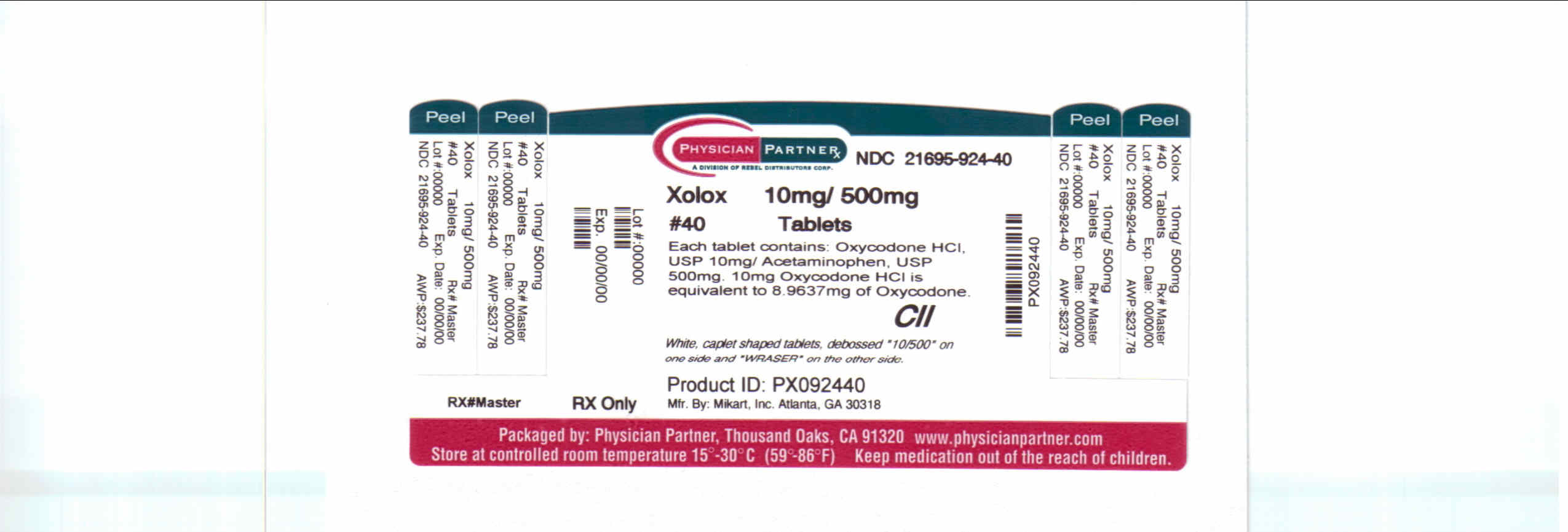
  • Xolox (Oxycodone Hcl And Acetaminophen) Tablet [Rebel Distributors Corp]

    Xolox

    Xolox (Oxycodone Hcl And Acetaminophen) Tablet [Rebel Distributors Corp]

    DOSAGE AND ADMINISTRATION Dosage should be adjusted according to the severity of the pain and the response of the patient. It may occasionally be necessary to exceed the usual dosage recommended below in cases of more severe pain or in those patients who have become tolerant to the analgesic effect of opioids. If pain is constant, the opioid analgesic should be given at regular intervals on an around-the-clock schedule. XOLOX is given orally.

    The usual adult dosage is one tablet every six hours as needed for pain (maximal daily dose of XOLOX is 6 tablets). The total daily dose of acetaminophen should not exceed 4 grams.

    Cessation of Therapy In patients treated with XOLOX for more than a few weeks who no longer require therapy, doses should be tapered gradually to prevent signs and symptoms of withdrawal in the physically dependent patient.

  • Benzonatate Capsule [Rebel Distributors Corp]

    Benzonatate

    Benzonatate Capsule [Rebel Distributors Corp]

    Adults and Children over 10 years of age: Usual dose is one 100 mg or 200 mg capsule t.i.d. as required. If necessary, up to 600 mg daily may be given.

  • Arthricream With Aloe (Trolamine Salicylate) Cream [Rebel Distributors Corp]

    Arthricream With Aloe

    Arthricream With Aloe (Trolamine Salicylate) Cream [Rebel Distributors Corp]

    adults and children over 12 years:

    apply generously to affected area massage into painful area until thoroughly absorbed into skin repeat as necessary, but not more than 4 times daily

    children 12 years or younger: ask a doctor

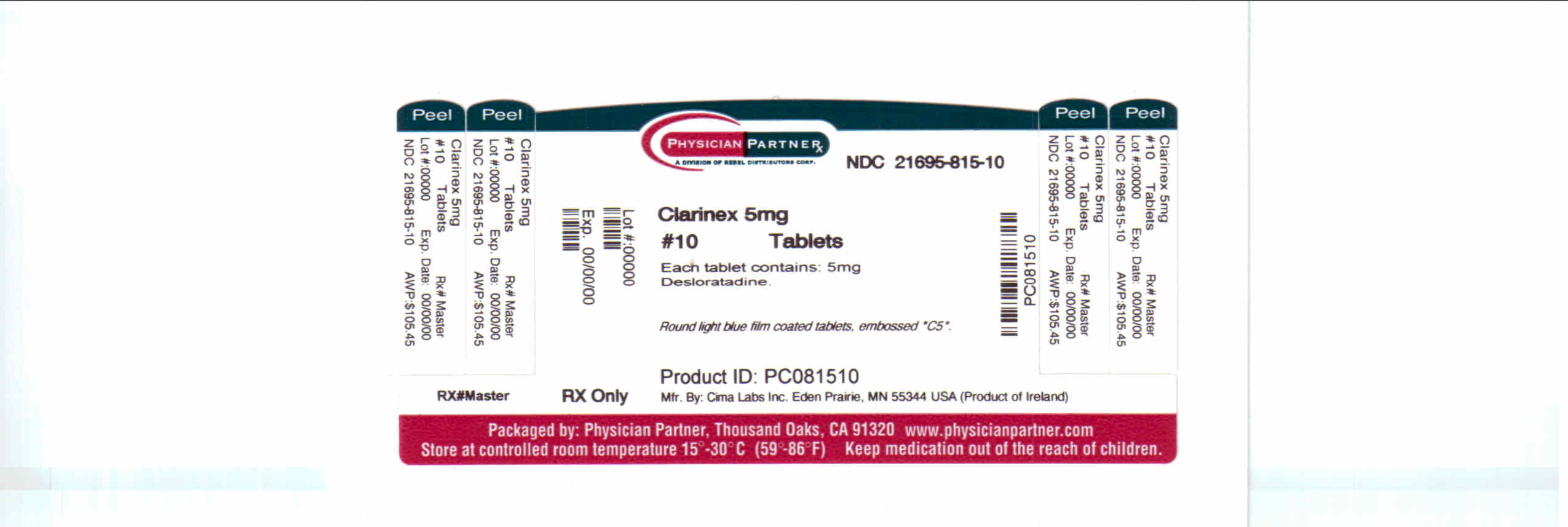
  • Clarinex (Desloratadine) Tablet, Film Coated [Rebel Distributors Corp]

    Clarinex

    Clarinex (Desloratadine) Tablet, Film Coated [Rebel Distributors Corp]

    Adults and children 12 years of age and over

    The recommended dose of CLARINEX Tablets or CLARINEX RediTabs Tablets is one 5 mg tablet once daily or the recommended dose of CLARINEX Syrup is 2 teaspoonfuls (5 mg in 10 mL) once daily.

    Children 6 to 11 years of age

    The recommended dose of CLARINEX Syrup is 1 teaspoonful (2.5 mg in 5 mL) once daily or the recommended dose of CLARINEX RediTabs Tablets is one 2.5 mg tablet once daily.

    Children 12 months to 5 years of age

    The recommended dose of CLARINEX Syrup is ½ teaspoonful (1.25 mg in 2.5 mL) once daily.

    Children 6 to 11 months of age

    The recommended dose of CLARINEX Syrup is 2 mL (1.0 mg) once daily.

    The age-appropriate dose of CLARINEX Syrup should be administered with a commercially available measuring dropper or syringe that is calibrated to deliver 2 mL and 2.5 mL (½ teaspoon).

    In adult patients with liver or renal impairment, a starting dose of one 5 mg tablet every other day is recommended based on pharmacokinetic data. Dosing recommendation for children with liver or renal impairment cannot be made due to lack of data.

    Administration of CLARINEX RediTabs Tablets

    Place CLARINEX (desloratadine) RediTabs Tablets on the tongue and allow to disintegrate before swallowing. Tablet disintegration occurs rapidly. Administer with or without water. Take tablet immediately after opening the blister.

  • Nifedipine Tablet, Film Coated, Extended Release [Rebel Distributors Corp]

    Nifedipine

    Nifedipine Tablet, Film Coated, Extended Release [Rebel Distributors Corp]

    Dosage must be adjusted according to each patient's needs. Therapy for either hypertension or angina should be initiated with 30 or 60 mg once daily. Nifedipine Extended-release Tablets should be swallowed whole and should not be bitten or divided. In general, titration should proceed over a 7–14 day period so that the physician can fully assess the response to each dose level and monitor blood pressure before proceeding to higher doses. Since steady-state plasma levels are achieved on the second day of dosing, if symptoms so warrant, titration may proceed more rapidly provided the patient is assessed frequently. Titration to doses above 120 mg are not recommended.

    Angina patients controlled on nifedipine capsules alone or in combination with other antianginal medications may be safely switched to Nifedipine Extended-release Tablets at the nearest equivalent total daily dose (e.g., 30 mg t.i.d. of nifedipine immediate-release capsules may be changed to 90 mg once daily of Nifedipine Extended-release Tablets). Subsequent titration to higher or lower doses may be necessary and should be initiated as clinically warranted. Experience with doses greater than 90 mg in patients with angina is limited. Therefore, doses greater than 90 mg should be used with caution and only when clinically warranted.

    No "rebound effect" has been observed upon discontinuation of Nifedipine Extended-release Tablets. However, if discontinuation of nifedipine is necessary, sound clinical practice suggests that the dosage should be decreased gradually with close physician supervision.

    Care should be taken when dispensing Nifedipine Extended-release Tablets to assure that the extended release dosage form has been prescribed.

    Co-Administration with Other Antianginal Drugs

    Sublingual nitroglycerin may be taken as required for the control of acute manifestations of angina, particularly during nifedipine titration. See PRECAUTIONS: Drug Interactions, for information on co-administration of nifedipine with beta blockers or long-acting nitrates.

  • Cefdinir Capsule [Rebel Distributors Corp]

    Cefdinir

    Cefdinir Capsule [Rebel Distributors Corp]

    (see INDICATIONS AND USAGE for Indicated Pathogens)

    The recommended dosage and duration of treatment for infections in adults and adolescents are described in the following chart; the total daily dose for all infections is 600 mg. Once-daily dosing for 10 days is as effective as BID dosing. Once-daily dosing has not been studied in pneumonia or skin infections; therefore, cefdinir capsules should be administered twice daily in these infections. Cefdinir capsules may be taken without regard to meals.

    Adults and Adolescents (Age 13 Years and Older) Type of Infection Dosage Duration    Community-Acquired Pneumonia 300 mg q12h 10 days    Acute Exacerbations of Chronic Bronchitis   300 mg q12h or600 mg q24h 5 to 10 days 10 days    Acute Maxillary Sinusitis   300 mg q12h or600 mg q24h 10 days10 days    Pharyngitis/Tonsillitis   300 mg q12h or600 mg q24h 5 to 10 days 10 days    Uncomplicated Skin and Skin Structure Infections 300 mg q12h 10 days

    Patients With Renal Insufficiency

    For adult patients with creatinine clearance <30 mL/min, the dose of cefdinir should be 300 mg given once daily.

    Creatinine clearance is difficult to measure in outpatients. However, the following formula may be used to estimate creatinine clearance (CLcr) in adult patients. For estimates to be valid, serum creatinine levels should reflect steady-state levels of renal function.

    Males: CLcr =      (weight) (140 – age)      (72) (serum creatinine)

    Females: CLcr = 0.85 x above value

    where creatinine clearance is in mL/min, age is in years, weight is in kilograms, and serum creatinine is in mg/dL(3).

    The following formula may be used to estimate creatinine clearance in pediatric patients:

    CLcr = K  x  body length or height  serum creatinine

    Where K=0.55 for pediatric patients older than 1 year(4) and 0.45 for infants (up to 1 year)(5).

    In the above equation, creatinine clearance is in mL/min/1.73 m2, body length or height is in centimeters, and serum creatinine is in mg/dL.

    For pediatric patients with a creatinine clearance of <30 mL/min/1.73 m2, the dose of cefdinir should be 7 mg/kg (up to 300 mg) given once daily.

    Patients on Hemodialysis

    Hemodialysis removes cefdinir from the body. In patients maintained on chronic hemodialysis, the recommended initial dosage regimen is a 300 mg or 7 mg/kg dose every other day. At the conclusion of each hemodialysis session, 300 mg (or 7 mg/kg) should be given. Subsequent doses (300 mg or 7 mg/kg) are then administered every other day.

  • Banalg (Methyl Salicylate) Lotion [Rebel Distributors Corp]

    Banalg

    Banalg (Methyl Salicylate) Lotion [Rebel Distributors Corp]

    Apply fast vanishing lotion with gentle massage to affected area not more than 3 to 4 times daily.

  • Hydrocortisone Cream [Rebel Distributors Corp]

    Hydrocortisone

    Hydrocortisone Cream [Rebel Distributors Corp]

    Topical corticosteroids are generally applied to the affected area as a thin film two or three times a day depending on the severity of the condition. Occlusive dressings may be used for the management of psoriasis or recalcitrant conditions. If an infection develops, the use of occlusive dressings should be discontinued and appropriate antimicrobial therapy instituted.

  • Magnesium Hydroxide Liquid [Rebel Distributors Corp]

    Magnesium Hydroxide

    Magnesium Hydroxide Liquid [Rebel Distributors Corp]

    Laxative: ° shake well before using

    ° drink a full glass (8 ounces) of liquid with each dose

    ° may be taken as a single or divided dose

    Antacid: ° do not take more than 12 teaspoons in 24 hours

    ° do not use maximum dosage for more than 2 weeks

    Laxative:

    adults and children 12 years and older: 2 to 4 tablespoons

    children 6 to under 12 years: 1 to 2 tablespoons

    children 2 to under 6 years: 1 to 3 teaspoons

    children under 2 years: ask a doctor

    Antacid:

    adults and children 12 years and older: 1 to 3 teaspoons with water, up to 4 times daily

    children under 12 years: ask a doctor

  • Divalproex Sodium Dr (Divalproex Sodium) Tablet, Delayed Release [Rebel Distributors Corp]

    Divalproex Sodium Dr

    Divalproex Sodium Dr (Divalproex Sodium) Tablet, Delayed Release [Rebel Distributors Corp]

    Mania

    Divalproex sodium delayed-release tablets are administered orally. The recommended initial dose is 750 mg daily in divided doses. The dose should be increased as rapidly as possible to achieve the lowest therapeutic dose which produces the desired clinical effect or the desired range of plasma concentrations. In placebo-controlled clinical trials of acute mania, patients were dosed to a clinical response with a trough plasma concentration between 50 and 125 μg/mL. Maximum concentrations were generally achieved within 14 days. The maximum recommended dosage is 60 mg/kg/day.

    There is no body of evidence available from controlled trials to guide a clinician in the longer term management of a patient who improves during divalproex sodium delayed-release tablets treatment of an acute manic episode. While it is generally agreed that pharmacological treatment beyond an acute response in mania is desirable, both for maintenance of the initial response and for prevention of new manic episodes, there are no systematically obtained data to support the benefits of divalproex sodium delayed-release tablets in such longer-term treatment. Although there are no efficacy data that specifically address longer-term antimanic treatment with divalproex sodium delayed-release tablets, the safety of divalproex sodium delayed-release tablets in long-term use is supported by data from record reviews involving approximately 360 patients treated with divalproex sodium delayed-release tablets for greater than 3 months.

    Epilepsy

    Divalproex sodium delayed-release tablets are administered orally. Divalproex sodium delayed- release tablets are indicated as monotherapy and adjunctive therapy in complex partial seizures in adults and pediatric patients down to the age of 10 years, and in simple and complex absence seizures. As the divalproex sodium delayed-release tablets dosage is titrated upward, concentrations of phenobarbital, carbamazepine, and/or phenytoin may be affected (see PRECAUTIONS - Drug Interactions).

    Complex Partial Seizures

    For adults and children 10 years of age or older.

    Monotherapy (Initial Therapy)

    Divalproex sodium delayed-release tablets have not been systematically studied as initial therapy. Patients should initiate therapy at 10 to 15 mg/kg/day. The dosage should be increased by 5 to 10 mg/kg/week to achieve optimal clinical response. Ordinarily, optimal clinical response is achieved at daily doses below 60 mg/kg/day. If satisfactory clinical response has not been achieved, plasma levels should be measured to determine whether or not they are in the usually accepted therapeutic range (50 to 100 μg/mL). No recommendation regarding the safety of valproate for use at doses above 60 mg/kg/day can be made.

    The probability of thrombocytopenia increases significantly at total trough valproate plasma concentrations above 110 μg/mL in females and 135 μg/mL in males. The benefit of improved seizure control with higher doses should be weighed against the possibility of a greater incidence of adverse reactions.

    Conversion to Monotherapy

    Patients should initiate therapy at 10 to 15 mg/kg/day. The dosage should be increased by 5 to 10 mg/kg/week to achieve optimal clinical response. Ordinarily, optimal clinical response is achieved at daily doses below 60 mg/kg/day. If satisfactory clinical response has not been achieved, plasma levels should be measured to determine whether or not they are in the usually accepted therapeutic range (50 - 100 μg/mL). No recommendation regarding the safety of valproate for use at doses above 60 mg/kg/day can be made. Concomitant antiepilepsy drug (AED) dosage can ordinarily be reduced by approximately 25% every 2 weeks. This reduction may be started at initiation of divalproex sodium delayed-release tablets therapy, or delayed by 1 to 2 weeks if there is a concern that seizures are likely to occur with a reduction. The speed and duration of withdrawal of the concomitant AED can be highly variable, and patients should be monitored closely during this period for increased seizure frequency.

    Adjunctive Therapy

    Divalproex sodium delayed-release tablets may be added to the patient's regimen at a dosage of 10 to 15 mg/kg/day. The dosage may be increased by 5 to 10 mg/kg/week to achieve optimal clinical response. Ordinarily, optimal clinical response is achieved at daily doses below 60 mg/kg/day. If satisfactory clinical response has not been achieved, plasma levels should be measured to determine whether or not they are in the usually accepted therapeutic range (50 to 100 μg/mL). No recommendation regarding the safety of valproate for use at doses above 60 mg/kg/day can be made. If the total daily dose exceeds 250 mg, it should be given in divided doses.

    In a study of adjunctive therapy for complex partial seizures in which patients were receiving either carbamazepine or phenytoin in addition to divalproex sodium delayed-release tablets, no adjustment of carbamazepine or phenytoin dosage was needed (see CLINICAL STUDIES). However, since valproate may interact with these or other concurrently administered AEDs as well as other drugs (see Drug Interactions), periodic plasma concentration determinations of concomitant AEDs are recommended during the early course of therapy (see PRECAUTIONS - Drug Interactions).

    Simple and Complex Absence Seizures

    The recommended initial dose is 15 mg/kg/day, increasing at one week intervals by 5 to10 mg/kg/day until seizures are controlled or side effects preclude further increases. Themaximum recommended dosage is 60 mg/kg/day. If the total daily dose exceeds 250 mg, it should be given in divided doses.

    A good correlation has not been established between daily dose, serum concentrations, and therapeutic effect. However, therapeutic valproate serum concentrations for most patients with absence seizures is considered to range from 50 to 100 μg/mL. Some patients may be controlled with lower or higher serum concentrations (see CLINICAL PHARMACOLOGY).

    As the divalproex sodium delayed-release tablets dosage is titrated upward, blood concentrations of Phenobarbital and/or phenytoin may be affected (see PRECAUTIONS).

    Antiepilepsy drugs should not be abruptly discontinued in patients in whom the drug is administered to prevent major seizures because of the strong possibility of precipitating status epilepticus with attendant hypoxia and threat to life.

    In epileptic patients previously receiving valproic acid therapy, divalproex sodium delayed-release tablets should be initiated at the same daily dose and dosing schedule. After the patient is stabilized on divalproex sodium delayed-release tablets, a dosing schedule of two or three times a day may be elected in selected patients.

    Migraine

    Divalproex sodium delayed-release tablets are administered orally. The recommended starting dose is 250 mg twice daily. Some patients may benefit from doses up to 1000 mg/day. In the clinical trials, there was no evidence that higher doses led to greater efficacy.

    General Dosing Advice

    Dosing in Elderly Patients

    Due to a decrease in unbound clearance of valproate and possibly a greater sensitivity to somnolence in the elderly, the starting dose should be reduced in these patients. Dosage should be increased more slowly and with regular monitoring for fluid and nutritional intake, dehydration, somnolence, and other adverse events. Dose reductions or discontinuation of valproate should be considered in patients with decreased food or fluid intake and in patients with excessive somnolence. The ultimate therapeutic dose should be achieved on the basis of both tolerability and clinical response (see WARNINGS).

    Dose-Related Adverse Events

    The frequency of adverse effects (particularly elevated liver enzymes and thrombocytopenia) may be dose-related. The probability of thrombocytopenia appears to increase significantly at total valproate concentrations of ≥1 10 μg/mL (females) or ≥135 μg/mL (males) (see PRECAUTIONS). The benefit of improved therapeutic effect with higher doses should be weighed against the possibility of a greater incidence of adverse reactions.

    G.I. Irritation

    Patients who experience G.I. irritation may benefit from administration of the drug with food or by slowly building up the dose from an initial low level.

  • Magnesium Citrate Liquid [Rebel Distributors Corp]

    Magnesium Citrate

    Magnesium Citrate Liquid [Rebel Distributors Corp]

    Adults and Children 12 years of age and older             1/2 to 1 bottle (10 fl oz). Drink a full 8 oz glass of liquid with each dose.                                                                                 The dose may be taken as a single daily dose or in divided doses.

    children 6 to under 12 years of age                               1/3 to 1/2 bottle with a full 8 oz glass of liquid.

    children under 6 years of age                                        consult a doctor

  • Natures Tears Solution/ Drops [Rebel Distributors Corp]

    Natures Tears Solution Drops

    Natures Tears Solution/ Drops [Rebel Distributors Corp]

    ° instill 1 or 2 drops in the affected eye(s) as needed

  • Polyethylene Glycol 3350, Nf Powder For Solution, Laxative Powder, For Solution [Rebel Distributors Corp]

    Polyethylene Glycol 3350

    Polyethylene Glycol 3350, Nf Powder For Solution, Laxative Powder, For Solution [Rebel Distributors Corp]

    do not take more than directed unless advised by your doctor The bottle top is a measuring cup designed to contain 17 grams of powder when filled to the top rim. adults and children 17 years of age and older fill to the top of the bottle cap which will provide the correct dose (17 g) stir and dissolve in any 4 to 8 ounces of beverage (cold, hot or room temperature) then drink. use once a day use no more than 7 days children 16 years of age or younger, ask a doctor

  • Terconazole Cream [Rebel Distributors Corp]

    Terconazole

    Terconazole Cream [Rebel Distributors Corp]

    Terconazole Vaginal Cream 0.4%:

    One full applicator (5 g) of Terconazole Vaginal Cream (20 mg terconazole) should be administered intravaginally once daily at bedtime for seven consecutive days.

    Terconazole Vaginal Cream 0.8%:

    One full applicator (5 g) of Terconazole Vaginal Cream (40 mg terconazole) should be administered intravaginally once daily at bedtime for three consecutive days.

    Before prescribing another course of therapy, the diagnosis should be reconfirmed by smears and/or cultures and other pathogens commonly associated with vulvovaginitis ruled out. The therapeutic effect of these products is not affected by menstruation.

  • Hydrocortisone Cream [Rebel Distributors Corp]

    Hydrocortisone

    Hydrocortisone Cream [Rebel Distributors Corp]

    Apply to the affected area as a thin film 2 to 4 times daily depending on the severity of the condition.

    Occlusive dressings may be used for the management of psoriasis or recalcitrant conditions. If an infection develops, the use of occlusive dressings should be discontinued and appropriate antimicrobial therapy instituted.

  • Hydroxyzine Pamoate Capsule [Rebel Distributors Corp]

    Hydroxyzine Pamoate

    Hydroxyzine Pamoate Capsule [Rebel Distributors Corp]

    For symptomatic relief of anxiety and tension associated with psychoneurosis and as an adjunct in organic disease states in which anxiety is manifested: in adults, 50-100 mg q.i.d.; children under 6 years, 50 mg in divided doses and over 6 years, 50-100 mg daily in divided doses.

    For use in the management of pruritus due to allergic conditions such as chronic urticaria and atopic and contact dermatoses, and in histamine-mediated pruritus: in adults, 25 mg t.i.d. or q.i.d.; children under 6 years, 50 mg in divided doses and over 6 years, 50-100 mg daily in divided doses.

    As a sedative when used as a premedication and following general anesthesia: 50-100 mg in adults, and 0.6 mg/kg in children.

    When treatment is initiated by the intramuscular route of administration, subsequent doses may be administered orally.

    As with all medications, the dosage should be adjusted according to the patient's response to therapy.

  • Betamethasone Dipropionate Cream [Rebel Distributors Corp.]

    Betamethasone Dipropionate

    Betamethasone Dipropionate Cream [Rebel Distributors Corp.]

    Apply a thin film of Betamethasone Dipropionate Cream or Ointment to the affected skin areas once daily. In some cases, twice daily dosage may be necessary.

    Apply a few drops of Betamethasone Dipropionate Lotion to the affected skin areas and massage lightly until it disappears. Apply twice daily, in the morning and at night.

    If an infection develops, appropriate antimicrobial therapy should be instituted.

    Betamethasone Dipropionate products should not be used with occlusive dressings.

  • Tramadol Hydrochloride Tablet [Rebel Distributors Corp.]

    Tramadol Hydrochloride

    Tramadol Hydrochloride Tablet [Rebel Distributors Corp.]

    Adults (17 years of age and over)

    For patients with moderate to moderately severe chronic pain not requiring rapid onset of analgesic effect, the tolerability of tramadol hydrochloride tablets can be improved by initiating therapy with the following titration regimen: tramadol hydrochloride tablets should be started at 25 mg/day qAM and titrated in 25 mg increments as separate doses every 3 days to reach 100 mg/day (25 mg q.i.d.). Thereafter the total daily dose may be increased by 50 mg as tolerated every 3 days to reach 200 mg/day (50 mg q.i.d.). After titration, tramdol hydrochloride tablets 50 to 100 mg can be administered as needed for pain relief every 4 to 6 hours not to exceed 400 mg/day.

    For the subset of patients for whom rapid onset of analgesic effect is required and for whom the benefits outweigh the risk of discontinuation due to adverse events associated with higher initial doses, tramdol hydrochloride tablets 50 mg to 100 mg can be administered as needed for pain relief every four to six hours, not to exceed 400 mg per day.

    Individualization of Dose

    Good pain management practice dictates that the dose be individualized according to patient need using the lowest beneficial dose. Studies with tramadol in adults have shown that starting at the lowest possible dose and titrating upward will result in fewer discontinuations and increased tolerability.

    In all patients with creatinine clearance less than 30 mL/min, it is recommended that the dosing interval of tramadol hydrochloride tablets be increased to 12 hours, with a maximum daily dose of 200 mg. Since only 7% of an administered dose is removed by hemodialysis, dialysis patients can receive their regular dose on the day of dialysis. The recommended dose for adult patients with cirrhosis is 50 mg every 12 hours. In general, dose selection for an elderly patient over 65 years old should be cautious, usually starting at the low end of the dosing range, reflecting the greater frequency of decreased hepatic, renal or cardiac function and of concomitant disease or other drug therapy. For elderly patients over 75 years old, total dose should not exceed 300 mg/day.
  • Clotrimazole Cream [Rebel Distributors Corp.]

    Clotrimazole

    Clotrimazole Cream [Rebel Distributors Corp.]

    ° before using this product, read the enclosed pamphlet

    ° fill the applicator and insert one applicatorful of cream into the vagina, preferably at bedtime. Repeat this procedure 7 days in a row. Throw applicator away after use.

    ° for relief of external vulvar itching, squeeze a small amount of cream onto your finger and gently spread the cream onto the irritated area of the vulva. Use once or twice a day for up to 7 days as needed to relieve external vulvar itching. The cream should not be used for vulvar itching due to causes other than a yeast infection.

  • Hydrocodone Bitartrate And Acetaminophen Tablet [Rebel Distributors Corp]

    Hydrocodone Bitartrate And Acetaminophen

    Hydrocodone Bitartrate And Acetaminophen Tablet [Rebel Distributors Corp]

    Dosage should be adjusted according to the severity of the pain and the response of the patient. However, it should be kept in mind that tolerance to hydrocodone can develop with continued use and that the incidence of untoward effects is dose related.

    The usual adult dosage is one or two tablets every four to six hours as needed for pain. The total daily dose should not exceed 6 tablets.

  • Mefloquine Hydrochloride Tablet [Rebel Distributors Corp]

    Mefloquine Hydrochloride

    Mefloquine Hydrochloride Tablet [Rebel Distributors Corp]

    Adult Patients:

    Treatment of mild to moderate malaria in adults caused by P. vivax or mefloquine-susceptible strains of P. falciparum:

    Five tablets (1250 mg) mefloquine hydrochloride to be given as a single oral dose. The drug should not be taken on an empty stomach and should be administered with at least 8 oz (240 mL) of water.

    If a full-treatment course with mefloquine does not lead to improvement within 48 to 72 hours, mefloquine hydrochloride tablets should not be used for retreatment. An alternative therapy should be used. Similarly, if previous prophylaxis with mefloquine has failed, mefloquine hydrochloride tablets should not be used for curative treatment.

    Note: Patients with acute P. vivax malaria, treated with mefloquine, are at high risk of relapse because mefloquine does not eliminate exoerythrocytic (hepatic phase) parasites. To avoid relapse after initial treatment of the acute infection with mefloquine, patients should subsequently be treated with an 8-aminoquinoline derivative (e.g., primaquine).

    Malaria Prophylaxis:

    One 250 mg mefloquine hydrochloride tablet once weekly.

    Prophylactic drug administration should begin 1 week before arrival in an endemic area. Subsequent weekly doses should be taken regularly, always on the same day of each week, preferably after the main meal. To reduce the risk of malaria after leaving an endemic area, prophylaxis must be continued for 4 additional weeks to ensure suppressive blood levels of the drug when merozoites emerge from the liver. Tablets should not be taken on an empty stomach and should be administered with at least 8 oz (240 mL) of water.

    In certain cases, e.g., when a traveler is taking other medication, it may be desirable to start prophylaxis 2 to 3 weeks prior to departure, in order to ensure that the combination of drugs is well tolerated (see PRECAUTIONS: Drug Interactions).

    When prophylaxis with mefloquine fails, physicians should carefully evaluate which antimalarial to use for therapy.

    Pediatric Patients:

    Treatment of mild to moderate malaria in pediatric patients caused by mefloquine-susceptible strains of P. falciparum:

    Twenty (20) to 25 mg/kg body weight. Splitting the total therapeutic dose into 2 doses taken 6 to 8 hours apart may reduce the occurrence or severity of adverse effects. Experience with mefloquine hydrochloride tablets in infants less than 3 months old or weighing less than 5 kg is limited. The drug should not be taken on an empty stomach and should be administered with ample water. The tablets may be crushed and suspended in a small amount of water, milk or other beverage for administration to small children and other persons unable to swallow them whole.

    If a full-treatment course with mefloquine does not lead to improvement within 48 to 72 hours, mefloquine hydrochloride tablets should not be used for retreatment. An alternative therapy should be used. Similarly, if previous prophylaxis with mefloquine has failed, mefloquine hydrochloride tablets should not be used for curative treatment.

    In pediatric patients, the administration of mefloquine hydrochloride tablets for the treatment of malaria has been associated with early vomiting. In some cases, early vomiting has been cited as a possible cause of treatment failure (see PRECAUTIONS). If a significant loss of drug product is observed or suspected because of vomiting, a second full dose of mefloquine hydrochloride tablets should be administered to patients who vomit less than 30 minutes after receiving the drug. If vomiting occurs 30 to 60 minutes after a dose, an additional half-dose should be given. If vomiting recurs, the patient should be monitored closely and alternative malaria treatment considered if improvement is not observed within a reasonable period of time.

    The safety and effectiveness of mefloquine hydrochloride tablets to treat malaria in pediatric patients below the age of 6 months have not been established.

    Malaria Prophylaxis:

    The following doses have been extrapolated from the recommended adult dose. Neither the pharmacokinetics, nor the clinical efficacy of these doses have been determined in children owing to the difficulty of acquiring this information in pediatric subjects. The recommended prophylactic dose of mefloquine hydrochloride tablets is approximately 5 mg/kg body weight once weekly. One 250 mg mefloquine hydrochloride tablet should be taken once weekly in pediatric patients weighing over 45 kg. In pediatric patients weighing less than 45 kg, the weekly dose decreases in proportion to body weight:

    30 to 45 kg: 3/4 tablet

    20 to 30 kg: 1/2 tablet

    10 to 20 kg: 1/4 tablet

    5 to 10 kg: 1/8 tablet*

    *Approximate tablet fraction based on a dosage of 5 mg/kg body weight. Exact doses for children weighing less than 10 kg may best be prepared and dispensed by pharmacists.

    Experience with mefloquine hydrochloride tablets in infants less than 3 months old or weighing less than 5 kg is limited.

  • Clindamycin Hydrochloride Capsule [Rebel Distributors Corp]

    Clindamycin Hydrochloride

    Clindamycin Hydrochloride Capsule [Rebel Distributors Corp]

    If significant diarrhea occurs during therapy, this antibiotic should be discontinued (see WARNING box).

    Adults: Serious infections—150 to 300 mg every 6 hours. More severe infections—300 to 450 mg every 6 hours. Pediatric Patients: Serious infections—8 to 16 mg/kg/day (4 to 8 mg/lb/day) divided into three or four equal doses. More severe infections—16 to 20 mg/kg/day (8 to 10 mg/lb/day) divided into three or four equal doses.

    To avoid the possibility of esophageal irritation, clindamycin hydrochloride capsules should be taken with a full glass of water.

    Serious infections due to anaerobic bacteria are usually treated with clindamycin phosphate sterile solution. However, in clinically appropriate circumstances, the physician may elect to initiate treatment or continue treatment with clindamycin hydrochloride capsules.

    In cases of β-hemolytic streptococcal infections, treatment should continue for at least 10 days.

  • Warfarin Sodium Tablet [Rebel Distributors Corp]

    Warfarin Sodium

    Warfarin Sodium Tablet [Rebel Distributors Corp]

    The dosage and administration of warfarin sodium tablets must be individualized for each patient according to the particular patient’s PT/INR response to the drug. The dosage should be adjusted based upon the patient’s PT/INR.15, 16, 17, 18, 19The best available information supports the following recommendations for dosing of warfarin sodium tablets.

    Venous Thromboembolism (including deep venous thrombosis [DVT] and pulmonary embolism [PE])

    For patients with a first episode of DVT or PE secondary to a transient (reversible) risk factor, treatment with warfarin for 3 months is recommended. For patients with a first episode of idiopathic DVT or PE, warfarin is recommended for at least 6 to 12 months. For patients with two or more episodes of documented DVT or PE, indefinite treatment with warfarin is suggested. For patients with a first episode of DVT or PE who have documented antiphospholipid antibodies or who have two or more thrombophilic conditions, treatment for 12 months is recommended and indefinite therapy is suggested. For patients with a first episode of DVT or PE who have documented deficiency of antithrombin, deficiency of Protein C or Protein S, or the Factor V Leiden or prothrombin 20210 gene mutation, homocystinemia, or high Factor VIII levels (>90th percentile of normal), treatment for 6 to 12 months is recommended and indefinite therapy is suggested for idiopathic thrombosis. The risk-benefit should be reassessed periodically in patients who receive indefinite anticoagulant treatment.12, 20 The dose of warfarin should be adjusted to maintain a target INR of 2.5 (INR range, 2.0 to 3.0) for all treatment durations. These recommendations are supported by the 7th ACCP guidelines.15, 17, 21, 22

    Atrial Fibrillation

    Five recent clinical trials evaluated the effects of warfarin in patients with non-valvular atrial fibrillation (AF). Meta-analysis findings of these studies revealed that the effects of warfarin in reducing thromboembolic events including stroke were similar at either moderately high INR (2.0-4.5) or low INR (1.4-3.0). There was a significant reduction in minor bleeds at the low INR. There are no adequate and well-controlled studies in populations with atrial fibrillation and valvular heart disease. Similar data from clinical studies in valvular atrial fibrillation patients are not available. The trials in non-valvular atrial fibrillation support the American College of Chest Physicians’ (7th ACCP) recommendation that an INR of 2.0-3.0 be used for warfarin therapy in appropriate AF patients.17

    Oral anticoagulation therapy with warfarin is recommended in patients with persistent or paroxysmal AF (PAF) (intermittent AF) at high risk of stroke (i.e., having any of the following features: prior ischemic stroke, transient ischemic attack, or systemic embolism, age >75 years, moderately or severely impaired left ventricular systolic function and/or congestive heart failure, history of hypertension, or diabetes mellitus). In patients with persistent AF or PAF, age 65 to 75 years, in the absence of other risk factors, but who are at intermediate risk of stroke, antithrombotic therapy with either oral warfarin or aspirin, 325 mg/day, is recommended. For patients with AF and mitral stenosis, anticoagulation with oral warfarin is recommended (7th ACCP). For patients with AF and prosthetic heart valves, anticoagulation with oral warfarin should be used; the target INR may be increased and aspirin added depending on valve type and position, and on patient factors.17

    Post-Myocardial Infarction

    The results of the WARIS II study and 7th ACCP guidelines suggest that in most healthcare settings, moderate- and low-risk patients with a myocardial infarction should be treated with aspirin alone over oral vitamin-K antagonist (VKA) therapy plus aspirin. In healthcare settings in which meticulous INR monitoring is standard and routinely accessible, for both high- and low-risk patients after myocardial infarction (MI), long-term (up to 4 years) high-intensity oral warfarin (target INR, 3.5; range, 3.0 to 4.0) without concomitant aspirin or moderate-intensity oral warfarin (target INR, 2.5; range, 2.0 to 3.0) with aspirin is recommended. For high-risk patients with MI, including those with a large anterior MI, those with significant heart failure, those with intracardiac thrombus visible on echocardiography, and those with a history of a thromboembolic event, therapy with combined moderate-intensity (INR, 2.0 to 3.0) oral warfarin plus lowdose aspirin (≤100 mg/day) for 3 months after the MI is suggested.23

    Mechanical and Bioprosthetic Heart Valves

    For all patients with mechanical prosthetic heart valves, warfarin is recommended. For patients with a St. Jude Medical (St. Paul, MN) bileaflet valve in the aortic position, a target INR of 2.5 (range, 2.0 to 3.0) is recommended. For patients with tilting disk valves and bileaflet mechanical valves in the mitral position, the 7th ACCP recommends a target INR of 3.0 (range, 2.5 to 3.5). For patients with caged ball or caged disk valves, a target INR of 3.0 (range, 2.5 to 3.5) in combination with aspirin, 75 to 100 mg/day is recommended. For patients with bioprosthetic valves, warfarin therapy with a target INR of 2.5 (range, 2.0 to 3.0) is recommended for valves in the mitral position and is suggested for valves in the aortic position for the first 3 months after valve insertion.15

    Recurrent Systemic Embolism and Other Indications

    Oral anticoagulation therapy has not been evaluated by properly designed clinical trials in patients with valvular disease associated with atrial fibrillation, patients with mitral stenosis, and patients with recurrent systemic embolism of unknown etiology. A moderate dose regimen (INR 2.0 to 3.0) is recommended for these patients.17

    An INR of greater than 4.0 appears to provide no additional therapeutic benefit in most patients and is associated with a higher risk of bleeding.

    Initial Dosage

    The dosing of warfarin sodium tablets must be individualized according to patient’s sensitivity to the drug as indicated by the PT/INR. Use of a large loading dose may increase the incidence of hemorrhagic and other complications, does not offer more rapid protection against thrombi formation, and is not recommended. It is recommended that warfarin sodium tablets therapy be initiated with a dose of 2 to 5 mg per day with dosage adjustments based on the results of PT/INR determinations.17, 18 The lower initiation doses should be considered for patients with certain genetic variations in CYP2C9 and VKORC1 enzymes as well as for elderly and/or debilitated patients and patients with potential to exhibit greater than expected PT/INR responses to warfarin sodium tablets (see CLINICAL PHARMACOLOGY and PRECAUTIONS).

    Maintenance

    Most patients are satisfactorily maintained at a dose of 2 to 10 mg daily. Flexibility of dosage is provided by breaking scored tablets in half. The individual dose and interval should be gauged by the patient’s prothrombin response. Acquired or inherited warfarin resistance is rare, but should be suspected if large daily doses of warfarin sodium tablets are required to maintain a patient’s PT/INR within a normal therapeutic range. Lower maintenance doses are recommended for elderly and/or debilitated patients and patients with a potential to exhibit greater than expected PT/INR response to warfarin sodium tablets (see PRECAUTIONS).

    Duration of Therapy

    The duration of therapy in each patient should be individualized. In general, anticoagulant therapy should be continued until the danger of thrombosis and embolism has passed.14, 15, 17, 18, 21, 22

    Missed Dose

    The anticoagulant effect of warfarin sodium tablets persists beyond 24 hours. If the patient forgets to take the prescribed dose of warfarin sodium tablets at the scheduled time, the dose should be taken as soon as possible on the same day. The patient should not take the missed dose by doubling the daily dose to make up for missed doses, but should refer back to his or her physician.

    LABORATORY CONTROL

    The PT reflects the depression of vitamin K dependent Factors VII, X and II. A system of standardizing the PT in oral anticoagulant control was introduced by the World Health Organization in 1983. It is based upon the determination of an International Normalized Ratio (INR) which provides a common basis for communication of PT results and interpretations of therapeutic ranges.24The PT should be determined daily after the administration of the initial dose until PT/INR results stabilize in the therapeutic range. Intervals between subsequent PT/INR determinations should be based upon the physician’s judgment of the patient’s reliability and response to warfarin sodium tablets in order to maintain the individual within the therapeutic range. Acceptable intervals for PT/INR determinations are normally within the range of one to four weeks after a stable dosage has been determined. To ensure adequate control, it is recommended that additional PT tests be done when other warfarin products are interchanged with warfarin sodium tablets, USP, as well as whenever other medications are initiated, discontinued, or taken irregularly (see PRECAUTIONS ). Safety and efficacy of warfarin therapy can be improved by increasing the quality of laboratory control. Reports suggest that in usual care monitoring, patients are in therapeutic range only 33%-64% of the time. Time in therapeutic range is significantly greater (56%-93%) in patients managed by anticoagulation clinics, among self-testing and self-monitoring patients, and in patients managed with the help of computer programs.25 Self-testing patients had fewer bleeding events than patients in usual care.25

    TREATMENT DURING DENTISTRY AND SURGERY

    The management of patients who undergo dental and surgical procedures requires close liaison between attending physicians, surgeons and dentists.15, 19 PT/INR determination is recommended just prior to any dental or surgical procedure. In patients undergoing minimal invasive procedures who must be anticoagulated prior to, during, or immediately following these procedures, adjusting the dosage of warfarin sodium tablets to maintain the PT/INR at the low end of the therapeutic range may safely allow for continued anticoagulation. The operative site should be sufficiently limited and accessible to permit the effective use of local procedures for hemostasis. Under these conditions, dental and minor surgical procedures may be performed without undue risk of hemorrhage. Some dental or surgical procedures may necessitate the interruption of warfarin sodium tablets therapy. When discontinuing warfarin sodium tablets even for a short period of time, the benefits and risks should be strongly considered.

    CONVERSION FROM HEPARIN THERAPY

    Since the anticoagulant effect of warfarin sodium tablets is delayed, heparin is preferred initially for rapid anticoagulation. Conversion to warfarin sodium tablets may begin concomitantly with heparin therapy or may be delayed 3 to 6 days. To ensure continuous anticoagulation, it is advisable to continue full dose heparin therapy and that warfarin sodium tablets therapy be overlapped with heparin for 4 to 5 days, until warfarin sodium tablets have produced the desired therapeutic response as determined by PT/INR. When warfarin sodium tablets have produced the desired PT/INR or prothrombin activity, heparin may be discontinued.

    Warfarin sodium tablets may increase the activated partial thromboplastin time (aPTT) test, even in the absence of heparin. A severe elevation (>50 seconds) in activated partial thromboplastin time (aPTT) with a PT/INR in the desired range has been identified as an indication of increased risk of postoperative hemorrhage.

    During initial therapy with warfarin sodium tablets, the interference with heparin anticoagulation is of minimal clinical significance.

    As heparin may affect the PT/INR, patients receiving both heparin and warfarin sodium tablets should have blood for PT/INR determination drawn at least:

    5 hours after the last IV bolus dose of heparin, or 4 hours after cessation of a continuous IV infusion of heparin, or 24 hours after the last subcutaneous heparin injection.
  • Doxepin Hydrochloride Capsule [Rebel Distributors Corp]

    Doxepin Hydrochloride

    Doxepin Hydrochloride Capsule [Rebel Distributors Corp]

    For most patients with illness of mild to moderate severity, a starting daily dose of 75 mg is recommended. Dosage may subsequently be increased or decreased at appropriate intervals and according to individual response. The usual optimum dose range is 75 mg/day to 150 mg/day.

    In more severely ill patients higher doses may be required with subsequent gradual increase to 300 mg/day if necessary. Additional therapeutic effect is rarely to be obtained by exceeding a dose of 300 mg/day.

    In patients with very mild symptomatology or emotional symptoms accompanying organic disease, lower doses may suffice. Some of these patients have been controlled on doses as low as 25 to 50 mg/day.

    The total daily dosage of doxepin (as the hydrochloride) may be given on a divided or once a day dosage schedule. If the once a day schedule is employed the maximum recommended dose is 150 mg/day. This dose may be given at bedtime. The 150 mg capsule strength is intended for maintenance therapy only and is not recommended for initiation of treatment.

    Antianxiety effect is apparent before the antidepressant effect. Optimal antidepressant effect may not be evident for two to three weeks.

  • Oxycontin (Oxycodone Hydrochloride) Tablet, Film Coated, Extended Release [Rebel Distributors Corp]

    Oxycontin

    Oxycontin (Oxycodone Hydrochloride) Tablet, Film Coated, Extended Release [Rebel Distributors Corp]

    2.1  Safe Administration Instructions

    OxyContin tablets must be swallowed whole and must not be cut, broken, chewed, crushed or dissolved. Taking cut, broken, chewed, crushed or dissolved OxyContin tablets leads to rapid release and absorption of a potentially fatal dose of oxycodone.

    OxyContin tablets should be taken one tablet at a time. Take each tablet with enough water to ensure complete swallowing immediately after placing in the mouth [see Patient Counseling Information (17.1)].

    Selection of patients for treatment with OxyContin should be governed by the same principles that apply to the use of similar opioid analgesics. Physicians should individualize treatment using a progressive plan of pain management such as outlined by the World Health Organization, Federation of State Medical Boards Model Policy, and the American Pain Society.  Healthcare professionals should follow appropriate pain management principles of careful assessment and ongoing monitoring.

    2.2  Initiating Therapy with OxyContin

    It is critical to initiate the dosing regimen for each patient individually.  Attention should be given to:

    risk factors for abuse or addiction; including whether the patient has a previous or current substance abuse problem, a family history of substance abuse, or a history of mental illness or depression; the age, general condition and medical status of the patient; the patient's opioid exposure and opioid tolerance (if any); the daily dose, potency, and kind of the analgesic(s) the patient has been taking; the reliability of the conversion estimate used to calculate the dose of oxycodone; the special instructions for OxyContin  60 mg and 80 mg tablets, a single dose greater than 40 mg, or total daily doses greater than 80 mg [see Dosage and Administration (2.7)]; and the balance between pain control and adverse reactions.

    Use low initial doses of OxyContin in patients who are not already opioid-tolerant [see Dosage and Administration (2.7)], especially those who are receiving concurrent treatment with muscle relaxants, sedatives, or other CNS active medications [see Warnings and Precautions (5.1, 5.3) and   Drug Interactions (7.1, 7.3)].

    Experience indicates a reasonable starting dose of OxyContin for patients who are taking non-opioid analgesics and require continuous around-the-clock therapy for an extended period of time is 10 mg every 12 hours.  Individually titrate OxyContin to a dose that provides adequate analgesia and minimizes adverse reactions while maintaining an every-twelve-hour dosing regimen.

    For initiation of OxyContin therapy for patients previously taking opioids, the conversion ratios found in Table 1 are a reasonable starting point, although not verified in well-controlled, multiple-dose trials. No fixed conversion ratio is likely to be satisfactory in all patients, especially patients receiving large opioid doses.  A reasonable approach for converting from existing opioid therapy to OxyContin is as follows:

    Discontinue all other around-the-clock opioid drugs when OxyContin therapy is initiated. Using standard conversion ratio estimates (see Table 1), multiply the mg/day of each of the current opioids to be converted by their appropriate multiplication factor to obtain the equivalent total daily dose of oral oxycodone. Divide the calculated 24-hour oxycodone dose in half to approximate the every 12-hour dose of OxyContin. Round down, if necessary, to the appropriate OxyContin tablet strengths available. Close observation and frequent titration are indicated until patients are stable on the new therapy. TABLE 1 Multiplication Factors for Converting the Daily Dose of Current Opioids to the Daily Dose of Oral Oxycodone1* * To be used only for conversion to oral oxycodone. For patients receiving high-dose parenteral opioids, a more conservative conversion is warranted. For example, for high-dose parenteral morphine, use 1.5 instead of 3 as a multiplication factor.   (mg/Day Opioid x Factor = mg/Day Oral Oxycodone)   Oral Opioid Parenteral Opioid Oxycodone 1 -- Codeine 0.15 -- Hydrocodone 0.9 -- Hydromorphone 4 20 Levorphanol 7.5 15 Meperidine 0.1 0.4 Methadone 1.5 3 Morphine 0.5 3

    2.3  Conversion from Transdermal Fentanyl to OxyContin

    Eighteen hours following the removal of the transdermal fentanyl patch, OxyContin treatment can be initiated.  Although there has been no systematic assessment of such conversion, a conservative oxycodone dose, approximately 10 mg every 12 hours of OxyContin, should be initially substituted for each 25 mcg/hr fentanyl transdermal patch.  Follow the patient closely during conversion from transdermal fentanyl to OxyContin, as there is limited documented experience with this conversion.

    2.4  Hepatic Impairment

    For patients with hepatic impairment, start dosing patients at 1/3 to 1/2 the usual starting dose followed by careful dose titration [see Clinical Pharmacology (12.3)].

    2.5  Managing Expected Opioid Adverse Reactions

    Most patients receiving OxyContin, especially those who are opioid-naive, will experience adverse reactions. Patients do not usually become tolerant to the constipating effects of opioids, therefore, anticipate constipation  and treat aggressively and prophylactically with a stimulant laxative with or without a stool softener.

    If nausea persists and is unacceptable to the patient, consider treatment with antiemetics or other modalities to relieve these symptoms.

    2.6  Individualization of Dosage

    Once therapy is initiated, assess pain relief and other opioid effects frequently.  Titrate patients to adequate effect (generally mild or no pain with the regular use of no more than two doses of supplemental analgesia per 24 hours).  Patients who experience breakthrough pain may require dosage adjustment or rescue medication.  Because steady-state plasma concentrations are approximated within 24 to 36 hours, dosage adjustment may be carried out every 1 to 2 days. 

    There are no well-controlled clinical studies evaluating the safety and efficacy with dosing more frequently than every 12 hours.  Increase the OxyContin dose by increasing the total daily dose, not by changing the 12-hour dosing interval. As a guideline, the total daily oxycodone dose usually can be increased by 25% to 50% of the current dose, each time an increase is clinically indicated.

    If signs of excessive opioid-related adverse reactions are observed, the next dose may be reduced.  If this adjustment leads to inadequate analgesia, a supplemental dose of immediate-release oxycodone may be given.  Alternatively, non-opioid analgesic adjuvants may be employed.  Adjust the dose to obtain an appropriate balance between pain relief and opioid-related adverse reactions.

    During periods of changing analgesic requirements, including initial titration, maintain frequent contact between physician, other members of the healthcare team, the patient and, with proper consent, the caregiver/family.

    2.7  Special Instructions for Patients who are not Opioid Tolerant

    Do not begin treatment with OxyContin 60 mg and 80 mg Tablets, a single dose greater than 40 mg, or a total daily dose greater than 80 mg in patients who are not already tolerant to the respiratory-depressant and sedating effects of opioids.  Use of these doses in patients who are not opioid tolerant may cause fatal respiratory depression.  These doses are only for use in opioid-tolerant patients. 

    Patients considered opioid tolerant are those who are taking at least 60 mg oral morphine/day, 25 mcg transdermal fentanyl/hour, 30 mg oral oxycodone/day, 8 mg oral hydromorphone/day, 25 mg oral oxymorphone/day, or an equianalgesic dose of another opioid for one week or longer.

    Instruct patients not to share or permit use by individuals other than the patient for whom OxyContin was prescribed, as such inappropriate use may have severe medical consequences, including death.

    2.8  Continuation of Therapy

    During chronic therapy, especially for non-cancer pain syndromes, reassess the continued need for around-the-clock opioid therapy regularly (e.g., every 6 to 12 months) as appropriate.

    2.9  Cessation of Therapy

    When the patient no longer requires therapy with OxyContin, taper the dose gradually to prevent signs and symptoms of withdrawal in the physically-dependent patient.

    2.10  Conversion from OxyContin to Parenteral Opioids

    To avoid overdose, follow conservative dose conversion ratios. When converting from OxyContin to parenteral opioids, it is advisable to calculate an equivalent parenteral dose and then initiate treatment at half of this calculated value.

  • Desonide Cream [Rebel Distributors Corp]

    Desonide

    Desonide Cream [Rebel Distributors Corp]

    Desonide cream or ointment should be applied to the affected areas as a thin film two or three times daily depending on the severity of the condition.

    As with other corticosteroids, therapy should be discontinued when control is achieved. If no improvement is seen within 2 weeks, reassessment of diagnosis may be necessary.

    Desonide cream and ointment should not be used with occlusive dressings.

  • Depakote (Divalproex Sodium) Tablet, Extended Release [Rebel Distributors Corp]

    Depakote

    Depakote (Divalproex Sodium) Tablet, Extended Release [Rebel Distributors Corp]

    Depakote ER is an extended-release product intended for once-a-day oral administration. Depakote ER tablets should be swallowed whole and should not be crushed or chewed.

    2.1 Mania

    Depakote ER tablets are administered orally. The recommended initial dose is 25 mg/kg/day given once daily. The dose should be increased as rapidly as possible to achieve the lowest therapeutic dose which produces the desired clinical effect or the desired range of plasma concentrations. In a placebo-controlled clinical trial of acute mania or mixed type, patients were dosed to a clinical response with a trough plasma concentration between 85 and 125 mcg/mL. The maximum recommended dosage is 60 mg/kg/day.

    There is no body of evidence available from controlled trials to guide a clinician in the longer term management of a patient who improves during Depakote ER treatment of an acute manic episode. While it is generally agreed that pharmacological treatment beyond an acute response in mania is desirable, both for maintenance of the initial response and for prevention of new manic episodes, there are no data to support the benefits of Depakote ER in such longer-term treatment (i.e., beyond 3 weeks).

    2.2 Epilepsy

    Depakote ER (divalproex sodium) extended release tablets are administered orally, and must be swallowed whole. As Depakote ER dosage is titrated upward, concentrations of clonazepam, diazepam, ethosuximide, lamotrigine, tolbutamide, phenobarbital, carbamazepine, and/or phenytoin may be affected [see Drug Interactions (7.2)].

    Complex Partial Seizures

    For adults and children 10 years of age or older.

    Monotherapy (Initial Therapy)

    Depakote ER has not been systematically studied as initial therapy. Patients should initiate therapy at 10 to 15 mg/kg/day. The dosage should be increased by 5 to 10 mg/kg/week to achieve optimal clinical response. Ordinarily, optimal clinical response is achieved at daily doses below 60 mg/kg/day. If satisfactory clinical response has not been achieved, plasma levels should be measured to determine whether or not they are in the usually accepted therapeutic range (50 to 100 mcg/mL). No recommendation regarding the safety of valproate for use at doses above 60 mg/kg/day can be made.

    The probability of thrombocytopenia increases significantly at total trough valproate plasma concentrations above 110 mcg/mL in females and 135 mcg/mL in males. The benefit of improved seizure control with higher doses should be weighed against the possibility of a greater incidence of adverse reactions.

    Conversion to Monotherapy

    Patients should initiate therapy at 10 to 15 mg/kg/day. The dosage should be increased by 5 to 10 mg/kg/week to achieve optimal clinical response. Ordinarily, optimal clinical response is achieved at daily doses below 60 mg/kg/day. If satisfactory clinical response has not been achieved, plasma levels should be measured to determine whether or not they are in the usually accepted therapeutic range (50 - 100 mcg/mL). No recommendation regarding the safety of valproate for use at doses above 60 mg/kg/day can be made.

    Concomitant antiepilepsy drug (AED) dosage can ordinarily be reduced by approximately 25% every 2 weeks. This reduction may be started at initiation of Depakote ER therapy, or delayed by 1 to 2 weeks if there is a concern that seizures are likely to occur with a reduction. The speed and duration of withdrawal of the concomitant AED can be highly variable, and patients should be monitored closely during this period for increased seizure frequency.

    Adjunctive Therapy

    Depakote ER may be added to the patient's regimen at a dosage of 10 to 15 mg/kg/day. The dosage may be increased by 5 to 10 mg/kg/week to achieve optimal clinical response. Ordinarily, optimal clinical response is achieved at daily doses below 60 mg/kg/day. If satisfactory clinical response has not been achieved, plasma levels should be measured to determine whether or not they are in the usually accepted therapeutic range (50 to 100 mcg/mL). No recommendation regarding the safety of valproate for use at doses above 60 mg/kg/day can be made.

    In a study of adjunctive therapy for complex partial seizures in which patients were receiving either carbamazepine or phenytoin in addition to valproate, no adjustment of carbamazepine or phenytoin dosage was needed [see Clinical Studies(14.3)]. However, since valproate may interact with these or other concurrently administered AEDs as well as other drugs, periodic plasma concentration determinations of concomitant AEDs are recommended during the early course of therapy [see Drug Interactions(7)].

    Simple and Complex Absence Seizures

    The recommended initial dose is 15 mg/kg/day, increasing at one week intervals by 5 to 10 mg/kg/day until seizures are controlled or side effects preclude further increases. The maximum recommended dosage is 60 mg/kg/day.

    A good correlation has not been established between daily dose, serum concentrations, and therapeutic effect. However, therapeutic valproate serum concentration for most patients with absence seizures is considered to range from 50 to 100 mcg/mL. Some patients may be controlled with lower or higher serum concentrations [see Clinical Pharmacology(12.3)].

    As Depakote ER dosage is titrated upward, blood concentrations of phenobarbital and/or phenytoin may be affected [see Drug Interactions(7.2)].

    Antiepilepsy drugs should not be abruptly discontinued in patients in whom the drug is administered to prevent major seizures because of the strong possibility of precipitating status epilepticus with attendant hypoxia and threat to life.

    2.3 Migraine

    Depakote ER is indicated for prophylaxis of migraine headaches in adults.

    The recommended starting dose is 500 mg once daily for 1 week, thereafter increasing to 1000 mg once daily. Although doses other than 1000 mg once daily of Depakote ER have not been evaluated in patients with migraine, the effective dose range of Depakote (divalproex sodium delayed-release tablets) in these patients is 500-1000 mg/day. As with other valproate products, doses of Depakote ER should be individualized and dose adjustment may be necessary. If a patient requires smaller dose adjustments than that available with Depakote ER, Depakote should be used instead.

    2.4 Conversion from Depakote to Depakote ER

    In adult patients and pediatric patients 10 years of age or older with epilepsy previously receiving Depakote, Depakote ER should be administered once-daily using a dose 8 to 20% higher than the total daily dose of Depakote (Table 1). For patients whose Depakote total daily dose cannot be directly converted to Depakote ER, consideration may be given at the clinician’s discretion to increase the patient’s Depakote total daily dose to the next higher dosage before converting to the appropriate total daily dose of Depakote ER.

    Table 1. Dose Conversion Depakote Depakote ER Total Daily Dose (mg) (mg)

    *   These total daily doses of Depakote cannot be directly converted to an 8 to 20% higher total daily dose of Depakote ER because the required dosing strengths of Depakote ER are not available. Consideration may be given at the clinician's discretion to increase the patient's Depakote total daily dose to the next higher dosage before converting to the appropriate total daily dose of Depakote ER.

    500* - 625 750 750* - 875 1000 1000*-1125 1250 1250-1375 1500 1500-1625 1750 1750 2000 1875-2000 2250 2125-2250 2500 2375 2750 2500-2750 3000 2875 3250 3000-3125 3500

    There is insufficient data to allow a conversion factor recommendation for patients with DEPAKOTE doses above 3125 mg/day. Plasma valproate Cmin concentrations for DEPAKOTE ER on average are equivalent to DEPAKOTE, but may vary across patients after conversion. If satisfactory clinical response has not been achieved, plasma levels should be measured to determine whether or not they are in the usually accepted therapeutic range (50 to 100 mcg/mL) [see Clinical Pharmacology(12.2)].

    2.5 General Dosing Advice

    Dosing in Elderly Patients

    Due to a decrease in unbound clearance of valproate and possibly a greater sensitivity to somnolence in the elderly, the starting dose should be reduced in these patients. Starting doses in the elderly lower than 250mg can only be achieved by the use of Depakote. Dosage should be increased more slowly and with regular monitoring for fluid and nutritional intake, dehydration, somnolence, and other adverse reactions. Dose reductions or discontinuation of valproate should be considered in patients with decreased food or fluid intake and in patients with excessive somnolence. The ultimate therapeutic dose should be achieved on the basis of both tolerability and clinical response [see Warnings and Precautions (5.12)].

    Dose-Related Adverse Reactions

    The frequency of adverse effects (particularly elevated liver enzymes and thrombocytopenia) may be dose-related. The probability of thrombocytopenia appears to increase significantly at total valproate concentrations of ≥ 110 mcg/mL (females) or ≥ 135 mcg/mL (males) [see Warnings and Precautions (5.6)]. The benefit of improved therapeutic effect with higher doses should be weighed against the possibility of a greater incidence of adverse reactions.

    G.I. Irritation

    Patients who experience G.I. irritation may benefit from administration of the drug with food or by slowly building up the dose from an initial low level.

    Compliance

    Patients should be informed to take Depakote ER every day as prescribed. If a dose is missed it should be taken as soon as possible, unless it is almost time for the next dose. If a dose is skipped, the patient should not double the next dose.

  • Cellcept (Mycophenolate Mofetil) Capsule [Rebel Distributors Corp]

    Cellcept

    Cellcept (Mycophenolate Mofetil) Capsule [Rebel Distributors Corp]

    Renal Transplantation

    Adults

    A dose of 1 g administered orally or intravenously (over NO LESS THAN 2 HOURS) twice a day (daily dose of 2 g) is recommended for use in renal transplant patients. Although a dose of 1.5 g administered twice daily (daily dose of 3 g) was used in clinical trials and was shown to be safe and effective, no efficacy advantage could be established for renal transplant patients. Patients receiving 2 g/day of CellCept demonstrated an overall better safety profile than did patients receiving 3 g/day of CellCept.

    Pediatrics (3 months to 18 years of age)

    The recommended dose of CellCept oral suspension is 600 mg/m2 administered twice daily (up to a maximum daily dose of 2 g/10 mL oral suspension). Patients with a body surface area of 1.25 m2 to 1.5 m2 may be dosed with CellCept capsules at a dose of 750 mg twice daily (1.5 g daily dose). Patients with a body surface area >1.5 m2 may be dosed with CellCept capsules or tablets at a dose of 1 g twice daily (2 g daily dose).

    Cardiac Transplantation

    Adults

    A dose of 1.5 g bid administered intravenously (over NO LESS THAN 2 HOURS) or 1.5 g bid oral (daily dose of 3 g) is recommended for use in adult cardiac transplant patients.

    Hepatic Transplantation

    Adults

    A dose of 1 g bid administered intravenously (over NO LESS THAN 2 HOURS) or 1.5 g bid oral (daily dose of 3 g) is recommended for use in adult hepatic transplant patients.

    CellCept Capsules, Tablets, and Oral Suspension

    The initial oral dose of CellCept should be given as soon as possible following renal, cardiac or hepatic transplantation. Food had no effect on MPA AUC, but has been shown to decrease MPA Cmax by 40%. Therefore, it is recommended that CellCept be administered on an empty stomach. However, in stable renal transplant patients, CellCept may be administered with food if necessary.

    Note: If required, CellCept Oral Suspension can be administered via a nasogastric tube with a minimum size of 8 French (minimum 1.7 mm interior diameter).

    Patients With Hepatic Impairment

    No dose adjustments are recommended for renal patients with severe hepatic parenchymal disease. However, it is not known whether dose adjustments are needed for hepatic disease with other etiologies (see CLINICAL PHARMACOLOGY: Pharmacokinetics).

    No data are available for cardiac transplant patients with severe hepatic parenchymal disease.

    Geriatrics

    The recommended oral dose of 1 g bid for renal transplant patients, 1.5 g bid for cardiac transplant patients, and 1 g bid administered intravenously or 1.5 g bid administered orally in hepatic transplant patients is appropriate for elderly patients (see PRECAUTIONS: Geriatric Use).

    Preparation of Oral Suspension

    It is recommended that CellCept Oral Suspension be constituted by the pharmacist prior to dispensing to the patient.

    CellCept Oral Suspension should not be mixed with any other medication.

    Mycophenolate mofetil has demonstrated teratogenic effects in rats and rabbits. There are no adequate and well-controlled studies in pregnant women (see WARNINGS, PRECAUTIONS, ADVERSE REACTIONS, and HANDLING AND DISPOSAL). Care should be taken to avoid inhalation or direct contact with skin or mucous membranes of the dry powder or the constituted suspension. If such contact occurs, wash thoroughly with soap and water; rinse eyes with water.

    Tap the closed bottle several times to loosen the powder. Measure 94 mL of water in a graduated cylinder. Add approximately half the total amount of water for constitution to the bottle and shake the closed bottle well for about 1 minute. Add the remainder of water and shake the closed bottle well for about 1 minute. Remove the child-resistant cap and push bottle adapter into neck of bottle. Close bottle with child-resistant cap tightly. This will assure the proper seating of the bottle adapter in the bottle and child-resistant status of the cap.

    Dispense with patient instruction sheet and oral dispensers. It is recommended to write the date of expiration of the constituted suspension on the bottle label. (The shelf-life of the constituted suspension is 60 days.)

    After constitution the oral suspension contains 200 mg/mL mycophenolate mofetil. Store constituted suspension at 25°C (77°F); excursions permitted to 15° to 30°C (59° to 86°F). Storage in a refrigerator at 2° to 8°C (36° to 46°F) is acceptable. Do not freeze. Discard any unused portion 60 days after constitution.

    CellCept Intravenous

    Adults

    CellCept Intravenous is an alternative dosage form to CellCept capsules, tablets and oral suspension recommended for patients unable to take oral CellCept. CellCept Intravenous should be administered within 24 hours following transplantation. CellCept Intravenous can be administered for up to 14 days; patients should be switched to oral CellCept as soon as they can tolerate oral medication.

    CellCept Intravenous must be reconstituted and diluted to a concentration of 6 mg/mL using 5% Dextrose Injection USP. CellCept Intravenous is incompatible with other intravenous infusion solutions. Following reconstitution, CellCept Intravenous must be administered by slow intravenous infusion over a period of NO LESS THAN 2 HOURS by either peripheral or central vein.

    CAUTION: CELLCEPT INTRAVENOUS SOLUTION SHOULD NEVER BE ADMINISTERED BY RAPID OR BOLUS INTRAVENOUS INJECTION (see WARNINGS).

    Preparation of Infusion Solution (6 mg/mL)

    Caution should be exercised in the handling and preparation of solutions of CellCept Intravenous. Avoid direct contact of the prepared solution of CellCept Intravenous with skin or mucous membranes. If such contact occurs, wash thoroughly with soap and water; rinse eyes with plain water (see WARNINGS, PRECAUTIONS, ADVERSE REACTIONS, and HANDLING AND DISPOSAL).

    CellCept Intravenous does not contain an antibacterial preservative; therefore, reconstitution and dilution of the product must be performed under aseptic conditions. Additionally, this product is sealed under vacuum and should retain a vacuum throughout its shelf life. If a lack of vacuum in the vial is noted while adding diluent, the vial should not be used.

    CellCept Intravenous infusion solution must be prepared in two steps: the first step is a reconstitution step with 5% Dextrose Injection USP, and the second step is a dilution step with 5% Dextrose Injection USP. A detailed description of the preparation is given below:

    Step 1

    a)Two (2) vials of CellCept Intravenous are used for preparing each 1 g dose, whereas three (3) vials are needed for each 1.5 g dose. Reconstitute the contents of each vial by injecting 14 mL of 5% Dextrose Injection USP. b)Gently shake the vial to dissolve the drug. c)Inspect the resulting slightly yellow solution for particulate matter and discoloration prior to further dilution. Discard the vials if particulate matter or discoloration is observed.

    Step 2

    a)To prepare a 1 g dose, further dilute the contents of the two reconstituted vials (approx. 2 × 15 mL) into 140 mL of 5% Dextrose Injection USP. To prepare a 1.5 g dose, further dilute the contents of the three reconstituted vials (approx. 3 × 15 mL) into 210 mL of 5% Dextrose Injection USP. The final concentration of both solutions is 6 mg mycophenolate mofetil per mL. b)Inspect the infusion solution for particulate matter or discoloration. Discard the infusion solution if particulate matter or discoloration is observed.

    If the infusion solution is not prepared immediately prior to administration, the commencement of administration of the infusion solution should be within 4 hours from reconstitution and dilution of the drug product. Keep solutions at 25°C (77°F); excursions permitted to 15° to 30°C (59° to 86°F).

    CellCept Intravenous should not be mixed or administered concurrently via the same infusion catheter with other intravenous drugs or infusion admixtures.

    Dosage Adjustments

    In renal transplant patients with severe chronic renal impairment (GFR <25 mL/min/1.73 m2) outside the immediate posttransplant period, doses of CellCept greater than 1 g administered twice a day should be avoided. These patients should also be carefully observed. No dose adjustments are needed in renal transplant patients experiencing delayed graft function postoperatively (see CLINICAL PHARMACOLOGY: Pharmacokinetics and PRECAUTIONS: General).

    No data are available for cardiac or hepatic transplant patients with severe chronic renal impairment. CellCept may be used for cardiac or hepatic transplant patients with severe chronic renal impairment if the potential benefits outweigh the potential risks.

    If neutropenia develops (ANC <1.3 × 10³/µL), dosing with CellCept should be interrupted or the dose reduced, appropriate diagnostic tests performed, and the patient managed appropriately (see WARNINGS: Neutropenia, ADVERSE REACTIONS, and PRECAUTIONS: Laboratory Tests).

  • Xodol
    Xodol (Hydrocodone Bitartrate And Acetaminophen) Tablet [Rebel Distributors Corp.]

    Xodol

    Xodol (Hydrocodone Bitartrate And Acetaminophen) Tablet [Rebel Distributors Corp.]

    Dosage should be adjusted according to the severity of the pain and the response of the patient.

    However, it should be kept in mind that tolerance to hydrocodone can develop with continued use and that the incidence of untoward effects is dose related.

    Xodol® 5/300 (Hydrocodone Bitartrate and Acetaminophen Tablets, USP 5 mg/300 mg): The

    usual adult dosage is one or two tablets every four to six hours as needed for pain.

    Xodol® 7.5/300 (Hydrocodone Bitartrate and Acetaminophen Tablets, USP 7.5 mg/300 mg): The

    usual adult dosage is one tablet every four to six hours as needed for pain. The total daily dosage

    should not exceed 6 tablets.

    Xodol® 10/300 (Hydrocodone Bitartrate and Acetaminophen Tablets, USP 10 mg/300 mg): The

    usual adult dosage is one tablet every four to six hours as needed for pain. The total daily dosage

    should not exceed 6 tablets.

  • Opana Er (Oxymorphone Hydrochloride) Tablet, Film Coated, Extended Release [Rebel Distributors Corp]

    Opana Er

    Opana Er (Oxymorphone Hydrochloride) Tablet, Film Coated, Extended Release [Rebel Distributors Corp]

    OPANA ER Tablets are to be swallowed whole and are not to be broken, chewed, dissolved, or crushed. Taking broken, chewed, dissolved, or crushed OPANA ER Tablets leads to rapid release and absorption of a potentially fatal dose of oxymorphone.

    Patients must not consume alcoholic beverages, or prescription or non-prescription medications containing alcohol, while on OPANA ER therapy. The co-ingestion of alcohol with OPANA ER may result in increased plasma levels and a potentially fatal overdose of oxymorphone.

    OPANA ER is an opioid agonist and a Schedule II controlled substance with an abuse liability similar to morphine and other opioids.

    OPANA ER, like morphine and other opioids used in analgesia, can be abused and is subject to criminal diversion.

    OPANA ER tablets are to be swallowed whole, and are not to be broken, chewed, crushed or dissolved. Taking broken, chewed, crushed or dissolved OPANA ER tablets leads to the rapid release and absorption of a potentially fatal dose of oxymorphone.

    While symmetric (same dose AM and PM), around-the-clock, every 12 hours dosing is appropriate for the majority of patients, some patients may benefit from asymmetric (different dose given in AM than in PM) dosing, tailored to their pain pattern. It is usually appropriate to treat a patient with only one extended-release opioid for around-the-clock therapy.

    Selection of patients for treatment with OPANA ER should be governed by the same principles that apply to the use of other extended-release opioid analgesics (see INDICATIONS AND USAGE). As with any opioid drug product, it is necessary to adjust the dosing regimen for each patient individually, taking into account the patient's prior analgesic treatment experience. Physicians should individualize treatment in every case (see DOSAGE AND ADMINISTRATION), using non-opioid analgesics, prn opioids and/or combination products, and chronic opioid therapy in a progressiveplan of pain management such as outlined by the World Health Organization, the American Pain Society and the Federation of State Medical Boards Model Guidelines. Healthcare professionals should follow appropriate pain management principles of careful assessment and ongoing monitoring (seeBOXED WARNING).

    In the selection of the initial dose of OPANA ER, attention should be given to the following:

    The total daily dose, potency and specific characteristics of the opioid the patient has been taking previously; The relative potency estimate used to calculate the equivalent oxymorphone dose needed; The patient’s degree of opioid tolerance; The age, general condition, and medical status of the patient; Concurrent non-opioid analgesic and other medications; The type and severity of the patient's pain; The balance between pain control and adverse experiences; Risk factors for abuse, addiction or diversion, including a prior history of abuse, addiction or diversion.

    The following dosing recommendations, therefore, can only be considered as suggested approaches to what is actually a series of clinical decisions over time in the management of the pain of each individual patient.

    OPANA ER should be administered on an empty stomach, at least one hour prior to or two hours after eating.

    Initiation of Therapy

    Opioid-Naïve Patients

    It is suggested that patients who are not opioid-experienced being initiated on chronic around-the-clock opioid therapy be started with OPANA ER 5 mg every 12 hours. Thereafter, it is recommended that the dose be individually titrated, preferably at increments of 5-10 mg every 12 hours every 3-7 days, to a level that provides adequate analgesia and minimizes side effects under the close supervision of the prescribing physician (see CLINICAL TRIALS: 12-Week Study in Opioid-Naïve Patients with Low Back Pain).

    Opioid-Experienced Patients

    Conversion from OPANA to OPANA ER

    Patients receiving OPANA may be converted to OPANA ER by administering half the patient's total daily oral OPANA dose as OPANA ER, every 12 hours. For example, a patient receiving 40 mg/day OPANA may require 20 mg OPANA ER every 12 hours.

    Conversion from Parenteral Oxymorphone to OPANA ER

    Given the absolute oral bioavailability of approximately 10%, patients receiving parenteral oxymorphone may be converted to OPANA ER by administering 10 times the patient's total daily parenteral oxymorphone dose as OPANA ER in two equally divided doses (e.g., IV dose x 10/2). For example, approximately 20 mg of OPANA ER, every 12 hours, may be required to provide pain relief equivalent to a total daily dose of 4 mg of parenteral oxymorphone. Due to patient variability with regards to opioid analgesic response, upon conversion patients should be closely monitored to ensure adequate analgesia and to minimize side effects.

    Conversion from Other Oral Opioids to OPANA ER

    For conversion from other opioids to OPANA ER, physicians and other healthcare professionals are advised to refer to published relative potency information, keeping in mind that conversion ratios are only approximate. In general, it is safest to start the OPANA ER therapy by administering half of the calculated total daily dose of OPANA ER (see conversion ratio table below) in 2 divided doses, every 12 hours. The initial dose of OPANA ER can be gradually adjusted until adequate pain relief and acceptable side effects have been achieved. The following table provides approximate equivalent doses, which may be used as a guideline for conversion. The conversion ratios and approximate equivalent doses in this conversion table are only to be used for the conversion from current opioid therapy to OPANA ER. In a Phase 3 clinical trial with an open-label titration period, patients were converted from their current opioid to OPANA ER using the following table as a guide. In general, patients were able to successfully titrate to a stabilized dose of OPANA ER within 4 weeks (see Clinical TRIALS: 12-Week Study in Opioid-Experienced Patients with Low Back Pain). There is substantial patient variation in the relative potency of different opioid drugs and formulations.

    CONVERSION RATIOS TO OPANA ER Approximate Equivalent Dose Opioid Oral

    OralConversion Ratioa

    Oxymorphone 10 mg 1 Hydrocodone 20 mg 0.5 Oxycodone 20 mg 0.5 Methadone 20 mg 0.5 Morphine 30 mg 0.333

    aRatio for conversion of oral opioid dose to approximate oxymorphone equivalent dose. Select opioid and multiply the dose by the conversion ratio to calculate the approximate oral oxymorphone equivalent.

    The conversion ratios and approximate equivalent doses in this conversion table are only to be used for the conversion from current opioid therapy to Opana ER. Sum the total daily dose for the opioid and multiply by the conversion ratio to calculate the oxymorphone total daily dose. For patients on a regimen of mixed opioids, calculate the approximate oral oxymorphone dose for each opioid and sum the totals to estimate the total daily oxymorphone dose. The dose of OPANA ER can be gradually adjusted, preferably at increments of 10 mg every 12 hours every 3-7 days, until adequate pain relief and acceptable side effects have been achieved (see Individualization of Dose).

    Individualization of Dose

    Once therapy is initiated, pain relief and other opioid effects should be frequently assessed. In clinical practice, titration of the total daily OPANA ER dose should be based upon the amount of supplemental opioid utilization, severity of the patient’s pain, and the patient’s ability to tolerate the opioid. Patients should be titrated to generally mild or no pain with the regular use of no more than two doses of supplemental analgesia, i.e. “rescue,” per 24 hours.

    If signs of excessive opioid-related adverse experiences are observed, the next dose may be reduced. If this adjustment leads to inadequate analgesia, a supplemental dose of OPANA, another immediate-release opioid, or a non-opioid analgesic may be administered. Dose adjustments should be made to obtain an appropriate balance between pain relief and opioid-related adverse experiences. If significant adverse events occur before the therapeutic goal of mild or no pain is achieved, the events should be treated aggressively. Once adverse events are under control, upward titration should continue to an acceptable level of pain control.

    During periods of changing analgesic requirements, including initial titration, frequent contact is recommended between physician, other members of the healthcare team, the patient and the caregiver/family. Patients and caregivers/family members should be advised of the potential side effects.

    Patients with Hepatic Impairment

    Patients with mild hepatic impairment should be started with the lowest dose and titrated slowly while carefully monitoring side effects. OPANA ER is contraindicated in patients with moderate and severe hepatic dysfunction (see CLINICAL PHARMACOLOGY,CONTRAINDICATIONS and PRECAUTIONS).

    Patients with Renal Impairment

    There are 57% and 65% increases in oxymorphone bioavailability in patients with moderate and severe renal impairment, respectively (seeCLINICAL PHARMACOLOGY and PRECAUTIONS). Accordingly, in patients with creatinine clearance rate less than 50 mL/min, OPANA ER should be started with the lowest dose and titrated slowly while carefully monitoring side effects.

    Use with CNS Depressants

    OPANA ER, like all opioid analgesics, should be started at 1/3 to 1/2 of the usual dose in patients who are concurrently receiving other central nervous system depressants including sedatives or hypnotics, general anesthetics, phenothiazines, tranquilizers, and alcohol because respiratory depression, hypotension, and profound sedation or coma may result. No specific interaction between oxymorphone and monoamine oxidase inhibitors has been observed, but caution in the use of any opioid in patients taking this class of drugs is appropriate (seePRECAUTIONS: General and PRECAUTIONS: Drug-Drug Interactions).

    Geriatrics

    The steady-state plasma concentrations of oxymorphone are approximately 40% higher in elderly subjects than in young subjects (seeCLINICAL PHARMACOLOGY and PRECAUTIONS). In general, caution should be exercised in the selection of the starting dose of OPANA ER for an elderly patient usually starting at the low end of the dosing range and slowly titrating to adequate analgesia.

    Maintenance of Therapy and Supplemental Analgesia

    The intent of the titration period is to establish a patient-specific every 12 hours dose that will maintain adequate analgesia with acceptable side effects for as long as pain relief is necessary. During titration and before a stable dose is achieved, OPANA or other immediate-release medications can be used as supplemental analgesia between dosings. Should pain recur, the dose can be incrementally increased to re-establish pain control. The method of therapy adjustment outlined above should be employed to re-establish pain control.

    During chronic therapy with OPANA ER, the continued need for around-the-clock opioid therapy should be reassessed periodically.

    Cessation of Therapy

    When the patient no longer requires therapy with OPANA ER tablets, doses should be tapered gradually to prevent signs and symptoms of withdrawal in the physically dependent patient (seeCLINICAL TRIALS: 12-Week Study in Opioid-Naïve Patients with Low Back Pain and CLINICAL TRIALS: 12-Week Study in Opioid-Experienced Patients with Low Back Pain).

  • Antipyrine And Benzocaine Solution [Rebel Distributors Corp]

    Antipyrine And Benzocaine Solution

    Antipyrine And Benzocaine Solution [Rebel Distributors Corp]

    Acute otitis media: Instill Antipyrine and Benzocaine Otic Solution, permitting the solution to run along the wall of the ear canal until it is filled. Avoid touching the ear with dropper. Then moisten a cotton pledget with Antipyrine and Benzocaine Otic Solution and insert into meatus. Repeat every one to two hours until pain and congestion are relieved.

    Removal of Cerumen:

    Before: Instill Antipyrine and Benzocaine Otic Solution three times daily for two or three days to help detach cerumen from wall of ear canal and facilitate removal.

    After: Antipyrine and Benzocaine Otic Solution is useful for drying out the ear canal or relieving discomfort.

    Before and after removal of cerumen, a cotton pledget moistened with Antipyrine and Benzocaine Otic Solution should be inserted into the meatus following instillation.

  • Hydrocortisone Acetate ...
    Hydrocortisone Acetate Suppository [Rebel Distributors Corp]

    Hydrocortisone Acetate Suppository

    Hydrocortisone Acetate Suppository [Rebel Distributors Corp]

    For rectal administration. Detach one suppository from strip of suppositories. Remove the wrapper. Avoid excessive handling of the suppository which is designed to melt at body temperature. Insert suppository into the rectum with gentle pressure, pointed end first. Insert one suppository in the rectum twice daily, morning and night for two weeks, in nonspecific proctitis. In more severe cases, one suppository three times a day or two suppositories twice daily. In factitial proctitis, the recommended duration of therapy is six to eight weeks or less, according to the response of the individual case.

  • Ceftriaxone Sodium Injection, Powder, For Solution [Rebel Distributors Corp]

    Ceftriaxone Sodium

    Ceftriaxone Sodium Injection, Powder, For Solution [Rebel Distributors Corp]

    Ceftriaxone sodium may be administered intravenously or intramuscularly.

    Do not use diluents containing calcium, such as Ringer’s solution or Hartmann’s solution, to reconstitute ceftriaxone vials or to further dilute a reconstituted vial for IV administration because a precipitate can form. Precipitation of ceftriaxone­calcium can also occur when ceftriaxone is mixed with calcium-containing solutions in the same IV administration line. Ceftriaxone must not be administered simultaneously with calcium-containing IV solutions, including continuous calcium-containing infusions such as parenteral nutrition via a Y-site. However, in patients other than neonates, ceftriaxone and calcium-containing solutions may be administered sequentially of one another if the infusion lines are thoroughly flushed between infusions with a compatible fluid (see WARNINGS).

    There have been no reports of an interaction between ceftriaxone and oral calcium-containing products or interaction between intramuscular ceftriaxone and calcium-containing products (IV or oral).

    Neonates

    Hyperbilirubinemic neonates, especially prematures, should not be treated with ceftriaxone (see CONTRAINDICATIONS).

    Ceftriaxone is contraindicated in neonates if they require (or are expected to require) treatment with calcium-containing IV solutions, including continuous calcium-containing infusions such as parenteral nutrition because of the risk of precipitation of ceftriaxone- calcium (see CONTRAINDICATIONS).

    Pediatric Patients

    For the treatment of skin and skin structure infections, the recommended total daily dose is 50 to 75 mg/kg given once a day (or in equally divided doses twice a day). The total daily dose should not exceed 2 grams.

    For the treatment of acute bacterial otitis media, a single intramuscular dose of 50 mg/kg (not to exceed 1 gram) is recommended (see INDICATIONS AND USAGE).

    For the treatment of serious miscellaneous infections other than meningitis, the recommended total daily dose is 50 to 75 mg/kg, given in divided doses every 12 hours. The total daily dose should not exceed 2 grams.

    In the treatment of meningitis, it is recommended that the initial therapeutic dose be 100 mg/kg (not to exceed 4 grams). Thereafter, a total daily dose of 100 mg/kg/day (not to exceed 4 grams daily) is recommended. The daily dose may be administered once a day (or in equally divided doses every 12 hours). The usual duration of therapy is 7 to 14 days.

    Adults

    The usual adult daily dose is 1 to 2 grams given once a day (or in equally divided doses twice a day) depending on the type and severity of infection. The total daily dose should not exceed 4 grams.

    If Chlamydia trachomatis is a suspected pathogen, appropriate antichlamydial coverage should be added, because ceftriaxone sodium has no activity against this organism.

    For the treatment of uncomplicated gonococcal infections, a single intramuscular dose of 250 mg is recommended.

    For preoperative use (surgical prophylaxis), a single dose of 1 gram administered intravenously 1/2 to 2 hours before surgery is recommended.

    Generally, ceftriaxone therapy should be continued for at least 2 days after the signs and symptoms of infection have disappeared. The usual duration of therapy is 4 to 14 days; in complicated infections, longer therapy may be required.

    When treating infections caused by Streptococcus pyogenes, therapy should be continued for at least 10 days.

    No dosage adjustment is necessary for patients with impairment of renal or hepatic function.

    DIRECTIONS FOR USE

    Intramuscular Administration

    Reconstitute ceftriaxone sodium powder with the appropriate diluent (see COMPATIBILITY AND STABILITY).

    Inject diluent into vial, shake vial thoroughly to form solution. Withdraw entire contents of vial into syringe to equal total labeled dose.

    After reconstitution, each 1 mL of solution contains approximately 250 mg or 350 mg equivalent of ceftriaxone according to the amount of diluent indicated below. If required, more dilute solutions could be utilized. A 350 mg/mL concentration is not recommended for the 250 mg vial since it may not be possible to withdraw the entire contents. 

    As with all intramuscular preparations, ceftriaxone sodium should be injected well within the body of a relatively large muscle; aspiration helps to avoid unintentional injection into a blood vessel.

    Vial Dosage Size Amount of Diluent to be Added   250 mg/mL 350 mg/mL 250 mg 0.9 mL - 500 mg 1.8 mL 1 mL 1 gm 3.6 mL 2.1 mL 2 gm 7.2 mL 4.2 mL

    Intravenous Administration

    Ceftriaxone sodium should be administered intravenously by infusion over a period of 30 minutes. Concentrations between 10 mg/mL and 40 mg/mL are recommended; however, lower concentrations may be used if desired. Reconstitute vials or “piggyback” bottles with an appropriate IV diluent (see COMPATIBILITY AND STABILITY).

    Vial Dosage Size Amount of Diluent to be Added 250 mg 2.4 mL 500 mg 4.8 mL 1 gm 9.6 mL 2 gm 19.2 mL

    After reconstitution, each 1 mL of solution contains approximately 100 mg equivalent of ceftriaxone. Withdraw entire contents and dilute to the desired concentration with the appropriate IV diluent.

    Piggyback Bottle Dosage Size Amount of Diluent to be Added 1 gm 10 mL 2 gm 20 mL

    After reconstitution, further dilute to 50 mL or 100 mL volumes with the appropriate IV diluent.

    COMPATIBILITY AND STABILITY

    Ceftriaxone has been shown to be compatible with Flagyl ®18 IV (metronidazole hydrochloride). The concentration should not exceed 5 to 7.5 mg/mL metronidazole hydrochloride with ceftriaxone 10 mg/mL as an admixture. The admixture is stable for 24 hours at room temperature only in 0.9% sodium chloride injection or 5% dextrose in water (D5W). No compatibility studies have been conducted with the Flagyl® IV RTU® (metronidazole) formulation or using other diluents. Metronidazole at concentrations greater than 8 mg/mL will precipitate. Do not refrigerate the admixture as precipitation will occur.

    Vancomycin, amsacrine, aminoglycosides, and fluconazole are physically incompatible with ceftriaxone in admixtures. When any of these drugs are to be administered concomitantly with ceftriaxone by intermittent intravenous infusion, it is recommended that they be given sequentially, with thorough flushing of the intravenous lines (with one of the compatible fluids) between the administrations.

    Do not use diluents containing calcium, such as Ringer’s solution or Hartmann’s solution, to reconstitute ceftriaxone vials or to further dilute a reconstituted vial for IV administration. Particulate formation can result.

    Ceftriaxone sodium solutions should not be physically mixed with or piggybacked into solutions containing other antimicrobial drugs or into diluent solutions other than those listed above, due to possible incompatibility (see WARNINGS).

    Ceftriaxone sodium sterile powder should be stored at 20°-25°C (68°-77°F) [See USP Controlled Room Temperature] and protected from light. After reconstitution, protection from normal light is not necessary. The color of solutions ranges from light yellow to amber, depending on the length of storage, concentration and diluent used.

    Ceftriaxone sodium intramuscular solutions remain stable (loss of potency less than 10%) for the following time periods:

         Storage Diluent  Concentrationmg/mL Room Temp.(25°C) Refrigerated(4°C) Sterile Water for Injection 100 2 days 10 days   250, 350 24 hours 3 days 0.9% Sodium Chloride    Solution 100 2 days 10 days   250, 350 24 hours 3 days 5% Dextrose Solution  100 2 days 10 days   250, 350 24 hours 3 days Bacteriostatic Water + 0.9%Benzyl Alcohol 100 24 hours 10 days   250, 350 24 hours 3 days 1% Lidocaine Solution    (without epinephrine) 100 24 hours 10 days   250, 350 24 hours 3 days

    Ceftriaxone sodium intravenous solutions, at concentrations of 10, 20 and 40 mg/mL, remain stable (loss of potency less than 10%) for the following time periods stored in glass or PVC containers:

      Storage * Data available for 10 to 40 mg/mL concentrations in this diluent in PVC containers only. Diluent  Room Temp.(25°C) Refrigerated(4°C) Sterile Water 2 days 10 days 0.9% Sodium Chloride Solution 2 days 10 days 5% Dextrose Solution 2 days 10 days 10% Dextrose Solution 2 days 10 days 5% Dextrose + 0.9% Sodium Chloride Solution* 2 days Incompatible 5% Dextrose + 0.45% Sodium Chloride Solution 2 days Incompatible

    Similarly, ceftriaxone sodium intravenous solutions, at concentrations of 100 mg/mL, remain stable in the IV piggyback glass containers for the above specified time periods.

    The following intravenous ceftriaxone sodium solutions are stable at room temperature (25°C) for 24 hours, at concentrations between 10 mg/mL and 40 mg/mL: Sodium Lactate (PVC container), 10% Invert Sugar (glass container), 5% Sodium Bicarbonate (glass container), Freamine III (glass container), Normosol-M in 5% Dextrose (glass and PVC containers), Ionosol-B in 5% Dextrose (glass container), 5% Mannitol (glass container), 10% Mannitol (glass container).

    After the indicated stability time periods, unused portions of solutions should be discarded.

    NOTE: Parenteral drug products should be inspected visually for particulate matter before administration.

    Ceftriaxone sodium reconstituted with 5% Dextrose or 0.9% Sodium Chloride solution at concentrations between 10 mg/mL and 40 mg/mL, and then stored in frozen state (-20°C) in PVC or polyolefin containers, remains stable for 26 weeks.

    Frozen solutions of ceftriaxone sodium should be thawed at room temperature before use. After thawing, unused portions should be discarded. DO NOT REFREEZE.

    18

    Registered trademark of G.D. Searle & Co.

  • Sulfamethoxazole And Trimethoprim Tablet [Rebel Distributors Corp.]

    Sulfamethoxazole And Trimethoprim

    Sulfamethoxazole And Trimethoprim Tablet [Rebel Distributors Corp.]

    Not recommended for use in pediatric patients less than 2 months of age.

    Urinary Tract Infections and Shigellosis in Adults and Pediatric Patients, and Acute Otitis Media in Children

    Adults: The usual adult dosage in the treatment of urinary tract infections is 1 sulfamethoxazole and trimethoprim DS tablet every 12 hours for 10 to 14 days. An identical daily dosage is used for 5 days in the treatment of shigellosis.

    Children: The recommended dose for children with urinary tract infections or acute otitis media is 40 mg/kg sulfamethoxazole and 8 mg/kg trimethoprim per 24 hours, given in two divided doses every 12 hours for 10 days. An identical daily dosage is used for 5 days in the treatment of shigellosis. The following table is a guideline for the attainment of this dosage:

    Children 2 months of age and older: Weight Dose – every 12 hours lb kg Tablets 22 10 - 44 20 1 66 30 1 ½ 88 40 2 or 1 DS tablet

    For Patients With Impaired Renal Function

    When renal function is impaired, a reduced dosage should be employed using the following table:

    Creatinine Clearance (mL/min) Recommended Dosage Regimen Above 30 Usual standard regimen 15-30 1/2 the usual regimen Below 15 Use not recommended

    Acute Exacerbations of Chronic Bronchitis in Adults

    The usual adult dosage in the treatment of acute exacerbations of chronic bronchitis is 1 sulfamethoxazole and trimethoprim double strength tablet every 12 hours for 14 days.

    Pneumocystis Carinii Pneumonia

    Treatment Adults and Children:

    The recommended dosage for patients with documented Pneumocystis carinii pneumonia is 75 to 100 mg/kg sulfamethoxazole and 15 to 20 mg/kg trimethoprim per 24 hours given in equally divided doses every 6 hours for 14 to 21 days11. The following table is a guideline for the upper limit of this dosage.

    Weight Dose – every 6 hours lb kg Tablets 18 8 - 35 16 1 53 24 1 ½ 70 32 2 or 1 DS tablet 88 40 2 ½ 106 48 3 or 1 ½  DS tablets 141 64 4 or 2 DS tablets 176 80 5 or 2 ½ DS tablets

    For the lower limit dose (75 mg/kg sulfamethoxazole and 15 mg/kg trimethoprim per 24 hours) administer 75% of the dose in the above table.

    Prophylaxis

    Adults

    The recommended dosage for prophylaxis in adults is 1 sulfamethoxazole and trimethoprim DS (double strength) tablet daily12.

    Children

    For children, the recommended dose is 750 mg/m2/day sulfamethoxazole with 150 mg/m2/day trimethoprim given orally in equally divided doses twice a day, on 3 consecutive days per week.

    The total daily dose should not exceed 1600 mg sulfamethoxazole and 320 mg trimethoprim.13 The following table is a guideline for the attainment of this dosage in children:

    Body Surface Area Dose – every 12 hours (m2) Tablets 0.26 - 0.53 ½ 1.06 1

    Travelers’ Diarrhea in Adults

    For the treatment of traveler’s diarrhea, the usual adult dosage is 1 sulfamethoxazole and trimethoprim DS (double strength) tablet or 2 sulfamethoxazole and trimethoprim tablets every 12 hours for 5 days.

  • Wellbutrin Xl (Bupropion Hydrochloride) Tablet, Extended Release [Rebel Distributors Corp]

    Wellbutrin Xl

    Wellbutrin Xl (Bupropion Hydrochloride) Tablet, Extended Release [Rebel Distributors Corp]

    General Dosing Considerations: It is particularly important to administer WELLBUTRIN XL in a manner most likely to minimize the risk of seizure (see WARNINGS). Gradual escalation in dosage is also important if agitation, motor restlessness, and insomnia, often seen during the initial days of treatment, are to be minimized. If necessary, these effects may be managed by temporary reduction of dose or the short-term administration of an intermediate to long-acting sedative hypnotic. A sedative hypnotic usually is not required beyond the first week of treatment. Insomnia may also be minimized by avoiding bedtime doses. If distressing, untoward effects supervene, dose escalation should be stopped. WELLBUTRIN XL tablets should be swallowed whole and not crushed, divided, or chewed as this may lead to an increased risk of adverse effects including seizures. WELLBUTRIN XL may be taken without regard to meals.

    Major Depressive Disorder: Initial Treatment: The usual adult target dose for WELLBUTRIN XL is 300 mg/day, given once daily in the morning. Dosing with WELLBUTRIN XL should begin at 150 mg/day given as a single daily dose in the morning. If the 150-mg initial dose is adequately tolerated, an increase to the 300-mg/day target dose, given as once daily, may be made as early as day 4 of dosing. There should be an interval of at least 24 hours between successive doses.

    Increasing the Dosage Above 300 mg/day: As with other antidepressants, the full antidepressant effect of WELLBUTRIN XL may not be evident until 4 weeks of treatment or longer. An increase in dosage to the maximum of 450 mg/day, given as a single dose, may be considered for patients in whom no clinical improvement is noted after several weeks of treatment at 300 mg/day.

    Maintenance Treatment: It is generally agreed that acute episodes of depression require several months or longer of sustained pharmacological therapy beyond response to the acute episode. It is unknown whether or not the dose of WELLBUTRIN XL needed for maintenance treatment is identical to the dose needed to achieve an initial response. Patients should be periodically reassessed to determine the need for maintenance treatment and the appropriate dose for such treatment.

    Seasonal Affective Disorder: For the prevention of seasonal major depressive episodes associated with seasonal affective disorder, WELLBUTRIN XL should generally be initiated in the autumn prior to the onset of depressive symptoms. Treatment should continue through the winter season and should be tapered and discontinued in early spring. The timing of initiation and duration of treatment should be individualized based on the patient's historical pattern of seasonal major depressive episodes. Patients whose seasonal depressive episodes are infrequent or not associated with significant impairment should not generally be treated prophylactically.

    Dosing with WELLBUTRIN XL should begin at 150 mg/day given as a single daily dose in the morning. If the 150-mg initial dose is adequately tolerated, the dose of WELLBUTRIN XL should be increased to the 300-mg/day dose after 1 week. If the 300-mg dose is not adequately tolerated, the dose can be reduced to 150 mg/day. The usual adult target dose for WELLBUTRIN XL is 300 mg/day, given once daily in the morning.

    For patients taking 300 mg/day during the autumn-winter season, the dose should be tapered to 150 mg/day for 2 weeks prior to discontinuation.

    Doses of WELLBUTRIN XL above 300 mg/day have not been studied for the prevention of seasonal major depressive episodes.

    Switching Patients from WELLBUTRIN Tablets or from WELLBUTRIN SR Sustained-Release Tablets: When switching patients from WELLBUTRIN Tablets to WELLBUTRIN XL or from WELLBUTRIN SR Sustained-Release Tablets to WELLBUTRIN XL, give the same total daily dose when possible. Patients who are currently being treated with WELLBUTRIN Tablets at 300 mg/day (for example, 100 mg 3 times a day) may be switched to WELLBUTRIN XL 300 mg once daily. Patients who are currently being treated with WELLBUTRIN SR Sustained-Release Tablets at 300 mg/day (for example, 150 mg twice daily) may be switched to WELLBUTRIN XL 300 mg once daily.

    Dosage Adjustment for Patients With Impaired Hepatic Function: WELLBUTRIN XL should be used with extreme caution in patients with severe hepatic cirrhosis. The dose should not exceed 150 mg every other day in these patients. WELLBUTRIN XL should be used with caution in patients with hepatic impairment (including mild-to-moderate hepatic cirrhosis) and a reduced frequency and/or dose should be considered in patients with mild-to-moderate hepatic cirrhosis (see CLINICAL PHARMACOLOGY, WARNINGS, and PRECAUTIONS).

    Dosage Adjustment for Patients With Impaired Renal Function: WELLBUTRIN XL should be used with caution in patients with renal impairment and a reduced frequency and/or dose should be considered (see CLINICAL PHARMACOLOGY and PRECAUTIONS).

  • Catapres (Clonidine) Patch, Extended Release [Rebel Distributors Corp]

    Catapres

    Catapres (Clonidine) Patch, Extended Release [Rebel Distributors Corp]

    Apply CATAPRES-TTS transdermal therapeutic system once every 7 days to a hairless area of intact skin on the upper outer arm or chest. Each new application of CATAPRES-TTS transdermal therapeutic system should be on a different skin site from the previous location. If the system loosens during 7-day wearing, the adhesive cover should be applied directly over the system to ensure good adhesion. There have been rare reports of the need for patch changes prior to 7 days to maintain blood pressure control.

    To initiate therapy, CATAPRES-TTS transdermal therapeutic system dosage should be titrated according to individual therapeutic requirements, starting with CATAPRES-TTS-1. If after one or two weeks the desired reduction in blood pressure is not achieved, increase the dosage by adding another CATAPRES-TTS-1 or changing to a larger system. An increase in dosage above two CATAPRES-TTS-3 is usually not associated with additional efficacy.

    When substituting CATAPRES-TTS transdermal therapeutic system for oral clonidine or for other antihypertensive drugs, physicians should be aware that the antihypertensive effect of CATAPRES-TTS transdermal therapeutic system may not commence until 2-3 days after initial application. Therefore, gradual reduction of prior drug dosage is advised. Some or all previous antihypertensive treatment may have to be continued, particularly in patients with more severe forms of hypertension.

    Renal Impairment

    Dosage must be adjusted according to the degree of impairment, and patients should be carefully monitored. Since only a minimal amount of clonidine is removed during routine hemodialysis, there is no need to give supplemental clonidine following dialysis.

  • Protonix (Pantoprazoel Sodium) Tablet, Delayed Release [Rebel Distributors Corp]

    Protonix

    Protonix (Pantoprazoel Sodium) Tablet, Delayed Release [Rebel Distributors Corp]

    Enter section text here

    2.1 Recommended Dosing Schedule

    PROTONIX is supplied as delayed-release granules in packets for preparation of oral suspensions or as delayed-release tablets. The recommended dosages are outlined in Table 1.

    Table 1: Recommended Dosing Schedule for PROTONIX Indication Dose Frequency Short-Term Treatment of Erosive Esophagitis Associated With GERD      Adults 40 mg                                Once daily for up to 8 weeks*      Children (5 years and older)      Greater than or equal to 15 kg to less than 40 kg 20 mg Once daily for up to 8 weeks      Greater than or equal to 40 kg 40 mg Maintenance of Healing of Erosive Esophagitis      Adults 40 mg Once daily Pathological Hypersecretory Conditions Including Zollinger-Ellison Syndrome      Adults 40 mg Twice daily**

    * For adult patients who have not healed after 8 weeks of treatment, an additional 8-week course of PROTONIX may be considered.

    ** Dosage regimens should be adjusted to individual patient needs and should continue for as long as clinically indicated.  Doses up

    to 240 mg daily have been administered.

    2.2 Administration Instructions

    Directions for method of administration for each dosage form are presented in Table 2.

    Table 2: Administration Instructions Formulation Route      Instruction* Delayed-Release Tablets Oral     Swallowed whole, with or without food For Delayed-Release oral Suspension Oral     Administered in 1 teaspoonful of applesauce orapple juice approximately 30 minutes prior to a meal For Delayed-Release Oral Suspension Nasogastric tube     See instructions below

    * Patients should be cautioned that PROTONIX Delayed-Release Tablets and PROTONIX for Delayed-Release Oral Suspension

    should not be split, chewed, or crushed.

    PROTONIX Delayed-Release Tablets

    PROTONIX Delayed-Release Tablets should be swallowed whole, with or without food in the stomach. If patients are unable to swallow a 40 mg tablet, two 20 mg tablets may be taken. Concomitant administration of antacids does not affect the absorption of PROTONIX Delayed‑Release Tablets.

    PROTONIX For Delayed-Release Oral Suspension

    PROTONIX For Delayed-Release Oral Suspension should only be administered approximately 30 minutes prior to a meal via oral administration in apple juice or applesauce or nasogastric tube in apple juice only. Because proper pH is necessary for stability, do not administer PROTONIX For Delayed-Release Oral Suspension in liquids other than apple juice, or foods other than applesauce.

    Do not divide the 40 mg PROTONIX For Delayed-Release Oral Suspension packet to create a 20 mg dosage for pediatric patients who are unable to take the tablet formulation.

    PROTONIX For Delayed-Release Oral Suspension - Oral Administration in Applesauce

    Open packet. Sprinkle granules on one teaspoonful of applesauce. DO NOT USE OTHER FOODS OR CRUSH OR CHEW THE GRANULES. Take within 10 minutes of preparation. Take sips of water to make sure granules are washed down into the stomach. Repeat water sips as necessary.

    PROTONIX For Delayed-Release Oral Suspension - Oral Administration in Apple Juice

    Open packet. Empty granules into a small cup or teaspoon containing one teaspoon of apple juice. Stir for 5 seconds (granules will not dissolve) and swallow immediately. To make sure that the entire dose is taken, rinse the container once or twice with apple juice to remove any remaining granules. Swallow immediately.

    PROTONIX For Delayed-Release Oral Suspension - Nasogastric (NG) Tube or Gastrostomy Tube Administration

    For patients who have a nasogastric tube or gastrostomy tube in place, PROTONIX For Delayed‑Release Oral Suspension can be given as follows:

    Remove the plunger from the barrel of a 2 ounce (60 mL) catheter-tip syringe. Discard the plunger. Connect the catheter tip of the syringe to a 16 French (or larger) tube. Hold the syringe attached to the tubing as high as possible while giving PROTONIX For Delayed-Release Oral Suspension to prevent any bending of the tubing. Empty the contents of the packet into the barrel of the syringe. Add 10 mL (2 teaspoonfuls) of apple juice and gently tap and/or shake the barrel of the syringe to help rinse the syringe and tube. Repeat at least twice more using the same amount of apple juice (10 mL or 2 teaspoonfuls) each time. No granules should remain in the syringe.
  • Estradiol Tablet [Rebel Distributors Corp]

    Estradiol

    Estradiol Tablet [Rebel Distributors Corp]

    Dosage and Administration

    When estrogen is prescribed for a postmenopausal woman with a uterus, a progestin should also be initiated to reduce the risk of endometrial cancer. A woman without a uterus does not need progestin. Use of estrogen, alone or in combination with a progestin, should be with the lowest effective dose and for the shortest duration consistent with treatment goals and risks for the individual woman. Patients should be reevaluated periodically as clinically appropriate (e.g., 3-month to 6-month intervals) to determine if treatment is still necessary (see BOXED WARNINGS and WARNINGS). For women who have a uterus, adequate diagnostic measures, such as endometrial sampling, when indicated, should be undertaken to rule out malignancy in cases of undiagnosed persistent or recurring abnormal vaginal bleeding.

    Patients should be started at the lowest dose for the indication.

    1. For treatment of moderate to severe vasomotor symptoms, vulval and vaginal atrophy associated with the menopause, the lowest dose and regimen that will control symptoms should be chosen and medication should be discontinued as promptly as possible.

    Attempts to discontinue or taper medication should be made at 3-month to 6-month intervals. The usual initial dosage range is 1 to 2 mg daily of estradiol adjusted as necessary to control presenting symptoms. The minimal effective dose for maintenance therapy should be determined by titration. Administration should be cyclic (e.g., 3 weeks on and 1 week off).

    2. For treatment of female hypoestrogenism due to hypogonadism, castration, or primary ovarian failure.

    Treatment is usually initiated with a dose of 1 to 2 mg daily of estradiol, adjusted as necessary to control presenting symptoms; the minimal effective dose for maintenance therapy should be determined by titration.

    3. For treatment of breast cancer, for palliation only, in appropriately selected women and men with metastatic disease.

    Suggested dosage is 10 mg three times daily for a period of at least three months.

    4. For treatment of advanced androgen-dependent carcinoma of the prostate, for palliation only.

    Suggested dosage is 1 to 2 mg three times daily. The effectiveness of therapy can be judged by phosphatase determinations as well as by symptomatic improvement of the patient.

    5. For prevention of osteoporosis.

    When prescribing solely for the prevention of postmenopausal osteoporosis, therapy should be considered only for women at significant risk of osteoporosis and for whom non-estrogen medications are not considered to be appropriate.

    The lowest effective dose of estradiol has not been determined.

  • Levaquin (Levofloxacin) Tablet, Film Coated [Rebel Distributors Corp]

    Levaquin

    Levaquin (Levofloxacin) Tablet, Film Coated [Rebel Distributors Corp]

    2.1 Dosage in Adult Patients with Normal Renal Function

    The usual dose of LEVAQUIN® Tablets or Oral Solution is 250 mg, 500 mg, or 750 mg administered orally every 24 hours, as indicated by infection and described in Table 1. The usual dose of LEVAQUIN® Injection is 250 mg or 500 mg administered by slow infusion over 60 minutes every 24 hours or 750 mg administered by slow infusion over 90 minutes every 24 hours, as indicated by infection and described in Table 1.

    These recommendations apply to patients with creatinine clearance ≥ 50 mL/min. For patients with creatinine clearance <50 mL/min, adjustments to the dosing regimen are required [see Dosage and Administration (2.3)].

    Table 1: Dosage in Adult Patients with Normal Renal Function (creatinine clearance ≥ 50mL/min) Type of Infection* Dosed Every 24 hours Duration (days)† * Due to the designated pathogens [see Indications and Usage (1)]. † Sequential therapy (intravenous to oral) may be instituted at the discretion of the physician. ‡ Due to methicillin-susceptible Staphylococcus aureus, Streptococcus pneumoniae (including multi-drug-resistant strains [MDRSP]), Haemophilus influenzae, Haemophilus parainfluenzae, Klebsiella pneumoniae, Moraxella catarrhalis, Chlamydophila pneumoniae, Legionella pneumophila, or Mycoplasma pneumoniae [see Indications and Usage (1.2)]. § Due to Streptococcus pneumoniae (excluding multi-drug-resistant strains [MDRSP]), Haemophilus influenzae, Haemophilus parainfluenzae, Mycoplasma pneumoniae, or Chlamydophila pneumoniae [see Indications and Usage (1.3)]. ¶ This regimen is indicated for cUTI due to Escherichia coli, Klebsiella pneumoniae, Proteus mirabilis and AP due to E. coli, including cases with concurrent bacteremia. # This regimen is indicated for cUTI due to Enterococcus faecalis, Enterococcus cloacae, Escherichia coli, Klebsiella pneumoniae, Proteus mirabilis, Pseudomonas aeruginosa; and for AP due to E. coli. Þ Drug administration should begin as soon as possible after suspected or confirmed exposure to aerosolized B. anthracis. This indication is based on a surrogate endpoint. Levofloxacin plasma concentrations achieved in humans are reasonably likely to predict clinical benefit [see Clinical Studies (14.9)]. ß The safety of LEVAQUIN ® in adults for durations of therapy beyond 28 days or in pediatric patients for durations beyond 14 days has not been studied. An increased incidence of musculoskeletal adverse events compared to controls has been observed in pediatric patients [see Warnings and Precautions (5.9), Use in Specific Populations (8.4), and Clinical Studies (14.9)]. Prolonged LEVAQUIN ® therapy should only be used when the benefit outweighs the risk. Nosocomial Pneumonia 750 mg 7–14 Community Acquired Pneumonia‡ 500 mg 7–14 Community Acquired Pneumonia§ 750 mg 5 Acute Bacterial Sinusitis 750 mg 5 500 mg 10–14 Acute Bacterial Exacerbation of Chronic Bronchitis 500 mg 7 Complicated Skin and Skin Structure Infections (SSSI) 750 mg 7–14 Uncomplicated SSSI 500 mg 7–10 Chronic Bacterial Prostatitis 500 mg 28 Complicated Urinary Tract Infection (cUTI) or Acute Pyelonephritis (AP)¶ 750 mg 5 Complicated Urinary Tract Infection (cUTI) or Acute Pyelonephritis (AP)# 250 mg 10 Uncomplicated Urinary Tract Infection 250 mg 3 Inhalational Anthrax (Post-Exposure), adult and pediatric patients > 50 kg and ≥ 6 months of ageÞ,ß Pediatric patients < 50 kg and ≥ 6 months of ageÞ,ß 500 mg  see Table 2 below (2.2) 60ß 60ß

    2.2 Dosage in Pediatric Patients

    The dosage in pediatric patients ≥ 6 months of age is described below in Table 2.

    Table 2: Dosage in Pediatric Patients ≥ 6 months of age Type of Infection* Dose Freq. Once every Duration† * Due to Bacillus anthracis [see Indications and Usage (1.13)] † Sequential therapy (intravenous to oral) may be instituted at the discretion of the physician. ‡ Drug administration should begin as soon as possible after suspected or confirmed exposure to aerosolized B. anthracis. This indication is based on a surrogate endpoint. Levofloxacin plasma concentrations achieved in humans are reasonably likely to predict clinical benefit [see Clinical Studies (14.9)] § The safety of LEVAQUIN ® in pediatric patients for durations of therapy beyond 14 days has not been studied. An increased incidence of musculoskeletal adverse events compared to controls has been observed in pediatric patients [see Warnings and Precautions (5.9), Use in Specific Populations (8.4), and Clinical Studies (14.9)]. Prolonged LEVAQUIN ® therapy should only be used when the benefit outweighs the risk. Inhalational Anthrax (post-exposure)‡,§ Pediatric patients > 50 kg and ≥ 6 months of age 500 mg 24 hr 60 days§ Pediatric patients < 50 kg and ≥ 6 months of age 8 mg/kg(not to exceed 250 mg per dose) 12 hr 60 days§

    2.3 Dosage Adjustment in Adults with Renal Impairment

    Administer LEVAQUIN® with caution in the presence of renal insufficiency. Careful clinical observation and appropriate laboratory studies should be performed prior to and during therapy since elimination of levofloxacin may be reduced.

    No adjustment is necessary for patients with a creatinine clearance ≥ 50 mL/min.

    In patients with impaired renal function (creatinine clearance <50 mL/min), adjustment of the dosage regimen is necessary to avoid the accumulation of levofloxacin due to decreased clearance [see Use in Specific Populations (8.6)].

    Table 3 shows how to adjust dose based on creatinine clearance.

    Table 3: Dosage Adjustment in Adult Patients with Renal Impairment (creatinine clearance <50 mL/min) Dosage in Normal Renal Function Every 24 hours Creatinine Clearance20 to 49 mL/min Creatinine Clearance10 to 19 mL/min Hemodialysis or Chronic Ambulatory Peritoneal Dialysis (CAPD) 750 mg 750 mg every 48 hours 750 mg initial dose, then 500 mg every 48 hours 750 mg initial dose, then 500 mg every 48 hours 500 mg 500 mg initial dose, then 250 mg every 24 hours 500 mg initial dose, then 250 mg every 48 hours 500 mg initial dose, then 250 mg every 48 hours 250 mg No dosage adjustment required 250 mg every 48 hours. If treating uncomplicated UTI, then no dosage adjustment is required No information on dosing adjustment is available

    2.4 Drug Interaction With Chelation Agents: Antacids, Sucralfate, Metal Cations, Multivitamins

    LEVAQUIN® Tablets and Oral Solution

    LEVAQUIN® Tablets and Oral Solution should be administered at least two hours before or two hours after antacids containing magnesium, aluminum, as well as sucralfate, metal cations such as iron, and multivitamin preparations with zinc or didanosine chewable/buffered tablets or the pediatric powder for oral solution [see Drug Interactions (7.1) and Patient Counseling Information (17.2)].

    LEVAQUIN® Injection

    LEVAQUIN® Injection should not be co-administered with any solution containing multivalent cations, e.g., magnesium, through the same intravenous line [see Dosage and Administration (2.6)].

    2.5 Administration Instructions

    Food and LEVAQUIN® Tablets and Oral Solution

    LEVAQUIN® Tablets can be administered without regard to food. It is recommended that LEVAQUIN® Oral Solution be taken 1 hour before or 2 hours after eating.

    LEVAQUIN® Injection

    Caution: Rapid or bolus intravenous infusion of LEVAQUIN® has been associated with hypotension and must be avoided. LEVAQUIN® Injection should be infused intravenously slowly over a period of not less than 60 or 90 minutes, depending on the dosage. LEVAQUIN® Injection should be administered only by intravenous infusion. It is not for intramuscular, intrathecal, intraperitoneal, or subcutaneous administration.

    Hydration for Patients Receiving LEVAQUIN® Tablets, Oral Solution, and Injection

    Adequate hydration of patients receiving oral or intravenous LEVAQUIN® should be maintained to prevent the formation of highly concentrated urine. Crystalluria and cylindruria have been reported with quinolones [see Adverse Reactions (6.1) and Patient Counseling Information (17.2)].

    2.6 Preparation of Intravenous Product

    Parenteral drug products should be inspected visually for particulate matter and discoloration prior to administration, whenever solution and container permit.

    Because only limited data are available on the compatibility of LEVAQUIN® Injection with other intravenous substances, additives or other medications should not be added to LEVAQUIN® Injection Premix in Single-Use Flexible Containers and LEVAQUIN® Injection in Single-Use Vials, or infused simultaneously through the same intravenous line. If the same intravenous line is used for sequential infusion of several different drugs, the line should be flushed before and after infusion of LEVAQUIN® Injection with an infusion solution compatible with LEVAQUIN® Injection and with any other drug(s) administered via this common line

    LEVAQUIN® Injection in Single-Use Vials

    Single-use vials require dilution prior to administration.

    LEVAQUIN® Injection is supplied in single-use vials containing a concentrated levofloxacin solution with the equivalent of 500 mg (20 mL vial) and 750 mg (30 mL vial) of levofloxacin in Water for Injection, USP. The 20 mL and 30 mL vials each contain 25 mg of levofloxacin/mL. These LEVAQUIN® Injection single-use vials must be further diluted with an appropriate solution prior to intravenous administration [see Table 4]. The concentration of the resulting diluted solution should be 5 mg/mL prior to administration.

    Compatible Intravenous Solutions: Any of the following intravenous solutions may be used to prepare a 5 mg/mL levofloxacin solution with the approximate pH values:

    Table 4: Compatible Intravenous Solutions Intravenous Fluids Final pH of LEVAQUIN® Solution 0.9% Sodium Chloride Injection, USP 4.71 5% Dextrose Injection, USP 4.58 5% Dextrose/0.9% NaCl Injection 4.62 5% Dextrose in Lactated Ringers 4.92 Plasma-Lyte® 56/5% Dextrose Injection 5.03 5% Dextrose, 0.45% Sodium Chloride, and 0.15% Potassium Chloride Injection 4.61 Sodium Lactate Injection (M/6) 5.54

    Since no preservative or bacteriostatic agent is present in this product, aseptic technique must be used in preparation of the final intravenous solution. Since the vials are for single-use only, any unused portion remaining in the vial should be discarded. When used to prepare two 250 mg doses from the 20 mL vial containing 500 mg of levofloxacin, the full content of the vial should be withdrawn at once using a single-entry procedure, and a second dose should be prepared and stored for subsequent use [see Stability of LEVAQUIN® Injection Following Dilution].

    Prepare the desired dosage of levofloxacin according to Table 5:

    Table 5: Preparation of LEVAQUIN® Intravenous Solution Desired Dosage Strength From Appropriate Vial,Withdraw Volume Volume of Diluent Infusion Time 250 mg 10 mL (20 mL Vial) 40 mL 60 min 500 mg 20 mL (20 mL Vial) 80 mL 60 min 750 mg 30 mL (30 mL Vial) 120 mL 90 min

    For example, to prepare a 500 mg dose using the 20 mL vial (25 mg/mL), withdraw 20 mL and dilute with a compatible intravenous solution to a total volume of 100 mL.

    This intravenous drug product should be inspected visually for particulate matter prior to administration. Samples containing visible particles should be discarded.

    Stability of LEVAQUIN® Injection Following Dilution: LEVAQUIN® Injection, when diluted in a compatible intravenous fluid to a concentration of 5 mg/mL, is stable for 72 hours when stored at or below 25°C (77°F) and for 14 days when stored under refrigeration at 5°C (41°F) in plastic intravenous containers. Solutions that are diluted in a compatible intravenous solution and frozen in glass bottles or plastic intravenous containers are stable for 6 months when stored at - 20°C (- 4°F). Thaw frozen solutions at room temperature 25°C (77°F) or in a refrigerator 8°C (46°F). Do not force thaw by microwave irradiation or water bath immersion. Do not refreeze after initial thawing.

    LEVAQUIN® Injection Premix in Single-Use Flexible Containers (5 mg/mL)

    LEVAQUIN® Injection is also supplied in flexible containers within a foil overwrap. These contain a premixed, ready to use levofloxacin solution in 5% dextrose (D5W) for single-use. The 100 mL premixed flexible containers contain either 250 mg/50 mL or 500 mg/100 mL of levofloxacin solution. The 150 mL flexible container contains 750 mg/150 mL of levofloxacin solution. The concentration of each container is 5 mg/mL. No further dilution of these preparations is necessary. Because the premix flexible containers are for single-use only, any unused portion should be discarded.

    Instructions for the Use of LEVAQUIN® Injection Premix in Flexible Containers:

    Tear outer wrap at the notch and remove solution container. Check the container for minute leaks by squeezing the inner bag firmly. If leaks are found, or if the seal is not intact, discard the solution, as the sterility may be compromised. Do not use if the solution is cloudy or a precipitate is present. Use sterile equipment. WARNING: Do not use flexible containers in series connections. Such use could result in air embolism due to residual air being drawn from the primary container before administration of the fluid from the secondary container is complete.

    Preparation for Administration:

    Close flow control clamp of administration set. Remove cover from port at bottom of container. Insert piercing pin of administration set into port with a twisting motion until the pin is firmly seated. NOTE: See full directions on administration set carton. Suspend container from hanger. Squeeze and release drip chamber to establish proper fluid level in chamber during infusion of LEVAQUIN® Injection Premix in Flexible Containers. Open flow control clamp to expel air from set. Close clamp. Regulate rate of administration with flow control clamp.
  • Imitrex (Sumatriptan Succinate) Tablet, Film Coated [Rebel Distributors Corp]

    Imitrex

    Imitrex (Sumatriptan Succinate) Tablet, Film Coated [Rebel Distributors Corp]

    In controlled clinical trials, single doses of 25, 50, or 100 mg of IMITREX Tablets were effective for the acute treatment of migraine in adults. There is evidence that doses of 50 and 100 mg may provide a greater effect than 25 mg (see CLINICAL TRIALS). There is also evidence that doses of 100 mg do not provide a greater effect than 50 mg. Individuals may vary in response to doses of IMITREX Tablets. The choice of dose should therefore be made on an individual basis, weighing the possible benefit of a higher dose with the potential for a greater risk of adverse events.

    If the headache returns or the patient has a partial response to the initial dose, the dose may be repeated after 2 hours, not to exceed a total daily dose of 200 mg. If a headache returns following an initial treatment with IMITREX Injection, additional single IMITREX Tablets (up to 100 mg/day) may be given with an interval of at least 2 hours between tablet doses. The safety of treating an average of more than 4 headaches in a 30-day period has not been established.

    Because of the potential of MAO-A inhibitors to cause unpredictable elevations in the bioavailability of oral sumatriptan, their combined use is contraindicated (see CONTRAINDICATIONS).

    Hepatic disease/functional impairment may also cause unpredictable elevations in the bioavailability of orally administered sumatriptan. Consequently, if treatment is deemed advisable in the presence of liver disease, the maximum single dose should in general not exceed 50 mg (see CLINICAL PHARMACOLOGY for the basis of this recommendation).

  • Lyrica (Pregabalin) Capsule [Rebel Distributors Corp]

    Lyrica

    Lyrica (Pregabalin) Capsule [Rebel Distributors Corp]

    LYRICA is given orally with or without food.

    When discontinuing LYRICA, taper gradually over a minimum of 1 week.

    2.1 Neuropathic pain associated with diabetic peripheral neuropathy

    The maximum recommended dose of LYRICA is 100 mg three times a day (300 mg/day) in patients with creatinine clearance of at least 60 mL/min. Begin dosing at 50 mg three times a day (150 mg/day). The dose may be increased to 300 mg/day within 1 week based on efficacy and tolerability. Because LYRICA is eliminated primarily by renal excretion, adjust the dose in patients with reduced renal function [see Dosage and Administration (2.5)].

    Although LYRICA was also studied at 600 mg/day, there is no evidence that this dose confers additional significant benefit and this dose was less well tolerated. In view of the dose-dependent adverse reactions, treatment with doses above 300 mg/day is not recommended [see Adverse Reactions (6.1)].

    2.2 Postherpetic neuralgia

    The recommended dose of LYRICA is 75 to 150 mg two times a day, or 50 to 100 mg three times a day (150 to 300 mg/day) in patients with creatinine clearance of at least 60 mL/min. Begin dosing at 75 mg two times a day, or 50 mg three times a day (150 mg/day). The dose may be increased to 300 mg/day within 1 week based on efficacy and tolerability. Because LYRICA is eliminated primarily by renal excretion, adjust the dose in patients with reduced renal function [see Dosage and Administration (2.5)].

    Patients who do not experience sufficient pain relief following 2 to 4 weeks of treatment with 300 mg/day, and who are able to tolerate LYRICA, may be treated with up to 300 mg two times a day, or 200 mg three times a day (600 mg/day). In view of the dose-dependent adverse reactions and the higher rate of treatment discontinuation due to adverse reactions, reserve dosing above 300 mg/day for those patients who have on-going pain and are tolerating 300 mg daily [see Adverse Reactions (6.1)].

    2.3 Adjunctive therapy for adult patients with partial onset seizures

    LYRICA at doses of 150 to 600 mg/day has been shown to be effective as adjunctive therapy in the treatment of partial onset seizures in adults. Both the efficacy and adverse event profiles of LYRICA have been shown to be dose-related. Administer the total daily dose in two or three divided doses. In general, it is recommended that patients be started on a total daily dose no greater than 150 mg/day (75 mg two times a day, or 50 mg three times a day). Based on individual patient response and tolerability, the dose may be increased to a maximum dose of 600 mg/day.

    Because LYRICA is eliminated primarily by renal excretion, adjust the dose in patients with reduced renal function [see Dosage and Administration (2.5)].

    The effect of dose escalation rate on the tolerability of LYRICA has not been formally studied.

    The efficacy of add-on LYRICA in patients taking gabapentin has not been evaluated in controlled trials. Consequently, dosing recommendations for the use of LYRICA with gabapentin cannot be offered.

    2.4 Management of Fibromyalgia

    The recommended dose of LYRICA for fibromyalgia is 300 to 450 mg/day. Begin dosing at 75 mg two times a day (150 mg/day). The dose may be increased to 150 mg two times a day (300 mg/day) within 1 week based on efficacy and tolerability. Patients who do not experience sufficient benefit with 300 mg/day may be further increased to 225 mg two times a day (450 mg/day). Although LYRICA was also studied at 600 mg/day, there is no evidence that this dose confers additional benefit and this dose was less well tolerated. In view of the dose-dependent adverse reactions, treatment with doses above 450 mg/day is not recommended [see Adverse Reactions (6.1)]. Because LYRICA is eliminated primarily by renal excretion, adjust the dose in patients with reduced renal function [see Dosage and Administration (2.5)].

    2.5 Patients with Renal Impairment

    In view of dose-dependent adverse reactions and since LYRICA is eliminated primarily by renal excretion, adjust the dose in patients with reduced renal function. Base the dose adjustment in patients with renal impairment on creatinine clearance (CLcr), as indicated in Table 1. To use this dosing table, an estimate of the patient's CLcr in mL/min is needed. CLcr in mL/min may be estimated from serum creatinine (mg/dL) determination using the Cockcroft and Gault equation:

    Next, refer to the Dosage and Administration section to determine the recommended total daily dose based on indication, for a patient with normal renal function (CLcr ≥60 mL/min). Then refer to Table 1 to determine the corresponding renal adjusted dose.

    (For example: A patient initiating LYRICA therapy for postherpetic neuralgia with normal renal function (CLcr ≥60 mL/min), receives a total daily dose of 150 mg/day pregabalin. Therefore, a renal impaired patient with a CLcr of 50 mL/min would receive a total daily dose of 75 mg/day pregabalin administered in two or three divided doses.)

    For patients undergoing hemodialysis, adjust the pregabalin daily dose based on renal function. In addition to the daily dose adjustment, administer a supplemental dose immediately following every 4-hour hemodialysis treatment (see Table 1).

    Table 1. Pregabalin Dosage Adjustment Based on Renal Function Creatinine Clearance (CLcr)(mL/min) Total Pregabalin Daily Dose (mg/day)* Dose Regimen TID= Three divided doses; BID = Two divided doses; QD = Single daily dose. * Total daily dose (mg/day) should be divided as indicated by dose regimen to provide mg/dose. † Supplementary dose is a single additional dose. .60 150 300 450 600 BID or TID 30–60 75 150 225 300 BID or TID 15–30 25–50 75 100–150 150 QD or BID <15 25 25–50 50–75 75 QD Supplementary dosage following hemodialysis (mg)† Patients on the 25 mg QD regimen: take one supplemental dose of 25 mg or 50 mg Patients on the 25–50 mg QD regimen: take one supplemental dose of 50 mg or 75 mg Patients on the 50–75 mg QD regimen: take one supplemental dose of 75 mg or 100 mg Patients on the 75 mg QD regimen: take one supplemental dose of 100 mg or 150 mg

    2.6 Oral Solution Concentration and Dispensing

    The oral solution is 20 mg pregabalin per milliliter (mL) and prescriptions should be written in milligrams (mg). The pharmacist will calculate the applicable dose in mL for dispensing (e.g., 150 mg equals 7.5 mL oral solution).

  • Siladryl Allergy Medici...
    Siladryl Allergy Medicine (Diphenhydramine Hydrochloride) Liquid [Rebel Distributors Corp]

    Siladryl Allergy Medicine

    Siladryl Allergy Medicine (Diphenhydramine Hydrochloride) Liquid [Rebel Distributors Corp]

    repeat dose every 4 to 6 hours do not take more than 6 doses in any 24-hour period adults and children 12 years and over 2 to 4 teaspoonfuls children 6 to under 12 years 1 to 2 teaspoonfuls children under 6 years DO NOT USE

    Other information

    Store at room temperature 20°-25°C (68°-77°F).

  • Enpresse
    Enpresse (Levonorgestrel And Ethinyl Estradiol) Kit [Rebel Distributors Corp]

    Enpresse

    Enpresse (Levonorgestrel And Ethinyl Estradiol) Kit [Rebel Distributors Corp]

    To achieve maximum contraceptive effectiveness, Enpresse-28 Tablets (levonorgestrel and ethinyl estradiol tablets, USP—triphasic regimen) must be taken exactly as directed and at intervals not exceeding 24 hours.

    Enpresse-28 Tablets are a three-phase preparation plus 7 inert tablets. The dosage of Enpresse-28 Tablets is one tablet daily for 28 consecutive days per menstrual cycle in the following order: 6 pink tablets (phase 1), followed by 5 white tablets (phase 2), followed by 10 orange tablets (phase 3), plus 7 light-green inert tablets, according to the prescribed schedule.

    It is recommended that Enpresse-28 Tablets be taken at the same time each day, preferably after the evening meal or at bedtime. During the first cycle of medication, the patient should be instructed to take one Enpresse-28 Tablet daily in the order of 6 pink, 5 white, 10 orange tablets, and then 7 light-green inert tablets for twenty-eight (28) consecutive days, beginning on day one (1) of her menstrual cycle. (The first day of menstruation is day one.) Withdrawal bleeding usually occurs within 3 days following the last orange tablet. (If Enpresse-28 Tablets are first taken later than the first day of the first menstrual cycle of medication or postpartum, contraceptive reliance should not be placed on Enpresse-28 Tablets until after the first 7 consecutive days of administration. The possibility of ovulation and conception prior to initiation of medication should be considered.)

    When switching from another oral contraceptive, Enpresse-28 Tablets should be started on the first day of bleeding following the last active tablet taken of the previous oral contraceptive.

    The patient begins her next and all subsequent 28-day courses of Enpresse-28 Tablets on the same day of the week that she began her first course, following the same schedule. She begins taking her pink tablets on the next day after ingestion of the last light-green tablet, regardless of whether or not a menstrual period has occurred or is still in progress. Any time a subsequent cycle of Enpresse-28 Tablets is started later than the next day, the patient should be protected by another means of contraception until she has taken a tablet daily for seven consecutive days.

    If spotting or breakthrough bleeding occurs, the patient is instructed to continue on the same regimen. This type of bleeding is usually transient and without significance; however, if the bleeding is persistent or prolonged, the patient is advised to consult her physician. Although the occurrence of pregnancy is highly unlikely if Enpresse-28 Tablets are taken according to directions, if withdrawal bleeding does not occur, the possibility of pregnancy must be considered. If the patient has not adhered to the prescribed schedule (missed one or more tablets or started taking them on a day later than she should have), the probability of pregnancy should be considered at the time of the first missed period and appropriate diagnostic measures taken before the medication is resumed. If the patient has adhered to the prescribed regimen and misses two consecutive periods, pregnancy should be ruled out before continuing the contraceptive regimen.

    The risk of pregnancy increases with each active (pink, white, or orange) tablet missed. For additional patient instructions regarding missed pills, see the "WHAT TO DO IF YOU MISS PILLS" section in the DETAILED PATIENT LABELING below. If breakthrough bleeding occurs following missed tablets, it will usually be transient and of no consequence. If the patient misses one or more light-green tablets, she is still protected against pregnancy provided she begins taking pink tablets again on the proper day.

    In the nonlactating mother, Enpresse-28 may be initiated postpartum, for contraception. When the tablets are administered in the postpartum period, the increased risk of thromboembolic disease associated with the postpartum period must be considered (see "CONTRAINDICATIONS," "WARNINGS," and "PRECAUTIONS" concerning thromboembolic disease). It is to be noted that early resumption of ovulation may occur if Parlodel® (bromocriptine mesylate) has been used for the prevention of lactation.

  • Zetia (Ezetimibe) Tablet [Rebel Distributors Corp]

    Zetia

    Zetia (Ezetimibe) Tablet [Rebel Distributors Corp]

    2.1 General Dosing Information

    The recommended dose of ZETIA is 10 mg once daily.

    ZETIA can be administered with or without food.

    2.2 Concomitant Lipid-Lowering Therapy

    ZETIA may be administered with a statin (in patients with primary hyperlipidemia) or with fenofibrate (in patients with mixed hyperlipidemia) for incremental effect. For convenience, the daily dose of ZETIA may be taken at the same time as the statin or fenofibrate, according to the dosing recommendations for the respective medications.

    2.3 Co-Administration with Bile Acid Sequestrants

    Dosing of ZETIA should occur either ≥2 hours before or ≥4 hours after administration of a bile acid sequestrant [see Drug Interactions (7.4)].

    2.4 Patients with Hepatic Impairment

    No dosage adjustment is necessary in patients with mild hepatic impairment [see Warnings and Precautions (5.4)].

    2.5 Patients with Renal Impairment

    No dosage adjustment is necessary in patients with renal impairment [see Clinical Pharmacology (12.3)].

    2.6 Geriatric Patients

    No dosage adjustment is necessary in geriatric patients [see Clinical Pharmacology (12.3)].

  • Topiramate Tablet, Film Coated [Rebel Distributors Corp]

    Topiramate

    Topiramate Tablet, Film Coated [Rebel Distributors Corp]

    Epilepsy

    In the controlled add-on trials, no correlation has been demonstrated between trough plasma concentrations of topiramate and clinical efficacy. No evidence of tolerance has been demonstrated in humans. Doses above 400 mg/day (600, 800, or 1000 mg/day) have not been shown to improve responses in dose-response studies in adults with partial onset seizures.

    It is not necessary to monitor topiramate plasma concentrations to optimize topiramate therapy. On occasion, the addition of topiramate to phenytoin may require an adjustment of the dose of phenytoin to achieve optimal clinical outcome. Addition or withdrawal of phenytoin and/or carbamazepine during adjunctive therapy with topiramate may require adjustment of the dose of topiramate. Because of the bitter taste, tablets should not be broken.

    Topiramate tablets can be taken without regard to meals.

    Monotherapy Use

    The recommended dose for topiramate monotherapy in adults and children 10 years of age and older is 400 mg/day in two divided doses. Approximately 58% of patients randomized to 400 mg/day achieved this maximal dose in the monotherapy controlled trial; the mean dose achieved in the trial was 275 mg/day. The dose should be achieved by titrating according to the following schedule:

    Morning Dose Evening Dose Week 1 25 mg 25 mg Week 2 50 mg 50 mg Week 3 75 mg 75 mg Week 4 100 mg 100 mg Week 5 150 mg 150 mg Week 6 200 mg 200 mg

    Adjunctive Therapy Use

    Adults (17 Years of Age and Over) - Partial Seizures, Primary Generalized Tonic-Clonic Seizures, or Lennox-Gastaut Syndrome

    The recommended total daily dose of topiramate as adjunctive therapy in adults with partial seizures is 200 to 400 mg/day in two divided doses, and 400 mg/day in two divided doses as adjunctive treatment in adults with primary generalized tonic-clonic seizures. It is recommended that therapy be initiated at 25 to 50 mg/day followed by titration to an effective dose in increments of 25 to 50 mg/week. Titrating in increments of 25 mg/week may delay the time to reach an effective dose. Daily doses above 1,600 mg have not been studied.

    In the study of primary generalized tonic-clonic seizures the initial titration rate was slower than in previous studies; the assigned dose was reached at the end of 8 weeks (see CLINICAL STUDIES, Adjunctive Therapy Controlled Trials in Patients With Primary Generalized Tonic-Clonic Seizures).

    Pediatric Patients (Ages 2 to 16 Years)– Partial Seizures, Primary Generalized Tonic-Clonic Seizures, or Lennox-Gastaut Syndrome

    The recommended total daily dose of topiramate as adjunctive therapy for patients with partial seizures, primary generalized tonic-clonic seizures, or seizures associated with Lennox-Gastaut syndrome is approximately 5 to 9 mg/kg/day in two divided doses. Titration should begin at 25 mg (or less, based on a range of 1 to 3 mg/kg/day) nightly for the first week. The dosage should then be increased at 1- or 2-week intervals by increments of 1 to 3 mg/kg/day (administered in two divided doses), to achieve optimal clinical response. Dose titration should be guided by clinical outcome.

    In the study of primary generalized tonic-clonic seizures the initial titration rate was slower than in previous studies; the assigned dose of 6 mg/kg/day was reached at the end of 8 weeks (see CLINICAL STUDIES, Adjunctive Therapy Controlled Trials in Patients With Primary Generalized Tonic-Clonic Seizures).

    Patients with Renal Impairment:

    In renally impaired subjects (creatinine clearance less than 70 mL/min/1.73 m2), one half of the usual adult dose is recommended. Such patients will require a longer time to reach steady-state at each dose.

    Geriatric Patients (Ages 65 Years and Over):

    Dosage adjustment may be indicated in the elderly patient when impaired renal function (creatinine clearance rate ≤70 mL/min/1.73 m2) is evident (see DOSAGE AND ADMINISTRATION: Patients with Renal Impairment and CLINICAL PHARMACOLOGY: Special Populations: Age, Gender, and Race).

    Patients Undergoing Hemodialysis:

    Topiramate is cleared by hemodialysis at a rate that is 4 to 6 times greater than a normal individual. Accordingly, a prolonged period of dialysis may cause topiramate concentration to fall below that required to maintain an anti-seizure effect. To avoid rapid drops in topiramate plasma concentration during hemodialysis, a supplemental dose of topiramate may be required. The actual adjustment should take into account 1) the duration of dialysis period, 2) the clearance rate of the dialysis system being used, and 3) the effective renal clearance of topiramate in the patient being dialyzed.

    Patients with Hepatic Disease:

    In hepatically impaired patients topiramate plasma concentrations may be increased. The mechanism is not well understood.