Rebel Distributors Corp

Manufacturer Details

There are currently no manufacturer details available.

Share This Page

Rebel Distributors Corp Drugs

  • Glipizide Er (Glipizide) Tablet, Film Coated, Extended Release [Rebel Distributors Corp]

    Glipizide Er

    Glipizide Er (Glipizide) Tablet, Film Coated, Extended Release [Rebel Distributors Corp]

    There is no fixed dosage regimen for the management of diabetes mellitus with glipizide extended-release tablets or any other hypoglycemic agent. Glycemic control should be monitored with hemoglobin A1C and/or blood-glucose levels to determine the minimum effective dose for the patient; to detect primary failure, i.e., inadequate lowering of blood glucose at the maximum recommended dose of medication; and to detect secondary failure, i.e., loss of an adequate blood-glucose-lowering response after an initial period of effectiveness. Home blood-glucose monitoring may also provide useful information to the patient and physician. Short-term administration of glipizide extended-release tablets may be sufficient during periods of transient loss of control in patients usually controlled on diet.

    In general, glipizide extended-release tablets should be given with breakfast.

    Recommended Dosing: The usual starting dose of glipizide extended-release tablets as initial therapy is 5 mg per day, given with breakfast. Those patients who may be more sensitive to hypoglycemic drugs may be started at a lower dose.

    Dosage adjustment should be based on laboratory measures of glycemic control. While fasting blood-glucose levels generally reach steady-state following initiation or change in glipizide extended-release tablet dosage, a single fasting glucose determination may not accurately reflect the response to therapy. In most cases, hemoglobin A1C level measured at three month intervals is the preferred means of monitoring response to therapy.

    Hemoglobin A1C should be measured as glipizide extended-release tablet therapy is initiated and repeated approximately three months later. If the result of this test suggests that glycemic control over the preceding three months was inadequate, the glipizide extended-release tablet dose may be increased. Subsequent dosage adjustments should be made on the basis of hemoglobin A1C levels measured at three month intervals. If no improvement is seen after three months of therapy with a higher dose, the previous dose should be resumed. Decisions which utilize fasting blood glucose to adjust glipizide extended-release tablet therapy should be based on at least two or more similar, consecutive values obtained seven days or more after the previous dose adjustment.

    Most patients will be controlled with 5 mg to 10 mg taken once daily. However, some patients may require up to the maximum recommended daily dose of 20 mg. While the glycemic control of selected patients may improve with doses which exceed 10 mg, clinical studies conducted to date have not demonstrated an additional group average reduction of hemoglobin A1C beyond what was achieved with the 10 mg dose.

    Based on the results of a randomized crossover study, patients receiving immediate release glipizide may be switched safely to glipizide extended-release tablets once-a-day at the nearest equivalent total daily dose. Patients receiving immediate release glipizide also may be titrated to the appropriate dose of glipizide extended-release tablets starting with 5 mg once daily. The decision to switch to the nearest equivalent dose or to titrate should be based on clinical judgment.

    In elderly patients, debilitated or malnourished patients, and patients with impaired renal or hepatic function, the initial and maintenance dosing should be conservative to avoid hypoglycemic reactions (see PRECAUTIONS section).

    Combination Use: When adding other blood-glucose-lowering agents to glipizide extended-release tablets for combination therapy, the agent should be initiated at the lowest recommended dose, and patients should be observed carefully for hypoglycemia. Refer to the product information supplied with the oral agent for additional information.

    When adding glipizide extended-release tablets to other blood-glucose-lowering agents, glipizide extended-release tablets can be initiated at 5 mg. Those patients who may be more sensitive to hypoglycemic drugs may be started at a lower dose. Titration should be based on clinical judgment.

    Patients Receiving Insulin: As with other sulfonylurea-class hypoglycemics, many patients with stable type 2 diabetes receiving insulin may be transferred safely to treatment with glipizide extended-release tablets. When transferring patients from insulin to glipizide extended-release tablets, the following general guidelines should be considered:

    For patients whose daily insulin requirement is 20 units or less, insulin may be discontinued and glipizide extended-release tablet therapy may begin at usual dosages. Several days should elapse between titration steps.

    For patients whose daily insulin requirement is greater than 20 units, the insulin dose should be reduced by 50% and glipizide extended-release tablet therapy may begin at usual dosages. Subsequent reductions in insulin dosage should depend on individual patient response. Several days should elapse between titration steps.

    During the insulin withdrawal period, the patient should test urine samples for sugar and ketone bodies at least three times daily. Patients should be instructed to contact the prescriber immediately if these tests are abnormal. In some cases, especially when the patient has been receiving greater than 40 units of insulin daily, it may be advisable to consider hospitalization during the transition period.

    Patients Receiving Other Oral Hypoglycemic Agents: As with other sulfonylurea-class hypoglycemics, no transition period is necessary when transferring patients to glipizide extended-release tablets. Patients should be observed carefully (1-2 weeks) for hypoglycemia when being transferred from longer half-life sulfonylureas (e.g., chlorpropamide) to glipizide extended-release tablets due to potential overlapping of drug effect.

  • Hydrocortisone Butyrate Cream [Rebel Distributors Corp]

    Hydrocortisone Butyrate

    Hydrocortisone Butyrate Cream [Rebel Distributors Corp]

    Hydrocortisone butyrate cream USP, 0.1% should be applied to the affected area as a thin film two or three times daily depending on the severity of the condition. Occlusive dressings may be used for the management of psoriasis or recalcitrant conditions.

    If an infection develops, the use of occlusive dressings should be discontinued and appropriate antimicrobial therapy instituted.

  • Etodolac Capsule, Gelatin Coated [Rebel Distributors Corp]

    Etodolac

    Etodolac Capsule, Gelatin Coated [Rebel Distributors Corp]

    Carefully consider the potential benefits and risks of etodolac capsules and other treatment options before deciding to use etodolac capsules. Use the lowest effective dose for the shortest duration consistent with individual patient treatment goals (see WARNINGS).

    After observing the response to initial therapy with etodolac capsules, the dose and frequency should be adjusted to suit an individual patient's needs.

    Dosage adjustment of etodolac capsules is generally not required in patients with mild to moderate renal impairment. Etodolac capsules should be used with caution in such patients, because, as with other NSAIDs, they may further decrease renal function in some patients with impaired renal function (see WARNINGS, Renal Effects).

    Analgesia

    The recommended total daily dose of etodolac capsules for acute pain is up to 1000 mg, given as 200 to 400 mg every 6 to 8 hours. Doses of etodolac greater than 1000 mg/day have not been adequately evaluated in well-controlled clinical trials.

    Osteoarthritis and Rheumatoid Arthritis

    The recommended starting dose of etodolac capsules for the management of the signs and symptoms of osteoarthritis or rheumatoid arthritis is: 300 mg b.i.d., t.i.d., or 400 mg b.i.d., or 500 mg b.i.d. A lower dose of 600 mg/day may suffice for long-term administration. Physicians should be aware that doses above 1000 mg/day have not been adequately evaluated in well-controlled clinical trials.

    In chronic conditions, a therapeutic response to therapy with etodolac capsules is sometimes seen within one week of therapy, but most often is observed by two weeks. After a satisfactory response has been achieved, the patient’s dose should be reviewed and adjusted as required.

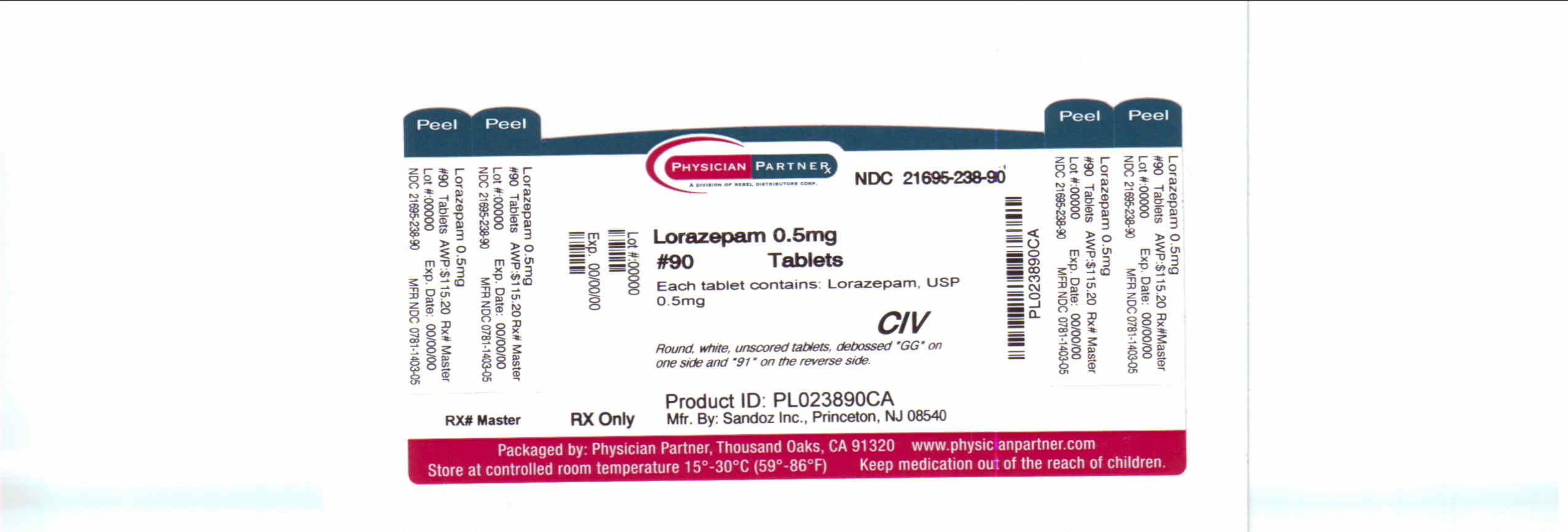
  • Lorazepam Tablet [Rebel Distributors Corp]

    Lorazepam

    Lorazepam Tablet [Rebel Distributors Corp]

    Lorazepam is administered orally. For optimal results, dose, frequency of administration, and duration of therapy should be individualized according to patient response. To facilitate this, 0.5 mg, 1 mg, and 2 mg tablets are available.

    The usual range is 2 to 6 mg/day given in divided doses, the largest dose being taken before bedtime, but the daily dosage may vary from 1 to 10 mg/day.

    For anxiety, most patients require an initial dose of 2 to 3 mg/day given b.i.d. or t.i.d.

    For insomnia due to anxiety or transient situational stress, a single daily dose of 2 to 4 mg may be given, usually at bedtime.

    For elderly or debilitated patients, an initial dosage of 1 to 2 mg/day in divided doses is recommended, to be adjusted as needed and tolerated.

    The dosage of lorazepam should be increased gradually when needed to help avoid adverse effects. When higher dosage is indicated, the evening dose should be increased before the daytime doses.

  • Ketorolac Tromethamine Tablet, Film Coated [Rebel Distributors Corp]

    Ketorolac Tromethamine

    Ketorolac Tromethamine Tablet, Film Coated [Rebel Distributors Corp]

    Carefully consider the potential benefits and risks of ketorolac tromethamine and other treatment options before deciding to use ketorolac tromethamine. Use the lowest effective dose for the shortest duration consistent with individual patient treatment goals. In adults, the combined duration of use of IV or IM dosing of ketorolac tromethamine and ketorolac tromethamine tablets is not to exceed 5 days. In adults, the use of ketorolac tromethamine tablets is only indicated as continuation therapy to IV or IM dosing of ketorolac tromethamine.

    Transition from IV or IM dosing of ketorolac tromethamine (single- or multiple-dose) to multiple-dose ketorolac tromethamine tablets:

    Patients age 17 to 64: 20 mg PO once followed by 10 mg q4 to 6 hours prn not > 40 mg/day

    Patients age ≥ 65, renally impaired, and/or weight < 50 kg (110 lbs): 10 mg PO once followed by 10 mg q4 to 6 hours prn not> 40 mg/day

    Note:

    Oral formulation should not be given as an initial dose

    Use minimum effective dose for the individual patient

    Do not shorten dosing interval of 4 to 6 hours

    Total duration of treatment in adult patients: the combined duration of use of IV or IM dosing of ketorolac tromethamine and ketorolac tromethamine tablets is not to exceed 5 days.

    The following table summarizes ketorolac thromethamine tablet dosing instructions in terms of age group:

    TABLE 4: Summary of Dosing Instructions Patient Population Ketorolac Tromethamine Tablets (following IV or IM dosing of ketorolac tromethamine) Age < 17 years Oral not approved Adult Age 17 to 64 years 20 mg once, then 10 mg q4 to 6 hours prn not > 40 mg/day Adult Age ≥ 65 years, renally impaired, and/or weight < 50 kg 10 mg once, then 10 mg q4 to 6 hours prn not > 40 mg/day
  • Hydrochlorothiazide Tablet [Rebel Distributors Corp]

    Hydrochlorothiazide

    Hydrochlorothiazide Tablet [Rebel Distributors Corp]

    Therapy should be individualized according to patient response. Use the smallest dosage necessary to achieve the required response.

    Adults

    For Edema

    The usual adult dosage is 25 to 100 mg daily as a single or divided dose. Many patients with edema respond to intermittent therapy, i.e., administration on alternate days or on three to five days each week. With an intermittent schedule, excessive response and the resulting undesirable electrolyte imbalance are less likely to occur.

    For Control Of Hypertension

    The usual initial dose in adults is 25 mg daily given as a single dose. The dose may be increased to 50 mg daily, given as a single or two divided doses. Doses above 50 mg are often associated with marked reductions in serum potassium (see also PRECAUTIONS).

    Patients usually do not require doses in excess of 50 mg of hydrochlorothiazide daily when used concomitantly with other antihypertensive agents.

    Infants and Children

    For Diuresis and For Control of Hypertension

    The usual pediatric dosage is 0.5 to 1 mg per pound (1 to 2 mg/kg) per day in single or two divided doses, not to exceed 37.5 mg per day in infants up to 2 years of age or 100 mg per day in children 2 to 12 years of age. In infants less than 6 months of age, doses up to 1.5 mg per pound (3 mg/kg) per day in two divided doses may be required.

  • Zonisamide Capsule [Rebel Distributors Corp]

    Zonisamide

    Zonisamide Capsule [Rebel Distributors Corp]

    Zonisamide capsules are recommended as adjunctive therapy for the treatment of partial seizures in adults. Safety and efficacy in pediatric patients below the age of 16 have not been established. Zonisamide should be administered once or twice daily, using 25 mg, 50 mg or 100 mg capsules. Zonisamide capsules are given orally and can be taken with or without food. Capsules should be swallowed whole.

    Adults over Age 16

    The prescriber should be aware that, because of the long half-life of zonisamide, up to two weeks may be required to achieve steady state levels upon reaching a stable dose or following dosage adjustment. Although the regimen described below is one that has been shown to be tolerated, the prescriber may wish to prolong the duration of treatment at the lower doses in order to fully assess the effects of zonisamide at steady state, noting that many of the side effects of zonisamide are more frequent at doses of 300 mg per day and above. Although there is some evidence of greater response at doses above 100 to 200 mg/day, the increase appears small and formal dose-response studies have not been conducted.

    The initial dose of zonisamide capsules should be 100 mg daily. After two weeks, the dose may be increased to 200 mg/day for at least two weeks. It can be increased to 300 mg/day and 400 mg/day, with the dose stable for at least two weeks to achieve steady state at each level. Evidence from controlled trials suggests that zonisamide doses of 100 to 600 mg/day are effective, but there is no suggestion of increasing response above 400 mg/day (see CLINICAL PHARMACOLOGY, Clinical Studies subsection). There is little experience with doses greater than 600 mg/day.

    Patients with Renal or Hepatic Disease

    Because zonisamide is metabolized in the liver and excreted by the kidneys, patients with renal or hepatic disease should be treated with caution, and might require slower titration and more frequent monitoring (see CLINICAL PHARMACOLOGY and PRECAUTIONS).

  • Aprodine (Pseudoephedrine Hcl And Tripolidine) Tablet, Film Coated [Rebel Distributors Corp]

    Aprodine

    Aprodine (Pseudoephedrine Hcl And Tripolidine) Tablet, Film Coated [Rebel Distributors Corp]

      adults and children 12 years and over: take 1 tablet every 4 to 6 hours. Do not take more than 4 tablets in 24 hours.   children under 12 years: do not use this product in children under 12 years of age

  • Ofloxacin (Ofloxaxin) Solution/ Drops [Rebel Distributors Corp]

    Ofloxacin

    Ofloxacin (Ofloxaxin) Solution/ Drops [Rebel Distributors Corp]

    Otitis Externa

    The recommended dosage regimen for the treatment of otitis externa is:

      For pediatric patients (from 6 months to 13 years old): Five drops (0.25 mL, 0.75 mg ofloxacin) instilled into the affected ear once daily for seven days.   For patients 13 years and older: Ten drops (0.5 mL, 1.5 mg ofloxacin) instilled into the affected ear once daily for seven days.   The solution should be warmed by holding the bottle in the hand for one or two minutes to avoid dizziness which may result from the instillation of a cold solution. The patient should lie with the affected ear upward, and then the drops should be instilled. This position should be maintained for five minutes to facilitate penetration of the drops into the ear canal. Repeat, if necessary, for the opposite ear.

    Acute Otitis Media in pediatric patients with tympanostomy tubes

    The recommended dosage regimen for the treatment of acute otitis media in pediatric patients (from 1 to 12 years old) with tympanostomy tubes is:

      Five drops (0.25 mL, 0.75 mg ofloxacin) instilled into the affected ear twice daily for ten days. The solution should be warmed by holding the bottle in the hand for one or two minutes to avoid dizziness which may result from the instillation of a cold solution. The patient should lie with the affected ear upward, and then the drops should be instilled. The tragus should then be pumped 4 times by pushing inward to facilitate penetration of the drops into the middle ear. This position should be maintained for five minutes. Repeat, if necessary, for the opposite ear.

    Chronic Suppurative Otitis Media with perforated tympanic membranes

    The recommended dosage regimen for the treatment of chronic suppurative otitis media with perforated tympanic membranes in patients 12 years and older is:

      Ten drops (0.5 mL, 1.5 mg ofloxacin) instilled into the affected ear twice daily for fourteen days. The solution should be warmed by holding the bottle in the hand for one or two minutes to avoid dizziness which may result from the instillation of a cold solution. The patient should lie with the affected ear upward, before instilling the drops. The tragus should then be pumped 4 times by pushing inward to facilitate penetration into the middle ear. This position should be maintained for five minutes. Repeat, if necessary, for the opposite ear.
  • Metformin Hydrochloride Tablet [Rebel Distributors Corp.]

    Metformin Hydrochloride

    Metformin Hydrochloride Tablet [Rebel Distributors Corp.]

    There is no fixed dosage regimen for the management of hyperglycemia in patients with type 2 diabetes with metformin or any other pharmacologic agent. Dosage of metformin must be individualized on the basis of both effectiveness and tolerance, while not exceeding the maximum recommended daily dose. The maximum recommended daily dose of metformin hydrochloride tablets, USP is 2550 mg in adults and 2000 mg in pediatric patients (10-16 years of age).

    Metformin should be given in divided doses with meals and should be started at a low dose, with gradual dose escalation, both to reduce gastrointestinal side effects and to permit identification of the minimum dose required for adequate glycemic control of the patient.

    During treatment initiation and dose titration (see Recommended Dosing Schedule), fasting plasma glucose should be used to determine the therapeutic response to metformin and identify the minimum effective dose for the patient. Thereafter, glycosylated hemoglobin should be measured at intervals of approximately three months. The therapeutic goal should be to decrease both fasting plasma glucose and glycosylated hemoglobin levels to normal or near normal by using the lowest effective dose of metformin hydrochloride tablets, USP either when used as monotherapy or in combination with sulfonylureas or insulin.

    Monitoring of blood glucose and glycosylated hemoglobin will also permit detection of primary failure, i.e., inadequate lowering of blood glucose at the maximum recommended dose of medication, and secondary failure, i.e., loss of an adequate blood glucose lowering response after an initial period of effectiveness.

    Short-term administration of metformin may be sufficient during periods of transient loss of control in patients usually well-controlled on diet alone.

    Recommended Dosing Schedule

    Adults

    In general, clinically significant responses are not seen at doses below 1500 mg per day. However, a lower recommended starting dose and gradually increased dosage is advised to minimize gastrointestinal symptoms.

    The usual starting dose of metformin hydrochloride tablets, USP is 500 mg twice a day or 850 mg once a day, given with meals. Dosage increases should be made in increments of 500 mg weekly or 850 mg every 2 weeks, up to a total of 2000 mg per day, given in divided doses. Patients can also be titrated from 500 mg twice a day to 850 mg twice a day after 2 weeks. For those patients requiring additional glycemic control, metformin may be given to a maximum daily dose of 2550 mg per day. Doses above 2000 mg may be better tolerated given three times a day with meals.

    Pediatrics

    The usual starting dose of metformin hydrochloride tablets, USP is 500 mg twice a day, given with meals. Dosage increases should be made in increments of 500 mg weekly up to a maximum of 2000 mg per day, given in divided doses.

    Transfer from Other Antidiabetic Therapy

    When transferring patients from standard oral hypoglycemic agents other than chlorpropamide to metformin, no transition period generally is necessary. When transferring patients from chlorpropamide, care should be exercised during the first two weeks because of the prolonged retention of chlorpropamide in the body, leading to overlapping drug effects and possible hypoglycemia.

    Concomitant Metformin Hydrochloride Tablets, USP and Oral Sulfonylurea Therapy in Adult Patients

    If patients have not responded to four weeks of the maximum dose of metformin hydrochloride tablets, USP monotherapy, consideration should be given to gradual addition of an oral sulfonylurea while continuing metformin hydrochloride tablets, USP at the maximum dose, even if prior primary or secondary failure to a sulfonylurea has occurred. Clinical and pharmacokinetic drug-drug interaction data are currently available only for metformin plus glyburide (glibenclamide). With concomitant metformin hydrochloride tablets, USP and sulfonylurea therapy, the desired control of blood glucose may be obtained by adjusting the dose of each drug. In a clinical trial of patients with type 2 diabetes and prior failure on glyburide, patients started on metformin 500 mg and glyburide 20 mg were titrated to 1000/20 mg, 1500/20 mg, 2000/20 mg or 2500/20 mg of metformin and glyburide, respectively, to reach the goal of glycemic control as measured by FPG, HbA1c and plasma glucose response (see CLINICAL PHARMACOLOGY: Clinical Studies). However, attempts should be made to identify the minimum effective dose of each drug to achieve this goal. With concomitant metformin hydrochloride tablets, USP and sulfonylurea therapy, the risk of hypoglycemia associated with sulfonylurea therapy continues and may be increased. Appropriate precautions should be taken. (See Package Insert of the respective sulfonylurea.)

    If patients have not satisfactorily responded to one to three months of concomitant therapy with the maximum dose of metformin and the maximum dose of an oral sulfonylurea, consider therapeutic alternatives including switching to insulin with or without metformin hydrochloride tablets, USP.

    Concomitant Metformin Hydrochloride Tablets, USP and Insulin Therapy in Adult Patients

    The current insulin dose should be continued upon initiation of metformin hydrochloride tablets, USP therapy. Metformin hydrochloride tablets, USP therapy should be initiated at 500 mg once daily in patients on insulin therapy. For patients not responding adequately, the dose of metformin hydrochloride tablets, USP should be increased by 500 mg after approximately 1 week and by 500 mg every week thereafter until adequate glycemic control is achieved. The maximum recommended daily dose is 2500 mg for metformin hydrochloride tablets, USP. It is recommended that the insulin dose be decreased by 10% to 25% when fasting plasma glucose concentrations decrease to less than 120 mg/dL in patients receiving concomitant insulin and metformin hydrochloride tablets, USP. Further adjustment should be individualized based on glucose-lowering response.

    Specific Patient Populations

    Metformin is not recommended for use in pregnancy.

    Metformin hydrochloride tablets, USP are not recommended in patients below the age of 10 years.

    The initial and maintenance dosing of metformin hydrochloride tablets, USP should be conservative in patients with advanced age, due to the potential for decreased renal function in this population. Any dosage adjustment should be based on a careful assessment of renal function. Generally, elderly, debilitated, and malnourished patients should not be titrated to the maximum dose of metformin hydrochloride tablets, USP.

    Monitoring of renal function is necessary to aid in prevention of lactic acidosis, particularly in the elderly. (See WARNINGS.)

  • Hyoscyamine Sulfate Tablet [Rebel Distributors Corp]

    Hyoscyamine Sulfate

    Hyoscyamine Sulfate Tablet [Rebel Distributors Corp]

    Dosage may be adjusted according to the conditions and severity of symptoms.

    Adults and pediatric patients 12 years of age and older: 1 to 2 tablets every four hours or as needed. Do not exceed 12 tablets in 24 hours.

    Pediatric patients 2 to under 12 years of age: 1/2 to 1 tablet every four hours or as needed. Do not exceed 6 tablets in 24 hours.

  • Loperamide Hydrochloride Capsule [Rebel Distributors Corp]

    Loperamide Hydrochloride

    Loperamide Hydrochloride Capsule [Rebel Distributors Corp]

    (1 capsule = 2 mg)

    Patients should receive appropriate fluid and electrolyte replacement as needed.

    Acute Diarrhea

    Adults

    The recommended initial dose is 4 mg (two capsules) followed by 2 mg (one capsule) after each unformed stool. Daily dosage should not exceed 16 mg (eight capsules). Clinical improvement is usually observed within 48 hours.

    Children

    In children 2 to 5 years of age (20 kg or less), the non-prescription liquid formulation (loperamide hydrochloride for oral solution, 1 mg/5 mL) should be used; for ages 6 to 12, either loperamide hydrochloride capsules or loperamide hydrochloride for oral solution may be used. For children 2 to 12 years of age, the following schedule for capsules or liquid will usually fulfill initial dosage requirements:

    Recommended First Day Dosage Schedule

    Two to five years: 1 mg t.i.d. (3 mg daily dose) (13 to 20 kg)

    Six to eight years: 2 mg b.i.d. (4 mg daily dose) (20 to 30 kg)

    Eight to twelve years: 2 mg t.i.d. (6 mg daily dose) (greater than 30 kg)

    Recommended Subsequent Daily Dosage

    Following the first treatment day, it is recommended that subsequent loperamide hydrochloride doses (1 mg/10 kg body weight) be administered only after a loose stool. Total daily dosage should not exceed recommended dosages for the first day.

    Chronic Diarrhea

    Children

    Although loperamide hydrochloride has been studied in a limited number of children with chronic diarrhea; the therapeutic dose for the treatment of chronic diarrhea in a pediatric population has not been established.

    Adults

    The recommended initial dose is 4 mg (two capsules) followed by 2 mg (one capsule) after each unformed stool until diarrhea is controlled, after which the dosage of loperamide hydrochloride capsules should be reduced to meet individual requirements. When the optimal daily dosage has been established, this amount may then be administered as a single dose or in divided doses.

    The average daily maintenance dosage in clinical trials was 4 to 8 mg (two to four capsules). A dosage of 16 mg (eight capsules) was rarely exceeded. If clinical improvement is not observed after treatment with 16 mg per day for at least 10 days, symptoms are unlikely to be controlled by further administration. Loperamide hydrochloride capsules administration may be continued if diarrhea cannot be adequately controlled with diet or specific treatment.

    Children Under 2 Years

    The use of loperamide hydrochloride in children under 2 years is not recommended. There have been rare reports of paralytic ileus associated with abdominal distention. Most of these reports occurred in the setting of acute dysentery, overdose, and with very young children less than two years of age.

    Elderly

    No formal pharmacokinetic studies were conducted in elderly subjects. However, there were no major differences in the drug disposition in elderly patients with diarrhea relative to young patients. No dosage adjustment is required for the elderly.

    Renal Impairment

    No pharmacokinetic data are available in patients with renal impairment. Since the metabolites and the unchanged drug are mainly excreted in the feces, no dosage adjustment is required for patients with renal impairment (see PRECAUTIONS).

    Hepatic Impairment

    Although no pharmacokinetic data are available in patients with hepatic impairment, loperamide hydrochloride should be used with caution in such patients because of reduced first pass metabolism (see PRECAUTIONS).

  • Azithromycin (Azithromycin Monohydrate) Powder, For Suspension [Rebel Distributors Corp.]

    Azithromycin

    Azithromycin (Azithromycin Monohydrate) Powder, For Suspension [Rebel Distributors Corp.]

    (See INDICATIONS AND USAGE and CLINICAL PHARMACOLOGY.)

    Adults

    *DUE TO THE INDICATED ORGANISMS (see INDICATIONS AND USAGE).

    Infection* Recommended Dose/Duration of Therapy Community-acquired pneumonia (mild severity) Pharyngitis/tonsillitis (second line therapy) Skin/skin structure (uncomplicated) 500 mg as a single dose on Day 1, followed by 250 mg once daily on Days 2 through 5. Acute bacterial exacerbations of chronic obstructive pulmonary disease (mild to moderate) 500 mg QD × 3 day OR 500 mg as a single dose on Day 1, followed by 250 mg once daily on Days 2 through 5. Acute bacterial sinusitis 500 mg QD × 3 days Genital ulcer disease (chancroid) One single 1 gram dose Non-gonococcal urethritis and cervicitis One single 1 gram dose Gonococcal urethritis and cervicitis One single 2 gram dose

    Azithromycin tablets can be taken with or without food.

    Renal Insufficiency

    No dosage adjustment is recommended for subjects with renal impairment (GFR ≤ 80 mL/min). The mean AUC0-120 was similar in subjects with GFR 10 to 80 mL/min compared to subjects with normal renal function, whereas it increased 35% in subjects with GFR < 10 mL/min compared to subjects with normal renal function. Caution should be exercised when azithromycin is administered to subjects with severe renal impairment (see CLINICAL PHARMACOLOGY, Special Populations, Renal insufficiency).

    Hepatic Insufficiency

    The pharmacokinetics of azithromycin in subjects with hepatic impairment have not been established. No dose adjustment recommendations can be made in patients with impaired hepatic function (see CLINICAL PHARMACOLOGY, Special Populations, Hepatic insufficiency).

    No dosage adjustment is recommended based on age or gender (see CLINICAL PHARMACOLOGY, Special Populations).

    Pediatric Patients

    Azithromycin for oral suspension can be taken with or without food.

    Acute Otitis Media

    The recommended dose of azithromycin for oral suspension for the treatment of pediatric patients with acute otitis media is 30 mg/kg given as a single dose or 10 mg/kg once daily for 3 days or 10 mg/kg as a single dose on the first day followed by 5 mg/kg/day on Days 2 through 5 (see chart below).

    Acute Bacterial Sinusitis

    The recommended dose of azithromycin for oral suspension for the treatment of pediatric patients with acute bacterial sinusitis is 10 mg/kg once daily for 3 days (see chart below).

    Community-Acquired Pneumonia

    The recommended dose of azithromycin for oral suspension for the treatment of pediatric patients with community-acquired pneumonia is 10 mg/kg as a single dose on the first day followed by 5 mg/kg on Days 2 through 5 (see chart below).

    PEDIATRIC DOSAGE GUIDELINES FOR OTITIS MEDIA, ACUTE BACTERIAL SINUSITIS AND COMMUNITY-ACQUIRED PNEUMONIA (Age 6 months and above, see PRECAUTIONS, Pediatric Use.) Based on Body Weight

    * Effectiveness of the 3 day or 1 day regimen in pediatric patients with community-acquired pneumonia has not been established.

    OTITIS MEDIA AND COMMUNITY-ACQUIRED PNEUMONIA: (5 Day Regimen)* Dosing Calculated on 10 mg/kg/day Day 1and 5 mg/kg/day Days 2 to 5. Weight 100 mg/5 mL 200 mg/5 mL Total mL per Treatment Course Total mg per Treatment Course kg Lbs. Day 1 Days 2 to 5 Day 1 Days 2 to 5 5 11 2.5 mL (½ tsp) 1.25 mL (¼ tsp)     7.5 mL 150 mg 10 22 5 mL (1 tsp) 2.5 mL (½ tsp)     15 mL 300 mg 20 44     5 mL (1 tsp) 2.5 mL (½ tsp) 15 mL 600 mg 30 66     7.5 mL (1½ tsp) 3.75 mL (¾ tsp) 22.5 mL 900 mg 40 88     10 mL (2 tsp) 5 mL (1 tsp) 30 mL 1200 mg 50 and above 110 and above     12.5 mL (2½ tsp) 6.25 mL (1¼ tsp) 37.5 mL 1500 mg

    * Effectiveness of the 5 day or 1 day regimen in pediatric patients with acute bacterial sinusitis has not been established.

    OTITIS MEDIA AND ACUTE BACTERIAL SINUSITIS: (3 Day Regimen)* Dosing Calculated on 10 mg/kg/day Weight 100 mg/5 mL 200 mg/5 mL Total mL perTreatmentCourse Total mg perTreatmentCourse kg Lbs. Day 1 to 3 Day 1 to 3 5 11 2.5 mL (½ tsp)   7.5 mL 150 mg 10 22 5 mL (1 tsp)   15 mL 300 mg 20 44   5 mL (1 tsp) 15 mL 600 mg 30 66   7.5 mL (1½ tsp) 22.5 mL 900 mg 40 88   10 mL (2 tsp) 30 mL 1200 mg 50 and above 110 and above   12.5 mL (2½ tsp) 37.5 mL 1500 mg OTITIS MEDIA: (1 Day Regimen) Dosing Calculated on 30 mg/kg as a single dose Weight 200 mg/5 mL Total mL perTreatment Course Total mg perTreatment Course kg Lbs. Day 1 5 11 3.75 mL (¾ tsp) 3.75 mL 150 mg 10 22 7.5 mL (1½ tsp) 7.5 mL 300 mg 20 44 15 mL (3 tsp) 15 mL 600 mg 30 66 22.5 mL (4½ tsp) 22.5 mL 900 mg 40 88 30 mL (6 tsp) 30 mL 1200 mg 50 and above 110 and above 37.5 mL (7½ tsp) 37.5 mL 1500 mg

    The safety of re-dosing azithromycin in pediatric patients who vomit after receiving 30 mg/kg as a single dose has not been established. In clinical studies involving 487 patients with acute otitis media given a single 30 mg/kg dose of azithromycin, eight patients who vomited within 30 minutes of dosing were re-dosed at the same total dose.

    Pharyngitis/Tonsillitis

    The recommended dose of azithromycin for pediatric patients with pharyngitis/tonsillitis is 12 mg/kg once daily for 5 days (see chart below).

    PEDIATRIC DOSAGE GUIDELINES FOR PHARYNGITIS/TONSILLITIS (Age 2 years and above, see PRECAUTIONS, Pediatric Use.) Based on Body Weight PHARYNGITIS/TONSILLITIS: (5 Day Regimen) Dosing Calculated on 12 mg/kg/day for 5 days. Weight 200 mg/5 mL Total mL perTreatment Course Total mg perTreatment Course kg Lbs. Day 1 to 5 8 18 2.5 mL (½ tsp) 12.5 mL 500 mg 17 37 5 mL (1 tsp) 25 mL 1000 mg 25 55 7.5 mL (1½ tsp) 37.5 mL 1500 mg 33 73 10 mL (2 tsp) 50 mL 2000 mg 40 88 12.5 mL (2½ tsp) 62.5 mL 2500 mg

    Constituting instructions for azithromycin for oral suspension USP, 300, 600, 900, 1200 mg bottles. The table below indicates the volume of water to be used for constitution:

    Amount of water to be added Total volume after constitution (azithromycin content) Azithromycin concentration after constitution 9 mL (300 mg) 15 mL (300 mg) 100 mg/5 mL 9 mL (600 mg) 15 mL (600 mg) 200 mg/5 mL 12 mL (900 mg) 22.5 mL (900 mg) 200 mg/5 mL 15 mL (1200 mg) 30 mL (1200 mg) 200 mg/5 mL

    Shake well before each use. Oversized bottle provides shake space. Keep tightly closed.

    After mixing, store suspension at 5° to 30°C (41° to 86°F) and use within 10 days. Discard after full dosing is completed.

  • Indomethacin Capsule [Rebel Distributors Corp]

    Indomethacin

    Indomethacin Capsule [Rebel Distributors Corp]

    Carefully consider the potential benefits and risks of indomethacin and other treatment options before deciding to use indomethacin. Use the lowest effective dose for the shortest duration consistent with individual patient treatment goals (see WARNINGS).

    After observing the response to initial therapy with indomethacin, the dose and frequency should be adjusted to suit an individual patient's needs.

    Indomethacin is available as 25 mg and 50 mg capsules.

    Adverse reactions appear to correlate with the size of the dose of indomethacin in most patients but not all. Therefore, every effort should be made to determine the smallest effective dosage for the individual patient.

    Pediatric Use

    Indomethacin ordinarily should not be prescribed for pediatric patients 14 years of age and under (see WARNINGS).

    Adult Use

    Dosage Recommendations for Active Stages of the Following:

    Moderate to severe rheumatoid arthritis including acute flares of chronic disease; moderate to severe ankylosing spondylitis; and moderate to severe osteoarthritis.Suggested Dosage: Indomethacin capsules 25 mg b.i.d. or t.i.d. If this is well tolerated, increase the daily dosage by 25 mg or by 50 mg, if required by continuing symptoms, at weekly intervals until a satisfactory response is obtained or until a total daily dose of 150 mg to 200 mg is reached. DOSES ABOVE THIS AMOUNT GENERALLY DO NOT INCREASE THE EFFECTIVENESS OF THE DRUG.In patients who have persistent night pain and/or morning stiffness, the giving of a large portion, up to a maximum of 100 mg, of the total daily dose at bedtime may be helpful in affording relief. The total daily dose should not exceed 200 mg. In acute flares of chronic rheumatoid arthritis, it may be necessary to increase the dosage by 25 mg or, if required, by 50 mg daily.If minor adverse effects develop as the dosage is increased, reduce the dosage rapidly to a tolerated dose and OBSERVE THE PATIENT CLOSELY.If severe adverse reactions occur, STOP THE DRUG. After the acute phase of the disease is under control, an attempt to reduce the daily dose should be made repeatedly until the patient is receiving the smallest effective dose or the drug is discontinued.Careful instructions to, and observations of, the individual patient are essential to the prevention of serious, irreversible, including fatal, adverse reactions.As advancing years appear to increase the possibility of adverse reactions, indomethacin should be used with greater care in the elderly (see PRECAUTIONS: Geriatric Use). Acute painful shoulder (bursitis and/or tendinitis).Initial Dose: 75 mg to 150 mg daily in 3 or 4 divided doses. The drug should be discontinued after the signs and symptoms of inflammation have been controlled for several days. The usual course of therapy is 7 to 14 days. Acute gouty arthritis.Suggested Dosage: Indomethacin capsules 50 mg t.i.d. until pain is tolerable. The dose should then be rapidly reduced to complete cessation of the drug. Definite relief of pain has been reported within 2 to 4 hours. Tenderness and heat usually subside in 24 to 36 hours, and swelling gradually disappears in 3 to 5 days.
  • Oxcarbazepine Tablet, Film Coated [Rebel Distributors Corp]

    Oxcarbazepine

    Oxcarbazepine Tablet, Film Coated [Rebel Distributors Corp]

    Oxcarbazepine is recommended as adjunctive treatment in the treatment of partial seizures in adults and children aged 2-16 years. Oxcarbazepine is also recommended as monotherapy in the treatment of partial seizures in adults and children aged 4-16 years.

    All dosing should be given in a twice-a-day (BID) regimen. Oxcarbazepine oral suspension and oxcarbazepine film-coated tablets may be interchanged at equal doses.

    Oxcarbazepine should be kept out of the reach and sight of children.

    Oxcarbazepine can be taken with or without food (see CLINICAL PHARMACOLOGY, Pharmacokinetics subsection).

    Adults

    Adjunctive Therapy

    Treatment with oxcarbazepine should be initiated with a dose of 600 mg/day, given in a BID regimen. If clinically indicated, the dose may be increased by a maximum of 600 mg/day at approximately weekly intervals; the recommended daily dose is 1200 mg/day. Daily doses above 1200 mg/day show somewhat greater effectiveness in controlled trials, but most patients were not able to tolerate the 2400 mg/day dose, primarily because of CNS effects. It is recommended that the patient be observed closely and plasma levels of the concomitant AEDs be monitored during the period of oxcarbazepine titration, as these plasma levels may be altered, especially at oxcarbazepine doses greater than 1200 mg/day (see PRECAUTIONS, Drug interactions subsection).

    Conversion to Monotherapy

    Patients receiving concomitant AEDs may be converted to monotherapy by initiating treatment with oxcarbazepine at 600 mg/day (given in a BID regimen) while simultaneously initiating the reduction of the dose of the concomitant AEDs. The concomitant AEDs should be completely withdrawn over 3-6 weeks, while the maximum dose of oxcarbazepine should be reached in about 2-4 weeks. Oxcarbazepine may be increased as clinically indicated by a maximum increment of 600 mg/day at approximately weekly intervals to achieve the recommended daily dose of 2400 mg/day. A daily dose of 1200 mg/day has been shown in one study to be effective in patients in whom monotherapy has been initiated with oxcarbazepine. Patients should be observed closely during this transition phase.

    Initiation of Monotherapy

    Patients not currently being treated with AEDs may have monotherapy initiated with oxcarbazepine. In these patients, oxcarbazepine should be initiated at a dose of 600 mg/day (given in a BID regimen); the dose should be increased by 300 mg/day every third day to a dose of 1200 mg/day. Controlled trials in these patients examined the effectiveness of a 1200 mg/day dose; a dose of 2400 mg/day has been shown to be effective in patients converted from other AEDs to oxcarbazepine monotherapy (see above).

    Pediatric Patients

    Adjunctive Therapy (Aged 2-16 years)

    In pediatric patients aged 4-16 years, treatment should be initiated at a daily dose of 8-10 mg/kg generally not to exceed 600 mg/day, given in a BID regimen. The target maintenance dose of oxcarbazepine should be achieved over two weeks, and is dependent upon patient weight, according to the following chart:

    20-29 kg - 900 mg/day

    29.1-39 kg - 1200 mg/day

    >39 kg - 1800 mg/day

    In the clinical trial, in which the intention was to reach these target doses, the median daily dose was 31 mg/kg with a range of 6-51 mg/kg.

    In pediatric patients aged 2 to <4 years, treatment should also be initiated at a daily dose of 8-10 mg/kg generally not to exceed 600 mg/day, given in a BID regimen. For patients under 20 kg, a starting dose of 16-20 mg/kg may be considered (see CLINICAL PHARMACOLOGY). The maximum maintenance dose of oxcarbazepine should be achieved over 2-4 weeks and should not exceed 60 mg/kg/day in a BID regimen.

    In the clinical trial in pediatric patients (2 to 4 years of age) in which the intention was to reach the target dose of 60 mg/kg/day, 50% of patients reached a final dose of at least 55 mg/kg/day.

    Under adjunctive therapy (with and without enzyme-inducing AEDs), when normalized by body weight, apparent clearance (L/hr/kg) decreased when age increased such that children 2 to <4 years of age may require up to twice the oxcarbazepine dose per body weight compared to adults; and children 4 to ≤12 years of age may require a 50% higher oxcarbazepine dose per body weight compared to adults.

    Conversion to Monotherapy (Aged 4-16 years)

    Patients receiving concomitant antiepileptic drugs may be converted to monotherapy by initiating treatment with oxcarbazepine at approximately 8-10 mg/kg/day given in a BID regimen, while simultaneously initiating the reduction of the dose of the concomitant antiepileptic drugs. The concomitant antiepileptic drugs can be completely withdrawn over 3-6 weeks while oxcarbazepine may be increased as clinically indicated by a maximum increment of 10 mg/kg/day at approximately weekly intervals to achieve the recommended daily dose. Patients should be observed closely during this transition phase.

    The recommended total daily dose of oxcarbazepine is shown in the table below.

    Initiation of Monotherapy (Aged 4-16 years)

    Patients not currently being treated with antiepileptic drugs may have monotherapy initiated with oxcarbazepine. In these patients, oxcarbazepine should be initiated at a dose of 8-10 mg/kg/day given in a BID regimen. The dose should be increased by 5 mg/kg/day every third day to the recommended daily dose shown in the table below.

    Table 8: Range of Maintenance Doses of Oxcarbazepine for Children by Weight During Monotherapy

    Patients with Hepatic Impairment

    In general, dose adjustments are not required in patients with mild-to-moderate hepatic impairment (see CLINICAL PHARMACOLGY, Pharmacokinetics, Special Populations subsection).

    Patients with Renal Impairment

    In patients with impaired renal function (creatine clearance <30 mL/min) oxcarbazepine therapy should be initiated at one-half the usual starting dose (300 mg/day) and increased slowly to achieve the desired clinical response (see CLINICAL PHARMACOLOGY, Pharmacokinetics, Special Populations subsection).

  • Fluocinonide Ointment
    Fluocinonide Ointment [Rebel Distributors Corp]

    Fluocinonide Ointment

    Fluocinonide Ointment [Rebel Distributors Corp]

    The topical corticosteroids are generally applied to the affected area as a thin film from two to four times daily depending on the severity of the condition.

    Occlusive dressings may be used for the management of psoriasis or recalcitrant conditions.

    If an infection develops, the use of occlusive dressings should be discontinued and appropriate antimicrobial therapy instituted.

  • Ciprodex (Ciprofloxacin And Dexamethasone) Suspension [Rebel Distributors Corp]

    Ciprodex

    Ciprodex (Ciprofloxacin And Dexamethasone) Suspension [Rebel Distributors Corp]

    CIPRODEX® OTIC SHOULD BE SHAKEN WELL IMMEDIATELY BEFORE USE

    CIPRODEX® Otic contains 3 mg (3000 ug/mL) ciprofloxacin and 1 mg/mL dexamethasone.

    Acute Otitis Media in pediatric patients with tympanostomy tubes: The recommended dosage regimen for the treatment of acute otitis media in pediatric patients (age 6 months and older) through tympanostomy tubes is:

    Four drops (0.14 mL, 0.42 mg ciprofloxacin, 0.14 mg dexamethasone) instilled into the affected ear twice daily for seven days. The suspension should be warmed by holding the bottle in the hand for one or two minutes to avoid dizziness, which may result from the instillation of a cold suspension. The patient should lie with the affected ear upward, and then the drops should be instilled. The tragus should then be pumped 5 times by pushing inward to facilitate penetration of the drops into the middle ear. This position should be maintained for 60 seconds. Repeat, if necessary, for the opposite ear. Discard unused portion after therapy is completed.

    Acute Otitis Externa: The recommended dosage regimen for the treatment of acute otitis externa is: For patients (age 6 months and older): Four drops (0.14 mL, 0.42 mg ciprofloxacin, 0.14 mg dexamethasone) instilled into the affected ear twice daily for seven days. The suspension should be warmed by holding the bottle in the hand for one or two minutes to avoid dizziness, which may result from the instillation of a cold suspension. The patient should lie with the affected ear upward, and then the drops should be instilled. This position should be maintained for 60 seconds to facilitate penetration of the drops into the ear canal. Repeat, if necessary, for the opposite ear. Discard unused portion after therapy is completed.

  • Trinessa (Norgestimate And Ethinyl Estradiol) Kit [Rebel Distributors Corp]

    Trinessa

    Trinessa (Norgestimate And Ethinyl Estradiol) Kit [Rebel Distributors Corp]

    Oral Contraception

    To achieve maximum contraceptive effectiveness, TriNessa® must be taken exactly as directed and at intervals not exceeding 24 hours.The possibility of ovulation and conception prior to initiation of medication should be considered. TriNessa is available in a blister card with a tablet dispenser which is preset for a Sunday Start. Day 1 Start is also provided.

    Sunday Start

    When taking TriNessa® the first white tablet should be taken on the first Sunday after menstruation begins. If period begins on Sunday, the first tablet should be taken that day. Take one active tablet daily for 21 days followed by one dark green inactive tablet daily for 7 days. After 28 tablets have been taken, a new course is started the next day (Sunday). For the first cycle of a Sunday Start regimen, another method of contraception should be used until after the first 7 consecutive days of administration.

    If the patient misses one (1) active tablet in Weeks 1, 2, or 3, the tablet should be taken as soon as she remembers. If the patient misses two (2) active tablets in Week 1 or Week 2, the patient should take two (2) tablets the day she remembers and two (2) tablets the next day; and then continue taking one (1) tablet a day until she finishes the pack. The patient should be instructed to use a back-up method of birth control such as condoms or spermicide if she has sex in the seven (7) days after missing pills. If the patient misses two (2) active tablets in the third week or misses three (3) or more active tablets in a row, the patient should continue taking one tablet every day until Sunday. On Sunday the patient should throw out the rest of the pack and start a new pack that same day. The patient should be instructed to use a back-up method of birth control if she has sex in the seven (7) days after missing pills.

    Complete instructions to facilitate patient counseling on proper pill usage may be found in the Detailed Patient Labeling (“How to Take the Pill” section).

    Day 1 Start

    The dosage of TriNessa® for the initial cycle of therapy is one active tablet administered daily from the 1st day through the 21st day of the menstrual cycle, counting the first day of menstrual flow as “Day 1” followed by one dark green inactive tablet daily for 7 days. Tablets are taken without interruption for 28 days. After 28 tablets have been taken, a new course is started the next day.

    If the patient misses one (1) active tablet in Weeks 1, 2, or 3, the tablet should be taken as soon as she remembers. If the patient misses two (2) active tablets in Week 1 or Week 2, the patient should take two (2) tablets the day she remembers and two (2) tablets the next day; and then continue taking one (1) tablet a day until she finishes the pack. The patient should be instructed to use a back-up method of birth control such as condoms or spermicide if she has sex in the seven (7) days after missing pills. If the patient misses two (2) active tablets in the third week or misses three (3) or more active tablets in a row, the patient should throw out the rest of the pack and start a new pack that same day. The patient should be instructed to use a backup method of birth control if she has sex in the seven (7) days after missing pills.

    Complete instructions to facilitate patient counseling on proper pill usage may be found in the Detailed Patient Labeling (“How to Take the Pill” section).

    The use of TriNessa for contraception may be initiated 4 weeks postpartum in women who elect not to breast feed. When the tablets are administered during the postpartum period, the increased risk of thromboembolic disease associated with the postpartum period must be considered. (See CONTRAINDICATIONS and WARNINGS concerning thromboembolic disease. See also PRECAUTIONS for “Nursing Mothers.”) The possibility of ovulation and conception prior to initiation of medication should be considered.

    (See Discussion of Dose-Related Risk of Vascular Disease from Oral Contraceptives.)

    ADDITIONAL INSTRUCTIONS

    Breakthrough bleeding, spotting, and amenorrhea are frequent reasons for patients discontinuing oral contraceptives. In breakthrough bleeding, as in all cases of irregular bleeding from the vagina, nonfunctional causes should be borne in mind. In undiagnosed persistent or recurrent abnormal bleeding from the vagina, adequate diagnostic measures are indicated to rule out pregnancy or malignancy. If pathology has been excluded, time or a change to another formulation may solve the problem. Changing to an oral contraceptive with a higher estrogen content, while potentially useful in minimizing menstrual irregularity, should be done only if necessary since this may increase the risk of thromboembolic disease.

    Use of oral contraceptives in the event of a missed menstrual period:

    1. If the patient has not adhered to the prescribed schedule, the possibility of pregnancy should be considered at the time of the first missed period and oral contraceptive use should be discontinued if pregnancy is confirmed.

    2. If the patient has adhered to the prescribed regimen and misses two consecutive periods, pregnancy should be ruled out.

    ACNE

    The timing of initiation of dosing with TriNessa® for acne should follow the guidelines for use of TriNessa as an oral contraceptive. Consult the DOSAGE AND ADMINISTRATION section for oral contraceptives. The dosage regimen for TriNessa for treatment of facial acne, as available in a blister card with a tablet dispenser, utilizes a 21-day active and a 7-day placebo schedule. Take one active tablet daily for 21 days followed by one dark green inactive tablet for 7 days. After 28 tablets have been taken, a new course is started the next day.

  • Fentanyl Transdermal Sy...
    Fentanyl Transdermal System Patch, Extended Release [Rebel Distributors Corp]

    Fentanyl Transdermal System Patch

    Fentanyl Transdermal System Patch, Extended Release [Rebel Distributors Corp]

    Special Precautions

    Fentanyl transdermal system contains a high concentration of a potent Schedule II opioid agonist, fentanyl. Schedule II opioid substances which include fentanyl, hydromorphone, methadone, morphine, oxycodone, and oxymorphone have the highest potential for abuse and associated risk of fatal overdose due to respiratory depression. Fentanyl can be abused and is subject to criminal diversion. The high content of fentanyl in the patches (fentanyl transdermal system) may be a particular target for abuse and diversion.

    Fentanyl transdermal systems are intended for transdermal use (on intact skin) only. The fentanyl transdermal system should not be used if the pouch seal is broken, or the patch is cut, damaged, or changed in any way.

    Each fentanyl transdermal system may be worn continuously for 72 hours. The next patch should be applied to a different skin site after removal of the previous transdermal system.

    If problems with adhesion of the fentanyl transdermal system occur, the edges of the patch may be taped with first aid tape. If problems with adhesion persist, the patch may be overlaid with a transparent adhesive film dressing (e.g., Bioclusive™ or Tegaderm™).

    If the patch falls off before 72 hours, dispose of it by folding in half and flushing down the toilet. A new patch may be applied to a different skin site.

    Fentanyl transdermal system is ONLY for use in patients who are already tolerant to opioid therapy of comparable potency. Use in non-opioid tolerant patients may lead to fatal respiratory depression. Overestimating the fentanyl transdermal system dose when converting patients from another opioid medication can result in fatal overdose with the first dose. Due to the mean half-life of approximately 17 hours, patients who are thought to have had a serious adverse event, including overdose, will require monitoring and treatment for at least 24 hours.

    The concomitant use of fentanyl transdermal system with all cytochrome P450 3A4 inhibitors (such as ritonavir, ketoconazole, itraconazole, troleandomycin, clarithromycin, nelfinavir, nefazodone, amiodarone, amprenavir, aprepitant, diltiazem, erythromycin, fluconazole, fosamprenavir, grapefruit juice, and verapamil) may result in an increase in fentanyl plasma concentrations, which could increase or prolong adverse drug effects and may cause potentially fatal respiratory depression. Patients receiving fentanyl transdermal system and any CYP3A4 inhibitor should be carefully monitored for an extended period of time and dosage adjustments should be made if warranted (see BOX WARNING; CLINICAL PHARMACOLOGY, Drug Interactions; WARNINGS and PRECAUTIONS for further information).

    Pediatric patients converting to fentanyl transdermal system with a 25 mcg/hr patch should be opioid-tolerant and receiving at least 60 mg of oral morphine or the equivalent per day. The dose conversion schedule described in Table C, and method of titration described below are recommended in opioid-tolerant pediatric patients over 2 years of age with chronic pain (see PRECAUTIONS, Pediatric Use).

    Respiratory depression is the chief hazard in elderly or debilitated patients, usually following large initial doses in non-tolerant patients, or when opioids are given in conjunction with other agents that depress respiration.

    Fentanyl transdermal system should be used with caution in elderly, cachectic, or debilitated patients as they may have altered pharmacokinetics due to poor fat stores, muscle wasting, or altered clearance (see CLINICAL PHARMACOLOGY, Special Populations, Geriatric Use ).

    General Principles

    Fentanyl transdermal system is indicated for management of persistent, moderate to severe chronic pain that:

    requires continuous, around-the-clock opioid administration for an extended period of time cannot be managed by other means such as non-steroidal analgesics, opioid combination products, or immediate-release opioids.

    Fentanyl transdermal system should ONLY be used in patients who are already receiving opioid therapy, who have demonstrated opioid tolerance, and who require a total daily dose at least equivalent to fentanyl transdermal system 25 mcg/hr. Patients who are considered opioid-tolerant are those who have been taking, for a week or longer, at least 60 mg of morphine daily, or at least 30 mg of oral oxycodone daily, or at least 8 mg oral hydromorphone daily, or an equianalgesic dose of another opioid.

    Because serious or life-threatening hypoventilation could occur, fentanyl transdermal system is contraindicated:

    in patients who are not opioid-tolerant in the management of acute pain or in patients who require opioid analgesia for a short period of time in the management of post-operative pain, including use after out-patient or day surgeries (e.g., tonsillectomies) in the management of mild pain in the management of intermittent pain (e.g., use on an as needed basis [prn])

    (see CONTRAINDICATIONS for further information).

    Safety of fentanyl transdermal system has not been established in children under 2 years of age. Fentanyl transdermal system should be administered to children only if they are opioid-tolerant and 2 years of age or older (see PRECAUTIONS, Pediatric Use).

    Prescribers should individualize treatment using a progressive plan of pain management such as outlined by the World Health Organization, the Agency for Health Research and Quality, the Federation of State Medical Boards Model Policy, or the American Pain Society.

    With all opioids, the safety of patients using the products is dependent on healthcare practitioners prescribing them in strict conformity with their approved labeling with respect to patient selection, dosing, and proper conditions for use.

    As with all opioids, dosage should be individualized. The most important factor to be considered in determining the appropriate dose is the extent of pre-existing opioid-tolerance (see BOX WARNING and CONTRAINDICATIONS). Initial doses should be reduced in elderly or debilitated patients (see PRECAUTIONS).

    Fentanyl transdermal system should be applied to intact, non-irritated, and non-irradiated skin on a flat surface such as the chest, back, flank, or upper arm. In young children and persons with cognitive impairment, adhesion should be monitored and the upper back is the preferred location to minimize the potential of inappropriate patch removal. Hair at the application site should be clipped (not shaved) prior to system application. If the site of fentanyl transdermal system application must be cleansed prior to application of the patch, do so with clear water. Do not use soaps, oils, lotions, alcohol, or any other agents that might irritate the skin or alter its characteristics. Allow the skin to dry completely prior to patch application.

    Fentanyl transdermal system should be applied immediately upon removal from the sealed package. Do not use if the pouch seal is broken. Do not alter the patch (e.g., cut) in any way prior to application and do not use cut or damaged patches.

    The transdermal system should be pressed firmly in place with the palm of the hand for 30 seconds, making sure the contact is complete, especially around the edges.

    Fentanyl transdermal system should be kept out of the reach of children. Used patches should be folded so that the adhesive side of the patch adheres to itself, then the patch should be flushed down the toilet immediately upon removal. Patients should dispose of any patches remaining from a prescription as soon as they are no longer needed. Unused patches should be removed from their pouches, folded so that the adhesive side of the patch adheres to itself, and flushed down the toilet.

    Dose Selection

    Doses must be individualized based upon the status of each patient and should be assessed at regular intervals after fentanyl transdermal system application. Reduced doses of fentanyl transdermal system are suggested for the elderly and other groups discussed in PRECAUTIONS.Fentanyl transdermal system is ONLY for use in patients who are already tolerant to opioid therapy of comparable potency. Use in non-opioid tolerant patients may lead to fatal respiratory depression. In selecting an initial fentanyl transdermal system dose, attention should be given to 1) the daily dose, potency, and characteristics of the opioid the patient has been taking previously (e.g., whether it is a pure agonist or mixed agonist-antagonist), 2) the reliability of the relative potency estimates used to calculate the fentanyl transdermal system dose needed (potency estimates may vary with the route of administration), 3) the degree of opioid tolerance and 4) the general condition and medical status of the patient. Each patient should be maintained at the lowest dose providing acceptable pain control.

    Initial Fentanyl Transdermal System Dose Selection

    Overestimating the fentanyl transdermal system dose when converting patients from another opioid medication can result in fatal overdose with the first dose. Due to the mean half-life of approximately 17 hours, patients who are thought to have had a serious adverse event, including overdose, will require monitoring and treatment for at least 24 hours. There has been no systematic evaluation of fentanyl transdermal system as an initial opioid analgesic in the management of chronic pain, since most patients in the clinical trials were converted to fentanyl transdermal system from other narcotics. The efficacy of fentanyl transdermal system 12 mcg/hr as an initiating dose has not been determined. In addition, patients who are not opioid-tolerant have experienced hypoventilation and death during use of fentanyl transdermal system. Therefore, fentanyl transdermal system should be used only in patients who are opioid-tolerant.To convert patients from oral or parenteral opioids to fentanyl transdermal system, use Table C:Alternatively, for adult and pediatric patients taking opioids or doses not listed in Table C, use the following methodology:

    Calculate the previous 24-hour analgesic requirement. Convert this amount to the equianalgesic oral morphine dose using Table D. Table E displays the range of 24-hour oral morphine doses that are recommended for conversion to each fentanyl transdermal system dose. Use this table to find the calculated 24-hour morphine dose and the corresponding fentanyl transdermal system dose. Initiate fentanyl transdermal system treatment using the recommended dose and titrate patients upwards (no more frequently than every 3 days after the initial dose or than every 6 days thereafter) until analgesic efficacy is attained. The recommended starting dose when converting from other opioids to fentanyl transdermal system is likely too low for 50% of patients. This starting dose is recommended to minimize the potential for overdosing patients with the first dose. For delivery rates in excess of 100 mcg/hr, multiple systems may be used. TABLE C* DOSE CONVERSION GUIDELINES Current Analgesic Daily Dosage (mg/d) Oral morphine 60-134 135-224 225-314 315-404 IM/IV morphine 10-22 23-37 38-52 53-67 Oral oxycodone 30-67 67.5-112 112.5-157 157.5-202 IM/IV oxycodone 15-33 33.1-56 56.1-78 78.1-101 Oral codeine 150-447 448-747 748-1047 1048-1347 Oral hydromorphone 8-17 17.1-28 28.1-39 39.1-51 IV hydromorphone 1.5-3.4 3.5-5.6 5.7-7.9 8-10 IM meperidine 75-165 166-278 279-390 391-503 Oral methadone 20-44 45-74 75-104 105-134 IM methadone 10-22 23-37 38-52 53-67 ⇓ ⇓ ⇓ ⇓ Recommended Fentanyl Transdermal System Dose 25 mcg/hr 50 mcg/hr 75 mcg/hr 100 mcg/hr

    Alternatively, for adult and pediatric patients taking opioids or doses not listed in Table C, use the conversion methodology outlined above with Table D.

    *Table C should not be used to convert from fentanyl transdermal system to other therapies because this conversion to fentanyl transdermal system is conservative. Use of Table C for conversion to other analgesic therapies can overestimate the dose of the new agent. Overdosage of the new analgesic agent is possible (see DOSAGE AND ADMINISTRATION, Discontinuation of Fentanyl Transdermal System).

    TABLE D*,† EQUIANALGESIC POTENCY CONVERSION Dilaudid is a registered trademark of Purdue Pharma L.P Dolophine is a registered trademark of Roxane Laboratories, Inc. Levo-Dromoran is a registered trademark of Valeant Pharmaceuticals North America Numorphan is a registered trademark of Endo Pharmaceuticals, Inc. Demerol is a registered trademark of Sanofi-Aventis U.S. LLC

    *Table D should not be used to convert from fentanyl transdermal system to other therapies because this conversion to fentanyl transdermal system is conservative. Use of Table D for conversion to other analgesic therapies can overestimate the dose of the new agent. Overdosage of the new analgesic agent is possible (see DOSAGE AND ADMINISTRATION, Discontinuation of Fentanyl Transdermal System).

    † All IM and PO doses in this chart are considered equivalent to 10 mg of IM morphine in analgesic effect. IM denotes intramuscular, PO oral, and PR rectal.

    ‡ Based on single-dose studies in which an intramuscular dose of each drug listed was compared with morphine to establish the relative potency. Oral doses are those recommended when changing from parenteral to an oral route. Reference: Foley, K.M. (1985) The treatment of cancer pain. NEJM 313(2):84-95.

    § Although controlled studies are not available, in clinical practice it is customary to consider the doses of opioid given IM, IV, or subcutaneously to be equivalent. There may be some differences in pharmacokinetic parameters such as Cmax and Tmax.

    ¶ The conversion ratio of 10 mg parenteral morphine = 30 mg oral morphine is based on clinical experience in patients with chronic pain. The conversion ratio of 10 mg parenteral morphine = 60 mg oral morphine is based on a potency study in acute pain. Reference: Ashburn and Lipman (1993) Management of pain in the cancer patient. Anesth Analg 76:402-416.

    Name Equianalgesic Dose (mg) IM‡,§ PO Morphine 10 60 (30)¶ Hydromorphone (Dilaudid®) 1.5 7.5 Methadone (Dolophine®) 10 20 Oxycodone 15 30 Levorphanol (Levo-Dromoran®) 2 4 Oxymorphone (Numorphan®) 1 10 (PR) Meperidine (Demerol®) 75 — Codeine 130 200 TABLE E* RECOMMENDED INITIAL FENTANYL TRANSDERMAL SYSTEM DOSE BASED UPON DAILY ORAL MORPHINE DOSE

    NOTE: In clinical trials, these ranges of daily oral morphine doses were used as a basis for conversion to fentanyl transdermal system.

    *Table E should not be used to convert from fentanyl transdermal system to other therapies because this conversion to fentanyl transdermal system is conservative. Use of Table E for conversion to other analgesic therapies can overestimate the dose of the new agent. Overdosage of the new analgesic agent is possible (see DOSAGE AND ADMINISTRATION, Discontinuation of Fentanyl Transdermal System).

    Oral 24-hour Morphine (mg/day) Fentanyl Transdermal System Dose (mcg/hr) 60-134 25 135-224 50 225-314 75 315-404 100 405-494 125 495-584 150 585-674 175 675-764 200 765-854 225 855-944 250 945-1034 275 1035-1124 300

    The majority of patients are adequately maintained with fentanyl transdermal system administered every 72 hours. Some patients may not achieve adequate analgesia using this dosing interval and may require systems to be applied every 48 hours rather than every 72 hours. An increase in the fentanyl transdermal system dose should be evaluated before changing dosing intervals in order to maintain patients on a 72-hour regimen. Dosing intervals less than every 72 hours were not studied in children and adolescents and are not recommended.Because of the increase in serum fentanyl concentration over the first 24 hours following initial system application, the initial evaluation of the maximum analgesic effect of fentanyl transdermal system cannot be made before 24 hours of wearing. The initial fentanyl transdermal system dose may be increased after 3 days (see DOSAGE AND ADMINISTRATION, Dose Titration).During the initial application of fentanyl transdermal system, patients should use short-acting analgesics as needed until analgesic efficacy with fentanyl transdermal system is attained. Thereafter, some patients still may require periodic supplemental doses of other short-acting analgesics for “breakthrough” pain.

    Dose Titration

    The recommended initial fentanyl transdermal system dose based upon the daily oral morphine dose is conservative, and 50% of patients are likely to require a dose increase after initial application of fentanyl transdermal system. The initial fentanyl transdermal system dose may be increased after 3 days based on the daily dose of supplemental opioid analgesics required by the patient in the second or third day of the initial application.Physicians are advised that it may take up to 6 days after increasing the dose of fentanyl transdermal system for the patient to reach equilibrium on the new dose (see graph in CLINICAL PHARMACOLOGY). Therefore, patients should wear a higher dose through two applications before any further increase in dosage is made on the basis of the average daily use of a supplemental analgesic.Appropriate dosage increments should be based on the daily dose of supplementary opioids, using the ratio of 45 mg/24 hours of oral morphine to a 12.5 mcg/hr increase in fentanyl transdermal system dose.

    Discontinuation of Fentanyl Transdermal System

    To convert patients to another opioid, remove fentanyl transdermal system and titrate the dose of the new analgesic based upon the patient’s report of pain until adequate analgesia has been attained. Upon system removal, 17 hours or more are required for a 50% decrease in serum fentanyl concentrations. Opioid withdrawal symptoms (such as nausea, vomiting, diarrhea, anxiety, and shivering) are possible in some patients after conversion or dose adjustment. For patients requiring discontinuation of opioids, a gradual downward titration is recommended since it is not known at what dose level the opioid may be discontinued without producing the signs and symptoms of abrupt withdrawal.Tables C, D, and E should not be used to convert from fentanyl transdermal system to other therapies. Because the conversion to fentanyl transdermal system is conservative, use of Tables C, D, and E for conversion to other analgesic therapies can overestimate the dose of the new agent. Overdosage of the new analgesic agent is possible.

  • Naproxen Tablet [Rebel Distributors Corp.]

    Naproxen

    Naproxen Tablet [Rebel Distributors Corp.]

    Carefully consider the potential benefits and risks of Naproxen Tablets, USP and other treatment options before deciding to use Naproxen Tablets, USP. Use the lowest effective dose for the shortest duration consistent with individual patient treatment goals (see WARNINGS).

    After observing the response to initial therapy with Naproxen Tablets, USP, the dose and frequency should be adjusted to suit an individual patient’s needs.

    Different dose strengths and formulations (i.e., tablets, suspension) of the drug are not necessarily bioequivalent. This difference should be taken into consideration when changing formulation.

    Although naproxen tablets, naproxen suspension, naproxen delayed-release tablets, and naproxen sodium tablets all circulate in the plasma as naproxen, they have pharmacokinetic differences that may affect onset of action. Onset of pain relief can begin within 1 hour in patients taking naproxen.

    The recommended strategy for initiating therapy is to choose a formulation and a starting dose likely to be effective for the patient and then adjust the dosage based on observation of benefit and/or adverse events. A lower dose should be considered in patients with renal or hepatic impairment or in elderly patients (see WARNINGS and PRECAUTIONS).

    Geriatric Patients

    Studies indicate that although total plasma concentration of naproxen is unchanged, the unbound plasma fraction of naproxen is increased in the elderly. Caution is advised when high doses are required and some adjustment of dosage may be required in elderly patients. As with other drugs used in the elderly, it is prudent to use the lowest effective dose.

    Patients With Moderate to Severe Renal Impairment

    Naproxen-containing products are not recommended for use in patients with moderate to severe and severe renal impairment (creatinine clearance <30 mL/min) (see WARNINGS: Renal Effects).

    Rheumatoid Arthritis, Osteoarthritis and Ankylosing Spondylitis

    Naproxen Tablets, USP 250 mg twice daily or 375 mg twice daily or 500 mg twice daily

    During long-term administration, the dose of naproxen may be adjusted up or down depending on the clinical response of the patient. A lower daily dose may suffice for long-term administration. The morning and evening doses do not have to be equal in size and the administration of the drug more frequently than twice daily is not necessary.

    In patients who tolerate lower doses well, the dose may be increased to naproxen 1500 mg/day for limited periods of up to 6 months when a higher level of anti-inflammatory/analgesic activity is required. When treating such patients with naproxen 1500 mg/day, the physician should observe sufficient increased clinical benefits to offset the potential increased risk. The morning and evening doses do not have to be equal in size and administration of the drug more frequently than twice daily does not generally make a difference in response (see CLINICAL PHARMACOLOGY).

    Acute Gout

    The recommended starting dose is 750 mg of Naproxen Tablets, USP followed by 250 mg every 8 hours until the attack has subsided.

  • Dicyclomine Hydrochloride Tablet [Rebel Distributors Corp]

    Dicyclomine Hydrochloride

    Dicyclomine Hydrochloride Tablet [Rebel Distributors Corp]

    DOSAGE MUST BE ADJUSTED TO INDIVIDUAL PATIENT NEEDS (See CLINICAL PHARMACOLOGY.)

    Adults-Oral

    The only oral dose clearly shown to be effective is 160 mg per day (in 4 equally divided doses). Since this dose is associated with a significant incidence of side effects, it is prudent to begin with 80 mg per day (in 4 equally divided doses). Depending upon the patient's response during the first week of therapy, the dose should be increased to 160 mg per day unless side effects limit dosage escalation. If efficacy is not achieved within 2 weeks or side effects require doses below 80 mg per day, the drug should be discontinued. Documented safety data are not available for doses above 80 mg daily for periods longer than 2 weeks.

    Elderly

    In general, dose selection for an elderly patient should be cautious, usually starting at the low end of the dosing range, reflecting the greater frequency of decreased hepatic, renal, or cardiac function, and of concomitant disease or other drug therapy. (See PRECAUTIONS: Geriatric Use).

  • Carbamazepine Tablet [Rebel Distributors Corp]

    Carbamazepine

    Carbamazepine Tablet [Rebel Distributors Corp]

    (see table)

    Monitoring of blood levels has increased the efficacy and safety of anticonvulsants (see PRECAUTIONS, Laboratory Tests). Dosage should be adjusted to the needs of the individual patient. A low initial daily dosage with a gradual increase is advised. As soon as adequate control is achieved, the dosage may be reduced very gradually to the minimum effective level. Medication should be taken with meals.

    Conversion of patients from oral carbamazepine tablets to carbamazepine suspension: Patients should be converted by administering the same number of mg per day in smaller, more frequent doses (i.e., b.i.d. tablets to t.i.d. suspension).

    Carbamazepine extended-release tablets is an extended-release formulation for twice-a-day administration. When converting patients from carbamazepine conventional tablets to carbamazepine extended-release tablets, the same total daily mg dose of carbamazepine extended-release tablets should be administered.

    Epilepsy:

    (See INDICATIONS AND USAGE)

    Adults and Children over 12 Years of Age

    Initial: 200 mg b.i.d. for tablets. Increase at weekly intervals by adding up to 200 mg/day using a t.i.d. or q.i.d. regimen until the optimal response is obtained. Dosage generally should not exceed 1000 mg daily in children 12 to 15 years of age, and 1200 mg daily in patients above 15 years of age. Doses up to 1600 mg daily have been used in adults in rare instances. Maintenance: Adjust dosage to the minimum effective level, usually 800 to 1200 mg daily.

    Children 6 to 12 Years of Age

    Initial: 100 mg b.i.d. Increase at weekly intervals by adding up to 100 mg/day using a t.i.d. or q.i.d. regimen until the optimal response is obtained. Dosage generally should not exceed 1000 mg daily. Maintenance: Adjust dosage to the minimum effective level, usually 400 to 800 mg daily.

    Children under 6 Years of Age

    Initial: 10 to 20 mg/kg/day b.i.d. or t.i.d. Increase weekly to achieve optimal clinical response administered t.i.d. or q.i.d. Maintenance: Ordinarily, optimal clinical response is achieved at daily doses below 35 mg/kg. If satisfactory clinical response has not been achieved, plasma levels should be measured to determine whether or not they are in the therapeutic range. No recommendation regarding the safety of carbamazepine for use at doses above 35 mg/kg/24 hours can be made.

    Combination Therapy

    Carbamazepine may be used alone or with other anticonvulsants. When added to existing anticonvulsant therapy, the drug should be added gradually while the other anticonvulsants are maintained or gradually decreased, except phenytoin, which may have to be increased (see PRECAUTIONS, DrugInteractions and Pregnancy Category D).

    Trigeminal Neuralgia:

    (See INDICATIONS AND USAGE)

    Initial: On the first day, 100 mg b.i.d. for a total daily dose of 200 mg. This daily dose may be increased by up to 200 mg/day using increments of 100 mg every 12 hours only as needed to achieve freedom from pain. Do not exceed 1200 mg daily. Maintenance: Control of pain can be maintained in most patients with 400 to 800 mg daily. However, some patients may be maintained on as little as 200 mg daily, while others may require as much as 1200 mg daily. At least once every 3 months throughout the treatment period, attempts should be made to reduce the dose to the minimum effective level or even to discontinue the drug.

    Dosage Information  Indication  Initial Dose Tablet  Subsequent Dose Tablet  Maximum Daily Dose Tablet  Epilepsy        Under 6 yr  10 to 20 mg/kg/day b.i.d. or t.i.d.  Increase weekly to achieve optimal clinical response, t.i.d. or q.i.d.  35 mg/kg/24 hr (see Dosage and Administration section above)  6 to 12 yr  100 mg b.i.d. (200 mg/day)  Add up to 100 mg/day at weekly intervals, t.i.d. or q.i.d.  1000 mg/24 hr  Over 12 yr  200 mg b.i.d. (400 mg/day)  Add up to 200 mg/day at weekly intervals, t.i.d. or q.i.d.  

    1000 mg/24 hr (12 to 15 yr)

    1200 mg/24 hr (>15 yr)

    1600 mg/24 hr (adults, in rare instances)  Trigeminal Neuralgia  100 mg b.i.d. (200 mg/day)  Add up to 200 mg/day in increments of 100 mg every 12 hr  1200 mg/24 hr
  • Organ-i Nr (Guaifenesin) Tablet [Rebel Distributors Corp]

    Organ-i Nr

    Organ-i Nr (Guaifenesin) Tablet [Rebel Distributors Corp]

    do not take more than 6 doses in any 24-hour period   this adult product is not intended for use in children under 12 years of age adults and children12 years and over  1 - 2 tabletsevery 4 hours  children under 12 years  do not use 

  • Bacitracin Ointment [Rebel Distributors Corp]

    Bacitracin Ointment

    Bacitracin Ointment [Rebel Distributors Corp]

    The ointment should be applied directly into the conjunctival sac 1 to 3 times daily. In blepharitis all scales and crusts should be carefully removed and the ointment then spread uniformly over the lid margins. Patients should be instructed to take appropriate measures to avoid gross contamination of the ointment when applying the ointment directly to the infected eye.

  • Tamiflu (Oseltamivir Phosphate) Capsule [Rebel Distributors Corp]

    Tamiflu

    Tamiflu (Oseltamivir Phosphate) Capsule [Rebel Distributors Corp]

    2.1 Dosing for Treatment and Prophylaxis of Influenza

    TAMIFLU may be taken with or without food [see Clinical Pharmacology (12.3)]. However, when taken with food, tolerability may be enhanced in some patients.

    The recommended oral treatment and prophylaxis dose of TAMIFLU for patients 1 year of age and older is shown in Table 1.

    Table 1 Treatment and Prophylaxis Dosing of Oral TAMIFLU for Influenza For Patients 1 Year of Age and Older Based on Body Weight Weight (kg) Weight (lbs) Treatment Dosingfor 5 days Prophylaxis Dosing for 10 days Volume of Oral Suspension(6 mg/mL) for each Dose* Number of Bottles of Oral Suspension to Dispense Number of Capsules and Strength to Dispense * A 10 mL oral dosing dispenser is provided with the oral suspension. In the event that the dispenser provided is lost or damaged, another dosing dispenser may be used to deliver the volumes. † Delivery of this TAMIFLU for Oral Suspension dose requires administering 10 mL followed by another 2.5 mL. 15 kg or less 33 lbs or less 30 mg twice daily 30 mg once daily 5 mL 1 bottle 10 Capsules30 mg 16 kg thru 23 kg 34 lbs thru 51 lbs 45 mg twice daily 45 mg once daily 7.5 mL 2 bottles 10 Capsules45 mg 24 kg thru 40 kg 52 lbs thru 88 lbs 60 mg twice daily 60 mg once daily 10 mL 2 bottles 20 Capsules30 mg 41 kg or more 89 lbs or more 75 mg twice daily 75 mg once daily 12.5 mL† 3 bottles 10 Capsules75 mg

    2.2 Standard Dosage – Treatment of Influenza

    Adults and Adolescents

    The recommended oral dose of TAMIFLU for treatment of influenza in adults and adolescents 13 years and older is 75 mg twice daily for 5 days. Treatment should begin within 2 days of onset of symptoms of influenza. TAMIFLU for oral suspension may be used by patients who cannot swallow a capsule (see Table 1).

    Pediatric Patients

    TAMIFLU is not indicated for treatment of influenza in pediatric patients younger than 1 year.

    The recommended oral dose of TAMIFLU for pediatric patients 1 year and older is shown in Table 1. For pediatric patients who cannot swallow capsules, TAMIFLU for oral suspension is the preferred formulation. If the oral suspension product is not available, TAMIFLU capsules may be opened and mixed with sweetened liquids such as regular or sugar-free chocolate syrup, corn syrup, caramel topping, or light brown sugar (dissolved in water). If the appropriate strengths of TAMIFLU capsules are not available to mix with sweetened liquids and the oral suspension product is not available, then a pharmacist may compound an emergency supply of oral suspension from TAMIFLU 75 mg capsules [see Dosage and Administration (2.8)].

    2.3 Standard Dosage – Prophylaxis of Influenza

    Adults and Adolescents

    The recommended oral dose of TAMIFLU for prophylaxis of influenza in adults and adolescents 13 years and older following close contact with an infected individual is 75 mg once daily for at least 10 days. Therapy should begin within 2 days of exposure. The recommended dose for prophylaxis during a community outbreak of influenza is 75 mg once daily. Safety and efficacy have been demonstrated for up to 6 weeks in immunocompetent patients. The duration of protection lasts for as long as dosing is continued. Safety has been demonstrated for up to 12 weeks in immunocompromised patients. TAMIFLU for oral suspension may also be used by patients who cannot swallow a capsule (see Table 1).

    Pediatric Patients

    The safety and efficacy of TAMIFLU for prophylaxis of influenza in pediatric patients younger than 1 year of age have not been established.

    The recommended oral dose of TAMIFLU for pediatric patients 1 year and older following close contact with an infected individual is shown in Table 1. For pediatric patients who cannot swallow capsules, TAMIFLU for oral suspension is the preferred formulation. If the oral suspension product is not available, TAMIFLU capsules may be opened and mixed with sweetened liquids such as regular or sugar-free chocolate syrup, corn syrup, caramel topping, or light brown sugar (dissolved in water). If the appropriate strengths of TAMIFLU capsules are not available to mix with sweetened liquids and the oral suspension product is not available, then a pharmacist may compound an emergency supply of oral suspension from TAMIFLU 75 mg capsules [see Dosage and Administration (2.8)].

    Prophylaxis in pediatric patients following close contact with an infected individual is recommended for 10 days. Therapy should begin within 2 days of exposure. For prophylaxis in pediatric patients during a community outbreak of influenza, dosing may be continued for up to 6 weeks.

    2.4 Renal Impairment

    Data are available on plasma concentrations of oseltamivir carboxylate following various dosing schedules in patients with renal impairment [see Clinical Pharmacology (12.3)].

    Treatment of Influenza

    Dose adjustment is recommended for adult patients with creatinine clearance between 10 and 30 mL/min receiving TAMIFLU for the treatment of influenza. In these patients it is recommended that the dose be reduced to 75 mg of TAMIFLU once daily for 5 days. No recommended dosing regimens are available for patients with end-stage renal disease undergoing routine hemodialysis or continuous peritoneal dialysis treatment.

    Prophylaxis of Influenza

    For the prophylaxis of influenza, dose adjustment is recommended for adult patients with creatinine clearance between 10 and 30 mL/min receiving TAMIFLU. In these patients it is recommended that the dose be reduced to 75 mg of TAMIFLU every other day or 30 mg TAMIFLU every day. No recommended dosing regimens are available for patients undergoing routine hemodialysis and continuous peritoneal dialysis treatment with end-stage renal disease.

    2.5 Hepatic Impairment

    No dose adjustment is recommended for patients with mild or moderate hepatic impairment (Child-Pugh score ≤9) [see Clinical Pharmacology (12.3)].

    2.6 Geriatric Patients

    No dose adjustment is required for geriatric patients [see Use in Specific Populations (8.5) and Clinical Pharmacology (12.3)].

    2.7 Preparation of TAMIFLU for Oral Suspension

    It is recommended that TAMIFLU for oral suspension be constituted by the pharmacist prior to dispensing to the patient:

    a)Tap the closed bottle several times to loosen the powder. b) Measure 55 mL of water in a graduated cylinder. c)Add the total amount of water for constitution to the bottle and shake the closed bottle well for 15 seconds. d)Remove the child-resistant cap and push bottle adapter into the neck of the bottle. e)Close bottle with child-resistant cap tightly. This will assure the proper seating of the bottle adapter in the bottle and child-resistant status of the cap.

    Label the bottle with instructions to Shake Well before each use.

    The constituted TAMIFLU for oral suspension (6 mg/mL) should be used within 17 days of preparation when stored under refrigeration or within 10 days if stored at controlled room temperature; the pharmacist should write the date of expiration of the constituted suspension on a pharmacy label. The patient package insert and oral dispenser should be dispensed to the patient.

    2.8 Emergency Compounding of an Oral Suspension from 75 mg TAMIFLU Capsules (Final Concentration 6 mg/mL)

    The following directions are provided for use only during emergency situations. These directions are not intended to be used if the FDA-approved, commercially manufactured TAMIFLU for oral suspension is readily available from wholesalers or the manufacturer.

    Compounding an oral suspension with this procedure will provide one patient with enough medication for a 5-day course of treatment or a 10-day course of prophylaxis.

    Commercially manufactured TAMIFLU for oral suspension (6 mg/mL) is the preferred product for pediatric and adult patients who have difficulty swallowing capsules or where lower doses are needed. In the event that TAMIFLU for oral suspension is not available, the pharmacist may compound a suspension (6 mg/mL) from TAMIFLU capsules 75 mg using one of these vehicles: Cherry Syrup (Humco®), Ora-Sweet® SF (sugar-free) (Paddock Laboratories), or simple syrup. Other vehicles have not been studied. This compounded suspension should not be used for convenience or when the FDA-approved TAMIFLU for oral suspension is commercially available.

    First, calculate the total volume of an oral suspension needed to be compounded and dispensed for each patient. The total volume required is determined by the weight of the patient (see Table 2).

    Table 2 Volume of an Oral Suspension (6 mg/mL) Needed to be Compounded Based Upon the Patient's Body Weight Weight (kg) Weight (lbs) Total Volume to Compoundper Patient (mL) 15 kg or less 33 lbs or less 75 mL 16 thru 23 kg 34 thru 51 lbs 100 mL 24 thru 40 kg 52 thru 88 lbs 125 mL 41 kg or more 89 lbs or more 150 mL

    Second, determine the number of capsules and the amount of water and vehicle (Cherry Syrup, Ora-Sweet® SF, or simple syrup) that are needed to prepare the total volume (determined from Table 2: 75 mL, 100 mL, 125 mL, or 150 mL) of compounded oral suspension (6 mg/mL) (see Table 3).

    Table 3 Number of TAMIFLU 75 mg Capsules and Amount of Vehicle (Cherry Syrup, Ora-Sweet® SF, or Simple Syrup) Needed to Prepare the Total Volume of a Compounded Oral Suspension (6 mg/mL) Total Volume of Compounded Oral Suspension to be Prepared 75 mL 100 mL 125 mL 150 mL * Includes overage to ensure all doses can be delivered Number of TAMIFLU 75 mg Capsules* 6 capsules (450 mg oseltamivir) 8 capsules (600 mg oseltamivir) 10 capsules (750 mg oseltamivir) 12 capsules (900 mg oseltamivir) Amount of Water 5 mL 7 mL 8 mL 10 mL Volume of Vehicle Cherry Syrup (Humco®) OROra-Sweet® SF (Paddock Laboratories) OR simple syrup 69 mL 91 mL 115 mL 137 mL

    Third, follow the procedure below for compounding the oral suspension (6 mg/mL) from TAMIFLU capsules 75 mg:

    Place the specified amount of water into a polyethyleneterephthalate (PET) or glass bottle (see Table 3). Carefully separate the capsule body and cap and pour the contents of the required number of TAMIFLU 75 mg capsules into the PET or glass bottle. Gently swirl the suspension to ensure adequate wetting of the TAMIFLU powder for at least 2 minutes. Slowly add the specified amount of vehicle to the bottle. Close the bottle using a child-resistant cap and shake well for 30 seconds to completely dissolve the active drug and to ensure homogeneous distribution of the dissolved drug in the resulting suspension. (Note: The active drug, oseltamivir phosphate, readily dissolves in the specified vehicles. The suspension is caused by inert ingredients of TAMIFLU capsules which are insoluble in these vehicles.) Put an ancillary label on the bottle indicating "Shake Well Before Use." Instruct the parent or caregiver that any unused suspension remaining in the bottle following completion of therapy must be discarded by either affixing an ancillary label to the bottle or adding a statement to the pharmacy label instructions. Place an appropriate expiration date on the label according to storage conditions below.

    Storage of the Emergency Compounded Suspension

    Refrigeration: Stable for 5 weeks (35 days) when stored in a refrigerator at 2° to 8°C (36° to 46°F). Room Temperature: Stable for five days (5 days) when stored at room temperature, 25°C (77°F).

    Note: The storage conditions are based on stability studies of compounded oral suspensions, using the above mentioned vehicles, which were placed in glass and polyethyleneterephthalate (PET) bottles. Stability studies have not been conducted with other vehicles or bottle types.

    Place a pharmacy label on the bottle that includes the patient's name, dosing instructions, and drug name and any other required information to be in compliance with all State and Federal Pharmacy Regulations.

    Dosing of the Compounded Suspension (6 mg/mL)

    Refer to Table 1 for the proper dosing instructions for the pharmacy label.

  • Hydralazine Hydrochloride Tablet [Rebel Distributors Corp]

    Hydralazine Hydrochloride

    Hydralazine Hydrochloride Tablet [Rebel Distributors Corp]

    Initiate therapy in gradually increasing dosages; adjust according to individual response. Start with 10 mg four times daily for the first 2 to 4 days, increase to 25 mg four times daily for the balance of the first week. For the second and subsequent weeks, increase dosage to 50 mg four times daily. For maintenance, adjust dosage to the lowest effective levels.

    The incidence of toxic reactions, particularly the L.E. cell syndrome, is high in the group of patients receiving large doses of hydrALAZINE.

    In a few resistant patients, up to 300 mg of hydrALAZINE daily may be required for a significant antihypertensive effect. In such cases, a lower dosage of hydrALAZINE combined with a thiazide and/or reserpine or a beta blocker may be considered. However, when combining therapy, individual titration is essential to ensure the lowest possible therapeutic dose of each drug.

  • Phenazopyridine Hydrochloride (Phenazopyridine) Tablet [Rebel Distributors Corp]

    Phenazopyridine Hydrochloride

    Phenazopyridine Hydrochloride (Phenazopyridine) Tablet [Rebel Distributors Corp]

    100 mg Tablets: Average adult dosage is two tablets 3 times a day after meals.

    200 mg Tablets: Average adult dosage is one tablet 3 times a day after meals.

    When used concomitantly with an antibacterial agent for the treatment of a urinary tract infection, the administration of Phenazopyridine HCl should not exceed 2 days.

  • Isoniazid Tablet [Rebel Distributors Corp]

    Isoniazid

    Isoniazid Tablet [Rebel Distributors Corp]

    (See also INDICATIONS): NOTE: For preventive therapy of tuberculous infection and treatment of tuberculosis, it is recommended that physicians be familiar with the following publications: (1) the recommendations of the Advisory Council for the Elimination of Tuberculosis, published in the MMWR: vol 42; RR-4, 1993 and (2) Treatment of Tuberculosis and Tuberculosis Infection in Adults and Children, American Journal of Respiratory and Critical Care Medicine: vol 149; 1359-1374, 1994.

    For Treatment of Tuberculosis - Isoniazid is used in conjunction with other effective anti-tuberculosis agents. Drug susceptibility testing should be performed on the organisms initially isolated from all patients with newly diagnosed tuberculosis. If the bacilli becomes resistant, therapy must be changed to agents to which the bacilli are susceptible.

    Usual Oral Dosage (depending on the regimen used):

     Adults:        5 mg/kg up to 300 mg daily in a single dose; or                    15 mg/kg up to 900 mg day, two or three times/week  Children:    10-15 mg/kg up to 300 mg daily in a single dose; or                    20-40 mg/kg up to 900 mg/day, two or three time/week

    Patients with Pulmonary Tuberculosis Without HIV Infection

    There are 3 regimen options for the initial treatment of tuberculosis in children and adults:

    Option 1: Daily isoniazid, rifampin, and pyrazinamide for 8 weeks followed by 16 weeks of isoniazid and rifampin daily or 2-3 times weekly. Ethambutol or streptomycin should be added to the initial regimen until sensitivity to isoniazid and rifampin is demonstrated. The addition of a fourth drug is optional if the relative prevalence of isoniazid-resistant Mycobacterium tuberculosis isolates in the community is less than or equal to four percent.

    Option 2: Daily isoniazid, rifampin, pyrazinamide, and streptomycin or ethambutol for 2 weeks followed by twice weekly administration of the same drugs for 6 weeks, subsequently twice weekly isoniazid and rifampin for 16 weeks.

    Option 3: Three times weekly with isoniazid, rifampin, pyrazinamide, and ethambutol or streptomycin for 6 months.

    *All regimens given twice weekly or 3 times weekly should be administered by directly observed therapy (see also Directly Observed Therapy).

    The above treatment guidelines apply only when the disease is caused by organisms that are susceptible to the standard antituberculous agents. Because of the impact of resistance to isoniazid and rifampin on the response to therapy, it is essential that physicians initiating therapy for tuberculosis be familiar with the prevalence of drug resistance in their communities. It is suggested that ethambutol not be used in children whose visual acuity cannot be monitored.

    Patients with Pulmonary Tuberculosis and HIV Infection

    The response of the immunologically impaired host to treatment may not be as satisfactory as that of a person with normal host responsiveness. For this reason, therapeutic decisions for the impaired host must be individualized. Since patients co-infected with HIV may have problems with malabsorption, screening of antimycobacterial drug levels, especially in patients with advanced HIV disease, may be necessary to prevent the emergence of MDRTB.

    Patients with Extra pulmonary Tuberculosis

    The basic principles that underlie the treatment of pulmonary tuberculosis also apply to Extra pulmonary forms of the disease. Although there have not been the same kinds of carefully conducted controlled trials of treatment of Extra pulmonary tuberculosis as for pulmonary disease, increasing clinical experience indicates that a 6 to 9 month short-course regimen is effective. Because of the insufficient data, miliary tuberculosis, bone/joint tuberculosis, and tuberculous meningitis in infants and children should receive 12 months therapy.

    Bacteriologic evaluation of Extra pulmonary tuberculosis may be limited by the relative inaccessibility of the sites of disease. Thus, response to treatment often must be judged on the basis of clinical and radiographic findings.

    The use of adjunctive therapies such as surgery and corticosteroids is more commonly required in Extra pulmonary tuberculosis than in pulmonary disease. Surgery may be necessary to obtain specimens for diagnosis and to treat such processes as constrictive pericarditis and spinal cord compression from Pott's Disease. Corticosteriods have been shown to be of benefit in preventing cardiac constriction from tuberculous pericarditis and in decreasing the neurologic sequelae of all stages of tuberculosis meningitis, especially when administered early in the course of the disease.

    Pregnant Women with Tuberculosis

    The options listed above must be adjusted for the pregnant patient. Streptomycin interferes with in utero development of the ear and may cause congenital deafness. Routine use of pyrazinamide is also not recommended in pregnancy because of inadequate teratogenicity data. The initial treatment regimen should consist of isoniazid and rifampin. Ethambutol should be included unless primary isoniazid resistance is unlikely (isoniazid resistance rate documented to be less than 4%).

    Treatment of Patients with Multi-Drug Resistant Tuberculosis (MDRTB)

    Multiple-drug resistant tuberculosis (i.e., resistance to at least isoniazid and rifampin) presents difficult treatment problems. Treatment must be individualized and based on susceptibility studies. In such cases, consultation with an expert in tuberculosis is recommended.

    Directly Observed Therapy (DOT)

    A major cause of drug-resistant tuberculosis is patient non-compliance with treatment. The use of DOT can help assure patient compliance with drug therapy. DOT is the observation of the patient by a health care provider or other responsible person as the patient ingests anti-tuberculosis medications. DOT can be achieved with daily, twice weekly or thrice weekly regimens, and is recommended for all patients.

    For Preventative Therapy of Tuberculosis

    Before isoniazid preventive therapy is initiated, bacteriologically positive or radiographically progressive tuberculosis must be excluded. Appropriate evaluations should be performed if Extra pulmonary tuberculosis is suspected.

    Adults over 30 Kg: 300 mg per day in a single dose.

    Infants and Children: 10 mg/kg (up to 300 mg daily) in a single dose. In situations where adherence with daily preventative therapy cannot be assured, 20-30 mg/kg (not to exceed 900 mg) twice weekly under the direct observation of a health care worker at the time of administration8.

    Continuous administration of isoniazid for a sufficient period is an essential part of the regimen because relapse rates are higher if chemotherapy is stopped prematurely. In the treatment of tuberculosis, resistant organisms may multiply and the emergence of resistant organisms during the treatment may necessitate a change in the regimen.

    For following patient compliance: the Potts-Cozart test9, a simple colorimetric6 method of checking for isoniazid in the urine, is a useful tool for assuring patient compliance, which is essential for effective tuberculosis control. Additionally, isoniazid test strips are also available to check patient compliance.

    Concomitant administration of pyridoxine (B6) is recommended in the malnourished and in those predisposed to neuropathy (e.g., alcoholics and diabetics).

  • Promethazine With Codeine (Promethazine Hydrochloride And Codeine Phosphate) Syrup [Rebel Distributors Corp]

    Promethazine With Codeine

    Promethazine With Codeine (Promethazine Hydrochloride And Codeine Phosphate) Syrup [Rebel Distributors Corp]

    The combination of promethazine hydrochloride and codeine phosphate is contraindicated in pediatric patients less than 6 years of age, because the combination may cause fatal respiratory depression in this age population.

    It is important that promethazine with codeine syrup is measured with an accurate measuring device (see PRECAUTIONS-Information For Patients). A household teaspoon is not an accurate measuring device and could lead to overdosage, especially when half a teaspoon is to be measured. It is strongly recommended that an accurate measuring device be used. A pharmacist can provide an appropriate device and can provide instructions for measuring the correct dose.

    The average effective dose for adults and children 12 years of age and over is: 1 teaspoonful (5 mL) every 4 to 6 hours, not to exceed 30 mL in 24 hours.

    The average effective dose for children 6 years to under 12 years of age is 1/2 to 1 teaspoonful (2.5 mL to 5 mL) every 4 to 6 hours, not to exceed 30 mL in 24 hours.

  • Triazolam Tablet [Rebel Distributors Corp]

    Triazolam

    Triazolam Tablet [Rebel Distributors Corp]

    It is important to individualize the dosage of triazolam tablets for maximum beneficial effect and to help avoid significant adverse effects.

    The recommended dose for most adults is 0.25 mg before retiring. A dose of 0.125 mg may be found to be sufficient for some patients (e.g., low body weight). A dose of 0.5 mg should be used only for exceptional patients who do not respond adequately to a trial of a lower dose since the risk of several adverse reactions increases with the size of the dose administered. A dose of 0.5 mg should not be exceeded.

    In geriatric and/or debilitated patients the recommended dosage range is 0.125 mg to 0.25 mg. Therapy should be initiated at 0.125 mg in these groups and the 0.25 mg dose should be used only for exceptional patients who do not respond to a trial of the lower dose. A dose of 0.25 mg should not be exceeded in these patients.

    As with all medications, the lowest effective dose should be used.

  • Glimepiride Tablet [Rebel Distributors Corp]

    Glimepiride

    Glimepiride Tablet [Rebel Distributors Corp]

    There is no fixed dosage regimen for the management of diabetes mellitus with glimepiride or any other hypoglycemic agent. The patient’s fasting blood glucose and HbA1c must be measured periodically to determine the minimum effective dose for the patient; to detect primary failure, i.e., inadequate lowering of blood glucose at the maximum recommended dose of medication; and to detect secondary failure, i.e., loss of adequate blood glucose lowering response after an initial period of effectiveness. Glycosylated hemoglobin levels should be performed to monitor the patient’s response to therapy. 

    Short-term administration of glimepiride may be sufficient during periods of transient loss of control in patients usually controlled well on diet and exercise.

    Usual Starting Dose

    The usual starting dose of glimepiride as initial therapy is 1-2 mg once daily, administered with breakfast or the first main meal. Those patients who may be more sensitive to hypoglycemic drugs should be started at 1 mg once daily, and should be titrated carefully. (See PRECAUTIONSSectionforpatientsatincreasedrisk.) 

    No exact dosage relationship exists between glimepiride and the other oral hypoglycemic agents. The maximum starting dose of glimepiride should be no more than 2 mg. 

    Failure to follow an appropriate dosage regimen may precipitate hypoglycemia. Patients who do not adhere to their prescribed dietary and drug regimen are more prone to exhibit unsatisfactory response to therapy.

    Usual Maintenance Dose

    The usual maintenance dose is 1 to 4 mg once daily. The maximum recom­mended dose is 8 mg once daily. After reaching a dose of 2 mg, dosage increases should be made in increments of no more than 2 mg at 1-2 week intervals based upon the patient’s blood glucose response. Long-term efficacy should be monitored by measurement of HbA1c levels, for example, every 3 to 6 months.

     Glimepiride-Metformin Combination Therapy

    If patients do not respond adequately to the maximal dose of glimepiride monotherapy, addition of metformin may be considered. Published clinical information exists for the use of other sulfonylureas including glyburide, glipizide, chlorpropamide, and tolbutamide in combination with metformin. 

    With concomitant glimepiride and metformin therapy, the desired control of blood glucose may be obtained by adjusting the dose of each drug. However, attempts should be made to identify the minimum effective dose of each drug to achieve this goal. With concomitant glimepiride and metformin therapy, the risk of hypoglycemia associated with glimepiride therapy continues and may be increased. Appropriate precautions should be taken.

    Glimepiride-Insulin Combination Therapy

    Combination therapy with glimepiride and insulin may also be used in secondary failure patients. The fasting glucose level for instituting combina­tion therapy is in the range of >150 mg/dL in plasma or serum depending on the patient. The recommended glimepiride dose is 8 mg once daily admin­istered with the first main meal. After starting with low-dose insulin, upward adjustments of insulin can be done approximately weekly as guided by frequent measurements of fasting blood glucose. Once stable, combination-therapy patients should monitor their capillary blood glucose on an ongoing basis, preferably daily. Periodic adjustments of insulin may also be necessary during maintenance as guided by glucose and HbA1c levels.

    Specific Patient Populations

    Gimepiride tablets are not recommended for use in pregnancy or nursing mothers. Data are insufficient to recommend pediatric use of glimepiride tablets. In elderly, debilitated, or malnourished patients, or in patients with renal or hepatic insufficiency, the initial dosing, dose increments, and maintenance dosage should be conservative to avoid hypoglycemic reactions (See CLINICALPHARMACOLOGY, SpecialPopulations and PRECAUTIONS, General).

    Patients Receiving Other Oral Hypoglycemic Agents

    As with other sulfonylurea hypoglycemic agents, no transition period is necessary when transferring patients to glimepiride. Patients should be observed carefully (1-2 weeks) for hypoglycemia when being transferred from longer half-life sulfonylureas (e.g., chlorpropamide) to glimepiride due to potential overlapping of drug effect. 

  • Propylthiouracil Tablet [Rebel Distributors Corp.]

    Propylthiouracil

    Propylthiouracil Tablet [Rebel Distributors Corp.]

    Propylthiouracil is administered orally. The total daily dosage is usually given in 3 equal doses at approximately 8-hour intervals.

    Adults

    The initial dose is 300 mg daily. In patients with severe hyperthyroidism, very large goiters, or both, the initial dose may be increased to 400 mg daily; an occasional patient will require 600 to 900 mg daily initially. The usual maintenance dose is 100 to 150 mg daily. In general, dose selection for an elderly patient should be cautious, reflecting the greater frequency of decreased hepatic, renal, or cardiac function, and of concomitant disease or other drug therapy.

    Pediatric Patients

    Propylthiouracil is generally not recommended for use in the pediatric patient population except in rare instances in which other alternative therapies are not appropriate options. Studies evaluating appropriate dosing regimen have not been conducted in the pediatric population although general practice would suggest initiation of therapy in patients 6 years or older at a dosage of 50 mg daily with careful upward titration based on clinical response and evaluation of TSH and free T4 levels. Although cases of severe liver injury have been reported with doses as low as 50 mg/day, most cases were associated with doses of 300 mg/day and higher.

    Geriatric Use

    Clinical studies of propylthiouracil did not include sufficient numbers of subjects aged 65 and over to determine whether they respond differently from younger subjects. Other reported clinical experience has not identified differences in responses between the elderly and younger patients. In general, dose selection for an elderly patient should be cautious, reflecting the greater frequency of decreased hepatic, renal, or cardiac function, and of concomitant disease or other drug therapy.

  • Triamcinolone Acetonide Paste [Rebel Distributors Corp]

    Triamcinolone Acetonide Paste

    Triamcinolone Acetonide Paste [Rebel Distributors Corp]

    Press a small dab (about 1/4 inch) to the lesion until a thin film develops. A larger quantity may be required for coverage of some lesions. For optimal results use only enough to coat the lesion with a thin film. Do not rub in. Attempting to spread this preparation may result in granular, gritty sensation and cause it to crumble. After application, however, a smooth, slippery film develops.

    The preparation should be applied at bedtime to permit steroid contact with the lesion throughout the night. Depending on the severity of symptoms, it may be necessary to apply the preparation two or three times a day, preferably after meals. If significant repair or regeneration has not occurred in seven days, further investigation is advisable.

  • Plan B One-step
    Plan B One-step (Levonorgestrel) Tablet [Rebel Distributors Corp]

    Plan B One-step

    Plan B One-step (Levonorgestrel) Tablet [Rebel Distributors Corp]

    Take Plan B One-Step orally as soon as possible within 72 hours after unprotected intercourse or a known or suspected contraceptive failure. Efficacy is better if the tablet is taken as soon as possible after unprotected intercourse. Plan B One-Step can be used at any time during the menstrual cycle.

    If vomiting occurs within two hours of taking the tablet, consideration should be given to repeating the dose.

  • Fentanyl Transdermal Sy...
    Fentanyl Transdermal System Patch, Extended Release [Rebel Distributors Corp.]

    Fentanyl Transdermal System Patch

    Fentanyl Transdermal System Patch, Extended Release [Rebel Distributors Corp.]

    Special Precautions

    Fentanyl transdermal system contains a high concentration of a potent Schedule II opioid agonist, fentanyl. Schedule II opioid substances which include fentanyl, hydromorphone, methadone, morphine, oxycodone, and oxymorphone have the highest potential for abuse and associated risk of fatal overdose due to respiratory depression. Fentanyl can be abused and is subject to criminal diversion. The high content of fentanyl in the patches (fentanyl transdermal system) may be a particular target for abuse and diversion.

    Fentanyl transdermal systems are intended for transdermal use (on intact skin) only. The fentanyl transdermal system should not be used if the pouch seal is broken, or the patch is cut, damaged, or changed in any way.

    Each fentanyl transdermal system may be worn continuously for 72 hours. The next patch should be applied to a different skin site after removal of the previous transdermal system.

    If problems with adhesion of the fentanyl transdermal system occur, the edges of the patch may be taped with first aid tape. If problems with adhesion persist, the patch may be overlaid with a transparent adhesive film dressing (e.g., Bioclusive™ or Tegaderm™).

    If the patch falls off before 72 hours, dispose of it by folding in half and flushing down the toilet. A new patch may be applied to a different skin site.

    Fentanyl transdermal system is ONLY for use in patients who are already tolerant to opioid therapy of comparable potency. Use in non-opioid tolerant patients may lead to fatal respiratory depression. Overestimating the fentanyl transdermal system dose when converting patients from another opioid medication can result in fatal overdose with the first dose. Due to the mean half-life of approximately 17 hours, patients who are thought to have had a serious adverse event, including overdose, will require monitoring and treatment for at least 24 hours.

    The concomitant use of fentanyl transdermal system with all cytochrome P450 3A4 inhibitors (such as ritonavir, ketoconazole, itraconazole, troleandomycin, clarithromycin, nelfinavir, nefazodone, amiodarone, amprenavir, aprepitant, diltiazem, erythromycin, fluconazole, fosamprenavir, grapefruit juice, and verapamil) may result in an increase in fentanyl plasma concentrations, which could increase or prolong adverse drug effects and may cause potentially fatal respiratory depression. Patients receiving fentanyl transdermal system and any CYP3A4 inhibitor should be carefully monitored for an extended period of time and dosage adjustments should be made if warranted (see BOX WARNING; CLINICAL PHARMACOLOGY, Drug Interactions; WARNINGS and PRECAUTIONS for further information).

    Pediatric patients converting to fentanyl transdermal system with a 25 mcg/hr patch should be opioid-tolerant and receiving at least 60 mg of oral morphine or the equivalent per day. The dose conversion schedule described in Table C, and method of titration described below are recommended in opioid-tolerant pediatric patients over 2 years of age with chronic pain (see PRECAUTIONS, Pediatric Use).

    Respiratory depression is the chief hazard in elderly or debilitated patients, usually following large initial doses in non-tolerant patients, or when opioids are given in conjunction with other agents that depress respiration.

    Fentanyl transdermal system should be used with caution in elderly, cachectic, or debilitated patients as they may have altered pharmacokinetics due to poor fat stores, muscle wasting, or altered clearance (see CLINICAL PHARMACOLOGY, Special Populations, Geriatric Use ).

    General Principles

    Fentanyl transdermal system is indicated for management of persistent, moderate to severe chronic pain that:

    requires continuous, around-the-clock opioid administration for an extended period of time cannot be managed by other means such as non-steroidal analgesics, opioid combination products, or immediate-release opioids.

    Fentanyl transdermal system should ONLY be used in patients who are already receiving opioid therapy, who have demonstrated opioid tolerance, and who require a total daily dose at least equivalent to fentanyl transdermal system 25 mcg/hr. Patients who are considered opioid-tolerant are those who have been taking, for a week or longer, at least 60 mg of morphine daily, or at least 30 mg of oral oxycodone daily, or at least 8 mg oral hydromorphone daily, or an equianalgesic dose of another opioid.

    Because serious or life-threatening hypoventilation could occur, fentanyl transdermal system is contraindicated:

    in patients who are not opioid-tolerant in the management of acute pain or in patients who require opioid analgesia for a short period of time in the management of post-operative pain, including use after out-patient or day surgeries (e.g., tonsillectomies) in the management of mild pain in the management of intermittent pain (e.g., use on an as needed basis [prn])

    (see CONTRAINDICATIONS for further information).

    Safety of fentanyl transdermal system has not been established in children under 2 years of age. Fentanyl transdermal system should be administered to children only if they are opioid-tolerant and 2 years of age or older (see PRECAUTIONS, Pediatric Use).

    Prescribers should individualize treatment using a progressive plan of pain management such as outlined by the World Health Organization, the Agency for Health Research and Quality, the Federation of State Medical Boards Model Policy, or the American Pain Society.

    With all opioids, the safety of patients using the products is dependent on healthcare practitioners prescribing them in strict conformity with their approved labeling with respect to patient selection, dosing, and proper conditions for use.

    As with all opioids, dosage should be individualized. The most important factor to be considered in determining the appropriate dose is the extent of pre-existing opioid-tolerance (see BOX WARNING and CONTRAINDICATIONS). Initial doses should be reduced in elderly or debilitated patients (see PRECAUTIONS).

    Fentanyl transdermal system should be applied to intact, non-irritated, and non-irradiated skin on a flat surface such as the chest, back, flank, or upper arm. In young children and persons with cognitive impairment, adhesion should be monitored and the upper back is the preferred location to minimize the potential of inappropriate patch removal. Hair at the application site should be clipped (not shaved) prior to system application. If the site of fentanyl transdermal system application must be cleansed prior to application of the patch, do so with clear water. Do not use soaps, oils, lotions, alcohol, or any other agents that might irritate the skin or alter its characteristics. Allow the skin to dry completely prior to patch application.

    Fentanyl transdermal system should be applied immediately upon removal from the sealed package. Do not use if the pouch seal is broken. Do not alter the patch (e.g., cut) in any way prior to application and do not use cut or damaged patches.

    The transdermal system should be pressed firmly in place with the palm of the hand for 30 seconds, making sure the contact is complete, especially around the edges.

    Fentanyl transdermal system should be kept out of the reach of children. Used patches should be folded so that the adhesive side of the patch adheres to itself, then the patch should be flushed down the toilet immediately upon removal. Patients should dispose of any patches remaining from a prescription as soon as they are no longer needed. Unused patches should be removed from their pouches, folded so that the adhesive side of the patch adheres to itself, and flushed down the toilet.

    Dose Selection

    Doses must be individualized based upon the status of each patient and should be assessed at regular intervals after fentanyl transdermal system application. Reduced doses of fentanyl transdermal system are suggested for the elderly and other groups discussed in PRECAUTIONS.Fentanyl transdermal system is ONLY for use in patients who are already tolerant to opioid therapy of comparable potency. Use in non-opioid tolerant patients may lead to fatal respiratory depression. In selecting an initial fentanyl transdermal system dose, attention should be given to 1) the daily dose, potency, and characteristics of the opioid the patient has been taking previously (e.g., whether it is a pure agonist or mixed agonist-antagonist), 2) the reliability of the relative potency estimates used to calculate the fentanyl transdermal system dose needed (potency estimates may vary with the route of administration), 3) the degree of opioid tolerance and 4) the general condition and medical status of the patient. Each patient should be maintained at the lowest dose providing acceptable pain control.

    Initial Fentanyl Transdermal System Dose Selection

    Overestimating the fentanyl transdermal system dose when converting patients from another opioid medication can result in fatal overdose with the first dose. Due to the mean half-life of approximately 17 hours, patients who are thought to have had a serious adverse event, including overdose, will require monitoring and treatment for at least 24 hours. There has been no systematic evaluation of fentanyl transdermal system as an initial opioid analgesic in the management of chronic pain, since most patients in the clinical trials were converted to fentanyl transdermal system from other narcotics. The efficacy of fentanyl transdermal system 12 mcg/hr as an initiating dose has not been determined. In addition, patients who are not opioid-tolerant have experienced hypoventilation and death during use of fentanyl transdermal system. Therefore, fentanyl transdermal system should be used only in patients who are opioid-tolerant.To convert patients from oral or parenteral opioids to fentanyl transdermal system, use Table C:Alternatively, for adult and pediatric patients taking opioids or doses not listed in Table C, use the following methodology:

    Calculate the previous 24-hour analgesic requirement. Convert this amount to the equianalgesic oral morphine dose using Table D. Table E displays the range of 24-hour oral morphine doses that are recommended for conversion to each fentanyl transdermal system dose. Use this table to find the calculated 24-hour morphine dose and the corresponding fentanyl transdermal system dose. Initiate fentanyl transdermal system treatment using the recommended dose and titrate patients upwards (no more frequently than every 3 days after the initial dose or than every 6 days thereafter) until analgesic efficacy is attained. The recommended starting dose when converting from other opioids to fentanyl transdermal system is likely too low for 50% of patients. This starting dose is recommended to minimize the potential for overdosing patients with the first dose. For delivery rates in excess of 100 mcg/hr, multiple systems may be used. TABLE C* DOSE CONVERSION GUIDELINES Current Analgesic Daily Dosage (mg/d) Oral morphine 60-134 135-224 225-314 315-404 IM/IV morphine 10-22 23-37 38-52 53-67 Oral oxycodone 30-67 67.5-112 112.5-157 157.5-202 IM/IV oxycodone 15-33 33.1-56 56.1-78 78.1-101 Oral codeine 150-447 448-747 748-1047 1048-1347 Oral hydromorphone 8-17 17.1-28 28.1-39 39.1-51 IV hydromorphone 1.5-3.4 3.5-5.6 5.7-7.9 8-10 IM meperidine 75-165 166-278 279-390 391-503 Oral methadone 20-44 45-74 75-104 105-134 IM methadone 10-22 23-37 38-52 53-67 ⇓ ⇓ ⇓ ⇓ Recommended Fentanyl Transdermal System Dose 25 mcg/hr 50 mcg/hr 75 mcg/hr 100 mcg/hr

    Alternatively, for adult and pediatric patients taking opioids or doses not listed in Table C, use the conversion methodology outlined above with Table D.

    *Table C should not be used to convert from fentanyl transdermal system to other therapies because this conversion to fentanyl transdermal system is conservative. Use of Table C for conversion to other analgesic therapies can overestimate the dose of the new agent. Overdosage of the new analgesic agent is possible (see DOSAGE AND ADMINISTRATION, Discontinuation of Fentanyl Transdermal System).

    TABLE D*,† EQUIANALGESIC POTENCY CONVERSION Dilaudid is a registered trademark of Purdue Pharma L.P Dolophine is a registered trademark of Roxane Laboratories, Inc. Levo-Dromoran is a registered trademark of Valeant Pharmaceuticals North America Numorphan is a registered trademark of Endo Pharmaceuticals, Inc. Demerol is a registered trademark of Sanofi-Aventis U.S. LLC

    *Table D should not be used to convert from fentanyl transdermal system to other therapies because this conversion to fentanyl transdermal system is conservative. Use of Table D for conversion to other analgesic therapies can overestimate the dose of the new agent. Overdosage of the new analgesic agent is possible (see DOSAGE AND ADMINISTRATION, Discontinuation of Fentanyl Transdermal System).

    † All IM and PO doses in this chart are considered equivalent to 10 mg of IM morphine in analgesic effect. IM denotes intramuscular, PO oral, and PR rectal.

    ‡ Based on single-dose studies in which an intramuscular dose of each drug listed was compared with morphine to establish the relative potency. Oral doses are those recommended when changing from parenteral to an oral route. Reference: Foley, K.M. (1985) The treatment of cancer pain. NEJM 313(2):84-95.

    § Although controlled studies are not available, in clinical practice it is customary to consider the doses of opioid given IM, IV, or subcutaneously to be equivalent. There may be some differences in pharmacokinetic parameters such as Cmax and Tmax.

    ¶ The conversion ratio of 10 mg parenteral morphine = 30 mg oral morphine is based on clinical experience in patients with chronic pain. The conversion ratio of 10 mg parenteral morphine = 60 mg oral morphine is based on a potency study in acute pain. Reference: Ashburn and Lipman (1993) Management of pain in the cancer patient. Anesth Analg 76:402-416.

    Name Equianalgesic Dose (mg) IM‡,§ PO Morphine 10 60 (30)¶ Hydromorphone (Dilaudid®) 1.5 7.5 Methadone (Dolophine®) 10 20 Oxycodone 15 30 Levorphanol (Levo-Dromoran®) 2 4 Oxymorphone (Numorphan®) 1 10 (PR) Meperidine (Demerol®) 75 — Codeine 130 200 TABLE E* RECOMMENDED INITIAL FENTANYL TRANSDERMAL SYSTEM DOSE BASED UPON DAILY ORAL MORPHINE DOSE

    NOTE: In clinical trials, these ranges of daily oral morphine doses were used as a basis for conversion to fentanyl transdermal system.

    *Table E should not be used to convert from fentanyl transdermal system to other therapies because this conversion to fentanyl transdermal system is conservative. Use of Table E for conversion to other analgesic therapies can overestimate the dose of the new agent. Overdosage of the new analgesic agent is possible (see DOSAGE AND ADMINISTRATION, Discontinuation of Fentanyl Transdermal System).

    Oral 24-hour Morphine (mg/day) Fentanyl Transdermal System Dose (mcg/hr) 60-134 25 135-224 50 225-314 75 315-404 100 405-494 125 495-584 150 585-674 175 675-764 200 765-854 225 855-944 250 945-1034 275 1035-1124 300

    The majority of patients are adequately maintained with fentanyl transdermal system administered every 72 hours. Some patients may not achieve adequate analgesia using this dosing interval and may require systems to be applied every 48 hours rather than every 72 hours. An increase in the fentanyl transdermal system dose should be evaluated before changing dosing intervals in order to maintain patients on a 72-hour regimen. Dosing intervals less than every 72 hours were not studied in children and adolescents and are not recommended.Because of the increase in serum fentanyl concentration over the first 24 hours following initial system application, the initial evaluation of the maximum analgesic effect of fentanyl transdermal system cannot be made before 24 hours of wearing. The initial fentanyl transdermal system dose may be increased after 3 days (see DOSAGE AND ADMINISTRATION, Dose Titration).During the initial application of fentanyl transdermal system, patients should use short-acting analgesics as needed until analgesic efficacy with fentanyl transdermal system is attained. Thereafter, some patients still may require periodic supplemental doses of other short-acting analgesics for “breakthrough” pain.

    Dose Titration

    The recommended initial fentanyl transdermal system dose based upon the daily oral morphine dose is conservative, and 50% of patients are likely to require a dose increase after initial application of fentanyl transdermal system. The initial fentanyl transdermal system dose may be increased after 3 days based on the daily dose of supplemental opioid analgesics required by the patient in the second or third day of the initial application.Physicians are advised that it may take up to 6 days after increasing the dose of fentanyl transdermal system for the patient to reach equilibrium on the new dose (see graph in CLINICAL PHARMACOLOGY). Therefore, patients should wear a higher dose through two applications before any further increase in dosage is made on the basis of the average daily use of a supplemental analgesic.Appropriate dosage increments should be based on the daily dose of supplementary opioids, using the ratio of 45 mg/24 hours of oral morphine to a 12.5 mcg/hr increase in fentanyl transdermal system dose.

    Discontinuation of Fentanyl Transdermal System

    To convert patients to another opioid, remove fentanyl transdermal system and titrate the dose of the new analgesic based upon the patient’s report of pain until adequate analgesia has been attained. Upon system removal, 17 hours or more are required for a 50% decrease in serum fentanyl concentrations. Opioid withdrawal symptoms (such as nausea, vomiting, diarrhea, anxiety, and shivering) are possible in some patients after conversion or dose adjustment. For patients requiring discontinuation of opioids, a gradual downward titration is recommended since it is not known at what dose level the opioid may be discontinued without producing the signs and symptoms of abrupt withdrawal.Tables C, D, and E should not be used to convert from fentanyl transdermal system to other therapies. Because the conversion to fentanyl transdermal system is conservative, use of Tables C, D, and E for conversion to other analgesic therapies can overestimate the dose of the new agent. Overdosage of the new analgesic agent is possible.

  • Aviane 28 Day
    Aviane 28 Day (Levonorgestrel And Ethinyl Estradiol) Kit [Rebel Distributors Corp]

    Aviane 28 Day

    Aviane 28 Day (Levonorgestrel And Ethinyl Estradiol) Kit [Rebel Distributors Corp]

    To achieve maximum contraceptive effectiveness, Aviane (levonorgestrel and ethinyl estradiol tablets, USP 0.10 mg/0.02 mg) must be taken exactly as directed and at intervals not exceeding 24 hours. The dosage of Aviane - 28 is one orange tablet daily for 21 consecutive days, followed by one light-green inert tablet daily for 7 consecutive days, according to the prescribed schedule. It is recommended that Aviane - 28 tablets be taken at the same time each day.

    The dispenser should be kept in the wallet supplied to avoid possible fading of the pills. If the pills fade, patients should continue to take them as directed.

    During The First Cycle Of Use

    The possibility of ovulation and conception prior to initiation of medication should be considered. The patient should be instructed to begin taking Aviane on either the first Sunday after the onset of menstruation (Sunday Start) or on Day 1 of menstruation (Day 1 Start).

    Sunday Start

    The patient is instructed to begin taking Aviane - 28 on the first Sunday after the onset of menstruation. If menstruation begins on a Sunday, the first tablet (orange) is taken that day. One orange tablet should be taken daily for 21 consecutive days, followed by one light-green inert tablet daily for 7 consecutive days. Withdrawal bleeding should usually occur within 3 days following discontinuation of orange tablets and may not have finished before the next pack is started. During the first cycle, contraceptive reliance should not be placed on Aviane - 28 until an orange tablet has been taken daily for 7 consecutive days, and a nonhormonal back-up method of birth control should be used during those 7 days.

    Day 1 Start

    During the first cycle of medication, the patient is instructed to begin taking Aviane - 28 during the first 24 hours of her period (day one of her menstrual cycle). One orange tablet should be taken daily for 21 consecutive days, followed by one light-green inert tablet daily for 7 consecutive days. Withdrawal bleeding should usually occur within 3 days following discontinuation of orange tablets and may not have finished before the next pack is started. If medication is begun on day one of the menstrual cycle, no back-up contraception is necessary. If Aviane - 28 tablets are started later than day one of the first menstrual cycle or postpartum, contraceptive reliance should not be placed on Aviane - 28 tablets until after the first 7 consecutive days of administration, and a nonhormonal back-up method of birth control should be used during those 7 days.

    After the First Cycle of Use

    The patient begins her next and all subsequent courses of tablets on the day after taking her last light-green tablet. She should follow the same dosing schedule: 21 days on orange tablets followed by 7 days on light-green tablets. If in any cycle the patient starts tablets later than the proper day, she should protect herself against pregnancy by using a nonhormonal back-up method of birth control until she has taken an orange tablet daily for 7 consecutive days.

    Switching from Another Hormonal Method of Contraception

    When the patient is switching from a 21-day regimen of tablets, she should wait 7 days after her last tablet before she starts Aviane. She will probably experience withdrawal bleeding during that week. She should be sure that no more than 7 days pass after her previous 21-day regimen. When the patient is switching from a 28-day regimen of tablets, she should start her first pack of Aviane on the day after her last tablet. She should not wait any days between packs. The patient may switch any day from a progestin-only pill and should begin Aviane the next day. If switching from an implant or injection, the patient should start Aviane on the day of implant removal or, if using an injection, the day the next injection would be due. In switching from a progestin-only pill, injection, or implant, the patient should be advised to use a nonhormonal back-up method of birth control for the first 7 days of tablet-taking.

    If Spotting or Breakthrough Bleeding Occurs

    If spotting or breakthrough bleeding occur, the patient is instructed to continue on the same regimen. This type of bleeding is usually transient and without significance; however, if the bleeding is persistent or prolonged, the patient is advised to consult her physician.

    Risk of Pregnancy if Tablets are Missed

    While there is little likelihood of ovulation occurring if only one or two orange tablets are missed, the possibility of ovulation increases with each successive day that scheduled orange tablets are missed. Although the occurrence of pregnancy is unlikely if Aviane is taken according to directions, if withdrawal bleeding does not occur, the possibility of pregnancy must be considered. If the patient has not adhered to the prescribed schedule (missed one or more tablets or started taking them on a day later than she should have), the probability of pregnancy should be considered at the time of the first missed period and appropriate diagnostic measures taken. If the patient has adhered to the prescribed regimen and misses two consecutive periods, pregnancy should be ruled out.

    The risk of pregnancy increases with each active (orange) tablet missed. For additional patient instructions regarding missed tablets, see the WHAT TO DO IF YOU MISS PILLS section in the DETAILED PATIENT LABELING below.

    Use After Pregnancy, Abortion or Miscarriage

    Aviane may be initiated no earlier than day 28 postpartum in the nonlactating mother or after a second trimester abortion due to the increased risk for thromboembolism (see CONTRAINDICATIONS, WARNINGS, and PRECAUTIONS  concerning thromboembolic disease). The patient should be advised to use a nonhormonal back-up method for the first 7 days of tablet taking.

    Aviane may be initiated immediately after a first trimester abortion or miscarriage. If the patient starts Aviane immediately, back-up contraception is not needed.

  • Nystatin And Triamcinolone (Nystatin And Triamcinolone Acetonide) Cream [Rebel Distributors Corp]

    Nystatin And Triamcinolone

    Nystatin And Triamcinolone (Nystatin And Triamcinolone Acetonide) Cream [Rebel Distributors Corp]

    Nystatin and Triamcinolone Acetonide Cream is usually applied to the affected areas twice daily in the morning and evening by gently and thoroughly massaging the preparation into the skin. The cream should be discontinued if symptoms persist after 25 days of therapy (see PRECAUTIONS, Laboratory Tests).

    A thin film of Nystatin and Triamcinolone Acetonide Ointment is usually applied to the affected areas twice daily in the morning and evening. The preparation should be discontinued if symptoms persist after 25 days of therapy (see PRECAUTIONS, Laboratory Tests).

    Nystatin and Triamcinolone Acetonide Cream and Ointment should not be used with occlusive dressings.

  • Metoprolol Tartrate Tablet [Rebel Distributors Corp.]

    Metoprolol Tartrate

    Metoprolol Tartrate Tablet [Rebel Distributors Corp.]

    Hypertension

    The dosage of metoprolol tartrate should be individualized. Metoprolol tartrate should be taken with or immediately following meals.

    The usual initial dosage is 100 mg daily in single or divided doses, whether used alone or added to a diuretic. The dosage may be increased at weekly (or longer) intervals until optimum blood pressure reduction is achieved. In general, the maximum effect of any given dosage level will be apparent after 1 week of therapy. The effective dosage range is 100 to 450 mg per day. Dosages above 450 mg per day have not been studied. While once-daily dosing is effective and can maintain a reduction in blood pressure throughout the day, lower doses (especially 100 mg) may not maintain a full effect at the end of the 24-hour period, and larger or more frequent daily doses may be required. This can be evaluated by measuring blood pressure near the end of the dosing interval to determine whether satisfactory control is being maintained throughout the day. Beta1 selectivity diminishes as the dose of metoprolol is increased.

    Angina Pectoris

    The dosage of metoprolol tartrate should be individualized. Metoprolol tartrate should be taken with or immediately following meals.

    The usual initial dosage is 100 mg daily, given in two divided doses. The dosage may be gradually increased at weekly intervals until optimum clinical response has been obtained or there is pronounced slowing of the heart rate. The effective dosage range is 100 to 400 mg per day. Dosages above 400 mg per day have not been studied. If treatment is to be discontinued, the dosage should be reduced gradually over a period of 1 to 2 weeks (see WARNINGS).

    Myocardial Infarction

    Early Treatment

    During the early phase of definite or suspected acute myocardial infarction, treatment with metoprolol tartrate can be initiated as soon as possible after the patient’s arrival in the hospital. Such treatment should be initiated in a coronary care or similar unit immediately after the patient’s hemodynamic condition has stabilized.

    Treatment in this early phase should begin with the intravenous administration of three bolus injections of 5 mg of metoprolol tartrate each; the injections should be given at approximately 2-minute intervals. During the intravenous administration of metoprolol, blood pressure, heart rate, and electrocardiogram should be carefully monitored.

    In patients who tolerate the full intravenous dose (15 mg), metoprolol tartrate tablets, 50 mg every 6 hours, should be initiated 15 minutes after the last intravenous dose and continued for 48 hours. Thereafter, patients should receive a maintenance dosage of 100 mg twice daily (see Late Treatment below).

    Patients who appear not to tolerate the full intravenous dose should be started on metoprolol tartrate tablets either 25 mg or 50 mg every 6 hours (depending on the degree of intolerance) 15 minutes after the last intravenous dose or as soon as their clinical condition allows. In patients with severe intolerance, treatment with metoprolol should be discontinued (see WARNINGS).

    Late Treatment

    Patients with contraindications to treatment during the early phase of suspected or definite myocardial infarction, patients who appear not to tolerate the full early treatment, and patients in whom the physician wishes to delay therapy for any other reason should be started on metoprolol tartrate tablets, 100 mg twice daily, as soon as their clinical condition allows. Therapy should be continued for at least 3 months. Although the efficacy of metoprolol beyond 3 months has not been conclusively established, data from studies with other beta blockers suggest that treatment should be continued for 1 to 3 years.

  • Labetalol Hydrochloride Tablet, Film Coated [Rebel Distributors Corp]

    Labetalol Hydrochloride

    Labetalol Hydrochloride Tablet, Film Coated [Rebel Distributors Corp]

    DOSAGE MUST BE INDIVIDUALIZED. The recommended initial dose is 100 mg twice daily whether used alone or added to a diuretic regimen. After 2 or 3 days, using standing blood pressure as an indicator, dosage may be titrated in increments of 100 mg b.i.d. every 2 or 3 days. The usual maintenance dosage of labetalol HCl is between 200 and 400 mg twice daily.

    Since the full antihypertensive effect of labetalol HCl is usually seen within the first 1 to 3 hours of the initial dose or dose increment, the assurance of a lack of an exaggerated hypotensive response can be clinically established in the office setting. The antihypertensive effects of continued dosing can be measured at subsequent visits, approximately 12 hours after a dose, to determine whether further titration is necessary.

    Patients with severe hypertension may require from 1200 to 2400 mg per day, with or without thiazide diuretics. Should side effects (principally nausea or dizziness) occur with these doses administered twice daily, the same total daily dose administered three times daily may improve tolerability and facilitate further titration. Titration increments should not exceed 200 mg twice daily.

    When a diuretic is added, an additive antihypertensive effect can be expected. In some cases this may necessitate a labetalol HCl dosage adjustment. As with most antihypertensive drugs, optimal dosages of labetalol HCl tablets are usually lower in patients also receiving a diuretic.

    When transferring patients from other antihypertensive drugs, labetalol HCl tablets should be introduced as recommended and the dosage of the existing therapy progressively decreased.

    Elderly Patients: As in the general patient population, labetalol therapy may be initiated at 100 mg twice daily and titrated upwards in increments of 100 mg b.i.d. as required for control of blood pressure. Since some elderly patients eliminate labetalol more slowly, however, adequate control of blood pressure may be achieved at a lower maintenance dosage compared to the general population. The majority of elderly patients will require between 100 and 200 mg b.i.d.

  • Losartan Potassium And Hydrochlorothiazide Tablet [Rebel Distributors Corp]

    Losartan Potassium And Hydrochlorothiazide

    Losartan Potassium And Hydrochlorothiazide Tablet [Rebel Distributors Corp]

    Hypertension

         Dosing must be individualized. The usual starting dose of losartan is 50 mg once daily, with 25 mg recommended for patients with intravascular volume depletion (e.g., patients treated with diuretics) (see WARNINGS, Hypotension ─ Volume-Depleted Patients) and patients with a history of hepatic impairment (see WARNINGS, Impaired Hepatic Function). Losartan can be administered once or twice daily at total daily doses of 25 to 100 mg. If the antihypertensive effect measured at trough using once-a-day dosing is inadequate, a twice-a-day regimen at the same total daily dose or an increase in dose may give a more satisfactory response.    

        Hydrochlorothiazide is effective in doses of 12.5 to 50 mg once daily and can be given at doses of 12.5 to 25 mg as Losartan Potassium and Hydrochlorothiazide Tablets.

        To minimize dose-independent side effects, it is usually appropriate to begin combination therapy only after a patient has failed to achieve the desired effect with monotherapy.

        The side effects (see WARNINGS) of losartan are generally rare and apparently independent of dose; those of hydrochlorothiazide are a mixture of dose-dependent (primarily hypokalemia) and dose-independent phenomena (e.g., pancreatitis), the former much more common than the latter. Therapy with any combination of losartan and hydrochlorothiazide will be associated with both sets of dose-independent side effects.

        Replacement Therapy: The combination may be substituted for the titrated components.

        Dose Titration by Clinical Effect: A patient whose blood pressure is not adequately controlled with losartan monotherapy (see above) or hydrochlorothiazide alone, may be switched to Losartan Potassium and Hydrochlorothiazide Tablets 50 mg/12.5 mg (losartan 50 mg/hydrochlorothiazide 12.5 mg) once daily. If blood pressure remains uncontrolled after about 3 weeks of therapy, the dose may be increased to two tablets of Losartan Potassium and Hydrochlorothiazide 50 mg/12.5 mg once daily or one tablet of Losartan Potassium and Hydrochlorothiazide 100 mg/25 mg (losartan 100 mg/hydrochlorothiazide 25 mg) once daily. A patient whose blood pressure is not adequately controlled with losartan 100 mg monotherapy (see above) may be switched to Losartan Potassium and Hydrochlorothiazide Tablets 100 mg/12.5 mg once daily. If blood pressure remains uncontrolled after about 3 weeks of therapy, the dose may be increased to two tablets of Losartan Potassium and Hydrochlorothiazide 50 mg/12.5 mg once daily or one tablet of Losartan Potassium and Hydrochlorothiazide 100 mg/25 mg (losartan 100 mg/hydrochlorothiazide 25 mg) once daily.

         A patient whose blood pressure is inadequately controlled by 25 mg once daily of hydrochlorothiazide, or is controlled but who experiences hypokalemia with this regimen, may be switched to Losartan Potassium and Hydrochlorothiazide Tablets 50 mg/12.5 mg (losartan 50 mg/hydrochlorothiazide 12.5 mg) once daily, reducing the dose of hydrochlorothiazide without reducing the overall expected antihypertensive response. The clinical response to Losartan Potassium and Hydrochlorothiazide Tablets 50 mg/12.5 mg should be subsequently evaluated, and if blood pressure remains uncontrolled after about 3 weeks of therapy, the dose may be increased to two tablets of Losartan Potassium and Hydrochlorothiazide Tablets 50 mg/12.5 mg once daily or one tablet of Losartan Potassium and Hydrochlorothiazide Tablets 100 mg/25 mg (losartan 100 mg/hydrochlorothiazide 25 mg) once daily.

         The usual dose of Losartan Potassium and Hydrochlorothiazide is one tablet of Losartan Potassium and Hydrochlorothiazide 50 mg/12.5 mg once daily. More than two tablets of Losartan Potassium and Hydrochlorothiazide 50 mg/12.5 mg once daily or more than one tablet of Losartan Potassium and Hydrochlorothiazide 100 mg/25 mg once daily is not recommended. The maximal antihypertensive effect is attained about 3 weeks after initiation of therapy.

        Use in Patients with Renal Impairment: The usual regimens of therapy with Losartan Potassium and Hydrochlorothiazide Tablets may be followed as long as the patient's creatinine clearance is >30 mL/min. In patients with more severe renal impairment, loop diuretics are preferred to thiazides, so Losartan Potassium and Hydrochlorothiazide Tablets are not recommended.

        Patients with Hepatic Impairment: Losartan Potassium and Hydrochlorothiazide Tablets are not recommended for titration in patients with hepatic impairment (see WARNINGS, Impaired Hepatic function) because the appropriate 25 mg starting dose of losartan cannot be given.

    Severe Hypertension

        The starting dose of Losartan Potassium and Hydrochlorothiazide Tablets for initial treatment of severe hypertension is one tablet of Losartan Potassium and Hydrochlorothiazide 50 mg/12.5 mg once daily (see CLINICAL PHARMACOLOGY, Pharmacodynamics and Clinical Effects). For patients who do not respond adequately to Losartan Potassium and Hydrochlorothiazide Tablets 50 mg/12.5 mg after 2 to 4 weeks of therapy, the dosage may be increased to one tablet of Losartan Potassium and Hydrochlorothiazide 100 mg/25 mg once daily. The maximum dose is one tablet of Losartan Potassium and Hydrochlorothiazide 100 mg/25 mg once daily. Losartan Potassium and Hydrochlorothiazide Tablets are not recommended as initial therapy in patients with hepatic impairment (see WARNINGS, Impaired Hepatic Function) because the appropriate 25 mg starting dose of losartan cannot be given. It is also not recommended for use as initial therapy in patients with intravascular volume depletion (e.g., patients treated with diuretics, see WARNINGS, Hypotension ─ Volume-Depleted Patients).

    Hypertensive Patients with Left Ventricular Hypertrophy

         Treatment should be initiated with losartan potassium tablets 50 mg once daily. Hydrochlorothiazide 12.5 mg should be added or Losartan Potassium and Hydrochlorothiazide Tablets 50 mg/12.5 mg substituted if the blood pressure reduction is inadequate. If additional blood pressure reduction is needed, losartan potassium tablets 100 mg and hydrochlorothiazide 12.5 mg or Losartan Potassium and Hydrochlorothiazide Tablets 100 mg/12.5 mg may be substituted, followed by losartan potassium tablets 100 mg and hydrochlorothiazide 25 mg or Losartan Potassium and Hydrochlorothiazide Tablets 100 mg/25 mg. For further blood pressure reduction other antihypertensives should be added (see CLINICAL PHARMACOLOGY, Pharmacodynamics and Clinical Effects, Losartan Potassium, Reduction in the Risk of Stroke).

    Losartan Potassium and Hydrochlorothiazide Tablets may be administered with other antihypertensive agents.

    Losartan Potassium and Hydrochlorothiazide Tablets may be administered with or without food.

  • Metoprolol Succinate Tablet, Extended Release [Rebel Distributors Corp]

    Metoprolol Succinate

    Metoprolol Succinate Tablet, Extended Release [Rebel Distributors Corp]

    Metoprolol succinate extended-release tablets are extended release tablet intended for once daily administration. For treatment of hypertension and angina, when switching from immediate release metoprolol to metoprolol succinate extended-release tablets, use the same total daily dose of metoprolol succinate extended-release tablets. Individualize the dosage of metoprolol succinate extended-release tablets. Titration may be needed in some patients.

    Metoprolol succinate extended-release tablets are scored and can be divided; however, do not crush or chew the whole or half tablet.

    2.1 Hypertension

    The usual initial dosage is 25 to 100 mg daily in a single dose. The dosage may be increased at weekly (or longer) intervals until optimum blood pressure reduction is achieved. In general, the maximum effect of any given dosage level will be apparent after 1 week of therapy. Dosages above 400 mg per day have not been studied.

    Due to AstraZeneca’s marketing exclusivity rights, this generic drug product is not labeled for pediatric use. Dosage and administration information in pediatric patients 6 years and older is approved for AstraZeneca’s metoprolol succinate extended-release tablets.

    Metoprolol succinate extended-release is not recommended in pediatric patients < 6 years of age [see Use in Specific Population (8.4)]

    2.2 Angina Pectoris

    Individualize the dosage of metoprolol succinate extended-release tablets. The usual initial dosage is 100 mg daily, given in a single dose. Gradually increase the dosage at weekly intervals until optimum clinical response has been obtained or there is a pronounced slowing of the heart rate. Dosages above 400 mg per day have not been studied. If treatment is to be discontinued, reduce the dosage gradually over a period of 1 - 2 weeks [see Warnings and Precautions (5)].

    2.3 Heart Failure 

    Dosage must be individualized and closely monitored during up-titration. Prior to initiation of metoprolol succinate extended-release tablets, stabilize the dose of other heart failure drug therapy. The recommended starting dose of metoprolol succinate extended-release tablets is 25 mg once daily for two weeks in patients with NYHA Class II heart failure and 12.5 mg once daily in patients with more severe heart failure. Double the dose every two weeks to the highest dosage level tolerated by the patient or up to 200 mg of metoprolol succinate extended-release tablets. Initial difficulty with titration should not preclude later attempts to introduce metoprolol succinate extended-release tablets. If patients experience symptomatic bradycardia, reduce the dose of metoprolol succinate extended-release tablets. If transient worsening of heart failure occurs, consider treating with increased doses of diuretics, lowering the dose of metoprolol succinate extended-release tablets or temporarily discontinuing it. The dose of metoprolol succinate extended-release tablets should not be increased until symptoms of worsening heart failure have been stabilized.

  • Methimazole Tablet [Rebel Distributors Corp.]

    Methimazole

    Methimazole Tablet [Rebel Distributors Corp.]

    Methimazole is administered orally. It is usually given in 3 equal doses at approximately 8-hour intervals.

    Adults

    The initial daily dosage is 15 mg for mild hyperthyroidism, 30 to 40 mg for moderately severe hyperthyroidism, and 60 mg for severe hyperthyroidism, divided into 3 doses at 8-hour intervals. The maintenance dosage is 5 to 15 mg daily.

    Pediatric

    Initially, the daily dosage is 0.4 mg/kg of body weight divided into 3 doses and given at 8-hour intervals. The maintenance dosage is approximately 1/2 of the initial dose.

  • Quadrapax (Phenobarbital, Hyoscyamine Sulfate, Atropine Sulfate, Scopolamine Hydrobromide) Elixir [Rebel Distributors Corp]

    Quadrapax

    Quadrapax (Phenobarbital, Hyoscyamine Sulfate, Atropine Sulfate, Scopolamine Hydrobromide) Elixir [Rebel Distributors Corp]

    The dosage of

    Quadrapax Elixir

    should be adjusted to the needs of the individual patient to assure symptomatic control with a minimum of adverse effects.

    Adults: 

    One or two teaspoonfuls of elixir three to four times a day according to conditions and severity of symptoms.

    Pediatric patients:

      may be dosed every 4 to 6 hours.

    Starting dosage

    Body weight q4h q6h 10 lb. (4.5 kg) 0.5 mL 0.75 mL 20 lb. (9.1 kg) 1.0 mL 1.5 mL 30 lb. (13.6 kg) 1.5 mL 2.0 mL 50 lb. (22.7 kg) 1/2 tsp 3/4 tsp 75 lb. (34 kg) 3/4 tsp 1 tsp 100 lb. (45.4 kg) 1 tsp 1 1/2 tsp

    Children under 2 years of age:

      as directed by a physician.

  • Eplerenone Tablet [Rebel Distributors Corp.]

    Eplerenone

    Eplerenone Tablet [Rebel Distributors Corp.]

    2.1 Congestive Heart Failure Post-Myocardial Infarction

    Treatment should be initiated at 25 mg once daily and titrated to the recommended dose of 50 mg once daily, preferably within 4 weeks as tolerated by the patient. Eplerenone may be administered with or without food.

    Once treatment with eplerenone has begun, adjust the dose based on the serum potassium level as shown in Table 1.

    Table 1: Dose Adjustment in Congestive Heart Failure Post-MI

    Serum

    Potassium

    (mEq/L) Action Dose Adjustment <5.0 Increase

    25 mg every other day to 25 mg once daily

    25 mg once daily to 50 mg once daily 5.0–5.4 Maintain No adjustment 5.5–5.9 Decrease

    50 mg once daily to 25 mg once daily

    25 mg once daily to 25 mg every other day

    25 mg every other day to withhold

    ≥ 6.0

    Withhold

    Restart at 25 mg every other day when potassium levels fall to <5.5 mEq/L

    2.2 Hypertension

    The recommended starting dose of eplerenone is 50 mg administered once daily. The full therapeutic effect of eplerenone is apparent within 4 weeks. For patients with an inadequate blood pressure response to 50 mg once daily the dosage of eplerenone should be increased to 50 mg twice daily. Higher dosages of eplerenone are not recommended because they have no greater effect on blood pressure than 100 mg and are associated with an increased risk of hyperkalemia. [See CLINICAL STUDIES, 14.2 Hypertension .]

    2.3 Recommended Monitoring

    Serum potassium should be measured before initiating eplerenone therapy, within the first week and at one month after the start of treatment or dose adjustment. Serum potassium should be assessed periodically thereafter. Patient characteristics and serum potassium levels may indicate that additional monitoring is appropriate. [See WARNINGS AND PRECAUTIONS, 5.1 Hyperkalemia , ADVERSE REACTIONS, 6.2 Clinical Laboratory Test Findings .] In the EPHESUS study [See CLINICAL STUDIES, 14.1 Congestive Heart Failure Post-Myocardial Infarction ], the majority of hyperkalemia was observed within the first three months after randomization.

    In all patients taking eplerenone who start taking a moderate CYP3A4 inhibitor, check serum potassium and serum creatinine in 3 to 7 days. 

    2.4 Dose Modifications for Specific Populations

    For hypertensive patients receiving moderate CYP3A4 inhibitors (e.g., erythromycin, saquinavir, verapamil and fluconazole), the starting dose of eplerenone should be reduced to 25 mg once daily. [See DRUG INTERACTIONS, 7.1 CYP3A4 Inhibitors.]

    No adjustment of the starting dose is recommended for the elderly or for patients with mild-to-moderate hepatic impairment. [See CLINICAL PHARMACOLOGY, 12.3 Pharmacokinetics.]

  • Losortan Potassium (Losartan Potassium) Tablet, Film Coated [Rebel Distributors Corp]

    Losortan Potassium

    Losortan Potassium (Losartan Potassium) Tablet, Film Coated [Rebel Distributors Corp]

    Adult Hypertensive Patients:

    Losartan potassium tablets may be administered with other antihypertensive agents, and with or without food.

    Dosing must be individualized. The usual starting dose of losartan potassium tablets is 50 mg once daily, with 25 mg used in patients with possible depletion of intravascular volume (e.g., patients treated with diuretics) (see WARNINGS, Hypotension — Volume-Depleted Patients) and patients with a history of hepatic impairment (see PRECAUTIONS, General). Losartan potassium tablets can be administered once or twice daily with total daily doses ranging from 25 mg to 100 mg.

    If the antihypertensive effect measured at trough using once-a-day dosing is inadequate, a twice-a-day regimen at the same total daily dose or an increase in dose may give a more satisfactory response. The effect of losartan is substantially present within one week but in some studies the maximal effect occurred in 3-6 weeks (see CLINICAL PHARMACOLOGY, Pharmacodynamics and Clinical Effects, Hypertension).

    If blood pressure is not controlled by losartan potassium tablets alone, a low dose of a diuretic may be added. Hydrochlorothiazide has been shown to have an additive effect (see CLINICAL PHARMACOLOGY, Pharmacodynamics and Clinical Effects, Hypertension).

    No initial dosage adjustment is necessary for elderly patients or for patients with renal impairment, including patients on dialysis.

    Pediatric Hypertensive patient ≥ 6 years of age:

    The usual recommended starting dose is 0.7 mg/kg once daily (up to 50 mg total) administered as a tablet or a suspension (see Preparation of Suspension). Dosage should be adjusted according to blood pressure response. Doses above 1.4 mg/kg (or in excess of 100 mg) daily have not been studied in pediatric patients (see CLINICAL PHARMACOLOGY, Pharmacokinetics,Special Populationsand Pharmacodynamics and Clinical Effectsand WARNINGS, Hypotension — Volume-Depleted Patients,).

    Losartan potassium tablets are not recommended in pediatric patients <6 years of age or in pediatric patients with glomerular filtration rate <30 mL/min/1.73 m2 (see CLINICAL PHARMACOLOGY, Pharmacokinetics,Special Populations, Pharmacodynamics and Clinical Effects, and PRECAUTIONS).

    Preparation of Suspension (for 200 mL of a 2.5 mg/mL suspension):

    Add 10 mL of Purified Water USP to an 8 ounce (240 mL) amber polyethylene terephthalate (PET) bottle containing ten 50 mg losartan potassium tablets.   Immediately shake for at least 2 minutes. Let the concentrate stand for 1 hour and then shake for 1 minute to disperse the tablet contents. Separately prepare a 50/50 volumetric mixture of Ora-Plus™*** and Ora-Sweet SF™***. Add 190 mL of the 50/50 Ora-Plus™ /Ora-Sweet SF™ mixture to the tablet and water slurry in the PET bottle and shake for 1 minute to disperse the ingredients. The suspension should be refrigerated at    2-8°C (36-46°F) and can be stored for up to 4 weeks. Shake the suspension prior to each use and return promptly to the refrigerator.

    Hypertensive Patients with Left Ventricular Hypertrophy:

    The usual starting dose is 50 mg of losartan potassium tablets once daily. Hydrochlorothiazide 12.5 mg daily should be added and/or the dose of losartan potassium tablets should be increased to 100 mg once daily followed by an increase in hydrochlorothiazide to 25 mg once daily based on blood pressure response (see CLINICAL PHARMACOLOGY, Pharmacodynamics and Clinical Effects,Reduction in the Risk of Stroke).

    Nephropathy in Type 2 Diabetic Patients

    The usual starting dose is 50 mg once daily. The dose should be increased to 100 mg once daily based on blood pressure response (see CLINICAL PHARMACOLOGY, Pharmacodynamics and Clinical Effects, Nephropathy in Type 2 Diabetic Patients). Losartan potassium may be administered with insulin and other commonly used hypoglycemic agents (e.g., sulfonylureas, glitazones and glucosidase inhibitors).

  • Propranolol Hydrochloride Tablet [Rebel Distributors Corp.]

    Propranolol Hydrochloride

    Propranolol Hydrochloride Tablet [Rebel Distributors Corp.]

    General

    Because of the variable bioavailability of propranolol the dose should be individualized based on response.

    Hypertension

    The usual initial dosage is 40 mg propranolol hydrochloride twice daily, whether used alone or added to a diuretic. Dosage may be increased gradually until adequate blood pressure control is achieved. The usual maintenance dosage is 120 mg to 240 mg per day. In some instances a dosage of 640 mg a day may be required. The time needed for full antihypertensive response to a given dosage is variable and may range from a few days to several weeks.

    While twice-daily dosing is effective and can maintain a reduction in blood pressure throughout the day, some patients, especially when lower doses are used, may experience a modest rise in blood pressure toward the end of the 12-hour dosing interval. This can be evaluated by measuring blood pressure near the end of the dosing interval to determine whether satisfactory control is being maintained throughout the day. If control is not adequate, a larger dose, or 3-times-daily therapy may achieve better control.

    Angina Pectoris

    Total daily doses of 80 mg to 320 mg propranolol hydrochloride when administered orally, twice a day, three times a day, or four times a day, have been shown to increase exercise tolerance and to reduce ischemic changes in the ECG. If treatment is to be discontinued, reduce dosage gradually over a period of several weeks. (See WARNINGS)

    Atrial Fibrillation

    The recommended dose is 10 mg to 30 mg propranolol hydrochloride three or four times daily before meals and at bedtime.

    Myocardial Infarction

    In the Beta-Blocker Heart Attack Trial (BHAT), the initial dose was 40 mg t.i.d., with titration after 1- month to 60 mg to 80 mg t.i.d. as tolerated. The recommended daily dosage is 180 mg to 240 mg propranolol hydrochloride per day in divided doses. Although a t.i.d. regimen was used in BHAT and a q.i.d. regimen in the Norwegian Multicenter Trial, there is a reasonable basis for the use of either a t.i.d. or b.i.d. regimen (see PHARMACODYNAMICS AND CLINICAL EFFECTS). The effectiveness and safety of daily dosages greater than 240 mg for prevention of cardiac mortality have not been established. However, higher dosages may be needed to effectively treat coexisting diseases such as angina or hypertension (see above).

    Migraine

    The initial dose is 80 mg propranolol hydrochloride daily in divided doses. The usual effective dose range is 160 mg to 240 mg per day. The dosage may be increased gradually to achieve optimum migraine prophylaxis. If a satisfactory response is not obtained within four to six weeks after reaching the maximum dose, propranolol hydrochloride therapy should be discontinued. It may be advisable to withdraw the drug gradually over a period of several weeks.

    Essential Tremor

    The initial dosage is 40 mg propranolol hydrochloride twice daily. Optimum reduction of essential tremor is usually achieved with a dose of 120 mg per day. Occasionally, it may be necessary to administer 240 mg to 320 mg per day.

    Hypertrophic Subaortic Stenosis

    The usual dosage is 20 mg to 40 mg propranolol hydrochloride three or four times daily before meals and at bedtime.

    Pheochromocytoma

    The usual dosage is 60 mg propranolol hydrochloride daily in divided doses for three days prior to surgery as adjunctive therapy to alpha-adrenergic blockade. For the management of inoperable tumors, the usual dosage is 30 mg daily in divided doses as adjunctive therapy to alpha-adrenergic blockade.

  • Proctofoam Hc (Hydrocortisone Acetate And Pramoxine Hydrochloride) Aerosol, Foam [Rebel Distributors Corp]

    Proctofoam Hc

    Proctofoam Hc (Hydrocortisone Acetate And Pramoxine Hydrochloride) Aerosol, Foam [Rebel Distributors Corp]

    Apply to affected area 3 to 4 times daily. Use the applicator supplied for anal administration. For perianal use, transfer a small quantity to a tissue and rub in gently.

    Directions for Use

    Place cap on top of container. Shake foam container vigorously for 5-10 seconds before each use. Do not remove container cap during use of the product. Hold container upright on a level surface and gently place the tip of the applicator onto the nose of the container cap. CONTAINER MUST BE HELD UPRIGHT TO OBTAIN PROPER FLOW OF MEDICATION. Pull plunger past the fill line on the applicator barrel. Hold the container and applicator at eye level. Place the index and middle fingers on the container cap flanges and the thumb beneath the container. Support the applicator with your other hand. Prime the container by pressing down firmly on flanges and then release. With initial priming, a burst of air may come out of the container. It usually requires 1-2 pumps for foam to appear. To fill applicator barrel, press down firmly on cap flanges, hold for 1-2 seconds, and release. Wait 5-10 seconds to allow foam to expand in applicator barrel. Repeat until foam reaches fill line. It usually requires 3-4 pumps for foam to reach fill line. Remove applicator from container cap. Note: If foam goes beyond fill line, it will continue to expand and flow backwards resulting in foam build-up under cap. Hold applicator firmly by barrel, making sure thumb and middle finger are positioned securely underneath and resting against barrel wings. Place index finger over the plunger. Gently insert tip into anus. Once in place, push plunger to expel foam, then withdraw applicator. CAUTION: Do not insert any part of the aerosol container directly into the anus. Apply to anus only with enclosed applicator. Do not insert any part of the applicator past the anus into rectum. After each use, applicator parts should be pulled apart for thorough cleaning with warm water. Since some foam will appear under the cap, the cap and underlying tip should be pulled apart and rinsed to help prevent build-up of foam and possible blockage.
  • Proventil Hfa (Albuterol Sulfate) Aerosol, Metered [Rebel Distributors Corp.]

    Proventil Hfa

    Proventil Hfa (Albuterol Sulfate) Aerosol, Metered [Rebel Distributors Corp.]

    For treatment of acute episodes of bronchospasm or prevention of asthmatic symptoms, the usual dosage for adults and children 4 years of age and older is two inhalations repeated every 4 to 6 hours. More frequent administration or a larger number of inhalations is not recommended. In some patients, one inhalation every 4 hours may be sufficient. Each actuation of PROVENTIL® HFA Inhalation Aerosol delivers 108 mcg of albuterol sulfate (equivalent to 90 mcg of albuterol base) from the mouthpiece. It is recommended to prime the inhaler before using for the first time and in cases where the inhaler has not been used for more than 2 weeks by releasing four “test sprays” into the air, away from the face.

    Exercise Induced Bronchospasm Prevention: The usual dosage for adults and children 4 years of age and older is two inhalations 15 to 30 minutes before exercise.

    To maintain proper use of this product, it is important that the mouthpiece be washed and dried thoroughly at least once a week. The inhaler may cease to deliver medication if not properly cleaned and dried thoroughly (see PRECAUTIONS, Information for Patients section). Keeping the plastic mouthpiece clean is very important to prevent medication build-up and blockage. The inhaler may cease to deliver medication if not properly cleaned and air dried thoroughly. If the mouthpiece becomes blocked, washing the mouthpiece will remove the blockage.

    If a previously effective dose regimen fails to provide the usual response, this may be a marker of destabilization of asthma and requires reevaluation of the patient and the treatment regimen, giving special consideration to the possible need for anti-inflammatory treatment, eg, corticosteroids.